




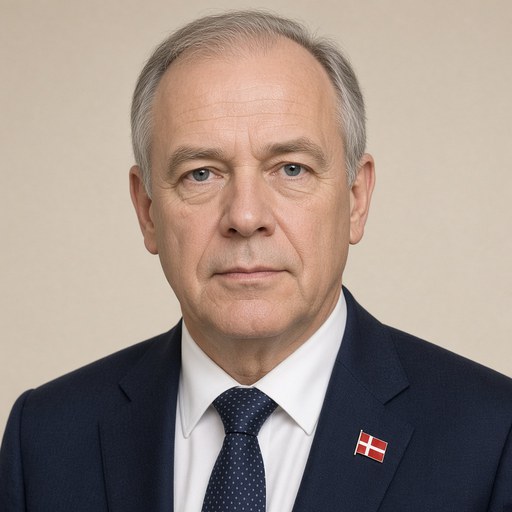
Prime Minister Poul Nyrup Rasmussen's speech at the Nordic Council's 50th Session in Oslo, Tuesday, November 10, 1998.
 Poul Nyrup Rasmussen · Prime Minister of Denmark
- Context
- Rasmussen addressed the Nordic Council's 50th Session in Oslo on November 10, 1998, reflecting on human rights, Nordic cooperation, and the need for political determination.
- Main themes
- Nordic cooperation, human rights, 50th anniversary of UN Declaration of Human Rights, political determination and action, welfare society, globalization and skill development, collective international action, lessons from WWII and recent conflicts, dignity of the individual, social responsibility, Nordic identity
- Duration
- ~14 min
- Words
- 1,691
- Sentences
- 152
- Readability
- 60
- Grade
- 7.6
- Syntax
- 2.48
- Vocabulary
- 2.03
Translated from Danish
The broad sphere of national life a sentence belongs to. Every sentence has an Arena, so it is the denominator the other indices are read against.
Other152 sentences in 26 paragraphs
'We must remember - and show determination'
Madam President, dear colleagues in the Nordic Council.
In the past year, Sweden has skillfully held the Nordic presidency. Now it is Iceland's turn. I wish the Icelandic presidency good luck with the great task ahead. I know that the Icelanders are good riders in all kinds of weather and terrain.
I have listened with great interest to the Icelandic Prime Minister's account of Iceland's priorities for 1999. Denmark fully supports the desire to give greater weight to West Nordic and the Arctic. 'Sea and people in the North' are beautiful goals. Goals that we should all be able to support.
Goals are important! Where do we go from here? What shall we fight for, as was said yesterday. This year we celebrate the 50th anniversary of the UN's Universal Declaration of Human Rights. It is a time for reflection. A time not only to celebrate, but also a time to focus on the values and the fundamental outlook that the declaration represents. I believe it is time to remember. Remember why.
Remember that World War II ended in 1945. Yes, but also remember that it was the most extensive destruction ever. Remember that at least 60 million lost their lives. Remember all the evil that this history also tells of. The Universal Declaration came in 1948, as a reminder that the past should be a teacher for the present. A teacher for the future. It must never happen again. We must consistently, every day, as Nordic politicians uncover totalitarian ideologies. The contempt for humanity and brutality of totalitarian regimes. Unfortunately, this is still relevant.
And we must not only uncover and express opinions; we must also show determination. We must show determination, and we must learn to do it better. Do it more consistently. Intervene earlier and faster. We must learn from the experiences in Bosnia. We must learn from Kosovo. We must learn from Iraq. Determination is central. For politics is not only about believing in the right thing, but also about acting accordingly. And action is necessary. We can act individually. But it is best and most effective when we act together. One thing is crystal clear: Without quick, effective, and targeted joint action, we will get nowhere; we will not change for the better what we wish.
The Declaration of Human Rights should be a guiding principle for all of us everywhere. Human rights are a prerequisite for a dignified life, as UN Secretary-General Kofi Annan has said. For what is life without dignity?
It is a human right to be free to be the person one is. With thoughts, ideas, and feelings. With differences in ideologies and religious beliefs. With different historical and cultural backgrounds.
That is fundamental. A person has value in itself. Simply because it is a person. That is also the core of the Nordic welfare society.
For here, the individual is at the center. But living in a welfare society does not mean that everyone is equally fortunate. We know this in the Nordic countries; we know it in each of our societies; we know it all too well. We know that we have a social responsibility. We know that the spirit and letter of human rights therefore also mean that we must take care of those who find themselves close to the bottom of society or at the very bottom of society. We feel that everyone should have a chance. Because they are human. Because they have value. Because they want to feel that they are needed. Because they want to contribute to the community.
We feel that no one can be dispensed with, not even in the labor market. Therefore, we must make political decisions. Therefore, we must make political choices. We must act. Politics is not only about believing in the right thing. Politics is also about acting. About wanting it.
For it is only through political action that we ensure the strength of the welfare society. That we ensure that we can enter the new millennium well - that it remains sustainable in the years to come. It requires renewal. It requires political courage and thinking.
The means is skill development. It is our answer to globalization. We know, more than anyone in the Nordic countries, that there is always a spot on the earth where wages are lower than here. We cannot compete with that. But we can compete with skilled people. That is our answer to globalization. Our answer is that security, skill development, competitiveness, and high employment are not opposites, but in fact prerequisites.
And remember now, that the welfare state model is doing well; yes, it has actually done the best. Even when the wild birds of the financial markets have flapped their wings against our windows.
But we are also Nordic people in the sense that we do not only think of ourselves. We intend to make a difference. We cannot alone break the social misery in the world. We know that well. We cannot alone ensure that human rights are not violated around the world. We know that too. But we can still make a difference. We can influence. We can push. We can press. We can assist with finance, with advice, and with deeds. For again, without an active effort, nothing happens. An active effort requires an active population, requires clear political signals everywhere, now and here and all the time. We must be heard in the global community. We must be heard in Europe. And not least: We must be heard regionally.
The Baltic Sea and the Barents Sea have been seas that divided. Now they are seas that unite. Back then we spoke of 'cold war.' Now we talk about binding countries and people together, as the first in the world after the cold war.
The Nordic Council of Ministers' neighborhood program with efforts in the Baltic countries, the Barents region, the St. Petersburg area, and not least the Arctic region, is at its core also a security and confidence-building policy. Stability. Democratic progress.
Therefore, it is not surprising that the Nordic Council and Nordic cooperation are now beginning to serve as a model for others in the world. I find it thought-provoking. And I believe we should extend our hand for cooperation with regions where war and deep-rooted conflicts have prevailed for decades, and these areas are now suddenly embarking on peace. The most recent and brightest example is Northern Ireland, where the creators of the British-Irish Council are now trying to draw ideas and inspiration from Nordic cooperation and the bonds that unite us.
I had the opportunity to greet one of the Nobel laureates, John Hume, and it was incredibly exciting and uplifting to feel that the Nordic Council has life and spirit and soul. If we do not sense it ourselves every day, then there are others who do. And it could perhaps be liberating for the Northern Irish people to come and tell us how important what we are doing really is. I say this more as inspiration for the Nordic Council itself, should there be any doubt.
The Nordic countries and the EU – together we have something to do. The Nordic countries belong to the European region of the world, even though we five Nordic countries have different affiliations. It is now clear that the Nordic passport union will remain when the Schengen cooperation is integrated into the EU. It is good that the EU has made a decision on a mandate for negotiations with Norway and Iceland. It is important that the negotiations conclude with a good result so that the agreement with Norway and Iceland can take effect simultaneously with the Amsterdam Treaty.
The Amsterdam Treaty is the best treaty the EU has ever had. It is not coincidental. There have been governments that have negotiated it. And I think we can note – here too I can see that the Nordic countries have made a difference. The Amsterdam Treaty opens a door for a Nordic voice and a Nordic policy that we have not had the opportunity for before. This applies to employment. It applies to the environment. It applies to openness. It applies to democracy and legitimacy. And it applies to combating fraud and deception.
We can assert ourselves now in Europe in a way we have not been able to before. We have a platform and a set of statutes in Europe in a way we have not had before.
The EU must be the stable island in the raging global ocean. We can manage if we decide to do so. We can reject the financial crisis's pressure on us if we decide to do so. We have all the instruments available. It is a matter of political choice. We in the Nordic countries have shown that welfare and security and rejection of financial crisis are not opposites, but prerequisites. We have shown in Europe that our preparations for the Economic and Monetary Union, our preparations outside the Economic and Monetary Union – in both cases a strong and sound economic policy is common to us – is the best instrument to reject financial pressure on us. We do not have a crisis in the Nordic countries and in Europe. We have built something unique now in the Nordic countries. We have shown that we can survive. We have shown that we are strong if we continue on the path we have. We want to share our knowledge. We want to show how sustainable growth is maintained. How human rights are respected. In the global, in the regional, and in the concrete, we are there. I will just refer to Øresund. To the concrete cooperation between Denmark and Sweden. Only imagination sets limits, for I see the bridge as a corridor to the future. Sweden and Denmark and all five of us together are examples of what is right.
This year we can celebrate the fiftieth anniversary of the Nordic Council, the largest political workshop in the North. Let us show that we can still make a difference.
Thank you.
The original Danish. The tags above are read on the English translation's sentences.
'Vi skal huske - og vise handlekraft'
Fru præsident, kære kolleger i Nordisk Råd.
I det forløbne år har Sverige dygtigt varetaget det nordiske formandskab. Nu er det Islands tur. Jeg ønsker det islandske formandskab held og lykke med den store opgave. Jeg ved, at islændingene er gode ryttere i al slags vejr og terræn.
Jeg har med stor interesse lyttet til Islands statsministers redegørelse for de islandske prioriteter i 1999. Danmark støtter fuldt og helt ønsket om at give Vestnorden og Arktis større vægt. ‘Hav og folk i Nord’ er smukke målsætninger. Målsætninger, som vi alle bør kunne støtte.
Målsætninger er vigtige! Hvor skal vi hen nu? Hvad skal vi kæmpe for, som det blev sagt i går. Vi fejrer jo i år 50-året for FN's verdenserklæring om Menneskerettigheder. Det er tid til eftertanke. Tid, ikke blot til at fejre, men også tid til at fokusere på de værdier og det grundsyn, som erklæringen står for. Jeg synes, det er tid at huske. Huske hvorfor.
Huske, at Anden Verdenskrig sluttede i 1945. Ja, men også huske, det var den mest omfattende ødelæggelse nogen sinde. Huske, at mindst 60 millioner mistede livet. Huske al den ondskab, som den historie også er historien om. Verdenserklæringen kom i 1948, som en påmindelse om, at fortiden bør være læremester for nutiden. Læremester for fremtiden. Det må aldrig ske igen. Vi skal konsekvent hver dag hele tiden som nordiske politikere afdække totalitære ideologier. Totalitære regimers menneskeforagt og brutalitet. Det er desværre stadig aktuelt.
Og vi skal ikke alene afdække og mene, vi skal også vise handlekraft. Vi skal vise handlekraft, og vi skal lære at gøre det bedre. Gøre det mere konsekvent. Gribe ind tidligere og hurtigere. Vi skal lære af erfaringerne fra Bosnien. Vi skal lære fra Kosovo. Vi skal lære fra Irak. Handlekraft er det centrale. For politik er ikke alene at mene det rigtige, men også at handle derefter. Og handling er nødvendig. Vi kan handle hver for sig. Men det er nu engang bedst og mest effektivt, at vi handler i fællesskab. Ét står i hvert fald krystalklart: Uden hurtig, effektiv og målrettet fælles aktion kommer vi ingen vegne, forandrer vi ikke til det bedre, det vi ønsker.
Menneskerettighedserklæringen skal være en rettesnor for os alle overalt. Menneskerettigheder er en forudsætning for et værdigt liv, som FN’s generalsekretær Kofi Annan har sagt det. For hvad er vel et liv uden værdighed?
Det er en menneskeret frit at kunne være det menneske, man er. Med tanker, ideer og følelser. Med forskelle i ideologier og religiøse ståsteder. Med forskellig historisk og kulturel baggrund.
Det er det grundlæggende. Mennesket har værdi i sig selv. Alene, fordi det er et menneske. Det er kernen også i det nordiske velfærdssamfund.
For her er mennesket jo i centrum. Men det at bo i et velfærdssamfund er ikke ensbetydende med, at alle er lige heldigt stillede. Det ved vi i Norden, det ved vi i hvert vores samfund, det ved vi alt for godt. Vi ved, at vi har et socialt ansvar. Vi ved, at menneskerettighedernes ånd og bogstav derfor også betyder, at vi må tage vare på dem, der befinder sig tæt på bunden i samfundet eller på selve samfundets bund. Vi føler, at alle skal have en chance. Fordi de er mennesker. Fordi de har værdi. Fordi de ønsker at mærke, at der er brug for dem. Fordi de ønsker at bidrage til fællesskabet.
Vi føler, at ingen kan undværes, heller ikke på arbejdsmarkedet. Derfor må vi træffe politiske beslutninger. Derfor må vi træffe politiske valg. Vi må handle. Politik er ikke alene at mene det rigtige. Politik er også at handle. At ville det.
For det er kun gennem politisk aktion, at vi sikrer velfærdsamfundets styrke. At vi sikrer, at vi kan gå godt ind i det nye årtusinde - at det også i årene fremover er bæredygtigt. Det kræver fornyelse. Det kræver politisk mod og tænkning.
Midlet er dygtiggørelse. Det er vores svar på globaliseringen. Vi ved frem for nogen i Norden, at der altid er en plet på jorden, hvor lønnen er lavere end her. Det kan vi ikke konkurrere med. Men vi kan konkurrere med dygtige mennesker. Det er vores svar på globaliseringen. Vores svar er, at tryghed, dygtiggørelse, konkurrenceevne og høj beskæftigelse ikke er modsætninger, men i virkeligheden forudsætninger.
Og husk det nu, at velfærdssamfundsmodellen klarer sig godt, ja, har faktisk klaret sig bedst. Også når de finansielle markeders vilde fugle har basket med vingerne på vore vinduer.
Men vi er også nordiske folk i den forstand, at vi ikke kun tænker på os selv. Vi har tænkt os at gøre en forskel. Vi kan ikke alene knække den sociale nød i verden. Det ved vi godt. Vi kan ikke alene sikre os, at menneskerettigheder ikke bliver knægtet rundt om i verden. Det ved vi også godt. Men vi kan gøre en forskel alligevel. Vi kan påvirke. Vi kan skubbe. Vi kan presse. Vi kan bistå med økonomi, med råd og med dåd. For igen, uden en aktiv indsats sker der intet. En aktiv indsats kræver en aktiv befolkning, kræver klare politiske signaler overalt, nu og her og hele tiden. Vi skal kunne høres i verdenssamfundet. Vi skal kunne høres i Europa. Og ikke mindst: Vi skal kunne høres regionalt.
Østersøen og Barentshavet har været have, der skilte. Nu er det have, der samler. Dengang talte vi om 'kold krig'. Nu taler vi om at binde lande og folk sammen, som de første i hele verden efter den kolde krig.
Nordisk Ministerråds nærområdeprogram med indsats i de baltiske lande, Barentsregionen, Skt. Petersborgområdet og ikke mindst det arktiske område, er jo i sit inderste væsen også sikkerheds- og tillidsskabende politik. Stabilitet. Demokratisk fremgang.
Derfor er det ikke overraskende, at Nordisk Råd og det nordiske samarbejde nu begynder at danne forbillede for andre i verden. Jeg synes, det er tankevækkende. Og jeg mener, vi skal række hånden frem til samarbejde med regioner, hvor krig og dybtgående konflikter har hersket igennem årtier og disse områder nu pludselig tager fat på freden. Det allerseneste og mest lysende eksempel er Nordirland, hvor ophavsmændene til skabelsen af British-Irish Council nu forsøger at hente ideer og inspiration i det nordiske sama rbejde og i de bånd, der forener os.
Jeg havde selv lejlighed til at hilse på en af nobelpristagerne, John Hume, og det var utrolig spændende og opløftende at mærke, at Nordisk Råd har liv og glød og sjæl. Hvis vi ikke selv fornemmer det hver dag, så er der andre, der gør det. Og det kunne måske være befriende, at de nordirske folk kommer og fortæller os, hvor vigtigt det, vi laver, egentlig er. Jeg siger det mere til inspiration for Nordisk Råd selv, hvis man skulle være i tvivl.
Norden og EU – sammen har vi noget at gøre. Norden hører til i den europæiske region af verden, uanset at vi fem nordiske lande har forskelligt tilknytningsforhold. Det står fast nu, at den nordiske pasunion skal bestå, når Schengensamarbejdet integreres i EU. Det er godt, at EU har truffet beslutning om et mandat til forhandlingerne med Norge og Island. Det er vigtigt, at forhandlingerne afsluttes med et godt resultat, så aftalen med Norge og Island kan træde i kraft samtidig med Amsterdamtraktaten.
Amsterdamtraktaten er den bedste traktat, EU nogen sinde har haft. Det er heller ikke tilfældigt. Der har været regeringer, der har forhandlet om den. Og det synes jeg vi kan notere – også her kan jeg se, at de nordiske lande har gjort en forskel. Amsterdamtraktaten åbner en dør for en nordisk stemme og en nordisk politik, vi ikke har haft mulighed for før. Det gælder beskæftigelse. Det gælder miljø. Det gælder åbenhed. Det gælder demokrati og legitimitet. Og det gælder bekæmpelse af svig og svindel.
Vi kan gøre os gældende nu i Europa på en måde, vi ikke har kunnet før. Vi har en platform og et sæt vedtægter i Europa på en måde, vi ikke har haft før.
EU skal være det frådende, globale oceans stabile ø. Vi kan klare os, hvis vi beslutter os for det. Vi kan afvise den finansielle krises pres på os, hvis vi beslutter os for det. Vi har alle instrumenter til rådighed. Det er et spørgsmål om politisk valg. Vi har i Norden vist, at velfærd og tryghed og afvisning af finansiel krise ikke er modsætninger, men forudsætninger. Vi har vist i Europa, at vores forberedelser til ØMU ́en, vores forberedelser uden for ØMU ́en – i begge tilfælde er en stærk og sund økonomisk politik fælles for os – er det bedste instrument til at afvise finansielt pres på os. Vi har ikke krise i Norden og i Europa. Vi har opbygget noget unikt nu i Norden. Vi har vist, at vi kan overleve. Vi har vist, at vi er stærke, hvis vi fortsætter den linje, vi har. Vi vil gerne lære fra os. Vi vil gerne vise, hvordan bæredygtig vækst opretholdes. Hvordan menneskerettigheder respekteret. I det globale, i det regionale og i det konkrete er vi der. Jeg skal blot henvise til Øresund. Til det konkrete samarbejde mellem Danmark og Sverige. Kun fantasien sætter grænser, for jeg ser broen som en korridor til fremtiden. Sverige og Danmark og alle vi fem tilsammen er eksempler på det rigtige.
I år kan vi fejre halvtredsåret for Nordisk Råd, Nordens største politiske værksted. Lad os vise, at vi fortsat kan gøre en forskel.
Tak.