




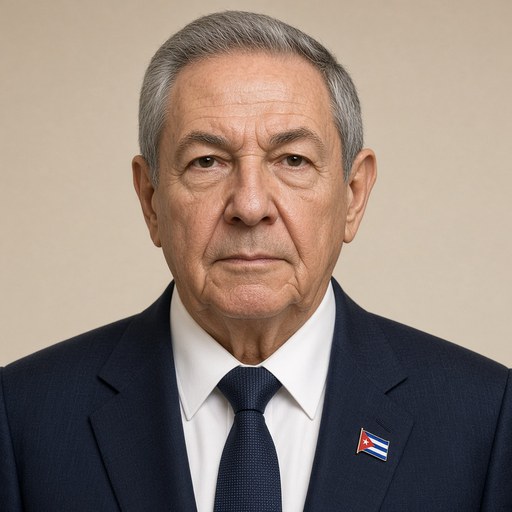
Speech delivered at the conclusions of the constitutive session of the VII Legislature of the Asam.
 Raúl Castro · President of Cuba
- Context
- Raúl Castro addressed the VII Legislature of the Cuban National Assembly on February 24, 2008, upon being elected President of the Council of State, succeeding Fidel Castro.
- Main themes
- Continuity of the Cuban Revolution, Fidel Castro's legacy and succession, Raúl Castro's assumption of presidency, role of the Communist Party, unity of the Cuban nation, leadership transition, Council of State composition, revolutionary conviction, defense and foreign policy, socioeconomic development
- Duration
- ~31 min
- Words
- 3,682
- Sentences
- 122
- Readability
- 32
- Grade
- 16.1
- Syntax
- 3.37
- Vocabulary
- 2.23
Translated from Spanish
The broad sphere of national life a sentence belongs to. Every sentence has an Arena, so it is the denominator the other indices are read against.
Other122 sentences in 86 paragraphs
Comrades:
The mandate from the people to this Legislature is clear: to continue strengthening the Revolution at a historic moment that demands we be dialectical and creative, as our comrade Fidel warned us in his essential Reflection of January 14.
Many expectations were generated, both in Cuba and abroad, regarding the integration of the Council of State that the Assembly has just elected. The fundamental one was clarified by comrade Fidel in his Message of February 18. I can add little to what he expressed, except to acknowledge on behalf of the Leadership of the Revolution the countless demonstrations of serenity, maturity, self-confidence, and the combination of genuine feelings of sadness and revolutionary firmness shown by our people.
I assume the responsibility entrusted to me with the conviction that, as I have stated many times, the Commander in Chief of the Cuban Revolution is one and only one.
Fidel is Fidel; we all know that well. Fidel is irreplaceable, and the people will continue his work when he is no longer physically present. Although his ideas will always remain, which have made it possible to raise the bastion of dignity and justice that our country represents.
Only the Communist Party, a sure guarantee of the unity of the Cuban nation, can be the worthy heir to the trust placed by the people in its leader. It is the superior guiding force of society and the State, as established by Article 5 of our Constitution, approved in a referendum by exactly 97.7% of voters.
This conviction will be particularly important when, by the natural law of life, the founding and forging generation of the Revolution has disappeared.
Fortunately, that is not the moment we are living today. Fidel is there, as always, with a clear mind and analytical and forecasting capacity, more than intact, strengthened, now that he can dedicate countless hours to study and analysis that he previously spent confronting everyday problems.
Despite the gradual recovery, his physical conditions would not allow him those endless days, often separated by scant hours of rest, that characterized his work practically since he began the revolutionary struggle and even more intensely during these long years of the special period, in which he did not allow himself even a single day of vacation.
The decision of comrade Fidel is a new contribution, with his example that ennobles, in order to ensure from now on the continuity of the Revolution, consistent with someone who has always had as a guide the Martian precept: "All the glory of the world fits in a grain of corn."
Equally unshakeable is his decision to continue, as long as he has the strength to do so, contributing to the revolutionary cause and to the noblest ideas and purposes of humanity.
Therefore, confident that I express the feelings of our people, I request this Assembly, as the supreme organ of State power, to allow me to continue consulting with the leader of the Revolution, comrade Fidel Castro Ruz, on decisions of special significance for the future of the nation, especially those related to defense, foreign policy, and the socioeconomic development of the country.
For this and many other reasons, in my words today, I will quote, not a few times, some of the essential ideas and concepts expressed in his Reflections, which I take the opportunity to say we must study, for their teachings and capacity for foresight. Always keep in mind something that Raúl Roa liked to repeat to his close friends: "Fidel hears the grass grow and sees what is happening around the corner."
Comrades deputies:
I am aware of the responsibility that the task entrusted to me entails before the people, and at the same time convinced that I count, as until today, on the support of those who hold leadership responsibilities at different levels and, more importantly, on that of my compatriots, without which there can be no possible success in a society like ours.
The Assembly, in full agreement with the opinion of the Political Bureau of the Party, elected comrade José Ramón Machado Ventura as First Vice President of the Council of State and subsequently approved his appointment as First Vice President of the Council of Ministers.
As I explained in my proposal for that position, under the current circumstances, it is advisable for the same comrade to continue to perform, as he has until now, these two important responsibilities of the State and the Government.
There is no doubt that José Ramón Machado Ventura, due to his trajectory and revolutionary convictions, experience, preparation, qualities as a leader and human being, meets the requirements to hold those high positions.
The Assembly also agreed, in compliance with what is established in Article 75 of the Constitution, to consider the composition of the Government in a future session during this year. It is a timely decision, as it is not only about appointments but also about determining what changes need to be made in the system of central State administration bodies, something that requires a bit more time.
In the first 15 years of the Revolution, the state structures inherited from capitalism were adjusted on the go to take on the tasks imposed by the radical economic, political, and social changes.
The process of institutionalization in the 1970s, with its imperfections, allowed for the structuring of a coherent system adjusted to those circumstances, achieving a certain equivalence with that of socialist countries, including both good and bad experiences.
Finally, in 1994, at the most acute moment of the special period, considerable adjustments were made that involved reductions and mergers of bodies, as well as the redistribution of the tasks of some of them. However, they were carried out with the urgency imposed by the need to quickly adapt to a radically different, very hostile, and extremely dangerous scenario.
Since then, 14 years have passed, during which the national and international landscape has changed considerably. Today, a more compact and functional structure is required, with fewer central State administration bodies and a better distribution of the functions they perform.
The above will allow for a reduction in the enormous number of meetings, coordinations, permits, reconciliations, provisions, regulations, circulars, etc., etc. It will also contribute to concentrating some decisive economic activities that are currently dispersed across various bodies and make better use of the personnel.
In summary, we need to make our Government's management more efficient.
The Assembly has been renewed in a greater proportion than in the previous Legislature; the number of women has increased by more than seven percentage points and is now approaching half of the deputies, a little over 43%; those aged between 18 and 30 have increased from 23 to 36, that is, the youngest, although there are also more who are over sixty.
Something very important is that the number of those directly linked to production or services is growing, that is, workers, farmers, and other laborers; also members of the armed institutions, athletes, artists, writers, journalists, and other professions, who, together with student leaders and comrades who work in the popular councils, constitute more than half of the deputies.
Data like these, along with the simple relationship of the tasks that each of you performs, from national leaders to retirees and religious leaders, allow us to affirm that those gathered here are a small-scale sample of Cuban society.
The above constitutes a basic premise, but it does not ensure on its own the fulfillment of the Parliament's mission. It also requires, and above all, the intelligent, organized, creative, and energetic action of its members, particularly during the work of the commissions, where more time is available, as focusing on specific issues allows for better study and more comrades can intervene.
During my visit last December to the District of Santiago de Cuba, where comrade Fidel was elected as a deputy, I stated that the massive support for the Revolution requires us to question how much we do to improve it.
And I added that if the people are firmly united around a single party, it must be more democratic than any other, and with it, society as a whole, which, of course, like all human endeavors, can be perfected, but is undoubtedly just and in which everyone has the opportunity to express their opinions, and more importantly, to work to make real what we agree upon in each case.
There is no reason to fear discrepancies in a society like ours, in which, by its essence, there are no antagonistic contradictions, because the social classes that make it up are not. From the deep exchange of divergent opinions come the best solutions, if channeled by healthy purposes and the criterion is exercised with responsibility.
Thus has acted the vast majority of Cubans, from our best scientists, intellectuals, workers, farmers, and students, to the simplest housewife.
All of them, at different moments of the Revolution, including the current one, have provided an exemplary demonstration of political maturity and awareness of reality, by objectively assessing both strategic issues and the difficulties of everyday life, and above all, the conviction grows that the only source of wealth in society lies in productive work, especially when it efficiently employs men and resources.
International doomsayers of the death of the Revolution attempted to present the criticisms that arose during the study and reflection of the speech of July 26 in Camagüey in their favor, without understanding that it was a critical debate within socialism. This was confirmed abundantly, a few months later, by the results of our elections, which concluded on January 20.
It is true that there are also people who speak before informing themselves; who demand without assessing whether they are saying something rational or absurd. They generally coincide with those who claim rights without ever mentioning duties. As Fidel said in his reflection of January 16: "they expect miracles from our stubborn and dignified Revolution," he concluded.
We do not deny them the right to express themselves, as long as it is within the framework of the law. In the face of such a claim, we cannot be extremists, but neither can we be naive.
When it is motivated by despair over a personal difficulty or provoked by a lack of information, we must be patient and provide the necessary arguments.
But if someone intends to pressure with a desire for protagonism or is driven by ambition, demagoguery, opportunism, simulation, self-sufficiency, or another human weakness of similar character, it must be faced resolutely, without insults, but calling things by their name.
Never forget that the enemy is always lurking, permanently ready to take advantage of the slightest oversight to harm us, even if there are those who insist on ignoring it.
We will not stop listening to the honest opinion of each person, which is so useful and necessary, due to the uproar that is sometimes quite ridiculous, every time a citizen of our country says something that those same promoters of the spectacle would not pay the slightest attention to if they heard it elsewhere on the planet.
We know that these messages are aimed at deceiving or at least creating confusion, but if someone has had the fanciful idea of scaring us with them, I remind them that the main reason we are still here—and will continue to be—is that our people and their Revolution have always faced, without the slightest show of fear and upholding the truth, all types of aggression from the greatest military and economic power in the world.
Countless examples could be cited; it is enough to mention the unwavering dignity of our five heroes, in the face of every attempt to break them during a decade of unjust imprisonment.
I take this opportunity to thank, on behalf of our people, the countless expressions of solidarity, respect, affection, encouragement, and legitimate concern for the leader of the Revolution that were issued by heads of State and Government, political parties, non-governmental organizations, prominent intellectuals, and ordinary citizens from all corners of the world following the publication of his Message last Tuesday. We will never fail the trust they place in us.
At the same time, we have duly noted the offensive and openly interventionist statements from the empire and some of its closest allies.
As expected, the State Department hastened to announce the continuation of the blockade in accordance with the policy of the current administration.
Others, with nuances, insist on conditioning relations with Cuba to a "transition" process aimed at destroying the work of so many years of struggle.
How little they know our people, so proud of their full independence and sovereignty!
The Revolution is the work of free men and women and has always been open to debate, but has never yielded an inch to pressure nor has it allowed itself to be influenced by it, neither by the great nor by the small.
I will only add that Fidel's Reflections, published on Friday, are a masterful response to all of them.
In relation to the difficulties that the country faces on the internal front, the determination of priorities and the pace of their resolution will invariably depend on the available resources and the deep, rational, and collective analysis by the competent bodies of the Party, the State, or the Government, and in cases where necessary, prior direct consultation with the citizens concerned from any sector of society and even with the entire people, if it were a matter of great significance.
There are issues whose study requires time, as an error caused by improvisation, superficiality, or haste would have considerable negative consequences. We must plan well, for we cannot spend more than we have, then organize and work with order and discipline, which are fundamental.
In addressing these matters, it is essential to always keep in mind Fidel's deep conviction, reiterated in his Message of February 18, that the current problems of Cuban society require more variants of responses for each specific problem than those contained on a chessboard. That not a single detail can be ignored, and it is not an easy path, if the intelligence of human beings in a revolutionary society is to prevail over their instincts.
I insist on the importance of discipline. We all have to be demanding and support those who are. If necessary, help them improve their methods and resolutely support them before the collective.
Let it be understood that I am not talking about extremism or accepting abuses of authority or injustices, but rather that we all do our part correctly in strengthening discipline and social order. Otherwise, the consequences are borne by our people.
It is true that there are objective limitations — we know them well and suffer daily trying to resolve them as soon as possible. We are aware of the enormous efforts required to strengthen the economy, an essential premise for advancing in any other area of society, in the face of the real war that the government of the United States is waging against our country.
The intention has been the same since the triumph of the Revolution: to make our people suffer as much as possible until they give up the decision to be free.
It is a reality that, far from intimidating us, should continue to strengthen our resolve. Instead of using it as an excuse for mistakes, it should be a spur to produce more and provide better service, to strive to find the mechanisms and ways to eliminate any obstacles to the development of productive forces and exploit the significant potential represented by savings and the proper organization of work.
Our history teaches us, from the wars of independence to the present, that the greater the difficulties, the more demand, discipline, and unity are required. Disorder, impunity, and lack of cohesion have always been among the worst enemies of a fighting people.
I reiterate that the country will prioritize meeting the basic needs of the population, both material and spiritual, based on the sustained strengthening of the national economy and its productive base, without which, I repeat once more, development would be impossible.
An example is the proposal of measures aimed at increasing agricultural production and perfecting its commercialization, which have been analyzed, province by province, with a broad representation of those responsible for implementing them, including the producers themselves.
This will continue to be done in every matter of cardinal importance to the country.
We are examining, for example, everything related to the timely implementation of Comrade Fidel's ideas on the "progressive, gradual, and prudent reevaluation of the Cuban peso" - these are the exact terms he used in March 2005. At the same time, we are delving into the phenomenon of the dual currency in the economy.
These issues are truly sensitive and complex, when, as is our case, there is a firm will to protect and gradually increase the income and savings of the population, especially of those who receive less.
To avoid traumatic effects and inconsistencies, any change related to currency must be made with a comprehensive approach that takes into account, among other factors, the wage system, retail prices, gratuities, and the millions in subsidies that currently represent numerous services and products distributed in an equal manner, such as those from the rationing booklet, which under the current conditions of our economy are irrational and unsustainable.
Today, it is a strategic objective to advance coherently, solidly, and thoughtfully, until the salary regains its role and the standard of living of each individual is directly related to the income they receive legally, that is, with the importance and quantity of work they contribute to society.
As Fidel told us in his Reflection of January 16: "Nothing should be given away to those who can produce and do not produce or produce little. Merit should be rewarded for those who work with their hands or their intelligence," he stated.
Other topics are being studied simultaneously following a priority, and the pace of progress will depend on the complexity and resources.
We have the fundamentals to find the best solutions within the reach of material possibilities and organizational capacities, which must be increased: an educated people, with a high political culture and firmly united under the principles summarized by Comrade Fidel in his reflection of January 24, when he said:
"Unity means sharing the fight, the risks, the sacrifices, the objectives, ideas, concepts, and strategies, which are reached through debates and analysis. Unity means the common struggle against annexationists, traitors, and corrupt individuals who have nothing to do with a revolutionary militant," end of quote.
I insist on what I expressed here during the previous session of this Assembly: for the enormous possibilities of that unity to turn into tangible results, it is essential that all bodies and organizations work with the necessary integration.
Institutionality, I repeat the term: institutionality, is an important support for that decisive purpose and one of the pillars of the invulnerability of the Revolution in the political arena, so we must work on its constant improvement. We must never believe that what we have done is perfect.
Our democracy is participatory like few others, but we must be aware that the functioning of the State and Government institutions has not yet reached the level of effectiveness that our people rightly demand. It is a topic that we must all think about.
In December, I spoke about the excess of prohibitions and regulations, and in the coming weeks we will begin to eliminate the simplest ones. Many of them had the sole objective of preventing the emergence of new inequalities, at a time of widespread scarcity, even at the cost of foregoing certain income.
The elimination of other regulations, although it may seem simple to some, will take more time because they require a comprehensive study and changes in certain legal norms, in addition to the fact that some of them are influenced by the measures established against our country by successive U.S. administrations.
Moving on to another topic, there is also the tendency to apply the same recipe everywhere. As a result of this and perhaps its worst consequence, many think that each problem requires national measures to be resolved.
Local initiative is effective and viable in many issues, as demonstrated by the direct distribution of milk, as I explained on July 26. The experience now covers 64 municipalities in 13 provinces of the country, 40 of them fully covered. In the remaining ones and in the dairy industry itself, progress is also being made.
In addition to ensuring the timely and quality provision of this essential product, which is the fundamental objective, in the last months of the past year this program allowed for savings of more than 6,000 tons of powdered milk whose acquisition would have exceeded 30 million dollars, considering the average price during the period of 5,050 dollars per ton.
Additionally, expenses in foreign currency were reduced by 2.6 million, including in this figure about 600,000 liters of fuel.
And other cases from various sectors could be cited, so we must continue to think of similar solutions at all levels of administration.
Comrades:
On a day like today, in 1895, at Martí's call, the Old and New Pines resumed the struggle for independence, frustrated by the military intervention of the United States. Half a century later, we managed to unite again and confront the same enemy as always.
It was not a coincidence that this date was chosen, 50 years ago, for the first broadcast of Radio Rebelde in the Sierra Maestra, nor that it was the day we proclaimed our socialist Constitution in 1976.
On this 113th anniversary of the beginning of the Necessary War, there are indeed many and difficult challenges. In the face of them, let us keep in mind what Fidel expressed in his Reflection published on December 10, when he warned us:
"The stern face of Martí and the piercing gaze of Maceo point out to every Cuban the hard path of duty and not which side lives better."
Thank you very much.
The original Spanish. The tags above are read on the English translation's sentences.
Compañeras y compañeros:
Es claro el mandato del pueblo a esta Legislatura: continuar fortaleciendo la Revolución en un momento histórico que exige ser dialécticos y creadores, como nos alertó el compañero Fidel en su medular Reflexión del pasado 14 de enero.
Muchas expectativas se generaron, tanto en Cuba como en el extranjero, en torno a la integración del Consejo de Estado que acaba de elegir la Asamblea. La fundamental fue despejada por el compañero Fidel en su Mensaje del 18 de febrero. Poco puedo agregar a lo expresado por él, salvo reconocerle a nuestro pueblo, en nombre de la Dirección de la Revolución , las innumerables muestras de serenidad, madurez, confianza en sí mismo y la combinación de genuinos sentimientos de tristeza y firmeza revolucionaria.
Asumo la responsabilidad que se me encomienda con la convicción de que, como he afirmado muchas veces, el Comandante en Jefe de la Revolución Cubana es uno solo.
Fidel es Fidel, todos lo sabemos bien. Fidel es insustituible y el pueblo continuará su obra cuando ya no esté físicamente. Aunque siempre lo estarán sus ideas, que han hecho posible levantar el bastión de dignidad y justicia que nuestro país representa.
Sólo el Partido Comunista, garantía segura de la unidad de la nación cubana, puede ser digno heredero de la confianza depositada por el pueblo en su líder. E s la fuerza dirigente superior de la sociedad y el Estado y así lo establece el Artículo 5 de nuestra Constitución, aprobada en referendo por exactamente el 97,7% de los votantes.
Esa convicción tendrá particular importancia cuando por ley natural de la vida, haya desaparecido la generación fundadora y forjadora de la Revolución.
Afortunadamente no es ese el momento que hoy vivimos. Fidel está ahí, como siempre, con la mente bien clara y la capacidad de análisis y previsión, más que intacta, fortalecida, ahora que puede dedicar al estudio y el análisis las incontables horas que antes empleaba en el enfrentamiento a los problemas cotidianos.
A pesar de la paulatina recuperación, sus condiciones físicas no le permitirían aquellas interminables jornadas, con frecuencia separadas por escasas horas de descanso, que caracterizaron su trabajo prácticamente desde que emprendió la lucha revolucionaria y aún con mayor intensidad durante estos largos años de período especial, en que no se permitió siquiera un solo día de vacaciones.
La decisión del compañero Fidel es una nueva contribución, con su ejemplo que lo enaltece, en aras de asegurar desde ahora la continuidad de la Revolución , consecuente en quien ha tenido siempre como guía el precepto martiano: Toda la gloria del mundo cabe en un grano de maíz.
Igualmente es inconmovible su decisión de continuar, mientras tenga fuerzas para hacerlo, aportando a la causa revolucionaria y a las ideas y propósitos más nobles de la humanidad.
Por tanto, seguro de expresar el sentir de nuestro pueblo, solicito a esta Asamblea, como órgano supremo del poder del Estado, que las decisiones de especial trascendencia para el futuro de la nación, sobre todo las vinculadas a la defensa, la política exterior y el desarrollo socioeconómico del país, me permita continuar consultándolas al líder de la Revolución , el compañero Fidel Castro Ruz.
Por esta y otras muchas razones, en mis palabras de hoy citaré, no pocas veces, algunas de las ideas y conceptos esenciales expresados en sus Reflexiones, que aprovecho para decir que debemos estudiar, por sus enseñanzas y capacidad de previsión. Tener presente siempre algo que gustaba repetir Raúl Roa a sus íntimos: Fidel oye la hierba crecer y ve lo que está pasando al doblar de la esquina.
Compañeras y compañeros diputados:
Estoy consciente de la responsabilidad que entraña ante el pueblo la tarea que se me encarga, y a la vez convencido de contar, como hasta hoy, con el apoyo de quienes desempeñan responsabilidades de dirección a los diferentes niveles y más importante aún, con el de mis compatriotas, sin el cual no hay éxito posible en una sociedad como la nuestra.
La Asamblea , en plena concordancia con la opinión del Buró Político del Partido, eligió Primer Vicepresidente del Consejo de Estado al compañero José Ramón Machado Ventura y posteriormente aprobó su designación como Primer Vicepresidente del Consejo de Ministros.
Como expliqué en mi propuesta para dicho cargo, en las actuales circunstancias es conveniente que el mismo compañero desempeñe, como hasta ahora, estas dos importantes responsabilidades del Estado y el Gobierno.
No hay dudas de que José Ramón Machado Ventura, por su trayectoria y convicciones revolucionarias, experiencia, preparación, cualidades como dirigente y ser humano, reúne los requisitos para desempeñar esos altos cargos.
Igualmente la Asamblea acordó, en cumplimiento de lo establecido en el Artículo 75 de la Constitución , considerar la composición del Gobierno en una futura sesión en el transcurso del presente año. Es una decisión oportuna, pues no se trata únicamente de nombramientos, sino de determinar qué cambios resulta necesario realizar en el sistema de organismos de la administración central del Estado, algo que requiere un poco más de tiempo.
En los primeros 15 años de la Revolución , se fueron ajustando desde la marcha las estructuras estatales heredadas del capitalismo para asumir las tareas que imponían los radicales cambios económicos, políticos y sociales.
El proceso de institucionalización de los años setenta, con sus imperfecciones, permitió estructurar un sistema coherente y ajustado a aquellas circunstancias, alcanzándose cierta equiparación con el de los países socialistas, incluidas las buenas y también las malas experiencias.
Por último, en 1994, en el momento más agudo del período especial, se hicieron considerables ajustes que conllevaron reducciones y fusiones de organismos, así como redistribución de las tareas de algunos de ellos. No obstante, fueron realizados con la premura impuesta por la necesidad de adecuarnos de manera rápida a un escenario radicalmente distinto, muy hostil y sumamente peligroso.
Desde entonces han transcurrido 14 años, en los cuales ha cambiado considerablemente el panorama nacional e internacional. Hoy se requiere una estructura más compacta y funcional, con menor número de organismos de la administración central del Estado y una mejor distribución de las funciones que cumplen.
Lo anterior permitirá reducir la enorme cantidad de reuniones, coordinaciones, permisos, conciliaciones, disposiciones, reglamentos, circulares, etcétera, etcétera. Contribuirá además a concentrar algunas actividades económicas decisivas hoy dispersas en varios organismos, y hacer un mejor empleo de los cuadros.
En resumen, tenemos que hacer más eficiente la gestión de nuestro Gobierno.
La Asamblea ha sido renovada en una mayor proporción que en la anterior Legislatura; el número de mujeres crece más de siete puntos porcentuales y ya se aproxima a la mitad de los diputados, algo más del 43%; aumentan de 23 a 36 los que tienen entre 18 y 30 años, o sea los más jóvenes, aunque también son más los que superan los sesenta.
Algo muy importante, crece el número de los vinculados directamente a la producción o los servicios, es decir, de los obreros, campesinos y otros trabajadores; también de los miembros de las instituciones armadas, los deportistas, artistas, escritores, periodistas y de otras profesiones, que unidos a los dirigentes estudiantiles y compañeros que se desempeñan en los consejos populares, constituyen más de la mitad de los diputados.
Datos como estos, junto a la simple relación de las tareas que cumplen cada uno de ustedes, desde dirigentes nacionales hasta jubilados y líderes religiosos, permiten afirmar que los aquí reunidos son una muestra en pequeña escala de la sociedad cubana.
Lo anterior constituye una premisa básica, pero no asegura por sí sola el cumplimiento de la misión del Parlamento. Se requiere además, y sobre todo, la actuación inteligente, organizada, creativa y enérgica de sus integrantes, en particular durante el trabajo de las comisiones, donde se dispone de más tiempo, pues al centrarse en determinados asuntos permite estudiarlos mejor y pueden intervenir más compañeros.
En la visita que hice en diciembre pasado al Distrito de Santiago de Cuba donde fue electo diputado el compañero Fidel, afirmé que el apoyo masivo a la Revolución exige cuestionarnos cuanto hacemos para mejorarlo.
Y añadí que si el pueblo está firmemente cohesionado en torno a un único partido, éste tiene que ser más democrático que ningún otro, y con él la sociedad en su conjunto, que desde luego, como toda obra humana, se puede perfeccionar, pero sin dudas es justa y en ella todos tienen oportunidad de expresar sus criterios, y más importante aún, de trabajar para hacer realidad lo que en cada caso acordemos.
No hay por qué temer a las discrepancias en una sociedad como la nuestra, en que por su esencia no existen contradicciones antagónicas, porque no lo son las clases sociales que la forman. Del intercambio profundo de opiniones divergentes salen las mejores soluciones, si es encauzado por propósitos sanos y el criterio se ejerce con responsabilidad.
Así ha actuado la inmensa mayoría de los cubanos, desde nuestros mejores científicos, intelectuales, obreros, campesinos y estudiantes, hasta la más sencilla ama de casa.
Todos ellos, en diferentes momentos de la Revolución , incluido el actual, han brindado una ejemplar demostración de madurez política y conciencia de la realidad, al valorar con objetividad tanto los asuntos de alcance estratégico como las dificultades de la vida cotidiana, y sobre todo crece la convicción de que la única fuente de riquezas de la sociedad está en el trabajo productivo, sobre todo cuando emplea con eficiencia los hombres y recursos.
Los agoreros internacionales de la muerte de la Revolución intentaron presentar a su favor las críticas surgidas durante el estudio y reflexión del discurso del 26 de julio en Camagüey, sin comprender que se trataba de un debate crítico dentro del socialismo. Así lo confirmaron con creces, pocos meses después, los resultados de nuestras elecciones, que concluyeron el pasado 20 de enero.
Es cierto que también hay personas que hablan antes de informarse; que demandan sin valorar si dicen algo racional o descabellado. Coinciden, como norma, con quienes reclaman derechos sin jamás mencionar deberes. Como dijo Fidel en su reflexión del 16 de enero: esperan milagros de nuestra porfiada y digna Revolución, concluyó.
No les negamos el derecho a expresarse, siempre que sea en el marco de la ley. Ante un planteamiento de ese tipo no podemos ser extremistas, pero tampoco ingenuos.
Cuando lo motiva el desespero ante una dificultad personal o es provocado por la falta de información, debemos ser pacientes y brindar los argumentos necesarios.
Pero si alguien lo que pretende es presionar con afán de protagonismo o animado por la ambición, la demagogia, el oportunismo, la simulación, la autosuficiencia u otra debilidad humana de similar carácter, hay que enfrentarlo resueltamente, sin ofensas, pero llamando las cosas por su nombre.
Nunca olvidar que el enemigo sigue al acecho, permanentemente dispuesto a aprovechar el menor descuido para hacernos daño, aunque haya quien se empeñe en ignorarlo.
No vamos a dejar de escuchar la opinión honesta de cada cual, que tan útil y necesaria resulta, por la algarabía que se arma, a veces bastante ridícula, cada vez que un ciudadano de nuestro país dice algo a lo que esos mismos promotores del espectáculo no harían el menor caso, si lo escucharan en otro lugar del planeta.
Sabemos que esos mensajes van dirigidos a engañar o al menos crear confusión, pero si alguien ha tenido la peregrina idea de asustarnos con ellos, le recuerdo que la principal razón de que sigamos aquí -y seguiremos estando-, es que nuestro pueblo y su Revolución han dado siempre el frente, sin la menor muestra de temor y enarbolando la verdad, a las agresiones de todo tipo de la mayor potencia militar y económica del mundo.
Infinidad de ejemplos pudieran citarse, basta mencionar la inconmovible dignidad de nuestros cinco héroes, frente a cada intento de doblegarlos durante una década de injusto encarcelamiento.
Aprovecho la ocasión para agradecer, en nombre de nuestro pueblo, las incontables expresiones de solidaridad, respeto, cariño, aliento y legítima preocupación para con el líder de la Revolución que emitieron jefes de Estado y de Gobierno, partidos políticos, organizaciones no gubernamentales, destacados intelectuales y simples ciudadanos de todos los confines del mundo tras la publicación de su Mensaje el pasado martes. No fallaremos jamás a la confianza que ellos depositan en nosotros.
Al propio tiempo, hemos tomado debida nota de las declaraciones ofensivas y abiertamente injerencistas del imperio y algunos de sus más cercanos aliados.
Como era de esperar, el Departamento de Estado se apresuró a anunciar la continuación del bloqueo en correspondencia con la política de la actual administración.
Otros, con matices, se empeñan en condicionar las relaciones con Cuba a un proceso de transición dirigido a destruir la obra de tantos años de lucha.
¡Qué poco conocen a nuestro pueblo, tan orgulloso de su plena independencia y soberanía!
La Revolución es obra de mujeres y hombres libres y ha estado permanentemente abierta al debate, pero nunca ha cedido un ápice ante las presiones ni se ha dejado influir por ellas, ni por las grandes ni por las pequeñas.
Solo añadiré que las Reflexiones de Fidel, publicadas el viernes, son una magistral respuesta a todas ellas.
En relación con las dificultades que el país enfrenta en el plano interno, la determinación de las prioridades y el ritmo de su solución partirá invariablemente de los recursos disponibles y del análisis profundo, racional y colegiado, por los órganos competentes del Partido, el Estado o el Gobierno, y en los casos que sea necesario, previa consulta directa a los ciudadanos que corresponda de cualquier sector de la sociedad e incluso a todo el pueblo, si fuera un asunto de gran trascendencia.
Existen cuestiones cuyo estudio requiere tiempo, ya que un error motivado por la improvisación, la superficialidad o el apresuramiento, tendría consecuencias negativas considerables. Hay que planificar bien, pues no podemos gastar más de lo que tenemos, después organizar y trabajar con orden y disciplina, que son fundamentales.
Al abordar estos asuntos es preciso tener siempre presente la profunda convicción de Fidel, reiterada en su Mensaje del 18 de febrero, de que los problemas actuales de la sociedad cubana requieren más variantes de respuestas para cada problema concreto que las contenidas en un tablero de ajedrez. Que ni un solo detalle se puede ignorar, y no se trata de un camino fácil, si es que la inteligencia del ser humano en una sociedad revolucionaria ha de prevalecer sobre sus instintos.
Insisto en la importancia de la disciplina. Todos tenemos que ser exigentes y respaldar a quienes lo son. Si es necesario, ayudarlos a mejorar sus métodos y apoyarlos resueltamente ante el colectivo.
Entiéndase que no hablo de extremismos ni de aceptar abusos de autoridad o injusticias, sino de que todos hagamos correctamente la parte que nos corresponde en el fortalecimiento de la disciplina y el orden social. De lo contrario, las consecuencias las paga nuestro pueblo.
Es verdad que hay limitaciones objetivas las conocemos bien y sufrimos diariamente tratando de resolverlas cuanto antes. Somos conscientes de los enormes esfuerzos que requiere fortalecer la economía, premisa imprescindible para avanzar en cualquier otro ámbito de la sociedad, frente a la verdadera guerra que libra el gobierno de los Estados Unidos contra nuestro país.
La intención es la misma desde el triunfo de la Revolución : hacer sufrir todo lo posible a nuestro pueblo hasta que desista de la decisión de ser libre.
Es una realidad que lejos de amilanarnos debe seguir haciendo crecer nuestra fuerza. En lugar de utilizarla como excusa ante los errores, debe ser acicate para producir más y brindar mejor servicio, para esforzarnos por encontrar los mecanismos y vías que permitan eliminar cualquier traba al desarrollo de las fuerzas productivas y explotar las importantes potencialidades que representan el ahorro y la correcta organización del trabajo.
Nuestra historia enseña, desde las guerras de independencia hasta el presente, que mientras mayores sean las dificultades, más exigencia, disciplina y unidad se requieren. El desorden, la impunidad y la falta de cohesión han estado siempre entre los peores enemigos de un pueblo que lucha.
Reitero que el país tendrá como prioridad satisfacer las necesidades básicas de la población, tanto materiales como espirituales, partiendo del fortalecimiento sostenido de la economía nacional y de su base productiva, sin lo cual, repito una vez más, sería imposible el desarrollo.
Un ejemplo es la propuesta de medidas dirigidas a incrementar las producciones agropecuarias y perfeccionar su comercialización, las cuales se han analizado, provincia por provincia, con una amplia representación de los encargados de llevarlas a la práctica, incluidos los propios productores.
Así se continuará haciendo en cada asunto de importancia cardinal para el país.
Estamos examinando, por ejemplo, todo lo relacionado con la implementación oportuna de las ideas del compañero Fidel sobre la progresiva, gradual y prudente reevaluación del peso cubano - son los términos exactos que empleó en marzo del 2005-. Al propio tiempo, profundizamos en el fenómeno de la doble moneda en la economía.
Estas cuestiones son realmente sensibles y complejas, cuando, como es nuestro caso, existe la firme voluntad de proteger e ir incrementando de modo paulatino los ingresos y ahorros de la población, en especial de quienes reciben menos.
Para evitar efectos traumáticos e incongruencias, cualquier cambio referido a la moneda debe hacerse con un enfoque integral en el que se tengan en cuenta, entre otros factores, el sistema salarial, los precios minoristas, las gratuidades y los millonarios subsidios que actualmente suponen numerosos servicios y productos distribuidos de una forma igualitaria, como los de la libreta de abastecimiento, que en las actuales condiciones de nuestra economía resultan irracionales e insostenibles.
Constituye hoy un objetivo estratégico avanzar de manera coherente, sólida y bien pensada, hasta lograr que el salario recupere su papel y el nivel de vida de cada cual esté en relación directa con los ingresos que recibe legalmente, es decir, con la importancia y cantidad del trabajo que aporte a la sociedad.
Como nos dijo Fidel en su Reflexión del 16 de enero: Tampoco debe regalarse nada a los que pueden producir y no producen o producen poco. Prémiese el mérito de los que trabajan con sus manos o su inteligencia, sentenció.
Se estudian simultáneamente otros temas siguiendo una prioridad y el ritmo de avance dependerá de la complejidad y los recursos.
Tenemos lo fundamental para encontrar las mejores soluciones al alcance de las posibilidades materiales y las capacidades organizativas, que deben irse incrementando: un pueblo instruido, de elevada cultura política y firmemente unido bajo los principios que resumió el compañero Fidel en su reflexión del 24 de enero, cuando dijo:
Unidad significa compartir el combate, los riesgos, los sacrificios, los objetivos, ideas, conceptos y estrategias, a los que se llega mediante debates y análisis. Unidad significa la lucha común contra anexionistas, vendepatrias y corruptos que no tienen nada que ver con un militante revolucionario, fin de la cita.
Insisto en lo expresado aquí durante la anterior sesión de esta Asamblea: para que las enormes posibilidades de esa unidad se conviertan en resultados tangibles, es imprescindible que todos los organismos y organizaciones trabajen con la necesaria integración.
La institucionalidad, repito el término: la institucionalidad, es importante sustento de ese decisivo propósito y uno de los pilares de la invulnerabilidad de la Revolución en el terreno político, por lo que debemos trabajar en su constante perfeccionamiento. No creernos nunca que lo que hemos hecho es perfecto.
Nuestra democracia es participativa como pocas, pero debemos estar conscientes de que el funcionamiento de las instituciones del Estado y del Gobierno aún no alcanza el nivel de efectividad que nuestro pueblo exige con todo derecho. Es un tema en que debemos pensar todos.
En diciembre hablé del exceso de prohibiciones y regulaciones, y en las próximas semanas comenzaremos a eliminar las más sencillas. Muchas de ellas tuvieron como único objetivo evitar el surgimiento de nuevas desigualdades, en un momento de escasez generalizada, incluso a costa de dejar de percibir ciertos ingresos.
La supresión de otras regulaciones, aunque a algunos pueda parecer sencillo, tomará más tiempo debido a que requieren un estudio integral y cambios en determinadas normativas jurídicas, además de que influyen en algunas de ellas las medidas establecidas contra nuestro país por las sucesivas administraciones norteamericanas.
Pasando a otro tema, también está la tendencia a aplicar la misma receta en todas partes. Como resultado de ello y quizás su peor consecuencia, muchos piensan que cada problema exige medidas de alcance nacional para resolverse.
La iniciativa local es efectiva y viable en muchas cuestiones, así lo ha demostrado la distribución directa de la leche, como expliqué el pasado 26 de julio. Ya la experiencia abarca a 64 municipios de 13 provincias del país, 40 de ellos totalmente cubiertos. En los restantes y en la propia industria láctea también se avanza.
Además de garantizar con puntualidad y calidad este esencial producto, que es el objetivo fundamental, en los últimos meses del pasado año este programa permitió ahorrar más de 6 mil toneladas de leche en polvo cuya adquisición hubiera excedido los 30 millones de dólares, considerando el precio promedio en el período de 5 mil cincuenta dólares la tonelada.
Adicionalmente se redujeron gastos en divisas por un valor de 2,6 millones, incluidos en esta cifra unos 600 mil litros de combustible.
Y pudieran citarse otros casos de diversos sectores, por lo que hay que continuar pensando en soluciones similares en todos los niveles de la administración.
Compañeras y compañeros:
Un día como hoy, en 1895, al llamado de Martí, los Pinos Viejos y Nuevos reiniciaron la lucha por la independencia, frustrada por la intervención militar de los Estados Unidos. Medio siglo después logramos unirnos nuevamente y presentar combate al mismo enemigo de siempre.
No fue casual que se escogiera esta fecha, hace 50 años, para la primera transmisión de Radio Rebelde en la Sierra Maestra , ni que fuera el día en que proclamamos nuestra Constitución socialista en 1976.
En este aniversario 113 del inicio de la Guerra Necesaria , son realmente muchos y difíciles los retos. Ante ellos, tengamos presente lo expresado por Fidel en su Reflexión publicada el pasado 10 de diciembre, cuando nos alertó:
El rostro ceñudo de Martí y la mirada fulminante de Maceo señalan a cada cubano el duro camino del deber y no de qué lado se vive mejor.
Muchas gracias.