




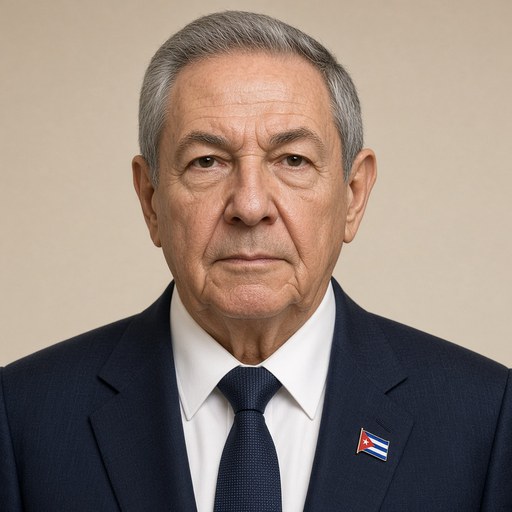
Speech delivered at the Latin America and Caribbean Summit on Integration and Development.
 Raúl Castro · President of Cuba
- Context
- Castro addressed the Latin America and Caribbean Summit on Integration and Development in December 2008, advocating for regional unity and a collective response to the global economic crisis.
- Main themes
- Latin American and Caribbean integration, regional solidarity, global economic crisis response, neoliberalism critique, underdevelopment and social inequality, international financial system reform, cooperation among nations, Cuba's regional relations, natural resources and development, collective regional identity
- Duration
- ~8 min
- Words
- 954
- Sentences
- 38
- Readability
- 32
- Grade
- 15.0
- Syntax
- 3.21
- Vocabulary
- 2.39
Translated from Spanish
The broad sphere of national life a sentence belongs to. Every sentence has an Arena, so it is the denominator the other indices are read against.
Other38 sentences in 27 paragraphs
Dear companion Luiz Inácio Lula, President of the Federative Republic of Brazil;
Distinguished Heads of State and Government;
Distinguished Guests:
Allow me, first of all, to convey a message of friendship from my compatriots to the fraternal Brazilian people.
In greeting the leaders of our region, I reaffirm the gratitude of all Cubans for the help and solidarity received in the face of the considerable damage caused by the three hurricanes that recently struck our country.
Dear friends:
The journey to this point has been long and difficult. Bringing together for the first time the leaders of Latin America and the Caribbean in a forum of noble and just intentions, without exclusions, nor the presence of extra-regional countries, is of undeniable significance.
We appreciate that the conditions are favorable for this great meeting to be the beginning of a process of extraordinary strategic significance for the destinies of our region, in a world with few possibilities for isolated action, foreign to the common challenges imposed decisively by globalization. I do not refer to the neoliberal model of this, which truly proposes a globocolonization, but to the construction of the essential globalization of solidarity.
The main challenge is to gradually move from words to actions. The integrative actions adopted at this Summit, in addition to their practical sense, must be guided by cooperation among our peoples.
It is essential that this Summit has follow-up, that this promising initiative is not reduced to the opportunity to meet and exchange on this occasion.
Before the current global economic crisis was declared, our peoples had already accumulated the historical experience of exploitation and underdevelopment expressed, succinctly, in income inequality, social injustice, hunger, illiteracy, precarious health care, plundering of natural resources, and the consequences of insufficient economic and social infrastructure.
No less impactful have been the brain drain and the abusive burden of external debt service, to which is added the dire picture of crime, drug trafficking, and environmental degradation, aggravated by the failed neoliberal recipes applied as an uncontestable dogma.
This is not about creeds or ideologies, but about the conscious recognition of the exhaustion of an economic model that only the State, with the participation of society as a whole, can ultimately rectify through systematic, coordinated, and committed action with the most prominent interests of the nation.
Our region is experiencing a formidable rebirth of the spirit of its peoples, with the emergence of a vibrant civic force willing to take charge of the destinies of their respective countries, to assert the priority that social programs deserve, defend national wealth, and fight for justice.
In recent years, political pronouncements and initiatives proposing new formulas for integration have flourished.
The moment is clearly ripe for us to propose a regional paradigm that transcends differences, privileges our communion of interests and needs, promotes solidarity action, and expands cooperation.
Our differences should not deprive us of an integration that realizes the just aspirations of the vast majority of the 550 million people who coexist from the Rio Bravo to Patagonia.
Our nations are going through difficulties, but they also possess immense natural resources, technological and productive advances on a global scale, and a scientific potential that is poorly utilized and scarcely shared at the regional level.
Cuba has strengthened its relations with several nations of Latin America and the Caribbean, as evidenced by the successful holding of the III Cuba-CARICOM Summit recently, where we reaffirmed our willingness to work towards greater integration and share the defense of common interests.
We must agree on concrete actions and adopt practical and valid decisions for our peoples. We believe that among the priorities, the search for a regional response to face the current global economic situation should not be lacking.
The complexity of this situation requires the participation of all for its solution. In this sense, we celebrate the efforts that have led to the creation of different groups to seek alternatives to a crisis whose scope and depth cannot be foreseen. We share the view of the President of the Dominican Republic, companion Leonel Fernández, to aspire to a G-192 that includes all countries that are part of the United Nations family.
Our region must demand the redesign of the international financial system and the restructuring of economic relations between countries. To achieve this, it is not enough to claim it in international forums, although we must not cease to do so. We are capable of building our own norms and practices in the region, uniting wills and resources, and implementing new types of relationships.
We come to this Summit with the willingness to cooperate and work for a future with spaces for all. Cuba, despite the vengeful and prolonged blockade imposed by the government of the United States, is willing to share its modest experiences in collaboration, which, along with solidarity and internationalism, constitute the pillars of our relations with the world.
On behalf of Cuba, which has had to endure nearly 50 years of economic, commercial, and financial blockade, I thank the countries of Latin America and the Caribbean for their firm support for the Special Declaration of this Summit that calls for the cessation of this illegal and unjust policy, which violates the human rights of our people.
In the city of Salvador de Bahia, capital of this state, 15 years ago, companion Fidel Castro spoke vehemently about the necessary integration of our nations. Allow me to conclude my remarks by recalling his words when he expressed:
"Yesterday we were a colony; tomorrow we can be a great community of closely united peoples. Nature gave us unsurpassed riches, and history gave us roots, language, culture, and common bonds that no other region on Earth has."
Thank you very much.
The original Spanish. The tags above are read on the English translation's sentences.
Estimado compañero Luiz Inácio Lula, Presidente de la República Federativa de Brasil;
Distinguidos Jefes de Estado y de Gobierno;
Distinguidos Invitados:
Permítanme, en primer lugar, transmitir un mensaje de amistad de mis compatriotas al fraterno pueblo brasileño.
Al saludar a los líderes de nuestra región, les ratifico el agradecimiento de todos los cubanos por la ayuda y solidaridad recibidas, ante los cuantiosos daños causados por los tres huracanes que recientemente azotaron a nuestro país.
Estimados amigos:
El camino recorrido hasta aquí ha sido largo y difícil. Reunir por primera vez a los mandatarios de América Latina y el Caribe en un foro de nobles y justas pretensiones, sin exclusiones, ni la presencia de países extrarregionales, tiene incuestionable trascendencia.
Apreciamos que las condiciones son propicias para que esta magna cita sea el inicio de un proceso de extraordinaria significación estratégica para los destinos de nuestra región, en un mundo con escasas posibilidades para el accionar aislado, ajeno a los desafíos comunes que nos impone, de modo decisivo, la globalización. No me refiero al modelo neoliberal de ésta, que se propone realmente una globocolonización, sino a la construcción de la imprescindible globalización de la solidaridad.
El reto principal resulta pasar paulatinamente de las palabras a los hechos. Las acciones integradoras que se adopten en esta Cumbre, además de su sentido práctico, deben estar guiadas por la cooperación entre nuestros pueblos.
Resulta esencial que esta Cumbre tenga seguimiento, que esta promisoria iniciativa no se reduzca a la oportunidad de vernos e intercambiar en esta ocasión.
Antes de declararse la crisis económica global en curso, nuestros pueblos ya habían acumulado la experiencia histórica de la explotación y el subdesarrollo expresados, sucintamente, en la desigualdad del ingreso, injusticia social, hambre, analfabetismo, precariedad en la atención de salud, expoliación de los recursos naturales y las consecuencias de una insuficiente infraestructura económica y social.
No menos impactantes han resultado el robo de cerebros y la abusiva carga del servicio de la deuda externa, a lo que se añade el cuadro nefasto que comporta la criminalidad, el narcotráfico y el deterioro ambiental, agravados por las fracasadas recetas neoliberales aplicadas como un dogma incontestable.
No se trata ahora de credos o ideologías, sino del reconocimiento consciente del agotamiento de un modelo económico que sólo el Estado, con la participación del conjunto de la sociedad, puede rectificar, en última instancia, mediante una actuación sistemática, coordinada y comprometida con los intereses más prominentes de la nación.
Nuestra región experimenta un formidable renacer del espíritu de sus pueblos, con el surgimiento de una pujante fuerza ciudadana dispuesta a asumir los destinos de sus respectivos países, para hacer valer la prioridad que merecen los programas sociales, defender las riquezas nacionales y luchar por la justicia.
Han florecido en los años recientes los pronunciamientos políticos y las iniciativas que proponen nuevas fórmulas de integración.
El momento es claramente propicio para proponernos un paradigma regional, que rebase las diferencias, privilegie nuestra comunión de intereses y necesidades, promueva la acción solidaria y amplíe la cooperación.
Nuestras diferencias no deben privarnos de una integración que haga realidad los justos anhelos de la gran mayoría de los 550 millones de personas que convivimos desde el Río Bravo hasta la Patagonia.
Nuestras naciones atraviesan por dificultades, pero también cuentan con inmensos recursos naturales, adelantos tecnológicos y productivos de escala mundial, y un potencial científico pobremente aprovechado y escasamente compartido a nivel de la región.
Cuba ha fortalecido sus relaciones con varias naciones de América Latina y el Caribe, muestra de ello fue la realización exitosa de la III Cumbre Cuba-CARICOM desarrollada recientemente, donde ratificamos nuestra voluntad de trabajar hacia una mayor integración y compartir la defensa de los intereses comunes.
Debemos acordar acciones concretas y adoptar decisiones prácticas y válidas para nuestros pueblos. Consideramos que entre las prioridades no debe faltar la búsqueda de una respuesta regional para encarar la actual situación económica mundial.
La complejidad de esta situación requiere de la participación de todos para su solución. En este sentido, celebramos los esfuerzos que han conducido a la creación de diferentes grupos para buscar alternativas a una crisis cuyo alcance y profundidad no es posible prever. Compartimos el criterio del presidente de la República Dominicana , compañero Leonel Fernández, de aspirar a un G-192 que comprenda a todos los países que forman parte de la familia de Naciones Unidas.
Nuestra región debe exigir el rediseño del sistema financiero internacional y la reestructuración de las relaciones económicas entre los países. Para lograrlo no basta con que lo reclamemos en los foros internacionales, aunque no debemos dejar de hacerlo. Estamos en capacidad de ir construyendo nuestras propias normas y prácticas en la región, de aunar voluntades y recursos e instrumentar relaciones de nuevo tipo.
Asistimos a esta Cumbre con la disposición de cooperar y trabajar por un futuro con espacios para todos. Cuba, a pesar del vengativo y prolongado bloqueo que nos impone el gobierno de Estados Unidos, está dispuesta a compartir sus modestas experiencias en temas de colaboración, que junto a la solidaridad y el internacionalismo constituyen los pilares de nuestras relaciones con el mundo.
En nombre de Cuba, que ha tenido que sufrir casi 50 años de bloqueo económico, comercial y financiero, agradezco a los países de América Latina y el Caribe por su firme apoyo a la Declaración Especial de esta Cumbre que reclama el cese de esta ilegal e injusta política, violatoria de los derechos humanos de nuestro pueblo.
En la ciudad de Salvador de Bahía, capital de este estado, hace 15 años el compañero Fidel Castro se refirió con vehemencia a la necesaria integración de nuestras naciones. Permítanme terminar mi intervención recordando sus palabras, cuando expresó:
Ayer fuimos colonia; podemos ser mañana una gran comunidad de pueblos estrechamente unidos. La naturaleza nos dio riquezas insuperables, y la historia nos dio raíces, idioma, cultura y vínculos comunes como no tiene ninguna otra región de la Tierra .
Muchas gracias.