




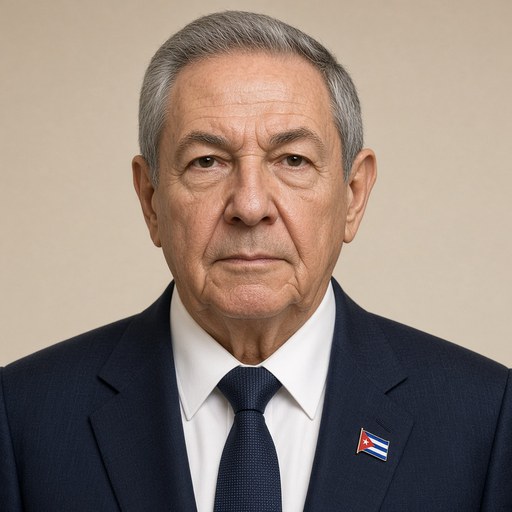
Speech delivered at the conclusions of the first ordinary session of the VII Legislature of the
 Raúl Castro · President of Cuba
- Context
- Castro addressed the Cuban National Assembly's first ordinary session of the VII Legislature on July 11, 2008, discussing social security reform and demographic challenges.
- Main themes
- Social security reform, retirement age changes, Cuban Five imprisonment, life expectancy statistics, workforce and labor shortages, population aging, low birth rates, Havana urban labor challenges, national assembly session
- Duration
- ~73 min
- Words
- 8,703
- Sentences
- 324
- Readability
- 47
- Grade
- 13.2
- Syntax
- 3.21
- Vocabulary
- 2.13
Translated from Spanish
The broad sphere of national life a sentence belongs to. Every sentence has an Arena, so it is the denominator the other indices are read against.
Other324 sentences in 160 paragraphs
Comrades:
The Declaration in support of our five compatriots who suffer unjust imprisonment in the prisons of the United States, approved by this Assembly, is another modest action in the struggle for their freedom, in which we will not cease until their return, with the growing support of those around the world who believe in justice.
To Gerardo, Antonio, Ramón, Fernando, and René, we send a strong embrace from the Cuban Parliament.
An important part of yesterday's meetings and this first session, in the morning, although shorter, was dedicated to analyzing vital issues such as the protection of workers and their right to a fair retirement.
The draft of the new Social Security Law—and we repeat some of the issues that you have already discussed in depth, for direct information to our people—and especially the proposed changes in the retirement age and the years worked to qualify for it, correspond to the reality of a country where life expectancy is increasingly high and birth rates have remained, for several years, at very low figures, typical phenomena of developed countries, the only thing is that in our case it is in a developing country and has its own characteristics, therefore.
Here I have the "Executive Summary of the Calculation of Life Expectancy in Cuba," completed just a few days ago by the National Statistics Office and which has not yet been published.
I will read a paragraph from it:
"Cuba achieves a life expectancy at birth of 77.97 years for both sexes in the period 2005-2007: 76 for men and 80.02 for women."
In other words, that privilege enjoyed equally by all Cubans places us within the 25% of the world's population whose children can aspire to live 77 or more years. It also means that our compatriots live five years longer than the average of the rest of Latin Americans and Caribbeans.
There are no notable differences between the provinces, but as a curious fact, I tell you that the one with the lowest results is the capital with 76.81 years. Where are the Habaneros, from the capital, I mean? They are there, well, I greet them; and the highest are in Las Tunas with 79.28. Where are the Tuneros? I congratulate you. So I do not advise emigrating from east to west to those who aspire to live as long as possible.
A joke fits in, if you allow me. What I just said should actually be so, but it will not be able to be so; because, for example, no Habanero wants to be a police officer, and we need to bring, not thousands, but tens of thousands of police officers, especially from the eastern provinces, with the problems that this brings, and when they already have experience, a large part, as is natural, wants to return to their families, due to the lack of housing, etc., etc.
It seems that none of the Habaneros wants to be a police officer. It will not be able to be as we expressed in the document—and I continue with the joke; my jokes sometimes carry a message—because, who is going to build in Havana if builders do not come from almost all over the country and especially from the east? Because in Havana, almost no one wants to be a builder; it seems that there are many possibilities, although all jobs are honorable. Even teachers have to be brought from the interior provinces, and especially from the east, to the capital. And I believe that the capital has the most inhabitants.
In the future—we are breaking our heads—how do we solve the problem of police officers, how do we solve the even more complicated problem of the lack of builders, with so many things that need to be built, with the construction materials companies that we are making an effort to develop, with investments in new cement factories that are being projected and the increase or expansion of the existing ones, as one of the main components for construction, etc., etc.
I think—and I continue with the joke, I will warn when I finish—and I told the Minister of the Interior, Colomé, a few days ago when we were analyzing these problems: "The time will come when we will have to propose to all the provinces, even to the microprovince of my friend Kcho—I say microprovince because it is a special municipality that has always aspired to be a province, and it cannot be because it would be more expensive—that each of the provinces must have its builders, must have its own teachers, and must have its own police officers, just to mention three important activities."
What do you think? I believe we have to look for them, we need to start thinking. If the easterners do not come to take care of the Habaneros, thefts will start to increase... It is just for you to think.
The joke is over, I continue with the speech.
In the period 1950-1955, the stage in which we attacked the Moncada Barracks, life expectancy at birth was just over 59 years, that is, since then it has increased by almost 20 years, despite the difficulties imposed by the blockade and the rest of the aggressions of the empire, to which were later added the problems derived from the special period. It is undoubtedly a great victory of the Revolution.
Another very important indicator, due to its implications in the issue we are analyzing, is how much longer, on average, a Cuban who reaches 60 years of age will live. It is what is called geriatric life expectancy—that is, what is lived after the age of 60—which is currently 20.8 years for men, ranking eighth in the world alongside France and Italy—I add that the United States ranks tenth—and for our women, that geriatric life expectancy is 23.4 years, ranking 16th in the world and ahead of countries like the United Kingdom, Denmark, and Norway.
To those years of retirement, we must add the more than twenty that, as a rule, encompass the stage of childhood and student life, in which logically nothing is produced, but the necessary knowledge is acquired, which is also essential.
In other words, for a period of more than 40 years, a little more than half of a Cuban's life expectancy, all the expenses incurred are assumed by those who work, who, as I will explain later—and this topic has already been discussed yesterday and today—tend to be fewer and fewer.
It is a demographic and economic situation very different from that existing on May 1, 1963, which was the year in which the Revolution promulgated Law 1100, which for the first time guaranteed social security in our country to all workers and their families.
From that day on, the revolutionary state also assumed the expenses of the 55 so-called "retirement funds," which existed until then, unable to pay pensions to thousands of workers who had contributed to them throughout their working lives, only to find out in old age that those funds had been stolen by officials of the corrupt governments prior to 1959, and especially by the Batista tyranny, leaving them in total abandonment.
From that date, May 1963, the retirement age was established at 60 years for men and 55 for women. A moment when the main problem of the country was the thousands of unemployed, when birth rate indicators were breaking historical records and life expectancy was still relatively low; in 1963 it was 62 years.
The current reality is radically different and imposes extending the active working life of citizens. Remember that in the budget approved by this Assembly for the current year, social security and assistance expenses represent 13.8%, a figure close to 5.2 billion pesos.
To this is added the problem of low birth rates, persistent for several decades. This and other factors have led to a slight decrease in the population in recent years.
In 2006, births reached the lowest level in the last 60 years, and the population decreased by more than 4,000 inhabitants compared to the previous year. Last year, 2007, it decreased a little less, due to a slight increase in birth rates, but the trend remained.
The combination of all these processes begins to reflect unfavorably on the working-age population. If in 1980 more than 238,000 young people reached working age—in other words, working age, in 1980, nearly 30 years ago—the past year that figure was just over 166,000—that is, 72,000 fewer—and it is estimated to drop to about 129,000 by 2020.
Those same forecasts indicate—as the Minister of Labor repeated this morning—that in 2025 there will be about 770,000 fewer citizens of working age than currently, and in terms of the current Social Security Law, there would be more people leaving active working life than those who would join it.
These are also problems, like all demographic issues, that cannot be solved in the short term, and time passes quickly!
People over 60 years old constituted 16.6% of the country's population in 2007 (a year earlier it was 15.9%, that is, in 2006), and this proportion will continue to increase more and more sharply in the coming years.
In reality, we have not discovered anything new. As the data in your possession reflects, the modifications included in this Bill have been applied for years by nations facing similar demographic situations—the exact figures were given this morning by comrade Morales Cartaya: developed countries in general and the number that have had to take this step—despite the fact that, as is known, they mitigate the negative effects through brain drain and the importation of cheap labor from the Third World. And when crisis situations arise, the phenomenon we have just criticized with this declaration approved by the Assembly a few moments ago occurs.
Some data. Retirement age in the United States, 65 years, for both men and women; the same in Canada and Mexico, among others in America. In Europe, the same parameters of 65 years for both sexes exist in Finland, Sweden, Spain, and Germany; and in Asia, Japan. Other examples could be cited.
Let us see those that have established 65 years for men and 60 for women—as proposed in our case. In America, there are Argentina, Brazil, and Chile, among others; in Asia, Israel and Iran; and in Europe, Italy, Poland, Romania, and Austria—which, the latter, has already announced it will raise it to 65 years for women. There are more examples.
Moreover, many countries have privatized the social security system or do not cover the entire population. In much of the world, neoliberalism has simply opted for the state to get rid of the problem and let each one manage as best they can.
And it is not just about numbers; it is evident that the majority of Cubans, like all those in the world who have adequate health services and satisfactory nutrition, reach 60, 65, and even older ages in good physical and mental condition. It is something that is evident at first glance, although, as happens in all rules, there are exceptions that the law takes into account.
Furthermore, the vast majority are professionals, technicians, or people who master a valuable trade, sometimes in deficit and extremely necessary for the country, so they feel capable of continuing to contribute and receiving the corresponding remuneration.
This is a way within the reach of the current real economic possibilities, to increase the income of an important sector of the population, I refer, of course, to those who retire according to the norms of the new law.
I have extended myself, but I think the topic deserves it.
The draft Law presented includes other possibilities, such as the option to rejoin the workforce receiving the full salary for those who retire under the new rules, I repeat: under the new rules. It also modifies the calculation of pensions, so that those who retire meeting the new age and years worked requirements will receive a higher pension, more in line with their contributions, salary, and work permanence.
In addition, the possibility of having more than one employment contract and receiving the total corresponding income for the person who wishes to do so, the so-called multiple employment, is being studied, although not as part of this Law.
As has already been explained, the application of the new rules will be a gradual process that will cover the next seven years, with the aim of not affecting workers who will reach the retirement ages provided for in the current Law during that period and wish to adhere only to its benefits.
It was even initially thought of a ten-year transition period, but the longer we extend it, the greater a crisis will come upon us, since, as has been announced, starting in 2020—which is only 11 years away—there would be more people leaving active working life than those who would join it, in terms of the current Social Security Law. Remember, too, what was also said, and I mentioned it a moment ago in this speech, that in 2025 we will have about 770,000 fewer workers. Hence the decision to propose that it be in seven years.
Once the considerations expressed by the deputies in these days and those that will be received from the consultations planned with the workers are incorporated, the draft Law will be drafted, which we will submit for approval to the Assembly in the next ordinary session, at the end of the year.
It is a new step, of the many that will have to be taken, in establishing norms and mechanisms aimed at restoring the role of salary.
I only add that the issue of salaries is being studied comprehensively, in order to gradually increase them according to priorities. I do not mention dates or sectors. It will depend on the economic situation of the country, inevitably linked to the current crisis in the world, which may even worsen. It is my duty to express this frankly, as it would not be ethical to create false expectations. To say otherwise would be to deceive you.
I will now address another important matter: today we lack teachers and professors. For various reasons, thousands are no longer in the classrooms, some due to retirement and others taking on new responsibilities outside the education sector, as they are suitable candidates for multiple tasks and are sought after everywhere. These factors are compounded by salary issues.
And as a demonstration of what I said, I would ask those present in the State Council and in Parliament to raise their hands if they are or were teachers or professors (A group does so). Let's see in the State Council? (Others do as well). We could almost found a university with you.
Therefore, I call on those teachers and professors to return to their noble profession. In the case of retirees who still have the ability to contribute their professionalism and experience in front of a classroom, we will propose to the State Council, before the new school year begins next September, that until the new Social Security Law is approved at the end of the year, they be provisionally and exceptionally authorized to receive the full salary for the position from their reintegration, that is, the retired teachers who return, without prejudice to their right to the pension as retirees, so that they receive both in full.
Now, these statements and applause are not enough, starting with the union, the CTC, the Party, the mass organizations, which can collaborate a lot in this, and all of us must make an effort, because everyone knows a teacher; that, of course, good intentions are not enough. We must see, according to the standards established by the new Minister of Education, who is accepted or not.
We trust that many will return to continue contributing to the advancement of our education and thereby support the training and development of young teachers, those who have contributed to Cuba continuing to occupy a leading place in this decisive front, as demonstrated by the recent study conducted by UNESCO, which places our country in first place among all of Latin America in third-grade mathematics and reading and in sixth-grade mathematics and science, with more than 100 points above the regional average. There are deficiencies, we know them, but there is no doubt that our teachers and professors deserve the highest recognition and respect from all of society, especially from parents and students.
I remember when a few years ago, in the face of the need to massively modernize our armament, a similar call was made to engineers, technicians, skilled workers, and other specialists from the Military Industry who were already retired. Many responded and continue to work, including a few grandmothers and grandfathers.
Returning to the issue of salaries, we would all like to move faster, but it is necessary to act realistically, unlike those who spread the absurd, though not naive, lie that a Cuban worker earns on average the equivalent of 17 dollars a month.
I recalled when the Minister of SIME reported the average salary at 436 pesos. Divided by 25, what does it give? Seventeen or eighteen dollars. You will see tomorrow in the international press reflecting your words that when citing that they will put: "It is equivalent to 17 or 18 dollars a month."
They simply start by dividing the average salary in Cuba by the rate established for the exchange houses known as CADECA, that is, by 25. They do this knowing that with 30 times those 17 dollars — to give a very conservative figure — no one in any capitalist country can pay for what any Cuban family normally has access to, and we know the problems that exist.
One example, an average family pays about 118 pesos monthly for the rationed products, all subsidized, whose cost at current prices is 61 dollars.
This does not mean that we are satisfied with what has been achieved. We know the difficulties, the products that are scarce or insufficient, and we work to make them fewer every day. The more we all contribute, the faster it will be achieved, as we must be aware that every salary increase that is approved or price that is established must correspond with the possibilities of the economy.
Otherwise, it simply increases the circulating money, prices rise automatically, and there is no real increase in purchasing power. These are not issues that can be resolved with a decree. In our case, they are even more complex because the Revolution does not apply the so-called "shock therapies" — which we are already starting to see on all continents at this moment — which are nothing more than placing all the consequences of the crisis on the people. Moreover, vices persist in the minds of cadres and workers such as indiscipline or tolerance towards it, with a direct impact on productivity and efficiency.
For the worker to feel like the owner of the means of production does not depend only on theoretical explanations — we have been doing that for about 48 years — nor on whether their opinion is taken into account in labor activity. It is very important that their income corresponds to their personal contribution and the fulfillment by the workplace of the social purpose for which it was established, that is, to achieve the production or the provision of services that it has established.
In summary, that everyone receives according to their work, and for that the following unavoidable premises must be met:
First, that this work really contributes what everyone afterwards demands to receive.
Second, order, control, and rigorous demands that ensure efficiency, savings, and prevent theft or diversion of resources.
Third, eliminate undue gratuities and excessive subsidies. I repeat, eliminate undue gratuities and excessive subsidies.
Fourth, an adequate system of taxes and contributions, so that we all contribute to the maintenance of services that are provided for free or at heavily subsidized prices, and to finance activities such as defense, security, and internal order, public administration, and many other essential activities for the functioning of any country.
I am trying to remember when we have heard that term of tax, because a comrade told me the other day that in a small neighborhood in the province of Havana, a cattle farmer, happy with his cows, the plans he had to increase, with the payment that is now made to them, was already organizing to build a second floor in his house, on the roof, for his son, he was putting in the first rebar, and the comrade, who is from the city and does not know much about the countryside, asked him: "And how much do you pay in taxes?" And the other replied: "What is that?"
That from the farmer is not that he is ignorant. At this point, we must see how many elderly people we have left out there, between the Ministry of Finance and Economy and Planning, etc., who know anything about taxes. I point this out because they must be applied, and it is also a means of regulating many things.
To be honest, I can tell you that I have been waiting for weeks for the data on how many things are free in this country or subsidized. There are so many that I still do not have the data.
In sleepless nights, which are often due to these issues, I say: "We are building socialism." Then I mention Fidel's reflections, when the famous speech in the Aula Magna of the university a few years ago, and I ask myself: "Are we making socialism? Because to be honest, I also say that, in addition to these problems we are analyzing regarding the new Social Security Law, there is little work being done, less work is being done. That is a reality that you can verify in any corner of the country. Forgive the harshness of my words, it is not mandatory to agree with them.
Socialism means social justice and equality, but equality of rights, of opportunities, not of income. Equality is not equalitarianism. This, ultimately, is also a form of exploitation: that of the good worker by the one who is not, or worse still by the slacker.
Another decisive issue is that the workforce is where it is needed. That is why I told you that each province should have its own teachers, its own doctors, its own builders, etc. And as we are one nation, and very united, if any territory needs any help, of any kind and in any circumstance, it will receive it from the others; but the Party, the social and mass organizations, the provincial and municipal government bodies must think about these issues, and as you will see, what we want is for us to think and delve deeper. And in all those visits of the deputies — a correct decision — to the municipalities where we were elected is correct, but not to go just to go, not to allow them to treat us, as happened many times, as if we were a foreign delegation or a representative of the Diplomatic Corps, with a prefabricated program.
The less young do not remember that from this very podium, when the provinces reported, which have not reported for a long time, a government president, a good comrade, read a report here, which I had no choice — despite the shame and embarrassment it gave me — but to deliver a strong speech, which resulted in the dismissals of those responsible for that, starting with the First Secretary of the Party of the province, which was Granma. Where are the people from Granma? Do you remember that? Everything was prepared, and here many deputies spoke, saying wonderful things about the province.
I remember that we did some inspections; I remember that to Machado, who they knew was going to visit a school, they had cut the grass even from the path in the field he had to pass. And as I went to a place where there were many mobilized, I saw from the bus — where the secretary, the President of the Government, and other comrades were with me, there was a large group — that everywhere there was a flag and a meeting, and it was that they had prepared it; yes, I realized, I asked: "Hey! Why are they gathered, it is 4:00 in the afternoon?" Flags, Cuban flags, flags of the 26th, I don't know if we were close to some anniversary, and they told me an unacceptable lie: "No, since they are in the emulation, they are now analyzing." I said: "Go back, get in there," and I entered a camp. Immediately the camp leaders presented themselves, the speech was already written, the speaker was hoarse from practicing it, because in front of the leaders themselves I said: "You are hoarse, it is because you practiced a lot." And he says: "Oh! Since the Party Secretary called me, I have been practicing".
The less young will remember that. I, who remain young, still remember that and it will never be forgotten.
Another decisive issue — I told you — is that the workforce is where it is needed. Otherwise, I ask, who is going to plant to obtain the food we consume and that constantly rises in price in the international market? I sometimes simplify it and ask: Who is going to plant the beans? Who is going to build the works that are required? Who is going to produce what is necessary to maintain those growing expenses of the social security we talked about, of health, education? Just to mention those three important social conquests, to which the country allocates about 43% of budgetary expenditures, and if we add those of sports and culture, these five areas: social security, health, education, sports, and culture represent 55% of the National Budget for this year; 45% is for the rest of the activities of the country.
The positions granted by educational centers must be proportional to the needs and future employment possibilities of each specific place. I repeat: The positions granted by educational centers must be proportional to the needs and future employment possibilities, and they must also be occupied by those truly interested in putting that knowledge into practice. Ask for any data, there are those who graduate in one thing and three months later are in another, and that costs. There are those who, in order not to go to one place, enroll in a technological school and then maneuver and do their things to go to another place.
You saw a deputy here talk about the needs of the polytechnics, technological, she said, for the Ministry of the Sideromechanical Industry.
Here I will talk about agriculture and the lands that will be handed over. Is María del Carmen, the Minister of Agriculture, around? I asked you for data last night in the meeting we had of the State Council and the Political Bureau, where we analyzed these issues and this speech.
Do you have the data on how many agronomists we have graduated in the country and how many are working in their specialty?
María del Carmen Pérez.- Yes. Yesterday I spoke with Comrade Fernández and saw that a total of more than 31,000 agronomists had graduated, and at this moment in the sector, in the Ministry of Agriculture — I am not talking about the Ministry of Sugar — we have 8%, around 6,000 or 7,000 graduated agronomists.
Raúl Castro.- Some must have died, some deceased, etc.
The Ministry of Sugar must have less; I am not asking you (referring to Ulises Rosales), I did not ask you yesterday, or do you have it in mind? Or do you tell me more or less?
Ulises Rosales.- Comrade General of the Army, we have 20% and with those who are studying we complete, we are privileged by what was decided with the Álvaro Reinoso task.
Raúl Castro.- Of course, and the reduction of the sector.
But that is an example and not the most eloquent. But at the territorial level, you can check it yourselves.
Thank you both.
Harmony in planning and organization is essential in socialism. Its absence can lead to a chaos more dangerous than that characteristic of capitalism, where the laws of the market end up establishing some order and balance, even at the cost of the sacrifice of billions of human beings on a global scale.
In socialism, it is essential that in economic plans the allocation of resources strictly adjusts to the available income. We cannot aspire to that 2 and 2 is 5; 2 and 2 is 4; rather sometimes in socialism 2 and 2 gives 3.
I convey these ideas to you first of all to encourage you to think, not only to you, comrades and deputies, but to all compatriots, to the whole country. Some are personal assessments that should not be interpreted as immutable. These are matters that we have a duty to study and debate in depth in an objective manner, the only way to continue approaching the most convenient formulas to move forward with the Revolution and socialism.
Let us not forget the reflection of comrade Fidel, in that transcendental intervention in the Aula Magna of the University of Havana, on November 17, 2005, when he said:
"A conclusion I have drawn after many years: among the many mistakes we have all made, the most important mistake was to believe that someone knew about socialism, or that someone knew how to build socialism," thus his words.
It is also a concept of permanent validity that the fewer resources there are, the greater discipline is required and the more one must foresee, plan, organize, demand, and save. This is urgently imposed by the current international economic situation and, therefore, ours.
I am no longer very young, although I feel young, and many of these issues we have verified, we have practiced. When we had a gigantic army that reached, counting the 55,000 men that were at the end in Angola, around 280,000 men and 50,000 officers, a very difficult situation was created, although we had already made the corresponding gradual reductions when the Soviet Union fell, and we practiced this in the Armed Forces, and it worked for us, and we have been successful in everything.
But it is worth repeating this concept. "It is also a concept of permanent validity that the fewer resources there are, the greater discipline is required and the more one must foresee, plan, organize, demand, and save. This is urgently imposed by the current international economic situation."
In 2003, the price of a barrel of oil was around 28 dollars. At the same time last year, it was already between 70 and 80. Recently, it broke the barrier of 145 dollars, more than five times the price of just five years ago, and it is impossible to predict how far the escalation will go, as its depletion worldwide is faster than calculated. As an example of what has been expressed, just hours ago, in Europe, the price of the barrel exceeded 147 dollars, Brent oil, from the north; it was at 145 about 72 hours ago, dropped a little, then just hours ago it reached 147; there was no movement in the US market and, while we were on lunch break, in New York it reached the same figure, a little more, 147.50. The dollar continued to devalue.
To this, other factors are added such as the production of biofuels, financial speculation, and the devaluation of the dollar — to cite just a few of the fundamentals — that have driven up the prices of practically all products intended for human consumption and the inputs to produce them.
Three examples. In July 2007, the cost of importing a ton of rice had already risen to 435 dollars, today it requires 1,110 per ton, which was previously 435. The same amount of wheat, one ton, last year, when we spoke in Camagüey, was bought for 297 dollars, now it requires more than 409. And as I said on July 26 in Camagüey, the ton of powdered milk was then priced at the astronomical price of 5,200 dollars while four years ago it was acquired for about 2,100, less than half the current price.
Everything is rising! And to top it off, among those that have grown the most are the prices of fertilizers, essential for higher yields. One of the most important, the complete formula for various crops, raised its price from 303 dollars per ton in July 2007 to 688 at this moment. Another very used fertilizer, urea, cost about 400 dollars a ton a year ago, now it must be paid almost 700. It seems like the work of the devil!
Fidel's prediction in his Reflection of March 28, 2007, is overwhelmingly being fulfilled: "More than 3 billion people in the world condemned to premature death by hunger and thirst," thus he titled it. And for such a terrible reality, no solutions are in sight, at least with the immediacy that is required.
And the situation may even worsen, although some insist on closing their eyes to it. We will continue to do everything in our power to ensure that these serious adversities affect our people as little as possible, but it is inevitable that we will suffer some impact on certain products and services, as the enemy is also doing everything possible to multiply our difficulties, with the absurd aspiration to bring us to our knees.
In response to every measure adopted recently in our country, some government official from the United States, from a spokesperson to the President himself, immediately comes out calling it "insufficient" or "cosmetic."
Although no one here has asked for their opinion, I reiterate that we will never adopt a decision, not even the slightest one, as a result of pressure or blackmail, from wherever it may come, from a powerful country or an entire continent.
We already demonstrated this when, under the dictation of the United States government, we were expelled from the OAS and all Latin American countries, with the honorable exception of Mexico, broke diplomatic relations with Cuba.
We also remember when in 1996, under the same imperial baton, the countries of the European Union adopted the so-called "common position" against Cuba.
To these supposed accusers, first and foremost to the United States, the peoples have put them in the dock, for the hundreds of people kept for years in the territory usurped from our country by the Guantánamo Naval Base, in inhumane conditions and disregarding universally accepted norms of treatment for prisoners.
Millions of people on the planet condemn them for the hundreds of thousands of civilians killed by the bombs and shrapnel of the occupying army, which they euphemistically call "collateral damage"; for the indiscriminate use of torture, extrajudicial executions, and clandestine prisons; for carrying out or being complicit in secret transfers of prisoners and other serious violations of laws and human rights.
It is illusory to dream that a people that has resisted terrorist acts, economic war, and all kinds of aggression for half a century will renounce conquests that are the result of enormous sacrifices, just to satisfy certain circles of power in the United States or those who support them elsewhere.
The unequal battle of this small island against such a powerful enemy has earned it the respect of peoples and a large part of governments, fundamentally from Third World countries. Others, although they do not share some of our ideas, have taken a more realistic attitude.
I will now address another important issue in our economy. We must definitively reverse the trend of decreasing cultivated land area, which between 1998 and 2007, in just 9 years, decreased by 33% — a third of the cultivated land — influenced considerably by the limitations imposed by the special period. In short: we must turn to the land! We must make it productive!
Work is being done without improvisations or haste. There is already a clear strategy and a plan of actions from the national level to the productive base.
These are ideas about how agriculture and livestock should be in Cuba at the present time, when around 75% of the population is urban, which does not mean that the remaining 25% works in the field. Therefore, no hectare suitable for planting can be left unplanted, first in the immediate periphery of each town and city. It is much more economical to optimally utilize those nearby lands than the costly transfer of workers or students over long distances, sometimes to work half a day. This way we avoid losses and low productivity.
There are the magnificent results of urban agriculture, which without resorting to mobilizations or large expenses produces a remarkable amount of vegetables and has contributed to the habit of consuming this important food and also provides employment to more than 300,000 people, including about 67,000 women and around 40,000 retirees.
These are realistic proposals for a country whose resources do not always allow for the use of modern technologies, which are very productive but expensive and also consume fuel. We will use them when it is economically justified, as is being done with agricultural machinery and implements, chemical products, irrigation systems, and protected crops, with encouraging results although still incipient.
But there are also notable experiences of producers who achieve good results by combining science with oxen, organic fertilizer, other traditional means, and above all a lot of efficient work.
I admire the great socialist state enterprise, including agricultural ones, and we will not renounce them. I know several that produce efficiently. The above does not deny at all the role of the cooperative in its various modalities and of the small farmer, of whom I can also provide very outstanding examples.
All are forms of property and production that can coexist harmoniously, as none is antagonistic to socialism.
During the reflection process on the speech of July 26 last year in Camagüey, carried out throughout the country, more than 141,000 proposals were made regarding the production or price of food. It was one of the most discussed topics.
In the twelve months that have passed, work has been done to implement what I stated on that occasion: the land, resources, and all necessary support will increasingly be available to those who produce efficiently, regardless of whether it is a large enterprise, a cooperative, or an individual farmer.
In the very near future, so close that it could be next week, the legal provisions will be approved — it can be said it was already approved last night in a joint meeting of the Political Bureau with the Council of State and other guests — to begin the granting in usufruct of idle lands to those who are in a position to put them into production immediately, and other measures associated with agricultural activity will be adopted.
Some necessary measures have already been implemented to ensure this process, such as the creation of municipal delegations of the Ministry of Agriculture and the reorganization of its system of enterprises.
The Party, the Government, and the National Association of Small Farmers, ANAP, from the central level to the municipalities, are closely following this process, which inevitably requires some time for the results to be noticeable, especially in the midst of an unfavorable international economic situation.
Now, more than ever, it is imperative to invest rationally our limited resources, essentially in obtaining profits that allow us to cover the already high social expenses of the country. The production of food, the substitution of imports, and the increase of exports continue to be fundamental lines. In addition, savings, which as comrade Fidel has pointed out, is today our most immediate and feasible source of resources. First of all, fuel.
Establish priorities and strictly comply with them. Postpone investments that are not essential to undertake immediately. Where it is possible, logical, and conditions can be created, resort to double shifts to better utilize available equipment and shorten the completion time of works, especially in the construction sector.
Make use of existing facilities. For example, by remodeling old underutilized buildings, of which there are many throughout the country, it is possible to locate, as is already being done, the equipment of the new industries being built as part of the programs of the Bolivarian Alternative for the Americas, ALBA, especially in collaboration with Venezuela.
Another issue I want to focus on is the consumption of food and other products intended for workers' canteens, schools, hospitals, etc., that is, I am not talking about those sold through the rationing booklet or in a liberated form.
In this area, which specialists have called "social consumption," waste, lack of planning, disorder, and its uncontrolled growth cannot continue.
There are plenty of recent examples of how much is still wasted, used for a different purpose than intended in the plans, or immobilized in a warehouse.
I will mention some cases detected during a recent visit by the Central Committee of the Party to centers in the capital, that is, workplaces, hospitals, schools, based on an experience initiated by the Ministry of Domestic Trade.
I take this opportunity to acknowledge the efforts that this ministry has been making, which is very complex and difficult, particularly its head, to change justifications for a spirit of solving problems. It is not only a deserved recognition, but also a new alert to those who manage or lead: constantly review yourselves, always thinking that nothing is perfect and that everything can be done better.
The first conclusion from these visits: month after month, the full allocation of food is delivered, as if no one missed a single day at the workplace or study center.
Result: food above the authorized inventory, which is for 45 days of coverage, in most of the centers visited. I will not mention names, as that is not the objective, since unfortunately this is something quite widespread, I repeat, quite widespread.
I said it should be covered for 45 days, right? Rice: one hospital with 147 days of consumption, another hospital with 123, and another hospital with 119 days; an internal study center with 88 days, double that, another with 86 days, of that food which has increased in price by more than double in the last year and is worth more than a thousand dollars a ton.
Sugar, here the situation is significant: a study center with a coverage of 908 days, more than two years! Another study center with 639 days, another with 294 days; a workplace with 300 days of sugar, another with 136.
Oil: a study center with 206 days, a workplace with 128.
These are impressive and shocking figures. Imagine this situation in the thousands of dining halls existing in Cuba. All of this also creates favorable conditions for theft, diversion, or the deterioration of food.
It is the consequence of supplying with bureaucratic methods, without bothering to check how many products were left over from the previous month to complete what is necessary. No, if you are supposed to get so much every month, you get that much, and if one month, because a ship was delayed or for whatever reason, you did not get what corresponds, the next month you get what you were supposed to get and what you were not given the previous month. And these are foods that in many cases are distributed for free or sold at prices much lower than the real ones, which rise daily. It is enough to say—observe this—that to import the same volume of food as in 2007, last year, the same amount, this year would require 1.1 billion dollars more, to receive the same. Just think how shocking what I am narrating is.
I know of very few organizations where this does not happen, simply because they plan, control, and demand. It is therefore something that is in our hands to resolve, without additional resources and in a very short time.
These are our problems. Others will arise in the future, that is life, but every time we detect something done wrong, we must work tirelessly until we eliminate it.
In reality, the challenges are great and difficult, but our people have emerged victorious from worse situations.
Allow me to give an example from the Armed Forces—I am embarrassed, until the other day I was the Minister of the Armed Forces—because I think it contains valuable experience for moments like these.
The disappearance of the Soviet Union meant the loss of decisive supplies for the defense of the country, at a time when our economy could not secure them.
First, we said that beans were as important as cannons, and when the situation worsened, we came to assert that beans were more important than cannons. Something similar is happening to the country at this moment.
There were no laments or justifications. The troops marched to the agricultural fields and in a relatively short time produced their food, except for those that were not logical or possible to produce; we are not going to produce salt or sugar, or wheat, which cannot be grown in Cuba. Simultaneously, the business structures that gradually took over those productions were organized, and the combatants returned to their usual activities. The Military Agricultural Union was created, whose initials are UAM.
More than 15 years have passed since then. Today, the preparation for the defense of the country is more effective than ever, including Operation Caguairán, which should be known to all of you and which continues successfully, and we have also managed to modernize the armament—since the fall of the Soviet Union we have not acquired armaments, because they have prohibitive prices, and modestly, with the collaboration of other bodies of the Central State Administration, we have mobilized them, we have modernized them, and they constitute a great achievement, because they fit perfectly with the type of war we would wage if we were invaded by the most powerful country on the planet, which is the United States. We have acquired spare parts, in addition to those we make, tens of thousands of telescopic sights for snipers, if we are going to talk about armaments, and some minor things; but we are stronger than ever—thanks to the effort and intelligence of the engineers and workers from numerous organizations, both military and civilian. And this important task continues, it is permanent.
The Armed Forces continue to produce food and now supply 79% of their needs, now through 24 large military agricultural enterprises where thousands of civilian workers are employed. Most also operate efficiently and generate profits.
That is why I am an admirer and firm defender of the great socialist state enterprise, whether industrial, agricultural, or whatever, but I do not underestimate cooperatives or farmers, as we said.
And most people have a relative in Military Service and can ask them about the quality and quantity of the food.
That spirit I just explained to you, from around 15 years ago, ignited in our people, the one of "Yes, we can!" That is why it overcame seemingly insurmountable obstacles during the most critical stage of the special period.
We will do it again, as always—and I am not proposing that we start closing factories and sending workers to the fields, that is why we say that the first thing is, all the land, whoever it belongs to, near all the cities and towns, of all sizes, is to bring the land to the city, so we do not have to take the city to the fields, starting from there—with the united and conscious effort of all patriots. We will produce food, preserve the main conquests of the Revolution, and continue advancing without neglecting defense for a minute.
Let us dedicate ourselves, with modesty and without fanfare, each in the position that corresponds to them, to the daily and strict fulfillment of duty. I repeat: Let us dedicate ourselves, with modesty and without fanfare, each in the position that corresponds to them, to the daily and strict fulfillment of duty.
I think this is the key to victory!
Thank you very much.
Well, do you think they agree?
Alarcón, you who are an experienced man in applause and voting, do you think the deputies agree?
I ask you to sit down briefly. This is already unofficial, although it can be considered part of the speech.
As I said in the speech, there are issues that are personal opinions and are not immutable, there are others that are concepts, ideas, others are information. This same phenomenon with food prices and this same phenomenon (the social consumption), which we just mentioned, this is like so that it does not reach July 26; but, well, there are only 15 days left until the arrival of the 55th anniversary of the attacks on the Moncada and Bayamo barracks, "Carlos Manuel de Céspedes."
Here there are issues that are, as I told you, for thought and there are issues that are directives, since you agree, as the supreme organ of state power, with what we said there; it may be that some do not agree with some of the issues raised, that is why I say that there are some that are simple expressions and personal opinions and others that are concepts, but that constitute directives.
Yesterday, among other issues, it was discussed by the comrades I mentioned, the higher organs of the Party and the State—although the supreme organ of state power is you, not the Council of State—and we unanimously agreed on this.
Immediately work had already begun and it will be necessary to elaborate, by the Political Bureau, the Council of Ministers, if necessary also with the Council of State, with the approval of some Decree Law like the one I mentioned about the lands a moment ago, a directive must be issued, and if there is time, for the next Council of Ministers we can start discussing it there.
This is how it is from now on, and let us fight for that. That is already part of the things we will have to discuss and we will have time to verify whether they serve or not, when we celebrate our Congress at the end of next year, because all of us here, who represent the will of the people, who elected us, and of the Party that also elected us, although a long time ago, agree.
But it is very important that one who sits there where I am (Gestures indicating a beard), is also fully in agreement.
I am going to finish, sit down. And, in addition, an anecdote as well, we started almost with a joke, we can conclude with another, but real. When bringing him the material, of which we had already discussed topics to address, just as soon in Santiago de Cuba, on July 26, there will be other topics, as is natural, not all can be focused on one afternoon or in a single session of the Assembly—that there are many topics that when developed will have to return here—; it is really a difficult speech (the one delivered), its own elaboration, I brought it to him a bit late. He has a very active life, exercising, writing, meditating, thinking, sometimes he is the one who gives me international news that I have not had time to read, and I asked him to respond to me as quickly as possible. He broke records this time, and through the interlocutor, who called me two days ago—this is why we had the meeting the day before yesterday last night—and he said he was totally in agreement—I want to remember verbatim what he said—"it is perfect." When they communicated that to me, which made me very happy, I told the person who was speaking to me to congratulate him, she replied: "Him?" I said: "Yes, congratulate him, because he has a very intelligent brother and learned everything from him".
The original Spanish. The tags above are read on the English translation's sentences.
Compañeras y compañeros:
La Declaración de apoyo a nuestros cinco compatriotas que sufren injusta prisión en cárceles de los Estados Unidos, aprobada por esta Asamblea, es otra modesta acción en la lucha por su libertad, en la que no cejaremos hasta su regreso, con el apoyo creciente de quienes en el mundo creen en la justicia.
A Gerardo, Antonio, Ramón, Fernando y René, enviamos un fuerte abrazo del Parlamento cubano (Aplausos).
Una parte importante de las reuniones de ayer y en esta primera sesión, por la mañana, aunque más breve, la dedicamos a analizar asuntos tan vitales como la protección del trabajador y su derecho a un retiro justo.
El anteproyecto de la nueva Ley de Seguridad Social y repetimos algunas de las cuestiones que ya ustedes han tratado con profundidad, para información directa a nuestro pueblo, y sobre todo los cambios propuestos en la edad de jubilación y los años laborados para tener derecho a ella, se corresponden con la realidad de un país donde la esperanza de vida es cada vez más alta y la natalidad se mantiene, desde hace algunos años, en cifras muy bajas, fenómenos típicos de países desarrollados, lo único que en nuestro caso es en un país subdesarrollado y tiene sus propias características, por lo tanto.
Aquí tengo el "Resumen ejecutivo del cálculo de la Esperanza de Vida en Cuba", concluido hace sólo unos días por la Oficina Nacional de Estadísticas y que todavía no se ha publicado.
Leo un párrafo del mismo:
"Cuba alcanza en el período 2005-2007 una esperanza de vida al nacer de 77,97 años para ambos sexos: 76 para los hombres y 80,02 para las mujeres".
Dicho en otras palabras, ese privilegio que disfrutan por igual todos los cubanos, nos sitúa dentro del 25% de la población del planeta cuyos niños pueden aspirar a vivir 77 o más años. Significa también que nuestros compatriotas viven cinco años más que el promedio del resto de los latinoamericanos y caribeños.
No hay diferencias notables entre las provincias, pero como dato curioso les digo que la de más bajos resultados es la capital con 76,81 años. ¿Dónde están los habaneros, de la capital, me refiero? Están allí, bien, los saludo; y los más altos están en Las Tunas con 79,28. ¿Dónde están los tuneros? Los felicito. Así que no aconsejo emigrar de oriente a occidente a quienes aspiran a vivir lo más posible (Risas).
Cabe un chiste, si me lo permiten. Esto último que dije en la realidad debiera ser así, pero no va a poder ser así; porque, por ejemplo, ningún habanero quiere ser policía, y hay que traer, no miles, decenas de miles de policías, sobre todo de las provincias orientales, con los problemas que eso trae, y que cuando ya tienen experiencia quieren retornar, una gran parte, como es natural, al lado de su familia, por la falta de vivienda, etcétera, etcétera.
Parece que los habaneros ninguno quiere ser policía. No va a poder ser así como expresábamos en el documento y sigo haciendo el chiste; mis chistes llevan de vez en cuando algún un mensaje, porque, ¿quién va a construir en La Habana si no vienen de casi todo el país y muy especialmente de oriente constructores?, porque en La Habana casi nadie quiere ser constructor; parece que hay muchas posibilidades, aunque todos los trabajos son honrosos. Hasta maestros hay que traer de las provincias del interior, y sobre todo de oriente, para la capital. Y la capital creo que es la que más habitantes tiene.
En el futuro nos rompemos la cabeza, cómo resolvemos el problema de los policías, cómo resolvemos el problema, más complicado aún, de la falta de constructores, con tantas cosas que hay que construir, con las empresas de materiales de construcción que estamos haciendo un esfuerzo por desarrollar, con inversiones en nuevas fábricas de cemento que se están proyectando y el incremento o ampliación de las existentes, como uno de los componentes principales para la construcción, etcétera, etcétera.
Yo pienso y sigo en el chiste, advertiré cuando concluya, y le decía al ministro del Interior, Colomé, en días pasados cuando analizábamos estos problemas: "Va a llegar el momento en que tendremos que plantearles a todas las provincias, incluso, a la microprovincia de mi amigo Kcho digo microprovincia porque es un municipio especial que siempre ha aspirado a ser provincia, y no puede ser porque va a salir más caro, que cada una de las provincias debe tener sus constructores, debe tener sus propios maestros, y debe tener sus propios policías, por solo mencionar tres actividades importantes".
¿Qué opinan ustedes? Creo que hay que buscarlos, tenemos que ponernos a pensar. Si no vienen los orientales a cuidar los habaneros, empiezan a incrementarse los robos... Es solo para que piensen.
Se acabó el chiste, sigo en el discurso.
En el período 1950-1955, etapa en la que atacamos el Cuartel Moncada, la esperanza de vida al nacer era de poco más de 59 años, o sea, desde entonces se ha incrementado casi 20 años, a pesar de las dificultades impuestas por el bloqueo y el resto de las agresiones del imperio, a las que se sumaron posteriormente los problemas derivados del período especial. Es sin duda una gran victoria de la Revolución.
Otro indicador muy importante, por su implicación en el tema que analizamos, es cuánto más vivirá como promedio un cubano que en estos momentos arribe a los 60 años de edad. Es lo que se denomina esperanza de vida geriátrica o sea, lo que se vive después de los 60 años de edad, que actualmente es de 20,8 años para los hombres, el octavo lugar a nivel mundial junto a Francia e Italia añado que Estados Unidos ocupa el 10, y para nuestras mujeres esa esperanza de vida geriátrica es de 23,4 años, el puesto 16 en el planeta y por delante de países como el Reino Unido, Dinamarca y Noruega.
A esos años de jubilación hay que agregar los más de veinte que como norma abarca la etapa de niño y estudiante, en que lógicamente tampoco se produce nada, sino se adquieren los conocimientos necesarios, cuestión igualmente esencial.
O sea, durante un período superior a los 40 años, algo más de la mitad de la expectativa de vida de un cubano, todos los gastos en que incurre los asumen quienes trabajan, que como explicaré más adelante y ya se ha hablado sobre ese tema ayer y hoy tienden a ser cada vez menos los que trabajan.
Es una situación demográfica y económica muy diferente a la existente el primero de mayo de 1963, que fue el año en que la Revolución promulgó la Ley 1100, que por primera vez garantizó en nuestro país seguridad social a todos los trabajadores y sus familias.
A partir de ese día, el Estado revolucionario asumió además los gastos de las 55 llamadas "cajas de retiro", existentes hasta entonces, incapaces de pagar las pensiones a miles de obreros que habían contribuido a estas durante toda su vida laboral, para enterarse en la vejez que esos fondos fueron robados por funcionarios de los gobiernos corruptos anteriores a 1959, y sobre todo por la tiranía batistiana , dejándolos en total desamparo.
De esa fecha, mayo de 1963, data el establecimiento de la edad de jubilación en 60 años para los hombres y 55 para las mujeres. Un momento en que el principal problema del país eran los miles de desempleados existentes, cuando los indicadores de la natalidad rompían el récord histórico y la esperanza de vida era aún relativamente baja; en el año 1963 era de 62 años.
La realidad actual es radicalmente distinta e impone extender la vida laboral activa de los ciudadanos. Recuerden que en el presupuesto aprobado por esta Asamblea para el presente año, los gastos de la seguridad y asistencia social representan el 13,8%, una cifra cercana a los 5 200 millones de pesos.
A lo anterior se suma el problema de la baja natalidad, persistente desde hace varias décadas. Este y otros factores motivaron que la población ha ido disminuyendo ligeramente en los últimos años.
En el 2006 los nacimientos llegaron al nivel más bajo en los últimos 60 años y la población decreció en más de 4 mil habitantes respecto al año anterior. El año pasado, 2007, decreció un poco menos, producto de un pequeño incremento de la natalidad, pero se mantuvo la tendencia.
La combinación de todos esos procesos comienza a reflejarse de manera desfavorable en la población en edad laboral. Si en 1980 arribaron a ella o sea, a la edad laboral, en 1980, hace cerca de 30 años más de 238 mil jóvenes, el pasado año esa cifra fue de algo más de 166 mil o sea, 72 mil menos y se estima descenderá hasta unos 129 mil para el 2020.
Esos mismos pronósticos indican como repitió en la mañana de hoy el Ministro del Trabajo que en el año 2025 habrá unos 770 mil ciudadanos menos en edad laboral que los actuales y en los términos de la Ley de Seguridad Social vigente, serían más los que saldrían de la vida laboral activa que los que se incorporarían a ésta.
Son además problemas, como todos los demográficos, que no pueden solucionarse en cortos plazos ¡y el tiempo pasa rápido!
Las personas con más de 60 años constituyeron en el 2007 el 16,6% de los habitantes del país (un año antes eran el 15,9%, o sea, en el 2006), y seguirá aumentando esta proporción en forma cada vez más pronunciada en los próximos años.
En realidad, no hemos descubierto nada nuevo. Como reflejan los datos en poder de ustedes, las modificaciones incluidas en este Proyecto de Ley se aplican desde hace años por naciones que enfrentan similar situación demográfica las cifras exactas las dio por la mañana el compañero Morales Cartaya: los países desarrollados en general y la cantidad que han tenido que dar este paso, a pesar de que, como es conocido, estos amortiguan los efectos negativos mediante el robo de cerebros y la importación de mano de obra barata procedente del Tercer Mundo. Y cuando se presentan situaciones de crisis se produce el fenómeno que acabamos de criticar con esta declaración aprobada por la Asamblea hace unos instantes.
Algunos datos. Edad de jubilación en los Estados Unidos, 65 años, tanto los hombres como las mujeres; igual en Canadá y México, entre otros de América. En Europa existen los mismos parámetros de 65 años para ambos sexos en Finlandia, Suecia, España y Alemania; y en Asia, Japón. Pudieran citarse otros.
Veamos los que tienen establecido 65 años para los hombres y 60 para las mujeres como se propone en nuestro caso. En América están Argentina, Brasil y Chile, entre otros; en Asia, Israel e Irán, y en Europa Italia, Polonia, Rumania y Austriaque, esta última, ya anunció lo elevará a 65 años para las mujeres. Hay más ejemplos.
Además, muchos países han privatizado el sistema de seguridad social o no abarca a toda la población. En buena parte del mundo, el neoliberalismo ha optado sencillamente porque el Estado se vaya quitando de encima el problema y cada cual se las arregle como pueda.
Y no se trata sólo de cifras, es evidente que la generalidad de los cubanos, como todos aquellos que en el mundo cuentan con adecuados servicios de salud y una alimentación satisfactoria, llegan en buenas condiciones físicas y mentales a los 60, los 65 e incluso a edades más avanzadas. Es algo que se aprecia a simple vista, aunque como ocurre en toda regla, hay excepciones que la Ley tiene en cuenta.
Además, en su inmensa mayoría son profesionales, técnicos o personas que dominan un oficio valioso, a veces deficitario y sumamente necesario al país, por tanto se sienten en posibilidades de seguir aportando y de recibir la retribución correspondiente.
Esta es una vía al alcance de las reales posibilidades económicas actuales, de incrementar los ingresos de un importante sector de la población, me refiero, desde luego, a quienes se jubilen de acuerdo con las normas de la nueva ley.
Me he extendido, pero pienso que el tema lo merece.
El anteproyecto de Ley presentado incluye otras posibilidades, como la de reincorporarse al trabajo recibiendo el salario completo a quien se jubile bajo las nuevas reglas, repito: bajo las nuevas reglas. También modifica el cálculo de las pensiones, de forma que los que se jubilen cumpliendo los nuevos requisitos de edad y número de años trabajados, recibirán una pensión superior, más en correspondencia con el aporte, el salario y la permanencia laboral.
Además se estudia, aunque no como parte de esta Ley, la posibilidad de tener más de un contrato laboral y percibir la totalidad de los ingresos correspondientes, por la persona que lo desee, el denominado pluriempleo.
Como ya se ha explicado, la aplicación de las nuevas reglas será un proceso gradual que abarcará los próximos siete años, con el objetivo de no afectar a los trabajadores que arribarán en ese período a las edades de jubilación previstas en la Ley actual, y deseen acogerse sólo a sus beneficios.
Incluso se pensó inicialmente en una etapa de transición de diez años, pero mientras más la extendamos, se nos vendría encima una crisis cada vez mayor, ya que, como se ha anunciado, a partir del año 2020 que faltan sólo 11 años serían más los que saldrían de la vida laboral activa que los que se incorporarían a ésta, en los términos de la Ley de Seguridad Social vigente. Recuerden, además, lo que se dijo también, y hace unos momentos lo decía en este discurso, en el año 2025 tendremos unos 770 000 trabajadores menos. De ahí la decisión de proponer que sean en siete años.
Una vez incorporadas las consideraciones emitidas por los diputados en estos días y las que se recibirán de las consultas previstas con los trabajadores, se redactará el proyecto de Ley que someteremos a la aprobación de la Asamblea en la próxima sesión ordinaria, a finales de año.
Es un nuevo paso, de los muchos que habrá que dar, en el establecimiento de normas y mecanismos dirigidos a que el salario recupere su papel.
Añado solamente que se continúa estudiando integralmente el problema del salario, para irlo incrementando de manera gradual y según prioridades. No menciono fechas ni sectores. Dependerá de la situación económica del país, inevitablemente vinculada a la crisis existente hoy en el mundo, la cual puede incluso agravarse. Es mi deber expresarlo con franqueza, pues no sería ético crear falsas expectativas. Decir lo contrario sería engañarlos.
Paso a abordar otro importante asunto: hoy nos faltan maestros y profesores. Por diversas causas miles ya no están en las aulas, algunos por jubilarse y otros al asumir nuevas responsabilidades fuera del sector de la educación, pues resultan cuadros idóneos para múltiples tareas y en todas partes los apetecen. A estos factores se suman los problemas del salario.
Y como una muestra de lo que dije, a los que ejercen o no, en el Consejo de Estado y en el Parlamento, yo les rogaría a los presentes que levanten la mano aquellos que lo son, o fueron maestros o profesores (Un grupo lo hace). ¿A ver en el Consejo de Estado? (Otros también). Podríamos fundar casi una universidad con ustedes (Risas).
Por lo tanto, hago un llamado a esos maestros y profesores a regresar a su noble profesión. En el caso de los jubilados aún con posibilidades de aportar su profesionalidad y experiencia frente a un aula, propondremos al Consejo de Estado, antes de que comience el nuevo curso escolar en el próximo septiembre, que hasta tanto se apruebe la nueva Ley de Seguridad Social a fines de año, autorice provisionalmente y de forma excepcional, que reciban desde su reincorporación, o sea, los maestros retirados que regresen, el salario íntegro previsto para la plaza, sin perjuicio del derecho a la pensión como jubilados, que reciban los dos completos (Aplausos).
Ahora, no basta con estas declaraciones ni los aplausos, empezando por el sindicato, la CTC, el Partido, las organizaciones de masa, que pueden colaborar mucho en esto, y todos nosotros hagamos un esfuerzo, porque el que más y el que menos conoce a un maestro; que, naturalmente, no basta la buena disposición. Hay que ver, según las normas que establezca la nueva Ministra de Educación, los que son aceptados o no.
Confiamos en que serán muchos los que regresarán para seguir aportando al avance de nuestra educación y con ello apoyar la preparación y el desarrollo de los maestros jóvenes, esos que han contribuido a que Cuba siga ocupando un lugar cimero en este decisivo frente, como lo demostró el reciente estudio realizado por la UNESCO, que sitúa a nuestro país en el primer lugar entre todos los de América Latina, en matemáticas y lectura de tercer grado y en matemáticas y ciencias de sexto grado, con más de 100 puntos por encima de la media regional. Existen deficiencias, las conocemos, pero no hay dudas de que nuestros maestros y profesores merecen el mayor reconocimiento y respeto de toda la sociedad, muy especialmente de padres y alumnos.
Recuerdo cuando hace unos años, ante la necesidad de modernizar de forma masiva nuestro armamento, se hizo igual llamado a los ingenieros, técnicos, obreros calificados y demás especialistas de la Industria Militar ya jubilados. Fueron muchos los que respondieron y se mantienen trabajando, entre ellos unas cuantas abuelas y abuelos.
Volviendo al tema del salario, todos quisiéramos ir más rápido, pero es necesario actuar con realismo, como no lo hacen quienes propalan por todo el mundo la absurda, aunque nada ingenua mentira, de que un trabajador cubano gana como promedio el equivalente a 17 dólares mensuales.
Recordé cuando el Ministro del SIME informaba el salario medio en 436 pesos. Dividido por 25, ¿cuánto da? Diecisiete o dieciocho dólares. Verás mañana mismo, en la prensa internacional que refleje tus palabras, que al citar eso pondrán: "Equivale a 17 ó 18 dólares mensuales."
Simplemente parten de dividir el salario medio en Cuba por la tasa establecida para las casas de cambio conocidas por CADECA, es decir entre 25. Lo hacen a sabiendas de que con 30 veces esos 17 dólares por decir una cifra bien conservadora, nadie en ningún país capitalista puede pagar aquello a que tiene acceso normalmente cualquier familia cubana, y sabemos los problemas que existen.
Un solo ejemplo, un núcleo familiar promedio paga mensualmente unos 118 pesos por los productos normados, todos subsidiados, cuyo costo a los precios actuales es de 61 dólares.
No significa que estemos satisfechos con lo alcanzado. Conocemos las dificultades, los productos que escasean o no alcanzan, y trabajamos para que sean menos cada día. Mientras más aportemos todos, más rápido se logrará, pues hay que estar consciente de que cada aumento de salario que se apruebe o precio que se establezca debe corresponder con las posibilidades de la economía.
De lo contrario, simplemente aumenta el dinero circulante, suben los precios de manera automática y no hay aumento real del poder adquisitivo. Estas no son cuestiones que se resuelvan con un decreto. En nuestro caso son aún más complejas porque la Revolución no aplica las llamadas "terapias de choque" que ya empezamos a ver en todos los continentes en estos momentos, que no son más que cargar sobre el pueblo todas las consecuencias de la crisis. Además subsisten vicios en la mente de cuadros y trabajadores como la indisciplina o la tolerancia ante ella, con incidencia directa en la productividad y la eficiencia.
Que el trabajador se sienta dueño de los medios de producción, no depende sólo de explicaciones teóricas en eso llevamos como 48 años ni de que su opinión se tenga en cuenta en la actividad laboral. Es muy importante que sus ingresos se correspondan con el aporte personal y el cumplimiento por el centro de trabajo del objeto social para el que se constituyó, es decir, alcanzar la producción o la oferta de servicios que tiene establecido.
En resumen, que cada cual reciba según su trabajo, y para ello deben cumplirse las siguientes premisas insoslayables:
Primero, que ese trabajo realmente aporte lo que todos después demandan recibir.
Segundo, orden, control y rigurosa exigencia que aseguren eficiencia, ahorro y eviten robos o desvíos de recursos.
Tercero, eliminar las gratuidades indebidas y el exceso de subsidios. Repito, eliminar las gratuidades indebidas y el exceso de subsidios.
Cuarto, un adecuado sistema de impuestos y contribuciones, de forma que todos aportemos al sostenimiento de servicios que se brindan gratuitamente o a precios fuertemente subsidiados, y a financiar actividades como la defensa, la seguridad y el orden interior, la administración pública y otras muchas imprescindibles para el funcionamiento de cualquier país.
Estoy tratando de recordar en qué momento hemos oído ese término de impuesto, porque me contaba un compañero el otro día que en un pequeño barrio de la provincia de La Habana, un campesino ganadero, contento con sus vacas, los planes que tenía de incrementar, al pago que ahora se les hacen, ya estaba organizando hacer el segundo piso en su casa, en el techo, para su hijo, estaba poniendo las primeras cabillas, y el compañero, que es de la ciudad y no conoce mucho del campo, le preguntó: "¿Y cuánto tú pagas de impuesto?" Y el otro le contestó: "¿Y eso qué es?"
Eso del campesino no es que sea un ignorante. A esta altura hay que ver cuántos ancianitos nos quedarán por ahí, entre el Ministerio de Finanzas y de Economía y Planificación, etcétera, que sepan algo de impuesto. Lo señalo porque hay que aplicarlos, y es un medio, además, de regulación de muchas cosas.
A fuer de sincero, les puedo decir que llevo semanas esperando el dato de cuántas cosas son gratis en este país o subsidiadas. Son tantas que todavía no tengo los datos.
En las noches de desvelo, que muchas veces son por estos temas, digo: "Estamos construyendo el socialismo". Después hago una mención de las reflexiones de Fidel, cuando el discurso famoso en el Aula Magna de la universidad hace unos años, y me pregunto: "¿Estamos haciendo el socialismo? Porque a fuer de sincero, también digo que, además de estos problemas que estamos analizando de la nueva Ley de Seguridad Social, se trabaja poco, se trabaja menos. Esa es una realidad que ustedes la pueden comprobar en cualquier rincón del país. Perdonen la crudeza de mis palabras, no es obligatorio estar de acuerdo con ellas.
Socialismo significa justicia social e igualdad, pero igualdad de derechos, de oportunidades, no de ingresos. Igualdad no es igualitarismo. Este, en última instancia, es también una forma de explotación: la del buen trabajador por el que no lo es, o peor aún por el vago.
Otro asunto decisivo es que la fuerza de trabajo esté donde se necesita. Por eso les decía que cada provincia debía tener sus propios maestros, sus propios médicos, sus propios constructores, etcétera. Y como somos una sola nación, y muy unida, si algún territorio necesita alguna ayuda, de cualquier tipo y en cualquier circunstancia, la recibirá de los demás; pero el Partido, las organizaciones sociales y de masas, los órganos del gobierno provinciales y municipales tienen que pensar en esas cuestiones, y como ustedes verán, lo que queremos es que pensemos y profundicemos. Y en todas esas visitas de los diputados correcta decisión a los municipios adonde fuimos elegidos es correcta, pero no ir por ir, no permitir que les hagan, como sucedió muchas veces, que nos reciben como si fuéramos una delegación extranjera o un representante del Cuerpo Diplomático, con un programita prefabricado.
Los menos jóvenes no recuerdan que desde este mismo atril, cuando las provincias informaban, que hace tiempo no informan, un presidente de gobierno, buen compañero, leyó un informe aquí, que yo no tuve más remedio a pesar de la pena que me daba y la vergüenza ajena que me daba que pronunciar un discurso fuerte, que trajo como consecuencia las destituciones de los responsables de eso, empezando por el Primer Secretario del Partido de la provincia, que fue Granma. ¿Dónde están los granmenses ? ¿Se acuerdan de aquello? Todo preparadito, y aquí muchos diputados hablaron, diciendo maravillas de la provincia.
Recuerdo que nosotros hicimos alguna inspección; recuerdo que a Machado, que sabían que iba a visitar una escuela, le habían cortado la hierbita hasta del trillo en el campo por donde tenía que pasar. Y como fui a un lugar donde había muchos movilizados, yo veía desde el ómnibus donde iban conmigo el secretario, el Presidente del Gobierno y otros compañeros, iba un grupo grande que dondequiera había una bandera y una reunión, y era que lo habían preparado; sí, yo me di cuenta, pregunté: "¡Eh!, ¿y por qué están reunidos, son las 4:00 de la tarde?" Banderas, banderas cubanas, banderas del 26, no sé si estábamos próximos a algún aniversario, y me dijeron una mentira inaceptable: "No, como están en la emulación, ahora están analizando." Digo: "Dale para atrás, métete ahí", y entro a un campamento. Enseguida se presentaron los jefes del campamento, el discurso ya estaba escrito, el orador estaba ronco de practicarlo (Risas), porque delante de los propios dirigentes le dije: "Estás ronco, es que lo practicaste mucho." Y dice: "¡ Oh !, desde que me llamó el Secretario del Partido estoy practicando" (Risas).
Los menos jóvenes se acordarán de eso. Yo, que sigo joven, me sigo acordando de eso y jamás se me olvidará.
Otro asunto decisivo les decía es que la fuerza de trabajo esté donde se necesita. De lo contrario, pregunto, ¿quién va a sembrar para obtener los alimentos que consumimos y suben constantemente de precio en el mercado internacional? Yo lo simplifico a veces y pregunto: ¿Quién va a sembrar los frijoles? ¿Quién va a construir las obras que se requieren? ¿Quién va a producir lo necesario para mantener esos crecientes gastos de la seguridad social de que hablábamos, de la salud, la educación?, por sólo mencionar esas tres importantes conquistas sociales, a las que el país destina cerca del 43% de los gastos presupuestarios, y si les añadimos los del deporte y la cultura, estas cinco esferas: seguridad social, salud, educación, deporte y cultura representan el 55% del Presupuesto Nacional del presente año; el 45% es para el resto de las actividades del país.
Las plazas que otorgan los centros educacionales deben ser proporcionales a las necesidades y posibilidades futuras de empleo de cada lugar específico. Repito: Las plazas que otorgan los centros educacionales deben ser proporcionales a las necesidades y posibilidades futuras de empleo, y además ser ocupadas por los realmente interesados en llevar a la práctica esos conocimientos. Pregunten cualquier dato, que hay quien se gradúa en una cosa y a los tres meses está en otra, y eso cuesta. Hay quien por no ir a un lugar se matricula en un tecnológico y después hace sus maniobras y sus cosas para ir a otro lugar.
Ustedes vieron a una diputada aquí hablar de las necesidades de los politécnicos, tecnológicos, dijo, para el Ministerio de la Industria Sideromecánica.
Aquí voy a hablar de la agricultura y de las tierras que se entregarán. ¿Estará por ahí María del Carmen, la ministra de la agricultura?, que anoche te pregunté un dato en la reunión que tuvimos del Consejo de Estado y del Buró Político, donde analizamos estas cuestiones y este discurso.
¿Tienes el dato de cuantos agrónomos tenemos graduados en el país y cuántos están trabajando en su especialidad?
María del Carmen Pérez .- Sí. Ayer después conversé con el compañero Fernández y veía que en total se habían graduado más de 31 000 agrónomos, y en estos momentos en el sector, en el Ministerio de la Agricultura no hablo del Ministerio del Azúcar tenemos un 8%, alrededor de 6 000 ó 7 000 graduados de ingeniería agrónoma.
Raúl Castro .- Deben haberse muerto algunos, algunos fallecidos, etcétera.
El Ministerio del Azúcar debe tener menos; no te pregunto (Se refiere a Ulises Rosales), que a ti no te pregunté ayer, ¿o lo tienes en la mente? ¿O me dices un más o menos?
Ulises Rosales .- Compañero General de Ejército, nosotros tenemos el 20% y con los que están estudiando completamos, somos privilegiados por lo que se decidió con la tarea Álvaro Reinoso.
Raúl Castro .- Claro, y la reducción del sector.
Pero ese es un ejemplo y no es el más elocuente. Pero a nivel territorial ustedes mismos pueden comprobarlo.
Gracias a los dos.
La armonía en la planificación y la organización es esencial en el socialismo. Su ausencia puede conducir a un caos más peligroso que el característico del capitalismo, donde las leyes del mercado terminan por establecer cierto orden y equilibrio, aunque sea a costa del sacrificio de miles de millones de seres humanos a escala mundial.
En el socialismo es indispensable que en los planes económicos la asignación de recursos se ajuste estrictamente a los ingresos disponibles. No podemos aspirar a que 2 y 2 son 5; 2 y 2 son 4; más bien a veces en el socialismo 2 y 2 da 3.
Les transmito estas ideas en primer lugar para incitarlos a pensar, no sólo a ustedes, compañeras y compañeros diputados, sino a todos los compatriotas, a todo el país. Algunas son valoraciones personales que no deben interpretarse como inmutables. Son asuntos que estamos en el deber de estudiar y debatir con profundidad de manera objetiva, única forma de continuar aproximándonos a las fórmulas más convenientes para seguir adelante con la Revolución y el socialismo.
No olvidemos la reflexión del compañero Fidel, en aquella trascendental intervención en el Aula Magna de la Universidad de La Habana, el 17 de noviembre del 2005, cuando dijo:
"Una conclusión que he sacado al cabo de muchos años: entre los muchos errores que hemos cometido todos, el más importante error era creer que alguien sabía de socialismo, o que alguien sabía de cómo se construye el socialismo", hasta aquí sus palabras.
También es un concepto de validez permanente que mientras menos recursos existan, mayor disciplina se requiere y más hay que prever, planificar, organizar, exigir y ahorrar. Así lo impone con urgencia la actual coyuntura económica internacional y, por lo tanto, la nuestra.
Ya yo no soy muy joven, aunque me sienta joven, y muchas de estas cuestiones las hemos comprobado, las hemos practicado. Cuando teníamos un gigantesco ejército que llegó a tener, contando los 55 000 hombres que había al final en Angola, alrededor de 280 000 hombres y 50 000 oficiales, se creó una situación muy difícil, aunque ya habíamos hecho las correspondientes reducciones paulatinamente cuando cayó la Unión Soviética, y esto lo practicamos nosotros en las Fuerzas Armadas, y nos dio resultado, y hemos tenido éxito en todo.
Pero vale la pena repetir este concepto. "También es un concepto de validez permanente que mientras menos recursos existan, mayor disciplina se requiere y más hay que prever, planificar, organizar, exigir y ahorrar. Así lo impone con urgencia la actual coyuntura económica internacional".
En el 2003 el barril de petróleo se cotizaba en alrededor de 28 dólares. En igual fecha del pasado año ya estaba entre 70 y 80. En días recientes rompió la barrera de los 145 dólares, más de cinco veces el precio de hace apenas cinco años, y es imposible predecir hasta dónde será la escalada, ya que su agotamiento a nivel mundial es más rápido de lo calculado. Como un ejemplo de lo expresado, hace unas horas, en Europa, el precio del barril rebasó los 147 dólares, el petróleo de Brent , del norte; estuvo a 145 hace unas 72 horas, bajó un poco, después hace unas horas se puso ese a 147; no había movimiento en el mercado de Estados Unidos y, mientras estábamos en el receso del almuerzo, en Nueva York alcanzó la misma cifra, un poco más, 147,50. El dólar siguió devaluándose.
A lo anterior se suman otros factores como la producción de agrocombustibles , la especulación financiera y la devaluación del dólar por citar sólo algunos de los fundamentales que han disparado los precios de prácticamente todos los productos destinados a la alimentación humana y de los insumos para producirlos.
Tres ejemplos. En julio del 2007, el costo de importar una tonelada de arroz ya se había elevado hasta 435 dólares, hoy exige erogar 1 110 por tonelada, lo que antes era 435. Igual cantidad de trigo, una tonelada, el año pasado, cuando hablábamos en Camagüey, se compraba por 297 dólares, ahora requiere más de 409. Y como dije el 26 de julio en Camagüey, la tonelada de leche en polvo se cotizaba en ese momento al astronómico precio de 5 200 dólares mientras hace cuatro años se adquiría por unos 2 100, menos de la mitad del precio actual.
¡Todo sube!, y para colmo, entre los que más han crecido están los precios de los fertilizantes, esenciales para que los rendimientos sean mayores. Uno de los más importantes, la fórmula completa de cultivos varios, elevó su precio de 303 dólares la tonelada en julio de 2007, a 688 en este momento. Otro fertilizante muy empleado, la urea, la tonelada costaba unos 400 dólares hace un año, ahora hay que pagar casi 700. ¡Parece obra del diablo!
Se va cumpliendo de manera abrumadora la predicción de Fidel en su Reflexión del 28 de marzo del 2007: "Condenados a muerte prematura por hambre y sed más de 3 mil millones de personas en el mundo", así la tituló. Y para tan terrible realidad no se vislumbran soluciones, al menos con la inmediatez que se requiere.
Y la situación puede incluso empeorar, aunque algunos se empeñen en cerrar los ojos ante ella. Seguiremos haciendo cuanto esté a nuestro alcance para que esas serias adversidades afecten lo menos posible a nuestro pueblo, pero es inevitable que sufriremos cierto impacto en determinados productos y servicios, pues además el enemigo está haciendo hasta lo imposible para multiplicarnos las dificultades, con la absurda aspiración a ponernos de rodillas.
Ante cada medida adoptada últimamente en nuestro país, sale enseguida algún funcionario del gobierno de los Estados Unidos, desde un vocero hasta el propio Presidente, calificándola de "insuficiente" o "cosmética".
Aunque aquí nadie les ha pedido opinión, reitero que jamás adoptaremos una decisión, ¡ni la más mínima!, como resultado de la presión o el chantaje, venga de donde venga, de un poderoso país o de un continente entero.
Ya lo demostramos cuando bajo el dictado del gobierno de los Estados Unidos, nos expulsaron de la OEA y todos los países latinoamericanos, con la honrosa excepción de México, rompieron relaciones diplomáticas con Cuba.
También recordamos cuando en 1996, bajo la misma batuta imperial, los países de la Unión Europea adoptaron la llamada "posición común" contra Cuba.
A estos supuestos acusadores, en primer lugar a los Estados Unidos, los pueblos los han sentado en el banquillo de los acusados, por los cientos de personas mantenidas durante años en el territorio usurpado a nuestro país por la Base Naval de Guantánamo, en condiciones infrahumanas y desconociendo las normas universalmente aceptadas de trato a prisioneros.
Millones de personas en el planeta los condenan por los cientos de miles de civiles asesinados por las bombas y la metralla del ejército de ocupación, a los que eufemísticamente llaman "daños colaterales"; por el empleo indiscriminado de la tortura, las ejecuciones extrajudiciales y las cárceles clandestinas; por llevar a cabo o ser cómplices de traslados secretos de prisioneros y otras graves violaciones de las leyes y los derechos humanos.
Es iluso soñar que un pueblo que ha resistido actos terroristas, guerra económica y agresiones de todo tipo durante medio siglo, va a renunciar a conquistas fruto de enormes sacrificios, sólo para satisfacer a determinados círculos de poder de los Estados Unidos o a quienes los secundan en otras partes.
La desigual batalla de esta pequeña isla frente a tan poderoso enemigo le ha granjeado el respeto de los pueblos y de gran parte de los gobiernos, fundamentalmente de los países del Tercer Mundo. Otros, aunque no comparten algunas de nuestras ideas, han asumido una actitud más realista.
Voy a abordar ahora otro asunto importante de nuestra economía. Tenemos que revertir definitivamente la tendencia al decrecimiento del área de tierra cultivada, que entre 1998 y 2007, en sólo 9 años, disminuyó en un 33% una tercera parte de la tierra cultivada, en lo que influyeron de manera considerable las limitaciones impuestas por el período especial. Dicho en pocas palabras: ¡hay que virarse para la tierra! ¡Hay que hacerla producir!
Se trabaja sin improvisaciones ni apresuramientos. Ya existe una estrategia clara y un plan de acciones desde el nivel nacional hasta la base productiva.
Son ideas acerca de cómo debe ser la agricultura y la ganadería en Cuba en el momento actual, en que alrededor del 75% de la población es urbana, lo que no quiere decir que el 25% restante trabaje en el campo. Por lo tanto, no puede quedar una hectárea apta sin sembrar, en primer lugar en la periferia inmediata de cada poblado y ciudad. Es mucho más económico aprovechar óptimamente esas tierras cercanas que el incosteable traslado de trabajadores o estudiantes a grandes distancias, a veces para laborar media jornada. Así evitamos pérdidas y baja productividad.
Ahí están los magníficos resultados de la agricultura urbana, que sin recurrir a movilizaciones ni a grandes gastos realiza una notable producción de vegetales y ha contribuido al hábito de consumir ese importante alimento y además proporciona empleo a más de 300 mil personas, incluidas unas 67 mil mujeres y alrededor de 40 mil jubilados.
Son propuestas realistas para un país cuyos recursos no siempre permiten acudir a las modernas tecnologías, muy productivas, pero caras y que además consumen combustible. Las emplearemos cuando se justifique económicamente, como se viene haciendo con la maquinaria e implementos agrícolas, los productos químicos, los sistemas de riego y los cultivos protegidos, con resultados alentadores aunque todavía incipientes.
Pero también hay notables experiencias de productores que alcanzan buenos resultados combinando la ciencia con el buey, el abono orgánico, otros medios tradicionales y sobre todo mucho y eficiente trabajo.
Admiro la gran empresa estatal socialista, incluidas las agropecuarias, y no renunciaremos a ellas. Conozco varias que producen con eficiencia. Lo anterior no niega en absoluto el papel de la cooperativa en sus diversas modalidades y del pequeño agricultor, de los que también puedo poner ejemplos muy destacados.
Todas son formas de propiedad y producción que pueden coexistir armónicamente, pues ninguna es antagónica con el socialismo.
Durante el proceso de reflexión sobre el discurso del 26 de julio el pasado año en Camagüey, realizado a lo largo y ancho del país, se hicieron más de 141 mil planteamientos referidos a la producción o el precio de los alimentos. Fue uno de los temas más abordados.
En los doce meses transcurridos se ha trabajado para implementar lo que afirmé en esa ocasión: la tierra, los recursos y todo el apoyo necesario estarán cada vez más a disposición de quienes produzcan con eficiencia, independientemente de que sea una gran empresa, una cooperativa o un campesino individual.
En fecha muy próxima, tan próxima que puede ser la próxima semana, se aprobarán se puede decir se aprobó ya anoche en una reunión conjunta del Buró Político con el Consejo de Estado y otros invitados las disposiciones legales para iniciar la entrega en usufructo de tierras ociosas a quienes estén en condiciones de ponerlas a producir de inmediato, y se adoptarán otras medidas asociadas a la actividad agropecuaria.
Ya se han ido poniendo en práctica algunas necesarias para asegurar este proceso, como la creación de las delegaciones municipales del Ministerio de la Agricultura y el reordenamiento de su sistema de empresas.
El Partido, el Gobierno y la Asociación Nacional de Agricultores Pequeños, la ANAP, desde el nivel central hasta los municipios, están siguiendo de cerca este proceso, que inevitablemente requiere algún tiempo para que los resultados sean notorios, sobre todo en medio de una situación económica internacional desfavorable.
Ahora se impone como nunca invertir con racionalidad nuestros limitados recursos, esencialmente en la obtención de utilidades que permitan costear los ya elevados gastos sociales del país. La producción de alimentos, la sustitución de importaciones y el incremento de las exportaciones, continúan siendo líneas fundamentales. Además el ahorro, que como ha orientado el compañero Fidel, es hoy nuestra fuente de recursos más inmediata y factible. En primer lugar, el combustible.
Establecer prioridades y cumplirlas estrictamente. Postergar las inversiones que no sea imprescindible acometer de inmediato. Donde resulte posible, lógico y se puedan crear las condiciones, acudir al doble turno para utilizar mejor los equipos disponibles y acortar el tiempo de terminación de las obras, muy especialmente en el sector de la construcción.
Aprovechar las instalaciones existentes. Por ejemplo, remodelando viejas edificaciones subutilizadas, de las que hay bastantes por todo el país, es posible ubicar, como ya se está haciendo, el equipamiento de las nuevas industrias que se construyen como parte de los programas de la Alternativa Bolivariana para las Américas , el ALBA, especialmente en colaboración con Venezuela.
Otro asunto en el que quiero detenerme es el consumo de alimentos y demás productos destinados a comedores obreros, escuelas, hospitales, etcétera, o sea, no hablo de los que se venden por la libreta de abastecimiento o en forma liberada.
En esa esfera, que los especialistas han denominado "consumo social", no puede continuar el derroche, la falta de planificación, el descontrol ni su crecimiento desmedido.
Sobran ejemplos recientes de cuánto todavía se despilfarra, se emplea en un destino diferente al previsto en los planes o se inmoviliza en un almacén.
Mencionaré algunos casos detectados en una reciente visita realizada por el Comité Central del Partido a centros de la capital, o sea, centros de trabajo, hospitales, escuelas, a partir de una experiencia iniciada por el Ministerio de Comercio Interior.
Aprovecho para reconocer los esfuerzos que viene realizando este ministerio, que es muy complejo y difícil, en particular su jefe, para cambiar justificaciones por espíritu de resolver los problemas. No es solo un reconocimiento merecido, es a la vez una nueva alerta a cuantos administran o dirigen: revísense constantemente, siempre pensando que nada es perfecto y que todo puede hacerse mejor.
Primera conclusión de estas visitas: mes tras mes se entrega la asignación completa de alimentos, como si nadie faltara un solo día al centro de trabajo o estudio.
Resultado: alimentos por encima del inventario autorizado, que es de 45 días de cobertura, en la mayoría de los centros visitados. No mencionaré nombres, no es el objetivo, pues desafortunadamente es algo bastante generalizado, repito, bastante generalizado.
Dije que debía tener cubierto 45 días, ¿no? Arroz: un hospital con 147 días de consumo, otro hospital con 123, y otro hospital 119 días; un centro de estudios interno 88 días, el doble, otro 86 días, de ese alimento que ha incrementado su precio en más del doble en el último año y vale más de mil dólares la tonelada de arroz.
Azúcar, aquí la cosa es en grande: un centro de estudios con una cobertura de 908 días ¡más de dos años!, otro centro de estudio con 639 días, otro con 294 días; un centro de trabajo con 300 días de azúcar, otro 136.
Aceite: un centro de estudios 206 días, un centro de trabajo 128.
Son cifras impresionantes y espeluznantes. Imagínense esta situación en los miles de comedores existentes en Cuba. Todo eso crea además condiciones propicias para el robo, el desvío o el propio deterioro de los alimentos.
Es la consecuencia de abastecer con métodos burocráticos, sin molestarse en comprobar cuántos productos sobraron del mes anterior para completar lo necesario. No, si le toca tanto todos los meses le dan tanto, y si un mes, porque se retrasó un barco o por lo que sea, no le dieron lo que corresponde, en el mes próximo le dan lo del mes y lo que dejaron de darle en el mes anterior. Y son alimentos que en muchos casos se distribuyen gratuitamente o se venden a precios muy inferiores a los reales, que suben a diario. Basta decir observen esto que para importar el mismo volumen de alimentos que en el 2007, el año pasado, la misma cantidad, este año se requerirían 1 100 millones de dólares más, para recibir lo mismo. Fíjense si es espeluznante lo que estoy narrando.
Sé de organismos, muy pocos por cierto, donde esto no ocurre, sencillamente porque se planifica, controla y exige. Es por tanto algo que está en manos de nosotros resolver, sin recursos adicionales y en muy breve tiempo.
Son problemas nuestros. Surgirán otros en el futuro, así es la vida, pero cada vez que detectemos algo mal hecho, hay que trabajar sin descanso hasta eliminarlo.
En realidad los retos son grandes y difíciles, pero de situaciones peores ha salido airoso nuestro pueblo.
Permítanme poner un ejemplo de las FAR me da vergüenza, hasta el otro día fui el ministro de las fuerzas armadas, pues pienso que encierra una valiosa experiencia para momentos como estos.
La desaparición de la Unión Soviética significó la pérdida de suministros decisivos para la defensa del país, en momentos en que nuestra economía no podía asegurarlos.
Primero dijimos que los frijoles eran tan importantes como los cañones, y cuando la situación se agravó, llegamos a afirmar que los frijoles eran más importantes que los cañones. Algo similar le sucede en estos momentos al país.
No hubo lamentos ni justificaciones. Las tropas marcharon a los campos agrícolas y en un plazo relativamente breve produjeron sus alimentos, salvo los que no resultaba lógico o posible, no vamos a producir sal o azúcar, o trigo, que no se puede dar en Cuba. De forma simultánea se fueron organizando las estructuras empresariales que asumieron gradualmente esas producciones, y los combatientes regresaron a sus actividades habituales. Se creó la Unión Agropecuaria Militar, cuyas siglas dicen UAM.
Han transcurrido más de 15 años desde entonces. Hoy la preparación para la defensa del país es más efectiva que nunca, incluyendo la Operación Caguairán , que debe ser del conocimiento de todos ustedes y que continúa exitosamente, y además logramos modernizar el armamento desde la caída de la Unión Soviética no hemos adquirido armamentos, porque tienen precios prohibitivos, y modestamente, con la colaboración de otros órganos de la Administración Central del Estado, los hemos movilizado, los hemos modernizado y constituyen una gran proeza, porque se ajustan perfectamente al tipo de guerra que libraríamos si fuéramos invadidos por el más poderoso país del planeta, que es Estados Unidos. Hemos adquirido piezas de repuestos, además de las que hacemos, decenas de miles de mirillas telescópicas para los francotiradores, si vamos a hablar de armamentos, y algunas cosas menores; pero somos más fuertes que nunca, gracias al esfuerzo y la inteligencia de los ingenieros y obreros de numerosos organismos, tanto militares como civiles. Y esta importante tarea continúa, es permanente.
Las FAR siguen produciendo alimentos y ya abastecen el 79% de sus necesidades, ahora mediante 24 grandes empresas agropecuarias militares donde laboran miles de trabajadores civiles. La mayoría funcionan, además, con eficiencia y generan utilidades.
Por eso soy un admirador y firme defensor de la gran empresa estatal socialista industrial, agropecuaria o de lo que sea, pero no subestimo ni a las cooperativas ni a los campesinos, como dijimos.
Y el que más y el que menos tiene un pariente en el Servicio Militar y les pueden preguntar la calidad y cantidad de la comida.
Ese espíritu que les acabo de explicar, de hace alrededor de 15 años, prendió en nuestro pueblo, el de ¡Sí se puede! Por eso venció obstáculos al parecer insalvables en la etapa más crítica del período especial.
Así vamos a hacerlo nuevamente, como siempre y no estoy proponiendo que empecemos a cerrar fábricas y llevar obreros al campo, por eso decimos que lo primero es, toda la tierra, sea del que sea, próxima a todas las ciudades y poblados, de todos los tamaños, es traer la tierra a la ciudad, para no tener que llevar la ciudad al campo, empezar por ahí, con el esfuerzo unido y consciente de todos los patriotas. Produciremos alimentos, preservaremos las principales conquistas de la Revolución y seguiremos avanzando sin descuidar un minuto la defensa.
Dediquémonos, con modestia y sin fanfarria, cada cual en el puesto que le corresponde, al cumplimiento diario y estricto del deber. Repito: Dediquémonos, con modestia y sin fanfarria, cada cual en el puesto que le corresponde, al cumplimiento diario y estricto del deber.
¡Pienso que esta es la clave para vencer!
Muchas gracias.
Bueno, ¿creen que estén de acuerdo?
Alarcón, usted que es un hombre experimentado en aplausos y votaciones, ¿piensa que están de acuerdo los diputados? (Aplausos.)
Les ruego que se sienten brevemente. Ya esto es extraoficial, aunque puede considerarse como parte del discurso.
Como ya decía en el discurso, hay cuestiones que son opiniones personales y que no son inmutables, hay otras que son conceptos, son ideas, otras son informaciones. Este mismo fenómeno con los precios de los alimentos y este mismo fenómeno (lo del consumo social), que lo acabamos de decir, esto es como para que no llegue al 26 de Julio; pero, bueno, faltan solo 15 días para el arribo del 55 aniversario de los ataques a los cuarteles del Moncada y de Bayamo, "Carlos Manuel de Céspedes".
Aquí hay cuestiones que son, como les dije, para pensar y hay cuestiones que son directivas, ya que ustedes están de acuerdo, como órgano supremo del poder del Estado, con lo que dijimos ahí; puede ser que alguno no esté de acuerdo con algunas de las cuestiones planteadas, por eso digo que hay unas que son simples expresiones y opiniones personales y otras que son conceptos, pero que constituyen directivas.
Ayer se discutió, entre otras cuestiones, por los compañeros que les dije, los órganos superiores del Partido y del Estado aunque el órgano supremo del poder del Estado son ustedes, no el Consejo de Estado, y unánimemente estuvimos de acuerdo con esto.
Ya inmediatamente se había empezado a trabajar y habrá que elaborar, por el Buró Político, el Consejo de Ministros, si fuera necesario también con el Consejo de Estado, con la aprobación de algún Decreto Ley como el que les mencioné de las tierras hace un momento, hay que sacar una directiva, y si hay tiempo, para el próximo Consejo de Ministros ya la podemos empezar a discutir por allí.
Esto desde ahora es así, y a luchar por eso. Eso forma parte ya de las cosas que tendremos que discutir y ya tendremos tiempo de comprobar si sirven o no, cuando celebremos a fines del año que viene nuestro Congreso, porque todos los que estamos aquí, que representamos la voluntad del pueblo, que nos eligió, y del Partido que igualmente nos eligió, aunque hace mucho tiempo, estamos de acuerdo.
Pero es muy importante que uno que se sienta allí donde yo estoy (Realiza gesto indicando una barba), está también plenamente de acuerdo (Aplausos).
Ya voy a terminar, siéntense (Risas). Y, además, una anécdota también, empezamos casi con un chiste, podemos concluir con otro, pero real. Al llevarle el material, del cual ya habíamos discutido temas a tratar, igual que próximamente en Santiago de Cuba, el 26 de Julio, serán otros temas, como es natural, ni todos pueden enfocarse en una tarde o en una sola sesión de la Asamblea que hay muchos temas de estos que al desarrollarlos tendrán que volver aquí; realmente es un discurso difícil (el pronunciado), su propia elaboración, se lo llevé un poco tarde. Él tiene su vida muy activa, haciendo ejercicios, escribiendo, meditando, pensando, a veces es él el que me da noticias internacionales que yo no he tenido tiempo de leer, y le pedí que me contestara lo más rápido posible. Batió récord esta vez, y a través de la interlocutora, que por teléfono me avisaron, hace dos días por eso la reunión de antes de ayer la tuvimos anoche y dijo que estaba totalmente de acuerdo quiero recordar textualmente lo que dijo, "está perfecto". Cuando me lo comunican, cosa que me alegró mucho, le dije a la persona que hablaba conmigo que lo felicitara, ella me contesta: "¿A él?", digo: "Sí, felicítalo, porque tiene un hermano muy inteligente y lo aprendió todo de él" (Risas y Aplausos).