




Paraguay — Statement to the General Debate of the 81st Session of the United Nations General Assembly (2026)
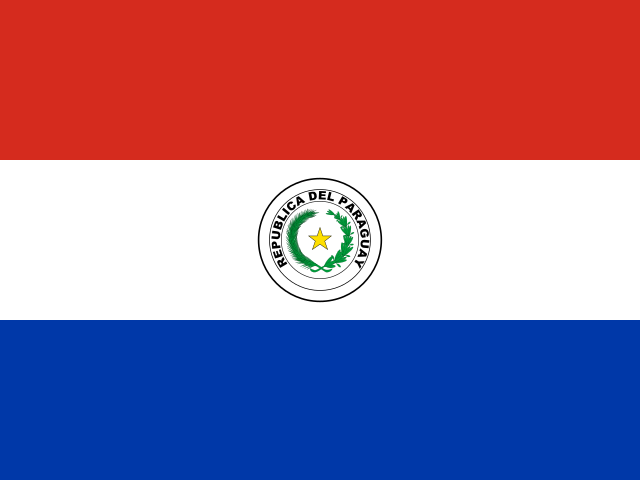 Santiago Peña Palacios · President
- Context
- Peña addressed the General Debate of the 81st UN General Assembly in New York on September 23, 2026, urging solutions over slogans, backing dialogue with Venezuela, Taiwan's UN participation and Security Council reform.
- Main themes
- Dialogue with Venezuela after the fall of Maduro, democratic transition in Venezuela, Strait of Hormuz closure and free navigation, support for Taiwan and its UN participation, Taiwan Strait and microchips, reform of the Security Council, Latin American candidate for Secretary-General, artificial intelligence and human dignity, multilateralism and peace, Paraguay's economic growth and poverty reduction, War of the Triple Alliance
- Duration
- ~26 min
- Words
- 3,129
- Sentences
- 233
- Readability
- 59
- Grade
- 8.3
- Syntax
- 2.63
- Vocabulary
- 2.11
UN General Assembly Translated from Spanish Source: gadebate.un.org ↗
The broad sphere of national life a sentence belongs to. Every sentence has an Arena, so it is the denominator the other indices are read against.
Other233 sentences in 178 paragraphs
Mr. President of the General Assembly,
Distinguished Heads of State and Government,
Esteemed Ministers,
Ladies and gentlemen:
1. People do not want declarations. They want solutions.
The theme of this Assembly challenges us: "restoring trust, managing transformation and making the United Nations deliver for all."
It is a good theme, and I enthusiastically endorse it.
But let us be honest, dear friends: people no longer want slogans.
Our people want solutions to their problems.
That is why I have not come to this rostrum to recite beautiful phrases, full of grandiloquent words, that bring no benefit to our citizens.
I have come to talk about concrete problems. And to put forward solutions.
And I have come to speak on behalf of a country that rose up from the most harrowing war in the Western Hemisphere, the War of the Triple Alliance, which brought mourning to no fewer than four sister countries. A country that today is one of the fastest-growing in the world.
Paraguay's contribution is not a theory: it is an experience.
The facts teach us that war is abominable, that peace is the only goal, and that we must stop watching and talking, and start acting.
And Paraguay comes to the concert of nations with a conviction it does not negotiate: the dignity of the human person must be at the centre of every decision.
That is why we defend freedom, democracy, the sovereignty of States, respect for human rights and the peaceful settlement of disputes.
That is why we uphold human life from conception and recognize the family as the fundamental nucleus of our society.
Because where human dignity is forgotten, humanity itself disappears.
Human dignity, from conception to the end of life, is the foundation of our presence on this earth.
There is an ever more visible gap between the commitments we make and the results we achieve.
When that gap widens, trust weakens.
People no longer believe us.
And that trust is not recovered with mere declarations or slogans.
It is recovered by facing problems without fear, and by proposing solutions, by delivering results.
2. I begin with my neighbourhood: Venezuela
The first problem I want to talk to you about here is one that is in my neighbourhood.
You all know it: its name is Venezuela.
Before coming to New York, I visited Caracas, even though Paraguay and Venezuela have broken off diplomatic relations.
That is why my decision to visit the Caribbean country surprised quite a few, and many people have questioned that decision, even harshly.
So I take this opportunity to say it loud and clear, with complete clarity: I did not go to Venezuela to validate a regime; I did not go to validate anything at all.
No, ladies and gentlemen: quite the opposite.
Paraguay loves democracy, and believes that the Venezuelan people also deserve democracy.
The reason I went to Venezuela is that for 25 years South American leaders spent their time tossing out pretty, lyrical words, thunderous declarations, mottos and slogans about Venezuela.
It was 25 years of watching, waiting and condemning, from a comfortable distance, but without doing anything for the Venezuelan people. We watched. We talked. But we did not act.
We did nothing.
And meanwhile our Venezuelan brothers and sisters suffered.
That is why I went to Venezuela a few days ago, to take a second step, after the first, difficult but very important step: the fall of the dictator Maduro.
Because Paraguay can be useful for that second step: Venezuela's step towards a democratic and pluralistic transition.
Today Venezuela is going through a new reality. Defending our values cannot mean indifference in the face of that reality.
That is why Paraguay has opened a channel of dialogue with the Venezuelan authorities and is already working, through action, for a Venezuela where power resides in its only sovereign: the people.
Dialogue is not renouncing principles or forgetting the past. It is having the courage to look ahead and act. We cannot wait for the United States or some northern power to solve our problems: we have to do it ourselves.
I want for Venezuela what my country achieved in 1989 after thirty-five years of dictatorship: a real democratic transition.
I do not want a photo. I do not want a communiqué.
I want, we want, a transition.
A transition with institutions, with security, with an economy, and with a people once again integrated into the international community and, in our case, integrated into Mercosur.
Paraguay's leadership does not confuse dialogue with indifference. Talking is a way of standing by the Venezuelan people. It is also a way of jointly fighting the transnational crime that respects no borders and that harms the entire region.
Today I ask all my Latin American brothers and sisters, but also this United Nations: let us unite to help Venezuela, that beautiful country, rejoin the world and have a democratic government that respects human rights.
In the words of the Latin poet Publius, "I am a man; nothing human can be alien to us": the suffering of the Venezuelan people is the suffering of the Paraguayan people; it is the suffering of us all.
And what holds for Venezuela holds perhaps even more strongly for Nicaragua, for Cuba and for Haiti, countries that have lived too long in the darkness of authoritarianism, of violence, of sadness.
Let us bring light to those sister peoples.
Because where there are free elections, there is hope.
But we must not stop at speeches: we must act.
Let us do it, together.
3. The Middle East, Hormuz and Israel
Of course, my region is not the only one with problems.
The world's problems are everywhere.
Paraguay is observing with deep concern what is happening in the Persian Gulf.
When the Strait of Hormuz is closed, the price is not paid by the powers or the wealthiest. It is paid by the most unprotected: the most vulnerable citizens.
The food and energy security of millions of people depends on that passage remaining open.
That is why today I make a fervent appeal for the immediate cessation of attacks, for the full opening of and free navigation through Hormuz and Bab el-Mandeb, and for a return to negotiations.
Human dignity, dear friends, does not change because we change continents: it is always the same.
And it is that human dignity that must guide not only our speeches, but our actions.
4. The strait to come: Taiwan and microchips
Hormuz is the problem that challenges us today.
But I want to tell you here that tomorrow the problem may be much worse, far, far worse.
I am referring to the ominous shadows gathering in the Indo-Pacific, and particularly in the Taiwan Strait.
What happens there is not a mere regional matter. No, sir.
It affects Japan, all of East and Southeast Asia, and, above all, the world economy.
It affects the microchips that drive industry, defence and artificial intelligence.
Whoever pretends that this is "far away", or too distant, simply has not understood the twenty-first century.
If oil was the fuel of the twentieth century, microchips are the fuel of the twenty-first.
What is at stake in that potential conflict is no small matter: the very future of humanity is at stake.
I want to tell you that, in the face of this problem, Paraguay is not neutral.
Paraguay stands, and I say it loud and clear, with Taiwan. And not out of convenience, quite the opposite: it does so because of the deep values we share. Democracy, the rule of law, human rights and peace.
Seventy years of uninterrupted diplomatic relations is not a mere number, or a mere calculation of the moment: it is a tribute to the true friendship between our peoples.
That is why I reaffirm here today our support for the full and meaningful participation of the Republic of China (Taiwan) in the United Nations and its specialized agencies.
Taiwan has concrete contributions to make to peace, to development and to human rights. Excluding it does not strengthen the system: it deprives it of capabilities that can benefit everyone.
And it is a stain on this United Nations.
But the problem, make no mistake, is not only Taiwan.
What is brewing there, in that area, is too dangerous for all of us.
Friends:
Let us not stop at words, at slogans: let us move to concrete action.
I assure you that, at that table of negotiation, of peace, of concord, you will find Paraguay in the front row, ready to help.
5. The United Nations… for whom? A Council that is no longer enough
But the world's problems do not end in a single region or place: they go to the very heart of the international system.
The United Nations, and I will be neither the first nor the last to say it, needs renewal, a new impetus.
The beautiful theme of this Assembly proposes to us a "United Nations for all."
A beautiful theme, without a doubt.
But I fear it is not enough.
That is why I ask you today, with respect but with firmness: how are we going to have a United Nations "for all" if it is run by a Security Council of "a few"?
To make matters worse, it is a Council designed eighty years ago, for another era, for other scenarios, for other situations, and one that shows all too often that it simply does not serve today's problems.
That original design, a child of its time, has had many achievements. Without a doubt. And today I recognize and celebrate them. We all should.
Nevertheless, as the great Nobel Laureate in Literature, Bob Dylan, would say: "things have changed".
And the Organization, dear friends, must also change.
Different problems call for different solutions.
Otherwise, this beautiful idea, the idea of the United Nations, will simply be overtaken and reduced to a stage for pretty speeches and few deeds for the people.
There are those who conclude from all this that multilateralism has failed.
Paraguay comes to a different conclusion: the United Nations remains indispensable. It is the only system that allows all the countries of the world to coexist. But it must be more effective in preventing conflicts, protecting people and enforcing the rules that we States ourselves have agreed upon.
Our vocation for peace is summed up in the words of an illustrious Paraguayan, Manuel Gondra: "Since we cannot make the just always strong, we must strive to make the strong always just."
Paraguay wants to take on greater responsibilities in this system.
But this system, as it stands, does not work.
That is why we believe that the election of the next Secretary-General will be a fundamental decision. The time has come for that leadership to belong to Latin America and the Caribbean. Our region has a vocation for peace, dialogue and multilateralism, and it has candidates capable of taking on that responsibility.
We need a Secretary-General who restores the political leadership of the Organization, who strengthens preventive diplomacy, who acts before crises become irreversible and who listens to the States and peoples it serves.
The Security Council, in short, must stop being a photograph of the world of 1945.
It must listen more to this Assembly and not become paralysed when peace is threatened.
We need a United Nations for 2026, or 2050, not for 1945. So that we can truly deliver for all.
6. An enormous challenge: AI
This Assembly also asks us to manage transformation.
There is no need to say here what the great transformation of our time is. Every great era of humanity has had its driving force. Steam drove the industrial revolution. The transistor drove the digital age. No force of our time is as profound as artificial intelligence.
It is already showing its power in war, in the economy and in daily life. Unlike tools that merely transmitted what we said, these systems take part in what we decide.
The potential is immense. Paraguay today feeds one hundred million people; with this tool it could feed a billion. It can shorten in years distances that took generations. This transformation can no longer be stopped, and no one should be excluded from it.
We are not blind to the risks; but fear cannot guide us.
Like a child, artificial intelligence repeats what it learned from whoever trained it.
If it learned to deny freedom, that lesson will not arrive as a law we can debate. It will arrive concealed, in the minor task, in the gesture no one considers a decision. Democracy holds as long as the decisions that govern us can be traced back to the will of those who are subject to them. When that thread is cut, the popular will runs the risk of being replaced without being defeated.
Protecting that thread does not mean giving up the benefits. It means not ignoring the risk that matters. Artificial intelligence must serve human dignity and not replace it, as the Holy Father's recent encyclical Magnifica Humanitas reminds us. The values these systems carry are not a technical limit. They are a decision made by whoever trains them. And the future demands of us that this decision be freedom, democracy and equality before the law, and that whoever makes it be accountable for it.
7. A message of optimism, not resignation
It might seem that so far I have spoken only of an endless series of problems and challenges. That this is a pessimistic speech.
No, dear friends, not at all.
I am simply convinced that the only way to change reality, to have a better world, is first of all to accept reality. To face problems.
Not to sweep them under the rug, under speeches.
That is why I have also come to deliver a message of optimism.
Things can change, the world can be better, peace is not a chimera: it is a real possibility.
And my country can speak of this, because it knows very well the harsh reality of Erasmus of Rotterdam's words: "war is sweet only to those who have never experienced it."
Paraguay experienced it, all too painfully, in its own flesh. We know what happens when multilateralism does not work: people die. The land is stained with blood.
The price is paid not only today, but for generations.
That is why my country knows that multilateralism and dialogue are the only alternative.
Today I have come here to firmly defend all these ideas, so that they become reality.
Extremism in the defence of multilateralism is no vice, but a virtue.
Let us be extremists, dear friends, in the defence of multilateralism, of concord, of peace.
Just as Paraguay rose from a bloody war, the world can do the same.
That Paraguay which was, after the military catastrophe, a veritable "open-air cemetery", today lives a different reality.
Paraguay has risen, and is ready to take its place in the world.
We rose through effort, through openness to the world and with the stubbornness of a people that did not choose its geography, but did choose its destiny.
Today Paraguay is experiencing one of the best economic moments in its history, in fact the best, and has become an example for other countries in macroeconomic stability, sustained growth and the fight against poverty.
As a result, in December 2025 Standard & Poor's granted us our second investment-grade rating, making us the first country to achieve that distinction in more than a decade.
In the last quarter of that year, unemployment fell to 3.6 per cent, the lowest level on record.
Growth only matters if it is felt in households: decent employment is one of the best social policies a State can offer.
Not only that: Paraguay has reduced poverty to levels never seen before. In less than twenty years, we have brought poverty down from 58% to 16%, doing so faster than every other country in the region.
Because people matter.
Moreover, the future is bright, not only because our electricity mix is abundant, stable and one hundred per cent renewable, but because our region has land, energy, critical minerals and, most importantly, its wonderful people.
8. Closing: Paraguay chooses its destiny
Mr. President:
As I reach the end of this address, I want to return to the idea with which I began.
People no longer want just slogans.
They want solutions to their problems.
And, above all, they want peace.
They want freedom, security, democracy, prosperity and opportunities for their children.
And we, who bear the responsibility of leading our countries, must live up to those expectations.
Paraguay knows that the road is very difficult, but not impossible.
We believe it is possible to build a world in which cooperation produces results.
In which democracy is not an empty promise.
In which technology is at the service of humanity.
In which development reaches those who need it most.
And we believe that Paraguay has much to contribute to that future.
We are a country that did not choose its geography, but did choose its destiny.
A country that faced adversity and decided to rise.
A country that has energy, resources, talent and, above all, an unbreakable will to progress.
We are a country that stopped asking what we lack and began to ask how far we can go.
That is the giant Paraguay.
The Paraguay that integrates into the world, that opens its doors to opportunities, that defends its sovereignty, that stands for peace, freedom and democracy and that wants to grow without leaving anyone behind.
And that Paraguay has a message for the world:
We have come to show what we are capable of doing.
Today we once again choose dialogue over confrontation.
Cooperation over isolation.
Democracy over authoritarianism.
Peace over war.
And development over resignation.
The United Nations will not regain trust because we declare it in this hall.
We must be firm and unequivocal in the defence of multilateralism, of democracy, of peace and, above all, of human dignity.
And before this Assembly, I want to say it with absolute clarity:
Paraguay is ready to do its part.
Because our history taught us to endure and our future calls us to build.
Beyond words, there are actions.
Dear brothers and sisters of the whole world:
I close these words with a request, with an exhortation, almost a prayer.
"Let us be extremists in the defence of multilateralism, of democracy, of peace and, above all, of human dignity."
Only then will future generations be able to look back and say that we fulfilled our mission, that we restored trust in humanity, that we managed transformation for the better, with a United Nations that delivers for all.
Thank you very much.
The original Spanish. The tags above are read on the English translation's sentences.
Señor Presidente de la Asamblea General,
Distinguidos Jefes de Estado y de Gobierno,
Estimados Ministros,
Damas y caballeros:
1. La gente no quiere declaraciones. Quiere soluciones.
El lema de esta Asamblea nos interpela: “restaurar la confianza, gestionar la transformación y lograr que las Naciones Unidas cumplan para todos”.
Es un buen lema y lo suscribo entusiasta.
Pero seamos sinceros queridos amigos: la gente ya no quiere lemas.
Nuestra gente quiere soluciones para sus problemas.
Discurso del Presidente Santiago Peña — 81.ª AGNU — Nueva York, 2026 | Versión alternativa Página 2
Por ello, no vengo a esta tribuna a recitar frases hermosas, llenas de palabras rimbombantes, que no redunden en beneficio de nuestros ciudadanos.
Vengo a hablar de problemas concretos. Y plantear soluciones.
Y vengo a hablar en nombre de un país que se levantó de la guerra más desgarradora del hemisferio occidental – la
Guerra de la Triple Alianza – que enlutó nada menos que a cuatro países hermanos. Un país que hoy es uno de los que más crece en el mundo.
El aporte del Paraguay no es una teoría: es una experiencia.
Los hechos nos enseñan que la guerra es abominable, que la paz es el único objetivo, y que tenemos que dejar de mirar y hablar, y empezar a actuar.
Y el Paraguay llega al concierto de las naciones con una convicción que no negocia: la dignidad de la persona humana debe estar en el centro de cada decisión.
Discurso del Presidente Santiago Peña — 81.ª AGNU — Nueva York, 2026 | Versión alternativa Página 3
Por eso defendemos la libertad, la democracia, la soberanía de los Estados, el respeto de los derechos humanos y la solución pacífica de las controversias.
Por eso reivindicamos la vida humana desde su concepción y reconocemos a la familia como núcleo fundamental de nuestra sociedad.
Porque donde la dignidad humana se olvida, la humanidad misma desaparece.
La dignidad humana, desde la concepción hasta el fin de la vida, es el fundamento de nuestra presencia en esta tierra.
Hay una distancia cada vez más visible entre los compromisos que asumimos y los resultados que logramos.
Cuando esa distancia se agranda, la confianza se debilita.
La gente ya no nos cree.
Y esa confianza no se recupera con meras declaraciones o slogans.
Discurso del Presidente Santiago Peña — 81.ª AGNU — Nueva York, 2026 | Versión alternativa Página 4
Se recupera enfrentando los problemas sin temor, y proponiendo soluciones, ofreciendo resultados.
2. Empiezo por mi vecindario: Venezuela
El primer problema del que quiero hablarles aquí es uno que está en mi vecindario.
Todos lo conocen: se llama Venezuela.
Antes de venir a Nueva York, visité Caracas, a pesar de que el Paraguay y Venezuela tienen sus relaciones diplomáticas interrumpidas.
Por eso mi decisión de visitar el país caribeño sorprendió a no pocos, y muchas personas me han cuestionado – incluso duramente – esa decisión.
Aprovecho entonces este escenario para decirlo alto y fuerte, con toda claridad: no fui a Venezuela a validar un régimen, no fui a validar absolutamente nada.
No señores: más bien, todo lo contrario.
Discurso del Presidente Santiago Peña — 81.ª AGNU — Nueva York, 2026 | Versión alternativa Página 5
Paraguay ama la democracia, y cree que el pueblo venezolano merece – también – la democracia.
La razón por la cual fui a Venezuela es porque durante 25 años los líderes sudamericanos se pasaron lanzando lindas palabras líricas, declaraciones estruendosas, lemas y slogans sobre Venezuela.
Fueron 25 años de mirar, esperar y condenar – desde la cómoda distancia – pero sin hacer nada por el pueblo venezolano. Se Miró. Se Habló. Pero no se actuó.
No hicimos nada.
Y mientras tanto nuestros hermanos venezolanos sufrían.
Por eso fui a Venezuela hace unos días, para dar un segundo paso, luego del primer –difícil pero muy importante paso—de la caída del dictador Maduro.
Porque Paraguay puede ser útil para ese segundo paso: el paso de Venezuela hacia una transición democrática y pluralista.
Discurso del Presidente Santiago Peña — 81.ª AGNU — Nueva York, 2026 | Versión alternativa Página 6
Hoy Venezuela atraviesa una nueva realidad. La defensa de nuestros valores no puede significar indiferencia frente a esa realidad.
Por eso Paraguay ha abierto un canal de diálogo con las autoridades venezolanas y ya está trabajando, con acciones, por una Venezuela donde el poder radique en su unico soberano: el pueblo.
Dialogar no es renunciar a los principios ni olvidar el pasado. Es tener la valentía de mirar hacia adelante y actuar. No podemos esperar que los Estados Unidos o alguna potencia del norte resuelvan nuestros problemas:
tenemos que hacerlo nosotros mismos.
Yo quiero para Venezuela lo que mi país logró después de treinta y cinco años de dictadura en 1989: una transición democrática real.
No quiero una foto. No quiero un comunicado.
Quiero, queremos, una transición.
Discurso del Presidente Santiago Peña — 81.ª AGNU — Nueva York, 2026 | Versión alternativa Página 7
Una transición con instituciones, con seguridad, con economía y con un pueblo otra vez integrado a la comunidad internacional y en nuestro caso integrado al Mercosur.
El liderazgo del Paraguay no confunde el diálogo con la indiferencia. Hablar es una forma de acompañar al pueblo venezolano. Es también una forma de combatir juntos el crimen transnacional que no respeta fronteras y que lastima a toda la región.
Hoy pido a todos mis hermanos latinoamericanos, pero también a estas Naciones Unidas: unámonos para ayudar a que Venezuela, ese país tan bello, vuelva a insertarse al mundo y tenga un gobierno democrático y respetuoso de los derechos humanos.
Al decir, del poeta latino Publio, “hombre soy, nada humano nos puede ser ajeno”: el sufrimiento del pueblo venezolano es el sufrimiento del pueblo paraguayo, es el sufrimiento de todos.
Discurso del Presidente Santiago Peña — 81.ª AGNU — Nueva York, 2026 | Versión alternativa Página 8
Y lo que vale para Venezuela vale quizá con más fuerza para Nicaragua, para Cuba y para Haití, países que han vivido demasiado tiempo en la oscuridad del autoritarismo, de la violencia, de la tristeza.
Traigamos luz a esos pueblos hermanos.
Porque donde hay elecciones libres, hay esperanza.
Pero no tenemos que quedarnos en el discurso: tenemos que actuar.
Hagámoslo, juntos.
3. Medio Oriente, Ormuz e Israel
Desde luego, no solo mi región tiene problemas.
Los problemas en el mundo están por todas partes.
El Paraguay observa con profunda preocupación lo que ocurre en el Golfo Pérsico.
Discurso del Presidente Santiago Peña — 81.ª AGNU — Nueva York, 2026 | Versión alternativa Página 9
Cuando el estrecho de Ormuz se cierra, el precio no lo pagan las potencias o los más ricos. Lo pagan los más desprotegidos: los ciudadanos más vulnerables.
La seguridad alimentaria y energética de millones de personas depende de que ese paso siga abierto.
Por eso hoy hago un ferviente llamado al cese inmediato de los ataques, a la plena apertura y libre navegación de Ormuz y de Bab el – Mandeb, y al retorno a las negociaciones.
La dignidad humana, queridos amigos, no cambia porque cambiamos de continente: siempre es la misma.
Y es esa dignidad humana la que debe guiar no solo nuestros discursos, sino nuestros actos.
4. El estrecho que viene: Taiwán y los microchips
Ormuz es el problema que nos interpela hoy.
Pero quiero decirles aquí que mañana el problema puede ser mucho peor – muchísimo peor –.
Discurso del Presidente Santiago Peña — 81.ª AGNU — Nueva York, 2026 | Versión alternativa Página 10
Me refiero a las sombras ominosas que se están gestando en el indo pacífico, y particularmente en el estrecho de Taiwán.
Lo que ocurra allí no es un mero asunto regional. No señor.
Afecta a Japón, a toda Asia oriental y sudoriental, y – sobre todo – a la economía mundial.
Afecta a los microchips que mueven la industria, la defensa y la inteligencia artificial.
Quien finja que eso es “lejos”, o está demasiado distante, simplemente no ha entendido el siglo XXI.
Si el petróleo fue el combustible del siglo veinte, los microchips son el combustible del siglo veintiuno.
No es poco lo que está en juego en ese conflicto potencial:
está en juego el futuro mismo de la humanidad.
Quiero decirles que, ante este problema, el Paraguay no es neutral.
Discurso del Presidente Santiago Peña — 81.ª AGNU — Nueva York, 2026 | Versión alternativa Página 11
El Paraguay está – lo digo alto y claro – con Taiwán. Y no lo está por conveniencia, sino todo lo contrario: lo está por los valores profundos que compartimos. La democracia, el imperio de la ley, los derechos humanos y la paz.
70 años de relaciones diplomáticas ininterrumpidas no es un mero número, o un mero cálculo de ocasión: es un homenaje a la amistad verdadera entre nuestros pueblos.
Por eso reafirmo hoy aquí el apoyo a la participación plena y significativa de la República de China (Taiwán) en las
Naciones Unidas y en sus organismos especializados.
Taiwán tiene contribuciones concretas que hacer a la paz, al desarrollo y a los derechos humanos. Excluirlo no fortalece al sistema: lo priva de capacidades que pueden beneficiar a todos.
Y es una mancha para estas Naciones Unidas.
Pero el problema, no se engañen, no es solo Taiwán.
Lo que se está gestando ahí, en esa zona, es demasiado peligroso para todos.
Discurso del Presidente Santiago Peña — 81.ª AGNU — Nueva York, 2026 | Versión alternativa Página 12
Amigos:
No nos quedemos en las palabras, los slogans: vayamos a la acción concreta.
Les aseguro que, en esa mesa de negociación, de paz, de concordia, encontrarán al Paraguay en primera fila, listo para ayudar.
5. Naciones Unidas… ¿para quién? El Consejo que ya no alcanza
Pero los problemas del mundo no terminan en una sola región o lugar: van al corazón mismo del sistema internacional.
Las Naciones Unidas, no voy a ser el primero ni el último en decirlo, necesita una renovación, un nuevo empuje.
El bello lema de esta Asamblea nos propone unas “Naciones Unidas para todos”.
Bello lema, sin dudas.
Pero me temo que no es suficiente.
Discurso del Presidente Santiago Peña — 81.ª AGNU — Nueva York, 2026 | Versión alternativa Página 13
Por eso les pregunto hoy, con respeto, pero firmeza: ¿cómo vamos a tener Naciones Unidas “para todos” si la dirige un Consejo de Seguridad de “unos pocos”?
Para peor, se trata de un Consejo diseñado hace ochenta años, para otra época, para otros escenarios, para otras situaciones, y que demuestra con harta frecuencia que simplemente no sirve a los problemas de hoy.
Ese diseño original, hijo de su época, ha tenido muchos logros. Sin dudas. Y hoy los reconozco y celebro. Todos debemos hacerlo.
No obstante, como diría el gran Premio Nobel de Literatura,
Bob Dylan: “things have changed”.
Y la Organización, queridos amigos, también tiene que cambiar.
Distintos problemas, ameritan distintas soluciones.
Discurso del Presidente Santiago Peña — 81.ª AGNU — Nueva York, 2026 | Versión alternativa Página 14
De lo contrario, esta hermosa idea, la de las Naciones Unidas, se verá simplemente superada y limitada a ser un escenario de lindos discursos, y pocos hechos para la gente.
Hay quienes concluyen por todo esto que el multilateralismo ha fracasado.
El Paraguay llega a otra conclusión: las Naciones Unidas siguen siendo indispensables. Es el único sistema que permite coexistir a todos los países del mundo. Pero deben ser más eficaces en prevenir conflictos, proteger a las personas y hacer respetar las normas que los propios Estados hemos acordado.
Nuestra vocación de paz se resume en la frase de un ilustre paraguayo, Manuel Gondra: «No pudiendo hacer que el justo sea siempre fuerte, debemos empeñarnos porque el fuerte sea siempre justo».
El Paraguay quiere asumir mayores responsabilidades en este sistema.
Pero este sistema, tal como está, no funciona.
Discurso del Presidente Santiago Peña — 81.ª AGNU — Nueva York, 2026 | Versión alternativa Página 15
Por eso creemos que la elección del próximo Secretario
General será una decisión fundamental. Ha llegado el momento de que ese liderazgo corresponda a América Latina y el Caribe. Nuestra región tiene vocación de paz, de diálogo y de multilateralismo, y cuenta con candidatos capaces de asumir esa responsabilidad.
Necesitamos un Secretario General que recupere el liderazgo político de la Organización, que fortalezca la diplomacia preventiva, que actúe antes de que las crisis se vuelvan irreversibles y que escuche a los Estados y a los pueblos a los que sirve.
El Consejo de Seguridad, en suma, debe dejar de ser una fotografía del mundo de 1945.
Debe escuchar más a esta Asamblea y no paralizarse cuando la paz está amenazada.
Necesitamos unas Naciones Unidas para el 2026, o el
2050, no para 1945. Para así poder, verdaderamente, cumplir con todos.
Discurso del Presidente Santiago Peña — 81.ª AGNU — Nueva York, 2026 | Versión alternativa Página 16
6. Un enorme desafío: la IA
Esta Asamblea nos pide también gestionar la transformación.
No hace falta decir aquí cuál es la gran transformación de nuestro tiempo. Toda gran era de la humanidad ha tenido su fuerza motriz. El vapor impulsó la revolución industrial. El transistor impulsó la era digital. Ninguna fuerza de nuestra época es tan profunda como la inteligencia artificial.
Ya muestra su poder en la guerra, en la economía y en la vida cotidiana. A diferencia de las herramientas que solo transmitían lo que decíamos, estos sistemas participan en lo que decidimos.
El potencial es inmenso. El Paraguay alimenta hoy a cien millones de personas; con esta herramienta podría alimentar a mil millones. Puede acortar en años distancias que tomaron generaciones. Esta transformación ya no puede ser detenida, y nadie debería quedar excluido de ella.
No somos ciegos a los riesgos; pero el miedo no nos puede guiar.
Discurso del Presidente Santiago Peña — 81.ª AGNU — Nueva York, 2026 | Versión alternativa Página 17
Como un niño, la inteligencia artificial repite lo que aprendió de quien la entrenó.
Si aprendió a negar la libertad, esa lección no llegará como una ley que podamos debatir. Llegará encubierta, en la tarea menor, en el gesto que nadie considera una decisión. La democracia se sostiene mientras las decisiones que nos gobiernan puedan rastrearse hasta la voluntad de quienes las padecen. Cuando ese hilo se corta, la voluntad popular corre el riesgo de ser reemplazada sin ser derrotada.
Proteger ese hilo no significa renunciar a los beneficios.
Significa no ignorar el riesgo que importa. La inteligencia artificial debe servir a la dignidad humana y no reemplazarla, como recuerda la reciente encíclica Magnifica Humanitas del Santo Padre. Los valores que estos sistemas llevan no son un límite técnico. Son una decisión de quien los entrena. Y el futuro nos demanda que esa decisión sea la libertad, la democracia y la igualdad ante la ley, y que quien la tome responda por ella.
Discurso del Presidente Santiago Peña — 81.ª AGNU — Nueva York, 2026 | Versión alternativa Página 18
7. Un mensaje de optimismo, no de resignación
Parecería que hasta aquí solo he hablado de un sinfín de problemas y desafíos. Que es un discurso pesimista.
No, queridos amigos, para nada.
Simplemente, estoy convencido que la única forma de cambiar la realidad, de tener un mundo mejor, es en primer lugar asumir la realidad. Enfrentar a los problemas.
No esconderlos bajo la alfombra, bajo los discursos.
Por eso vengo también a dar un mensaje de optimismo.
Las cosas pueden cambiar, el mundo puede ser mejor, la paz no es una quimera: es una posibilidad real.
Y mi país puede hablar de ello, porque sabe muy bien la dura realidad de la frase de Erasmo de Rotterdam: “la guerra es dulce solo para aquellos que nunca la vivieron”.
El Paraguay la vivió, demasiado dolorosamente, en carne propia. Sabemos qué ocurre cuando el multilateralismo no funciona: la gente muere. La tierra se tiñe de sangre.
Discurso del Presidente Santiago Peña — 81.ª AGNU — Nueva York, 2026 | Versión alternativa Página 19
El precio se paga no solo hoy, sino en generaciones.
Por eso mi país sabe que el multilateralismo, el diálogo, son la única alternativa.
Hoy vengo a defender aquí con firmeza todas estas ideas, para que se conviertan en realidad.
El extremismo en la defensa del multilateralismo no es un vicio, sino una virtud.
Seamos extremistas queridos amigos en la defensa del multilateralismo, de la concordia, de la paz.
Así como el Paraguay se levantó de una cruenta guerra, el mundo puede hacerlo.
Ese Paraguay que fue, después de la hecatombe militar, un verdadero “cementerio a cielo abierto”, hoy vive otra realidad.
El Paraguay se ha levantado, y está listo para tomar su lugar en el mundo.
Discurso del Presidente Santiago Peña — 81.ª AGNU — Nueva York, 2026 | Versión alternativa Página 20
Nos levantamos con esfuerzo, con apertura al mundo y con la terquedad de un pueblo que no eligió su geografía, pero sí eligió su destino.
Hoy el Paraguay vive uno de los mejores momentos económicos de su historia –de hecho, el mejor—y se ha convertido en un ejemplo para otros países en estabilidad macroeconómica, crecimiento sostenido y lucha contra la pobreza.
Fruto de ello, en diciembre de 2025, Standard & Poor’s nos otorgó la segunda calificación de grado de inversión, el primer país en alcanzar dicha distinción en más de una década.
En el último trimestre de ese año, la desocupación cayó al
3,6 por ciento, el nivel más bajo de nuestros registros.
El crecimiento solo importa si se siente en los hogares: el empleo digno es una de las mejores políticas sociales que puede ofrecer un Estado.
Discurso del Presidente Santiago Peña — 81.ª AGNU — Nueva York, 2026 | Versión alternativa Página 21
No solo eso, el Paraguay ha reducido la pobreza a números nunca antes vistos: en menos de veinte años, hemos bajado del 58% de pobreza, al 16%, haciéndolo más rápido que todos los países de la región
Porque la gente importa.
Además, el futuro es brillante, no solo porque nuestra matriz eléctrica es abundante, estable y cien por ciento renovable, sino porque nuestra región posee tierra, energía, minerales críticos y –lo más importante— su maravilloso pueblo.
8. Cierre: Paraguay elige su destino
Señor Presidente:
Al llegar al final de esta intervención, quiero volver a la idea con la que comencé.
La gente ya no quiere solamente lemas.
Quiere soluciones para sus problemas.
Y, sobre todo, quiere paz.
Discurso del Presidente Santiago Peña — 81.ª AGNU — Nueva York, 2026 | Versión alternativa Página 22
Quiere libertad, seguridad, democracia, prosperidad y oportunidades para sus hijos.
Y nosotros, quienes tenemos la responsabilidad de conducir nuestros países, debemos estar a la altura de esas expectativas.
El Paraguay sabe que el camino es muy difícil, pero no imposible.
Creemos que es posible construir un mundo en el que la cooperación produzca resultados.
En el que la democracia no sea una promesa vacía.
En el que la tecnología esté al servicio de la humanidad.
En el que el desarrollo alcance a quienes más lo necesitan.
Y creemos que el Paraguay tiene mucho que aportar a ese futuro.
Somos un país que no eligió su geografía, pero sí eligió su destino.
Discurso del Presidente Santiago Peña — 81.ª AGNU — Nueva York, 2026 | Versión alternativa Página 23
Un país que enfrentó la adversidad y decidió levantarse.
Un país que tiene energía, recursos, talento y, sobre todo, una voluntad inquebrantable de progresar.
Somos un país que dejó de preguntarse qué nos falta para empezar a preguntarse hasta dónde podemos llegar.
Ese es el Paraguay gigante.
El Paraguay que se integra al mundo, que abre sus puertas a las oportunidades, que defiende su soberanía, que apuesta por la paz, la libertad y la democracia y que quiere crecer sin dejar a nadie atrás.
Y ese Paraguay tiene un mensaje para el mundo:
Venimos a demostrar lo que somos capaces de hacer.
Hoy volvemos a elegir el diálogo frente a la confrontación.
La cooperación frente al aislamiento.
La democracia frente al autoritarismo.
La paz frente a la guerra.
Discurso del Presidente Santiago Peña — 81.ª AGNU — Nueva York, 2026 | Versión alternativa Página 24
Y el desarrollo frente a la resignación.
Las Naciones Unidas no recuperarán la confianza porque lo declaremos en esta sala.
Debemos ser firmes e inequívocos en la defensa del multilateralismo, de la democracia, de la paz y, sobre todo, de la dignidad humana.
Y ante esta Asamblea, quiero decirlo con absoluta claridad:
Paraguay está dispuesto a hacer su parte.
Porque nuestra historia nos enseñó a resistir y nuestro futuro nos convoca a construir.
Más allá de las palabras, están las acciones.
Queridos hermanos de todo el mundo:
Cierro estas palabras con un pedido, con una exhortación, casi una plegaria.
Discurso del Presidente Santiago Peña — 81.ª AGNU — Nueva York, 2026 | Versión alternativa Página 25
“Seamos extremistas en la defensa del multilateralismo, de la democracia, de la paz, y, sobre todo, de la dignidad humana”.
Solo así las generaciones venideras podrán mirar hacia atrás y decir que cumplimos con nuestra misión, que restauramos la confianza en la humanidad, que gestionamos la transformación para mejor, con unas Naciones Unidas que cumple para todos.
Muchas gracias.