




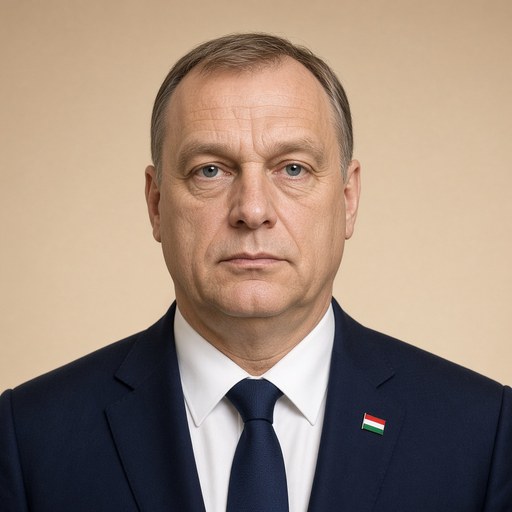
Viktor Orbán's interview with the Transylvania YouTube channel
 Viktor Orbán · Prime Minister of Hungary
- Context
- Orbán gave an interview to the Transylvania-based 'Deep Water' YouTube channel in October 2025, discussing Hungarian identity, diaspora unity, and recent national achievements.
- Main themes
- Transylvanian identity and Hungarian diaspora unity, Hungarian-Romanian relations and Schengen membership, László Krasznahorkai Nobel Prize in Literature, Hungarian national football team, cultural and sports connections across borders, Transylvanian cuisine and personal affinity, Hungarian world cohesion beyond politics
- Duration
- ~31 min
- Words
- 3,762
- Sentences
- 214
- Readability
- 57
- Grade
- 9.6
- Syntax
- 2.82
- Vocabulary
- 2.13
Translated from Hungarian
This is an interview, press conference or exchange with other speakers. It is split into sentences and counted in the corpus, but its sentences are not tagged on the twelve indices.
214 sentences in 50 paragraphs
Of course, I always eat polenta, but I won't go home today without having eaten a micc, I always have ciorbă, so I am part of your life.
Zoltán Kádár:
I am very glad that you feel good in Transylvania, you might not even want to go home, and many would be happy if you stayed here.
Look, I would gladly stay otherwise, if my work allowed it.
I greet the viewers of Transylvanian "Deep Water"! I am Zoltán Kádár. Our guest is Viktor Orbán, the Prime Minister of Hungary. Mr. Prime Minister, thank you very much for accepting the invitation!
Thank you for having me.
We are sitting in Transylvania. What comes to your mind about this? About being Transylvanian? Is there a Transylvanian feeling, how do you feel? You have visited us many times.
Of course there is! Hungary, or the Hungarian world, is a colorful world. Even at home, it is not monochrome. So if one goes to Zala, or goes to Szatmár, that is two different life experiences. Of course there is! The great Hungarian world has its parts in Vojvodina, in Slovakia, and there is also a Transylvanian part, so there is a Transylvanian feeling. Moreover, I think the Transylvanian feeling even transcends the Hungarian community, because I believe – but this is not my business, it is yours – that even Romanians share in the Transylvanian feeling.
Do you have a favorite Transylvanian dish?
There are very few things that I do not eat if they have been made or prepared. Of course, I always eat polenta, but I won't go home today without having eaten a micc, I always have ciorbă, so I am part of your life.
I am very glad that you feel good in Transylvania, you might not even want to go home, and many would be happy if you stayed here.
Look, I would gladly stay otherwise, if my work allowed it. It is always worth coming here once or twice a year. Moreover, you see, these two worlds are connected. The Transylvanian – let’s call it that – world and the Hungarian world. There are many personal connections and sports events, so this Hungarian world is organizing itself more strongly, and this is visible beyond politics, it is visible in culture, it is visible in sports, so one can partake in uplifting shared experiences when coming here, but when you come to Hungary, say, this weekend, on Saturday we will play against Armenia at the Puskás Stadium. I always meet Transylvanian Hungarians who come to Budapest for the match. These are now common things. This border has become an administrative matter. In reality, the cultural, sports, and economic unity is no longer hindered by this, especially after Hungary has managed to achieve that Romanians are also part of the Schengen area. This has not only helped the Romanians, but also our Hungarian national communities.
Since you mentioned football, very briefly: how do you see the national team’s chances?
I am not the national team coach for many reasons. This feeling is not just mine. There is this Hungarian joke that Hungary perhaps has the most talented national team coaches in the world. What a pity that they are not available, because they are either driving cars, taxis, or cutting hair, or they are prime ministers… I belong to this group as well. We are moving upwards, but, you know, we are dissatisfied and impatient, which is understandable, since we were once at the top of the world, but while we are climbing back up there, it will take a few more years, and everyone would like to progress faster than we can, but there is probably no debate that we are making progress. So, every year we are on a higher step.
Recently, the Hungarian community experienced great joy. You know, on Thursday we had another Nobel laureate, our sixteenth. Can we rejoice together – all 15 million Hungarians?
I would like us to succeed, although László Krasznahorkai, to whom I congratulate here, is undoubtedly not from our political brood, to put it modestly, because I do not remember him ever writing a good line about the national government in his life, but that is not a problem, that is not interesting now. Because literature cannot be cultivated through a party-political lens, and there is a serious body of work, and if a Hungarian reaches the recognition of being chosen for an international award among all the writers in the world, and indeed the highest, a Nobel Prize, then I think everyone should rejoice. Even I, even we, who belong to the national side, and who of course think that Hungarian literature is not only made up of Imre Kertész and László Krasznahorkai, because there were great writers here before them, and there will be great writers who do not necessarily align with international liberal literary trends, but that is not interesting now, this is a national achievement. And for this, we are grateful to László Krasznahorkai for the body of work with which he earned a Nobel Prize for Hungary. Because of course it is awarded to him, but we always feel that this is something we, Hungarians, received for Hungarian literature, Hungarian culture, Hungarian art.
Similarly, if Szoboszlai scored a goal, we scored the goal, in a way this is similar.
And we also won at Nándorfehérvár, and we adopted Christianity, right? So there are such things. Hungarians think about the past in the first person plural.
Mr. Prime Minister, you stated in a podcast that Hungarian citizenship is based on blood, so the state does not create it, but recognizes it. At the same time, it is often heard in Hungary that only those who pay taxes there should vote. And recently, we, Transylvanian Hungarians, have been receiving this more and more often. There are advocates of this in Transylvania as well. What message do you have for those Transylvanian Hungarians, Transylvanian Hungarian citizens, who may feel uncertain because of this?
Look, first of all, I want to send the message that they belong to a great national community, and with greatness comes diversity. So even in the most fundamental questions, there will never be 100 percent national unity, because we are Hungarians, and that does not come easily to us. But the essence is the majority and the determining force. And in this regard, the determining force, the great majority stands behind the Transylvanian Hungarians who say that there is one Hungarian nation. And the nation has no borders. The state has borders, but the nation does not. Citizenship expresses a national community. Therefore, anyone who has Hungarian ancestors, or who considers themselves of Hungarian descent, is entitled to Hungarian citizenship according to the natural order of things, since they belong to our great national community. There is a large majority behind this position today. The next question is, if this is the case, does the current Hungarian government, which is formed on the territory of the Hungarian state, have an obligation towards Hungarian communities living outside the current territory of Hungary? Yes! The Hungarian constitution clearly states that it is the duty of the current Hungarian government to maintain, support, assist, and preserve the identity of Hungarian communities beyond the borders. I think this is a clear matter. And then there is the question of whether those Hungarians who do not live in Hungary should vote. Since they did not move away from Hungary, the majority of Hungarians did not go anywhere, but the state borders were pushed away, it would be completely unjust to exclude them from the opportunity to vote and participate in elections. Therefore, we granted them dual citizenship, and we also granted them the right to participate in elections, and this will remain so. The fact that the left, which is internationalist, cannot or does not understand this national dimension as deeply as it is natural for us, is a feature of Hungarian politics. There will always be those, now the Tisza and the DK say that the voting rights of Hungarians beyond the borders should be taken away. There will always be such voices. What is important is to keep them in the minority.
At the same time, we are attacked, and I say we, because we are Transylvanian Hungarians due to the Szülőföldön Magyarul Program, that this would be an unfair advantage for us.
But since I think there is a competition among nations in the world about who survives and who does not, how many peoples have fallen beside us in the last few hundred years, it is not easy for a nation to survive in the modern world, and the survival of the nation depends on the performance of the entire national community that exists in the world, therefore we must help each other. Transylvanian Hungarians must also help Hungary, and Hungary must help them. Everyone in their own way, because obviously those in the diaspora must do different things than the large, compact, million-strong Transylvanian Hungarian community. And the Szülőföldön Magyarul Program and all the support that serves the preservation of faith-based identity, cultural and linguistic identity, is in the interest of every Hungarian. Not just those who are here, but everyone who belongs to the Hungarian community worldwide. We are a world nation, that is how our fate has shaped, but no Hungarian should feel alone, they should not feel isolated, they must be able to count on others, therefore the Hungarian government must represent this spirit through its operations. That is why there are these supports. The leftists or the left-wingers see money in this, they see support, and undoubtedly, of course, there is money in this, and there is also a material reality of support. But what it expresses is not material, but a much higher order thing: the culture and idea of national belonging that stands above money and the material world. We see this in it, and as long as we are in the majority, there is no need to worry. And for now, we are in a strong majority.
What does the one million Hungarians, the Transylvanian Hungarians, give to Hungary?
They give a lot of serious things. I can highlight such dimensions. There is economic cooperation, so that the leftists can understand something of what we are talking about, and the liberals, so there is a huge trade turnover between Romania and Hungary, a significant part of which is provided by the economic cooperation between Hungarians living in Transylvania and Hungarians in Hungary, to mention one such thing. Then many work in Hungary. The Hungarian labor market would be in big trouble if the Hungarians from abroad did not occasionally appear in the Hungarian economy with various contracts of different lengths. Then there is the intellectual performance, of course. They write, read, research, create here, the Sapientia Hungarian-language university contributes a lot to the overall Hungarian performance. We have excellent vocational training institutions that we have established on a Hungarian basis, where excellent people work as well. And finally, what is the hardest to understand for those whose mothers did not read the right stories to them when they were children, which is why they drifted left, it is hard for them to understand this, but it is very important that a nation should always be imagined, the Hungarian nation in particular, like bread. The inside is always softer and crumbles. What holds it together is the crust. And the Hungarians abroad are the crust. So, in reality, who we are, what we are, why it is important for us to remain Hungarians, is hard to understand in Budapest, because there the Hungarian identity is completely natural, there is no need to fight for it, we live in this Hungarian world. But those abroad, for whom survival, remaining Hungarian requires effort, they are the ones who hold this bread together, they hold the Hungarian nation together. I believe that without the Hungarians abroad, the Hungarians in Hungary would also be in big trouble.
The relationship between Hungarians in Hungary and Hungarians abroad has been quite disrupted in social media recently. From here, we feel that many have turned against us. Can this Hungarian-Hungarian relationship still be straightened out?
It is a difficult thing, because the leftists and the liberals are a nimble bunch. So they, since they are internationalists, always have the window and the door open, they watch what is happening in the world, and if something new comes, they can take it over in an instant, and they are not untalented. And when the digital world and the whole online politics and culture emerged, they jumped in first. While a Hungarian conservative moves, a liberal turns three times. So we have to be aware of our own virtues, but also of our own weaknesses. And there is a competitive disadvantage here. The left has occupied this digital space much more easily. This is true for politics, for public life, and it is also true for culture. But we are also progressing nicely in our somewhat conservative, slower pace, and slowly but surely, since we are in the majority, we will eventually gain a majority in this space as well. It would be better to do this faster or to make bigger strides, but this is what we can do. But we are making progress.
You arrived at the congress of the Romanian Hungarian Democratic Alliance. What is your specific goal?
First of all, because I was invited, and if I can, I always try to honor this prestigious invitation. On the other hand, I was asked to greet the congress, so I would like to share a few thoughts with the good Hungarian brothers. And the Romanian Prime Minister will also be here, Mr. Bolojan, appearing together with him at the RMDSZ congress has outstanding symbolic value in terms of cooperation between the two countries.
The Romanian-Hungarian relationship seems balanced. Is this really the case, or is there still a kind of distrust felt?
Yes, but I do not know if this will ever disappear in life, so to speak. Let’s speak directly and realistically: the common history of these two peoples is very special. And there are many conflicts in it. And many grievances have accumulated, injustices, there is a lot in this.
Could this somehow be resolved once and for all…
No! There are things in life for which our highest expectation can only be to coexist with them. So there are mutually exclusive truths, that is the case. This is not only true in politics and in the relations between nations, but it also exists in private life. So the real question is whether we can be in peaceful disagreement. This is always the question. By the way, this is not only in international politics but also in domestic politics. We will never agree on every important issue. The question is whether we can disagree peacefully. And with a history like that of the Romanian-Hungarian common history, we must understand that the natural state we see now, which is peace, cooperation, goodwill, and striving for coexistence, is not the norm. With such a historical background, this is rather an exceptional phase and requires a decision. So this does not happen by itself; there will only be cooperation, peace, and a supportive policy between the two countries alongside the maintenance of differences if the leaders of both countries decide simultaneously and in the same way that they want to walk and live in peace and on the path of common upliftment. That is the question! Right now, Romania has a leadership, as I see it, that has made this decision. The Hungarian government is also like this. I have been leading such a government for fifteen years, or rather for a total of twenty years. We are looking for ways to cooperate. This requires a decision every day so that this cooperation can exist in the shadow of history. Bolojan is a good partner for this. So far, I can only say the best about him. He is from Oradea, he understands this matter, and he also makes a decision every day about how the two peoples can live in peace and cooperate. This is not always easy to carry through the apparatus, but it is still very important that the leaders strive for this cooperation and collaboration.
One important link in this good cooperation could be the RMDSZ, or rather it is the RMDSZ. In a unified nation-state, the Romanian Hungarian Democratic Alliance is in government, and under these circumstances, it tries to defend the rights of Hungarians.
The RMDSZ has a serious past behind it. It will be 35 years old now, that is why I am here, a semi-round anniversary, so to speak. The RMDSZ is the voice of reason and rationality for us in Bucharest. So I think every Hungarian, regardless of where they live, can be proud of the RMDSZ because the RMDSZ can deliver a quality governmental performance, and it has always been able to do so. So in this Romanian world, I think it has a certain respect and recognition.
It is no coincidence that the Romanians also say that they are among the best politicians.
Yes, so there is no doubt that this is a quality. The RMDSZ represents a quality, prepared people, serious people, who have governmental experience; it is not so simple to operate a government as one might think from, say, your chair or from a barber's chair or from a taxi driver's seat, because, of course, everyone thinks they are suitable as a team captain, because we are Hungarians, and we all think we are suitable as prime ministers. This is not the case; governmental work is a complicated mechanism. This must be known; it requires experience, it requires knowledge, and perhaps a bit of talent does not hurt, and the RMDSZ has all of this. The RMDSZ is a great value for Romanian politics and a great value for Hungarian national policy as well. So I think that, of course, being in a Romanian government as a Hungarian is a difficult task, but the RMDSZ stands its ground well.
How do you see Romania's place here in the region? It is a Black Sea port, it is also neighboring Ukraine, an ally, a partner...
It is very difficult. Being Romanian is not easy either. So this area lies at a critical point on the continent. First of all, there is the western direction towards Hungary, which is complicated for it, then there is the whole Black Sea, which also includes the Russians, you see. It connects with the Caucasus, it is also a gateway to the Turkish world, so conducting a good Romanian national policy is not simple. It is not my job to think about this, but when I read them, Romanian institutions publish very high-quality national policy or national strategy, geopolitical writings. These reach Budapest, and I read them; they are of high quality. And the dilemmas around which Romanian national policy thinking revolves are evident in them. But that is their business; we have to deal with Hungarian national policy.
It started with sports, let there be a little at the end as well. FK Csíkszereda has achieved its first victory, a historic victory.
Yes, we had to wait for seven or eight rounds, yes.
More: twelve... Did you follow the events?
Oh! Of course, I follow Hungarian teams everywhere in the Carpathian Basin.
Sepsi OSK?
This is football. That is what I can say, sometimes up, sometimes down. Sometimes a wheel, sometimes a sole, as they say, now it is a sole, now not a wheel, the cart is not running. I usually talk to the owner when I meet him. For example, he regularly appears at the Hungarian national team's matches in Budapest, and when I am here in Transylvania, I always meet him. He has a tough job. But, you see, it is a big investment, a big development, a big determination for Sepsi OSK to be in the Romanian top league, and now that they have been relegated. Puskás Academy has also been relegated from the top league, and then we just climbed back up. So I wish them a lot of success! It would not be good if that work, that capital, which has been built around a sports club in terms of knowledge and money over the past years by the owner, the owners, the fans, and the community, were to dissolve, fall apart, or crumble, because, you see, we are not talking about eleven players, but about a huge community; it would not be good if it suddenly disappeared into nothingness, so I cheer for them, and as far as I can, I also support them.
I recently spoke with Gábor Rakonczai and Kristóf Rasovszky. They all thanked the 15 million Hungarians for their support. Similarly, Tibor Kapu from outer space. And now here is László Bölöni, about whom a film is coming out. Have you seen the trailer?
No, I saw that the film is coming, but I have not seen the film itself.
What does László Bölöni mean for Hungarians?
You see, I am an old man now; I even remember the 1980s when the team in which Bölöni played was champions, that is, they won the European Cup, that was the pinnacle of the world at that time, and he played a defining role in it. The role of the midfielder who did a lot of work was a key role in that team, so we have known his name for a long time. Occasionally, I see that he was also lured into politics in Transylvania; his name has even come up here and there in Hungary, which shows that there is trust in him. And what is very difficult is for a successful player to also succeed as a coach, especially in an environment that is foreign to him; he achieved significant success in France, which shows that we can be proud of him; he has put something serious on the table. And as a Hungarian in a Romanian national team, don’t even mention it; it is hard to imagine a more complicated situation. But he has held his ground.
Mr. Prime Minister, thank you very much for accepting our invitation, and if you would like to stay, please feel free to do so.
Thank you very much!
The original Hungarian. The tags above are read on the English translation's sentences.
Hát persze puliszkát mindig eszek, de ma is anélkül nem megyek haza, hogy miccset ettem ne volna, csorbát mindig, tehát benne vagyok az Önök életében.
Kádár Zoltán:
Nagyon örülök, hogy jól érzi magát Erdélyben, akár nem is menne haza, és lehet, hogy sokan örülnének, ha itt maradna.
Nézze, szívesen maradnék egyébként, ha a munkám engedné.
Köszöntöm a Transzilván „Mélyvíz” nézőit! Kádár Zoltán vagyok. Meghívottunk Orbán Viktor, Magyarország miniszterelnöke. Miniszterelnök úr, köszönöm szépen, hogy elfogadta a meghívást!
Én köszönöm, hogy itt lehetek.
A Transzilvánban ülünk. Mi jut Önnek eszébe erről? Arról, hogy transzilván? Van-e erdélyi érzés, hogy’ érzi? Rengetegszer járt felénk.
Hogyne lenne! Magyarország, illetve a magyar világ egy színes világ. Még otthon sem egyszínű. Tehát ha elmegy az ember Zalába, vagy elmegy Szatmárba, azért az két különböző életérzés. Persze, hogy van! A nagy magyar világnak van vajdasági, felvidéki, meg van erdélyi része is, tehát transzilván életérzés van. Ráadásul a transzilván életérzés szerintem még a magyar közösségen is túlnyúlik, mert szerintem – de ez nem az én dolgom, hanem az Önöké – a transzilván életérzésben még a románok is osztoznak.
Van-e kedvenc erdélyi étele?
Nagyon kevés dolog van, amit én nem eszek meg, ha már egyszer megcsinálták, vagy elkészítették. Hát persze puliszkát mindig eszek, de ma is anélkül nem megyek haza, hogy miccset ne ettem volna, csorbát mindig, tehát benne vagyok az Önök életében.
Nagyon örülök, hogy jól érzi magát Erdélyben, akár nem is menne haza, és lehet, hogy sokan örülnének, ha itt maradna.
Nézze, szívesen maradnék egyébként, ha a munkám engedné. Egy évben egyszer-kétszer mindig érdemes eljönni ide. Ráadásul, ugye, össze van kötve ez a két világ. Transzilván – hívjuk így – világ meg a magyar világ. Rengeteg személyes kapcsolat meg sportesemények is, tehát ez a magyar világ egyre erősebben szervezi meg magát, és ez a politikán túl a kultúrában is látszik, a sportban is látszik, tehát fölemelő közös élményekben lehet része az embernek, ha idejön, de amikor Önök eljönnek Magyarországra, mondjuk, majd most, a hétvégén, szombaton játszunk a Puskás Stadionban az örmények ellen. Mindig szoktam találkozni erdélyi magyarokkal, akik jönnek Budapestre a meccsre. Ezek most már közös dolgok. Ez a határ egy közigazgatási dologgá vált. Valójában a kulturális, sport és gazdasági egységet ez már nem nehezíti, különösen azután, hogy Magyarországnak sikerült elérnie, hogy a románok is a schengeni térség részei legyenek. Ezzel nemcsak a románokon segítettünk, hanem a magyar nemzeti közösségeinken is.
Ha már említette a focit, nagyon röviden: hogy’ látja a válogatott esélyeit?
Nem én vagyok a szövetségi kapitány számos okból. Ez az életérzés nemcsak az enyém. Van ez a magyar tréfa, hogy Magyarországon van talán a világon a legtöbb tehetséges szövetségi kapitány. Milyen kár, hogy nem érnek rá, mert vagy autót vezetnek, taxit, vagy éppen hajat vágnak, vagy éppen miniszterelnökök… Én is ebbe a sorba tartozom. Megyünk fölfele, de hát, ugye, elégedetlenek vagyunk meg türelmetlenek, ez érthető, hiszen mi valaha voltunk a világ tetején, de amíg visszakapaszkodunk oda, ahhoz el kell telnie még néhány évnek, és mindenki gyorsabban haladna, mint ahogy tudunk, de akörül talán nincs vita, hogy haladunk. Tehát, hogy minden évben egy lépcsőfokkal magasabb grádicson vagyunk.
Nemrég óriási öröm érte a magyar közösséget. Ugye, csütörtökön lett egy újabb Nobel-díjasunk, a tizenhatodik. Tudunk-e közösen örülni – mind a 15 millió magyar?
Én szeretném, ha sikerülne, bár Krasznahorkai László, akinek gratulálok ezúton is, kétségkívül nem a mi politikai fészekaljunk, hogy szerényen vagy visszafogottan fogalmazzak, mert még nem emlékszem arra, hogy valaha életében egy jó sort is leírt volna a nemzeti kormányról, de ez nem baj, ez most nem érdekes. Mert irodalmat nem lehet pártpolitikai szemüvegen keresztül művelni, és ott van egy komoly életmű, és ha egy magyar arra az elismerésre jut, hogy a világ összes írója közül éppen őt választják ki egy nemzetközi elismerésre, sőt a legmagasabbra, egy Nobel-díjra, akkor annak szerintem mindenkinek örülnie kell. Még nekem is, még nekünk is, akik a nemzeti oldalhoz tartozunk, és akik persze úgy gondoljuk, hogy a magyar irodalom nemcsak Kertész Imréből meg Krasznahorkai Lászlóból áll, mert előtte is voltak itt, meg jönnek is majd nagy írók, akik nem feltétlenül a nemzetközi liberális irodalmi tendenciákkal vehetők egy kalap alá, de ez most mind nem érdekes, ez egy nemzeti teljesítmény. És ezért Krasznahorkai Lászlónak hálásak vagyunk azért az életműért, amellyel kiérdemelt egy Nobel-díjat Magyarország számára. Mert persze neki adják át, de azért mindig úgy érezzük mi, magyarok, hogy ezt azért a magyar irodalom, a magyar kultúra, a magyar művészet, vagyis mi, magyarok kaptuk.
Ugyanígy, ha Szoboszlai rúgott egy gólt, mi rúgtuk a gólt, valahol ez is hasonló.
Meg győztünk Nándorfehérvárnál, meg fölvettük a kereszténységet, nem? Szóval vannak ilyenek. A magyar a múltról is többes szám első személyben gondolkodik.
Miniszterelnök úr egy podcastben így fogalmazott, hogy a magyar állampolgárság vér szerint van, tehát az állam nem létrehozza, hanem elismeri azt. Ugyanakkor sokszor lehet azt hallani Magyarországon, hogy csak az szavazzon, aki ott adózik. És ezt az utóbbi időben azért egyre többször megkapjuk mi, erdélyi magyarok is. Erdélyben is vannak ennek szószólói. Mit üzen azoknak az erdélyi magyaroknak, erdélyi magyar állampolgároknak, akik emiatt esetleg elbizonytalanodnak?
Nézze, először is azt üzenem, hogy ők egy nagy nemzeti közösséghez tartoznak, és a nagysággal együtt jár a sokszínűség. Tehát még a legalapvetőbb kérdésekben sem lesz soha 100 százalékos nemzeti egység, mert magyarok vagyunk, és ez nekünk nem megy. De a lényeg a többség meg a meghatározó erő. És a tekintetben a meghatározó erő, a nagy többség az erdélyi magyarok mögött áll, akik azt mondják, hogy egy magyar nemzet van. És a nemzetnek nincsenek határai. Az államnak vannak határai, a nemzetnek meg nincsenek. Az állampolgárság pedig nemzeti közösséget fejez ki. Ezért akinek magyar fölmenője van, vagyis saját magát magyar leszármazottnak tekinti, annak a dolgok természetes rendje szerint jár a magyar állampolgárság, hiszen a mi nagy nemzeti közösségünkhöz tartozik. E mögött az álláspont mögött ma nagy többség van. A következő kérdés az, hogyha ez így van, akkor a mindenkori magyar kormánynak, amely mégiscsak a magyar állam területén jön létre, van-e kötelessége a magyar állam területén, jelenlegi területén kívül élő magyar közösségek felé? Van! A magyar alkotmány világosan kimondja, hogy van kötelessége a határon túli, tehát külhoni magyar közösségek fenntartása, támogatása, segítése, identitásának megőrzése a mindenkori magyar kormány feladata. Szerintem ez egy tiszta ügy. És akkor van az a kérdés, hogy szavazzanak-e azok a magyarok, akik nem Magyarország területén laknak. Miután nem ők költöztek el Magyarországról, a magyarok többsége nem ment sehova, hanem odébb tolták az államhatárokat, az teljesen igazságtalan lenne, ha őket kizárnánk a választás és a szavazás lehetőségéből. Ezért megadtuk nekik a kettős állampolgárságot, és megadtuk a választáson való részvétel jogát is, és ez így is marad. Az, hogy a baloldal, amely internacionalista, és ezt a nemzeti dimenziót nem tudja, vagy nem tudja olyan mélyen befogadni, mint ahogyan a mi számunkra ez természetes, ez a magyar politika velejárója. Mindig lesznek olyanok, most is a Tisza meg a DK azt mondja, hogy a határon túli magyaroktól el kell venni a szavazati jogot. Ilyen mindig lesz. Az a fontos, hogy kisebbségben tartsuk őket.
Ugyanakkor támadnak bennünket, és azért mondom, hogy bennünket, mert, ugye, erdélyi magyarok vagyunk a Szülőföldön Magyarul Program miatt is, hogy ez igazságtalan előny lenne számunkra.
De miután szerintem a világban a nemzetek között van egy verseny, hogy ki maradt fönn, meg ki nem, hát hány nép hullott el mellettünk az elmúlt néhány száz évben, tehát nem könnyű a modern világban egy nemzetnek fönnmaradnia, és a nemzet fönnmaradása a teljes világban létező nemzeti közösség teljesítményétől függ, ezért segítenünk kell egymást. Az erdélyi magyaroknak is, sőt az Amerikában meg a Latin-Amerikában élő magyaroknak is segíteniük kell Magyarországot, és Magyarországnak is segíteniük kell őket. Mindenkinek másképpen, mert nyilván egy diaszpórában mást kell tenniük, mint a hatalmas, nagy, tömbben élő, milliós erdélyi magyarság esetében. És a Szülőföldön Magyarul Program meg az összes támogatás, ami a hitbéli azonosság megőrzését, a kulturális, nyelvi azonosság megőrzését szolgálja, az mind-mind minden magyarnak az érdeke. Nemcsak azoknak, akik itt vannak, hanem mindenkinek, aki a világ magyarságához tartozik. Egy világnemzet vagyunk, így alakult a sorsunk, de egyetlen magyar sem maradhat egyedül, nem érezheti magát egyedül, kell, hogy számíthasson a többiekre, ezért a magyar kormánynak ezt a lelkületet kell a működésén keresztül képviselnie. Ezért vannak ezek a támogatások. A libsik vagy a baloldaliak ebben pénzt látnak, ők támogatást látnak, és kétségkívül persze ebben van pénz is, meg a támogatás materiális valóság is. Na, de amit kifejez, az nem materiális, hanem jóval magasabb rendű dolog: a pénz meg az anyagi világ fölött álló, nemzeti összetartozás kultúrája és eszméje. Mi ezt látjuk bele, és addig, amíg mi vagyunk többségben, addig nem kell aggódni. És egyelőre mi vagyunk erős többségben.
Mit ad az egymilliós magyarság, erdélyi magyarság Magyarországnak?
Ad rengeteg komoly dolgot. Ilyen dimenziókat tudok fölvillantani. Van egy gazdasági együttműködés, hogy a balosok is értsenek valamit abból, amit beszélünk, meg a libsik, tehát van egy óriási kereskedelmi forgalom Románia és Magyarország között, annak tekintélyes részét az Erdélyben élő magyarok és a magyarországi magyarok közötti gazdasági együttműködés adja, hogy mondjak egy ilyen dolgot. Aztán rengetegen dolgoznak Magyarországon. A magyar munkaerőpiac nagy bajban lenne, hogyha egyébként a külhoni magyarok időnként különböző hosszúságú megbízásokkal nem jelennének meg a magyar gazdaságban. Aztán van a szellemi teljesítmény természetesen. Itt is írnak, olvasnak, kutatnak, alkotnak, Sapientia magyar nyelvű egyetem, az összmagyar teljesítményhez nagyon sokat tesznek hozzá. Kiváló szakmunkás intézményeink vannak, amelyeket magyar alapon hoztunk létre, ott is kiváló emberek dolgoznak. És a legvégén, amit a legnehezebb megérteni azoknak, akiknek az édesanyjuk nem a megfelelő meséket olvasta, amikor még gyerekek voltak, ezért balra sodródtak szegények, nekik ezt nehéz megérteni, de nagyon fontos dolog, hogy egy nemzetet mindig úgy kell elképzelni, a magyart mindenképpen, mint a kenyeret. A belseje az mindig puhább, és morzsolódik. Ami egyben tartja, az a héja. És a külhoni magyarság a héja. Tehát igazából, hogy kik vagyunk, mik vagyunk, miért fontos, hogy mi magyarok maradjunk, azt Budapesten nehéz megérteni, mert ott a magyarság teljesen természetes, nem kell érte harcolni, ott élünk ebben a magyar világban. De azok a külhoniak, akiknek a megmaradás, magyarként való megmaradás erőfeszítést igényel, hát ők azok, akik a leginkább egyben tartják ezt a kenyeret, egyben tartják a magyar nemzetet. Én azt gondolom, hogy külhoni magyarság nélkül a magyarországi magyarság is nagy bajban lenne.
A közösségi médiában eléggé felborult ez a magyar–magyar viszony az utóbbi időben. Innen érezzük azt, hogy sokan ellenünk fordultak. Ki lehet-e egyenesíteni még ezt a magyar–magyar viszonyt?
Nehéz dolog, mert a balosok meg a libsik egy fürge népség. Tehát ők, miután internacionalisták, állandóan nyitva van az ablak meg az ajtó, nézik, hogy mi zajlik a világban, és ha valami újdonság jön, egy pillanat alatt át tudják venni, és nem is tehetségtelenek. És amikor megjelent a digitális világ meg az egész online politika meg kultúra, ők ugrottak először. Amíg egy magyar konzervatív megmozdul, addig egy libsi hármat fordul. Tehát ezzel nekünk, hogy mondjam, saját erényeinket, de a saját gyengeségeinknek is tudatában kell lennünk. És itt van egy versenyhátrány. Tehát ezt a digitális teret a baloldal sokkal könnyebben lakta be. Ez igaz a politikára, a közéletre, igaz a kultúrára is. De haladunk szépen mi is a magunk ilyen kicsit konzervatív, lassúbb tempójában, és szép lassacskán, miután mi vagyunk többen, a végén majd ebben a térben is többségre jutunk. Jobb lenne ezt gyorsabban tenni vagy nagyobb lépésekkel haladni, de hát ennyit tudunk. De haladunk.
A Romániai Magyar Demokrata Szövetség kongresszusára érkezett. Milyen konkrét céllal?
Először is, mert meghívtak, és ha tehetem, akkor ennek a megtisztelő meghívásnak mindig igyekszem eleget tenni. Másfelől megkértek, hogy köszöntsem a kongresszust, tehát néhány gondolatot is meg szeretnék majd osztani a derék magyar atyafiakkal. És itt lesz a román miniszterelnök is, Bolojan miniszterelnök úr, vele együtt megjelenni az RMDSZ-kongresszuson, annak meg a két ország közötti együttműködés szempontjából kiemelkedő, szimbolikus értéke van.
Kiegyensúlyozottnak tűnik a román–magyar kapcsolat. Valójában ez az, vagy még mindig érezhető egyfajta bizalmatlanság?
Igen, de nem tudom, hogy ez valaha az életben eltűnik-e majd, tehát hogy mondjam. Beszéljünk egyenesen meg reálisan: ennek a két népnek olyan a közös történelme, ami nagyon különleges. És rengeteg konfliktus van benne. És rengeteg sérelem halmozódott föl, igazságtalanság, sok minden van ebben.
Nem lehetne ezt egyszer és mindenkorra valahogy…
Nem! Vannak az életben olyan dolgok, amelyekkel kapcsolatban a legmagasabb elvárásunk az lehet, hogy együtt élünk vele. Tehát vannak egymást kizáró igazságok, ilyen van. Ez nemcsak a politikában, meg a nemzetek kapcsolata, a magánéletben is van ilyen. Tehát igazából az a kérdés, hogy tudunk-e békés egyet nem értésben lenni. Mindig ez a kérdés. Egyébként nemcsak a nemzetek közötti politikában, hanem a belpolitikában is. Sose fogunk minden fontos kérdésben egyetérteni. Az a kérdés, hogy tudunk-e békésen egyet nem érteni. És egy ilyen történelemmel, mint a román–magyar közös történelem, azt kell tudnunk, hogy nem az a természetes állapot, amit most látunk, hogy béke van, összeműködés meg jószándék meg együttélésre való törekvés. Ilyen történelmi háttérrel ez inkább kivételes szakasznak számít, és döntést igényel. Tehát ez magától nem jön létre, akkor lesz csak a két ország között a különbségek fönntartása mellett is összeműködés, béke, egymást támogató politika, hogyha a két ország vezetői egyszerre, ugyanúgy gondolkodván döntenek arról, hogy márpedig békében és a közös fölemelkedés útján akarunk járni, illetve élni. Ez a kérdés! Most éppen olyan vezetése van Romániának, én úgy látom, amely ezt a döntést meghozta. A magyar kormány is ilyen. Tizenöt éve egy ilyen kormányt, sőt összességében húsz év óta egy ilyen kormányt vezetek. Mi keressük az együttműködésnek a módját. Ez minden nap döntést igényel, hogy a történelemnek az árnyékában ez az együttműködés meglegyen. Bolojan jó partner ehhez. Tehát eddig csak a legjobbakat tudom róla mondani. Nagyváradi ember, érti ezt a dolgot, ő is minden nap hoz egy döntést arról, hogy a két nép békében éljen, a két nép működjön össze. Ezt nem mindig sikerül végigvinni az apparátuson, de ettől még nagyon fontos, hogy a vezetők erre az összeműködésre és együttműködésre törekedjenek.
Ennek a jó együttműködésnek az egyik fontos láncszeme éppen az RMDSZ lehet, vagy éppen az RMDSZ az. Egy egységes nemzetállamban kormányon van a Romániai Magyar Demokrata Szövetség, és ilyen körülmények között próbálja megvédeni a magyarok jogát.
Az RMDSZ egy komoly múltat tudhat maga mögött. 35 éves, ugye, lesz most, ezért is vagyok itt, félkerek évforduló, mondjuk így. Az RMDSZ a Bukarestben a mi számunkra a józanság hangja meg az ésszerűség hangja. Tehát szerintem minden magyar függetlenül, hogy hol él, büszke lehet az RMDSZ-re, mert az RMDSZ egy minőségi kormányzati teljesítményt tud letenni az asztalra, mindig is azt tudott. Tehát ebben a román világban szerintem van is egy ilyen respektje és elismertsége.
Nem is véletlenül mondják a románok is, hogy a legjobb politikusok közé tartoznak.
Igen, tehát kétségtelen ez egy minőség. Az RMDSZ egy minőséget képvisel, fölkészült emberek, komoly emberek, kormányzati tapasztalattal rendelkeznek, nem olyan egyszerű egy kormányt elműködtetni, mint az ember egyébként, mondjuk, az Ön székéből is akár vagy borbélyszékből, vagy a taxisofőrnek az üléséről gondolná, mert persze mint szövetségi kapitánynak is mindenki alkalmasnak gondolja magát, mert hát magyarok, és a miniszterelnöknek is alkalmasnak gondoljuk mindannyian magunkat. Ez nem így van, egy bonyolult gépezet egy kormányzati munka. Ezt ismerni kell, ehhez tapasztalat kell, ehhez tudás kell, talán valamennyi tehetség sem árt, és az RMDSZ-ben ez mind megvan. Az RMDSZ nagy értéke a román politikának, és nagy értéke a magyar nemzetpolitikának is. Tehát én azt gondolom, hogy persze magyarként román kormányban lenni aztán egy nehéz feladat, de az RMDSZ jól állja a sarat.
Hogyan látja Románia helyét itt, a térségben? Ugye, fekete-tengeri kikötő, ő is szomszédos Ukrajnával, szövetséges, partner…
Nagyon nehéz. Románnak lenni se könnyű. Tehát egy kritikus pontján fekszik a kontinensnek ez a terület. Először is itt van a nyugati irány, Magyarország felé, az is komplikált neki, akkor itt van az egész Fekete-tenger, ami magában fogja még az oroszokat is, ugye. Érintkezik a Kaukázussal, a török világ felé is kapu, tehát jó román nemzetpolitikát folytatni nem lehet egyszerű. Nem az én dolgom, hogy ebben gondolkodjam, de mikor olvasom őket, nagyon színvonalas nemzetpolitikai vagy nemzetstratégiai, geopolitikai írásokat tesznek közzé egyébként román intézmények. Ezek eljutnak Budapestre, és ezeket én olvasom, ezek színvonalasak. És látszanak benne azok a dilemmák, amelyek körül a román nemzetpolitikai gondolkodás is forog. Dehát az ő dolguk, nekünk a magyar nemzetpolitikával kell foglalkoznunk.
Sport volt az elején, legyen egy kicsi még a végén. Az FK Csíkszereda megszerezte első győzelmét, történelmi győzelmét.
Igen, hét vagy nyolc fordulót kellett várnunk, igen.
Többet: tizenkettőt… Követte az eseményt?
Óh! Persze, követem a magyar csapatokat mindenhol a Kárpát-medencében.
Sepsi OSK?
Ilyen ez a futball. Ezt tudom mondani, egyszer fent, egyszer lent. Hol kerék, hol talp, ahogy ezt mondják, most épp talp, most nem kerék, nem fut a szekér. Szoktam beszélni a tulajdonossal is, hogyha találkozom vele. Ő például rendszeresen föl szokott tűnni a magyar válogatott budapesti meccsein, és ha itt vagyok Erdélyben, akkor mindig találkozom vele. Nincs könnyű dolga. De, ugye, az egy nagy beruházás, egy nagy fejlesztés, egy nagy elszánás, hogy a Sepsi OSK ott legyen a román élvonalban, és az, hogy most kiestek. A Puskás Akadémia is esett már ki az NB I.-ből, aztán csak visszakapaszkodtunk. Úgyhogy sok sikert kívánok nekik! Nem lenne jó, hogyha szétfolyna, elesne, elporladna az a munka, az a tőke, amit a tudásban is meg pénzben is az elmúlt években a tulajdonos meg a tulajdonosok meg a szurkolók meg a közösség, ami fölépül egy sportegyesület köré, mert, ugye, ott nem tizenegy játékosról beszélünk, hanem egy óriási közösségről, nem lenne jó, hogyha egyszer csak eltűnne a semmiben, úgyhogy szurkolok nekik, és amennyire tudom, támogatom is őket.
Nemrég beszélgettem Rakonczai Gáborral, Rasovszky Kristóffal. Ugye, mindannyian a 15 millió magyarnak köszönték a szurkolást. Ugyanúgy Kapu Tibor a világűrből. És most itt van Bölöni László, akiről megjelenik egy film. Látta a trailert?
Nem, azt láttam, hogy jön a film, de nem láttam a filmet magát.
Bölöni László mit jelent a magyarság számára?
Ugye, én öreg ember vagyok már, én még a nyolcvanas évekre is emlékszem, amikor az a csapat, amiben Bölöni játszott, az még bajnokok, tehát BEK-et nyert, az a világ teteje volt akkor, és ő abban meghatározó szerepet játszott. Ez a rengeteg melót végző középpályás szerep, amit ő játszott, egy kulcsszerep volt abban a csapatban, úgyhogy mi ismerjük az ő nevét nagyon régről. Időnként csalogatták is látom Erdélyben a politikába, még Magyarországon is fölmerült időnként a neve itt-ott, ami azt mutatja, hogy van bizalom is iránta. És ami nagyon nehéz, hogy egy sikeres játékos edzőként is helytálljon, ráadásul egy számára idegen közegben, ő Franciaországban ért el komoly sikereket, az azt mutatja, hogy büszkék lehetünk rá, komoly dolgot tett le az asztalra. És magyarként egy román válogatottban, ne is mondjad, annál bonyolultabb dolgot nehéz elképzelni. De hát helytállt.
Miniszterelnök úr, köszönöm szépen, hogy elfogadta a meghívásunkat, és ha maradni szeretne, maradjon nyugodtan.
Köszönöm szépen!