




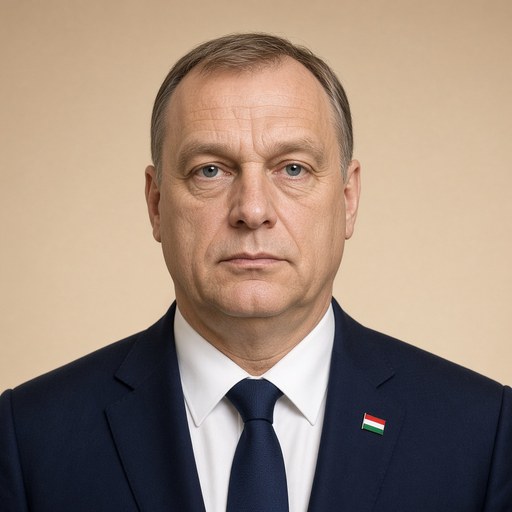
Viktor Orbán's speech at the conference of the presidents of parliaments of Southeast European countries.
 Viktor Orbán · Prime Minister of Hungary
- Context
- Orbán addressed the conference of presidents of Southeast European parliaments in Budapest on February 28, 2026, offering Hungary's perspective on European troubles.
- Main themes
- European crisis, shift in world power order, liberal world order decline, transatlantic relations, national sovereignty vs federalism, Europe of nations, Hungarian political perspective, Hungarian election campaign, EU institutional challenges, sanctions policy, war in Ukraine, green transition failures
- Duration
- ~28 min
- Words
- 3,329
- Sentences
- 148
- Readability
- 47
- Grade
- 12.2
- Syntax
- 3.11
- Vocabulary
- 2.08
Translated from Hungarian
The broad sphere of national life a sentence belongs to. Every sentence has an Arena, so it is the denominator the other indices are read against.
Other148 sentences in 17 paragraphs
Esteemed Mr. President! Excellencies, Ladies and Gentlemen! Dear Guests!
It is an honor to speak to you. Hungary is at an exciting moment. We are in the midst of an election campaign. It is quite convenient for me to take a little break and instead of discussing the intellectually not very complex electoral battle, we can talk about deep and serious matters. Compared to what I have to say, this seems like a somewhat aristocratic environment, and I do not wish to present my thoughts as a revelation descending from the heavens, but rather I invite you to a kind of shared reflection. Consider it as if I were at eye level with you. Mr. President asked me to greet you, but I do not want to miss the opportunity to discuss some substantive issues beyond the formally polite greetings in which I thank you for your visit here to Budapest.
I believe we can agree that Europe is in trouble. Using the language of American films, I would say: there is a disturbance in the Force; troubles upon troubles. In order to address the serious disturbances in international politics, there is a prerequisite, which is to reach an agreement on the nature of the trouble. As long as we do not understand what the trouble is and do not establish a consensus regarding what the trouble is, we cannot find common solutions to the troubles. What I will share with you aims to contribute to this dialogue; it is a description of the troubles in Europe from a Hungarian perspective, as we see it, as we understand it, as we believe it to be. My statements are open to debate; they can be viewed differently. It is possible that the troubles can be described differently from other national perspectives. This is legitimate. What I am saying is a Hungarian perspective.
Perhaps it adds some weight that I have been involved in state-organized international politics for over thirty years, so what I will say is backed by experience; I certainly do not consider myself a novice, and I have witnessed several crises in the history of the European Union. I saw when the euro was created. I witnessed the difficulties related to enlargement. I saw the financial crisis that brought the European Union to its knees. I saw the migration crisis up close. I witnessed the crisis of the pandemic. Then I saw the war crisis when Russia attacked Ukraine, and I observed the crisis that arose from the responses to that, which I attribute to the sanctions policy. And I also see the crisis that I was present at the beginning of, when it was created, how the green transition, initiated without an agreement with the business world, undermines and forces European industry to its knees. I have seen all of these. So when I speak now, what I say is underpinned by these personal experiences.
According to the Hungarian interpretation, Europe is in a situation where the power structure of the world is changing. It is not something that will start and happen someday; we are in it. We, in Hungarian, call this – avoiding ideological provocations – the end of the era of the liberal world order in the Western world. During the time of the liberal world order, international institutions and NGOs influenced international politics with a weight and power that rivaled states. The golden age of this international politics was the liberal world order. We, as state leaders, experienced this as a continuous decrease in our authority and sovereignty in international affairs related to our own countries. Within the European Union, this change in world order manifests itself in that the countries and intellectual currents that thought in terms of a more complete federalist European Union held an almost exclusive position in the union. Now we see that the era of patriotic states and ideas that think in terms of a Europe of nations has begun. These are still present simultaneously; perhaps those representing the ideas of the old order are still in the majority, but the balance of power is continuously leveling out. This implies that the coming years will be characterized by uncertainty within the European Union, there will be strong federalist aspirations, and the forces that desire national sovereignty and think in terms of such a Europe will grow stronger. Increasingly, arguments based on national interests will be more successful than those based on international institutions. This is the first package in which we must interpret the troubles that we, Hungarians, see in Europe.
The second major problem we need to understand concerns the fact that the new president of the United States has disrupted the established transatlantic relationship. The intellectual foundation of the previous transatlantic relationship was provided by a liberal-progressive value identity. The European elite and the American elite essentially stood on the same liberal-progressive intellectual foundations. This has ended on the other side of the ocean, and therefore a new approach is being applied towards Europe. This causes confusion, chaos, and intellectual turmoil in the European Union, in Brussels, regarding how to relate to this new situation. The Americans are doing what they are transitioning from the previous intellectual symbiosis to bilateral negotiations and agreements, and they want to finalize these not based on values, but on interests. And they are not ashamed of this; they openly admit it. This also means that the United States sees Europe not as an intellectual partner, but as a competitor. This does not sit well with us, but we must acknowledge it as a fact; we cannot change it. The Americans today view Europe as a competitor, and my personal remark is that as long as the euro exists, they will always see it this way, because for Americans, any financial change that could replace the dollar or even appear alongside it in international payment systems poses a life-threatening threat.
The question is how we Europeans should relate to this. We Hungarians are pleased that an international force has emerged, the Americans, who are not sympathetic to an increasingly federalized, unified European Union. But we do not want these debates to lead to a weakening of the security pillar of transatlantic cooperation, nor do we want the current chaos in Europe to lead to Europe’s weakening. We believe that federalism actually weakens Europe, and increasing the sovereignty of the member states strengthens Europe. Therefore, it is not in our interest to weaken Europe, the European Union; certainly, it is not in our interest for it to fall apart; our interest is to maintain and strengthen the European Union on a national sovereignty basis – this is our interest. And until now, we have agreed with the Americans; from this point on, the Central European, Hungarian, and American perspectives diverge. We would like this situation, which I have just described to you, to lead to a weakening of federalist aspirations in Europe and a strengthening of agreements based on mutual economic benefits. In general, we advocate that Europe should respond to the change in the world order by prioritizing economic issues, abandoning its political union aspirations, but retaining the full spectrum of economic cooperation based on mutual benefits. In other words, we need the single market, we need the principle of the four freedoms, but we do not need "ever closer union." This is the Hungarian interpretation of the current situation.
In this context, Hungarians see that we need the Balkans; we need the Western Balkans. We are convinced that the Balkans do not pose a problem for Europe if their countries are admitted to the union, but rather represent a resource, an ambition, an impulse, a beneficial new situation from which the European Union can somehow find a way out of its stagnating economic situation. Therefore, we do not only view the countries of the Western Balkans as desirable future EU members, but as countries that we urgently need for the European economy to regain its dynamism. An important part of this – there are currently significant debates about this in Hungary – is the issue of energy sovereignty, because for the single market, we need real European energy sovereignty, the establishment of which is progressing very slowly and cumbersome. But we are confident that alongside the east-west infrastructural connections established during the communist era or the Comecon period, a north-south connection must also be created. I believe it is in the union's strategic interest to connect the northern and southern parts of Europe in terms of energy supply, energy utilization, and energy security.
Ladies and Gentlemen!
When we talk about the enlargement of the European Union, we are faced with two schools of thought. One school says that we must first change the internal structure of the European Union in order to be able to accept the Balkan states. I do not want to create any illusions; while it is necessary to transform the internal structure of the European Union, if we wait for that to be completed, then not only will I not see you as a member of the European Union, but neither will my children. The other school says that of course we should talk about the transformation of the internal decision-making system of the European Union, but this should not be an obstacle for the Western Balkan countries to join the European Union. This is the other school. And we represent this. I am personally proud that we not only represent this in words, but when Hungary held the presidency of the European Union, we were able to take significant steps towards your accession for several candidate countries. And I would like to affirm that Hungarian politics in this regard does not change. For our part, we will continue to do everything possible to ensure that your countries, which are countries of our region, become members of the union.
It is hardly possible to speak sincerely about the future of Europe even in such an elegant company without discussing the war. Today, there are also two schools in Europe. One school, and I do not hide the fact that most countries belong to this, has made a firm decision that Ukraine must win the Russian-Ukrainian war. They have made a firm decision that this war can be won on the front lines, on the battlefield, and that the European Union must view this war as its own war, with which it defends its own security. This is one school. We do not belong to this school. Our position is that there is no solution and no closure to the war on the front lines. The war strategy openly advocated by the countries supporting the war, which states that the war must continue because then Russia will be economically weakened, and peace negotiations can be held with a weakened, at least economically weakened Russia, and thus the important goals for Ukraine and the European Union can be achieved, we, Hungarians, consider this war strategy to be erroneous. We believe that this is a mistake. Even if the leaders of the large European countries openly proclaim this. The size of the country and the intellectual error are not directly related. It happens that the big ones are wrong, and the small ones are right. As encouragement, I can cite the case of migration, when we had to stand alone against the big ones, and in the end, it turned out that we correctly assessed the threats facing Europe.
So we say that Europe must strive to create a new security system. We believe that a major international agreement should primarily not be about Ukraine. First and foremost, a large, pan-European agreement that includes Russia should be about a new European security system. If we do not want wars, how can we create a balanced, military power equilibrium in Europe that provides security for all countries involved in the system? This is the guarantee of peace for the next ten, twenty, thirty, forty years, a new European security system that provides security and guarantees for everyone. We, Hungarians, are also convinced that this security system must include arms control agreements, because we are threatened not only by war but also by an arms race. And we are undoubtedly poorly positioned in Europe regarding our own military capabilities, and there is a level to which we must develop, but we must not enter into an arms race that demands more than the necessary level, and ultimately diverts huge resources into armament, which will be unproductive instead of peacefully building our countries. Therefore, we must stop at a certain level of strengthening our own power, and from there, we must prevent our economic resources from being diverted into the military sector through arms control agreements. And once we have these in place, then we can address the agreement regarding Ukraine. So in Hungarian thinking – acknowledging that this is based on our own national security interests – our order of importance looks like this: a new European security order in which we, Hungarians, also feel safe, arms level determination and arms control agreements, and then the question of what to do with Ukraine. This is the Hungarian logic.
That is why, as you can see, we are grinding in different mills regarding the issue of war, and the leaders of the union are grinding in another. I thought it was important to say this because I see that if the war party remains dominant, and those countries that believe in winning the war and deciding it on the front line become the majority in the union, then it means that your accession cannot happen in the next five to ten years. The union has no money. It has no money for you, it has no money for enlargement, it has no money for itself! And if we decide that the war, if the big players decide that the war must continue, huge sums must be sent to the front line or made available to Ukraine. We already have no money, as we had to decide recently that 90 billion euros, which is enough for perhaps two years of operating Ukraine, must be taken out as a loan. This loan must be taken from the money markets, and the member states must guarantee it. The fact that Hungary was able to pull itself out of this and received an exception along with Slovakia and the Czech Republic, and we do not have to participate in this, was the result of a difficult struggle, but it contains no guarantees regarding future threats. This 90 billion will run out, and then more huge sums will have to be taken out. According to our calculations, in the next seven-year budget of the union, 300 billion euros will have to be transferred to Ukraine in direct and indirect forms. Together with market and state sources, they are asking for 800 billion to operate Ukraine in the next ten years, and 700 billion – these are now in dollars! – are requested for operating the army. Europe does not have that much money, neither in the markets nor in the European Union budget. If the war continues, it will consume all economic resources. According to the European Court of Auditors – so not according to the Hungarian position! – the situation already looks like in the next seven-year budget, member state contributions will have to be increased by one and a half times. I do not know if the member states will take this on, but if contributions must be increased by one and a half times without enlargement with the Western Balkans, then imagine how much more this must be increased if we want to include you in the European Union! Both cannot go together. We must bite one of our fingers. Either the war or the enlargement of the European Union with the Western Balkan countries. This is such a simple situation.
Moreover, ladies and gentlemen, in addition to the complicated war situation, I now present to you a brief summary of the latest European Council meeting, as Europe is also threatened by a very serious economic crisis, which is coming from the energy sector. It is a well-known fact, and the Draghi report – which I recommend for your attention – also speaks frankly about the fact that the European economy operates at energy price levels three to four times higher than those of its rivals. Consequently, production costs in Europe are three to four times higher in terms of energy compared to those in China or America. This report states, and I repeat, I share its content, that if we do not take quick steps to reduce energy prices in a very short time, then the European economy will face the most serious crisis. You know the data of your own countries, you know the situation of the manufacturing industry. Obviously, you also see, you know that the European aluminum industry is practically finished. The European chemical industry is on its knees; we are at the last moment to save it. And if we keep hesitating, then the European automotive industry will also be finished. Just yesterday, I was able to inaugurate a new, large development at the Mercedes factory in Hungary, which is an exception today in Europe, as the entire automotive industry is rather shrinking. We, Hungarians, are still holding up well, but we cannot hold on indefinitely with such energy prices. Cheap energy is needed! Whether the energy is Russian or not is secondary from the perspective of the Hungarian mind. We do not care how it comes; it must be at a price that saves the Hungarian economy, saves the European economy, and does not allow energy-intensive industrial sectors to go bankrupt. If I may remind you that this certain regulation that results in high energy prices – beyond the sanctions, which is called ETS – is now trying to put us into a second phase, meaning that people must pay for the emissions of their homes and vehicles as well, which further raises prices, then hats off, I believe that the European economy is facing an open crisis. We must prevent this! I tell our friends from the Western Balkans that although there are huge differences among the leaders of the Visegrad Four regarding the question of war, and we think very differently about the security of Europe and Ukraine, there is complete agreement on the issue that the artificially increasing European price regulation of energy price levels must be changed, because this is a matter of survival for Poland, the Czech Republic, Slovakia, and Hungary as well. And here I see a chance for us to act successfully together.
Well, ladies and gentlemen!
This is where we stand. This is the situation. In summary, I can conclude my remarks with the following. Thus, the perspective of the European Union's enlargement has narrowed. The membership perspective of the Western Balkan countries is today narrower than it has ever been before, and the war, its continuation, continuously narrows this perspective. Therefore, I do not encourage you to give up your European ambitions; on the contrary, I encourage you not to give up. But since we do not know how long you will have to remain outside the European Union, and depending on the war, this could be a very, very long time, I suggest to you to consider preparing your own national development strategies, starting from the point that you are not members of the European Union. And I can say that if membership knocks on the door, you can count on Hungary's support. If membership does not knock on the door, and you need to pursue national development strategies, then just as before, you can count on Hungary, the Hungarian economy, the Hungarian government, and personally on me as well.
Thank you very much for your kind attention!
The original Hungarian. The tags above are read on the English translation's sentences.
Mélyen tisztelt Elnök Úr! Excellenciás Hölgyek és Urak! Kedves Vendégeink!
Megtiszteltetés, hogy szólhatok Önökhöz. Izgalmas pillanatban vannak Magyarországon. Egy választási kampány kellős közepén vagyunk. Jól jön nekem, hogy kicsit pihenhetek, és az intellektuálisan nem túl bonyolult választási harc helyett mély és komoly dolgokról beszélhetünk. A mondandómhoz képest ez kicsit arisztokratikus környezetnek tűnik, és amit mondani akarok, azt se égből leszálló kinyilatkoztatásként szeretném elmondani Önöknek, hanem inkább egyfajta közös gondolkodásra hívom Önöket. Vegyék úgy, mintha szemmagasságban lennék. Elnök úr arra kért, hogy köszöntsem Önöket, de nem akarom elmulasztani a lehetőséget, hogy a formálisan udvarias köszöntőkön túl, amelyben megköszönöm az Önök látogatását ide, Budapestre, ne beszéljek néhány érdemi kérdésről is.
Azt hiszem, hogy egyetértés lehet közöttünk abban, hogy Európa bajban van. Az amerikai filmek nyelvét használva azt mondanám: zavar van az erőben; gondok gondok hátán. Ahhoz, hogy a nemzetközi politikában a súlyos zavarokat kezelni lehessen, van egy előföltétel, az pedig az, hogy egyetértés legyen a baj természetét illetően. Amíg nem értjük meg, hogy mi a baj, és nem alakítunk ki egyetértést a tekintetben, hogy mi a baj, addig nem tudunk közös megoldásokat találni a bajokra. Amit én el fogok mondani Önöknek, az ehhez a párbeszédhez kíván hozzájárulni; az Európában lévő bajok leírása magyar nézőpontból, ahogyan mi látjuk, ahogyan mi értjük, ahogy szerintünk ez van. Állításaim tűrik a vitát, lehet ezt másképp is látni. Lehet, hogy más nemzeti nézőpontokból másképpen írhatóak le a bajok. Ez legitim. Amit én mondok, az egy magyar nézőpont.
Talán némi súlyt ad neki az, hogy harminc-egynéhány éve vagyok az államilag szervezett nemzetközi politikában, tehát amit mondani fogok, amögött van tapasztalat is, semmiképpen nem számítok kezdőnek, és láttam már néhány válságot az Európai Unió történetében. Láttam, amikor létrehozták az eurót. Láttam a bővítéssel kapcsolatos nehézségeket. Láttam a pénzügyi válságot, amely földre vitte az Európai Uniót. Láttam a migrációs válságot, egész közelről. Láttam a pandémia válságát. Aztán láttam a háborús válságot, amikor Oroszország megtámadta Ukrajnát, és láttam az arra adott válaszokból kinőtt válságot, amit a szankciós politikának tulajdonítok. És látom azt a válságot is, ott voltam az elején is, amikor ezt létrehozták, hogy az üzleti világgal való megegyezés nélkül megindított zöldátmenet hogyan fekteti meg, kényszeríti térdre az európai ipart. Ezeket mind láttam. Tehát amikor most beszélek, amiket mondok, azok mögött ezek a személyes tapasztalatok húzódnak meg.
A magyar értelmezés szerint Európa egy olyan helyzetben van, amikor a világ hatalmi rendszerének megváltozása zajlik. Nem elkezdődik, meg majd lesz egyszer, hanem benne vagyunk. Ezt mi magyarul – kerülöm az ideológiai provokációkat, de – úgy hívjuk, hogy lezárult a liberális világrend korszaka a nyugati világban. A nemzetközi politikát a liberális világrend idejében az államokkal vetekedő súllyal és erővel befolyásolták nemzetközi intézmények meg NGO-k. Ennek a nemzetközi politikának az aranykora volt a liberális világrend. Mi, állami vezetők ezt úgy éltük meg, hogy folyamatosan egyre csökken az autoritásunk és a szuverenitásunk a saját országainkkal összefüggő nemzetközi ügyekben. Az Európai Unión belül ez a világrend-változás úgy jelenik meg, hogy szinte kizárólagos pozícióban voltak az unióban azok az országok és szellemi irányzatok, amelyek minél teljesebb föderalista Európai Unióban gondolkodtak. Most úgy látjuk, hogy elkezdődött a nemzetek Európájában gondolkodó patrióta államok és eszmék korszaka. Ezek most még egyszerre vannak jelen, talán még a régi rend eszméit képviselők vannak többségben, de az erőviszonyok folyamatosan kiegyenlítődnek. Ebből az következik, hogy a következő éveket az Európai Unión belül bizonytalanság fogja meghatározni, jelen lesznek az erőteljes föderalista törekvések, és egyre erősödni fognak a nemzeti szuverenitást akaró és ilyen Európában gondolkodó erők. Egyre inkább a nemzetközi intézmények helyett a nemzeti érdekek alapján álló érvelések lesznek a sikeresek. Ez az első csomag, amiben értelmeznünk kell azokat a bajokat, amiben mi, magyarok értelmezzük azokat a bajokat, melyeket Európában látunk.
A második nagy problémakör, amit meg kell értenünk, arról szól, hogy az Egyesült Államok új elnöke felborította a bejáratott transzatlanti viszonyt. Az eddigi transzatlanti viszonynak a szellemi alapját egy liberális-progresszív értékazonosság adta. Az európai elit és az amerikai elit lényegében ugyanazon a liberális-progresszív szellemi alapokon állt. Ennek az óceán túlsó oldalán vége lett, és ezért ott egy új megközelítést alkalmaznak Európával szemben. Ez tanácstalanságot, káoszt és szellemi természetű zavart okoz az Európai Unióban, Brüsszelben, hogy hogyan viszonyuljunk ehhez az új helyzethez. Az amerikaiak azt csinálják, hogy az eddigi szellemi szimbiózis helyett egyszerűen áttérnek a bilaterális tárgyalásokra és megállapodásokra, és ezeket nem értékek, hanem érdekek alapján akarják nyélbe ütni. És ezt nem szégyellik, hanem nyíltan be is vallják. Ez azt is jelenti, hogy az Egyesült Államok nem szellemi társként, hanem versenytársként tekint Európára. Ez nekünk nem esik jól, de mint tényt tudomásul kell vennünk, nem áll módunkban megváltoztatni. Az amerikaiak ma úgy tekintenek Európára, mint versenytársra, és személyes megjegyzésem, hogy amíg az euró létezik, addig mindig is így fognak tekinteni, mert az amerikaiak számára életveszélyes fenyegetést jelent minden olyan pénzügyi változás, ami a dollár helyére léphet, vagy akár csak mellette megjelenhet a nemzetközi fizetési rendszerekben.
A kérdés az, hogy mi, európaiak hogyan viszonyuljunk ehhez. Mi, magyarok örülünk annak, hogy megjelent egy olyan nemzetközi erő, az amerikaiak, amelyeknek nem szimpatikus az egyre föderalizáltabb, egységesülőbb Európai Unió. De mi nem szeretnénk, hogy ha ezek a viták oda vezetnének, hogy a transzatlanti együttműködés biztonsági lába megrendülne, és azt sem szeretnénk, hogy ha az Európában ma uralkodó zűrzavar Európa meggyengüléséhez vezetne. Mi azt gondoljuk, hogy a föderalizmus gyengíti valójában Európát, és a szuverenitás, a tagállamok szuverenitásának növelése pedig erősíti Európát. Tehát nekünk nem érdekünk Európa, az Európai Unió meggyengítése, végképp nem érdekünk annak széthullása, nekünk az Európai Unió megtartása, erősítése nemzeti szuverenista alapon – ez a mi érdekünk. És eddig értettünk egyet az amerikaiakkal, innentől kezdve a közép-európai, magyar és az amerikai nézőpont már más. Azt szeretnénk, hogy ha ez a helyzet, amit most leírtam Önöknek oda vezetne, hogy Európában gyengülnek a föderációs törekvések, és megerősödnek a kölcsönös gazdasági előnyökön nyugvó megállapodások. Általában is mi annak vagyunk a hívei, hogy Európa úgy reagáljon a világrend megváltozására, hogy a gazdasági kérdéseket helyezi előtérbe, föladja a politikai unióra vonatkozó elképzeléseit, de megtartja a kölcsönös előnyökön nyugvó gazdasági együttműködés teljes spektrumát. Vagyis szükségünk van a közös piacra, szükségünk van a négy szabadság elvére, de nincs szükségünk „ever closer union”-ra. Ez a magyar értelmezése a mostani helyzetnek.
Ebben a kontextusban a magyarok úgy látják, hogy nekünk szükségünk van a Balkánra, szükségünk van a Nyugat-Balkánra. Meggyőződésünk, hogy a Balkán nem problémát jelent Európa számára, ha az országaikat fölveszik az unióba, hanem erőforrást jelentenek, egy ambíciót, egy impulzust, egy jótékony, új szituációt, amelyben az Európai Unió a stagnáló gazdasági helyzetéből valahogyan kiutat találhat. Ezért mi a Nyugat-Balkán országaira nemcsak úgy tekintünk, mint kívánatos jövőbeli európai uniós tagokra, hanem olyan országokra, akikre múlhatatlanul szükségünk van ahhoz, hogy az európai gazdaság visszanyerje a dinamizmusát. Ennek persze fontos része – Magyarországon ma éppen nagy viták vannak erről – az energiaszuverenitás kérdése, mert az egységes piachoz nekünk szükségünk van valódi európai energiaszuverenitásra, amelynek megteremtése nagyon körülményesen és lassan halad. De biztosak vagyunk abban, hogy a kommunista időkben vagy a KGST idejében kiépült kelet–nyugat infrastrukturális összeköttetés mellett létre kell jönnie az észak–déli összeköttetésnek is. Szerintem az unió stratégiai érdeke, hogy Európa északi és déli felét is energiaszállítás, energiahasznosítás szempontjából, energiabiztonság szempontjából összekösse.
Tisztelt Hölgyeim és Uraim!
Amikor az Európai Unió bővítéséről beszélünk, akkor két iskolával állunk szemben. Az egyik iskola azt mondja, hogy az Európai Unió belső szerkezetét kell megváltoztatnunk először, hogy be tudjuk fogadni a balkáni államokat. Nem akarok illúziót kelteni, ugyan az Európai Unió belső szerkezetének átalakítása szükséges, de ha arra várunk, hogy az befejeződjék, akkor nemhogy én nem fogom Önöket látni az Európai Unió tagjaként, hanem még a gyerekeim se. A másik iskola azt mondja, hogy persze beszéljünk az Európai Unió belső döntési rendszerének átalakításáról, de ez ne jelentsen akadályt a nyugat-balkáni országok számára, hogy csatlakozhassanak az Európai Unióhoz. Ez a másik iskola. És mi ezt képviseljük. Személyesen is büszke vagyok arra, hogy ezt nemcsak szavakban képviseljük, hanem amikor az Európai Unió elnökségét Magyarország adta, akkor több tagjelölt ország esetében is jelentős lépéseket tudtunk tenni az Önök csatlakozásának irányában. És szeretném megerősíteni, hogy a magyar politika e tekintetben nem változik. A magunk részéről a jövőben is mindent megteszünk annak érdekében, hogy az Önök országai, amely országok a mi régiónk országai, az unió tagjaivá váljanak.
Aligha lehet őszintén beszélni Európa jövőjéről még egy ilyen elegáns társaságban sem anélkül, hogy ne beszélnénk a háborúról. Európában ma két iskola van itt is. Az egyik iskola, és azt nem titkolom el, hogy az országok többsége ide tartozik, határozott döntéseket hozott arról, hogy az orosz–ukrán háborút Ukrajnának meg kell nyernie. Határozott döntést hoztak arról, hogy ez a háború a frontvonalakon megnyerhető, a hadszíntéren megnyerhető, és hogy az Európai Uniónak úgy kell tekintenie erre a háborúra, mint a saját háborújára, amellyel saját biztonságát védi. Ez az egyik iskola. Mi nem ehhez az iskolához tartozunk. A mi álláspontunk az, hogy a háborúnak nincsen megoldása és nincs lezárása a frontvonalon. Azt a háborús stratégiát, amit nyíltan képviselnek a háborút támogató országok, miszerint a háborút azért kell folytatni, mert akkor Oroszország gazdaságilag megrendül, és olyan béketárgyalásokat lehet tartani, amelyben már egy megrendült, gazdaságilag, legalább gazdaságilag megrendült Oroszországgal kell tárgyalni, és így el lehet érni az Ukrajna és Európai Unió számára fontos célokat, ezt a háborús stratégiát mi, magyarok tévesnek tartjuk. Azt gondoljuk, hogy ez egy tévedés. Akkor is, hogy ha a nagy európai országok vezetői hirdetik ezt nyíltan. Az ország mérete és az intellektuális tévedés nem áll közvetlen kapcsolatban egymással. Van az úgy, hogy a nagyok tévednek, és a kicsiknek van igaza. Biztatásképpen ideidézhetem a migráció esetét, amikor egyedül kellett szembefordulnunk a nagyokkal, és a végén kiderült, hogy mi értékeltük helyesen az Európát fenyegető veszélyeket.
Tehát mi azt mondjuk, hogy Európának arra kell törekednie, hogy egy új biztonsági rendszert hozzon létre. Szerintünk egy nagy nemzetközi megállapodásnak elsősorban nem is Ukrajnáról kell szólnia. Első helyen egy nagy, összeurópai, Oroszországot is magában foglaló megállapodásnak egy új európai biztonsági rendszerről kell szólnia. Ha nem akarunk háborúkat, hogyan tudunk egy olyan egyensúlyi, katonai erőegyensúlyi állapotot létrehozni Európában, amely biztonságot ad a rendszerben részt vevő minden ország számára. Ez a következő tíz-húsz-harminc-negyven év békéjének a záloga, egy mindenkinek biztonságot, garanciákat adó, új európai biztonsági rendszer. Nekünk, magyaroknak az is meggyőződésünk, hogy ennek a biztonsági rendszernek magában kell foglalnia a fegyverkorlátozási megállapodásokat is, mert nemcsak a háború fenyeget bennünket, hanem egy fegyverkezési verseny is. És kétségkívül rosszul állunk Európában a saját katonai képességekkel, és van egy szint, ameddig föl kell fejlődnünk, de nem szabad belelépnünk egy olyan fegyverkezési versenybe, ami a szükséges szintnél többet követel meg, és végül az országaink békés építése helyett hatalmas forrásokat von be a fegyverkezésbe, amely improduktív lesz. Tehát nekünk a saját erőnk megerősítésének egy bizonyos szintjénél meg kell állnunk, és onnantól kezdve fegyverzetkorlátozási megállapodásokkal kell megakadályoznunk, hogy a gazdasági erőforrásaink a katonai szektorba menjenek át. És ha ezekkel megvagyunk, akkor jöhet a megállapodás Ukrajnáról. Tehát a magyar gondolkodásban – bevallva, hogy ez a mi, saját nemzetbiztonsági érdekeinkből indul ki –, számunkra a fontossági sorrend úgy néz ki: új európai biztonsági rend, amelyben mi, magyarok is biztonságban érezzük magunkat, fegyverzetiszint-meghatározás és fegyverkorlátozási megállapodás, és utána a kérdés, hogy mi legyen Ukrajnával. Ez a magyar logika.
Ezért van az, amit Önök is láthatnak, hogy a háború ügyében más malomban őrölünk mi, és más malomban őrölnek az unió vezetői. Ezt azért tartottam fontosnak elmondani, mert úgy látom, hogyha a háborús párt marad fölül, és azok az országok lesznek többségben az unióban, akik hisznek a háború megnyerésében, a frontvonalon való eldöntésében, akkor az azt jelenti, hogy az Önök csatlakozására a következő öt-tíz évben semmiképpen nem kerülhet sor. Az uniónak ugyanis nincs pénze. Nem Önökre nincs pénze, nem a bővítésre nincs pénze, saját magára sincsen pénze! És hogy ha úgy döntünk, hogy a háborút, ha úgy döntenek a nagyok, hogy a háborút folytatni kell, hatalmas összegeket kell a frontvonalra küldeni, illetve Ukrajna rendelkezésére bocsátani. Már most sincs pénzünk, hiszen legutóbb is arról kellett dönteni, hogy 90 milliárd eurót, amely két évre elegendő – talán – Ukrajna működtetésére, már hitelből kell megtenni. Ezt a hitelt a pénzpiacokról kell fölvenni, és a tagállamoknak kell garantálni. Az, hogy Magyarország ki tudta húzni magát ebből, és kivételt kapott Szlovákiával és Csehországgal együtt, és nekünk nem kell ebben részt venni, egy nehéz küzdelem eredménye volt, de a jövő fenyegetését illetően semmilyen garanciát nem tartalmaz. Ugyanis ez a 90 milliárd el fog fogyni, és utána újabb hatalmas összegeket kell fölvenni. Már az unió következő, hétéves költségvetésében is, a mi számításaink szerint, direkt és indirekt formában 300 milliárd eurót kell majd átadni Ukrajnának. Piaci és állami forrásokkal együttesen 800 milliárdot kérnek Ukrajna működtetésére a következő tíz évben, és 700 milliárdot – ezek most dollárok! – kérnek a hadsereg működtetésére. Európának megközelítőleg sincs ennyi pénze, sem a piacokon, sem az Európai Unió költségvetésében. Ha a háború folytatódik, minden gazdasági erőforrást ez emészt majd fel. Az Európai Számvevőszék szerint – tehát nem a magyar álláspont szerint! – már most úgy fest a helyzet, hogy a következő, hétéves költségvetésben a tagállami befizetéseket másfélszeresére kell növelni. Nem tudom, ezt majd vállalják-e a tagállamok, de ha a Nyugat-Balkánnal való bővítés nélkül másfélszeresére kell növelni a befizetéseket, akkor képzeljék el, mennyire kell ezt még növelni, ha Önöket is föl akarjuk venni az Európai Unióba! Mind a kettő együtt nem megy. Valamelyik ujjunkat meg kell harapni. Vagy a háború, vagy az Európai Unió bővítése a nyugat-balkáni országokkal. Ez egy ilyen egyszerű helyzet.
Ráadásul, tisztelt Hölgyeim és Uraim, eközben a bonyolult háborús helyzeten túl a legutóbbi Európai Tanácsülés rövid summáját adom most Önök elé, nagyon súlyos gazdasági válság is fenyegeti Európát, ami az energia felől érkezik. Az egy közismert tény, és a Draghi-féle jelentés – amit ajánlok az Önök figyelmébe – is őszintén beszél arról, hogy az európai gazdaság háromszor-négyszer magasabb energiaárszinten működik, mint a riválisok gazdasága. Következésképpen a termelés költségei Európában energiaoldalról háromszorosak-négyszeresek a kínaival vagy az amerikaival összevetve. Azt mondja ez a jelentés, ismétlem én is, osztom a tartalmát, hogy ha nagyon rövid időn belül nem teszünk gyors energiaárcsökkentést eredményező lépéseket, akkor az európai gazdaság a legsúlyosabb válsággal néz szembe. Önök ismerik a saját országaik adatait, ismerik a gyáripar helyzetét. Nyilván Önök is látják, tudják, hogy az európai alumíniumiparnak gyakorlatilag befellegzett. Az európai vegyipar a térdein áll, az utolsó pillanatban vagyunk, hogy megmenthessük. És ha még gatyázunk, akkor az európai járműiparnak is befellegzett. Tegnap éppen a magyarországi Mercedes gyárnak egy új, nagy fejlesztését adhattam át, ami kivétel ma Európában, hiszen az egész autóipar inkább szűkül. Mi, magyarok még jól tartjuk magunkat, de mi se tudjuk tartani magunkat a végtelenségig ilyen energiaárak mellett. Olcsó energia kell! Hogy az energia orosz-e, vagy sem, az a magyar agy szempontjából másodlagos. Nem érdekel bennünket, hogyan jön, olyan áron kell lennie, amely megmenti a magyar gazdaságot, megmenti az európai gazdaságot, nem engedi, hogy az energiaintenzív ipari ágazatok tönkremenjenek. Ha ideidézem még Önök elé, hogy ennek a bizonyos magas energiaárat eredményező szabályozásnak – a szankciókon túl, amit ETS-nek neveznek – most egy második szakaszába is be akarnak bennünket léptetni, vagyishogy fizetni kell az embereknek a lakások kibocsátása és a gépjárművek kibocsátása után is, ami még tovább emeli az árakat, akkor kalap-kabát, azt hiszem, hogy az európai gazdaság egy nyílt válsággal néz szembe. Ezt meg kell akadályoznunk! Nyugat-balkáni barátainknak mondom, hogy bár óriási különbségek vannak a visegrádi négy tagállam vezetői között a háború kérdésében, és nagyon különböző módon gondolkodunk Európa biztonságáról és Ukrajnáról is, de abban a kérdésben, hogy az energiaárszinteket folyamatosan emelő, mesterséges európai árszabályozást meg kell változtatni, ebben teljes egyetértés van, mert ez létkérdés Lengyelország, Csehország, Szlovákia és Magyarország számára is. És itt látok is esélyt arra, hogy sikeresen lépjünk fel közösen.
Nos, hát tisztelt Hölgyeim és Uraim!
Így állunk. Ez a helyzet. Summázva a következőkkel zárhatom a mondandómat. Tehát az Európai Unió bővítési perspektívája beszűkült. A nyugat-balkáni országok tagsági perspektívája ma szűkebb, mint bármikor korábban volt, és a háború, annak a folytatása folyamatosan szűkíti ezt a perspektívát. Ezért én nem biztatom Önöket arra, hogy adják föl az európai ambícióikat, sőt arra biztatom, hogy ne adják föl, de miután nem tudjuk, hogy milyen hosszú időt kell még Önöknek az Európai Unión kívül lenniük, és a háborútól függően ez lehet nagyon-nagyon hosszú idő is, ezért azt vetem föl Önöknek, fontolják meg, hogy készüljenek saját, nemzeti fejlődési stratégiákkal is, amelynek kiindulópontja az, hogy Önök nem tagjai az Európai Uniónak. És azt tudom mondani, hogy ha a tagság bekopogtat, akkor Magyarország támogatására számíthatnak. Ha a tagság nem kopogtat be, és Önöknek nemzeti fejlesztési stratégiákat kell folytatniuk, akkor úgy, mint eddig, Magyarországra, a magyar gazdaságra, a magyar kormányra és személy szerint rám is számíthatnak.
Köszönöm szépen megtisztelő figyelmüket!