





- Context
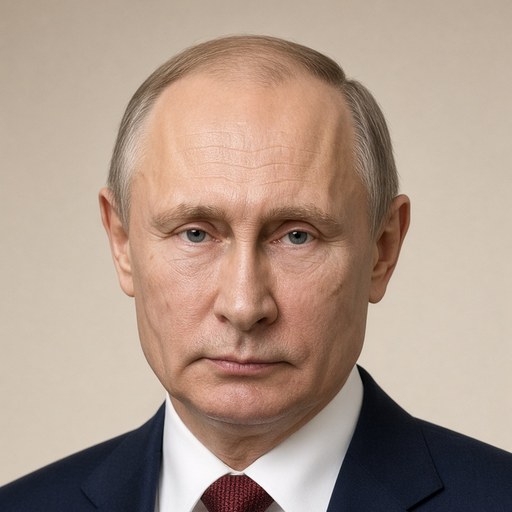
- Putin addressed the General Assembly of the Russian Academy of Sciences in May 2012, outlining state priorities for science funding, modernization, and Russia's long-term development strategy.
- Main themes
- Russian Academy of Sciences, science funding, modernization and national development, global geopolitical changes, state-science partnership, defense industry, economic investment in research, scientific workforce salaries, long-term forecasting, technological progress, education and enlightenment
- Duration
- ~19 min
- Words
- 2,337
- Sentences
- 103
- Readability
- 33
- Grade
- 14.1
- Syntax
- 3.15
- Vocabulary
- 2.13
Translated from Russian
The broad sphere of national life a sentence belongs to. Every sentence has an Arena, so it is the denominator the other indices are read against.
Other103 sentences in 35 paragraphs
Dear Yuri Sergeyevich [Osipov], esteemed colleagues, friends!
First of all, thank you very much for the invitation and the opportunity to speak. I have been with you many times, and it has always been very interesting and substantive discussions. I meet regularly with Yuri Sergeyevich; we met quite recently to discuss the problems of the Academy, other issues, and global challenges.
We know well that the coming decades will be crucial for us and for many countries around the world – for a world that is not just entering but has already practically entered a rather complex period of global turbulence. New geopolitical centers are forming, social and demographic trends are changing, the technological landscape is evolving, and life is changing significantly. All these processes require the deepest reflection – in order to develop and adopt adequate steps and decisions.
In this regard, I would like to emphasize again: we need serious intellectual work on development projects, on projects for the future. A system of long-term economic, scientific, technological, and defense forecasting is necessary. We must also feel and analyze the problems of contemporary Russian society.
The colossal role of domestic science is evident, primarily that of the Academy of Sciences itself. I believe that creating a solid foundation in both the natural and humanitarian disciplines is an essential, non-negotiable condition for our modernization breakthrough, a guarantee of Russia's global leadership.
Over the past years, we have done a great deal together to restore the public and state significance of such values and concepts as enlightenment, quality education, creativity, scientific and research work.
Yes, there are still many problems here; they remain. But I think many in this hall will agree with me that the so-called survival period for domestic science as a whole has ended. The country itself has changed significantly, and our resources have increased manifold. Today, we must talk not just about supporting science or even about repaying debts, but about a priority partnership between the state and science, the academies of sciences, and the entire scientific and educational community in the interests of proactive national development. This is one of our unconditional priorities.
I want to remind you where we started: in 2002, federal budget expenditures on civilian science amounted to about 30 billion rubles. I remind you that last year funding amounted to 323 billion rubles (ten times more – even taking into account inflation), which is a significant increase.
We set the task of raising expenditures on scientific research and development, including through attracting private investments, to about 1.8 percent of GDP by 2015. This is still less than in some leading countries (in the USA, for example, it is 2.5 percent). But we will strive for this benchmark, for this level, we will move persistently, gradually, measuring these steps against our capabilities, but we will definitely move in this direction.
We also intend to actively involve scientific organizations and universities in implementing innovative development programs for state-owned companies (where huge resources are concentrated), and plans for modernizing the defense industry.
Many present in this hall know how some scientific centers of the Academy of Sciences were formed: it was, in fact, a direct order from the defense sectors. I am not saying that we need to return to this, as it is impossible and unnecessary, but we will certainly use the allocated resources to address tasks related to enhancing the country's defense capabilities while simultaneously developing science and formulating appropriate orders for it.
I remind you that the state defense order for us until 2020 is 20 trillion rubles, and for re-equipping, essentially, the industrial base – another three trillion. Direct funding for the Academy of Sciences has also increased fivefold over the past decade, which has allowed us to expand research programs, attract young personnel, and begin addressing acute social problems.
In 2002, we allocated 12.6 billion rubles to the Academy of Sciences, and in 2012, it is already 64 billion. The average salary in the Academy of Sciences system last year was about 34,000 rubles. This is, of course, low; it does not yet meet the qualifications, responsibilities, and professional requirements that are currently placed on specialists engaged in the scientific field, but still, it is higher than the average salary in the economy.
And what was it like before? In 2002, our average salary in the economy was only 4,100 rubles, while in the Academy it was 4,300 rubles, and that was the entire salary. By 2018, the average salary of scientific workers should be at least twice the average in the economy of a specific region. This task has been set and will certainly be addressed.
Moreover, we must strive for the income level of leading scientists (not the salary level, but the level of total income) to be competitive at the global level, comparable to the conditions offered in the best universities and research centers in the world.
I would like to specifically address the housing problem of employees of the Russian Academy of Sciences, primarily young scientists. I can say that for the period until 2015, within the framework of the Federal Target Program "Housing," 6 billion rubles have been allocated for these purposes to the Academy.
However, these resources are not enough, so we intend to actively support the joint project of the Russian Academy of Sciences and the Housing Development Foundation for the construction of housing for Academy employees on plots owned by the federal government. This alone will reduce the cost of a square meter by at least 20 percent. I know that a pilot program has already started in the Siberian Branch of the Russian Academy of Sciences. As a result, about 400 families of young scientists will receive their own housing.
In addition, we will promote the idea of housing cooperatives, including for young scientists, as well as special preferential mortgage programs. And, of course, the regions should also get involved here, for example, by helping with the down payment.
During our recent meeting with Yuri Sergeyevich, which I have already mentioned, we discussed issues of updating the material and technical base of the Academy, creating shared-use centers. We have been talking about this for quite some time: it is an extremely important issue – both in terms of scientific results and for the professional and creative self-realization of specialists and scientists right here in Russia. We agreed to return to this topic soon and see what budget opportunities exist for additional support for these programs.
Here, I would like to touch on the principles of financing research and organizing the work of scientific teams. Of course, we must use the best, most effective practices that have proven themselves well.
I believe that independent evaluation of the activities of scientific organizations should become the norm in academic life. These approaches are already being implemented in the Academy. However, to date, only 73 out of more than 430 institutions of the Russian Academy of Sciences have gone through the evaluation mechanism. Of course, this work needs to be accelerated. We need to eliminate everything that discredits the scientific community and lowers its authority. Moreover, we should be intolerant of those who parasitize on science. And here I want to note the principled position of the members of the RAS Commission for the Fight Against Pseudoscience and the Falsification of Scientific Research.
Strengthening the standards of scientific and professional ethics, widely informing Russian society about the real problems and achievements of domestic science, defending its international prestige is certainly also among the priority tasks of the Russian Academy of Sciences.
You know that a unified long-term program for fundamental research is currently being prepared. Its foundation should be based on clear, understandable criteria. It is intended to integrate the work carried out in state academies of sciences, higher educational institutions, and state scientific centers. And it should be aimed at research that will allow Russia to reach the level of the most advanced countries in scientific and technological terms.
I would like to emphasize: such a program should not only be considered and approved by the Government – a mechanism for its public, open audit must be created, meaning that the program's executors should regularly report not only to officials for the funds received but also to the scientific community and to Russian citizens. At the same time, it is essential to involve authoritative international specialists in the expertise.
A unified integrated program for fundamental research will allow for more efficient use of state funds allocated for research and development, avoid duplication of themes, eliminate departmental barriers and various inconsistencies. As a result, we will be able to form scientific teams consisting of scientists working in various fields of science. And we know today that the most interesting discoveries occur precisely at the intersections.
I believe that the task of the state and the Russian Academy of Sciences is to persistently seek breakthrough developments, stimulate healthy competition in the field of scientific research, including by attracting unconventional ideas that exist in the teams of young enthusiasts in the dynamically developing sector of high-tech, innovative business.
Many well-known scientists are addressing the Presidential Administration and the Government with a proposal to strengthen the competitive element in the distribution of funds allocated for scientific activities, to more widely use competitive mechanisms, and to finance primarily promising scientific teams and developments. I certainly agree with this approach. Competition is indeed the most effective way to allocate financial resources. At the same time, there are certain limitations: the Budget Code, various legislative acts regulating the expenditure of budgetary funds. I ask the Ministry of Education and Science (the new Minister), the Ministry of Finance, and other interested agencies to work together with the Academy of Sciences to formulate their proposals, conduct an inventory of legislation, and remove barriers to the implementation of modern approaches in the field of financing scientific activities. For example, we see how well the grant model has proven itself. Therefore, we intend to significantly – I want to emphasize, significantly – increase the resource filling of state scientific funds that support promising scientific research. By 2018, it is planned to allocate up to 25 billion rubles to the Russian Foundation for Basic Research and the Russian Humanitarian Scientific Foundation. Moreover, the sizes of the grants will be comparable to those provided to scientists by leading foreign funds and universities.
Naturally, the selection of projects for grant support should also be as open as possible. And I would add that it should be conducted under stricter rules with the participation, as in the previous case, of leading scientists and, of course, your international colleagues. The funds received from the foundations should be directed to financing the most significant scientific research that directly impacts the development of fundamental science.
Also, at least until 2015, we will extend the program for attracting the best specialists to our universities, regardless of their citizenship or place of work. Moreover, we will expand it to academic institutes and state scientific centers. This will allow them to strengthen their human resources, launch new research projects in priority areas.
I would like to note that this program is already working effectively. I have been to some of these laboratories and have seen how your colleagues work. What I consider important to emphasize is that the main recipients of grants (about 70 percent) are indeed our compatriots, either working here or having moved to other countries but returning and working with us for no less than three to six months a year. Many are here without leaving, passing on their knowledge to both students and universities. And, importantly, they are working to bring the results of their research to market, both in our market and abroad. In essence, we are not just making calls or imposing restrictions and prohibitions – we are, through what I would call economic incentives, gathering our national intellectual potential.
We also expect that by 2020, at least five Russian universities should enter the top hundred leading world universities. However, we also need to understand what leading universities are. All these rankings are a thing in themselves; we need to sort this out, but I think it will not be difficult for the specialists in this hall to draw conclusions about the level of a particular university in Russia. I am convinced that solving this task is only possible with the closest interaction between higher education and academic institutes, the Russian Academy of Sciences.
We should fully utilize the powerful educational and mentoring potential of Russian scientists, increase the number of basic departments, and develop a system of scientific and educational centers operating in the institutes of the Academy of Sciences. And I very much ask you to pay attention to this direction; I consider it important. Moreover, there is already successful experience in the partnership between science and education. As examples, I would mention Moscow State University, the Academic University in St. Petersburg, and the Steklov Mathematical Institute. By the way, today at our event, members of the team from the St. Petersburg National Research University of Information Technologies, Mechanics, and Optics, who won the student world championship in programming, are present. So we are winning not only in hockey but also in such disciplines. I sincerely congratulate them on this achievement.
The brilliant success of our student team is a vivid example of the effective integration of science and education, the quality preparation of creative, thinking youth, who must be in demand in all areas of the country's life and, of course, in Russian science, including fundamental science.
Dear colleagues! In conclusion, I would like to once again thank the entire staff of the Academy of Sciences for the enormous contribution you make to the development of the country, for continuing the historical traditions of sincere service to the Fatherland and to your people, which Peter the Great spoke of when he founded the Academy of Sciences.
Thank you very much for your attention.
The original Russian. The tags above are read on the English translation's sentences.
Уважаемый Юрий Сергеевич [Осипов], уважаемые коллеги, друзья!
Прежде всего спасибо большое за приглашение, за возможность выступить. Я бывал у вас неоднократно, и всегда это были очень интересные, содержательные беседы. С Юрием Сергеевичем мы встречаемся регулярно, совсем недавно виделись, обсуждали проблемы Академии, другие вопросы, говорили по глобальным проблемам.
Мы с вами хорошо знаем, что предстоящие десятилетия будут во многом решающими и для нас, и для очень многих стран мира – для мира, который не просто входит, а уже практически вошёл в достаточно сложный период глобальной турбулентности. Формируются новые геополитические центры, меняются общественные, демографические тенденции, технологический уклад, жизнь меняется серьёзным образом. Все эти процессы требуют самого глубокого осмысления – для того, чтобы выработать и принять адекватные шаги и решения.
В этой связи вновь подчеркну: нам нужна серьёзная интеллектуальная работа над проектами развития, над проектами будущего. Необходима система долгосрочного экономического, научного, технологического, оборонного прогнозирования. Мы также должны чувствовать и анализировать проблемы современного российского общества.
Очевидна колоссальная роль отечественной науки, прежде всего самой Академии наук. Считаю создание прочного фундамента и в естественных, и в гуманитарных дисциплинах обязательным, непреложным условием нашего модернизационного прорыва, залогом глобального лидерства России.
За прошедшие годы мы вместе с вами делали очень многое, чтобы вновь вернуть общественную и государственную значимость таким ценностям и понятиям, как просвещение, качественное образование, творчество, научная и исследовательская работа.
Да, проблем, конечно, здесь ещё достаточно, они остаются. Но, думаю, многие в этом зале со мной согласятся, что так называемый период выживания для отечественной науки в целом завершился. Сама страна существенным образом изменилась, кратно возросли наши ресурсы. И сегодня мы должны говорить не просто о поддержке науки или даже о возвращении долгов, а о приоритетном партнёрстве государства и науки, академий наук, всего научного и образовательного сообщества в интересах опережающего национального развития. Это один из безусловных наших приоритетов.
Хочу напомнить, с чего мы начинали: в 2002 году расходы федерального бюджета на гражданскую науку составляли около 30 миллиардов рублей. Напомню, что в прошлом году финансирование составило 323 миллиарда рублей (в 10 раз больше – даже с учётом инфляционных процессов), это существенный рост.
Мы ставим задачу уже к 2015 году довести планку расходов на научные исследования и разработки, в том числе за счёт привлечённых частных инвестиций, до уровня порядка 1,8 процента ВВП. Это пока меньше чем в некоторых ведущих странах (в США, допустим, это 2,5 процента). Но мы будем идти к этой планке, к этому уровню, будем идти настойчиво, постепенно, соизмеряя эти шаги с нашими возможностями, но обязательно будем двигаться в этом направлении.
Также намерены самым активным образом привлекать научные организации, университеты к реализации программ инновационного развития компаний с государственным участием (там огромные ресурсы сосредоточены), планов по модернизации оборонно-промышленного комплекса.
Многие из присутствующих в этом зале знают, как складывались некоторые научные центры Академии наук: это был, по сути дела, прямой заказ оборонных отраслей. Я не говорю, что нужно обязательно к этому вернуться, да это и невозможно, и ни к чему, но использовать выделяемые ресурсы на решение задач по повышению обороноспособности страны, развивая одновременно науку, формулируя ей соответствующие заказы, – конечно, мы это будем делать.
Напомню, что гособоронзаказ у нас до 2020 года – 20 триллионов [рублей] и на переоборудование, по сути, промышленной базы – ещё три триллиона. Прямое финансирование самой Академии наук за прошедшее десятилетие также возросло в пять раз, что позволило расширить программу исследований, привлечь молодые кадры, приступить к решению острых социальных проблем.
В 2002 году на Академию наук мы выделили 12,6 миллиарда [рублей], а в 2012 году выделяется уже 64 миллиарда. Средняя заработная плата в системе Академии наук в прошлом году составила около 34 тысяч рублей. Это, конечно, мало; конечно, это ещё не отвечает квалификации, ответственности и профессиональным требованиям, которые сегодня предъявляются к специалистам, занятым в научной сфере, но всё‑таки это выше, чем средняя [зарплата] по экономике.
А что было раньше? В 2002 году у нас средняя [зарплата] по экономике была всего 4,1 тысячи, а в Академии – 4,3 тысячи, вот и вся заработная плата. К 2018 году средняя заработная плата научных работников должна не менее чем в два раза превышать среднюю по экономике конкретного региона. Такая задача поставлена и, безусловно, будет решаться.
Кроме того, мы должны стремиться к тому, чтобы уровень доходов ведущих учёных (не уровень заработной платы, а уровень совокупных доходов), безусловно, был конкурентоспособным на глобальном уровне, был сопоставим с теми условиями, которые предлагаются в лучших университетах и исследовательских центрах мира.
Отдельно остановлюсь на решении жилищной проблемы сотрудников Российской академии наук, прежде всего молодых учёных. Могу сказать, что на период до 2015 года в рамках Федеральной целевой программы «Жилище» на эти цели академии выделено 6 миллиардов рублей.
Только этих ресурсов недостаточно, поэтому мы намерены активно поддерживать совместный проект РАН и Фонда РЖС [Федеральный фонд содействия развитию жилищного строительства] по строительству жилья для сотрудников Академии на участках, находящихся в федеральной собственности. Уже одно это позволит снизить стоимость квадратного метра процентов на 20 как минимум. Знаю, что в Сибирском отделении РАН уже стартовала такая пилотная программа. В результате около 400 семей молодых учёных получат собственное жильё.
Кроме того, будем продвигать идею жилищных кооперативов, в том числе для молодых учёных, а также специальных льготных ипотечных программ. И конечно же, регионы здесь также должны подключиться, например, с помощью при внесении первоначального взноса.
В ходе нашей недавней встречи с Юрием Сергеевичем, о которой я уже упоминал, мы обсуждали вопросы обновления материально-технической базы Академии, создания центров коллективного пользования. Мы об этом говорим уже не первый раз: проблема крайне важная – и с точки зрения научного результата, и для профессиональной, творческой самореализации специалистов, учёных именно у нас, в России. Мы договорились в ближайшее время вновь вернуться к этой теме и посмотреть, какие есть возможности у бюджета для дополнительной поддержки этих программ.
Здесь в целом хотел бы затронуть принципы финансирования исследований и организации работы научных коллективов. Конечно, мы должны использовать лучшие, наиболее эффективные практики, которые себя хорошо зарекомендовали.
Считаю, что независимая оценка деятельности научных организаций должна стать нормой в академической жизни. Эти подходы уже внедряются в Академии. Однако до настоящего времени через механизм оценки прошли только 73 из более чем 430 учреждений Российской академии наук. Конечно, нужно ускорить эту работу. Нужно убрать всё то, что дискредитирует научное сообщество, снижает его авторитет. Тем более следует быть нетерпимым к тем, кто паразитирует на науке. И здесь хочу отметить принципиальную позицию членов Комиссии РАН по борьбе с лженаукой и фальсификацией научных исследований.
Укрепление стандартов научной, профессиональной этики, широкое информирование российского общества о реальных проблемах и достижениях отечественной науки, отстаивание её международного престижа, конечно, тоже в числе приоритетных задач РАН.
Вы знаете, что сейчас идёт подготовка единой долгосрочной программы фундаментальных исследований. В её основу должны быть положены чёткие, понятные критерии. Она призвана интегрировать работу, проводимую в государственных академиях наук, высших учебных заведениях, государственных научных центрах. И должна быть нацелена на исследования, которые позволят России выйти на уровень стран, самых передовых в научном и технологическом плане.
Обращаю внимание: такая программа не просто должна быть рассмотрена и утверждена в Правительстве – нужно создать механизм её публичного, открытого аудита, то есть исполнители программы должны регулярно отчитываться не только перед чиновниками за полученные деньги, а перед научным сообществом, перед российскими гражданами. При этом к экспертизе следует, конечно, привлекать и авторитетных международных специалистов.
Единая интегрированная программа фундаментальных исследований позволит более эффективно использовать государственные средства, выделяемые на исследования и разработки, избежать дублирования тематик, устранить ведомственные барьеры и различные нестыковки. В результате мы сможем сформировать научные коллективы, состоящие из учёных, работающих в различных областях науки. А мы знаем сегодня, что как раз на стыке и происходят наиболее интересные открытия.
Считаю, что задача государства и Российской академии наук – настойчиво искать прорывные разработки, стимулировать здоровую конкуренцию в сфере научных исследований, в том числе за счёт привлечения нестандартных идей, которые есть в коллективах молодых энтузиастов, в динамично развивающемся секторе высокотехнологичного, инновационного бизнеса.
Многие известные учёные обращаются в Администрацию Президента, в Правительство с предложением усилить конкурсное начало при распределении средств, выделяемых на научную деятельность, более широко использовать механизмы состязательности, финансировать прежде всего перспективные научные коллективы и разработки. Безусловно, я с таким подходом согласен. Конкурс – это действительно наиболее эффективный способ распределения финансовых средств. В то же время здесь есть определённые ограничения: Бюджетный кодекс, различные законодательные акты, регламентирующие расходование бюджетных средств. Я прошу Минобрнауки (нового Министра), Минфин, другие заинтересованные ведомства совместно с Академией наук сформулировать свои предложения, провести инвентаризацию законодательства и убрать барьеры для внедрения современных подходов в сфере финансирования научной деятельности. Например, мы видим, как хорошо зарекомендовала себя грантовая модель. Поэтому намерены существенно – хочу это подчеркнуть, существенно – увеличить ресурсное наполнение государственных научных фондов, которые поддерживают перспективные научные исследования. Так, к 2018 году планируется выделять до 25 миллиардов рублей Российскому фонду фундаментальных исследований и Российскому гуманитарному научному фонду. Причём размеры грантов будут сопоставимы с теми, которые предоставляют учёным ведущие иностранные фонды и университеты.
Естественно, отбор проектов для грантовой поддержки также должен проходить максимально открыто. И добавлю, что по более жёстким правилам с участием, так же как и в предыдущем случае, ведущих учёных и, конечно, ваших международных коллег. Средства, полученные от фондов, должны идти на финансирование наиболее значимых научных исследований, напрямую влияющих на развитие фундаментальной науки.
Также как минимум до 2015 года мы продлим программу по привлечению лучших специалистов в наши университеты вне зависимости от их гражданства или места работы. Более того, распространим её на академические институты, государственные научные центры. Это позволит им укрепить свой кадровый потенциал, запустить новые исследовательские проекты по приоритетным направлениям.
Отмечу, что эта программа уже эффективно работает. Я бывал в некоторых из таких лабораторий, смотрел, как трудятся ваши коллеги. Что считаю важным подчеркнуть: основные получатели грантов (это примерно 70 процентов) – именно наши соотечественники, либо работающие здесь, либо переехавшие на другое место работы в другие страны, но возвращающиеся и работающие у нас не менее трёх-шести месяцев в году. А многие сидят здесь уже безвылазно, передают свои знания и студентам, и университетам. И, что очень важно, занимаются выведением на рынок результатов своих исследований, причём как на наш рынок, так и на зарубежный. По сути, мы не на словах, а на деле не в формате просто призывов, каких‑то ограничений, запретов – путём, правда, скажем так, экономического стимулирования заинтересованности собираем наш национальный интеллектуальный потенциал.
Мы также рассчитываем, что к 2020 году не менее пяти российских университетов должны войти в первую сотню ведущих мировых университетов. Правда, здесь тоже надо понять, что такое ведущие университеты. Все эти рейтинги – это вещь в себе, надо ещё с этим разобраться, но думаю, что специалистам, которые находятся в этом зале, нетрудно будет сделать вывод о том, на каком уровне находится тот или иной университет России. Убеждён, решение такой задачи возможно лишь при самом тесном взаимодействии высшей школы и академических институтов, Российской академии наук.
Нам следует в полной мере задействовать мощный образовательный, наставнический потенциал российских учёных, увеличить количество базовых кафедр, развивать систему научно-образовательных центров, работающих в институтах Академии наук. И я очень прошу обратить внимание на это направление, считаю его важным. Тем более что уже есть успешный опыт партнёрства науки и образования. В качестве примеров приведу Московский государственный университет, Академический университет в Санкт-Петербурге, Математический институт имени Стеклова. Кстати говоря, сегодня на нашем мероприятии присутствуют члены команды Санкт-Петербургского национального исследовательского университета информационных технологий, механики и оптики, которые победили на студенческом чемпионате мира по программированию. Так что мы побеждаем не только в хоккее, но и в таких дисциплинах. Я их сердечно поздравляю с этим достижением.
Блестящий успех нашей студенческой команды – это яркий пример эффективной интеграции науки и образования, качественной подготовки творческой, мыслящей молодёжи, которая обязательно должна быть востребована во всех сферах жизни страны и, конечно, в российской науке, в том числе и фундаментальной.
Уважаемые коллеги! В заключение хотел бы ещё раз поблагодарить весь коллектив Академии наук за тот огромный вклад, который вы вносите в развитие страны, за продолжение исторических традиций искреннего служения Отечеству и своему народу, о которых говорил Пётр Великий, создавая Академию наук.
Спасибо вам большое за внимание.
<…>