




Speech at the International Forum "Eurasian Integration: Trends of Modern Development and Challenges of Globalization"
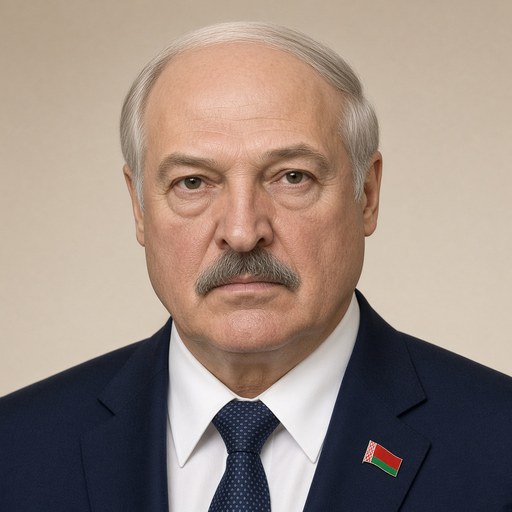
 Alexander Lukashenko · President of Belarus
- Context
- Lukashenko addressed the International Forum on Eurasian Integration in June 2004, outlining priorities for deepening post-Soviet economic cooperation and responding to globalization.
- Main themes
- Eurasian economic integration, Eurasian Economic Community, post-Soviet cooperation, Belarus-Russia union, trade and tariff policy, globalization challenges, WTO accession, economic growth, coordinated industrial development, scientific and technological modernization, Commonwealth of Independent States, unified economic space
- Duration
- ~7 min
- Words
- 861
- Sentences
- 46
- Readability
- 28
- Grade
- 14.0
- Syntax
- 2.73
- Vocabulary
- 2.21
Translated from Russian
The broad sphere of national life a sentence belongs to. Every sentence has an Arena, so it is the denominator the other indices are read against.
Other46 sentences in 20 paragraphs
Dear forum participants!
Dear friends!
In the modern world, economic integration dominates, and this is true in all points and regions of the planet.
Politicians, scholars, and practitioners present in this hall are equally interested in the success of efforts to enhance cooperation among the peoples of the former Soviet Union. This is objectively dictated by the needs of ordinary people, as well as by historical traditions and the interconnectedness of our economies.
We are confident that the joint analysis and the recommendations developed as a result will be useful in practical work to increase the effectiveness of integration, primarily within the framework of the Eurasian Economic Community. It is essential that the fruits of cooperation are felt by every individual and all citizens of our countries as soon as possible.
Building a real economic community of states, where all sectors of the economy are deeply integrated, is not an easy process. As they say, it is easy to destroy; it does not take much intelligence for that. But creating is difficult. It requires the will, efforts of many people, and an understanding of the importance of constructive work.
We are moving towards a new type of relations based primarily on economic interest. In the Commonwealth of Independent States, the Eurasian Economic Community, and other integration unions in the post-Soviet space, our countries are searching for the most optimal forms of uniting their vast potentials.
An example of vibrant cooperation in the interests of the peoples of two countries is the union of Belarus and Russia. The results of the special economic relations between our countries, despite all shortcomings, are eloquent. The trade turnover in 2003 grew to nearly thirteen billion US dollars. This does not include services, which add another two billion. The implementation of union programs allows us to preserve jobs at many large enterprises and avoid the creation of duplicative productions.
The main goal of the Eurasian Economic Community is the effective use of the economic potentials of the five states to improve the living standards of the peoples.
Certain prerequisites for success have already been established. Economic growth is observed in all member states of the Community, and macroeconomic indicators have improved. Belarus has surpassed the level of GDP production of the pre-reform year of 1990.
We must not forget another crucial purpose of the Eurasian Economic Community — preparing for entry into the global world trading system. By creating a kind of our own mini-WTO model within the Community with similar trade regulation rules, we are thereby adapting in advance to the requirements of the World Trade Organization.
At the same time, considering the difficulties in promoting our goods to the markets of Western countries, including the artificially created barriers by them, it is necessary to collectively, as a single region, defend the most favorable conditions for ourselves, without limiting ourselves to the scale of purely national interests. Only such an organization of relations with the global market will allow us to make our participation in it a stimulus, rather than a threat to the promising sectors of national economies.
In the Eurasian Economic Community, we currently trade with each other without tariffs, restrictions, and exemptions. Trade turnover is growing. We cannot overlook the broad social and humanitarian cooperation.
Much has been done, but we still have a lot to do if we want to turn the Community into a truly functioning, effective integration mechanism. First of all, it is necessary to form a coordinated trade and tariff regime concerning third countries — the foundation of the Community. We need to find an effective mechanism for the implementation and control of the agreements and decisions made, of which there are already 70.
We need to participate in the development of complementary productions and scientific developments in machine engineering, petrochemicals, electronics, and light industry, as well as in the production of agricultural and heavy-duty machinery through coordinated actions. We should optimally utilize the existing production capacities and the established infrastructure of our states' economies.
An effective mechanism for transforming the results of scientific research into high-tech technologies capable of becoming the basis for the modernization of the most important sectors of the national economy is necessary. And I must say, we have unique opportunities in the CIS and the Eurasian Economic Community like never before. The financial resources available today are unprecedented for our states. All of this should work for the real sector of the economy, as such a situation may not arise again.
We all expect real results and practical steps from the Eurasian Economic Community towards creating a unified economic space. To solve this task, specific projects and programs that are beneficial for all countries are necessary. Strong and permanent economic ties between economic entities. Mutual penetration of investment capital.
An essential condition for success is the prompt transition from general organizational issues to coordinated activities of state bodies and economic entities.
Belarus, committed to the idea of integration, wishes the forum successful and fruitful work. I hope that its participants will express many constructive ideas that will be duly implemented by the members of the Eurasian Economic Community.
Thank you for your attention.
The original Russian. The tags above are read on the English translation's sentences.
Уважаемые участники форума!
Дорогие друзья!
В современном мире доминирует экономическая интеграция, притом во всех точках и регионах планеты.
Политики, ученые и практики, находящиеся в этом зале, в одинаковой степени заинтересованы в успехе усилий по активизации сотрудничества народов бывшего Советского Союза. Это объективно диктуется потребностями простых людей. А также историческими традициями и взаимосвязанностью наших экономик.
Мы уверены: совместный анализ и выработанные в итоге рекомендации окажутся полезными в практической работе по повышению эффективности интеграции, прежде всего, в рамках ЕврАзЭС. Надо, чтобы плоды сотрудничества как можно скорее ощущались каждым человеком и всеми гражданами наших стран.
Построение реального экономического сообщества государств, где все сферы экономики были бы глубоко интегрированы, — процесс непростой. Как говорят, разрушить легко, для этого ума много не надо. А вот создавать — трудно. Нужна воля, усилия многих людей и понимание важности созидательной работы.
Мы переходим к новому типу отношений, основанных, прежде всего, на экономическом интересе. В Содружестве Независимых Государств, Евразийском экономическом сообществе и иных интеграционных союзах на постсоветском пространстве наши страны ведут поиск наиболее оптимальных форм объединения своих огромных потенциалов.
Примером живого сотрудничества в интересах народов двух стран является союз Беларуси и России. Результаты особых экономических отношений между нашими странами, при всех недостатках, красноречивы. Товарооборот в 2003 году вырос почти до тринадцати миллиардов долларов США. Это без оценки услуг. А это еще два миллиарда. Реализация союзных программ позволяет сохранить рабочие места на многих крупных предприятиях, избежать создания дублирующих производств.
Главная цель ЕврАзЭС — эффективное использование экономических потенциалов пяти государств для повышения уровня жизни народов.
Определенные предпосылки для успехов уже созданы. Во всех государствах Сообщества наблюдается экономический рост, улучшились макроэкономические показатели. Беларусь превзошла уровень производства ВВП дореформенного 1990 года.
Нельзя забывать и о другом важнейшем предназначении ЕврАзЭС — подготовке к вхождению в глобальную мировую торговую систему. Создав своеобразную собственную модель мини–ВТО внутри Сообщества со сходными правилами регулирования торговли, мы тем самым заблаговременно адаптируемся к требованиям Всемирной торговой организации.
В то же время, учитывая трудности в продвижении наших товаров на рынки стран Запада, включая искусственно создаваемые ими барьеры, необходимо коллективно, как единому региону, отстаивать для себя наиболее благоприятные условия, не ограничиваясь масштабами чисто национальных интересов. Только такая организация отношений с глобальным рынком позволит сделать наше участие в нем стимулом, а не угрозой для перспективных отраслей национальных экономик.
В ЕврАзЭС мы сейчас торгуем друг с другом без пошлин, ограничений и изъятий. Растет товарооборот. Нельзя не отметить широкое социально–гуманитарное сотрудничество.
Многое сделано, но очень многое нам еще сделать предстоит — если мы хотим превратить Сообщество в реально действующий, эффективный интеграционный механизм. Прежде всего, необходимо сформировать согласованный торгово–тарифный режим в отношении третьих стран — основу Сообщества. Найти эффективный механизм реализации и контроля выполнения принятых договоров и решений, а их уже 70.
Нужно скоординированными действиями участвовать в развитии взаимодополняющих производств и научных разработок в машиностроительной, нефтехимической, электронной и легкой промышленности, выпуске сельскохозяйственной и большегрузной техники. Оптимально использовать уже имеющиеся производственные мощности и сложившуюся инфраструктуру экономик наших государств.
Необходим действенный механизм трансформации результатов научно–исследовательских работ в наукоемкие технологии, способные стать основой модернизации важнейших отраслей народного хозяйства. И должен сказать, мы как никогда ранее в СНГ, ЕврАзЭС имеем уникальные возможности. Таких финансовых средств, которые есть сегодня, наши государства ранее не знали. Все это должно работать на реальный сектор экономики, потому что такой ситуации может больше не сложиться.
Все мы ожидаем от ЕврАзЭС реальных результатов и практических шагов по созданию единого экономического пространства. Для решения этой задачи необходимы конкретные, выгодные для всех стран, проекты и программы. Прочные и постоянные экономические связи между хозяйствующими субъектами. Взаимное проникновение инвестиционного капитала.
Непременное условие успеха — оперативный переход от общих организационных вопросов к согласованной деятельности государственных органов и хозяйствующих субъектов.
Беларусь, приверженная идее интеграции, желает форуму успешной и плодотворной работы. Надеюсь, что его участники выскажут много конструктивных идей, которые будут должным образом реализованы членами Евразийского экономического сообщества.
Благодарю за внимание.