




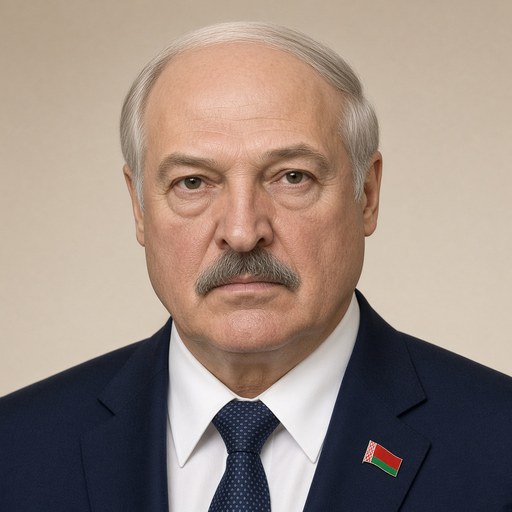
Speech by the Chairman of the Supreme State Council of the Union State, President of the Republic of Belarus A.G. Lukashenko at the meeting of the XXVI session of the Parliamentary Assembly of the Union of Belarus and Russia.
 Alexander Lukashenko · President of Belarus
- Context
- Lukashenko addressed the XXVI session of the Parliamentary Assembly of the Union of Belarus and Russia in Brest on June 25, 2004, welcoming its renewed composition.
- Main themes
- Belarus-Russia Union State, parliamentary assembly session, Belarusian-Russian brotherhood in arms, World War II commemoration, Brest Fortress, shared historical memory, Union State development, geopolitical orientation of Belarus, allied relations, Soviet legacy
- Duration
- ~73 min
- Words
- 8,783
- Sentences
- 529
- Readability
- 54
- Grade
- 9.7
- Syntax
- 2.79
- Vocabulary
- 2.12
Translated from Russian
The broad sphere of national life a sentence belongs to. Every sentence has an Arena, so it is the denominator the other indices are read against.
Other529 sentences in 116 paragraphs
Dear deputies, invited guests, participants of the session!
On behalf of the Belarusian people, I warmly welcome you to our land, our common land, and I wish the new composition of the Parliamentary Assembly fruitful work.
I came to this session primarily because the renewed composition of the Parliamentary Assembly is beginning its work. It has already been mentioned in the introduction that much has been done over these years in the Union of Belarus and Russia, including thanks to the deputies. Believe me, I am a more informed person, and all of this has gone through my heart, and I want to say that it is not just thanks to the deputies, but primarily due to the deputies of the Parliamentary Assembly of the Union of Belarus and Russia. But let us be sincere, the Parliamentary Assembly of that composition. And I very much hope that our deputies, the Parliamentary Assembly in its renewed form, will support the level of work that was characteristic of that Parliamentary Assembly.
I would like to sincerely thank all the deputies of the Russian Federation who worked in the previous composition of the Parliamentary Assembly. These are mainly people devoted to our Motherland, our common shrine, our country.
I know well the potential of the people gathered in this hall and I am confident that we can do no less, and in many areas even more, for the development of our allied relations.
Today is a special day, so I will start with the Belarusian-Russian brotherhood in arms, as this issue has come to the agenda today and in light of the current realities that we can see not through binoculars, but with open eyes (and you are literally here just a few meters from the western borders of our Motherland), as well as in light of the challenges posed to us, if I may put it this way, by the new century and the new millennium.
On Belarusian-Russian brotherhood in arms
Starting with this will also be appropriate because we are on the sacred land of Brest, which is sacred for each of us — both Belarusians and Russians. The Brest Fortress is a shrine for Belarusians, Russians, and for all the peoples that made up the united and friendly Soviet family.
A few days ago, we marked a tragic date in our history — the date of the beginning of the Great Patriotic War. On June 22, 1941, a terrible blow fell upon the Brest land. The fury of fire melted stone. But in the defenders of the fortress, there was something stronger than the might of enemy weapons — an indomitable persistence of will, loyalty to the Motherland, and sincere brotherhood among the sons and daughters of the peoples of the united state. Shoulder to shoulder, Russians and Belarusians, Ukrainians and Kazakhs, Uzbeks and Georgians fought for every inch of Soviet land. Engaging in battle on the morning of June 22, they defended Kyiv and Smolensk, Moscow and Stalingrad; they fought for our common Motherland. In a united surge of selflessness, they met the enemy with dignity and stood to the death, sparing neither their blood nor their lives.
The Brest Hero-Fortress is not only a symbol of our common history; it is a reminder to us that when we are together, we are absolutely invincible both in battle and in all life’s trials. This sense of brotherhood is in the blood of Belarusians. History, especially Soviet history, has developed in our people a psychology that I would call "Moscow is behind us." Moscow, which must be defended. Moscow, which will help and support in difficult times.
For us, Belarusians, the aspiration for a Union with Russia is based precisely on these deep feelings, on the historical memory that together we are strong and invincible.
I know that both the deputies and the guests who have come to us from the Russian Federation draw a lot of information from Russian mass media. And naturally, as you listen, you think about what kind of country Belarus and its President are now? Is it really true that a certain turn is being planned, or perhaps there is already a turn towards the West away from Russia?
So, dear friends, you have come to the same country as 10, 15, and 20 years ago, where a people lives that cherishes friendship and brotherhood with Russians, with Russian people. And the President is the same. And to say that there is some kind of turn here, to put it mildly, should not be said. It is clear who needs this.
Therefore, to those who sincerely believe in our friendly relations, in our unity, in our Union, I propose to be calm and confident in the course that we once began to pursue. Yes, there are many difficulties, sometimes unnecessary difficulties that we create ourselves. There are challenges, but they would not exist if we were doing nothing. However, our merit — of politicians, presidents, leaders of all branches of power, and deputies above all — will be that we, overcoming these difficulties, will resolve problems. That is what we are trying to do. How we do this — the heads of states, the leaders of governments? You, the elected representatives of the peoples of Russia and Belarus, will judge first and foremost.
People's impulses are not driven by money. Although in the conditions of moving towards the market, many believe that everything is bought and sold. There are feelings stronger than greed: friendship, brotherhood, unity. Of course, one cannot oppose friendship and calculation. But if you ask what is more in the Belarusian desire to be together with Russians, calculation or feeling, then undoubtedly it is the latter — the desire to be together.
The collapse of the Soviet Union severed connections that had been established over centuries in all spheres. I ask you to note that we were not the cause of that collapse, even though it happened just a few kilometers from this holy place. We were not the initiators of this. But the brotherhood in arms bequeathed to us by generations of victors has mostly been preserved. This is the dimension of our relations that is often outside the field of vision of the mass media, and therefore of society.
Asking the rhetorical question of who is Russia's closest, most reliable, unequivocal, and finally, the only ally, everyone in this hall will answer without hesitation — Belarus. And who is Belarus's only ally? The same confident answer — Russia.
We are already getting used to the fact that the level of allied relations has begun to be measured exclusively in money (rubles, dollars). If you sold your enterprise to a Russian oligarch for a pittance — you are an ally. If you did not give away "Beltransgaz," for example, for cheap, which has caused so much noise, you are out of the list of allies. I may be exaggerating a bit, but this is how the understanding of the Union looks from the perspective of Russian mass media, certain politicians, and not only them.
Once again, I will repeat, we have preserved a unified defense space — the Belarusian-Russian brotherhood in arms. Perhaps not all Russian parliamentarians know what Russian strategic facilities are located on the territory of Belarus. We can show you these and boast about their condition, including thanks to Belarusians. When Russia practiced so-called rolling blackouts of electricity, even reaching military facilities, I said that we would give you the last kilowatt-hour, to the military of Russia and Belarus. It was very difficult for us because we were buying almost half of our electricity, but there was not a single case where we disconnected even one enterprise, let alone military facilities.
We saved on everything, but preserved our economy. The same "Beltransgaz," which is so often talked about. We invested hundreds of millions of dollars to preserve it. Now it is a restored, modernized enterprise according to international standards, which is why some "business" entities and politicians have latched onto it. And we cannot give it away for free. Otherwise, someone will ask: why was it given away for free?
We attach special importance to the regional grouping of troops of Belarus and Russia. Just last year, four joint exercises of these troops were conducted. And how much effort was made by Belarus and the not-so-loved by some Belarusian President to create this grouping. Some were then afraid that the West would be offended. I have always said that sooner or later, new states will begin to join the North Atlantic bloc, and we should not strive to please anyone. We must think about our Motherland, about its security and defense. And we were right to create this grouping. It is needed even more by Russia than by Belarus. We cannot defend our country alone and do not intend to attack anyone. We did this to protect our Motherland here in the West. And if we had lost these five years and had not created a unified space in the air and on land, can you imagine how we would look! Because the Belarusian direction, the Belarusian air defense and air forces today control the airspace from Riga practically to the Black Sea in the interests of our common Motherland.
The eyes and ears of Soviet military technology were created in Belarus. We had a huge scientific and production potential. We have fully preserved and doubled it. We did not pretend to be converting defense enterprises into pots, spoons, and forks. We then said directly that we would preserve our defense industry and improve what was done there in Soviet times. This is one of the reasons for the pressure on us from the United States and Western countries. But we endured this, to be honest, not without the help of smart people in the Russian Federation.
Military-technical cooperation is developing dynamically. Concepts for the technical support of the Armed Forces and a joint defense order have been developed for this purpose. The Minsk Wheel Tractor Plant supplies modern chassis for the S-300 missile systems to Russia, and the open joint-stock company "Pelenг" provides fire control systems for T-90 tanks, T-72, and BMP-3.
Yes, you may ask why remember the brotherhood in arms if we do not intend to fight? But the world is arranged in such a way that weak, amorphous states without reliable allies are not asked whether they want to fight or not; they are simply beaten. The facts of modernity testify to this.
I think that in recent years even the most desperate advocates of new thinking and universal human values have been convinced that the leading powers of the world are guided by their interests for their advancement and do not hesitate to use armed force. We cannot fail to notice that once again, as in the 1940s, a huge military-strategic potential is concentrating along our borders, which has not shown itself to be peaceful. Today, you do not need binoculars to see this. Both Belarusian and Russian territory, up to the Kremlin, are today within the range of NATO's technical reconnaissance means. We must remember that no one has removed the responsibility for the military security of our peoples from us, and no one will. We, the presidents and deputies elected by the people, bear this responsibility first and foremost.
The unified Belarusian-Russian front ensures protection against the new threats of the times, primarily terrorism and organized crime. Our law enforcement agencies act as a single and dynamic organism.
Daily interaction is organized at all levels and across all key areas. Important issues are discussed at joint meetings of the ministries of defense, internal affairs, border troops, and security services. The level of interaction and the degree of mutual trust in key areas do not yield to the Soviet times. Our soldiers and officers see each other, as they did 60 years ago, as comrades in arms. Both Belarusian and Russian society should appreciate and cherish this, doing everything to ensure that the notorious disputes of business entities do not undermine our unity in ensuring the security of our countries and peoples.
On Union building
Dear friends! Addressing primarily the new composition of the Russian part of the Parliamentary Assembly, I would like to focus on the fundamental issues of the development of allied relations.
While Russian society, unfortunately, is getting used to a negative perception of the Union as something that hinders Russia's further advancement towards the market and democracy. And those who build the Union are attributed the most selfish motives. There are few television channels and newspapers left in Russia that have not accused us of wanting to parasitize on cheap Russian energy resources or of striving to enter the Kremlin to gain access to the Russian political field. We carefully analyze the materials of Russian political scientists, including those close to the authorities, as well as Russian media. They have long and publicly diagnosed that the Union is not alive. The only question they cannot agree on is whether the Union died recently, at least under the current leaders, or whether it was a "stillborn child" from the very beginning.
The massive information attack on the Union, on Belarus (although it has calmed down somewhat recently), does not go unnoticed. More and more people consider the Union a hopeless venture. I know that there are people in this hall who share skeptical views on allied relations.
To accurately assess the present and future of our Union, let us turn to a brief history.
The first step — the Treaty on the Creation of the Community of Belarus and Russia — was a response to the desire for unity of the overwhelming majority of Belarusians and Russians. In the referendum in Belarus in 1995 (I was already President then, although many say that I got on the Russian "horse" and galloped into the President's chair). I dare to remind you that the Russian Federation then supported Vyacheslav Francovich Kebich, while I came to power from the opposition, constructive, non-nationalistic. Nationalists put forward Shushkevich. This is just in case someone has forgotten. So, the first step was a response to the desire to live together. And in 1995, in order to implement the promised policy to the people, when society was all ambiguous and when practically every Russian person was "packed" for expulsion from Belarus, I had to take this step and ask the people: how shall we live with Russians? As I propose, — together? Or shall we fight as it was started here, in the Bialowieza Forest?
Then, in the referendum, without any pressure or coercion, 83.3 percent of the voting citizens said: Belarus and Russia should be together. If a referendum had been held in Russia then, the figure would have been even higher.
Boris Nikolayevich Yeltsin and I were simple executors of the will of our people. We were pushed to this by certain circumstances. This must be honestly acknowledged, especially in the Russian Federation.
Our people — Belarusians and Russians — have not received everything they expected. But today there is no border between us, like with other states, there is no passport control, no customs inspection of people. To assess whether this is a lot or a little, one must (not with a diplomatic passport and not with an escort vehicle) cross the border with Latvia or Ukraine, undergoing customs inspections and fees there.
We have already talked about a unified defense and law enforcement space. Fundamental issues regarding medical assistance, pensions, and the education of Belarusians and Russians have been resolved. There are many sensitive areas for ordinary people where we are no longer foreigners to each other.
But all this was achieved in the first years of union building. In the last few years, and this is true, we have not made progress. Most often, we simply confirm our position, and this is not due to anyone's malice. The fact is that a "free course" has been chosen. We need to make an effort.
The time has come to make fundamental decisions. Within the Soviet Union, the Belarusian Soviet Socialist Republic and the RSFSR were legally equal. Legally!
We are sincere people and have always believed that the principle of equality, enshrined in all our agreements, truly reflects the intentions of our Russian brothers to build the Union on a fair basis.
I will speak frankly — for all Belarusians and for myself, it was a great surprise that the Russian leadership, it turns out, sees the further development of the Union in the absorption of Belarus. Well, okay, we need to rise above grievances, and remembering that memorable proposal, we should not close the door to the future.
At the same time, we must all proceed from several simple and immutable truths. The sovereignty of Belarus, just like the sovereignty of fraternal Russia, is inviolable. And to question this today is not only harmful, it is unnecessary. Life has not posed such a question today, crossing and resolving which we could today crush the sovereignties of our states. We have not reached that line to make such decisions. I will reveal a small secret. Discussing this issue in Sochi, we found complete mutual understanding with Vladimir Vladimirovich Putin on this problem. And I believe that this is a very significant movement of the Russian Federation in this direction. We then came to the conclusion that perhaps life will lead us to the point where Belarus or, as I jokingly say, maybe Russia will enter the composition of some state. But life must lead us to this. If we pick the unripe fruit, you know what will happen: it will be impossible to eat. Why should we today solve a problem that has not fully arisen? After all, we, having the current relations, even doing nothing in union building (but we need to act!), can have excellent relations. The relations between Belarus and Russia in certain areas are better than those among the subjects of the Russian Federation themselves.
Where we can speed up, we must speed up. Where life does not require this and has not posed acute questions before us, we should not rush ahead. There are plenty of problems that we must solve today.
Both Belarusians and Russians should, humanly speaking, have their own home and be masters there.
There is only one scheme for building the Union (if it is a Union, and not the absorption of one state by another) — delegating powers to intergovernmental structures. This is how the European Union, which is so often talked about in Russia, is built. This is how the Soviet Union was conceived and existed until it became effectively a unitary state. A Union is a compromise, a concession of part of one's rights by each of its participants.
We should not be understood primitively and think that if Minsk is against joining Russia, then it is against the Union. It makes me want to say in the words of the President of Russia: do not confuse flies with cutlets.
All Belarusian-Russian agreements are built on equal consideration of the interests of each party. And these agreements have been ratified. They have become laws in both Belarus and Russia.
At the same time, we should not engage in profanation and think that Belarus is striving for actual equality with Russia. The economic and geopolitical weight of fraternal Russia is incomparably greater. We do not need to tell each time how much larger Russia is than Belarus in terms of population, territory, gross domestic product, etc. We know this and proceed from it. The issue is about the legal side of affairs, about the equality that was the main principle at the stage of the formation of the European Union. They are now modifying the decision-making mechanism, but they are doing it at a different, higher level. But I suggested — let’s not write our future based on the European Union. We just yesterday emerged from a powerful country, where there was much good, we already know this and now understand what we have lost. Let’s build our relations based on the experience of the Soviet Union. But this proposal did not find understanding.
The development of union relations, to put it simply, is the increase in the volume of powers delegated by the members of the Union and the volume of mutual concessions.
At the stage of the Community — one, grassroots level.
The Treaty on the Union State provides for the delegation of more serious powers to union bodies, including the Union Parliament. I emphasize, the Treaty that is currently in force and which is law in Belarus and Russia.
And the Constitutional Act, following this logic, should provide for an even higher level of powers of the Union, as it must be adopted by referendum, as stated in the Treaty. But if today we are offered: let’s make the Constitutional Act weaker than the Treaty, then what is the point of making it and, secondly, putting it to a referendum? Then it is better to work under the currently effective Treaty. It does not harm us. What I said is fundamentally important; it is a stumbling block in our relations.
In principle, a draft of such a document was prepared by a joint Belarusian-Russian commission with the direct participation of deputies, which included other high-ranking representatives not only from the legislative but also from the executive branch. This commission was created together with the President of the Russian Federation.
This draft, as a compromise option, is acceptable at a minimum. It is a small step forward in the construction of the Union State. Belarus was generally ready to accept it as a basis for further work. But Moscow did not agree with this approach and recently proposed a version of the Constitutional Act (you remember, I spoke about this in Sochi) that provides for movement in the opposite direction. Amorphous, powerless union structures similar to the Commonwealth of Independent States. To put such a document to a referendum, I emphasize again, is harmful, not just impractical, but harmful both from the point of view of common sense and for legal reasons.
I would like, dear deputies, for you to personally delve into the fundamental issues of union building and propose your constructive solutions. I would not want us to treat this union according to the well-known Russian proverb: "What we have, we do not protect." As if we would not have to say the second part of this proverb: "having lost, we cry."
If we are not ready for decisive progress, for the creation of strong union structures, then let’s fully realize the potential already laid down in the existing Treaty, as it is not being fulfilled. Let’s not destroy what has already been built and is working. This is the most important thing at the present stage, which we recently agreed upon with the President of the Russian Federation, Vladimir Vladimirovich Putin.
On economic integration
The answer to the question: is our Union alive? — is given by life itself. To see that the Belarusian-Russian Union is the only living, albeit with all its shortcomings, working model, one does not need to look far. It is enough to look at the dynamics of trade turnover, the main indicator of the health of interstate relations. If at the signing of the first Union Treaty the trade turnover between our countries was just over 5 billion dollars, then for 2003 we have about 13 billion dollars, not counting services. And that’s another two billion, totaling 15 billion dollars.
By the end of 2003, the trade turnover between Belarus and Russia was 8 percent higher than that of Russia with 1.5 billion China. Almost 50 percent more than with the United States of America. When you compare what is happening in life with the talks about the incompatibility of the Belarusian and Russian economies, you realize how far they are from the people, to use the words of a classic. What incompatibility is there?
The mutual trade turnover of our countries has increased more than fourfold compared to 1993. At the same time, during the existence of the CIS, the total trade turnover between all CIS participants has decreased threefold.
The results of the current year are encouraging. Compared to January-April of last year, the growth rate of trade turnover has increased by 28 percent. Now, based on the results of five months, it is 30 percent. Yesterday, the Prime Minister of Belarus reported to me about the further growth of the trade turnover between Belarus and Russia. We will reach 15 billion by the end of this year, not counting services, and it will be about 17-18 billion including services.
There are other results. A system of measures aimed at bringing the macroeconomic indicators of the two countries closer together is being implemented purposefully. The rates of economic development are gradually leveling out. But the most important thing for me, not as a macro specialist but as a person from the ground, like many of you, is that practically for all Belarusian goods, the orders from CIS countries, primarily from Russia, are twice as high as we can produce today. I recently had to publicly, to put it mildly, criticize the Government for the fact that they cannot supply an additional 200-250 heavy-duty BelAZ trucks to the Russians. Well, then work. There was no work before; everyone was asking for work. So now work in seven shifts, but get it done. And we will. The same goes for MAZ trucks, tractors, and defense.
And I am glad that this has happened. It confirms what I said in previous years when there was no demand, for example, for our tractors. We were collecting our last money. We had to abandon benefits because it was indeed corrupting: there were more beneficiaries than working-age people in Belarus. We collected this money and invested it in science, in the creation of new models of tractors. I said then — Mother Russia is great; you cannot dig her up with a shovel. She will rise from her knees and demand our tractors. Today we cannot meet Russia's demand for tractors, but we will do it within this year. For me, this is more important than any macroeconomic indicators. What is important for me is that today practically on all factory doors hangs, as in Soviet times, a sign: "needed," "needed," "needed."
We have not destroyed our education system and today we are producing twice as many specialists with higher education as in Soviet times. Mainly state universities are functioning, but private universities have been brought to the same level: they issue the same diplomas, but the requirements are extremely strict. By the way, we are not expanding the network of private universities: we have found that this, for the most part, is not education but profanation, collecting money from parents, and it is unknown what specialists come out. We have restored universities that were destroyed at one time, we are finishing the creation of new programs and new textbooks for them. We have returned all the best that was in the Soviet Union. But the most important thing is that graduates today are employed. A law on the first job has been adopted. And it has always been this way. The other thing is that some choose: they do not like this, the salary is not right, etc. That is each person's business. But we offer a job, we employ everyone. That is our victory. This is the main thing for us.
Today we see some good prospects in agriculture. About 7 percent growth in agriculture compared to last year, and this is against the backdrop of colossal prices for energy resources. We buy everything from you at world prices. Even gas today is 2.5 times more expensive than in Russia, but slightly below world price levels. Our economy is operating today in much more difficult conditions than in the Russian Federation. We do not have as much raw material money (we do not have any at all) as Russia has.
Speaking of our enterprises, we have identified with the Russian side the main directions of a unified structural industrial policy, and a corresponding agreement has been signed. More than 8,000 Belarusian and Russian enterprises are currently closely linked by cooperative relations. We have restored them.
A few examples. The Minsk Automobile Plant has 600 supplier enterprises in Russia. And when there is a huge demand for the final products of the Minsk Automobile Plant, naturally, Russian enterprises work uninterruptedly, and people there receive stable wages. We are already lacking supplies from Russia.
Almost two-thirds of our cars consist of Russian materials, components, and parts. In turn, over 85 percent of MAZ's products are sold in the Russian market.
In the course of implementing the Program for the Development of Diesel Vehicle Manufacturing, for which over 1.5 billion Russian rubles were allocated, a design has been developed and the production of diesel engines and heavy-duty vehicles that meet EURO-2 requirements has been mastered. Scientific research and design work is actively underway for further modernization of the equipment. They in the West thought they could suffocate us by introducing new EURO-2, EURO-3 standards, and so on. But we coped with these tasks together with the Russians, produced engines, and did not leave their markets. Today they are concerned about where else to set some barrier for us. Together, not only Belarusians, we have practically revived the Yaroslavl diesel manufacturing plants.
The financial condition of enterprises operating within the programs has noticeably improved. Exports have significantly increased. The number of employees has grown by more than 3,500. The main volume of raw material extraction work in the Russian company "Kuzbassrazrezugol" is carried out by BelAZ dump trucks. Over the past five years, the company has acquired more than 300 Belarusian "bogatyrs." This year, "Kuzbassrazrezugol" is already ready to invest about one billion rubles in the production of BelAZ quarry dump trucks.
The application of unified tariffs for rail transport in Belarus and Russia contributes to strengthening traditional trade and economic ties between the economic entities of the two countries. This has been made possible primarily thanks to the previous composition of the Parliamentary Assembly, which firmly raised this issue at the time.
Of course, we have plenty of problems in this area. We need to accelerate the further formation of a unified transport system. Significant differences in the methods of state regulation of transport activities, as well as in approaches to property transformation in this sector, should be smoothed out, of course, taking into account the interests of the peoples of Belarus and Russia.
Despite all the shortcomings and many controversial points, consistent work is being carried out to create a single customs space. Mutual trade in domestically produced goods is conducted duty-free and without obstacles.
However, we need to go further. We must transition to a higher level of economic integration, the stage of the Customs Union, and move towards the complete abolition of customs control over the clearance of goods at the Belarusian-Russian border. This process needs to be accelerated, as it corresponds to the strategic interests of both countries.
I cannot help but ask the question, understand, this is not for confrontation or reproach, I just want to ask: why did you build a customs border at the administrative border of Belarus and Russia? Why are you doing this? They say it is for controlling goods from third countries. Let's calculate: we import goods from third countries that have been cleared in Belarus to Russia worth 65 million dollars, you import from third countries worth 70 million. So who should be afraid of whom? Apparently, there is something else at play here.
We once publicly dismantled barriers. At that time, we were not afraid that huge Russia would "crush" Belarus with its cargo. We went for it, and people breathed a sigh of relief. It was such hope, such uplift! Drive through, change your clothes, and pass through this border without a deputy badge. You will see what a disgrace we are building at this border. Why? At the external borders, in the Customs Committee of Belarus — there are representatives from Russia, in the border troops — there were 100 people (if you need 200 — send officers). We are not hiding anything. On the contrary, you are offended that we very strictly control the flow of goods at our external borders. Oh, they are undressing there, taking goods, and so on. But how do you think, if this is smuggling? We are not yet used to allowing smuggling through since Soviet times. And then, when I am asked this question, I say: put specific facts on my table. If a fact of illegal seizure of property and goods is discovered, we will immediately make a decision in the strictest manner. There are no facts.
Certain progress has been made in developing a unified trade customs tariff policy in relations with third countries. Although not everything has been done here. I mean the same process of joining the WTO, where within the framework of the CIS, a number of countries have started what I consider an unattractive game called "outpace your neighbor." Here we need to take into account the interests of the entire Commonwealth and achieve favorable conditions for our vast region as a whole. Joining the WTO is not an easy task. I see that many, even those who are already liberal-minded in Russia, have realized that we could jump into such a pit from which we would not emerge. Even Kuban would not withstand competition in agriculture upon joining the WTO. Therefore, we need to join the WTO together, having developed certain rules. This would be a good reason for cohesion within the CIS. If we do not run separately and do not outpace each other.
I do not know, dear friends, perhaps it was unnecessary to say this, but I will say: of all the integration structures that are difficult to remember, let alone pronounce, the Belarusian-Russian Union is the only functioning body, albeit with shortcomings (forgive me for raising unpleasant working issues. Their existence is partly our fault and that of the Russian Federation).
Dear parliamentarians! A few words again about the common opinion in Russia that Belarus has an administrative-command economy, which is incompatible with the Russian one. The very fact of trade turnover speaks for itself. Whether the economy is bad or good, if you are buying our goods, there is demand for them, then what difference does it make what kind of economy we have. This one fact negates all discussions about our so-called incorrect economy, which is incompatible with the Russian economy. If there is a desire, everything is compatible.
At the same time, it should be noted that our Belarusian economy is more open than the Russian one. More than 60 percent of the produced product is exported, we export under conditions of fierce competition. And we export, as you know, not raw materials. But if earlier we exported up to 85 percent of our products to the Russian Federation, today it is just over 50. There has been diversification in our foreign trade, in exports. This is good for us because we are less dependent on one state, even if it is a fraternal one. And, secondly, it is good that we are conquering new markets. After all, exporting 30 percent of products to other markets and selling them profitably is not so easy. We are working very actively in the East, and we are reaping decent dividends from this. Plus, the trade turnover with the Russian Federation.
At the same time, there is a fundamental difference between us. The main enterprises (this is true) in Belarus are state-owned. In Russia, the state has handed over enterprises to private hands. We do not interfere in this process. But private capital, following the laws of its development, is increasingly beginning to influence Russia's policy towards Belarus. And not always positively. If they failed to buy a factory cheaply, to apply the tried-and-true home mechanism of driving the enterprise to bankruptcy, already at the very top there are lamentations: Belarus does not allow the Russian investor to unfold. Or they do not like that a "golden" share was introduced. What was I supposed to do to protect my own enterprises?
I will give an example. In the mid-90s, I visited the well-known confectionery factory "Kommunarka," built together with Russians in Soviet times. It was then privatized under the guise of so-called "voucherization." All the women were asking: save the enterprise. I asked: what happened? It turns out that shares were distributed, which were literally bought up by "crooks" for a bottle within six months, concentrated in one hand, and they came as owners, saying, we are taking the factory. And such a collapse occurred in many enterprises. To save them, not to destroy them, I had to introduce a "golden" share. But it was applied only in a few cases. Maybe it is not market-oriented, but in that situation, I had to act that way. The time will come, we will move away from this rule. But I see — those who come to us seriously and for a long time are not afraid of either "golden," "silver," or other shares. Because they know: in Belarus, you just have to work honestly. Work honestly, and everything will be fine.
You understand that the methods of "wild" privatization will not work in Belarus. You come and say: a clean country, clean cities, normal roads, etc. And what, is it the concern of private individuals? Would a private person do this? They do not need it. If it were not for the influence of the state, we would never have done this, not having oil, gas, or other raw materials that can be sold at high prices today. Never! But people want to live normally. And in these conditions, we had to create a normal life for them. Whether we did the right thing or not — time will tell.
But I want you to know: for mutually beneficial, businesslike, and especially long-term cooperation, Belarus is always open. And first of all — for the business people of our strategic partner and ally — the Russian Federation.
The Russian Federation is the largest investor in Belarus. With the participation of Russian investors, more than 500 enterprises and organizations are already operating in our country. Who among you knows about this? No one. Why? Because no one talks about it. This is our greatest achievement. 500 enterprises. Who is preventing them from working?
The most significant investments of Russian capital are in projects for creating a mobile communication network at the joint venture "Mobile TeleSystems," and in complex catalytic cracking at the Mozyr Oil Refinery.
We assess positively that our enterprises find each other and work together. Economic interaction between Belarusian and Russian regions is excellently organized. And you know, no matter how unpleasant it may be for someone, if it were not for the governors of the Russian Federation back in the time of the first President of Russia, we would not be sitting in this hall. It was the governors who saved the Union at that time when we were "pushing" this idea — cooperation between Belarus and the regions of Russia. We have agreements on economic cooperation with practically all regions. And this primarily forms such a huge trade turnover between Belarus and the Russian Federation.
On the role of the Parliamentary Assembly
Until now, the locomotive of developing relations has mainly been the executive power. But I have already said that all these efforts would have been in vain if it were not for the role of the deputies. More free, liberated, who could speak and act.
I believe that the current Parliamentary Assembly should take a more active role in seeking solutions to the main and fundamental problems of preserving the development of the Union. First of all, I mean the draft Constitutional Act. By its nature, this is a document that cannot be prepared in secrecy, without the broadest discussion. Unlike officials, you are freer and more liberated and can seek solutions in a wider range.
I believe that the role of the Parliamentary Assembly should be more effective in addressing social issues, both in legislative regulation and in practical implementation. Of course, much has already been done here. By now, many issues related to ensuring equal rights for citizens of Belarus and Russia have been resolved — in medicine, in education, and so on. But there are still many unresolved issues. It is necessary, apparently, to bring closer the principles of forming and functioning the pension system, to equalize the levels of pension provision. Both you and we are working on streamlining the excessively inflated benefits. I think that these and other similar issues should constantly be at the center of your attention, dear deputies, and solving them together will be easier, referring to each other's positive experience.
Perhaps it is time to work on the issue of introducing the institution of citizenship of the Union State. Legislative work has been done to provide equal socio-economic rights to citizens of Belarus and Russia. This is only the first step in this matter.
Your role in solving the working, current problems of our Union is significant. Unfortunately, we have not yet ensured the unification of tax legislation, nor have we achieved a unified tax policy. I believe that the solution to this problem should be pursued with the active participation of our Parliamentary Assembly. It is necessary to accelerate the preparation of the Tax Code of the Union State. I note that its adoption, in accordance with the action program of Russia and Belarus for implementing the provisions of the Treaty on the Creation of the Union, was scheduled for the end of 2002. The voice of the Parliamentary Assembly in resolving this issue should also be more significant. When the tax burden on enterprises is the same, then all questions about the compatibility of economies will disappear.
Dear parliamentarians! The next important issue is the formation and execution of the Union budget. Over the past time — whether a lot or a little, but almost 25 programs have been financed from the budget. And this means — people, this means — billions of dollars in products. I think we really need to adopt the budget faster, as our Chairman has already mentioned here.
It is also unacceptable that we cannot ensure the adoption of the budget for the upcoming financial year before or at least at the beginning of the year. Here we are in the middle of the year, and there is practically no budget. It turns out that new programs and activities approved by the Council of Ministers cannot be financed during this period.
Dear parliamentarians! A key link for the effective development of the Union State is the creation of a unified information space. The Parliamentary Assembly (and this is a fact) has actively participated in the establishment and development of union mass media, primarily the broadcasting organization of the Union State. It is thanks to the initiative of the deputies that since 2000, union television programs have been broadcast, even if they are small or at unwatchable times. Today, other union mass media have appeared, albeit not so widespread — the newspapers of the Parliamentary Assembly "Union Veché" and the Council of Ministers of the Union State "Union Belarus — Russia," the websites of union bodies on the Internet, and union news agencies.
But there is also considerable negativity. This is due to the fact that the parties today have different attitudes towards the problems of information support for the integration process. In the mass media of Belarus, the theme of the Union is constantly present. Publications and broadcasts cover achievements, problems of union construction, and the current practical activities of union national bodies in implementing integration tasks. What can I say? Just watch Russian and Belarusian television channels tonight. Start a stopwatch, assess the quality, and you will see what content is shown by Russian and Belarusian channels and in what light. Everything will be clear. I remember, Gennady Nikolaevich Seleznev, when he turned on Russian television channels a couple of years ago, was outraged: they show that a revolution is almost happening in Belarus at the walls of the Government House, where a meeting of the Parliamentary Assembly was taking place, and he ran out into the street — there was no one there.
On Russian television channels, unfortunately, the theme of the Union State is often left to the opponents of integration, who cover these issues in a biased and unobjective manner. Yet citizens of both Belarus and Russia should receive complete, timely, and, most importantly, reliable information. And I want to say the following to the figures on these channels. You know, it is impossible to break the spirit of a Belarusian or a Russian. We have an open space. Just before the 60th anniversary, and not only now, hundreds of thousands of Russians have visited Brest, Minsk, Mogilev, Vitebsk, and other cities. These are their sacred places. And they see what is happening here. They see how Belarusians treat Russian people. And when they leave, they think: how is it possible, here the situation is completely different, a prosperous environment, normal people, a normal country that treats Russian people kindly. Why is it shown the other way around on television? I am not saying that we are without flaws and that we should not be criticized. Criticize us. After all, from a political point of view, it can sometimes be beneficial when Russian television channels excitedly talk about things that do not actually exist in Belarus. The question is not this. Television is for the people. Therefore, I would very much ask the deputies to also look into this issue. Especially if we need to hold a referendum on the Constitutional Act.
On the anniversary of the Great Victory
Belarus and Russia are preparing to celebrate the 60th anniversary of the victory of the Soviet people in the Great Patriotic War with dignity. This is truly the great event in our shared history. The pride for our fathers and grandfathers, who saved the world from the fascist plague, is the moral backbone that supports us and will support our children and grandchildren.
Just seven years ago, I was "beaten" primarily by Russian liberal politicians and the media for stating: they want to take our Victory away from us, they want to make us the culprits of the Second World War or at least the Great Patriotic War...
The people who saw and knew this are leaving, those who fought. A handful remain who remember how they rebuilt the destroyed after the war, who remember their parents — killed, not returned, maimed.
This generation is leaving. A new one is coming. And with the current level of teaching in schools and the pressure from the West, which we did not want to resist at one time, we could lose this Great Victory and become the culprits of a bloody massacre.
How many shots were fired at Belarus and at the Belarusian President back then. And today this is still relevant. Look at the celebrations of the anniversary of the opening of the Second Front. Was the fate of the world and Europe decided there? No! If that bad Soviet leadership, which we criticize, had not taken active actions on the Eastern Front during the war, there would have been no Second Front. But in the West, this was presented as a central event.
And where are our events that saved humanity, in which we lost millions of people, and millions were maimed? In the fact that this is hushed up, it is not they, but we who are to blame. Today they are already teaching us how to live, teaching us about human rights. No, they should not teach us. It is we who protected the world and saved humanity from the "brown plague." We — the bad Soviet Union — the "evil empire."
We must not allow anyone to take this Great Victory away from us and our peoples. This is the greatest treasure of our people, the cornerstone of our history, a noble stone.
We in Belarus take this matter seriously. Travel across the country, and you will see that every little monument is well-kept, restored, and many new monuments have been built. Fortunately, these are our common monuments. Recently, in the city of Grodno, we opened a monument to the defenders — those people who perished in the war, half-asleep, border guards who came from duty and did not know about the start of the war. And that handful of people who survived held on, just like the defenders of the Brest Fortress.
We opened this memorial with the Russians. Armenians, Kazakhs, and other fraternal peoples actively participated. We restored Khatyn, the Mound of Glory near Minsk. This is very important, primarily not for us, but for those who will come after us.
In a few days, our country will celebrate its main holiday on Independence Day — the 60th anniversary of the liberation of Belarus. We are doing everything possible for our nearly 100,000 veterans. We visited each one, helped each one — whether we repaired their apartments, provided financial assistance, or installed a phone, and so on. Today there are no complaints, I tell you honestly. We looked for such complaints. But not a single veteran said that they were not treated with respect. The veterans themselves, participants of the Great Patriotic War, positively assess the work done by the state.
And we are now transferring this experience of working with veterans, participants, and disabled veterans of the Great Patriotic War to all elderly people, starting from the villages, because these are the most underprivileged and offended people. This task has already been set. By the 60th anniversary of the Victory in the Great Patriotic War next year, we will expand this work and continue it into the future five-year plan.
We must save our veterans, ensure that they are not offended by life. I know that a lot has also been done in this regard in Russia.
We have approved commemorative medals "60 Years of the Liberation of the Republic of Belarus from German-Fascist Invaders." Those who fought for Belarus — whether they live today in Novosibirsk or Vladivostok — will proudly show their children, grandchildren, and neighbors that he, his feat is not forgotten. Grateful Belarus remembers him. Such medals will be awarded to our representatives — 25,000 veterans living in Russia, Ukraine, and other countries. We have a database of all such people, including across vast Russia. Letters of gratitude signed by the Head of the Belarusian State have been sent to each of them, and in a solemn setting, this medal will be presented to all.
Dear friends! We may look at political, socio-economic issues differently, and we may relate to each other differently. That is life, especially political life. But I am confident in one thing, everyone in this hall is united: we are state-builders. The main thing for us is the interests of our states (in Belarusian, the state is "dzjarzava").
So, these very state (both Belarusian and Russian) interests unconditionally require the preservation and development of our Union. Let it still not be fully established, let it still have many shortcomings, but it must be preserved and strengthened. We must, I repeat, find solutions to the most serious problems, not be afraid to discuss them, not be afraid to navigate sharp corners, especially us, politicians, parliamentarians. I, a politician who grew up in Parliament (I came from Parliament to the President's chair), am well aware of the possibilities and advantages of parliamentary approaches.
Considering that before me are not only our Belarusians but also Russians, I will say: we should not look today for "who is to blame?" Let us focus on the second eternal Russian question — "what to do?" Especially since we know what to do and how to do it in many areas.
Dear comrades! We will always be together because we are the closest peoples to each other, brotherly peoples. There is hardly any force that can divide us. They waste their strength, health, and money in vain.
The original Russian. The tags above are read on the English translation's sentences.
Уважаемые депутаты, приглашенные, участники сессии!
От имени белорусского народа сердечно приветствую вас на нашей земле, нашей общей земле, и желаю новому составу Парламентского Собрания плодотворной работы.
Я приехал на эту сессию прежде всего потому, что начинает работу обновленный состав Парламентского Собрания. Во вступлении уже было сказано, что многое сделано за эти годы в Союзе Беларуси и России, в том числе и благодаря депутатам. Поверьте, я более информированный человек, и все это прошло через мое сердце, и хочу сказать, что не в том числе, а прежде всего благодаря депутатам Парламентского Собрания Союза Беларуси и России. Но, будем искренни, Парламентское Собрание того состава. И я очень надеюсь, что наши депутаты, Парламентское Собрание в обновленном виде поддержат тот уровень работы, который был присущ тому Парламентскому Собранию.
Мне хотелось бы искренне поблагодарить всех депутатов Российской Федерации, которые работали в прошлом составе Парламентского Собрания. Это в основном люди, преданные нашему Отечеству, нашей общей святыне, нашей стране.
Я хорошо знаю потенциал собравшихся в этом зале людей и уверен, что мы сможем сделать для развития союзных отношений не меньше, а по многим направлениям даже больше.
Дни сегодня особые, поэтому начну с белорусско–российского братства по оружию, поскольку этот вопрос сегодня встал в повестку дня и в силу нынешних реалий, которые мы уже видим не в бинокль, а открытым взором (и вы сегодня здесь находитесь буквально в нескольких метрах от западных рубежей нашего Отечества), а также в силу тех вызовов, которые предложил нам, если можно так выразиться, новый век и новое тысячелетие.
О белорусско–российском братстве по оружию
Начать именно с этого будет уместно еще и потому, что мы находимся на священной для каждого из нас — и белоруса, и россиянина — брестской земле. Брестская крепость — святыня для белоруса, русского, для всех народов, составлявших единую и дружную советскую семью.
Несколько дней тому назад мы отметили трагическую дату нашей истории — дату начала Великой Отечественной войны. 22 июня 1941 года страшный удар обрушился на брестскую землю. Ярость огня плавила камень. Но в защитниках крепости было что–то более сильное, чем мощь вражеского оружия, — непобедимое упорство воли, преданность Родине, искреннее братство сынов и дочерей народов единой державы. Плечом к плечу русский и белорус, украинец и казах, узбек и грузин сражались за каждую пядь советской земли. Приняв бой утром 22 июня, они защищали Киев и Смоленск, Москву и Сталинград, они сражались за нашу общую Родину. В едином порыве самоотверженности они достойно встретили врага и стояли насмерть, не жалея ни своей крови, ни своей жизни.
Брестская крепость–герой — ; это не только символ нашей общей истории, это напоминание нам о том, что, когда мы вместе, мы абсолютно непобедимы и в бою, и во всех жизненных испытаниях. Это ощущение братства у белорусов в крови. История, особенно советская, выработала в нашем народе психологию, которую я назвал бы "за нами Москва". Москва, которую надо защищать. Москва, которая поможет и поддержит в трудную минуту.
Для нас, белорусов, стремление к Союзу с Россией основывается именно на этих глубоких чувствах, на исторической памяти о том, что вместе мы сильны и непобедимы.
Знаю, что и депутаты, и прибывшие к нам гости в Российской Федерации много информации черпают из российских средств массовой информации. И естественно, слушая, вы думаете о том, что же за страна сейчас Беларусь и ее Президент? Неужели правда, что намечается некий поворот, а может быть, уже и разворот в сторону Запада от России?
Так вот, уважаемые друзья, вы приехали в ту же страну, что и 10, и 15, и 20 лет тому назад, где живет народ, который свято чтит дружбу и братство с россиянами, с русскими людьми. И Президент тот же. И говорить о том, что здесь какой–то разворот, мягко говоря, не следовало бы. Понятно, кому это надо. (Аплодисменты.)
Поэтому тем, кто искренне верит в наши дружеские отношения, в наше единство, в наш Союз, я предлагаю быть спокойными и уверенными в том курсе, который мы когда–то начали проводить. Да, сложностей много, порой ненужных сложностей, которые мы сами создаем. Есть трудности, но их бы не было, если бы мы ничего не делали. Однако наша заслуга — политиков, президентов, руководителей всех ветвей власти, и депутатов прежде всего, — будет заключаться в том, что мы, преодолевая эти сложности, будем разрешать проблемы. Что мы и стараемся делать. Как мы это делаем — главы государств, руководители правительств? Судить прежде всего вам, избранным народами России и Беларуси.
Народными порывами движут не деньги. Хотя в условиях продвижения к рынку многие считают, что покупается и продается все. Есть чувства более сильные, чем корысть: дружба, братство, единство. Разумеется, нельзя противопоставлять дружбу и расчет. Но если вы спросите, чего больше в белорусском стремлении быть вместе с россиянами, расчета или чувства, то, безусловно, это второе — желание быть вместе.
Распад Советского Союза разорвал веками складывающиеся связи во всех сферах. Прошу заметить, не мы были причиной того распада, хоть это произошло в нескольких километрах от этого святого места. Не мы были инициатором этого. Но завещанное нам поколениями победителей братство по оружию нам в основном удалось сберечь. Это то измерение наших отношений, которое зачастую вне поля зрения средств массовой информации, а значит, и общества.
Задав риторический вопрос, кто самый близкий, надежный, однозначный и, наконец, единственный союзник России, — каждый в этом зале без колебаний даст ответ — Беларусь. А кто единственный союзник Беларуси? Такой же уверенный ответ — Россия.
Мы уже привыкаем к тому, что уровень союзных отношений начал измеряться исключительно деньгами (рублями, долларами). Если ты уступил российскому олигарху за бесценок свое предприятие — ты союзник. Не отдал по дешевке, к примеру, "Белтрансгаз", по которому так много шума, — из списка союзников вон. Я, может быть, несколько утрирую, но так выглядит понимание Союза российскими средствами массовой информации, отдельными политиками и не только ими.
Еще раз повторю, мы сохранили единое оборонное пространство — белорусско–российское братство по оружию. Возможно, не все российские парламентарии знают, какие российские стратегические объекты находятся на территории Беларуси. Мы вам можем их показать и похвастаться, в каком они состоянии, в том числе благодаря белорусам. Когда в России практиковали так называемые веерные отключения от электрической энергии и доходило до военных объектов, я сказал, что мы последний киловатт–час отдадим вам, военным России и Беларуси. Нам было очень сложно, потому что мы практически половину электрической энергии покупали, но не было ни одного случая, чтобы мы отключили хоть одно предприятие, не говоря уже о военных объектах.
Мы экономили на всем, но берегли свою экономику. Тот же "Белтрансгаз", о котором так много говорят. Мы вложили сотни миллионов долларов для того, чтобы его сохранить. Сейчас это восстановленное, модернизированное по международным стандартам предприятие, почему за него так и ухватились некоторые "хозяйствующие" субъекты и политики. И бесплатно его отдать мы не можем. Иначе кто–то поставит вопрос: а почему отдали бесплатно?
Особое значение мы придаем региональной группировке войск Беларуси и России. Только в прошлом году проведены четыре совместных учения этих войск. А сколько было борьбы со стороны Беларуси и так нелюбимого некоторыми белорусского Президента, чтобы эту группировку создать. Некоторые тогда боялись, чтобы Запад не обиделся. Я всегда говорил, что рано или поздно в Североатлантический блок начнут входить новые государства и нам не надо стремиться кому–то угодить. Надо думать о своем Отечестве, о его безопасности и обороне. И мы сделали правильно, что создали эту группировку. Она ведь нужна даже больше России, нежели Беларуси. Мы в одиночку не сможем защитить свою страну и ни на кого не собираемся нападать. Мы это делали ради того, чтобы защитить свое Отечество здесь, на Западе. И если бы мы потеряли эти пять лет и не создали единое пространство в воздухе и на земле, вы представляете, как бы мы выглядели! Потому что белорусское направление, белорусские противовоздушные и военно–воздушные силы сегодня контролируют воздушное пространство от Риги фактически до Черного моря в интересах нашего общего Отечества.
Глаза и уши советской военной техники создавались в Беларуси. У нас был огромный научно–производственный потенциал. Мы его полностью сохранили и удвоили. Мы не стали под видом конверсии делать на оборонных предприятиях кастрюли, ложки и вилки. Мы тогда прямо сказали, что будем сохранять свой ВПК и совершенствовать то, что делали там в советские времена. Это одна из причин наката на нас Соединенных Штатов Америки и западных государств. Но мы это выдержали, будем откровенны, не без помощи умных людей в Российской Федерации.
Динамично развивается военно–техническое сотрудничество. Для этого разработаны концепции технического обеспечения Вооруженных Сил и совместного оборонного заказа. Минский завод колесных тягачей поставляет в Россию современные шасси для зенитных ракетных комплексов "Тополь", открытое акционерное общество "Пеленг" — системы управления огнем для танков Т–90, 72 и БМП–3.
Да, вы можете сказать, зачем вспоминать про братство по оружию, если мы не собираемся воевать? Но мир устроен так, что у слабых, аморфных, не имеющих надежных союзников государств и не спрашивают, хотят они воевать или нет, их просто бьют. Факты современности об этом свидетельствуют.
Думаю, за последние годы даже самые отчаянные сторонники нового мышления и общечеловеческих ценностей убедились, что ведущие державы мира руководствуются своими интересами для их продвижения и без колебаний применяют вооруженную силу. Мы не можем не замечать того, что вновь, как в сороковые годы, вдоль наших границ концентрируется огромный военно–стратегический потенциал, проявивший себя далеко не миролюбиво. Сегодня не нужен бинокль, чтобы это увидеть. И белорусская, и российская территория вплоть до Кремля сегодня находятся в зоне охвата средств технической разведки НАТО. Надо помнить, что за военную безопасность наших народов никто с нас ответственности не снимал и не снимет. Мы, президенты и депутаты, избранные народом, несем за это первыми ответственность.
Единым белорусско–российским фронтом обеспечивается защита от новых угроз времени, прежде всего терроризма, организованной преступности. Наши силовые ведомства действуют как единый и динамичный организм.
Организовано повседневное взаимодействие на всех уровнях и по всем важнейшим направлениям. На совместных заседаниях коллегии министерств обороны, внутренних дел, погранвойск, служб безопасности рассматриваются важнейшие вопросы. Уровень взаимодействия, степень взаимного доверия по важнейшим направлениям не уступают советским временам. Наши солдаты и офицеры видят друг в друге, как и 60 лет тому назад, товарищей по оружию. И белорусское, и российское общество должны это ценить и беречь, делать все для того, чтобы пресловутые споры хозяйствующих субъектов не подорвали наше единство в деле обеспечения безопасности наших стран и народов.
О союзном строительстве
Дорогие друзья! Обращаясь прежде всего к новому составу российской части Парламентского Собрания, хотел бы остановиться на принципиальных вопросах развития союзных отношений.
Пока российское общество, к сожалению, приучается к негативному восприятию Союза, как чего–то такого, что мешает дальнейшему продвижению России к рынку и демократии. А тем, кто строит Союз, приписываются самые корыстные мотивы. Мало осталось в России телеканалов, газет, которые не обвинили бы нас в желании паразитировать за счет дешевых российских энергоносителей или в стремлении войти в Кремль, получить доступ на российское политическое поле. Мы внимательно анализируем материалы российских политологов, в том числе и близких к власти, а также российских СМИ. Они давно и публично поставили диагноз о том, что Союз не жив. Лишь по одному вопросу не находят общего языка: умер ли Союз недавно, по крайней мере при нынешних руководителях, или он был "мертворожденным ребенком" с самого начала.
Ведущаяся в последние годы массированная информационная атака на Союз, на Беларусь (правда, в последнее время она поутихла) не проходит бесследно. Все больше тех, кто считает Союз затеей бесперспективной. Знаю, что и в этом зале есть люди, разделяющие скептические взгляды на союзные отношения.
Чтобы верно оценить настоящее и будущее нашего Союза, обратимся к краткой истории.
Первый шаг — Договор о создании Сообщества Беларуси и России — был ответом на стремление к единству подавляющего большинства белорусов и россиян. На референдуме в Беларуси в 1995 году (я уже тогда был Президентом, хотя многие говорят, что я сел на российскую "лошадь" и поскакал в кресло Президента). Смею вам напомнить, что Российская Федерация тогда поддерживала Вячеслава Францевича Кебича, а я к власти пришел из оппозиции, конструктивной, не националистической. Националисты выставили Шушкевича. Это так, на всякий случай, если кто–то забыл. Так вот, первый шаг был ответом на стремление жить вместе. И в 1995 году, чтобы проводить обещанную народу политику, когда в обществе все было неоднозначно и когда практически каждый русский человек, россиянин был "посажен" на чемодан для выдворения из Беларуси, я вынужден был пойти на этот шаг и спросить у народа: как будем жить с россиянами? Так, как я предлагаю, — вместе? Или будем бороться так, как это было начато здесь, в Беловежской пуще.
Тогда, на референдуме, без всякого давления и принуждения, 83,3 процента проголосовавших граждан сказали: Беларуси и России быть вместе. Если бы тогда референдум провели в России, цифра была бы еще больше.
Мы с Борисом Николаевичем Ельциным выступали простыми исполнителями воли нашего народа. Подталкивали, правда, к этому нас и определенные обстоятельства. Это надо признать честно, особенно в Российской Федерации.
Наши люди — белорусы и россияне — получили не все, что ожидали. Но сегодня между нами нет границы, такой, как с другими государствами, нет паспортного контроля, нет таможенного досмотра людей. Для того чтобы оценить — много это или мало — надо (только не по дипломатическому паспорту и не с машиной сопровождения) проехать через границу с Латвией или Украиной, подвергаясь таможенным досмотрам и поборам.
О едином оборонном, правоохранительном пространстве мы уже говорили. Решены принципиальные вопросы по медицинской помощи, пенсиям, обучению белорусов и россиян. Много чувствительных для простого человека сфер, где мы уже друг для друга не иностранцы.
Но это все было достигнуто за первые годы союзного строительства. Последние несколько лет, и это правда, мы вперед не продвигаемся. Чаще всего просто подтверждаем свою позицию, и дело здесь не в чьей–то злой воле. Дело в том, что "свободный ход" выбран. Нужно напрягаться.
Наступило время принятия принципиальных решений. В составе Советского Союза Белорусская Советская Социалистическая Республика и РСФСР были юридически равны. Юридически!
Мы люди искренние и всегда считали, что принцип равноправия, закрепленный во всех наших договорах, отражает действительно намерения наших братьев россиян строить Союз на справедливой основе.
Скажу откровенно — для всех белорусов и меня самого было большой неожиданностью, что российское руководство, оказывается, видит дальнейшее развитие Союза в поглощении Беларуси. Ну, ладно, надо быть выше обид, и, вспоминая о том памятном предложении, мы не должны закрывать перспективу.
При этом все мы должны исходить из нескольких простых и непреложных истин. Суверенитет Беларуси, как и суверенитет братской России, незыблемый. И это подвергать сомнению сегодня не просто вредно, это не нужно. Жизнь не поставила такого вопроса сегодня, переступая и решая который мы могли бы сегодня смять суверенитеты наших государств. Мы не подошли к той черте, чтобы принимать такие решения. Открою небольшой секрет. Обсуждая эту проблему в Сочи, мы нашли полное взаимопонимание с Владимиром Владимировичем Путиным по этой проблеме. И я считаю, что это очень большое движение Российской Федерации в этом направлении. Мы тогда пришли к тому, что, возможно, жизнь подведет нас к тому, что Беларусь или, как я в шутку говорю, может, Россия войдет в состав какого–то государства. Но к этому должна привести нас жизнь. Если мы сорвем несозревший плод, вы знаете, что будет: есть его будет невозможно. Зачем нам сегодня решать проблему, которая не встала во весь рост? Ведь мы, имея нынешние отношения, даже ничего не делая в союзном строительстве (но делать надо!), можем иметь прекраснейшие отношения. Отношения Беларуси и России по отдельным направлениям лучше, чем у субъектов Российской Федерации между собой.
Там, где можно ускориться, надо ускориться. Там, где этого жизнь не требует и не поставила перед нами остро вопросы, не надо забегать вперед. Проблем предостаточно, которые мы должны сегодня решать.
И белорусы, и россияне все–таки должны, по–человечески говоря, иметь свой дом и быть там хозяевами.
Есть только одна схема строительства Союза (если это Союз, а не поглощение одного государства другим) — делегирование полномочий в межгосударственные структуры. На этом строится и Европейский Союз, о котором так много говорят в России. Таким задумывался и был Советский Союз, пока он не стал фактически унитарным государством. Союз — это компромисс уступка части своих прав каждому из его участников.
Не надо понимать нас примитивно и считать, если Минск против присоединения к России, то, значит, против Союза. Так и хочется сказать словами Президента России: не надо путать мухи и котлеты.
Все белорусско–российские договоры построены на равном учете интересов каждой из сторон. И эти договоры ратифицированы. Они стали законами и в Беларуси, и в России.
При этом не надо заниматься профанацией и считать, что Беларусь добивается фактического равенства с Россией. Экономический, геополитический вес братской России несоизмеримо выше. Не надо каждый раз рассказывать о том, насколько Россия больше Беларуси по населению, территории, валовому внутреннему продукту и т.д. Это мы знаем и из этого исходим. Речь идет о юридической стороне дел, о равенстве, которое было главным принципом на стадии становления Евросоюза. Они сейчас модифицируют механизм принятия решения, но делают это на другом, более высоком уровне. Но я предлагал — давайте не будем писать свое будущее с Европейского Союза. Мы только вчера вышли из могущественной страны, где было много хорошего, мы это уже знаем и теперь понимаем, что потеряли. Давайте на основании опыта Советского Союза строить наши отношения. Но это предложение не нашло понимания.
Развитие союзных отношений, говоря несколько упрощенно, — это увеличение объема полномочий, делегируемых членами Союза, и объема взаимных уступок.
На этапе Сообщества — один, низовой уровень.
Договор о Союзном государстве предусматривает делегирование союзным органам, в том числе Союзному Парламенту, более серьезных полномочий. Подчеркиваю, Договор, который сейчас действует и который является законом в Беларуси и России.
А Конституционный Акт, следуя этой логике, должен предусмотреть еще более высокий уровень полномочий Союза, ведь он должен приниматься на референдуме, так записано в Договоре. Но если нам сегодня предлагают: давайте Конституционный Акт сделаем слабее Договора, то какой смысл тогда его делать и, во–вторых, выносить на референдум? Тогда лучше работать по ныне действующему Договору. Он же нам не вредит. То, что я сказал, это принципиально, это камень преткновения в наших отношениях.
В принципе, проект такого документа был подготовлен совместной белорусско–российской комиссией при непосредственном участии депутатов, в которую входили и другие высокопоставленные представители не только законодательной, но и исполнительной власти. Данную комиссию мы создали вместе с Президентом Российской Федерации.
Этот проект как компромиссный вариант приемлем по минимуму. Он пусть и небольшой, но все–таки некоторый шаг вперед в строительстве Союзного государства. Беларусь в целом готова была принять его в качестве основы для дальнейшей работы. Но Москва с таким подходом не согласилась и предложила в рабочем порядке вариант Конституционного Акта (совсем недавно, вы помните, я об этом говорил в Сочи), предусматривающий движение в обратном направлении. Аморфные, бесправные союзные структуры наподобие Содружества Независимых Государств. Выносить такой документ на референдум, еще раз подчеркиваю, вредно, не просто нецелесообразно, а вредно и с точки зрения здравого смысла, и по юридическим соображениям.
Я бы хотел, уважаемые депутаты, чтобы вы лично вникли в принципиальные вопросы союзного строительства и предложили свои конструктивные решения. Не хотелось бы, чтобы по отношению и к этому союзу мы поступили по известной русской поговорке: "Что имеем, не храним". Как бы не пришлось сказать вторую часть этой поговорки: "потерявши, плачем".
Если мы не готовы к решительному продвижению вперед, созданию сильных союзных структур, то давайте реализуем в полной мере потенциал, уже заложенный в действующем Договоре, ведь он не выполняется. Давайте не будем разрушать то, что уже построено и работает. Это самое главное на современном этапе, о чем мы совсем недавно условились с Президентом Российской Федерации Владимиром Владимировичем Путиным.
Об экономической интеграции
Ответ на вопрос: жив ли наш Союз, — дает сама жизнь. Чтобы увидеть, что белорусско–российский Союз — это единственно живая, при всех недостатках, работающая модель, не надо ходить далеко. Достаточно посмотреть на динамику товарооборота главного индикатора здоровья межгосударственных отношений. Если при подписании первого Союзного Договора товарооборот между нашими странами составлял чуть больше 5 миллиардов долларов, то за 2003 год мы имеем около 13 миллиардов долларов без учета услуг. А это еще два миллиарда, итого 15 миллиардов долларов.
По итогам 2003 года товарооборот Беларуси и России на 8 процентов больше, чем у России с 1,5–миллиардным Китаем. Почти на 50 процентов больше, чем с Соединенными Штатами Америки. Когда сопоставляешь то, что происходит в жизни, с разговорами о несовместимости белорусской и российской экономик, то убеждаешься, что страшно далеки они от народа, говоря словами классика. Какая же здесь несовместимость?
Взаимный товарооборот наших стран по сравнению с 1993 годом увеличился более чем в 4 раза. В то же время за период существования СНГ общий товарооборот между всеми участниками СНГ снизился в 3 раза.
Обнадеживают результаты текущего года. По сравнению с январем — апрелем прошлого года темп роста объема товарооборота увеличился на 28 процентов. Сейчас по итогам пяти месяцев — на 30 процентов. Вчера Премьер Беларуси мне докладывал о дальнейшем росте увеличения товарооборота Беларуси и России. Мы выйдем без учета услуг на 15 миллиардов к концу этого года и будет около 17 — 18 миллиардов с учетом услуг.
Есть другие результаты. Целенаправленно осуществляется система мер по сближению макроэкономических показателей двух стран. Постепенно выравниваются темпы экономического развития. Но самое главное для меня, не макроспециалиста, а человека от земли, как и вас многих, главное для нас состоит в том, что практически на все белорусские товары заказ из стран СНГ, и прежде всего из России, в 2 раза выше, чем мы сегодня можем произвести. Я недавно вынужден был публично, мягко говоря, критиковать Правительство за то, что, видите ли, они не могут россиянам поставить дополнительно 200 — 250 большегрузных БелАЗов. Ну так работайте. Раньше работы не было, все просили работу. Так сейчас в семь смен работайте, но сделайте. И сделаем. То же самое по МАЗам, тракторам, по оборонке.
И я рад, что так произошло. Это подтверждает то, что я говорил в предыдущие годы, когда спроса не было, допустим, на наш трактор. Мы последние деньги собирали. Мы вынуждены были отказаться от льгот, потому что это действительно развращение было: льготников больше, чем трудоспособных в Беларуси. Мы собрали эти деньги и бросили в науку, на создание новых образцов тракторов. Я тогда говорил — матушка–Россия велика, ее лопатой не перекопаешь. Она поднимется с колен и потребует наши тракторы. Сегодня мы не можем удовлетворить спрос России на тракторы, но мы это сделаем в течение нынешнего года. Для меня это важнее, чем какие–то макроэкономические великие показатели. Для меня важно, что сегодня практически на всех дверях заводов висит, как в советские времена, табличка: "требуются", "требуются", "требуются".
Мы не разрушили свою систему образования и выпускаем сегодня в 2 раза больше специалистов с высшим образованием, чем в советские времена. В основном функционируют государственные вузы, но и частные вузы поставили вровень с ними: выдают одинаковые дипломы, но и требования жесточайшие. Кстати, мы не расширяем сеть частных вузов: убедились, что это, в большинстве своем, не образование, а профанация, сбор денег с родителей, и неизвестно, какие специалисты выходят. Мы восстановили вузы, которые в свое время были разрушены, заканчиваем создание для них новых программ, новых учебников. Мы вернули все лучшее, что было в Советском Союзе. Но самое главное, что выпускники сегодня трудоустроены. Принят закон о первом рабочем месте. И так было всегда. Другое дело, что некоторые выбирают: это не нравится, зарплата не та и т.д. Это дело каждого. Но мы предлагаем рабочее место, мы трудоустраиваем всех. Вот наша победа. Это главное для нас.
Сегодня мы видим, какие неплохие задатки в сельском хозяйстве. Примерно 7 процентов роста в сельском хозяйстве к прошлому году, и это при колоссальнейших ценах на энергоносители. Мы ведь все у вас покупаем по мировым ценам. Даже газ сегодня в 2,5 раза дороже, чем в России, но чуть–чуть ниже уровня мировых цен. Наша экономика работает сегодня в гораздо более сложных условиях, нежели в Российской Федерации. У нас нет столько сырьевых денег (у нас вообще их нет), сколько есть в России.
Если говорить о наших предприятиях, то мы определили с российской стороной основные направления единой структурной промышленной политики, подписано соответствующее соглашение. Более 8 тысяч белорусских и российских предприятий на сегодняшний день теснейшим образом связаны кооперативными отношениями. Мы их восстановили.
Несколько примеров. Минский автозавод имеет в России 600 предприятий–поставщиков. И когда есть огромный спрос на конечную продукцию Минского автозавода, то, естественно, и российские предприятия работают бесперебойно, там люди получают стабильно заработную плату. Нам уже не хватает поставок из России.
Почти на 2/3 наши автомобили состоят из российских материалов, узлов и деталей. В свою очередь свыше 85 процентов продукции МАЗа реализуется на российском рынке.
В ходе реализации Программы развития дизельного автомобилестроения, для чего было выделено свыше полутора миллиарда российских рублей, разработана конструкция и освоено производство дизельных двигателей и большегрузных автомобилей, соответствующих требованиям ЕВРО–2. Сейчас активно ведутся научно–исследовательские конструкторские работы по дальнейшей модернизации техники. Они, на Западе, думали нас задушить, вводя новые стандарты ЕВРО–2, ЕВРО–3 и так далее. А мы справились с этими задачами вместе с россиянами, произвели двигатели и не ушли с их рынков. Сегодня они озабочены, где же нам еще какой–то барьер поставить. Мы с вами, не только белорусы, совместными усилиями практически возвратили к жизни ярославские дизелестроительные заводы.
Заметно улучшилось финансовое состояние предприятий, работающих в рамках программ. Значительно увеличился экспорт. Более чем в 3,5 тысячи выросла численность работающих. Основной объем работ по добыче сырья в российской компании "Кузбассразрезуголь" выполняется самосвалами БелАЗ. За последние 5 лет компания приобрела свыше 300 белорусских "богатырей". В текущем году "Кузбассразрезуголь" уже готов вложить около миллиарда рублей в производство карьерных самосвалов Белорусского автомобильного завода.
Укреплению традиционных торгово–экономических связей между субъектами хозяйствования двух стран содействует применение в Беларуси и России единых тарифов на перевозки железнодорожным транспортом. И это сделано прежде всего благодаря предыдущему составу Парламентского Собрания, который в свое время жестко поставил этот вопрос.
Конечно, проблем у нас хватает и в этой сфере. Нам надо ускорить дальнейшее формирование объединенной транспортной системы. Следует сгладить существенные различия в методах государственного регулирования деятельности транспорта, а также в подходах преобразования собственности в данной отрасли, разумеется, с учетом интересов народов Беларуси и России.
При всех недостатках и многих спорных моментах ведется последовательная работа по созданию единого таможенного пространства. Взаимная торговля товарами отечественного производства осуществляется беспошлинно и беспрепятственно.
Однако надо идти дальше. Осуществить переход на более высокую ступень экономической интеграции этап Таможенного союза, идти к полной отмене таможенного контроля оформления товаров на белорусско–российской границе. Процесс этот надо ускорить, он отвечает стратегическим интересам двух стран.
Не могу не задать вопрос, поймите, это не для конфронтации и упреков, просто хочу спросить: зачем вы построили таможенную границу на границе административной Беларуси и России? Зачем вы это делаете? Говорят, для контроля товаров из третьих стран. Посчитаем: мы из третьих стран растаможенные в Беларуси товары завозим в Россию на сумму 65 миллионов долларов, вы из третьих стран завозите на 70 миллионов. Так кто кого бояться должен? Видимо, здесь есть что–то другое.
Мы же когда–то публично столбы сносили. Тогда не побоялись, что огромная Россия своим грузом "раздавит" Беларусь. Мы пошли на это, люди вздохнули. Это такая надежда была, такой подъем! Проедьте, переоденьтесь и проедьте без депутатского значка через эту границу. Вы увидите, какой позор мы выстраиваем на этой границе. Зачем? На внешних границах, в Таможенном комитете Беларуси — представители России, в пограничных войсках — было 100 человек (надо 200 — направьте офицеров). Мы же ничего не прячем. Наоборот, вы обижаетесь, что мы очень жестко контролируем товарные потоки на наших внешних границах. Ах, там вот раздевают, забирают товар и так далее. Но как бы вы думали, если это контрабанда? Не привыкли мы еще с советских времен пропускать у себя контрабанду. И потом, когда мне этот вопрос задают, я говорю: положите мне на стол конкретные факты. Если только будет обнаружен факт незаконного ареста имущества и товаров, мы немедленно примем решение жесточайшим образом. Фактов нет.
Достигнут определенный прогресс в выработке единой торговой таможенно–тарифной политики во взаимоотношениях с третьими странами. Хотя сделано здесь не все. Я имею в виду тот же процесс вступления в ВТО, где в рамках СНГ ряд стран начали, считаю, малопривлекательную игру под названием "обгони соседа". Здесь нам надо учитывать интересы всего содружества и добиться благоприятных условий для нашего обширного региона в целом. Непростая это вещь — вступление в ВТО. Я вижу очень многие, уже даже либерально настроенные в России, люди поняли, что мы можем вскочить в такую яму, из которой не вылезем. Даже Кубань не выдержит конкуренции по сельскому хозяйству, вступив в ВТО. Поэтому нам надо вступать в ВТО вместе, выработав определенные правила. Это была бы хорошая причина сплочения в рамкам СНГ. Если бы мы не бежали порознь и не обгоняли друг друга.
Не знаю, уважаемые друзья, может быть, и не надо было этого говорить, но скажу: из всех интеграционных структур, которые трудно запомнить, а уж тем более выговорить, белорусско–российский союз — это единственно работающий орган, пусть и с недостатками (вы меня извините, что я поднимаю и неприятные рабочие вопросы. В их наличии есть и наша вина, и Российской Федерации).
Уважаемые парламентарии! Несколько слов опять же о расхожем в России мнении, что в Беларуси административно–командная экономика, которая с российской не совместима. Сам факт товарооборота говорит сам за себя. Плохая экономика или хорошая, но если вы покупаете наш товар, на него есть спрос, то какая разница, какая у нас экономика. Один этот факт перечеркивает все рассуждения о том, что у нас некая неправильная экономика, которая не совместима с российской экономикой. Было бы желание, все совместимо.
При этом надо иметь в виду, что наша белорусская экономика более открыта, чем российская. Более 60 процентов производимого продукта мы экспортируем, вывозим в условиях жесточайшей конкуренции. И экспортируем, как вам известно, не сырье. Но если раньше мы в Российскую Федерацию вывозили до 85 процентов нашей продукции, сегодня чуть больше 50. Произошла диверсификация нашей внешней торговли, экспорта. Для нас это хорошо, потому что мы менее зависимы от одного государства, пусть даже братского. И, во–вторых, хорошо то, что мы завоевываем новые рынки. Все–таки 30 процентов продукции вывезти на другие рынки и там продать с выгодой — это не так просто. Мы очень активно работаем на Востоке, и мы имеем от этого приличные дивиденды. Плюс товарооборот с Российской Федерацией.
В то же время принципиальная разница между нами есть. Основные предприятия (это правда) в Беларуси у государства. В России государство отдало предприятия в частные руки. Мы не вмешиваемся в этот процесс. Но частный капитал, следуя законам своего развития, все активнее начинает влиять на политику России в отношении Беларуси. И не всегда позитивно. Не получилось купить по дешевке завод, применить отработанный дома механизм доведения предприятия до банкротства, уже до самого верха идут стенания: в Беларуси не дают развернуться российскому инвестору. Или не нравится, что ввели "золотую" акцию. А что мне оставалось делать, чтобы защитить собственные предприятия?
Приведу пример. В середине 90–х годов приехал на известную кондитерскую фабрику "Коммунарка", построенную вместе с россиянами в советские времена. Ее тогда акционировали под видом так называемой "ваучеризации". Все женщины просят: спасите предприятие. Спрашиваю: что случилось? Оказывается, раздали акции, которые буквально через полгода "жулье" скупило за бутылку, сконцентрировало в одних руках и пришли хозяевами, мол, забираем завод. И такой обвал пошел по многим предприятиям. Чтобы их спасти, не разрушить, я вынужден был ввести "золотую" акцию. Но применялась она единично. Может, это и не рыночно, но в той ситуации я вынужден был действовать так. Придет время, отойдем от этого правила. Но я вижу — тот, кто пришел к нам серьезно и надолго, не боится ни "золотых", ни "серебряных", ни прочих акций. Потому что знает: в Беларуси надо просто честно работать. Честно работать, и все будет нормально.
Вы понимаете, что в Беларуси методы "дикой" приватизации не пройдут. Вот вы приехали и говорите: чистая страна, чистые города, нормальные дороги и т.д. А что, это частников забота? Что, частник бы это делал? Да ему не нужно это. Если бы не было влияния государства, мы бы никогда этого не сделали, не имея нефти, газа, других сырьевых ресурсов, которые сегодня можно продать по высоким ценам. Никогда! Но жить–то люди хотят нормально. И в этих условиях мы должны были создать им нормальную жизнь. Правильно мы делали, нет — время покажет.
Но я хочу, чтобы вы знали: для взаимовыгодного, делового и тем более долговременного сотрудничества Беларусь всегда открыта. И в первую очередь — для деловых людей нашего стратегического партнера и союзника — Российской Федерации.
Российская Федерация является крупнейшим инвестором Беларуси. С участием российских инвесторов у нас работает уже более 500 предприятий и организаций. Кто из вас об этом знает? Никто. Почему? Потому что об этом просто никто не говорит. Это величайшее наше достижение. 500 предприятий. Кто им препятствует работать?
Наиболее значительные вложения российского капитала в проекты по созданию сети сотовой связи на совместном предприятии "Мобильные телесистемы", комплексно–каталитическог о крекинга на Мозырском нефтеперерабатывающем заводе.
Исключительно позитивно мы оцениваем то, что наши предприятия находят друг друга и работают вместе. Отлично организовано экономическое взаимодействие между белорусскими и российскими регионами. И знаете, как бы неприятно кому–то было, но если бы в свое время не губернаторы Российской Федерации, еще во времена первого Президента России, мы бы не сидели в этом зале. Именно губернаторы тогда спасли Союз, когда мы "пробивали" эту идею — сотрудничество Беларуси напрямую с регионами России. У нас практически со всеми регионами есть договоры об экономическом сотрудничестве. И это прежде всего формирует такой огромный товарооборот между Беларусью и Российской Федерацией.
О роли Парламентского Собрания
До сих пор локомотивом развития отношений выступала в основном исполнительная власть. Но я уже сказал, что все эти потуги были никчемными, если бы не роль депутатов. Более свободных, раскрепощенных, которые и сказать могли, и действовать.
Думаю, что нынешнему Парламентскому Собранию надо на себя взять более активную роль в поиске решений главных и принципиальных проблем сохранения развития Союза. Прежде всего я имею в виду проект Конституционного Акта. По своей природе — это документ, который не может готовиться келейно, без самого широкого обсуждения. В отличие от чиновников, вы более свободны и раскованны и можете вести поиск решений в более широком диапазоне.
Считаю, что более эффективной должна быть роль Парламентского Собрания в решении социальных вопросов, как в законодательном регулировании, так и в практической реализации. Конечно, многое здесь уже сделано. К настоящему времени решены многие вопросы, связанные с обеспечением равных прав граждан Беларуси и России, — по медицине, по образованию и так далее. Но есть еще много нерешенных вопросов. Необходимо, видимо, вести сближение принципов формирования функционирования пенсионной системы, выравнивание уровней пенсионного обеспечения. И у вас, и у нас ведется работа по упорядочению непомерно раздутых льгот. Думаю, что эти и другие такого рода вопросы должны быть постоянно в центре вашего внимания, уважаемые депутаты, и решать их вместе будет легче, ссылаясь на положительный опыт друг друга.
Наверное, пришло время проработать вопрос введения института гражданства Союзного государства. Проделана законотворческая работа по предоставлению равных социально–экономических прав гражданам Беларуси и России. Это лишь первый шаг в этом деле.
Велика ваша роль в решении рабочих, текущих проблем нашего Союза. К сожалению, мы не обеспечили пока унификацию налогового законодательства, не добились приведения единой налоговой политики. Решение этой проблемы должно вестись, считаю, при активном участии нашего Парламентского Собрания. Необходимо ускорить подготовку Налогового кодекса Союзного государства. Замечу, его принятие в соответствии с программой действий России и Беларуси по реализации положений Договора о создании Союза намечалось еще на конец 2002 года. Слово Парламентского Собрания в решении этого вопроса также должно быть более весомым. Когда налоговое бремя на предприятиях будет одинаковым, тогда и отпадут все вопросы о совместимости экономик.
Уважаемые парламентарии! Следующий важный вопрос — формирование и выполнение Союзного бюджета. За прошедшее время — много или мало, но из бюджета профинансировано почти 25 программ. А это — люди, это — миллиарды долларов продукции. Я думаю, что нам действительно быстрее надо принимать бюджет, о чем здесь уже говорил наш Председатель.
Не дело и то, что нам никак не удается обеспечить принятие бюджета будущего финансового года накануне или хотя бы в начале года. Вот и сегодня середина года, а бюджета фактически нет. Получается, что новые программы и мероприятия, утвержденные Советом Министров, в этот период финансироваться не могут.
Уважаемые парламентарии! Ключевое звено для эффективного развития Союзного государства — создание единого информационного пространства. Парламентское Собрание (и это факт) активно участвовало в становлении развития союзных средств массовой информации, прежде всего телерадиовещательной организации Союзного государства. Именно благодаря инициативе депутатов начиная с 2000 года стали выходить хоть маленькие, хоть в несмотрибельное время, но союзные телепрограммы. Сегодня появились другие союзные средства массовой информации, пусть и не такие массовые, — газеты Парламентского Собрания "Союзное вече" и Совета Министров Союзного государства "Союз Беларусь — Россия", сайты союзных органов в сети Интернет, союзные информационные агентства.
Но есть и немалый негатив. Это связано с тем, что к проблемам информационного обеспечения интеграционного процесса сегодня стороны относятся по–разному. В средствах массовой информации Беларуси союзная тематика постоянно присутствует. В публикациях, передачах освещаются достижения, проблемы союзного строительства, текущая практическая деятельность союзных национальных органов по реализации интеграционных задач. Ну что тут говорить? Посмотрите сегодня вечером российские и белорусские телеканалы. Включите секундомер, оцените качество, и вы увидите, что содержательного покажут российские и белорусские каналы и в каком ключе. Все будет понятно. Я помню, Геннадий Николаевич Селезнев, когда пару лет назад включил российские телеканалы, возмутился: показывают, что чуть ли не революция в Беларуси происходит у стен здания Дома Правительства, в котором как раз шло заседание Парламентского Собрания, выбежал на улицу — никого нет.
На каналах российского телевидения, к сожалению, тематика Союзного государства нередко отдается на откуп противникам интеграции, которые освещают эти вопросы тенденциозно и необъективно. А ведь граждане и Беларуси, и России должны получать полную, своевременную, главное, достоверную информацию. И вообще хочу сказать деятелям на этих каналах следующее. Вы знаете, сломать души белоруса и россиянина невозможно. У нас открытое пространство. Только накануне 60–летия, да и не только сейчас, сотни тысяч россиян побывали в Бресте, Минске, Могилеве, Витебске, других городах. Это их святые места. И они видят, что здесь происходит. Они видят, как белорусы относятся к русскому человеку. И они, уезжая, думают: как же так, здесь же совсем другая ситуация, благополучная обстановка, нормальные люди, нормальная страна, в которой по–доброму относятся к русскому человеку. Почему наоборот показывают на телевидении? Я не говорю, что мы без недостатков и нас не надо критиковать. Критикуйте. В конце концов, с точки зрения политики это даже порой выгодно бывает, когда взахлеб российские телеканалы говорят то, чего в Беларуси на самом деле нет. Вопрос не в этом. Телевидение для людей. Поэтому я бы очень просил, чтобы депутаты посмотрели и на этот вопрос. Тем более если нам нужно будет проводить референдум по Конституционному Акту.
О юбилее Великой Победы
Беларусь и Россия готовятся достойно отметить 60–летие Победы советского народа в Великой Отечественной войне. Это действительно то великое, что было в нашей с вами общей истории. Гордость за наших отцов и дедов, спасших мир от фашистской чумы, — это моральный стержень, который поддерживает нас и будет поддерживать наших детей и внуков.
Еще семь лет назад я был "бит" прежде всего российскими либеральными политиками и средствами массовой информации за то, что заявил: у нас хотят отнять нашу Победу, нас хотят сделать виновниками Второй мировой войны или как минимум Великой Отечественной войны…
Уходят те люди, которые это видели и знали, те, которые воевали. Горстка осталась тех, кто помнит, как после войны восстанавливали разрушенное, кто помнит своих родителей — убитых, не вернувшихся, искалеченных.
Это поколение уходит. Приходит новое. И при том уровне преподавания в школах и том давлении с Запада, которому мы не хотели когда–то противостоять, мы могли бы потерять эту Великую Победу и стать виновниками кровавой бойни.
Сколько тогда стрел было выпущено в Беларусь и в белорусского Президента. И сегодня это актуально. Посмотрите на празднование годовщины открытия Второго фронта. Разве там решалась судьба мира и Европы. Да нет! Если бы то плохое советское руководство, которое мы "костыляем", в годы войны не приняло активные действия на Восточном фронте, не было бы никакого Второго фронта. Но на Западе это было преподнесено как центральное событие.
А где наши события, которые спасли человечество, в которых мы потеряли миллионы людей, и миллионы искалеченных? В том, что об этом умалчивается, не они, а мы виноваты. Сегодня они нас уже учат, как жить, правам человека учат. Да не учить нас надо. Это мы защитили мир и спасли человечество от "коричневой чумы". Мы — плохой Советский Союз — "империя зла".
Мы никому не должны позволить отнять у нас и у наших народов эту Великую Победу. Это величайшее достояние нашего народа, это краеугольный камень нашей истории, благородный камень.
Мы в Беларуси к этому относимся принципиально. Проедьте всю страну, и вы увидите, что каждый памятничек ухожен, восстановлен, построено много новых памятников. К счастью, наших общих памятников. Недавно в городе Гродно открыли памятник защитникам — тем людям, которые наполовину сонные погибали в войне, пограничникам, пришедшим из наряда и не знавшим о начале войны. А та горстка людей, которые живыми остались, они держались, как и защитники Брестской крепости.
Этот мемориал мы открыли с россиянами. Активное участие приняли армяне, казахи, другие братские народы. Мы восстановили Хатынь, Курган Славы под Минском. Это очень важно, прежде всего не для нас, а для тех, кто придет после нас.
Через несколько дней наша страна в День Независимости отметит свой главный праздник — 60 лет освобождения Беларуси. Мы делаем все возможное для своих почти 100 тысяч ветеранов. Мы к каждому сходили, каждому помогли — то ли отремонтировали квартиру, то ли оказали материальную помощь, либо установили телефон и прочее. Сегодня нет ни одной жалобы, я вам честно говорю. Мы искали такие жалобы. Но ни один ветеран не сказал, что к нему не отнеслись с уважением. Сами ветераны, участники Великой Отечественной войны положительно оценивают проведенную государством работу.
И мы этот опыт работы с ветеранами, участниками, инвалидами Великой Отечественной войны сейчас переносим на всех стариков, начиная с села, потому что это наиболее необеспеченные и обиженные люди. Такая задача уже поставлена. До 60–летия Победы в Великой Отечественной войне в будущем году мы развернем эту работу и будем продолжать будущую пятилетку.
Мы должны спасти наших ветеранов, сделать так, чтобы они не были обижены жизнь. Знаю, что и в России немало сделано в этом плане.
Мы утвердили юбилейные медали "60 лет освобождения Республики Беларусь от немецко–фашистских захватчиков". Тот, кто воевал за Беларусь, — пусть он сегодня живет в Новосибирске или Владивостоке — с гордостью покажет своим детям, внукам, соседям, что он, его подвиг не забыты. Благодарная Беларусь помнит о нем. Такие медали будут вручены нашим представителям — 25 тысячам ветеранов, проживающих в России, Украине и других государствах. У нас есть банк данных обо всех таких людях, в том числе по огромной России. Каждому направлены письма с благодарностью за подписью Главы белорусского государства, и в торжественной обстановке всем будет вручена эта медаль.
Дорогие друзья! Мы можем смотреть по–разному на вопросы политические, социально–экономические, да и по–разному относиться друг к другу. Такова жизнь, особенно политическая. Но в одном я уверен, все в этом зале едины: мы — государственники. Главное для нас — интересы наших держав (по–белорусски государство — это "дзяржава").
Так вот, эти самые державные (и белорусские, и российские) интересы безальтернативно требуют сохранения и развития нашего Союза. Пусть еще не ставшего на ноги, пусть еще с большими недостатками, но его надо сохранить, укрепить. Надо, повторяю, находить развязки наиболее серьезных проблем, не бояться их обсуждать, не бояться обходить острые углы, тем более нам, политикам, парламентариям. Мне, политику, выросшему в Парламенте (я из Парламента пришел в кресло Президента), хорошо известны возможности и преимущества депутатских подходов.
Учитывая то, что передо мною не только наши белорусы, но и россияне, скажу: не надо искать сегодня — "кто виноват?". Давайте сосредоточимся на втором вечном русском вопросе — "что делать?". Тем более что по многим направлениям мы знаем, что делать и как делать.
Дорогие товарищи! Мы всегда будем вместе, потому что мы самые близкие друг другу народы, народы–братья. Вряд ли есть та сила, которая нас может разъединить. Напрасно они тратят силы, здоровье и деньги.