




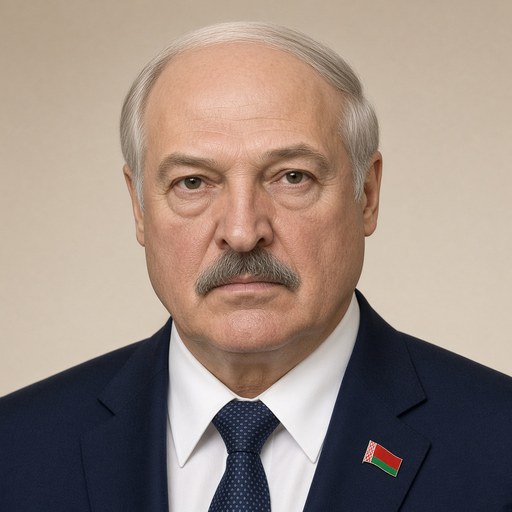
Speech by the President of the Republic of Belarus A.G. Lukashenko at the World Summit on the Information Society
 Alexander Lukashenko · President of Belarus
- Context
- Lukashenko addressed the World Summit on the Information Society in December 2003, presenting Belarus's technological achievements and proposals for global digital cooperation.
- Main themes
- Information society, high technology development in Belarus, Electronic Belarus program, brain drain, software affordability and access, UN fund for developing countries, software security and backdoors, international cooperation, space technology, human capital and education, cybersecurity and terrorism, Year 2000 problem lessons
- Duration
- ~6 min
- Words
- 671
- Sentences
- 35
- Readability
- 33
- Grade
- 13.4
- Syntax
- 2.71
- Vocabulary
- 2.17
Translated from Russian
The broad sphere of national life a sentence belongs to. Every sentence has an Arena, so it is the denominator the other indices are read against.
Other35 sentences in 25 paragraphs
Mr. Chairman,
Ladies and gentlemen,
The Republic of Belarus highly appreciates the initiative to hold the Summit as an important and timely step towards reflecting on the prospects of building an information society.
Belarus was one of the most developed in economic and technological terms among the republics of the former USSR. In all achievements—from space exploration to the implementation of defense programs—the contribution of Belarusian specialists was significant.
Guidance systems for cruise missiles, components and parts of spacecraft, and new technologies were created with the participation of Belarusian scientists. Our programmers and electronics engineers were able to land the reusable spacecraft "Buran" (analogous to the American "Shuttle") in unmanned mode, something that no one in the world has been able to do until now.
We have not lost our high potential; we have concentrated it on the most important areas for the country.
Today, Belarus is dynamically developing in the field of high technologies, as evidenced by its leading position in this area among the countries of the former Soviet Union. We have defined our path to the information society by adopting a comprehensive national program "Electronic Belarus."
Our scientists participated in the development of a supercomputer that made it onto the list of the five hundred most powerful computer systems created by companies from 14 countries around the world.
A National Space System for Earth Remote Sensing is being created in our country. Along with the development of ground infrastructure for receiving space information, we plan to launch our own spacecraft in the near future.
With advanced technologies, trained personnel, and network infrastructure, Belarus is ready to participate in the implementation of international programs as an active partner, not a passive consumer of foreign products.
We are ready to offer our services in solving complex computational tasks, monitoring radiation safety, and protecting the environment.
In my country, there is a traditionally high level of education and development of human potential. Today, we allocate more than a quarter of the national budget to funding education and science.
Higher and secondary specialized educational institutions in Belarus, while increasing the volume of training specialists for their country, are ready to expand the admission of foreign students and ensure a high level of their education.
Belarusian programmers and other specialists are in demand in many developed countries. On the one hand, this is good, but at the same time, it creates certain difficulties. And since the problem of "brain drain" is relevant not only for my country, I believe it would be appropriate for it to be reflected in the documents of the Summit.
Mr. Chairman,
Unfortunately, at present, the cost of software products is disproportionately high in relation to the incomes of the population in most countries of the world.
I believe it is necessary to unite the efforts of states to create affordable and quality information products.
One possible way to address this issue could be the establishment under the auspices of the UN of a special Fund to compensate software producers for costs when supplying products to developing countries at reduced prices.
It is no secret that some programs may contain "backdoors" capable of disabling vital sectors of any country. We believe that states and the largest producing companies should agree on the transparency of the systems being created, which can guarantee their safe use by other countries.
The global community must also unite efforts to create mechanisms to protect information systems from terrorist impacts.
Ladies and gentlemen,
The most vivid example of fruitful international cooperation was the resolution of the acute computer Problem of 2000. From this experience, we see that all countries of the world are capable of cooperation when it comes to high goals.
We, politicians, must feel that people are forming great hopes that life will acquire a new quality with the development and widespread application of information technologies.
We must contribute to ensuring that these hopes are fulfilled. I am confident that the current World Summit will serve this purpose.
Thank you for your attention.
The original Russian. The tags above are read on the English translation's sentences.
Уважаемый господин Председатель!
Уважаемые дамы и господа!
Республика Беларусь высоко оценивает инициативу проведения Саммита как важного и своевременного шага по осмыслению перспектив построения информационного общества.
Беларусь была одной из самых высокоразвитых в экономическом и технологическом отношениях среди республик бывшего СССР. Во всех достижениях — от освоения космоса до реализации оборонных программ — вклад белорусских специалистов был значительным.
Системы управления крылатыми ракетами, узлы, детали космических аппаратов, новые технологии создавались с участием белорусских ученых. Наши программисты и электронщики смогли осуществить в беспилотном режиме посадку космического корабля многоразового использования ”Буран“ (аналог американского ”Шатла“), чего в мире не может сделать до сих пор никто.
Мы не растеряли наш высокий потенциал, сконцентрировали его на важнейших для страны направлениях.
Беларусь сегодня динамично развивается в сфере высоких технологий, о чём свидетельствует ее лидирующее положение в этой области среди стран бывшего Советского Союза. Свой путь в информационное общество мы определили, приняв комплексную национальную программу ”Электронная Беларусь“.
Наши ученые принимали участие в разработке суперкомпьютера, который вошёл в список пятисот самых производительных компьютерных систем, созданных компаниями из 14 стран мира.
У нас в стране создается Национальная космическая система дистанционного зондирования Земли. Наряду с развитием наземной инфраструктуры приёма космической информации в ближайшее время планируется запуск собственного космического аппарата.
Обладая высокоразвитыми технологиями, подготовленными кадрами, сетевой инфраструктурой Беларусь готова участвовать в реализации международных программ на правах активного партнера, а не пассивного потребителя чужого продукта.
Мы готовы предложить свои услуги в решении сложных расчетных задач, в мониторинге радиационной безопасности, в охране окружающей среды.
В моей стране традиционно высокий уровень образования и развития человеческого потенциала. Сегодня более четверти национального бюджета мы направляем на финансирование образования и науки.
Высшие и средние специальные учебные заведения Беларуси, наращивая объемы подготовки специалистов для своей страны, готовы расширить приём иностранных студентов и обеспечить высокий уровень их обучения.
Белорусские программисты и другие специалисты востребованы во многих развитых странах. С одной стороны это хорошо, но одновременно порождаются определенные сложности. И поскольку проблема ”утечки мозгов“ актуальна не только для моей страны, думаю, будет правильным, если она найдет отражение в документах Саммита.
Уважаемый господин Председатель!
К сожалению, в настоящее время стоимость программного продукта несоразмерно велика по отношению к доходам населения большинства стран мира.
Считаю необходимым объединить усилия государств для создания доступных и качественных информационных продуктов.
В качестве одного из возможных путей решения этой проблемы может стать создание под эгидой ООН специального Фонда для компенсации затрат производителям программного обеспечения при поставках продукции в развивающиеся страны по сниженным ценам.
Не секрет, что в некоторые программы могут быть ”зашиты“ команды, способные вывести из строя жизненно важные отрасли любой страны. Мы считаем, что государства и крупнейшие фирмы–производители должны договориться о прозрачности создаваемых систем, что может гарантировать другим странам их безопасное использование.
Мировое сообщество должно также объединить усилия по созданию механизмов защиты информационных систем от террористических воздействий.
Уважаемые дамы и господа!
Наиболее ярким примером плодотворного международного сотрудничества было решение острейшей компьютерной Проблемы 2000–го года. На этом опыте мы видим, что все страны мира способны к сотрудничеству, когда речь идет о высоких целях.
Мы, политики, должны чувствовать, что у людей формируются большие надежды на то, что жизнь приобретёт новое качество с развитием и широким применением информационных технологий.
Мы должны способствовать тому, чтобы эти надежды оправдались. Уверен, что этому послужит и нынешний Всемирный саммит.
Благодарю за внимание.