




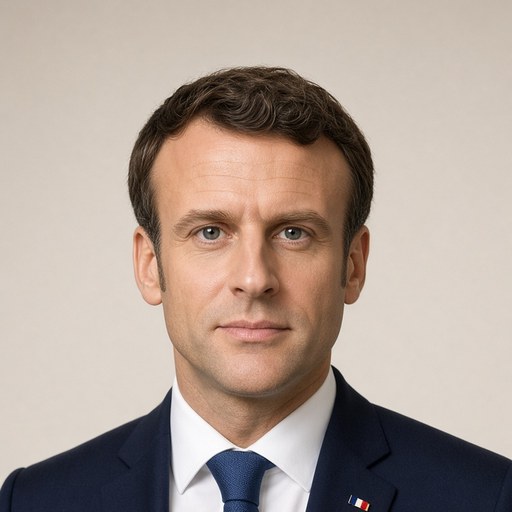
PRESENTATION OF THE HEALTH INNOVATION STRATEGY 2030 BY THE PRESIDENT OF THE REPUBLIC
 Emmanuel Macron · President of France
- Context
- Macron presented France's Health Innovation Strategy 2030 on June 29, 2021, addressing healthcare stakeholders to outline reforms following lessons learned from the COVID-19 pandemic.
- Main themes
- Health innovation strategy, healthcare system reform, research and development investment, COVID-19 crisis lessons, breaking down organizational silos, clinical trials improvement, prevention-focused healthcare, French medical ecosystem, public-private cooperation, vaccine development competitiveness, Ségur healthcare reforms
- Duration
- ~81 min
- Words
- 9,752
- Sentences
- 446
- Readability
- 57
- Grade
- 10.6
- Syntax
- 3.11
- Vocabulary
- 1.99
Translated from French
The broad sphere of national life a sentence belongs to. Every sentence has an Arena, so it is the denominator the other indices are read against.
Other446 sentences in 47 paragraphs
Hello everyone,
Thank you very much. Thank you to you and especially to all five of you. Thank you infinitely for this work.
I will try to respond to this in depth and provide some feedback. So, rather than a solemn speech, I will stay in the logic of the working sessions that you have initiated, that we have initiated.
First of all, I really want to thank all the parliamentarians, elected officials, hospital leaders, organizations, researchers, universities, companies, and qualified individuals who are here with the ministers and myself in the room, and also thank the leaders of international companies.
You have perfectly described the situation. I will not dwell on the observation. I will tell you: we have all collectively experienced this crisis together over the past year and a half. It is not over. I believe we need to talk about it with a lot of humility. And I simply think that we have collectively resisted remarkably, with a lot of energy on the ground. And I want to thank again all the caregivers on the ground who fought, all our researchers who did their utmost. But we must be very clear, the energy we expended compared to the results we could have achieved is not proportional. So, we have a huge issue of organizing the healthcare system and improving cooperation, we know that well. We are in the process of drawing the consequences, but for me, this is a subject that is part of the Ségur. And for me, the Ségur cannot simply be more money, more investment; it is also a real organizational change that involves breaking down silos because, particularly in the first phase of crisis management, we saw the emergence of organizational innovations and cooperations that should not be dismantled and on which we should continue to build. Knowing that this is a huge challenge because we have a strong risk of returning to normal after the crisis. I think that would be a disaster.
And so, we have seen the strengths and weaknesses of our system. How can we improve it? For me, the strength of the French hospital-university model, the medical ecosystem, needs to go much further. We need to break down silos as we managed to do during the crisis. And I think — I will come back to this in the coming months — that we need to go much further in terms of refocusing the system on prevention. And we saw it, we had a lot of difficulty, despite everything, in addressing the forms from the very beginning of the infections, in having better cooperation, in taking care of patients from the start, in conducting clinical research from city medicine. I do not want to be too long here, but the weaknesses we saw in terms of organization must absolutely be addressed because it is a gain in efficiency for the entire system. And so, we held on, but we could have done better if we had been better organized, I am sure of that.
On the research side, I cannot do a huge "cocorico." I mean, we have done a lot of things, we have embedded research, we have done our utmost. I still have good hope for treatments on which we have made a lot of progress, but I have, like many of you, noted the burdens that slowed our system for clinical trials, including to succeed, and I will come back to this shortly, in having enough patients, and our large structures were not the fastest in the world. When I look at global competition, we cannot say that the nation of Pasteur was the one that discovered, whether public or private structures, the vaccine first.
Matter of fact.
And so, if we do not face this in French, we cannot be credible when we say: "We are remarkably powerful on such or such subject." We need to look at it in a way, without any bad puns, "clinically." I believe you have provided a lot of explanatory elements about what happened, and so we need to try to draw all the consequences.
I think that, one, we have indeed collectively under-invested in research. I will come back to this because it is something we have started to change, but we also need to take into account what we voted on a little over a year ago. So, when I look at things in relation to comparables, it is -25% in 10 years of health R&D compared to our major comparables, which is clearly an issue. And so we have under-invested publicly over the past 15-20 years, which has clearly not been a good thing. Then, we have sedimented structures over time, but very clearly, we have actors who are too divided and dispersed; which creates slowness in the system. And so we have a system that is much slower than our neighbors. And so the combination of slowness and lack of resources is cumulative. We know very well that both factors go in the same direction, in health in general, whether it is public research or treatment in a hospital or hospital-university setting, as well as in industry; the key is to innovate as quickly as possible, to disseminate innovation as quickly as possible, and to ensure that everyone has access as quickly as possible. When we invest less and are very slow due to procedures, because we have many actors, it is clear that we have a system that quickly becomes very inefficient. And with one consequence as well, it is that generally, it is the best who leave first, if I am also lucid, because it quickly becomes disincentivizing.
And so we have a system that we know, that is to say, heroic people who remain at the heart of the system. Those we found during the crisis and who are fighting. I see a few of them passing under my gaze. And then, we have a system that, overall, is less effective than it should be. So, lack of investment, too many divisions, too much dispersion, too much slowness, and corporatism and a lack of cooperation among our actors.
Nevertheless, once I have said that, and when I say that, from where I am critical of myself, we did not predict the crisis, but we did not correct it in the 3 years preceding its emergence. It is a phenomenon that comes from afar, but it is here. We have alongside that, I believe, real factors of strength.
First of all, we have good training and it remains, and it is a huge factor of attractiveness. Then, we have a hospital and hospital-university system, which remains, I believe, a real strength. And which, despite the difficulties that have accumulated over time, is still a very solid system. And I think that the "Ma santé 2022" plan, which we launched 18 months earlier, was going in the right direction, but did not have enough investments. We accelerated with the Ségur, but now, the responses, it is about execution what needs to be done and going to the end of the organizational transformation. But I think we are consolidating on this second real strong point. Then, we have an attractiveness capacity. We were with many CIOs who are present here at "Choose France," yesterday, and we cannot say: "we are attractive in areas where, historically, we were much less strong than in health"; we could not be for health. We have an attractiveness.
And then we have been able to develop very good training, very good research, and very good industrial innovation in many areas that are complementary to health, which are major transformers; whether it is artificial intelligence, whether it is digital and individualization of medicine, whether it is everything we know how to do in physics, math, or others, that is to say, we can see that the evolution of medicine and more broadly of health is indeed moving towards interdisciplinarity and cross-disciplinary skills, and that there we can leverage our capabilities, in agriculture too, since I see all the organizations gathered here, and so our ability to draw all the synergies that exist between the different sectors is absolutely key. But I believe it is a strength of the French ecosystem because we maintain a model that is very universal and a good quality of training and research; a model that remains very strong, that of a public hospital that takes care of everyone and is very egalitarian, but where there is still very good clinical research.
So if we agree with the collective observation, we still have a long way to go. But the situation, I say this particularly for our friends watching us from abroad, is full of promise because we have, I believe, a shared observation that has been made independently and strengths that we have preserved, some even strengthened. So the question is how do we correct our weaknesses and leverage these strengths. So I will try here to provide some answers to what you may have said.
First, the first point, and this will be the first axis of this strategy to innovate for our sovereignty, is to massively reinvest in research. On this, we have also started to do so. There has been a very significant amount of work prepared by the Minister with the multi-year programming law for research, which has indeed addressed many of the issues you raised and has laid the groundwork, organizationally, in terms of human resources and means since we are breaking a cycle of more than two decades of deflation in research, and therefore it is a massive reinvestment over the next 10 years that has been decided through the LPPR. I will not go back to this here, but it is the basic foundation and I take it as a beginning. Nevertheless, what we will do, in addition to this foundation, is to massively reinvest in a few axes around two key principles that, it seems to me, are the success of what you have very well described and of the major international institutions that are our competitors, namely breaking down silos and excellence. Here too, we have a system, I will not go back to it, that has a lot of rigidity. It has been heavily constrained by human resources management, it must be said. It does not have enough plasticity and has become a bit rigid. But it has retained one good thing from the French model, which is a very egalitarian approach. But good science also needs to recognize and allow excellence to advance. So we need both, and that is how we need to move forward. So breaking down silos means assuming strategic priorities that therefore transcend disciplinary and ministerial fields, with, I would say, funding that goes beyond structural funding. And I think that collectively, we need to be lucid. We have research organizations that are there, I salute the presence of Inserm, among others, but this is also the case for all our organizations. We have the CHUs I mentioned, the universities. But our model has become rigid because, fundamentally, priorities must allow at some point on a priority and a finalized objective to know how to break all these barriers and say “we have funding and a team that will be set up around the same project.” So mixed teams are starting to do this, well they have not just started, they have been doing it for decades. And that is what mixed units have been doing for a long time, but we need to go much faster because we know, well you know infinitely better than I do, that mixed units with the system that has sedimented which is ours, they still spend a lot of time responding to calls for projects, with a visibility that is low and therefore a dedicated bureaucratic time that is very important, amounts, tickets that are too small, and a multi-annuality that is insufficient. And so we must succeed in breaking down silos. It is the complete spirit of the LPPR, but we must go much faster and much stronger in this sector that requires it.
And so we must succeed on certain absolutely key subjects on which I will come back in a moment, whether it is biotherapy, digital health, infectious diseases, to go in this direction. But even on subjects like: mental health, for example, to set multi-year priorities, to break down silos and to invest in a much simpler way. And overall, we will therefore allocate, in addition to the LPPR, 400 million euros through the tools of priority research programs that go exactly in this direction and which are — I speak under collective control here too — the simplest tool to respond to these priorities.
And so we are going to allocate these 400 million euros to priority research program tools, in addition to the LPPR, to address this. Breaking down silos means then the research of the patient, the university, the hospital or the CHU, and also the healthcare industry. And so it is a desire to break down all the continuum that you mentioned and that I recalled, and thus to build what you yourself called "health clusters," that is to say, to succeed in making our CHUs, our research teams, and our industries cooperate in specific locations. As we have started to do, but by going much faster and much stronger around a selection criterion, that is to say, doing it together, the capacity of the actors to work as a block. And on this, we will dedicate more than 600 million euros to this policy. And so, there should really be a policy where we intersect, clusters and priorities with the ambition to create a few "French Bostons" because I believe that is the ambition we must set for ourselves.
I take an example - and Professor SORIA, I put him in complete contradiction, but that is how it is. We must establish around the Gustave Roussy Institute with Paris-Saclay, the IPP, Sanofi, whom I also salute, a first European oncology hub. I believe we have the capacity. We have scientific excellence, we have healthcare teams, we have an excellent French industrial player getting involved, we have a site logic within the framework of Greater Paris, with connectivity as well. We have the expertise of Saclay cooperating, and so I think we are networking actors with a site logic and we can give ourselves the means. In any case, I am very convinced, after having visited the site, of this logic. It is totally replicable. And so I believe this is the ambition we must set for ourselves. And then, we must provide the means, but with the means each time, I say this here for all the ministers and they know my obsession, I think we also need to have facilitators of projects behind more than project managers. The project managers are the industrialists and scientists who will be, but on the state side, we are facilitators of projects, that is to say, people who will help to clear the way and not lose any administrative time. So, we will put the money, but alongside that, we will put teams that will also allow us to free up time and save time on real estate constructions, authorizations, etc. I believe these keys are good investments in administrative teams and it is also this conversion that I want to make everywhere, in hospitals as in research or elsewhere. We have wonderful administrative staff. But we have poorly organized ourselves collectively because we thought that in these areas, it was the administrators who could lead. I think that is a big mistake. The administrative staff must serve a vision, a project, but in assistance and support. And that is what will also help reduce the administrative overcost we have when we compare France with other countries on health. So, these are our famous health clusters, 600 million, and we will replicate this logic.
Then breaking down silos means sharing the information collected, produced, and validated, whether by private or public actors, always respecting medical confidentiality and privacy. But it is about using health data with the ultimate and sole goal of improving the health status of the French people. I think this is an important point of this breaking down of silos.
Aiming for excellence also means taking responsibility for moving away from status logics to bet on the best. Once again, this is completely what we are putting in the LPPR. So, we must obviously use all these levers we have to attract talents, retain them, and give them more flexibility. I think it is also important that as we have just equipped ourselves with tools through the law, we take the time to implement them properly. Often the flaw we have collectively is that we make reforms, but we do not apply them, we are always concerned with following up on reforms. Here, we are in a time of executing the LPPR where there are many simplification levers that have been found in this area. So, what I want to say is an increment in relation to the LPPR. But we will experiment in a way with the French URC by deciding to have 15 to 20 talents who will benefit from 3 to 5 million euros to establish themselves in France, create their laboratory, and launch them. And so, here we take responsibility for having a highly differentiated policy regarding these 15 to 20 talents. And this is a real call I am making to our young talents in France or abroad. “Settle or return to France.” But it is the same logic we adopted on the climate issue in the autumn-winter of 2017, with remarkable results that were supported by the ministries, particularly the Ministry of Higher Education, Research, and Innovation. I want us to do this in health. We need superstars. We know this very well, you know it perfectly. And by the way, in times of crisis, we only focus on that. So, we also need to recall some superstars or retain superstars on French soil and thus take responsibility for such a program of excellence to consolidate or relaunch this logic. And so, this is what we will launch as early as autumn with this program and these 15 to 20 talents, each with 3 to 5 million euros.
Aiming for excellence also means putting an end to research infrastructures that are too often deficient and here, once again, in addition to what is in the LPPR and the credits already targeted there, we will have an additional 300 million euros that will allow for an upgrade of these infrastructures and particularly fund cohort data banks. There is the whole aspect of the hospital-university that was presented by the Prime Minister and the Minister of Solidarity and Health, which is obviously key for the attractiveness and capacity to innovate our health system. I recalled the importance of CHUs. And so, this is in the Ségur, it is the investment part. It has already been carried out. But in addition to that, we will have this complementary aspect that we will put on the table. On the foundations of fundamental research, we will amplify our support policy for applied research, in addition to everything I just mentioned around 3 priority challenges.
And so, here, I simply wanted to return to a few transversal instruments of breaking down silos and excellence that we will implement right now and that are at the heart of this reinvestment in research and which is complementary to our LPPR. And so, 3 priority challenges in this context that I would like to emphasize and which are, in my eyes, completely key.
The first challenge is biotherapies. With a realization that must also be very lucid, so it is very hard. France depends 95% on imports for biotherapies. And so, when we know the weight of this field in global trends, very clearly, we cannot have a credible discourse saying: we are rebuilding sovereignty, whether French or European, with such a level of dependence, which is also the result of under-investments or disinvestments or past mistakes. We just need to look lucidly and correct it as quickly as possible. And paradoxically, the delay we have taken can be an opportunity to take the lead in biotherapy, which will no longer be confined to rare diseases tomorrow. I think of the new mRNA vaccines that will not only concern Covid. There is in a way a strategy, to speak in poor French, of leapfrogging that is totally possible. On this aspect, I simply think this is the last window of opportunity. So, obviously, the new mRNA vaccines. I think of synthetic biology, all the new bioproduction technologies: cell modification. I think of antibody production, not to mention the field of cancer. And here, I speak under the control of our friends from Isère or Toulouse, where we are at the forefront. We have niches where we have managed to preserve, despite everything, strongholds.
And so, this issue is one of sovereignty. I would say industrial and research sovereignty because when we have such dependence, we cannot consolidate the next stages of research either. It is an economic issue because it is the key to also building jobs in a phase of acceleration. It is a human issue because it is about how to save more lives and faster. And it is again an issue of sovereignty, given the dependence I mentioned. And so for this, I would like us to set two simple objectives within 5 years, they seem achievable to me, if we can exceed them afterwards, even better: to produce at least 5 new biomedicines and double the number of jobs in the sector. I think this objective is not at all unrealistic, it can mobilize the public and private financing ecosystem. I would like to be proven wrong at the halfway point, saying, in fact, we will be able to do much faster and much stronger. And I think that if we manage well, that is what can happen. But I think that already, if we set ourselves these two objectives: 5 new biomedicines and double the number of jobs in the sector within 5 years, we can achieve it. It is also about obviously supporting the development and improvement of our production capacities in the field. Our plan is therefore simple in biotherapy. Within 5 years, produce at least 5 new biomedicines, double the number of jobs in the sector by acting on four key themes: biotechnologies in oncology, innovations in gene and cell therapy in all other areas, new expression systems, and the development of more efficient production units and optimization tools for culture systems and bioproduction processes. These are the 4 areas where I think we are both leveraging our existing strengths and the points where we can really have a strategy, not simply of catching up, but of surpassing and succeeding in making a useful investment. And for that, I really want to thank the ministers who, Health, Research, and Economy, have worked hard to develop this strategy alongside you. In terms of resources, biotherapies will receive 800 million euros in state investments, to which nearly two billion in private investments that have been identified should be added. This means it is a massive strategy that I think is largely credible with the results I mentioned.
The second challenge, because I spoke of 3 priority challenges in this context, is digital health. So, digital health is already benefiting from the dynamics of the digital Ségur that I also mentioned and the PariSanté campus, and the entire digital strategy we have launched with the ministry, Inserm, the various CHUs, APHP, and all the actors in the sector. Very clearly, we know it is an absolutely fundamental lever to accelerate both research, but especially this more personalized, more effective, more predictive, preventive, and participatory medicine.
I have expressed myself several times on this subject. I believe we have two advantages. The first: on this matter, we are not behind, it is true almost everywhere. The health sector has historically been rather under-digitized, and so I think we have collectively woken up at the right time. There is no French delay on this subject. I speak under your collective control. There may always be an exclamation if there is someone who does not agree. So, I really think we have invested at the right time, and it is relevant. The second advantage is that we are a formidable centralizing and Jacobin state, and I take responsibility for this subject, which is constantly reproached to us, since all the people who love federal states should look at how people have managed the void elsewhere. It is only here with us. We thought it was much better to be very decentralized or federal than here. Having spoken every week with the Chancellor, she envied the French model of organization. We talked about it earlier when it comes to the United States. Think that there is no single application on American soil to manage Covid-19 because there are just "petty wars" between states. So, we must also look at the strengths of our model and stop lamenting what we are. And in terms of data, it is wonderful because our system is led by the public sector and centralized, and so we have something remarkable. I also see on our side the Director General of the CNAM who is here and who has this treasure, a large part of this treasure and this data bank. And we have seen its effectiveness and value during the crisis when we wanted to implement policies to move forward, and so it is a tremendous lever for innovation. And so we just need to manage this together, collectively, in the most intelligent way. We have this heritage; it is a sovereign heritage. It is public, and we are, in France, capable of preserving the citizen pact, which is to protect all our fellow citizens and to be able to say: this heritage belongs to each of you and belongs to all of us, and therefore it does not belong to a private actor. We can protect you against risk selection strategies, which is a huge issue from a civilizational point of view, and simply, our duty is to open it in the right way to allow innovation and access for all those who, for the common good, want to use this data to create good science, good research, good practices, and innovate. That is our challenge, and it is not more complicated than that.
Once I have said that, we know that the devil is in the details, and we have already seen it in recent months. It is a very complicated subject and sometimes fuels a lot of passion when it is not tension, but we will succeed in overcoming them. So, we have set up the data Hub. And really, I want to commend the teams because it is a very good start. I think that on this subject, the key, once again, is speed. I think we need to be able to go much faster and much faster at scale, and I know that the industrialists are here. The risk is that in the next 18-24 months, competing strategies will be put in place. And I say this as true as I have defended the centralized and Jacobin model, which is an opportunity.
If the public sector is too slow in implementing this opening, private actors will organize themselves, which they are already starting to do. As a result, we will create disynergy in the system. And so, what I ask of everyone is really to use our strength, which is a unified model. But we need to go as fast as possible to make a good, chosen opening of information. And so, fundamentally, we need to have a very cooperative strategy from all actors to play the game of data sharing, a virtuous chain between those who produce data and those who request funding, those who use it and who sometimes reap significant benefits. The risk is, as always, since it is public data to which we have access, we cannot have undue rent effects. But we also cannot have innovation blocked because we preserve too much public data. That is the right chain to find. There, we really need to put collective intelligence and cooperation strategies. And really, it is a collective call. I think that if we draw a lesson from the crisis, non-cooperative strategies have only one victim, France. And so all of you. Every time the system is non-cooperative, there is no winner. So, I really think that on this subject, if we manage to do it, we can really move forward, and the exploitation of this data obviously leads to a lot of innovation. So, we already have some remarkable projects, imaging, pioneers. I will not list them all here; I would make some jealous. But we must today move to a higher gear. Allow all healthcare facilities to produce these data, secure them, validate them, and allow for this virtuous chain.
So, these issues, in addition to Paris Santé Campus and the Ségur de la Santé, will benefit from an additional 600 million euros, to which we must add the contribution of 1.5 billion euros from the private sector. So, this is considerable as well. But for me, this funding must allow us to accelerate things. And I say this for us collectively. I think the timeline for Paris Santé Campus is no longer the right one. We cannot stick to the timeline we had before the crisis because otherwise we will have X initiatives that will come alongside. And I think that as much as public money, the speed of organization of the actors is key. So, I also ask that we review the timeline. It was announced a few months ago, but it is not sufficient. And if we need to accelerate, lift devices or constraints, we can speed things up.
So that is really the second condition. The second priority element, 600 million euros of public investments, 1.5 already from the private committee. The third priority area, infectious diseases. They will also benefit from extremely strong support. And there, the challenge is clear. We talked about it with a few of you in recent days. We must both anticipate the profiles of the next 10 most harmful viruses and therefore have almost on the shelf, if I may say so, the appropriate treatments and vaccines, at least in the preclinical phase. I am trying to learn from what we have experienced, and I do not want to relive what I have lived through, like all of you. And so, I also know the shortcomings. I saw the documents we need to work on as leaders. I am very wary of what is submitted to us because we are being told how to prepare for the war we have just lived through. However, I think we need to diversify the model much more. That is what we are also trying to do with our initiatives in this area. I see Yazdan nodding; indeed, these are the strategies he is advocating. And so, we need to look at everything that can happen to us on this subject, and fundamentally, I think it is an element of our solidarity because these are diseases that are sometimes extremely present in other geographies. We talked about them; they are starting to arrive in our geographies, and nothing says that certain infectious diseases that the international community had agreed to manage quietly because they affected other geographies, let’s be clear and quite brutal, if they arrive in our geographies very quickly, will create panic phenomena with massive impacts on our societies.
And so, it is unnecessary to emphasize after Ebola, Zika, while Covid is not over, that this is one of the absolutely massive fields. And so, we can indeed combine it with ecosystem changes related to traumas caused both by climate change and disruptions in biodiversity; we can really have a revolution that is preparing. I speak under the control of the knowledgeable because I have spent time listening to you. But a real transformation, a disruption in the field of infectious diseases. So, we have an interest in preparing much faster and much stronger than we did on this aspect. So, I want to say that we are mobilizing. We brought, as you know, several months ago, the One Health approach to mobilize the actors of human health, animal health, and the cooperation strategies between actors; that is why we have all our organizations here present, both in terms of research and production. And the ANRS will lead a key research program in this regard. And so, on this infectious disease aspect, we have already started the funding; we will continue to scale up. The ANRS will play a key role, and I hope that with our actors, industrialists, and producers from the entire community, we can build by the end of autumn an assessment of the additional funding we need to also build, as I did on the other two priorities, an additional funding plan to what we decided during the crisis and what we put in the LPPR. Because I think we need to give ourselves a series of stress test scenarios to see how we face an acceleration and prepare for these changes.
So, in total, we are mobilizing an additional 4 billion euros to the research law, with obviously at least as much from the private sector. 4 billion in public funding in addition to the LPPR, 4 billion from the private sector. So, it is a massive strategy to accelerate public research, but which is, you see, a change in the philosophy of organization and creation of an ecosystem that responds both to the lessons of the crisis and to what you presented to us today. The second series of remarks I wanted to make, I assure you, it will go much faster, is that between research, innovation, and commercialization, there is, and all the French have measured it with Covid, a step that is the evaluation of treatments of innovative molecules on patients in the context of clinical research. A vast subject that we have all experienced. So sometimes it has been used for the worse. And going fast by lifting all barriers and all ethical rules, obviously, is not the solution. But I must say that I myself discovered with a few comrades in arms here present, I must say, the madness of certain devices that we have, well.
So on this, there are two things. I have, like you, learned from the crisis, and I have also decided to keep my commitments. So I think that is one of the explanations that also makes us no longer sufficiently at the forefront because we can have the best researchers in the world, we can come up with the best drug in the world, if we take months or even years to evaluate therapeutic solutions, if we take weeks to deliver authorizations, we have a major loss of chances and collective opportunities. I think our system today, very sincerely, has created too many antibodies to innovation. That’s how it is, so we need to solve the problem. And so, if we take up the thread of our history today, and if we regain all our strengths to win things, we must also resolve phenomena that are phenomena of compartmentalization or scattering and try to fix things.
So for this, we will work on several orientations. First, we need to strengthen the implementation of trials on innovative treatments and evaluation methods by cultivating the cross-expertise of our doctors and researchers, reinforcing links with fundamental research on which new concepts, therapeutic innovations, and hospital-university and community clinics rely; and I think this is absolutely key. We have experienced it. I mean, let's be clear, we may have had innovations in terms of treatment. It took us weeks, if not months, to manage to set up the trial mechanisms. And in fact, our very structure means that the incentives are sometimes very weak to implement them when the clinic is under pressure. And especially the segmentation, and this is really about the organization of our health system, means that community medicine is not culturally associated with hospital-university advances at all. And this is the fault of both hospital-university practitioners and community doctors. This means that when you are told: we have something great that might work against Covid, but it only works if given in the first two days when people have Covid. But then you are told: of course, people do not go to the hospital in the first two days. And when you are told: we cannot enroll people to enter these trials; this is exactly what happened to us. There are wonderful people who have done an incredible job trying to stem this. We have a problem that is an organizational and cultural problem. And we cannot just observe it; we must break down barriers on this subject. And I think there is really no fatality at all; we need to move away from hospital-centrism and much better associate community medicine. I think we have a generation of community doctors, whether generalists or specialists, who are looking for a different practice of medicine, who want to be much more associated with this; this was a gain from the beginning of the crisis, and I think we need to modernize our trial system by having a continuum of medicine, I would say, from everyday practice to the most advanced research. And this is a task that is both cultural and organizational, and it is really a mission that I ask of you: we need to move beyond our traditional corporatism. Because if we remain in our corporatism, nothing pushes the actors in the system to cooperate among those I just mentioned, nothing today. However, therapeutic efficacy and a medicine that is much more preventive, that is to say, one that allows us to act on the first signals, yes.
And so I think we can make innovations in health and improve our system's capacity for better prevention where we are currently very poor, if we can also change this chaining. And so university teams, hospital-university teams, fundamental research teams, and community doctors must cooperate much better. And there, we must find more patents, better treatments, and faster access. And so, this is an organizational reform that I really ask for in the coming weeks, on which I want us to have results, on which I want us to make progress and establish protocols. We must then succeed in our clinical trials, many of which stop due to a lack of patient inclusion, which is related to the first point. Others progress too slowly between the birth and acceptance of the project and the inclusion of patients. Many Covid trials, as I mentioned earlier, during the recent period have suffered this fate, and we see today the slowness of patient inclusion, which I find absolutely terrible, with patients as well. This is the organization that we really need to achieve across the entire chain. And then we must put an end to the piling up of procedures that, without necessarily strengthening quality and safety, ultimately hinder the smooth running of trials, and we must reduce the compartmentalization of funding and incongruent institutional strategies to ultimately find a common strategy for care and research, which is the strength of major international centers.
That is why what we want is also very clearly to simplify and thus succeed in accelerating our data. The National Agency for Health Security and Medicines, which has already made significant progress on the speed of issuing authorizations, will multiply what we call fast tracks. And thank you also to the minister and his teams for all the work that has been done, and thank you to the agency. And I really want to thank the agency and all its staff because during the crisis they did an extraordinary job to allow us to move much faster from the very beginning of the crisis. And so, really, the ANSM has done remarkable work. And these fast tracks will continue to develop because they are pathways that allow for quicker authorization of a treatment when its human benefit is well evaluated and considerable. And we will undertake a major effort to lighten the burden of what we call the CPPs to optimize the timelines for issuing opinions. And so that is the other lever: organizational point on trials, we continue, and in a way, we leverage what we learned during the crisis with the multiplication of fast tracks and we reinforce the ANSM in what it has done remarkably. And we will simplify, and I know the minister is very keen on this, the specifications and procedures for the CPPs. This is how we will achieve much shorter timelines.
So from this point of view, I want to commend the commitment of AP-HP and LEEM, which have set themselves the goal of reducing the average time from 204 days to 120 days for the first inclusion in clinical trials. I think this is an extremely important point, and I hope we can go even faster and include more. And my ambition is to double the number of clinical trials that have been completed in France within three years, and I think this is also entirely achievable. I mention here too little or insufficiently the medical devices. We will also return to this in the fall. This is an absolutely essential area. I do not want to be too lengthy; I cannot cover everything. Part of what I am saying, as you know perfectly well, covers medical devices. There are other more specific topics that we will return to at the end of summer - beginning of fall, which are absolutely key. And so, for me, this second lever, in addition to changing the research ecosystem, is really this simplification, the transformation of clinical research, and the simplification of constraints and improvement of data. And then there is no effective health industry, as we know, without research, but there is no health industry without clinical success and without a market. And so, we know well, as it has been widely documented, that what has sometimes discouraged or slowed innovation in recent decades are the pricing negotiation methods for medicines. And this is both, again, about the timing on the pricing issue and the setting of prices. And if I am quite honest, I will be quite honest with French history but with ourselves; before the crisis, we had indeed stopped this logic. Because we did not wait for the crisis; as early as 2018, we stopped the logic of price deflation. What is true is that for years, we adjusted health accounts based on the price of medicines. If I look at the Ondam curve from 2007 to 2017, there have been efforts made, under-investments, we managed poverty, so to speak, on the hospital side, there have been fewer efforts than in other countries in community medicine. We have adjusted a lot on the issue of medicines and we have adjusted more on the price of medicines than on medical practices. That is to say, where the Germans, for example, have put much more pressure on practitioners to prescribe generics, we have done less in France. We have put much more pressure on the price of medicines. And so, very clearly, we have damaged the industrial fabric. I am not saying that we must necessarily overpay for things that are under-innovative; I am for a fair market. But when we do not provide this visibility, we create thresholds of under-profitability, and as a result, we have an industrial fabric that is crumbling. When there is no industrial fabric, there are no industrial innovations either.
And what I said about research earlier has fundamentally been true for industry; we have harmed the industrial fabric in France through a drug pricing policy that has been very unpredictable because it has been too managed year by year, and on which the bulk of the effort has been made, if I look at things. We did stop this logic in 2018; there was a CSIS, I remember, I had a first meeting here with many of you. And then I made price commitments; I believe we have kept them. Now we need to do better in the post-crisis period. I also made commitments regarding timelines in the same way, since in addition to our authorization timelines, we have the timelines related to pricing policy, and we have not managed to keep those timelines. So I would like us to do two things in the post-crisis period. I really commend all the efforts that have been made: the reform of early access that we will implement in July 2022, which I know is highly anticipated and is a very important point to move in the direction of this policy. But I would like us to succeed in going both faster and giving you more visibility on this. And so, going faster means allowing us to draw inspiration from best practices. I do not want to be very innovative. But under your collective control.
When I look at how our German neighbors do it. When authorizations have been granted based on the medical service rendered, they do not add other delays. It is true that this creates pressure on pricing, but the famous 180 days between the first request for reimbursement and the publication of the price definition decree has not been met. This was a commitment I made to you. We are rather between 200 and 250 days. I think we have not met it because our system has too many antibodies and is too resistant to this change. I speak to you frankly. And so I think we cannot succeed in adjusting things if we keep the same organization, and therefore we will align ourselves with the German model. I do not think the Germans are people who waste public money. And so the German model, under your control, is that when access to markets, after the opinion of the equivalent of the HAS, that is to say for us the HAS, is granted, for ASMR 1 to 4, the entry should be immediate to the market and there should be a parallel discussion on the price, either with an agreement or with a disagreement, and at that moment, it is a rather disincentive policy. The medicine under your control in Germany leaves the market when there is no agreement on the price. But this saves critical months.
Today, we are becoming non-competitive because we are unable to reduce these timelines, and I do not believe that our organization, which has not been able to meet the 180-day target, will succeed. I have a simple principle in life: when I commit from where I am to an ecosystem, if two years later we have not done it, it means there have been antibodies and that people did not want to do what I said.
Fair point? as the Anglo-Saxons would say, point taken, so we will completely change the system, and we will do this for two years, and we will evaluate after two years what works and what does not work. But our system today, I must draw the conclusion, is not working, and our system today is becoming ineffective in public research; that was my first proposal, ineffective in private research and industry, and that is why, fundamentally, we will do as our German neighbors to provide guidance to everyone. The Germans have managed very well over the last 20 years. I must acknowledge that. They have managed to catch up with a delay they had on us in this area. And so I would rather want to copy this measure, evaluate it for two years, and then be able to look at how things evolve and together see how we can improve them in practice. But we will remove a brake, a slowdown, and we will therefore conduct, in parallel with market access, the negotiation on price.
Next to that, I know that there is a reform that is highly anticipated. It is a complement to what I just said. We have decided to ease the financial constraints in the area of innovative treatments, which are by definition costly, and to facilitate access to what is called the additional list and the RIHN. And this is very good news for everyone: patients, caregivers, and industry, and I want to confirm that to you. The minister has made several important announcements in recent days, and I thank him for that. It has been a significant effort by the minister and his teams in connection with you. And so, we will continue to move forward on this. And one last point, since price is also linked to innovation policies, we need to support all these innovations, whether they are in large groups or in our startups, our SMEs. And so, we need to succeed in having this strategy. I share what you said. And here too, we have had, for the past two years, a strategy of, pardon the anglicism once again, but of scale-up, which also applies to health. And so, France is currently the leading country in Europe in terms of the number of tickets and the size of tickets issued, across all sectors. And this applies to tech, deep tech, and health tech. And so, the question is how we can go further since your sector has a specificity. The tickets are often larger than in other sectors. And the time to market is obviously longer. So, all of this must have a response in addition to the overall strategy. And for that, we will mobilize the ecosystem, particularly Bpifrance, on several topics. One billion euros will be mobilized over the next five years in grants and loans for the seed phase in the sector. And for the development phase, which allows us to mobilize private investors, what we call the fund of funds, an additional one billion euros will be allocated, which is an increase of 50% compared to what already exists. In addition to that, we will accelerate what we have done with the so-called Tibi initiative, which has brought together more than 3.5 billion from institutional investors and thus raised a total of over 20 billion, I speak under Nicolas's supervision, and thus be able to move forward. I want to thank all the ecosystem that is present here.
And so, to move faster and help our scale-ups grow, we also want to intensify our efforts, seek the best international talents, and thus try in a more ecosystemic way to look at everything we can do to further improve our practices. That is why we have decided to entrust a mission to Raphaël TORDJMAN, whom I greet on this subject, who leads one of the funds we have been able to develop thanks to the Tibi initiative. And so, we will do with foreign funds what we have done with the best researchers. The idea is to attract the best and leverage our direct funding initiatives for funds of funds. And ultimately, to improve what we have done for the financing ecosystem. The key is then to also consolidate an ecosystem that allows exits for all these structures. We will obviously, to support all of this, initiate a strong growth dynamic superior to that of the previous CSIS, which showed us the way at a rate of 2.4% per year for the Ondam, health products on clear and shared bases. This is key to supporting this investment policy, to absorb the measures I mentioned earlier without new price reductions, and this must go hand in hand with a monitoring mechanism that allows us to evaluate the actual expenditure each year. And so, fundamentally, we had a deal that is somewhat the same as for the hospital, which was: annual strangulation and a bit of disengagement. I want us to return to a logic that is ambitious, but it will come with pressure and evaluation. And I speak to you frankly, meaning that I will not let you go. So, as true as it is that 18 months later, when I made a commitment that consists of saying: we must go below 180 days. If we do not do it, we will disconnect the procedure that does not allow it. If we do not deliver according to the objectives we set, we will also draw the consequences. But so, you understood, we will massively invest in research, in drug policy, in medical devices, and in the policy of creating new products in our large groups as well as in startups. This is a massive investment. I believe it is a good use of taxpayer money. We will even do it in the Ondam, health products because I think that there too, it is a good use, but we will evaluate the real share of innovation behind it and we will evaluate the return on investment we have each time.
My conviction, given the global acceleration we are experiencing, is that the return is positive; otherwise, I would not make this choice. But we will evaluate it collectively. And so, I want us to have a bit of a debate every year. So, every year, I will not give a speech. But I want us to be able to come back after these measures are taken to evaluate with independent evaluators and look at what works and what does not work. I am not, to change everything we are discussing: within 12 months, I think this strategy needs to be long-term. I know well, I say this because our journalist friends are here, and I know that the current obsession is rather on political contingencies, which is normal. And so, I stipulate, including for others. But I think these issues are too serious and too structural to be contingent on the electoral cycle. I believe that if we create something solid, it should be unstoppable and in a way non-contingent. But it must also be beyond electoral cycles, verifiable, and we must be able to make it a real subject of steering a research and innovation strategy in health for the nation. And so, on this basis, I think we can not only succeed in countering certain flaws or failures of the model but we can succeed in consolidating and going much further on the strong points of our model and what France is, and I truly believe in building a leadership situation on particularly the key points I have mentioned.
I wish to do all this also within the framework of a partnership strategy with Germany. We have launched several IPCEIs with Chancellor MERKEL in recent months on several of the topics I have mentioned and within the framework of a European strategy. This is also what has led us to launch several major industrial investments. The VF plus or others go completely in that direction, and we will do more because I also think it is the relevant market. It is the relevant scale and will indeed be a relevant logic. To carry this out and to finalize this strategy, and I will conclude on this, we will also have unified, identified steering, and thus, instead of having a landscape that is very fragmented between PIA, MESRI, the Ministry of Higher Education, Research and Innovation, the Ministry of Health, the Ministry of Economy and Finance, the idea is to have a single window, a unique entity, and thus a health innovation agency that will also simplify things, converge agendas and logics, have a real cultural revolution, breaking down silos and excellence, and also allow us to be the interlocutor of the future European agency that is being built. And I believe that this logic of simplification with an agency that has clear objectives and the roadmap I just provided today is a key to creating synergies between actors and to ensure that we achieve results because, ultimately, what matters to all of us is to achieve results, because what we have been talking about for a while is simply the lives of our fellow citizens and citizens around the world.
And so, it is too important to accept any inefficiency in the system. And so, on this basis, I wanted to first thank all five of you for your work done. I really want to thank all the actors in the French ecosystem, as we say beautifully, but finally all those committed to health and health innovation, both public and private sectors, and fundamentally launch a call to our youth. I believe that this sector is a sector of investment in humanity where there are tremendous prospects, and the nation makes a conscious choice. I say it, it is beyond the current mandate. It makes a conscious choice to invest in human life, to invest in women and men, to invest in collective intelligence, and so I invite all the talents of tomorrow to join this sector and to have a discourse of confidence. I believe that there are tremendous prospects laid out here, and in one year, two years, five years, ten years, we will focus on developing the training that will support these transformations. But I believe that French and European youth have a tremendous future as well, by engaging in the sectors that are yours, whether as a city or rural doctor, as a PUPH in the hospital and at the university, as a researcher in a large group, as a director of a university hospital, or as a manager of a startup or a large pharmaceutical group. There are many models of choice. This sector is wonderful, and as you have understood, we will invest and above all be much more effective collectively. Thank you very much to all. Now, let’s get to work! Thank you very much. Thank you again.
The original French. The tags above are read on the English translation's sentences.
Bonjour à tous,
Merci beaucoup. Merci à vous et surtout à tous les 5. Merci infiniment pour ce travail.
Je vais au fond essayer d’y répondre et d'apporter des éléments de retour. Et donc, plutôt qu'un discours solennel, je vais rester dans la logique de sessions de travail que vous avez initiées, que nous avons initiées.
D'abord, je vais vraiment remercier l'ensemble des parlementaires, élus, dirigeants d'hôpitaux, d'organismes, de recherche, d'universités, d'entreprises et personnalités qualifiées qui sont ici présentes avec les ministres et moi-même dans la salle, et remercier aussi les dirigeants d'entreprises internationales.
Vous avez parfaitement décrit la situation. Je ne vais pas m'appesantir sur le constat. Je vais vous dire : on a tous vécu cette crise collectivement, ensemble, durant l'année et demie. Elle n'est pas terminée. Je crois qu'il faut en parler avec encore beaucoup de modestie. Et je pense simplement que nous avons résisté formidablement collectivement, avec beaucoup d'énergie sur le terrain. Et moi, je veux ici remercier à nouveau tous les soignants sur le terrain qui se sont battus, tous nos chercheurs qui ont fait le maximum. Mais il faut être très clair, l'énergie qu'on a dépensé par rapport aux résultats qu'on aurait pu obtenir n'est pas proportionnée. Donc, on a un énorme sujet d'organisation du système de soins et d'amélioration des coopérations, on le sait bien. On est en train d'en tirer les conséquences mais ça, pour moi, c'est un sujet, je le dirais, qui fait partie du Ségur. Et pour moi le Ségur ne peut pas être simplement plus d'argent, d'investissement, c'est aussi un vrai changement organisationnel qui passe par le décloisonnement parce qu'en particulier, dans la première phase de gestion de crise, on a vu émerger des innovations organisationnelles et des coopérations qu'il ne faut pas déconstruire et sur lesquelles il faut continuer plutôt d'élaborer. Sachant que c'est un énorme défi parce qu’on a un fort risque qu'on revienne à la normale après crise. Je pense que ce serait une catastrophe.
Et donc, notre système, on a vu ses forces et faiblesses. Comment on peut l'améliorer ? Pour moi, la force qui est le modèle hospitalo-universitaire à la française, l'écosystème médical, il faut qu'on arrive bien plus loin. Il faut qu'on arrive à décloisonner comme on a réussi à le faire pendant la crise. Et je pense — j'y reviendrai dans les mois qui viennent — mais qu'on aille beaucoup plus loin sur la capacité à en quelque sorte remettre du focus du système sur la prévention. Et on l'a vu, on a eu énormément de mal, malgré tout, à traiter les formes dès le début des contaminations, à avoir une meilleure coopération, à prendre en charge des patients dès le début, à faire de la recherche clinique dès la médecine de ville. Je ne veux pas être ici trop long, mais les faiblesses que l'on a vu sur le plan organisationnel, il faut absolument qu'on continue à sédimenter dessus parce que c'est un gain en efficience pour tout le système. Et donc, on a tenu, mais on aurait pu faire mieux si on avait été mieux organisés, j'en suis sûr.
Côté recherche, je ne peux pas faire un immense cocorico. Je veux dire, on a fait beaucoup de choses, on a de la recherche embarquée, on a fait le maximum. J'ai encore bon espoir sur des traitements sur lesquels on a beaucoup avancé, mais j'ai, comme beaucoup d'entre vous, noté les lourdeurs qui ont ralenti notre système pour les essais cliniques, y compris pour réussir, et je vais y revenir tout à l'heure, à avoir suffisamment de patients et nos grandes structures n’ont pas été les plus rapides au monde. Quand je regarde la compétition mondiale, on ne peut pas dire que la nation de Pasteur a été celle qui a découvert, que ce soit les structures publiques ou privées, le vaccin en premier.
Matter of fact
. Et donc, si on ne regarde pas ça en face
en français, on ne peut pas être crédible quand on dit : « On est formidablement puissant sur tel ou tel sujet ». Il faut qu'on regarde de manière, sans mauvais jeu de mots, « clinique ». Je crois que vous avez donné beaucoup d'éléments d'explication de ce qui s'est passé, et donc il faut qu'on essaie d'en tirer toutes les conséquences.
Je pense que, un, on a en effet collectivement sous-investi dans la recherche. Je vais y revenir parce que c'est quelque chose qu'on a commencé à modifier, mais il faut aussi prendre en compte ce qu'on a voté il y a maintenant un peu plus d'un an. Donc, quand je regarde les choses par rapport aux comparables, c’est -25 % en 10 ans de R&D santé par rapport à nos grands comparables, c'est clairement un sujet. Et donc nous avons sous-investi publiquement durant les 15-20 années qui viennent de s'écouler, ce qui très clairement n'a pas été une bonne chose. Ensuite, on a sédimenté des structures à travers le temps, mais très clairement, on a des acteurs trop divisés et dispersés ; ce qui crée de la lenteur dans le système. Et donc on a un système qui est beaucoup plus lent que les voisins. Et donc le couple lenteur-manque de moyens, il est cumulatif. On le sait très bien, les deux facteurs vont dans le même sens, dans la santé en général, qu'il s'agisse de la recherche publique ou du traitement en milieu hospitalier ou hospitalo-universitaire comme de l'industrie ; la clé, c'est d'innover le plus vite possible, de diffuser le plus vite possible l'innovation et de s'assurer que tout le monde y a accès le plus vite possible. Quand on investit moins et qu'on est très lent par les procédures, parce qu'on a beaucoup d'acteurs, il est clair qu'on a un système qui devient très vite sous-efficace. Et avec une conséquence aussi, c'est que généralement, ce sont les meilleurs qui le quittent en premier, si je suis aussi lucide, parce qu'il est rapidement désincitatif.
Et donc on a un système qu'on connaît, c'est-à-dire des gens qui sont héroïques et qui restent au cœur du système. Ceux qu'on a retrouvés pendant la crise et qui se battent. J'en vois quelques-uns qui passent sous mon regard. Et puis, on a ensuite un système qui, au total, est moins efficace qu'il ne devrait l'être. Donc, manque d'investissement, trop de divisions, trop de dispersion, trop de lenteur et des corporatismes et un manque de coopération entre nos acteurs.
Néanmoins, une fois que j'ai dit ça, et quand je dis ça, de là où je suis critique avec moi-même, on n'avait pas prédit la crise, mais on ne l'a pas corrigée dans les 3 ans qui ont précédé l'émergence de celle-ci. C'est un phénomène qui vient de loin, mais qui est là. On a à côté de ça, je crois, des vrais facteurs de solidité.
D'abord, on a une bonne formation et elle demeure, et c'est un énorme facteur d'attractivité. Ensuite, on a un système hospitalier et hospitalo-universitaire, qui demeure, je crois, une vraie force. Et qui, malgré les difficultés qui se sont accumulées avec le temps, est encore un système très solide. Et je pense que le plan “Ma santé 2022”, qu'on avait lancé 18 mois plus tôt, allait dans le bon sens, mais n'avait pas assez d'investissements. On a accéléré avec le Ségur, mais on a maintenant, les réponses, c'est de l'exécution ce qu'il faut faire et aller au bout de la transformation organisationnelle. Mais je pense qu'on consolide sur ce deuxième point fort réel. Ensuite, on a une capacité d'attractivité. On était avec beaucoup de CIO qui sont présents ici à “Choose France”, hier, et on ne peut pas dire : « on est attractif dans des domaines où, historiquement, on était beaucoup moins forts que la santé » ; on ne pourrait pas l'être pour la santé. On a une attractivité.
Et puis on a su développer de la très bonne formation, de la très bonne recherche et de la très bonne innovation industrielle sur beaucoup de domaines qui sont complémentaires avec la santé qui sont de grands transformants ; qu’il s'agisse d'intelligence artificielle, qu'il s'agisse de numérique et d'individualisation de la médecine, qu'il s'agisse de tout ce qu'on sait faire en physique, en maths ou autres, c'est-à-dire qu'on voit bien que l'évolution de la médecine et plus largement de la santé, va quand même vers de l'interdisciplinarité des croisements de compétences et que là, on peut faire levier sur nos capacités, en agro aussi, puisque je vois tous les organismes ici réunis, et donc la capacité nous-mêmes à tirer toutes les synergies qu'il y a entre les différents secteurs est absolument clé. Mais c’est je crois une force de l'écosystème français, parce qu'on garde un modèle qui est très universel et une bonne qualité de formation et de recherche ; un modèle qui reste très fort, celui d'un hôpital public qui prend en charge tout le monde et qui est très égalitaire, mais où il y a encore de la très bonne recherche clinique.
Donc si on est d'accord avec le constat collectif, on a quand même du chemin à faire. Mais la situation, je le dis en particulier pour nos amis qui nous regardent de l'étranger, la situation est pleine de promesses parce que nous avons, je crois, un constat partagé qui a été fait de manière indépendante et des forces que nous avons préservées, pour certaines même renforcées. Donc la question c’est comment est-ce qu’on corrige nos faiblesses et on fait levier sur ces forces. Alors je vais essayer ici d’apporter quelques réponses à ce que vous avez pu dire.
D’abord, premier point, et ce sera le premier axe de cette stratégie pour innover pour notre souveraineté, c’est réinvestir dans la recherche massivement. Là-dessus, nous avons là aussi commencé à le faire. Il y a eu un très gros travail qui a été préparé par la Ministre avec la loi de programmation pluriannuelle pour la recherche, qui a d’ailleurs répondu à beaucoup de sujets que vous avez évoqués et qui a posé les jalons, organisationnels, en termes de ressources humaines et de moyens puisqu’on casse un cycle de plus de deux décennies de déflation dans la recherche, et donc c’est un réinvestissement massif sur les 10 prochaines années qui a été décidé à travers la LPPR. Je ne vais pas ici y revenir mais c’est le socle de base et je le prends comme un début. Néanmoins, ce que l'on va faire, c'est en plus de ce socle, massivement réinvestir sur quelques axes autour de deux principes clés qui, me semble-t-il, font le succès de ce que vous avez très bien décrit et des grandes institutions internationales qui sont nos compétiteurs, c'est-à-dire le décloisonnement et l'excellence. Là aussi, on a un système, je n’y reviens pas, qui a beaucoup de rigidité. Il a été beaucoup sur-contraint par la gestion des ressources humaines, il faut bien le dire. Il n' a pas assez de plasticité et il s’est un peu rigidifié. Mais il a gardé une bonne chose du modèle français, qui est une approche très égalitaire. Mais la bonne science, elle a besoin aussi de reconnaître et de laisser avancer l'excellence. Donc il faut les deux, et c'est comme ça qu'il faut avancer. Alors décloisonner, c'est assumer des priorités stratégiques qui donc dépassent des champs disciplinaires et ministériels, avec je dirais des financements qui sortent des financements de structures. Et je pense que collectivement, il faut qu'on soit lucides. On a des organismes de recherche qui sont là, je salue la présence de l'Inserm, entre autres, mais c'est le cas aussi de tous nos organismes. On a les CHU que j'évoquais, les universités. Mais notre modèle s’est rigidifié parce qu'au fond les priorités, elles doivent permettre à un moment donné sur une priorité et un objectif finalisé de savoir casser toutes ces barrières et dire “on a un financement et une équipe qui va se mettre en place autour d'un même projet”. Alors les équipes mixtes commencent à le faire, enfin elles ne le commencent pas, elles le font depuis des décennies. Et c'est ce que les unités mixtes font depuis longtemps, mais on a besoin d'aller beaucoup plus vite parce qu'on le sait, enfin vous le savez infiniment mieux que moi, les unités mixtes avec le système qui s’est sédimenté qui est le nôtre, elles passent quand même beaucoup de temps à répondre à des appels à projets, avec une visibilité qui est faible et donc un temps bureaucratique dédié qui est très important, des montants, des tickets qui sont trop petits et une pluriannualité qui est insuffisante. Et donc on doit réussir à décloisonner. C'est l'esprit complet de la LPPR, mais là on doit aller beaucoup plus vite et beaucoup plus fort dans ce secteur qui le requiert.
Et donc on doit réussir sur certains sujets absolument clés sur lesquels je vais revenir dans un instant, qu'il s'agisse de biothérapie, santé numérique, maladies infectieuses, à aller dans ce sens. Mais même sur des sujets comme : santé mentale, par exemple, à se donner des priorités pluriannuelles, à décloisonner et à investir de manière beaucoup plus simple. Et au total, on va donc consacrer, en plus de la LPPR, 400 millions d'euros à travers les outils des programmes prioritaires de recherche qui vont exactement dans ce sens et qui sont — je parle sous le contrôle là aussi collectif —l'outil le plus simple pour répondre à ces priorités.
Et donc on va mettre ces 400 millions sur des outils de programmes prioritaires de recherche, en plus de la LPPR, pour répondre à cela. Décloisonner, c'est ensuite la recherche du patient, l'université, de l'hôpital ou au CHU, l'industrie aussi du soin. Et donc c'est une volonté de décloisonner tout le continuum que vous avez évoqué et que je rappelais, et donc de bâtir au fond ce que vous avez vous-même appelé des « clusters santé », c'est-à-dire de réussir sur des unités de lieu à faire coopérer nos CHU, nos équipes de recherche, nos industries. Comme on a commencé à le faire, mais en allant beaucoup plus vite et beaucoup plus fort autour d'un critère de sélection, c'est-à-dire le faire ensemble, la capacité des acteurs à travailler en bloc. Et là-dessus, nous allons consacrer plus de 600 millions d'euros à cette politique. Et donc, qu'il y ait vraiment une politique où on se croise, des clusters et des priorités avec l'ambition de faire émerger quelques « Boston français » parce que je crois que c'est l'ambition qu'il faut se donner.
Je prends un exemple - et le professeur SORIA du coup, je le mets en porte-à-faux complet mais c'est ainsi. On doit constituer autour de l'Institut Gustave Roussy avec Paris-Saclay, l'IPP, Sanofi aussi que je salue, un premier pôle européen d'oncologie. Je crois qu'on a la capacité. On a l'excellence scientifique, on a les équipes de santé, on a un acteur industriel d'excellence français qui s’y met, on a une logique de site dans le cadre du Grand Paris, avec en plus la connectivité. On a l'expertise de Saclay qui coopère et donc là, je pense qu'on met des acteurs en réseau avec une logique de site et on peut se donner les moyens. En tout cas, moi, je suis très convaincu, après m'être rendu sur site, par cette logique-là. Elle est totalement réplicable. Et donc c’est je crois cette ambition qu'il faut se donner. Et après, il faut donner les moyens, mais avec les moyens à chaque fois, je le dis ici pour vraiment tous les ministres et ils savent mon obsession, je pense qu'il faut aussi qu'on ait derrière des facilitateurs de projets plus que des chefs de projets. Les chefs de projets, ce sont les industriels et les scientifiques qui vont l'être, mais du côté des États, on est des facilitateurs de projets, c'est-à-dire des gens qui vont aider à défricher et à ne perdre aucun temps administratif. Donc, on va mettre l'argent, mais à côté, on va mettre des équipes qui vont aussi permettre de libérer du temps et gagner du temps sur les constructions immobilières, les autorisations, etc. Je crois que ces clés, c'est du bon investissement d'équipe administrative et c'est aussi cette conversion que je veux faire partout, à l'hôpital comme en recherche ou ailleurs. On a des administratifs qui sont formidables. Mais on s'est mal organisés collectivement parce qu'on a pensé que dans ces domaines-là, c’est les administratifs qui pouvaient piloter. Je pense que c'est une grosse erreur. L'administratif doit être au service d'une vision, d'un projet, mais en aide et en soutien. Et c'est ce qui permettra d'ailleurs de réduire le surcoût administratif qu'on a quand on compare la France avec d'autres pays sur la santé. Donc ça, ce sont nos fameux clusters santé 600 millions et on va répliquer cette logique.
Puis décloisonner, c'est partager l'information collectée, produite, fiabilisée, que ce soit par les acteurs privés ou les acteurs publics, dans le respect toujours du secret médical et de la vie privée. Mais c'est utiliser les données de santé avec pour but ultime et unique d'améliorer l'état de santé des Français. Je pense que c'est un point important de ce décloisonnement.
Viser l'excellence, c'est enfin assumer de sortir des logiques de statut pour justement, là aussi, miser sur les meilleurs. Encore une fois, c'est complètement ce qu'on met dans la LPPR. Donc, il faut évidemment qu'en santé, on utilise aussi tous ces leviers dont on s'est doté pour attirer les talents, les garder, leur donner plus de souplesse. Je pense que c’est important là aussi que comme on vient de se doter d'outils à travers la loi, on prenne bien le temps de les décliner. Souvent le défaut qu'on a aussi collectivement, c'est qu’on fait des réformes, mais on les applique pas, on s'occupe toujours des réformes à suivre. Là, on est dans un temps d'exécution de la LPPR où il y a beaucoup de leviers de simplification qui ont été trouvés en la matière. Donc, ce que je veux dire est un incrément par rapport à la LPPR. Mais nous allons expérimenter en quelque sorte l'URC à la française en décidant d'avoir 15 à 20 talents qui bénéficieront de 3 à 5 millions d'euros pour s'établir en France, créer leur laboratoire et les lancer. Et donc, là, on assume d'avoir une politique hyper différenciée sur justement, c'est 15 à 20 talents. Et il s'agit là d'un vrai appel que je lance à nos jeunes talents en France ou à l'étranger. “Installez-vous ou revenez en France.” Mais c'est la même logique qu'on avait pris sur le sujet climat à l'automne hiver 2017, avec des résultats formidables qui ont été portés par les ministères, en particulier le ministère de l'Enseignement supérieur, de la Recherche et de l'Innovation. Je veux qu'on fasse ça en santé. On a besoin des superstars. On le sait très bien, vous le savez parfaitement. Et d'ailleurs, dans les moments de crise, on ne se focalise que là-dessus. Donc, on a aussi besoin de rappeler quelques superstars ou de fidéliser sur le sol français des superstars et donc d'assumer un tel programme d'excellence pour consolider ou relancer cette logique. Et donc ça, c'est ce que nous allons lancer dès l'automne avec ce programme et donc ces 15 à 20 talents avec chacun 3 à 5 millions d'euros.
Viser l'excellence, c'est aussi en finir avec des infrastructures de recherche trop souvent défaillantes et là, une fois encore, en plus de ce qu'il y a dans la LPPR et des crédits déjà ciblés là-dessus,
on aura 300 millions d’euros additionnels qui permettront une remise à niveau de celle-ci et de financer en particulier, banque de données de cohorte. Il y a tout le volet sur l’hospitalo-universitaire qui a été présenté par le Premier ministre et le ministre de la Solidarité et de la Santé qui est évidemment clé pour l’attractivité et la capacité à innover notre système de santé. J’ai rappelé l’importance des CHU. Et donc ça, c’est dans le Ségur, c’est la partie investissement. Elle a déjà été portée. Mais en plus de ça, on va avoir donc ce volet complémentaire qu’on va mettre sur table. Sur les fondations de la recherche fondamentale, on va amplifier notre politique de soutien à une recherche appliquée, en plus de tout ce que je viens d’évoquer autour de 3 défis prioritaires.
Et donc, là, je voulais simplement revenir sur quelques instruments transversaux de décloisonnement et d'excellence qu'on va mettre en place dès maintenant et qui sont au cœur de ce réinvestissement en matière de recherche et qui est complémentaire donc à notre LPPR. Et donc, 3 défis prioritaires dans ce cadre-là sur lesquels je voudrais insister et qui sont à mes yeux complètement clés.
Le premier défi, c'est les biothérapies. Avec un constat là aussi, il faut faire très lucide, donc il est très dur. La France dépend à 95 % des importations pour les biothérapies. Et donc, quand on connaît le poids de ce domaine dans les tendances mondiales, très clairement, on ne peut pas avoir un discours crédible en disant : on reconstruit la souveraineté, qu'elle soit française ou européenne, en ayant un tel niveau de dépendance, qui est là aussi le fruit de sous-investissements ou désinvestissement ou d'erreurs passées. Il faut juste regarder lucidement et le corriger le plus vite possible. Et paradoxalement, le retard que nous avons pris peut, être une chance pour prendre la première place en matière de biothérapie qui ne vont plus être demain cantonnés aux maladies rares. Je pense aux nouveaux vaccins ARN qui ne vont pas concerner seulement la Covid. Il y a en quelque sorte une stratégie, pour parler un mauvais français, de
leapfrogging
qui est totalement possible. Sur ce volet-là, simplement, je pense que c'est la dernière fenêtre d'opportunité. Donc, évidemment, les nouveaux vaccins ARN. Je pense à la biologie de synthèse, à toutes les nouvelles technologies de bio production : modification de cellules. Je pense à la production d'anticorps, sans compter aussi le domaine du cancer. Et là, je parle sous le contrôle de nos amis de l’Isère ou de Toulouse, où nous nous situons en tête. On a des niches où on a réussi à préserver malgré tout, des bastions.
Et donc, cet enjeu, c’est un enjeu de souveraineté. Je dirais industriel et de recherche parce que quand on a une telle dépendance, on ne peut pas consolider les prochaines étapes de recherche non plus. C'est un enjeu économique parce que c'est la clé pour aussi bâtir des emplois dans une phase d'accélération. C'est un enjeu, je dirais, humain, parce que c'est comment sauver plus de vies et plus vite. Et c'est un enjeu, encore une fois de souveraineté, compte tenu de la dépendance que j'évoquais. Et donc pour ça, je voudrais qu'on se donne sous 5 ans deux objectifs simples, ils me paraissent atteignables, si on peut après les dépasser, c'est encore mieux : produire au moins 5 nouveaux biomédicaments et doubler le nombre d'emplois du secteur. Je pense que cet objectif, il n’est pas irénique du tout, il peut permettre de mobiliser l'écosystème public et privé de financement. Je voudrais pouvoir être démenti à mi-parcours, en disant, en fait on va pouvoir faire beaucoup plus vite et beaucoup plus fort. Et je pense que si on se débrouille bien, c'est ce qui peut arriver. Mais je pense que déjà, si on se donne ces deux objectifs : 5 nouveaux biomédicaments et doubler le nombre d'emplois du secteur sous 5 ans, on peut y arriver. Il s'agit aussi de soutenir évidemment le développement et l'amélioration de nos capacités de production dans le domaine. Notre plan est donc simple en biothérapie. D'ici 5 ans, produire au moins 5 nouveaux biomédicaments, doubler le nombre d'emplois du secteur en agissant sur quatre thématiques phares : les biotechnologies en oncologie, les innovations en thérapie génique et cellulaire dans tous les autres domaines, les nouveaux systèmes d'expression et le développement d'unités de production plus performantes et d'outils d'optimisation des systèmes de culture et procédés de bioproduction. C'est les 4 domaines sur lesquels je pense, à la fois, on joue sur nos points forts existants et les points sur lesquels on peut vraiment avoir une stratégie, pas simplement de rattrapage, mais de dépassement et réussir à avoir un investissement utile. Et ça, je veux vraiment remercier les ministres qui, Santé, Recherche et Économie, ont beaucoup travaillé pour justement élaborer à vos côtés cette stratégie. En termes de moyens, les biothérapies feront l'objet de 800 millions d'euros d'investissements de l'Etat, auxquels il faut ajouter près de deux milliards d'investissements privés qui ont été identifiés. Ce qui fait que c'est une stratégie massive qui, je pense, est largement crédible avec les résultats que j'évoquais.
Deuxième défi, parce que j'ai parlé de 3 défis prioritaires dans ce contexte c’est la santé numérique. Alors, la santé numérique bénéficie déjà de la dynamique à la fois du Ségur numérique là aussi que j’évoquais et du PariSanté campus, et de toute la stratégie numérique qu'on a lancée avec le ministère, l'Inserm, les différents CHU, l'APHP et l'ensemble des acteurs du secteur. Très clairement, on le sait, c'est un levier absolument fondamental pour accélérer à la fois la recherche, mais surtout cette médecine plus personnalisée, plus efficace, plus prédictive, préventive et participative.
Je me suis plusieurs fois exprimé sur ce sujet. Je pense qu'on a deux avantages. Le premier : là-dessus, on n'est pas en retard, c'est vrai à peu près partout. Le secteur de la santé est historiquement plutôt sous numérisé et donc je pense qu'on s'est réveillé collectivement au bon moment. Il n'y a pas de retard français sur ce sujet. Je parle sous votre contrôle collectif. Il peut toujours y avoir une exclamation s'il y a quelqu'un qui ne partage pas. Donc, je pense que vraiment, on a investi au bon moment et c'est pertinent. Le deuxième avantage, c'est qu’on est un formidable État centralisateur et jacobin et là j'assume ce sujet qui nous est constamment reproché puisque tous les gens qui adorent les États fédéraux devraient regarder comment les gens ont géré le vide ailleurs. Il n'y a que chez nous. On pensait que c'était beaucoup mieux d'être très décentralisé ou fédéral, que chez nous. Pour avoir parlé toutes les semaines avec la chancelière, elle enviait le modèle français d'organisation. On en parlait tout à l'heure quand il s'agit des Etats-Unis. Pensez qu'il n'y a pas d'application unique sur le sol américain pour gérer le Covid-19 parce qu'il y a juste des « guéguerres » entre Etats. Donc, il faut aussi regarder les forces de notre modèle et arrêter d'être dans la déploration de ce que nous sommes. Et en matière de données, c'est formidable parce que notre système, il est mené par le secteur public et centralisé et donc on a quelque chose de formidable. J'aperçois aussi de notre côté le DG de la CNAM qui est là et qui a ce trésor en partie, une grosse partie de ce trésor et de cette banque de données. Et on en a vu quand même l'efficacité et la valeur pendant la crise quand on a voulu mener des politiques d'aller vers et donc c'est un formidable levier d'innovation. Et donc il faut simplement qu'on gère ensemble, collectivement, de la manière la plus intelligente cela. On a ce patrimoine, c'est un patrimoine souverain. Il est public et nous sommes d'ailleurs, nous, en France en capacité de préserver le pacte citoyen qui est de protéger justement tous nos concitoyens et de pouvoir dire : ce patrimoine, il vous appartient à chacun et il appartient à nous tous et donc il n'appartient pas à un acteur privé. On peut vous protéger contre des stratégies de sélection du risque, ce qui est d'un point de vue civilisationnel, un énorme sujet et simplement, notre devoir, c'est de l'ouvrir de la bonne manière pour permettre l'innovation et l'accès de toutes celles et ceux qui, pour le bien commun, veulent utiliser ces données pour créer de la bonne science, de la bonne recherche, des bonnes pratiques et innover. C'est ça notre défi et pas plus compliqué que ça.
Une fois que j’ai dit ça, on sait que le diable est dans le détail et on l’a déjà vu ces derniers mois. C'est un sujet très compliqué et qui alimente parfois beaucoup de passion quand ce ne sont pas des tensions, mais nous allons réussir à les surmonter. Alors, on a mis en place le data Hub. Et vraiment, je veux saluer les équipes parce que c'est un très bon début. Je pense que sur ce sujet, la clé, une fois encore, c'est la rapidité. Je pense qu'il faut qu'on arrive à aller beaucoup plus vite et beaucoup plus vite à l'échelle et je sais que les industriels sont là. Le risque, c'est d'ailleurs qu'on est dans les 18-24 prochains mois des stratégies concurrentes qui se mettent en place. Et ça, je le dis aussi vrai que j'ai défendu le modèle centralisé et jacobin qui est une chance.
Si le secteur public est trop lent dans la mise en œuvre de cette ouverture, les acteurs privés vont s'organiser, ce qu'ils sont en train un peu de commencer à faire. Du coup, on va créer de la dysynergie dans le système. Et donc, moi, ce que je demande à tous, c'est vraiment au fond d'utiliser notre force, c'est-à-dire un modèle unifié. Mais il faut qu'on aille le plus vite possible pour faire de la bonne ouverture choisie d'information. Et donc, au fond, on a besoin d'avoir une stratégie très coopérative de tous les acteurs qui est de jouer le jeu du partage de la donnée, d'un chaînage vertueux entre ceux qui produisent des données et ceux qui demandent des financements, ceux qui les utilisent et qui, parfois, tirent d'importants bénéfices. Le risque, c'est comme toujours, comme c'est de la donnée publique à laquelle on accède, on ne peut pas avoir des effets de rente qui soient indus. Mais on ne peut pas non plus avoir de l'innovation qui est bloquée parce qu'on préserve trop de la donnée publique. C'est ça le bon chaînage à trouver. Là, il faut vraiment mettre de l'intelligence collective et des stratégies de coopération. Et vraiment, c'est un appel collectif. Je pense que si on tire une leçon aussi de la crise, les stratégies non coopératives ont une seule victime, la France. Et donc vous tous. A chaque fois que le système est non coopératif, il n’y a pas de gagnant. Donc, je pense vraiment que sur ce sujet, si on arrive à le faire, on peut vraiment avancer et l’exploitation de cette data procède évidemment, énormément d’innovation. Alors, on a déjà des projets formidables, des imageurs, des pionniers. Je ne vais pas ici tous les citer, je ferais des jaloux. Mais on doit aujourd’hui passer à la vitesse supérieure. Permettre à tous les établissements de soins de produire justement ces données, de les sécuriser, de les fiabiliser et permettre justement d'avoir ce chaînage vertueux.
Alors, ces enjeux, en complément de Paris Santé Campus et du Ségur de la Santé, bénéficieront de 600 millions d'euros supplémentaires, auxquels il faut ajouter la contribution de 1,5 milliard d'euros du secteur privé. Donc là aussi, c'est considérable. Mais pour moi, ces financements doivent permettre d'accélérer les choses. Et je le dis aussi pour nous collectivement. Je pense que le calendrier de Paris Santé Campus n'est plus le bon. On ne peut pas rester sur le calendrier qu'on avait avant la crise parce que sinon on aura X initiatives qui arriveront à côté. Et je pense qu’autant que l'argent public, la rapidité d'organisation des acteurs est clé. Donc là, moi, je demande aussi à ce qu'on revoie le calendrier. Il a été annoncé il y a quelques mois, mais il n'est pas suffisant. Et s'il faut accélérer, lever des dispositifs ou des contraintes, on peut accélérer les choses.
Donc ça, c'est vraiment la deuxième condition. Le deuxième élément prioritaire, 600 millions d'euros d'investissements publics, 1,5 déjà comité du privé. Troisième champ prioritaire, les maladies infectieuses. Elles bénéficieront là aussi d'un soutien extrêmement fort. Et là, le défi est clair. On en parlait avec quelques-uns ces derniers jours. Nous devons à la fois anticiper les profils des 10 prochains virus les plus nocifs et donc avoir presque sur étagère, si je puis dire, les traitements et vaccins adaptés, au moins en phase préclinique. J'essaie d'apprendre de ce qu'on a vécu et je n'ai pas envie de revivre ce que j'ai vécu, comme vous tous. Et donc, je sais aussi les défauts. Je voyais les documents sur lesquels on doit plancher là en tant que dirigeant. Je me méfie beaucoup là de ce qu'on nous soumet parce qu'on nous explique comment préparer la guerre qu'on vient de vivre. Or, je pense qu'il faut beaucoup plus diversifier le modèle. C'est ce qu'on essaie de faire aussi sur nos initiatives en la matière. Je vois Yazdan qui opine du chef, c’est en effet, les stratégies qu'il porte. Et donc, on a besoin en effet, sur ce sujet, de regarder tout ce qui peut nous arriver et au fond, je pense que c'est un élément d'ailleurs de notre de notre solidarité parce que c'est des maladies qui, parfois, sont extrêmement présentes dans d'autres géographies. On parlait, elles sont en train d'arriver dans nos géographies et rien ne dit que certaines maladies infectieuses que la communauté internationale avait accepté de gérer à bas bruit parce qu'elles touchaient d'autres géographies, soyons clairs et assez brutaux, si elles arrivent dans nos géographies de manière très rapide, vont créer des phénomènes de panique avec des impacts massifs sur nos sociétés.
Et donc, inutile de souligner après Ebola, Zika, alors que le Covid n'est pas terminé, que c'est un des champs absolument massifs. Et donc, on peut avoir combiné en effet avec des changements d'écosystèmes liés au traumas qui sont dus à la fois au réchauffement climatique et aux bouleversements en termes de biodiversité, on peut vraiment avoir une révolution qui est en train de se préparer. Je parle sous le contrôle des sachants parce que j'ai passé du temps à vous écouter. Mais une vraie transformation, un bouleversement du champ des maladies infectieuses. Donc, on a intérêt à se préparer beaucoup plus vite et beaucoup plus fort qu'on ne l'a fait sur ce volet. Donc là, je veux dire qu'on se mobilise. On apportait, comme vous le savez il y a plusieurs mois, à l'approche
One Health
pour mobiliser les acteurs de la santé humaine, de la santé animale et les stratégies de coopération d’ailleurs entre acteurs, c'est pour ça qu'on a tous nos organismes ici présents, tant sur le plan de la recherche que sur celui de la production. Et l’ANRS pilotera un programme de recherche absolument clé en ce sens. Et donc, sur ce volet maladies infectieuses, on a commencé là les financements, on va continuer à monter en gamme. L’ANRS jouera absolument un rôle clé et je souhaite qu'avec nos acteurs, industriels et producteurs de toute la communauté, on puisse bâtir d'ici à la fin de l'automne une évaluation des financements additionnels dont on a besoin pour là aussi bâtir un peu comme je l'ai fait sur les deux autres priorités un plan de financement additionnel à ce qu'on a décidé pendant la crise et ce qu'on a mis dans la LPPR. Parce que je pense qu'il faut qu'on se donne, qu'on ait une série de scénarios de stress tests un peu pour regarder comment on fait face à une accélération et on se prépare à ces changements.
Donc, au total, ce sont 4 milliards d'euros additionnels à la loi recherche que nous mobilisons, avec évidemment au moins autant du privé. 4 milliards de financements publics en plus de la LPPR 4 milliards du privé. Donc c’est une stratégie massive d’accélération de la recherche publique mais qui est, vous voyez, un changement aussi de philosophie d’organisation de création d’écosystème qui répond à la fois aux leçons de la crise et à ce que vous nous avez présenté aujourd’hui. La deuxième série de remarques que je voulais faire, je vous rassure, ça va aller beaucoup plus vite, c’est qu’entre la recherche, l’innovation, la commercialisation, il y a, et tous les Français l'ont mesuré avec le Covid, une étape qui est celle de l'évaluation des traitements des molécules innovantes sur le patient dans le cadre de la recherche clinique. Vaste sujet qu'on a tous vécu. Alors parfois, ça a été utilisé pour le pire. Et aller vite en levant toutes les barrières et toutes les règles déontologiques, évidemment, n'est pas la solution. Mais je dois dire que j'ai moi-même découvert avec quelques compagnons d'armes ici présents, je dois bien le dire, la folie de certains dispositifs que nous avons, bon.
Donc là-dessus, il y a deux choses. Moi, j'ai, comme vous, appris de la crise et puis j'ai décidé aussi de tenir mes engagements. Donc je pense que c'est une des explications qui fait aussi que nous ne sommes plus suffisamment en pointe, parce qu'on peut avoir les meilleurs chercheurs au monde, on peut aboutir au meilleur médicament du monde, si on met des mois voire des années, à évaluer les solutions thérapeutiques, si on met des semaines à délivrer des autorisations, on a une perte de chances et d'opportunités collectives qui est majeure. Je pense que notre système, aujourd'hui, très sincèrement a créé trop d’anticorps à l'innovation. C'est comme ça, donc il faut qu'on arrive à régler le problème. Et donc, si on reprend aujourd'hui le fil de notre histoire, et si on fait justement, si on regagne toutes nos forces pour gagner les choses, on doit là aussi résoudre des phénomènes qui sont des phénomènes de cloisonnement ou d'éparpillement et essayer de régler les choses.
Alors pour cela, on va travailler sur plusieurs orientations. D'abord, renforcer la réalisation des essais sur les traitements et méthodes d'évaluation innovants en cultivant l'expertise croisée de nos médecins et de nos chercheurs, en renforçant les liens avec la recherche fondamentale sur laquelle repose justement les nouveaux concepts, les innovations thérapeutiques et la clinique hospitalo-universitaire et de ville ; et je pense que c’est absolument clé. On l'a vécu. Je veux dire, soyons clairs, on avait peut-être des innovations en termes de traitement. On a mis des semaines, pour pas dire des mois, à réussir à mettre en place les mécanismes d'essais. Et en fait, notre structure même fait que les incitations sont parfois très faibles pour les mettre en place quand la clinique est sous tension. Et surtout la segmentation, et ça, c'est vraiment de l'organisation de notre système aussi de santé, fait que la médecine de ville n'est pas du tout associée culturellement aux avancées hospitalo-universitaires. Et c'est la faute des hospitalo-universitaires comme des médecins de ville. Ce qui fait que quand on vous dit : on a un truc super qui va peut-être marcher contre le Covid, mais ça ne marche que si on le donne dans les deux premiers jours où les gens ont le Covid. Mais qu'on vous dit : évidemment, les gens, ils ne vont pas à l'hôpital les deux premiers jours. Et quand on vous dit : on n'arrive pas à enrôler les gens pour pouvoir entrer dans ces tests ; ce qui est exactement ce qui nous est arrivé. Il y a des gens formidables qui ont fait un travail de fou pour essayer d'endiguer ça. On a un problème qui est un problème organisationnel et culturel. Et on ne peut pas simplement le constater, on doit décloisonner sur ce sujet. Et je pense qu’il n’y a vraiment pas de fatalité du tout, c’est qu’il faut qu'on arrive à sortir du hospitalo-centrisme, à beaucoup mieux associer la médecine de ville. Je pense qu'on a une génération de médecins de ville qui soit généraliste ou spécialiste, d’ailleurs qui cherchent une autre pratique de la médecine, qui veut être associée beaucoup plus à cela, ça a été un gain du début de la crise, je pense qu'il faut moderniser notre système d'essai en ayant là aussi un continuum de la médecine, je dirais, du quotidien, à la recherche la plus avancée. Et ça, c'est un travail qui est culturel et organisationnel, et c'est vraiment une mission que je vous demande : il faut sortir de nos corporatismes traditionnels. Parce que si on reste dans nos corporatismes, rien ne pousse les acteurs du système à coopérer entre ceux que je viens d'évoquer, rien aujourd'hui. Or, l'efficacité thérapeutique et une médecine qui justement, est beaucoup plus préventive, c'est-à-dire celle qui permet de prendre aux premiers signaux, oui.
Et donc je pense qu'on peut faire des innovations en santé et améliorer la capacité de notre système à faire de la meilleure prévention là où on est aujourd'hui très mauvais, si aussi on arrive à changer ce chaînage. Et donc équipe universitaire, hospitalo-universitaire, équipes de recherche fondamentale, médecins de ville doivent davantage mieux coopérer. Et là, on doit trouver justement davantage de brevets, de meilleurs traitements, un accès plus rapide. Et donc, ça, c'est une réforme organisationnelle que je demande vraiment dans les toutes prochaines semaines, sur lesquelles je veux vraiment qu'on ait des résultats, sur lesquels je veux qu'on avance et qu'on baptise des protocoles. Nous devons ensuite réussir nos essais cliniques dont beaucoup s’arrêtent faute d’inclusion de patients, c’est lié au premier point. D’autres avancent trop lentement entre la naissance et l’acceptation du projet et l’inclusion de patients. Nombre d’essais Covid, comme je le disais à l’instant, pendant la période récente ont subi ce sort et on voit aujourd’hui la lenteur de l’inclusion des patients, ce qui est absolument je trouve terrible, avec des patients là aussi. Ça, c’est cette organisation qu’on doit vraiment réussir à avoir sur toute la chaîne. Et puis nous devons mettre fin à l’empilement des procédures qui sans renforcer forcément la qualité et la sécurité entravent in fine le bon déroulement des essais et nous devons réduire le cloisonnement des financements, des stratégies institutionnelles non-congruentes pour retrouver au fond une stratégie commune soins - recherche, celle qui est la force des grands centres internationaux.
C'est pourquoi que ce que nous voulons, c'est là aussi très clairement simplifier et donc réussir à avoir une accélération de nos données. L'Agence nationale de sécurité sanitaire et du médicament, qui a déjà beaucoup progressé sur la rapidité de délivrance d'autorisations, va multiplier ce que l'on appelle les
fast track
. Et ça, merci aussi au ministre et ses équipes pour tout le travail qui a été fait et merci à l'agence. Et je veux vraiment remercier d'ailleurs l'agence et vraiment tous ses personnels parce que pendant la crise ils ont fait un boulot extraordinaire pour nous permettre d'aller beaucoup plus vite dès le début de la crise. Et donc, vraiment, l’ANSM a fait un travail remarquable. Et donc ces
fast track
vont continuer à se développer parce que ce sont des voies qui permettent d'autoriser plus rapidement un traitement quand son bénéfice humain est bien évalué et considérable. Et nous allons mener un travail majeur d'allègement de la charge de ce que l'on appelle les CPP pour optimiser les délais de rendu des avis. Et donc ça, c'est l'autre levier : point organisationnel sur les essais, on continue et en quelque sorte on fait levier sur ce qu'on a appris pendant la crise avec la multiplication des
fast track
et on conforte l’ANSM dans ce qu'elle a su formidablement faire. Et on va simplifier, et ça le ministre, je le sais, y tient ô combien les cahiers des charges et les procédures pour les CPP. C'est comme ça que nous atteindrons justement des délais qui sont beaucoup plus faibles.
Alors de ce point de vue, je veux saluer l'engagement de l'AP-HP et du LEEM qui se sont fixés pour objectif de passer de 204 jours en moyenne à 120 jours en moyenne pour la première inclusion des essais cliniques. Je pense que c'est un point extrêmement important et je souhaite qu'on puisse faire encore plus vite, faire plus nombreux. Et mon ambition est de doubler en 3 ans le nombre d'essais cliniques qui ont abouti en France, et je pense que là aussi c'est totalement jouable. J'évoque ici peu ou insuffisamment les dispositifs médicaux. Là aussi, on y reviendra à l'automne. C'est un champ absolument essentiel. Je ne veux pas y être trop long, je ne peux pas tout couvrir. Une partie de ce que je dis, évidemment, comme vous le savez parfaitement, couvre les dispositifs médicaux. Il y a d'autres sujets plus spécifiques sur lesquels on reviendra à la fin de l'été - début d'automne et qui sont absolument clé. Et donc voilà, pour moi, ce deuxième levier en plus de changement de l'écosystème de recherche, c'est vraiment cette simplification, la transformation de la recherche clinique et la simplification des contraintes et l'amélioration des données. Et puis il n'y a pas d'industrie de santé performante, on le sait, sans recherche, mais il n'y a pas d'industrie de santé sans succès clinique et sans marché. Et donc, on le sait bien car cela a été largement documenté, ce qui a ces dernières décennies parfois découragé ou freiné l'innovation, ce sont les modes de négociation de prix des médicaments. Et c'est à la fois, là encore, les sujets délai sur la question prix et la fixation des prix. Et si je suis assez honnête, là pour le coup je vais être assez honnête avec l'histoire française mais avec nous-même, avant crise on avait quand même stoppé cette logique. Parce qu'on n'a pas attendu la crise, dès 2018 nous avons stoppé la logique de déflation des prix. Ce qui est vrai, c'est que pendant des années, on a ajusté les comptes de santé sur le prix du médicament. Si je regarde la courbe de l'Ondam sur les années 2007-2017, on a fait, il y a eu des efforts qui ont été faits, des sous-investissements, on a géré la pauvreté, si je puis dire, côté hôpital, il y a eu des efforts moins importants que dans d'autres pays en médecine de ville. On a beaucoup ajusté sur le sujet médicaments et on a ajusté plus sur la question du prix du médicament que sur les pratiques médicales. C’est-à-dire là où les Allemands, par exemple, ont mis beaucoup plus de pression sur les praticiens pour prescrire des génériques, on l’a moins fait en France. Nous, on a mis beaucoup plus de pression sur le prix du médicament. Et donc, très clairement, on a abîmé le tissu industriel. Je ne dis pas qu'il faut forcément surpayer des choses qui sont sous-innovantes, je suis pour un marché qui est juste. Mais quand on ne donne pas cette visibilité, on crée des seuils de sous-rentabilité, du coup on a un tissu industriel qui s’effrite. Quand il n’y a pas de tissu industriel, il n’y a plus d’innovations industrielles non plus.
Et ce que je disais pour la recherche tout à l’heure a été au fond vrai pour l’industrie, on a fait souffrir le tissu industriel en France par une politique du prix du médicament qui a été très imprédictible parce que trop géré à l'année-l'année et sur lequel l'essentiel de l'effort s’est fait si je regarde les choses. On a stoppé quand même cette logique en 2018, il y a eu un CSIS je m’en rappelle, j'avais fait une première réunion ici avec beaucoup d'entre vous. Et puis j'avais pris des engagements de prix, je crois qu'on les a tenus. Maintenant, il faut qu'on fasse mieux en sortie de crise. Puis j'avais pris des engagements de délai aussi de la même manière puisqu'en plus de nos délais d'autorisation, on a les délais ensuite, liés à la politique du prix et ces délais, on n'a pas réussi à les tenir. Donc moi, je voudrais qu'on fasse deux choses en sortie de crise. Je salue vraiment tous les efforts qui ont été faits : la réforme de l'accès précoce que l'on va mettre en place en juillet 2022 et qui est, je le sais, très attendue et qui est un point très important pour aller dans le sens, justement, de cette politique. Mais je voudrais qu'on puisse là-dessus réussir à aller à la fois plus vite et vous donner plus de visibilité. Et donc, aller plus vite, c'est permettre qu'au fond, on s'inspire des meilleures pratiques. Je ne veux pas être très innovant. Mais sous votre contrôle, là aussi collectif.
Quand je regarde comment font nos voisins allemands. Quand les autorisations ont été données sur le service médical rendu, ils n’ajoutent pas d'autres délais. Alors c'est vrai, ça crée une pression sur le tarifaire, mais le fameux 180 jours entre la première demande de remboursement et la publication de l'arrêté de définition du prix n'a pas été tenu. C'était un engagement que j'avais pris vis-à-vis de vous. On est plutôt entre 200 et 250 jours. Moi, je pense qu'on ne l’a pas tenu parce que notre système a trop d'anticorps et est trop résistant à ce changement. Je vous parle en toute franchise. Et donc je pense qu'on ne peut pas réussir à ajuster les choses si on garde la même organisation et donc on va se caler sur le modèle allemand. Je ne pense pas que les Allemands soient des gens qui dépensent mal l'argent public. Et donc le modèle allemand, c'est sous votre contrôle, là aussi, que quand l'accès aux marchés, après avis de l'équivalent de la HAS donc pour nous de la HAS est donné, donc pour les ASMR 1 à 4, l'entrée soit immédiate sur le marché et qu'il y ait une discussion en parallèle sur le prix, soit avec un accord, soit avec un désaccord et à ce moment-là, c'est une politique assez désincitative. Le médicament sous votre contrôle en Allemagne, il sort du marché quand par ne pas avoir un accord avec le prix. Mais ça fait gagner des mois qui sont critiques.
Aujourd'hui, on est en train de devenir non compétitif parce qu’on n’est pas fichu de réduire les choses, et je ne crois pas que notre organisation qui n'a pas été capable de passer aux 180 jours. Moi, j'ai un principe simple dans la vie, quand je m'engage de là où je suis vis-à-vis d'un écosystème, si deux ans après on ne l’a pas fait, c'est qu'il y a eu des anticorps et que les gens n’ont pas voulu faire ce que j'ai dit.
Fair point
? comme diraient les anglo-saxons,
point taken
, donc on va changer de système totalement et donc on va faire ça pendant 2 ans et on va regarder au bout de 2 ans, on fera l'évaluation de ce qui marche, ce qui ne marche pas. Mais notre système aujourd'hui, je suis obligé d'en tirer le constat, il ne marche pas et notre système aujourd'hui est en train de devenir inefficace sur la recherche publique, c'était mes premières propositions, inefficace sur la partie recherche privée et industrie et donc c'est pourquoi, au fond, on va faire comme nos voisins allemands pour donner un guide à tout le monde. Les Allemands se sont très bien débrouillés ces 20 dernières années. Je dois constater ça. Ils ont réussi à rattraper un retard qu'ils avaient sur nous dans ce domaine. Et donc j'ai plutôt envie de copier cette mesure, de l'évaluer pendant 2 ans et ensuite de pouvoir en effet regarder comment les choses évoluent et ensemble, regarder comment on arrive à les améliorer en conduite. Mais donc on va enlever un frein, un ralentisseur et on fera donc, en parallèle de l'accès aux marchés, la négociation sur le prix.
À côté de ça, je sais qu'il y a une réforme qui est très attendue. C'est un complément à ce que je viens de dire. Nous avons sur les traitements innovants qui, par définition, sont coûteux, décidé de desserrer la contrainte financière dans ce domaine et faciliter l'accès à ce qu'on appelle la liste en sus et le RIHN. Et ce qui est une très bonne nouvelle pour tous, malades, soignants et industriels, et donc ça je veux vous le confirmer. Le ministre, d'ailleurs, a fait plusieurs annonces importantes ces derniers jours et je l'en remercie. Ça a été un très gros travail du ministre et de ses équipes en lien avec vous. Et donc, on va là-dessus continuer à avancer. Et tout dernier point puisque le prix va avec aussi les politiques d'innovation, il faut qu'on puisse accompagner justement toutes ces innovations, qu'elles soient dans les grands groupes ou dans nos startups, nos PME. Et donc réussir à avoir cette stratégie. Je partage ce que vous avez dit. Et là aussi, on a quand même eu depuis deux ans une stratégie de, pardon de l'anglicisme une fois encore, mais de
scale-up
, qui vaut aussi pour la santé. Et donc, la France est aujourd'hui le premier pays d'Europe en termes de nombre de tickets et de taille de tickets émis, tous secteurs confondus. Et donc, cela vaut pour la tech, pour la
deep tech
et la
health tech
. Et donc, là-dessus, c’est comment on arrive à aller plus loin puisque votre secteur a une spécificité. Les tickets sont souvent plus importants que dans d'autres secteurs. Et le temps d'accès aux marchés est évidemment plus long. Donc, l'ensemble de cela doit avoir une réponse en plus de la stratégie d'ensemble. Et donc, pour ça, on va mobiliser l'écosystème et en particulier Bpifrance, sur plusieurs sujets. Un milliard d'euros seront mobilisés sur les 5 prochaines années en subventions et prêts, sur la phase d'amorçage dans le secteur. Et sur la phase développement qui permet de mobiliser les investisseurs privés, ce qu'on appelle le fonds de fonds, un milliard d'euros de plus seront abondés, soit plus 50 % par rapport à ce qui existe déjà. On va en plus de ça accélérer ce qu'on a fait avec l'initiative dite Tibi, qui a permis de rassembler plus de 3,5 milliards d'investisseurs institutionnels et donc de lever au total plus de 20 milliards, je parle sous le contrôle de Nicolas, et donc de pouvoir avancer. Je veux ici remercier d'ailleurs tout l'écosystème qui est présent.
Et donc, pour aller plus vite et aider nos
scale-up
à grandir, on veut aussi accentuer notre effort, aller chercher les meilleurs talents internationaux et donc essayer de manière plus écosystémique de regarder tout ce qu'on peut faire pour encore améliorer nos pratiques. C'est pourquoi on a décidé de confier une mission à Raphaël TORDJMAN, que je salue sur ce sujet, qui mène un de ces fonds qu'on a pu développer grâce à l'initiative Tibi. Et donc, on fera comme on a fait avec les meilleurs chercheurs, la même chose avec les fonds étrangers. L'idée étant d'attirer les meilleurs et de faire levier sur nos initiatives de financement direct de fonds de fonds. Et au fond, d'améliorer ce qu'on a fait pour l'écosystème de financement. La clé, c'est ensuite de consolider aussi un écosystème qui permet les sorties pour l'ensemble de ces structures. On va évidemment, pour accompagner tout cela, enclencher une dynamique de croissance forte supérieure à celle du précédent CSIS, qui nous a montré la voie à hauteur de 2,4 % par an pour l'Ondam, produits de santé sur des bases claires et partagées. Ce qui est la clé pour accompagner cette politique d'investissement, pour absorber des mesures que j'ai citées précédemment sans nouvelles baisses de prix, et ceci doit aller de pair avec un mécanisme de suivi qui permet d'évaluer chaque année la dépense réelle. Et donc, au fond, on avait un deal qui est un peu la même chose que pour l'hôpital, qui était : strangulation annuelle et un peu de déprise. Je veux qu'on reparte dans une logique qui est ambition, mais elle va aller avec pression et évaluation. Et je vous parle franchement, c'est-à-dire que moi, je ne vais pas vous lâcher. Donc, aussi vrai que 18 mois après, quand j'ai pris un engagement qui consiste à dire : on doit passer sous les 180 jours. Si on ne le fait pas, on débranche la procédure qui ne permet pas de le faire. Si on ne délivre pas par rapport aux objectifs qu'on se donne, on en tirera aussi les conséquences. Mais donc, vous l'avez compris, on va massivement investir en recherche, en politique de médicaments, de dispositifs médicaux et en politique de création de nouveaux produits dans nos grands groupes comme de startup. C'est un investissement massif. Je pense que c'est une bonne utilisation de l'argent du contribuable. On va y compris le faire dans l'Ondam, produits de santé parce que je pense que là aussi, c'est une bonne utilisation, mais on va évaluer la vraie part derrière d'innovation qu'il y a et on va évaluer le retour aussi sur investissement qu'on a à chaque fois.
Ma conviction, compte tenu de l'accélération mondiale qu'on est en train de vivre, c'est que le retour est positif, sinon je ne prendrai pas ce choix. Mais on va l'évaluer collectivement. Et donc, je veux que chaque année, on ait un peu un débat. Donc, chaque année, je ne vais pas faire un discours. Mais moi, je veux qu'on puisse revenir après ces mesures faites pour faire l'évaluation avec des évaluateurs indépendants et regarder ce qui marche et ce qui ne marche pas. Je ne suis pas, pour changer tout ce qu'on est en train de se dire : sous 12 mois, je pense qu'il faut que cette stratégie s'inscrive dans le temps. Je sais bien, je le dis, parce que nos amis journalistes sont là et je sais que l'obsession du moment est plutôt sur les contingences politiques, ce qui est normal. Et donc je stipule, y compris pour autrui. Mais je pense que ces sujets sont trop graves et trop structurants pour être contingents au cycle électoral. Je pense que si on crée quelque chose de solide, ça doit être inarrêtable et en quelque sorte non contingent. Mais il faut que ce soit aussi au-delà des cycles électoraux, vérifiables et qu'on puisse en faire un vrai sujet de pilotage d'une stratégie de recherche d'innovation en santé pour la nation. Et donc sur cette base, je pense qu’on peut non seulement réussir à conjurer certains défauts ou certains échecs du modèle mais on peut réussir à consolider et aller beaucoup plus loin sur des points forts de notre modèle et de ce qu’est la France et je pense véritablement construire une situation de leadership sur en particulier les points clés que j’ai évoqué.
Tout ça, je souhaite le faire aussi dans le cadre d'une stratégie de partenariat avec l'Allemagne. On a lancé plusieurs IPCEI avec la chancelière MERKEL ces derniers mois sur plusieurs des sujets que j'ai évoqués et dans le cadre d'une stratégie européenne. C'est d'ailleurs ce qui nous a conduit à lancer plusieurs grands investissements industriels. Le VF plus ou autres vont complètement dans ce sens-là, et on en fera d'autres parce que je pense aussi que c'est le marché pertinent. C'est l'échelle pertinente et sera d'ailleurs une logique pertinente. Pour porter cela et pour parachever cette stratégie et je conclurai là-dessus, on va aussi avoir un pilotage unifié, identifié et donc, au lieu d'avoir un paysage qui est très morcelé entre PIA, MESRI enfin ministère de l’Enseignement Supérieur, de la Recherche et l'Innovation, au ministère de la Santé, ministère de l'Economie, des Finances, l'idée est d'avoir un guichet unique, une entité unique et donc une agence de l'innovation en matière de santé qui va permettre là aussi de simplifier les choses, de faire converger les agendas et les logiques, d'avoir une vraie révolution culturelle, du décloisonnement et de l'excellence et de permettre aussi d'être l'interlocuteur de la future agence européenne qui est en train de se bâtir. Et je pense que cette logique de simplification avec une agence qui ait des objectifs clairs et la feuille de route que je viens de donner aujourd'hui, c'est une clé pour créer des synergies entre acteurs et pour permettre surtout d'avoir les résultats puisqu' au fond, ce qui nous importe tous, c'est d'avoir des résultats, parce que ce dont on parle depuis tout à l'heure, c'est juste de la vie de nos concitoyens et des concitoyennes et concitoyens du monde entier.
Et donc, c'est trop important pour accepter quelque inefficacité dans le système. Et donc sur cette base-là, je voulais d'abord vous remercier tous les 5 pour votre travail fait. Je veux vraiment remercier l'ensemble des acteurs de l'écosystème français, comme on dit joliment, mais enfin tous les engagés pour la santé et l'innovation en santé, secteur public comme secteur privé et lancer au fond un appel à notre jeunesse. Je pense que ce secteur est un secteur d'investissement dans l'humain où il y a de formidables perspectives et la nation fait le choix conscient. Je le dis, il est par-delà le mandat qui est en cours. Elle fait le choix conscient d'investir dans la vie humaine, d'investir dans les femmes et les hommes, d'investir dans l'intelligence collective et donc moi, j'invite aussi tous les talents de demain à rejoindre ce secteur et à avoir un discours de confiance. Je pense qu'il y a des perspectives formidables qui sont ici dressées et dans un an, deux ans, 5 ans, 10 ans, nous, on va s'attacher à développer les formations qui vont permettre d'accompagner ces transformations. Mais je pense que la jeunesse française et européenne a un formidable avenir aussi, en s'engageant dans les secteurs qui sont les vôtres, que ce soit en étant médecin de ville ou de campagne, en étant PUPH à l'hôpital et à l'Université, en étant chercheur dans un grand groupe, en étant directeur ou directrice d'un hôpital universitaire ou cadre d'une startup ou d'un grand groupe pharmaceutique. Il y a énormément de modèles de choix. Ce secteur est formidable et comme vous avez compris, on va investir et surtout être beaucoup plus efficaces collectivement. Merci infiniment à tous. Maintenant au travail ! Merci beaucoup. Merci encore.