




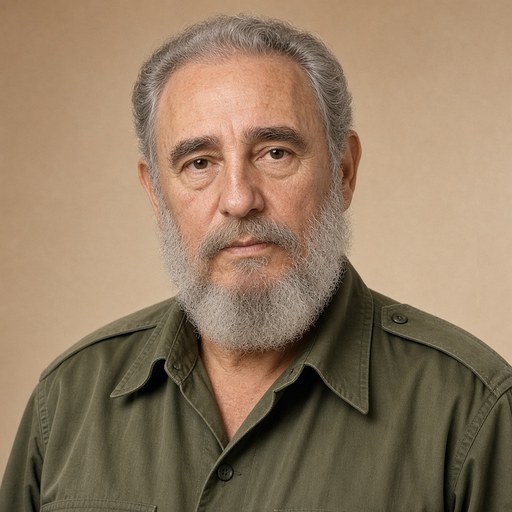
Speech delivered at the conclusion of the National Meeting of Medical Sciences Students, held at the Palace of Conventions, on the
 Fidel Castro · President of Cuba
- Context
- Castro addressed medical sciences students at the Palace of Conventions on May 5, 1984, summarizing discussions from Cuba's National Meeting of Medical Sciences Students.
- Main themes
- Medical education reform, evaluation and examination standards, academic fraud prevention, Cuban medical textbooks and bibliography, student-teacher relations, clinical training and internships, oral health campaigns, paramedical staff quality, brigade-level grassroots participation, student organization proposals, therapeutic procedures curriculum timing, hospital training environments
- Duration
- ~95 min
- Words
- 11,339
- Sentences
- 340
- Readability
- 40
- Grade
- 15.6
- Syntax
- 3.45
- Vocabulary
- 2.07
Translated from Spanish
The broad sphere of national life a sentence belongs to. Every sentence has an Arena, so it is the denominator the other indices are read against.
Other340 sentences in 104 paragraphs
Dear colleagues:
It is not easy to summarize this rich discussion that has taken place today. Throughout the day, I have been noting various topics, and thus, in chronological order, I have recorded many of them, which are important. The issue of final exams and the lack of systematic evaluation in some subjects by certain professors has been highlighted; the extraordinary importance of Cuban texts has been pointed out, and it was wisely stated that a whole new experience is being developed that should be documented; the importance of the work of author collectives; the idea of developing knowledge contests; the need for the highest quality in promotion, the importance of work at the brigade level and at the grassroots level; the importance of bibliography, not only from Cuban authors but also from foreign authors, many of whom have recognized and indisputable authority in the field, and we must try to benefit not only from our experience but from the experience of the whole world, taking into account, of course, the conditions in which medicine is practiced in many countries, and without promoting that pregnant women smoke, just because a textbook, famous and good in other aspects, states that. The need to unify criteria on evaluation; the difficulties in the distribution of books, which also seem to exist in the distribution of magazines; the need for a campaign on oral health; the importance of learning: learning to think, learning to study; the problems related to the treatment and relationships between teacher and student; the demand from dentists for a contingent of dentistry to be created; the need to raise the rigor in accreditation; the need for a set of measures regarding fraud, especially starting from the idea that there is a potential for fraud among those who stop attending classes, who are finalists, and who become potential fraudsters, as was said here. The need to proactively fight against all those factors that breed fraud, although, in reality, as has been pointed out here, the number of fraud cases has been minimal, at least those discovered; and anyone who has witnessed a meeting like this would have solid reasons to think that the battle against fraud is being won, and that it is becoming increasingly difficult and morally unacceptable for a medical student to commit fraud. The need to improve the teaching of interns, the importance of municipal and rural internships.
Therapeutic procedures were also discussed; it was even mentioned that it might be advisable to start therapeutic procedures in the second year, but this needs to be thought through carefully, as it could reduce the number of beds per student in hospitals, and still the student who is in basic sciences, who does not possess many of those essential knowledge, would not be in a position to carry out this type of studies, of practice in the second year. Therefore, it needs to be thought through carefully.
Here, the difference between the provincial hospital and the municipal hospital was pointed out, and someone spoke, with much enthusiasm, about the advantages that the municipal hospital has over the provincial one, due to the number of practical work they have there.
The issue related to the treatment and sensitivity towards patients was emphasized. A very important point was also raised, related to the need to raise the quality of paramedical staff. The magazine was discussed, along with its efforts, achievements, and difficulties, in addition to its importance. I understand that some are proposing the idea of making the magazine national.
Some other important points were raised. It would not be possible to comment on all of them; we consider that these, among those mentioned, are the most important.
Of course, we should not judge the outcome of this meeting by the work done today, but rather it has been a whole process, and we must value the process as a whole, which began many weeks ago, with analyses, discussions at the grassroots level, in the brigades; with the practically universal participation of all medical students.
The comrades from the FEU and the Youth collected, in a document, all the proposals. Because we must take into account not only what has been mentioned here today but everything that has been mentioned throughout this process in the discussions at the grassroots level. They have been gathering all the proposals, of one type or another, in a document.
I believe that this document needs to be enriched now, with the points that have been addressed here, and some proposals that do not seem very rational to us should be excluded. A decision must be made on whether to include or not the idea of moving the therapeutic issue to the second year. For example, it was clarified that it seems impossible, that it is neither practical nor logical to have the rotation exam at "Piti Fajardo," since they have a daily activity that encompasses pediatrics, obstetrics, and general medicine constantly. And as a professor explained here, the promotion was excellent, and there seems to be a bit of fear of facing that final exam, but the facts have shown that they have successfully passed that exam. It is not the same to rotate by specialties here in the province, where they go to maternity, they go to a pediatric hospital, than it is there where everything is together; it seems difficult. I believe that a proposal of that type should not be included in the final document.
I read in the FEU document that it was also proposed in a province, I don't know if it was Tunas, the idea of whether the stay in rural medicine for "Piti Fajardo" students should be reduced to only two years after graduation. We do not find that reasonable either, since, first, for the internationalist students who went to Nicaragua, or Guinea, or the Sahara, or Ethiopia, it has been proposed two years after graduation, with exceptions for those cases where, due to the interest we have in the specialty they want to acquire, they have been brought back, and some have even been brought back after finishing their internship, and others in their first year. But in principle, it was agreed on two years after graduation. I believe we should maintain three years in "Piti Fajardo," and furthermore, we should aspire to have doctors in the future who do not think about rotating through rural hospitals, but rather about staying there, and that we have specialists in rural areas who remain there, and who can act as teachers for the interns, because today they have to go every so often, but in the future it is supposed that those specialties — fundamentally the rotating ones — can be done there in rural hospitals, with the support of specialist professors. That type of proposal should not be included in the final document, those that are obviously logical, or evidently inconvenient.
I also believe that we should not propose, for example, the idea of doing with dentists what we do with family doctors. We need to think about other things regarding that. I believe that the proposal has the good aspect of making us think, although not to do the same as with family doctors, something of another category, but within the same conception, since the proportion of medical needs that arise in life constantly is 12 to 1, or 10 to 1, we would have to calculate it, in relation to dental needs. And it is also supposed that over the years, medical needs will increase due to the fact that life expectancy increases, and, on the other hand, dental needs should tend to decrease, if we really apply preventive medicine rigorously. There will always be a need, of course, but it will not be in proportion to the medical needs we will have. Keep in mind that family doctors will become, at least, 20,000; we would have to think about 20,000 dentists, to also place one there, alongside. And always the problem of the dentist is not the same as that of the doctor: a doctor may face an urgent, serious, fatal case if not attended to immediately; but the dental problem can wait hours, or a day, it has other characteristics, and it would not be rational.
We, who have thought a lot about this problem, believe that perhaps where there is a community of 1,000, or 1,500, or 2,000, in the countryside, it could be applied in some areas, using the same concept, to have the dentist nearby; but it would not be rational to have one in the city, where they have the possibility of going to the dental clinic. Obviously, they will need to be given some notions; here it was mentioned to give general medicine notions to the dentist, correct, but perhaps more notions of dentistry should be given to that family doctor, and that he also becomes a fighter for dentistry, not only for vaccination and other issues, and hygiene in general, but also for oral hygiene, preventive dental campaigns. We will have to think about giving them more knowledge, so that they can do that work in some way. But the proposal or aspiration of the dentists makes us think. For now, we have been considering that even the number of dentists who have entered in recent years is small, and in the possible need to raise, after making certain calculations, perhaps to double the number of admissions, so that when the possibility arises to take those services to places where it is rational to take them, due to the distance from the cities, especially in rural areas, perhaps in some large, important factories, in short, where that principle can be applied. We must think.
I told the comrades — in response to the argument about the problem that the dentist needs the equipment — that the equipment can ultimately be purchased if the need arises, but that the dentist cannot be imported: we have to develop him, train him in our country. And it is evident that the number of those entering dentistry is reduced, if ideas are really developed on how to expand this service.
With internationalist missions, the following occurs: we are providing medical collaboration in Third World countries, they have very pressing needs, they have prioritized medical needs and always ask us for help in the field of medicine, they do not ask us in the field of dentistry. It may be that in the future that demand grows, but today, as they have prioritized health issues, life or death, there is really a great demand for medical services in the Third World area and that demand does not arise in the field of dentistry, which is why it is not practically possible to conceive that we can have a large internationalist contingent of dentists; that is to say, that this issue does not depend on us. But I do believe that the points raised by the dentists, which are applicable, should be taken into consideration.
Questions related to the specialty of dentists were also raised. A medical student expressed that they knew nothing about maxillofacial surgery, in short, those problems have been raised. It is supposed to be the task of dental specialists; but, well, perhaps there is a field that can be common for both specialties.
It is also important to emphasize the importance of dentistry, because it is indeed closely related to health. Many times doctors, when they cannot find the cause of some infection or something they cannot detect well, immediately go to examine the mouth to see if it could be the source of some infectious focus, also if there are headaches and other problems, even kidney infections they sometimes check to see if they have something to do with oral health, and, above all, because digestion starts in the mouth, and chewing has a very significant importance, etc., in terms of health. Emphasizing the importance of dentistry and continuing to develop ideas on how this activity should evolve in the coming years and what ideas arising from the family doctor can also be applied to dentistry, although, I repeat, it cannot be exactly the same.
It is good that this document is printed and collects the results of the entire process and today's meeting, and not only printed, transported, and distributed in all places where we are interested in these ideas reaching. First of all, to the professors, to the faculties, to the hospitals, to all the places where we are interested in these ideas being known, because we need the collaboration of many to be able to put them into practice.
We have had two faculty meetings recently and now this kind of student meeting. You surely know many of the things that were raised in the Faculty Meeting, and now the professors must know all the issues that have been raised here. In addition, the Vice Ministry of Medical Education, the comrades, the rectors, and all the cadres must analyze the problems related to evaluation, the need to unify criteria, everything that has been raised here in relation to teaching; although, as you pointed out, many of the problems do not depend on others, but on the students themselves, on the work of the FEU with the brigades, on the grassroots organizations of the Youth, that is to say, on yourselves.
There is no doubt that some of the points raised deserve special comment, especially the one related to teaching, concerning evaluation and the difficulties that arise. For example, from this meeting, the need for greater effort in the preparation of students entering the School of Medicine and the university in general emerged clearly, because what is correct for medicine is absolutely applicable to technology and any other university faculty.
We have made significant progress in the field of education and in the quality of education, in the improvement of systems and programs; but in a meeting like this, despite how much we have advanced — and we are aware that we have made great strides in many areas — it can be seen that we still have a long way to go. Therefore, we cannot be complacent, because there is still a world to advance in the field of education.
You know the feats that have been accomplished, starting from a situation around the year 1970 or 1971, when 70% of teachers were unqualified: the explosion of students, the need to create the Pedagogical Detachment, which was in a way the inspiration for the later idea of the Medical Sciences Detachment. Tens of thousands of teachers have been trained: we have around 250,000 teachers and educators; and of them, if I remember correctly, there were 150,000 studying.
There is a tremendous effort for improvement. Primary school teachers are now in the thousands, studying for a Bachelor's degree in Primary Education. Undoubtedly, it is a huge advance, if we compare it to those years when 70% were unqualified, and this has happened in just a few years. Alongside these advances, I can point out another fact. We have a deficit of 5,000 teachers in the subjects of mathematics, physics, and chemistry, a deficit of 5,000, and look, we have graduated tens of thousands of teachers in general! That is an unfavorable sign. Comrade Fernández explained to me that they now have a plan with those graduating as teachers, to encourage them to continue studying in the specialty of these subjects, already considering them teachers, or giving them part of the remuneration that is given to teachers, but assigning them the task of continuing to study these subjects.
It is bad for the country that while there are many who want to be teachers of history, literature, and everything — without underestimating these subjects in the slightest — there is this deficit in mathematics, physics, and chemistry, in a country that has to develop, that has to master technology, something essential for everything else; because if we talk about being a medical power, a power in education, and a power in culture, it has to be based on being an economic power as well, having a material base, industrial development, scientific development, a solid economy, and increasingly, the mastery of the exact sciences and techniques is essential to ensure adequate economic development. It is unfavorable that still in the culture of our country, of our people, and of our youth, the importance and value of the exact sciences, physics, mathematics, and chemistry are not appreciated. These are gaps that we still need to fill. Just as we have made great strides in the fields of education and medicine, we must set ourselves a similar effort in the faculties of technology, and increase the number, so that in the future we have almost double the number of students studying in the Faculty of Technology compared to what we have today in the faculties of medicine, or more than double what we have today. Because we have calculated well how many doctors we need, according to the conceptions that have been developed; but we still need more electrical, civil, electronic, industrial engineers, etc.
We have been analyzing with some comrades the need to make an emphasis, a special effort like the one we have made in medicine, related to the faculties of technology: to see their material base, their laboratories, the resources they have, the resources they need, and how we develop them, so that around the year 1990 we have approximately 50,000 students in those faculties. But, of course, to achieve this, we need to make an effort like the one we have been making in the field of medicine, an effort that is truly advancing brilliantly and with visible results, but we have to do it in technology, because to achieve all these objectives, we need that development, similar to what we will have in medicine.
Engineers, mechanics, and electronics must provide us with important support in the production of equipment, and chemists in the pharmaceutical industry, etc. In other words, our ability to be a medical power is weakened if we do not advance equally in other fields; but above all, it is weakened — and this became evident here today — if we do not advance in secondary education, if we do not advance in pre-university education. At these levels, it is evident that bad habits have been created; these bad habits may partly depend on times when we lacked texts, and on some forms of evaluation that were created; but we really cannot conceive of a university student studying for grades, or a pre-university student studying for grades, it is simply inconceivable. We must wage an unrelenting war against these bad habits. Grades are needed, yes, we must take grades, we must create the habit of taking notes; but we must study and prepare for the exam using the texts and the grades; but they must use the texts, we cannot conceive it any other way.
It is true that there have been difficulties in recent times with some texts. We must make an effort to resolve this problem, so that the lack of textbooks does not cover up the bad habit of studying only for grades. Anyone who has studied understands that it is practically inconceivable to prepare for an exam only for grades; that bad habit must be completely eradicated, and we must develop a struggle in that direction, apart from the effort we must make to improve, increasingly, the quality of secondary education, so that this leap does not occur, which in medicine is even more complicated, because apparently our pre-university students are better prepared for other careers than for medicine. I understand that when they move on to study embryology and biochemistry, they have very serious problems related to the chemistry they studied in pre-university.
We know this problem, we have been proposing some ideas, such as, for example, developing a brochure, practical, intelligible material, so that the students of the Detachment, who come from all the pre-universities in the country, can become familiar with these subjects that later constitute the hardest obstacles when they enter the Faculty of Medicine. We must seek formulas that help prepare the students of the Detachment, of the new contingents that are being created, for when they enter the faculties of medicine. And this problem arose strongly here, but we believe it has a solution, and above all it is a warning of the need not to be complacent and to continue fighting for the elevation of the quality of all education: primary, secondary, and pre-university, but not to wait until we can resolve it in all to do it prioritarily in pre-university education. It is very important, not only for the Faculty of Medicine but for all university faculties.
Recently, some important measures have been taken, especially the idea of the preparatory course for graduates of the Service. If the graduates of the Service who are high school graduates have been three years away from study and then enter the university without prior preparation, it is logical to think that a large number of them, no matter how much will they have, will not be able to surpass the first or second year. I believe that the idea of these pre-university courses to refresh knowledge for graduates of the Military Service has been very good and very useful, with courses of six months or a year, depending on the case, because the calls occur twice and the exits also occur twice a year, which is why we have not been able to standardize the time frame for everyone. But with a well-done, intensive six-month course, I believe that the comrades can prepare to enter medicine or other university faculties. We are very interested because the level of discipline, political consciousness, and interest in study of the comrades who graduated from Military Service has been highlighted here. That was a good idea, which guarantees a real possibility for many young graduates of the Service to pursue university studies.
As you know, admission to the university for a certain number of young people is maintained and must be maintained based on their academic record, because we cannot renounce the incentive of the academic record, but the number that enters directly into the university is small. And I think that in the future, an increasing number of young graduates of the Service, who have graduated from high school but did not have sufficient scores, should have their opportunity — which is just, on the other hand — to enter university studies.
We are developing other ideas. For example, the idea arose in the Ministry of Education — and we thought it was very good — to convert all vocational schools into pre-universities, that is, that admission does not occur from seventh grade, because family attention still influences a lot in the preparation of the child, making a special effort for them to enter, and then they are assured of everything for six years. Based on experiences in other areas, that is, based on experiences with the pre-university of exact sciences, where admission is by competition and has resulted in an excellent school, whose students take most of the prizes in competitions, and admission is by competition, we are thinking of the progressive idea, starting in 1985, of suspending admissions to vocational schools from seventh grade, because we are somewhat underutilizing good facilities, excellent facilities, with a number of students in seventh, eighth, and ninth grades. Students should enter vocational schools, which have prestige and demand, taking into account both the academic record and the results of the competition, both factors, so that students feel encouraged to maintain a high academic record; then, with a certain academic record, the right to take the competition, and in the final result, that the academic record plus the test are taken into account, then we would convert the vocational schools, which are excellent, into vocational pre-university schools, and we could apply some of the experiences from the pre-university of exact sciences. Thus, we would have a large contingent, only in vocational schools, of excellent students, with a rigorous education that allows us to raise the quality of pre-university education, but we should not limit ourselves to working in vocational schools, but do so in all pre-universities in the country.
It became evident here that there are pre-universities that are different from others, there are pre-universities that have much more rigor, that have much higher standards than others. When a comrade here pointed out the difficulties he had in his pre-university, another comrade, from "Engels," pointed out how "Engels" functions, and the confidence and security she has in the quality of the education provided there. "Engels" is one of the best schools, if not the best vocational school; we must ensure that all vocational schools are at the level, up to the height of "Engels", and we have 24,000 pre-university students in vocational schools, and continue to improve the rest of the pre-universities in the country, because the universities will draw from the vocational schools and the other pre-universities that exist in the country; but from the investments that the Revolution has made in that type of institution, we can still get much more benefit in favor of quality.
We also have the idea of doubling the number of students in the pre-university of exact sciences and not having just one, but three; using one school in the countryside, in the west, another in the center, and another in the eastern zone, to have three pre-universities of exact sciences, today we have one pre-university with about 300 students. By this means, we would reach about 1,800 students in those special schools, which would be the pre-universities of exact sciences, where admission is by competition. I believe that all these factors can help us improve the quality of pre-university education and better prepare young people for admission through regular courses to the university.
We must also wage a vigorous war against what was called here complacency with a mediocre grade. I cannot conceive of it in any university student, but I conceive it even less in a medical student. As you know, the regulations for medical students are stricter than those for the rest of the university faculties, and it makes sense because of the human function that the doctor must develop, and because the responsibility for the health and life of the people and citizens rests in their hands. Therefore, we must necessarily be more rigorous and demanding with medical and dental students. That is why there is a stricter regulation.
I cannot conceive of a final-year medical student who is satisfied with studying only at the end; I cannot conceive of a member of the Detachment who is a final-year student. With those in the Detachment, there must be more rigor, because the regulation I speak of was applied starting with the contingents of the Medical Sciences Detachment, and I cannot conceive of a final-year member of the Detachment. What trust, what security can one have when attending to a citizen, to children, to parents, to siblings; what trust can one have in someone who lacks the will to study, having such an important, vital, sacred mission. I cannot conceive of a Detachment student who is satisfied with a three, I cannot conceive it!, who is satisfied with a mediocre grade. I conceive of the Detachment student studying all year, constantly. And regarding evaluation methods, we must work to ensure that this young person feels compelled to study all year. We must wage an unrelenting battle against complacency concerning that student who resigns themselves to the mediocre grade of a three.
Of course, I said today: the assembly is magnificent, and these colleagues are magnificent; they do not represent all medical students, they represent the best, because they themselves are the best, or are among the best. I say: it would have been good if we had had a representation today of those who are final-year students and who are satisfied with a three; we could have chosen them to bring them here to a place in the assembly, so they could speak and explain their problems and their phenomena, because they have not been listening to this act, where the best students have been talking about these problems.
We must wage a vigorous battle against complacency, against finalism, against those who are satisfied with a mediocre grade; we must make them see that this cannot be the attitude of the student and the professional we want to prepare in our country. If we have such demand, there are even so many people with vocation; I know of cases that did not secure a place due to their records and are studying as middle-level technicians, to later enter through examination. And it pains one, because possibly due to having an 89 in pre-university, they could not enter, and they have to wait two or three years. There are others who have enrolled in other careers, waiting for the opportunity, due to their good record at the university, to be able to come later to the medical career, and it is painful for one of those cases to be unable to enter the School of Medicine, and the place is taken by another, who later is a final-year student or is satisfied with a three, demonstrating a lack of vocation.
Therefore, the idea that we need doctors, and many doctors, should in no way undermine the principle of rigor, since we have mathematical formulas to solve the problem, because it is preferable to have a higher percentage of dropouts than a higher percentage of mediocre doctors.
If we know how many doctors we need each year and we know the percentages that will graduate, with much rigor, we solve the problem by increasing, if necessary, the number of admissions, although this should not be the exclusive route. We must create better habits from secondary school and pre-university; we must improve education, make better selections, much better selections, work to awaken vocation, we must do that. That is the first point where we must work.
But, in addition, once they have entered, we must maintain the principle of rigor, without being frightened by the total number of those who will graduate; it is better, even more economical, that optimal work in selection and admission reduces academic mortality and dropouts later. But we must not be afraid of anything, less so than graduating a doctor who does not have the quality we aspire for them to have. That is important.
We have the capabilities and we are creating quite a few, sufficient, more than sufficient, to admit those who are necessary; but we must not abandon, under any circumstances, the principle of rigor, and we must not neglect selection in the slightest. And what was pointed out here: to expand and develop circles of interest concerning public health.
The need to improve the level of training for middle-level health technicians was also raised, which is very important; we have been concerned about this for a while. I know that a number of technological health institutes have been created and more are being established; the enrollment is large, in the nursing school, but we are longing for the possibility of them being able to enter, not from ninth grade, but from twelfth grade, for example, and studies are being conducted to see how to address this problem, with a view to achieving a better level and better preparation. We will have to see what steps are ultimately taken in that direction, but we must do it, we are aware.
The movement in favor of studying for a Bachelor’s Degree in Nursing is also being promoted, and this year around 500 students have enrolled. This movement must be massified, just as the movement of educators has been massified, just as we have a large number of teachers studying for a Bachelor’s Degree in Primary Education, we must have an increasing number of nurses studying for a Bachelor’s Degree in Nursing.
If we are to be a medical power, we need to be a power in nursing and in health technicians, and we must not rest until we achieve those objectives. That point was also mentioned here.
A great effort has been made in recent years regarding the development of our public health, in the training of doctors and dentists. First, the Detachment was created, which is already an institution and whose fruits are palpable, with the encouraging index that each new contingent is surpassing the previous one. It is said that the second surpasses the first, that the third will surpass the second; then we must try to ensure that the fourth surpasses the third, the fifth the fourth, the sixth the fifth, and so on, in progress year by year. It must be so, if we truly have successes in the efforts we spoke of, to perfect education and raise its quality year by year; the quality increases and the number of students in the Detachment increases.
The third contingent will already have about 5,000 students coming from pre-university, to which 250 to 300 from Order 20 will be added, so that the enrollment in the faculties of medicine in the next course will be around 5,500 students; and capacities continue to increase, in 1985 it will be a larger number, in 1986, larger, and, ultimately, between 1986 and 1987, we will have completed all the faculties of medical sciences throughout the country, and only a few smaller ones will remain to be built in new and important hospitals that will be constructed.
The "Mario Muñoz" advanced movement was created, which has also yielded very good results, and as we have pointed out on other occasions, we have nothing to complain about regarding the students of the higher university courses; they have had excellent behavior. They were not selected to enter the university; they self-selected after they entered: the most studious, the most disciplined, those with the most vocation remained; this has been demonstrated in the calls made to resolve problems, for example, of internationalist missions, in the total willingness to fill the anemic specialties, etc. There has practically been no call where total willingness has not been obtained from the students; that is to say, the students of the advanced movement, the students of the higher years, have had a magnificent attitude, and they are the ones who will nourish the ranks of health professionals, of doctors, of dentists in the next four years.
From those students will come the next 8,000 or 10,000 doctors, because the Detachment does not start graduating until 1988; but 1984, 1985, 1986, 1987, will be from the students who existed in the faculties before the Detachment, who self-selected themselves and who have demonstrated excellent quality. We must, of course, also fight for the students of the faculties of medicine to be better and better, which is saying a lot, if we start from the quality they already have, because I do not know if anywhere else in the world — this without any kind of self-sufficiency, without any kind of chauvinism — there is a student body in medical faculties like the one our country has today, and which has been reflected in this meeting.
If we had foreign visitors: from Latin America, from developed capitalist countries, from anywhere, and they had been witnessing this meeting, they would possibly think they were people from another world: What students are these? talking about evaluations, promotions, study, discipline, rigor, etc. etc. about everything that has been discussed here. This spirit that is reflected, I would say, places us in a prominent position regarding the quality of our students, and opens many hopes for the future.
Yes, we know that we have difficulties to overcome, that we must perfect all studies and teaching methods, and already, since last year, commissions of professors have been sent to the best universities in the seven most developed countries in the field of medicine, to study their programs, their methods, their bibliographies, their texts; there are mountains of books and materials from the best universities in the most advanced countries in medicine in the world, with which we are working with a view to the development of future programs, because we have to create new programs and we are taking, at least, two years to properly assimilate, digest, and adapt all those experiences, to then come out with our new programs, which is very important.
That is to say, we have to perfect everything, we will have better programs, with even more selected students, with even more experienced professors, with superior methodologies and having overcome many of the issues raised here, through effort, through struggle, through that battle for quality; fabulous prospects open up for our country in the field of medicine.
A special effort has been made to provide students in the faculties of medicine with books, because we remember, when the Detachment began to develop, the problems of textbooks that we had in the faculties of medicine. There were no books, and those that existed had to be returned, and if the student kept their class notes, that was their bibliography. The decision was made to make a special effort, collaboration was requested from the Ministry of Culture, from the owners of the main printing houses in this country, to fulfill the noble task of printing books for medical students. Of course, we know that the problem existed in all faculties, and we said: well, let’s at least start here, and the formulas that are good and applicable and solve here will help us do it, as we must do, in the rest of the university faculties; and then, they made an effort so that at the beginning of the course the books would be available, in addition, the idea arose that the student could acquire them.
It was not an economic problem, because those books are sold practically at cost price, but so that there would be a greater appreciation for that book, a greater valuation; it was agreed that students could buy the textbooks and keep them. It was even necessary to bring the problem to the National Assembly, lest a constitutional precept that speaks of free books be violated, but in the end, it was interpreted that it was the free usufruct of the book, not the ownership of the book. So, if the student is given the book and buys it, they are granted not the usufruct of the book, but the ownership of the book, so they can start building their library. And they must start building their library not only with textbooks but with reference books, from the time they are students; each one must begin preparing their library, regardless of whether we manage to create a great library of science and technology at the Academy of Sciences, plus the library of the Ministry of Education.
An effort was also made to provide books not only to students but also to doctors, who were lacking many texts. Imports of books were made, which were also sold cheaply; in some cases, for a few, such as those on cardiovascular surgery, the cost was so high that we decided to donate them to the specialists, because we would ruin them if we charged them what those books cost; they were just a few, and I said: let’s give them. Because books are very expensive, hence the need for the Ministry of Culture to collaborate with us in the noble task of printing the books we need, which is not, by any means, an illegal act, but a legitimate act of the internationalization of medical knowledge. If you were to buy them, the money of this country would not be enough to buy all those books.
Well, there we have the example of the Conn Therapeutics: 20,000 were printed — we didn’t print more, lest too many doctors come out in addition to those we have, who would buy the therapeutics and start practicing medicine. The minimum cost of that book is 100 dollars, and here it was sold for 20 pesos. Some foreign visitors, who were at a bookstore, said: "How can it be 20 pesos; how can that be possible?" Well, yes, that is possible; in socialism it is possible; and nothing has been lost at all, and everyone has gained. It was sold at cost price. No one was robbed, no one lost, and that book became accessible to doctors.
There are dozens of titles, at this moment, that are being printed for doctors, and at practically cost price; that is to say, a whole series of editions are being made for doctors.
We have to do this with the other faculties. We started with medicine, we must continue with the technology faculties, drawing from these experiences. Therefore, one should not be saddened if the neighbor receives something, as long as there is hope that he can receive it later too. Because many people say: "Why only them?" There are problems, and if you want to solve them all at once, you cannot, you do not have the means; but it is very good when, even if only partially, a problem begins to be resolved.
I believe that we must apply these experiences with the Detachment and with the faculties of medicine fully to the technology faculties. I do not know if we will create detachments or not; but everything that refers to books, basic material, and the general principles, we must apply.
Another important thing, a true revolution in the training of doctors, was the conversion of municipal and rural hospitals into teaching hospitals; that is a true revolution, which has expanded the possibilities of training doctors in our country, and we are the first to implement it. It was very satisfying to hear here about the advantages of teaching, and it will have even more when there are specialists in those municipal and rural hospitals who become professors for the interns and residents. That will continue to develop, and as in the future we will have a hospital in each municipality, there will be more than 100 municipal hospitals that will also serve for the training of medical personnel; every new hospital built anywhere will already be a teaching hospital. The idea of teaching polyclinics was even introduced, although we must see how these concepts evolve with the institution of the family doctor.
In recent years, we have also worked to solve the problem of anemic specialties, and there are some that are anemic everywhere in the world. A strong program has been established for the training of orthopedic surgeons, pediatricians, obstetricians, internal medicine specialists, etc., because we know what the deficits are there; intense work has been done.
We continued with the policy of vertical internships, as a temporary necessity, in all those specialties where we still have difficulties; those who are training as pediatricians, microbiologists, anesthesiologists, radiologists, and so on, have been elevated. Now, that is a temporary solution, because we aspire that, in the future, all students will do the rotating internship, all of them, so that they have a more comprehensive training as doctors, all the rotating internship.
Now, we also take into account those specialties that require special skills, especially special manual skills. Hopefully, those who are going to be surgeons will start operating, even if it is on rabbits, from when they are in pre-university or secondary school, in interest circles, because there are specialties that require special manual faculties. Even those, when they reach the sixth year, will have to do the rotating internship, because it is necessary for the surgeon to know about medicine.
Then, with all those specialties that require special skills, we will continue down the path of direct residency, that is: ophthalmologists, surgeons; or those that deviate, in a certain way, from general medicine, such as: radiologists, anesthesiologists. We are classifying those that in the future will have to be done through direct residency; the others will not be done that way.
We must take into account, regarding the specialties, that the great accumulated demand has required a great effort in the training of specialists. In the coming years, we will not have such great needs for the training of specialists. That is to say, the number of those being trained for these traditional specialties will have to be reduced, because the number of surgeons is limited by demand, the possibilities of practicing the profession: if there are double the surgeons, they will work half, they will lose capacity, they will lose skills. What our country demands and what international collaboration demands; but they will be limited. We have to get used to this idea. There will have to be a more rigorous selection of those who go into those specialties, and the record, the evaluation will have to be taken into account, because if there are 15 positions and there are 100 applicants, the best students among the 100 will have to be chosen.
However, fortunately, there will be a specialty of great value, of great importance, of great prestige, that we can make massive, because it is the type of doctor needed almost everywhere, which is the comprehensive general doctor. One of the ideas that developed, related to this whole revolution in medicine, was that of the specialist in comprehensive general medicine. Because today they call a general doctor one who has not studied anything else, and who differs from the specialist.
Of course, there is the internist, but, well, if you are going to send a doctor to a workplace, if you are going to send a doctor to a rural community, what doctor do you send? Do you send an anesthesiologist, do you send a surgeon, where there is no place to operate? Do you send a radiologist? No! You have to send a specialist in comprehensive general medicine, who knows about obstetrics, gynecology, pediatrics, hygiene, psychiatry. And, from what I see, he will also have to learn a little about stomatology, just a little too.
The program for comprehensive general medicine was developed, and we already have 30 studying in different provinces, and it is a strong program. I do not want to discourage anyone, on the contrary; I want to encourage you, but I warn you that the program for the specialist in comprehensive general medicine is strong.
If a doctor is sent to a camping center, who is sent? If a doctor is sent to a pre-university, who is sent? In internationalist missions fundamentally, although they need specialists, surgeons, etc., pediatricians, orthopedists? The comprehensive general doctor. There will undoubtedly be an evolution in the future towards this doctor, whom we will call the family doctor, and who is currently known as the one for 120 families; but the history of the 120 is that we calculate five members per family unit, and in Havana they have less than five, the units are smaller. We calculate one doctor for every 600, but we are not going to call him the doctor of the 600, we will call him, if you want, the one for 120 families, or we can call him the family doctor.
This doctor is the most universal. Now, the idea of converting him into a specialty allows all doctors in the country to become specialists, and have the endorsement, the evaluation of specialists, the social prestige of specialists and the importance that the specialist has. So that whoever is not a surgeon, pediatrician, orthopedist, etc., can be a specialist in comprehensive general medicine and, in my opinion, this is one of the doctors who will play a more fundamental role in the health of our people.
As this idea was new, it had to be tested. Although we were convinced of the results, however, the results have exceeded expectations. And thus the first 10 doctors were chosen. The truth is that they chose well, because that group of colleagues is good, it is good: they were not mediocre students by any means, and they are colleagues with great spirit and great capacity.
They started, they were the guinea pigs, the first family doctors. And it has really been a revolution: the appreciation and security that the population feels towards them and in relation to them, the attention they receive from the neighbors, the problems they are solving, because not only in rural medicine, you do not have to go to the Sierra Maestra or to the foothills of the Turquino to discover that there are people who have problems and do not go to the hospital or the polyclinic. They have discovered many people who did not go to the polyclinics or hospitals, people who did not meet vaccination plans; people who went for a seemingly unimportant problem and discovered another: a cough, and then they discover a fibroid or some other problems, to the extent that my colleagues told me that some neighbors were afraid of the doctor, because they went to see one thing and discovered another. But, well, that fear is common among all the neighbors in the country; in fact, the first ones who have that fear are the doctors, who generally do not want to go to the doctor.
They have gotten many elderly people who did not leave their homes to walk, through a policy of fighting against sedentarism, against obesity; they have gotten many people to run and have created a true revolution, which has developed enormous interest from the rest of the population, who await their doctor in the future.
They receive neighbors there but, in addition, they go to visit them. They take them to the polyclinic, they take them to the hospital many times, depending on the case. And we discovered when we asked them who paid for those fares on the bus, on the omnibus and in the taxi, depending on the urgency, they said: no, from our own pockets. They had not claimed anything and were paying from their salaries; well, that is a problem to be solved, we will have to give them a little notebook to record those expenses, to later reimburse them, we trust them completely, we do not need accountants, the doctor keeps track of his expenses there, we have absolute and total trust.
They follow up on cases when they go to the hospital, when they are in the hospital, when they leave the hospital. They have discovered countless problems, and have been able to make those health diagnoses of the area; see what the rate of heart disease, diabetes, asthma, hypertension, etc., etc. is.
They will carry the clinical record of each citizen, they are even attending to neighbors who do not belong to them, because someone arrives and wants to bring their mother. I was told that a girlfriend wanted them to check her boyfriend too.
Of course, now, there are only 10, but next year, in that same area of Lawton, the entire area of the polyclinic will be covered, and there will be 37 family doctors to see how the experience behaves in the entire area of the polyclinic, plus one doctor for a school and one doctor for a factory, because in the future we also plan to have doctors in workplaces and in schools, schools of 500 or 600 students. So that the citizen will be attended to by the network of polyclinics, hospitals, specialized centers, medical research institutes; but, in addition, the citizen will be cared for in school, will be cared for in the factory, will be cared for where he resides. This not only contributes health and solutions to numerous problems, but also gives total, absolute security to the citizen. The importance that the people give to this plan is evidenced in the affection, in the respect, in the collaboration they are providing to the family doctors.
We estimate that in the next 15 years, 20,000 doctors will be working in that activity. We estimate that within the next 15 years, about 30,000 in the network; about 20,000 as family doctors, about 4,000 or 5,000 in workplaces, schools, ships, etc. about 8,000 or 10,000 — these are estimates that may vary — in international collaboration. And not only that, when we have 65,000, we need 10,000 more, for what? So that every doctor every seven years, at least, has a year absolutely at their disposal to study and improve, a sabbatical year for the doctor. We will have to wait, because we do not have the 10,000, and first we have to meet other needs; but these are the ideas.
So, guaranteed employment for about 75,000 doctors in our country. What will the future say if more demands arise? These are the calculated ones. It may be that around the year 2000 the number of admissions to the faculties begins to decrease or a little before, but then the capacities of those university faculties that we are creating will be used in part for the improvement of doctors. In any case, there will have to be graduates, if there are 75,000, about 3,000 per year in the future; and if the capacities we have now were excessive, we would use them in the training of the doctors themselves, those who would be improving and perfecting their knowledge. So the path is very clear in all this that refers to the training of medical personnel, to the work of doctors.
Now, what do we aspire to? That these family doctors become specialists in comprehensive general medicine. Of course, the first 10 colleagues, several of them already had in mind other specialties; we have suggested that they study the ones they had proposed, since these are the first doctors of the experimental phase.
Next year we aspire to use 228 doctors in this experiment —which is still experimental, although we are absolutely convinced and sure of its outcome. They will also be in peasant and rural communities, and in all provinces there will be a group of family doctors, and in some factories, and in some schools. After that, possibly, from the graduates of 1985, about 500 will go to these activities; we seek to have those who want to specialize in comprehensive general medicine go, and the interest shown by students is growing. So we aspire for these family doctors, after the first year, to be able to start their specialty studies, which is comprehensive general medicine. Now, more or less by 1987, 1988, at the latest, the possibilities for studying other specialties will be reduced —as I explained— because the fundamental needs will be met.
What do we think more or less for that date, 1988, when the first contingent of the Detachment graduates? That they select among them, first of all, those who will go into rural medicine, the "Piti Fajardo" detachment; secondly, all those who will do specialties through direct residency: all those from the Detachment will have to do the rotation, they will leave with a more complete preparation. Then, a number of specialties that will be classified, to which I referred earlier, will be done through direct residency. We think that the rest should go through the experience of family medicine, all of them, even those who will later study obstetrics, internal medicine, pediatrics, will first go through this experience, for at least three years, as family doctors. Why? Because these colleagues go through a unique experience, which even those in rural hospitals do not have; the one in the rural hospital has a more experienced doctor by their side, can have a specialist, etc., they do not face the problem alone.
One of the most interesting things that this experience has demonstrated is that the doctor faces the problem alone, with the patient who arrives there. Of course, today a newly graduated student arrives, in the future they will be a specialist in comprehensive general medicine, but that future is still far away. For them, it has been of extraordinary value to have to face that. They have even raised some subjects that, in their opinion, should be strengthened in university study. One colleague explained, for example, the criterion that they need to know a little more about angiology, because in the population they see many problems of that type. On the other hand, they pointed out that they had two weeks, or I don’t know what time, and what amount of material in their studies on that branch, and they have to face that problem.
So, it is logical that those who are going to be pediatricians, not only those who are going to be specialists in comprehensive general medicine, but those who are going to be specialists in some other branches, go through the experience of family medicine, which is what will prepare them later to become specialists in obstetrics, pediatrics, internal medicine, etc. These are the ideas that are developing around this, but, without a doubt, the experience is rich in results and perspectives, and I believe we are the only country in the world that is carrying out this conception of health development. And I have no doubt that in the future other countries will adopt it, because it will constitute the most perfect network to preserve the health of the population.
These family doctors have a special code, a special and rigorous ethical code, why? Because of the access they have to the family, because of the trust that the family gives them, to the extent that they will even need knowledge of psychology and psychiatry as well. In a way, many families ask them for advice on problems and they really become a professional of great influence, of great prestige, and of great contribution to the well-being and health of the people. I believe that this will contribute to extending the average life of our population and we can be among the first in the world in that field. In that task, family doctors will play a fundamental role.
In recent years, a series of activities and works have also been carried out in the field of health that are very important. For example, pediatric intensive care. All of this arose after the dengue outbreak. There was only one intensive care unit in a pediatric hospital in the country, which was the "Borrás." From that moment on, a program was developed to enhance intensive care, far superior to what the "Borrás" had; the one at the "Borrás" had to be rebuilt, so that it would also have cubicles for infectious cases. We already have 29 functioning and two under construction; in total, 31 intensive care units. But the most important thing is the results. In those units, since they were created until recently, they had seen 13,328 children. The mortality rate had been 7.9. It is estimated —which cannot be calculated— how many of those children treated there would have died without that service, which could be 25%, 30%, we do not know. That is to say that the intensive care units have already saved thousands of lives; it could be said that for every child who unfortunately died from the dengue epidemic, the intensive care units alone have saved at least 20, a reason also for enormous peace of mind for all families across the country.
Recently, a meeting was held with delegates from the intensive care units, and they analyzed all their experiences, and they are really very encouraged, very enthusiastic about the work they are doing. That has been an institution that has contributed greatly to improving medicine and has helped reduce the rates of infant mortality under one year, preschool mortality, and school mortality; all those rates, in 1983, appeared lower.
The technique of diagnostic ultrasound has been introduced in all the main hospitals in the country, which means a great advance. Work has been done to improve optics, practically all have been renewed. A workshop has been acquired to cut raw crystals, with considerable savings for the country. That workshop has already been acquired and is under construction, at a cost of several million, which allows us to save 80% of the expenditure we make in convertible currency; the cost of importing the raw material is 20% of what the cut crystal costs. The waiting time has improved considerably, and we think we can reduce it even more.
Cardiovascular surgery rooms are being developed at "Hermanos Ameijeiras," at "Naval," pediatric cardiovascular surgery at "William Soler"; cardiovascular surgery in the center and east of the country. We will have six hospitals with cardiovascular surgery, investments have already been made in the acquisition of equipment, personnel is being trained, and the necessary work is being carried out.
Considerable progress has been made in prenatal genetics, on which publications have been made and progress continues; large investments are being made in the field of health, and a considerable part of these investments is dedicated to the faculties of Medical Sciences; they are being carried out in the 14 provinces of the country, excluding the province of Havana.
The investment this year in health works —not including equipment— is 80 million pesos, considerably above the year 1983. All these health works are closely monitored, we know where there are delays, where there is more progress. We know that the people of Matanzas will have difficulties in the next course due to water problems, among other things, they will still have to find remedial formulas in the next course. But many provinces are already acquiring new capacities in the next course.
Four new pediatric hospitals are being built: in Marianao, Sancti Spíritus, Ciego de Ávila, and in Bayamo. The "Hermanos Ameijeiras" hospital is gaining more and more worldwide prestige; the "Calixto García" hospital, as noted here, will be remodeled and will become a "Hermanos Ameijeiras," the old hospital that has trained so many doctors and from where a large part of the staff at "Hermanos Ameijeiras" came, and there a Faculty of Medicine will be built with capacity for 1,500 students.
Work continues on the construction of numerous clinical-surgical hospitals in the country, new ones are being projected, and in the capital of the republic itself, in the next five years, a new hospital will be built in the east of Havana and a new clinical-surgical hospital in Marianao, which we will try to make somewhat similar to "Hermanos Ameijeiras."
Ideas related to medical research institutes are being developed, and formulas are being considered so that these centers can truly dedicate themselves entirely to the task; today one is in a hospital, others in others, and many times, neither the hospital is fully assistive, nor the center is fully scientific. We are looking for formulas. Some propose the convenience of making some type of hospital that brings together a large number of those research centers. These are problems we face and will have to resolve.
Work is also being done in the field of research. As you know, we are producing some new products, some new medications like interferon, that center was quickly created, has developed, and has a high production. Many problems are being resolved: acute hepatitis is practically resolved in 48 hours and viral diseases of that type; herpes zoster, and its qualities are being demonstrated in some specific types of cancer, especially those that are supposed to have viral origins.
A world-class center for genetic engineering and biotechnology began construction in the first days of January, and it will be operational by June 30, 1986; personnel is being prepared, it is one of the fields with the most prospects for the future and is a truly revolutionary science. It is enough to say that many medications, insulin, for example, can produce human insulin through bacteria, and not the insulin from cattle, which is what is currently produced.
Work has begun on the new buildings of the Institute of Tropical Medicine and the National Microbiology Laboratory; work is being done on the construction of a bioterium for pathogen-free animals, which are animals for research for vaccine production, etc., the country has nothing of that. Work is being done on a new vaccine factory, which will produce at least 14 lines of vaccines; work is being done on the construction of two factories for medical equipment, so that ultrasound, X-rays, many of those equipment will be produced in our country. That is why I told you that electronic engineers, industrial engineers, mechanical engineers, etc., are so important.
What our country can save on a piece of equipment is 80% of what it costs in foreign currency, the difference between importing it and building it. A factory is being built in Havana and another factory in Santiago de Cuba. Some new Cuban equipment of great value has even been developed, that is to say, we have a possibility in the development of medical equipment for our needs and even for export.
Work is also being done on the development of the pharmaceutical industry; special work is currently being done in the field of stomatology. All 500 and so units that exist in the country were visited, all the problems were seen, from materials, equipment, air turbines, etc., and now it may be that all of us know a little about stomatology as well. A factory for teeth is projected, the solution to the problem of prosthetics, since in some places people have to wait a long time, and just as was done with optics, the same will be done with stomatology, the equipment, the new technology, etc.
Work is also being done on the study of all specialties, to properly detect all those in which we are strong and what we should do to become stronger each time, and those in which we are weak and what we should do to strengthen ourselves. A serious study of each and every specialty is being conducted. So this set of factors that, of course, cannot operate in isolation from the rest of the country, which also cannot operate in isolation from the improvement of education, the development of technology faculties, the development of the country, all these factors are what configure the possibilities for our country to be what has been called a medical power, that is, to occupy one of the top places in the world in terms of the health of our population. Our people appreciate this a lot, what place will we occupy? We should not settle for being in sixth, fifth, or fourth place, I believe we have the conditions for first place in the field of public health in the world.
We congratulate the comrades of the Youth and the comrades of the FEU for the excellent work done, and the process that has been carried out around the medical sciences students. I believe that this experience should be very useful for us to apply it also to other university faculties and to other fields.
What we have seen today confirms, strengthens, consolidates, our conviction that all the just, noble, and humane purposes that have been established in the field of medicine for the happiness and well-being of our people will be achieved.
From this meeting, you will surely return filled with satisfaction to reunite with your colleagues across the country, to talk with them, to give them a report, and to convey your impressions of the importance, the quality of it, and all the activities you have carried out in these days.
We, for our part, will leave this meeting highly stimulated, highly satisfied, and highly optimistic about your quality, about the extraordinary doctors who will emerge from the ranks of our schools of medical sciences and about the future of our homeland in the field of medicine.
Homeland or Death!
We will overcome!
The original Spanish. The tags above are read on the English translation's sentences.
Queridos compañeros y compañeras:
No es fácil hacer un resumen de esta rica discusión que ha tenido lugar en el día de hoy. Yo fui apuntando, a lo largo del día, distintos temas, y así, por orden cronológico, he anotado muchos de ellos, importantes. Aquí se ha señalado la cuestión de las pruebas finales y la no valoración sistemática en algunas asignaturas, por parte de algunos profesores; se ha señalado la extraordinaria importancia de los textos cubanos, incluso se dijo, con muy buen juicio, que se está desarrollando toda una nueva experiencia que debe recogerse; la importancia del trabajo de los colectivos de autores; la idea de desarrollar concursos de conocimientos; la necesidad de la máxima calidad en la promoción, la importancia del trabajo a nivel de brigada y a nivel de base; la importancia de la bibliografía, no solo la de autores cubanos, sino también la de autores extranjeros, muchos de los cuales tienen reconocida e indiscutible autoridad en la materia, y nosotros debemos tratar de beneficiamos no solo de nuestra experiencia, sino de la experiencia de todo el mundo, tomando en cuenta, desde luego, las condiciones en que se desarrolla la medicina en muchos países, y sin estar promoviendo que las embarazadas fumen, porque un libro de texto, famoso y bueno en otros aspectos, señale eso. La necesidad de unificar criterios sobre la evaluación; las dificultades en la distribución de libros, que parece que también existen en la distribución de revistas (RISAS); la necesidad de una campaña de salud estomatológica; la importancia del aprendizaje: aprender a pensar, aprender a estudiar; los problemas relacionados con el trato y las relaciones entre profesor y alumno; la demanda de los estomatólogos de que se haga también un contingente de estomatología; la necesidad de elevar el rigor en el aval; la necesidad de un conjunto de medidas con relación al fraude, sobre todo partiendo de la idea de que existe el fraudulento potencial en aquellos que dejan de asistir a clases, que son finalistas, y que se convierten en potenciales fraudulentos, según se dijo aquí. La necesidad de luchar, previsoramente, contra todos esos factores que engendran el fraude, aunque, en realidad, según se ha señalado aquí, el número de casos de fraude ha sido ínfimo, por lo menos los descubiertos; y quien haya presenciado una reunión como esta, tendría razones sólidas para pensar que la batalla contra el fraude se está ganando, y que resulta cada vez más difícil y cada vez más inaceptable moralmente, la idea de que un estudiante de ciencias médicas pueda cometer fraude. La necesidad de mejorar la docencia de internos, la importancia del internado municipal y rural.
Se habló también de los procederes terapéuticos; incluso, se habló de la posible conveniencia de iniciar los procederes terapéuticos en segundo año, pero eso hay que pensarlo bien, porque podría disminuir el número de camas por alumnos en los hospitales, y todavía el estudiante que está en ciencias básicas, que no posee muchos de esos conocimientos esenciales, no estaría en condiciones de hacer este tipo de estudios, de práctica en segundo año. Por eso hay que pensarlo bien.
Aquí se señalaba la diferencia entre el hospital provincial y el municipal, y alguien habló, con mucho entusiasmo, de las ventajas que, incluso, tiene el municipal sobre el provincial, por la cantidad de trabajos prácticos que allí tienen.
Se enfatizó la cuestión relacionada con el trato y la sensibilidad con los pacientes. También se señaló un punto muy importante, el relacionado con la necesidad de elevar la calidad del personal paramédico. Se habló de la revista, de sus esfuerzos, sus logros y sus dificultades, además de su importancia. Tengo entendido que algunos están planteando la idea de que la revista se haga nacional.
Se señalaron algunos otros puntos importantes. No sería posible comentarlos todos, consideramos que estos, entre los señalados, son de los más importantes.
Desde luego, no debemos juzgar el resultado de este encuentro por el trabajo realizado en el día de hoy, sino que ha sido todo un proceso, y hay que valorar el proceso en su conjunto, que comenzó hace muchas semanas, con los análisis, discusiones en la base, en las brigadas; con la participación prácticamente universal de todos los estudiantes de ciencias médicas.
Los compañeros de la FEU y de la Juventud recogieron, en un material, todos los planteamientos. Porque hay que tomar en cuenta no solo lo que se ha mencionado hoy aquí, sino todo lo que se ha mencionado a lo largo de este proceso en las discusiones en la base. Ellos fueron recogiendo todos los planteamientos, de un tipo o de otro, en un material.
Creo que ese material hay que enriquecerlo ahora, con los puntos que se han abordado aquí, y de ellos deben excluirse algunos planteamientos que no nos parezcan muy racionales. Hay que tomar la decisión de si se incluye o no la idea de llevar a segundo año la cuestión de la terapéutica. Por ejemplo, se esclareció, al parecer es imposible, que no es práctico ni es lógico el examen por rotación en el "Piti Fajardo", puesto que ellos tienen una actividad diaria que abarca la pediatría, la obstetricia, la medicina general constantemente. Y según nos explicó aquí un profesor, la promoción fue excelente, y al parecer hay un poco de temor a enfrentarse a esa prueba final, pero los hechos han demostrado que han pasado exitosamente esa prueba. No es lo mismo la rotación por especialidades aquí en la provincia, que van a maternidad, van a un pediátrico, que allí donde todo está junto, parece difícil. Me parece que un planteamiento de ese tipo no debe incluirse en el material final.
Yo leí en el documento de la FEU que se había planteado también en una provincia, no sé si fue Tunas, la idea de si se debía reducir la estancia en la medicina rural de los estudiantes del "Piti Fajardo" a solo dos años después de graduados. No nos parece tampoco razonable puesto que, primero, a los estudiantes del contingente internacionalista que fueron a Nicaragua, o a Guinea, o al Sahara, o a Etiopía, se les ha planteado dos años después de graduados, con excepciones de aquellos casos que por el interés que tenemos en la especialidad que ellos quieren adquirir, se les ha traído, e incluso se han traído algunos después que han terminado el internado, y otros al primer año. Pero en principio se acordó dos años después de graduados. Creo que debemos mantener tres en el "Piti Fajardo" y, además, debemos aspirar a que en el futuro haya médicos que no piensen en rotar por los hospitales rurales, sino en permanecer allí, y que tengamos especialistas en los rurales que permanezcan en los mismos, y que puedan actuar como profesores de los internos, porque hoy tienen que ir cada cierto tiempo, pero en el futuro se supone que esas especialidades —las del rotatorio fundamentalmente— las puedan hacer allí en los hospitales rurales, con el apoyo de profesores especialistas. Ese tipo de planteamiento no debe ser incluido en el documento final, aquellos que son obviamente lógicos, o evidentemente no convenientes.
Creo que tampoco habría que plantear, por ejemplo, la idea de que hiciéramos con los estomatólogos lo que hacemos con el médico de la familia. Sobre eso hay que pensar en otras cosas. Yo creo que el planteamiento tiene de bueno que nos pone a pensar, si bien no en hacer lo mismo que con el médico de la familia, algo de otra categoría, pero dentro de la misma concepción, puesto que la proporción de las necesidades médicas que se presentan en la vida constantemente, es de 12 a 1, ó de 10 a 1, habría que calcularlo, con relación a las necesidades estomatológicas. Y se supone, además, que con el transcurso de los años, aumenten las necesidades médicas también, por el hecho de que aumenta el promedio de vida, y, en cambio, deben tender a disminuir las necesidades estomatológicas, si realmente aplicamos la medicina preventiva con todo rigor. Siempre habrá necesidad, desde luego, pero no va a estar en proporción a las necesidades médicas que vamos a tener. Tomen en cuenta que los médicos de familias van a llegar a ser, por lo menos, 20 000; tendríamos que pensar en 20 000 estomatólogos, para poner también uno allí, al lado. Y siempre el problema del estomatólogo no es el mismo que el del médico: puede a este presentársele un caso urgente, grave, fatal, si no se atiende de inmediato; pero el problema estomatológico puede esperar horas, o puede esperar un día, tiene otras características, y no sería racional.
Nosotros, que hemos meditado mucho sobre este problema, creemos que quizás donde haya una comunidad de 1 000, ó 1 500, ó 2 000, en el campo, se pudiera ir, en algunas áreas, aplicando el mismo concepto, para tener al estomatólogo cerca; pero no sería racional tenerlo en la ciudad, donde cuentan con la posibilidad de ir a la clínica dental. Evidentemente, habrá que darle nociones, aquí se hablaba de darle nociones de medicina general al estomatólogo, correcto, pero quizás haya que darle más nociones de estomatología a ese médico de la familia, y que se convierta en un combatiente también por la estomatología, no solo por la vacunación y otros problemas, y la higiene en general, sino también por la higiene bucal, las campañas preventivas estomatológicas. Habrá que pensar en darles a ellos más conocimientos, de manera que puedan hacer ese trabajo en cierta forma. Pero el planteamiento o la aspiración de los estomatólogos nos pone a pensar. Por lo pronto hemos estado meditando que incluso el número de estomatólogos que ha ingresado en los últimos años es pequeño, y en la posible necesidad de elevar, después de hacer ciertos cálculos, tal vez duplicar el número de ingresos, para cuando se tenga la posibilidad de llevar esos servicios a lugares donde es racional llevarlos, por la distancia de las ciudades, sobre todo en las áreas rurales, quizás en algunas fábricas grandes, importantes, en fin, donde se pueda aplicar ese principio. Debemos pensar.
Yo les decía a los compañeros —frente al argumento del problema de que el estomatólogo necesita el equipo— que el equipo, en definitiva, se puede comprar si la necesidad surge, pero que el estomatólogo no se puede importar: tenemos que desarrollarlo, formarlo en nuestro país. Y es evidente que el número de los que están ingresando en estomatología es reducido, si realmente se desarrollan ideas sobre la forma de ampliar este servicio.
Con las misiones internacionalistas ocurre lo siguiente: nosotros estamos prestando la colaboración médica en países del Tercer Mundo, tienen necesidades muy apremiantes, tienen priorizadas las necesidades médicas y nos plantean siempre ayuda en el campo de la medicina, no la plantean en el campo de la estomatología. Puede ser que en un futuro crezca esa demanda, pero hoy, como tienen priorizadas las cuestiones de salud, de vida o muerte, realmente hay una gran demanda de servicios médicos en el área del Tercer Mundo y no se presenta esa demanda en el campo de la estomatología, por lo cual no resulta posible, en la práctica, concebir que podamos tener un destacamento numeroso internacionalista de estomatólogos; es decir que no depende de nosotros esa cuestión. Pero sí creo que los puntos planteados por los estomatólogos, que son aplicables, deben tomarse en consideración.
También se plantearon cuestiones relacionadas con la especialidad de los estomatólogos. Un estudiante de medicina expresó que de la cirugía maxilofacial no sabían nada, en fin, esos problemas se han planteado. Se supone que es tarea de los especialistas estomatólogos; pero, bueno, a lo mejor hay un campo que puede ser común para ambas especialidades.
Hay que enfatizar también la importancia de la estomatología, porque tiene, efectivamente, una gran relación con la salud. Muchas veces los médicos, cuando no encuentran la causa de alguna infección o algo no lo logran detectar bien, enseguida van a examinar la boca para ver si puede ser el origen de algún foco infeccioso, también si hay dolores de cabeza y otros problemas, hasta infecciones de los riñones van a ver a veces si tienen algo que ver con la salud bucal, y, sobre todo, porque la digestión empieza por la boca, y tiene una importancia muy grande la masticación, etcétera, en la cuestión de la salud. Enfatizar la importancia de la estomatología y seguir desarrollando ideas de cómo debe evolucionar esta actividad en los años futuros y qué ideas de las surgidas a raíz del médico de familia se pueden aplicar también a la estomatología, aunque, repito, no podrá ser exactamente igual.
Es bueno que ese documento se imprima y recoja los resultados de todo el proceso y de la reunión de hoy, y no solo se imprima, se transporte y se distribuya en todos los lugares donde nos interesa que lleguen estas ideas. En primer lugar, a los profesores, a las facultades, a los hospitales, a todos los lugares donde nos interesa que estas ideas se conozcan, porque necesitamos la colaboración de muchos para poderlas llevar a la práctica.
Hemos tenido dos claustros de profesores en los últimos tiempos y ahora esta especie de claustro de estudiantes. Ustedes conocen, seguramente, muchas de las cosas que se plantearon en el Claustro de Profesores, y ahora los profesores deben conocer todas las cuestiones que se han planteado aquí. Además el Viceministerio de la Educación Médica, los compañeros, los rectores y todos los cuadros deben analizar los problemas relacionados con la evaluación, la necesidad de unificar criterios, todo lo que se ha planteado aquí en relación con la docencia; aunque, como ustedes señalaban, muchos de los problemas no dependen de otros, sino de los propios estudiantes, del trabajo de la FEU con las brigadas, de las organizaciones de base de la Juventud, es decir, de ustedes mismos.
No hay duda de que algunos de los puntos señalados sí merecen un comentario especial, sobre todo el que se refiere, en la parte docente, a lo relacionado con la evaluación y las dificultades que se presentan. Por ejemplo, de esta reunión surgió, con claridad la necesidad de un mayor esfuerzo en la preparación de los estudiantes que van a ingresar en la Escuela de Medicina y en la universidad en general, porque lo que es correcto para medicina es absolutamente aplicable para tecnología y para cualquier otra facultad universitaria.
Hemos avanzado mucho en el campo de la educación y en la calidad de la educación, en el perfeccionamiento de los sistemas, de los programas; pero en una reunión como esta, a pesar de lo mucho que hayamos avanzado —y estamos conscientes de que hemos avanzado mucho en muchos campos—, se puede apreciar que todavía nos queda un mundo por avanzar. Por eso no podemos ser conformistas, porque queda un mundo por avanzar en el campo de la educación.
Ustedes conocen las proezas que se han realizado, a partir de una situación alrededor del año 1970 ó 1971, en que todavía el 70% de los maestros eran no titulados: la explosión de estudiantes, la necesidad de crear el Destacamento Pedagógico, que fue en cierta forma inspirador de la idea ulterior del Destacamento de Ciencias Médicas. Se han preparado decenas de miles de profesores: contamos con alrededor de 250 000 profesores y maestros, docentes hay 250 000; y de ellos, si mal no recuerdo, había 150 000 estudiando.
Hay un enorme esfuerzo de superación. Ya los maestros primarios están en número de miles y miles, estudiando la Licenciatura en Enseñanza Primaria. Incuestionablemente es un enorme avance, si lo comparamos con aquellos años en el que el 70% era no titulado, y esto ha ocurrido en unos pocos años. Al lado de esos avances, puedo señalar otro dato. Tenemos un déficit de 5 000 profesores en las materias de matemática, física y química, un déficit de 5 000, ¡y miren que hemos graduado decenas de miles de profesores en general! Eso es un síntoma desfavorable. Me explicaba el compañero Fernández que ellos tienen un plan ahora con los que se van graduando de maestros, de estimularlos a que sigan estudiando en la especialidad de estas materias, ya considerándolos maestros, o dándoles una parte de la remuneración que se les da a los maestros, pero encargarles la tarea de que sigan estudiando estas materias.
Es malo para el país que mientras hay muchos que quieren ser profesores de historia, literatura y todo —sin subestimar en lo más mínimo estas materias—, haya ese déficit en matemáticas, física y química, en un país que tiene que desarrollarse, que tiene que dominar la técnica, algo imprescindible para todo lo demás; porque si hablamos de ser potencia médica, potencia en educación y potencia en cultura, tiene que ser sobre la base de ser también una potencia económica, de tener una base material, un desarrollo industrial, un desarrollo científico, una economía sólida, y cada vez más resulta imprescindible el dominio de las ciencias exactas y de las técnicas para poder tener asegurado un desarrollo económico adecuado. Es desfavorable que todavía en la cultura de nuestro país, de nuestro pueblo y de nuestra juventud, no se aprecie la importancia y el valor de las ciencias exactas, la física, la matemática y la química. Son lagunas que tenemos todavía que llenar. De la misma forma que hemos avanzado mucho en los campos de la educación y de la medicina, tenemos que proponernos un esfuerzo similar a este en las facultades de tecnología, y elevar el número, de modo que en el futuro tengamos estudiando en la Facultad de Tecnología casi el doble de estudiantes que tenemos hoy en las facultades de medicina, o más del doble de lo que tenemos hoy. Porque hemos calculado bien cuántos médicos necesitamos, de acuerdo con las concepciones que se han ido desarrollando; pero necesitamos todavía más ingenieros eléctricos, civiles, electrónicos, industriales, etcétera.
Hemos estado analizando con algunos compañeros la necesidad de hacer un énfasis, un esfuerzo especial como el que hemos hecho en medicina, relacionado con las facultades de tecnología: ver su base material, sus laboratorios, los recursos que tienen, los recursos que necesitan y cómo las desarrollamos, de manera que alrededor del año 1990 tengamos aproximadamente 50 000 estudiantes en esas facultades. Pero, claro, para lograrlo hay que hacer un esfuerzo como el que hemos estado haciendo en el campo de la medicina, esfuerzo que avanza, realmente, de manera brillante y con frutos visibles, pero tenemos que hacerlo en tecnología, porque para alcanzar todos estos objetivos, necesitamos ese desarrollo, similar al que vamos a tener en la medicina.
Los ingenieros, los mecánicos y los electrónicos, tienen que darnos un apoyo importante en la producción de equipos, y los químicos en la industria farmacéutica, etcétera. Es decir, se debilita nuestra posibilidad de ser una potencia médica si no avanzamos parejamente en los demás campos; pero sobre todo se debilita —y eso se hizo evidente hoy aquí— si no se avanza en la enseñanza media, si no se avanza en los preuniversitarios. En estos niveles es evidente que se han creado malos hábitos, esos malos hábitos pueden en parte depender de épocas en que teníamos carencia de textos, de algunas formas de evaluar que se fueron creando; pero realmente no concebimos el estudiante universitario que estudie por notas, o de preuniversitario que estudie por notas, es inconcebible, sencillamente inconcebible. Nosotros tenemos que hacer una guerra sin cuartel a esos malos hábitos. Se necesitan las notas, sí, hay que tomar notas, hay que crear el hábito de tomar notas; pero hay que estudiar y prepararse para el examen por los textos y las notas; pero tienen que utilizar los textos, no lo concebimos de otra forma.
Es cierto que ha habido dificultades en los últimos tiempos con algunos textos. Tenemos que hacer un esfuerzo por resolver ese problema, para que la falta de libros de textos no encubra el mal hábito de estudiar solo por notas. Cualquiera que haya estudiado comprende que es prácticamente inconcebible prepararse para un examen solo por notas; ese mal hábito hay que erradicarlo totalmente, y tenemos que desarrollar una lucha en esa dirección, aparte del esfuerzo que debemos hacer por mejorar, cada vez más, la calidad de la enseñanza media, de manera que no se produzca ese salto, que en medicina es todavía más complicado, porque aparentemente los preuniversitarios nuestros están más preparados para otras carreras que para la de medicina. Tengo entendido que cuando pasan a estudiar la embriología y la bioquímica, tienen problemas muy serios en relación con la química que estudiaron en preuniversitario.
Nosotros conocemos este problema, hemos estado planteando algunas ideas, si por ejemplo elaborar un folleto, un material práctico, inteligible, para que los estudiantes del Destacamento, que proceden de todos los pre del país, puedan irse familiarizando con estas materias que después constituyen los obstáculos, los escollos más duros cuando ingresan en la Facultad de Medicina. Tenemos que ir buscando fórmulas que ayuden a preparar a los alumnos del Destacamento, de los nuevos contingentes que se van creando, para cuando ingresen en las facultades de medicina. Y ese problema aquí surgió con fuerza, pero nosotros consideramos que tiene solución, y sobre todo es una advertencia de la necesidad de no conformarnos y seguir luchando por la elevación de la calidad de toda la enseñanza: primaria, secundaria y preuniversitaria, pero no esperar a que podamos resolverlo en todos para hacerlo prioritariamente en los preuniversitarios. Es muy importante, no solo para la Facultad de Medicina, sino para todas las facultades universitarias.
Ultimamente se han tomado algunas medidas que son importantes, sobre todo la idea del curso preparatorio de los egresados del Servicio. Si los egresados del Servicio que son bachilleres han estado tres años separados del estudio e ingresan después en la universidad, sin una preparación previa, es lógico pensar que un gran número de ellos, por mucha voluntad que tengan, no puedan sobrepasar el primero o el segundo año. Yo creo que ha sido muy buena y muy útil la idea de estos preuniversitarios para refrescar conocimientos a los egresados del Servicio, con cursos de seis meses o de un año, según el caso, porque los llamados se producen dos veces y las salidas también se producen dos veces al año, por eso no hemos podido uniformar el plazo de tiempo con todos. Pero con un curso de seis meses, bien hecho, intensivo, creo que los compañeros pueden prepararse para ingresar en medicina o en otras facultades universitarias. Nos interesa mucho porque se ha destacado, aquí mismo, el nivel de disciplina, de conciencia política, de interés en el estudio de los compañeros egresados del Servicio Militar. Esa fue una buena idea, que garantiza una posibilidad real de que muchos jóvenes egresados del Servicio puedan hacer los estudios universitarios.
Como ustedes saben, el ingreso en la universidad para un número determinado de jóvenes se mantiene y se tiene que mantener por expediente, porque no podemos renunciar al estímulo del expediente, pero es un número reducido el que ingresa por la vía directa en la universidad. Y pienso que en el futuro un número creciente de jóvenes egresados del Servicio, que se hicieron bachilleres, pero no tuvieron la puntuación suficiente, puedan tener su oportunidad —justísima, por otra parte— de ingresar en los estudios universitarios.
Vamos desarrollando otras ideas. Por ejemplo, surgió en el Ministerio de Educación la idea —y a nosotros nos pareció muy buena— de convertir todas las vocacionales en preuniversitarios, es decir, que el ingreso no se produzca desde séptimo grado, porque todavía la atención familiar influye mucho en la preparación del muchacho, haciendo un esfuerzo especial para que ingrese, y después ya tienen asegurado todo durante seis años. Partiendo de experiencias en otras áreas, es decir, partiendo de experiencias con el pre de ciencias exactas, donde se ingresa por oposición y que ha resultado una excelente escuela, cuyos alumnos en los concursos se llevan la mayor parte de los premios, y se ingresa por oposición, estamos pensando en la idea progresiva, a partir del año 1985, de ir suspendiendo ya los ingresos en las vocacionales desde séptimo grado, porque buenas instalaciones, excelentes instalaciones las estamos, en cierta forma, subutilizando con un número de alumnos de séptimo, octavo y noveno. Los alumnos deberán ingresar en las vocacionales, que tienen prestigio y tienen demanda, tomando en cuenta el expediente y el resultado de la oposición, los dos factores, para que los alumnos se sientan estimulados a mantener un expediente alto; entonces, con determinado expediente, el derecho a hacer la oposición, y, en el resultado final, que se tenga en cuenta el expediente más la prueba, entonces convertiríamos las escuelas vocacionales, que son excelentes, en escuelas vocacionales de preuniversitarios, y podríamos aplicar algunas de las experiencias de los pre de ciencias exactas. De manera que tendríamos un numeroso contingente, solo en las escuelas vocacionales, de excelentes alumnos, con una educación rigurosa que nos permita elevar la calidad de los pre, pero no debemos limitarnos a trabajar en las vocacionales, sino hacerlo en todos los preuniversitarios del país.
Aquí se hizo evidente que hay pre que son diferentes a otros, hay pre que tienen mucho más rigor, que tienen mucho más nivel que otros. Cuando aquí un compañero señalaba las dificultades que él tuvo en su pre, otra compañera, de la "Engels", señalaba cómo funciona la "Engels", y la confianza y la seguridad que tiene en la calidad de la enseñanza que allí se imparte. La "Engels" es una de las mejores escuelas, si es que no la mejor escuela vocacional; tenemos que procurar que todas las escuelas vocacionales estén al nivel, a la altura de la "Engels" (APLAUSOS), y tengamos 24 000 alumnos de pre en las vocacionales, y seguir mejorando el resto de los pre del país, porque las universidades se nutrirán de las escuelas vocacionales y de los otros pre que existen en el país; pero a las inversiones que la Revolución ha hecho en ese tipo de instituciones, a esas inversiones podemos sacarles todavía mucho más provecho en favor de la calidad.
También tenemos la idea de duplicar el número de alumnos del pre de ciencias exactas y no tener uno solo, sino tres; utilizar una escuela, en el campo, en occidente, otra en el centro y otra en la zona oriental, para tener tres preuniversitarios de ciencias exactas, hoy tenemos un pre con unos 300 alumnos. Por esta vía llegaríamos a tener unos 1 800 alumnos en esas escuelas especiales, que serían los pre de ciencias exactas, donde se ingresa por oposición. Creo que todos estos factores nos pueden ayudar a mejorar la calidad de la enseñanza preuniversitaria y a preparar a los jóvenes mejor para el ingreso por cursos regulares en la universidad.
Debemos hacer una guerra también enérgica a lo que aquí se llamó conformismo con una nota mediocre. No lo concibo en ningún estudiante universitario, pero lo concibo menos en el estudiante de medicina. Como ustedes saben, el reglamento de los estudiantes de medicina es más duro que el del resto de las facultades universitarias, y tiene lógica por la función de carácter humano que debe desarrollar el médico, y porque en sus manos queda la responsabilidad de la salud y la vida del pueblo y los ciudadanos. Luego, obligadamente, tenemos que ser más rigurosos y más exigentes con los estudiantes de medicina y de estomatología. Por eso hay un reglamento más riguroso.
No concibo un estudiante de medicina finalista, que se conforme con estudiar al final, no lo concibo; no concibo un miembro del Destacamento que sea finalista. Con los del Destacamento, más rigor, porque el reglamento de que hablo se aplicó a partir de los contingentes del Destacamento de Ciencias Médicas, y no concibo un miembro del Destacamento finalista. Qué confianza, qué seguridad puede tenerse cuando va a atender a un ciudadano, a los hijos, a los padres, a los hermanos; qué confianza puede tenerse en aquel que le falta la voluntad de estudiar, teniendo una misión tan importante, tan vital, tan sagrada. No concibo un estudiante del Destacamento que se conforme con un tres, ¡no lo concibo!, que se conforme con una nota mediocre. Concibo al estudiante del Destacamento estudiando todo el año, constantemente. Y sobre los métodos de evaluación, tenemos que trabajar para que ese joven se vea obligado a estudiar todo el año. Debemos realizar una lucha sin cuartel contra el conformismo con relación a ese estudiante que se resigne a la mediocre nota de un tres.
Claro, yo decía hoy: la asamblea es magnífica, y estos compañeros son magníficos, no están representando a todos los estudiantes de Ciencias Médicas, están representando a los mejores, porque ellos mismos son los mejores, o están entre los mejores. Digo: habría sido bueno si hubiésemos tenido hoy una representación de aquellos que son finalistas y que se conforman con el tres, podríamos haberlos elegido, para traerlos aquí a un lugar de la asamblea, para que hablaran y explicaran sus problemas y sus fenómenos (RISAS), porque ellos no han estado escuchando este acto, donde han estado hablando de esos problemas los mejores estudiantes.
Debemos librar una batalla enérgica contra el conformismo, contra el finalismo, contra el que se conforma con una nota mediocre; hacerle ver que esa no puede ser la actitud del estudiante y del profesional que queremos preparar en nuestro país. Si tenemos tanta demanda, incluso hay tanta gente con vocación, sé de casos que no alcanzaron plaza por los expedientes y están estudiando técnico medio, para después ingresar por examen. Y a uno le duele, porque posiblemente por tener 89 en el preuniversitario no pudo ingresar, y tiene que esperar dos o tres años. Hay otros que han matriculado otras carreras, esperando la oportunidad, por su buen expediente en la universidad, de poder venir después a la carrera de medicina, y es doloroso que uno de esos casos se quede sin poder ingresar en la Escuela de Medicina, y el lugar lo ocupe otro, que después es finalista o se conforma con un tres, demostrando no tener vocación.
Por lo tanto, la idea de que necesitamos médicos, y muchos médicos, no debe en lo más mínimo menoscabar el principio del rigor, ya que tenemos fórmulas matemáticas para resolver el problema, porque es preferible que haya un porcentaje mayor de bajas, que un porcentaje mayor de médicos mediocres (APLAUSOS).
Si sabemos los médicos que necesitamos cada año y sabemos los porcentajes que van a graduarse, con mucho rigor, resolvemos el problema aumentando, si fuera necesario, el número de ingresos, aunque no debe ser esta la vía exclusiva. Debemos crear mejores hábitos desde la secundaria y el preuniversitario; debemos mejorar la educación, hacer mejor selección, mucho mejor selección, trabajos para despertar la vocación, debemos hacerlos. Ese es el primer punto donde tenemos que trabajar.
Pero, además, una vez que han ingresado, debemos mantener el principio del rigor, sin que nos asuste el total de los que se vayan a graduar; es mejor, hasta más económico, que un trabajo óptimo en la selección y el ingreso, reduzca la mortalidad académica y las bajas después. Pero no debemos tener temor, cualquier cosa, menos graduar a un médico que no tenga la calidad que aspiramos que tenga. Eso es importante.
Capacidades tenemos y estamos creando bastantes, suficientes, más que suficientes, para ingresar los que sean necesarios; pero no abandonar, bajo ningún concepto, el principio del rigor, y no descuidar en lo más mínimo la selección. Y lo que se señaló aquí: ampliar y desarrollar los círculos de interés con relación a la salud pública.
Se planteó también la necesidad, muy lógica, de mejorar el nivel de la formación de los técnicos medio de la salud; es muy importante, hace rato que venimos preocupados por esto. Sé que se han hecho un número y se están haciendo más institutos tecnológicos de la salud; es grande el ingreso, en la escuela de enfermería, pero estamos ansiando la posibilidad de que puedan ingresar, no de noveno. grado, sino de 12 grado, por ejemplo, y se están realizando estudios para ver cómo se aborda este problema, con vistas al objetivo de lograr un mejor nivel y una mejor preparación. Habrá que ver qué pasos en definitiva se dan en ese sentido, pero tenemos que hacerlo, estamos conscientes.
También se impulsa el movimiento en favor del estudio de la Licenciatura en Enfermería, y ya este año ingresaron alrededor de 500. Hay que masificar ese movimiento, como se ha masificado el movimiento de los educadores, de los docentes, lo mismo que tenemos un gran número de docentes estudiando la Licenciatura de Enseñanza Primaria, debemos tener cada vez un mayor número de enfermeras estudiando la Licenciatura en Enfermería.
Si vamos a ser una potencia médica, necesitamos ser una potencia en enfermería y en los técnicos de la salud, y no debemos descansar hasta no lograr esos objetivos. Ese punto también se señaló aquí.
Se ha hecho un gran esfuerzo, en los últimos años, con relación al desarrollo de nuestra salud pública, en la formación de los médicos y los estomatólogos. En primer lugar se creó el Destacamento, que ya es una institución y cuyos frutos se palpan, con el índice alentador de que cada nuevo contingente está superando al anterior. Se dice que el segundo supera al primero, que el tercero va a superar al segundo; después tenemos que tratar de que el cuarto al tercero, el quinto al cuarto, el sexto al quinto, y así sucesivamente, en un progreso año por año. Debe ser así, si realmente tenemos éxitos en los esfuerzos de que hablábamos, de ir perfeccionando la educación y elevando su calidad año por año; aumenta la calidad y aumenta el número de alumnos del Destacamento.
Ya el tercer contingente contará con unos 5 000 estudiantes provenientes de los preuniversitarios, a los cuales se sumarán de 250 a 300 de la Orden 20, de modo que el ingreso en las facultades de medicina, en el próximo curso será de alrededor de 5 500 estudiantes; y las capacidades siguen aumentando, en 1985 será un número mayor, en 1986, mayor y, en definitiva ya, entre 1986 y 1987, tendremos terminadas todas las facultades de ciencias médicas en todo el país y quedarán solo algunas por hacer más pequeñas en nuevos e importantes hospitales que se construirán.
Se creó el movimiento de avanzada "Mario Muñoz", que ha dado muy buenos resultados también, y como hemos señalado en otras ocasiones, no tenemos nada de qué quejamos de los estudiantes de los cursos superiores de la universidad, han tenido una conducta excelente. Ellos no fueron seleccionados para ingresar en la universidad, ellos se autoseleccionaron después que ingresaron: los más estudiosos, los más disciplinados, los que tenían más vocación, permanecieron, esto se ha demostrado en los llamados que se hicieron para resolver los problemas, por ejemplo, de las misiones internacionalistas, en la disposición total para nutrir las especialidades anémicas, etcétera. No se ha hecho, prácticamente, llamado alguno donde no se haya obtenido una disposición total por parte de los estudiantes; es decir que los estudiantes del movimiento de avanzada, los estudiantes de los años superiores, han tenido una magnífica actitud, y ellos son los que van a nutrir las filas de los profesionales de la salud, de los médicos, de los estomatólogos en los próximos cuatro años.
De esos alumnos saldrán los próximos 8 000 ó 10 000 médicos, porque el Destacamento no empieza a graduar hasta el año 1988; pero 1984, 1985, 1986, 1987, serán de los alumnos que existían en las facultades antes del Destacamento, que se autoseleccionaron ellos mismos y que han demostrado una excelente calidad. Debemos, desde luego, en esto también luchar para que cada vez sean mejores los estudiantes de las facultades de medicina, lo cual es decir mucho, si se parte de la calidad que ya tienen, porque yo no sé si en alguna otra parte del mundo —esto sin autosuficiencia de ninguna clase, sin chovinismo de ninguna clase—, se cuenta con un estudiantado en las facultades médicas, como el que hoy cuenta nuestro país (APLAUSOS), y que se ha reflejado en este encuentro.
Si tuviéramos visitantes extranjeros: de América Latina, de los países capitalistas desarrollados, de cualquier parte, y hubieran estado presenciando esta reunión, posiblemente les parecería que eran gente de otro mundo (RISAS): ¿Qué estudiantes son estos?, hablando de evaluaciones, promociones, estudio, disciplina, rigor, etcétera, etcétera, de todo lo que se ha hablado aquí. Este espíritu que se refleja, yo diría que nos coloca en un lugar cimero, en relación con la calidad de nuestros estudiantes, y nos abre muchas esperanzas con relación al futuro.
Sí, sabemos que tenemos dificultades que vencer, que tenemos que perfeccionar todos los estudios y los métodos de enseñanza, y ya, desde el año pasado, se enviaron comisiones de profesores a las mejores universidades de los siete países más desarrollados en el campo de la medicina, para estudiar sus programas, sus métodos, sus bibliografías, sus textos; hay montañas de libros y de material sobre las mejores universidades de los países más avanzados en medicina en el mundo, con los cuales se está trabajando con vista a la elaboración de los futuros programas, porque tenemos que hacer nuevos programas y se están tomando, por lo menos, dos años para asimilar bien, digerir bien, tropicalizar bien y cubanizar bien todas esas experiencias, para salir entonces nosotros con nuestros nuevos programas, que es muy importante.
Es decir, tenemos que perfeccionar todo, vamos a tener mejores programas, con estudiantes aún más seleccionados, con profesores aún más experimentados, con metodologías superiores y habiendo superado muchas de las cosas planteadas aquí, mediante el esfuerzo, mediante la lucha, mediante esa batalla por la calidad; se abren fabulosas perspectivas a nuestro país en el campo de la medicina.
Se ha hecho un esfuerzo especial para dotar a los estudiantes de las facultades de medicina de libros, porque recordamos, cuando empezó a desarrollarse el Destacamento, los problemas de libros de texto que teníamos en las facultades de medicina. No había libros, y los que había, había que devolverlos, y si acaso se quedaba el estudiante con sus notas de clase, esa era su bibliografía. Se tomó la decisión de hacer un esfuerzo especial, se le pidió colaboración al Ministerio de Cultura, a los propietarios de las imprentas fundamentales de este país, para que cumplieran la noble tarea de imprimir libros para los estudiantes de medicina. Claro, sabemos que el problema existía en todas las facultades, y dijimos: bueno, vamos, por lo menos, a empezar por aquí, y las fórmulas que sean buenas y aplicables y resuelven aquí, nos van a ayudar a hacerlo, como tenemos que hacerlo, en el resto de las facultades universitarias; y entonces, ellos hicieron un esfuerzo para que al comenzar el curso estuvieran los libros, además, surgió la idea de que el estudiante pudiera adquirirlo.
No se trataba de un problema económico, porque esos libros se venden prácticamente a precio de costo, sino para que hubiera un mayor aprecio por ese libro, una mayor valoración; se acordó que los estudiantes pudieran comprar los libros de texto y pudieran conservarlos. Fue necesario hasta traer el problema a la Asamblea Nacional, no fuera a ser que se violara un precepto constitucional que habla de libros gratuitos, pero al final se interpretó que era el usufructo gratuito del libro, no la propiedad del libro. De modo que, si al estudiante se le da el libro y lo compra, se le concede no el usufructo del libro, sino la propiedad del libro, para que vaya empezando a hacer su biblioteca. Y tienen que empezar a hacer su biblioteca no solo con los libros de texto, sino con los libros de consulta, desde que son estudiantes; cada uno debe ir preparando su biblioteca, independientemente de que logremos hacer una gran biblioteca de ciencia y técnica en la Academia de Ciencias, más la biblioteca del Ministerio de Educación.
Se hizo un esfuerzo también para dotar de libros no ya solo a los estudiantes sino también a los médicos, que estaban carentes de muchos textos. Se hicieron importaciones de libros, que se vendieron, además, baratos; en algunos casos, para unos pocos, como eran los de cirugía cardiovascular, era tan caro lo que costaban, que decidimos donárselos a los especialistas, porque los íbamos a arruinar si les cobrábamos lo que costaban los libros esos; eran unos pocos, y dije: vamos a dárselos. Porque los libros son carísimos, de ahí la necesidad de que el Ministerio de Cultura colabore con nosotros en la noble tarea de imprimir los libros que necesitamos, que no se trata, ni mucho menos, de un acto ilegal, sino de un legítimo acto de la internacionalización de los conocimientos médicos. Si usted los va a comprar, no alcanzaría el dinero de este país para comprar todos esos libros.
Bueno, ahí tenemos el ejemplo de la Terapéutica de Conn: se imprimieron 20 000 —no imprimimos más, no fuera a ser que salieran muchos médicos por ahí en adición a los que tenemos, que compraran la terapéutica y empezaran ya a ejercer la medicina. El mínimo que cuesta ese libro son 100 dólares, y aquí se vendió a 20 pesos. Unos visitantes extranjeros, que estuvieron por una librería, dijeron: "¿Cómo a 20 pesos; pero cómo puede ser posible?" Bueno, sí, eso es posible, en el socialismo es posible; y no se ha perdido nada en absoluto, y ha ganado todo el mundo (APLAUSOS PROLONGADOS). Se vendió a precio de costo. No se le robó a nadie, nadie perdió, y se hizo accesible a los médicos ese libro.
Hay decenas de títulos, en este momento, que están en impresión para los médicos, y a precio de costo prácticamente; es decir que se están haciendo toda una serie de ediciones para los médicos.
Esto tenemos que hacerlo con las demás facultades. Hemos empezado por medicina, hay que seguir por las de tecnología, sacando estas experiencias. Por eso, no hay que entristecerse si el vecino recibe algo, siempre que haya la esperanza de que después lo puede recibir él también. Porque mucha gente: "¿Cómo aquellos solos?" Hay problemas, y si usted los quiere resolver de una vez todos juntos, no puede, no tiene con qué; pero es muy bueno cuando, aunque sea por una parte, se empieza a resolver un problema.
Creo que estas experiencias con el Destacamento y con las facultades de medicina, tenemos que aplicarlas íntegras a las facultades de tecnología. No sé si haremos destacamentos, o no los haremos; pero todo lo que se refiera a libros, base material y los principios generales, tenemos que aplicarlo.
Otra cosa importante, una verdadera revolución en la formación del médico, fue la conversión de los hospitales municipales y rurales en hospitales docentes; esa es una verdadera revolución, que ha ampliado las posibilidades de formación de médicos en nuestro país, y somos el primero en aplicarlo. Fue muy satisfactorio escuchar aquí las ventajas que tiene la docencia, y las tendrá más cuando en esos hospitales municipales y rurales haya especialistas convertidos en profesores de los internos y residentes. Eso seguirá desarrollándose, y como en el futuro tendremos en cada municipio un hospital, pues serán más de 100 hospitales municipales que servirán también para la preparación del personal médico; cada nuevo hospital que se haga en cualquier parte, ya será un hospital docente. Se introdujo la idea, incluso, de los policlínicos docentes, aunque hay que ver cómo evolucionan estas concepciones con la institución del médico de familia.
También se trabajó, en los últimos años, para resolver el problema de las especialidades anémicas, y hay algunas que son anémicas en todas partes del mundo. Se ha hecho un fuerte programa de preparación de ortopédicos, cirujanos, pediatras, obstetras, medicina interna, etcétera, porque sabemos cuáles son los déficit ahí; se ha hecho un trabajo intenso.
Se continuó con la política de los internados verticales, como una necesidad coyuntural, en todas aquellas especialidades en las que todavía tenemos dificultades; se elevaron los que están preparándose como pediatras, microbiólogos, anestesiólogos, radiólogos, en fin, todos. Ahora, esa es solución coyuntural, porque aspiramos a que, en el futuro, todos los estudiantes hagan el internado rotatorio, todos, para que tengan una preparación más integral como médicos, todos el rotatorio.
Ahora, también tomamos en cuenta aquellas especialidades que requieren habilidades especiales, sobre todo habilidades manuales especiales. Ojalá que los que vayan a ser cirujanos empiecen a operar, aunque sea conejos, desde que están en el pre o en la secundaria, en los círculos de interés, porque hay especialidades que requieren especiales facultades manuales. Aun esos, cuando lleguen al sexto año, tendrán que hacer el internado rotatorio, porque hace falta que el cirujano sepa de medicina.
Después, con todas aquellas especialidades que requieran habilidades especiales, seguiremos la vía de la residencia directa, es decir: oftalmólogos, cirujanos; o aquellas que se apartan, en cierta forma, de la medicina general, como: radiólogos, anestesiólogos. Estamos clasificando aquellas que en el futuro tendrán que hacerse mediante la residencia directa; las demás, no se harán así.
Debemos tener en cuenta, con relación a las especialidades, que la gran demanda acumulada ha exigido un esfuerzo grande de formación de especialistas. En los años futuros no tendremos tan grandes necesidades de formación de especialistas. Es decir, tendrá que reducirse el número de los que se preparan para estas especialidades tradicionales, porque el número de cirujanos está limitado por la demanda, las posibilidades de ejercer la profesión: si hay el doble de cirujanos, trabajarán la mitad, perderán capacidad, perderán habilidades. Lo que demande nuestro país y lo que demande la colaboración internacional; pero serán limitadas. Tenemos que irnos acostumbrando a esta idea. Habrá que hacer una selección más rigurosa de los que van a esas especialidades, y tendrá que tomarse en cuenta el expediente, la evaluación, porque si hay 15 plazas y hay 100 aspirantes, habrá que escoger los mejores estudiantes entre los 100.
Sin embargo, afortunadamente, habrá una especialidad de gran valor, de gran importancia, de gran prestigio, que podemos hacerla masiva, porque es el tipo de médico que se necesita en casi todas partes, que es el médico general integral. Una de las ideas que se desarrolló, relacionada con toda esta revolución en la medicina, fue la del especialista en medicina general integral. Porque hoy llaman médico general a aquel que no estudió nada más, y que se diferencia del especialista.
Claro que existe el internista, pero, bueno, si usted va a mandar a un médico a un centro de trabajo, si usted va a mandar a un médico a una comunidad rural, campesina, ¿qué médico manda? ¿Manda a un anestesiólogo, manda a un cirujano, donde no tiene ningún lugar donde operar? ¿Manda a un radiólogo? ¡No! Tiene que mandar a un especialista en medicina general integral, que conozca de obstetricia, de ginecología, de pediatría, de higiene, de psiquiatría. Y, por lo que veo, va a tener que aprender un poco también de estomatología, su poquito también (RISAS Y APLAUSOS).
Se elaboró el programa de medicina general integral, y ya tenemos 30 estudiando en distintas provincias, y es fuerte el programa. No quiero desalentar a nadie, al contrario; quiero adelantarles, pero les advierto que el programa del especialista en medicina general integral es fuerte.
¿Si a un centro de campismo se envía a un médico, a quién se envía? ¿Si a un preuniversitario se envía a un médico, a quién se envía? ¿En misiones internacionalistas fundamentalmente, aunque necesitan especialistas, cirujanos, etcétera, pediatras, ortopédicos? Al médico general integral. Habrá, sin dudas, una evolución en el futuro hacia este médico, que nosotros le vamos a llamar el médico de familia, y que actualmente se le conoce por el de 120 familias; pero la historia de los 120, es que calculamos cinco miembros por núcleo familiar, y en La Habana tienen menos de cinco, los núcleos son más pequeños. Calculamos un médico cada 600, pero no le vamos a llamar el médico de los 600, vamos a decirle, si quieren, el de 120 familias, o podemos llamarlo el médico de familia.
Este médico es el más universal. Ahora, la idea de convertirlo en una especialidad, permite que todos los médicos del país puedan ser especialistas, y tengan el aval, la evaluación de especialistas, el prestigio social de los especialistas y la importancia que tiene el especialista. De modo que el que no sea cirujano, pediatra, ortopédico, etcétera, puede ser especialista en medicina general integral y, a mi juicio, este es uno de los médicos que va a jugar un papel más fundamental en la salud de nuestro pueblo.
Como esta idea era nueva, había que ensayarla. Aunque estábamos convencidos de los resultados, sin embargo, los resultados han estado por encima de lo que se esperaba. Y así se escogieron los primeros 10 médicos. La verdad que los escogieron bien, porque ese grupo de compañeros es bueno, es bueno: ellos no fueron estudiantes mediocres ni mucho menos, y son compañeros de un gran espíritu y de una gran capacidad.
Ellos empezaron, fueron los conejillos de Indias, los primeros médicos de familia. Y ha sido realmente una revolución: el aprecio y la seguridad que siente la población hacia ellos y con relación a ellos, la atención que reciben de los vecinos, los problemas que están resolviendo, porque no solo en la medicina rural, no hay que ir a la Sierra Maestra ni a la falda del Turquino para descubrir que hay gente que tiene problemas y no va al hospital ni al policlínico. Ellos han descubierto mucha gente que no iba a los policlínicos ni a los hospitales, personas que no cumplían los planes de vacunación; personas que iban por un problema aparentemente sin importancia y le descubrían otro: una tos, y después descubren un fibroma o algunos otros problemas, al extremo que me decían los compañeros, que algunos vecinos tenían miedo del médico, porque iban a ver una cosa y les descubrían otra. Pero, bueno, ese miedo lo tienen todos los vecinos del país; incluso, los primeros que tienen ese miedo son los médicos, que por lo general no quieren ir al médico (RISAS).
Ellos han puesto a caminar a muchas personas de edad que no salían de su casa, mediante una política de lucha contra el sedentarismo, contra la obesidad; han puesto a correr a muchas personas y han creado una verdadera revolución, que ha desarrollado un enorme interés por parte del resto de la población, que espera su médico en el futuro.
Ellos reciben allí a los vecinos pero, además, los van a visitar. Ellos los llevan al policlínico, los llevan al hospital muchas veces, según el caso. Y descubrimos cuando les preguntamos quién pagaba esos pasajes en la guagua, en el ómnibus y en el taxi, según la urgencia, decían: no, de nuestro bolsillo. Ellos no habían reclamado nada y lo estaban pagando de su sueldo; bueno, ese es un problema a resolver, habrá que darles una libretica para que apunten esos gastos, para luego resarcirlos, confiamos plenamente en ellos, no necesitamos contadores, el médico lleva la contabilidad de sus gastos allí, tenemos una confianza absoluta y total (RISAS Y APLAUSOS).
Ellos siguen los casos cuando van al hospital, cuando están en el hospital, cuando salen del hospital. Han descubierto infinidad de problemas, y han podido hacer esos diagnósticos de salud del área; ver qué índice de enfermedades cardíacas, de diabetes, de asma, de hipertensión, etcétera, etcétera.
Van a llevar la hoja clínica de cada ciudadano, incluso están atendiendo vecinos que no les corresponden, porque llega alguien y quiere traer a la mamá. Me contaban que una novia quería que le vieran al novio también (RISAS).
Claro, ahora, son 10 nada más, pero ya el próximo año, en esa misma zona de Lawton, toda el área del policlínico va a estar cubierta, y habrá 37 médicos de familia para ver cómo se comporta la experiencia en el área completa del policlínico, más un médico para una escuela y un médico para una fábrica, porque en el futuro pensamos también tener médicos en los centros de trabajo y en las escuelas, escuelas de 500 ó 600 alumnos. De manera que el ciudadano estará atendido por la red de policlínicos, hospitales, centros especializados, institutos de investigaciones médicas; pero, además, el ciudadano estará cuidado en la escuela, estará cuidado en la fábrica, estará cuidado allí donde reside. Eso no solo aporta salud y soluciones a numerosos problemas, sino que, además, le da una seguridad total, absoluta al ciudadano. La importancia que el pueblo le da a este plan se evidencia en el cariño, en el respeto, en la colaboración que les están brindando a los médicos de familia.
Nosotros calculamos que en los próximos 15 años estén trabajando en esa actividad 20 000 médicos. Calculamos dentro de los próximos 15 años, unos 30 000 en la red; unos 20 000 como médicos de familia, unos 4 000 ó 5 000 en centros de trabajo, escuelas, barcos, etcétera; unos 8 000 ó 10 000 —estos son cálculos que pueden variar— en la colaboración internacional. Y no solo eso, cuando tengamos 65 000, necesitamos 10 000 más, ¿para qué? Para que todo médico cada siete años, por lo menos, tenga un año absolutamente a su disposición para estudiar y superarse, un año sabático para el médico (APLAUSOS PROLONGADOS). Tendremos que esperar, porque no tenemos los 10 000, y primero tenemos que satisfacer otras necesidades; pero son las ideas.
De manera que empleo asegurado para unos 75 000 médicos en nuestro país. ¿Qué dirá el futuro si surgen más demandas? Estas son las calculadas. Puede ser que alrededor del año 2000 empiece a disminuir el número de ingresos en las facultades o un poquito antes, pero entonces las capacidades de esas facultades universitarias que estamos haciendo, se utilizarán en parte para la superación de los médicos. De todas formas habrá que graduar, si fueran 75 000, unos 3 000 por año en el futuro; y si las capacidades que tenemos ahora fueran excedentes las emplearíamos, en la preparación de los propios médicos, de aquellos que estarían superándose y perfeccionando sus conocimientos. De manera que el camino está muy claro en todo esto que se refiere a la formación del personal médico, al trabajo de los médicos.
Ahora, ¿a qué aspiramos? Que estos médicos de familia se hagan especialistas en medicina general integral. Claro, los primeros 10 compañeros, ya varios de ellos tenían pensado otras especialidades; nosotros les hemos planteado que estudien las que ellos se habían propuesto, puesto que estos son los primeros médicos de la fase experimental.
El próximo año aspiramos a utilizar en este experimento —que todavía sigue siendo experimental, aunque estamos absolutamente convencidos y seguros de su resultado— 228 médicos. Ya van a estar también en comunidades campesinas, rurales, y en todas las provincias habrá un grupo de médicos de familia, y en algunas fábricas, y en algunas escuelas. Después, posiblemente, de los graduados de 1985 sean unos 500 los que vayan a estas actividades; procuramos que vayan los que quieren hacer la especialidad de medicina general integral, y es creciente el interés demostrado por los estudiantes. De modo que aspiramos a que estos médicos de familia, después del primer año, puedan empezar a hacer los estudios de su especialidad, que es la medicina general integral. Ahora bien, más o menos para 1987, 1988, a más tardar, ya las posibilidades de estudio de otras especialidades se reducen —como explicaba— porque estarán satisfechas las necesidades fundamentales.
¿Qué pensamos más o menos para esa fecha, 1988, cuando el primer contingente del Destacamento se gradúe? Que se seleccionen entre ellos, en primer lugar, los que van a la medicina rural, destacamento "Piti Fajardo"; en segundo lugar, todos los que van a hacer especialidades por residencia directa: todos los del Destacamento tendrán que hacer el rotatorio, van a salir con una preparación más completa. Después, un número de especialidades que serán clasificadas, a las cuales me refería antes, se harán por residencia directa. Todo el resto, pensamos, debe pasar por la experiencia de la medicina del médico de familia, todos, incluso el que después vaya a estudiar obstetricia, medicina interna, pediatría, pasará primero por esta experiencia, por lo menos de tres años, como médico de familia. ¿Por qué? Porque estos compañeros pasan por una experiencia única, que no la tienen ni siquiera los que están en los hospitales rurales; el que está en el hospital rural tiene un médico al lado de más experiencia, puede tener un especialista, etcétera, no se enfrenta él solo con el problema.
Una de las cosas más interesantes que ha demostrado esta experiencia es que el médico se enfrenta él solo con el problema, con el paciente que le llega allí. Claro, hoy llega un estudiante recién graduado, en el futuro será un especialista en medicina general integral, pero ese futuro todavía está lejano. Para ellos ha sido de un valor extraordinario el hecho de tener que enfrentarse a eso. Incluso han planteado algunas materias que, a su juicio, deben fortalecerse en el estudio universitario. Una compañera explicaba, por ejemplo, el criterio de que tienen que conocer un poco más de angiología, porque en la población ven muchos problemas de ese tipo. En cambio, planteaban que tenían dos semanas, o no sé qué tiempo, y qué cantidad de materia en sus estudios sobre esa rama, y ellos tienen que enfrentar ese problema.
Entonces, es lógico que quienes vayan a ser pediatras, no solo los que van a ser especialistas en medicina general integral, sino los que van a ser especialistas en algunas otras ramas, pasen por la experiencia del médico de familia, que es lo que los preparará después para hacerse especialistas en obstetricia, pediatría, medicina interna, etcétera. Esas son las ideas que se van desarrollando en torno a esto, pero, sin dudas, la experiencia es rica en resultados y en perspectivas, y creo que somos el único país del mundo que está llevando a cabo esta concepción del desarrollo de la salud. Y no tengo ninguna duda de que en el futuro otros países la adoptarán, porque va a constituir la más perfecta red para preservar la salud de la población.
Estos médicos de familia tienen un código especial, un código ético especial y riguroso, ¿por qué? Por el acceso que tienen a la familia, por la confianza que la familia les brinda, al extremo que, incluso, van a necesitar conocimientos de psicología y psiquiatría también. En cierta forma muchas familias les piden consejos sobre problemas y se convierten realmente en un profesional de una gran influencia, de un gran prestigio, y de un gran aporte al bienestar y a la salud del pueblo. Creo que eso va a contribuir, a que el promedio de vida de nuestra población se prolongue y podamos estar entre los primeros del mundo en ese campo. En esa tarea los médicos de familia van a jugar un papel fundamental.
En estos últimos años también se han realizado una serie de actividades y obras en el campo de la salud que tienen mucha importancia. Por ejemplo, la terapia intensiva pediátrica. Todo eso surge después del dengue. Había una sola terapia intensiva en un pediátrico del país, que era el "Borrás". A partir de aquel momento, se hizo un programa para desarrollar la terapia intensiva, muy superior a la que tenía el "Borrás", la que tenía el "Borrás" hubo que hacerla nueva, para que también tuviera cubículos para los casos infecciosos. Ya tenemos 29 funcionando y dos en construcción; en total, 31 terapias intensivas. Pero lo más importante son los resultados. En esas terapias desde que se crearon hasta fecha reciente, habían visto 13 328 niños. La mortalidad había sido de 7,9. Se calcula —que no se puede calcular— cuántos de esos niños atendidos allí habrían muerto sin ese servicio, que puede ser el 25%, el 30%, no se sabe. Es decir que las terapias intensivas han salvado ya miles de vidas, pudiera decirse que por cada niño que desgraciadamente murió de la epidemia del dengue, las terapias intensivas solas han salvado 20 por lo menos, un motivo también de enorme tranquilidad para todas las familias en todo el país.
Recientemente realizaron un encuentro delegados de las terapias intensivas, y analizaron todas sus experiencias, y están realmente muy alentados, muy entusiasmados con la tarea que están desempeñando. Esa ha sido una institución que ha contribuido a mejorar mucho la medicina y ha ayudado a reducir los índices de mortalidad infantil de menos de un año, de mortalidad prescolar y de mortalidad escolar; ya todos esos índices, en el año 1983, aparecían más bajos.
Se ha introducido la técnica del ultrasonido diagnóstico en todos los principales hospitales del país, lo que significa un gran avance. Se ha trabajado en el mejoramiento de las ópticas, prácticamente todas se han renovado. Se ha adquirido un taller para tallar los cristales en bruto, con un ahorro considerable para el país. Ya se ha adquirido y se está construyendo ese taller, a un costo de varios millones, que nos permite ahorrar el 80% del gasto que hacemos en convertible; lo que cuesta importar la materia prima es el 20% de lo que cuesta el cristal tallado. Se ha mejorado considerablemente el tiempo de espera, y pensamos reducirlo todavía más.
Se están desarrollando los salones de cirugía cardiovascular en "Hermanos Ameijeiras", en el "Naval", cirugía cardiovascular infantil en el "William Soler"; la cirugía cardiovascular en el centro y oriente del país. Vamos a tener seis hospitales con cirugía cardiovascular, ya se han hecho las inversiones en las adquisiciones de equipos, se está preparando el personal, se están realizando los trabajos pertinentes.
Se ha avanzado considerablemente en la genética prenatal, sobre lo cual se han hecho publicaciones y se sigue avanzando; se están haciendo grandes inversiones en el campo de la salud, y una parte considerable de estas inversiones está dedicada a las facultades de Ciencias Médicas; se están llevando a cabo en las 14 provincias del país, si descontamos la provincia de La Habana.
La inversión de este año en obras de la salud —no incluyo el equipamiento— es de 80 millones de pesos, considerablemente por encima del año 1983. Se siguen de cerca todas estas obras de la salud, sabemos donde hay atrasos, donde hay más adelanto. Sabemos que los matanceros van a tener dificultades en el próximo curso por problemas de agua, de distintas cosas, todavía van a tener que buscar fórmulas remediales en el curso próximo. Pero ya muchas provincias adquieren nuevas capacidades en el próximo curso.
Se están construyendo cuatro hospitales pediátricos nuevos: en Marianao, Sancti Spíritus, Ciego de Avila y en Bayamo. El hospital "Hermanos Ameijeiras" adquiere prestigio mundial cada día más; el hospital "Calixto García", como se señaló aquí, se va a remodelar y se va a convertir en un "Hermanos Ameijeiras", el viejo hospital que tantos médicos ha formado y de donde salió una gran parte del personal que está en "Hermanos Ameijeiras", y allí se va a construir una Facultad de Medicina con capacidad para 1 500 estudiantes.
Se sigue trabajando en la construcción de numerosos hospitales clínico-quirúrgicos en el país, se proyectan otros nuevos y en la propia capital de la república, en el próximo quinquenio, se construirán un nuevo hospital en el este de La Habana y un nuevo hospital clínico-quirúrgico en Marianao, que trataremos de que sean más o menos similares al "Hermanos Ameijeiras".
Se elaboran ideas relacionadas con los institutos de investigación médica y se piensa en fórmulas para que realmente esos centros puedan consagrarse por entero a la tarea, hoy están uno en un hospital, otros en otros, y muchas veces, ni el hospital es totalmente asistencial, ni el centro es totalmente científico. Estamos buscando fórmulas. Algunos plantean la conveniencia de hacer algún tipo de hospital que reúna un grupo numeroso de esos centros de investigación. Son problemas a los que nos enfrentamos y tendremos que resolver.
Se trabaja también en el campo de las investigaciones. Como ustedes saben, estamos produciendo algunos nuevos productos, algunos nuevos medicamentos como el interferón, rápidamente se creó ese centro, se ha desarrollado, tiene una producción alta. Se están resolviendo muchos problemas: la hepatitis aguda la liquida prácticamente en 48 horas y enfermedades virales de ese tipo; el herpes zoster, y se está demostrando sus cualidades en algunos tipos determinados de cáncer, sobre todo los que se suponen que tengan orígenes virales.
Se empezó a construir un centro de nivel mundial de ingeniería genética y biotecnología en los primeros días de enero, y estará funcionando el 30 de junio de 198ó; se prepara el personal, es una de las ramas que tiene más perspectivas en el futuro y es una ciencia verdaderamente revolucionaria. Baste decir que muchos medicamentos, insulina, por ejemplo, puede producir insulina humana a través de bacterias, y no la insulina de la res, que es la que se produce actualmente.
Se comenzó a trabajar en las nuevas edificaciones del Instituto de Medicina Tropical y del Laboratorio Nacional de Microbiología; se trabaja en la construcción de un bioterio para animales libre de patógenos, que son animales para investigaciones para las producciones de vacunas, etcétera, el país no tiene nada de eso. Se está trabajando en una nueva fábrica de vacunas, que va a producir, por lo menos, 14 líneas de vacunas; se está trabajando en la construcción de dos fábricas de equipos médicos, de modo que el ultrasonido, rayos X, muchos de esos equipos los produciremos en nuestro país. Por eso yo les decía que eran tan importantes los ingenieros electrónicos, ingenieros industriales, ingenieros mecánicos, etcétera.
Lo que nuestro país puede ahorrar en un equipo es el 80% de lo que le cuesta en divisas, la diferencia entre importarlo y construirlo. Se está haciendo una fábrica en La Habana y otra fábrica en Santiago de Cuba. Se han desarrollado, incluso, algunos equipos cubanos nuevos, de mucho valor, es decir, tenemos una posibilidad en el desarrollo de equipos médicos para nuestras necesidades e incluso también para la exportación.
Se trabaja también en el desarrollo de la industria farmacéutica; se está haciendo, en estos momentos, un trabajo especial en el campo de la estomatología. Se visitaron las 500 y tantas unidades que existen en el país, se vieron todos los problemas, desde materiales, equipos, aerotores, etcétera, ya ahorita puede ser que todos nosotros sepamos un poquito de estomatología también. Se proyecta una fábrica de dientes, la solución del problema de las prótesis, ya que en algunos lugares la gente tiene que esperar mucho tiempo, y lo mismo que se hizo con las ópticas se va a hacer con la estomatología, los equipos, la tecnología nueva, etcétera.
Se trabaja también en el estudio de todas las especialidades, detectar bien todas aquellas en que somos fuertes y qué debemos hacer para ser más fuertes cada vez, y aquellas en que somos débiles y qué debemos hacer para fortalecernos. Se está haciendo un estudio serio de todas y cada una de las especialidades. De manera que este conjunto de factores que desde luego, tampoco pueden marchar aislados del resto del país, que tampoco pueden marchar aislados del perfeccionamiento de la educación, del desarrollo de las facultades de tecnología, del desarrollo del país, todos estos factores son los que configuran las posibilidades de que nuestro país sea lo que se ha dado en llamar una potencia médica, es decir, ocupar uno de los lugares cimeros del mundo en materia de salud de nuestra población. Esto lo aprecia mucho nuestro pueblo, ¿qué lugar ocuparemos? No debemos conformarnos con ocupar un sexto, un quinto o un cuarto lugar, creo que tenemos condiciones para un primer lugar en el campo de la salud pública en el mundo (APLAUSOS).
Felicitamos a los compañeros de la Juventud y a los compañeros de la FEU por el excelente trabajo realizado, y el proceso que se ha llevado a cabo alrededor de los estudiantes de ciencias médicas. Creo que esta experiencia nos debe ser muy útil para aplicarla también a otras facultades universitarias y a otros campos.
Lo que hemos visto hoy confirma, afianza, consolida, nuestra convicción de que todos los justos, nobles y humanos propósitos que en el campo de la medicina se han establecido en pro de la felicidad y el bienestar de nuestro pueblo, serán alcanzados.
De este encuentro seguramente ustedes regresarán llenos de satisfacción a reunirse con sus compañeros en todo el país, a conversar con ellos, a rendirles un informe y a trasmitirles las impresiones de la importancia, de la calidad del mismo, y de todas las actividades que han desarrollado en estos días.
Nosotros, por nuestra parte, saldremos de esta reunión altamente estimulados, altamente satisfechos y altamente optimistas acerca de la calidad de ustedes, de los médicos extraordinarios que van a salir de las filas de nuestras escuelas de ciencias médicas y del porvenir de nuestra patria en el campo de la medicina.
¡Patria o Muerte!
¡Venceremos!
(OVACIÓN)