




Speech delivered at the Inauguration of the Pediatric Hospital of Marianao, "Juan Manuel Márquez," on
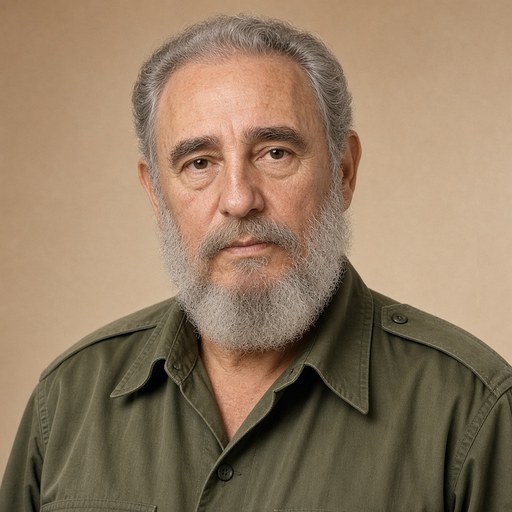
 Fidel Castro · President of Cuba
- Context
- Castro addressed guests at the inauguration of the Juan Manuel Márquez Pediatric Hospital in Marianao, Havana, on November 30, 1989, during an international congress.
- Main themes
- Pediatric hospital inauguration, Cuban healthcare system, value of currency and economic comparisons, construction costs, international solidarity, cyclone and weather disruption, child health, public infrastructure investment
- Duration
- ~50 min
- Words
- 5,969
- Sentences
- 213
- Readability
- 55
- Grade
- 12.3
- Syntax
- 3.43
- Vocabulary
- 1.89
Translated from Spanish
The broad sphere of national life a sentence belongs to. Every sentence has an Arena, so it is the denominator the other indices are read against.
Other213 sentences in 77 paragraphs
Dear friend, Mr. Grant;
Distinguished guests, builders, students;
Comrades:
As you can see, everything had to be changed for this event. It was supposed to be a well-organized event, with seating, with a podium, and with the minimum conditions to hold it, but it just so happened that there was a cyclone out there — not that it was out there, it formed a few days ago, and has been threatening us for a while, raining a lot, a storm — and yesterday they said it was coming to Havana; it wasn't a cyclone yet, the depression or I don't know what, now they say it's a cyclone. I was asked: "What do we do, do we suspend the event?" and I said: Well, if the cyclone suspends it, let it suspend it, but as long as it doesn't arrive here we cannot suspend the event, firstly, because the hospital had to be inaugurated and in the coming days there are other things to do.
It was decided to inaugurate the hospital on the occasion of the Congress; an inauguration can be postponed, but the Congress cannot, and you, the guests from other countries, have a limited time, unfortunately; many of you have to return. Only if we were in the middle of the cyclone, that no bus could move, nothing, and then we would leave it for when it passes. But in any case, we thought it was necessary to make the effort.
Of course, no one knew how the weather would be today. There were moments when it rained, at other moments it didn't, and they told us: "We have prepared a variant in case it is raining: move the event inside the building, organize it in a lobby, everyone standing and a podium. When I see the podium, I see that I don't see a podium. I say: How are you going to speak to an audience that you can't see? You can't see them very well now either, but at least we managed to arrange a little platform and fix this a bit, and that's why some conditions have been created, but minimal, for an event.
I think that if it hadn't been for these circumstances, I could speak to you at some length, if you had been comfortable, seated and in a position; you and us, it is not enough for the audience to be in a position, but also for the speaker, who does not feel in the embarrassing situation of having people almost without air, without oxygen, standing, crowded. That's why I don't dare to keep you here for too long. So I will only talk about some essential things about this work.
The head of the construction brigade spoke about the costs of the hospital, pointed out that it had cost almost 28 million pesos, both in construction assembly — I don't know if 19 million — as well as in other expenses, including equipment. But who knows today what a peso is, because there is the Mexican peso, the Bolivian peso, the Cuban peso, the Dominican peso, I don't know from how many countries, no one knows. If you say: this cost 28 million pesos, you don't know what a peso is. No one knows what a dollar is either, no one knows. I say: What is worth more, a dollar or one of our pesos? If you go to the international market, since that peso is not in demand, they will ask you for several pesos for a dollar. But if you go to New York with a dollar, you can't do anything; if you go to get on a bus, you spend the dollar.
I was explaining that to Mr. Grant there when we were talking about the value of the hospital, I told him: In Havana, at least, you can make 10 bus trips with one peso; in New York, one, which is worth more?
On the other hand, I told him, here for one peso you pay the rent for three square meters of housing, and in New York with one dollar you pay 0.20 square meters, fifteen times less. So, what is a dollar and what is a peso? It is very difficult to explain things based on that.
The dollar, more or less, everyone knows, because it is the misfortune of everyone, besides, because everyone owes dollars, everyone has to be changing in the black market here, there, in the bank, in the parallel, in the other, to buy dollars; so you have more or less an idea of what a dollar is, because even to come here you know how many dollars the ticket cost. Isn't that so? Well, an idea, but it is all very arbitrary, because, besides, we are all victims of theft and unequal exchange constantly.
Since you have, more or less, an idea of what a dollar is, I also explained to Mr. Grant and other comrades that if we were to consider the land, the almost three hectares that this building has, if it were in Tokyo it would cost 500 million dollars just for the land where this hospital is located. Mr. Grant tells me: "If it's in Manhattan, it costs more or less the same." That is, in any developed capitalist country, just the land where this hospital is located is worth hundreds of millions. That is an element to take into account. Here that does not appear in the account because, as I told you, the land was given to us by God, it cost nothing, it was there. Some streets had to be made or something like that, just to prepare it for construction. In our country, there is no speculation or business with land, therefore, it does not appear in the cost account of the hospital.
As for the construction, I imagine that in the United States building this hospital would cost no less than 100 million, although a comrade told me that an American architect came here and said: "This hospital in Boston would be worth 200 million." Did it count the land or not? (They tell him that without counting the land) Ah, without counting the land, you see how difficult it is to explain, but this gives you an idea of why this work, in our conditions, according to our system and our possibilities, in which the land is not accounted for, in which the workers make a great effort, try to seek the greatest yield possible, in which salaries are not very high, appears as a work that costs around 28 million.
This is what I want to say to explain to you, more or less, the value of the work itself.
This is the first hospital we have built, specifically designed as a pediatric hospital; because when they decided to establish specialized institutions — maternal hospitals, pediatric hospitals, clinical-surgical hospitals — the existing facilities at that time were divided. For example, a facility could be a general hospital, but it was dedicated to pediatrics; a series of adaptations were made, different services were built, intensive care, etc., but they were existing facilities that were converted into hospitals, because the first thing the Revolution did was to seek a rationalization of what existed. Many hospitals and other health centers were built, yes; maternal hospitals, general hospitals, hospitals of different types, polyclinics, dental clinics were built, but pediatric hospitals had not been expressly built, but rather health facilities or other existing facilities had been used.
This is the first one that was designed, specifically, based on all the experience that our doctors and our builders already have, for a pediatric hospital. We think it is a very complete facility and we think it is a functional facility. It has been sought that it has all the necessary quality, that it is comfortable.
Previously, our hospitals had a room with 20 beds, 30 beds. We have sought in all the hospitals we are building that there are no such rooms, that there are individual rooms or rooms for two or three people.
Here in this hospital we have a maximum of three patients per room, it is much more private. Each of the rooms has its sink, but it also has its bathroom, both for the patients who are admitted and for the family members who accompany them. I would say that this is already the type of hospital that comes quite close to the ideal hospital that should be had.
We are building two more hospitals of this type: one in the province of Ciego de Ávila, just like this one, because we already have the design — it can always be improved, based on the first one that is built experiences can be drawn — and another in Bayamo.
Three more will be built: one more immediately in the province of Sancti Spíritus, and, in the city of Havana itself, we plan to build two more, for a better distribution, because there are enough hospitals but they are not well distributed. This one is towards the west, we plan to build one in the future towards the south and another towards the east, because in these peripheral neighborhoods in the past there were practically no hospitals, there were not many facilities, they almost clustered in the areas where they had better living standards. That is why our opinion is that to complete the network, with a good distribution in the capital, two more hospitals like this one would be needed, and as soon as we can we will start building them.
We can build these hospitals quite quickly, in two years, or, at most, two and a half years. We have perfected, we have advanced quite a bit in the issue of constructions, and we can now make, in a relatively short time, a facility like this. This one was made with a special construction system, which was created for this type of multi-story constructions.
In all the provinces of the country there are pediatric hospitals, not all, unfortunately, with the same material base as this one; but all with very good doctors and all the necessary equipment.
In all our pediatric hospitals there is intensive care. That was something we discovered at one point, the importance of intensive care, and we discovered it during the dengue epidemic. The doctors themselves began to separate the most severe cases. At that time, in 1981, we only had one intensive care unit; today we have intensive care in all pediatric hospitals, which also have separate rooms for infectious cases. It has been of enormous utility.
If the dengue epidemic in 1981 killed about 100 children, and around 150 people, I think that for every one of the children who died in 1981 from that epidemic, these intensive care units have saved at least 100 children; because, really, they give medicine a chance, they give science a chance, because without those facilities, without the equipment and specialized personnel, you cannot save; a respiratory arrest, for example, there would be no way to resolve it.
Right now we saw a case of a girl who arrived very seriously at this hospital, with a generalized infection from pneumonia; well, they had her on artificial respiration for 11 days and she is now completely out of danger, but it was an extremely serious case.
Right now we passed through the intensive care unit and saw several very serious cases that have no salvation without that type of medical attention. Our network of pediatric hospitals is becoming quite complete.
Now, I believe it was the director of the hospital who spoke about the fact that the care for the child is a set of institutions that makes it possible. First, there has to be food for the child; if there is no adequate food for all children, there are not many possibilities for medicine. That is a social problem, first of all. Then there are the schools, starting with the children's circles.
In the last three years, really, between 1986, 1987, and 1988, we have built about 115 children's circles in the capital. There was a demand for 19,500 enrollment capacities and we have created a capacity for 25,000. To show you how things are, the demand has grown again due to more employment for women and because perhaps some who did not think there was a possibility to send their child to a circle now think so. The demand has grown again, but we created capacities for 25,000 children in the capital, in no more than two and a half years.
These are magnificent institutions, well-built, with very good attention for the children; they have two nurses in each circle, and now we are also placing a doctor in the circle, there is meticulous attention. For a total of 200 or 210 children, almost 50 people work in each of those institutions. There the children also receive not only meticulous attention and are taught many things, but they receive good food and meticulous hygienic attention. That helps the health and development of the child.
There are the schools, the semi-internships, all those factors influence.
Housing influences, we have not solved all the housing problems, but we work with great intensity and with the hope of solving, in a relatively short period of time, the fundamental housing needs of our country.
All of that supports the medical care system for the children of the country, that influences. The capacity of the medical personnel influences, of course, the capacity of the nurses and technicians; the equipment available influences; the attention to the mother influences. You have to see how much maternal mortality has been reduced. I don't know if it is below five now. What is it now? (They tell him it is at 2.6) It is at 2.6 maternal mortality.
Recently I was talking to a health minister from a Latin American country and he told me that they had about 50, like fifty!; it is a fairly poor country and has the extremely high figure, moreover, almost 170 infant mortality in the first year of life. These are two things that go hand in hand.
Here there is quite careful attention to the mother, and the so-called maternal homes have been created, where cases of certain risks are attended to in a special way. They come before childbirth and can stay for one or two months, depending. In almost all cities, and wherever there is a maternal hospital, there are also maternal homes, where mothers who need it come to reside, especially those who live farther away, those who live in the countryside. All these factors help a lot, because attention to the mother also influences the level of mortality, both of the mother and the child, of both, especially in cases of risk.
This has allowed us to progressively reduce infant mortality in the first year of life, which is one of the most well-known indices, although it should not be the only index. It is very important to see how many reach five years, and other factors: what health they have, what height they have, what growth, what physical development, what mental development. At some point, we will have to think about including those indices; but for now, we must use the most general, the most well-known.
If we include all those indices, it can undoubtedly be appreciated that there is much greater progress in everything related to the health of Cuban children.
Last year, in 1988, infant mortality was reduced from 12 to 11.9. This year, at this moment, it is around 11, it may remain at 11 or 10.9, at 11.1 or 11.2 at most. That will depend on the last month, because there are also months of the year when there are more incidents in survival. The final months of the year are better.
Then, we add the cases of the few non-institutional births, which always occur, and if there is a death, it is counted; but since those born in hospitals are normally counted, in the end, there is a small statistical correction in favor of the index. But let’s assume we remain at around 11. I think that at the latest in three years we will be below 10, and we have some provinces that are below 7, several municipalities in Ciudad de La Habana that are below 10.
The capital of the republic itself should remain at around 10 this year. That is less than a third of what Washington has — according to data I read recently. It seems that Washington will have 33, that was the projection per 1,000 live births. Despite the blockade and all the crimes of imperialism — let’s say it — our capital will have this year less than a third of the infant mortality of the capital of the United States.
Here are American friends. I am not saying anything against the American people, far from it, I am referring a fact; because you know the hostility of the United States government, to the extent that it prohibits the sale of medicines to Cuba, of medical equipment, not even an aspirin can be sold to Cuba! And then they talk about human rights, they indulge in talking about all those things, and they want others to die, for children to die, for the elderly to die, and for adults, men and women, to die, when they don’t kill them; because sometimes they kill them with bombs, as is happening in some places.
There are some municipalities in the interior with zero infant mortality, I will not say from La Habana. What is the lowest in La Habana, Lezcano? (Jorge Lezcano responds that there are several with 6, with 6.5, with 7)
That shows that it is possible, because one of the doubts we had was whether in a tropical and island country it could be achieved; because the tropics are hotter, more humid, and where there is more humidity, there is more heat, more bacteria, more fungi, more problems. In the islands, there tend to be more respiratory problems, especially asthma, it is traditional in the islands. I always wondered: Can it be done in our climate; will the genetic potential of our population also allow us to go below 10? Because there are nations with greater survival capacity, more resistance, or better climates; that geographical factor and even genetic factors can influence this type of index. But now, based on what we have seen in some provinces, we are confident that under the conditions of our tropics and our country, it is possible to go below 10. I think it will not take more than three years, because we are currently reducing almost one point per year.
It is easier to go from 70 to 40, to 35 or 30; but from 12 to 11, to 10, in a country where women give birth, because that is where the indices come from. There are countries where women do not give birth, they have many resources, many things; but in our Latin American countries, women give birth, and here too, although fortunately not as much!
But we are already convinced that it is possible to go below 10. When did we reach that conviction? Four new things, really, were what would determine going below 10. First, prenatal genetics and early detection of cases of malformations incompatible with life: it avoids tragedy; no one is forced, but the mother is given the option to terminate the pregnancy in those cases. Because much of what influences those indices are congenital malformations incompatible with life; as we detect those that are cardiac or of another type, and already with techniques and equipment developed in Cuba, reagents developed in Cuba, we are discovering that type of malformations early and they are being interrupted, that tends to decrease the mortality index.
Second: perinatal intensive care, which we are bringing to all maternities, and neonatology services. That factor is important because, although the index may be low, what happens in the first days after birth may still be relatively high, in that first phase. And we, with these perinatal intensive care services and neonatology, should reduce by two or three points, just for that concept, or possibly more, the index.
Third: pediatric cardiovascular surgery, a new institution that was inaugurated just three years ago, which has already operated on around 1,400 cases of small children, and they even operate on premature babies there. According to international statistics — we would have to see our specific ones — always out of every 1,000, around eight or nine have heart problems. A part of them, 80% of the half, dies if not treated in the first year. The possibility of saving a few hundred lives through that route also reduces the index, and those services are being extended throughout the country.
We have three hospitals for pediatric cardiovascular surgery, but one that treats cases from five years down. This hospital is having enormous success, it has more than 80 beds and will have 20 more, because an intensive therapy that is there will be built elsewhere in the hospital, because that service is annexed to a pediatric hospital, and we will have more than 100 beds for pediatric cardiovascular surgery, more or less the necessary ones to attend to all cases in the country, and some cases that come from abroad are also attended to.
I have mentioned three things, and the fourth is the family doctor; indisputable, because that guardian of health who is the family doctor, as Mr. Grant explained when he came in 1984, I believe we would only have a few dozen, we started with 10 doctors, studying the experience well. As we saw the possibilities and what that institution promised, we expanded it and now we have more than 8,000. In Ciudad de La Habana, around 75% of the population already has a family doctor.
Now we are bringing the doctor to the school, the doctor to the circle, the doctor to the factory; all of that will benefit the health of the population. But it is noticeable, because wherever the family doctors are, infant mortality is below 10, as a rule. Those polyclinics whose area is fully covered by the family doctor are below 10.
Those four factors were what led us to the conviction that we would reduce below 10 and that is how it is behaving in practice; lowering mortality already at those levels of 13, 12, and 11 requires, we could say, sophisticated medicine, and I would say it requires relatively expensive medicine; I say relatively expensive, because can we measure what is spent on health? How much is spent in other areas, how much money is wasted out there, how much is stolen, how much is smuggled? So the funds dedicated to health will never be too many.
But, of course, to achieve a very low index, these institutions I am talking about are required. Now, what hurts is to think that the one that exists today could be lowered a lot, because lowering infant mortality to 20 requires almost no special effort, no expense, even with difficult social conditions, at least to 20. Of course, the child will not grow up with the same prospects, will not have the same development of intelligence if he does not have good nutrition; but reducing infant mortality, I believe that in any of our countries, to 25 at least, and possibly to 20, is not difficult, does not require great expenses.
That is why it is very painful to think that there are countries in Latin America with 60, 70, 80, 100 and more than 100, simply because nothing is done. Mr. Grant brought the little packet of rehydration salts, sometimes they don’t even give them the little packet.
But there are also many preventive vaccines, many preventive methods that are economical, that are cheap, it is just a matter of spending a little money and organizing prevention programs; the little packets, some procedures to address the problems, and it could be reduced, I would say, in Latin America, to at least 25 infant mortality, on average. I believe it could be more, because some countries can reduce it more, but the least could reduce it to 25.
So it hurts a lot to think and one wonders what politicians do, what they are dedicated to, if they are not even capable of saving the lives of hundreds of thousands of children every year.
I heard, when Mr. Grant came in 1984, a very strong argument: if the levels of services to children that Cuba already had were reached, the lives of 700,000 children could be preserved every year in Latin America. Nothing has changed since he came in 1984, more or less that was the figure he raised, although they may have decreased it a bit with the rehydration packets; but what happens is that with the debt problems and the lack of concern for health, in many countries the health situation in general and the health of children has worsened. If we perhaps review the statistics well, it could be even more than 700,000.
What does this mean? That in 10 years, 7 million children will die, it is a war against children! That abandonment is equivalent to a war against children, because they are killing 700,000 children every year, they are killing them!
Let’s assume that we do not reach 11, 12 or 13, we were at 15 when he gave that data the other time and not much progress has been made in Latin America in this area, rather it has regressed, and we are now at 11, possibly. But let’s not think of 11, let’s think of 20. I believe that with 20 more than half a million children would be saved every year, or possibly more than half a million children, who are not saved know why, because the governments do not want to save them, they do not care and they are not concerned.
Really, I do not want to make a political speech here at this illustrious congress of doctors, but I have no choice but to say two or three things that are evident; they are evident truths, as that famous declaration following the independence of the United States said.
Of course, I have no intention of doing propaganda, far from it. Perhaps socialism needs some propaganda, they are saying so many bad things about it; the socialists themselves are saying so many things, that it seems that everything they have done was complete garbage. I do not believe it, nor do I understand well why they say it. I do not think that way, really, I am very far from thinking that way, but that does not mean that I think there is a need to do propaganda. This is not a matter of propaganda; to believe that problems are solved with words and propaganda is a huge folly. Problems are solved with facts, with actions, with performances, with solutions that are applied correctly within the reach of each country’s possibilities, and some have more and others have less. Well, who knows why in Washington they have their 33% infant mortality, I don’t know, such a "perfect" society, such a "wonderful" thing. I am not even talking about other problems like drugs, etc., etc.
I believe that facts are worth more than words; I say this because I know the spirit that has prevailed in these medical congresses, to work for the health of the population and for the health of children, because you do know what can be done in your countries, and what you are suffering all the time because it is not done. That is the pain that you carry inside and I perceive that in pediatricians. Everyone knows what could be done and everyone knows how things are, and everyone knows that they are not done.
As defenders of the lives of children, that is why I speak to you like this, because opinions must be formed and awareness must be created. In Cuba, it was not like this before, everything changed with the Revolution, as education and many other things changed, and many more that we hope to change. And it is not that we think we do not have errors, on the contrary; but we also think we can overcome errors and deficiencies, and we are in a struggle to do things better.
That is why I greatly appreciate the words of Mr. Grant when he said that some had already come from the World Health Organization and found what we were doing to be good. But he believes that we have continued to improve what we are doing, and of course, we must keep improving what we are doing; and we have not only worked for the health of children, we have worked for the health of the entire population and we are working intensively, not only with children under one year old, but with others as well.
We had a rising incidence of meningococcal meningitis type B, and fortunately, it is already being eradicated. And we have all the means to achieve this thanks to the efforts of our researchers, our scientists —I will not talk about that because the press published data on this recently—: a vaccine that is truly highly effective, the most effective among vaccines against bacterial diseases.
But we are working in many other fields, they are already working on other vaccines for certain types of meningitis, which are not C, W, or Y, but others that exist, because some emerge, some disappear, and others are emerging, and they are already working. Indeed, in that field of medicine and biotechnology, great efforts are being made and significant advances are being achieved that, in my opinion, will greatly help the health of our people.
We already have medications for burns based on epidermal growth factor that have a tremendous effect, except in extreme cases where the damage is total, where it is not just the skin that is lost, but muscles, everything; there are very difficult cases. But there are many cases of burns that are resolved almost in record time and healing is perfected with these medications, which can also be used against other types of diseases.
We are working in the fight against cancer, in diagnosis and also in cancer therapy. We are working in many fields of health and biotechnology, which are placing our country in a good position in the world, and that will put it in a position, let’s say, to do anything that any transnational does, because we know what they do and also what they charge for what they do. We are also very optimistic in that field; it will allow us to improve the health conditions of our people.
We are fighting against some diseases, such as retinitis pigmentosa —I believe it is called in both ways, as the doctors have explained to me—, in which vision is lost in fragments until one becomes blind. There is already a group of doctors —among them, especially one doctor— who has developed very effective techniques in the fight against that disease, and, of course, now more people are working and cooperating, because it is a degenerative disease, to see how the problem can be resolved.
Definitive assessments cannot yet be given because time is often needed to see how long the effect of a treatment lasts, for how long it resolves, etc.
In nervous diseases, in Parkinson's disease, in Huntington's chorea, and in other types of natural or accident-related diseases, in paraplegias, spinal cord injuries, they are working, they are doing transplants. We have a center that was mentioned here among a group of centers in this area, which is the Center for Neurotransplantation and Nervous Regeneration, which, in my opinion, has many prospects, great prospects!, and they have considerably improved cases of Parkinson's; they are also fighting against chorea and there are some improvements, but they still have a long way to go in that. In spinal cord injuries, paralysis, they are making great progress.
The other day, I was shown a nerve cell to which a product was applied, which was a nerve growth factor, and the nerve filaments began to grow; it was a nerve growth factor from mice, not from humans, and they are seriously working to try to obtain the nerve growth factor in humans. So, we must not lose hope; there are many prospects for resolving certain types of currently incurable, terrible diseases that, with persistent, patient work and the dedication of many of our scientists who are dedicated to working all the time, allow us to conceive promising future prospects.
This is no longer just to prevent the child from dying, but to ensure that the child lives 80, 85, 90 years, and lives well. You can talk to a few dozen or a few hundred thousand grandparents here, men and women who have created the circles of grandparents around the family doctor, about how they feel, how their use of medications has decreased, how they have improved. You can see the statistics of the results of that work.
Here, we must work with both the child and the elderly, because even when people are young, they believe they will be eternal, and they also gain weight, neglect exercise, all that kind of thing; but we also intend to educate or re-educate them. It will be educating them because many people were never sufficiently educated to follow the rules that must be followed for a healthy and pleasant life.
I believe that our people will become increasingly healthier, and we will see how those indices grow in the coming years. I do not believe we will take long to exceed 80 years of life expectancy with what we are doing, and with absolutely reliable, rigorously accurate statistics.
For us, the presence of all of you, the international congresses held here, your support, your collaboration, is a source of encouragement, because in these congresses our country learns a lot and receives a lot; because in science, in medicine, as in any science, true success lies not only in creating but in receiving, in adding what thousands of talents, tens of thousands of talents, hundreds of thousands create —because, fortunately, not all scientists are dedicated to the arms race; there are some who are dedicated to other activities, even to the fight for human health—, and I believe that every country should try to make its contribution and, at the same time, try to apply what other countries are applying.
When a congress of this nature is held, the experience of hundreds of people is gathered, and among them many experienced individuals in that field, which allows us to receive the experiences of others broadly and modestly contribute our own experiences.
I believe that the fundamental experience in this field of health, the decisive factor, is the will to do things, the will to do things! Yes, man has developed wonderful things to preserve life and improve life; but they are not applied. The important thing is the will to apply them, and I think that for that will you fight, and to create that will you will continue to fight until the day you achieve it. That is the main thing I want to tell you, and if you leave with that conviction, and I know you have it, then I believe you will forgive me for having extended myself a bit, despite the special conditions in which this meeting has taken place.
Thank you very much.
The original Spanish. The tags above are read on the English translation's sentences.
Estimado amigo, señor Grant;
Distinguidos invitados, constructores, estudiantes;
Compañeras y compañeros:
Como ustedes pueden apreciar, ha habido que cambiarlo todo en este acto. Se suponía un acto bien organizadito, con asientos, con una tribuna y con el mínimo de condiciones para celebrarlo, pero dio la casualidad de que andaba un ciclón por ahí —no es que andaba, se formó hace unos días, y anda amenazándonos hace rato, lloviendo mucho, un temporal—, y ayer decían que venía para La Habana; no era ciclón todavía, la hondonada o no sé qué cosa, ahora dicen que es ciclón. A mí me preguntaron: "¿Qué hacemos, suspendemos el acto?", y digo: Bueno, si el ciclón lo suspende, que lo suspenda, pero mientras no llegue aquí no podemos suspender el acto, en primer lugar, porque el hospital había que inaugurarlo y en los próximos días hay que hacer otras cosas.
Se decidió inaugurar el hospital con motivo del Congreso; una inauguración se puede posponer, pero el Congreso no, y ustedes, los invitados de otros países, tienen un tiempo limitado, desgraciadamente; muchos de ustedes tienen que regresar. Unicamente que estuviéramos en medio del ciclón, que no pudiera moverse un ómnibus, nada, y entonces lo dejamos para cuando pase. Pero de todas formas nos parecía que era necesario hacer el esfuerzo.
Desde luego, nadie sabía cómo estaría el tiempo hoy. Hubo momentos en que llovía, en otros momentos no, y nos dijeron: "Hemos preparado una variante por si está lloviendo: trasladar el acto para el interior del edificio, en un vestíbulo organizarlo, todo el mundo de pie y una tribuna. Cuando veo la tribuna, veo que no veo tribuna (RISAS). Digo: ¿Cómo se le va a hablar a un público que no se le ve? Tampoco se le ve muy bien ahora pero por lo menos logramos una banquetica y se arregló algo esto, y por eso se han creado algunas condiciones, pero mínimas, para un acto.
Pienso que de no haber sido por estas circunstancias, yo podría hablarles a ustedes con cierta extensión, si hubieran estado cómodos, sentados y en disposición; ustedes y nosotros, no basta con que esté en disposición el público, sino también el que habla, que no se sienta en la situación embarazosa de tener a la gente sin aire casi, sin oxígeno, de pie, amontonadas. Por eso no me atrevo a tenerlos mucho tiempo aquí (EXCLAMACIONES DE: "¡No importa, no importa!"). De modo que solo voy a hablar sobre algunas cosas esenciales de esta obra.
El jefe de la brigada constructora habló de los costos del hospital, señaló creo que había costado casi 28 millones de pesos, tanto en montaje de construcción —no sé si 19 millones— como en otros gastos, incluido el equipamiento. Pero quién sabe hoy lo que es un peso, porque hay peso mexicano, peso boliviano, peso cubano, peso dominicano, no sé de cuántos países, nadie sabe. Si usted dice: esto costó 28 millones de pesos, usted no sabe lo que es un peso. Tampoco nadie sabe lo que es un dólar, nadie lo sabe. Yo digo: ¿Qué vale más, un dólar o un peso de los nuestros? Si va al mercado internacional, como ese peso no está demandado, le van a pedir varios pesos por un dólar. Pero si va a Nueva York con un dólar, no hace nada; si va a montarse en un ómnibus, se gasta el dólar.
Le estaba explicando eso al señor Grant allí cuando hablábamos del valor del hospital, le decía: En La Habana, por lo menos, usted con un peso hace 10 viajes en ómnibus; en Nueva York, uno, ¿cuál vale más? (RISAS Y APLAUSOS)
Por otro lado, le decía, aquí por un peso paga el alquiler de tres metros cuadrados de vivienda, y en Nueva York con un dólar paga 0,20 de metros cuadrados, quince veces menos. Entonces, ¿qué es un dólar y qué es un peso? Es muy difícil poder explicarse las cosas a partir de eso.
El dólar, más o menos, lo conoce todo el mundo, porque es la desgracia de todo el mundo, además, porque todo el mundo debe dólares, todo el mundo tiene que estar cambiando en bolsa negra por aquí, por allá, en el banco, en el paralelo, en el otro, para comprar dólares; así que más o menos ustedes tienen idea de lo que es un dólar, porque hasta para venir aquí saben cuántos dólares costaba el pasaje. ¿No es así? Bueno, una idea, pero es muy arbitrario todo eso, porque, además, todos somos víctimas del robo y del intercambio desigual constantemente.
Como ustedes tienen, más o menos, una idea de lo que es un dólar, le explicaba también al señor Grant y a otros compañeros que si fuéramos a considerar el terreno, las casi tres hectáreas que tiene esta edificación, si fuera en Tokio costaba 500 millones de dólares solo el terreno donde está este hospital. Me dice el señor Grant: "Si es en Manhattan cuestan más o menos lo mismo." Es decir, en cualquier país capitalista desarrollado, solo el terreno donde está ubicado este hospital vale cientos de millones. Ese es un elemento a tener en cuenta. Aquí no aparece eso en la cuenta porque, como le decía yo, el terreno nos lo dio Dios (RISAS), no costó nada, estaba ahí. Hubo que hacerle algunas calles o algo de eso, prepararlo nada más para la construcción. En nuestro país no hay especulación ni negocio con el terreno, por lo tanto, no aparece en la cuenta del costo del hospital.
Lo que es la construcción, me imagino que en Estados Unidos construir este hospital costaría no menos de 100 millones, aunque me dijo un compañero que vino un arquitecto norteamericano aquí y dijo: "Este hospital en Boston valdría 200 millones." ¿Contaba la tierra o no? (Le dicen que sin contar la tierra) ¡Ah!, sin contar la tierra, ya ustedes ven lo difícil que es de explicar, pero esto les da una idea del porqué esta obra en nuestras condiciones, de acuerdo con nuestro sistema y nuestras posibilidades, en que no se contabiliza ahí el terreno, en que los obreros hacen un gran esfuerzo, tratan de buscar el mayor rendimiento posible, en que los salarios no son muy altos, aparece como una obra que cuesta cerca de 28 millones.
Esto es lo que quiero decir para explicarles, más o menos, el valor de la obra en sí.
Este es el primer hospital que construimos, específicamente diseñado como hospital pediátrico; porque cuando se decidieron a establecer las instituciones especializadas —hospitales maternos, hospitales pediátricos, hospitales clínico-quirúrgicos—, se dividieron las instalaciones existentes en ese momento. Por ejemplo, una instalación podía ser un hospital general, pero se dedicaba a pediatría; se le hacían una serie de adaptaciones, se le construían distintos servicios, terapia intensiva, etcétera, pero eran instalaciones existentes que se convertían en hospitales, porque lo primero que hizo la Revolución fue buscar una racionalización de lo que existía. Construyó muchos hospitales y otros centros de salud, sí; se construyeron hospitales maternos, hospitales generales, hospitales de distintos tipos, policlínicos, clínicas estomatológicas, pero no se habían construido expresamente hospitales pediátricos, sino que se habían utilizado instalaciones de salud, u otras instalaciones existentes.
Este es el primero que fue diseñado, específicamente, a partir de toda la experiencia que ya tienen nuestros médicos y nuestros constructores, para hospital pediátrico. Nos parece una instalación muy completa y nos parece una instalación funcional. Se ha procurado que tenga toda la calidad necesaria, que sea cómoda.
Antes nuestros hospitales tenían una sala con 20 camas, 30 camas. Nosotros hemos procurado en todos los hospitales que vamos construyendo que no hayan esas salas, que haya cuartos individuales o cuartos para dos o tres personas.
Aquí en este hospital tenemos el máximo de tres pacientes por habitación, es mucho más privado. Cada uno de los cuartos tiene su lavamanos, pero tiene, además, su baño, tanto para los pacientes que están ingresados como para los familiares que lo acompañan. Yo diría que ya este es el tipo de hospital que se acerca bastante al hospital ideal que se debe tener.
De este tipo de hospital estamos haciendo otros dos más: uno en la provincia de Ciego de Avila, igualito que este, porque ya tenemos el diseño —siempre se puede ir perfeccionando, a partir del primero que se construye se pueden sacar experiencias— y otro en Bayamo.
Se van a construir tres más: uno de manera más inmediata en la provincia de Sancti Spíritus, y, en la propia Ciudad de La Habana, pensamos construir dos más, para una mejor distribución, porque hay suficientes hospitales pero no están bien distribuidos. Este está hacia el oeste, pensamos hacer en el futuro uno hacia el sur y otro hacia el este, porque en estos barrios periféricos en el pasado no había prácticamente hospitales, no había muchas instalaciones, casi se aglomeraban en las áreas donde tenían mejores niveles de vida. Por eso nuestra opinión es que para completar la red, con una buena distribución en la capital, harían falta dos hospitales más como este, y tan pronto podamos los vamos a empezar a hacer.
Estos hospitales los podemos construir con bastante rapidez, en dos años, o, como máximo, dos años y medio. Hemos perfeccionado, hemos avanzado bastante en la cuestión de las construcciones, y ya podemos hacer, en bastante breve tiempo, una instalación como esta. Este se hizo con un sistema constructivo especial, que se creó para este tipo de construcciones de muchos pisos.
En todas las provincias del país existen hospitales pediátricos, no todos, desgraciadamente, con la misma base material que este; pero todos con muy buenos médicos y todo el equipamiento necesario.
En todos nuestros hospitales pediátricos está la terapia intensiva. Eso fue algo que descubrimos en un momento dado, la importancia de la terapia intensiva, y la descubrimos cuando la epidemia del dengue. Los propios médicos empezaron a separar los casos más graves. En ese momento, en el año 1981, solo teníamos una terapia intensiva; hoy tenemos terapia intensiva en todos los hospitales pediátricos, que cuentan, además, con habitaciones aparte para los casos infecciosos. Ha sido de una enorme utilidad.
Si la epidemia del dengue en 1981 mató 100 niños, aproximadamente, y alrededor de 150 personas, pienso que por cada uno de los niños que murieron en 1981 por esa epidemia, estas salas de terapia intensiva han salvado, por lo menos, 100 niños; porque, realmente, le dan oportunidad a la medicina, le dan oportunidad a la ciencia, porque sin esas instalaciones, sin el equipamiento y el personal especializado, no se salva; un paro respiratorio, por ejemplo, no habría forma de resolverlo.
Ahora mismo nosotros vimos un caso de una niña que llegó muy grave a este hospital, con una infección generalizada por una neumonía; bueno, la tuvieron con respiración artificial 11 días y la tienen ya totalmente fuera de peligro, pero era un caso sumamente grave.
Ahora mismo pasamos por la terapia intensiva y vimos varios casos muy graves que no tienen salvación sin ese tipo de atención médica. Va quedando bastante completa nuestra red de hospitales pediátricos.
Ahora bien, creo que fue el director del hospital el que habló de que la atención al niño es un conjunto de instituciones la que lo hace posible. La primera, tiene que haber alimentación para el niño; si no hay una alimentación adecuada para todos los niños, no hay muchas posibilidades para la medicina. Ese es un problema social, en primer lugar. Después están las escuelas, empezando por los círculos infantiles.
Nosotros en los últimos tres años, realmente, entre 1986, 1987 y 1988, hemos hecho en la capital como 115 círculos infantiles. Había una demanda de 19 500 capacidades de matrícula y hemos creado una capacidad de 25 000. Para que ustedes vean cómo son las cosas, ya ha crecido otra vez la demanda por más empleo de mujeres y porque tal vez algunas que no pensaban que había posibilidad de enviar al niño a un círculo, ahora lo piensan. Ha vuelto a crecer la demanda, pero creamos capacidades para 25 000 niños en la capital, en no más de dos años y medio.
Esas son instituciones magníficas, bien construidas, muy buena atención que tienen los niños; tienen dos enfermeras en cada círculo, y ahora estamos situando el médico también en el círculo, hay una atención esmerada. Para un total de 200 ó 210 niños, trabajan casi 50 personas en cada una de esas instituciones. Allí los muchachos también reciben no solo una atención esmerada y se les enseñan muchas cosas, sino reciben una buena alimentación y una atención higiénica esmerada. Eso ayuda a la salud y el desarrollo del niño.
Están las escuelas, los seminternados, todos esos factores influyen.
Influye la vivienda, no tenemos resueltos todos los problemas de vivienda, pero trabajamos con mucha intensidad y con la esperanza de resolver, en un período relativamente breve de tiempo, las necesidades fundamentales de vivienda de nuestro país.
Todo eso apoya el sistema de atención médica para los niños del país, eso influye. Influye también la capacidad del personal médico, por supuesto, la capacidad de los enfermeros y técnicos; influye el equipamiento de que se disponga; influye la atención a la madre. Hay que ver cuánto se ha reducido la mortalidad materna. No sé si está a menos de cinco ahora. ¿A cómo está ahora? (Le dicen que a 2,6) A 2,6 está la mortalidad materna.
Recientemente estuve hablando con un ministro de salud de un país latinoamericano y me dijo que tenían como 50, ¡cómo cincuenta!; es un país bastante pobre y tiene la cifra altísima, además, casi 170 la mortalidad infantil en el primer año de vida. Son dos cosas que corren parejas.
Aquí hay una atención bastante esmerada con la madre, y se han creado los llamados hogares maternos, donde los casos de ciertos riesgos son atendidos de manera especial. Vienen antes del parto y pueden estar uno o dos meses, según. En casi todas las ciudades, y dondequiera que hay un hospital materno, están también los hogares maternos, donde vienen a residir las madres que lo necesitan, en especial las que viven más lejos, las que viven en el campo. Todos esos factores ayudan mucho, porque la atención a la madre influye también en el nivel de mortalidad, tanto de la madre como del niño, de los dos, sobre todo en los casos de riesgo.
Esto nos ha permitido ir reduciendo progresivamente la mortalidad infantil en el primer año de vida, que es uno de los índices más conocidos, aunque no debe ser el único índice. Muy importante es ver cuántos llegan a cinco años, y otros factores: qué salud tienen, qué talla tienen, qué crecimiento, qué desarrollo físico, qué desarrollo mental. En cierto momento habrá que ir pensando en incluir esos índices; pero ahora hay que usar los más generales, los más conocidos.
Si nosotros incluimos todos esos índices, sin duda que se puede apreciar un avance mucho mayor en todo lo que se refiere a la salud de los niños cubanos.
Ya el año pasado, en 1988, se bajó de 12 la mortalidad infantil, 11,9. Este año, en este momento, está alrededor de 11, puede quedar en 11 ó 10,9, en 11,1 u 11,2 como máximo. Eso va a depender del último mes, porque también hay meses del año en que hay más incidencias en la supervivencia. Los meses finales de año son mejores.
Luego, se añaden los casos de los poquitos partos no institucionales, que siempre se producen algunos, y si hay fallecimiento se cuenta; pero como se cuentan normalmente los que nacieron en los hospitales, al final hay una pequeña corrección estadística en favor del índice. Pero vamos a suponer que quedemos en alrededor de 11. Pienso que a más tardar en tres años ya bajamos de 10, y tenemos algunas provincias que están por debajo de 7, varios municipios de Ciudad de La Habana que están por debajo de 10.
La propia capital de la república debe quedar en alrededor de 10 este año. Eso es menos de la tercera parte de la que tiene Washington —según datos que leí recientemente. Parece que Washington va a tener 33, esa era la proyección por cada 1 000 nacidos vivos. A pesar del bloqueo y de todos los crímenes del imperialismo —vamos a decirlo—, nuestra capital va a tener este año menos de la tercera parte de la mortalidad infantil que la capital de Estados Unidos.
Aquí hay amigos norteamericanos. No estoy diciendo nada contra el pueblo norteamericano, ni mucho menos, estoy refiriendo un dato; porque ustedes conocen la hostilidad del gobierno de Estados Unidos, al extremo de que prohíbe venta de medicinas a Cuba, de equipos médicos, ¡ni una aspirina se le puede vender a Cuba! Y luego hablan de derechos humanos, se dan el lujo ese de hablar de todas esas cosas, y quieren que los demás se mueran, que se mueran los niños, se mueran los viejos y se mueran los adultos, hombres y mujeres, cuando no los matan; porque a veces los matan con bombas, como está ocurriendo en algunos lugares.
Hay algunos municipios del interior en cero de mortalidad infantil, no voy a decir de La Habana. ¿Cuál es el más bajo de La Habana, Lezcano? (Jorge Lezcano responde que hay varios con 6, con 6,5, con 7)
Eso demuestra que se puede, porque una de las dudas que teníamos nosotros era si en un país tropical e isleño se podía llegar a eso; porque el trópico es más caluroso, más húmedo, y donde hay más humedad, hay más calor, hay más bacterias, más hongos, más problemas. En las islas suele haber más problemas respiratorios, sobre todo de asma, es tradicional en las islas. Siempre me preguntaba: ¿Se podrá en nuestro clima; el potencial genético de nuestra población dará, además, para bajar de 10? Porque hay naciones con más capacidad de supervivencia, más resistencia, o mejores climas; ese factor geográfico y hasta los factores genéticos, pueden influir en este tipo de índice. Pero ya, a partir de lo que hemos visto en algunas provincias, tenemos la seguridad de que en las condiciones de nuestro trópico y de nuestro país se puede bajar de 10. Pienso que no lleve más de tres años, porque estamos bajando ahora casi un punto por año.
Es más fácil bajar de 70 a 40, a 35 ó 30; pero ya de 12 a 11, a 10, en un país donde las mujeres paren, además, porque por ahí andan los índices. Hay países donde las mujeres no paren, tienen muchos recursos, muchas cosas; pero en nuestros países latinoamericanos paren, y aquí también, ¡aunque por suerte no tanto! (RISAS)
Pero ya tenemos la convicción de que se puede bajar de 10. ¿Cuándo llegamos a esa convicción? Cuatro cosas nuevas, realmente, eran las que iban a determinar bajar de 10. Primero, la genética prenatal y la detección precoz de los casos de malformaciones incompatibles con la vida: se evita la tragedia; no se obliga a nadie, pero se le da la opción a la madre de interrumpir el embarazo en esos casos. Porque mucho de lo que influye en esos índices son malformaciones congénitas incompatibles con la vida; en la medida que detectemos aquellas que son cardíacas o son de otro tipo, y ya con técnicas y equipos desarrollados en Cuba, reactivos desarrollados en Cuba, vamos descubriendo precozmente ese tipo de malformaciones y se van interrumpiendo, ya eso tiende a disminuir el índice de mortalidad.
Segundo: los cuidados intensivos perinatales, que los estamos llevando a todas las maternidades, y los servicios de neonatología. Ese factor es importante porque, aunque puede ser bajo el índice, puede ser todavía relativamente alto lo que ocurre en los primeros días del nacimiento, en esa primera fase. Y nosotros, con estos servicios de cuidados intensivos perinatales y de neonatología, debemos reducir en dos o tres puntos, por ese solo concepto, o posiblemente más, el índice.
Tercero: la cirugía cardiovascular infantil, institución nueva que se inauguró hace apenas tres años, que ha operado ya alrededor de 1 400 casos de niños pequeños, y allí los operan hasta prematuros. Según las estadísticas internacionales —habría que ver las específicas nuestras—, siempre de cada 1 000, alrededor de ocho o nueve tienen problemas cardíacos. Una parte de ellos, el 80% de la mitad, muere si no se le atiende en el primer año. También la posibilidad de salvar unos cientos de vidas por esa vía reduce el índice, y esos servicios se van extendiendo a todo el país.
Tenemos tres hospitales de cirugía cardiovascular infantil, pero uno que es el que trata los casos de cinco años hacia abajo. Este hospital está teniendo un enorme éxito, tiene más de 80 camas y va a tener 20 más, porque una terapia intensiva que está allí se va a construir en otro lado del hospital, porque ese servicio está anexo a un hospital pediátrico, y vamos a tener más de 100 camas de cirugía cardiovascular infantil, más o menos las necesarias para atender todos los casos del país, y también se atienden algunos casos que vienen del exterior.
He mencionado tres cosas, y la cuarta es el médico de la familia; indiscutible, porque ese guardián de la salud que es el médico de la familia, que como explicó el señor Grant cuando él vino en 1984 creo que tendríamos solo algunas decenas, empezamos con 10 médicos, estudiando bien la experiencia. A medida que veíamos las posibilidades y lo que prometía esa institución, fuimos ampliándola y ya tenemos más de 8 000. En la Ciudad de La Habana, alrededor del 75% de la población tiene ya el médico de la familia.
Ahora estamos llevando el médico a la escuela, el médico al círculo, el médico a la fábrica; todo eso redundará en la salud de la población. Pero se nota, porque dondequiera que están los médicos de la familia la mortalidad infantil está por debajo de 10, como regla. Aquellos policlínicos cuya área está cubierta totalmente con el médico de la familia, están por debajo de 10.
Esos cuatro factores fueron los que nos llevaron a la convicción de que reduciríamos por debajo de 10 y así se está comportando en la práctica; bajar la mortalidad ya en esos niveles de 13, 12 y 11 requiere, pudiéramos decir, una medicina sofisticada, y yo diría que requiere una medicina relativamente cara; digo relativamente cara, porque, ¿se puede estar midiendo lo que se gasta en la salud? Cuánto se gasta en otras esferas, cuánto dinero se malgasta por ahí, cuánto se roba, cuánto se fuga. De modo que los fondos que se dediquen a la salud nunca serán muchos.
Pero, claro, para lograr un índice muy bajo ya se requiere de estas instituciones de que estoy hablando. Ahora, lo que duele es pensar que pudiera rebajarse mucho la que hoy existe, porque bajar la mortalidad infantil hasta 20 no requiere casi ningún esfuerzo especial, ningún gasto, aun con condiciones sociales difíciles, hasta 20 por lo menos. Claro, no crecerá el muchacho con las mismas perspectivas, no tendrá el mismo desarrollo de la inteligencia si no tiene una buena alimentación; pero reducir la mortalidad infantil, creo que en cualquiera de nuestros países, a 25, por lo menos, y posiblemente a 20, no es difícil, no requiere grandes gastos.
Por eso es muy doloroso pensar que hay países en América Latina con 60, 70, 80, 100 y más de 100, sencillamente porque no se hace nada. El señor Grant trajo el sobrecito de sales de hidratación, a veces no les dan ni el sobrecito.
Pero hay muchas vacunas también preventivas, muchos métodos preventivos que son económicos, que son baratos, no es más que cuestión de gastar un poco de dinero y organizar los programas de prevención; los sobrecitos, algunos procedimientos para enfrentar los problemas, y se pudiera reducir, yo diría, en América Latina, por lo menos a 25 la mortalidad infantil, como promedio. Creo que a más, porque algunos países la pueden reducir a más, pero el que menos podría reducirla a 25.
Entonces duele mucho pensar y uno se pregunta qué hacen los políticos, a qué se dedican, si ni siquiera son capaces de salvar la vida de cientos de miles de niños cada año.
Yo escuché, cuando vino el señor Grant en 1984, un argumento muy fuerte: si se alcanzan los niveles de servicios a los niños al que ya disponía Cuba, se podría preservar la vida de 700 000 niños todos los años en América Latina. No ha cambiado la cosa desde que él vino en 1984, más o menos esa fue la cifra que él planteó, aunque pueden haberla ¡disminuido algo con los sobres de hidratación; pero qué pasa, que con los problemas de la deuda y la despreocupación por la salud, en muchos países se ha agravado la situación de la salud en general y de la salud de los niños. Si a lo mejor revisamos bien las estadísticas, pueden ser hasta más de 700 000.
¿Qué significa esto? Que en 10 años van a morir 7 millones de niños, ¡es una guerra contra los niños!; ese abandono equivale a una guerra contra los niños, porque están matando 700 000 niños todos los años, ¡los están matando!
Vamos a suponer que no se llegue a 11, a 12 ó 13, nosotros estábamos en 15 cuando él dio ese dato la otra vez y no se ha avanzado mucho en América Latina en este terreno, más bien se ha retrocedido, y nosotros estamos ahora en 11, posiblemente. Pero no pensemos en 11, pensemos en 20. Yo creo que con 20 se salvaría más de medio millón de niños todos los años, o posiblemente más de medio millón de niños, que no se salvan saben por qué, porque a los gobiernos no les da la gana de salvarlos, no les importa y no les preocupa.
Realmente, yo no quiero hacer un discurso político aquí en este ilustre congreso de médicos, pero no me queda más remedio que decir dos o tres cosas que son evidentes; son verdades evidentes, como decía aquella famosa declaración a raíz de la independencia de Estados Unidos (APLAUSOS).
Claro, yo no tengo ningún propósito de hacer propaganda ni mucho menos. A lo mejor el socialismo necesita alguna propaganda, están diciendo tantas cosas malas de él; los mismos socialistas están diciendo tantas cosas, que pareciera que todo lo que han hecho fue una basura completa. No lo creo, ni tampoco entiendo bien por qué lo dicen. Yo no pienso así, realmente, estoy muy lejos de pensar así, pero no por ello creo que haya necesidad de hacer propaganda. Esto no es cuestión de propaganda; creer que los problemas se resuelven con palabras y con propaganda es una enorme tontería. Los problemas se resuelven con hechos, con acciones, con actuaciones, con soluciones que se apliquen de manera correcta al alcance de las posibilidades de cada país, y unos tienen más y otros tienen menos. Bueno, vaya usted a saber por qué en Washington tienen su 33% de mortalidad infantil, no sé, tan "perfecta" sociedad, una cosa tan "maravillosa". No hablo ya de otros problemas como drogas, etcétera, etcétera.
Creo que los hechos valen más que las palabras; lo digo porque yo sé el espíritu que ha prevalecido en estos congresos médicos, de trabajar por la salud de la población y por la salud de los niños, porque ustedes sí saben lo que puede hacerse en sus países, y lo que están sufriendo todo el tiempo porque no se hace. Ese es el dolor que ustedes llevan dentro y yo me percato de eso en los pediatras. Todos saben lo que podría hacerse y todos saben cómo son las cosas, y todos saben que no se hacen.
Como defensores que ustedes son de la vida de los niños, por eso les hablo así, porque habrá que formar opiniones y habrá que crear conciencia. En Cuba no era así antes, cambió todo con la Revolución, como cambió la educación y otras muchas cosas, y muchas más que pensamos cambiar. Y no es que pensemos que no tengamos errores, por el contrario; pero pensamos también vencer los errores y las deficiencias, y estamos en una lucha por hacer mejor las cosas.
Por eso me agradan mucho las palabras del señor Grant, cuando él dijo que ya algunos habían venido de la Organización Mundial de la Salud y les pareció bien lo que estábamos haciendo. Pero a él le parece que hemos seguido mejorando lo que estamos haciendo, y claro que tenemos que seguir mejorando lo que estamos haciendo; y no hemos trabajado solo por la salud de los niños, hemos trabajado por la salud de toda la población y estamos trabajando intensamente, y no solo con los niños menores de un año, sino con los demás.
Nosotros teníamos un índice creciente de la meningitis meningocócica del tipo B, y afortunadamente ya va erradicándose. Y tenemos todos los medios para alcanzarlo gracias al esfuerzo de nuestros investigadores, de nuestros científicos —no les voy a hablar de eso porque en estos días la prensa publicó datos sobre esto—: una vacuna realmente de alta eficiencia, de la de más alta eficiencia entre las vacunas contra enfermedades bacterianas.
Pero estamos trabajando en otros muchos campos, ya están trabajando en otras vacunas para determinados tipos de meningitis, que no es la C, ni la W, ni la Y, sino otras que hay, porque surgen, desaparecen unas, surgen otras, y ya están trabajando. Realmente, en ese campo de la medicina y de la biotecnología, se están haciendo grandes esfuerzos y se están obteniendo grandes avances que, a mi juicio, van a ayudar mucho a la salud de nuestro pueblo.
Tenemos ya medicamentos contra las quemaduras a partir del factor de crecimiento epidérmico que son de un efecto tremendo, excepto casos extremos ya en que el destrozo es total, en que no es la piel lo que se pierde, sino músculos, todo; hay casos muy difíciles. Pero hay muchos casos de quemaduras en que se resuelve casi en tiempo récord y se perfecciona la cicatrización con estos medicamentos, que pueden servir también contra otro tipo de enfermedades.
Estamos trabajando en la lucha contra el cáncer, en diagnóstico y también en terapéutica del cáncer. Estamos trabajando en muchos campos de la esfera de la salud y de la biotecnología, que van colocando a nuestro país en un buen lugar en el mundo, y que lo pondrán en condiciones, digamos, de hacer cualquier cosa que haga cualquier transnacional, porque sabemos lo que hacen y también lo que cobran por lo que hacen. Nosotros estamos muy optimistas también en ese campo, nos permitirá ir mejorando las condiciones de salud de nuestro pueblo.
Estamos luchando con algunas enfermedades, como la retinosis pigmentaria, o retinitis pigmentosa —creo que se llama de las dos maneras, según me han explicado los médicos—, en la que va perdiéndose la vista por fragmentos hasta que se quedan ciegos. Ya hay un grupo de médicos —entre ellos, especialmente, un médico— que ha desarrollado técnicas muy eficientes en la lucha contra esa enfermedad, y, claro, ahora hay más gente trabajando y cooperando, porque esa es una enfermedad degenerativa, para ver cómo se puede resolver el problema.
No se pueden dar todavía valoraciones definitivas porque el tiempo hace falta, muchas veces, para ver cuánto dura el efecto de un tratamiento, por qué tiempo resuelve, etcétera.
En las enfermedades nerviosas, en el mal de Parkinson, en la corea de Huntington y en otros tipos de enfermedades naturales o por accidentes, en las paraplejías, lesiones de médula, están trabajando, están haciendo trasplantes. Tenemos un centro que fue mencionado aquí entre un grupo de centros que hay por esta área, que es el Centro de Neurotrasplante y Regeneración Nerviosa que, a mi juicio, tiene muchas perspectivas, ¡grandes perspectivas!, y han mejorado considerablemente casos de Parkinson; están con la corea también luchando y hay algunas mejoras, todavía tienen un trecho por andar en eso. En las lesiones de médula, las parálisis, están avanzado mucho.
El otro día me mostraron una célula nerviosa que le aplicaron un producto, que fue un factor de crecimiento nervioso, y empezaron a salir los filamentos de nervio; era factor de crecimiento nervioso de ratones, no de humanos, y están trabajando seriamente en tratar de obtener el factor de crecimiento nervioso en humanos. De modo que no hay que perder la esperanza, hay muchas perspectivas de resolver determinados tipos de enfermedades hasta ahora incurables, terribles que, con un trabajo perseverante, paciente y con la consagración, como hay muchos científicos nuestros consagrados a trabajar todo el tiempo, permiten concebir perspectivas futuras prometedoras.
Esto es ya no para que no se muera la criatura, sino para que la criatura viva 80, 85, 90 años, y viva bien. Ustedes pueden hablar con algunas cuantas decenas o algunos cientos de miles de abuelos aquí, hombres y mujeres que han creado los círculos de abuelos alrededor del médico de la familia, cómo se sienten, cómo han disminuido el uso de medicamentos, cómo han mejorado. Se pueden ver las estadísticas de los resultados de ese trabajo.
Aquí hay que trabajar con el niño y con el viejo, porque todavía cuando la gente es joven, cree que va a ser eterno y lo mismo engordan, descuidan los ejercicios, todo ese tipo de cosas; pero a esos también pensamos educarlos o reeducarlos. Será educarlos porque nunca estuvieron suficientemente educada mucha gente, como para seguir las reglas que hay que seguir para una vida sana y agradable.
Creo que nuestro pueblo va a ser cada vez más saludable y veremos cómo crecen esos índices en los años futuros. No creo que tardemos mucho en sobrepasar los 80 años de perspectiva de vida con lo que estamos haciendo, y con estadísticas absolutamente confiables, rigurosamente ciertas.
Para nosotros es un motivo de estímulo la presencia de ustedes, los congresos internacionales que aquí se celebran, el apoyo de ustedes, la colaboración de ustedes, porque en estos congresos nuestro país aprende mucho y recibe mucho; porque en la ciencia, en la medicina, como en cualquier ciencia, el verdadero éxito está no solo en crear, sino en recibir, en sumar lo que miles de talentos, decenas de miles de talentos, cientos de miles crean —porque, afortunadamente, todos los científicos no están dedicados a la carrera armamentista, hay algunos que están dedicados a otras actividades, incluso a la lucha por la salud humana—, y creo que todo país debe tratar de hacer su aporte y, a la vez, tratar de aplicar lo que los demás países van aplicando.
Cuando se da un congreso de esta naturaleza, se reúne la experiencia de cientos de personas, y entre ellas muchas personas experimentadas en esa rama, lo que nos permite a nosotros recibir con amplitud las experiencias de los demás y aportar, modestamente, nuestras propias experiencias.
Creo que la experiencia fundamental en este terreno de la salud, lo decisivo, es la voluntad de hacer las cosas, ¡la voluntad de hacer las cosas! Sí, el hombre ha desarrollado cosas maravillosas para preservar la vida y mejorar la vida; pero no se aplican. Lo importante es la voluntad de aplicarlas, y pienso que por esa voluntad ustedes luchan y para crear esa voluntad ustedes van a seguir luchando hasta el día que la alcancen. Es lo principal que quiero decirles, y si ustedes salen con esa convicción, y sé que la tienen, entonces creo que me perdonarán el haberme extendido un poco, a pesar de las condiciones especiales en que ha tenido lugar esta reunión.
Muchas gracias (APLAUSOS).