




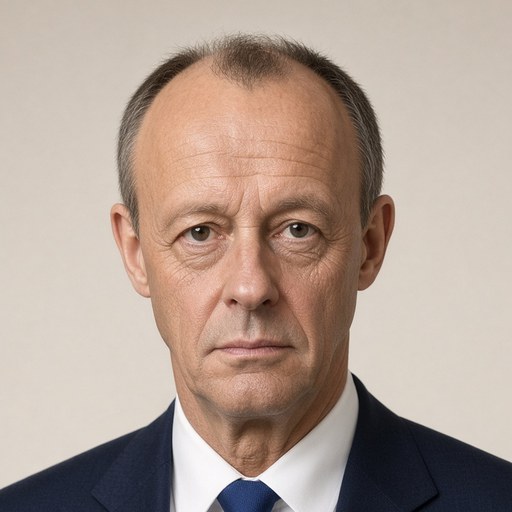
Chancellor's speech at the annual opening of the Frankfurt Stock Exchange "Acting united and resolutely as Europeans"
 Friedrich Merz · Chancellor of Germany
- Context
- Merz addressed the annual opening reception of Deutsche Börse Group at the Frankfurt Stock Exchange in Eschborn on 2 February 2026, speaking on Europe's geopolitical and economic challenges.
- Main themes
- European unity and resolve, geopolitical turning point, free trade and EU-MERCOSUR agreement, German and European economic opportunities, capital markets and financial sector, multilateralism, great power competition, German economic leadership, watershed moment in world order
- Duration
- ~32 min
- Words
- 3,855
- Sentences
- 188
- Readability
- 42
- Grade
- 12.6
- Syntax
- 3.01
- Vocabulary
- 2.07
Translated from German
The broad sphere of national life a sentence belongs to. Every sentence has an Arena, so it is the denominator the other indices are read against.
Other188 sentences in 99 paragraphs
Dear Ms. Streit,
Dear Stephan Leithner,
Mr. Prime Minister,
Mr. Lord Mayor,
Dear colleagues from the German Bundestag, the European Parliament, and the Hessian State Parliament,
My esteemed ladies and gentlemen,
Thank you very much, dear Ms. Streit, for the very warm welcome here today at your annual reception in Eschborn. I am truly glad to be here in this house once again. It is indeed a bit like returning to a place where I spent ten years coming and going, with fond memories of what we accomplished together during that time, and with a constant observation of what you continue to advance for the capital market in Germany.
Ladies and gentlemen, cyclical events like this one, like the annual opening of Deutsche Börse Group, have, among many other advantages, one significant benefit: they develop over time something like a historical memory.
The opening speeches of past years, when laid out one after the other, create a wonderful chronicle of the geopolitical, geo-economic, and macroeconomic developments in the world. I dare to suggest that these speeches often expressed significant forecasts about what the year ahead might look like.
The financial industry – as I mentioned a few weeks ago in Frankfurt at Euro Finance Week – is like the nervous system of an economy. This also means that you, ladies and gentlemen, here in Frankfurt and at the financial center of Frankfurt, are sitting at the synapses and have a particularly fine sensorium for the influence that geopolitical developments and events could have on our country.
In this context, you probably expect from me a certain assessment of the situation, on the basis of which we, the federal government, and you, the capital market participants, make decisions: political decisions, economic decisions, financial policy decisions.
However, we are currently experiencing perhaps the greatest phase of political uncertainties and insecurities, certainly a profound turning point. I repeat a word that I have used on various occasions: it is a watershed moment.
Every generation experiences such a watershed moment, every generation. Those who are now in their eighth or even ninth decade of life have not had to experience it so far, at least in the western part of the Republic in which we live.
Ladies and gentlemen, now it is here, and it will have far-reaching impacts and consequences for all of us; what those will be, we do not yet know today. But we are experiencing, for example, a world in which great powers are re-emerging, which do not primarily want to adhere to rules, but rather exercise power politics, at times contemptuous of rules, engaging in geopolitics and thereby exerting significant influence on the world economy.
At the same time, we are increasingly seeing – at least I am – where in such a changing world the opportunities for us lie, especially for a country like Germany and also for the European Union, but also where the weaknesses of our economy and this European Union are.
I would like to speak to you this evening, ladies and gentlemen, about the opportunities. The last days and weeks have also made this clear to us: If we as Europeans act united and resolutely, we can make an impact in the world. We can achieve more than we sometimes believe we can.
In any case, we made this very clear during the week of Davos and at the conclusion of that week with a special summit of the heads of state and government of the European Union in Brussels. The actors in the world know that they can expect reactions from Europe if they do not adhere to agreements. This was, for me, the greatest gain of the week before last.
All around us, ladies and gentlemen, there are emerging, predominantly democratic states, also with expanding markets, that are explicitly seeking what we Europeans have to offer them, namely partnerships based on mutual consideration, mutual respect, and under the condition of rules and reliability.
Thus, a path is emerging before us for a – yes, I say it – sovereign, free, peaceful, and economically prosperous Europe in a new world order. We, the Germans, can become part of, and if we do it right, perhaps even the center of a dynamic, agile network of sovereign states that continue to rely on multilateralism and free trade for the benefit of all.
We are already taking the first steps on this path. You know – you have been following it – that after long negotiations, the agreement of the European Union with the MERCOSUR countries has finally been signed. As of today, attempts to delay it at the last minute, namely in the European Parliament, have been unsuccessful. There will be a provisional entry into force of this trade agreement at the moment when the first South American state ratifies it.
Europe is finally showing, after infinitely long years of negotiations, determination and decisiveness to continue advancing on the path of free trade.
Let us not underestimate, ladies and gentlemen, the signal effect that this agreement sends out. The signing took place just a few days before I embarked on a trip to India. The free trade agreement with India would not have been possible a few days later with the President of the EU Commission and the President of the Council if the Europeans had not previously demonstrated their credibility with South America.
With South America, one of the largest free trade zones in the world is being created, with more than 700 million inhabitants. With India, the largest free trade zone in the world is being created, with nearly two billion inhabitants, accounting for about a quarter of the world's population.
Ladies and gentlemen, these cornerstones have been laid, and they have followed the firm will to move forward boldly and courageously on this path within the European Union and to show that there is still something other than short-term, short-sighted, and very self-centered trade policy in trade policy.
In this sense, the trade policy infrastructure – I will return to this term from this podium – for a sovereign, strong Europe is emerging. However, we will only be able to utilize this infrastructure if we also put our European house in order internally.
We have, in Europe – let us address this honestly – squandered enormous growth potential in recent decades: through delayed reforms, through unnecessary restrictions on entrepreneurial freedoms, through overregulation and perfection in the wrong places. We are therefore no longer as good, economically no longer as strong, as we could actually be as Europeans. It therefore requires a radical return to the essentials. We need ambition, we need courage and determination so that this Europe can once again become politically capable of action.
There are several tasks that need to be addressed simultaneously, and with that, I am also addressing the three greatest weaknesses that currently challenge us. First: This Europe must become defensively capable on its own. Second: We must make the conditions for the European economy competitive again. And finally, last but not least: We must become more sovereign and independent, especially technologically sovereign and independent. Yes, this also applies to the United States of America.
For we must also recognize this as a new part of the reality we are confronted with: Transatlantic relations have changed, and no one in this room regrets this more than I do. But nostalgia and memories of past good times do not help us move forward.
Once again: The tasks I have mentioned are inextricably linked. They require speed. The world out there is not waiting for us. We must get things under control now, not tomorrow, not the day after tomorrow, if we want to play a role in this global transformation phase.
It is my deep personal conviction: Germany has a special responsibility in this regard, whether we want it or not. We have not sufficiently faced this responsibility in recent years, in my opinion, but we are doing so now. This signal is what matters, in Europe and also in the whole world.
We are moving forward in the task of making Europe and our own country defensively capable again, making them competitive again, and also regaining sovereignty. It was, as you all know, the first decision of the federal government, long before it took office, to significantly increase German defense spending to 5 percent of our gross domestic product.
Our European neighbors and partners have followed us on this path. Without us, NATO would not have come together in early June as it did in The Hague, and it might have been the last meeting in this composition.
You mentioned it: Also at my initiative, the European Council will meet next week for a special summit, better: for an offsite, where we will jointly discuss further measures to increase European competitiveness.
We will not make decisions at this meeting. It is an informal meeting of heads of state and government, but it is based on a letter that I, together with now 22 heads of state and government of the European Union, sent to the Council and the Commission last autumn.
It is also based on a joint initiative with the Italian government from the weekend before last, where Giorgia Meloni and I are pushing for a number of measures that we believe need to be addressed in Europe immediately.
This includes, among other things, what we have called a bureaucracy emergency brake. It includes an omnibus for procedural acceleration; it includes strengthening the European internal market.
Ladies and gentlemen, the reports we have at our disposal are in quality no less than what we received in the mid-1980s from Jacques Delors as a report on the completion of the European internal market. This report was at that time the blueprint for all subsequent legislation of the European Union towards the European internal market, which came into force on January 1, 1993.
Enrico Letta, the former Italian Prime Minister, has shown us in his report on the internal market that we have not made progress in the realization of the European internal market over the past 30 years, but rather have regressed. Mario Draghi, whom you all know well here in Frankfurt, has shown us in his report that we have not made progress in the competitiveness of European industry, but that we have lost competitiveness compared to the major economic areas of the world, alongside the still significant restrictions of the European internal market.
Just as the report by Jacques Delors back then must not disappear into the filing cabinets of the EU Commission, these two reports must not disappear either; they must serve as a basis for decisions in the coming weeks, months, and years so that we can think about the internal market and competitiveness in this European Union together again, complete them, and ensure that we finally implement the potential we have in Europe and in Germany, bring it to fruition, and ensure that prosperity in our country rises again in an appropriate manner.
I would like to emphasize this point particularly, as it has a history in this house: For us, Giorgia Meloni and I – and I hope for a large number of other member states – this also includes a revision of the guidelines for European merger control law.
Ladies and gentlemen, the relevant market for most companies operating in this internal market is not solely the European internal market, but, as is the case for this company here, the global market. Competition law and competition policy decisions must be made accordingly.
Finally – as you have already mentioned in your welcome – the topic of the Capital Markets Union: We do not want to limit or restrict it, as has been the case in recent years, if not decades, to liability regimes, but we want to finally ensure that we have an open European capital market, also with the necessary financial market infrastructure, so that in the future we can see IPOs of promising, developing young companies in Europe and in Germany in Europe and not necessarily and repeatedly on the American stock exchanges.
Ladies and gentlemen, this means in plain terms: reducing bureaucracy, also in financial market regulation, revitalizing the securitization market in the European Union, where we have already made some progress, but we are still not where we should be, better financing options for European companies, especially for young and innovative companies. Because we have so many European pioneers and innovation actors who often have no choice but to go public in the
USA
.
It may be the greatest lever we have for our sovereignty and our competitiveness that we finally create large and liquid capital pools and a capable and efficient European financial market infrastructure in the relevant fields, ladies and gentlemen.
I have therefore agreed with the French President,
Emmanuel Macron
, that we will work together in a Franco-German partnership for rapid progress. Our
FIVE
task force, short for “
Financing Innovative Ventures in Europe
,” presented very concrete proposals just two weeks ago on how we can close the financing gaps for start-ups and growth companies. So here too: The proposals are there, the plan is there; now it comes down to implementation.
Now, the truth also includes, ladies and gentlemen, that European dynamics depend to a significant extent on the dynamics we can unleash together in Germany. It has therefore been the priority of the federal government from the very beginning to break down barriers and eliminate the growth obstacles that have hindered this dynamics in recent years.
This legislative period must become a period of fundamental reforms, and it already is. Because the task we have set for ourselves is nothing less than this: We want to renew the substance of our country – administration, infrastructure, social security systems – in such a way that it lasts for years, if not decades. We want to make the framework conditions for the economy competitive again.
That is why, immediately after taking office last summer, we initiated and passed a major corporate tax reform. With this, we are setting strong incentives for the urgently needed investments in the location Germany. I know from many companies – and this probably applies to many who are here this evening – that these opportunities, especially with the high depreciation rates and the approved reductions in corporate tax rates, are already being utilized. We have already reduced energy costs through a series of measures that came into effect at the beginning of the year.
We know that this is still not enough. Therefore, we want to further reduce the industrial electricity price and expand the so-called electricity price compensation for energy costs for industry this year. We will build new gas power plants. But, ladies and gentlemen, all of this does not happen overnight; all of this takes time. Much has to be approved in Brussels.
That is why we will need massive investments in power plants, power lines, and heat supply over the next ten to twenty years. We invite not only national investors but also international ones to participate in the expansion of this infrastructure with secure returns.
We will also accelerate the expansion and modernization of infrastructure significantly. You know the volume in which reliable long-term framework conditions have now been created for the coming years: 500 billion euros in the so-called special fund.
But none of this is possible if we do not simultaneously significantly shorten planning and approval processes and accelerate procedures. That is why we have already passed a corresponding acceleration law in the cabinet, so that in the future what has only been possible in Germany in exceptional cases, such as the new construction of the Rahmedetal bridge on the
A
45, which you all know on the way from here to the Ruhr area, so that what was possible there as an exception in three years becomes the rule for road construction, rail construction, and the construction of waterways in the future. Ladies and gentlemen, this law has already been passed in the cabinet and is now before the German Bundestag for decision.
We have established the Germany Fund. With public funds, we are mobilizing additional private capital. I would like to take this opportunity to express my heartfelt thanks to Stefan Wintels, also for the very good cooperation between the federal government, the finance ministry in particular, but also the chancellery and the
KfW
: We have an instrument with the
KfW
that allows us to bring exactly this to fruition, namely the mobilization of private capital, where public capital is used as leverage. Thank you for the good cooperation.
Ladies and gentlemen, I want to say it again: Making Germany an investment location again is the guiding principle of the federal government. We weigh all our political decisions against this.
You know that I have now appointed Martin Blessing as a personal representative for investments, who successfully represents the investment location Germany nationally, in Europe, and internationally, and who is also a central point of contact for domestic and foreign investors.
We are working to structurally and personnel-wise reorganize
Germany Trade and Invest
, the federal government's central agency for foreign trade and location marketing. We want to promote the investment location Germany even more purposefully and effectively.
You see: There are the first successes. After a long time, we are seeing small signs again – it is not much, but they are there – of an economic revival. They are still silver linings, but they are silver linings on the horizon. After a long time, we expect more net investments in the location Germany this year than capital outflows from the location Germany.
Last year, 114 national and international large companies and investors, including medium-sized companies, start-ups
, and
scale-ups
, joined the initiative “
Made for Germany
.” They have jointly announced that they will invest well over 750 billion euros in innovation, research, infrastructure, and new jobs in Germany by the year 2028.
As part of the
WIN
initiative, companies and associations have pledged to invest around 12 billion euros in young, innovative companies by 2030. We, as the federal government, are supporting this. We have improved the framework conditions for these companies, for example, with the location promotion law. This can make us all – I hope so at least – cautiously optimistic for the location Germany.
However, the feedback also tells us: The political reforms were right, but it is not enough; it is still not enough. That, ladies and gentlemen, is an assessment that I fully share. We have started, and we must now continue.
This concerns, for example, our
Hightech
-Agenda Germany, which we adopted last year, with which we aim to specifically promote particularly promising key technologies in Germany with an impact on innovation, growth, and jobs: artificial intelligence, quantum technology, microelectronics, biotechnology, energy generation, and climate-neutral mobility. These are the topics we are intensively dealing with, for which we want to fundamentally improve the framework conditions in Germany, and all of this not with more administration and more bureaucracy, but with less bureaucracy.
This concerns the modernization of the state. On December 4 of last year – Boris Rhein knows this, as all the prime ministers were involved, all 16 federal states participated, as did the federal government – we adopted the Federal Modernization Agenda, largely unnoticed by large parts of the public. But the portfolio for substantial state modernization is now on the table, in the form of over 200 very concrete measures for the modernization of our country.
Ladies and gentlemen, we are now implementing the reform components step by step so that our state becomes faster, leaner, and more capable of action again.
We have set ourselves a very comprehensive reform agenda, not least a reform of our pension systems. We have already decided to strengthen company pensions, as well as the active pension, which will come into effect on January 1, 2026. But we will also initiate the overall reform of pension provision before the end of 2026, with a reweighting of the three pillars of our pension provision in relation to each other.
The statutory pension insurance will remain, but it will only be one component of a new overall provision level, in which private pension provision and company pension provision will play a significantly larger role than before.
Let me also take this opportunity to express my gratitude to our Social Democratic coalition partner. This discussion was not easy. But recognizing that private and company pension provision, both capital-funded, should play a significantly larger role in the overall provision level of our population was a long way for the Social Democrats. We have already decided this in the coalition agreement, and we will make a sensible reform out of it over the course of the year, which precisely addresses this point, namely strengthening capital-funded private and company pension provision, ladies and gentlemen.
This is a paradigm shift in German pension policy, in German retirement policy. This will also trigger a significant growth boost for the capital market of the Federal Republic of Germany. It will ensure that a significantly larger portion of employees in our country participates in the increase of our wealth, our national wealth, the wealth that is also traded through this house and these institutions, in the increase of this wealth. This is, by the way, also a last overdue, unfulfilled reform of Christian social teaching: the participation of employees in our country in the wealth, in the national wealth of our economy.
Let me conclude with this, ladies and gentlemen. When we drive through our country with open eyes, we see success potentials everywhere. We see highly innovative companies, we see start-ups
, whose number of founders was already about a third higher in 2025 than the year before; we see scale-ups
, we see research institutions where top research is being conducted.
I will only mention examples: In Mainz and Hanover, biotechnology locations are growing, in Dresden and Halle, chip research and production, in Saarland, cyber security research, in Münster, research for industrial battery production. In Jülich, we have a supercomputer that has dramatically increased computing capacities for our research and companies. And here, in your wonderful region of Frankfurt/Rhine-Main, is a world-class digital location with an impressive data center landscape.
Ladies and gentlemen, we can be proud of what we have. Let us utilize these potentials, remove the brakes, and ensure that what is now showing itself in the first tender shoots truly becomes large, strong growths. Let us work together to ensure that not only in Germany but especially throughout Europe, in this European Union and beyond, this becomes the decade in which Europe finds new strength and in which Germany finds new strength.
The world around us – I say it again – is not waiting for us. But in every crisis, in every upheaval, even in such a historic upheaval, there are also great opportunities. Let us seize these opportunities together.
Thank you very much.
The original German. The tags above are read on the English translation's sentences.
Sehr geehrte, liebe Frau Streit,
lieber Stephan Leithner,
Herr Ministerpräsident,
Herr Oberbürgermeister,
liebe Kolleginnen und Kollegen aus dem Deutschen Bundestag, dem Europäischen Parlament und dem Hessischen Landtag,
meine sehr geehrten Damen und Herren,
herzlichen Dank, liebe Frau Streit, für die sehr freundliche Begrüßung hier heute zu Ihrem Jahresempfang in Eschborn. Ich bin wirklich froh, einmal wieder hier im Haus zu sein. Es ist in der Tat so: Es ist ein bisschen, wie an den Ort zurückzukehren, an dem ich zehn Jahre ein- und ausgegangen bin, mit besten Erinnerungen an das, was wir in dieser Zeit auch gemeinsam auf den Weg gebracht haben, und in der ständigen Beobachtung dessen, was Sie weiter für den Kapitalmarkt in Deutschland auf den Weg bringen.
Meine Damen und Herren, zyklische Veranstaltungen wie diese hier, wie die Jahreseröffnung der Deutsche Börse
Group
, haben neben vielem einen weiteren großen Vorzug: Sie entwickeln über die Zeit so etwas wie ein historisches Gedächtnis.
Die Eröffnungsreden der vergangenen Jahre einfach einmal hintereinandergelegt ergeben eine wunderbare Chronik der geopolitischen und auch der geoökonomischen und volkswirtschaftlichen Entwicklung der Welt. Ich wage zu vermuten, dass in diesen Reden nicht selten auch eine erhebliche Prognose zum Ausdruck kam, wie denn möglicherweise das Jahr aussieht, das jeweils vor uns lag.
Die Finanzindustrie – das habe ich vor einigen Wochen in Frankfurt auch auf der
Euro Finance Week
so gesagt – ist so etwas wie das Nervensystem einer Volkswirtschaft. Das heißt auch, dass Sie, meine Damen und Herren, hier in Frankfurt und am Finanzplatz Frankfurt gewissermaßen an den Synapsen sitzen und ein besonders feines Sensorium dafür haben, welchen Einfluss geopolitische Entwicklungen und Ereignisse auf unser Land nehmen könnten.
Vor diesem Hintergrund erwarten Sie vermutlich von mir eine gewisse Lageeinschätzung, auf deren Grundlage wir, die Bundesregierung, Sie, die Kapitalmarktteilnehmer, Entscheidungen treffen, politische Entscheidungen, ökonomische Entscheidungen, finanzpolitische Entscheidungen.
Aber wir erleben zurzeit vermutlich die größte Phase politischer Unwägbarkeiten und Unsicherheiten, in jedem Falle eine tiefe Zäsur. Ich wiederhole ein Wort, das ich bei verschiedenen Gelegenheiten gesagt habe: Es ist ein Epochenbruch.
Jede Generation erlebt einen solchen Epochenbruch, jede Generation. Diejenigen, die heute im achten oder gar neunten Lebensjahrzehnt sind, haben es bisher nicht erleben müssen, jedenfalls im Westen der Republik, in dem wir leben.
Meine Damen und Herren, jetzt ist er da, und er wird tiefreichende Auswirkungen und Folgen für uns alle haben; welche, wissen wir heute noch nicht. Aber wir erleben zum Beispiel eine Welt, in der sich wieder Großmächte herausbilden, die nicht zuallererst Regeln einhalten wollen, sondern Machtpolitik, zum Teil die Regeln verachtende Machtpolitik ausüben, Geopolitik ausüben und damit auch in der Weltwirtschaft erheblichen Einfluss ausüben.
Wir sehen zugleich mit immer größerer Deutlichkeit – ich jedenfalls tue es –, wo in einer solchen sich verändernden Welt auch die Chancen für uns liegen, gerade für ein Land wie Deutschland und auch eine Europäische Union, aber auch, wo die Schwachstellen unserer Volkswirtschaft und auch dieser Europäischen Union sind.
Ich möchte heute Abend zu Ihnen, meine Damen und Herren, über die Chancen sprechen. Auch das haben uns die letzten Tage und Wochen nämlich vor Augen geführt: Wenn wir als Europäer geschlossen und entschlossen handeln, dann können wir auf der Welt etwas bewirken. Wir können mehr bewirken, als wir manchmal selbst von uns geglaubt haben.
Jedenfalls war es so, dass wir dies in der Woche von Davos und zum Abschluss dieser Woche mit einem Sonderrat der Staats- und Regierungschefs der Europäischen Union in Brüssel sehr klar zum Ausdruck gebracht haben. Die Akteure auf der Welt wissen, dass sie aus Europa mit Reaktionen rechnen müssen, wenn sie sich nicht an die Vereinbarungen halten. Dies war für mich mit der größte Gewinn der vorletzten Woche.
Überall um uns herum, meine Damen und Herren, gibt es aufstrebende, ganz überwiegend demokratische Staaten, auch mit expandierenden Märkten, die ausdrücklich suchen, was wir Europäer ihnen anzubieten haben, nämlich Partnerschaften auf der Grundlage gegenseitiger Rücksichtnahme, gegenseitigen Respekts und unter der Bedingung von Regeln und Verlässlichkeit.
So zeigt sich damit ein Weg vor uns für ein – ja, ich sage es – souveränes, freies, friedliches und ökonomisch prosperierendes Europa in einer neuen Weltordnung. Wir, die Deutschen, können Teil und, wenn wir es richtig machen, vielleicht sogar Zentrum eines dynamischen, agilen Netzwerks von souveränen Staaten werden, die weiterhin zum Wohle aller auf Multilateralismus und Freihandel setzen.
Wir gehen die ersten Schritte auf diesem Weg bereits. Sie wissen – Sie haben es verfolgt –, dass nach langen Verhandlungen nun endlich das Abkommen der Europäischen Union mit den
MERCOSUR
-Staaten unterzeichnet ist. Nach heutigem Stand haben die Versuche, es doch noch auf den letzten Metern zu verzögern, nämlich im Europäischen Parlament, keinen Erfolg. Es wird ein vorläufiges Inkrafttreten dieses Handelsabkommens geben, in dem Augenblick, in dem der erste südamerikanische Staat dieses Abkommen ratifiziert.
Europa zeigt, wenn auch nach unendlich langen Jahren der Verhandlungen, endlich Entschlossenheit und Entschiedenheit, auf dem Weg des Freihandels weiter voranzugehen.
Unterschätzen wir bitte alle zusammen nicht, meine Damen und Herren, die Signalwirkung, die von diesem Abkommen ausgeht. Die Unterzeichnung hat stattgefunden, wenige Tage bevor ich zu einer Reise nach Indien aufgebrochen bin. Das Freihandelsabkommen mit Indien wäre wenige Tage später mit der
EU
-Kommissionspräsidentin und dem Ratspräsidenten nicht möglich gewesen, wenn die Europäer nicht vorher auch an dieser Stelle ihre Glaubwürdigkeit mit Südamerika unter Beweis gestellt hätten.
Mit Südamerika entsteht eine der größten Freihandelszonen der Welt mit mehr als 700 Millionen Einwohnern. Mit Indien entsteht die mit Abstand größte Freihandelszone der Welt mit knapp zwei Milliarden Einwohnern und damit rund einem Viertel der Weltbevölkerung.
Meine Damen und Herren, diese Grundsteine sind gelegt, und sie sind dem festen Willen gefolgt, in der Europäischen Union auf diesem Weg beherzt und mutig voranzugehen und zu zeigen, dass es in der Handelspolitik auch noch etwas anderes gibt als kurzfristige, kurzatmige und sehr auf die eigene Industrie und die eigene Wirtschaft ausgerichtete Handelspolitik.
In diesem Sinne ist die handelspolitische Infrastruktur – ich komme auf diesen Begriff noch einmal von dieser Stelle aus zurück – für ein souveränes, starkes Europa im Entstehen. Wir werden diese Infrastruktur aber nur nutzen können, wenn wir das europäische Haus auch im Inneren in Ordnung bringen.
Wir haben in Europa – lassen Sie uns das ehrlich ansprechen – in den letzten Jahrzehnten ungeheures Wachstumspotenzial verschenkt: durch verschleppte Reformen, durch unnötige Beschränkung unternehmerischer Freiräume, durch Überregulierung und Perfektion an der falschen Stelle. Wir sind darum schon lange nicht mehr so gut, ökonomisch nicht mehr so stark, wie wir es eigentlich als Europäer sein könnten. Es braucht daher die radikale Rückbesinnung auf das Wesentliche. Wir brauchen Ehrgeiz, wir brauchen Mut und Tatkraft, damit genau dieses Europa politisch wieder handlungsfähig wird.
Es sind gleich mehrere Aufgaben gleichzeitig zu lösen, in denen wir tätig werden müssen, und damit bin ich zugleich bei den drei größten Schwachstellen, die uns im Augenblick fordern. Zum einen: Dieses Europa muss aus eigener Kraft verteidigungsfähig werden. Zum Zweiten: Wir müssen die Standortbedingungen für die europäische Wirtschaft wieder wettbewerbsfähig machen. Und schließlich,
last but not least
: Wir müssen souveräner und unabhängiger, gerade auch technologisch souveräner und unabhängiger werden. Ja, das gilt auch gegenüber den Vereinigten Staaten von Amerika.
Denn auch das müssen wir als einen neuen Teil der Wirklichkeit, mit dem wir konfrontiert sind, anerkennen: Die transatlantischen Beziehungen haben sich verändert, und dies sagt in diesem Raum hier niemand mit mehr Bedauern als ich. Aber Nostalgie und die Erinnerung an verflossene, gute Zeiten hilft uns nicht weiter.
Noch einmal: Die Aufgaben, die ich genannt habe, hängen untrennbar zusammen. Sie erfordern Geschwindigkeit. Die Welt da draußen wartet nicht auf uns. Wir müssen die Dinge jetzt in den Griff bekommen, nicht morgen, nicht übermorgen, wenn wir in dieser globalen Transformationsphase mitspielen wollen.
Es ist meine tiefe persönliche Überzeugung: Deutschland kommt dabei, ob wir es wollen oder nicht, eine besondere Verantwortung zu. Wir haben uns dieser Verantwortung in den vergangenen Jahren nach meinem Geschmack zu wenig gestellt, aber wir tun es jetzt. Auf dieses Signal kommt es an, in Europa und auch in der ganzen Welt.
Wir gehen voran in der Aufgabe, Europa und unser eigenes Land wieder verteidigungsfähig werden zu lassen, wieder wettbewerbsfähig zu machen und auch Souveränität hinzuzugewinnen. Es war, wie Sie alle wissen, die erste Entscheidung der Bundesregierung, lange bevor sie ins Amt kam, die deutschen Verteidigungsausgaben deutlich anzuheben, bis auf 5 Prozent unseres Bruttoinlandsproduktes.
Unsere europäischen Nachbarn und Partner sind uns auf diesem Weg gefolgt. Ohne uns wäre die
NATO
Anfang Juni nicht so zusammengekommen wie in
Den Haag
, und möglicherweise wäre es das letzte Treffen in dieser Zusammensetzung gewesen.
Sie haben es angesprochen: Auch auf meine Initiative hin trifft sich der Europäische Rat in der nächsten Woche zu einem Sondergipfel, besser: zu einer
Offsite
, bei der wir gemeinsam weitere Weichen zur Steigerung der europäischen Wettbewerbsfähigkeit besprechen wollen.
Wir werden bei diesem Treffen keine Entscheidungen treffen. Es ist ein informelles Treffen der Staats- und Regierungschefs, aber es basiert auf einem Brief, den ich zusammen mit mittlerweile 22 Staats- und Regierungschefs der Europäischen Union im letzten Herbst an Rat und Kommission gerichtet habe.
Er basiert auch auf einem Schulterschluss mit der italienischen Regierung vom vorletzten Wochenende, mit dem wir gemeinsam,
Giorgia Meloni
und ich, auf eine Reihe von Maßnahmen drängen, die wir nach unserer Einschätzung in Europa jetzt unverzüglich angehen müssen.
Dazu gehört unter anderem eine – so haben wir es genannt – Bürokratie-Notbremse. Dazu gehört ein Omnibus für Verfahrensbeschleunigung; dazu gehört eine Stärkung des europäischen Binnenmarktes.
Meine Damen und Herren, die Berichte, die wir vorliegen haben, sind in ihrer Qualität in nichts nachstehend dem, was wir in der Mitte der 80er-Jahre von
Jacques Delors
als Bericht zur Vollendung des europäischen Binnenmarktes vorgelegt bekommen haben. Dieser Bericht war seinerzeit die Blaupause für die gesamte sich anschließende Rechtsetzung der Europäischen Union hin zum europäischen Binnenmarkt, der am 01.01.1993 in Kraft getreten ist.
Enrico Letta
, der frühere italienische Ministerpräsident, hat uns in seinem Bericht über den Binnenmarkt nachgewiesen, dass wir in den vergangenen 30 Jahren bei der Verwirklichung des europäischen Binnenmarktes nicht etwa Fortschritte gemacht haben, sondern eher Rückschritte. Mario Draghi, den Sie hier in Frankfurt alle gut kennen, hat uns in seinem Bericht nicht etwa nachgewiesen, dass wir in der Wettbewerbsfähigkeit der europäischen Industrie Fortschritte gemacht hätten, sondern dass wir seitdem, einhergehend mit den unverändert großen Einschränkungen des europäischen Binnenmarktes, gegenüber den großen Wirtschaftsräumen der Welt an Wettbewerbsfähigkeit verloren haben.
Genauso wenig wie damals der Bericht von
Jacques Delors
dürfen diese beiden Berichte jetzt nicht in den Aktenschränken der
EU
-Kommission verschwinden; sie müssen Entscheidungsgrundlage für die nächsten Wochen, Monate und Jahre sein, damit wir Binnenmarkt und Wettbewerbsfähigkeit in dieser Europäischen Union wieder zusammen denken, sie vollenden und dafür sorgen, dass wir endlich unser Potenzial, das wir in Europa und in Deutschland doch haben, umsetzen, auf die Straße bringen und dafür sorgen, dass auch der Wohlstand in unserem Land wieder in angemessener Weise steigt.
Ich will es übrigens an dieser Stelle ganz besonders betonen, weil es eine Geschichte in diesem Haus hat: Für uns,
Giorgia Meloni
und mich – und ich hoffe, für eine große Zahl weiterer Mitgliedstaaten –, gehört dazu auch eine Überarbeitung der „
guidelines
“ für das europäische Fusionskontrollrecht.
Meine Damen und Herren, der relevante Markt für die meisten Unternehmen, die in diesem Binnenmarkt tätig sind, ist nicht allein der europäische Binnenmarkt, sondern ist wie auch für dieses Unternehmen hier der globale Markt. Danach müssen wettbewerbsrechtliche und wettbewerbspolitische Entscheidungen getroffen werden.
Schließlich – auch das haben Sie zu meiner Begrüßung bereits angesprochen – das Thema Kapitalmarktunion: Wir wollen es nicht beschränken oder begrenzen, so wie in den vergangenen Jahren, wenn nicht Jahrzehnten, auf die Haftungsregime, sondern wir wollen endlich dafür sorgen, dass wir einen offenen europäischen Kapitalmarkt bekommen, auch mit der notwendigen Finanzmarktinfrastruktur, sodass wir in Zukunft auch Börsengänge von hoffnungsvollen, sich weiterentwickelnden jungen Unternehmen in Europa und in Deutschland eben in Europa sehen und nicht notwendigerweise und immer wieder an den amerikanischen Börsen.
Meine Damen und Herren, das heißt im Klartext: Bürokratierückbau, auch in der Finanzmarktregulierung, Revitalisierung des Verbriefungsmarktes in der Europäischen Union, womit wir schon ein Stück weit vorangekommen sind, aber noch nicht da sind, wo wir eigentlich sein müssten, bessere Finanzierungsmöglichkeiten für europäische Unternehmen, insbesondere für junge und innovative Unternehmen. Denn wir haben doch so viele europäische Pioniere und Innovationsakteure, die im Augenblick häufig genug keine andere Wahl haben, als in den
USA
an die Börse zu gehen.
Es ist vielleicht der größte Hebel, den wir für unsere Souveränität und für unsere Wettbewerbsfähigkeit haben, dass wir endlich große und liquide Kapitalsammelstellen und eine leistungsfähige und effiziente europäische Finanzmarktinfrastruktur in den relevanten Feldern schaffen, meine Damen und Herren.
Ich habe mich daher gemeinsam mit dem französischen Staatspräsidenten, mit
Emmanuel Macron
, darauf verständigt, dass wir uns auch im deutsch-französischen Schulterschluss gemeinsam für schnelle Fortschritte einsetzen. Unsere
FIVE
-Taskforce, kurz für „
Financing Innovative Ventures in Europe
“, hat genau vor zwei Wochen sehr konkrete Vorschläge vorgelegt, wie wir die Finanzierungslücken bei
Start-ups
und Wachstumsunternehmen schließen können. Auch hier also: Die Vorschläge sind da, der Plan ist da; es kommt jetzt auf die Umsetzung an.
Nun gehört zur Wahrheit auch, meine Damen und Herren, dass die europäische Dynamik zu einem nicht unwesentlichen Teil davon abhängt, welche Dynamik wir in Deutschland gemeinsam wieder freisetzen. Es ist deshalb die Priorität der Bundesregierung von Anfang an gewesen, dass wir Blockaden lösen und die Wachstumshemmnisse aufheben, die diese Dynamik in den vergangenen Jahren bei uns behindert haben.
Diese Legislaturperiode muss eine Legislaturperiode der grundlegenden Reformen werden, und sie ist es bereits. Denn die Aufgabe, die wir uns vorgenommen haben, ist keine geringere als die: Wir wollen die Substanz unseres Landes erneuern – Verwaltung, Infrastruktur, soziale Sicherungssysteme –, und zwar so, dass sie auf Jahre, wenn nicht auf Jahrzehnte, weiter trägt. Wir wollen die Rahmenbedingungen für die Wirtschaft wieder wettbewerbsfähig machen.
Deshalb haben wir unmittelbar nach unserem Amtsantritt im Sommer letzten Jahres eine große Unternehmenssteuerreform schon auf den Weg gebracht und verabschiedet. Damit setzen wir starke Anreize für die dringend notwendigen Investitionen in den Standort Deutschland. Ich weiß von vielen Unternehmen – und vermutlich gilt das auch für viele, die heute Abend hier sind –, dass diese Möglichkeiten, insbesondere mit den hohen Abschreibungssätzen und den beschlossenen Absenkungen der Körperschaftsteuersätze, nachfolgend bereits in Anspruch genommen werden. Wir haben die Energiekosten bereits durch eine Reihe von Maßnahmen gesenkt, die zum Anfang des Jahres in Kraft getreten sind.
Wir wissen, dass das noch nicht reicht. Wir wollen deswegen den Industriestrompreis und eine Ausweitung der sogenannten Strompreiskompensation der Energiekosten für die Industrie noch in diesem Jahr weiter senken. Wir werden Gaskraftwerke neu bauen. Aber, meine Damen und Herren, das alles geht nicht über Nacht; das alles braucht Zeit. Vieles muss in Brüssel genehmigt werden.
Deswegen werden wir in den nächsten zehn bis 20 Jahren noch massive Investitionen in Kraftwerke, Stromleitungen und in die Wärmeversorgung brauchen. Wir laden dazu nicht nur nationale Investoren ein, sondern internationale, sich mit sicheren Renditen am Ausbau dieser Infrastruktur zu beteiligen.
Wir werden auch beim Ausbau und der Modernisierung der Infrastruktur ein viel höheres Tempo anschlagen. Sie wissen, in welchem Volumen jetzt verlässlich langfristige Rahmenbedingungen für die nächsten Jahre geschaffen sind: 500 Milliarden Euro in dem sogenannten Sondervermögen.
Aber dies alles geht nicht, wenn wir nicht gleichzeitig die Planungs- und Genehmigungswege deutlich verkürzen und die Verfahren deutlich beschleunigen. Deswegen haben wir im Kabinett bereits ein entsprechendes Beschleunigungsgesetz verabschiedet, damit in Zukunft das, was in Deutschland bisher nur in Ausnahmen möglich war, wie zum Beispiel der Neubau der Brücke Rahmedetal an der
A
45, die Sie alle gekannt haben auf dem Weg von hier in das Ruhrgebiet, damit das, was dort als Ausnahme in drei Jahren möglich wurde, in Zukunft der Regelfall wird für den Straßenneubau, den Schienenneubau und den Neubau der Wasserwege. Meine Damen und Herren, dieses Gesetz wurde bereits im Kabinett beschlossen und liegt dem Deutschen Bundestag jetzt zur Entscheidung vor.
Wir haben den Deutschlandfonds eingerichtet. Mit öffentlichen Mitteln mobilisieren wir damit zusätzliches privates Kapital. Ich will Stefan Wintels an dieser Stelle einmal ein herzliches Wort des Dankes sagen, auch für die sehr gute Zusammenarbeit zwischen der Bundesregierung, dem Finanzministerium im Besonderen, aber auch dem Bundeskanzleramt und der
KfW
: Wir haben mit der
KfW
ein Instrument, mit dem wir genau das auf den Weg bringen können, nämlich auch die Mobilisierung von privatem Kapital, wo öffentliches Kapital als Hebel eingesetzt wird. Vielen Dank für die gute Zusammenarbeit.
Meine Damen und Herren, ich will es deshalb noch einmal sagen: Deutschland wieder zum Investitionsstandort zu machen, das ist das Leitbild der Bundesregierung. Daraufhin wägen wir unsere politischen Entscheidungen insgesamt ab.
Sie wissen, dass ich mit Martin Blessing inzwischen auch einen persönlichen Beauftragten für Investitionen bestellt habe, der den Investitionsstandort Deutschland national, europäisch und international sehr erfolgreich vertritt und der damit auch ein zentraler Ansprechpartner für inländische und ausländische Investoren ist.
Wir arbeiten daran, die
Germany Trade and Invest
, die zentrale Gesellschaft der Bundesregierung für Außenwirtschafts- und Standortmarketing, strukturell und personell neu aufzustellen. Wir wollen noch zielgerichteter und noch schlagkräftiger für den Investitionsstandort Deutschland werben.
Sie sehen: Es gibt die ersten Erfolge. Nach langer Zeit sehen wir wieder kleine Anzeichen – es ist nicht mehr, aber die sind es – für eine konjunkturelle Belebung. Es sind noch Silberstreifen, aber es sind Silberstreifen am Horizont. Nach langer Zeit erwarten wir in diesem Jahr endlich wieder mehr Nettoinvestitionen in den Standort Deutschland als Kapitalabflüsse aus dem Standort Deutschland.
Im vergangenen Jahr haben sich 114 nationale und internationale große Unternehmen und Investoren, darunter Mittelständler,
Start-ups
und
Scale-ups
, in der Initiative „
Made for Germany
“ zusammengeschlossen. Sie haben gemeinsam angekündigt, in Deutschland bis zum Jahr 2028 weit mehr als 750 Milliarden Euro in Innovation, Forschung, Infrastruktur und neue Arbeitsplätze zu investieren.
Im Rahmen der
WIN
-Initiative haben Unternehmen und Verbände zugesagt, bis 2030 rund 12 Milliarden Euro in junge, innovative Unternehmen zu investieren. Wir begleiten das als Bundesregierung. Wir haben die Rahmenbedingungen für diese Unternehmen verbessert, zum Beispiel mit dem Standortfördergesetz. Das kann uns alle – ich hoffe es jedenfalls – vorsichtig zuversichtlich machen für den Standort Deutschland.
Die Rückmeldungen sagen uns aber auch: Die politischen Reformen waren richtig, aber es reicht nicht; es ist noch nicht genug. Das, meine Damen und Herren, ist eine Einschätzung, die ich auf der ganzen Linie teile. Wir haben angefangen, und wir müssen jetzt weitermachen.
Das betrifft zum Beispiel unsere
Hightech
-Agenda Deutschland, die wir im vergangenen Jahr beschlossen haben, mit der wir besonders vielversprechende Schlüsseltechnologien in Deutschland mit Wirkung auf Innovation, Wachstum und Arbeitsplätze sehr gezielt fördern: künstliche Intelligenz, Quantentechnologie, Mikroelektronik, Biotechnologie, Energieerzeugung und klimaneutrale Mobilität. Das sind die Themen, mit denen wir uns intensiv auseinandersetzen, für die wir die Rahmenbedingungen in Deutschland grundlegend verbessern wollen, und das Ganze nicht mit mehr Verwaltung und mehr Bürokratie, sondern mit weniger Bürokratie.
Das betrifft die Staatsmodernisierung. Wir haben am 4. Dezember des letzten Jahres – Boris Rhein weiß das, weil alle Ministerpräsidenten daran mitgewirkt haben, alle 16 Bundesländer beteiligt waren, ebenso die Bundesregierung – die Föderale Modernisierungsagenda beschlossen, weitgehend unbeachtet von großen Teilen der Öffentlichkeit. Aber das Portfolio für eine substanzielle Staatsmodernisierung liegt damit jetzt auf dem Tisch, und zwar in Form von über 200 ganz konkreten Maßnahmen für die Modernisierung unseres Landes.
Meine Damen und Herren, wir setzen die Reformbausteine jetzt Stück für Stück um, damit unser Staat wieder schneller, wieder schlanker und wieder handlungsfähiger wird.
Wir haben uns damit eine sehr umfangreiche Reformagenda vorgenommen, nicht zuletzt auch eine Reform unserer Altersversorgungssysteme. Die Stärkung der Betriebsrenten haben wir bereits beschlossen, genauso die Aktivrente, die zum 01.01.2026 bereits in Kraft getreten ist. Aber wir werden noch vor dem Jahresende 2026 die Reform der Altersversorgung insgesamt auf den Weg bringen, und zwar mit einer Neugewichtung der drei Säulen unserer Altersversorgung auch im Verhältnis zueinander.
Die gesetzliche Rentenversicherung wird bleiben, aber sie wird nur ein Baustein eines neuen Gesamtversorgungsniveaus werden, in dem die private Altersvorsorge und die betriebliche Altersversorgung eine wesentlich größere Rolle spielen werden als bisher.
Lassen Sie mich das bitte an dieser Stelle auch einmal mit einem Dank an unseren sozialdemokratischen Koalitionspartner verbinden. Diese Diskussion war nicht einfach. Aber anzuerkennen, dass eine private und eine betriebliche Altersversorgung, beide kapitalgedeckt, eine wesentlich größere Rolle im Gesamtversorgungsniveau unserer Bevölkerung spielen soll, war für die Sozialdemokraten ein weiter Weg. Wir haben es im Koalitionsvertrag bereits beschlossen, und wir werden daraus im Laufe des Jahres eine vernünftige Reform machen, die genau an dieser Stelle ansetzt, nämlich eine Stärkung der kapitalgedeckten privaten und betrieblichen Altersversorgung, meine Damen und Herren.
Dies ist ein Paradigmenwechsel in der deutschen Altersversorgungspolitik, in der deutschen Rentenpolitik. Dies wird auch für den Kapitalmarkt der Bundesrepublik Deutschland einen erheblichen Wachstumsschub auslösen. Er wird vor allem dafür sorgen, dass ein wesentlich größerer Teil der Arbeitnehmerinnen und Arbeitnehmer in unserem Land am Zuwachs unseres Vermögens, unseres Volksvermögens, des Vermögens, das auch über dieses Haus und über diese Institutionen gehandelt wird, am Zuwachs dieses Vermögens teilnimmt. Das ist übrigens auch eine letzte, überfällige, nicht eingelöste Reform der christlichen Soziallehre: die Beteiligung der Arbeitnehmerinnen und Arbeitnehmer in unserem Land am Vermögen, am Volksvermögen unserer Volkswirtschaft.
Lassen Sie mich damit abschließen, meine Damen und Herren. Wenn wir mit offenen Augen durch unser Land fahren, dann sehen wir überall Erfolgspotenziale. Wir sehen hochinnovative Unternehmen, wir sehen
Start-ups
, deren Gründerzahl übrigens im Jahr 2025 schon um rund ein Drittel höher lag als im Jahr zuvor; wir sehen
Scale-ups
, wir sehen Forschungseinrichtungen, in denen Spitzenforschung gemacht wird.
Ich nenne nur Beispiele: In Mainz und in Hannover wachsen Biotechnologie-Standorte, in Dresden und in Halle die
Chip
-Forschung und -produktion, im Saarland die
Cyber-Security
-Forschung, in Münster die Forschung für die industrielle Batteriefertigung. In Jülich haben wir einen Supercomputer, der die Rechnerkapazitäten für unsere Forschung und Unternehmen sprunghaft erhöht hat. Und hier, in Ihrer wunderbaren Region Frankfurt/Rhein-Main, ist ein Digitalstandort von Weltrang mit einer beeindruckenden Rechenzentrumslandschaft.
Meine Damen und Herren, wir können uns sehen lassen mit dem, was wir haben. Nutzen wir diese Potenziale, lösen wir die Bremsen, sorgen wir dafür, dass aus dem, was sich in ersten zarten Pflänzchen neu zeigt, jetzt wirklich große, starke Gewächse werden. Sorgen wir gemeinsam dafür, dass nicht nur in Deutschland, sondern dass vor allem in ganz Europa, in dieser Europäische Union und darüber hinaus, dies das Jahrzehnt wird, in dem Europa zu neuer Stärke findet und in dem Deutschland zu neuer Stärke findet.
Die Welt drumherum – ich sage es noch einmal – wartet nicht auf uns. Aber in jeder Krise, in jedem Umbruch, selbst in einem solchen Epochenbruch, stecken auch große Chancen. Lassen Sie uns diese Chancen gemeinsam nutzen.
Herzlichen Dank.