




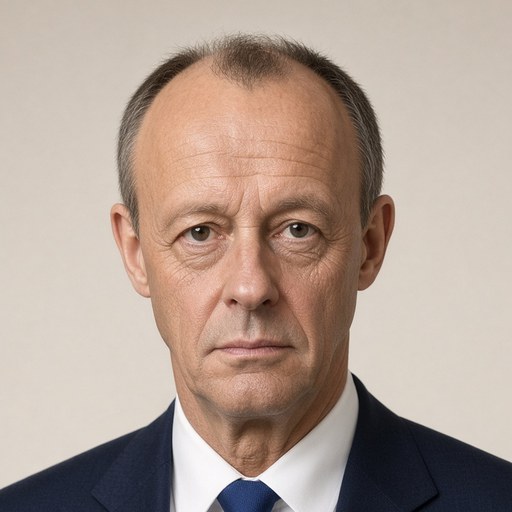
Speech by Federal Chancellor Friedrich Merz at the German-Italian Economic Forum on January 23, 2026, in Rome:
 Friedrich Merz · Chancellor of Germany
- Context
- Merz addressed the German-Italian Economic Forum in Rome on January 23, 2026, at the conclusion of bilateral government consultations marking 75 years of diplomatic relations.
- Main themes
- German-Italian economic cooperation, European Union competitiveness, industrial policy, defense and security, free trade and open markets, technological innovation, medium-sized enterprises, bilateral diplomatic relations, hybrid threats, high-tech agenda, productivity growth, EU trade policy
- Duration
- ~16 min
- Words
- 1,924
- Sentences
- 112
- Readability
- 51
- Grade
- 10.4
- Syntax
- 2.83
- Vocabulary
- 1.99
Translated from German
The broad sphere of national life a sentence belongs to. Every sentence has an Arena, so it is the denominator the other indices are read against.
Other112 sentences in 22 paragraphs
Dear Madam Prime Minister, dear Giorgia Meloni,
distinguished ladies and gentlemen,
thank you very much for coming to Rome, for joining us today at the conclusion of the German-Italian government consultations in this economic forum! I am very pleased to see you here.
I appreciate your patience with us, as we arrived a bit later than originally planned. This is due to the fact that we had exceptionally good and very intensive discussions between the two governments and reached a number of agreements that are meant to shape our cooperation for the coming year 2026 and beyond, and to make our collaboration even more intensive.
We are doing this in the 75th year of diplomatic relations between Italy and Germany. Yes, we have a tight schedule today. This also distinguishes us somewhat from the beginning of the good German-Italian relations after the Second World War. In June 1951, Konrad Adenauer made his first visit to Italy as Chancellor. He took a whole week, seven days, for this visit. From the program that has been handed down to us, it appears that he had breakfast alone on two days of those seven days around 2 PM. The dress code, as one would say today, was: tailcoat and top hat. We are meeting today in a somewhat more frugal, simpler manner. We are meeting above all under different time constraints. But precisely because this is the case, let me dive right in and briefly address a few topics that Giorgia Meloni has also mentioned.
My preliminary remark is: You will find us, the two governments, but also Giorgia Meloni and myself, in a very broad agreement in our assessment of the economic and foreign policy situation. I go so far as to say that German-Italian relations have not been as good for a long time as they are today. We are working closely together – bilaterally, but also in the European Union (EU). Thus, it is the case that we returned only in the early hours of today from a joint meeting at the European Council yesterday. This meeting yesterday was necessary to show that no one should have doubts about the determination of the European Union to respond, if necessary, for example, to the threat of new tariffs. Our meeting yesterday likely contributed to averting that. We want to avert it. We want open markets. We want free trade. We want more competition. And above all, we want more competitiveness for European industry.
We, you, Germany and Italy, together form the two strongest industrial countries in the European Union. Germany and Italy are also connected by certain structures that are not or less common in other countries of the European Union, for example, the strongly medium-sized industry: alongside large, well-known industrial companies, a large number of smaller, medium-sized, also owner-managed companies of the middle class. We have some industries, such as the automotive industry, the chemical industry, and mechanical engineering, that are very similar. There are many, including here in the room, who work together in these industries, maintain joint activities, and have joint companies. That is precisely why we have come to you once again at the conclusion of this German-Italian economic forum.
We want to achieve two goals together.
First, we must become more defensible in the European Union than we have been in recent years and decades. When we talk about defense capability today, when we talk about threats to our security today, these are no longer solely military threats, as we may have known them from previous wars and world wars. Today, they are hybrid threats, threats that you often experience in your companies, threats to digital infrastructure, our security in data networks. We must do more together to counter this. We are determined to advance this together between Germany and Italy, but also together in the European Union.
The second is that we will only succeed in all of this if we are efficient and competitive economies. We are lacking in this regard. We have accepted for too long that we are not growing in productivity, that we are not growing in the economy, that we have small and meager growth rates, if at all. That is why we want to work on this together. That is why we signed a German-Italian action plan today and concluded a bilateral agreement on security and defense.
We, both governments, assume that at the center of our efforts must now be competitiveness, economic competitiveness, and – I want to add from a German perspective – price competitiveness. This competitiveness is closely linked to new technologies and innovations. In order to remain leading industrial nations in the 21st century, technological leadership is one of the most important prerequisites for competitiveness. As the federal government, we are implementing an ambitious high-tech agenda. We see great potential for innovation cooperation with Italy. We are pleased that you, ladies and gentlemen, are cooperating with Germany on your program "Smart & Start Italia" today. We are moving forward together in this regard.
Allow me to briefly mention some examples of deepened cooperation. The automotive industry – Giorgia, you have already mentioned it – is a central pillar of the economy in Germany and Italy. Together, we want to seek and find the best solutions to strengthen competitiveness in this sector as well. We are not doing this unilaterally, but we are doing it, as we say, with technological openness. We want to set goals regarding climate protection and environmental protection. But how we achieve these goals, how you achieve these goals, we do not dictate politically. That is a decision you must make technologically, and based on that, we also want to have the best technologies not only for ourselves but for the whole world. We also want to work more closely together in space, for example, in cutting-edge technologies in the space sector. In doing so, we want to involve commercial providers as well as international partners. This opens up a European access to space for us together.
And finally: The economy of our two countries is very closely dependent on energy costs or – I want to put it more clearly – burdened by excessively high energy costs. That is why we also want to talk together about our energy supply, with technological openness, sustainably, and also competitively. We want to further intensify our already close cooperation in energy research for affordable electricity, especially for our energy-intensive industries.
In this sense, we are also pulling together to strengthen the overall European competitiveness. It is our highest priority. The focus is on two topics – so to speak, from the toolbox: The first is reducing bureaucracy, and the second is deepening the European internal market.
Allow me to say this in Italy, in Rome: We will have two guests at an extraordinary European meeting on February 12, who have already made proposals to us and who will explain these proposals. They are two former Italian prime ministers, Enrico Letta and Mario Draghi, whom you all remember from his time as President of the European Central Bank; Enrico Letta with his report on deepening the European internal market and Mario Draghi with his report on the competitiveness of the European Union. We have invited both to discuss their proposals once again, because these proposals must not disappear into the filing cabinets of the EU Commission in Brussels. They are good proposals, and we want to implement as many of these good proposals together as possible. That is why they will be our guests in Belgium on February 12.
In this sense, both Giorgia Meloni and I stand for the fact that we will not let up. We need a systematic review of all EU regulations for simplification potential, the repeal of obsolete regulations and proposals, a new culture of legislative restraint, at all levels and in all areas. For our competitiveness, we want to better utilize the full potential of the European internal market. Our internal market is the second largest internal market in the world. We must make better use of this potential.
Let me conclude with an open word on trade policy. It must not take another 25 years for a trade agreement to be negotiated and adopted – as was unfortunately the case with the Mercosur agreement. It must go faster! I also want to appeal to the European Parliament not to stand in the way of this process. We must be credible as Europeans in the world. We must be reliable. We must be able to conclude agreements when it comes to seeking, finding, and actually entering into new alliances in the world. This is now the case with the South American countries. This agreement is expected to come into force provisionally. Then it will unleash its full potential, with four countries from the South American continent, which together with us will create the largest contiguous internal market in the world.
But the President of the European Commission and the President of the European Council will travel to India next week and conclude a trade agreement with the largest democracy in the world, which today has 1.4 billion inhabitants, which we then want to implement in Europe and India.
These are just two examples of many others I could mention. Indonesia, Mexico, Japan, Vietnam, many other countries in the world are looking at us, at Europe, especially in these times of great uncertainties and new power struggles in the world. Let us see this as an opportunity in this context, that we are now witnesses to such a profound change in the world. If we stand together in the European Union, we have every chance not only to strengthen our democracies but also, above all, to demonstrate our competitiveness in the whole world.
We have managed this well for many years and decades. The European Union has always been particularly strong when it has come under pressure, when it has been in crises. So it was at its founding. So it was during the time of the internal market. So it was even during the time of the monetary union. And today it is again about this very question: Can we assert ourselves in this world? Are we determined enough? Are we strong enough? Are we reliable enough? Above all: Are we united enough internally? – This applies to the relationship between Germany and France. But it also applies, and especially, to the relationship between Germany and Italy.
Dear Giorgia, therefore, once again, thank you very much for your wonderful hospitality today! To you, ladies and gentlemen from Germany, thank you very much for coming, but also to you as hosts from Italy! It is a great joy to see this collaboration. I say this also on behalf of the federal cabinet and the ministers, who have all coordinated well today to discuss further proposals. I say it especially for both of us, dear Giorgia: We are firmly determined to pursue this path in the European Union. We are seizing the opportunities we have. Walk this path with us, and then one day we will be able to look back and say: Yes, it was a difficult time, but we drew the right conclusions from it. We are on the right path. And we have ensured that the most important thing remains, namely freedom and peace in Europe, along with prosperity and a high degree of social justice on this continent, where we all have the fortune to live today.
Thank you very much.
The original German. The tags above are read on the English translation's sentences.
Sehr geehrte Frau Ministerpräsidentin, liebe Giorgia Meloni,
meine sehr geehrten Damen und Herren,
herzlichen Dank, dass Sie alle nach Rom gekommen sind, dass wir uns heute zum Abschluss der deutsch-italienischen Regierungskonsultation in diesem Wirtschaftsforum sehen! Ich freue mich sehr, dass Sie da sind.
Ich danke Ihnen, dass Sie etwas Geduld mit uns gehabt haben, denn wir sind etwas später zu Ihnen gekommen als ursprünglich geplant. Aber das ist dem Umstand geschuldet, dass wir ausgesprochen gute und sehr intensive Gespräche zwischen den beiden Regierungen geführt und eine Reihe von Vereinbarungen getroffen haben, die unsere Zusammenarbeit für das vor uns liegende Jahr 2026 und darüber hinaus bestimmen sollen und die unsere Zusammenarbeit noch intensiver gestalten sollen.
Wir tun dies im 75. Jahr der diplomatischen Beziehungen zwischen Italien und Deutschland. Ja, wir haben heute einen gedrängten Zeitplan. Auch das unterscheidet uns etwas von dem Beginn der guten deutsch-italienischen Beziehungen nach dem Zweiten Weltkrieg. Im Juni 1951 ist Konrad Adenauer zu seinem ersten Besuch als Bundeskanzler in Italien gewesen. Er hat sich für diesen Besuch eine ganze Woche, sieben Tage, Zeit genommen. Aus dem Programm, das uns immer noch überliefert ist, ergibt sich, dass er allein an zwei Tagen dieser sieben Tage gegen 14 Uhr sein Frühstück eingenommen hat. Im Dresscode, wie man heute sagen würde, stand: Cut und Zylinder. Wir treffen uns heute etwas frugaler, etwas einfacher. Wir treffen uns vor allen Dingen unter anderen Zeitvorgaben. Aber gerade weil es so ist, lassen Sie mich gleich einsteigen und einige Themen kurz ansprechen, die auch Giorgia Meloni angesprochen hat.
Meine Vorbemerkung ist: Sie finden uns, die beiden Regierungen, aber auch Giorgia Meloni und mich, in einer sehr weitgehenden Übereinstimmung in der Beurteilung der wirtschaftspolitischen und der außenpolitischen Lage. Ich gehe so weit, zu sagen, dass die deutsch-italienischen Beziehungen schon seit langer Zeit nicht mehr so gut waren, wie sie heute sind. Wir beide arbeiten eng zusammen – bilateral, aber auch in der Europäischen Union (EU). So kommt es, dass wir erst in den frühen Morgenstunden des heutigen Tages von einer gemeinsamen Begegnung im Europäischen Rat gestern zurückgekehrt sind. Diese Begegnung gestern war notwendig, um zu zeigen, dass niemand Zweifel an der Entschlossenheit der Europäischen Union haben soll, wenn es denn nötig ist, auch zu reagieren, zum Beispiel auf die Androhung neuer Zölle. Auch unsere Begegnung gestern dürfte dazu beigetragen haben, dass wir das abwenden konnten. Wir wollen es abwenden. Wir wollen offene Märkte. Wir wollen freien Handel. Wir wollen mehr Wettbewerb. Und wir wollen vor allem mehr Wettbewerbsfähigkeit der europäischen Industrie.
Wir, Sie, Deutschland und Italien, wir bilden zusammen die beiden stärksten Industrieländer in der Europäischen Union. Deutschland und Italien verbindet darüber hinaus auch in den Strukturen einiges, was so in anderen Ländern der Europäischen Union nicht oder weniger der Fall ist, zum Beispiel die stark mittelständisch geprägte Indus-trie: neben großen namhaften Industrieunternehmen eine große Zahl von kleineren, mittleren, auch eigentümergeführten Unternehmen des Mittelstandes. Wir haben einige Industrien wie die Automobilindustrie, die chemische Industrie und den Maschinenbau, die sich sehr ähnlich sind. Es gibt viele, auch hier im Raum, die in diesen Industrien gemeinsam arbeiten, gemeinsame Aktivitäten, gemeinsame Unternehmen unterhalten. Genau deshalb sind wir heute zum Abschluss dieses deutsch-italienischen Wirtschaftsforums noch einmal zu Ihnen gekommen.
Wir wollen gemeinsam
zwei
Ziele erreichen.
Erstens
müssen wir in der Europäischen Union verteidigungsfähiger werden als in den vergangenen Jahren und Jahrzehnten. Wenn wir heute über Verteidigungsfähigkeit sprechen, wenn wir heute über Bedrohungen unserer Sicherheit sprechen, dann sind das nicht mehr allein militärische Bedrohungen, wie wir sie vielleicht aus früheren Kriegen und Weltkriegen gekannt haben. Es sind heute hybride Bedrohungen, Bedrohungen, die auch Sie in Ihren Unternehmen häufig genug erleben, Bedrohungen etwa der digitalen Infrastruktur, unserer Sicherheit auch in den Datennetzen. Dagegen müssen wir gemeinsam mehr tun. Wir sind entschlossen, dies gemeinsam zwischen Deutschland und Italien, aber auch gemeinsam in der Europäischen Union auf den Weg zu bringen.
Das
Zweite
ist, dass uns das alles nur gelingen wird, wenn wir leistungsfähige und wettbewerbsfähige Volkswirtschaften sind. Daran fehlt es. Wir haben uns zu lange damit abgefunden, dass wir in der Produktivität nicht wachsen, dass wir in der Wirtschaft nicht wachsen, dass wir kleine und magere Wachstumsraten haben, wenn denn überhaupt. Deswegen wollen wir daran gemeinsam arbeiten. Deswegen haben wir heute einen deutsch-italienischen Aktionsplan unterschrieben und ein bilaterales Abkommen zu Sicherheit und Verteidigung geschlossen.
Wir, beide Regierungen, gehen davon aus, dass im Zentrum unserer Bemühungen eben jetzt die Wettbewerbsfähigkeit, die wirtschaftliche Wettbewerbsfähigkeit und – ich will es aus deutscher Sicht hinzufügen – die preisliche Wettbewerbsfähigkeit, stehen muss. Diese Wettbewerbsfähigkeit ist eng mit neuen Technologien und mit Innovationen verbunden. Damit wir im 21. Jahrhundert führende Industrienationen bleiben können, ist Technologieführerschaft für uns eine der wichtigsten Voraussetzungen für Wettbewerbsfähigkeit. Wir setzen als Bundesregierung eine ambitionierte Hightech Agenda um. Wir sehen hierbei großes Potenzial für Innovationskooperationen mit Italien. Es freut uns, dass Sie, meine Damen und Herren, heute mit Deutschland bei Ihrem Programm „Smart & Start Italia“ kooperieren. Wir gehen hierbei gemeinsam voran.
Lassen Sie mich in der gebotenen Kürze einige Beispiele einer vertieften Kooperation nennen. Die Automobilindustrie – Giorgia, du hast es bereits gesagt – ist ein zentraler Pfeiler der Wirtschaft in Deutschland und in Italien. Gemeinsam wollen wir die besten Lösungen suchen und finden, um die Wettbewerbsfähigkeit auch in diesem Sektor zu stärken. Wir tun das nicht einseitig festgelegt, sondern wir tun das, wie wir es sagen, mit Technologieoffenheit. Wir wollen Ziele auch im Hinblick auf den Klimaschutz und den Umweltschutz vorgeben. Aber wie wir diese Ziele, wie Sie diese Ziele erreichen, das geben wir politisch nicht vor. Das ist eine Entscheidung, die Sie technologisch treffen müssen und aufgrund der wir auch die besten Technologien nicht nur für uns, sondern für die ganze Welt haben wollen. Auch in der Raumfahrt, etwa bei den Spitzentechnologien im Weltraumsektor, wollen wir enger zusammenarbeiten. Dabei wollen wir kommerzielle Anbieter, aber auch internationale Partner einbeziehen. Das eröffnet uns gemeinsam einen eigenen europäischen Zugang zum Weltraum.
Und schließlich: Die Wirtschaft unserer beiden Länder ist ganz eng von Energiekosten abhängig oder – ich will es etwas deutlicher sagen – mit zu hohen Energiekosten belastet. Deshalb wollen wir gemeinsam auch über unsere Energieversorgung sprechen, technologieoffen, nachhaltig und ebenfalls wettbewerbsfähig. Unsere ohnehin schon enge Zusammenarbeit in der Energieforschung wollen wir weiter intensivieren, für bezahlbaren Strom, gerade auch für unsere energieintensiven Industrien.
In diesem Sinne ziehen wir auch bei der Stärkung der gesamteuropäischen Wettbewerbsfähigkeit an einem Strang. Sie hat für uns höchste Priorität. Im Fokus stehen dabei
zwei
Themen – sozusagen aus dem Instrumentenkasten: Das erste ist der Bürokratierückbau, und das
zweite
ist die Vertiefung des europäischen Binnenmarktes.
Erlauben Sie mir, das in Italien, in Rom zu sagen: Wir werden am 12. Februar auf einem außerordentlichen europäischen Treffen zwei Gäste haben, die uns bereits Vorschläge gemacht haben und die diese Vorschläge erläutern werden. Es sind zwei ehemalige italienische Ministerpräsidenten, Enrico Letta und Mario Draghi, den Sie alle noch aus seiner Zeit als Präsident der Europäischen Zentralbank kennen; Enrico Letta mit seinem Bericht zur Vertiefung des europäischen Binnenmarktes und Mario Draghi mit seinem Bericht zur Wettbewerbsfähigkeit der Europäischen Union. Wir haben beide eingeladen, um über ihre Vorschläge noch einmal zu sprechen, denn diese Vorschläge dürfen nicht in den Aktenschränken der EU-Kommission in Brüssel verschwinden. Es sind gute Vorschläge, und wir wollen so viele wie möglich von diesen guten Vorschlägen gemeinsam umsetzen. Deswegen werden sie am 12. Februar in Belgien unsere Gäste sein.
In diesem Sinne stehen wir beide, Giorgia Meloni und ich, dafür ein, dass wir weiterhin nicht nachlassen. Wir brauchen eine systematische Überprüfung aller EU-Vorschriften auf Vereinfachungspotenziale, die Rücknahme obsoleter Vorschriften und Vorschläge, eine neue Kultur der legislativen Zurückhaltung, und zwar auf allen Ebenen und in allen Bereichen. Für unsere Wettbewerbsfähigkeit wollen wir das ganze Potenzial des europäischen Binnenmarktes besser nutzen. Unser Binnenmarkt ist der zweitgrößte Binnenmarkt der Welt. Dieses Potenzial müssen wir besser nutzen.
Lassen Sie mich damit abschließend ein offenes Wort zur Handelspolitik sagen. Es darf in Zukunft nicht erneut 25 Jahre dauern, bis ein Handelsabkommen ausverhandelt und verabschiedet ist – so, wie es mit dem Mercosur-Abkommen leider der Fall war. Das muss schneller gehen! Ich will hier auch an das Europäische Parlament appellieren, diesem Prozess nicht im Wege zu stehen. Wir müssen als Europäer auf der Welt glaubwürdig sein. Wir müssen verlässlich sein. Wir müssen abschlussfähig sein, wenn es darum geht, neue Allianzen auf der Welt zu suchen, zu finden und sie dann auch wirklich einzugehen. Das geht jetzt mit den südamerikanischen Staaten. Dieses Abkommen wird aller Voraussicht nach vorläufig in Kraft treten. Dann wird es sein ganzes Potenzial entfalten, mit vier Ländern des südamerikanischen Kontinentes, die zusammen mit uns dann den größten zusammenhängenden Binnenmarkt der Welt schaffen werden.
Aber die Präsidentin der Europäischen Kommission und der Präsident des Europäischen Rates werden in der nächsten Woche nach Indien reisen und dort mit der größten Demokratie der Welt mit heute 1,4 Milliarden Einwohnern ein Handelsabkommen abschließen, das wir anschließend in Europa und in Indien in die Umsetzung geben wollen.
Das sind nur zwei Beispiele von weiteren, die ich nennen könnte. Indonesien, Mexiko, Japan, Vietnam, viele andere Länder der Welt, sie schauen auf uns, auf Europa, gerade in diesen Zeiten größter Ungewissheiten und neuer Machtauseinandersetzungen auf der Welt. Lassen Sie es uns vor diesem Hintergrund als Chance sehen, dass wir jetzt Zeitzeugen einer so tiefgreifenden Veränderung auf der Welt sind. Wenn wir in der Europäischen Union zusammenstehen, dann haben wir alle Chancen, daraus nicht nur unsere Demokratien zu stärken, sondern auch und vor allem unsere Wettbewerbsfähigkeit auf der ganzen Welt unter Beweis zu stellen.
Wir haben das lange Jahre und Jahrzehnte gut geschafft. Die Europäische Union ist immer dann besonders stark gewesen, wenn sie unter Druck geraten ist, wenn sie in Krisen war. So war es bei ihrer Gründung. So war es in der Zeit des Binnenmarktes. So war es zum Teil sogar während der Zeit der Währungsunion. Und heute geht es wieder um genau diese Frage: Schaffen wir es, uns auf dieser Welt selbst zu behaupten? Sind wir entschlossen genug? Sind wir stark genug? Sind wir verlässlich genug? Vor allem: Sind wir nach innen einig genug? – Das gilt für das Verhältnis zwischen Deutschland und Frankreich. Das gilt aber auch und ganz besonders für das Verhältnis zwischen Deutschland und Italien.
Liebe Giorgia, deshalb noch einmal herzlichen Dank für deine großartige Gastfreundschaft am heutigen Tag! Ihnen, meine Damen und Herren aus Deutschland, herzlichen Dank für Ihr Kommen, aber auch Ihnen als Gastgeber aus Italien! Es ist eine große Freude, diese Zusammenarbeit zu sehen. Ich sage das auch für das Bundeskabinett und die Ressortminister, die alle untereinander gut abgestimmt heute weitere Vorschläge diskutiert haben. Ich sage es vor allem für uns beide, liebe Giorgia: Wir sind fest entschlossen, diesen Weg in der Europäischen Union zu gehen. Wir nutzen die Chancen, die wir haben. Gehen Sie diesen Weg mit uns, und dann werden wir eines Tages aus der Rückschau sagen können: Ja, es war eine schwierige Zeit, aber wir haben die richtigen Schlussfolgerungen daraus gezogen. Wir gehen den richtigen Weg. Und wir haben dafür gesorgt, dass das Wichtigste erhalten bleibt, nämlich Freiheit und Frieden in Europa und dazu Wohlstand und ein hohes Maß an sozialer Gerechtigkeit auf diesem Kontinent, auf dem wir alle zusammen das Glück haben, heute zu leben.
Herzlichen Dank.