




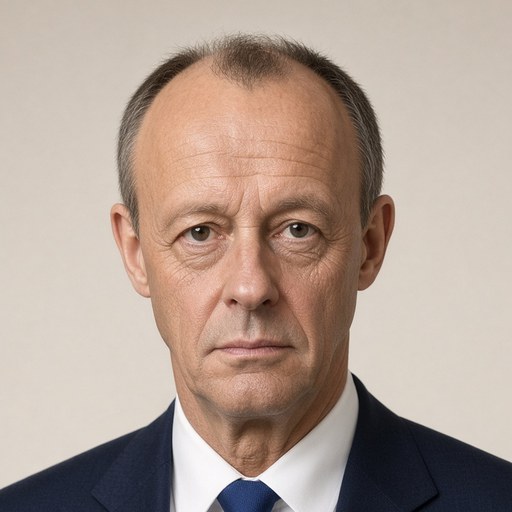
Speech by Chancellor Friedrich Merz at the World Economic Forum on January 22, 2026, in Davos:
 Friedrich Merz · Chancellor of Germany
- Context
- Merz addressed world leaders at the World Economic Forum in Davos on January 22, 2026, outlining Germany's response to a rapidly changing global order.
- Main themes
- Great power politics, European security and defense, transatlantic relations, Russia's war against Ukraine, Germany's foreign policy, NATO solidarity, Greenland sovereignty, European competitiveness, multilateral alliances, Arctic security, economic tariffs, European unity
- Duration
- ~19 min
- Words
- 2,322
- Sentences
- 191
- Readability
- 56
- Grade
- 8.4
- Syntax
- 2.49
- Vocabulary
- 2.07
World Economic Forum · Davos Translated from German
The broad sphere of national life a sentence belongs to. Every sentence has an Arena, so it is the denominator the other indices are read against.
Other191 sentences in 48 paragraphs
Dear Mr. President Brende,
distinguished ladies and gentlemen,
the calm and peace here on the "Magic Mountain" stand in sharp contrast to a world whose order is dissolving at breathtaking speed. I would like to explain to you how the new federal government views these tectonic shifts and how it intends to respond to them. These upheavals have a massive impact on our freedom, our security, and our prosperity.
In these weeks and months, we are witnessing the beginning of a new era. This is nowhere more dramatically evident than in Russia's war of aggression against Ukraine. But the changes go much deeper. China has strategically positioned itself as a great power. The global leadership role of the United States is under pressure. And Washington is responding with a radical realignment of its foreign and security policy.
We have entered an age of great power politics. The international order of the past three decades – firmly anchored in international law – was never perfect. Today, it is shaken to its very foundations. This new world of great powers is based on power, on strength, and – if necessary – also on violence. It is not a comfortable place.
We do not have to accept this new reality as fate. We are not at the mercy of this new world order. We have a choice. We can shape the future. To do this successfully, we must face the facts and chart our further course with unclouded realism.
Two days ago, Mark Carney said at this podium: "We can no longer rely solely on the power of our values. We must also recognize the value of our power." I share this view. And as I look around this hall, I want to say: Most of us share it. And that is a good start.
Dear European friends, if I may say so: Our strength today rests on three pillars: our security, our competitiveness, and our unity. We must first invest massively in our defense capabilities. And we are doing that. We must second make our economies competitive quickly. And we are doing that. We must third stand closer together – as Europeans and as like-minded partners. We are doing that too.
As we move forward, we must never forget one thing: A world where only strength counts is a dangerous place – first for small states, then for middle powers, and ultimately for the very large ones as well. I do not say this lightly. In the 20th century, my country, Germany, followed this path to its bitter end. It dragged the world into a dark abyss.
Let us always remember: Our greatest strength is and remains the ability to forge partnerships and alliances among equals, based on mutual trust and respect. I would like to remind you that it was the United States of America that inspired us Germans after 1945 to take this path. On this basis, NATO became the strongest alliance in history. That is why we hold on to this idea.
The government of the United States has recently called for greater influence over Greenland with great emphasis. Washington argues that this is essential to address the security risks in the far north. We welcome that the United States takes the threat posed by Russia in the Arctic seriously. This threat itself is also an expression of great power rivalry. It is directed against Europe just as much as against the United States. We feel this daily – in hybrid attacks in the Baltic Sea as well as in Russia's winter war against the Ukrainian people.
We are also convinced that we, as European allies in NATO, must do more to protect the far north as NATO. This is a common transatlantic interest. And Germany is doing that. We are doing this within the framework of NATO. And we will do even more.
Our neighbors, our partners in Europe, including Denmark and the people of Greenland, can count on our solidarity. We will protect Denmark, Greenland, and the north against the Russian threat. We will stand up for the principles on which the transatlantic partnership is based: sovereignty and territorial integrity.
We support talks between Denmark, Greenland, and the United States based on these principles. I have discussed this in recent days with President Trump, Prime Minister Frederiksen, Secretary-General Rutte, and others. The aim of these talks is to agree on closer cooperation among allies in the far north and beyond.
It is good news that we have taken the right direction. I welcome President Trump's words from last night. This is the right path. It is the right path because any threat of a potentially violent appropriation of European territory is unacceptable.
And new tariffs would undermine the foundation of transatlantic relations. If they were introduced, Europe's response would be united, calm, measured, and determined.
We are moving forward, guided by a clear compass. First, in the new age of great powers, Europe must stand firm and sovereign together. And second, we should not abandon NATO. At the historic Hague Summit last June, we laid the material foundations for this. Europe will invest hundreds of billions of euros in its security. A great transatlantic success!
Now it is time to restore the trust on which the alliance is based. Europe knows how precious this trust is. We are deeply convinced that in an age of great powers, trust can be the greatest competitive advantage for the United States. Democracies do not have subjects. They have allies, partners, and friends whom they trust.
Let me summarize in German: [from here in the original German]
We have crossed the threshold into a new world of great powers. In this world, a rough wind blows. This world will impose hardships and dangers upon us. You feel it, we all feel it. But let us also be clear: We are not at the mercy of this world. We can shape it. Therefore, let us rely wisely, creatively, and courageously on our own strengths. And that is exactly what we are doing.
We are investing massively in our own security. We are making our economy competitive again. And we are standing together in Europe. This will help us better withstand the demands of this new time. Above all, it will open new doors and create new opportunities. We will stand firm for our sovereignty. And our neighbors in Europe can rely on our solidarity.
Let us not hastily write off the transatlantic partnership despite all the frustration and anger of recent months. And this is not a hollow reference to the "principle of hope." No, we Europeans, we Germans know how precious the trust on which NATO is based is. In the age of great powers, the United States will also depend on this trust. It is their and our decisive competitive advantage.
I say it in German:
Autocracies may have subjects, democracies have partners and reliable friends. We want to orient ourselves by this sentence. We will work persistently to ensure that this does not fade from memory. [From here in the original English]
Under my leadership, the federal government has set two goals.
First:
We want to restore Germany to economic strength.
Second:
We want to make Europe a central actor again – in world politics, in economic terms, and especially in the area of defense. We must be able to defend ourselves quickly.
These goals are complementary to each other. Economic competitiveness and global political shaping are inextricably linked. Germany can only lead in Europe if we are economically strong. And Europe's geopolitical influence and our defense capability depend significantly on the economic dynamism on the continent.
Our policy must now be highly ambitious and courageous. It is about making progress in four areas of responsibility simultaneously. We must continue to support Ukraine in its fight for a just peace. We must become defensively capable in Europe on our own. We want to reduce dependencies that currently make us vulnerable. And we want to ensure that our economy can fully exploit its innovation and growth potential. This will only work if we work together as ONE European Union (EU). And rest assured: Germany will take on a special responsibility here.
That is why, right at the beginning of my term, we decided to increase German defense spending to up to five percent of GDP. This is a massive increase. Strengthening our military capabilities means asserting our sovereignty. By systematically strengthening our defense capabilities, we reduce our economic and technological dependencies.
There is no place on this agenda for isolation and protectionism. Instead, it is about strategically coordinated networking worldwide. The European trade goals are clear. We want to be the alliance that offers open markets and trade opportunities. We want to strengthen the rules for fair trade and equal competitive conditions. Europe must be the counter-model to state-sponsored unfair trade practices, resource protectionism, technology bans, and arbitrarily set tariffs. Instead of tariffs, rules must apply again. And these rules must be respected by trading partners.
In this regard, the EU is making great progress. The Mercosur agreement has been signed. I deeply regret that the European Parliament has once again put a hurdle in the way of the agreement yesterday. But rest assured: This will not stop us. The Mercosur agreement is fair and balanced. If we want more growth in Europe, there is no alternative to it. And most likely, the agreement will be applied provisionally.
In a few days, the Commission President will travel to India to outline the basics of a free trade agreement between the subcontinent and the EU. I myself was in India a week ago and have no doubt that in the era of great powers, there is also an opportunity for us and for all states that prefer rules over arbitrariness and see more advantage in free trade than in protectionism and isolation.
Europe is joining forces with new partners, as can be seen in our efforts to finalize trade agreements with Mexico and Indonesia. To make the best use of these new partnerships, we must also get our house in order internally. We know where the construction sites are. Germany and Europe have squandered tremendous growth potential in recent years due to delayed reforms and by unnecessarily and excessively restricting entrepreneurial freedom and responsibility.
We will now change that. Security and predictability take precedence over overregulation and perfection in the wrong places. We must significantly reduce bureaucracy in Europe. The internal market was once established with the aim of creating the most competitive economic area in the world. Instead, we have become world champions in overregulation. That must end.
At my initiative, the heads of state and government of the EU will meet on February 12 for a special summit, where we want to set the appropriate course. Giorgia Meloni and I have developed a bundle of proposals that we would like to see addressed there. Among them are some new ideas: We propose a bureaucratic emergency brake, the introduction of the principle of discontinuity, a modernized EU budget that focuses on competitiveness. We want a fast, dynamic Europe and a service-oriented administration.
I will push for rapid progress, also on the capital markets union. Our European champions must no longer rely on capital markets outside Europe. They should rather grow here with us in Europe, finance themselves in Europe, and also be able to go public here.
For us, this means: We are making Germany a competitive location for companies and investments again for industry and for our many small and medium-sized enterprises. Let me tell you: The German Mittelstand must be reckoned with. We are more targeted in promoting our innovation actors, we are clearing obstacles out of their way. And we are facilitating their access to the capital market.
We have reduced energy costs. In electricity supply, we rely on a combination of renewable energies, storage facilities, and modern gas power plants. In the coming years, we will invest massively in state-of-the-art power plants, power lines, and heat supply.
We will accelerate the expansion and modernization of infrastructure. For this, 500 billion euros are available.
The core of all our efforts is digitalization. Artificial intelligence (AI) requires industrial standards. Germany has one of the largest industrial data pools in the world. For this reason, we are also investing in powerful AI gigafactories, accelerating the expansion of data centers, and creating the digital infrastructure for a competitive AI economy in Germany.
Our research and technology policy is guided by a new high-tech agenda. We are leading in cutting-edge research in so many areas worldwide. We want to bring innovations to market more consistently and thereby build the industries of tomorrow.
Anyone who wants to invest in the future can be assured: In Germany, you will find a very strong partner for that. We want to be a leading investment location for global capital. We are aligning our policy to mobilize private investments in infrastructure, high-tech, and industrial transformation – with clear rules, strong institutions, and long-term reliability.
Do not be confused by the daily headlines. I appeal to you: Keep the big picture in mind. The world around us is changing at an unprecedented speed. The direction it is taking should concern us. A world of great powers is the new reality. Europe has understood the message. Germany has understood the message as well. We must and we will rise to these challenges.
My government will do its homework and push forward an ambitious reform agenda, centered on security, competitiveness, and European unity. Let us be guided by what is probably the most important insight of the Enlightenment: We hold our destiny in our own hands. It is our responsibility. And we are free to shape it. This historic task lies ahead of us. Germany wants to play a central role in mastering it.
Thank you very much for your attention.
The original German. The tags above are read on the English translation's sentences.
Sehr geehrter Herr Präsident Brende,
meine sehr geehrten Damen und Herren,
die Ruhe und der Frieden hier oben auf dem „Zauberberg“ bilden einen scharfen Kontrast zu einer Welt, deren Ordnung sich mit atemberaubender Geschwindigkeit auflöst. Ich möchte Ihnen gerne erläutern, wie die neue Bundesregierung auf diese tektonischen Verschiebungen blickt und wie sie ihnen begegnet. Diese Verwerfungen wirken sich massiv auf unsere Freiheit, unsere Sicherheit und unseren Wohlstand aus.
In diesen Wochen und Monaten erleben wir, dass eine neue Ära begonnen hat. Das zeigt sich bislang nirgends drastischer als in Russlands Angriffskrieg gegen die Ukraine. Aber die Veränderungen reichen weit tiefer. China hat sich mit strategischer Weitsicht den Rang einer Großmacht erarbeitet. Die globale Führungsrolle der Vereinigten Staaten steht unter Druck. Und Washington reagiert darauf mit einer radikalen Neuausrichtung seiner Außen- und Sicherheitspolitik.
Wir sind eingetreten in ein Zeitalter der Großmachtpolitik. Die internationale Ordnung der vergangenen drei Jahrzehnte – fest verankert im Völkerrecht – war nie perfekt. Heute ist sie in ihren Grundfesten erschüttert. Diese neue Welt der Großmächte gründet sich auf Kraft, auf Stärke und – wenn nötig – auch auf Gewalt. Sie ist kein gemütlicher Ort.
Wir müssen diese neue Realität nicht schicksalhaft hinnehmen. Wir sind dieser neuen Weltordnung nicht ausgeliefert. Wir haben eine Wahl. Wir können die Zukunft gestalten. Um dies erfolgreich zu tun, müssen wir den Tatsachen ins Auge sehen und unseren weiteren Weg mit unverstelltem Realitätssinn abstecken.
Vor zwei Tagen sagte Mark Carney hier an diesem Pult: „Wir dürfen uns nicht länger allein auf die Macht unserer Werte verlassen. Wir müssen auch den Wert unserer Macht erkennen.“ Ich teile diese Auffassung. Und wenn ich mich in diesem Saal umschaue, dann möchte ich sagen: Die meisten von uns teilen sie. Und das ist ein guter Anfang.
Liebe europäische Freunde, wenn ich das so sagen darf: Unsere Stärke ruht heute auf
drei
Pfeilern: unserer Sicherheit, unserer Wettbewerbsfähigkeit und unserer Einigkeit. Wir müssen
erstens
massiv in unsere Verteidigungsfähigkeit investieren. Und das tun wir. Wir müssen
zweitens
unsere Volkswirtschaften zügig wettbewerbsfähig machen. Und das tun wir. Wir müssen
drittens
enger zusammenstehen – als Europäer und als gleichgesinnte Partner. Auch das tun wir.
Während wir vorangehen, dürfen wir eines nie vergessen: Eine Welt, in der nur die Stärke zählt, ist ein gefährlicher Ort – zuerst für die kleinen Staaten, dann für die Mittelmächte und am Ende auch für die ganz Großen. Ich sage das nicht einfach so dahin. Im 20. Jahrhundert ist mein Land, Deutschland, diesen Weg bis zum bitteren Ende gegangen. Es hat die Welt in einen schwarzen Abgrund gerissen.
Denken wir immer daran: Unsere größte Stärke ist und bleibt die Fähigkeit, Partnerschaften und Bündnisse unter Gleichen zu schmieden, die auf gegenseitigem Vertrauen und Respekt beruhen. Ich erinnere daran, dass es die Vereinigten Staaten von Amerika waren, die uns Deutsche nach 1945 für diesen Weg begeistert haben. Auf dieser Grundlage wurde die Nato zum stärksten Bündnis der Geschichte. Deswegen halten wir an dieser Idee fest.
Die Regierung der USA hat in den letzten Tagen mit großem Nachdruck mehr Einfluss auf Grönland gefordert. Washington argumentiert, dies sei unerlässlich, um den Sicherheitsrisiken im hohen Norden begegnen zu können. Wir begrüßen, dass die Vereinigten Staaten die Bedrohung durch Russland im arktischen Raum ernst nehmen. Auch diese Bedrohung selbst ist Ausdruck einer Großmachtrivalität. Sie richtet sich gegen Europa genauso wie gegen die Vereinigten Staaten. Wir spüren das täglich – bei hybriden Angriffen in der Ostsee wie im russischen Winterkrieg gegen das ukrainische Volk.
Auch wir sind überzeugt, dass wir als europäische Verbündete in der Nato mehr tun müssen, um den hohen Norden als Nato zu schützen. Das ist ein gemeinsames transatlantisches Interesse. Und das tut Deutschland. Wir tun das im Rahmen der Nato. Und wir werden noch mehr tun.
Unsere Nachbarn, unsere Partner in Europa, unter ihnen Dänemark und die Bevölkerung Grönlands, können auf unsere Solidarität zählen. Wir werden Dänemark, Grönland, den Norden gegen die russische Bedrohung schützen. Wir werden für die Grundsätze eintreten, auf denen die transatlantische Partnerschaft fußt: Souveränität und territoriale Unversehrtheit.
Wir unterstützen Gespräche zwischen Dänemark, Grönland und den Vereinigten Staaten auf Basis dieser Grundsätze. Ich habe darüber in den letzten Tagen mit Präsident Trump, Ministerpräsidentin Frederiksen, Generalsekretär Rutte und anderen gesprochen. Ziel dieser Gespräche ist es, eine engere Zusammenarbeit der Verbündeten im hohen Norden und darüber hinaus zu vereinbaren.
Es ist eine gute Nachricht, dass wir die richtige Richtung eingeschlagen haben. Ich begrüße Präsident Trumps Worte von gestern Abend. Das ist der richtige Weg. Es ist der richtige Weg, weil jegliche Androhung einer notfalls gewaltsamen Aneignung eines europäischen Hoheitsgebiets inakzeptabel ist.
Und auch neue Zölle würden das Fundament der transatlantischen Beziehungen untergraben. Würden sie eingeführt, wäre die Antwort Europas geschlossen, ruhig, maßvoll und bestimmt.
Wir gehen, geleitet von einem klaren Kompass, voran. Erstens, im neuen Zeitalter der Großmächte muss Europa fest und souverän zusammenstehen. Und zweitens sollten wir die Nato nicht aufgeben. Beim historischen Haager Gipfel im Juni letzten Jahres haben wir dafür die materiellen Bedingungen geschaffen. Europa wird Hunderte Milliarden Euro in seine Sicherheit investieren. Ein großer transatlantischer Erfolg!
Jetzt gilt es, das Vertrauen wiederherzustellen, auf dem die Allianz fußt. Europa weiß, wie kostbar dieses Vertrauen ist. Wir sind zutiefst überzeugt, dass in einem Zeitalter der Großmächte Vertrauen der größte Wettbewerbsvorteil der Vereinigten Staaten sein kann. Demokratien haben keine Untertanen. Sie haben Verbündete, Partner und Freunde, denen sie vertrauen.
Lassen Sie mich auf Deutsch rekapitulieren: [ab hier im Original auf Deutsch]
Wir haben die Schwelle hinein in eine neue Welt der Großmächte überschritten. In dieser Welt weht ein rauer Wind. Diese Welt wird uns Härten und Gefahren zumuten. Das spüren Sie, das spüren wir alle. Machen wir uns aber auch bitte klar: Dieser Welt sind wir nicht ausgeliefert. Wir können sie gestalten. Lassen Sie uns deshalb besonnen, schöpferisch und mutig zugleich auf unsere eigenen Stärken setzen. Und genau das tun wir.
Wir investieren massiv in die eigene Sicherheit. Wir machen unsere Wirtschaft wieder wettbewerbsfähig. Und wir halten in Europa zusammen. Das wird uns helfen, den Zumutungen dieser neuen Zeit besser zu trotzen. Vor allem wird es uns neue Türen öffnen und neue Chancen ermöglichen. Für unsere Souveränität werden wir mit Festigkeit eintreten. Und unsere Nachbarn in Europa können sich auf unsere Solidarität verlassen.
Lassen Sie uns bitte auch bei allem Frust und Ärger der letzten Monate die transatlantische Partnerschaft nicht voreilig abschreiben. Und das ist kein wohlfeiler Verweis auf das „Prinzip Hoffnung“. Nein, wir Europäer, wir Deutsche wissen, wie kostbar das Vertrauen ist, auf dem die Nato fußt. Im Zeitalter der Großmächte werden auch die USA auf dieses Vertrauen angewiesen sein. Es ist ihr und unser entscheidender Wettbewerbsvorteil.
Ich sage es auf Deutsch:
Autokratien mögen Untertanen haben, Demokratien haben Partner und verlässliche Freunde. An diesem Satz wollen wir uns orientieren. Wir werden hartnäckig dafür arbeiten, dass dies nicht in Vergessenheit gerät. [Ab hier im Original wieder auf Englisch]
Unter meiner Führung hat sich die Bundesregierung
zwei
Ziele gesetzt.
Erstens:
Wir wollen Deutschland zur ökonomischen Stärke zurückführen.
Zweitens:
Wir wollen Europa wieder zu einem zentralen Akteur machen – in der Weltpolitik, in wirtschaftlicher Hinsicht und insbesondere im Bereich Verteidigung. Wir müssen in der Lage sein, uns selbst zu verteidigen, und zwar schnell.
Diese Ziele verhalten sich komplementär zueinander. Wirtschaftliche Wettbewerbsfähigkeit und weltpolitische Gestaltungsfähigkeit stehen in einem untrennbaren Zusammenhang. Deutschland kann in Europa nur vorangehen, wenn wir ökonomisch stark sind. Und Europas geopolitischer Einfluss und unsere Verteidigungsfähigkeit hängen wesentlich von der wirtschaftlichen Dynamik auf dem Kontinent ab.
Unsere Politik muss jetzt in höchstem Maße ehrgeizig und mutig sein. Es geht um Fortschritte in vier Aufgabenfeldern gleichzeitig. Wir müssen die Ukraine weiterhin in ihrem Kampf um einen gerechten Frieden unterstützen. Wir müssen in Europa aus eigener Kraft verteidigungsfähig werden. Wir wollen Abhängigkeiten mindern, die uns im Augenblick verletzbar machen. Und wir wollen dafür sorgen, dass unsere Wirtschaft ihr ganzes Innovations- und Wachstumspotenzial ausschöpfen kann. Das wird nur funktionieren, wenn wir als EINE Europäische Union (EU) zusammenarbeiten. Und seien Sie versichert: Deutschland wird hier eine besondere Verantwortung übernehmen.
Deswegen haben wir gleich zu Beginn meiner Amtszeit beschlossen, die deutschen Verteidigungsausgaben auf bis zu fünf Prozent des Bruttoinlandsprodukts zu erhöhen. Das ist eine massive Steigerung. Unsere militärischen Fähigkeiten zu stärken bedeutet, unsere Souveränität zu behaupten. Indem wir unsere Verteidigungsfähigkeit systematisch stärken, verringern wir unsere wirtschaftlichen und technologischen Abhängigkeiten.
Für Abschottung und Protektionismus ist auf dieser Agenda kein Platz. Stattdessen geht es um strategisch koordinierte Vernetzung weltweit. Die europäischen Handelsziele sind eindeutig. Wir wollen das Bündnis sein, das offene Märkte und Handelsmöglichkeiten bietet. Wir wollen die Regeln für einen fairen Handel und für gleiche Wettbewerbsbedingungen stärken. Europa muss der Gegenentwurf zu staatlich geförderten unfairen Handelspraktiken, Rohstoffprotektionismus, Technologieverboten und willkürlich festgesetzten Zöllen sein. Statt Zöllen müssen wieder Regeln gelten. Und diese Regeln müssen von Handelspartnern respektiert werden.
In dieser Hinsicht macht die EU große Fortschritte. Das Mercosur-Abkommen ist unterzeichnet. Ich bedaure es übrigens zutiefst, dass das Europäische Parlament dem Abkommen gestern erneut eine Hürde in den Weg gelegt hat. Aber seien Sie versichert: Das wird uns nicht aufhalten. Das Mercosur-Abkommen ist fair und ausgewogen. Wenn wir in Europa mehr Wachstum wollen, gibt es keine Alternative dazu. Und höchstwahrscheinlich wird das Abkommen vorläufig angewendet werden.
In wenigen Tagen wird die Kommissionspräsidentin nach Indien aufbrechen, um die Grundzüge eines Freihandelsabkommens zwischen dem Subkontinent und der EU festzuschreiben. Ich selbst war vor einer Woche in Indien und habe keinerlei Zweifel, dass in der Ära der Großmächte auch eine Chance liegt für uns und für alle Staaten, die Regeln statt Willkür bevorzugen und die im freien Handel mehr Vorteil sehen als in Protektionismus und Abschottung.
Europa schließt sich mit neuen Partnern zusammen, wie man an unseren Anstrengungen sehen kann, die Handelsabkommen mit Mexiko und Indonesien zum Abschluss zu bringen. Um diese neuen Partnerschaften bestmöglich zu nutzen, müssen wir auch unser Haus im Inneren in Ordnung bringen. Wo die Baustellen sind, wissen wir. Deutschland und Europa haben in den vergangenen Jahren ungeheures Wachstumspotenzial verschenkt durch verschleppte Reformen und indem wir unternehmerische Freiräume und Eigenverantwortung unnötig und übermäßig beschränkt haben.
Das werden wir nun ändern. Sicherheit und Planbarkeit gehen vor Überregulierung und Perfektion an der falschen Stelle. Wir müssen die Bürokratie in Europa in erheblichem Maße abbauen. Der Binnenmarkt ist einst gegründet worden mit dem Ziel, den wettbewerbsfähigsten Wirtschaftsraum der Welt zu schaffen. Stattdessen sind wir Weltmeister der Überregulierung geworden. Das muss enden.
Auf meine Initiative hin treffen sich daher am 12. Februar die Staats- und Regierungschefinnen und -chefs der EU zu einem Sondergipfel, auf dem wir die entsprechenden Weichen stellen wollen. Giorgia Meloni und ich haben ein Bündel an Vorschlägen erarbeitet, die wir dort behandelt sehen möchten. Darunter finden sich auch einige neue Ideen: Wir schlagen eine Bürokratienotbremse vor, die Einführung des Prinzips der Diskontinuität, ein modernisiertes EU-Budget, bei dem Wettbewerbsfähigkeit in den Mittelpunkt gestellt wird. Wir wollen ein schnelles, dynamisches Europa und eine dienstleistungsorientierte Verwaltung.
Ich werde auf schnelle Fortschritte drängen, auch bei der Kapitalmarktunion. Unsere europäischen Champions dürfen nicht länger auf Kapitalmärkte außerhalb Europas angewiesen sein. Sie sollen vielmehr hier bei uns in Europa wachsen, sich in Europa finanzieren und hier auch an die Börse gehen können.
Für uns selbst heißt das: Wir machen Deutschland als Unternehmens- und Investitionsstandort wieder wettbewerbsfähig für die Industrie und für unsere vielen kleinen und mittelständischen Unternehmen. Lassen Sie mich Ihnen sagen: Mit dem deutschen Mittelstand muss man rechnen. Wir fördern unsere Innovationsakteure gezielter, wir räumen ihnen Steine aus dem Weg. Und wir erleichtern ihnen den Zugang zum Kapitalmarkt.
Wir haben die Energiekosten gesenkt. Bei der Stromversorgung setzen wir auf eine Kombination aus erneuerbaren Energien, Speicheranlagen und modernen Gaskraftwerken. In den kommenden Jahren werden wir massiv in modernste Kraftwerke, Stromleitungen und Wärmeversorgung investieren.
Beim Ausbau und der Modernisierung der Infrastruktur werden wir ein höheres Tempo anschlagen. Dafür stehen 500 Milliarden Euro bereit.
Das Kernstück all unserer Bemühungen bildet die Digitalisierung. Künstliche Intelligenz (KI) braucht industrielle Maßstäbe. Deutschland hat einen der größten industriellen Datenpools weltweit. Auch deshalb investieren wir in leistungsfähige KI-Gigafactories, beschleunigen den Ausbau von Rechenzentren und schaffen die digitale Infrastruktur für eine wettbewerbsfähige KI-Wirtschaft in Deutschland.
Unsere Forschungs- und Technologiepolitik wird von einer neuen Hightech Agenda geleitet. Wir sind in so vielen Bereichen weltweit führend in der Spitzenforschung. Wir wollen Innovationen konsequenter in den Markt bringen und damit die Industrien von morgen bauen.
Wer auch immer in die Zukunft investieren will, dem kann ich versichern: In Deutschland finden Sie einen sehr starken Partner dafür. Wir wollen ein führender Investitionsstandort für globales Kapital sein. Wir richten unsere Politik darauf aus, private Investitionen in Infrastruktur, Hightech und industrielle Transformation zu mobilisieren – mit klaren Regeln, starken Institutionen und langfristiger Verlässlichkeit.
Lassen Sie sich von den täglichen Schlagzeilen nicht verwirren. Ich appelliere an Sie: Nehmen Sie das große Ganze in den Blick. Die Welt um uns herum verändert sich in beispielloser Geschwindigkeit. Die Richtung, die sie dabei einschlägt, muss uns beunruhigen. Eine Welt der Großmächte ist die neue Realität. Europa hat die Botschaft verstanden. Auch Deutschland hat die Botschaft verstanden. Wir müssen und wir werden diesen Herausforderungen gerecht werden.
Meine Regierung wird ihre Hausaufgaben machen und eine ehrgeizige Reformagenda vorantreiben, in deren Mittelpunkt Sicherheit, Wettbewerbsfähigkeit und europäische Einigkeit stehen. Lassen wir uns von der wahrscheinlich wichtigsten Erkenntnis der Aufklärung leiten: Wir haben unser Schicksal selbst in der Hand. Es liegt in unserer Verantwortung. Und wir sind frei darin, es zu gestalten. Diese historische Aufgabe liegt vor uns. Deutschland will eine zentrale Rolle dabei spielen, sie zu meistern.
Vielen Dank für Ihre Aufmerksamkeit.
(Übersetzung aus dem Englischen)