




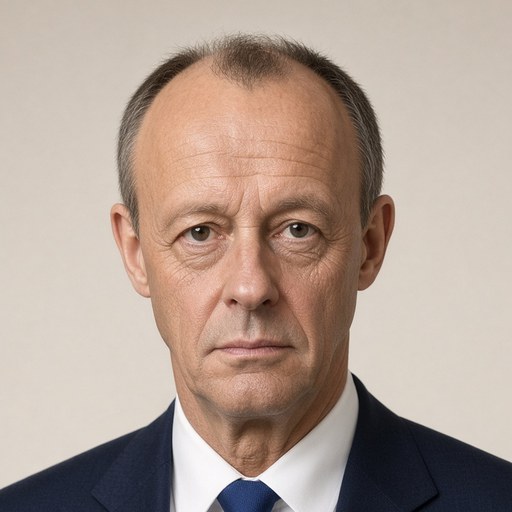
Chancellor's speech at the ceremony marking the 75th anniversary of the BKA 75 years of BKA – a success story
 Friedrich Merz · Chancellor of Germany
- Context
- Merz addressed BKA employees and guests at the ceremony marking the Federal Criminal Police Office's 75th anniversary in Wiesbaden in March 2026.
- Main themes
- BKA 75th anniversary, internal security, fight against crime, institutional history and milestones, counter-terrorism, organized crime, law enforcement modernization, federal-state coordination, democratic rule of law, Nazi-era personnel continuity
- Duration
- ~28 min
- Words
- 3,321
- Sentences
- 248
- Readability
- 44
- Grade
- 11.0
- Syntax
- 2.80
- Vocabulary
- 2.14
Translated from German
The broad sphere of national life a sentence belongs to. Every sentence has an Arena, so it is the denominator the other indices are read against.
Other248 sentences in 118 paragraphs
Dear Mr. President, dear Holger Münch,
dear Federal Minister of the Interior Alexander Dobrindt,
dear former Presidents Ulrich Kersten, Hans-Ludwig Zachert, and Jörg Ziercke,
dear employees of the Federal Criminal Police Office,
dear Minister of the Interior of the State of Hesse, Professor Dr. Roman Poseck, dear colleagues from the German Bundestag,
Mr. Mayor Gert-Uwe Mende,
dear representatives of the Ministry of the Interior, the security authorities, the judiciary, and the trade unions, international guests, my esteemed ladies and gentlemen,
Germany is one of the safest countries in the world. The Federal Criminal Police Office has played a significant role in making this so. The history of the Federal Criminal Police Office is a success story. Ladies and gentlemen, on the occasion of the 75th anniversary of your success story today, I congratulate you personally, but also on behalf of the entire Federal Government, from the bottom of my heart.
Security, especially internal security, is not a stable or guaranteed state. Security is a constant task, the central task of the state. The Federal Criminal Police Office has dedicated itself to this task since its founding in 1951; we saw it in the film. The Federal Criminal Police Office works for the safety and freedom of the citizens in our country.
The Federal Criminal Police Office started with 355 employees
–
we saw it in the film
–
first in Hamburg and from 1952 here in Wiesbaden, in a very provisional building. Today, there are over 9,000 employees
–
we also saw that in the film
–
at three locations, in Wiesbaden, Meckenheim, and Berlin, but also in numerous foreign representations. I was a bit surprised in preparing for this speech today: at over 50 locations around the world.
Ladies and gentlemen, you all at the Federal Criminal Police Office share a mission, namely the fight against crime, to make Germany safer. This mission was already articulated in the
BKA
Act, which came into force on March 15, 1951, in the following sentences:
“The Federation establishes a Federal Criminal Police Office for the cooperation of the Federation and the Länder in criminal police matters. Its task is to combat common criminals, insofar as they operate beyond the territory of a Land or are expected to do so.”
Here, the regulated coordination and central office function of the
BKA
is thus enshrined in a central place in the law to this day. Even in its early days, the
BKA
collected, evaluated, and distributed information. It was responsible for nationwide searches, for criminal technology, and for identification services. Thus, the necessity of a central office was recognized very early on, even though police work in Germany in general, and according to our Basic Law, is and remains a matter for the Länder.
Ladies and gentlemen, even on a festive day like this, we must remember that the Federal Criminal Police Office in its early years was, presumably necessarily, strongly shaped by former members of the police authorities in the National Socialist state. In this initial personnel continuity, it did not differ from other institutions and authorities of the still young Federal Republic of Germany. But this historical burden has since been intensively and critically addressed, thanks in part to former
BKA
President Jörg Ziercke. Mr. Ziercke, thank you very much for the work you have done!
Today, ladies and gentlemen, there is no doubt that the Federal Criminal Police Office and its employees, as well as all security authorities in Germany, stand firmly on the ground of our free democratic basic order.
Crime and criminal structures have always been in flux. Offenders use the latest technical means, gaps in the law, and systemic weaknesses in crime fighting. They exploit them to their advantage. But the Federal Criminal Police Office continuously adapts to this: with new approaches, new methods, and new technologies. That is exactly what we in the Federal Government are working on politically, together with the Länder, for adequate resources and to ensure that the necessary new and adapted powers are taken into account, especially for you at the Federal Criminal Police Office.
I would like to take this opportunity to recall some important milestones in the development of the
BKA
. Some have already been shown in the film.
At the end of the 1960s, the Federal Criminal Police Office was commissioned by the Federal Prosecutor General to conduct its own investigations. In the early 1970s, the Federal Criminal Police Office received independent investigative powers to combat cross-border organized crime, from illegal drug and arms trafficking to money laundering. The
BKA
thus took on more responsibility for the safety of our country.
And then: With the terror of the
RAF
, German security authorities faced a historical test in the 1970s. The
BKA
responded decisively. In 1975, a dedicated department for counter-terrorism was established. The then-President Horst Herold transformed the agency into an effective search apparatus, among other things with the then-new computer- and data-based profiling.
In the 1990s, internal security also took on a European dimension. With the Schengen Area, freedom and mobility in Europe grew, but so did new risks. The
BKA
intensified European cooperation in crime fighting. It not only represented Germany at Interpol, as it had since 1952, but also at Europol.
Ladies and gentlemen, after the attacks of September 11, 2001, the terrorist threat was necessarily reassessed. We remember: A significant part of the preparation for these barbaric terrorist attacks took place in Germany and from Germany.
–
As a consequence, the
BKA
received the necessary expanded powers for threat prevention. Since 2004
–
we also saw that in the film
–
it has been exchanging important information on Islamist and international terrorism with other authorities in the Joint Counter-Terrorism Center. With the Joint Extremism and Terrorism Prevention Center, ladies and gentlemen, the networking was expanded in 2012 to include other areas of politically motivated crime, including extremism, espionage, and proliferation.
We have been observing for some time now that crime is increasingly shifting into the digital realm. The rule of law follows crime there. To effectively combat it, the
BKA
has built capabilities for investigations in cyberspace and for IT forensics and is networking in the National Cyber Defense Center, established in 2011.
Ladies and gentlemen, all of this shows: You, the Federal Criminal Police Office, are adaptable and capable of learning. Often
–
what impresses me the most
–
examples like profiling and cybercrime show that police service can be a driver of innovation. The
BKA
has thus developed into a powerful agency operating nationally and internationally, and this is largely due to you, the employees, the women and men who see their profession as a mission and work daily for the safety of Germany. I hear it from many interlocutors and experience it myself: You are all fully engaged, with passion and professionalism. Thank you very much for this service!
Your important work does not always take place in public. On the contrary, many of you do your work in the office, at the computer, without flashing lights and without cameras, in criminal technical laboratories with state-of-the-art technology, on the latest computers for cyber forensics and investigations in the dark web, in nationally and internationally networked situation centers, in the engine room of your administration.
In the operational area and in the security group, employees also put their lives on the line every day for our personal safety. The Federal President has said it, and I want to say it to you as well: Even for me as Federal Chancellor, you are reliably available for my protection, around the clock and nationwide, at home, in Berlin at the Federal Chancellery, but also while traveling. You accompany me from
Beijing
to the doors of the
Oval Office
in Washington. For this physically and psychologically extremely demanding service, I extend my personal, heartfelt thanks to you.
You all, ladies and gentlemen, each in your place, may be proud of your work for the safety of the citizens of our country. As Federal Chancellor, I want to express my gratitude and recognition to you today, but also the gratitude and recognition of the entire Federal Government and the citizens of our country.
You do not carry out your tasks alone, but always in cooperation with the security authorities of the Federation and the Länder. This is also evident from the look at this festive assembly today. This cooperation in crime fighting is a matter of course for you. Because you know that no security authority can be successful alone, but that success depends significantly on cooperation and especially on the exchange of information and insights with others. Our thanks also go to all other police officers in the Federation and the Länder and to the employees of all security authorities throughout Germany.
You, dear President Münch, have been shaping the fortunes of the
BKA
for ten years now. It is a hallmark of yours that you have learned police work from the ground up and have worked your way up to the top of the
BKA
. What perhaps not everyone here knows, ladies and gentlemen: Holger Münch was himself a personal protector at the beginning of his career, among others for the first Minister-President of the Free State of Saxony, Kurt Biedenkopf. In the
BKA
and beyond, Holger Münch's integrity, his calm, competent, and factual manner is highly valued. Never before has a president stood at the head of this institution for so long. Thank you also for your work, dear Mr. Münch!
Ladies and gentlemen, let us now take a look together at the current security situation in Germany. Because despite the intensive work of the
BKA
and our security authorities, you and I hear it in our environment: More and more people do not feel completely safe in their everyday lives, in their residential areas. Germany is
–
as I said at the beginning
–
doing well in international comparison, yet insecurity is often unfortunately not just a feeling.
This is shown by the Police Crime Statistics. We see a record high in violent crimes. Particularly concerning is the number of knife attacks and also the number of juvenile and non-German suspects. In the digital realm, the damage from cyber crime is growing. We also see a record high in politically motivated crime and violent acts.
This shows: Never before have the demands on the
BKA
, indeed on all our security authorities, been as high as they are today.
–
But we have strong and functional security authorities. Nevertheless: Politics must keep pace with the current challenges.
–
For this, ladies and gentlemen, we want to take care in the Federal Government that I lead. Improving the security situation is a focus of our work from day one. Because we want people in our country to be safe and to feel safe. I am therefore grateful to the Federal Minister of the Interior for tackling this task so resolutely from day one.
However, crucial for security in Germany, for the sense of security of the people in Germany, are not only domestic political factors. We live in times of great global upheaval, a turning point that is accompanied by political uncertainties and new insecurities. People in our country also feel this. Citizens hear daily about hybrid attacks in Germany on our infrastructure, about espionage, sabotage, cyber attacks, drone overflights, and disinformation campaigns on the internet. People are concerned that the Russian war of aggression against Ukraine and the conflict in the Near and Middle East could have an impact on our security here in Germany.
Let me say an open word about the latter: Since the beginning of the military strikes against Iran, the interior ministers of the Federation and the Länder have been coordinating very closely. At the moment, there is no evidence that we should expect an increased threat domestically. Nevertheless, we are ramping up security concepts, reviewing protective measures, and increasing presence, especially for Israeli, Jewish, and American institutions. Their protection is particularly recommended to us, ladies and gentlemen.
The causes of a new insecurity, of a new feeling of insecurity, therefore lie not only within. They also lie outside. Internal security and external security can no longer be separated; I have said this on many occasions. We are making preparations for this new era. We have well-equipped our security agencies, and we are further empowering them, from the federal and state police to the intelligence services and the Bundeswehr. We are investing in our collective security more than ever before in Germany. Germany remains capable of action in security policy, both internally and externally.
A brief look back: In recent years, we have provided extensive financial resources for our security agencies. When the BKA celebrated its 60th anniversary 15 years ago, it had around 5,500 positions. The budget amounted to just under 400 million euros.
–
Today, 15 years later, there are over 8,000 positions and nearly 1.3 billion euros. Let me say this honestly and critically: This immense fiscal and personnel effort was not only a reaction to external developments and threats. It is also a response and an attempt to repair political decisions made internally, namely, that we have allowed uncontrolled, irregular migration for far too long.
That is why it is right that this federal government has made a course correction in migration policy. Illegal migration will be limited as much as possible. We are conducting comprehensive border controls and are consistently increasing the number of deportations. For this, I am particularly grateful to the Minister of the Interior.
Now, ladies and gentlemen, the BKA and our other security agencies must also be able to keep pace in the future. They must ideally maintain a lead over the perpetrators. We are working on this together, legally, technically, and organizationally. I have described the enormous personnel growth of recent years. However, as the Police Crime Statistics show, a mere focus on more personnel in the security agencies is evidently reaching its limits. Today, ladies and gentlemen, it must be even more about making the existing personnel as effective as possible. For this to work, we, the politicians, the legislators, must take action. We must equip the BKA with the necessary new and effective powers. This also applies to other police forces and the intelligence services. By the way, we have agreed on this in the coalition agreement, and we will continue to implement it.
This includes, first and foremost, that we have a clear situational picture. For this, we have established the new National Security Council, the central strategic decision-making and coordination body for the federal government. Ladies and gentlemen, this has been a contentious issue in Germany for 30 years. We have set it in motion within the government in four months. One innovation of this National Security Council compared to the former Federal Security Council is that the president of the BKA, as well as other presidents, are now designated as permanent participants. This underscores once again that we think of internal and external security together. We are integrating the expertise of the BKA into the strategic decisions of the federal government.
It is also clear: All new, all additional powers must be proportionate to be used appropriately against threats. It is not a threat to the individual’s freedom rights when we expand the toolkit of our security agencies; rather, it serves to protect these rights of the people in our country. We must continually ask ourselves: Is the state capable of fulfilling and ensuring the protection promise, the protection obligation for the freedom rights of citizens, especially when the nature of crimes changes, when the threat situation changes; when the digital space becomes a crime scene and various technical challenges arise anew?
–
Our answer is: This protection obligation can only be effectively guaranteed through new, expanded powers.
Let me illustrate this with three examples, and let me start with a major success of the BKA.
Last summer, the server network of a pro-Russian hacker group was shut down in an internationally coordinated action. The BKA and the Central Office for Combating Internet Crime coordinated this police operation. In Germany alone, ladies and gentlemen, around 250 companies, including critical infrastructure and public institutions, were previously affected by the activities of this hacker group. Such attacks now occur almost daily. Just a few days ago, the network of Deutsche Bahn was attacked again. In addition, there are targeted and potentially even more dangerous attacks on critical infrastructures, the economy, the state, and society. Preventive measures alone are not sufficient to protect against such attacks. We must also have the ability to actively counter ongoing cyberattacks to prevent serious consequential damage. The BKA and other federal security agencies should be given the necessary powers for this.
The necessity for further digital powers is also demonstrated by the case of Daniela Klette, which you all know, ladies and gentlemen. The terrorist from the third generation of the RAF was underground for 30 years. You all remember: A tip for her arrest came from a journalist who had used a facial recognition program on the internet. This does not diminish the investigative success of the responsible police authorities. However, these police authorities still lack the legal means to use such software.
That is why it is clear to us: Our police authorities need the powers to conduct automated, AI-based data analyses for very specific purposes. This must not be accompanied by random findings from journalists but must be the result of systematic police work in Germany, ladies and gentlemen. Because that is precisely the central task of the BKA as the central office of the German police: to collect information and evaluate it in a targeted manner using the latest technology, especially in cases of terrorism, serious and organized crime.
–
That is why you also need the power, under strictly defined conditions, to conduct a biometric internet comparison of faces. This must be possible, and we want to make it possible.
Finally, to a particularly challenging task for you: The BKA also needs more opportunities to identify perpetrators and dismantle criminal networks in the fight against child abuse and child pornography.
May I say at this point? I can roughly imagine what a personal burden it is for employees of the Federal Criminal Police Office to work in this area of the most heinous and serious crime. That is precisely why you deserve all the means to dismantle these networks. Therefore, we want to introduce mandatory storage of IP addresses, ladies and gentlemen. This is important, for example, to identify perpetrators in illegal drug and arms trafficking on the internet or to catch online fraudsters.
Ladies and gentlemen, powers have legal bases. I want to say this to everyone who views the police and intelligence services and their actions with skepticism in our country. This is legitimate in a democratic rule of law. However, this skepticism is unfounded in our country. We are a rule of law. In our country, state authorities, civil servants act on the basis of laws and our Basic Law. A review of whether measures were legally and constitutionally compliant in individual cases can be initiated by anyone at any time in our country. For me, this trust in the rule of law, the trust in you, is self-evident. I always advocate that it should be just as self-evident in the broader society as it is in this hall today.
75 years of the Federal Criminal Police Office is, once again, a success story. We are ready to meet the security demands and challenges of the future in a world of new uncertainties. Let us do this together! Let us build on what you have achieved to date! Let us build on the success story of 75 years of the Federal Criminal Police Office in Germany!
Thank you very much and congratulations!
The original German. The tags above are read on the English translation's sentences.
Sehr geehrter Herr Präsident, lieber Holger Münch,
sehr geehrter Herr Bundesinnenminister Alexander Dobrindt,
sehr geehrte ehemalige Präsidenten Ulrich Kersten, Hans-Ludwig Zachert und Jörg Ziercke,
sehr geehrte Mitarbeiterinnen und Mitarbeiter des Bundeskriminalamtes,
sehr geehrter Herr Innenminister des Landes Hessen Professor Dr. Roman Poseck,
liebe Kolleginnen und Kollegen aus dem Deutschen Bundestag,
Herr Oberbürgermeister Gert-Uwe Mende,
sehr geehrte Vertreterinnen und Vertreter des Innenministeriums, der Sicherheitsbehörden, der Justiz, der Gewerkschaften,
internationale Gäste,
meine sehr geehrten Damen und Herren,
Deutschland gehört zu den sichersten Ländern der Welt. Dass dies so ist, dazu hat das Bundeskriminalamt ganz maßgeblich beigetragen. Die Geschichte des Bundeskriminalamtes ist eine Erfolgsgeschichte. Meine Damen und Herren, zu dem heutigen, 75. Geburtstag Ihrer Erfolgsgeschichte gratuliere ich Ihnen persönlich, aber auch im Namen der ganzen Bundesregierung von ganzem Herzen.
Sicherheit, gerade innere Sicherheit, ist kein stabiler, kein garantierter Zustand. Sicherheit ist eine ständige Aufgabe, die zentrale staatliche Aufgabe. Das Bundeskriminalamt hat sich dieser Aufgabe seit seiner Gründung im Jahr 1951 verschrieben; wir haben es im Film gesehen. Das Bundeskriminalamt arbeitet für die Sicherheit und für die Freiheit der Bürgerinnen und Bürger in unserem Land.
Das Bundeskriminalamt hat einmal mit 355 Mitarbeiterinnen und Mitarbeitern angefangen
–
wir haben es im Film gesehen
–
, zuerst in Hamburg und ab 1952 hier in Wiesbaden, in einem sehr provisorischen Gebäude. Heute sind es über 9000 Mitarbeiterinnen und Mitarbeiter
–
auch das haben wir im Film gesehen
–
an drei Standorten, in Wiesbaden, in Meckenheim und in Berlin, aber zusätzlich auch in zahlreichen Auslandsvertretungen. Das hat mich in der Vorbereitung auf diese Rede heute auch ein wenig überrascht: in über 50 Standorten in der ganzen Welt.
Meine Damen und Herren, Sie alle im Bundeskriminalamt verbindet eine Mission, nämlich die Bekämpfung der Kriminalität, also Deutschland sicherer zu machen. Diese Mission wurde schon im
BKA
-Gesetz, das am 15. März 1951 in Kraft getreten ist, in folgende Sätze gefasst:
„Der Bund errichtet ein Bundeskriminalamt zur Zusammenarbeit des Bundes und der Länder in der Kriminalpolizei. Seine Aufgabe ist die Bekämpfung des gemeinen Verbrechers, soweit er sich über das Gebiet eines Landes hinaus betätigt oder voraussichtlich betätigen wird.“
Festgehalten wurde hier an zentraler Stelle im Gesetz also bis heute die geregelte Koordinierungs- und Zentralstellenfunktion des
BKA
. Bereits in seinen Anfängen sammelte, bewertete und verteilte das
BKA
Informationen. Es war zuständig für bundesweite Fahndungen, für den kriminaltechnischen und für den Erkennungsdienst. Schon sehr früh wurde also die Notwendigkeit einer Zentralstelle gesehen, obwohl die Polizeiarbeit in Deutschland im Allgemeinen und nach unserem Grundgesetz ja Sache der Länder ist und bleibt.
Meine Damen und Herren, auch an einem Festtag wie diesem müssen wir daran erinnern, dass das Bundeskriminalamt in seinen Anfangsjahren, vermutlich notwendigerweise, personell stark von ehemaligen Angehörigen der Polizeibehörden im nationalsozialistischen Staat geprägt war. In dieser anfänglichen personellen Kontinuität unterschied es sich nicht von anderen Institutionen und Behörden der noch jungen Bundesrepublik Deutschland. Aber diese historische Belastung ist inzwischen auch dank des ehemaligen
BKA
-Präsidenten Jörg Ziercke intensiv und kritisch aufgearbeitet worden. Herr Ziercke, herzlichen Dank dafür, dass Sie diese Arbeit geleistet haben!
Heute, meine Damen und Herren, besteht kein Zweifel, dass das Bundeskriminalamt und seine Mitarbeiterinnen und Mitarbeiter ebenso wie übrigens alle Sicherheitsbehörden in Deutschland fest auf dem Boden unserer freiheitlich demokratischen Grundordnung stehen.
Kriminalität und Kriminalitätsstrukturen waren und sind stets im Wandel. Straftäter nutzen die neuesten technischen Mittel, Lücken in den Gesetzen und systemische Schwächen in der Verbrechensbekämpfung. Sie nutzen sie zu ihrem Vorteil. Aber darauf stellt sich das Bundeskriminalamt beständig ein: mit neuen Ansätzen, mit neuen Methoden und mit neuen Technologien. Genau dafür, meine Damen und Herren, arbeiten wir in der Bundesregierung im Bund und mit den Ländern politisch, für ausreichende Ressourcen und dafür, dem mit den notwendigen neuen und angepassten Befugnissen Rechnung zu tragen, auch und gerade für Sie im Bundeskriminalamt.
Ich möchte bei dieser Gelegenheit an einige wichtige Meilensteine der Entwicklung im
BKA
erinnern. Einige wurden im Film schon gezeigt.
Ende der Sechzigerjahre wurde das Bundeskriminalamt vom Generalbundesanwalt mit eigenen Ermittlungen beauftragt. Anfang der Siebzigerjahre erhielt das Bundeskriminalamt eigenständige Ermittlungsbefugnisse zur Bekämpfung der grenzüberschreitenden organisierten Kriminalität, vom illegalen Drogen- und Waffenhandel bis hin zur Geldwäsche. Das
BKA
übernahm damit mehr Verantwortung für die Sicherheit unseres Landes.
Und dann: Mit dem Terror der
RAF
standen deutsche Sicherheitsbehörden in den Neunzehnhundertsiebzigerjahren vor einer historischen Bewährungsprobe. Das
BKA
reagierte entschlossen. 1975 entstand eine eigene Abteilung zur Terrorismusbekämpfung. Der damalige Präsident Horst Herold machte die Behörde zu einem effektiven Fahndungsapparat, unter anderem mit der damals neuen computer- und datenbasierten Rasterfahndung.
In den Neunzehnhundertneunzigerjahren erhielt die innere Sicherheit auch eine europäische Dimension. Mit dem Schengen-Raum wuchsen Freiheit und Mobilität in Europa, aber damit auch neue Risiken. Das
BKA
intensivierte die europäische Zusammenarbeit bei der Kriminalitätsbekämpfung. Es übernahm nicht nur wie bereits seit 1952 die Vertretung Deutschlands bei Interpol, sondern auch bei Europol.
Meine Damen und Herren, nach den Anschlägen vom 11. September 2001 wurde die terroristische Bedrohung notwendigerweise neu bewertet. Wir erinnern uns: Ein erheblicher Teil der Vorbereitung dieser barbarischen Terroranschläge erfolgte in Deutschland und aus Deutschland heraus.
–
In der Konsequenz erhielt das
BKA
die notwendigen, erweiterten Befugnisse zur Gefahrenabwehr. Seit 2004
–
auch das haben wir im Film gesehen
–
tauscht es im Gemeinsamen Terrorismusabwehrzentrum wichtige Informationen zum islamistischen und internationalen Terrorismus mit anderen Behörden aus. Mit dem Gemeinsamen Extremismus- und Terrorismusabwehrzentrum, meine Damen und Herren, wurde die Vernetzung ab 2012 auf weitere Bereiche politisch motivierter Kriminalität, auf Extremismus, Spionage und Proliferation ausgeweitet.
Nun beobachten wir seit geraumer Zeit, dass sich Kriminalität zunehmend in den digitalen Raum verlagert. Der Rechtsstaat folgt der Kriminalität dorthin. Zur effektiven Bekämpfung hat das
BKA
Fähigkeiten zur Ermittlung im
Cyber
raum und zur
IT
-Forensik aufgebaut und vernetzt sich im 2011 gegründeten Nationalen
Cyber
-Abwehrzentrum.
Meine Damen und Herren, das alles zeigt: Sie, das Bundeskriminalamt, Sie sind anpassungs- und lernfähig. Es sind oftmals
–
das beeindruckt mich persönlich am meisten
–
Beispiele wie Rasterfahndung und
Cybercrime
, die zeigen, dass Polizeidienst Innovationstreiber sein kann. Das
BKA
hat sich so zu einer schlagkräftigen und national wie international agierenden Behörde entwickelt, und das maßgeblich durch Sie, durch die Mitarbeiterinnen und Mitarbeiter, durch Frauen und Männer, die ihren Beruf als Auftrag sehen und täglich für die Sicherheit Deutschlands arbeiten. Ich höre es von vielen Gesprächspartnern und erlebe es auch selbst: Sie alle sind mit vollem Engagement, mit Leidenschaft und mit Professionalität dabei. Herzlichen Dank für diesen Dienst!
Ihre wichtige Arbeit findet nicht immer in der Öffentlichkeit statt. Im Gegenteil, viele von Ihnen leisten Ihre Arbeit im Büro, am Computer, ohne Blaulicht und ohne Kamera, in kriminaltechnischen Laboren mit modernster Technik, am neuesten Computer für
Cyber
forensik und für Ermittlungen im Darknet, in national und international vernetzten Lagezentren, im Maschinenraum Ihrer Verwaltung.
Im operativen Bereich und in der Sicherungsgruppe stehen die Beschäftigten auch für unsere persönliche Sicherheit tagtäglich mit ihrem Leben ein. Der Bundespräsident hat es gesagt, und auch ich will es Ihnen sagen: Auch für mich als Bundeskanzler stehen Sie für meinen Schutz verlässlich zur Verfügung, und zwar rund um die Uhr und deutschlandweit, zu Hause, in Berlin im Bundeskanzleramt, aber auch auf Reisen. Sie begleiten mich von
Beijing
bis an die Türen des
Oval Office
in Washington. Für diesen physisch und auch psychisch äußerst anspruchsvollen Dienst gilt Ihnen mein ganz persönlicher, tief empfundener Dank.
Sie alle, meine Damen und Herren, jeder an seinem und jede an ihrem Platz, Sie dürfen stolz auf ihre Arbeit für die Sicherheit der Bürgerinnen und Bürger unseres Landes sein. Als Bundeskanzler will ich Ihnen heute meinen Dank und meine Anerkennung sagen, aber auch den Dank und die Anerkennung der gesamten Bundesregierung und der Bürgerinnen und Bürger unseres Landes.
Sie bewältigen Ihre Aufgaben nicht allein, sondern immer im Zusammenspiel der Sicherheitsbehörden von Bund und Ländern. Das zeigt auch der Blick heute in diese Festversammlung. Diese Zusammenarbeit in der Kriminalitätsbekämpfung ist für Sie selbstverständlich. Denn Sie wissen, dass keine Sicherheitsbehörde allein erfolgreich sein kann, sondern dass Erfolg ganz wesentlich von der Zusammenarbeit und vor allem vom Austausch von Informationen und Erkenntnissen mit anderen abhängt. Unser Dank gilt deshalb auch allen anderen Polizistinnen und Polizisten in Bund und Ländern und den Beschäftigten aller Sicherheitsbehörden in ganz Deutschland.
Sie, sehr geehrter Herr Präsident Münch prägen nun seit zehn Jahren die Geschicke des
BKA
. Es zeichnet Sie aus, dass Sie die Polizeiarbeit von der Pike auf gelernt und sich bis an die Spitze des
BKA
hochgearbeitet haben. Was vielleicht nicht alle hier wissen, meine Damen und Herren: Holger Münch war selbst zu Beginn seiner Karriere ein Personenschützer, unter anderem für den ersten Ministerpräsidenten des Freistaates Sachsen, für Kurt Biedenkopf. Im
BKA
und darüber hinaus wird Holger Münchs Integrität, seine ruhige, kompetente und sachliche Art, sehr geschätzt. Noch nie stand ein Präsident so lange an der Spitze dieser Institution. Vielen Dank auch für Ihre Arbeit, sehr geehrter Herr Münch!
Meine Damen und Herren, lassen Sie uns nun gemeinsam einen Blick auf die aktuelle Sicherheitslage in Deutschland werfen. Denn trotz der intensiven Arbeit des
BKA
und unserer Sicherheitsbehörden hören Sie und höre ich es in unserem Umfeld: Immer mehr Menschen fühlen sich in ihrem Alltag, in ihren Wohn[gebieten]
nicht mehr rundheraus sicher. Deutschland steht
–
ich sagte es eingangs
–
im internationalen Vergleich zwar gut da, dennoch ist Unsicherheit oftmals leider nicht nur ein Gefühl.
Das zeigt die Polizeiliche Kriminalstatistik. Wir sehen einen Höchststand bei Gewaltverbrechen. Besonders die Zahl der Messerangriffe und auch die Zahl der jugendlichen und nicht deutschen Tatverdächtigen ist besorgniserregend. Im digitalen Raum wächst der Schaden durch
Cyber
kriminalität. Wir sehen zudem einen Höchststand der politisch motivierten Kriminalität und auch der Gewalttaten.
Das zeigt: Wohl noch nie waren die Anforderungen an das
BKA
, ja an alle unsere Sicherheitsbehörden so hoch wie heute.
–
Aber wir haben starke und funktionsfähige Sicherheitsbehörden. Dennoch: Die Politik muss mit den aktuellen Herausforderungen weiter Schritt halten.
–
Dafür, meine Damen und Herren, wollen wir in der von mir geführten Bundesregierung Sorge tragen. Die Sicherheitslage zu verbessern, das ist ein Schwerpunkt unserer Arbeit vom ersten Tag an. Denn wir wollen, dass die Menschen in unserem Land sicher sind und sich auch sicher fühlen. Ich bin dem Bundesinnenminister daher dankbar dafür, dass er diese Aufgabe vom ersten Tag an so entschlossen angegangen ist.
Entscheidend für die Sicherheit in Deutschland, für das Sicherheitsgefühl der Menschen in Deutschland sind jedoch nicht nur innenpolitische Faktoren. Wir leben in Zeiten großer globaler Umbrüche, eines Epochenbruchs, der mit politischen Unwägbarkeiten und neuen Unsicherheiten einhergeht. Auch das spüren die Menschen in unserem Land. Bürgerinnen und Bürger hören täglich von hybriden Angriffen in Deutschland auf unsere Infrastruktur, von Spionage, von Sabotage, von
Cyber
angriffen, von Drohnenüberflügen, von Desinformationskampagnen im Netz. Die Menschen sorgen sich, dass der russische Angriffskrieg gegen die Ukraine und der Konflikt im Nahen und Mittleren Osten Auswirkungen auf unsere Sicherheit hier in Deutschland haben könnten.
Lassen Sie mich gerade zu Letzterem ein offenes Wort sagen: Seit dem Beginn der Militärschläge gegen Iran stimmen sich die Innenministerinnen und Innenminister von Bund und Ländern sehr eng ab. Es gibt im Augenblick keine Erkenntnisse, wonach wir im Inland von einer erhöhten Gefährdung ausgehen müssten. Wir fahren die Sicherheitskonzepte trotzdem hoch, überprüfen Schutzmaßnahmen, erhöhen die Präsenz insbesondere für israelische, jüdische und amerikanische Einrichtungen. Deren Schutz ist uns in besonderer Weise anempfohlen, meine Damen und Herren.
Die Ursachen für eine neue Unsicherheit, für ein neues Unsicherheitsgefühl liegen also nicht nur im Inneren. Sie liegen auch im Äußeren. Innere Sicherheit und äußere Sicherheit sind nicht mehr voneinander zu trennen; das habe ich schon zu vielen Gelegenheiten gesagt. Wir treffen Vorkehrungen für diese neue Zeit. Wir haben unsere Sicherheitsbehörden gut ausgestattet, und wir befähigen sie weiter, von den Polizeien des Bundes und der Länder über die Nachrichtendienste bis hin zur Bundeswehr. In unsere gemeinsame Sicherheit investieren wir so viel wie nie zuvor in Deutschland. Deutschland bleibt sicherheitspolitisch handlungsfähig, im Inneren wie nach außen.
Ein kurzer Blick zurück: Wir haben in den vergangenen Jahren umfassende finanzielle Mittel für unsere Sicherheitsbehörden zur Verfügung gestellt. Als das
BKA
vor 15 Jahren seinen 60. Geburtstag feierte, hatte es rund 5500 Planstellen. Der Haushalt umfasste knapp 400 Millionen Euro.
–
Heute, 15 Jahre später, sind es über 8000 und knapp 1,3 Milliarden Euro. Lassen Sie es mich so ehrlich und kritisch sagen: Dieser immense fiskalische und personelle Kraftakt war nicht nur eine Reaktion auf äußere Entwicklungen und Bedrohungen. Er ist auch eine Reaktion und der Versuch einer Reparatur politischer Entscheidungen im Innern, namentlich, dass wir viel zu lange Zeit ungesteuerte, irreguläre Migration zugelassen haben.
Deshalb ist es richtig, dass diese Bundesregierung einen Kurswechsel in der Migrationspolitik vollzogen hat. Illegale Migration wird, soweit es geht, begrenzt. Wir führend flächendeckend Grenzkontrollen durch und bauen die Zahl der Rückführungen konsequent aus. Auch dafür bin ich dem Innenminister in besonderer Weise dankbar.
Nun, meine Damen und Herren, das
BKA
und unsere anderen Sicherheitsbehörden müssen auch in Zukunft weiter Schritt halten können. Sie müssen bestenfalls einen Vorsprung vor den Tätern behaupten. Hieran arbeiten wir gemeinsam, und zwar rechtlich, technisch und organisatorisch. Ich habe den enormen Personalaufwuchs der vergangenen Jahre geschildert. Wie aber der Blick in die Polizeiliche Kriminalstatistik zeigt, stößt der bloße Fokus auf mehr Personal in den Sicherheitsbehörden ersichtlich an seine Grenzen. Heute, meine Damen und Herren, muss es noch stärker darum gehen, das nun vorhandene Personal bestmöglich einzusetzen. Damit das funktioniert, müssen wir, die Politik, muss der Gesetzgeber tätig werden. Wir müssen das
BKA
mit den notwendigen neuen und wirksamen Befugnissen ausstatten. Das gilt auch für andere Polizeien und die Nachrichtendienste. Das haben wir übrigens im Koalitionsvertrag so vereinbart, und wir werden es weiter umsetzen.
Dazu gehört zuallererst, dass wir ein klares Lagebild haben. Dafür haben wir den neuen Nationalen Sicherheitsrat geschaffen, das zentrale, strategische Entscheidungs- und Koordinierungsgremium für die Bundesregierung. Meine Damen und Herren, darüber wurde in Deutschland 30 Jahre streitig diskutiert. Wir haben es in der Regierung innerhalb von vier Monaten auf den Weg gebracht. Eine Neuerung dieses Nationalen Sicherheitsrats gegenüber dem ehemaligen Bundessicherheitsrat ist übrigens, dass der Präsident des
BKA
wie auch andere Präsidenten nun als ständige Teilnehmer vorgesehen sind. Das unterstreicht noch einmal, dass wir innere und äußere Sicherheit zusammendenken. Wir binden die Expertise des
BKA
in die strategischen Entscheidungen der Bundesregierung ein.
Klar ist zudem: Alle neuen, alle zusätzlichen Befugnisse müssen verhältnismäßig sein, um angemessen gegen Gefahren eingesetzt zu werden. Es ist keine Bedrohung der Freiheitsrechte des Einzelnen, wenn wir das Instrumentarium unserer Sicherheitsbehörden erweitern, sondern es gilt gerade dem Schutz dieser Rechte der Menschen in unserem Land. Wir müssen uns immer wieder neu fragen: Ist der Staat in der Lage, das Schutzversprechen, die Schutzpflicht für die Freiheitsrechte der Bürgerinnen und Bürger, zu erfüllen und zu gewährleisten, gerade dann, wenn die Art der Straftaten, wenn sich die Bedrohungslage verändert; wenn der digitale Raum zum Tatort wird und vielfältige technische Herausforderungen neu hinzukommen?
–
Unsere Antwort ist: Diese Schutzpflicht kann effektiv nur durch neue, erweiterte Befugnisse gewährleistet werden.
Lassen Sie mich das an drei Beispielen veranschaulichen, und lassen Sie mich dabei mit einem großen Erfolg des
BKA
beginnen.
Im vergangenen Sommer konnte das Servernetz einer prorussischen
Hacker
gruppe in einer international abgestimmten Aktion stillgelegt werden. Das
BKA
und die Zentralstelle zur Bekämpfung der Internetkriminalität haben diese Polizeioperation koordiniert. Allein in Deutschland, meine Damen und Herren, waren zuvor rund 250 Unternehmen, darunter auch kritische Infrastruktur, und öffentliche Einrichtungen von den Aktivitäten dieser
Hacker
gruppe betroffen. Derartige Angriffe gibt es mittlerweile fast täglich. Vor wenigen Tagen wurde das Netz der Deutschen Bahn erneut angegriffen. Hinzu kommen gezielte und potenziell noch gefährlichere Angriffe auf kritische Infrastrukturen, Wirtschaft, Staat und Gesellschaft. Gegen solche Angriffe schützen präventive Maßnahmen allein nicht hinreichend. Wir müssen auch die Möglichkeit haben, laufende
Cyber
angriffe aktiv zu unterbinden, um gravierende Folgeschäden zu verhindern. Das
BKA
und andere Sicherheitsbehörden des Bundes sollen dafür die notwendigen Befugnisse bekommen.
Dass weitere digitale Befugnisse unabdingbar sind, zeigt auch der Fall von Daniela Klette, den Sie alle kennen, meine Damen und Herren. Die Terroristin aus der dritten Generation der
RAF
war 30 Jahre lang untergetaucht. Sie alle erinnern sich: Ein Hinweis zur Festnahme kam von einem Journalisten, der ein Gesichtserkennungsprogramm im Internet genutzt hatte. Das schmälert nun keineswegs den Ermittlungserfolg der zuständigen Polizeibehörden. Aber diesen Polizeibehörden fehlen bis heute die rechtlichen Mittel, um eine solche Software einsetzen zu können.
Deshalb ist für uns klar: Unsere Polizeibehörden brauchen für ganz bestimmte Zwecke die Befugnisse, automatisierte,
KI
-basierte Datenanalysen vorzunehmen. Das darf nicht mit Zufallsfunden von Journalisten einhergehen, sondern muss Ergebnis systematischer Polizeiarbeit in Deutschland sein, meine Damen und Herren. Denn genau das ist die zentrale Aufgabe des
BKA
als Zentralstelle der deutschen Polizei: Informationen zu sammeln und diese auf dem neuesten Stand der Technik zielgerichtet auszuwerten, vor allem bei Terrorismus, bei schwerer und organisierter Kriminalität.
–
Deshalb brauchen Sie unter eng definierten Voraussetzungen auch die Befugnis, einen biometrischen Internetabgleich von Gesichtern zu machen. Das muss möglich sein, und das wollen wir möglich machen.
Schließlich zu einer besonders herausfordernden Arbeit für Sie: Auch für den Kampf gegen Kindesmissbrauch und Kinderpornografie braucht das
BKA
, brauchen Sie mehr Möglichkeiten, um Täter zu identifizieren und kriminelle Netzwerke zu zerschlagen.
Darf ich das an dieser Stelle sagen? Ich kann mir ungefähr vorstellen, welche persönliche Belastung es für Mitarbeiterinnen und Mitarbeiter des Bundeskriminalamtes ist, in diesem Bereich übelster und schwerster Kriminalität tätig zu sein. Gerade deshalb verdienen Sie alle Möglichkeiten, um diese Netzwerke zu zerschlagen. Deshalb wollen wir die verpflichtende Speicherung von
IP
-Adressen einführen, meine Damen und Herren. Das ist wichtig, um zum Beispiel auch beim illegalen Drogen- und Waffenhandel im Internet Täter zu identifizieren oder
Online
betrüger zu fassen.
Meine Damen und Herren, Befugnisse haben Rechtsgrundlagen. Das will ich allen sagen, die in unserem Land Polizei und Nachrichtendienste und ihr Tun mit Skepsis betrachten. Das ist im demokratischen Rechtsstaat legitim. Diese Skepsis aber ist in unserem Land unbegründet. Wir sind ein Rechtsstaat. Bei uns handeln staatliche Stellen, handeln Beamtinnen und Beamte auf der Grundlage von Gesetzen und auf der Grundlage unseres Grundgesetzes. Eine Überprüfung, ob Maßnahmen im Einzelfall rechtskonform und verfassungskonform waren, kann in unserem Land jeder zu jeder Zeit veranlassen. Für mich ist dieses Vertrauen in den Rechtsstaat, das Vertrauen in Sie, selbstverständlich. Ich werbe stets dafür, dass es in der Breite der Gesellschaft genauso selbstverständlich ist wie in diesem Saal hier heute
75 Jahre Bundeskriminalamt, das ist, noch einmal, eine Erfolgsgeschichte. Wir sind bereit, auch den Sicherheitsanforderungen und den Herausforderungen der Zukunft in einer Welt neuer Unsicherheiten zu begegnen. Lassen Sie uns das gemeinsam tun! Lassen Sie uns an das anknüpfen, was Sie bis heute erreicht haben! Lassen Sie uns an die Erfolgsgeschichte von 75 Jahren des Bundeskriminalamts in Deutschland anknüpfen!
Herzlichen Dank und herzlichen Glückwunsch!