




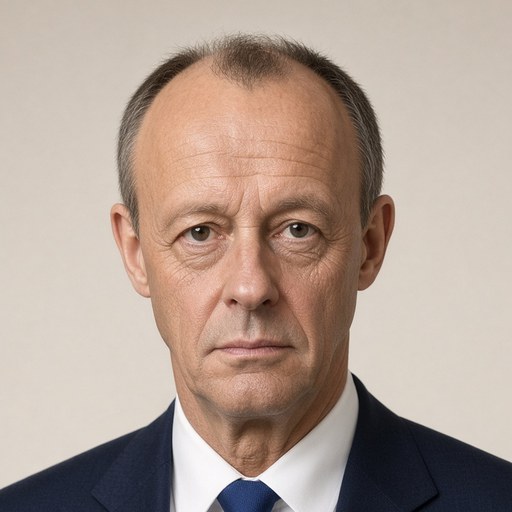
Government statement by Chancellor Friedrich Merz to the European Council on March 19/20, 2026, before the German Bundestag on March 18, 2026, in Berlin:
 Friedrich Merz · Chancellor of Germany
- Context
- Merz addressed the Bundestag on March 18, 2026, delivering a government statement ahead of the European Council summit on March 19–20, 2026, in Brussels.
- Main themes
- European unity and sovereignty, German economic reform, geopolitical upheaval and great power competition, freedom and democracy, security and defense, competitiveness and investment, irregular migration, bureaucracy reduction, social security reform, digitization and modernization, European Council preparations, March 18 democracy commemoration
- Duration
- ~32 min
- Words
- 3,871
- Sentences
- 200
- Readability
- 51
- Grade
- 10.9
- Syntax
- 2.92
- Vocabulary
- 2.02
Translated from German
The broad sphere of national life a sentence belongs to. Every sentence has an Arena, so it is the denominator the other indices are read against.
Other200 sentences in 60 paragraphs
Madam President!
Ladies and gentlemen!
May I begin this government statement by saying: Thank you for the words, Madam President, that you have just found on this day regarding the value of freedom, the rule of law, peace, and democracy. March 18 is a day that, in my opinion, has not yet received the proper significance in the series of commemorative days in our country.
In this world in which we live, peace and freedom, the rule of law and democracy matter more than many of us may have imagined at the beginning of our political work. Therefore, once again, heartfelt thanks! I would also like to express this to the Federal President, who has designated this day as the day of our democracy. Thank you very much!
Where we can no longer act freely, freedom is indeed lost. And that is the fundamental feeling of many people in our country. They sense it and feel that we are also losing our scope for action in our society. We are experiencing geopolitical and geo-economic upheavals like we haven't seen in a long time. We are facing a backlog of reforms in the European Union (EU) and also here in Germany.
All of this has consequences. The scope for development is narrowing for the state, but above all for the people, for businesses, for employees, for each and every one of us. We are experiencing this through rising living costs once again, even at the gas stations. We are experiencing this through a stagnating economy. We are experiencing this through dwindling planning security and newly emerging supply shortages – all accompanied by an excess of bureaucracy that drains our energy.
This federal government has set out to reopen and expand the scope for action for Germany – not for the state, but for the citizens of our country, for our businesses, from craft enterprises to industrial companies. This is what it is all about, especially in these days, weeks, and months.
We want to ensure through the policies of the federal government that these opportunities for development and decision-making exist again for everyone in our country, that there is room for courage, for investments, for innovations, for experiments, and above all for the many potentials that still exist in our country. This is the goal we have set for ourselves. And we will work towards this goal with great perseverance.
We are doing this on the international stage by creating new opportunities for our export-oriented economy. We are doing this with a comprehensive reform program domestically, by reopening economic opportunities for greater competitiveness of our economy, by digitizing and modernizing the state and society, by reviewing our social security systems and fundamentally reforming them where necessary, by pushing back irregular migration, and by empowering our security agencies and especially our armed forces for the new era. I would like to express my heartfelt thanks from this place to all those who are participating in these efforts – and they are significant efforts.
We are ensuring that there are new opportunities for action in Europe as well. The world is developing into a difficult situation for us in terms of a new order of great powers. We feel how the actors of this new power order influence our lives and limit our possibilities. I want to make it very clear at the beginning of this government statement: Under these conditions, a united Europe is more than ever the only guarantee and the most important guarantee we have for our future in Germany.
This has never been more palpable than in these days and weeks. United, but only united, we European states also have a power potential in our hands in this emerging new era. This power potential is great. But we must become aware of it, and we must also use it together.
I note that among our European partners there is now a pronounced will to use this power potential to assert rules and fairness among the states of this world, to uphold them where possible, and to renew them where we can. We all benefit from this. The whole world can benefit from this.
It is an ancient insight, but therefore not wrong; we may particularly feel how right this insight is in these months: When something begins to fade that was important to you and perhaps not always consciously, the will to assert oneself, to stand up for what one suddenly recognizes as essential and indispensable, also grows, standing up in the sense of greater self-respect. And exactly at this point, we stand today.
I want to say it even more clearly: We do not want to sell ourselves short any longer in this European Union of 450 million inhabitants – 100 million more than in the United States of America. We identify our interests and at the same time identify the means of power to enforce these interests. We are learning: The others are also dependent on us, not just we on them. And we are learning that we can use this, yes, we must use it. We are rediscovering the well-known connection between freedom and power, between security and economic strength.
I have said it here before and I repeat it today: We Europeans must take our security and the defense of our freedom into our own hands in a united and determined manner. And we must also restore the competitiveness of our economy in a united and determined manner. We have understood this here in Berlin – at least most of us – and in the European Union. We are beginning to act accordingly in this European Union.
This afternoon, I am traveling to the European Council in Brussels, where you are not needed, ladies and gentlemen from the AfD. I am traveling to Brussels to discuss security and our economic strength in depth. This time, we will focus primarily on the issue of competitiveness. It was us, it was the federal government, that brought this topic to the center of the European debate. At my suggestion last month, in February, we had intensive discussions among the heads of state and government about good ideas and proposals for the further development of the European internal market.
Now, tomorrow, it is about reaching concrete decisions. Given the geopolitical situation and its impact on us in Europe, this is an ambitious agenda for European competitiveness, and it is a key to our strength. We want to implement the first part of this agenda as early as 2026. It is also the guideline for the Multiannual Financial Framework, which we will decide in Brussels by the end of the year.
That is an expectation I am taking to Brussels: We are shedding self-imposed shackles and unleashing impulses for a new growth dynamic. And we are taking the decisive steps to strengthen and deepen the European internal market.
Let me give a very concrete example: With the so-called 28th regime, the long-awaited proposal for a uniform European company law form has finally been presented as of today – exactly as of today. This is a great opportunity, especially for young innovative companies, for the start-ups that are struggling with bureaucracy and 27 different legal systems in Europe. With this 28th regime, we now have a solution. And I will advocate for us to pass it by the end of the year.
Europe is a community of law. If our companies can now rely on a uniform legal system and a uniform legal form, we are unleashing new forces, especially among young and smaller companies. That is exactly what we want to achieve.
We have drawn up a roadmap for the dual goal: We want a common savings and investment union or also a capital market union and a fully integrated European energy internal market. Private investments and long-term affordable energy prices are equally key to sustainable growth and to the strategic independence of Europe.
The reduction of bureaucracy will also be on the agenda at the European Council again. I have insisted on this very strongly. It is very simple: The longer our companies, especially the medium-sized businesses, have to overcome these growth hurdles – and this bureaucracy is nothing but unnecessary growth hurdles – the more energy we waste, and they waste with us. We are giving away a competitive advantage that we still have and that we should now utilize.
In this context, I would like to mention another very concrete example: artificial intelligence. If we want more industrial artificial intelligence made in Europe – and we have the actors of this innovation here in Europe – we need to streamline and simplify the rules at the European level and create more leeway here as well. Europe is regulating too much in the area of artificial intelligence. This hinders growth potential and prevents us from fully exploiting the opportunities we have.
I therefore expect nothing more and nothing less than for the Commission to comb through the entirety of existing EU law. The Commission must answer two simple questions: Where can existing laws be simplified? And where can overregulations be eliminated without replacement?
I expect the Commission to examine with the same rigor with which it has issued new rules in the past, where and how existing laws and legislative proposals can be withdrawn that burden our citizens and our businesses in Europe. What we do not need in terms of regulation must go.
So, something must change fundamentally in this regard in Europe. Therefore, the role of the German federal government in Europe is fundamentally and consistently that of a driver in terms of reducing bureaucracy. In the meantime, a certain momentum has also built up for this. As you probably all know, I wrote a letter to the President of the European Council in October of last year. This letter, which dealt with reducing bureaucracy, was spontaneously joined by 21 heads of state and government of the European Union.
In February of this year, we in the German federal government, together with Italy and Belgium, launched another initiative for this purpose. Here too, the vast majority of member states have followed our proposals. This is encouraging. But I also say: It is still a long and rocky road to overcome the forces of inertia in European bureaucracy in Brussels.
In this time of a new world order, it is crucial that we secure and expand our scope for action; trade policy is also a central instrument for this. The rules-based international order, the rules-based global trading order, has been a prerequisite for the prosperity we have today in Germany. It is therefore in our own interest that it continues to exist. This means: We want to support it, and we want to further develop it by deepening existing partnerships worldwide, by forging new partnerships, and by concluding new free trade agreements.
In recent months, there has been, as I would put it, a steep learning curve in Europe. The Commission is working with great determination on new free trade agreements. The agreement with the South American Mercosur countries has now been signed by all despite your resistance, and the interim agreement will soon be applied provisionally. Agreements with India, Mexico, and Indonesia have been concluded and are on the way to being implemented. Negotiations with Australia are in the final stretch.
This is politics that creates opportunities for action. Each of these agreements means new design possibilities for European companies, means new opportunities for the German medium-sized sector, for German crafts, for German industry. Each agreement means a lower risk of supply chain disruptions through greater diversification, means more resilience, means more security against the geo-economic upheavals we must continue to expect.
I would also like to add this: Despite all the challenges, we in the German federal government are also working on stabilizing trade relations between the USA and Europe. I personally told the American President during my visit two weeks ago in Washington that I expect the customs agreement between Europe and the United States to be implemented soon. This also concerns the colleagues in the European Parliament, whom I kindly ask to clear the way for this agreement at the European level.
I have emphasized just as clearly how urgent and essential it is for the United States of America and Europe to work together now towards a just peace in Ukraine. This is a matter of security, freedom, and peace for the entire transatlantic space and not merely a question of the territorial integrity of a large European country. It is a matter of humanity and justice. It is also a matter of asserting what we proudly call the free world in the part of the world where we live.
Let me add this: Ukraine has long been ready for peace negotiations. Russia, on the other hand, has systematically undermined all peace efforts so far. And the brutal Russian attacks, especially against the Ukrainian civilian population and against Ukrainian energy infrastructure, continue unabated.
It is therefore imperative that we increase the pressure on Moscow, and that the USA and European partners do so together. We have reliable intelligence that the Russian economy is suffering massively from this war and from our sanctions. And that is precisely the lever we will continue to work on. – Yes, Mr. Tino Chrupalla and Stefan Keuter, you may have different insights, and that may indeed be the case during your luxurious visits to Moscow. I can well imagine that you have different insights. Thank you for your interjections. The reality of life for the people in Ukraine is different from what you, ladies and gentlemen, experience at your cocktail receptions at the Russian embassy here in Berlin.
The reality there is: bombings of children's hospitals, destruction of energy infrastructure, a country that has endured winter at minus 15 to minus 20 degrees – without receiving a single word of compassion from this faction here in the German Bundestag. That is the reality of life.
And that means quite practically – and we want to decide this tomorrow –: We must quickly reach an agreement in the EU on the so-called 20th sanctions package. And we must also urgently disburse the already agreed loan of 90 billion euros for Ukraine. I will advocate for this vigorously tomorrow. And we must not take into account a single country in the European Union that is currently building this blockade in Europe for domestic political reasons, due to the election campaign being conducted there.
Allow me to make this remark as well: I have also told the American president that in the event of a lasting peace arrangement in Ukraine, and that a contribution from Europeans is expected – and rightly so – we will of course sit at the table from the very beginning and conduct negotiations on what security guarantees for Ukraine might look like. It cannot be that negotiations are conducted solely between Russia and the USA over the heads of Ukraine and the Europeans. That is unacceptable from our perspective.
Closely linked to our efforts for Euro-Atlantic security are the developments in the Near and Middle East. The ongoing war there is a great concern for all of us. For years and decades, the Iranian regime has broken rule after rule, spread terror across the world, and destabilized the neighborhood. This regime bears responsibility for the current crisis in the region.
We, the federal government, share with Israel and the United States the goal that Iran can no longer pose a threat in the future – neither to Israel nor to the neighboring states in the region. The times when the Iranian regime could destabilize and threaten other states must come to an end.
We wish for the Iranian people to be able to take their fate into their own hands and to bring about a legitimate government through democratic elections.
At the same time, we have also made it clear that we still have many questions about this war. To this day, there is no convincing concept of how this operation could succeed. Washington has not consulted us and has not deemed European assistance necessary. We would have advised against pursuing this path as it is currently being taken.
That is why we have stated: As long as the war continues, we will not participate in ensuring free shipping in the Strait of Hormuz, for example, with military means. So far, there is no plan for that. And there is also no mandate from the United Nations, the European Union, or NATO.
This does not explicitly exclude that we work diplomatically towards a quick end to the war; we are doing that. I would like to take this opportunity to sincerely thank the Federal Foreign Minister for being the first and one of the few to travel to the region after the outbreak of hostilities and to represent European interests there.
What I am saying here does not exclude that we will contribute to establishing a peace order in the region after the end of hostilities. I have made proposals on this before. If the framework conditions are right, we will not shy away from a debate about free shipping, for example in the Strait of Hormuz, after the end of the war.
We always want to maintain the best possible alignment with our European neighbors; I am in contact with Emmanuel Macron, Keir Starmer, and Giorgia Meloni almost daily on this.
We stand by our partners in the region, including in the Gulf States, which Iran is trying to drag into this war ruthlessly and brutally.
We do not want this war to become a burden for the transatlantic partnership. We want this partnership, and we need it. That is why we are speaking at all levels with Washington. In doing so, we are doing what I said a month ago at the Munich Security Conference: We are seeking transatlantic agreements. That is why I have always made it clear: We share important goals with the USA; but we must and we will not shy away from honestly telling our partners where we see things differently and where we have different interests. Such a partnership must be able to withstand that; otherwise, it is not a partnership.
I can therefore also say this on behalf of my colleagues in the European Union: Europe has an interest in a swift end to the war. Further regional escalation or a disintegration of the statehood of Iran – by the way, a scenario we have experienced in Libya, Iraq, or other states in the region – would also harm us massively. It would also significantly impair our security. It would have negative impacts on our energy supply. And it could also trigger massive migration movements.
That is why we are working towards a regional peace and security order in which neither Israel nor other partners are threatened and in which Tehran abandons its nuclear ambitions as well as the terror with which it spreads across the world. We need stability in the Near and Middle East, to which we will also contribute from Germany after a peace agreement.
Finally: The developments in the energy market show how urgent this task is. We have no time to lose. This war harms us all, by the way, also the USA. No one can afford the economic upheavals that we are increasingly feeling these days.
We will intervene where we can do so from a national competence and where we see room for action. We have partially released oil reserves. And we are ensuring more transparency and control over prices at the gas stations.
But let me also say – and I say this with all seriousness –: We must also bear the risks of this global upheaval together. We must not pretend that we can simply close the curtains and let the storm outside pass us by. No, this is the moment of clarity. We want and we will protect ourselves from these disruptions that affect us all.
That is why we must have the courage to clearly and differentiatedly name our own interests together with our European partners and to pursue them. We must confront the crises, we must fight them, and we must work together so that we emerge even stronger from these crises.
Let me conclude with a brief look at the work of the federal government domestically. We want our country to be able to bring out the best in itself again. That is why we have embarked on a renewal program for Germany and have immediately begun to implement it, back in May of last year, ten months ago. I could show you many examples; I will not do so for reasons of time.
We have already initiated many things. We have begun the modernization of the state as well as the reduction of bureaucracy. We have launched a high-tech agenda. We have made a turnaround in migration policy and thereby taken an important issue away from you, which you, according to Mr. Gauland, would have liked to keep. We have made these decisions. And we will make further decisions.
We have a clear roadmap for the urgently needed reforms in pensions, health insurance, and long-term care. We will receive the first concrete proposals for the reform of health insurance and long-term care insurance later this month, and by the end of July for the reform of pension insurance.
Nevertheless, we see that our decisions are still beginning to take effect too slowly overall in Germany. The economy is slowly picking up speed; yes, that is true. Last year was, by the way, a record year for the founding of young companies and start-ups. For the first time in many years, we had a positive investment balance last year. Foreign investments in Germany have been greater than the capital outflow from Germany for the first time in many years. – Germany is viewed much more positively from abroad – if you are not currently in Moscow – than by some who evaluate our own country here at home.
But we also know: That is not enough, because the storm that is currently raging in the world will not simply pass us by. This also means: It is not an option for us to wait, to duck, or to hide. I say this to everyone: What matters now and in the coming years is our will to shape, our will for fundamental reforms. It depends on our readiness for change.
We in the federal government will ensure, with all the strength and imagination at our disposal, that Germany and Europe emerge strengthened from these years of upheaval. We want to do this as wisely and as well as possible so that future generations can one day look back and say: Here, the right decisions were made with foresight. Here, governance was conducted to secure freedom, peace, the rule of law, and democracy in Germany for decades to come – just as our compatriots in the East rightly expected on March 18, 1990. We will meet these expectations of our entire country.
Thank you for your attention.
The original German. The tags above are read on the English translation's sentences.
Frau Präsidentin!
Meine sehr geehrten Damen und Herren!
Darf ich mir zu Beginn dieser Regierungserklärung erlauben zu sagen: Vielen Dank für die Worte, Frau Präsidentin, die Sie gerade an diesem heutigen Tag gefunden haben zum Wert von Freiheit, Rechtsstaat, Frieden und Demokratie. Der 18. März ist ein Tag, der nach meinem Empfinden in der Reihe der Gedenktage unseres Landes – bisher jedenfalls – nicht den richtigen Stellenwert bekommen hat.
In dieser Welt, in der wir leben, kommt es auf Frieden und Freiheit, auf Rechtsstaat und Demokratie mehr an, als manch einer von uns sich dies zu Beginn seiner politischen Arbeit vielleicht vorgestellt hat. Deswegen noch einmal herzlichen Dank! Ich erlaube mir, das auch dem Bundespräsidenten zu sagen, der diesen Tag bestimmt hat als den Tag unserer Demokratie. Herzlichen Dank!
Wo wir nicht mehr frei handeln können, geht eben Freiheit verloren. Und genau das ist das Grundgefühl vieler Menschen in unserem Land. Sie spüren es und sie empfinden, dass uns in unserer Gesellschaft auch Handlungsspielräume verloren gehen. Wir erleben geopolitische und geoökonomische Verwerfungen wie lange nicht. Wir erleben einen Reformstau in der Europäischen Union (EU) und auch bei uns in Deutschland.
Dies alles hat Folgen. Es verengen sich die Entfaltungsspielräume für den Staat, aber vor allem für die Menschen, für Unternehmen, für Arbeitnehmerinnen und Arbeitnehmer, für jeden Einzelnen von uns. Wir erleben das durch in diesen Tagen wieder steigende Lebenshaltungskosten, auch an den Tankstellen. Wir erleben dies durch eine stagnierende Volkswirtschaft. Wir erleben dies durch schwindende Planungssicherheit und durch Lieferengpässe, die neu entstehen – dies alles begleitet durch ein Übermaß an Bürokratie, die Kraft raubt.
Wir sind mit dieser Bundesregierung angetreten, die Handlungsspielräume für Deutschland wieder zu öffnen und zu weiten – Handlungsspielräume nicht für den Staat, sondern Handlungsspielräume für die Bürgerinnen und Bürger unseres Landes, für unsere Unternehmen, vom Handwerksbetrieb bis zum Industriebetrieb. Darum geht es vor allem in diesen Tagen, Wochen und Monaten.
Wir wollen mit der Politik der Bundesregierung dafür sorgen, dass es diese Entfaltungs- und Entscheidungsmöglichkeiten für alle in unserem Land wieder gibt, dass es Raum gibt für Mut, für Investitionen, für Innovationen, für Experimente und vor allem für die vielen Potenziale, die nach wie vor in unserem Land stecken. Dieses Ziel haben wir uns gegeben. Und an diesem Ziel werden wir mit großer Beharrlichkeit weiterarbeiten.
Wir sorgen dafür auf der internationalen Bühne, indem wir neue Spielräume schaffen für unsere exportorientierte Wirtschaft. Wir sorgen dafür mit einem umfassenden Reformprogramm im Inneren, indem wir wirtschaftliche Handlungsspielräume wieder neu eröffnen für mehr Wettbewerbsfähigkeit unserer Volkswirtschaft, indem wir Staat und Gesellschaft digitalisieren und modernisieren, indem wir unsere sozialen Sicherungssysteme überprüfen und, wo notwendig, grundlegend reformieren, indem wir die irreguläre Migration zurückdrängen, indem wir unsere Sicherheitsbehörden und vor allem unsere Bundeswehr für die neue Zeit befähigen. All denjenigen, die an diesen Anstrengungen teilnehmen – und es sind große Anstrengungen –, möchte ich von dieser Stelle aus herzlich danken.
Wir sorgen dafür, dass es neue Handlungsspielräume auch in Europa gibt. Die Welt entwickelt sich in eine für uns schwierige Lage einer Ordnung großer Mächte. Wir spüren, wie die Akteure dieser neuen Machtordnung unser Leben beeinflussen und unsere Möglichkeiten eingrenzen. Ich will es zu Beginn dieser Regierungserklärung hier sehr deutlich sagen: Unter diesen Bedingungen ist mehr als je zuvor ein vereintes Europa für uns in Deutschland die einzige Garantie und die wichtigste Garantie, die wir für unsere Zukunft haben.
Das war niemals besser zu spüren als in diesen Tagen und Wochen. Vereint, aber eben nur vereint, haben wir europäische Staaten auch ein Machtpotenzial in unseren Händen in dieser anbrechenden neuen Epoche. Dieses Machtpotenzial ist groß. Aber wir müssen uns dessen bewusst werden, und wir müssen es auch gemeinsam nutzen.
Ich stelle fest: Bei unseren europäischen Partnern gibt es inzwischen einen ausgeprägten Willen, dass wir dieses Machtpotenzial auch dafür nutzen, nicht zuletzt Regeln und Fairness zwischen den Staaten dieser Welt zur Geltung zu bringen, zu erhalten, wo es möglich ist, und wieder zu erneuern, wo wir es können. Davon profitieren wir alle. Davon kann die ganze Welt profitieren.
Es ist eine uralte Erkenntnis, aber deshalb nicht falsch; wir spüren in diesen Monaten vielleicht besonders, wie richtig diese Erkenntnis ist: Wenn etwas zu schwinden beginnt, was einem wichtig war und vielleicht nicht immer jeden Tag bewusst, dann wächst auch der Wille, sich zu behaupten, einzustehen für das, was man plötzlich als wesentlich und unverzichtbar erkennt, einzustehen auch im Sinne einer größeren Selbstachtung. Und genau an diesem Punkt stehen wir heute.
Ich will es noch etwas deutlicher sagen: Wir wollen uns in dieser Europäischen Union der 450 Millionen Einwohnerinnen und Einwohner – 100 Millionen mehr als in den Vereinigten Staaten von Amerika – nicht länger unter Wert verkaufen. Wir identifizieren unsere Interessen und identifizieren zugleich die Machtmittel, um diese Interessen auch durchzusetzen. Wir lernen: Die anderen sind auch von uns abhängig, nicht nur wir von ihnen. Und wir lernen, dass wir das auch einsetzen können, ja einsetzen müssen. Wir entdecken neu den eigentlich altbekannten Zusammenhang von Freiheit und Macht, von Sicherheit und wirtschaftlicher Stärke.
Ich habe es an dieser Stelle schon einmal gesagt und wiederhole es heute: Wir Europäer müssen geschlossen und zielstrebig unsere Sicherheit und die Verteidigung unserer Freiheit selbst in die Hand nehmen. Und wir müssen nicht zuletzt geschlossen und zielstrebig auch die Wettbewerbsfähigkeit unserer Wirtschaft wiederherstellen. Wir haben das verstanden hier in Berlin – die meisten jedenfalls – und in der Europäischen Union. Wir beginnen in dieser Europäischen Union, entsprechend zu handeln.
Ich reise heute Nachmittag zum Europäischen Rat nach Brüssel, wo Sie nicht gebraucht werden, meine Damen und Herren von der AfD. Ich reise nach Brüssel, um dort über Sicherheit und unsere Wirtschaftskraft intensiv zu sprechen. Wir werden unseren Fokus diesmal vor allem auf die Frage der Wettbewerbsfähigkeit legen. Es waren wir, es war die Bundesregierung, die dieses Thema in das Zentrum der europäischen Debatte gerückt hat. Wir haben auf meinen Vorschlag im vergangenen Monat, im Februar, im Kreis der Staats- und Regierungschefs intensiv beraten über gute Ideen und gute Vorschläge zur Weiterentwicklung des europäischen Binnenmarktes.
Jetzt geht es morgen darum, zu konkreten Beschlüssen zu kommen. Angesichts der geopolitischen Lage und ihrer Auswirkungen auf uns in Europa ist das eine ehrgeizige Agenda für die europäische Wettbewerbsfähigkeit, und dies ist ein Schlüssel für unsere Stärke. Den ersten Teil dieser Agenda wollen wir bereits im Jahre 2026 umsetzen. Sie ist gleichzeitig die Leitlinie für den Mehrjährigen Finanzrahmen, den wir bis zum Ende des Jahres in Brüssel beschließen werden.
Das ist eine Erwartung, mit der ich nach Brüssel fahre: Wir legen jetzt selbstangelegte Fesseln ab und setzen Impulse für eine neue Wachstumsdynamik frei. Und wir machen die entscheidenden Schritte zur Stärkung und Vertiefung des europäischen Binnenmarktes.
Lassen Sie mich ein sehr konkretes Beispiel sagen: Mit dem sogenannten 28. Regime liegt seit heute – genau seit heute – endlich der lange erwartete Vorschlag für eine einheitliche europäische Gesellschaftsrechtsform vor. Gerade für die jungen innovativen Unternehmen, für die Start-ups, die in Europa an der Bürokratie und an 27 unterschiedlichen Rechtsordnungen verzweifeln, ist dies eine große Chance. Mit diesem 28. Regime haben wir jetzt eine Lösung. Und ich werde mich dafür einsetzen, dass wir sie bis zum Jahresende auch verabschieden.
Europa ist eine Gemeinschaft des Rechts. Wenn sich unsere Firmen jetzt auf eine einheitliche Rechtsordnung und auf eine einheitliche Rechtsform verlassen können, dann entfesseln wir gerade bei jungen und kleineren Unternehmen neue Kräfte. Genau das wollen wir auch erreichen.
Wir haben einen Fahrplan entworfen für das doppelte Ziel: Wir wollen eine gemeinsame Spar- und Investitionsunion oder auch eine Kapitalmarktunion und einen vollständig integrierten europäischen Energiebinnenmarkt. Private Investitionen und langfristig bezahlbare Energiepreise sind gleichermaßen Schlüssel für nachhaltiges Wachstum und für die strategische Unabhängigkeit Europas.
Auch der Rückbau der Bürokratie wird beim Europäischen Rat erneut auf der Tagesordnung stehen. Ich habe darauf sehr gedrungen. Es ist nämlich sehr einfach: Je länger unsere Unternehmen, je länger vor allem der Mittelstand, das Handwerk über diese Wachstumshürden steigen müssen – und nichts anderes ist diese Bürokratie: überflüssige Wachstumshürden –, desto mehr Energie vergeuden wir und sie mit uns. Wir verschenken einen Wettbewerbsvorteil, den wir noch haben und den wir jetzt auch einsetzen sollten.
Ich nenne in diesem Zusammenhang ein weiteres, sehr konkretes Beispiel: die künstliche Intelligenz. Wenn wir mehr industrielle künstliche Intelligenz made in Europe haben wollen – und wir haben die Akteure dieser Innovation dafür in Europa –, dann müssen wir die Regeln auf der europäischen Ebene schlanker und einfacher gestalten und auch hier mehr Freiräume schaffen. Europa reguliert auch im Bereich der künstlichen Intelligenz zu viel. Das bremst Wachstumspotenziale und lässt uns die Möglichkeiten, die wir haben, nicht ausreichend ausschöpfen.
Ich erwarte deshalb nicht mehr und nicht weniger, als dass die Kommission die Gesamtheit des gültigen EU-Rechts durchforstet. Zwei simple Fragen muss die Kommission dabei beantworten: Wo lassen sich bestehende Gesetze vereinfachen? Und wo können Überregulierungen ersatzlos gestrichen werden?
Ich erwarte, dass die Kommission mit der gleichen Rigorosität, mit der sie in der Vergangenheit neue Regeln erlassen hat, heute prüft, wo und wie bestehende Gesetze und Gesetzesvorschläge zurückgenommen werden können, die unsere Bürgerinnen und Bürger, die unsere Unternehmen in Europa belasten. Was wir an Regulierung nicht brauchen, muss weg.
Also, es muss sich etwas bewegen in dieser Frage in Europa, und zwar im Grundsätzlichen. Deshalb ist die Rolle der deutschen Bundesregierung in Europa ganz wesentlich und konsequent die Rolle eines Antreibers in Sachen Bürokratierückbau. Inzwischen hat sich ein gewisses Momentum dafür auch aufgebaut. Ich habe, wie Sie vermutlich alle wissen, im Oktober des letzten Jahres einen Brief an den Präsidenten des Europäischen Rates geschrieben. Diesem Brief, der Bürokratierückbau zum Inhalt hatte, haben sich spontan 21 Staats- und Regierungschefs der Europäischen Union angeschlossen.
Im Februar dieses Jahres haben wir in der deutschen Bundesregierung gemeinsam mit Italien und Belgien erneut eine Initiative dafür auf den Weg gebracht. Auch hier ist die große Mehrheit der Mitgliedstaaten unseren Vorschlägen gefolgt. Dies ist ermutigend. Aber ich sage auch: Es ist noch ein langer steiniger Weg, auch gegen die Beharrungskräfte in der europäischen Bürokratie in Brüssel anzukommen.
Es kommt in dieser Zeit einer neuen Weltordnung darauf an, dass wir Handlungsspielräume sichern und erweitern; auch die Handelspolitik ist dafür ein zentrales Instrument. Die regelbasierte internationale Ordnung, die regelbasierte globale Handelsordnung, war eine Voraussetzung für unseren Wohlstand, den wir heute in Deutschland haben. Es ist also in unserem ureigensten Interesse, dass sie weiter Bestand hat. Das heißt: Wir wollen sie stützen, und wir wollen sie weiterentwickeln, indem wir weltweit bestehende Partnerschaften vertiefen, indem wir neue Partnerschaften knüpfen, indem wir neue Freihandelsabkommen schließen.
Hier gab es in den letzten Monaten, so würde ich es formulieren, eine steile Lernkurve in Europa. Die Kommission arbeitet mit großer Entschlossenheit an neuen Freihandelsabkommen. Das Abkommen mit den südamerikanischen Mercosurstaaten ist nun von allen unterzeichnet trotz Ihres Widerstandes, und das Interimsabkommen wird schon bald vorläufig angewendet werden. Mit Indien, Mexiko und Indonesien sind die Abkommen abgeschlossen und auf dem Weg, in Kraft gesetzt zu werden. Auf der Zielgeraden sind die Verhandlungen mit Australien.
Das ist Politik, die Handlungsspielräume schafft. Jedes dieser Abkommen bedeutet neue Gestaltungsmöglichkeiten für europäische Unternehmen, bedeutet für den deutschen Mittelstand, für das deutsche Handwerk, für die deutsche Industrie neue Chancen. Jedes Abkommen bedeutet ein geringeres Risiko von Ausfällen der Lieferketten durch mehr Diversifizierung, bedeutet mehr Widerstandsfähigkeit, bedeutet mehr Absicherung gegenüber geoökonomischen Verwerfungen, mit denen wir weiterhin rechnen müssen.
Auch dies will ich hinzufügen: Wir arbeiten in der deutschen Bundesregierung trotz aller Herausforderungen zugleich an der Stabilisierung der Handelsbeziehungen zwischen den USA und Europa. Ich habe dem amerikanischen Präsidenten bei meinem Besuch vor zwei Wochen in Washington auch persönlich gesagt, dass ich erwarte, dass die Zollvereinbarung zwischen Europa und den Vereinigten Staaten von Amerika bald in Kraft gesetzt wird. Das betrifft übrigens auch die Kolleginnen und Kollegen im Europäischen Parlament, die ich herzlich bitte, auf europäischer Ebene den Weg für dieses Abkommen freizumachen.
Ich habe genauso deutlich unterstrichen, wie dringlich und wie essenziell es ist, dass die Vereinigten Staaten von Amerika und Europa mit vereinten Kräften jetzt auch auf einen gerechten Frieden in der Ukraine hinwirken. Das ist eine Frage der Sicherheit, der Freiheit und des Friedens des gesamten transatlantischen Raums und nicht etwa nur eine Frage der territorialen Integrität eines großen europäischen Landes. Es ist eine Frage der Humanität und der Gerechtigkeit. Es ist auch eine Frage der Selbstbehauptung dessen, was wir in dem Teil der Welt, in dem wir leben, mit einigem Stolz die freie Welt nennen.
Auch dies sei hinzugefügt: Die Ukraine steht schon lange für Friedensverhandlungen bereit. Russland dagegen untergräbt bisher alle Friedensbemühungen systematisch. Und die brutalen russischen Angriffe vor allem gegen die ukrainische Zivilbevölkerung, gegen die ukrainische Energieinfrastruktur dauern unvermindert an.
Es ist deshalb ein Gebot der Stunde, dass wir den Druck auf Moskau erhöhen, und zwar die USA und die europäischen Partner gemeinsam. Wir haben sichere Erkenntnisse, dass die russische Wirtschaft massiv unter diesem Krieg und unter unseren Sanktionen leidet. Und genau das ist der Hebel, an dem wir weiterarbeiten. – Ja, dass Sie, Herr Tino Chrupalla und Stefan Keuter, andere Erkenntnisse haben, das mag bei Ihren luxuriösen Besuchen in Moskau in der Tat der Fall sein. Ich kann mir gut vorstellen, dass Sie andere Erkenntnisse haben. Vielen Dank für diese Zwischenrufe von Ihnen. Die Lebenswirklichkeit der Menschen in der Ukraine ist eine andere als die, die Sie, meine Damen und Herren, bei Ihren Cocktailempfängen in der russischen Botschaft hier in Berlin erleben.
Die Lebenswirklichkeit dort ist: Bombardements von Kinderkrankenhäusern, Zerstörung der Energieinfrastruktur, ein Land, das bei minus 15 bis minus 20 Grad den Winter überdauert hat – ohne ein einziges Wort des Mitgefühls aus dieser Fraktion hier im Deutschen Bundestag zu erfahren. Das ist die Lebenswirklichkeit.
Und das heißt ganz praktisch – und das wollen wir morgen entscheiden –: Wir müssen in der EU jetzt schnell zu einer Einigung über das sogenannte 20. Sanktionspaket kommen. Und wir müssen auch dringend den bereits vereinbarten Kredit über 90 Milliarden Euro für die Ukraine zur Auszahlung bringen. Dafür setze ich mich morgen mit Nachdruck ein. Und wir dürfen dabei auch keine Rücksicht nehmen auf ein einziges Land der Europäischen Union, das jetzt aus innenpolitischen Gründen, wegen des dort geführten Wahlkampfs, diese Blockade in Europa gegenwärtig aufbaut.
Erlauben Sie mir auch diese Bemerkung: Ich habe dem amerikanischen Präsidenten auch gesagt, dass für den Fall, dass es in der Ukraine zu einer dauerhaften Friedensordnung kommt und dass ein Beitrag der Europäer erwartet wird – und er wird zu Recht erwartet –, wir natürlich von Anfang an mit am Tisch sitzen und die Verhandlungen führen, wie denn etwa Sicherheitsgarantien für die Ukraine aussehen könnten. Es kann nicht sein, dass über den Kopf der Ukraine und über den Kopf der Europäer hinweg zwischen Russland und den USA allein verhandelt wird. Das ist aus unserer Sicht nicht akzeptabel.
Eng verbunden mit unseren Anstrengungen zur euroatlantischen Sicherheit sind die Entwicklungen im Nahen und Mittleren Osten. Der fortdauernde Krieg dort bereitet uns allen große Sorgen. Über Jahre und Jahrzehnte hat das iranische Regime Regel um Regel gebrochen, die Welt mit Terror überzogen und die Nachbarschaft destabilisiert. Dieses Regime trägt die Verantwortung für die gegenwärtige Krise der Region.
Wir, die Bundesregierung, teilen mit Israel und den Vereinigten Staaten das Ziel, dass Iran in Zukunft keine Bedrohung mehr darstellen kann – weder für Israel noch für die benachbarten Staaten in der Region. Die Zeiten, in denen das iranische Regime andere Staaten destabilisieren und bedrohen konnte, diese Zeiten müssen enden.
Wir wünschen dem iranischen Volk, dass es sein Schicksal auch selbst in die Hand nehmen darf und kann und auch mit demokratischen Wahlen eine legitime Regierung herbeiführt.
Gleichzeitig haben wir aber auch klargemacht, dass wir unverändert viele Fragen zu diesem Krieg haben. Es gibt bis heute kein überzeugendes Konzept, wie diese Operation gelingen könnte. Washington hat uns nicht zurate gezogen und die europäische Hilfe nicht für notwendig erklärt. Wir hätten abgeraten, diesen Weg so zu gehen, wie er gegenwärtig gegangen wird.
Deswegen haben wir erklärt: Solange der Krieg andauert, werden wir uns daran nicht beteiligen, in der Straße von Hormus etwa mit militärischen Mitteln freie Schifffahrt zu gewährleisten. Dazu fehlt bislang ein Plan. Und dazu fehlt auch ein Mandat der Vereinten Nationen, der Europäischen Union oder der Nato.
Das schließt ausdrücklich nicht aus, dass wir mit diplomatischen Mitteln auf eine schnelle Beendigung des Krieges hinwirken; wir tun es. Ich will an dieser Stelle dem Bundesaußenminister sehr herzlich danken, dass er der Erste und einer der wenigen war, der nach Ausbruch der Kampfhandlungen in die Region gereist ist und die europäischen Interessen dort vertreten hat.
Was ich hier sage, schließt auch nicht aus, dass wir nach Ende der Kampfhandlungen unseren Beitrag dazu leisten, eine Friedensordnung in der Region aufzubauen. Ich habe dazu auch früher schon Vorschläge gemacht. Wenn die Rahmenbedingungen stimmen, dann werden wir uns auch einer Debatte über freie Schifffahrt, etwa in der Straße von Hormus, nach Kriegsende nicht verschließen.
Wir wollen dabei immer den bestmöglichen Schulterschluss mit den europäischen Nachbarn; mit Emmanuel Macron, Keir Starmer und Giorgia Meloni stehe ich dazu fast täglich in Kontakt.
Wir stehen an der Seite unserer Partner in der Region, auch in den Golfstaaten, die der Iran rücksichtslos und brutal in diesen Krieg hineinzuziehen versucht.
Wir wollen nicht, dass dieser Krieg zur Belastung für die transatlantische Partnerschaft wird. Diese Partnerschaft wollen wir, und wir brauchen sie. Deshalb sprechen wir auf allen Ebenen mit Washington. Dabei tun wir, was ich vor einem Monat auf der Münchner Sicherheitskonferenz gesagt habe: Wir suchen transatlantische Übereinstimmungen. Deshalb habe ich immer deutlich gemacht: Wichtige Ziele der USA teilen wir; aber wir dürfen und wir werden uns auch nicht scheuen, unseren Partnern ehrlich zu sagen, wo wir Dinge anders sehen und wo wir andere Interessen haben. Das muss eine solche Partnerschaft aushalten, sonst ist es keine Partnerschaft.
Genau dies darf ich deshalb auch im Namen der Kolleginnen und Kollegen in der Europäischen Union sagen: Europa hat ein Interesse an einem baldigen Ende des Krieges. Eine weitere regionale Eskalation oder eine Desintegration der Staatlichkeit des Iran – übrigens ein Szenario, wie wir es in Libyen, im Irak oder in anderen Staaten der Region erlebt haben – würde auch uns massiv schaden. Es würde auch unsere Sicherheit massiv beeinträchtigen. Es würde negative Auswirkungen auf unsere Energieversorgung bedeuten. Und es würde möglicherweise auch massive Migrationsbewegungen auslösen.
Deshalb wirken wir auf eine regionale Friedens- und Sicherheitsordnung hin, in der weder Israel noch andere Partner bedroht sind und in der Teheran seine nuklearen Ambitionen ebenso aufgibt wie seinen Terror, mit dem es die ganze Welt überzieht. Wir brauchen Stabilität im Nahen und Mittleren Osten, zu der wir nach einem Friedensabschluss auch aus Deutschland beitragen werden.
Schließlich: Die Entwicklung auf dem Energiemarkt zeigt, wie dringlich diese Aufgabe ist. Wir haben keine Zeit zu verlieren. Dieser Krieg schadet uns allen, übrigens auch den USA. Niemand kann sich diese wirtschaftlichen Verwerfungen erlauben, die wir in diesen Tagen immer stärker spüren.
Wir werden eingreifen, wo wir es aus nationaler Kompetenz heraus können und wo wir Handlungsspielräume sehen. Wir haben die Erdölreserven zum Teil freigegeben. Und wir sorgen für mehr Transparenz und Kontrolle bei den Preisen an den Tankstellen.
Lassen Sie mich aber auch sagen – und dies mit allem Ernst –: Wir müssen die Risiken dieser Welterschütterung auch gemeinsam tragen. Wir dürfen nicht so tun, als ob man die Vorhänge zuziehen und den Sturm da draußen einmal an uns vorbeiziehen lassen könnte. Nein, dies ist der Moment der Klarheit. Wir wollen und wir werden uns schützen vor diesen Disruptionen, die uns alle erfassen.
Deshalb müssen wir den Mut haben, gemeinsam mit unseren europäischen Partnern klar und differenziert zugleich unsere eigenen Interessen zu benennen und sie auch zu verfolgen. Wir müssen uns den Krisen stellen, wir müssen sie bekämpfen, und wir müssen gemeinsam anpacken, damit wir sogar stärker aus diesen Krisen hervorgehen.
Lassen Sie mich zum Abschluss noch einen kurzen Blick auf die Arbeit der Bundesregierung im Innern richten. Wir wollen, dass unser Land wieder das Beste aus sich herausholen kann. Wir sind darum mit einem Erneuerungsprogramm für Deutschland angetreten und haben sofort, im vergangenen Mai, vor zehn Monaten, begonnen, es umzusetzen. Ich könnte Ihnen viele Beispiele aufzeigen; ich will es aus Zeitgründen nicht tun.
Wir haben schon vieles auf den Weg gebracht. Wir haben die Staatsmodernisierung begonnen genauso wie den Bürokratierückbau. Wir haben eine Hightech Agenda auf den Weg gebracht. Wir haben die Wende in der Migrationspolitik vollzogen und Ihnen damit ein wichtiges Thema genommen, das Sie doch nach Aussage von Herrn Gauland so gerne weiter behalten hätten. Wir haben diese Entscheidungen getroffen. Und wir werden weitere Entscheidungen treffen.
Wir haben einen klaren Fahrplan für die dringend notwendigen Reformen bei Rente, Krankenversicherung und Pflege. Wir werden noch in diesem Monat die ersten konkreten Vorschläge für die Reform der Krankenversicherung und der Pflegeversicherung bekommen, Ende Juli für die Reform der Rentenversicherung.
Trotzdem sehen wir, dass unsere Entscheidungen insgesamt in Deutschland noch zu langsam zu wirken beginnen. Die Konjunktur nimmt langsam Fahrt auf; ja, das ist richtig. Das vergangene Jahr war übrigens ein Rekordjahr bei der Gründung von jungen Unternehmen und Start-up-Unternehmen. Wir haben im letzten Jahr erstmalig seit langen Jahren wieder eine positive Investitionsbilanz. Die ausländischen Investitionen in Deutschland sind seit langen Jahren das erste Mal wieder größer gewesen als der Kapitalabfluss aus Deutschland. – Deutschland wird übrigens vom Ausland – wenn Sie sich nicht gerade in Moskau aufhalten – viel, viel positiver gesehen als von manch einem, der hier im Inland unser eigenes Land bewertet.
Aber wir wissen zugleich: Das reicht noch nicht, denn der Sturm, der gerade in der Welt tobt, wird nicht einfach an uns vorbeiziehen. Das heißt auch: Es ist keine Option, dass wir abwarten, uns ducken oder verkriechen. Ich sage das allen: Es kommt jetzt und in den nächsten Jahren auf unseren Willen zur Gestaltung, auf unseren Willen zu grundlegenden Reformen an. Es kommt auf unsere Bereitschaft zur Veränderung an.
Wir werden in der Bundesregierung mit allem, was uns an Kraft und Fantasie zur Verfügung steht, dafür sorgen, dass Deutschland und Europa aus diesen Jahren des Umbruchs gestärkt hervorgehen. Wir wollen das im besten Fall so klug und so gut tun, dass kommende Generationen im Rückblick eines Tages sagen: Hier sind die Dinge vorausschauend richtig entschieden worden. Hier ist regiert worden, um in Deutschland auf Jahrzehnte wieder Freiheit, Frieden, Rechtsstaat und Demokratie zu sichern – so, wie es unsere Landsleute im Osten am 18. März 1990 zu Recht erwartet haben. Diesen Erwartungen unseres ganzen Landes werden wir entsprechen.
Ich danke Ihnen für Ihre Aufmerksamkeit.