




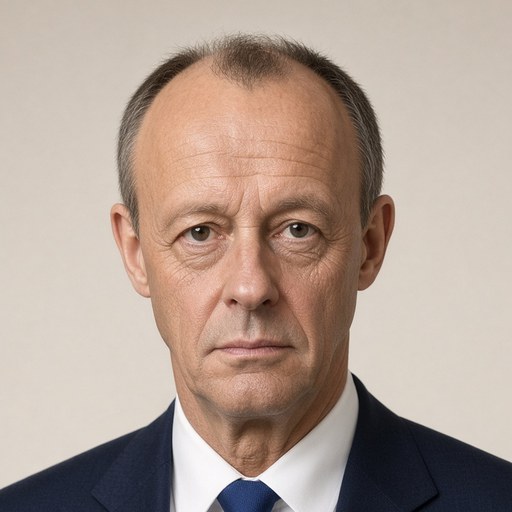
Speech by Chancellor Friedrich Merz at the meeting of the Advisory Committee of the German-Chinese Economy on February 25, 2026, in Beijing:
 Friedrich Merz · Chancellor of Germany
- Context
- Merz addressed the Advisory Committee of the German-Chinese Economy on February 25, 2026, in Beijing during a bilateral trade and investment dialogue.
- Main themes
- German-Chinese economic relations, bilateral trade, market access and openness, investment conditions, fair competition, industrial policy, trade imbalances, key sectors cooperation, protectionism, rules-based trade, Chinese domestic demand, Year of the Fire Horse
- Duration
- ~9 min
- Words
- 1,074
- Sentences
- 63
- Readability
- 40
- Grade
- 11.8
- Syntax
- 2.83
- Vocabulary
- 2.06
Translated from German
The broad sphere of national life a sentence belongs to. Every sentence has an Arena, so it is the denominator the other indices are read against.
Other63 sentences in 21 paragraphs
Ladies and gentlemen,
Mr. Prime Minister,
dear colleagues,
let me first say that I am extremely pleased that we are meeting today in this … [error in audio transmission] and that we are doing so at the beginning of the Year of the Fire Horse. The Fire Horse stands for dynamism, energy, and passion, and these are precisely the qualities that should connect us and that should particularly characterize German-Chinese economic relations.
We look back on a long, energetic, and dynamic economic partnership that has been built and maintained with great passion by both sides over many years and decades. Our two countries benefit greatly from this dynamism and the growth that comes with it.
Mr. Prime Minister, we have already discussed many of these topics in our two meetings today. I would like to once again sincerely thank you on behalf of the German delegation for your hospitality and for the opportunity to engage in such an open dialogue. This is exactly the prerequisite for us to continue to work successfully together in the coming months and years; because China has been one of Germany's most important trading partners worldwide for many years, and Germany is China's most significant trading partner within the European Union.
We have already talked about the bilateral trade volume. It has been at a very high level for years. Recently, it was clearly over 250 billion euros annually. Thousands of German companies are active in China. Today, you see only a small but very representative selection: very large companies, but also medium-sized and small enterprises, some of which have been active in China for decades. From large corporations, from publicly traded companies to family businesses, all are represented in this delegation today.
At the same time, Chinese companies are investing in Germany, creating jobs, strengthening economic chains, and contributing to technological networking. I would like to encourage and urge you to continue this. We want Chinese investments in Germany. We want jobs in Germany with Chinese investments. I can say on behalf of my government: We have been working for months to improve the investment conditions in Germany. We are seeing initial successes. We will continue on this path, and we want you to accompany us on this journey.
The cooperation is particularly close in key sectors such as automotive, machinery and equipment, the chemical industry, electrical engineering, and future fields such as renewable energies, digitalization, and electromobility. All of this is also represented here in the delegation.
For a long time, the description of reality was primarily this: German engineering and innovation meet Chinese dynamism, scaling competence, and market size. Today, German companies in China, in turn, encounter a top-class innovation ecosystem, and we are learning from it. We are also learning from each other. This mutual learning, this mutual enhancement creates growth, creates employment, creates prosperity on both sides, in both our countries.
However, we also face – and this has been mentioned – a number of challenges that we want to tackle in cooperation and dialogue with you, and we certainly can. I want to address a few points – we will delve deeper into them in our discussions:
German and European companies report incomplete market opening in certain sectors. Here, for example, a significant market area could be opened up through China's accession to the World Trade Organization's Agreement on Government Procurement. We generally welcome any further market opening. This is in our mutual interest. Our two economies will benefit from it.
A second point: China is successfully pursuing an active industrial policy. That is your right, and we do it too. However, what is important is fair competition. From our perspective, it is important to reduce market-distorting subsidies and to achieve market consolidation where we see overcapacities.
And finally, the growing trade balance imbalance; this has also been briefly mentioned. German imports from China have significantly increased in recent years, while exports have grown less dynamically. We see the causes in the high competitiveness of the industry in China on the one hand, but also in a favorable exchange rate for China and weak domestic demand. Due to the sharp increase in Chinese imports, calls for protection are being heard in Europe.
I want to be open with you, and I have already mentioned this in our earlier conversation: I want as little protection and protectionism as possible. I want, we want, as open, fair, and free trade as possible. We want to continue to benefit from the advantages of open markets. A stronger Chinese domestic demand, for example, facilitated by a moderate appreciation of your currency, would make it easier to continue trade without such barriers.
We should work together to shape our trade relations in a balanced, sustainable, and rules-based manner. This includes that raw materials can be traded as freely as possible based on economic considerations. Where export controls are introduced, the approval processes should be quick and unbureaucratic and provide long-term planning security.
I would also like to emphasize this once again – Mr. Prime Minister, we have discussed this –: In light of the uncertainties caused by the customs policies we see in the world, we can now set a different example in our bilateral relations through the reliability and security of the economic relations between our two countries.
Finally: Mutual market access, protection of intellectual property, fair competitive conditions, and free trade are not unilateral demands; they are the foundations of a stable common partnership. For we live in times – as you have said yourself – of tectonic shifts in geopolitics and geo-economics. Our two economies bear a special responsibility here. We are both export-oriented industrial nations. We mutually benefit greatly from open markets and clear rules. At the same time, we know that economic interdependence has not only economic but also political significance. It creates spaces for exchange, mutual understanding, and long-term stability.
We hope that this Year of the Fire Horse will be a special year for German-Chinese economic relations, full of energy, full of dynamism, and passion for progress that benefits us all. We want to work together on this.
... [error in audio transmission] I gladly accept the offer of the federal government to continue what we have done much more regularly in previous years, namely German-Chinese government consultations in your country, but then also next time in Germany when we are the hosts the time after next.
Thank you very much!
The original German. The tags above are read on the English translation's sentences.
Meine Damen und Herren,
Herr Ministerpräsident,
liebe Kolleginnen und Kollegen,
lassen Sie mich zunächst sagen, dass ich es außerordentlich begrüße, dass wir uns heute in dieser … [Fehler in der Tonübertragung] und dass wir es zu Beginn des Jahres des Feuerpferdes tun. Das Feuerpferd steht für Dynamik, für Energie und für Leidenschaft, und das sind genau die Eigenschaften, die uns miteinander verbinden sollten und die vor allem die deutsch-chinesischen Wirtschaftsbeziehungen kennzeichnen sollten.
Wir blicken auf eine lange, energiereiche und dynamische Wirtschaftspartnerschaft zurück, die von beiden Seiten über viele Jahre und Jahrzehnte mit großer Leidenschaft aufgebaut worden ist und gepflegt wurde. Von dieser Dynamik und von dem Wachstum, das damit einhergeht, profitieren unsere beiden Länder sehr.
Herr Ministerpräsident, wir haben in unseren beiden Begegnungen heute bereits über viele dieser Themen gesprochen. Ich möchte mich in der großen Runde hier noch einmal sehr herzlich im Namen der deutschen Delegation für Ihre Gastfreundschaft bedanken und dafür bedanken, dass wir einen so offenen Dialog miteinander führen können. Das ist genau die Voraussetzung dafür, dass wir in den nächsten Monaten und Jahren weiter erfolgreich zusammenarbeiten; denn China ist seit vielen Jahren einer der wichtigsten Handelspartner Deutschlands weltweit, und Deutschland ist innerhalb der Europäischen Union Chinas bedeutendster Handelspartner.
Wir haben über das bilaterale Handelsvolumen bereits gesprochen. Es bewegt sich seit Jahren auf einem sehr hohen Niveau. Zuletzt waren es deutlich über 250 Milliarden Euro jährlich. Tausende deutsche Unternehmen sind in China aktiv. Sie sehen hier heute nur einen kleinen, aber sehr repräsentativen Ausschnitt: sehr große Unternehmen, aber auch mittlere und kleine Unternehmen, die zum Teil seit Jahrzehnten in China aktiv sind. Vom großen Konzern, von der börsennotierten Aktiengesellschaft bis hin zum Familienunternehmen, alle sind sie heute auch in dieser Delegation vertreten.
Gleichzeitig investieren chinesische Unternehmen in Deutschland, schaffen Arbeitsplätze, stärken Wirtschaftsketten und tragen zur technologischen Vernetzung bei. Ich möchte Sie gerne ermutigen und ermuntern, das fortzusetzen. Wir wollen chinesische Investitionen in Deutschland. Wir wollen Arbeitsplätze in Deutschland mit chinesischen Investitionen. Ich darf für meine Regierung sagen: Wir sind seit Monaten darum bemüht, die Investitionsbedingungen in Deutschland zu verbessern. Wir sehen erste Erfolge. Wir arbeiten auf diesem Weg weiter, und wir wollen, dass Sie uns auf diesem Weg auch begleiten.
Besonders eng ist die Zusammenarbeit in Schlüsselbranchen wie dem Automobilbau, dem Maschinen- und Anlagenbau, der chemischen Industrie, der Elektrotechnik und den Zukunftsfeldern wie erneuerbare Energien, Digitalisierung und Elektromobilität. Alles das sehen Sie hier auch in der Delegation vertreten.
Lange war dabei die Wirklichkeitsbeschreibung vor allem diese: Deutsche Ingenieurskunst und Innovationskraft treffen auf chinesische Dynamik, Skalierungskompetenz und Marktgröße. Heute treffen deutsche Firmen in China ihrerseits auf ein Innovationsökosystem der Spitzenklasse, und wir lernen dazu. Wir lernen auch gegenseitig voneinander. Dieses Voneinanderlernen, dieses Sich-gegenseitig-Steigern schafft Wachstum, schafft Beschäftigung, schafft Wohlstand auf beiden Seiten, in beiden unseren Ländern.
Wir stehen aber auch – und dies ist angesprochen worden – vor einer Reihe von Herausforderungen, die wir mit Ihnen in Kooperation und Dialog bewältigen wollen und ganz sicher können. Ich will einige wenige Punkte ansprechen – wir werden sie im Gespräch weiter vertiefen –:
Deutsche und europäische Unternehmen berichten von unvollständiger Marktöffnung in bestimmten Sektoren. Hier könnte etwa durch einen Beitritt Chinas zum Abkommen über öffentliche Beschaffung der Welthandelsorganisation zusätzlich ein wichtiger Marktbereich geöffnet werden. Wir begrüßen ganz generell jede weitere Marktöffnung. Das ist in unserem gemeinsamen Interesse. Unsere beiden Volkswirtschaften werden davon profitieren.
Ein zweiter Punkt: China betreibt mit großem Erfolg eine aktive Industriepolitik. Das ist Ihr gutes Recht, und wir tun das auch. Wichtig aber ist ein fairer Wettbewerb. Aus unserer Sicht ist es wichtig, marktverzerrende Subventionen abzubauen und dort zu einer Konsolidierung des Marktes zu kommen, wo wir Überkapazitäten sehen.
Und schließlich das wachsende Handelsbilanzungleichgewicht; auch das ist schon kurz angesprochen worden. Die deutschen Importe aus China sind in den vergangenen Jahren deutlich gestiegen, während die Exporte weniger dynamisch gewachsen sind. Wir sehen die Ursachen in der hohen Wettbewerbsfähigkeit der Industrie in China auf der einen Seite, aber auch in einem für China günstigen Wechselkurs und in einer schwachen Binnennachfrage. Wegen des starken Anstiegs chinesischer Importe werden in Europa Rufe nach Schutz laut.
Ich will Ihnen offen sagen, und ich habe es Ihnen auch schon in unserem Gespräch vorhin gesagt: Ich möchte so wenig wie möglich Schutz und Protektion. Ich möchte, wir möchten, einen möglichst offenen, fairen, freien Handel. Wir wollen die Vorteile offener Märkte weiter nutzen. Eine stärkere chinesische Binnennachfrage, etwa ermöglicht durch eine moderate Aufwertung Ihrer Währung, würde es erleichtern, ohne solche Barrieren auch den Handel weiter zu ermöglichen.
Wir sollten gemeinsam unsere Handelsbeziehungen ausgewogen, nachhaltig und regelbasiert gestalten. Dazu gehört, dass auch Rohstoffe möglichst frei nach wirtschaftlichen Erwägungen gehandelt werden können. Dort, wo Exportkontrollen eingeführt werden, sollten die Genehmigungsprozesse unbürokratisch schnell ablaufen und langfristig Planungssicherheit bieten.
Auch das möchte ich gern noch einmal unterstreichen – Herr Premierminister, wir haben darüber gesprochen –: Angesichts der Unsicherheiten durch die Zollpolitik, die wir auf der Welt sehen, können wir in unseren bilateralen Beziehungen jetzt ein anderes Beispiel setzen, durch Verlässlichkeit und Sicherheit der Wirtschaftsbeziehungen unserer beiden Länder.
Schließlich: Gegenseitiger Marktzugang, Schutz geistigen Eigentums, faire Wettbewerbsbedingungen und freier Handel, das sind keine einseitigen Forderungen, das sind Fundamente einer stabilen gemeinsamen Partnerschaft. Denn wir leben in Zeiten – Sie haben es selber gesagt – tektonischer Verschiebungen in Geopolitik und Geoökonomie. Unseren beiden Volkswirtschaften kommt hier eine besondere Verantwortung zu. Wir sind beide exportorientierte Industrienationen. Wir profitieren in hohem Maße gegenseitig von offenen Märkten und klaren Regeln. Wir wissen gleichzeitig, dass wirtschaftliche Verflechtung nicht nur ökonomische, sondern eben auch eine politische Bedeutung hat. Sie schafft Räume des Austausches, gegenseitiges Verständnis und langfristige Stabilität.
Wir wünschen uns, dass dieses Jahr des Feuerpferdes für die deutsch-chinesischen Wirtschaftsbeziehungen ein besonderes Jahr wird, voller Energie, voller Dynamik und Leidenschaft für einen Fortschritt, der uns allen zugutekommt. Daran wollen wir gemeinsam arbeiten.
... [Fehler in der Tonübertragung] der Bundesregierung gern annehme, das fortzusetzen, was wir in früheren Jahren sehr viel regelmäßiger gemacht haben, nämlich deutsch-chinesische Regierungskonsultationen bei Ihnen im Land, aber dann auch beim nächsten Mal in Deutschland, wenn wir die Gastgeber beim übernächsten Mal sind.
Sehr herzlichen Dank!