




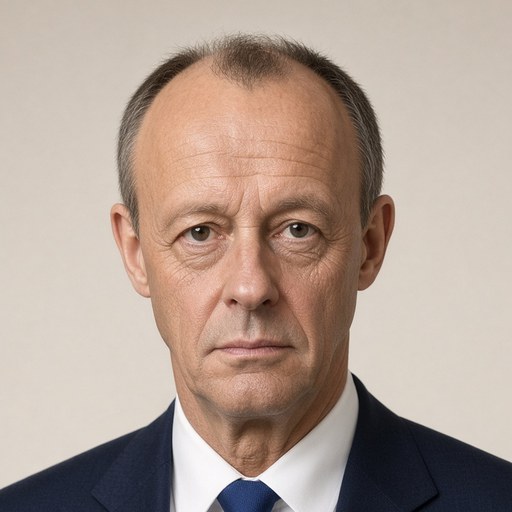
Chancellor's Speech at the Ceremony of the Federation of Expellees "Foundation that Supports Our Country to This Day"
 Friedrich Merz · Chancellor of Germany
- Context
- Merz addressed the Federation of Expellees' Day of Home ceremony in 2025, marking the 75th anniversary of the Charter of the German Expellees.
- Main themes
- Charter of the German Expellees 75th anniversary, freedom, peace, and reconciliation, right to home and belonging, German expellees' post-war experience and integration, German economic miracle contributions, European and German institutional anniversaries, historical memory and civic responsibility, Hannah Arendt on refugee experience, Federation of Expellees (BDV)
- Duration
- ~20 min
- Words
- 2,347
- Sentences
- 103
- Readability
- 46
- Grade
- 12.4
- Syntax
- 3.09
- Vocabulary
- 2.16
Translated from German
The broad sphere of national life a sentence belongs to. Every sentence has an Arena, so it is the denominator the other indices are read against.
Other103 sentences in 30 paragraphs
Dear Mr. President, dear Mr. Fabritius,
esteemed members of the presidium and the federal committee of the BDV, dear Mr. Gaida, dear colleagues from the German Bundestag and the Baden-Württemberg state parliament,
Mr. Minister,
dear Mayor Frank Nopper,
ladies and gentlemen,
thank you very much for the invitation to celebrate this very special Day of Home in 2025 with you! I indeed confirmed my attendance last year, not knowing that a federal election, a government formation, and a new government would lie ahead. But this anniversary – 75 years of the Charter of the German Expellees – is part of a series of very significant anniversaries that we are celebrating this year in the Federal Republic of Germany and that we celebrated last year. It was 75 years of the Basic Law of the Federal Republic of Germany and thus 75 years of the Federal Republic of Germany in 2024. This year marks 75 years since the founding of the European Community for Coal and Steel, the first foundation of what would later become the European Communities, 70 years of Germany in NATO, and now also 75 years of the Charter of the German Expellees.
With each of these anniversaries, we celebrate, we commemorate, we reflect on historical decisions and turning points in our country for freedom, peace, and reconciliation. These terms appear in every festive speech: freedom, peace, and reconciliation. But if we are honest with each other, many of us in Germany, especially in the western part of our country, have not thought about the significance of these terms for a long time. The historical turning points 75 years ago and 70 years ago were so successful that freedom, peace, and reconciliation have become a matter of course for us. But they were not a matter of course; they were not a given in 1950, especially not for millions of German expellees from Central, Eastern, and Southeastern Europe, for whom the end of the war often did not mean an end to violence, but the terrible experience of becoming first stateless and then homeless. We all know the black-and-white photos of people, families, small children holding the hands of their parents or grandparents, their siblings, pulling their entire remaining belongings on a small wooden cart, and the photos from the emergency shelters where the expellees were housed in the early post-war years, often under catastrophic hygienic conditions, often in cramped spaces. Four square meters per person were temporarily set as a guideline in the British zone. Four square meters! We know from stories that many expellees and late repatriates had to experience quiet rejection, but also open hostility in the communities and municipalities to which they were distributed, that they were often treated like second-class citizens.
Guilt, misfortune, suffering, poverty, and misery are, to quote your last sentence, the experiential space in which the Charter of the German Expellees was created in 1950. In this situation, a commitment to freedom, peace, and reconciliation is not a matter of course, not political prose, but a very serious political promise. Anyone who reads the text of the Charter today feels this. Wolfgang Schäuble once referred to it as one of the cornerstones of our democracy. This also means that we, who are fortunate enough to live in freedom and peace, do well to learn anew from it time and again.
In this spirit, I would like to address three points today. First: Freedom is more than freedom of movement and liberation. If we want to live in freedom and shape our freedom, we need a place, a home, a place where we can find recognition for our actions and deeds, where we are not excluded, where we can speak our language, where we have roots or can take root.
"We have lost our home and thus the familiarity of everyday life. We have lost our profession and thereby lost the trust of being somehow useful in this world."
This is how the German philosopher Hannah Arendt described the experience of being a refugee. Home also means experiencing being somehow useful in the world.
The authors of the Charter of the Expellees translated this into a right to home. They also set to work to build a new home for themselves. Despite war traumas, despite exclusion and the most adverse conditions, millions of German expellees took their fate into their own hands in the 1950s and 1960s, contributed to rebuilding in the devastated Germany, and participated in the German economic miracle and the economic foundation that still supports our country today. This achievement of the expellees after the Second World War is one of the great success stories of the Federal Republic, about which we have spoken far too little and continue to speak too little, even though in this courage to start anew, in this courage to take responsibility that the expellees and later the repatriates and late repatriates demonstrated, there is so much exemplary power for today.
Freedom needs home. Freedom means responsibility. This is the second great lesson of the Charter of the Expellees. The Charter also gives this responsibility a goal. All of us, the survivors and especially the post-war generations, are responsible for contributing to a future of freedom and peace in Europe.
Ladies and gentlemen, the Charter of the German Expellees famously begins with the declaration to renounce revenge and retribution. We all know that this was a controversial statement and probably still is today, a contentious statement. For yes, it was we Germans who plunged Europe into war and violence. But the fate of the expellees also teaches us, and the Charter reminds us: Questions of guilt can be politically, historically, and morally as clear as possible; the reality of war creates victims everywhere. The human fates that a war brings about arise on all sides. We see this every day in these days, weeks, and months in Ukraine and Israel.
Ladies and gentlemen, the experiences that we Europeans had in two world wars in the 20th century are the experiences with which united Europe was founded. This very spirit is expressed in the Charter, namely the work towards a free and united Europe.
You have been working on this from the very beginning, starting in the 1950s, when the Westbindung of the Federal Republic and European integration were still highly controversial matters in Germany. You have also contributed to the reconciliation of Germany with our eastern neighbors. To this day, you, the German minorities on the ground, are bridge builders in our country's partnership with our neighbors in Central and Eastern Europe. You are ambassadors of German culture there and in the non-European successor states of the Soviet Union. I would like to simply – I hope I may do so – express heartfelt thanks on behalf of the Federal Republic of Germany. I say to you on behalf of the Federal Government: We still need you as translators and intermediaries between the societies of Europe and its neighbors.
Three decades after the fall of the Wall and the overcoming of the European division, we in Germany and Europe are once again facing a hostile, imperialistic, and revisionist Russia. Political answers are needed for this, which we as a federal government and as a society are working on, with our decisions in defense policy, by strengthening the European arm of NATO, by supporting Ukraine in its fight against the Russian aggressor, and by intensifying relations with France and Poland. You remember, Mr. Fabritius; I spoke last year about how important the German-Polish relations are in this context.
But a key to peacekeeping remains contacts between civil societies, as we say today, between the people here and there. Ideally, these contacts continue precisely where authoritarian states want to rekindle enmity between peoples, as we have had to observe in Russia for several years now. 400,000 members of the German minority live in Russia today. It is important to me to assure them, especially, and the German minorities in Ukraine of the solidarity of the Federal Government.
Let me also say in this context: We remain committed to the admission of late repatriates under the Federal Expellee Act. For those of German descent born after December 31, 1992, and living in the resettlement areas, we want to continue to enable their immigration to Germany in the future.
One more thing: You, the expellees, the repatriates, and the late repatriates, knew this earlier and perhaps still know it better today than many others in our country: The securing of peace and freedom also requires remembrance work. This is particularly true today. Because the geopolitical upheaval we are living in, the new security policy necessities, demand something from us as a society today and quite likely for many years to come. The restructuring of the Bundeswehr, the expansion of the European defense community, the work on our defense capabilities, this is and remains a tremendous effort. We are well positioned for this. But we will only truly master the task if we as a whole society always know what this effort is necessary for, if we keep alive the knowledge of the value of freedom and peace together, if we keep alive the knowledge of the total horror of war.
You in the BDV recognized and accepted this responsibility early on, and I would like to express my sincere thanks to you for your highly committed and tireless work in remembrance: It is our collective memory in Germany and in Europe that you help preserve.
I know that we are at a critical point in this matter; for the generation of eyewitnesses of flight and expulsion after the Second World War is becoming smaller and smaller. If we want to prevent the history of flight and expulsion, which has shaped our Federal Republic so significantly, from becoming "mere history," we must take on this task together. That is why I want to express my joy that today not only representatives of the so-called experience generation are here in the hall. When I look around the room, it is even the minority. The majority are younger and young people who want to continue this remembrance work, not only in memory of their families but in memory of the origins of their parents and grandparents. That, ladies and gentlemen, is a mandate that we all should accept today, especially on a day like this.
I understand the commemoration of many decades of flight and expulsion in this sense also as a mandate, and I can say for the Federal Government: We accept this mandate. Because as you know, we – quite trivially with the organizational decree of the Federal Chancellor – have brought together the responsibilities for expellees, repatriates, and late repatriates and German minorities back in the Federal Ministry of the Interior in May. The responsibility for the Foundation for Flight, Expulsion, Reconciliation, and for the culture and history of Germans in Eastern Europe is now also back in the Federal Ministry of the Interior, where it belongs.
We will ensure that the Foundation for Flight, Expulsion, Reconciliation and the Cultural Foundation of the German Expellees have a reliable financial basis. We will future-proof the federal funding under the Federal Expellee Act.
We have also strengthened the office of the Commissioner for Repatriate Affairs and National Minorities, and I am very pleased that we have such a strong, experienced, and well-connected contact person in this role again with you, dear Mr. Fabritius. Thank you very much for your work!
Ladies and gentlemen, I said at the beginning of my speech: With this anniversary, we remember, with the great anniversaries this year and last year, the great, happy decisions that our predecessors made 75 years ago for freedom, peace, and reconciliation, which were especially made for us, who were children at that time, who were adolescents, who were not yet born. As you probably know, I was born in 1955. My generation was fortunate, and it was no more than pure luck, to have lived in this country for 80 years now in peace, freedom, and constantly increasing prosperity. What we born in peace decide today, in this time of great geopolitical upheaval, will likely shape the face of our country and the free world as a whole for decades to come. Therefore, we must still today, and we must repeatedly allow ourselves to be bound by this last, urgent sentence of the Charter:
"We call on peoples and individuals to take action, so that from guilt, misfortune, suffering, poverty, and misery, a path to a better future can be found for all of us."
We have come a long way on this path in the Federal Republic. But we are not and have never been at the end of the journey. Freedom and peace are never definitively achieved in this world. They will always require active decisions, commitment, and vigilance from us. The commemoration of 80 years of flight and expulsion and the 75th anniversary of the Charter falls in a time when war has returned to Europe, when millions of Ukrainians are fleeing, both within Ukraine and to neighboring European countries. We are daily confronted with images from Israel and Gaza, images of women, children, and elderly people living in ruins, who do not know where to go. Peace and freedom are not possessions. Peace and freedom are a promise for the future, for a good, better future that we can help shape and influence. The authors of the Charter of the German expellees knew this. This is indeed the third great lesson we find in it, and we must let it guide us again today.
"Future needs origin," said the German philosopher Odo Marquard. Ladies and gentlemen, you know from your own experience the truth of this statement, and with this experience, we need you, the expellees, the resettlers, the late resettlers, and your children and grandchildren. We in Germany need you, and we in united Europe need you – in remembering, in preserving, and, above all, in shaping.
Thank you very much!
The original German. The tags above are read on the English translation's sentences.
Sehr geehrter Herr Präsident, lieber Herr Fabritius,
sehr geehrte Mitglieder des Präsidiums und des Bundesausschusses des
BDV
,
sehr geehrter Herr Gaida,
liebe Kolleginnen und Kollegen aus dem Deutschen Bundestag und dem baden-württembergischen Landtag,
Herr Minister,
lieber Herr Oberbürgermeister Frank Nopper,
meine sehr geehrten Damen und Herren,
herzlichen Dank für die Einladung, diesen ganz besonderen Tag der Heimat im Jahr 2025 mit Ihnen zu begehen! Ich habe mein Kommen in der Tat schon im vergangenen Jahr zugesagt, nicht ahnend, dass eine Bundestagswahl, eine Regierungsbildung und eine neue Regierung auf dem Weg dorthin liegen würden. Aber dieses Jubiläum – 75 Jahre der Charta der deutschen Heimatvertriebenen
–
steht in einer Reihe von sehr großen Jubiläen, die wir in diesem Jahr in der Bundesrepublik Deutschland begehen und im vergangenen Jahr begangen haben. 75 Jahre des Grundgesetzes der Bundesrepublik Deutschland und damit 75 Jahre der Bundesrepublik Deutschland waren es 2024. In diesem Jahr sind es 75 Jahre seit der Gründung der Europäischen Gemeinschaft für Kohle und Stahl, also der ersten Gründung der späteren Europäischen Gemeinschaften, 70 Jahre von Deutschland in der
NATO
und nun eben auch 75 Jahre der Charta der deutschen Heimatvertriebenen.
Mit jedem einzelnen dieser Jubiläen feiern wir, begehen wir, denken wir an historische Entscheidungen und an Weichenstellungen in unserem Land für Freiheit, Frieden und Versöhnung. Diese Begriffe tauchen in jeder Festansprache auf: Freiheit, Frieden und Versöhnung. Wenn wir aber ehrlich miteinander sind, haben viele von uns in Deutschland, vor allem im westlichen Teil unseres Landes, über die Bedeutung dieser Begriffe lange nicht mehr nachgedacht. Die historischen Weichenstellungen vor 75 Jahren und vor 70 Jahren waren so erfolgreich, dass Freiheit, Frieden und Versöhnung für uns zum selbstverständlichen Alltag geworden sind. Aber sie waren kein Alltag, sie waren keine Selbstverständlichkeit im Jahr 1950, und zwar vor allem nicht für Millionen der deutschen Vertriebenen aus Ostmittel-, Ost- und Südosteuropa, für die das Ende des Krieges oftmals erst einmal kein Ende der Gewalt bedeutet hat, sondern die furchtbare Erfahrung, erst rechtlos und dann heimatlos zu werden. Wir kennen doch alle die Schwarz-Weiß-Fotos der Menschen, der Familien, der kleinen Kinder an den Händen ihrer Eltern oder Großeltern, ihrer Geschwister, die ihr ganzes verbliebenes Hab und Gut auf einem kleinen hölzernen Schubkarren mit sich ziehen, und die Fotos aus den Notunterkünften, in denen die Vertriebenen in den ersten Nachkriegsjahren untergebracht waren, oft unter katastrophalen hygienischen Bedingungen, oft auf engstem Raum. Vier Quadratmeter pro Person waren vorübergehend in der britischen Zone als Richtwert festgelegt. Vier Quadratmeter! Wir wissen aus Erzählungen, dass viele Vertriebene und Spätaussiedler in den Gemeinden und Kommunen, auf die sie verteilt wurden, stille Ablehnung, aber auch offene Feindseligkeit erleben mussten, dass sie nicht selten wie Menschen zweiter Klasse behandelt wurden.
Schuld, Unglück, Leid, Armut und Elend sind, um ihren letzten Satz zu zitieren, der Erfahrungsraum, in dem 1950 die Charta der deutschen Heimatvertriebenen entsteht. In dieser Situation ist ein Bekenntnis zu Freiheit, Frieden und Versöhnung keine Selbstverständlichkeit, keine politische Prosa, sondern ein sehr ernsthaftes politisches Versprechen. Das spürt jeder, der den Text der Charta heute liest. Wolfgang Schäuble hat sie einmal als einen der Grundsteine unserer Demokratie bezeichnet. Das heißt auch, dass wir, die wir das Glück haben, in Freiheit und Frieden zu leben, gut daran tun, aus ihr immer wieder neu zu lernen.
In diesem Sinne soll es mir heute um dreierlei gehen. Erstens: Freiheit ist mehr als Bewegungsfreiheit und Befreiung. Wenn wir Menschen in Freiheit leben und unsere Freiheit gestalten wollen, dann brauchen wir dazu einen Ort, eine Heimat, einen Ort, an dem wir Anerkennung finden können mit unserem Tun und unserem Handeln, an dem wir nicht ausgegrenzt werden, an dem wir unsere Sprache sprechen können, an dem wir Wurzeln haben oder Wurzeln schlagen können.
„Wir haben unser Zuhause und damit die Vertrautheit des Alltags verloren. Wir haben unseren Beruf verloren und damit das Vertrauen eingebüßt, in dieser Welt irgendwie von Nutzen zu sein.“
So hat es die deutsche Philosophin Hannah Arendt über die Erfahrung gesagt, ein Flüchtling zu sein. Heimat heißt also auch, die Erfahrung zu machen, in der Welt irgendwie von Nutzen zu sein.
Die Autoren der Charta der Heimatvertriebenen haben das in ein Recht auf Heimat übersetzt. Sie haben sich zugleich ans Werk gemacht, eine neue Heimat für sich zu bauen. Trotz Kriegstraumata, trotz Ausgrenzung und widrigsten Bedingungen haben Millionen deutscher Vertriebener in den 50er- und 60er-Jahren ihr Schicksal in die eigene Hand genommen, im zerstörten Deutschland Aufbauarbeit geleistet und an dem deutschen Wirtschaftswunder und an dem wirtschaftlichen Fundament, das unser Land bis heute trägt, mitgearbeitet. Diese Aufbauleistung der Vertriebenen nach dem Zweiten Weltkrieg ist eine der ganz großen Erfolgsgeschichten der Bundesrepublik, über die wir viel zu wenig gesprochen haben und viel zu wenig sprechen, obwohl in diesem Mut zum Neubeginn, in diesem Mut zur Verantwortung, den die Vertriebenen und später die Aussiedler und Spätaussiedler an den Tag gelegt haben, so viel Vorbildkraft auch für heute steckt.
Freiheit braucht Heimat. Freiheit bedeutet Verantwortung. Das ist die zweite große Lehre der Charta der Heimatvertriebenen. Die Charta gibt dieser Verantwortung auch gleich ein Ziel. Wir alle, die Überlebende und vor allem die Nachgeborenen nach dem Zweiten Weltkrieg, wir alle sind in der Verantwortung, an einer Zukunft der Freiheit und des Friedens in Europa mitzuarbeiten.
Meine Damen und Herren, die Charta der deutschen Heimatvertriebenen beginnt bekanntlich mit der Erklärung, auf Rache und Vergeltung zu verzichten. Wir alle wissen, dass das ein umstrittener Satz war und vermutlich noch bis heute ist, ein kontroverser Satz. Denn, ja, es waren wir Deutsche, die Europa mit Krieg und Gewalt überzogen haben. Aber das Schicksal der Vertriebenen lehrt uns auch, und die Charta erinnert uns daran: Schuldfragen können politisch, historisch, moralisch noch so klar entschieden sein die Wirklichkeit eines Krieges schafft Opfer überall. Die menschlichen Schicksale, die ein Krieg hervorbringt, entstehen auf allen Seiten. Wir sehen es in diesen Tagen, Wochen und Monaten jeden Tag in der Ukraine und in Israel
Meine Damen und Herren, die Erfahrungen, die wir Europäer in zwei Weltkriegen im 20. Jahrhundert gemacht haben, sind die Erfahrungen, mit denen das geeinte Europa gegründet worden ist. Genau dieser Geist kommt in der Charta zum Ausdruck, eben die Arbeit an einem freien und geeinten Europa.
Sie haben daran von Beginn an mitgearbeitet, von den 1950er-Jahren an, in denen die Westbindung der Bundesrepublik und die europäische Integration auch in Deutschland noch eine höchst umstrittene Sache war. Sie haben auch an der Versöhnung Deutschlands mit unseren östlichen Nachbarn mitgearbeitet. Bis heute sind Sie, die deutschen Minderheiten vor Ort, Brückenbauer in der Partnerschaft unseres Landes mit unseren Nachbarn in Mittel- und Osteuropa. Sie sind Botschafter deutscher Kultur dort und in den nicht-europäischen Nachfolgestaaten der Sowjetunion. Ich möchte Ihnen einfach
–
ich hoffe, ich darf das tun
–
ein herzliches Wort des Dankes im Namen der Bundesrepublik Deutschland aussprechen. Ich sage Ihnen im Namen der Bundesregierung: Wir brauchen Sie weiterhin als Übersetzer und Mittler zwischen den Gesellschaften Europas und seiner Nachbarn.
Drei Jahrzehnte nach dem Fall der Mauer und der Überwindung der europäischen Teilung stehen wir in Deutschland und in Europa wieder einem feindlichen, einem imperialistischen und revisionistischen Russland gegenüber. Es braucht politische Antworten darauf, an denen wir als Bundesregierung und als Gesellschaft arbeiten, mit unseren Weichenstellungen in der Verteidigungspolitik, indem wir den europäischen Arm der
NATO
stärken, indem wir die Ukraine in ihrem Kampf gegen den russischen Aggressor unterstützen, mit der Intensivierung der Beziehungen zu Frankreich und zu Polen. Sie erinnern sich, Herr Fabritius; ich habe im vergangenen Jahr darüber gesprochen, wie wichtig gerade auch die deutsch-polnischen Beziehungen vor diesem Hintergrund sind.
Aber ein Schlüssel der Friedenssicherung bleiben Kontakte zwischen den Zivilgesellschaften, wie wir heute sagen, zwischen den Menschen hier und dort. Im besten Fall bestehen diese Kontakte gerade dorthin fort, wo autoritäre Staaten Feindschaft zwischen den Völkern neu auslösen wollen, wie wir es seit einigen Jahren in Russland beobachten müssen. 400.000 Angehörige der deutschen Minderheit leben heute in Russland. Es ist mir ein Anliegen, gerade sie und die deutschen Minderheiten in der Ukraine der Solidarität der Bundesregierung zu versichern.
Lassen Sie mich in diesem Zusammenhang auch sagen: Wir halten an der Aufnahme der Spätaussiedlerinnen und Spätaussiedler nach dem Bundesvertriebenengesetz fest. Für die nach dem 31. Dezember 1992 geborenen und in den Aussiedlungsgebieten lebenden deutschstämmigen Personen wollen wir die den Zuzug nach Deutschland auch in Zukunft ermöglichen.
Noch etwas wussten Sie, die Heimatvertriebenen, die Aussiedler und Spätaussiedler, früher und wissen es auch heute vielleicht besser als viele andere in unserem Land: Die Sicherung von Frieden und Freiheit braucht auch Erinnerungsarbeit. Das gilt heute noch einmal in besonderer Weise. Denn die geopolitische Umbruchszeit, in der wir leben, die neuen sicherheitspolitischen Notwendigkeiten, sie verlangen uns als Gesellschaft etwas ab, heute und ziemlich sicher auch in noch vielen Jahren vor uns. Die Neuaufstellung der Bundeswehr, der Ausbau der europäischen Verteidigungsgemeinschaft, die Arbeit an unserer Verteidigungsfähigkeit, das ist und bleibt eine gewaltige Kraftanstrengung. Wir sind dafür gut aufgestellt. Aber wir werden die Aufgabe nur dann wirklich meistern, wenn wir als ganze Gesellschaft jederzeit wissen, wofür diese Anstrengung notwendig ist, wenn wir das Wissen über den Wert von Freiheit und Frieden gemeinsam lebendig halten, wenn wir das Wissen lebendig halten über die totale Schrecklichkeit des Krieges.
Sie im
BdV
haben auch diese Verantwortung früh für sich erkannt und angenommen, und ich möchte Ihnen erneut für Ihre hochengagierte und unermüdliche Erinnerungsarbeit sehr ausdrücklich denken: Es ist unser aller kollektives Gedächtnis in Deutschland und in Europa, das Sie damit bewahren helfen.
Ich weiß, dass wir in dieser Frage an einem kritischen Punkt sind; denn die Generation der Zeitzeugen von Flucht und Vertreibung nach dem Zweiten Weltkrieg wird immer kleiner. Wenn wir verhindern wollen, dass aus der Geschichte von Flucht und Vertreibung, die unsere Bundesrepublik so maßgeblich geprägt hat, „bloße Geschichte“ wird, dann müssen wir uns dieser Aufgabe gemeinsam annehmen. Deswegen will ich meiner Freude Ausdruck verleihen, dass heute nicht nur Vertreterinnen und Vertreter der sogenannten Erlebnisgeneration hier im Saal sind. Wenn ich in den Raum schaue, dann ist es sogar die Minderheit. Die Mehrheit sind jüngere und junge Menschen, die diese Erinnerungsarbeit fortsetzen wollen, nicht nur in Erinnerung an ihre Familien, sondern in Erinnerung an die Herkunft ihrer Eltern und Großeltern. Das, meine Damen und Herren, ist ein Auftrag, den wir alle heute annehmen sollten, gerade an einem solchen Tag wie diesem.
Ich verstehe eben das Gedenken an viele Jahrzehnte von Flucht und Vertreibung in diesem Sinne auch als Auftrag, und ich kann für die Bundesregierung sagen: Wir nehmen diesen Auftrag an. Denn wie Sie wissen, haben wir ‑ ganz trivial mit dem Organisationserlass des Bundeskanzlers
–
im Mai die Zuständigkeiten für Heimatvertriebene, Aussiedler und Spätaussiedler und deutsche Minderheiten wieder im Bundesinnenministerium zusammengeführt. Auch die Zuständigkeit für die Stiftung Flucht, Vertreibung, Versöhnung und für die Kultur und Geschichte der Deutschen im östlichen Europa ist jetzt wieder im Bundesinnenministerium angesiedelt, wo beides hingehört.
Wir werden sicherstellen, dass die Stiftung Flucht, Vertreibung, Versöhnung und die Kulturstiftung der deutschen Vertriebenen eine verlässliche finanzielle Basis haben. Wir werden die Bundesförderung nach dem Bundesvertriebenengesetz zukunftsfest aufstellen.
Wir haben außerdem das Amt des Beauftragten für Aussiedlerfragen und nationale Minderheiten gestärkt, und ich freue mich sehr, dass wir mit Ihnen, lieber Herr Fabritius, in dieser Funktion wieder einen so starken, erfahrenen und gut vernetzten Ansprechpartner haben. Herzlichen Dank für Ihre Arbeit!
Meine sehr geehrten Damen und Herren, ich habe zu Beginn meiner Rede gesagt: Wir erinnern mit diesem Jubiläum, wir erinnern mit den großen Jubiläen in diesem und im letzten Jahr an die großen, glücklichen Entscheidungen, die unsere Vorgänger vor 75 Jahren für Freiheit, Frieden und Versöhnung getroffen haben, die vor allem aber auch für uns getroffen worden sind, die damals Kinder waren, Jugendliche waren, die noch nicht geboren waren. Ich bin, wie Sie vermutlich wissen, im Jahr 1955 geboren. Meine Generation hatte das Glück, und es war nicht mehr als reines Glück, in diesem Land seit mittlerweile 80 Jahren in Frieden, Freiheit und ständig steigendem Wohlstand zu leben. Was wir im Frieden Geborenen heute entscheiden, in dieser Zeit großer geopolitischer Umwälzungen, wird das Gesicht unseres Landes und der freiheitlichen Welt insgesamt vermutlich für Jahrzehnte prägen. Wir müssen uns darum auch heute noch und wir müssen uns immer wieder in besonderer Weise von diesem letzten, eindringlichen Satz der Charta in die Pflicht nehmen lassen:
„Wir rufen Völker und Menschen auf […], Hand anzulegen ans Werk, damit aus Schuld, Unglück, Leid, Armut und Elend für uns alle der Weg in eine bessere Zukunft gefunden wird.“
Wir sind auf diesem Weg in der Bundesrepublik weit gekommen. Aber wir sind nicht und waren nie am Ende der Wegstrecke. Freiheit und Frieden sind auf dieser Welt nie endgültig errungen. Sie werden immer aktive Entscheidungen, Einsatz, Wachsamkeit von uns verlangen. Das Gedenken an 80 Jahre Flucht und Vertreibung und das 75-jährige Jubiläum der Charta fallen in eine Zeit, in der der Krieg zurück ist in Europa, in der Millionen Ukrainerinnen und Ukrainer auf der Flucht sind, innerhalb der Ukraine und in den europäischen Nachbarstaaten. Wir stehen täglich unter dem Eindruck der Bilder aus Israel und Gaza, Bilder von Frauen, Kindern, älteren Menschen, die in Ruinenlandschaften hausen und die nicht wissen, wohin. Frieden und Freiheit sind kein Besitz. Frieden und Freiheit sind ein Versprechen in die Zukunft, auf eine gute, bessere Zukunft, die wir mitbestimmen und mitgestalten können. Das wussten die Verfasser der Charta der deutschen Heimatvertriebenen. Das ist eben die dritte große Lehre, die wir in ihr finden, und davon müssen wir uns auch heute wieder leiten lassen.
„Zukunft braucht Herkunft“, hat der deutsche Philosoph Odo Marquard gesagt. Meine Damen und Herren, Sie wissen aus eigener Erfahrung um die Wahrheit dieses Satzes, und mit dieser Erfahrung brauchen wir Sie, die Heimatvertriebenen, die Aussiedler, die Spätaussiedler und Ihre Kinder und Enkelkinder. Wir in Deutschland brauchen Sie, und wir im geeinten Europa brauchen Sie – im Erinnern, im Bewahren und, vor allem, im Gestalten.
Herzlichen Dank!