




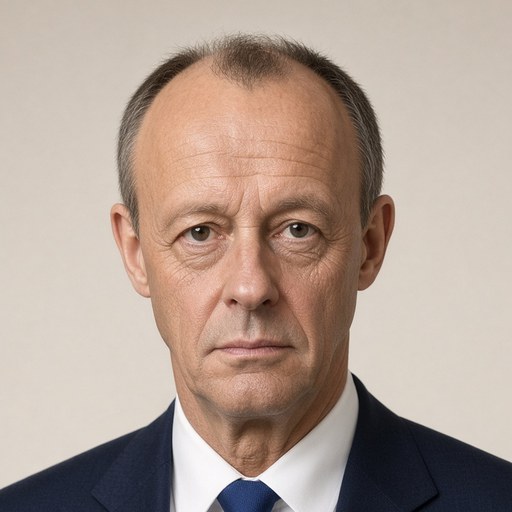
Opening speech of the Chancellor on the occasion of the 42nd German-Brazilian Economic Days Great potential for German-Brazilian economic relations
 Friedrich Merz · Chancellor of Germany
- Context
- Merz addressed the 42nd German-Brazilian Economic Days at Hannover Messe on April 20, 2026, alongside Brazilian President Lula, highlighting bilateral trade and the EU-MERCOSUR agreement.
- Main themes
- EU-MERCOSUR free trade agreement, German-Brazilian economic relations, bilateral trade volume expansion, rule-based international order, Hannover Messe 2026, investment and business opportunities, historical German-Brazilian ties, geopolitical challenges and multilateralism
- Duration
- ~11 min
- Words
- 1,312
- Sentences
- 80
- Readability
- 44
- Grade
- 11.2
- Syntax
- 2.78
- Vocabulary
- 2.10
Translated from German
The broad sphere of national life a sentence belongs to. Every sentence has an Arena, so it is the denominator the other indices are read against.
Other80 sentences in 28 paragraphs
Dear President Lula,
dear Presidents of the industry associations,
dear Peter Leibinger,
dear Mr. Alban,
ladies and gentlemen,
welcome to the 42nd German-Brazilian Economic Days, which are taking place this year here as part of the Hannover Messe. I am pleased to have the opportunity to be here today. I am especially delighted that President Lula is personally present in Hannover and that we were able to jointly open this fair yesterday, as well as the German-Brazilian Economic Days today.
Ladies and gentlemen, this meeting takes place at a time when, despite all the geopolitical and geo-economic challenges, we also see breakthroughs and progress. Mr. President Alban, you have already mentioned the free trade agreement between four South American countries and the European Union. This free trade agreement is a particularly good and encouraging example of this.
Brazil is a key partner in our increasingly challenging world, with whom we want to deepen existing partnerships and establish new ones. I mentioned it yesterday at the opening of the fair, and I allow myself to repeat it here: We share with Brazil the very fundamental interest in a political order in which we can rely on agreements, in which we can depend on contracts, in which we can contribute to the joint resolution of global problems, and in which we want to resolve conflicts only by peaceful means.
This applies not only to the broad area of economic policy. It is particularly true for economic policy; because open, fair, and free trade can only succeed on the basis of balanced, sustainable, and above all, rule-based relationships. This is possible with Brazil. Thank you very much, President Lula, on behalf of the entire country of Brazil!
Together with Brazil, we are over 300 million inhabitants, consumers, and our two countries have a great common economic potential. Even without the free trade agreement, the bilateral trade volume in 2024 was over 20 billion euros.
But, ladies and gentlemen, for the size of these two economies, that is decidedly too little. We want to strengthen this volume with the free trade agreement, we want to significantly increase it. I explicitly support the ambitious goal of doubling this trade volume in the coming years.
With this free trade agreement, one of the largest free trade zones in the world is now available, with over 700 million people and a combined annual gross domestic product of almost 21 trillion euros. This corresponds to about one-fifth of global economic output. Both sides of the Atlantic will benefit from the elimination of tariffs and the reduction of further trade barriers. On both sides, the agreement will provide additional long-term economic growth.
There is a survey by the German Chamber of Industry and Commerce, the results of which are very clear: About one-third of German companies active abroad expect positive effects on their business activities from this free trade agreement. Of these companies, a quarter plans to expand their business activities in Latin American countries in the coming years. I am convinced that even more German companies will expand their relationships with the MERCOSUR countries and seize the new opportunities in the coming years.
It is therefore particularly good news that the interim trade agreement can be applied from May 1, 2026 – and temporarily, ladies and gentlemen, means permanently. There will be no turning back. I am confident that the path taken with this trade agreement is irreversible. We are therefore continuing to work diligently to ensure that the ratification process is completed quickly. Only the approval of the European Council and the European Parliament is still needed.
In this context, German-Brazilian economic relations not only have a long tradition, but they also have a particularly great perspective. Let me remind you: This tradition began in 1837 when Alfred Krupp received an order from Brazil for two cylinders for minting coins. Shortly thereafter, steam engines and locomotives followed. Some of the largest German companies – many of which are represented here in the room – have been active in the country for almost 130 years. I would like to mention Siemens and Bayer as examples. Many other companies – Volkswagen, BASF, Mercedes-Benz – followed in the 1950s.
The German Chambers of Commerce in Rio and São Paulo are celebrating their 110th anniversary this year. The Association of German-Brazilian Engineers in São Paulo has existed since 1956. Today, around 1,300 companies with German capital are active in Brazil, and they account for about ten percent of the industrial value added in this country.
For Germany, Brazil is also an important sales market, especially for machinery, chemical products, and motor vehicles. For Brazil, on the other hand, Germany is an important sales market for raw materials and agricultural products. This is the present, ladies and gentlemen.
For the future, I see three areas that we should discuss today:
First, digital transformation and Industry 4.0. Brazil and Germany can jointly advance the digital transformation of their economies to mutual benefit. The Brazilian market is attractive for German companies engaged in automation, digitalization, and smart manufacturing. Since 2021, there has been a German-Brazilian Digital Dialogue, which also includes exchanges on artificial intelligence and Internet governance.
And finally: In research and development, there is also close cooperation on several future topics in various constellations. For over a decade, the Fraunhofer Society has been cooperating with key players in Brazilian industrial research. The German Aerospace Center is also cooperating with several Brazilian institutions. All of this provides excellent conditions for further joint progress.
Second – we have already heard it many times since last night – rare earths and other raw materials. Brazil has enormous potential in rare earths. According to estimates, it has the second-largest reserves in the world. Ninety percent of the known reserves of the critical raw material niobium, which is urgently needed for the production of solar cells, are found here. There are great opportunities in the cost-effective extraction of certain metals needed for e-mobility and wind turbines.
Ladies and gentlemen, this is, of course, highly attractive for Germany as well. In 2024, the import of raw materials from Brazil had already reached around three billion euros. Germany is ready to support Brazil with technological know-how and expertise to further develop these relationships.
And: For ten years, there has been the German-Brazilian Competence Center for Mining and Raw Materials, operated by the German Chamber of Commerce in São Paulo. Let us therefore continue to expand such existing contacts and connections, such networks in these important areas, together for the benefit of both states.
And finally, third: Brazil plays a leading role in renewable energies; President Lula, you reiterated this in your contribution this morning. We want this in Germany as well. We want to expand renewable energies, and we are making good progress. Last year was a record year. We will continue on this path; but we see Brazil doing the same. There is the ambition to reach 80 percent by 2030, including synthetic fuels, which can also continue to power conventional combustion engines – a very significant contribution to climate protection.
Ladies and gentlemen, in this sense: The German-Brazilian economic relations are based on a solid foundation of over 150 years of history. There are plenty of points of connection, there are great opportunities to build on this for the future and for the benefit of both sides. I have only mentioned a few.
The time we are in is a time for partnerships. We should always find the spirit and willingness to achieve the best for the people in our countries together, fairly and reliably. With Brazil, we find exactly this spirit and this willingness.
I wish us all stimulating conversations, good discussions, and perhaps also new and expanded business relationships at this year's German-Brazilian Economic Days.
To a common good future! Thank you very much for your great commitment!
The original German. The tags above are read on the English translation's sentences.
Sehr geehrter Herr Präsident Lula,
sehr geehrte Herren Präsidenten der Industrieverbände,
lieber Peter Leibinger,
sehr geehrter Herr Alban,
meine Damen und Herren,
herzlich willkommen zu diesen 42. Deutsch-Brasilianischen Wirtschaftstagen, die in diesem Jahr hier im Rahmen der Hannover Messe stattfinden. Ich freue mich, dass ich die Gelegenheit habe, heute dabei zu sein. Ich freue mich ganz besonders, dass Präsident Lula persönlich in Hannover anwesend ist und dass wir nicht nur gestern diese Messe gemeinsam eröffnen konnten, sondern auch heute die Deutsch-Brasilianischen Wirtschaftstage.
Meine Damen und Herren, dieses Treffen findet in einer Zeit statt, in der wir bei allen geopolitischen und geoökonomischen Herausforderungen auch Aufbrüche und Fortschritte sehen. Herr Präsident Alban, Sie haben das Freihandelsabkommen zwischen vier südamerikanischen Staaten und der Europäischen Union bereits genannt. Dieses Freihandelsabkommen ist dafür ein besonders gutes und ermutigendes Beispiel.
Brasilien ist in unserer schwieriger werdenden Welt ein Schlüsselpartner, mit dem wir bestehende Partnerschaften vertiefen und neue Partnerschaften schließen wollen. Ich habe es gestern bei der Eröffnung der Messe gesagt, und ich erlaube mir, es hier zu wiederholen: Wir teilen mit Brasilien das sehr grundlegende Interesse an einer politischen Ordnung, in der wir auf Verabredungen vertrauen können, in der wir uns auf Verträge verlassen können, in der wir zur gemeinsamen Bewältigung globaler Probleme beitragen können und in der wir vor allem Konflikte nur mit friedlichen Mitteln lösen wollen.
Das betrifft nicht nur das große Gebiet der Wirtschaftspolitik. Es gilt aber auch gerade für die Wirtschaftspolitik; denn offener, fairer und freier Handel kann nur auf der Grundlage ausgewogener, nachhaltiger und vor allem regelbasierter Beziehungen gelingen. Mit Brasilien ist das möglich. Herzlichen Dank, Präsident Lula, stellvertretend für das ganze Land Brasilien!
Zusammen mit Brasilien sind wir über 300 Millionen Einwohner, Konsumenten, und unsere beiden Länder haben ein großes gemeinsames volkswirtschaftliches Potenzial. Schon ohne das Freihandelsabkommen lag das bilaterale Handelsvolumen im Jahr 2024 bei über 20 Milliarden Euro.
Aber, meine Damen und Herren, für die Größe dieser beiden Volkswirtschaften ist das entschieden zu wenig. Wir wollen dieses Volumen mit dem Freihandelsabkommen stärken, wir wollen es deutlich steigern. Ich schließe mich ausdrücklich dem ambitionierten Ziel an, dieses Handelsvolumen in den nächsten Jahren zu verdoppeln.
Es steht mit diesem Freihandelsabkommen jetzt eine der größten Freihandelszonen der Welt zur Verfügung mit über 700 Millionen Menschen und einem jährlichen gemeinsamen Bruttoinlandsprodukt von fast 21 Billionen Euro. Das entspricht etwa einem Fünftel der globalen Wirtschaftsleistung. Beide Seiten des Atlantiks werden von wegfallenden Zöllen und dem Abbau weiterer Handelshemmnisse profitieren. Auf beiden Seiten wird das Abkommen für zusätzliches langfristiges Wirtschaftswachstum sorgen.
Es gibt eine Umfrage des Deutschen Industrie- und Handelskammertages, deren Ergebnis sehr klar ist: Rund ein Drittel der im Ausland aktiven deutschen Betriebe erwartet durch dieses Freihandelsabkommen positive Auswirkungen auf ihre Geschäftstätigkeit. Von diesen Unternehmen wiederum plant ein Viertel in den nächsten Jahren den Ausbau der Geschäftsaktivitäten in den lateinamerikanischen Ländern. Ich bin davon überzeugt, es werden in den nächsten Jahren auch noch mehr deutsche Unternehmen ihre Beziehungen zu den
MERCOSUR
-Staaten ausbauen und die neuen Chancen ergreifen.
Es ist deshalb eine besonders gute Nachricht, dass das Interimshandelsabkommen ab dem 1. Mai 2026 angewendet werden kann – und vorläufig, meine Damen und Herren, heißt endgültig. Es wird keinen Weg zurückgeben. Ich bin mir sicher, der eingeschlagene Weg dieses Handelsabkommens ist unumkehrbar. Wir setzen uns daher weiter mit Nachdruck dafür ein, dass der Ratifizierungsprozess schnell abgeschlossen wird. Es braucht nur noch eine Zustimmung des Europäischen Rates und des Europäischen Parlamentes.
Die deutsch-brasilianischen Wirtschaftsbeziehungen haben vor diesem Hintergrund nicht nur eine lange Tradition, sie haben eine besonders große Perspektive. Lassen Sie mich daran erinnern: Diese Tradition hat im Jahre 1837 begonnen, als Alfred Krupp einen Auftrag aus Brasilien für zwei Zylinder für die Münzprägung bekam. Wenig später folgten Dampfmaschine und Lokomotive. Einige der größten deutschen Unternehmen – von denen sind viele hier im Raum vertreten – sind seit fast 130 Jahren im Land tätig. Ich nenne beispielhaft Siemens und Bayer. Viele weitere Firmen – Volkswagen, BASF, Mercedes-Benz – folgten in den 1950er Jahren.
Die deutschen Außenhandelskammern in Rio und in
São Paulo
feiern in diesem Jahr ihr 110-jähriges Bestehen. Seit 1956 besteht der Verein Deutsch-Brasilianischer Ingenieure in
São Paulo
. Heute sind in Brasilien rund 1300 Unternehmen mit deutschem Kapital aktiv, und sie sorgen für etwa zehn Prozent der industriellen Wertschöpfung in diesem Land.
Für Deutschland ist Brasilien aber auch ein wichtiger Absatzmarkt, vor allem für Maschinen, chemische Erzeugnisse, Kraftfahrzeuge. Für Brasilien wiederum ist Deutschland ein wichtiger Absatzmarkt, etwa für Rohstoffe und für landwirtschaftliche Produkte. Das ist die Gegenwart, meine Damen und Herren.
Für die Zukunft sehe ich drei Bereiche, über die wir heute miteinander sprechen sollten:
Erstens, die digitale Transformation und Industrie 4.0. Brasilien und Deutschland können zu beiderseitigem Gewinn diese digitale Transformation ihrer Volkswirtschaften gemeinsam vorantreiben. Der brasilianische Markt ist für deutsche Unternehmen attraktiv, die in der Automatisierung, Digitalisierung und intelligenten Fertigung tätig sind. Schon seit 2021 gibt es den deutsch-brasilianischen Digitaldialog, in dem auch der Austausch zu künstlicher Intelligenz oder Internet
Governance
stattfindet.
Und schließlich: Auch in Forschung und Entwicklung gibt es in etlichen Zukunftsthemen in verschiedensten Konstellationen eine enge Zusammenarbeit. So kooperieren seit über einem Jahrzehnt die Fraunhofer-Gesellschaft und wichtige Akteure der brasilianischen Industrieforschung. Das Deutsche Zentrum für Luft- und Raumfahrt kooperiert ebenso mit gleich mehreren brasilianischen Einrichtungen. Das alles sind hervorragende Voraussetzungen für ein weiteres gemeinsames Vorangehen.
Zweitens – wir haben es seit gestern Abend bereits oft gehört –, Seltene Erden und andere Rohstoffe. Brasilien verfügt über ein enormes Potenzial an Seltenen Erden. Nach Schätzungen sind es weltweit die zweitgrößten Reserven. 90 Prozent sind es von den bekannten Reserven des kritischen Rohstoffs Niob, der für die Produktion von Solarzellen dringend gebraucht wird. Große Chancen liegen im kostengünstigen Abbau bestimmter Metalle, die für die E-Mobilität und für Windkraftanlagen gebraucht werden.
Meine Damen und Herren, das ist natürlich auch für Deutschland alles hochattraktiv. So hatte 2024 der Import von Rohstoffen aus Brasilien schon eine Größenordnung von etwa drei Milliarden Euro erreicht. Deutschland ist dazu bereit, Brasilien mit technologischem
Know-how
und Expertise zu unterstützen, um diese Beziehungen weiter auszubauen.
Und: Seit zehn Jahren gibt es das deutsch-brasilianische Kompetenzzentrum Bergbau und Rohstoffe, das von der Deutschen Auslandskammer in
São Paulo
betrieben wird. Lassen Sie uns also solche bestehenden Kontakte und Verbindungen, solche Netzwerke in diesen wichtigen Bereichen, gemeinsam weiter ausbauen, zum Wohle beider Staaten.
Und schließlich, drittens: Brasilien spielt eine große Vorreiterrolle bei erneuerbaren Energien; Präsident Lula, Sie haben das heute Morgen in Ihrem Beitrag noch einmal gesagt. Wir wollen das auch in Deutschland. Wir wollen den Ausbau erneuerbarer Energien, und wir kommen damit gut voran. Das letzte Jahr war ein Rekordjahr. Wir gehen auf diesem Weg weiter; aber wir sehen, Brasilien auch. Es gibt den Anspruch, bis zum Jahr 2030 auf 80 Prozent zu gelangen, und dies unter Einschluss von synthetischen Kraftstoffen, mit dem auch herkömmliche Verbrennungsmotoren weiter betrieben werden können – ein ganz wesentlicher Beitrag auch zum Klimaschutz.
Meine sehr geehrten Damen und Herren, in diesem Sinne: Die deutsch-brasilianischen Wirtschaftsbeziehungen stehen auf einem soliden Fundament einer über 150-jährigen Geschichte. Es gibt genügend Anknüpfungspunkte, es gibt große Chancen, um darauf aufbauend in die Zukunft hinein und mit Gewinn für beide Seiten aufzubauen. Ich habe davon nur einige wenige genannt.
Die Zeit, in der wir stehen, ist eine Zeit für Partnerschaften. Wir sollten immer den Geist und die Bereitschaft finden, miteinander fair und verlässlich das Beste für die Menschen in unseren Ländern zu erreichen. Mit Brasilien finden wir genau diesen Geist und diese Bereitschaft.
Ich wünsche uns in diesem Sinne bei den diesjährigen Deutsch-Brasilianischen Wirtschaftstagen: anregende Gespräche, gute Diskussionen, vielleicht auch neue und erweiterte Geschäftsbeziehungen.
Auf eine gemeinsame gute Zukunft! Herzlichen Dank für Ihr großartiges Engagement!