




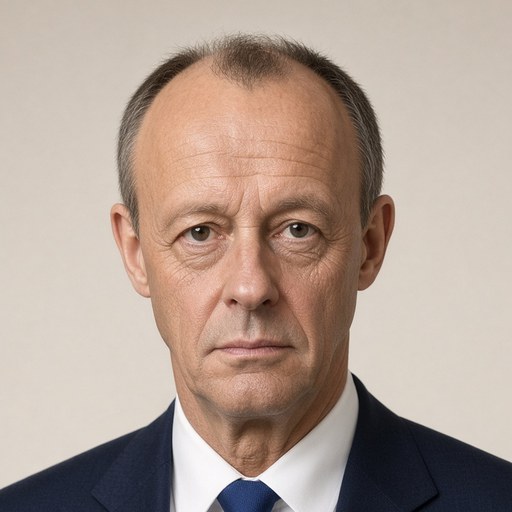
Speech by the Federal Chancellor at the New Year's Reception of the Association of German Banks e.V. Banks Open Doors to the Capital Market
 Friedrich Merz · Chancellor of Germany
- Context
- Merz addressed the Association of German Banks' annual conference on April 20, 2026, celebrating the organization's 75th anniversary and its role in Germany's economy.
- Main themes
- German banking sector anniversary, capital markets access, economic reconstruction, social market economy, German financial history, Nazi era banking continuity, post-war recovery, banking regulation, economic growth, European integration
- Duration
- ~26 min
- Words
- 3,122
- Sentences
- 181
- Readability
- 46
- Grade
- 11.1
- Syntax
- 2.88
- Vocabulary
- 2.13
Translated from German
The broad sphere of national life a sentence belongs to. Every sentence has an Arena, so it is the denominator the other indices are read against.
Other181 sentences in 46 paragraphs
Dear Mr. President, dear Christian Sewing,
dear Madam President of the European Central Bank, dear Christine Lagarde,
Mr. Herkenhoff,
ladies and gentlemen,
Excellencies,
dear colleagues from the German Bundestag,
thank you very much for the warm welcome and the invitation to your annual conference this year. First of all, I would like to extend my heartfelt congratulations on your 75th birthday on behalf of the Federal Government, but also personally. 75 is not an age, quite the opposite. You can look back on a 75-year history of success of German private banks, both large and small, international and regional. For 75 years, you have enabled investments. You finance companies. You open the doors to the capital market. You secure jobs in Germany. After all, almost 540,000 employees are employed in the German banking sector as a whole. You create significant added value for our country, for our economy.
Ladies and gentlemen, although some may not want to acknowledge it, a functioning banking system, the financial industry, is the nervous system of an economy. Without banks, without the financial industry, there can be no successful economy. A financial industry creates the foundation for growth and the future viability of a country. Your association, the Banking Association, makes an important contribution to this. That is why I once again sincerely congratulate you on your anniversary. I wish you continued luck and success in the years and decades to come in what you do for our country!
75 years, such a birthday invites a brief look back at the year of your founding, the year 1951. Germany was under Chancellor Konrad Adenauer in a phase of reconstruction, politically, socially, and economically. The young Federal Republic of Germany regained part of its foreign and security policy, as well as its economic sovereignty, with the first revision of the occupation statute. As a founding member of the European Coal and Steel Community and a new member of the Council of Europe, this Federal Republic of Germany gradually and slowly found its way back into the civilized community of nations. That was anything but a given at the time. Germany experienced an economic miracle, as it would later be called, although it was certainly no miracle. For it was the framework conditions that made this possible at that time with a clear commitment to the social market economy, to an open economy, to open markets.
Ladies and gentlemen, in the founding year of your association, the growth rate of the German economy was 8.3 percent. Now, this was certainly no miracle. It was the result of significant willingness to engage among the population. It was the result of wise politics and correct regulatory decisions – also in banking. By the way, some things are romanticized in hindsight. It was not uncontroversial. On the contrary, it had to be hard-won, even before the founding of the Federal Republic of Germany, for example, with the entry into a freely convertible currency. What Ludwig Erhard enabled with the so-called currency reform was hotly contested. The German trade unions tried to call a general strike against it.
I mention all this, ladies and gentlemen, because we are also living today in times of highly contested political decisions. Just as Germany had to be rebuilt as a financial center after the Second World War, with a stable currency and a reliable banking system, we also had to return to the path of growth and new employment in other sectors, particularly in our industry.
This truth also applies, as in other sectors: Many banks exhibited personnel continuities from the Nazi era. Many banks were previously involved in war economies and economic exploitation. This history was addressed late, but it was addressed.
Ladies and gentlemen, the Federal Association of German Banks was founded in years of comprehensive upheaval. Its first chairman was banker and member of the German Bundestag Robert Pferdmenges, a close friend and advisor to our first Chancellor and – at least according to some sources – his only close friend. In the preface of the first annual report of the association, Pferdmenges reports on the surprising abundance of tasks that faced the association in a very short time. Yes, ladies and gentlemen, there was much to do in the reconstruction. The private banks had come together to represent common interests, set standards, and reliably finance the economy for growth and prosperity.
This mission has been successfully fulfilled by you for 75 years now. On this day, my thanks go not only to Christian Sewing and Heiner Herkenhoff, but to all those who have been engaged in the Banking Association over the years and decades, and to those who are currently involved in this association as responsible parts of our financial industry. Thank you very much for your work!
We are once again experiencing great upheavals today. Christian Sewing has mentioned it. While we experienced the challenges of immediate and existential nature during the reconstruction of the 1950s, they are less tangible today. Precisely for this reason, what we do and must do is more demanding. I do not complain about it. But, ladies and gentlemen, at its core, it is still the same: We must once again lay sustainable foundations for the success of our country in the coming decades and enable growth and continued prosperity.
We live in times of geopolitical and deep geo-economic conflicts and uncertainties, of ongoing crises, of war in Europe, of new protectionism directed against free trade and open markets. All of this affects the economic success or indeed failure of our country. The situation remains tense, especially in the Middle East. The impact of this war on growth and economic development in Germany largely depends on its duration and intensity. The events of the last hours leave us with hope that perhaps a swift end could be possible.
And yet, as always: Even in a changing world, there are not only risks but also opportunities. But we will only seize these opportunities if we resolutely strengthen our competitiveness. That is exactly what we want to do. It is primarily about the price competitiveness of our companies in Germany. This price competitiveness has not been good enough for years. We have become accustomed to trying to keep up with small incremental steps, which we have nevertheless not caught up with. That is why we, as the Federal Government, are doing everything we can to address the structural distortions, the structural deficits of our country. We want to improve competitiveness. We want lower energy costs; we have taken the first steps. We want lower corporate taxes; we have taken the first steps. We want less bureaucracy; we have taken the first steps. We want targeted investments in innovation and infrastructure, and we want reforms of the social security systems. Ladies and gentlemen, only if we reform them will they remain affordable and future-proof.
I say openly and shortly before the first anniversary of our government activities: We have achieved some things, but we are far from enough. We discussed some smaller further steps in the coalition a week ago. We must and will stop the increase in social security contributions. We must and will initiate a structural reform of statutory health insurance. We agreed on this last weekend. We want – more is currently not achievable – to at least keep the contribution rates permanently stable. Just to give you a sense of the dimensions we are talking about: One percent of social security contributions in Germany amounts to 20 billion euros in social security contributions from employees and companies. In reality, these are the contributions solely of the employees. For what we do with the split contribution rate for companies and employees is, in truth, only an accounting position. Every employee must generate the full social security contribution with their labor; otherwise, the job is not competitive.
We are talking about two percentage points that we want to save in statutory health insurance through a reform that would otherwise be threatened next year. In other words: This reform must save 40 billion euros on the expenditure side of our statutory health insurance.
We want to follow the recommendations of the pension reform commission in the summer, which will propose a comprehensive reform of our old-age security systems. Ladies and gentlemen, the statutory pension insurance alone will at best still be the basic security for old age. It will no longer be sufficient to secure the standard of living in the long term. Capital-funded elements of occupational and private retirement provision must be added, and indeed to a much greater extent than we currently have largely on a voluntary basis.
Here you come into play, the banks. We need your support in this, not only materially but also ideologically and socially. Demonstrating that capital-funded retirement provision systems can also become more independent of demographics and the labor market will be an important contribution that we all, including you, can and must make to the reform of this retirement provision system.
I would also like to say: That we were able to agree on this in the coalition agreement is a small step for us Christian Democrats; for the Social Democrats, it was a big one. Acknowledging that we now need a comprehensive provision level that includes components far beyond statutory pension insurance, which are established permanently and reliably, is a big step for the Social Democrats. I want to add: But we must now also take this step together. We must leave no doubt that we want to do this and that we will set it in motion this year so that it can come into effect on January 1, 2027.
Ladies and gentlemen, what we are planning also directly affects your industry, your companies in a second aspect. We are not only improving private and occupational retirement provision. We are also fundamentally improving the German capital market. Those who know me are aware that I have been lamenting for years that we do not have a truly broad and deep capital market in Germany – a capital market that is used for retirement provision, but also a capital market that is available in the scope necessary for the financing of companies. Here you are again a player, an institution that must contribute and help.
I want us to gradually expand corporate financing in Germany to be much more capital market-oriented. This does not mean that you as banks will no longer have a share in financing – no, not at all. You are simply switching sides of the balance sheet, so to speak. You help ensure that the equity base of our companies improves and that dependence on debt capital decreases.
This is the task we must tackle in this legislative period. If we succeed, we have great potential in Germany. There is no shortage of money. There is a lack of mobilized funds for the capital market and, correspondingly, for retirement provision in our country, ladies and gentlemen.
That there is a great willingness in Germany to connect this with investments and innovations, I was able to experience yesterday and today until early afternoon at the 2026 Industrial Fair in Hanover.
At this point, I want to express my gratitude to Christian Sewing; he is one of the co-initiators of the "Made for Germany" initiative. We had a meeting there today at noon. Meanwhile, over 100 companies have committed to invest over 800 billion euros in the German location over the next five years. Ladies and gentlemen, when you talk to these companies, including some of the young start-up companies that are involved, you get a sense of the potential, the dynamism, and the willingness to invest and innovate that exists in our country. I am firmly determined to utilize this capital, this sympathy, and this commitment for our country. We must do it together so that we can emerge from this structural weakness of our economy together.
I am grateful to Christian Sewing for addressing the European Union. We are by far the most populous country in this European Union, with over 82 million inhabitants out of 450 million in the EU.
If Germany does not make a disproportionately large contribution to the success of the European project, then this European project will fail. And conversely: If Europe does not move towards more internal market and competitiveness – I am thinking here of what Enrico Letta and Mario Draghi told us at an offsite on February 12 at the former castle of the founding of the Teutonic Order near Liège – if Europe does not take this path, then Germany will also fail.
No country in this European Union is as dependent on the success of the internal market and the competitiveness of Europe as we are. At the same time, no other country can contribute as much to the success of this great project in its second phase as we can, ladies and gentlemen. That is why some may refer to me, not here in the hall, but outside, as the foreign chancellor. I will remain committed to this engagement, to advocate in Europe for our joint success in Europe, not only economically, not only in economic policy, but that in this difficult time we are in, we also pursue our security and defense interests together. Without Europe, we will not succeed in this either, ladies and gentlemen!
We have great companies, we have great employees, we have a workforce that is fundamentally well-trained in the companies. We have young, innovative companies that want to grow in Europe, that want to raise capital and go public.
I tell these companies: If it is possible, do it in Europe and not necessarily in the USA. I want the capital market in Europe to become so strong, so liquid, that the capital pools we have become so strong that they can also contribute to making the European capital market stronger. I want us to revive the securitization market as quickly as possible, to establish a powerful European financial market infrastructure. That is exactly what the federal government is committed to. That is exactly what I am personally advocating for with all the weight I can bring to bear at the European level.
And from a deepened capital market, ladies and gentlemen, you all benefit. We are counting on you at all levels. High-volume financing or IPOs can often only be managed by the largest banks. Yes, we need large banks in Europe.
But let me make one thing very clear in light of current events: This does not mean that every form and type of takeover is welcome in Germany. We firmly reject hostile, aggressive approaches. We must look at what we need together in the European and German market. Our medium-sized businesses and our crafts depend on locally anchored financing. In many areas, the contribution from small and medium-sized banks on the ground makes a difference.
By the way, Draghi and Letta make a second, further important point: We have too much regulation and bureaucracy in Europe. This also hinders innovation and growth.
Therefore, since taking office, I have been advocating for a reduction of bureaucracy at the European level. Our companies must no longer face these unnecessary obstacles to growth, and they are facing such hurdles. Because that is bureaucracy. It harms our competitiveness.
I therefore expect the European Commission – I say it again and again – to review all European law with two goals, namely to simplify existing laws and to eliminate overregulation without replacement.
The European Commission has already initiated some simplification packages, so-called omnibus packages, and more are planned. This is the right approach, also for financial market regulation. By the way: After the financial crisis, important and correct decisions were made that significantly improved resilience in the financial sector. Equity capital is higher, risk buffers are larger. That remains right and important. But now it is time to put this regulation back to the test, ladies and gentlemen. Not everything that was right immediately after the financial crisis remains right today, especially in light of the competition we have to face with American banks on the European continent.
I therefore very explicitly welcome that the European Commission is working on a report on the competitiveness of European banks. A simplification package must follow the report. I am advocating for this, the federal government is advocating for this, together with other member states. Financial stability must of course be ensured, but at the same time, bureaucracy must be significantly reduced, and reporting obligations must be minimized. Proportionality, ladies and gentlemen, is the right keyword. This also lowers costs for banks in Germany.
And finally: We must keep an eye on the implementation of regulation in Germany and enable targeted, proportionate, and above all, low-bureaucracy implementations. This is called "gold-plating" in Germany when it comes to implementing European Union directives not 1 to 1, but 1 to 1.5 or even further. What is sufficient for all of Europe can and must also be sufficient for Germany, ladies and gentlemen.
In this sense: 75 years of the Association of German Banks is not only a grateful look back, it is also a mandate for the future. Because if we can learn one thing from your and our history since 1951, it is this: Progress is possible especially in times of great challenges.
The world is currently reorganizing itself. Yes, our politics, our decisions right now will determine how strong our country will be tomorrow. Whether new strength arises from uncertainty, whether new opportunities arise from upheavals, that – and here Christian Sewing is right again – is up to us, it is in our hands.
We are working on making this happen, the federal government is working on it, and so are you. And it comes down to you again, to the financial sector, just as it did in the early years of the Federal Republic of Germany. If we, if everyone in this country works wisely together, if everyone is willing to contribute their part and also bear their part, then we can successfully shape the future of our country, in such a way that economic success and a good social coexistence are as possible as the personal realization opportunities of each individual. This goes hand in hand; you exemplify this. These are realistic goals.
For this, ladies and gentlemen, no miracle is needed. What is needed now is the performance of confident and responsible people who together realize the great potentials that our country still has today.
Once again in this sense, dear Christian Sewing: Congratulations on your 75th birthday! Here’s to the next successful decades!
Thank you very much.
The original German. The tags above are read on the English translation's sentences.
Sehr geehrter Herr Präsident, lieber Christian Sewing,
sehr geehrte Frau Präsidentin der Europäischen Zentralbank, liebe Christine Lagarde,
Herr Herkenhoff,
meine sehr geehrten Damen und Herren,
Exzellenzen,
lieber Kolleginnen und Kollegen aus dem Deutschen Bundestag,
herzlichen Dank für die freundliche Begrüßung und die Einladung zu Ihrer diesjährigen Jahrestagung. Ich möchte Ihnen zunächst im Namen der Bundesregierung, aber auch persönlich sehr herzlich zum 75. Geburtstag gratulieren. 75 ist kein Alter, ganz im Gegenteil. Sie können auf eine 75-jährige Geschichte des Erfolges der deutschen privaten Banken zurückblicken, der großen und der kleinen, der internationalen und der regionalen. Sie ermöglichen seit 75 Jahren Investitionen. Sie finanzieren Unternehmen. Sie öffnen die Türen zum Kapitalmarkt. Sie sichern Arbeitsplätze in Deutschland. Immerhin fast 540
.
000 Beschäftigte sind in der deutschen Kreditwirtschaft insgesamt tätig. Sie schaffen einen großen Mehrwert für unser Land, für unsere Volkswirtschaft.
Meine Damen und Herren, obwohl es manche gar nicht so gern wissen wollen, ist ein funktionierendes Bankensystem, ist die Finanzindustrie aber das Nervensystem einer Volkswirtschaft. Ohne Banken, ohne Finanzindustrie kann es keine erfolgreiche Volkswirtschaft geben. Eine Finanzindustrie schafft die Grundlage für Wachstum und für die Zukunftsfähigkeit eines Landes. Ihr Verband, der Bankenverband, leistet dazu einen wichtigen Beitrag. Deswegen gratuliere ich Ihnen noch einmal sehr herzlich zu Ihrem Jubiläum. Ich wünsche Ihnen in den nächsten Jahren und Jahrzehnten weiterhin Glück und Erfolg bei dem, was Sie für unser Land tun!
75 Jahre, ein solcher Geburtstag lädt ja dazu ein, einen kurzen Rückblick auf das Jahr Ihrer Gründung zu nehmen, auf das Jahr 1951. Deutschland befand sich unter Bundeskanzler Konrad Adenauer im Wiederaufbau, politisch, gesellschaftspolitisch, wirtschaftlich. Die junge Bundesrepublik Deutschland gewinnt mit der ersten Revision des Besatzungsstatuts einen Teil ihrer außen- und sicherheitspolitischen, aber auch ihrer wirtschaftspolitischen Souveränität zurück. Als Gründungsmitglied der Montanunion und neues Mitglied des Europarats findet diese Bundesrepublik Deutschland Schritt für Schritt und langsam in die zivilisierte Staatengemeinschaft zurück. Das war damals alles andere als selbstverständlich. Deutschland erlebt ein Wirtschaftswunder, wie es später einmal heißen sollte, obwohl es ganz gewiss kein Wunder war. Denn es waren die Rahmenbedingungen, die dies damals mit dem klaren Bekenntnis zur sozialen Marktwirtschaft, zur offenen Volkswirtschaft, zu offenen Märkten überhaupt erst ermöglichten.
Meine Damen und Herren, in dem Gründungsjahr Ihres Verbandes lag die Wachstumsrate der deutschen Volkswirtschaft bei 8,3 Prozent. Nun war das alles eben kein Wunder. Es war das Ergebnis erheblicher Einsatzbereitschaft in der Bevölkerung. Es war das Ergebnis kluger Politik und richtiger ordnungspolitischer Weichenstellungen
–
auch im Bankenwesen. Übrigens verklärt sich in der Rückschau manches. Es war nicht unumstritten. Im Gegenteil, es musste hart errungen werden, schon vor der Gründung der Bundesrepublik Deutschland, etwa mit dem Eintritt in die frei konvertierbare Währung. Das, was Ludwig Erhard mit der sogenannten Währungsreform ermöglichte, war hart umstritten. Die deutschen Gewerkschaften haben versucht, dagegen einen Generalstreik auszurufen.
Ich sage das alles deshalb, meine Damen und Herren, weil wir auch heute in Zeiten hart umstrittener politischer Entscheidungen leben. Denn so, wie Deutschland nach dem Zweiten Weltkrieg auch als Finanzstandort neu aufgebaut werden musste, mit stabiler Währung und einem verlässlichen Bankensystem, so mussten wir auch in anderen Branchen, insbesondere in unserer Industrie, auf den Weg von Wachstum und neuer Beschäftigung zurückkommen.
Zu dieser Wahrheit gehört wie in anderen Branchen auch dazu: Viele Bankhäuser haben personelle Kontinuitäten aus der
NS
-Zeit aufgewiesen. Viele Banken waren zuvor in Kriegswirtschaft und wirtschaftliche Ausbeutung verstrickt. Diese Geschichte wurde spät aufgearbeitet, aber sie wurde aufgearbeitet.
Meine Damen und Herren, der Bundesverband deutscher Banken gründete sich also in den Jahren des umfassenden Umbruchs. Sein erster Vorsitzender wurde der Bankier und Abgeordnete des Deutschen Bundestages Robert Pferdmenges, ein enger Freund und Berater unseres ersten Bundeskanzlers und
–
so sagen es jedenfalls manche Quellen
–
sein einziger Duzfreund. Im Vorwort des ersten Geschäftsberichts des Verbandes berichtet Pferdmenges von der überraschenden Fülle an Aufgaben, die sich dem Verband in kürzester Zeit stellten. Ja, meine Damen und Herren, es war viel zu tun im Wiederaufbau. Die privaten Banken hatten sich zusammengeschlossen, um gemeinsame Interessen zu vertreten, Standards zu setzen und die Wirtschaft verlässlich zu finanzieren, für Wachstum und Wohlstand.
Dieser Auftrag wird nun von Ihnen seit 75 Jahren erfolgreich erfüllt. Am heutigen Tag gilt mein Dank also nicht nur Christian Sewing und Heiner Herkenhoff, sondern allen, die sich im Bankenverband über Jahre und Jahrzehnte engagiert haben, und denjenigen, die sich heute in diesem Verband als verantwortungsvolle Teile unserer Finanzwirtschaft engagieren und einsetzen. Herzlichen Dank für Ihre Arbeit!
Wir erleben heute erneut große Umbrüche. Christian Sewing hat es angesprochen. Während wir im Wiederaufbau der Fünfzigerjahre die Herausforderungen unmittelbarer und existentieller erlebt haben, sind sie heute weniger greifbar. Gerade deshalb ist das, was wir tun und tun müssen, anspruchsvoller. Ich beklage mich nicht darüber. Aber, meine Damen und Herren, im Kern ist es doch dasselbe: Wir müssen wieder tragfähige Grundlagen für den Erfolg unseres Landes in den kommenden Jahrzehnten legen und wieder Wachstum und weiterhin Wohlstand ermöglichen.
Wir leben in Zeiten geopolitischer und tiefer geoökonomischer Konflikte und Unsicherheiten, von anhaltenden Krisenlagen, von Krieg in Europa, von neuem Protektionismus, der sich gegen Freihandel und offene Märkte richtet. All das wirkt sich auf den wirtschaftlichen Erfolg oder eben Misserfolg unseres Landes aus. Die Lage bleibt angespannt, gerade auch im Mittleren und Nahen Osten. Die Auswirkungen dieses Krieges auf Wachstum und wirtschaftliche Entwicklung in Deutschland hängen maßgeblich von seiner Dauer und seiner Intensität ab. Die Ereignisse der letzten Stunden lassen uns nicht ohne Hoffnung bleiben, dass es vielleicht doch zu einem baldigen Ende kommen könnte.
Und dennoch, wie immer: Auch in einer sich verändernden Welt liegen nicht nur Risiken, sondern auch Chancen. Aber wir werden diese Chancen nur dann nutzen, wenn wir unsere Wettbewerbsfähigkeit entschlossen stärken. Genau das wollen wir tun. Es geht vor allem um die preisliche Wettbewerbsfähigkeit unserer Unternehmen am Standort Deutschland. Diese preisliche Wettbewerbsfähigkeit ist seit Jahren nicht mehr gut genug. Wir haben uns angewöhnt, mit kleinen Trippelschritten zu versuchen, einer Entwicklung hinterherzukommen, die wir aber dennoch nicht eingeholt haben. Deswegen setzen wir als Bundesregierung alles daran, die strukturellen Verwerfungen, die strukturellen Defizite unseres Landes zu beheben. Wir wollen die Wettbewerbsfähigkeit verbessern. Wir wollen niedrigere Energiekosten; wir haben die ersten Schritte getan. Wir wollen niedrigere Unternehmenssteuern; wir haben die ersten Schritte getan. Wir wollen weniger Bürokratie; wir haben die ersten Schritte getan. Wir wollen gezielte Investitionen in Innovation und Infrastruktur, und wir wollen Reformen der sozialen Sicherungssysteme. Meine Damen und Herren, nur dann, wenn wir sie reformieren, bleiben sie bezahlbar und zukunftsfest.
Ich sage offen und kurz vor dem ersten Jahrestag unserer Regierungstätigkeit: Wir haben einiges erreicht, aber wir sind weit davon entfernt, dass es genug ist. Wir haben vor einer Woche in der Koalition erste kleinere weitere Schritte besprochen. Wir müssen und werden den Anstieg der Sozialversicherungsbeiträge stoppen. Wir müssen und werden eine strukturelle Reform der gesetzlichen Krankenversicherung auf den Weg bringen. Wir haben uns am vergangenen Wochenende darauf verständigt. Wir wollen
–
mehr ist im Augenblick gar nicht erreichbar
–
die Beitragssätze wenigstens dauerhaft stabil halten. Nur damit Sie ein Gefühl für die Dimensionen bekommen, über die wir sprechen: Ein Prozent Sozialversicherungsbeitrag in Deutschland, das sind 20 Milliarden Euro Sozialversicherungsbeiträge der Arbeitnehmerinnen und Arbeitnehmer und der Unternehmen. In Wahrheit sind es die Beiträge allein der Arbeitnehmerinnen und Arbeitnehmer. Denn das, was wir mit dem aufgeteilten Beitragssatz für Unternehmen und Beschäftigte tun, ist in Wahrheit nur eine Verrechnungsposition. Jeder Arbeitnehmer und jede Arbeitnehmerin muss mit seiner und ihrer Arbeitskraft den vollen Sozialversicherungsbeitrag erwirtschaften, sonst ist der Arbeitsplatz nicht wettbewerbsfähig.
Wir sprechen von zwei Prozentpunkten, die wir bei der gesetzlichen Krankenversicherung durch eine Reform einsparen wollen, die ansonsten im nächsten Jahr drohen. Mit anderen Worten: Diese Reform muss auf der Ausgabenseite unserer gesetzlichen Krankenversicherung 40 Milliarden Euro einsparen.
Wir wollen im Sommer den Empfehlungen der Rentenreformkommission folgen, die eine umfassende Reform unserer Alterssicherungssysteme vorschlagen wird. Meine Damen und Herren, die gesetzliche Rentenversicherung allein wird allenfalls noch die Basisabsicherung für das Alter sein. Sie wird nicht mehr ausreichen, auf Dauer den Lebensstandard zu sichern. Es müssen kapitalgedeckte Elemente einer betrieblichen und privaten Altersversorgung hinzutreten, und zwar in weit größerem Umfang, als wir sie gegenwärtig weitgehend auf der Basis von Freiwilligkeit haben.
Hier kommen Sie ins Spiel, die Banken. Wir brauchen dabei Ihre Unterstützung, nicht nur materiell, sondern auch ideell und gesellschaftspolitisch. Zu zeigen, dass kapitalgedeckte Altersversorgungssysteme auch unabhängiger von Demografie und Arbeitsmarkt werden, wird ein wichtiger Beitrag sein, den wir alle, auch Sie, zur Reform dieses Altersvorsorgesystems leisten können und müssen.
Ich will es auch gerne sagen: Dass wir uns darauf im Koalitionsvertrag verständigen konnten, ist für uns Christdemokraten ein kleiner Schritt; für die Sozialdemokraten war es ein großer. Anzuerkennen, dass wir jetzt ein Gesamtversorgungsniveau brauchen, das weit über die gesetzliche Rentenversicherung hinaus Bestandteile enthält, die dauerhaft und zuverlässig eingerichtet werden, ist für die Sozialdemokraten ein großer Schritt. Ich will hinzufügen: Aber wir müssen ihn jetzt auch gemeinsam gehen. Wir dürfen keinen Zweifel daran lassen, dass wir es wollen und das noch in diesem Jahr so auf den Weg bringen, dass es zum 01.01.2027 in Kraft treten kann.
Meine Damen und Herren, das, was wir da vorhaben, betrifft wiederum in einem zweiten Aspekt unmittelbar Ihre Industrie, Ihre Unternehmen. Wir verbessern damit ja nicht nur die private und betriebliche Altersversorgung. Wir verbessern damit auch durchgreifend den deutschen Kapitalmarkt. Diejenigen, die mich kennen, wissen, dass ich seit Jahren beklage, dass wir in Deutschland eben keinen wirklich breiten und tiefen Kapitalmarkt haben
–
keinen Kapitalmarkt, der zur Altersvorsorge herangezogen wird, aber eben auch keinen Kapitalmarkt, der im Umfang zur Verfügung steht, der notwendig wäre, für die Finanzierung der Unternehmen. Hier sind Sie erneut ein Mitspieler, eine Institution, die beitragen und helfen muss.
Ich möchte, dass wir in Deutschland Schritt für Schritt die Unternehmensfinanzierung sehr viel stärker kapitalmarktorientiert ausbauen. Das heißt nicht, dass Sie als Banken keinen Anteil mehr an der Finanzierung haben
–
nein, ganz und gar nicht. Sie wechseln sozusagen nur die Seite der Bilanz. Sie helfen mit, dass die Eigenkapitalausstattung unserer Unternehmen besser wird und die Abhängigkeit von Fremdkapital geringer.
Das ist die Aufgabe, der wir uns in dieser Wahlperiode stellen müssen. Wenn wir das schaffen, haben wir ein großes Potenzial in Deutschland. Es fehlt nicht an Geld. Es fehlt an mobilisierten Mitteln für den Kapitalmarkt und spiegelbildlich damit für die Altersversorgung in unserem Lande, meine Damen und Herren.
Dass dafür eine große Bereitschaft in Deutschland besteht, dies auch mit Investitionen und Innovationen zu verbinden, das konnte ich gestern und heute bis in den frühen Nachmittag hinein in Hannover auf der diesjährigen Industriemesse 2026 erleben.
Ich will an dieser Stelle ein Wort des Dankes an Christian Sewing sagen; er ist einer der Mitinitiatoren der Initiative „
Made for Germany
“. Wir haben dort heute Mittag ein Treffen gehabt. Mittlerweile haben sich weit über 100 Unternehmen verpflichtet, über 800 Milliarden Euro in den nächsten fünf Jahren in den deutschen Standort zu investieren. Meine Damen und Herren, wenn Sie mit diesen Unternehmen sprechen, auch mit den zum Teil jungen
Start-up
-Unternehmen, die dabei sind, dann bekommen Sie ein Gefühl dafür, welches Potenzial, welche Dynamik, welcher Wille zur Investition und zur Innovation in unserem Lande vorhanden ist. Ich bin fest entschlossen, dieses Kapital, diese Sympathie und dieses Engagement für unser Land zu nutzen. Wir müssen es gemeinsam tun, damit wir aus dieser strukturellen Schwäche unserer Volkswirtschaft gemeinsam herauskommen.
Ich bin Christian Sewing dankbar, dass er die Europäische Union angesprochen hat. Wir sind mit Abstand das bevölkerungsreichste Land dieser Europäischen Union mit über 82 Millionen Einwohnern von 450 Millionen in der
EU
. Wenn Deutschland nicht einen überproportionalen Beitrag zum Gelingen des europäischen Projektes leistet, dann wird dieses europäische Projekt scheitern. Und umgekehrt: Wenn Europa den Weg in Richtung mehr Binnenmarkt und Wettbewerbsfähigkeit nicht geht
–
ich denke hier an das, was
Enrico Letta
und
Mario Draghi
uns bei einer
Offsite
am 12. Februar im ehemaligen Schloss der Gründung des Deutschen Ordens in der Nähe von Lüttich gesagt haben
–
, wenn Europa diesen Weg nicht geht, dann wird auch Deutschland scheitern.
Kein Land in dieser Europäischen Union ist vom Gelingen des Binnenmarktes und der Wettbewerbsfähigkeit Europas so abhängig wie wir. Gleichzeitig kann kein anderes Land zum Gelingen dieses großen Projektes in der zweiten Phase einen so großen Beitrag leisten wie wir, meine Damen und Herren. Deswegen mag mich der eine oder andere, nicht hier im Saal, aber außerhalb, als Außenkanzler apostrophieren. Ich werde an diesem Engagement festhalten, mich in Europa dafür einzusetzen, dass wir gemeinsam in Europa erfolgreich sind, nicht nur ökonomisch, nicht nur wirtschaftspolitisch, sondern dass wir in dieser schweren Zeit, in der wir sind, auch unsere sicherheitspolitischen, unsere verteidigungspolitischen Interessen gemeinsam wahrnehmen. Ohne Europa wird uns das auch nicht gelingen, meine Damen und Herren!
Wir haben großartige Unternehmen, wir haben großartige Mitarbeiterinnen und Mitarbeiter, wir haben eine im Wesentlichen jedenfalls gut ausgebildete Mitarbeiterschaft in den Unternehmen. Wir haben junge, innovative Unternehmen, die in Europa wachsen wollen, die Kapital aufnehmen und an die Börse gehen wollen.
Ich sage diesen Unternehmen: Wenn es eben möglich ist, tut es in Europa und nicht unbedingt in den
USA
. Ich möchte, dass der Kapitalmarkt in Europa so stark wird, so liquide wird, dass die Kapitalsammelstellen, die wir haben, so stark werden, dass sie auch selbst einen Beitrag dazu leisten können, dass der europäische Kapitalmarkt stärker wird. Ich möchte, dass wir den Verbriefungsmarkt so schnell wie möglich wiederbeleben, dass wir eine leistungsfähige europäische Finanzmarktinfrastruktur bekommen. Genau dafür setzt sich die Bundesregierung ein. Genau dafür setze ich mich auch persönlich mit allem Gewicht, das ich auf die Waage bringen kann, auf europäischer Ebene ein.
Und von einem vertieften Kapitalmarkt, meine Damen und Herren, profitieren Sie alle. Wir zählen auf Sie auf allen Ebenen. Hochvolumige Finanzierungen oder Börsengänge können oft nur die größten Banken leisten und stemmen. Ja, wir brauchen große Banken in Europa.
Aber lassen Sie mich aus aktuellem Anlass eines auch sehr klar sagen: Dies bedeutet nicht, dass jede Form und jede Art der Übernahme in Deutschland willkommen sind. Feindliches, aggressives Vorgehen lehnen wir entschieden ab. Wir müssen auf das schauen, was wir im europäischen und im deutschen Markt gemeinsam brauchen. Unser Mittelstand und unser Handwerk sind auf lokal verankerte Finanzierung angewiesen. In vielen Feldern macht hier auch der Beitrag durch kleine und mittlere Banken vor Ort den Unterschied.
Draghi
und
Letta
machen übrigens einen zweiten, weiteren wichtigen Punkt: Wir haben zu viel Regulierung und Bürokratie in Europa. Auch das hemmt Innovation und Wachstum.
Ich setze mich daher seit meinem Amtsantritt dafür ein, auf europäischer Ebene auch einen Rückbau von Bürokratie zu ermöglichen. Unsere Unternehmen dürfen nicht länger vor diesen unnötigen Wachstumshindernissen stehen, und sie stehen vor solchen Hürden. Denn das ist Bürokratie. Das schadet unserer Wettbewerbsfähigkeit.
Ich erwarte deshalb von der Europäischen Kommission
–
ich sage es immer wieder
–
, dass sie das gesamte europäische Recht überprüft, mit zwei Zielen, nämlich bestehende Gesetze zu vereinfachen und Überregulierungen ersatzlos zu streichen.
Die Europäische Kommission hat bereits einige Vereinfachungspakete, sogenannte Omnibus-Pakete, auf den Weg gebracht und weitere sind geplant. Das ist der richtige Ansatz, auch für die Finanzmarktregulierung. Übrigens: Nach der Finanzkrise wurden wichtige und richtige Entscheidungen getroffen, die die Widerstandsfähigkeit im Finanzsektor deutlich verbessert haben. Das Eigenkapital ist höher, die Risikopuffer sind größer. Das bleibt richtig und wichtig. Aber es ist nun an der Zeit, diese Regulierung auch erneut auf den Prüfstand zu stellen, meine Damen und Herren. Nicht alles, was unmittelbar nach der Finanzkrise richtig war, bleibt heute richtig, auch angesichts des Wettbewerbs, den wir zum Beispiel mit den amerikanischen Banken auf dem europäischen Kontinent austragen müssen.
Ich begrüße es deshalb sehr ausdrücklich, dass die Europäische Kommission an einem Bericht zur Wettbewerbsfähigkeit der europäischen Banken arbeitet. Auf den Bericht muss ein Vereinfachungspaket folgen. Dafür setze ich mich ein, dafür setzt sich die Bundesregierung ein, gemeinsam mit anderen Mitgliedstaaten. Die Finanzstabilität muss natürlich gesichert werden, aber gleichzeitig muss die Bürokratie deutlich zurückgebaut, Berichtspflichten reduziert werden. Proportionalität, meine Damen und Herren, ist das richtige Stichwort. Auch das senkt Kosten für die Banken in Deutschland.
Und schließlich: Wir müssen in Deutschland die Umsetzung von Regulierung im Blick behalten und zielgerichtete, verhältnismäßige und vor allem bürokratiearme Umsetzungen ermöglichen. „
Gold-Plating
“ nennt man so etwas in Deutschland, wenn es darum geht, Richtlinien der Europäischen Union nicht 1 zu 1, sondern 1 zu 1,5 oder gar noch weitergehender umzusetzen. Was für ganz Europa genug ist, das kann und muss auch für Deutschland ausreichend sein, meine Damen und Herren.
In diesem Sinne: 75 Jahre Bundesverband deutscher Banken, das ist nicht nur ein dankbarer Blick zurück, das ist auch ein Auftrag für die Zukunft. Denn wenn wir eines aus Ihrer und unserer Geschichte seit 1951 lernen können, dann ist es dies: Fortschritte werden gerade in Zeiten großer Herausforderungen möglich.
Die Welt sortiert sich im Augenblick neu. Ja, unsere Politik, unsere Weichenstellungen gerade jetzt entscheiden deshalb, wie stark unser Land morgen sein wird. Ob aus Unsicherheit neue Stärke entsteht, ob aus Umbrüchen neue Chancen werden, das
–
und hier hat Christian Sewing erneut Recht
–
liegt an uns, es liegt in unserer Hand.
Dass das gelingt, daran arbeiten wir, daran arbeitet die Bundesregierung, daran arbeiten Sie. Und es kommt wieder auf Sie an, auf die Finanzwirtschaft, wie schon in den Anfangsjahren der Bundesrepublik Deutschland. Wenn wir, wenn alle in diesem Land klug zusammenwirken, wenn alle bereit sind, ihren Teil beizutragen und auch ihren Teil zu tragen, dann können wir die Zukunft unseres Landes erfolgreich gestalten, und zwar so, dass wirtschaftlicher Erfolg und ein gutes gesellschaftliches Miteinander ebenso möglich sind wie persönliche Verwirklichungschancen eines jeden Einzelnen. Das geht Hand in Hand; das leben Sie vor. Das sind realistische Zielvorstellungen.
Dafür, meine Damen und Herren, braucht es kein Wunder. Dafür braucht es jetzt die Leistung zuversichtlicher und verantwortungsvoller Menschen, die gemeinsam die großartigen Potenziale verwirklichen, die unser Land auch unverändert heute hat.
Noch einmal in diesem Sinne, lieber Christian Sewing: Herzlichen Glückwunsch zum 75. Geburtstag! Auf die nächsten erfolgreichen Jahrfünfte und Jahrzehnte!
Herzlichen Dank.