




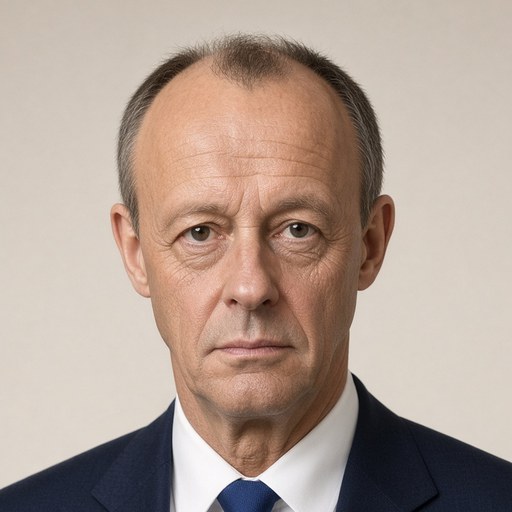
Speech by the Federal Chancellor at the 14th Maritime Conference "The Maritime Economy is a Driver of Growth and Innovation"
 Friedrich Merz · Chancellor of Germany
- Context
- Merz addressed the 14th National Maritime Conference in Emden on April 29, 2026, marking the conference's 26th anniversary and highlighting maritime economy priorities.
- Main themes
- Maritime economy, growth and innovation, maritime security, freedom of navigation, global trade, German shipbuilding, geopolitical tensions, competitiveness, naval shipbuilding, security policy, framework conditions for industry, medium-sized enterprises
- Duration
- ~23 min
- Words
- 2,708
- Sentences
- 154
- Readability
- 48
- Grade
- 10.8
- Syntax
- 2.88
- Vocabulary
- 2.14
Translated from German
The broad sphere of national life a sentence belongs to. Every sentence has an Arena, so it is the denominator the other indices are read against.
Other154 sentences in 39 paragraphs
Dear Mayor Kruithoff,
dear Minister President, dear Olaf Lies,
dear colleagues from the federal government,
dear Mayor Tschentscher,
ladies and gentlemen,
dear people of Emden,
You see, a Sauerländer is a learning system! I am very pleased that you have all come together here in Emden today, that you have invited us to be with you, and that we have the opportunity not only to reflect on 26 years of the National Maritime Conference but also to look ahead. Because the world in which we meet today is a very different one from the world in which many of you met here in Emden 26 years ago. The place is the same, but the situation is completely different.
Lower Saxony, your federal state, the Emsland, the city of Emden, they are a beacon for the maritime economy in Germany. They are also one of the largest naval bases. You all, especially here in the Emsland, really know what you are talking about when you discuss the needs, challenges, and opportunities of the maritime economy.
Ladies and gentlemen, it is almost an anniversary. This is always an occasion to take stock. Your balance sheet for the past 25 years is truly impressive. The National Maritime Conference has become the central platform for exchange, the most important source of impetus for the maritime economy in Germany.
I would like to sincerely thank everyone who made it possible for us to come together here yesterday and today. I thank all those who are actively involved. A particularly heartfelt word of thanks goes to the Federal Government's Coordinator for Maritime Economy, my colleague Christoph Ploß from Hamburg, who understands what maritime economy is and who is here today. Thank you very much, Christoph Ploß, and also to everyone who contributed to the organization of this conference here in Emden, the associations, the companies, the institutions, and the Bundeswehr! Ladies and gentlemen, your commitment, the effort you show, is already an invaluable competitive factor for the maritime economy and thus for the entire economy of our country.
You probably know this, but I want to say it again: 90 percent of global trade is conducted over the seas. For a maritime economy that is as innovative and powerful as the German one, this means enormous growth potential. We do well to create the best framework conditions for this in Germany.
But this also means – as we are experiencing these days – that when geopolitical tensions cause maritime bottlenecks, it affects the world economy and thus hits us at our most sensitive point. For good reason, the freedom of navigation is one of the oldest and best-established norms of international law. It is no exaggeration to say: This right is at the beginning of modernity. It marks the beginning of the global explosion of prosperity that accompanied industrialization but was only made possible by the maritime economy. It also marks the beginning of our country's economic rise, ladies and gentlemen. Yes, for an industrial and trading nation like Germany, as we are, the unrestricted use of global sea routes, maritime security is indeed the prerequisite for a successful economy. We must become newly aware of this intertwining of economic and security policy work. It has always been the case, but, to be honest, we may have allowed ourselves the luxury of losing sight of it a bit in recent years. This is different now in this time of fundamental reordering of the world. Security and competitiveness are indeed two sides of the same coin. How quickly we advance in both areas at the same time will determine how well, how freely, and how prosperously we will live in Germany in the 21st century.
That is why we in the federal government have consistently aligned our government action with these two goals: strengthening the competitiveness of our economy and strengthening the security of our country in Europe. This naturally leads to a special focus of the federal government on the maritime economy and its conditions. Because the maritime economy is indeed a driver of growth and innovation for our entire economy.
Here are a few data points: German shipowners operate the third-largest merchant fleet in the world. German shipbuilding is world-class in many areas, including yacht and cruise ship construction as well as high-tech, specialty, and naval shipbuilding. In the mentioned areas of civil shipbuilding, the order books are full. Naval shipbuilding is booming. This benefits a whole system of suppliers, often medium-sized suppliers – as the Federal Government's Commissioner for Small and Medium-Sized Enterprises, Gitta Connemann, knows very well – both in the coastal states and in Bavaria or Baden-Württemberg.
At the same time, it is true: We, Germany, are in global competition with other world regions that are massively investing in their maritime industry. We will only succeed in Germany and Europe if we actively shape our maritime future now. The maritime economy in this country needs competitive framework conditions, and it needs qualified skilled workers. Our shipyards need good financing conditions. We want to ensure the safety of sea routes, our ports, our drilling platforms, and the subsea cables along our coasts. We have all known for some time what it means when we set this standard for ourselves. But, ladies and gentlemen, that is exactly the task description we are working with.
What does this mean in practice?
First: We in the federal government have initiated a whole series of measures aimed at strengthening the maritime economy. This includes our efforts at the European level. The European Commission published an initiative for a European maritime industry strategy at the beginning of March at our instigation, specifically at the instigation of Germany and the Netherlands. This includes a whole package of measures to strengthen our shipbuilding sector. Additionally, we are working in the EU towards a uniform tonnage tax for deep-sea shipping. We cannot do this alone. We can only do this together with our European partners.
But we can and must also do a lot at the national level. At the national level, we have become active by including shipping in the so-called large guarantee program. We support German shipyards in taking on larger contracts and maintaining their position in the market. We are working very intensively to strengthen innovation in strategic future fields through procedural acceleration and funding programs.
Ladies and gentlemen, yes, Mr. Mayor, Mr. Minister President, you are right. Our biggest problem is not the lack of money. Our biggest problem is the still unacceptably long procedural paths and approval processes. Let me remind you that we already passed an investment future law in the federal cabinet a few months ago, which serves exactly this purpose, namely to accelerate procedures and to ensure that the expansion of roads, rail lines, and waterways is given a superior public interest compared to all other public concerns. I would like to appeal to my colleagues in both parliamentary groups to quickly and efficiently pass this law in the German Bundestag. It is now in Parliament. The German Bundestag must decide so that we can transfer these requirements into German planning and approval law and so that we can really accelerate planning and approval processes as necessary.
I want to highlight the future of the maritime economy with artificial intelligence as an example. Ladies and gentlemen, we were able to gain a first, small impression at the Hannover Messe of how artificial intelligence accelerates processes, revolutionizes production processes, and contributes to entirely different value creation possibilities, more than we have previously even imagined. Mr. Lies, we were together at the opening event. I would urgently ask that we work together in Germany to remove the regulation of mechanical engineering from the European regulation of artificial intelligence so that artificial intelligence for mechanical engineering is not regulated in the same way as artificial intelligence for, for example, inventing new language models. This is an important prerequisite for us to have any chance of keeping up with the development of artificial intelligence in the industry we are discussing today.
We need a new focus on strengthening port infrastructure. Both previous speakers have mentioned it. We know exactly that the German seaports and inland ports are, so to speak – how should I put it? – the vascular system of our economy. They are also the hubs for a secure, clean energy supply and for the defense capability of our country. In order for them to fully meet these future tasks, they need to be expanded, modernized, and digitized.
The federal government already contributes a fixed amount each year to the financing of German seaports through the so-called port burden compensation. We cannot simply increase it constitutionally, ladies and gentlemen. Because, as is well known, it is not the federal government but the states that are responsible for port financing.
But we can fulfill our responsibility for the ports and for the coastal states in other ways, and we are doing so. Through the Climate and Transformation Fund, we will provide an additional 400 million euros for climate-friendly shipping and climate-friendly ports by 2029. Not to forget: We are investing over 1.3 billion euros in the expansion of military port infrastructure in Bremerhaven. Ladies and gentlemen, this is one of the largest infrastructure projects in the maritime economy in recent decades. With the Infrastructure Financing Act for States and Municipalities, we are making 100 billion euros available to the states, which can also be used for seaports.
Last but not least: We are closely examining in the relevant federal ministries where there are further financing needs for the seaports and how we can address them.
But let me also say in this context: We are working, as you, Mr. Lies, have said here, together with the states on a solution to the individual issues. You mentioned the two deepening projects at the Outer Weser and Outer Ems. Let me say at this point: I support you in implementing these projects. The two deepening projects must happen. They should happen quickly, and we should show that the federal government, states, and municipalities are pulling together.
So I repeat: The ports are key points and hubs of our security, our sovereignty, and our competitiveness. They are in the overriding interest of our entire country, the municipalities, and the states, as well as the companies and the workforce.
This requires teamwork. I am confident that we will succeed together, ladies and gentlemen. Because the task of modernizing our economy in general and modernizing our port infrastructure is a joint, nationwide task that we must face.
The same applies to another key task we face, securing affordable and clean energy. I do not need to explain to you how essential it is that we achieve tangible results quickly in this regard. It is a priority of the federal government. We are working hard on this, in conjunction with our European partners and neighboring countries.
You mentioned it. A few months ago, in January, we held an international North Sea summit in Hamburg, aiming to collaborate better among the North Sea coastal states than in the past. Our focus is on planning and coordinating energy projects in the North Sea, for more speed, for more cost efficiency, for synergy effects, and also for better protection of our offshore energy infrastructure. This summit, ladies and gentlemen, has produced a very concrete action plan that is now being implemented. Additionally, on the sidelines of this summit, we reached a bilateral agreement with Denmark on a hybrid offshore cooperation project.
Bornholm Energy Island is the first legally binding project of its kind in Europe. There is no second one so far. Two or three more are in planning. By the way, we have also decided on this in the cabinet. The plan is to generate three gigawatts of offshore wind energy capacity, providing reliable, secure, and clean energy. Thus, we are also "moving forward with certainty" here, to borrow this year's conference motto.
The world reordering that we are experiencing and, to a certain extent, suffering from has increasingly taken the form of attacks – hybrid and conventional attacks – at sea, particularly in the Baltic Sea. I will only mention the keyword shadow fleet; I will mention the keyword sabotage. We are faced with the historic task of developing a viable new security architecture in and for Europe. Ladies and gentlemen, this depends on our progress in maritime security, and it encompasses today the protection of our sea routes and waters, just as it includes the protection of offshore wind farms, underwater pipelines, and data cables. There is an urgency here that we have not known before, and that now guides our government action.
We have good conditions to make rapid progress. Our security and defense industry is currently world-leading, especially in the field of maritime security. We have a growing ecosystem of manufacturers of military surface and underwater drones. Our country possesses world-leading shipyards that have equipped the German Navy for decades. German submarines form the conventional backbone of the NATO fleet. Currently, fleet service vessels and supply tankers are under construction, and we hope that we can also successfully complete the frigate project F126 under German leadership.
It is also clear that, especially where there are many involved actors – particularly regarding critical infrastructure – there is a need for improvement in coordination and collaboration. The maritime security center in Cuxhaven is a particularly good example, a best-practice example of how this can work across agencies. With the KRITIS umbrella law, we have also created a framework that strengthens the interface for critical infrastructure between government authorities and the private sector. This was long overdue, and it makes our country safer.
Ladies and gentlemen, in this context, it becomes clear: There is an urgent need for action regarding maritime security. There is an urgent need for action regarding the competitiveness of our economy as well. This creates a pressure that we have not seen in this form in recent years and decades, but that we see today. We are facing this pressure – not because we are being pushed, but because we do it out of inner conviction.
This also means: There are significant development opportunities for our country. In retrospect, one can see: Progress usually happens in crises, and then in great leaps. Our country is now preparing for a leap. I thank you all for the contribution you are making to this.
In this context – I hope at least – we will see each other again in two years. I am very pleased – let me say this as a North Rhine-Westphalian – that the venue for the next conference will be Duisburg. If I may say so: This is again an excellent choice; because the Port of Duisburg is the largest inland port in Europe. It is a central hub for goods traffic far beyond Germany. For this reason, my Minister-President Hendrik Wüst, the next speaker here and the next host of tomorrow, will speak to you shortly.
In two years, we will be able to determine where we still need to improve. But we will also – everything points to this – be able to refer to progress. Germany has all the prerequisites to be a leading maritime nation in the 21st century. We have the ambitions at the federal and state levels, among companies, and among employees. We have a highly innovative medium-sized sector. We have highly qualified specialists in shipyards, ports, and businesses. We have seafarers – let us not forget this – who often ensure under the most demanding conditions that ships and goods reach their destination. We have excellent maritime research. Last but not least – who would know this better than you here in the region – we have a great and wonderful diversity of maritime tradition – from mudflat racing to the East Frisian tea ceremony, Mr. Mayor – and we want to continue to nurture that, we want to continue to bring it to life.
Ladies and gentlemen, in this sense: Our country has so much to offer, and we have so much ahead of us together. Let us walk this path together.
Thank you very much!
The original German. The tags above are read on the English translation's sentences.
Sehr geehrter Herr Oberbürgermeister Kruithoff,
sehr geehrter Herr Ministerpräsident, lieber Olaf Lies,
liebe Kolleginnen und Kollegen aus der Bundesregierung,
sehr geehrter Herr Bürgermeister Tschentscher,
meine Damen und Herren,
liebe Emder und Emderinnen,
Sie sehen, ein Sauerländer ist ein lernfähiges System! Ich freue mich sehr, dass Sie heute alle zusammen nach Emden gekommen sind, dass Sie uns eingeladen haben, bei Ihnen zu sein und dass wir Gelegenheit haben, nicht nur 26 Jahre Nationaler Maritimer Konferenz Revue passieren zu lassen, sondern auch den Blick nach vorn zu richten. Denn die Welt, in der wir uns heute treffen, ist eine ganz andere als die Welt, in der sich viele von Ihnen vor 26 Jahren hier in Emden getroffen haben. Der Ort ist der gleiche, aber die Lage ist eine völlig andere.
Niedersachsen, Ihr Bundesland, das Emsland, die Stadt Emden, sie sind ein Leuchtturm für die maritime Wirtschaft in Deutschland. Sie sind zugleich einer der größten Marinestützpunkte. Sie alle, vor allem hier im Emsland, wissen wirklich, wovon Sie reden, wenn Sie über die Bedürfnisse, die Herausforderungen und die Chancen der maritimen Wirtschaft sprechen.
Meine Damen und Herren, es ist ja fast ein Jubiläum. Das ist auch immer ein Anlass dafür, eine gewisse Bilanz zu ziehen. Ihre Bilanz der vergangenen 25 Jahre kann sich wirklich sehen lassen. Die Nationale Maritime Konferenz ist zur zentralen Austauschplattform, zum wichtigsten Impulsgeber der maritimen Wirtschaft in Deutschland geworden.
Ich will allen herzlich danken, die es möglich gemacht haben, gestern und heute hier zusammenzukommen. Ich bedanke mich bei allen, die daran aktiv beteiligt sind. Ein besonders herzliches Wort des Dankes will ich dem Koordinator der Bundesregierung für maritime Wirtschaft sagen, Kollegen Christoph Ploß aus Hamburg, der etwas davon versteht, was maritime Wirtschaft ist und der heute da ist. Herzlichen Dank stellvertretend Christoph Ploß, aber auch allen, die an der Organisation dieser Konferenz heute hier in Emden mitgewirkt haben, den Verbänden, den Unternehmen, den Institutionen bis hin zur Bundeswehr! Meine Damen und Herren, Ihr Engagement, der Einsatz, den Sie zeigen, ist bereits für sich ein unschätzbarer Wettbewerbsfaktor für die maritime Wirtschaft und damit für die ganze Wirtschaft unseres Landes.
Sie werden es vermutlich wissen, aber ich will es trotzdem noch einmal sagen: 90 Prozent des globalen Handels werden über die Meere abgewickelt. Für eine maritime Wirtschaft, die so innovationsstark und so leistungsstark ist wie die deutsche, bedeutet das ein enormes Wachstumspotenzial. Wir tun gut daran, dafür die besten Rahmenbedingungen in Deutschland zu schaffen.
Das bedeutet aber auch – wir erleben das in diesen Tagen –: Wenn geopolitische Spannungen maritime Engpässe verursachen, dann trifft das die Weltwirtschaft und damit uns an unserer empfindlichster Stelle. Aus guten Gründen ist deshalb die Freiheit der Schifffahrt eine der ältesten und eine der am besten etablierten Normen des Völkerrechts. Es ist keine Übertreibung, zu sagen: Dieses Recht steht am Beginn der Moderne. Es steht am Beginn der weltweiten Wohlstandsexplosion, die mit der Industrialisierung einherging, aber durch die maritime Wirtschaft überhaupt erst möglich wurde. Es steht auch am Beginn des wirtschaftlichen Aufstiegs unseres Landes, meine Damen und Herren. Ja, für eine Industrie- und Handelsnation wie Deutschland, wie wir es sind, ist die uneingeschränkte Nutzung globaler Seewege, ist maritime Sicherheit überhaupt die Voraussetzung für eine erfolgreiche Volkswirtschaft. Dieser Verschränkung von wirtschaftlicher und sicherheitspolitischer Arbeit müssen wir uns neu bewusst werden. Sie galt immer, aber, offen gesagt, haben wir uns in den vergangenen Jahren vielleicht den Luxus erlaubt, sie etwas aus dem Blick zu verlieren. Das ist jetzt in dieser Zeit einer grundlegenden Neuordnung der Welt anders. Sicherheit und Wettbewerbsfähigkeit sind eben zwei Seiten einer Medaille. Wie schnell wir in beiden Bereichen zugleich vorankommen, entscheidet darüber, wie gut, wie frei und wie wohlhabend wir in Deutschland im 21. Jahrhundert leben werden.
Wir in der Bundesregierung haben darum unser Regierungshandeln ganz konsequent an diesen zwei Zielen ausgerichtet, an der Stärkung der Wettbewerbsfähigkeit unserer Wirtschaft und an der Stärkung der Sicherheit unseres Landes in Europa. Daraus ergibt sich wie von allein ein besonderes Augenmerk der Bundesregierung auf die maritime Wirtschaft und auf ihre Bedingungen. Denn die maritime Wirtschaft ist eben Wachstums- und Innovationstreiber für unsere ganze Volkswirtschaft.
Auch hierzu ein paar wenige Daten: Deutsche Reeder betreiben die drittgrößte Handelsflotte der Welt. Deutscher Schiffbau ist in vielen Bereichen Weltspitze, der Yacht- und Kreuzfahrtschiffbau genauso wie der Hightech-, Spezial- und Marineschiffbau. In den genannten Bereichen des zivilen Seeschiffbaus sind die Auftragsbücher voll. Der Marineschiffbau boomt. Davon profitiert ein ganzes System an Zulieferunternehmen, an oft mittelständischen Zulieferunternehmen – das weiß die Mittelstandsbeauftragte der Bundesregierung Gitta Connemann ganz besonders gut –, und zwar in den Küstenländern genauso wie in Bayern oder in Baden-Württemberg.
Gleichzeitig gilt: Wir, Deutschland, wir stehen im globalen Wettbewerb mit anderen Weltregionen, die massiv in ihre maritime Industrie investieren. Wir werden in Deutschland und Europa nur dann bestehen, wenn wir unsere maritime Zukunft nun sehr aktiv gestalten. Die maritime Wirtschaft hierzulande braucht wettbewerbsfähige Rahmenbedingungen, und sie braucht qualifizierte Fachkräfte. Unsere Werften brauchen gute Finanzierungsbedingungen. Wir wollen für die Sicherheit der Seewege, unserer Häfen, unserer Bohrinseln und der Seekabel an unseren Küsten umfassend Sorge tragen. Wir alle wissen seit geraumer Zeit, was es bedeutet, wenn wir diesen Anspruch an uns selbst stellen. Aber, meine Damen und Herren, genau das ist die Aufgabenbeschreibung, mit der wir arbeiten.
Was heißt das nun in der Praxis?
Zunächst: Wir haben in der Bundesregierung eine ganze Reihe von Maßnahmen auf den Weg gebracht, die der Stärkung der maritimen Wirtschaft dienen. Dazu gehört, dass wir uns auch auf europäischer Ebene genau dafür einsetzen. Die Europäische Kommission hat Anfang des Monats März auf unser Betreiben hin, auf Betreiben von Deutschland und den Niederlanden hin, um es genau zu sagen, eine Initiative für eine europäische maritime Industriestrategie veröffentlicht. Darin findet sich ein ganzes Maßnahmenbündel für die Stärkung unseres Schiffbausektors. Zusätzlich wirken wir in der
EU
auf eine einheitliche Tonnagesteuer für die Hochseeschifffahrt hin. Das können wir nicht allein. Das können wir nur zusammen mit unseren europäischen Partnern.
Aber wir können und müssen auch viel auf nationaler Ebene tun. Auf nationaler Ebene sind wir aktiv geworden, indem wir die Schifffahrt in das sogenannte Großbürgschaftsprogramm aufgenommen haben. Wir unterstützen deutsche Werften damit, auch größere Aufträge anzunehmen und ihre Position im Markt zu behaupten. Wir arbeiten sehr intensiv daran, Innovation in strategischen Zukunftsfeldern zu stärken, durch Verfahrensbeschleunigung, durch Förderprogramme.
Meine Damen und Herren, ja, Herr Oberbürgermeister, Herr Ministerpräsident, Sie haben recht. Nicht das fehlende Geld ist unser größtes Problem. Unser größtes Problem sind die unverändert zu langen Verfahrenswege und Genehmigungsverfahren. Lassen Sie mich deshalb daran erinnern, dass wir bereits vor einigen Monaten im Bundeskabinett ein Investitionszukunftsgesetz verabschiedet haben, das genau diesem Zweck dient, nämlich dem Zweck, Verfahren zu beschleunigen und den Ausbau der Straßen, der Bahnlinien und der Wasserwege so zu gestalten, dass deren Ausbau gegenüber allen anderen öffentlichen Belangen ein überragendes öffentliches Interesse bekommt. Ich möchte an die Kolleginnen und Kollegen in beiden Bundestagsfraktionen appellieren, dieses Gesetz im Deutschen Bundestag jetzt schnell und zügig zu verabschieden. Es liegt im Parlament. Der Deutsche Bundestag muss entscheiden, damit wir diese Vorgaben jetzt in das deutsche Planungs- und Genehmigungsrecht übertragen können und damit wir dann Planungs- und Genehmigungsverfahren wirklich so beschleunigen können, wie es notwendig ist.
Ich will beispielhaft die Zukunft der maritimen Wirtschaft mit künstlicher Intelligenz herausgreifen. Meine Damen und Herren, wir haben auf der Hannover Messe einen ersten, kleinen Eindruck davon gewinnen können, wie künstliche Intelligenz Verfahren beschleunigt, Produktionsprozesse revolutioniert und zu ganz anderen Wertschöpfungsmöglichkeiten beiträgt, mehr als wir das bisher auch nur erahnt haben. Herr Lies, wir beide waren zusammen auf der Eröffnungsveranstaltung. Ich möchte dringend darum bitten, dass wir uns in Deutschland gemeinsam dafür einsetzen, die Regulierung des Maschinenbaus aus der europäischen Regulierung der künstlichen Intelligenz herauszunehmen, sodass künstliche Intelligenz für den Maschinenbau nicht genauso reguliert wird wie künstliche Intelligenz zum Beispiel für das Erfinden neuer Sprachmodelle. Das ist eine wichtige Voraussetzung dafür, dass wir überhaupt eine Chance haben, den Anschluss bei der Entwicklung künstlicher Intelligenz auch in der Branche zu halten, über die wir heute gemeinsam sprechen.
Wir brauchen ein neues Augenmerk auf die Stärkung der Hafeninfrastruktur. Beide Vorredner haben es angesprochen. Wir wissen genau, dass die deutschen See- und Binnenhäfen gewissermaßen – wie soll ich es sagen? – das Gefäßsystem unserer Volkswirtschaft sind. Sie sind zugleich die Dreh- und Angelpunkte für eine sichere, saubere Energieversorgung und für die Verteidigungsfähigkeit unseres Landes ohnehin. Damit sie diesen Zukunftsaufgaben vollumfänglich gerecht werden können, müssen sie ausgebaut, modernisiert und digitalisiert werden.
Die Bundesregierung leistet über den sogenannten Hafenlastenausgleich bereits jedes Jahr einen festen Beitrag zur Finanzierung der deutschen Seehäfen. Erhöhen, meine Damen und Herren, können wir ihn verfassungsrechtlich nicht so einfach. Denn bekanntlich ist nicht der Bund, sondern sind die Länder für die Hafenfinanzierung zuständig.
Aber wir können als Bund unserer Verantwortung für die Häfen und für die Küstenländer anderweitig nachkommen, und das tun wir auch. Über den Klima- und Transformationsfonds werden wir bis zum Jahr 2029 zusätzlich 400 Millionen Euro für klimafreundliche Schifffahrt und klimafreundliche Häfen bereitstellen. Nicht zu vergessen: Über 1,3 Milliarden Euro investieren wir in den Ausbau der militärischen Hafeninfrastruktur in Bremerhaven. Meine Damen und Herren, das ist eines der größten Infrastrukturprojekte in der maritimen Wirtschaft der letzten Jahrzehnte. Mit dem Länder-und-Kommunal-Infrastrukturfinanzierungsgesetz stellen wir den Ländern 100 Milliarden Euro zur Verfügung, die auch für Seehäfen verwendet werden können.
Last but not least
: Wir schauen uns in den zuständigen Bundesministerien sehr genau an, wo weitere Finanzierungsbedarfe der Seehäfen liegen und wie wir sie lösen können.
Aber lassen Sie mich in diesem Zusammenhang auch sagen: Wir arbeiten so, wie Sie, Herr Lies, es hier gesagt haben, Bund und Länder gemeinsam, an einer Lösung auch der individuellen Themen. Sie haben die beiden Vertiefungen angesprochen, an Außenweser und Außenems. Lassen Sie mich an dieser Stelle sagen: Ich unterstütze Sie dabei, diese Projekte umzusetzen. Die beiden Vertiefungen müssen kommen. Sie sollten schnell kommen, und wir sollten zeigen, dass Bund, Länder und Gemeinden hier an einem Strang ziehen.
So wiederhole ich es: Die Häfen sind Schlüsselstellen und Drehkreuze unserer Sicherheit, unserer Souveränität und unserer Wettbewerbsfähigkeit. Sie sind im überragenden Interesse unseres gesamten Landes, der Kommunen und der Länder genauso wie der Unternehmen und der Belegschaften.
Es braucht hier also Gemeinschaftsarbeit. Ich bin zuversichtlich, dass es uns auch gemeinsam gelingen wird, meine Damen und Herren. Denn die Aufgabe der Modernisierung unserer Volkswirtschaft im Allgemeinen und der Modernisierung unserer Hafeninfrastruktur ist eine gemeinsame, gesamtstaatliche Aufgabe, der wir uns stellen.
Genauso verhält es sich bei einer weiteren Schlüsselaufgabe, vor der wir stehen, der Sicherung bezahlbarer und sauberer Energie. Ich muss Ihnen nicht erläutern, wie wesentlich es ist, dass wir dabei schnell zu spürbaren Ergebnissen kommen. Es ist eine Priorität der Bundesregierung. Wir arbeiten mit Hochdruck daran, im Verbund auch mit unseren europäischen Partnern und Nachbarländern.
Sie haben es erwähnt. Vor wenigen Monaten, im Januar, haben wir in Hamburg einen internationalen Nordseegipfel abgehalten, mit dem Ziel, unter den Nordseeanrainerstaaten noch besser zusammenzuarbeiten als in der Vergangenheit. Unser Schwerpunkt liegt auf Planung und Koordinierung von Energieprojekten in der Nordsee, für mehr Schnelligkeit, für mehr Kosteneffizienz, für Synergieeffekte, auch für besseren Schutz unserer
Offshore
-Energieinfrastruktur. Dieser Gipfel, meine Damen und Herren, hat einen sehr konkreten Aktionsplan hervorgebracht, der nun implementiert wird. Zusätzlich haben wir am Rande dieses Gipfels mit Dänemark ein bilaterales Abkommen über ein hybrides
Offshore
-Kooperationsprojekt getroffen.
Bornholm Energy Island
ist das erste rechtsverbindlich vereinbarte Projekt dieser Art in Europa. Es gibt bisher kein zweites. Zwei oder drei weitere sind in Planung. Darüber haben wir im Kabinett übrigens ebenfalls entschieden. Geplant ist die Erzeugung von drei Gigawatt
Offshore
-Windenergieleistung, von verlässlicher, sicherer und sauberer Energie. So gehen wir auch hier, meine Damen und Herren, „mit Sicherheit voraus“, um das diesjährige Motto der Konferenz einmal aufzugreifen.
Die Weltneuordnung, die wir erleben und die wir zu einem gewissen Grad erleiden, hat verstärkt auch die Form von Angriffen – hybriden und konventionellen Angriffen – zur See, insbesondere in der Ostsee. Ich nenne nur das Stichwort Schattenflotte; ich nenne das Stichwort Sabotage. Wir stehen vor der historischen Aufgabe, eine tragfähige neue Sicherheitsarchitektur in und für Europa zu entwickeln. Meine Damen und Herren, diese steht und fällt mit unseren Fortschritten bei der maritimen Sicherheit, und sie umfasst heute den Schutz unserer Seewege und Gewässer, genauso wie den Schutz von
Offshore
-Windparks, von Unterwasser-
Pipelines
und von Datenkabeln. Es gibt hier eine Dringlichkeit, die wir bisher nicht gekannt haben und die unser Regierungshandeln jetzt anleitet.
Wir haben gute Voraussetzungen, um schnell zu weiteren Fortschritten zu kommen. Unsere Sicherheits- und Verteidigungsindustrie ist gerade im Bereich der maritimen Sicherheit Weltspitze. Wir haben ein wachsendes Ökosystem an Herstellern von militärischen Über- und Unterwasserdrohnen. Unser Land besitzt weltweit führende Werften, die die deutsche Marine seit Jahrzehnten ausrüsten. Deutsche U-Boote bilden das konventionelle Rückgrat der
NATO
-Flotte. Zurzeit befinden sich Flottendienstboote und Betriebsstofftanker im Bau, und wir hoffen, dass wir das Fregattenprojekt F126 unter deutscher Führung ebenfalls zum erfolgreichen Abschluss bringen können.
Klar ist aber auch, dass es gerade dort, wo es eine Vielzahl von beteiligten Akteuren gibt – insbesondere bei der kritischen Infrastruktur –, Verbesserungsbedarf in der Koordinierung, in der Zusammenarbeit gibt. Das maritime Sicherheitszentrum in Cuxhaven ist ein besonders gutes Beispiel, ein
Best-Practice
-Beispiel dafür, wie das behördenübergreifend funktionieren kann. Mit dem
KRITIS
-Dachgesetz haben wir überdies einen Rahmen geschaffen, der auch die Schnittstelle für kritische Infrastruktur zwischen den staatlichen Behörden und der Privatwirtschaft stärkt. Das war überfällig, das macht unser Land sicherer.
Meine Damen und Herren, in dieser Zusammenschau zeigt sich: Es gibt eine dringende Handlungsnotwendigkeit im Hinblick auf die maritime Sicherheit. Es gibt eine dringliche Handlungsnotwendigkeit genauso im Hinblick auf die Wettbewerbsfähigkeit unserer Wirtschaft. Das schafft einen Zugzwang, den wir in dieser Form in den letzten Jahren und Jahrzehnten nicht gesehen haben, den wir aber heute sehen. Genau diesem Zwang stellen wir uns – nicht, weil wir dazu gedrängt werden, sondern weil wir es aus innerer Überzeugung tun.
Das bedeutet aber zugleich: Darin stecken erhebliche Entwicklungschancen für unser Land. Im Rückblick sieht man: Fortschritt geschieht meistens in Krisen, und dann in großen Sprüngen. Zu einem Sprung setzt unser Land jetzt an. Ich danke Ihnen allen für den Beitrag, den Sie dabei leisten.
Genau in diesem Rahmen – so hoffe ich jedenfalls – werden wir uns in zwei Jahren wiedersehen. Ich freue mich sehr – lassen Sie mich dies als Nordrhein-Westfale sagen –, dass der Austragungsort der nächsten Konferenz dann Duisburg sein wird. Wenn ich mir erlauben darf, das zu sagen: Das ist wiederum eine hervorragende Wahl; denn der Duisburger Hafen ist der größte Binnenhafen Europas. Er ist ein zentrales Drehkreuz für Warenverkehr weit über Deutschland hinaus. Genau aus diesem Grund wird mein Ministerpräsident Hendrik Wüst, der nächste Redner hier und der nächste Gastgeber von morgen, gleich zu Ihnen sprechen.
Wir werden in zwei Jahren feststellen können, wo wir noch besser werden müssen. Wir werden aber genauso – darauf deutet alles hin – auf Fortschritte verweisen können. Deutschland hat alle Voraussetzungen, um eine führende maritime Nation im 21. Jahrhundert zu sein. Wir haben die Ambitionen auf Bundes- und auf Landesebene, bei den Unternehmen, bei den Mitarbeiterinnen und Mitarbeitern. Wir haben einen hochinnovativen Mittelstand. Wir haben hochqualifizierte Fachkräfte in Werften, Häfen und Betrieben. Wir haben Seeleute – lassen Sie uns auch das nicht vergessen –, die oft unter anspruchsvollsten Bedingungen dafür sorgen, dass Schiffe und Waren ihren Bestimmungsort erreichen. Wir haben eine exzellente maritime Forschung. Last, but not least – wer wüsste das besser als Sie hier in der Region –: Wir haben eine große und großartige Vielfalt an maritimer Tradition – vom Wattrennen bis zur ostfriesischen Teezeremonie, Herr Oberbürgermeister –, und die wollen wir weiter pflegen, die wollen wir weiter mit Leben erfüllen.
Meine Damen und Herren, in diesem Sinne: Unser Land hat so viel zu bieten, und wir haben noch so viel gemeinsam vor. Lassen Sie uns diesen Weg auch gemeinsam gehen.
Herzlichen Dank!