




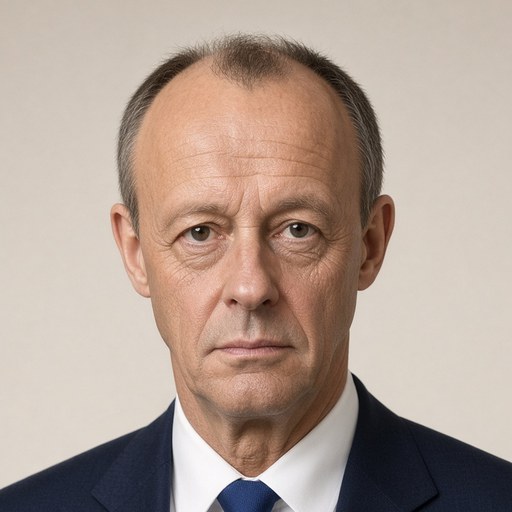
Speech by the Federal Chancellor on the Day of the Metal and Electrical Industry of the Employers' Association Gesamtmetall "Ensuring that we become sufficiently resilient"
 Friedrich Merz · Chancellor of Germany
- Context
- Merz addressed the Gesamtmetall employers' association industry day in Berlin on December 9, 2025, speaking on economic resilience and reform amid geopolitical upheaval.
- Main themes
- Economic resilience, German industrial competitiveness, geopolitical realignment, social market economy reform, security and defense policy, transatlantic alliance shifts, technological sovereignty, structural economic challenges, Russia-Ukraine war implications, European sovereignty, metal and electrical industry, foreign policy challenges
- Duration
- ~41 min
- Words
- 4,896
- Sentences
- 209
- Readability
- 51
- Grade
- 11.8
- Syntax
- 3.09
- Vocabulary
- 1.98
Translated from German
The broad sphere of national life a sentence belongs to. Every sentence has an Arena, so it is the denominator the other indices are read against.
Other209 sentences in 41 paragraphs
Dear Mr. Vice President, dear Arndt Kirchhoff,
dear Mr. Zander,
ladies and gentlemen,
thank you very much for the warm welcome and thank you for the invitation to speak to you today at the conclusion of your industry day! You have chosen a good motto, namely: Social Market Economy – From Crisis to Reform.
Let me begin by saying openly: We know what we are talking about with you. We are aware of the challenges. We not only know where this industry stands, but we also know where the entire German industry stands and what challenges we face as a country.
Perhaps you will allow me to briefly take a look at the entire environment in which we currently find ourselves. I say this without any lamentation. I say it simply from the perspective of what occupies me every day. Arndt Kirchhoff, you mentioned it. The fact that I am currently making and must make several trips has nothing to do with my love for travel, but rather with the challenges we face both in the European Union and in the global context, challenges that we have not encountered in this form in recent decades. If we had anticipated them, we all underestimated them together. We have not properly addressed a number of issues. We have also underestimated several challenges on the international side. This starts at the latest with Russia's war against Ukraine. That was not in 2022, but in 2014. Since then, both in foreign policy and security policy, but also in domestic policy, migration policy, and economic policy, we have neglected a number of things that we must now catch up on. Once again: I say this without any lamentation. But the fact that we are now in government responsibility presents us with a veritable – how should I put it? – multipolar challenge in foreign policy, security policy, economic policy, and social policy.
Allow me to try to speak a little about this without promising you too much.
What we once called the normative West no longer exists in this form. It is at best a geographical designation, but no longer a normative bond that holds us together. At the latest with the publication of the new security strategy of the United States of America last week, it has become clear that the speech by JD Vance at the Munich Security Conference in February of this year was not a slip of the tongue, but the beginning of a strategic realignment of the United States of America. This affects foreign policy, security policy, economic policy, and also European policy, where applicable.
Ladies and gentlemen, against this backdrop, we are facing structural economic changes that have not occurred in Germany in this form in recent decades. The profound change we are currently witnessing occupies us in the federal government. We have made a number of decisions regarding this.
Before I address that, let me say one more sentence that perhaps describes the entire dimension of what we are currently experiencing. I repeat it; I have said it elsewhere: We are not at war in Europe, but we are also no longer at peace. – This defines the dimension of the task we face. We are faced in Germany, but also in Europe, with the task of renewing nothing less and nothing more than the security foundations of our freedom space, in which we live and which we have created, so that our freedom and our sovereignty are preserved, ideally, if we do it right, for the next decades.
This is at least as much a security policy and defense policy task as it is an economic policy task. If we have to relearn one thing in recent years, it is precisely this: Economic competitiveness and global political capability are inextricably linked. Europe's place in the new, now emerging world order will depend significantly on our economic strength and our innovative capacity. This is even more true today in light of the technological revolution we are witnessing than it was before, because technological sovereignty has now become one of the central geostrategic future questions. Without an innovative and competitive economy, we will not make progress in this area.
Ladies and gentlemen, I will take up the word again. I held a Franco-German summit on Europe's digital sovereignty with the French President two weeks ago here in Berlin. I would not have used this term years ago because I always saw us firmly anchored in the transatlantic alliance, not only in terms of defense but also as a community of values and economic cooperation. We can no longer rely on that as we could in previous years and decades.
Therefore, ladies and gentlemen, the view of these interconnections must be the starting point of every political decision in these times in which we live, just as the unflinching view of the structural deficits that have solidified in our country for at least ten years, if not longer.
In these times of such an epochal upheaval, we will not be able to comprehensively shield ourselves against all turbulence. That is not possible. But we can ensure that we become sufficiently resilient. For this, we must finally stop hindering the growth potential of the European market – I will come back to that – and above all restore the price competitiveness of our economy. The good news is: There is a very tried and tested, good solution recipe for these tasks – we call it, and you call it, Social Market Economy. Social Market Economy means, in my view and yours, more entrepreneurial freedom, less distrust legislation, and price-competitive framework conditions for our economy. Expressed in political measures – you thankfully also spell this out for politics –: Corporate taxes must be lowered; energy prices must be reduced, and sustainably and in the long term, and the increase in social spending must at least be slowed down.
Ladies and gentlemen, we have made the first decisions in the federal government regarding exactly these areas. With the immediate investment program, we are setting incentives for urgently needed investments in the location like we have not seen in decades. I admit: We somewhat messed it up with the judicial election on July 11. Otherwise, the decision made on the same day in the Bundesrat, namely with the depreciation conditions of three times thirty percent declining – that is to say, two-thirds of the investments can be claimed for tax purposes within two and a half years – and with the subsequent gradual reduction of corporate tax rates to ten percent would have been recognized quite differently in public. But we are giving you in the companies opportunities to invest like we have not had in Germany for a long time, at least on the tax side.
Now everyone in this room knows: You have to earn depreciation too. – I said it at the employers' day and repeat it here: That you have to earn depreciation, you know, but not everyone in Berlin knows that. – You therefore need revenue and profits for these depreciation conditions to actually be worthwhile. But with the declining depreciation of 30 percent per year for the next three calendar years, investments pay off much faster. From 2028, we will lower the corporate tax. We have also done a lot for partnerships, such as changing and lowering the retained earnings tax rate and also facilitating access to corporate tax for partnerships. We are on a good path. Can we do more? – Probably not at this time. But we know that we need to do more in the longer term.
But even with energy prices – I know that this topic particularly affects your companies – we have initiated a turnaround. I will only mention the keywords: reduction of network charges, abolition of the gas storage levy, and the maintenance of the reduced electricity tax for producing companies. This is a relief for the year 2026 amounting to ten billion euros for the energy-consuming industry and for private households, ladies and gentlemen. Can we do more? – Yes. Must we do more? – Yes. We will do that. If all goes well, we will hopefully receive the approval of the EU Commission for an industrial electricity price for energy-intensive industries this year, which can then apply from January 1, 2026, for three years. We will hopefully also receive approval in Brussels for a power plant strategy that will allow us to go into the tendering process for gas power plants from 2026, which will ensure the base load supply in Germany. Because we know that energy supply for our highly complex economy cannot be secured solely with wind and solar power, at least not for the time being. We are going this way, and this is a fundamental change in the energy policy of recent years: base-load capable gas power plants that are to be converted to hydrogen in the future, but which do not have to be hydrogen-capable from day one because we do not have that much hydrogen in Germany yet. We will go this way.
We are taking the path of reducing bureaucracy. I deliberately do not say "bureaucracy reduction," but I say "reduction." We want to take this path not only in Germany but also in the European Union. I will not tire of pointing out that the European internal market, as we once planned it, was not meant to be what it is today. I claim for myself to be, in a way, a witness to this time. Because I had the great fortune to be a member of the European Parliament exactly at the time when we launched the European internal market program, based on a document written by former Commission President Jacques Delors in the mid-1980s, the completion of the European internal market, as it was actually intended from the beginning in the treaties. We did that, and on January 1, 1993, this European internal market came into force.
Why do I point this out again today? Ladies and gentlemen, the internal market of today is not the internal market that we actually wanted 30 years ago. We envisioned a different internal market, an internal market that is open to the movement of people, the movement of capital, the movement of services, and the movement of goods, an open space of freedom of movement in the European Union, and not a space of constant regulation and overregulation, as we have seen for some time now. I can assure you: This is a laborious task. But I have firmly resolved not only to stop this trend but to reverse it and to ensure that we return to the original idea of the European internal market, namely to become exactly this space of freedom, law, and freedom of movement again. We have an enormous opportunity, with 450 million consumers in this European Union, to be the largest contiguous economic area in the world, with a competitiveness and economic strength that no other area in the world has, at least not in this form. I am firmly determined to reopen the path to that.
I can assure you that we are making progress on this path. The Committee of Permanent Representatives – those who meet in Brussels constantly when the ministerial councils or the European Council are not in session – will face the question tomorrow of adopting the first major omnibus package – this is what the European Commission calls its initiatives for reducing bureaucracy – which includes, among other things, the European supply chain directive. The Federal Republic of Germany will agree to this proposal tomorrow, with the result that we are now launching the first comprehensive deregulation package in Europe. This will then have to go through the European Parliament again, but approval has already been given once, and it will be given a second time as well. Then we will have taken the first step in reducing European bureaucracy.
But that is just the first step. Some time ago, I addressed the EU.
I have written a letter to the President of the Commission and the President of the Council, asking that the two reports we have today, which are of similar quality to Jacques Delors' report from 1985, namely the two reports by Enrico Letta, the former Italian Prime Minister, on the completion of the European internal market and the report by Mario Draghi on restoring the competitiveness of the European Union, should not be allowed to disappear into the drawers of the Commission, but that we make these reports the subject of a special council of the European heads of state and government, which will take place on February 12, 2026, in Brussels. We will spend an entire day with the heads of state and government of the European Union focusing solely on these two reports and the question: How can we ensure that this European internal market functions in such a way that we – what was it called once? – become the most competitive knowledge-based economic area in the world. This strategy once existed, and I want us to return to this strategy in this European Union. Because we have every chance of achieving this. But it is a question of the political will and political leadership of this European Union to open the way to it, and I am firmly determined to open this path and to contribute to walking it together.
This can only happen if Germany also leads the way with a good example, and we are doing that. We have made an institutional provision for this by establishing the Ministry for Digitalization and State Modernization. This is the first time that such a ministry exists in the Federal Republic of Germany, and it is a ministry with all the necessary competencies. We have consolidated the competencies from six ministries in this house. The Ministry for Digitalization and State Modernization has all the necessary responsibilities within the federal government that it needs, and I have decided to appoint someone to this ministry who does not come from politics but from the private sector, someone you know. I can say today, after a good seven months of collaboration: Karsten Wildberger is one of the high performers in our cabinet with what he is doing in this ministry. He is doing a fantastic job, and I am firmly determined to support him in making this modernization agenda a reality in our country piece by piece.
The second point is: Last Thursday, we agreed with the prime ministers of the states in the meeting of the Prime Ministers' Conference, which takes place here in Berlin once a year, on the most comprehensive digitalization and modernization agenda between the federal and state governments that has ever existed. We have agreed on a total of 200 measures – a substantial package, everything agreed – on how we will tackle this modernization, state modernization, and digitalization in the coming years. This is also a good start that we have made, and that the states are on board is, in my view, an urgent necessity. We are in agreement across party lines between the federal and state governments that this modernization agenda for our country must now follow, and we will substantiate this with further steps in the coming weeks and months.
We will also hold a meeting of the so-called Relief Cabinet twice a year, as we have done before. In these cabinet meetings on Wednesday mornings, we will exclusively decide on legislation that either abolishes existing regulations or amends existing regulations in such a way that it leads to relief for our entire economy, for society as a whole, but especially for businesses. This will become a fixed part of the cabinet meetings of the federal government. Many colleagues thought: We will do this once, and then it will be good. – Not at all! We will do this twice a year, once in spring and once in autumn. We will ask the ministries to submit only proposals for these cabinet meetings that either aim to abolish existing regulations or to relieve existing burdens that we have. The beginning has also been made there.
Ladies and gentlemen, the most difficult topic for this legislative period will probably not be digitalization and state modernization, although there are still some major tasks to be solved in that area. I want to mention just one example: The Work-and-Stay Agency that we have set out to establish is probably the largest digitalization project of this legislative period. Because we want to enable immigration into our labor market through purely digital processes. That sounds relatively simple, but in reality, it is quite complicated, because it involves residence permits, work permits, and the recognition of professional qualifications. We are putting all of this behind a digital platform, and the federal government, the states, the municipalities, and in some federal states, the chambers, such as the chambers of crafts and the chambers of commerce, must participate, because it often lies with the states to issue the respective professional recognitions. This project is underway, and unlike what politics usually knows, it is not assigned to a single ministry but is managed by an inter-ministerial project group led by Karsten Wildberger, which has already initiated the first steps to create exactly this digital platform that will enable immigration into our labor market.
Allow me to add a footnote at this point. We have achieved one of the greatest successes in recent months in this area. Yesterday – you probably followed it in the news – the Federal Minister of the Interior pushed through a reform of the Common European Asylum and Immigration System in Brussels, which is the most profound reform that the European Union has made in this area in recent years, based on what we have already done in Germany. I promised that border controls would be introduced on the first day of our term in Germany to curb irregular migration. On May 7, one day after we took office, these border controls were ordered, and today, compared to last year, the number of asylum seekers in Germany has decreased by more than 50 percent. We have achieved an initial success here.
But, once again, this topic has two sides. We want to reduce immigration into the social systems, but we want to enable immigration into the labor market and ensure that we attract the best researchers, the best developers, and the best skilled workers from around the world to Germany. This can no longer happen through the asylum procedure; it must happen through such a digital process. We will implement this during the course of the legislative period, and you will see that we will also fulfill our own claim to be a modern immigration country that is particularly attractive to skilled workers, attractive to scientists, and to researchers who want to come to Germany. By the way: Many from America are now contacting us, saying they would like to consider whether they should go to Europe or Germany because the mood in America is becoming what it currently is. Let us seize these opportunities together. We are creating the conditions for this to happen.
Now I come to the third major topic, social contributions and social policy. Ladies and gentlemen, this is also a topic that cannot be solved overnight with a single stroke. We made the first decision – controversial enough – last week, but we also made a firm commitment that we will establish the Pension Commission this year, which will make proposals within shortened deadlines – by the end of the first half of 2026 at the latest – that we will then discuss and quickly implement starting in the second half of 2026, particularly regarding the reform of the pension system. I deliberately say "the pension system" because we have already agreed in the coalition agreement not to reform only the statutory pension insurance but to establish a new overall pension system from statutory pension insurance, private retirement provision, and company pension schemes that people in our country can rely on, in which the three different pillars – statutory pension insurance, private retirement provision, and company pension schemes – are newly related to each other.
Ladies and gentlemen, now you come into play. We are reforming the statutory pension insurance. We know that we cannot continue as we have been. Let me justify my optimism: If even voices from the SPD are now suggesting that we could imagine linking the retirement age not to age but to the months of contributions made, then these are the first signs that we can also have reasonable discussions with the SPD. By the way: The active pension will be introduced on January 1, 2026. This is a proposal and a policy-based proposal to motivate employees in Germany to work longer. This is the first step towards longer working hours, ladies and gentlemen, which we, excuse me, need in Germany! We are taking the first step. We will take the second step with this reform. We will also significantly improve the conditions for private retirement provision.
Ladies and gentlemen – that is why I said, now you come into play – we also expect proposals from you for the expansion and improvement of company pension schemes. For this, you must please make a corresponding contribution in your companies. Neither private retirement provision nor company pension schemes are sufficiently developed in Germany to ensure a level of overall provision that gives people in this country the security of being adequately provided for in old age, especially as the statutory pension insurance becomes less effective. You must help with this. I know what circumstances have played a role – you have all had it in your balance sheets in previous years, with great difficulties. Most companies no longer have it in their balance sheets; instead, they have pension funds. The metal industry or the IG Metall has unfortunately moved away from what it once had, but that does not have to be a final decision. We need to talk about this together. I want to develop this anew with the collective bargaining parties, with the social partners. The chemical industry has very different models that also work well. But we need to develop models not only for large industry but also for small and medium-sized enterprises, for owner-managed companies, on how we can restructure company pension schemes in this country – and I say thank you very much for the support.
I want to say this also because this is one side of a coin with two sides. The other side is that we need to involve a larger number of people in our country in the opportunities for wealth development in our economy. This has to do with our capital market. Our capital market is not deep and broad enough. I just came from Rhineland-Palatinate and visited a sensational company that is involved in medical research and biotechnology. The two founders of BioNTech are also involved in this company and are helping out. But, ladies and gentlemen, that a company like BioNTech takes parts of its research to the UK because data protection in Germany and Europe does not allow the necessary research, and that this company goes public in New York because there is no capital market in Europe, must stop. I am firmly determined to create the conditions in Europe and also in Germany so that we can research here, that we can develop here, and that data protection does not hinder such processes. I am equally determined to broaden and open the capital market in Germany so that private retirement provision and company pension schemes are possible and that we simultaneously have a capital market that finances growth that does not go through banks but rather through the capital market. This is pending – we will do it.
The good news is: The Social Democrats have agreed to this with us in the coalition agreement. We could not have agreed to this with the SPD ten years ago. Today, the SPD recognizes that we must organize private and company pension schemes much more through the capital market. This overall pension system, as we have referred to it in the coalition agreement, will be the benchmark for the reforms we will make in the area of pension security systems – and we will make them.
Ladies and gentlemen, we will have further topics to discuss. Health policy, long-term care insurance: all of these are cost factors that we are trying to get under control. We are trying to bring about a decision in the Federal Council this year to prevent contribution decreases in statutory health insurance. If we do not make this decision, then contributions to statutory health insurance would increase by at least 0.1 percent, more likely by 0.2 percent. That sounds relatively harmless, but 0.1 percent of contributions in social insurance means two billion euros in higher costs for companies and employees. 0.2 percent already means four billion euros in higher contributions for companies and employees. We want to avoid that. The proposals are on the table. The negotiations are not yet concluded, but I am confident that we will achieve this in the last Federal Council meeting on December 19, that is, next week, so that there will be no rising contributions as of January 1, 2026.
I come to the tedious topic of citizen's income. It has been a laborious process, both in the coalition negotiations and now in the legislative process. Just today, at this time, the final formulations are being worked on so that we can get this into the Cabinet by the end of this year. We will abolish the citizen's income and instead introduce a new basic security that follows one principle: those who work in Germany and pay social insurance contributions and taxes must fundamentally have more money in their pockets at the end of the month than those who do not work and receive transfer payments. That must be the principle, and we are committed to it. That is difficult enough, but if all goes well, we will have it in the Cabinet by the end of this year.
Let me conclude by returning once again to what I said at the beginning. I believe that we will only be able to assess the magnitude of the challenges we face today in a few years. We will probably only be able to properly evaluate what is happening in the world right now – in the United States, in Russia, in China, in India, in other parts of the world, and indeed here in Europe. But when, if not now, and who, if not we, the Germans and Europeans, should seize this opportunity – and truly take it to heart – to make this European Union what we once wanted it to be, namely the most knowledge-based and competitive region in the world? I would not be standing here if I were not firmly convinced that this is still possible.
We have missed some opportunities, we have made some mistakes – and no one should exempt themselves from that –; but now is the time when we must roll up our sleeves and make a joint effort. And when I say "we" and "together," that does not only mean politics, but also you; I say this beyond all party politics. This government must succeed in this. If this government fails, then we will plunge from an economic crisis directly into a legitimacy crisis of our democracy. No one can seriously have an interest in that.
For those who still think they need to deal with this thought in the back of their minds – all present are exempt from my critical consideration – I want to say: […]
I stand here as someone who is very much aware of the tradition and responsibility he represents. I am only the tenth party leader of the CDU of Germany – that need not concern you further – but I am also only the tenth Chancellor of the Federal Republic of Germany. I have at least two predecessors who laid a foundation for prosperity, for freedom, for security, for openness, for the liberalism of our society. The names of these predecessors are Konrad Adenauer and Helmut Kohl. If it were not for them, you would not be here in Berlin today, and I would not be standing before you.
I know on what foundation I stand with my work. I have no intention of damaging this foundation. On the contrary, I want to build a new, future-proof house with you on this foundation, one that not only withstands the storms of the coming years but also proves once again from this difficult situation that democracy and a market economy are capable of mastering the great challenges of this time in which we live together, so that our children will one day say: Okay, they made mistakes, they did not always get their assessments right, but when it mattered, they made the right decisions, so that this country can continue to be a stable democracy, a successful social market economy, and above all a space of freedom and peace.
Thank you very much.
The original German. The tags above are read on the English translation's sentences.
Sehr geehrter Herr Vizepräsident, lieber Arndt Kirchhoff,
sehr geehrter Herr Zander,
meine sehr geehrten Damen und Herren,
herzlichen Dank für die freundliche Begrüßung und herzlichen Dank für die Einladung, heute bei Ihnen zum Abschluss des Tages Ihrer Industrie zu sprechen! Sie haben sich ein gutes Motto gewählt, nämlich: Soziale Marktwirtschaft – Von der Krise zur Reform.
Lassen Sie mich zu Beginn einmal offen sagen: Wir wissen, worüber wir mit Ihnen sprechen. Wir kennen die Herausforderungen. Wir wissen nicht nur, wo diese Industrie steht, sondern wir wissen auch, wo die gesamte deutsche Industrie steht und vor welchen Herausforderungen wir als Land stehen.
Vielleicht erlauben Sie mir, dass ich zu Beginn einmal kurz den Blick sozusagen auf die gesamte Umgebung werfe, in der wir uns im Augenblick bewegen. Ich sage das ohne jede Larmoyanz. Ich sage es einfach aus der Betrachtung dessen, was mich jeden Tag beschäftigt. Arndt Kirchhoff, du hast es angesprochen. Die Tatsache, dass ich zurzeit einige Reisen mache und machen muss, hat nichts damit zu tun, dass ich so gern reise, sondern damit, dass wir uns sowohl in der Europäischen Union als auch im globalen Kontext vor Herausforderungen gestellt sehen, die wir in dieser Form in den letzten Jahrzehnten nicht gekannt haben. Wenn wir sie geahnt haben, dann haben wir sie alle gemeinsam unterschätzt. Wir sind eine ganze Reihe von Themen nicht richtig angegangen. Wir haben eine Reihe von Herausforderungen auch auf der internationalen Seite unterschätzt. Das fängt spätestens mit dem Krieg Russlands gegen die Ukraine an. Das war nicht 2022, sondern das war 2014. Von da an ist sowohl in der Außenpolitik und in der Sicherheitspolitik, aber auch in der Innenpolitik, in der Migrationspolitik, in der Wirtschaftspolitik manches versäumt worden, was wir heute nachholen müssen. Noch einmal: Ich sage das ohne jede Larmoyanz. Aber die Tatsache, dass wir zu diesem Zeitpunkt in die Regierungsverantwortung gestellt sind, stellt uns vor eine geradezu – wie soll ich es sagen? – multipolare Herausforderung in der Außenpolitik, in der Sicherheitspolitik, in der Wirtschaftspolitik und in der Sozialpolitik.
Erlauben Sie mir, dass ich versuche, darüber ein wenig zu sprechen, ohne Ihnen zu viel zu versprechen.
Das, was wir einmal den normativen Westen genannt haben, gibt es in dieser Form nicht mehr. Es ist allenfalls noch eine geografische Bezeichnung, aber keine normative Bindung mehr, die uns zusammenhält. Spätestens mit der Veröffentlichung der neuen Sicherheitsstrategie der Vereinigten Staaten von Amerika in der vergangenen Woche ist klar geworden, dass die Rede von
JD Vance
auf der Münchner Sicherheitskonferenz im Februar dieses Jahres kein Ausrutscher war, sondern der Beginn einer strategischen Neuausrichtung der Vereinigten Staaten von Amerika. Das betrifft die Außenpolitik, die Sicherheitspolitik, die Wirtschaftspolitik und auch die Europapolitik, soweit vorhanden.
Meine Damen und Herren, vor diesem Hintergrund stehen wir ökonomisch vor strukturellen Veränderungen, die es in dieser Form in Deutschland in den letzten Jahrzehnten auch noch nicht gegeben hat. Der tiefgreifende Wandel, den wir zurzeit sehen, beschäftigt uns in der Bundesregierung. Wir haben dazu eine ganze Reihe von Entscheidungen getroffen.
Bevor ich darauf zu sprechen komme, lassen Sie mich noch einen Satz sagen, der vielleicht die ganze Dimension dessen, was wir zurzeit erleben, beschreibt. Ich wiederhole ihn; ich habe ihn an anderer Stelle gesagt: Wir sind in Europa nicht im Krieg, aber wir sind auch nicht mehr im Frieden. – Das macht die Dimension der Aufgabe aus, vor der wir stehen. Wir stehen in Deutschland, aber auch in Europa vor der Aufgabe, nicht weniger und nicht mehr als die Sicherheitsfundamente unseres Freiheitsraums, in dem wir leben und den wir uns geschaffen haben, so zu erneuern, dass unsere Freiheit und unsere Souveränität erhalten bleiben, und zwar im besten Fall, wenn wir es richtig machen, für die nächsten Jahrzehnte.
Das ist mindestens so sehr eine sicherheitspolitische und eine verteidigungspolitische Arbeit wie es auch eine wirtschaftspolitische Aufgabe ist. Wenn wir in den vergangenen Jahren eines zum Teil sogar wieder neu lernen müssen, dann doch gerade dieses: Wirtschaftliche Wettbewerbsfähigkeit und weltpolitische Gestaltungsfähigkeit stehen in einem untrennbaren Zusammenhang miteinander. Europas Platz in der neuen, nun entstehenden Weltordnung wird ganz wesentlich von unserer Wirtschaftskraft und von unserer Innovationskraft abhängen. Das gilt im Lichte der technologischen Revolution, die wir sehen, heute noch mehr als früher, weil technologische Souveränität inzwischen eine der zentralen geostrategischen Zukunftsfragen ist. Ohne eine innovative und wettbewerbsfähige Wirtschaft werden wir in diesem Bereich nicht vorankommen.
Meine Damen und Herren, ich greife das Wort noch einmal auf. Ich habe mit dem französischen Staatspräsidenten vor gut zwei Wochen hier in Berlin einen deutsch-französischen Gipfel zur digitalen Souveränität Europas durchgeführt. Ich hätte diesen Begriff vor Jahr und Tag noch nicht verwendet, weil ich uns immer fest in der Verankerung des transatlantischen Bündnisses gesehen habe, und zwar gar nicht einmal so sehr allein des Verteidigungsbündnisses, sondern auch der Wertegemeinschaft und auch der wirtschaftspolitischen Zusammenarbeit. Darauf können wir heute nicht mehr so bauen, wie wir es in früheren Jahren und Jahrzehnten tun konnten.
Deswegen, meine Damen und Herren, muss der Blick auf diese Zusammenhänge der Ausgangspunkt jeder politischen Entscheidung in diesen Zeiten, in denen wir leben, sein, genauso der schonungslose Blick auf die strukturellen Defizite, die sich in unserem Land seit mindestens zehn Jahren wenn nicht länger verfestigt haben.
Wir werden uns in diesen Zeiten eines solchen epochalen Umbruchs nicht gegen alle Turbulenzen umfassend abschirmen können. Das geht nicht. Aber wir können dafür sorgen, dass wir hinreichend widerstandsfähig werden, auf Neudeutsch: resilient. Dafür müssen wir endlich aufhören, die Wachstumskraft des europäischen Marktes zu behindern – ich komme darauf noch zu sprechen –, und vor allem die preisliche Wettbewerbsfähigkeit unserer Volkswirtschaft wiederherstellen. Die gute Nachricht ist: Es gibt ein sehr erprobtes, gutes Lösungsrezept für diese Aufgaben – wir nennen es, und Sie nennen es Soziale Marktwirtschaft. Soziale Marktwirtschaft heißt aus meiner Sicht und aus Ihrer ohnehin: Mehr unternehmerische Freiheit, weniger Misstrauensgesetzgebung, preislich wettbewerbsfähige Rahmenbedingungen für unsere Volkswirtschaft. In politischen Maßnahmen ausgedrückt – Sie buchstabieren das dankenswerterweise auch selbst für die Politik so aus –: Die Unternehmenssteuern müssen runter; die Energiepreise müssen runter, und zwar langfristig und nachhaltig, und der Anstieg der Sozialausgaben muss zumindest abgebremst werden.
Meine Damen und Herren, zu genau diesen Bereichen haben wir in der Bundesregierung die ersten Entscheidungen getroffen. Mit dem steuerlichen Investitionssofortprogramm setzen wir Anreize für dringend notwendige Investitionen in den Standort wie seit Jahrzehnten nicht mehr. Ich gebe zu: Wir haben es mit der Richterwahl am 11. Juli selbst einigermaßen vermasselt. Sonst wäre die Entscheidung, die am selben Tag im Bundesrat getroffen wurde, nämlich mit den Abschreibungsbedingungen dreimal dreißig Prozent degressiv – das heißt umgerechnet, zwei Drittel der Investitionen in zweieinhalb Jahren können steuerlich geltend gemacht werden ‑ und mit der nachfolgenden Absenkung der Körperschaftssteuersätze schrittweise auf zehn Prozent, auch in der Öffentlichkeit ganz anders gewürdigt worden. Aber wir geben Ihnen in den Unternehmen damit Möglichkeiten, zu investieren, wie wir sie in Deutschland lange nicht gehabt haben, jedenfalls auf der steuerlichen Seite.
Nun weiß jeder in diesem Raum: Auch Abschreibungen muss man verdienen. – Ich habe es auf dem Arbeitgebertag so gesagt und wiederhole es hier: Dass man Abschreibungen verdienen muss, das wissen Sie, aber das weiß in Berlin nicht jeder. – Sie brauchen also Umsatz und Erträge, damit sich diese Abschreibungsbedingungen tatsächlich lohnen. Aber mit der degressiven Abschreibung von 30 Prozent pro Jahr für die nächsten drei Kalenderjahre rechnen sich Investitionen eben sehr viel schneller. Ab 2028 senken wir die Körperschaftssteuer. Wir haben auch für die Personengesellschaften einiges getan, etwa den Thesaurierungssteuersatz verändert und gesenkt und auch den Zugang in die Körperschaftssteuer für Personengesellschaften erleichtert. Da sind wir auf einem guten Weg. Geht mehr? – Zum jetzigen Zeitpunkt wahrscheinlich nicht. Aber wir wissen, dass wir in längerer Perspektive mehr tun müssen.
Aber auch bei den Energiepreisen – ich weiß, dass dieses Thema gerade Ihre Unternehmen ganz besonders betrifft – haben wir die Trendwende eingeleitet. Ich nenne nur die Stichworte: Senkung der Netzentgelte, Abschaffung der Gasspeicherumlage und die Beibehaltung der reduzierten Stromsteuer für die produzierenden Unternehmen. Das ist eine Entlastung für das Jahr 2026 in Höhe von zehn Milliarden Euro für die Energie verbrauchende Industrie und für die privaten Haushalte, meine Damen und Herren. Geht mehr? – Ja. Müssen wir mehr tun? – Ja. Wir werden das tun. Wenn es gut geht, dann werden wir noch in diesem Jahr die Zustimmung der
EU
-Kommission für einen Industriestrompreis für die energieintensive Industrie bekommen, der dann ab dem 1. Januar 2026 für drei Jahre gelten kann. Wir werden in Brüssel hoffentlich auch die Genehmigung für eine Kraftwerksstrategie bekommen, die es uns dann ermöglicht, ab dem Jahr 2026 in die Ausschreibung für Gaskraftwerke zu gehen, die in Deutschland für die Grundlastversorgung sorgen. Denn wir wissen, dass allein mit Wind und Sonne die Energieversorgung unserer hochkomplexen Volkswirtschaft jedenfalls vorläufig nicht gesichert werden kann. Wir gehen diesen Weg, und das ist eine grundlegende Änderung auch der Energiepolitik der vergangenen Jahre: grundlastfähige Gaskraftwerke, die in der Perspektive auf Wasserstoff umgerüstet werden sollen, die aber nicht vom ersten Tag an wasserstofffähig sein müssen, weil wir so viel Wasserstoff in Deutschland noch gar nicht haben. Diesen Weg werden wir gehen.
Wir gehen, meine Damen und Herren, den Weg des Rückbaus der Bürokratie. Ich sage hier bewusst nicht „Bürokratieabbau“, sondern ich sage „‑rückbau“. Wir wollen diesen Weg
nicht nur in Deutschland gehen, sondern wir wollen diesen Weg auch in der Europäischen Union gehen. Ich werde nicht müde, darauf hinzuweisen, dass das mit dem europäischen Binnenmarkt, wie wir es einmal geplant hatten, nicht so gemeint war, wie es heute ist. Ich nehme für mich in Anspruch, in gewisser Weise auch Zeitzeuge zu sein. Denn ich hatte das große Glück, genau in der Zeit Mitglied des Europäischen Parlamentes zu sein, in der wir das europäische Binnenmarktprogramm auf den Weg gebracht haben, ausgehend von einem Dokument, das der frühere Kommissionspräsident
Jacques Delors
Mitte der Achtzigerjahre geschrieben hatte, die Vollendung des europäischen Binnenmarktes, wie es in den Verträgen eigentlich von Anfang an angelegt war. Das haben wir gemacht, und am 1. Januar 1993 ist dieser Europäische Binnenmarkt in Kraft getreten.
Warum weise ich darauf heute noch einmal hin? Meine Damen und Herren, der Binnenmarkt von heute ist nicht der Binnenmarkt, den wir vor 30 Jahren eigentlich wollten. Wir haben uns einen anderen Binnenmarkt vorgestellt, einen Binnenmarkt, der offen ist für den Personenverkehr, den Kapitalverkehr, den Dienstleistungsverkehr und den Warenverkehr, einen offenen Raum der Freizügigkeit in der Europäischen Union, und nicht einen Raum der beständigen Regulierung und der beständigen Überregulierung, wie wir ihn jetzt seit geraumer Zeit sehen. Ich kann Ihnen versichern: Das ist eine mühevolle Aufgabe. Aber ich habe mir fest vorgenommen, diesen Trend nicht nur zu stoppen, sondern ihn umzukehren und dafür zu sorgen, dass wir zum ursprünglichen Gedanken des Europäischen Binnenmarktes zurückkehren, nämlich wieder genau zu diesem Raum der Freiheit, des Rechts, der Verkehrsfreiheiten zu werden. Wir haben eine ungeheure Chance, mit 450 Millionen Konsumenten in dieser Europäischen Union der größte zusammenhängende Wirtschaftsraum der Welt zu sein, mit einer Wettbewerbsfähigkeit und einer Wirtschaftskraft, wie es sonst keinen zweiten Raum auf dieser Welt gibt, jedenfalls nicht in dieser Form. Ich bin fest entschlossen, den Weg dorthin wieder zu eröffnen.
Ich kann Ihnen versichern, dass wir auf diesem Wege Fortschritte machen. Der Ausschuss der Ständigen Vertreter – das sind diejenigen, die in Brüssel ständig tagen, wenn nicht die Ministerräte oder der Europäische Rat tagen – steht morgen vor der Frage, das erste große Omnibus-Paket – so nennt die Europäische Kommission ihre Initiativen zum Bürokratierückbau – zu verabschieden, und darin ist unter anderem die europäische Lieferkettenrichtlinie enthalten. Die Bundesrepublik Deutschland wird diesem Vorschlag morgen zustimmen, mit der Folge, dass wir in Europa jetzt das erste umfassende Deregulierungspaket auf den Weg bringen. Das muss dann noch einmal durch das Europäische Parlament, aber die Zustimmung hat es schon einmal gegeben. und es wird sie auch ein zweites Mal geben. Dann haben wir den ersten Schritt in den Rückbau der europäischen Bürokratie getan.
Aber das ist erst der erste Schritt. Ich habe vor geraumer Zeit der
EU
-Kommissionspräsidentin und dem Ratspräsidenten einen Brief geschrieben und habe darum gebeten, die beiden Berichte, die wir heute haben und die von ähnlicher Qualität wie der Bericht von Jacques Delors 1985 sind, nämlich die beiden Berichte von Enrico Letta, dem früheren italienischen Ministerpräsidenten, zur Vollendung des europäischen Binnenmarktes und den Bericht von Mario Draghi zur Wiederherstellung der Wettbewerbsfähigkeit der Europäischen Union, jetzt nicht in den Schränken der Kommission in der Schublade verschwinden lassen, sondern dass wir diese Berichte zum Gegenstand eines Sonderrates der europäischen Staats- und Regierungschefs machen, und dieser Sonderrat wird am 12. Februar 2026 in Brüssel stattfinden. Wir werden uns einen ganzen Tag mit den Staats- und Regierungschefs der Europäischen Union nur mit diesen beiden Berichten und nur mit der Frage beschäftigen: Wie können wir dafür sorgen, dass dieser europäische Binnenmarkt so funktioniert, dass wir – wie hieß das einmal? – der wettbewerbsfähigste wissensbasierte Wirtschaftsraum der Welt werden. Diese Strategie gab es einmal, und ich möchte, dass wir in dieser Europäischen Union zu dieser Strategie zurückkehren. Denn wir haben damit alle Chancen, das hinzubekommen. Aber es ist eine Frage des politischen Willens und der politischen Führung dieser Europäischen Union, den Weg dorthin zu öffnen, und ich bin fest entschlossen, diesen Weg auch zu eröffnen und dazu beizutragen, dass wir ihn gemeinsam gehen.
Das Ganze geht natürlich nur dann, wenn Deutschland auf diesem Weg auch mit gutem Vorbild vorangeht, und das tun wir. Wir haben allein durch die Einrichtung des Ministeriums für Digitalisierung und Staatsmodernisierung hierfür eine institutionelle Vorkehrung getroffen. Das ist das erste Mal, dass in der Bundesrepublik Deutschland ein solches Ministerium besteht, und zwar ein Ministerium mit allen Kompetenzen. Wir haben die Kompetenzen aus sechs Ministerien in diesem Haus zusammengefasst. Das Ministerium für Digitalisierung und Staatsmodernisierung hat alle notwendigen Zuständigkeiten innerhalb der Bundesregierung, die es braucht, und ich habe mich entschlossen, dieses Ministerium mit jemandem zu besetzen, der nicht aus der Politik kommt, sondern der aus der Privatwirtschaft kommt, den Sie kennen. Ich kann es hier heute jetzt nach gut sieben Monaten der Zusammenarbeit sagen: Karsten Wildberger ist mit dem, was er in diesem Ministerium tut, einer der Leistungsträger unseres Kabinetts. Er macht einen fantastischen Job, und ich bin fest entschlossen, auch ihn dabei zu unterstützen, dass diese Modernisierungsagenda in unserem Land Stück für Stück Wirklichkeit wird.
Das Zweite ist: Wir haben am letzten Donnerstag mit den Ministerpräsidenten der Länder in der Sitzung der Ministerpräsidentenkonferenz, die im Turnus einmal im Jahr hier in Berlin stattfindet, die umfassendste Digitalisierungs- und Modernisierungsagenda zwischen Bund und Ländern verabredet, die es überhaupt jemals gab. Wir haben uns auf insgesamt 200 Maßnahmen verständigt – ein dickes Paket, alles verabredet –, wie wir in den nächsten Jahren diese Modernisierung, Staatsmodernisierung und Digitalisierung angehen. Auch das ist ein guter Anfang, den wir da gemacht haben, und dass die Länder mitziehen, ist aus meiner Sicht eine dringende Notwendigkeit. Wir sind hier parteiübergreifend zwischen Bund und Ländern der Meinung, dass diese Modernisierungsagenda unseres Landes jetzt folgen muss, und wir werden das in den nächsten Wochen und Monaten konkret mit weiteren Schritten unterlegen.
Wir werden dabei begleitend, wie wir es bereits einmal gemacht haben, zweimal im Jahr eine Sitzung des sogenannten Entlastungskabinetts stattfinden lassen. Dabei werden wir in den Kabinettssitzungen am Mittwochmorgen ausschließlich Gesetzgebung beschließen, die entweder bestehende Regulierung abschafft oder bestehende Regulierung so ändert, dass damit eine Entlastung für unsere gesamte Volkswirtschaft, für die Gesellschaft insgesamt, aber insbesondere für die Unternehmen einhergeht. Das wird zum festen Bestandteil der Kabinettssitzungen der Bundesregierung. Viele Kolleginnen und Kollegen haben gedacht: Das machen wir jetzt einmal, und dann ist es gut. – Von wegen! Das machen wir jetzt jedes Jahr zweimal, einmal im Frühjahr und einmal im Herbst. Wir werden die Ressorts auffordern, zu diesen Kabinettssitzungen nur Vorschläge zur Abstimmung einzureichen, die entweder auf die Abschaffung von bestehender Regulierung oder auf die Entlastung von bestehenden Belastungen, die wir haben, hinauslaufen. Der Anfang ist auch da gemacht.
Meine Damen und Herren, das schwierigste Thema für diese Wahlperiode wird wahrscheinlich nicht die Digitalisierung und die Staatsmodernisierung sein, obwohl auch da noch einige große Aufgaben gelöst werden müssen. Ich will nur ein Beispiel nennen: Die
Work-and-Stay
-Agentur, die wir uns vorgenommen haben, ist wahrscheinlich das größte Digitalisierungsprojekt dieser Wahlperiode. Denn wir wollen ja die Einwanderung in unseren Arbeitsmarkt über rein digitale Prozesse ermöglichen. Das klingt relativ einfach, ist in Wahrheit aber ziemlich kompliziert, denn dahinter steht die Aufenthaltsgenehmigung, die Arbeitsgenehmigung und die Anerkennung der Berufsabschlüsse. Wir legen das alles hinter eine digitale Plattform, und daran müssen der Bund, die Länder, die Gemeinden und in einigen Bundesländern die Kammern, die Handwerkskammern wie die Industrie- und Handelskammern, mitwirken, weil es häufig in den Bundesländern bei denen liegt, die jeweiligen Berufsanerkennungen auszusprechen. Dieses Projekt ist auf den Weg gebracht, und anders, als es die Politik sonst kennt, ist das nicht mit einer ministeriellen Zuordnung versehen, sondern mit einer ministeriumsübergreifenden Projektgruppe, die von Karsten Wildberger geleitet wird und die die ersten Schritte bereits eingeleitet hat, um genau diese digitale Plattform zu schaffen, mit der wir Zuwanderung in unseren Arbeitsmarkt ermöglichen.
Erlauben Sie mir an dieser Stelle einmal, eine Fußnote zu setzen. Wir haben einen der größten Erfolge der letzten Monate in diesem Bereich erzielt. Gestern – Sie werden es in den Nachrichten vermutlich verfolgt haben – hat der Bundesinnenminister in Brüssel eine Reform des Gemeinsamen Europäischen Asyl- und Einwanderungssystems durchgesetzt, die die tiefgreifendste Reform ist, die die Europäische Union in diesem Bereich in den letzten Jahren überhaupt gemacht hat, ausgehend von dem, was wir in Deutschland bereits vorher gemacht haben. Ich habe zugesagt, dass am ersten Tag unserer Amtszeit in Deutschland Grenzkontrollen eingeführt werden, damit wir die irreguläre Migration zurückdrängen. Am 7. Mai, einen Tag, nachdem wir ins Amt gekommen sind, sind diese Grenzkontrollen angeordnet worden, und heute, im Jahresvergleich zum letzten Jahr, sind die Zahlen der Asylbewerber in Deutschland um mehr als 50 Prozent zurückgegangen. Wir haben hier einen ersten Erfolg erzielt.
Aber, noch einmal, dieses Thema hat zwei Seiten. Wir wollen die Einwanderung in die Sozialsysteme reduzieren, aber wir wollen die Einwanderung in den Arbeitsmarkt ermöglichen und dafür sorgen, dass wir die besten Forscher, die besten Entwickler, die besten Fachkräfte aus der Welt für Deutschland gewinnen. Das geht jetzt in Zukunft nicht mehr über das Asylverfahren, sondern das geht über ein solches digitales Verfahren. Wir werden das im Laufe der Wahlperiode umsetzen, und Sie werden sehen, dass wir damit auch den Anspruch an uns selbst einlösen, ein modernes Einwanderungsland zu sein, das vor allem attraktiv für Fachkräfte wird, attraktiv für Wissenschaftler wird, für Forscher, die nach Deutschland kommen wollen. Ganz nebenbei: Aus Amerika melden sich mittlerweile viele bei uns, die sagen, sie würden gerne überlegen, ob sie nicht nach Europa oder nach Deutschland gehen, weil in Amerika die Stimmung so wird, wie sie gegenwärtig ist. Lassen Sie uns gemeinsam diese Chancen nutzen. Wir schaffen die Voraussetzungen dafür, dass es geht.
Nun komme ich zum dritten großen Thema, die Sozialbeiträge und die Sozialpolitik. Meine Damen und Herren, auch das ist ein Thema, das sich nicht über Nacht einfach einmal so schnell mit einem Handstreich lösen lässt. Wir haben die erste Entscheidung – kontrovers genug – in der letzten Woche getroffen, damit aber auch die feste Zusage verbunden, dass wir noch in diesem Jahr die Rentenkommission einsetzen, die mit verkürzten Fristen – spätestens zum Ende des ersten Halbjahres 2026 – die Vorschläge machen wird, die wir dann ab dem zweiten Halbjahr 2026 diskutieren und schnell umsetzen, insbesondere zur Reform des Altersversorgungssystems. Ich sage ganz bewusst „des Altersversorgungssystems“, weil wir bereits im Koalitionsvertrag verabredet haben, nicht mehr allein die gesetzliche Rentenversicherung zu reformieren, sondern aus der gesetzlichen Rentenversicherung, der privaten Altersvorsorge und der betrieblichen Altersversorgung ein neues Gesamtversorgungssystem zu etablieren, auf das sich die Menschen in unserem Lande verlassen können und in dem die unterschiedlichen drei Säulen – gesetzliche Rentenversicherung, private Altersvorsorge und betriebliche Altersversorgung – neu in ein Verhältnis zueinander gestellt werden.
Meine Damen und Herren, jetzt kommen Sie ins Spiel. Wir reformieren die gesetzliche Rentenversicherung. Wir wissen, dass wir so nicht weitermachen können, wie wir bisher verfahren sind. Lassen Sie mich meinen Optimismus begründen: Wenn selbst aus der
SPD
mittlerweile die Wortmeldungen kommen, man könnte sich ja vorstellen, den Renteneintritt nicht mehr an das Lebensalter zu binden, sondern an die geleisteten Beitragsmonate, dann sind das die ersten Hinweise darauf, dass wir auch mit der
SPD
vernünftig sprechen können. Im Übrigen: Die Aktivrente wird zum 1. Januar 026 eingeführt. Das ist ein Vorschlag und ein ordnungspolitisch begründeter Vorschlag, die sozialversicherungspflichtig Beschäftigten in Deutschland zu motivieren, länger zu arbeiten. Das ist der Einstieg in eine längere Arbeitszeit, meine Damen und Herren, die wir, Entschuldigung, in Deutschland brauchen! Wir gehen den ersten Schritt. Den zweiten Schritt werden wir mit dieser Reform machen. Wir werden auch die Bedingungen für die private Altersversorgung deutlich verbessern.
Meine Damen und Herren – deswegen sagte ich, jetzt kommen Sie ins Spiel –, auch von Ihnen erwarten wir Vorschläge zum Ausbau und zur Verbesserung der betrieblichen Altersversorgung. Dafür müssen Sie bitte in Ihren Unternehmen einen entsprechenden Beitrag leisten. Weder die private Altersvorsorge noch die betriebliche Altersvorsorge sind in Deutschland gut genug ausgebaut, um dadurch bei einer weniger leistungsstark werdenden gesetzlichen Rentenversicherung ein Gesamtversorgungsniveau gewährleisten zu können, das den Menschen in diesem Lande die Sicherheit gibt, im Alter ausreichend versorgt zu sein. Sie müssen dabei mithelfen. Ich weiß, welche Umstände dabei eine Rolle gespielt haben – Sie haben es in den früheren Jahren alle in ihren Bilanzen gehabt, mit großen Schwierigkeiten. Die meisten Unternehmen haben es mittlerweile nicht mehr in ihren Bilanzen; sie haben stattdessen Versorgungswerke. Die Metallindustrie beziehungsweise die
IG
Metall hat sich aus dem, was sie einmal hatte, leider verabschiedet, aber das muss keine endgültige Entscheidung sein. Darüber müssen wir gemeinsam reden. Ich möchte das mit den Tarifvertragsparteien, mit den Sozialpartnern neu entwickeln. Die chemische Industrie hat ganz andere Modelle, die auch gut funktionieren. Wir müssen aber nicht nur für die Großindustrie, sondern wir müssen auch für den Mittelstand, für die eigentümergeführten Unternehmen Modelle entwickeln, wie wir die betriebliche Altersversorgung in diesem Land neu aufstellen – und ich sage hier vielen Dank für die Zustimmung.
Ich will das auch deswegen sagen, weil dies eine Seite einer Medaille mit zwei Seiten ist. Die zweite Seite ist, dass wir eine größere Zahl von Menschen in unserem Land an den Chancen der Vermögensentwicklung unserer Volkswirtschaft beteiligen. Das hat etwas mit unserem Kapitalmarkt zu tun. Unser Kapitalmarkt ist nicht tief und nicht breit genug. Ich komme gerade aus Rheinland-Pfalz und habe da ein sensationelles Unternehmen besucht, das im Bereich der der Medizinforschung und der Biotechnologie unterwegs ist. Die beiden Gründer von
BioNTech
sind auch bei diesem Unternehmen dabei und helfen mit. Aber, meine Damen und Herren, dass ein Unternehmen wie
BioNTech
mit Teilen der Forschung nach Großbritannien geht, weil hier in Deutschland und in Europa der Datenschutz die Forschung nicht erlaubt, die es notwendigerweise gibt, und dass dieses Unternehmen in
New York
an die Börse geht, weil es den Kapitalmarkt in Europa nicht gibt, das muss aufhören. Ich bin fest entschlossen, in Europa und auch in Deutschland die Bedingungen dafür zu schaffen, dass wir hier forschen können, dass wir entwickeln können und dass der Datenschutz so etwas nicht behindert. Ich bin gleichermaßen entschlossen, den Kapitalmarkt in Deutschland so zu verbreitern und so zu öffnen, dass dort private Altersversorgung, betriebliche Altersversorgung möglich ist und wir gleichzeitig einen Kapitalmarkt bekommen, der Wachstum finanziert, das nicht über die Banken geht, sondern das mehr über den Kapitalmarkt geht. Das ist ausstehend ‑ wir machen das.
Die gute Nachricht ist: Die Sozialdemokraten haben das mit uns im Koalitionsvertrag vereinbart. Das hätten wir vor zehn Jahren mit der
SPD
noch nicht vereinbaren können. Heute erkennt die
SPD
an, dass wir die private Vorsorge und die betriebliche Vorsorge sehr viel stärker über den Kapitalmarkt organisieren müssen. Dieses Gesamtversorgungssystem, wie wir es im Koalitionsvertrag bezeichnet haben, wird die Messlatte für die Reformen sein, die wir im Bereich der Alterssicherungssysteme machen – und wir werden sie machen.
Meine Damen und Herren, wir werden weitere Themen haben, über die wir zu sprechen haben. Die Gesundheitspolitik, die Pflegeversicherung: All das sind Kostenfaktoren, die wir in den Griff zu bekommen versuchen. Wir versuchen, noch in diesem Jahr eine Bundesratsentscheidung zur Vermeidung von Beitragsabsteigerungen in der gesetzlichen Krankenversicherung herbeizuführen. Wenn wir diese Entscheidung nicht treffen würden, dann würden die Beiträge in der gesetzlichen Krankenversicherung um mindestens 0,1 Prozent, eher um 0,2 Prozent ansteigen. Das hört sich relativ harmlos an, aber 0,1 Prozent der Beiträge in der Sozialversicherung sind zwei Milliarden Euro höhere Kosten für Unternehmen und Beschäftigte. 0,2 Prozent sind schon vier Milliarden Euro höhere Beiträge für Unternehmen und Beschäftigte. Wir wollen das vermeiden. Die Vorschläge liegen auf dem Tisch. Die Verhandlungen sind noch nicht abgeschlossen, aber ich bin zuversichtlich, dass wir das in der letzten Bundesratssitzung am 19. Dezember, also in der nächsten Woche, hinbekommen werden, sodass es dann zum 1. Januar 2026 wenigstens keine steigenden Beiträge gibt.
Ich komme zum leidigen Thema Bürgergeld. Es war ein mühevoller Prozess, sowohl in den Koalitionsverhandlungen als auch jetzt im Gesetzgebungsverfahren. Gerade heute, jetzt zu dieser Zeit, wird an den letzten Formulierungen gearbeitet, damit wir das noch in diesem Jahr ins Kabinett bekommen. Wir werden das Bürgergeld abschaffen und stattdessen eine neue Grundsicherung einführen, die einem Grundsatz folgt: Derjenige, der in Deutschland arbeitet und der Sozialversicherungsbeiträge und Steuern zahlt, muss grundsätzlich am Ende des Monats mehr Geld in der Tasche haben als derjenige, der nicht arbeitet und Transferleistungen bekommt. Das muss der Grundsatz sein, und an den halten wir uns. Das ist schwer genug, aber wir werden das, wenn es gutgeht, noch in diesem Jahr im Kabinett haben.
Lassen Sie mich abschließend noch einmal auf das, was ich zu Beginn gesagt habe, zurückkommen. Ich glaube, dass wir erst in einigen Jahren ermessen können, wie groß die Herausforderungen sind, vor denen wir heute stehen. Wir werden wahrscheinlich erst in einigen Jahren richtig einschätzen können, was da gerade auf der Welt passiert – in den
USA
, in Russland, in China, in Indien, in anderen Teilen der Welt und eben auch hier in Europa. Aber wann denn, wenn nicht jetzt, und wer denn, wenn nicht wir, die Deutschen und die Europäer, sollte diese Chance nutzen – und sie wirklich beherzt ergreifen –, aus dieser Europäischen Union das zu machen, was wir einmal werden wollten, nämlich ebendiese wissensbasierte und wettbewerbsfähigste Region der Welt? Ich stände nicht hier, wenn ich nicht der festen Überzeugung wäre, dass das immer noch geht.
Wir haben manches versäumt, wir haben manchen Fehler gemacht – und da nehme sich bitte niemand aus –; aber jetzt ist die Zeit, wo wir die Ärmel hochkrempeln müssen und wo wir uns gemeinsam anstrengen müssen. Und wenn ich sage „wir“ und „gemeinsam“, dann ist das nicht allein die Politik, sondern dann sind das auch Sie; das sage ich jenseits aller Parteipolitik. Diese Regierung muss das aber schaffen. Wenn es diese Regierung nicht hinbekommt, dann stürzen wir aus einer Wirtschaftskrise unmittelbar in eine Legitimationskrise unserer Demokratie. Daran kann doch niemand ernsthaft ein Interesse haben.
Wer dann trotzdem irgendwo in seinem Hinterkopf meint, mit diesem Gedanken umgehen zu müssen – alle Anwesenden sind von meiner kritischen Betrachtung ausgenommen –, dem will ich sagen: […]
Ich stehe hier als jemand, der sehr wohl weiß, in welcher Tradition und Verantwortung er steht. Ich bin erst der zehnte Parteivorsitzende der
CDU
Deutschlands – das muss Sie nicht weiter beschäftigen –, aber ich bin auch erst der zehnte Bundeskanzler der Bundesrepublik Deutschland. Ich habe mindestens zwei Vorgänger, die ein Fundament gelegt haben für den Wohlstand, für die Freiheit, für die Sicherheit, für die Offenheit, für die Liberalität unserer Gesellschaft. Die Namen dieser Vorgänger sind Konrad Adenauer und Helmut Kohl. Wenn es die beiden nicht gegeben hätte, dann wären Sie heute nicht in Berlin, und ich würde nicht vor Ihnen stehen.
Ich weiß, auf welchem Fundament ich mit meiner Arbeit stehe. Ich habe nicht die Absicht, dieses Fundament zu beschädigen. Im Gegenteil, ich möchte auf diesem Fundament mit Ihnen zusammen ein neues, zukunftsfestes Haus bauen, das die Stürme der nächsten Jahre nicht nur übersteht, sondern aus dieser schwierigen Lage heraus erneut beweist, dass Demokratie und Marktwirtschaft in der Lage sind, die großen Herausforderungen auch dieser Zeit, in der wir heute gemeinsam leben, so zu meistern, dass unsere Kinder eines Tages sagen werden: Okay, die haben Fehler gemacht, die haben mit ihrer Einschätzung nicht immer richtig gelegen, aber als es darauf ankam, haben sie die richtigen Entscheidungen getroffen, sodass dieses Land auch weiter eine stabile Demokratie, eine erfolgreiche Soziale Marktwirtschaft und vor allem ein Raum der Freiheit und des Friedens sein kann.
Herzlichen Dank.