




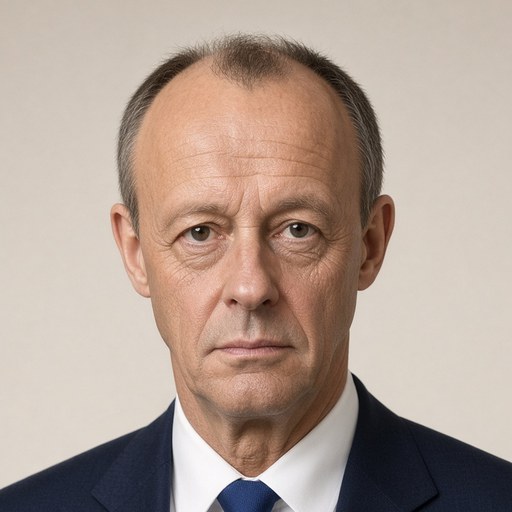
Speech by Federal Chancellor Friedrich Merz on the Budget Act 2025 before the German Bundestag on July 9, 2025, in Berlin:
 Friedrich Merz · Chancellor of Germany
- Context
- Merz addressed the German Bundestag on July 9, 2025, presenting the Budget Act 2025 and defending his government's foreign, defense, and economic policy agenda.
- Main themes
- Federal budget 2025, defense spending and NATO, Russia-Ukraine war, Germany's international partnerships, European cooperation, economic policy turnaround, investment offensive, AfD criticism, coalition government agenda, German leadership in Europe, medium-term financial plan
- Duration
- ~25 min
- Words
- 3,010
- Sentences
- 163
- Readability
- 47
- Grade
- 11.1
- Syntax
- 2.89
- Vocabulary
- 2.12
Translated from German
The broad sphere of national life a sentence belongs to. Every sentence has an Arena, so it is the denominator the other indices are read against.
Other163 sentences in 36 paragraphs
Madam President!
Dear colleagues!
In a parliamentary democracy, intense debates in Parliament are not only permitted. They are part of the necessary struggle for the right answers to the challenges that a country and a society face.
A government must face criticism in such a democratic order. A government must also listen to exaggerated and even outrageous criticism. But, to be very clear and very explicit: Half-truths, slander, and personal denigrations must not simply be accepted without challenge by anyone in a democracy. Therefore, Ms. Weidel, I firmly reject your blanket and undifferentiated devaluation of the work of the new federal government.
This federal government began its work just over two months ago. The start of the government’s work just over two months ago, and our work to this day, has been marked by the Russian war of aggression against Ukraine. This morning, in the past night, there were the heaviest attacks on exclusively civilian targets in Ukraine in three and a half years. No word from you, Ms. Weidel, about that. This says something about what you think and how you feel in this parliamentary group.
“Responsibility for Germany,” we have titled our coalition agreement, and we take this responsibility seriously in the federal government. And we know at the same time: This cannot be done alone. We need partners in the world. By the way, no word from you on that either. It was a purely nationalistic speech that you delivered here. No word about our international partners, no word about our international agreements and obligations!
We need partners in the world, especially in Europe. That is why I participated in the G7 meeting, the NATO summit, and the European Council. And that is why, at the beginning of my term, I accepted numerous invitations for talks in Europe and beyond. I accepted invitations for talks, dear colleagues, and I extended invitations for talks. This has also initiated a change in policy in foreign and security policy in Germany. The federal government is being recognized internationally again; we are being taken seriously in the world.
It has been and remains important to me to develop a good relationship with our European neighbors, with France and Poland in particular, with the European NATO states that are not members of the European Union, and with the small and medium-sized states in the European Union. In doing so, I take on the leadership responsibility that, in my understanding, a German Chancellor has and that Europe expects from us. We have taken on such leadership responsibility together with the Federal Foreign Minister and the Federal Minister of Defense also in NATO.
I want to take this opportunity to thank all those who were willing to agree to a constitutional amendment during the time between the 20th and 21st German Bundestag, which has enabled us to now make significant efforts to restore our defense capabilities. I want to be very clear – this became clear at the NATO summit –: If we had not done this, if we had not been willing to spend more on our defense, if we had followed the AfD and the Left Party, then NATO would probably have fallen apart in the 70th year of our membership. We are not taking that path.
On the contrary, we were able to make important initial decisions with a sober view of the current threat situation. We will continue to help Ukraine, even against the resistance of the political left and the Russia-friendly right here in the House. We will continue this support.
I want to make it even clearer to you: The means of diplomacy are exhausted when a criminal regime openly questions the right to exist of an entire country with military force and sets out to destroy the political order of freedom across the entire European continent. The federal government I lead will do everything in its power to prevent exactly that. And we know we are united with the vast majority, with the overwhelming majority of our population in this task. That is why I strive for international and European cooperation. I do this to secure peace, freedom, and prosperity in our country – for no other reason.
By passing the draft federal budget for 2025 and the medium-term financial plan for the years 2026 to 2029, we have laid the first foundations for the economic and financial policy of the coming years. With the adoption of the draft federal budget for 2026 in the federal cabinet later this month, we will quickly reach another milestone and thus lay the foundation for further significant investments in our country. With this, the federal government has initiated a turnaround in economic policy.
With our investment offensive, we are creating strong impulses for more growth; because we are still in the third year without economic growth. But for the first time – and you do not address this at all – in a long time, economic research institutes are not further lowering their economic expectations; instead, they are raising them. And the mood among companies in Germany is steadily improving. We will not let you spoil that for us.
Yes, we are taking on debt of up to 500 billion euros over the next twelve years with the so-called special fund. The states and municipalities will benefit from a share of 100 billion euros. We want this so that public and especially private investments in infrastructure, particularly in the transport sector, but also in climate protection, can be made possible in Germany. The law for the establishment of the special fund for infrastructure and climate protection has been introduced in the Bundestag, and we will ensure that the states and municipalities can also make use of their share in a timely manner. Additionally, we are granting the states the opportunity for higher own borrowing to expand investment and financing options for municipalities and states.
None of us does this lightly. We know that this will be a significant burden for future budgets, including for the interest burdens of future budgets. But the alternative, to do nothing, to enable no investments, to enable no investments especially from the private sector for Germany, is not a better alternative. We choose this path because we are convinced that it is only in this way, after the past years, that investment can return to Germany, that jobs can be preserved in Germany, and that new jobs can be created. We will not be deterred from this path by the loud contributions from your faction.
Not a word from you, Ms. Weidel, about the decisions that are pending in the Bundesrat this week! By introducing declining depreciation of three times 30 percent for equipment investments and the subsequent reduction of corporate tax burdens starting in 2028, we will noticeably relieve the economy and contribute to a competitive market environment. These billion-euro tax reliefs for companies are unparalleled. The last corporate tax reform in Germany of this magnitude is more than 15 years old. We are doing it today. We are complementing it with a high-tech agenda. We are making Germany fit for the future and strengthening the innovation and competitiveness of our location.
Unlike what you claim here, we are accompanying the investment offensive with structural reforms to get Germany back on a growth path. Therefore, we are lowering energy costs, reducing taxes for households and businesses, and eliminating bureaucratic hurdles. – Yes, ladies and gentlemen, that is exactly your perception that is expressed in these interjections.
Of the 200 euros per family per year that would have been possible and desirable for relief on energy and electricity costs, we are now making 150 euros per year possible. That is three-quarters of what we had planned. This will take effect on January 1, 2026. This is the first effective relief that we are enabling for energy costs for businesses and private households.
This amounts to 6.5 billion euros per year with the reduction of network charges, with the stabilization of the electricity tax for the manufacturing industry and for agriculture another three billion euros per year, and with the abolition of the gas storage levy another four billion euros per year. That is a relief of over ten billion euros for private households and for businesses. Not a word from you about that! We obviously need to say more often that we are doing this: starting January 1, 2026, relief for families and businesses on energy costs of over ten billion euros.
In the cabinet, we have already decided on further tax incentives for e-mobility and the improvement of the tax research allowance. The decisions on this will be finalized in the Bundesrat on Friday.
We will make investing in Germany simpler, faster, and less bureaucratic. We have already decided on initial simplifications. Over the course of this summer, we will initiate further fundamental revisions of planning law, building law, environmental law, procurement law, and procedural law.
And with the establishment of the Federal Ministry for Digitalization and State Modernization, we are not only making our claim clear to comprehensively digitalize and modernize Germany. We are now finally organizing centrally what has previously failed in Germany due to unclear and decentralized structures. We are doing it.
I must return once more to the Bundeswehr. Above all, our Bundeswehr must now quickly receive everything it needs for the defense of Germany. That is why, in the week after next, we will pass a law to accelerate planning and procurement procedures for the Bundeswehr in the cabinet and bring it to the parliamentary decision-making process. This is intended to simplify and accelerate the necessary procurement projects. The same applies to the civilian sector. Here too, the corresponding bill will be on the agenda of the federal cabinet in the week after next.
We have already relieved agriculture. We have initiated easing the implementation of the animal husbandry labeling requirement and abolished the obligation to create a so-called material balance. In doing so, we are reducing excessive, unnecessary, and redundant bureaucratic obligations for agriculture as well.
Even during the summer, we will also initiate the legislative measures that will massively accelerate the approvals of wind energy plants, hydrogen infrastructure, and the expansion of geothermal energy, heat pumps, heat storage, and heating lines. All of this is happening, apparently completely unnoticed by the opposition faction AfD here in the House.
The influence of the change of government is also visible at the European level. The Commission is combing through all policy areas for opportunities to reduce bureaucracy and unnecessary burdens. The first so-called omnibus regulations for the abolition and simplification of regulations have been presented. The federal government of the Federal Republic of Germany supports these demands of the Commission in the European Parliament and in the Council. More will follow. Here, we have also seen a mentality shift at the European level in a very short time.
Now to migration policy. We have set the first course for a sustainable reduction of irregular migration. The number of asylum applications has decreased by 43 percent in the first half of 2025 compared to the same period last year – obviously unnoticed by you, Ms. Weidel. – Yes, you are slowly losing your political battle theme, on which your existence depends. We will solve this problem. We will not give you the pleasure of maintaining it; because you thrive on the fact that you can constantly stir up sentiment in Germany with this issue.
Also apparently unnoticed: Through rejections in connection with internal border controls, thousands of illegal entries have been prevented, and a large number of outstanding arrest warrants have been executed. We must maintain internal border controls for the time being to limit migration and for security reasons. But allow me to say very clearly at this point: These are transitional rules; these are only temporary measures. We are striving for common European rules. We want to preserve the European internal market, we want to preserve the Schengen area. We want to maintain open borders and freedom of movement in Germany and in Europe. But we do not want that for illegal migration. That is why we are taking these steps.
I would like to take this opportunity to sincerely thank two parties involved: I want to thank the Federal Minister of the Interior for having the courage to make decisions quickly here. And secondly, I want to thank the SPD parliamentary group. We have suspended family reunification for those entitled to subsidiary protection. We have also abolished accelerated naturalizations and initiated the expansion of the definition of safe countries of origin. I know that this was not easy for you, dear colleagues of the SPD parliamentary group. That is why I want to explicitly thank you for being willing to take this path in the last week of the session. The path is right, and it is necessary. It is also necessary to restore inner peace in our country.
For a good future in Germany, strong social cohesion is needed. We are bringing further important decisions into play. Because one of the biggest problems of our time is the available, or rather: unavailable housing. To address people's concerns about overwhelming housing costs, we have passed an amendment to the Building Code in the Cabinet. This allows municipalities to facilitate housing construction projects in an unbureaucratic manner and with maximum speed. And with the extension of the rent control law – yes, that was also a compromise within the coalition – we are developing social rental law in a balanced manner and ensuring that the impacts on housing construction and housing supply are taken into account. Finally, by continuing the investment program "Expansion of All-Day Care," we are creating more educational equity, and we are supporting the states and municipalities in this important task.
Let me say in this context: Yes, a large number of reforms of our social state are still pending. Contrary to what you have claimed here, Ms. Weidel, we will of course initiate a comprehensive reform of the citizen's income. The preparatory work for this is in full swing. We will make decisions on this in the Cabinet in the fall and present them to the German Bundestag. The goal is to transform the current citizen's income into a basic security for those who truly need our social state. And we will achieve this goal, but not with foam at the mouth, not with discrimination against foreigners, but in such a way that our social state remains viable in the future and fulfills the promise of allowing even those with lower incomes and those who no longer have the opportunity for earned income to participate in the social life of our country. This is our response to the challenges we face, but obviously not yours.
Above all that we are currently discussing and doing, there is the open customs dispute with the United States of America. Let me return to this point! For days, intensive negotiations have been taking place between the European Commission and the American government. I myself am also in intensive contact with both the American government and the President, as well as with the European Commission. Our goal is to reach a trade agreement with the United States of America as quickly as possible, which connects mutual trade between America and the European Union with the lowest possible tariff rates. Achieving this goal is not easy given the current demands of the American government. But we will only achieve this goal if we, as the Federal Republic of Germany, approach this task in close cooperation with our European partners and neighbors. Germany alone would achieve nothing on this path. We can only achieve it if we work together with the European Union and the European Commission and if we reach the highest possible level of unity on the European side. That is exactly what I am striving for. It would be the wrong way not to do this, as you have obviously suggested again this morning.
I am cautiously optimistic that in the coming days, at the latest by the end of the month, we could reach an agreement with the United States of America. This is primarily in the interest of our export-oriented economy. This applies to the chemical industry, the pharmaceutical industry, the mechanical engineering sector. This applies to the automotive industry, the steel industry, the aluminum industry. A lot is at stake here. Jobs are at stake here. The prosperity of our country is also at stake here. That is why I am also working so intensively in my international efforts to find a solution to this problem.
At the beginning of my speech, I pointed out that we have only been in office for two months this week. We have tackled a lot, we have achieved some things, but there is still much to be done. We perceive that the mood in the country is improving again. But we also perceive that many citizens of our country still have concerns, that they are burdened by fears and uncertainties.
We want to convey to all people in Germany the courage and confidence that it is worth working in our country, that it is a joy to live in Germany, and that we are above all fortunate to live in a country of freedom and peace; that is a great blessing. We will continue to work to ensure that this remains the case. And we will – let me say this very clearly – not be deterred from this path, not even by those who spread bad moods, who carry resentments, and who in truth want a different society.
We are not taking this path. We want Germany to remain an open, a liberal, a free country. And we want above all for Germany to remain a tolerant country. That is why this coalition will continue its work with courage and confidence, despite or precisely because of the numerous interjections and contributions from your side, ladies and gentlemen.
The original German. The tags above are read on the English translation's sentences.
Frau Präsidentin!
Liebe Kolleginnen und Kollegen!
In einer parlamentarischen Demokratie sind harte Auseinandersetzungen im Parlament nicht nur erlaubt. Sie sind Teil des notwendigen Ringens um die richtigen Antworten auf die Herausforderungen, vor denen ein Land und vor denen eine Gesellschaft stehen.
Eine Regierung muss sich in einer solchen demokratischen Ordnung der Kritik stellen. Auch überzogene und selbst maßlose Kritik muss sich eine Regierung anhören. Aber, um es sehr klar und sehr deutlich zu sagen: Halbwahrheiten, üble Nachrede und persönliche Herabsetzungen muss auch in einer Demokratie niemand unwidersprochen einfach hinnehmen. Deswegen, Frau Weidel, weise ich Ihre pauschale und undifferenzierte Herabwürdigung der Arbeit der neuen Bundesregierung mit aller Entschiedenheit zurück.
Diese Bundesregierung hat ihre Arbeit vor gut zwei Monaten aufgenommen. Der Beginn der Arbeit der Bundesregierung vor gut zwei Monaten stand und unsere Arbeit steht bis heute unverändert im Zeichen des russischen Angriffskrieges gegen die Ukraine. Heute Morgen, in der vergangenen Nacht hat es die seit dreieinhalb Jahren schwersten Angriffe auf ausschließlich zivile Ziele in der Ukraine gegeben. Von Ihnen, Frau Weidel, kein Wort dazu. Das sagt etwas aus über das, was Sie denken und wie Sie fühlen in dieser Bundestagsfraktion.
„Verantwortung für Deutschland“, so haben wir unseren Koalitionsvertrag überschrieben, und diese Verantwortung nehmen wir wahr in der Bundesregierung. Und wir wissen zugleich: Das geht nicht allein. Wir brauchen Partner auf der Welt. Übrigens auch dazu nicht ein Wort von Ihnen. Es ist eine rein nationalistische Rede gewesen, die Sie hier gehalten haben. Kein Wort zu unseren internationalen Partnern, kein Wort zu unseren internationalen Vereinbarungen und Verpflichtungen!
Wir brauchen Partner auf der Welt, vor allem in Europa. Deshalb habe ich am G7-Treffen, am Nato-Gipfel und am Europäischen Rat teilgenommen. Und deshalb habe ich zu Beginn meiner Amtszeit zahlreiche Einladungen zu Gesprächen in Europa und darüber hinaus angenommen. Ich habe Einladungen zu Gesprächen angenommen, liebe Kolleginnen und Kollegen, und ich habe Einladungen zu Gesprächen ausgesprochen. Damit ist auch in der Außen- und Sicherheitspolitik in Deutschland der Politikwechsel eingeleitet. Die Bundesregierung wird international wieder wahrgenommen; wir werden vor allem ernst genommen auf der Welt.
Mir war und bleibt wichtig, ein gutes Verhältnis zu unseren europäischen Nachbarn zu entwickeln, zu Frankreich und Polen ohnehin, zu den europäischen Nato-Staaten, die nicht Mitglied der Europäischen Union sind, und zu den kleinen und mittleren Staaten in der Europäischen Union. Damit übernehme ich die Führungsverantwortung, die ein deutscher Bundeskanzler nach meinem Verständnis hat und die Europa von uns erwartet. Wir haben eine solche Führungsverantwortung zusammen mit dem Bundesaußenminister und dem Bundesverteidigungsminister auch in der Nato übernommen.
Ich will von dieser Stelle aus noch einmal all denjenigen danken, die bereit waren, in der Zeit zwischen dem 20. und dem 21. Deutschen Bundestag einer Grundgesetzänderung zuzustimmen, die uns ermöglicht hat, jetzt erhebliche Anstrengungen zur Wiederherstellung unserer Verteidigungsfähigkeit zu unternehmen. Ich will es sehr deutlich sagen – dies ist auf dem Nato-Gipfel klar geworden –: Wenn wir das nicht getan hätten, wenn wir nicht bereit gewesen wären, mehr für unsere Verteidigung auszugeben, wenn wir AfD und Linkspartei gefolgt wären, dann wäre die Nato wahrscheinlich im 70. Jahr unserer Mitgliedschaft auseinandergebrochen. Diesen Weg gehen wir nicht.
Wir konnten dagegen mit einem nüchternen Blick auf die aktuelle Bedrohungslage erste wichtige Entscheidungen treffen. Wir werden der Ukraine weiter helfen, auch gegen den Widerstand der politischen Linken und der russlandfreundlichen Rechten hier im Haus. Wir werden diese Unterstützung fortsetzen.
Ich will es Ihnen noch etwas deutlicher sagen: Die Mittel der Diplomatie sind ausgeschöpft, wenn ein verbrecherisches Regime mit militärischer Gewalt das Existenzrecht eines ganzen Landes offen infrage stellt und sich auf den Weg macht, die politische Freiheitsordnung des ganzen europäischen Kontinents zu zerstören. Die von mir geführte Bundesregierung wird alles in ihrer Macht Stehende tun, um genau dies zu verhindern. Und wir wissen uns einig mit der großen Mehrheit, mit der überwältigenden Mehrheit unserer Bevölkerung bei dieser Aufgabe. Das ist der Grund, warum ich mich um internationale und europäische Zusammenarbeit bemühe. Ich tue dies, um Frieden, Freiheit und Wohlstand in unserem Lande zu sichern – aus keinem anderen Grunde.
Durch die Verabschiedung des Entwurfs des Bundeshaushaltes 2025 und der mittelfristigen Finanzplanung für die Jahre 2026 bis 2029 haben wir erste Grundlagen für die Wirtschafts- und Finanzpolitik der nächsten Jahre gelegt. Mit der Verabschiedung des Entwurfs des Bundeshaushaltes 2026 im Bundeskabinett noch in diesem Monat werden wir zügig einen weiteren Meilenstein erreichen und damit den Grundstein für weitere erhebliche Investitionen in unser Land legen. Damit hat die Bundesregierung die Wende in der Wirtschaftspolitik eingeleitet.
Mit unserer Investitionsoffensive schaffen wir starke Impulse für mehr Wachstum; denn wir befinden uns unverändert im dritten Jahr ohne Wirtschaftswachstum. Aber erstmals – und darauf gehen Sie mit keinem Wort ein – seit Langem senken die Wirtschaftsforschungsinstitute die Konjunkturerwartungen nicht weiter; sie erhöhen sie stattdessen. Und auch die Stimmung unter den Unternehmen in Deutschland wird stetig besser. Wir lassen uns das von Ihnen dort nicht vermiesen.
Ja, wir nehmen mit dem sogenannten Sondervermögen Schulden in Höhe von bis zu 500 Milliarden Euro in den nächsten zwölf Jahren auf. Davon profitieren die Länder und die Kommunen mit einem Anteil von 100 Milliarden Euro. Wir wollen dies, damit öffentliche und vor allem private Investitionen in die Infrastruktur, insbesondere im Verkehrsbereich, aber auch in den Klimaschutz, in Deutschland möglich werden. Das Gesetz zur Errichtung des Sondervermögens für Infrastruktur und Klimaschutz ist in den Bundestag eingebracht, und wir werden sicherstellen, dass auch die Länder und Kommunen zeitnah ihren Anteil nutzbar machen können. Zusätzlich räumen wir den Ländern die Möglichkeit zu einer höheren eigenen Verschuldung ein, um dadurch Investitions- und Finanzierungsspielräume zu erweitern für die Kommunen und für die Länder.
Niemand von uns tut das mit leichter Hand. Wir wissen, dass dies eine erhebliche Belastung für zukünftige Haushalte, auch für die Zinsbelastungen zukünftiger Haushalte sein wird. Aber die Alternative, nichts zu tun, keine Investitionen zu ermöglichen, keine Investitionen insbesondere aus der Privatwirtschaft für Deutschland zu ermöglichen, ist keine bessere Alternative. Wir entscheiden uns für diesen Weg, weil wir der Überzeugung sind, dass es nur so nach den vergangenen Jahren möglich ist, dass in Deutschland wieder investiert wird, dass in Deutschland Arbeitsplätze erhalten bleiben, dass neue Arbeitsplätze entstehen können. Wir lassen uns von diesem Weg auch nicht durch die lautstarken Beiträge aus Ihrer Fraktion abbringen.
Kein Wort von Ihnen, Frau Weidel, zu den Entscheidungen, die noch in dieser Woche im Bundesrat anstehen! Durch die Einführung der degressiven Abschreibung von dreimal 30 Prozent für Ausrüstungsinvestitionen und die dann ab 2028 folgende Senkung der Unternehmensteuerbelastung werden wir die Wirtschaft spürbar entlasten und zu einem wettbewerbsfähigen Marktumfeld beitragen. Diese milliardenschweren Steuerentlastungen für Unternehmen suchen ihresgleichen. Die letzte Unternehmensteuerreform in Deutschland in dieser Größenordnung ist mehr als 15 Jahre alt. Wir machen es heute. Wir ergänzen es um eine Hightech-Agenda. Wir machen Deutschland fit für die Zukunft und stärken vor allem die Innovations- und Wettbewerbsfähigkeit unseres Standortes.
Anders als Sie hier behaupten, begleiten wir die Investitionsoffensive mit strukturellen Reformen, um Deutschland wieder auf Wachstumskurs zu bringen. Wir senken deshalb die Energiekosten, reduzieren Steuern für Haushalte und Unternehmen und schaffen bürokratische Hürden ab. – Ja, meine Damen und Herren, das ist genau Ihre Wahrnehmung, die in diesen Zwischenrufen zum Ausdruck kommt.
Von den 200 Euro pro Familie und Jahr, die möglich und wünschbar gewesen wären für die Entlastung bei den Energie- und Stromkosten, machen wir jetzt 150 Euro im Jahr möglich. Das sind drei Viertel von dem, was wir uns vorgenommen haben. Dies tritt am 1. Januar 2026 in Kraft. Das ist die erste wirksame Entlastung, die wir bei den Energiekosten für Unternehmen und private Haushalte ermöglichen.
Das sind mit der Senkung der Netzentgelte 6,5 Milliarden Euro im Jahr, mit der Verstetigung der Stromsteuer für das produzierende Gewerbe und für die Landwirtschaft noch einmal drei Milliarden Euro im Jahr und mit der Abschaffung der Gasspeicherumlage weitere vier Milliarden Euro im Jahr. Das ist eine Entlastung von über zehn Milliarden Euro für private Haushalte und für Unternehmen. Kein Wort von Ihnen dazu! Wir müssen offensichtlich noch öfter sagen, dass wir das machen: ab dem 1. Januar 2026 Entlastungen für die Familien und die Unternehmen bei den Energiekosten von über zehn Milliarden Euro.
Wir haben im Kabinett bereits eine weitere steuerliche Förderung der E-Mobilität und die Verbesserung der steuerlichen Forschungszulage beschlossen. Die Entscheidungen darüber stehen am Freitag im Bundesrat zur endgültigen Abstimmung an.
Wir werden Investieren in Deutschland einfacher, schneller und unbürokratischer machen. Dazu haben wir bereits erste Vereinfachungen beschlossen. Wir werden im Verlauf dieses Sommers weitere grundsätzliche Überarbeitungen von Planungsrecht, Baurecht, Umweltrecht, Vergaberecht und Verfahrensrecht auf den Weg bringen.
Und mit der Einrichtung des Bundesministeriums für Digitalisierung und Staatsmodernisierung machen wir nicht nur unseren Anspruch deutlich, Deutschland umfassend zu digitalisieren und zu modernisieren. Wir organisieren nun endgültig zentral, was bisher in Deutschland an unklaren und dezentralen Strukturen gescheitert ist. Wir machen es.
Ich muss noch einmal auf die Bundeswehr zurückkommen. Vor allem unsere Bundeswehr muss jetzt schnell alles erhalten, was sie zur Verteidigung Deutschlands benötigt. Deswegen werden wir in der übernächsten Woche ein Gesetz zur Beschleunigung von Planungs- und Vergabeverfahren der Bundeswehr im Kabinett beschließen und auf den parlamentarischen Entscheidungsweg bringen. Damit sollen die notwendigen Beschaffungsvorhaben vereinfacht und beschleunigt werden. Das Gleiche gilt für den zivilen Bereich. Auch hier steht der entsprechende Gesetzentwurf in der übernächsten Woche auf der Tagesordnung des Bundeskabinetts.
Auch die Landwirtschaft haben wir bereits entlastet. Wir haben Erleichterungen bei der Umsetzung der Tierhaltungskennzeichnungspflicht auf den Weg gebracht und die Verpflichtung zur Erstellung einer sogenannten Stoffbilanz aufgehoben. Damit reduzieren wir übermäßige, überflüssige und unnötige bürokratische Pflichten auch für die Landwirtschaft.
Noch während des Sommers werden wir ebenfalls die gesetzlichen Maßnahmen auf den Weg bringen, die die Genehmigungen von Windenergieanlagen, Wasserstoffinfrastruktur und den Ausbau von Geothermie, Wärmepumpen, Wärmespeichern und Wärmeleitungen massiv beschleunigen werden. Das alles geschieht offensichtlich vollkommen unbemerkt von der Oppositionsfraktion AfD hier im Haus.
Auch auf der europäischen Ebene ist der Einfluss des Regierungswechsels sichtbar. Die Kommission durchforstet sämtliche Politikbereiche nach Möglichkeiten des Abbaus von Bürokratie und unnötigen Belastungen. Die ersten sogenannten Omnibus-Verordnungen zur Abschaffung und Vereinfachung von Regelungen wurden vorgelegt. Die Bundesregierung der Bundesrepublik Deutschland unterstützt diese Forderungen der Kommission im Europäischen Parlament und im Rat. Weitere werden folgen. Hier haben wir ebenfalls in kürzester Zeit einen Mentalitätswechsel auf der europäischen Ebene gesehen.
Nun zur Migrationspolitik. Wir haben die ersten Weichen gestellt für eine nachhaltige Reduzierung der irregulären Migration. Die Asylantragszahlen sind im ersten Halbjahr 2025 im Vergleich zum Vorjahreszeitraum um 43 Prozent gesunken – offensichtlich von Ihnen unbemerkt, Frau Weidel. – Ja, Sie werden jetzt langsam Ihr politisches Kampfthema los, dem Sie Ihre Existenz verdanken. Wir werden dieses Problem lösen. Wir werden Ihnen nicht die Freude machen, es zu erhalten; denn Sie leben davon, dass Sie nur mit diesem Thema in Deutschland ständig Stimmung machen können.
Offensichtlich ebenfalls unbemerkt: Durch Zurückweisungen im Zusammenhang mit Binnengrenzkontrollen wurden Tausende illegale Einreisen verhindert, und eine große Zahl von offenen Haftbefehlen wurde vollstreckt. An den Binnengrenzkontrollen müssen wir zur Begrenzung der Migration und aus sicherheitspolitischen Gründen bis auf Weiteres festhalten. Aber erlauben Sie mir, an dieser Stelle einmal sehr deutlich zu sagen: Das sind Übergangsregeln; das sind nur Maßnahmen auf Zeit. Wir bemühen uns um gemeinsame europäische Regeln. Wir wollen den europäischen Binnenmarkt erhalten, wir wollen den Schengenraum erhalten. Wir wollen offene Grenzen und Freizügigkeit in Deutschland und in Europa erhalten. Aber wir wollen das nicht für illegale Migration. Deswegen unternehmen wir diese Schritte.
Ich will an dieser Stelle zwei Beteiligten herzlich danken: Ich möchte dem Bundesinnenminister danken, dass er den Mut gehabt hat, hier schnell zu Entscheidungen zu kommen. Und ich möchte zweitens der SPD-Bundestagsfraktion danken. Wir haben den Familiennachzug für subsidiär Schutzberechtigte ausgesetzt. Wir haben auch die beschleunigten Einbürgerungen abgeschafft und die Erweiterung der Bestimmung von sicheren Herkunftsländern auf den Weg gebracht. Ich weiß, dass Ihnen, liebe Kolleginnen und Kollegen der SPD-Bundestagsfraktion, das nicht leichtgefallen ist. Ich will mich gerade deshalb ausdrücklich bei Ihnen bedanken, dass Sie bereit gewesen sind, diesen Weg in der letzten Sitzungswoche mitzugehen. Der Weg ist richtig, und er ist notwendig. Er ist notwendig auch, um den inneren Frieden in unserem Lande wiederherzustellen.
Für eine gute Zukunft in Deutschland braucht es einen starken gesellschaftlichen Zusammenhalt. Dafür bringen wir weitere wichtige Entscheidungen auf den Weg. Denn eines der größten Probleme unserer Zeit ist der verfügbare, oder besser gesagt: nicht verfügbare Wohnraum. Um den Sorgen der Menschen vor überfordernden Wohnkosten zu begegnen, haben wir im Kabinett eine Novelle zum Baugesetzbuch beschlossen. Damit können Gemeinden jetzt unbürokratisch und mit maximaler Geschwindigkeit Wohnungsbauvorhaben möglich machen. Und mit der Verlängerung der Mietpreisbremse – ja, auch das war ein Kompromiss innerhalb der Koalition – entwickeln wir das soziale Mietrecht auf Zeit ausgewogen weiter und stellen sicher, dass die Auswirkungen auf Wohnungsbau und Wohnraumangebot berücksichtigt werden. Schließlich schaffen wir mit der Fortführung des Investitionsprogramms „Ganztagsausbau“ mehr Bildungsgerechtigkeit, und wir unterstützen die Länder und Kommunen bei dieser wichtigen Aufgabe.
Lassen Sie mich in diesem Zusammenhang sagen: Ja, eine große Zahl an Reformen unseres Sozialstaates steht noch aus. Anders, als von Ihnen hier behauptet, Frau Weidel, werden wir natürlich eine umfassende Reform des Bürgergeldes auf den Weg bringen. Die Vorarbeiten dazu laufen auf Hochtouren. Wir werden dazu im Herbst im Kabinett Entscheidungen treffen und sie dem Deutschen Bundestag vorlegen. Das Ziel ist, aus dem heutigen Bürgergeld eine Grundsicherung zu machen für diejenigen, die unseren Sozialstaat wirklich brauchen. Und wir werden das Ziel erreichen, allerdings nicht mit Schaum vor dem Mund, nicht mit Ausländerdiskriminierung, sondern so, dass unser Sozialstaat auch in Zukunft tragfähig ist und das Versprechen einlöst, auch Menschen, die weniger Einkommen haben, und Menschen, die keine Möglichkeit eines Erwerbseinkommens mehr haben, am gesellschaftlichen Leben unseres Landes teilnehmen zu lassen. Das ist unsere Antwort auf die Herausforderungen, vor denen wir stehen, aber offensichtlich nicht Ihre.
Über alledem, was wir hier zurzeit diskutieren und tun, steht der offene Zollstreit mit den Vereinigten Staaten von Amerika. Lassen Sie mich darauf bitte noch einmal zurückkommen! Seit Tagen wird zwischen der Europäischen Kommission und der amerikanischen Regierung intensiv verhandelt. Ich selbst stehe ebenfalls in intensivem Kontakt sowohl mit der amerikanischen Regierung und dem Präsidenten als auch mit der Europäischen Kommission. Unser Ziel ist, so schnell wie möglich ein Handelsabkommen mit den Vereinigten Staaten von Amerika zu erreichen, das mit möglichst niedrigen Zollsätzen den gegenseitigen Handel zwischen Amerika und der Europäischen Union verbindet. Dieses Ziel zu erreichen, ist angesichts der gegenwärtigen Forderungen der amerikanischen Regierung nicht leicht. Aber auch dieses Ziel werden wir nur erreichen, wenn wir als Bundesrepublik Deutschland im engen Schulterschluss mit unseren europäischen Partnern und Nachbarn an diese Aufgabe herangehen. Deutschland allein würde auf diesem Weg gar nichts erreichen. Wir erreichen es nur, wenn wir zusammenarbeiten mit der Europäischen Union und der Europäischen Kommission und wenn wir ein höchstmögliches Maß an Geschlossenheit auf der europäischen Seite erreichen. Genau darum bemühe ich mich. Es wäre der falsche Weg, genau das nicht zu tun, so wie Sie es heute Morgen hier offensichtlich wieder vorgeschlagen haben.
Ich jedenfalls bin verhalten optimistisch, dass es uns in den nächsten Tagen, spätestens bis zum Ende des Monats gelingen könnte, hier zu einem Abkommen mit den Vereinigten Staaten von Amerika zu kommen. Das liegt vor allem im Interesse unserer exportorientierten Wirtschaft. Das gilt für die chemische Industrie, für die pharmazeutische Industrie, für den Maschinenbau. Das gilt für die Automobilindustrie, für die Stahlindustrie, für die Aluminiumindustrie. Hier steht viel auf dem Spiel. Hier stehen Arbeitsplätze auf dem Spiel. Hier steht auch der Wohlstand unseres Landes auf dem Spiel. Deshalb bemühe ich mich auch in meiner internationalen Arbeit so intensiv um eine Lösung dieses Problems.
Ich habe zu Beginn meiner Rede darauf hingewiesen, dass wir in dieser Woche gerade einmal zwei Monate im Amt sind. Wir haben viel angepackt, wir haben einiges erreicht, aber es bleibt noch sehr viel zu tun. Wir nehmen wahr, dass die Stimmung im Land wieder besser wird. Wir nehmen aber auch wahr, dass immer noch viele Bürgerinnen und Bürger unseres Landes Sorgen haben, dass sie von Ängsten und von Unsicherheiten beschwert sind.
Wir wollen allen Menschen in Deutschland den Mut und die Zuversicht vermitteln, dass es sich lohnt, in unserem Land zu arbeiten, dass es Freude macht, in Deutschland zu leben, und dass wir vor allem das große Glück haben, in einem Land in Freiheit und Frieden zu leben; das ist ein großes Glück. Wir werden weiter daran arbeiten, dass gerade dies so bleibt. Und wir werden uns – lassen Sie mich dies hier in aller Deutlichkeit sagen – von diesem Weg nicht abbringen lassen, auch nicht von denen, die schlechte Stimmung verbreiten, die mit Ressentiments unterwegs sind und die in Wahrheit eine andere Gesellschaft wollen.
Wir gehen diesen Weg nicht. Wir wollen, dass Deutschland ein offenes, ein liberales, ein freiheitliches Land bleibt. Und wir wollen vor allem, dass Deutschland ein tolerantes Land bleibt. Deswegen wird diese Koalition mit Mut und Zuversicht ihre Arbeit fortsetzen, trotz oder gerade wegen der zahlreichen Zwischenrufe und Beiträge von Ihrer Seite, meine Damen und Herren.