




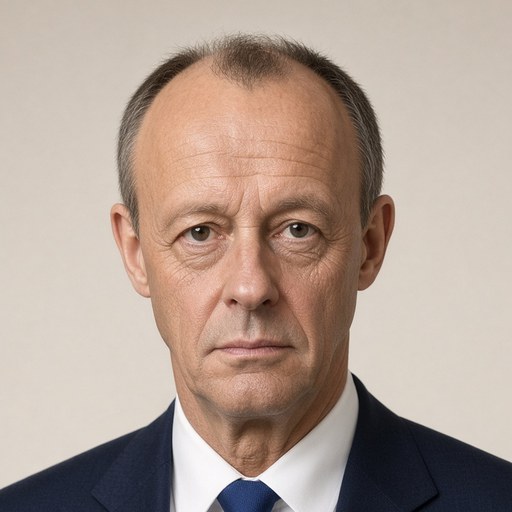
Speech by Chancellor Merz on the occasion of the celebration of 70 years of Germany in NATO on July 9, 2025, in Berlin.
 Friedrich Merz · Chancellor of Germany
- Context
- Merz addressed a ceremony in Berlin on July 9, 2025, commemorating the 70th anniversary of Germany's accession to NATO.
- Main themes
- 70th anniversary of Germany's NATO accession, German defense commitment and Bundeswehr modernization, Russian aggression and hybrid warfare, transatlantic partnership, NATO unity and The Hague summit, collective security, Western integration, defense spending increases, Adenauer legacy, European security
- Duration
- ~11 min
- Words
- 1,282
- Sentences
- 62
- Readability
- 46
- Grade
- 11.9
- Syntax
- 2.91
- Vocabulary
- 2.30
Translated from German
The broad sphere of national life a sentence belongs to. Every sentence has an Arena, so it is the denominator the other indices are read against.
Other62 sentences in 28 paragraphs
Dear Mr. Secretary-General,
dear Ministers,
dear colleagues from the German Bundestag,
dear soldiers and civilian employees of the Bundeswehr,
Excellencies,
ladies and gentlemen,
“The place of Germany is on the side of the peoples of the free world. There is no discussion about this, nor can there be any discussion about it.”
The first Chancellor of the Federal Republic of Germany, Konrad Adenauer, said these words in 1954 before the German Bundestag ‑ almost exactly one year before the Federal Republic joined NATO.
The truth is: There have been discussions about this ‑ controversial discussions, very controversial discussions ‑ in our European neighboring countries and especially in the young Federal Republic. Hardly anything was taken for granted in the decade after the end of World War II, least of all the rearmament of our country. The place of divided Germany in the world was an open question.
Seventy years ago ‑ in the year I was born ‑ the young Federal Republic answered this question with its accession to NATO in the name of freedom, in the name of Western integration, in the name of the transatlantic partnership. That was a consequential decision. It was and remains the foundation for three generations in Germany who have known nothing but freedom, peace, and security ‑ first in the West and later in our reunified homeland.
Ladies and gentlemen, we are commemorating the anniversary of Germany's NATO accession in historic times: in times of geopolitical upheaval, in times of new open questions, in times of the Russian war of aggression against Ukraine and massive Russian and other hybrid attacks on NATO and also on Germany.
We are commemorating the anniversary immediately after a historic NATO summit, with which we have sent a signal of unity and determination to the whole world. At the end of June, just a few days ago, we, as alliance partners, jointly decided in The Hague to significantly increase our defense spending. We have committed ourselves to our alliance obligations ‑ as has already been said: one for all, and all for one. It was the decisive signal: We can and we will respond as an alliance to the challenges of the new era. This alliance breathes, it lives, and it carries our collective security. This is a historic achievement.
Dear Mr. Secretary-General, at this point, I would like to personally thank you very much. Your diplomatic skill has greatly contributed to the success of this historic NATO summit. Our alliance can be glad that it has such a vigorous and unifying Secretary-General at the head of NATO during this difficult phase of upheaval.
Ladies and gentlemen, we in Germany have also gotten to work. We had significant backlogs to catch up on. We must be honest with ourselves: Germany was too long unprepared to pay for its own security ‑ because it seemed to work out fine. The raised eyebrows across the Atlantic and the warnings from our partners in Central and Eastern Europe about the increasingly aggressive revisionism of Russia were too often met with shrugs ‑ despite the Russian attacks on Georgia, despite the occupation of Crimea and Donbass. It took the war of aggression by Russia against the entire Ukraine for the realization to gain majority support in Germany: Our defense capability is not a task that we can postpone to the future or even outsource. It is in our own interest, and it is our own task today.
The Ukrainian cities that Putin continues to bomb even into the last night are less than two flight hours away from us. The provocations and aggressions emanating from the Russian shadow fleet are happening in the Baltic Sea. The acts of sabotage, Putin's hybrid warfare, also target our critical infrastructure, our social cohesion, and our democratic stability. Putin's contract killings are happening in the heart of Europe ‑ even here in Berlin, just a few meters away.
The situation is serious, and that is why we say today, on this day of such importance to us, with full and complete conviction: We take our responsibility seriously to defend freedom in the Euro-Atlantic area, to which we committed ourselves 70 years ago with NATO accession ‑ and we take it seriously not only in word but also in deed.
A few weeks ago, we amended the Basic Law in the German Bundestag to be able to provide the necessary resources for our defense from our own means. We have also reflected the increase in defense spending in the federal budget. With these resources, we will do everything in the coming years to make the Bundeswehr the strongest conventional army in the European Union ‑ as befits a country of our size and economic power and as our allies rightly expect from us.
At this point, I would like to express my gratitude to our Minister of Defense, Boris Pistorius, who has been advancing the restructuring of the Bundeswehr with great competence and vigor for four years. Thank you very much!
I would like to especially thank the soldiers who are serving at this time. They are doing their work in the name of freedom ‑ in Germany, but also at NATO's external borders, or in other missions where the serious scenario is again something we must prepare for diligently.
In May, at the formation ceremony of the Lithuania Brigade in Vilnius, I said ‑ and I would like to repeat it today ‑: During the Cold War, we in Germany could be sure of the support of our allies. It is now up to us to prove anew ‑ as we are doing with the Lithuania Brigade ‑: The allies can also rely on us.
Europe as a whole can rely on the Federal Republic: We will take the lead in the coming years in the task of strengthening the European pillar of NATO.
I would also like to emphasize today: We will continue to support Ukraine, which has been defending our freedom for us for four years now. The path to a just peace leads through strength, not through weakness or even capitulation to aggression. And a just peace, yes, we want ‑ for freedom and for security in Europe and in the Euro-Atlantic area.
Ladies and gentlemen, this also follows from what we say today:
“The place of Germany is on the side of the peoples of the free world.”
This decision, made and sealed 70 years ago with NATO accession, we must renew and reaffirm today. This is a task for politics, but it is also our task in German society. It is also a task for the entire society, especially because NATO is an alliance of free democratic states. Free peoples live from their midst. The value foundation that holds and unites NATO lives from the midst of the societies of the alliance partners. This means that we are all called upon to live freedom in responsibility ‑ across all generations, throughout society, in all parts of our country.
Vigilance is the price of freedom. At the same time, we as Germans know from our historical experience in a special way: The value of freedom is priceless. To be able to live in freedom, in security, and in peace is the greatest gift that has been given to us born after 1955, and it is also the greatest achievement that we have the great fortune to be able to participate in.
This knowledge, this historical knowledge, to keep alive, to remain vigilant, to truly keep alive, and to move forward in this knowledge ‑ in Europe, in the NATO alliance ‑: Ladies and gentlemen, that is our task today.
Thank you for your attention.
The original German. The tags above are read on the English translation's sentences.
Sehr geehrter Herr Generalsekretär,
sehr geehrte Herren Minister,
sehr geehrte Kolleginnen und Kollegen aus dem Deutschen Bundestag,
sehr geehrte Soldatinnen und Soldaten und Zivilbeschäftigte der Bundeswehr,
Exzellenzen,
meine sehr geehrten Damen und Herren,
„Der Platz Deutschlands ist auf der Seite der Völker der freien Welt. Hierüber gibt es keine Diskussion, hierüber kann es auch keine Diskussion geben“.
Der erste Bundeskanzler der Bundesrepublik Deutschland, Konrad Adenauer, sagt diese Sätze im Jahr 1954 vor dem Deutschen Bundestag ‑ fast genau ein Jahr, bevor die Bundesrepublik der NATO beigetreten ist.
Die Wahrheit ist: Es hat darüber Diskussionen gegeben ‑ kontroverse Diskussionen, sehr kontroverse Diskussionen ‑ in unseren europäischen Nachbarländern und vor allem in der jungen Bundesrepublik. Kaum etwas war selbstverständlich in der Dekade nach dem Ende des Zweiten Weltkriegs, schon gar nicht die Wiederbewaffnung unseres Landes. Der Platz des geteilten Deutschlands in der Welt war eine offene Frage.
Vor 70 Jahren ‑ in dem Jahr, in dem ich geboren wurde ‑ hat die junge Bundesrepublik diese Frage mit ihrem Beitritt zur NATO im Sinne der Freiheit beantwortet, im Sinne der Westbindung, im Sinne der transatlantischen Partnerschaft. Das war eine folgenreiche Entscheidung. Sie war und sie ist bis heute die Grundlage dafür, dass in Deutschland drei Generationen groß werden konnten, die nichts anderes kennengelernt haben als Freiheit, Frieden und Sicherheit ‑ zunächst im Westen und später in unserem wiedervereinigten Vaterland.
Meine Damen und Herren, wir begehen das Jubiläum des deutschen NATO-Beitritts in historischen Zeiten: in Zeiten geopolitischer Umbrüche, in Zeiten neuer offener Fragen, in Zeiten des russischen Angriffskriegs gegen die Ukraine und massiver russischer und anderer hybrider Angriffe auf die NATO und auch auf Deutschland.
Wir begehen das Jubiläum zugleich unmittelbar nach einem historischen NATO-Gipfel, mit dem wir in die ganze Welt ein Zeichen der Geschlossenheit und der Entschlossenheit gesetzt haben. Ende Juni, vor wenigen Tagen, haben wir uns in Den Haag als Bündnispartner gemeinsam entschieden, unsere Verteidigungsausgaben deutlich zu erhöhen. Wir haben uns miteinander zu unseren Bündnispflichten bekannt ‑ so wie schon gesagt: einer für alle, und alle für einen. Es war das entscheidende Signal: Wir können und wir werden als Bündnis Antwort geben auf die Herausforderungen der neuen Zeit. Dieses Bündnis atmet, es lebt, und es trägt unsere kollektive Sicherheit. Das ist eine historische Leistung.
Sehr geehrter Herr Generalsekretär, an dieser Stelle möchte ich Ihnen persönlich ganz herzlich danken. Ihr diplomatisches Geschick hat großen Anteil an dem Erfolg dieses historischen NATO-Gipfels. Unsere Allianz kann froh sein, dass sie mit Ihnen in dieser schwierigen Phase des Umbruchs einen so tatkräftigen und zugleich einenden Generalsekretär an der Spitze der NATO weiß.
Meine sehr geehrten Damen und Herren, auch in Deutschland haben wir uns an die Arbeit gemacht. Wir hatten große Rückstände aufzuholen. So ehrlich müssen wir mit uns sein: Deutschland war zu lange nicht bereit, die Aufwendungen für die eigene Sicherheit zu zahlen ‑ weil es ja scheinbar auch so ging. Die hochgezogenen Augenbrauen jenseits des Atlantiks und die Warnungen unserer Partner in Mittel- und Osteuropa vor dem immer aggressiveren Revisionismus Russlands wurden bei uns zu oft mit Schulterzucken begleitet ‑ trotz der russischen Angriffe auf Georgien, trotz der Besetzung der Krim und des Donbass. Es brauchte erst den Angriffskrieg Russlands gegen die gesamte Ukraine, bis auch in Deutschland die Einsicht mehrheitsfähig wurde: Unsere Verteidigungsfähigkeit ist keine Aufgabe, die wir in die Zukunft verschieben oder gar outsourcen können. Sie ist in unserem ureigensten Interesse, und sie ist heute unsere ureigenste Aufgabe.
Die ukrainischen Städte, die Putin bis in die letzte Nacht hinein bombardieren lässt, sie liegen keine zwei Flugstunden von uns entfernt. Die Provokationen und Aggressionen, die von der russischen Schattenflotte ausgehen, sie geschehen in der Ostsee. Die Sabotageakte, die hybride Kriegsführung Putins, sie gelten auch unserer kritischen Infrastruktur, unserem sozialen Zusammenhalt und unserer demokratischen Stabilität. Putins Auftragsmorde geschehen mitten in Europa ‑ auch hier in Berlin, wenige Meter von hier entfernt.
Die Lage ist also ernst, und deshalb sagen wir heute, an diesem für uns so wichtigen Jubiläumstag, aus voller und ganzer Überzeugung: Wir nehmen unsere Verantwortung ernst, die Freiheit im euro-atlantischen Raum zu verteidigen, zu der wir uns vor 70 Jahren mit dem NATO-Betritt bekannt haben ‑ und wir nehmen sie ernst nicht nur im Wort, sondern auch in der Tat.
Wir haben vor wenigen Wochen im Deutschen Bundestag das Grundgesetz geändert, um die notwendigen Mittel für unsere Verteidigung aus eigener Kraft bereitstellen zu können. Auch im Bundeshaushalt haben wir den Aufwuchs der Verteidigungsausgaben nun abgebildet. Wir werden mit diesen Mitteln in den nächsten Jahren alles daransetzen, die Bundeswehr zur stärksten konventionellen Armee in der Europäischen Union zu machen ‑ wie es einem Land unserer Größe und Wirtschaftskraft angemessen ist und wie es unsere Alliierten zu Recht von uns erwarten.
Ich möchte an dieser Stelle einen Dank aussprechen an unseren Verteidigungsminister, an Boris Pistorius, der mit viel Kompetenz und Tatkraft seit vier Jahren diese Aufstellung der Bundeswehr voranbringt. Herzlichen Dank!
Ich danke in besonderer Weise den Soldatinnen und Soldaten, die in dieser Zeit ihren Dienst an der Waffe tun. Sie leisten ihre Arbeit im Namen der Freiheit ‑ in Deutschland, aber auch an den NATO-Außengrenzen, oder in anderen Einsätzen, wo der Ernstfall wieder ein Szenario ist, auf das wir uns gewissenhaft vorbereiten müssen.
Ich habe im Mai beim Aufstellungsappell der Brigade Litauen in Vilnius gesagt ‑ und ich möchte es heute wiederholen ‑: Im Kalten Krieg konnten wir uns in Deutschland des Beistands der Alliierten sicher sein. Es ist heute an uns, neu zu beweisen ‑ wie wir es mit der Brigade Litauen tun ‑: Die Alliierten können sich auch auf uns verlassen.
Europa insgesamt kann sich auf die Bundesrepublik verlassen: Wir werden in den nächsten Jahren vorangehen bei der Aufgabe, den europäischen Pfeiler der NATO zu stärken.
Auch das möchte ich heute hier mit allem Nachdruck sagen: Wir werden fortfahren, die Ukraine zu unterstützen, die auch unsere Freiheit seit nunmehr vier Jahren für uns mit verteidigt. Der Weg zu einem gerechten Frieden führt über Stärke, nicht über Schwäche oder gar Kapitulation vor der Aggression. Und einen gerechten Frieden, ja, den wollen wir ‑ für die Freiheit und für die Sicherheit in Europa und im euro-atlantischen Raum.
Sehr geehrte Damen und Herren, auch das folgt daraus, wenn wir heute sagen:
„Der Platz Deutschlands ist auf der Seite der Völker der freien Welt.“
Diese Entscheidung, die vor 70 Jahren mit dem NATO-Beitritt getroffen und besiegelt worden ist, die haben wir heute zu erneuern und zu bekräftigen. Das ist eine Aufgabe der Politik, aber das ist auch unsere Aufgabe in der deutschen Gesellschaft. Das ist auch eine Aufgabe der gesamten Gesellschaft, und zwar gerade weil die NATO ein Bündnis freiheitlich-demokratischer Staaten ist. Freie Völker leben aus ihrer Mitte heraus. Das Wertefundament, das die NATO trägt und zusammenhält, lebt aus der Mitte der Gesellschaften der Bündnispartner heraus. Das heißt, dass wir alle zusammen aufgerufen sind, Freiheit in Verantwortung zu leben ‑ in allen Generationen, in der ganzen Gesellschaft, in allen Teilen unseres Landes.
Wachsamkeit ist der Preis der Freiheit. Gleichzeitig wissen wir als Deutsche aus unserer historischen Erfahrung in besonderer Weise: Der Wert der Freiheit ist unbezahlbar. In Freiheit leben zu dürfen, in Sicherheit und im Frieden, das ist das größte Geschenk, das uns nach 1955 Geborenen gemacht worden ist, und das ist zugleich die größte Errungenschaft, an der wir das große Glück haben, teilhaben zu dürfen.
Dieses Wissen, auch dieses historische Wissen, lebendig zu halten, wach zu halten, wirklich lebendig zu halten, und in diesem Wissen dann auch voranzugehen ‑ in Europa, im NATO-Bündnis ‑: Meine Damen und Herren, das ist unsere Aufgabe heute.
Ich danke Ihnen für Ihre Aufmerksamkeit.