




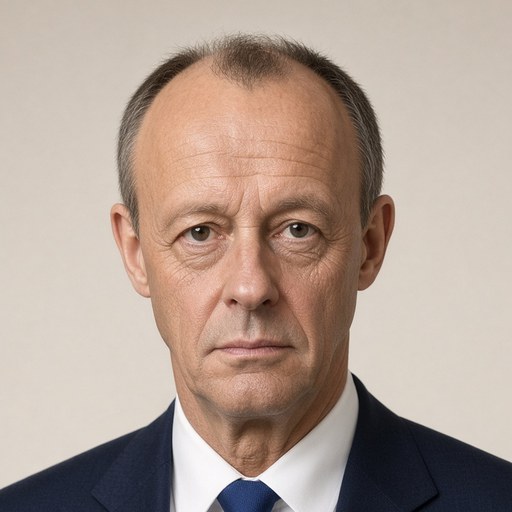
Speech by the Chancellor at the Parliamentary Group for Small and Medium-Sized Enterprises of the Union Faction Competitiveness of German Industry as a Priority
 Friedrich Merz · Chancellor of Germany
- Context
- Merz addressed the PKM Union faction summer festival in Berlin on July 8, 2025, outlining his new government's priorities for industry, SMEs, and competitiveness.
- Main themes
- Competitiveness of German industry, small and medium-sized enterprises (SMEs), economic growth and framework conditions, industrial policy, digitization and state modernization, migration and border control, foreign policy, CDU/CSU coalition government, education and family policy, research and technology, cabinet appointments
- Duration
- ~17 min
- Words
- 2,049
- Sentences
- 119
- Readability
- 61
- Grade
- 8.9
- Syntax
- 2.72
- Vocabulary
- 1.97
Translated from German
The broad sphere of national life a sentence belongs to. Every sentence has an Arena, so it is the denominator the other indices are read against.
Other119 sentences in 28 paragraphs
The Federal Government wants to do everything it can to ensure good political framework conditions for a stable growth path for Germany's medium-sized economy. This was stated by Chancellor Friedrich Merz in his speech at the summer festival of the Parliamentary Group for Medium-Sized Businesses (PKM) of the Union faction in Berlin.
"We need to have competitive industrial companies in Germany that are capable of standing up to global challenges," said Merz. The competitiveness of the manufacturing industry is a priority. In this context, the Chancellor emphasized: "We want to remain an industrial nation and not become an industrial museum."
Medium-sized companies:
More than
99 percent of all companies in Germany are medium-sized enterprises.
They contribute around 55 percent to the total net value added and 33 percent of total sales. In addition, they provide 54 percent of jobs and employ over 70 percent of all apprentices.
Read the entire speech here:
Dear Christian,
dear colleagues,
dear friends,
last year I told you: By the latest in the year after next, when the PKM celebrates its 50th summer festival, we will be back in government. – We are keeping this promise a year earlier. We are already back in government this year. We are a strong, we are the strongest faction in the German Bundestag, and that is why we are providing the President of the Bundestag in Julia Klöckner.
But we also have a strong team. Let me put it this way: Look at this Federal Government, which has been in office for exactly nine weeks today. I can say: This is one of the best federal governments we have had in Germany in recent decades. We have a cabinet with nine young faces, including some experienced ones. Above all, the Union, CDU and CSU, occupy key ministries of this Federal Government.
Let me also connect this with names.
We have Katherina Reiche in the Federal Ministry of Economics, who is now making economic policy again and not climate policy.
We have Karsten Wildberger from the private sector, who is bringing the topic of digitization and modernization of the state forward, unfortunately not yet properly recognized by some. Comprehensive responsibilities from a total of six different ministries, which were previously scattered everywhere, including in the Chancellery, are now bundled in one ministry. The topic of digitization and modernization of the state is in the hands of an experienced man from the private sector, who has transformation experience, who knows what digitization means and what challenges it poses for our country. I am grateful that we were able to recruit someone who is willing to enter politics, to face the challenges in politics, and to step out of the comfort zone of business into politics. Thank you, Karsten Wildberger, for your willingness to take on this task!
We have Alexander Dobrindt as the Minister of the Interior, who is doing exactly what we both promised: Better controls at our borders from day one to reduce irregular migration! – Look at the numbers now, ladies and gentlemen! We are now at the lowest level of asylum applications since 2013. The numbers continue to decline. Yes, we need to control the borders at the moment. This should not be a permanent state. But we are doing this so that we can gradually get a grip on the problem in Germany. We promised it, and we are implementing it so that the people in Germany feel that there is really a government in office that not only describes the problems but solves them. Alexander Dobrindt is a key part of that.
For the first time in almost 60 years, the Union, the CDU, is again occupying the Federal Foreign Office. Perhaps this is not visible to everyone every day. But that we have the Chancellery and the Foreign Office in one hand, that we can shape foreign policy together without it ending in petty party politics, is a great gain for our foreign policy reputation. I am grateful that we can do it this way. We are also doing it to meet Germany's responsibilities in the world. In this context, it is not feminist foreign policy that plays the most important role, but the interests of our country that we represent together in the world.
Research, development, technology, space travel with Doro Bär, someone who is truly passionate about this task and is now making research and development policy in such a way that Germany is again a leading industrial nation, especially regarding the most modern technologies. Quantum computing, AI, and many other areas have not been adequately addressed in Germany. We are doing this now in this government.
Education policy and family policy are in one hand with Karin Prien. Dear friends, let us not underestimate what it also means for us socially that we are bringing education policy back to the center of our social-political discussion, where it belongs, so that young people in our country receive a good education and that we convey values to the younger generation that they can identify with our country, our society, and this state. We are occupying this ministry.
One of the few people I have to physically look up to is Patrick Schnieder, who leads the Ministry of Transport and is now ensuring that we make a reasonable expansion in transport infrastructure, and who has also taken on the topic of railways, not with quick fixes, not by quickly changing a few people, but by tackling structures, solving structures, and getting the railways back on track. This will be a lengthy task. But he is tackling it. He is doing it so that we have a Deutsche Bahn that works again and is punctual, so that we all enjoy traveling by train in Germany again.
Nina Warken is responsible for health policy. This is an extremely challenging office!
I will mention the social security systems at all. I am aware that we still have a lot to do. We have agreed to solve some of this in commissions. They are coming now. But I want to explicitly promise you: This will not only be addressed in one commission. We will bring this forward with concrete reforms in the second half of 2025, so that our social state remains affordable and does not trigger additional costs that increasingly restrict our competitiveness in Germany. I assure you: We will do this! It is a tremendous effort, but we will bring it forward in the right way.
Since we are here and I just had the opportunity to visit the butchers' craft, ladies and gentlemen: We also have a Minister of Agriculture who takes into account conventional agriculture – just like of course green agriculture and organic farming, but also conventional agriculture. Thank you for being here and for us to have good meat to eat this evening, ladies and gentlemen! That is a good thing.
Jens Spahn briefly mentioned it: This week, on the coming Friday, the first laws will be discussed in final consultation at the state level in the Bundesrat. There will then be an investment incentive like we haven't seen in Germany in the last 20 years: three times 30 percent depreciation on new investments by your companies. Yes, you have to earn this depreciation – I know that – but we will give you the opportunity to invest now and to be treated well from a tax perspective. We will then reduce the corporate tax in five consecutive steps by one percentage point each starting in 2028. We will then have one of the lowest corporate taxes in the world. There will be relief for partnerships to switch to corporate tax. That is all part of it. Ladies and gentlemen, we are now taking step by step, blow by blow, seriously with what we have promised!
Let me address this topic because it has been a very controversial topic in recent days, the topic of electricity tax, energy taxation, and burdens. Yes, we would have liked to have done more. But please, now look closely at what we have done. We could have provided relief to the population of up to 200 euros per person or per household in Germany. We are actually providing relief of 150 euros per year. We primarily wanted to relieve the manufacturing industry in Germany; that is what it is about. We need to have competitive industrial companies in Germany that are capable of standing up to global challenges so that they can continue to produce. That is why our focus was on the manufacturing industry, and that is exactly what we have now decided in the coalition committee. We will do this. If more is possible, we will do more, but the priority is first and foremost the competitiveness of the manufacturing sector in Germany. We want to remain an industrial nation and not become an industrial museum, and that is why we have set this priority in the coalition committee.
Last, but not least: Allow me to address two topics that will come in the autumn. We will change the Working Hours Act. I promised here last year that it would be included in our election program. It is in our election program. I promised that it would be included in the coalition agreement. It is in the coalition agreement. And we will bring it into the Federal Law Gazette with a corresponding amendment regarding the weekly working hours – down from the pure daily working time of eight hours. This is not easy for the Social Democrats and the trade unions. We will of course take that into account. There will be further discussions about it. But the goal is clear. We will do this even without a collective bargaining reservation. It will be incorporated into the Working Hours Act in such a way that small and medium-sized enterprises can agree on weekly working hours with their employees and not just daily working hours.
The last major topic, dear friends, if I may say so, is the tedious topic of citizen's income. Do not let yourselves be confused by any headlines. There will be a fundamental reform. If you have read the weekend press, then you will have read what this is also about, and the Federal Minister of Labor is right: We are partly dealing with mafia-like structures of social abuse! We will put a stop to this, and we will do it together with the Social Democrats! We will turn what is currently called citizen's income into a basic security in the future. Those who need state assistance will continue to receive it. But for those who can work – that is what Carsten Linnemann and all of us have been saying over the years, months, and recently – we want to provide a reasonable incentive to work and not to remain unemployed. This is not an accusation against the people who make use of this system, but it is an accusation against us, who allow such things to happen. We will not allow this to continue, we will change it, we will change it with the Social Democrats, and we will show by the end of the year that fundamental reforms are also possible in labor market policy so that we can move forward in Germany again, ladies and gentlemen!
In this sense, I wish you and us a wonderful PKM summer festival! I look forward to the fiftieth next year, and I look forward to being able to report to you next year even more about what we will have done in the first good 15 months of our government work. Let us celebrate properly this evening, and then we will get back to work. We work for this country. We do this not for ourselves. We do this not for titles. We do this not for any offices. We do this so that this fantastically beautiful country is well governed again, that it receives recognition in the world, that the Europeans look at Germany not with astonishment but with admiration, and we do it so that we all together can enjoy living and working in this country again. In this sense, have a wonderful celebration this evening! I am happy to be here. Thank you very much!
The original German. The tags above are read on the English translation's sentences.
Die Bundesregierung wolle alles daransetzen, Deutschlands mittelständisch geprägter Wirtschaft gute politische Rahmenbedingungen für einen stabilen Wachstumskurs zu gewährleisten. Das sagte Bundeskanzler Friedrich Merz in seiner Rede beim Sommerfest des Parlamentskreises Mittelstand (PKM) der Unionsfraktion in Berlin.
„Wir müssen jetzt wettbewerbsfähige Industrieunternehmen in Deutschland haben, die in der Lage sind, auch gegenüber den globalen Herausforderungen zu bestehen”, so Merz. Dabei sei die Wettbewerbsfähigkeit der produzierenden Industrie Priorität. In diesem Zusammenhang betonte der Kanzler: „Wir wollen Industrieland bleiben und nicht ein Industriemuseum werden.”
Mittelständische Unternehmen:
Mehr als
99 Prozent aller Unternehmen in Deutschland sind
Mittelständler.
Sie tragen rund 55 Prozent zur gesamten Netto-Wertschöpfung und 33 Prozent des Gesamtumsatzes bei. Zudem stellen sie 54 Prozent der Arbeitsplätze bereit und beschäftigen über 70 Prozent aller Auszubildenden.
Lesen Sie hier die gesamte Rede:
Lieber Christian,
liebe Kolleginnen und Kollegen,
liebe Freundinnen und Freunde,
im vergangenen Jahr habe ich Ihnen gesagt: Spätestens im übernächsten Jahr, wenn der
PKM
sein 50. Sommerfest feiert, sind wir wieder Regierungsfraktion. – Wir halten dieses Versprechen ein Jahr früher ein. Wir sind schon in diesem Jahr wieder Regierungsfraktion. Wir sind eine starke, wir sind die stärkste Fraktion im Deutschen Bundestag, und deswegen stellen wir die Bundestagspräsidentin mit Julia Klöckner.
Aber wir haben auch eine starke Mannschaft. Lassen Sie mich dies vielleicht einmal so sagen: Schauen Sie auf diese Bundesregierung, die heute seit genau neun Wochen im Amt ist. Ich kann sagen: Das ist eine der besten Bundesregierungen, die wir in den letzten Jahrzehnten in Deutschland gehabt haben. Wir haben ein Kabinett mit neun jungen Gesichtern, darunter auch erfahrene. Vor allem besetzt die Union,
CDU
und
CSU
, Schlüsselressorts dieser Bundesregierung.
Lassen Sie mich das auch mit den Namen verbinden.
Wir haben mit Katherina Reiche jemanden im Bundeswirtschaftsministerium sitzen, der jetzt wieder Wirtschaftspolitik macht und nicht Klimapolitik.
Wir haben mit Karsten Wildberger jemanden aus der Privatwirtschaft gewinnen können, der das Thema von Digitalisierung und Staatsmodernisierung auf den Weg bringt, leider von dem einen oder anderen noch gar nicht richtig beachtet. Umfassende Zuständigkeiten aus insgesamt sechs verschiedenen Ministerien, die bis dahin überall verteilt waren, übrigens auch im Kanzleramt, sind jetzt in einem Ministerium gebündelt. Das Thema von Digitalisierung und Staatsmodernisierung ist in der Hand eines erfahrenen Mannes aus der Privatwirtschaft, der Transformationserfahrung hat, der weiß, was Digitalisierung bedeutet und welche Herausforderung damit auch für unser Land verbunden ist. Ich bin dankbar dafür, dass wir jemanden gewinnen konnten, der bereit ist, den Weg in die Politik zu gehen, sich der Auseinandersetzung in der Politik zu stellen und aus der Komfortzone der Wirtschaft herauszugehen in die Politik. Danke, Karsten Wildberger, für die Bereitschaft, diese Aufgabe zu übernehmen!
Wir haben mit Alexander Dobrindt einen Innenminister, der genau das tut, was wir beide versprochen haben: Vom ersten Tag an bessere Kontrollen an unseren Grenzen zum Abbau der irregulären Migration! – Schauen Sie sich die Zahlen jetzt an, meine Damen und Herren! Wir sind mittlerweile auf dem niedrigsten Stand der Zahl der Asylanträge seit 2013. Die Zahlen gehen weiter zurück. Ja, wir müssen die Grenzen im Augenblick kontrollieren. Das soll kein Dauerzustand sein. Aber wir tun dies, damit wir das Problem in Deutschland Schritt für Schritt in den Griff bekommen. Wir haben es versprochen, und wir setzen es um, damit die Menschen in Deutschland das Gefühl haben, dass hier wirklich eine Regierung im Amt ist, die die Probleme nicht nur beschreibt, sondern die Probleme löst. Alexander Dobrindt gehört ganz führend dazu.
Seit fast 60 Jahren das erste Mal besetzt die Union, besetzt die
CDU
wieder das Außenministerium. Vielleicht ist das nicht für jeden jeden Tag sichtbar. Aber dass wir Kanzleramt und Außenministerium in einer Hand haben, dass wir die Außenpolitik gemeinsam gestalten können, ohne dass es im parteipolitischen Klein-Klein endet, ist ein großer Gewinn für unsere außenpolitische Reputation. Ich bin dankbar dafür, dass wir das so machen können. Wir tun es auch, um Deutschlands Verantwortung in der Welt gerecht zu werden. Dabei spielt nicht feministische Außenpolitik die wichtigste Rolle, sondern die Interessen unseres Landes, die wir gemeinsam in der Welt wahrnehmen.
Forschung, Entwicklung, Technologie, Raumfahrt mit Doro Bär, jemandem, der wirklich mit Leidenschaft in diese Aufgabe hineingeht und Forschungs- und Entwicklungspolitik jetzt wieder so macht, dass Deutschland wieder eine führende Industrienation ist, gerade, was modernste Technologien betrifft. Quantencomputing, KI und viele andere Bereiche wurden in Deutschland nicht gut genug bearbeitet. Wir tun dies jetzt in dieser Regierung.
Bildungspolitik und Familienpolitik sind in einer Hand mit Karin Prien. Liebe Freundinnen und Freunde, unterschätzen wir nicht, was es auch gesellschaftspolitisch für uns bedeutet, dass wir Bildungspolitik wieder in das Zentrum unserer gesellschaftspolitischen Diskussion holen, wohin sie gehört, damit junge Leute in unserem Land gut ausgebildet werden, eine gute Bildung mitbekommen, und dass wir der jungen Generation vor allen Dingen wieder Werte vermitteln, die sich dann auch zu unserem Land, zu unserer Gesellschaft und diesem Staat bekennen kann. Wir besetzen dieses Ministerium.
Einer der wenigen, zu denen ich physisch emporschauen muss ist Patrick Schnieder, der das Verkehrsministerium führt und jetzt dafür sorgt, dass wir in der Verkehrsinfrastruktur einen vernünftigen Ausbau machen, und der sich auch das Thema der Bahn vorgenommen hat, nicht mit Schnellschüssen, nicht damit, einmal schnell ein paar Personen auszuwechseln, sondern damit, Strukturen anzupacken, Strukturen zu lösen und die Bahn wieder richtig aufs Gleis zu setzen. Das wird eine langwierige Aufgabe sein. Aber er packt es an. Er macht es, damit wir eine Deutsche Bahn haben, die wieder funktioniert und pünktlich ist, damit wir alle auch wieder gern mit der Bahn in Deutschland reisen.
Nina Warken, sie hat die Gesundheitspolitik zu verantworten. Das ist ein extrem herausforderndes Amt!
Ich nenne überhaupt einmal die Sozialversicherungssysteme. Ich bin mir darüber im Klaren, dass wir noch eine Menge tun müssen. Da haben wir manches erst in Kommissionen zu lösen verabredet. Die kommen jetzt. Aber ich will Ihnen ausdrücklich versprechen: Das wird nicht nur in einer Kommission behandelt. Wir werden das im zweiten Halbjahr 2025 sehr konkret mit Reformen auf den Weg bringen, damit unser Sozialstaat bezahlbar bleibt und damit er nicht auch zusätzliche Kosten auslöst, die unsere Wettbewerbsfähigkeit in Deutschland immer mehr einschränken. Ich sage Ihnen zu: Wir werden das machen! Das ist eine gewaltige Kraftanstrengung, aber wir werden das in der richtigen Weise auf den Weg bringen.
Weil wir ja hier sind und ich eben die Gelegenheit hatte, auch beim Fleischerhandwerk vorbeizuschauen, meine Damen und Herren: Wir haben nicht zuletzt auch wieder einen Landwirtschaftsminister, der auch die konventionelle Landwirtschaft ‑ genauso wie natürlich die grüne Landwirtschaft und die Biolandwirtschaft, aber auch die konventionelle Landwirtschaft – mit in den Blick nimmt. Herzlichen Dank, dass Sie da sind und dass wir hier heute Abend auch ordentliches Fleisch zu essen bekommen, meine Damen und Herren! Das ist eine gute Sache.
Jens Spahn hat es kurz angesprochen: In dieser Woche, am kommenden Freitag, werden die ersten Gesetze in abschließender Beratung auf der Ebene der Länder im Bundesrat beraten. Es wird dann einen Investitionsanreiz geben, wie es ihn in den letzten 20 Jahren in Deutschland nicht gab: dreimal 30 Prozent Abschreibungen auf neue Investitionen Ihrer Unternehmen. Ja, Sie müssen diese Abschreibungen verdienen – das weiß ich –, aber wir werden Ihnen die Möglichkeit geben, jetzt zu investieren und jetzt auch steuerlich gut behandelt zu werden. Wir werden dann ab 2028 die Körperschaftssteuer in fünf Schritten hintereinander um jeweils einen Prozentpunkt absenken. Wir werden danach eine der niedrigsten Körperschaftssteuern auf der ganzen Welt haben. Es wird Erleichterungen für die Personengesellschaften geben, in die Körperschaftssteuer zu gehen. Das gehört alles dazu. Meine Damen und Herren, wir machen jetzt Schritt für Schritt, Schlag auf Schlag, Ernst mit dem, was wir zugesagt haben!
Lassen Sie mich dieses Thema ansprechen, weil es ein in den letzten Tagen sehr kontroverses Thema war, das Thema der Stromsteuer, der Energiebesteuerung und der Belastung. Ja, wir hätten da gerne mehr gemacht. Aber, bitte, jetzt schauen Sie genau hin, was wir gemacht haben. Wir hätten eine Entlastung der Bevölkerung von bis zu 200 Euro pro Kopf oder pro Haushalt in Deutschland machen können. Wir machen tatsächlich eine von 150 Euro im Jahr. Wir wollten vor allen Dingen die produzierende Industrie in Deutschland entlasten; denn darum geht es. Wir müssen jetzt wettbewerbsfähige Industrieunternehmen in Deutschland haben, die in der Lage sind, auch gegenüber den globalen Herausforderungen zu bestehen, sodass sie in der Lage sind, weiter zu produzieren. Deswegen lag unser Augenmerk auf der produzierenden Industrie, und genau das haben wir jetzt im Koalitionsausschuss beschlossen. Das werden wir machen. Wenn mehr möglich ist, werden wir mehr machen, aber die Priorität ist zunächst einmal die Wettbewerbsfähigkeit des produzierenden Gewerbes in Deutschland. Wir wollen Industrieland bleiben und nicht ein Industriemuseum werden, und deswegen haben wir im Koalitionsausschuss genau diese Priorität gesetzt.
Last,
but not least
: Erlauben Sie mir, zwei Themen anzusprechen, die im Herbst kommen werden. Wir werden das Arbeitszeitgesetz ändern. Ich habe hier an dieser Stelle im letzten Jahr zugesagt, dass das in unser Wahlprogramm kommt. Es ist in unserem Wahlprogramm. Ich habe zugesagt, dass es in den Koalitionsvertrag kommt. Es ist im Koalitionsvertrag. Und wir werden es mit einer entsprechenden Änderung in Bezug auf die Wochenarbeitszeit – herunter von der reinen Tagesarbeitszeit von acht Stunden – auch in das Bundesgesetzblatt bringen. Das fällt den Sozialdemokraten und den Gewerkschaften nicht ganz leicht. Darauf nehmen wir selbstverständlich Rücksicht. Darüber wird es auch noch Gespräche geben. Aber das Ziel ist klar. Wir werden das auch ohne Tarifvorbehalt machen. Es wird so in das Arbeitszeitgesetz kommen, dass auch kleine und mittlere Unternehmen mit ihren Mitarbeiterinnen und Mitarbeitern Wochenarbeitszeiten verabreden können und nicht nur Tagesarbeitszeiten.
Das letzte große Thema, liebe Freundinnen und Freunde, wenn ich das so sagen darf, ist das leidige Thema des Bürgergelds. Lassen Sie sich da von irgendwelchen Überschriften nicht irritieren. Dabei wird es zu einer grundlegenden Reform kommen. Wenn Sie die Wochenendpresse gelesen haben, dann werden Sie gelesen haben, worum es hierbei auch geht, und die Bundesarbeitsministerin hat recht: Wir haben es hier zum Teil mit mafiösen Strukturen des sozialen Missbrauchs zu tun! Wir werden das abstellen, und wir werden es mit den Sozialdemokraten zusammen machen! Wir werden aus dem, was sich heute Bürgergeld nennt, in Zukunft eine Grundsicherung machen. Diejenigen, die die Hilfe des Staates brauchen, werden sie auch in Zukunft bekommen. Aber denjenigen, die arbeiten können – das ist das, was Carsten Linnemann und wir alle zusammen über die Jahre, die Monate und die letzte Zeit hinweg gesagt haben –, wollen wir einen vernünftigen Anreiz geben, zu arbeiten und nicht in der Arbeitslosigkeit zu bleiben. Das ist kein Vorwurf an die Menschen, die von diesem System Gebrauch machen, sondern es ist ein Vorwurf an uns, die wir zulassen, dass so etwas geschieht. Wir werden das nicht weiter zulassen, wir werden es ändern, wir werden es mit den Sozialdemokraten ändern, und wir werden zum Ende des Jahres zeigen, dass auch in der Arbeitsmarktpolitik grundlegende Reformen möglich sind, damit wir in Deutschland wieder vorankommen, meine Damen und Herren!
In diesem Sinne wünsche ich Ihnen und uns ein schönes
PKM
-Sommerfest! Ich freue mich auf das fünfzigste im nächsten Jahr, und ich freue mich darauf, Ihnen im nächsten Jahr noch mehr über das berichten zu können, was wir in den dann ersten gut 15 Monaten unserer Regierungsarbeit getan haben werden. Lassen Sie uns heute Abend ordentlich feiern, und dann wird wieder ordentlich gearbeitet. Wir arbeiten für dieses Land. Wir tun das nicht für uns. Wir tun das nicht für Titel. Wir tun das nicht für irgendwelche Ämter. Wir tun das dafür, dass dieses fantastisch schöne Land wieder gut regiert wird, dass es in der Welt Anerkennung bekommt, dass die Europäer nicht mit Verwunderung, sondern mit Bewunderung auf Deutschland schauen, und wir tun es, damit wir alle zusammen wieder Freude daran haben, in diesem Lande zu leben und in diesem Lande zu arbeiten. In diesem Sinne ein schönes Fest heute Abend! Ich freue mich, hier zu sein. Herzlichen Dank!