




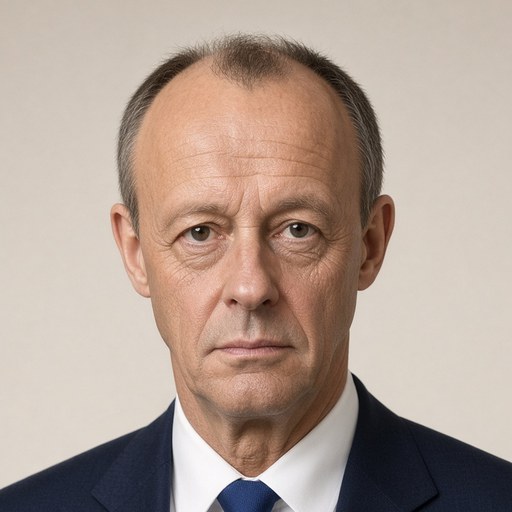
Speech by the Federal Chancellor on the occasion of the 80th Banking Conference "You are a very essential part of the new beginning"
 Friedrich Merz · Chancellor of Germany
- Context
- Merz addressed the 80th Banking Conference in Germany on July 3, 2025, outlining government economic priorities and calling for swift EU-US tariff resolution.
- Main themes
- German economic recovery, EU-US tariff negotiations, investment and growth incentives, cooperative banking principles, deposit guarantee systems, European capital market development, self-reliance and responsibility, energy costs and digitization, coalition governance, Raiffeisen cooperative idea
- Duration
- ~27 min
- Words
- 3,215
- Sentences
- 171
- Readability
- 50
- Grade
- 10.9
- Syntax
- 2.91
- Vocabulary
- 2.02
Translated from German
The broad sphere of national life a sentence belongs to. Every sentence has an Arena, so it is the denominator the other indices are read against.
Other171 sentences in 43 paragraphs
"We have all the means and forces to help ourselves, to get our country back on track under our own responsibility. We just need to apply these forces. The federal government is determined to do so," said Chancellor Friedrich Merz in his speech at the 80th Banking Conference. The Chancellor also advocated for a swift end to the tariff dispute between the EU and the USA.
The Chancellor emphasized the importance of the federal government's investment immediate program to strengthen the economy. Merz rejected the idea of a European community of national deposit guarantees. The deposit guarantee system of the cooperative banks is exemplary. The banks are an essential part of the new beginning in Germany. Furthermore, the Chancellor called for a functional and broad capital market in Europe.
The most important points in brief:
Tariff negotiations: With regard to the tariff negotiations between the EU and the USA, Chancellor Merz called for speed. "A quick result with the United States of America must be achieved now," said the Chancellor.
Strengthening the economy: "Focusing on our own strengths also means strengthening the German economy," said the Chancellor. With targeted investment incentives, the federal government aims to create new growth. Therefore, it has initiated a tax investment immediate program to strengthen Germany as a business location. As further measures, the federal government intends to reduce energy costs and promote digitization and modernization of the state.
Stable deposit guarantee: The Chancellor described the deposit guarantee systems – which protect the funds of bank customers – of German banks as exemplary. They are organized in a private sector manner, stable, and have proven their functionality over years and decades.
Opening the European capital market: It must be ensured that companies from Germany and the European Union find a functional, broad, and deep capital market in Europe. The Chancellor pointed out that, for example, young start-up companies are primarily financed not from Germany or Europe, but by international investors.
Read the Chancellor's speech here:
Chancellor Friedrich Merz:
Dear Ms. Kolak,
Ms. Müller-Ziegler,
Mr. Quinten,
Mr. Altmüller,
I am very pleased to be with you this morning. The Vice Chancellor will speak after me. We could have done this together; because contrary to what some think, write, and say, we really work well together in this coalition. I would say "dear comrades" to you; I do not go that far in the government.
We also had a very good atmosphere in the coalition committee last night and decided on a few things that we will put into action. We have been in office for just over eight weeks now, and we intend to continue doing this for a long time, and above all, to do it well, and I see a good mood among you. That pleases me. Thank you very much for the very warm welcome this morning!
"We must help ourselves. All the conditions for this are present, all means and forces are abundantly available to us. We just need to apply them."
Ladies and gentlemen, these sentences sound almost like a comment on the current geopolitical and geo-economic situation. In truth, however, they come from the middle of the 19th century – some of you may suspect it – from Friedrich Wilhelm Raiffeisen. These are sentences that have placed the words self-help, self-administration, and self-responsibility at the center. They are sentences characterized by perspectives that Raiffeisen, Schulze-Delitzsch, and their companions formulated at that time and developed the cooperative idea.
How timely these thoughts are today, around 175 years later, is shown not only by trends like now, in modern terms, crowdfunding, crowdsourcing, co-working spaces, data commons, platform corps, ladies and gentlemen, all of which are nothing more and nothing less than expressions of the cooperative idea! One thing is common to all these trends: at their core, it is about pooling forces and taking responsibility, especially for ourselves. In other words: it is now about not leaving our fate to others, but taking it powerfully and courageously into our own hands.
With this principle of self-responsibility, the Federal Republic of Germany was founded. We have worked for prosperity in Germany. It was no miracle, it was no economic miracle; it was the result of smart politics, correct policy decisions, and above all, as we learned to say back then, regulatory policy decisions. It was the decisive step to reclaim Germany's place in Europe and in the Western world.
But just as it was then, it is also true today: none of this is a given. Self-responsibility will only allow us to win the future if we embrace it, if we take it on. This applies not only to economic policy. This applies not only to social policy. It applies more than ever to foreign and security policy. To put it simply: we Europeans, ladies and gentlemen, we must and we will do much more for our own security. The times when we were the easy riders, the free riders of the Americans – to put it in German, the free riders of the American security architecture – are over.
In economic and social policy, this means: it is not enough to always call for more state, for more subsidies here or more social benefits there. In the coming years, we must focus more on how we can generate more prosperity in our country through our own strength and effort.
It fits quite well that the United Nations has declared the year 2025 – I suspect not even all of you know this – as the International Year of Cooperatives.
– Yes, ladies and gentlemen, this is obviously surprising even for you!
But this reminds us, especially in such turbulent times, of what the answers to global uncertainties and the question of how we can make our country and our continent safer and stronger could be – not by continuing to rely solely on external help, but also by relying on self-help, self-administration, and above all, self-responsibility.
Let me briefly reiterate this in light of last week. We experienced a NATO summit in The Hague that was marked by major questions and concluded with a powerful response. Together in this NATO of the 32 member states of the Western alliance – which is not just a military alliance, it is a deeply political alliance – we will more than double our efforts for our own defense. We will increase our defense spending to up to five percent of GDP, 3.5 percent for purely military tasks and another 1.5 percent for the necessary infrastructure. A few years ago, I would not have believed that I would say something like this from this podium. But the international situation requires it.
With just a brief look at Ukraine, it becomes clear what challenges we face; because this is not just a war against the territorial integrity of one of the largest countries in Europe, it is an attack on our freedom, on our political order, on what we Europeans, and Germans in particular since 1990, have jointly set in motion on our continent. Ladies and gentlemen, we leave no doubt about it, not even in this federal government, that we are firmly determined to defend our freedom, peace, our open society, our liberal society against all enemies from outside and from within. No one should have the slightest doubt about our determination!
This applies even if doubts are growing about whether we, for example, will continue to share common interests with the United States in the long term. Yes, the doubts are there, and they may even be justified. I will do everything to keep the United States by our side. But we must also prepare for the fact that America's engagement for Europe and in Europe will at least diminish.
Now is the time for Europe to grow up, to show its own strengths. With 450 million consumers, residents, and another 50 million Britons who are seeking a way back to Europe – at least in foreign and security policy – we are strong. We show that we can achieve something – in trade policy, in economic policy, in the common European policy of the European internal market; I will come back to that. In any case, we will assert our interests in the world together, and as the Chancellor of the Federal Republic of Germany, I am determined to take on a leadership responsibility in Europe and with other Europeans. They are waiting for us to do this, and we will not disappoint you, ladies and gentlemen!
In a few days, the deadline set by the American government for an agreement in the tariff dispute with Europe will expire. Britain has already concluded an agreement. Germany alone cannot do this because we have transferred trade policy to the European level within the European Union. So we must reach an agreement with the 27 member states of the European Union with the United States of America. But I want to say once again from this podium: This is not about a finely detailed, comprehensively negotiated trade agreement with the United States of America. This is now about the swift resolution of a tariff dispute, especially concerning the key industries of our country, the chemical industry, the pharmaceutical industry, mechanical engineering, the aluminum, steel, and automotive industries. A quick result with the United States of America must be achieved now, preferably quickly and simply rather than lengthy and complicated and still in a negotiation status for months, ladies and gentlemen! There must be a quick result with the United States of America so that our companies are relieved of the excessively high tariffs they currently have to pay when exporting to the United States of America.
Focusing on our own strengths also means strengthening the German economy. Ladies and gentlemen, many, if not all, of the problems we have today in Germany are homegrown: not from outside, but from within. Above all, the price competitiveness of our companies is generally no longer good enough. The location Germany has become too expensive over the past years.
That is why we have made the first decisions in the cabinet, passed them in the German Bundestag in the second and third readings, and next Friday, a week from tomorrow, they will be passed in the Bundesrat: declining depreciation starting July 1, 2025, 30 percent per year, three times in a row. These are the largest depreciation opportunities you can find for investments in the facilities of your companies in Germany in many years and decades. Starting January 1, 2028, there will then be a gradual reduction of the corporate tax, by one percentage point each year. Then we will be at ten percent corporate tax plus trade tax. This is also a tax-attractive location. We will not only lower the corporate tax but also facilitate access to income tax for partnerships, so that partnerships can also benefit from this reduction in corporate tax. We will further advance an investment offensive. We will massively increase investments, also with the possibilities we have from the federal budget.
But, ladies and gentlemen, this is not just about public funds. It is not just about debt-financed investment funds from the federal government. All of this can only be part of the efforts we face. It is now primarily about mobilizing private capital so that sufficient investment is made in the location Germany again. That is why we want to reduce energy costs; we confirmed that again last night. We want to promote digitization and the modernization of our country. We have created a new ministry for digitization and modernization of the state, equipped with full competencies.
I want to say once again that I was able to recruit a high-ranking individual from the circles of the German economy to take on this position, to transition from business to politics and to assume political responsibility in such a ministry. This has pleased me greatly. It is a hallmark of our capabilities that we can achieve such a thing, to increase the permeability between business and politics, and that we were able to place such a ministry in the hands of a man who has experience, who has transformation experience, who can do such things. Ladies and gentlemen, we are now getting serious! We are not just talking about it; we are getting serious about digitization and the reduction of bureaucracy in Germany, not least through this ministry!
I have already briefly mentioned the keyword "European internal market." Most of you will know that I began my political work many, many years ago in the European Parliament, at a time when the European internal market was being initiated, with the free movement of people, capital, services, and the opening of labor markets. Ladies and gentlemen, back in 1985 – that is now 40 years ago – we had a report from Jacques Delors with 300 different proposals for the completion of the European internal market. Today, we have two comparable documents before us, the report from Enrico Letta on the further development of the European internal market and the report from Mario Draghi on the future perspective of the competitiveness of the European Union. These are the best conditions, the best reports for the further development of this European Union that we have had on the table for many years, if not decades. We will now further develop this European Union, also and especially with regard to an internationally competitive capital market.
Let me be very clear: We have discussed liability systems in Europe long enough now. There is absolutely no reason to centralize functioning liability systems at the level of the member states of the European Union. There is no reason for that. The liability systems work. We can do that. I am not saying this just because I am standing here before you today, but I say this on every other occasion as well. The security institution, the deposit guarantee scheme among the cooperative banks that you have developed, is a security institution that can serve as a model. It is organized privately. It is a role model for many. It has proven its stability and functionality over years and decades. There is no reason to change anything about it, ladies and gentlemen.
But there is every reason to truly open the European capital market now and to ensure that companies from Germany and companies from other countries of the European Union find a functioning, broad, and deep capital market here in Europe.
This has two sides. One side is, of course, the side of the companies. I will mention an example, the company Helsing from Munich, which you all probably know, now the most valuable start-up company in the Federal Republic of Germany, at least after the last financing round. Many probably know that this company is very successful in the development of artificial intelligence, not least for military applications in combat aircraft and drones. But if you look at the financing of this company, you will find: almost exclusively from international investors and only very little from Germany. I could name further examples, CureVac, BioNTech. They did not go public in Germany, in Europe, in Frankfurt or London, but in New York at Nasdaq.
Ladies and gentlemen, if we want our location to become stronger again, we must jointly develop a stronger capital market. This has two sides. It concerns, on the one hand, the companies. But it also concerns those who enter the capital market, the stock market. That is why we will launch the so-called early starter pension. We confirmed this again last night. We want to implement it, if possible, as early as January 1, 2026. We will implement it, and not because we want to provide money to young people, but because we want to familiarize them from a young age with the successes of a capital market. Ten euros a month from the sixth to the eighteenth year of life should not be the basis for a later comprehensive retirement provision, but the beginning of getting acquainted with what the capital market can achieve. Under current conditions, these young people would then, when they turn 18, already have over 2,000 euros in a savings capital account, and they would see what compound interest effects and what doubling periods mean in the capital market. This should give them the courage for the future, open up perspectives, and above all show the possibilities that come with saving in the capital market. This is, so to speak, the counterpart to the financing of companies. On the other hand, we must ensure that people in Germany participate in this wealth accumulation and that this capital market is not just for a few, but that it is available in all its breadth and depth for the people in Germany.
I want to express my sincere thanks to you. Many of you are involved in developing this together. I also see many in the front row who have actively participated in this. Thank you very much for supporting this idea from the cooperative banks and for wanting to join us on this path towards a better and broader capital market that serves the people, that opens up savings opportunities, and that above all enables better retirement provision in the future! Thank you very much for doing this!
Let me conclude with two thoughts, ladies and gentlemen. One is: This coalition has embarked on a spirit of renewal, optimism, but also a willingness to change. Lars Klingbeil will probably tell you this afternoon in similar words as I am telling you this morning. We want to move from an atmosphere of distrust into a spirit of trust together. This has something to do with our regulation and with our bureaucracy. We are reducing bureaucracy, not only to save money, not only to relieve burdens, but also to send a signal that states: fundamentally, we assume a relationship of trust between the state and citizens and do not approach the citizens in our country with distrust. We will make this "mindshift," this change.
Ladies and gentlemen, this also means something for you. It means that we in politics cannot manage the task of leading our country to new strength alone. We can only create the conditions for something to come of it. You are the ones who have to deliver and implement it. Therefore, once again: In a time when self-help, self-administration, and self-responsibility are as much in demand as in the founding history of your companies and associations, it is now important that you take on and assume this key role. In other words: You are a very essential part of the renewal and change that we want in our country.
At the same time, I want to encourage you and all of us that what Raiffeisen and others said in their time is just as valid today as it was almost 200 years ago. We have all the means and forces to help ourselves, to get our country back on course in our own responsibility. We just need to apply these forces. The federal government is determined to do this, and I would like to call upon your determination and willingness this morning.
Thank you very much!
The original German. The tags above are read on the English translation's sentences.
„Wir haben alle Mittel und Kräfte, um uns selbst zu helfen, um unser Land in eigener Verantwortung wieder auf Kurs zu bringen. Wir müssen diese Kräfte nur zur Anwendung bringen. Dazu ist die Bundesregierung entschlossen”, sagte Bundeskanzler Friedrich Merz bei seiner Rede anlässlich der 80. Bankwirtschaftlichen Tagung. Außerdem sprach sich der Kanzler für ein schnelles Ende des Zollstreits zwischen der
EU
und den
USA
aus.
Der Kanzler hob zudem die Bedeutung des Investitions-Sofortprogramms der Bundesregierung hervor, um die Wirtschaft zu stärken. Einer
EU
-Vergemeinschaftung nationaler Einlagensicherungen erteilte Merz eine Absage. Das Einlagenssicherungssystem der Volksbanken und Raiffeisenbanken sei vorbildlich. Die Banken seien ein wesentlicher Teil des Aufbruchs in Deutschland. Zudem sprach sich der Kanzler für eine funktionsfähigen und breiten Kapitalmarkt in Europa aus.
Das Wichtigste in Kürze:
Zoll-Verhandlungen
: Mit Blick auf die Zoll-Verhandlungen zwischen der
EU
und den
USA
hat Bundeskanzler Merz Tempo gefordert. „Da muss jetzt ein schnelles Ergebnis mit den Vereinigten Staaten von Amerika erzielt werden“, so der Kanzler.
Volkswirtschaft stärken
: „Die Konzentration auf unsere eigenen Stärken bedeutet auch eine Stärkung der deutschen Volkswirtschaft“, sagte der Bundeskanzler. Mit gezielten Investitionsanreizen will die Bundesregierung neues Wachstum schaffen. Sie hat deshalb ein steuerliches Investitionssofortprogramm zur Stärkung des Wirtschaftsstandorts Deutschland auf den Weg gebracht. Als weitere Maßnahmen will der Bund die Energiekosten senken und die Digitalisierung sowie Staatsmodernisierung voranbringen.
Stabile Eigenlagensicherung
: Die Einlagensicherungssysteme – darunter versteht man den Schutz der Gelder von Bankkunden – der deutschen Banken bezeichnete der Kanzler als vorbildlich. Sie sei privatwirtschaftlich organisiert, stabil und habe ihre Funktionsfähigkeit über Jahre und Jahrzehnte erwiesen.
Europäischen Kapitalmarkt öffnen
: Es müsse dafür gesorgt werden, dass Unternehmen aus Deutschland und der Europäischen Union in Europa einen funktionsfähigen, breiten und tiefen Kapitalmarkt vorfinden. Der Bundeskanzler verwies darauf, dass etwa junge
Start-up
-Firmen bisher vorrangig nicht aus Deutschland oder Europa finanziert würden, sondern von internationalen Kapitalgebern.
Lesen Sie hier die Rede des Kanzlers:
Bundeskanzler Friedrich Merz:
Liebe Frau Kolak,
Frau Müller-Ziegler,
Herr Quinten,
Herr Altmüller,
ich freue mich sehr, dass ich heute Morgen bei Ihnen sein darf. Der Vizekanzler wird nach mir sprechen. Wir hätten das auch zusammen machen können; denn anders als der eine oder andere denkt und schreibt und redet, arbeiten wir in dieser Koalition wirklich gut zusammen. Bei Ihnen würde ich „liebe Genossinnen und Genossen“ sagen; so weit gehe ich in der Regierung nicht.
Wir haben auch gestern Abend im Koalitionsausschuss eine sehr gute Atmosphäre gehabt und ein paar Dinge beschlossen, die wir auf den Weg bringen. Wir sind jetzt seit gut acht Wochen im Amt, wir haben vor, das auch noch länger und weiter und vor allem gut zu machen, und ich sehe bei Ihnen eine gute Stimmung. Das freut mich. Herzlichen Dank für die sehr freundliche Begrüßung heute Morgen bei Ihnen!
„Wir müssen uns selbst helfen. Alle Bedingungen dazu sind vorhanden, alle Mittel und Kräfte stehen uns reichlich zu Gebote. Wir brauchen dieselben nur zur Anwendung bringen“.
Meine Damen und Herren, diese Sätze klingen fast wie ein Kommentar zur aktuellen geopolitischen und geoökonomischen Lage. In Wahrheit stammen sie aber bereits – der eine oder andere von Ihnen wird es ahnen – aus der Mitte des 19. Jahrhunderts. Es sind Sätze von Friedrich Wilhelm Raiffeisen. Es sind Sätze, die die Worte Selbsthilfe, Selbstverwaltung und Selbstverantwortung in den Mittelpunkt gestellt haben. Es sind Sätze, die von Perspektiven gekennzeichnet waren, die Raiffeisen, Schulze-Delitzsch und ihre Wegbegleiter damals so formuliert haben und die Genossenschaftsidee damit entwickelt haben.
Wie zeitgemäß diese Gedanken heute sind, rund 175 Jahre später, das zeigen nicht nur Trends wie jetzt, auf Neudeutsch,
Crowdfunding
,
Crowdsourcing
, Co-Working-Spaces,
Data Commons
,
Platform Corps
, meine Damen und Herren, alles nicht mehr und nicht weniger als Ausprägungen der Genossenschaftsidee! Eines ist all diesen Trends gemeinsam: Es geht im Kern darum, Kräfte zu bündeln und Verantwortung zu übernehmen, Verantwortung vor allem für uns selbst. Anders ausgedrückt: Es geht jetzt darum, unser Schicksal nicht anderen zu überlassen, sondern es kraftvoll und mutig in die eigenen Hände zu nehmen.
Mit diesem Prinzip der Eigenverantwortung ist die Bundesrepublik Deutschland entstanden. Wir haben uns Wohlstand in Deutschland erarbeitet. Das war kein Wunder, das war kein Wirtschaftswunder, es war das Ergebnis kluger Politik, richtiger Weichenstellungen und vor allem, wie wir es damals zu sagen gelernt haben, ordnungspolitischer Weichenstellungen. Es war der entscheidende Schritt, um Deutschlands Platz in Europa und in der westlichen Welt wieder einzunehmen.
Aber so wie damals gilt auch heute: Nichts davon ist selbstverständlich. Eigenverantwortung wird uns auch heute nur dann die Zukunft gewinnen lassen, wenn wir sie wahrnehmen, wenn wir sie einnehmen. Das gilt nicht nur für die Wirtschaftspolitik. Das gilt nicht nur für die Sozialpolitik. Das gilt mehr denn je auch für die Außen- und Sicherheitspolitik. Um es ganz einfach zu sagen: Wir Europäer, meine Damen und Herren, wir müssen und wir werden sehr viel mehr für unsere eigene Sicherheit tun. Die Zeiten jedenfalls, in denen wir im Amerikanischen die
Easy Rider
, die Freerider der Amerikaner waren – um es auf Deutsch zu sagen, die Trittbrettfahrer der amerikanischen Sicherheitsarchitektur –, sind nun einmal vorbei.
In der Wirtschafts- und Sozialpolitik bedeutet das: Es reicht nicht, nur immer nach mehr Staat zu rufen, nach mehr Subventionen hier oder mehr Sozialleistungen dort. Es muss in den kommenden Jahren wieder stärker darum gehen, wie wir aus eigener Kraft und mit eigener Anstrengung mehr Wohlstand in unserem Land erwirtschaften.
Dazu passt ganz gut, dass die Vereinten Nationen das Jahr 2025 – ich vermute, das wissen noch nicht einmal Sie alle – zum Internationalen Jahr der Genossenschaften erklärt haben.
(Beifall)
– Ja, meine Damen und Herren, das ist offensichtlich überraschend auch für Sie selbst!
Aber das erinnert uns gerade in solchen turbulenten Zeiten daran, was die Antworten auf globale Unsicherheiten und auf die Frage sein könnten, wie wir unser Land und unseren Kontinent sicherer und stärker machen – nicht, indem wir weiter nur auf die Hilfe von außen setzen, sondern auch, indem wir auf Selbsthilfe, Selbstverwaltung und vor allem auf Selbstverantwortung setzen.
Lassen Sie mich das kurz noch einmal mit Rückblick auf die letzte Woche sagen. Wir haben einen
NATO
-Gipfel in Den Haag erlebt, der von großen Fragen gekennzeichnet war und mit einer kraftvollen Antwort zu Ende gegangen ist. Wir werden gemeinsam in dieser
NATO
der 32 Mitgliedstaaten des westlichen Bündnisses – das ist nicht allein ein Militärbündnis, es ist ein zutiefst politisches Bündnis – unsere Anstrengungen für die eigene Verteidigung mehr als verdoppeln. Wir werden unsere Verteidigungsausgaben auf bis zu fünf Prozent des
BIP
steigern, 3,5 Prozent für die rein militärischen Aufgaben und noch einmal 1,5 Prozent für die dazu notwendige Infrastruktur. Ich hätte vor einigen Jahren nicht geglaubt, dass ich von dieser Stelle aus einmal so etwas sagen würde. Aber die internationale Lage erfordert es nun einmal, dies zu tun.
Mit nur einem ganz kurzen Blick auf die Ukraine wird deutlich, vor welchen Herausforderungen wir dabei stehen; denn das ist nicht ein Krieg allein gegen die territoriale Integrität eines der größten Länder Europas, es ist ein Angriff auf unsere Freiheit, auf unsere politische Ordnung, auf das, was wir Europäer auch für Deutsche spätestens seit 1990 auf unserem Kontinent gemeinsam auf den Weg gebracht haben. Meine Damen und Herren, wir lassen keinen Zweifel daran zu, auch nicht in dieser Bundesregierung, dass wir fest entschlossen sind, unsere Freiheit, den Frieden, unsere offene Gesellschaft, unsere liberale Gesellschaft gegen alle Feinde von außen und von innen zu verteidigen. Da soll niemand an unserer Entschlossenheit den geringsten Zweifel haben!
Das gilt, auch wenn Zweifel daran wachsen, ob wir zum Beispiel auf Dauer mit den Vereinigten Staaten von Amerika gemeinsame Interessen wahrnehmen. Ja, die Zweifel sind da, und sie mögen sogar gerechtfertigt sein. Wir werden, ich werde alles tun, um die Vereinigten Staaten von Amerika an unserer Seite zu halten. Aber wir müssen uns auch darauf vorbereiten, dass das Engagement Amerikas für Europa und in Europa zumindest kleiner wird.
Jetzt ist es Zeit für Europa, erwachsen zu werden, die eigenen Stärken zu zeigen. Mit 450 Millionen Konsumenten, Einwohnerinnen und Einwohnern, und mit noch einmal 50 Millionen Briten dazu, die den Weg zurück nach Europa suchen – zumindest in der Außen- und Sicherheitspolitik –, sind wir stark. Wir zeigen, dass wir etwas können – in der Handelspolitik, in der Wirtschaftspolitik, in der gemeinsamen europäischen Politik des Europäischen Binnenmarktes; ich werde darauf noch einmal zu sprechen kommen. Wir werden jedenfalls unsere Interessen auf der Welt gemeinsam wahrnehmen, und ich bin als der Bundeskanzler der Bundesrepublik Deutschland entschlossen, hierbei auch eine Führungsverantwortung in Europa und mit anderen Europäern zu übernehmen. Sie warten darauf, dass wir das tun, und wir werden Sie nicht enttäuschen, meine Damen und Herren!
In wenigen Tagen läuft die Frist der amerikanischen Regierung für eine Einigung im Zollstreit mit Europa ab. Großbritannien hat bereits ein Abkommen geschlossen. Deutschland allein kann das nicht tun, weil wir in der Europäischen Union die Handelspolitik auf die europäische Ebene übertragen haben. Also müssen wir mit 27 Mitgliedstaaten der Europäischen Union zu einer Einigung mit den Vereinigten Staaten von Amerika kommen. Aber ich will auch von dieser Stelle aus noch einmal sagen: Hier geht es nicht um ein fein ziseliertes, in allen Details ausverhandeltes, umfassendes Handelsabkommen mit den Vereinigten Staaten von Amerika. Hier geht es jetzt um die schnelle Beilegung eines Zollstreits und insbesondere um die Schlüsselindustrien unseres Landes, die chemische Industrie, die pharmazeutische Industrie, den Maschinenbau, die Aluminium-, Stahl- und Automobilindustrie. Da muss jetzt ein schnelles Ergebnis mit den Vereinigten Staaten von Amerika erzielt werden, lieber schnell und einfach als langwierig und kompliziert und noch über Monate hinweg im Verhandlungsstatus befindlich, meine Damen und Herren! Es muss jetzt ein schnelles Ergebnis mit den Vereinigten Staaten von Amerika geben, damit unsere Unternehmen von den viel zu hohen Zöllen entlastet werden, die sie gegenwärtig zahlen müssen, wenn sie in die Vereinigten Staaten von Amerika exportieren.
Die Konzentration auf unsere eigenen Stärken bedeutet auch eine Stärkung der deutschen Volkswirtschaft. Meine Damen und Herren, viele und fast alle Probleme, die wir heute in Deutschland haben, sind hausgemacht: nicht von außen, sondern von innen entstanden. Vor allem die preisliche Wettbewerbsfähigkeit unserer Unternehmen ist in der Regel nicht mehr gut genug. Der Standort Deutschland ist über die letzten Jahre hinweg zu teuer geworden.
Deswegen haben wir die ersten Entscheidungen im Kabinett getroffen, sie im Deutschen Bundestag in zweiter und dritter Lesung verabschiedet, und am nächsten Freitag, morgen in einer Woche, werden sie im Bundesrat verabschiedet werden: degressive Abschreibung ab dem 1. Juli 2025, 30 Prozent pro Jahr, dreimal hintereinander. Das sind die größten Abschreibungsmöglichkeiten seit vielen Jahren und Jahrzehnten, die Sie für Investitionen in die Anlagen Ihrer Unternehmen in Deutschland antreffen können. Ab dem 1. Januar 2028 folgt dann die sukzessive Absenkung der Körperschaftsteuer, jedes Jahr um einen Prozentpunkt. Dann werden wir bei zehn Prozent Körperschaftsteuer plus Gewerbesteuer liegen. Das ist auch steuerlich ein attraktiver Standort. Wir werden nicht nur die Körperschaftsteuer senken, sondern auch den Zugang in die Einkommensteuer für Personengesellschaften erleichtern, sodass auch Personengesellschaften von dieser Absenkung der Körperschaftsteuer einen Nutzen haben. Wir werden eine Investitionsoffensive weiter voranbringen. Wir werden Investitionen massiv hochfahren, auch mit den Möglichkeiten, die wir aus dem Bundeshaushalt haben.
Aber, meine Damen und Herren, es geht hier nicht allein um öffentliche Mittel. Es geht hier nicht allein um schuldenfinanzierte Investitionsmittel des Bundes. Das alles kann nur ein Teil der Anstrengungen sein, vor denen wir stehen. Es geht jetzt vor allem darum, privates Kapital zu mobilisieren, damit in den Standort Deutschland wieder ausreichend investiert wird. Wir wollen deswegen die Energiekosten senken; das haben wir gestern Abend noch einmal bestätigt. Wir wollen deswegen die Digitalisierung, die Staatsmodernisierung unseres Landes voranbringen. Wir haben dafür ein mit vollen Kompetenzen ausgestattetes neues Ministerium für Digitalisierung und Staatsmodernisierung geschaffen.
Ich will hier noch einmal sagen, dass ich aus den Kreisen der deutschen Wirtschaft eine hochrangige Persönlichkeit dafür gewinnen konnte, dieses Amt zu übernehmen, von der Wirtschaft in die Politik zu wechseln und eine politische Verantwortung in einem solchen Ministerium zu übernehmen. Das hat mich sehr gefreut. Es zeichnet uns aus, dass uns so etwas gelingt, die Durchlässigkeit zwischen Wirtschaft und Politik zu erhöhen, und dass wir gerade ein solches Ministerium in die Hand eines Mannes legen konnten, der Erfahrung hat, der Transformationserfahrung hat, der so etwas kann. Meine Damen und Herren, wir machen jetzt Ernst! Wir reden nicht nur darüber, wir machen Ernst mit Digitalisierung und Bürokratierückbau in Deutschland, nicht zuletzt über dieses Ministerium!
Das Stichwort „Europäischer Binnenmarkt“ habe ich schon kurz angesprochen. Die meisten von Ihnen werden wissen, dass ich meine politische Arbeit vor vielen, vielen Jahren im Europäischen Parlament begonnen habe, zu einem Zeitpunkt, zu dem der Europäische Binnenmarkt auf den Weg gebracht wurde, mit der Freizügigkeit für den Personenverkehr, den Kapitalverkehr, den Dienstleistungsverkehr und mit der Öffnung der Arbeitsmärkte. Meine Damen und Herren, uns lag damals im Jahr 1985 – das ist jetzt 40 Jahre her – ein Bericht von
Jacques Delors
mit 300 verschiedenen Vorschlägen über die Vollendung des Europäischen Binnenmarktes vor. Heute liegen uns zwei vergleichbare Dokumente vor, der Bericht von Enrico Letta über die weitere Entwicklung des Europäischen Binnenmarktes und der Bericht von Mario Draghi über die weitere Perspektive der Wettbewerbsfähigkeit der Europäischen Union. Das sind die besten Voraussetzungen, die besten Berichte für die Weiterentwicklung dieser Europäischen Union, die wir seit vielen Jahren, wenn nicht Jahrzehnten auf dem Tisch haben. Wir werden diese Europäische Union jetzt weiterentwickeln, auch und insbesondere im Hinblick auf einen international wettbewerbsfähigen Kapitalmarkt.
Lassen Sie mich das sehr deutlich sagen: Über Haftungssysteme haben wir in Europa jetzt lange genug diskutiert. Es gibt überhaupt keinen Grund, funktionierende Haftungssysteme auf der Ebene der Mitgliedstaaten der Europäischen Union zu vergemeinschaften. Dafür gibt es keinen Grund. Die Haftungssysteme funktionieren. Das können wir. Ich sage das nicht, weil ich heute hier vor Ihnen stehe, sondern ich sage das auch bei jeder anderen Gelegenheit. Die Sicherungseinrichtung, das Einlagensicherungssystem unter den Volksbanken und Raiffeisenbanken, das Sie entwickelt haben, ist eine Sicherungseinrichtung, die vorbildlich sein kann. Sie ist privatwirtschaftlich organisiert. Sie ist ein Vorbild für viele. Sie hat ihre Stabilität und ihre Funktionsfähigkeit über Jahre und Jahrzehnte erwiesen. Es gibt keinen Grund, daran etwas zu ändern, meine Damen und Herren.
Aber es gibt allen Grund, den europäischen Kapitalmarkt jetzt wirklich zu öffnen und wirklich dafür zu sorgen, dass Unternehmen aus Deutschland und Unternehmen aus anderen Ländern der Europäischen Union hier in Europa einen funktionsfähigen, breiten und tiefen Kapitalmarkt vorfinden.
Das hat zwei Seiten. Die eine Seite ist natürlich die Seite der Unternehmen. Ich nenne ein Beispiel, das Unternehmen Helsing aus München, das Sie alle vermutlich kennen, mittlerweile das wertvollste Start-up-Unternehmen der Bundesrepublik Deutschland, jedenfalls nach der letzten Finanzierungsrunde. Vermutlich wissen viele, dass dieses Unternehmen sehr erfolgreich in der Entwicklung von künstlicher Intelligenz ist, nicht zuletzt auch für den militärischen Anwendungsbereich bei Kampfflugzeugen und bei Drohnen. Aber wenn Sie sich die Finanzierung dieses Unternehmens anschauen, dann stellen Sie fest: fast ausschließlich von internationalen Kapitalgebern und nur ganz wenig aus Deutschland heraus. Ich könnte weitere Beispiele nennen, CureVac, BioNTech. Sie sind nicht etwa in Deutschland, in Europa, in Frankfurt oder London an die Börse gegangen, sondern in
New York
an die Nasdaq.
Meine Damen und Herren, wenn wir wollen, dass unser Standort wieder stärker wird, dann müssen wir gemeinsam einen stärkeren Kapitalmarkt entwickeln. Das hat zwei Seiten. Das betrifft auf der einen Seite die Unternehmen. Aber das betrifft auf der anderen Seite auch diejenigen, die in den Kapitalmarkt, in den Aktienmarkt gehen. Deswegen werden wir die sogenannte Frühstartrente an den Start bringen. Wir haben es gestern Abend noch einmal bestätigt. Wir wollen das, wenn es eben geht, sogar schon zum 1. Januar 2026 in Kraft setzen. Wir werden sie in Kraft setzen, und zwar nicht deshalb, weil wir jungen Menschen Geld zukommen lassen wollen, sondern deshalb, weil wir sie von jungen Beinen an mit den Erfolgen eines Kapitalmarkts vertraut machen wollen. Zehn Euro im Monat vom sechsten bis zum 18. Lebensjahr sollen nicht der Sockel für eine spätere umfassende Altersversorgung sein, sondern der Beginn dessen, sich mit dem vertraut zu machen, was der Kapitalmarkt leisten kann. Unter den gegenwärtigen Bedingungen würden diese jungen Menschen dann, wenn sie 18 Jahre alt sind, bereits über 2.000 Euro auf einem angesparten Kapitalkonto haben, und sie würden sehen, was Zinseszinseffekte und was Verdopplungszeiträume im Kapitalmarkt bedeuten. Das soll ihnen für die Zukunft den Mut geben, die Perspektive eröffnen und vor allen Dingen die Möglichkeiten zeigen, die sich mit einem Sparen im Kapitalmarkt eröffnen. Das ist sozusagen die Gegenseite zur Finanzierung der Unternehmen. Wir müssen auf der anderen Seite dafür sorgen, dass die Menschen in Deutschland an diesem Vermögensaufbau teilnehmen und dass dieser Kapitalmarkt nicht nur für einige wenige da ist, sondern dass er in der ganzen Breite und Tiefe für die Menschen in Deutschland zur Verfügung steht.
Ich will mich ausdrücklich bei Ihnen bedanken. Hier sind viele dabei, dies gemeinsam zu entwickeln. Ich sehe auch viele in der ersten Reihe, die sich daran aktiv beteiligt haben. Herzlichen Dank dafür, dass Sie aus den Volksbanken und Raiffeisenbanken diesen Gedanken unterstützen und dass Sie mit uns auf diesem Weg hin zu einem besseren und breiteren Kapitalmarkt mitmachen wollen, der den Menschen dient, der die Ersparnismöglichkeiten eröffnet und der vor allem in der Perspektive eine bessere Altersversorgung ermöglicht! Herzlichen Dank dafür, dass Sie das tun!
Lassen Sie mich mit zwei Gedanken schließen, meine Damen und Herren. Der eine ist: Diese Koalition ist in einem Geist des Aufbruchs, des Optimismus, aber auch der Veränderungsbereitschaft angetreten. Lars Klingbeil wird Ihnen das heute Nachmittag vermutlich in ähnlichen Worten sagen, wie ich es Ihnen heute Morgen sage. Wir wollen aus einer Atmosphäre des Misstrauens heraus und hinein in einen Geist des Vertrauens miteinander. Das hat etwas mit unserer Regulierung und mit unserer Bürokratie zu tun. Wir bauen die Bürokratie ab, nicht nur, um damit Geld zu sparen, nicht nur, um damit Belastungen zurückzunehmen, sondern auch, um damit ein Zeichen zu setzen, das da lautet: Grundsätzlich gehen wir im Verhältnis zwischen Staat und Bürgern von einem Vertrauensverhältnis aus und begegnen den Bürgerinnen und Bürgern in unserem Lande nicht mit Misstrauen. Diesen „
mindshift
“, diese Veränderung werden wir vornehmen.
Meine Damen und Herren, das heißt aber auch etwas für Sie. Das heißt, dass wir in der Politik die Aufgabe, unser Land zu neuer Stärke zu führen, nicht allein bewältigen können. Wir können nur die Bedingungen dafür schaffen, dass etwas daraus wird. Sie sind diejenigen, die es leisten und umsetzen müssen. Deswegen noch einmal: In einer Zeit, in der Selbsthilfe, Selbstverwaltung und Selbstverantwortung so sehr gefragt sind wie in der Gründungsgeschichte Ihrer Unternehmen und Ihrer Verbände, kommt es jetzt darauf an, dass Sie diese Schlüsselrolle einnehmen und übernehmen. Mit anderen Worten: Sie sind ein ganz wesentlicher Teil des Aufbruchs und der Veränderung, die wir in unserem Lande wollen.
Zugleich möchte ich Ihnen und uns allen Mut machen, dass das, was Raiffeisen und andere zu ihrer Zeit gesagt haben, heute genauso gilt wie vor fast 200 Jahren. Wir haben alle Mittel und Kräfte, um uns selbst zu helfen, um unser Land in eigener Verantwortung wieder auf Kurs zu bringen. Wir müssen diese Kräfte nur zur Anwendung bringen. Dazu ist die Bundesregierung entschlossen, und dazu möchte ich auch Ihre Entschlossenheit und Ihre Bereitschaft heute Morgen in Anspruch nehmen.
Herzlichen Dank!