




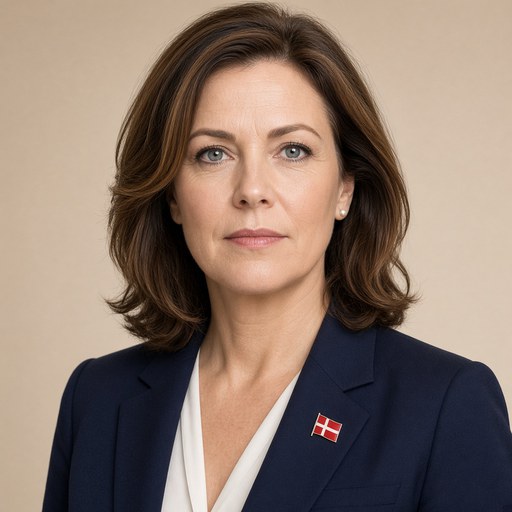
Prime Minister Helle Thorning-Schmidt's speech at the Constitution Day celebration in the Folketing on June 5, 2015.
 Helle Thorning-Schmidt · Prime Minister of Denmark
- Context
- Thorning-Schmidt addressed the Folketing on June 5, 2015, Denmark's Constitution Day, marking the 100th anniversary of the 1915 constitution granting women the right to vote.
- Main themes
- Women's suffrage centenary, Danish Constitution of 1915, gender equality, democratic progress, equal opportunities, history of women in politics, freedom and individual rights, social inheritance, LGBTQ rights in Denmark, civic participation
- Duration
- ~6 min
- Words
- 690
- Sentences
- 78
- Readability
- 63
- Grade
- 6.3
- Syntax
- 2.17
- Vocabulary
- 2.04
Translated from Danish
The broad sphere of national life a sentence belongs to. Every sentence has an Arena, so it is the denominator the other indices are read against.
Other78 sentences in 40 paragraphs
Your Majesty. Your Royal Highnesses. Dear everyone.
One hundred years ago, the chairwoman of the Danish Women's Society said this:
"The Constitution of 1849 did not mean, as people generally believe, the abolition of absolute monarchy; it only meant the transfer of absolute power to men."
These words were spoken by Gyrithe Lemche. She was not afraid to speak plainly.
Indeed, some were granted the right to vote in 1849. But they were the few. And true democracy is for the many.
Also for the servants. Also for the craftsmen. Yes, even for women.
Today we celebrate the 1915 Constitution, so that it can take its well-deserved place in Danish history.
As the constitution that granted women the right to vote. And Denmark democracy.
* * *
We must celebrate our history. It reminds us of something important.
The country we have today is not a given.
It took time to get this far. It required stubbornness and perseverance. It required struggle.
Not women against men. But a common struggle for freedom and progress.
The Constitution of 1915 was a decisive step for a Denmark with equal opportunities. One of the greatest in our history.
It took nine years before Denmark got its first female minister. That was Minister of Education Nina Bang.
It took more than 20 years before we got the next one. That was Fanny Nielsen.
She became a minister without portfolio "with special regard to the interests of homes, household management, and children."
That, it was believed at the time, was a suitable task for a woman.
Today, Denmark is one of the countries where the most women have a job outside the home. And where the most women receive an education.
I am pleased that so many new Danish girls are doing well. Because they have understood that education breaks the cycle of social inheritance.
And of course, a same-sex couple can be married in the Church of Denmark.
Denmark is not a country where everyone is the same. But a country where everyone has good opportunities to become what they want.
We must utilize all talents in our society. Both women's and men's experiences must be heard.
We are equally valuable as human beings.
We should not be limited by prejudices about how others think we should be. Each individual must be set free. We must be who we are and pursue our dreams.
But are we there yet?
No, there are still entrenched images of how men are and how women are. This affects the individual. Society misses out on talent. And both women and men become losers.
We have come a long way in 100 years. But there is always more to be done.
Greater freedom. Equal opportunities. Everyone must be included. That is what the 1915 Constitution is about.
* * *
In a moment, we will receive the constitutional parade here at Christiansborg.
One hundred years ago today, thousands of women marched to Amalienborg to celebrate the new constitution.
They did not come to humbly say thank you. They came to take and use the rights that they had won themselves. They were proud and happy.
The women were received by the then Prime Minister – or Council President, as it was called back then. That was Carl Theodor Zahle. And he said these words:
"The new constitution gives equal civil rights to man and woman, rich and poor, tall and short. May political equality make the Danish people happy and strong, and may our descendants thank us for what is happening in Denmark today."
Dear everyone.
Let us send a big thank you to the women and men on whose shoulders we stand today. Let us send a loving greeting to the generations who paved the way for us others.
There are always some who lead the way.
We owe them to hold on to what has made Denmark something special. We owe each other to take good care of our democracy and our country.
Women and servants gained the right to vote. More gained freedom and opportunities. Our country was changed forever. That is what we celebrate today.
The original Danish. The tags above are read on the English translation's sentences.
Deres Majestæt. Deres Kongelige Højheder. Kære alle sammen.
For 100 år siden sagde formanden for Dansk Kvindesamfund sådan her:
”Grundloven af 1849, den betød ikke, som folk i almindelighed mener, enevældens afskaffelse, den betød kun enevældens overførsel til mændene.”
Ordene var Gyrithe Lemches. Hun var ikke bange for at sige tingene ligeud.
Vel var der nogle, der fik stemmeret i 1849. Men det var de få. Og et sandt demokrati er for de mange.
Også for tjenestefolkene. Også for håndværkssvendene. Ja selv for kvinderne.
I dag fejrer vi 1915-grundloven, så den kan indtage sin velfortjente plads i Danmarkshistorien.
Som den grundlov, der gav kvinderne stemmeret. Og Danmark demokrati.
* * *
Vi skal fejre vores historie. Den husker os på noget vigtigt.
Det land, vi har i dag, er ikke en selvfølge.
Det tog tid at nå så langt. Det krævede stædighed og vedholdenhed. Det krævede kamp.
Ikke kvinder mod mænd. Men en fælles kamp for frihed og fremskridt.
Grundloven i 1915 var et afgørende skridt for et Danmark med lige muligheder. Et af de største i vores historie.
Der gik ni år, før Danmark fik sin første kvindelige minister. Det var undervisningsminister Nina Bang.
Det tog mere end 20 år, før vi fik den næste. Det var Fanny Nielsen.
Hun blev minister uden portefølje ”med særligt henblik på hjemmenes, husførelsens og børnenes interesser.”
Det, mente man dengang, var en passende opgave for en kvinde.
I dag er Danmark et af de lande, hvor flest kvinder har et job uden for hjemmet. Og hvor flest kvinder får en uddannelse.
Jeg glæder mig over, at så mange nydanske piger klarer sig godt. Fordi de har forstået, at uddannelse bryder den sociale arv.
Og naturligvis kan et homoseksuelt par blive viet i folkekirken.
Danmark er ikke et land, hvor alle er ens. Men et land, hvor alle har gode muligheder for at blive, hvad de vil.
Vi skal bruge alle talenter i vores samfund. Både kvinders og mænds erfaringer skal høres.
Vi er lige meget værd som mennesker.
Vi skal ikke begrænses af fordomme om, hvordan andre mener, vi bør være. Hver enkelt skal sættes fri. Vi skal være dem, vi er og forfølge vores drømme.
Men er vi i mål?
Nej, der er stadig fastlåste billeder af, hvordan mænd er, og hvordan kvinder er. Det går ud over den enkelte. Samfundet går glip af talent. Og både kvinder og mænd bliver tabere.
Vi er nået langt på 100 år. Men der er altid mere at gøre.
Større frihed. Lige muligheder. Alle skal med. Det er, hvad 1915-grundloven handler om.
* * *
Om lidt skal vi modtage grundlovsoptoget her på Christiansborg.
I dag for 100 år siden gik tusindvis af kvinder i optog til Amalienborg for at fejre den nye grundlov.
De kom ikke for at sige ydmygt tak. De kom for at tage og bruge de rettigheder, som de selv havde vundet. De var stolte og glade.
Kvinderne blev modtaget af den daværende statsminister – eller konseilspræsident, som det hed dengang. Det var Carl Theodor Zahle. Og han sagde disse ord:
”Den nye grundlov giver lige statsborgerlig ret til mand og kvinde, rig og fattig, høj og lav. Gid den politiske lighed må gøre det danske folk lykkeligt og stærkt, og at vore efterkommere må vide os tak for, hvad der i dag sker i Danmark.”
Kære alle sammen.
Lad os sende en stor tak til de kvinder og mænd, som vi i dag står på skuldrene af. Lad os sende en kærlig hilsen til de generationer, der banede vejen for os andre.
Der er altid nogle, som går forrest.
Vi skylder dem at holde fast i det, som har gjort Danmark til noget særligt. Vi skylder hinanden at passe godt på vores demokrati og vores land.
Kvinder og tjenestefolk fik stemmeret. Flere fik frihed og muligheder. Vores land blev forandret for altid. Det er det, vi fejrer i dag.