




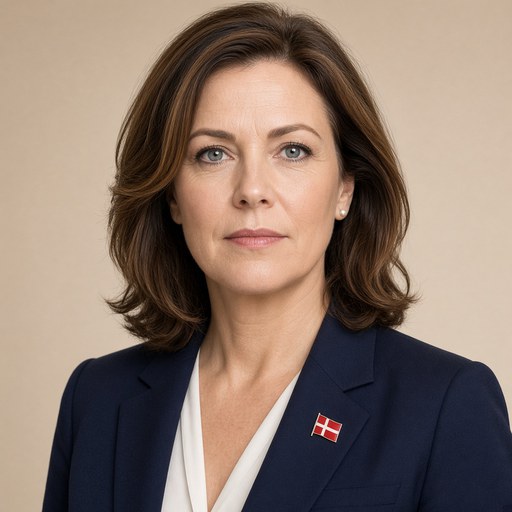
Prime Minister Helle Thorning-Schmidt's speech at the opening of VL Døgnet on February 5, 2014.
 Helle Thorning-Schmidt · Prime Minister of Denmark
- Context
- Thorning-Schmidt addressed business leaders at VL Døgnet on February 5, 2014, to discuss Denmark's industrial future and economic reform agenda.
- Main themes
- Industrial modernization, Danish competitiveness, economic recovery, education and workforce skills, government reform agenda, productivity growth, international trade missions, new industrial revolution, corporate tax reduction, green technology, labor market improvement, Growth Plan DK
- Duration
- ~16 min
- Words
- 1,902
- Sentences
- 180
- Readability
- 59
- Grade
- 7.2
- Syntax
- 2.41
- Vocabulary
- 1.91
Translated from Danish
The broad sphere of national life a sentence belongs to. Every sentence has an Arena, so it is the denominator the other indices are read against.
Other180 sentences in 83 paragraphs
Thank you for the invitation to speak at VL-Døgnet today.
You have set aside the hours of the Døgnet to discuss a topic of great importance. Both for you as business leaders. And for all of Denmark: "Industry version 2.0"
Industry is an important part of our business community. Also in a high-tech society. And also in the future.
The government is focused on ensuring that there are good conditions for private jobs in Denmark.
And we are firmly convinced that Danish jobs should be good jobs with decent pay. Our workplaces should be based on knowledge, education, and skilled employees. So that we have a rich and secure country.
But this does not happen by itself. It requires political decisions. It requires changes.
I would like to thank you today for the support for the government's reforms that has come from the business community.
The government that the Social Democrats and the Radicals have now formed will continue the ambitious reforms. For even though things have started to improve, we cannot lean back.
Currently, we see signs that the Danish economy is doing better. The mood has changed. We have now had growth for two consecutive quarters.
There are also signs that things are improving a bit in the labor market. Employment has begun to rise. And recently, new unemployment figures were published. They show the lowest unemployment in more than four years.
The crisis is not over. But we have reason to believe in progress in 2014.
* * *
Industry must be part of the recovery that is on the way. Just as it has played an important role throughout history.
It is worth remembering here in 2014, where Henry Ford's assembly line turns 100 years old. With the assembly line, it became possible to produce more in less time.
Today, the world is experiencing a new industrial revolution. Technological development is once again the basis for more efficient production. In the new industry, robots handle a large part of the work. And the jobs that remain require more knowledge.
Industry is not just industry. But a link in a longer chain that also includes research, development, marketing, trade, and service.
At the same time, wages in the new industrial countries are rising, as the middle class grows and prosperity increases. Chinese wages have nearly doubled in five years. There are already goods that are more cost-effective to produce in the USA than in China. Parts of Apple's products are again "Made in the USA."
These are trends that give reason for optimism for production in the Western world.
And Denmark must be part of that development. But it does not happen by itself.
Our challenge with competitiveness is by no means over. We still have a backlog from the 2000s.
Our entire society must be more competitive. We need to get more out of our work efforts. We need to increase productivity. And we need to be even better educated.
We must continue to implement reforms. Only in this way can we maintain good jobs in Denmark. And create new ones.
That is the starting point for the government's work.
* * *
We have implemented a large Growth Plan DK. We have allocated a total of 90 billion kroner to strengthen competitiveness and Danish jobs.
We have lowered corporate taxes. We have reduced duties.
We have presented targeted growth plans for areas such as food, health, and energy. Here, production, technology, and knowledge work closely together. And there is an increasing demand for what Danish companies can offer – not least from the new growth countries.
The government is focused on helping businesses make contacts in the new countries. It matters that ministers and business leaders are together on visits to, among others, China, Vietnam, and South Africa.
Ministers must do their part, but I will also lead a business delegation to Japan in March – as part of a trip to Japan and South Korea.
I have invited a delegation of CEOs to Japan. Among them Lars Rasmussen from Coloplast and Kjeld Johannesen from Danish Crown, who will speak here later today.
In addition, I will lead a business initiative in South Korea, especially with small and medium-sized enterprises.
There is great Japanese and Korean demand for good solutions in energy and green technology. In welfare technology and health. Agriculture, food, and shipping industry. All areas where Danish companies are experts.
* * *
Our expertise is based on knowledge and education.
In Denmark, we emphasize that there are good educational opportunities for all types of jobs and at all levels.
We must hold on to that. It makes us a country with opportunities for most. We get many talents into play. This is important when the goal is a fair and just society. And it is also important for growth.
That is why the government has high ambitions for our education system.
This year, the new primary school reform will come into effect. The children who start school after the summer holidays will have more hours in Danish and mathematics. And English from the first grade.
And in these days, the Minister of Education is negotiating our next major reform: Vocational education.
Vocational education was neglected in the 2000s. Therefore, we now see that fewer and fewer are applying to the schools. And that far too many drop out.
But our vocational education must not be second-rate education. It must be an attractive first choice for young people.
That is why the government will raise the standards. With admission requirements, more teaching hours, and better instruction. And we will create a better youth environment in the schools.
All of this is what we are currently negotiating at Christiansborg.
But an uplift of education also requires something that cannot be enacted by law. We need to change mindsets and culture – perhaps even for a cultural revolution.
Today, there are some young people who think: I don't know what I want. So I will take a high school diploma. Then I will always have that to fall back on. And it is not only the young who think this way. Many parents do too.
But that is completely wrong. A high school diploma is not worth much in itself. A vocational education, on the other hand, is. Here, young people learn a trade. They master a job.
Two weeks ago, I was in Aalborg for the DM in Skills. It was absolutely fantastic to witness nearly 300 of our most skilled young people compete to become Denmark's best retail butcher, toolmaker, or social and health assistant.
The DM in Skills had a record audience this year with 42,000 visitors. Perhaps some of you stopped by? Then you also experienced how Aalborg was buzzing with the very professional pride that we need to spread to many more.
Denmark must have good education for our young people. And well-educated employees for our companies.
This also applies to higher education.
The government has set the goal that 6 out of 10 young people should pursue higher education. We are more ambitious than the previous government. For highly educated individuals promote growth and productivity. Provided, of course, that they learn something we can use.
Here we must ask ourselves whether it is so smart that the highly educated primarily work in the public sector. While our companies have relatively few highly educated employees.
Are Danish students learning what the business community needs? Are we training too many in some areas and too few in others? And is the quality of education good enough?
These are some of the questions we will address here in 2014.
* * *
The government is working to improve Denmark's competitiveness. With the ambitious growth package. With an active business policy. With major changes to our education system.
And we will do more. The government will propose new growth initiatives. We have established a Productivity Commission, which will point out where the Danish framework conditions need to be improved.
The commission has made a number of recommendations over the past few months. We are looking closely at them. But I can already highlight three areas where action is needed:
First, there is too little competition in the sectors directed at the Danish market. For example, many service companies are not under the same pressure for efficiency and low prices as the industry.
And when prices from subcontractors are too high, it affects the competitiveness of the companies that export. And it also burdens family budgets.
Therefore, we need to improve competition.
Second, we must continue to eliminate the regulations that make it unnecessarily cumbersome to run a business. We need a more competitive business regulation.
Third, the public sector must be better at supporting the competitiveness of businesses.
This applies to all areas where the public sector has an impact on businesses. From case processing to education to infrastructure.
This will be part of the content of our new growth proposal. And you will all hear more about it when the proposal is released.
The government has a constant focus on competitiveness.
And here we can learn from Sweden. Many are keen to draw inspiration from the other side of the Øresund. I see that the Swedish experiences are also on the agenda later today.
I think it is wise to draw inspiration from Sweden. For two factors stand out when comparing the Danish and Swedish economies. Factors that give food for thought.
First, the Swedish economy was not as overheated as the Danish before the crisis. Second, Sweden has had a higher underlying growth than Denmark, both before and after the crisis hit.
Denmark's competitiveness was significantly weakened in the 2000s, while Sweden improved its competitiveness.
As I see it, we can learn two things from the Swedes: We must create better conditions for growth and good jobs. And it is absolutely central that we pursue a responsible and balanced economic policy.
* * *
I will conclude with a current topic that is important for Danish jobs.
On May 25, Danes will vote on whether Denmark should join the new European Unified Patent Court.
You, who are here today, know how important the unified patent is. You know better than anyone what good ideas mean. Many of you lead successful companies that are based on a good idea.
A nurse's idea for a stoma bag has developed into Coloplast's more than 8,500 employees. And the idea for a special plastic block is the basis for the Lego Group's more than 10,000 jobs.
The companies that thrive on ideas are also companies that mean a lot for the Danish economy. For our jobs. And for our exports.
Denmark literally lives off good ideas.
And with the new patent agreement, it can become both cheaper and easier for you to defend those ideas. To the benefit of us all.
I would like to take this opportunity today to thank those of you who have been active in the debate about the unified patent – keep it up.
And I encourage even more to tell how important the new patent is for you.
We have a common task leading up to May 25. And we have a significant common task in the coming years. The government must create good business conditions. And you must run your businesses and create solid jobs.
Thank you for your attention.
The original Danish. The tags above are read on the English translation's sentences.
Tak for invitationen til at tale på VL-Døgnet i dag.
I har sat Døgnets timer af til at diskutere et emne, der har stor betydning. Både for jer som erhvervsledere. Og for hele Danmark: ”Industri version 2.0”
Industrien er en vigtig del af vores erhvervsliv. Også i et højteknologisk samfund. Og også i fremtiden.
Regeringen er optaget af, at der er gode vilkår for private arbejdspladser i Danmark.
Og vi er af den faste overbevisning, at danske arbejdspladser skal være gode job til en ordentlig løn. Vores arbejdspladser skal bygge på viden, uddannelse og dygtige medarbejdere. Så vi har et rigt og trygt land.
Men det sker ikke af sig selv. Det kræver politiske beslutninger. Det kræver forandringer.
Jeg vil her i dag takke for den opbakning til regeringens reformer, som er kommet fra erhvervslivet.
Den regering, som Socialdemokraterne og de Radikale nu har dannet, vil fortsætte de ambitiøse reformer. For selvom det er begyndt at gå fremad, kan vi ikke læne os tilbage.
Aktuelt ser vi tegn på, at det går bedre med dansk økonomi. Stemningen er skiftet. Vi har nu haft vækst i to kvartaler i træk.
Der er også tegn på, at det går lidt bedre på arbejdsmarkedet. Beskæftigelsen er begyndt at stige. Og for kort tid siden blev der offentliggjort nye ledighedstal. De viser den laveste ledighed i mere end fire år.
Krisen er ikke forbi. Men vi har grund til at tro på fremgang i 2014.
* * *
Industrien skal være en del af det opsving, der er på vej. Ligesom den har haft en vigtig rolle gennem historien.
Det er værd at huske her i 2014, hvor Henry Ford’s samlebånd fylder 100 år. Med samlebåndet blev det muligt at producere mere på kortere tid.
I dag oplever verden en ny industriel revolution. Den teknologiske udvikling er igen grundlag for en mere effektiv produktion. I den nye industri klarer robotter en stor del af arbejdet. Og de job, der er tilbage, kræver mere viden.
Industri er ikke bare industri. Men et led i en længere kæde, der også omfatter forskning, udvikling, marketing, handel og service.
Samtidig stiger lønnen i de nye industrilande, i takt med at middelklassen vokser, og velstanden øges. Kinesernes lønninger er næsten fordoblet på fem år. Der er allerede varer, som det bedre kan betale sig at producere i USA end i Kina. Dele af Apples produkter er igen ”Made in the USA.”
Det er tendenser, der giver grund til optimisme for produktion i den vestlige verden.
Og den udvikling skal Danmark være en del af. Men det sker ikke af sig selv.
Vores udfordring med konkurrenceevnen er på ingen måde aflyst. Vi har stadig et efterslæb fra 00’erne.
Hele vores samfund skal være mere konkurrencedygtigt. Vi skal have mere ud af vores arbejdsindsats. Vi skal øge produktiviteten. Og vi skal være endnu bedre uddannede.
Vi må fortsat gennemføre reformer. Kun ad den vej kan vi fastholde gode arbejdspladser i Danmark. Og skabe nye.
Det er udgangspunktet for regeringens arbejde.
* * *
Vi har gennemført en stor Vækstplan DK. Vi har sat i alt 90 milliarder kroner af til at styrke konkurrenceevnen og danske arbejdspladser.
Vi har sat selskabskatten ned. Vi har sat afgifter ned.
Vi har fremlagt målrettede vækstplaner for områder som fødevarer, sundhed og energi. Her spiller produktion, teknologi og viden tæt sammen. Og her er der er en stigende efterspørgsel efter det, danske virksomheder kan – ikke mindst fra de nye vækstlande.
Regeringen er optaget af at hjælpe erhvervslivet med at få kontakter i de nye lande. Det betyder noget, at ministre og erhvervsledere er sammen om besøg i blandt andet Kina, Vietnam og Sydafrika.
Ministrene skal gøre deres, men jeg leder også selv en erhvervsdelegation til Japan i marts – som en del af en rejse til Japan og Sydkorea.
Jeg har inviteret en delegation af CEOs med til Japan. Blandt andet Lars Rasmussen fra Coloplast og Kjeld Johannesen fra Danish Crown, som taler her senere i dag.
Ud over det vil jeg i Sydkorea stå i spidsen for et erhvervsfremstød med især små og mellemstore virksomheder.
Der er stor japansk og koreansk efterspørgsel på gode løsninger inden for energi og grøn teknologi. Inden for velfærdsteknologi og sundhed. Landbrug, fødevarer og shipping-industri. Alt det danske virksomheder er eksperter i.
* * *
Vores ekspertise bygger på viden og uddannelse.
I Danmark lægger vi vægt på, at der er gode uddannelser til alle typer af job og på alle niveauer.
Det skal vi holde fast i. Det gør os til et land med muligheder for de fleste. Vi får mange talenter i spil. Det er vigtigt, når målet er et lige og retfærdigt samfund. Og det er også vigtigt for væksten.
Derfor har regeringen store ambitioner for vores uddannelser.
I år træder den nye folkeskolereform i kraft. De børn, der starter i skole efter sommerferien, får flere timer i dansk og matematik. Og engelsk fra første klasse.
Og i de her dage forhandler undervisningsministeren vores næste store reform: Erhvervsuddannelserne.
Erhvervsuddannelserne blev forsømt i 00’erne. Derfor ser vi nu, at færre og færre søger ind på skolerne. Og at alt for mange falder fra.
Men vores erhvervsuddannelser må ikke være andenrangs uddannelser. De skal være et attraktivt førstevalg for de unge.
Derfor vil regeringen hæve niveauet. Med adgangskrav, flere undervisningstimer og bedre undervisning. Og vi vil skabe et bedre ungdomsmiljø på skolerne.
Alt det er vi i gang med at forhandle på Christiansborg.
Men et løft af uddannelserne kræver også noget, der ikke kan vedtages ved lov. Vi har brug for at ændre tankegang og kultur – måske ligefrem for en kulturrevolution.
I dag er der nogle unge, der tænker: Jeg ved ikke, hvad jeg vil. Så tager jeg en studentereksamen. Så har jeg da altid det at falde tilbage på. Og det er ikke kun de unge, der tænker sådan. Det gør mange forældre også.
Men det er jo helt forkert. En studentereksamen er ikke meget værd i sig selv. Det er en erhvervsuddannelse derimod. Her lærer de unge et fag. De mestrer et arbejde.
For to uger siden var jeg i Aalborg til DM i Skills. Det var helt fantastisk at opleve tæt på 300 af vores dygtigste unge konkurrere om at blive Danmarks bedste detailslagter, værktøjsmager eller sosu-assistent.
DM i Skills havde publikum-rekord i år med 42.000 besøgende. Måske var nogen af jer forbi? Så oplevede I også, hvordan Aalborg emmede af netop den faglige stolthed, som vi skal have ud til mange flere.
Danmark skal have gode uddannelser til vores unge. Og veluddannede medarbejdere til vores virksomheder.
Det gælder også de videregående uddannelser.
Regeringen har sat det mål, at 6 ud af 10 unge skal tage en videregående uddannelse. Vi er mere ambitiøse end den tidligere regering. For højtuddannede fremmer væksten og produktiviteten. Forudsat naturligvis, at de lærer noget, vi kan bruge.
Her må vi spørge os selv, om det er så smart, at de veluddannede især arbejder i den offentlige sektor. Mens vores virksomheder har relativt få højtuddannede ansat.
Lærer danske studerende det, som erhvervslivet har brug for? Uddanner vi for mange nogen steder og for få andre steder? Og er kvaliteten i undervisning god nok?
Det er nogle af de spørgsmål, som vi tager fat på her i 2014.
* * *
Regeringen er i gang med at forbedre Danmarks konkurrenceevne. Med den ambitiøse vækstpakke. Med en aktiv erhvervspolitik. Med store forandringer af vores uddannelser.
Og vi vil gøre mere. Regeringen vil foreslå nye vækstinitiativer. Vi har nedsat en Produktivitetskommission, som skal pege på, hvor de danske rammevilkår skal være bedre.
Kommissionen er kommet med en række anbefalinger over de seneste måneder. Dem kigger vi grundigt på. Men jeg kan allerede nu fremhæve tre steder, hvor der er brug for at gøre noget:
For det første er der for lidt konkurrence i de erhverv, der er rettet mod det danske marked. For eksempel er mange servicevirksomheder ikke udsat for samme pres til effektivitet og lave priser som industrien.
Og når priserne hos underleverandører er for høje, så går det ud over konkurrenceevnen hos de virksomheder, der eksporterer. Og det belaster også familiernes budgetter.
Derfor skal vi forbedre konkurrencen.
For det andet skal vi fortsætte med at luge ud i de regler, som gør det unødvendigt bøvlet at drive virksomhed. Vi skal have en mere konkurrencedygtig erhvervsregulering.
For det tredje skal den offentlige sektor være bedre til at understøtte virksomhedernes konkurrenceevne.
Det gælder på alle de områder, hvor det offentlige har en betydning for virksomhederne. Fra sagsbehandling over uddannelse til infrastruktur.
Det bliver noget af indholdet i vores nye vækstudspil. Og det vil I alt sammen høre mere om, når udspillet kommer.
Regeringen har et konstant fokus på konkurrenceevnen.
Og her kan vi lære af Sverige. Mange er optagede af at hente inspiration fra den anden side af Øresund. Jeg kan se, at de svenske erfaringer også er på programmet senere i dag.
Jeg synes, det er klogt at hente inspiration i netop Sverige. For to forhold springer i øjnene, når man sammenligner dansk og svensk økonomi. Forhold, der giver stof til eftertanke.
For det første var den svenske økonomi ikke så overophedet som den danske før krisen. For det andet har Sverige haft en højere underliggende vækst end Danmark, både før og efter krisen ramte.
Danmarks konkurrenceevne blev svækket markant i 00’erne, mens Sverige forbedrede deres konkurrenceevne.
Som jeg ser det, kan vi lære to ting af svenskerne: Vi skal skabe bedre vilkår for vækst og gode arbejdspladser. Og det er helt centralt, at vi fører en ansvarlig og afbalanceret økonomisk politik.
* * *
Jeg vil slutte af med et aktuelt emne, der har betydning for danske arbejdspladser.
Den 25. maj skal danskerne stemme om, hvorvidt Danmark skal gå med i den nye fælles patentdomstol i Europa.
I, der sidder her i dag, ved, hvor vigtigt det fælles patent er. I ved om nogen, hvad de gode ideer betyder. Flere af jer leder succesrige virksomheder, der er grundlagt på en god idé.
En sygeplejerskes idé til en stomipose har udviklet sig til Coloplasts mere end 8.500 ansatte. Og idéen til en særlig plastikklods er grundlaget for Lego-koncernens mere end 10.000 arbejdspladser.
De virksomheder, der lever af idéer, er også virksomheder, der betyder meget for dansk økonomi. For vores arbejdspladser. Og for vores eksport.
Danmark lever meget bogstaveligt af gode ideer.
Og med den nye patentaftale kan det blive både billigere og nemmere for jer at forsvare de idéer. Til gavn for os alle sammen.
Jeg vil benytte lejligheden i dag til at sige tak til de af jer, der har været aktive i debatten om det fælles patent – fortsæt med det.
Og jeg vil opfordre endnu flere til at fortælle, hvor vigtigt det nye patent er for jer.
Vi har en fælles opgave frem til den 25. maj. Og vi har en stor fælles opgave i de kommende år. Regeringen skal skabe gode erhvervsvilkår. Og I skal drive jeres virksomheder og skabe solide arbejdspladser.
Tak for ordet.