




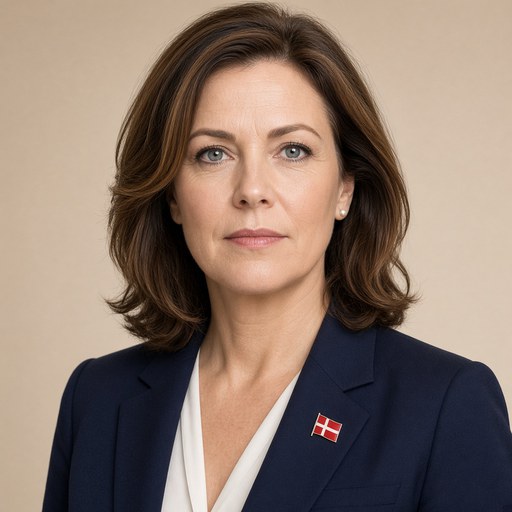
The Prime Minister's speech on the 150th anniversary of 1864 on April 18, 2014, in Dybbøl.
 Helle Thorning-Schmidt · Prime Minister of Denmark
- Context
- Thorning-Schmidt addressed a commemorative ceremony at Dybbøl on April 18, 2014, marking the 150th anniversary of the decisive 1864 Prussian-Danish battle.
- Main themes
- Battle of Dybbøl 1864 commemoration, Danish military sacrifice and soldiers, national identity and transformation, democracy and the welfare state, Danish-German reconciliation, small nations' role in the world, historical memory and continuity, defeat and resilience, international responsibility
- Duration
- ~6 min
- Words
- 717
- Sentences
- 68
- Readability
- 61
- Grade
- 7.2
- Syntax
- 2.30
- Vocabulary
- 2.21
Translated from Danish
The broad sphere of national life a sentence belongs to. Every sentence has an Arena, so it is the denominator the other indices are read against.
Other68 sentences in 28 paragraphs
Your Majesty. Your Royal Highnesses. Dear everyone.
Early in the morning on April 18, 1864, Prussian troops launched a fierce bombardment against the Danish forces here in Dybbøl. Right here, where we stand today, a bloody and unequal battle was fought.
Many of us who are here today have great-grandfathers or great-great-grandfathers who participated in the war on that April day 150 years ago. Perhaps you have heard stories that have been passed down in the family from generation to generation.
My grandfather's father, Ferdinand Eusebius Sørensen, was there, was wounded, and survived the war. He has since become world-famous in our family.
Just like Private J. P. Hansen from the 16th regiment, who after the battle described how he and his comrades lay in “holes and ditches” with “a whole load of blasted iron scraps in the beaten earth, under a hellish din of howling and rumbling shells.”
Even today, Danish soldiers are fighting for our country.
They are not defense forces here at Denmark's borders. No, today our deployed men and women are far from home, as they contribute to resolving international conflicts on land, at sea, and in the air.
But fundamentally, the task is the same: The soldiers do their part so that we can live safely.
They carry out their tasks under difficult conditions. And they deserve our deep respect and gratitude. Then as now.
April 18 is also an occasion to remember how Denmark has become the country it is today.
Private J. P. Hansen was a farmer. He had to leave his farm in Nybørre on Møn to fulfill his duty as a recalled soldier. About April 18, he wrote:
“When the farmer later has to plow these fields, he will encounter more iron scraps than stones. His plow will become dull from all the iron that the earth hides.”
And he was right. The peace was in many ways marked by the war. This applied not only to the farmer and his land. The battle in 1864 was a defeat that changed Denmark as a nation.
One-third less in area. One million less in population. And changed in its understanding of what it means to be Danish.
At the onset of the war, our country was a young democracy, but also a country that was still stuck in an old image of the world and of ourselves. By the end of the war, Denmark learned the hard way that the world was and would be changed.
Getting used to it took time. And the defeat cast long shadows. It took many years to understand that a small country cannot close itself off. That, on the contrary, we need to be part of the world. That we must take on our international responsibilities. And that we have much to offer.
For small countries can be great in their own way.
Just look here in the borderland, where Danes and Germans live side by side in a way that few believed possible just a few generations ago. Hostility turned into neighborliness. Neighborliness turned into friendship.
And that is an achievement and a model that serves as an example in the world around us.
Out of the defeat in 1864 grew modern Denmark. With democracy. With an educated population. With gender equality. Freedom for the individual. And our entire solidarity welfare society.
Our shared history is always with us. It is in our lineages. It is in our landscapes. In our cities. In our songs. In our stories. Without it, for better or worse, we would not be who we have become today.
The spoken word matters.
We owe it to ourselves to take our shared history seriously.
And there will be ample opportunity to do so this year.
The 150th anniversary of Dybbøl. The 200th anniversary of Norway's independence. The 70th anniversary of the Allied invasion in Normandy.
All these events we will commemorate in 2014.
The long perspective is important. For the long perspective fills me with humility and with an awareness that we are the latest link in a chain. That we stand on the shoulders of the generations that came before us.
And when we gather today to commemorate April 18, 1864, we do so with an unyielding belief that Denmark is worth fighting for. Then and now.
The original Danish. The tags above are read on the English translation's sentences.
Deres Majestæt. Deres Kongelige højheder. Kære alle sammen.
Tidligt om morgenen den 18. april 1864 indledte preussiske tropper et voldsomt bombardement mod de danske styrker her i Dybbøl. Lige her, hvor vi står i dag, blev der kæmpet en blodig og ulige kamp.
Mange af os, der er med her i dag, har oldefædre eller tipoldefædre, der deltog i krigen den aprildag for 150 år siden. Måske har I hørt historier, som er blevet fortalt i familien fra generation til generation.
Min morfars far, Ferdinand Eusebius Sørensen, var med, blev såret og overlevede krigen. Han er siden blevet verdensberømt i vores familie.
Ligesom menig J. P. Hansen fra 16. regiment, der efter slaget beskrev, hvordan han og hans kammerater lå i ”huller og grøfter” med ”hele læs sprængte jernstumper i den gennempiskede jord, under en helvedes larm af hylende og brummende granater.”
Også i dag kæmper danske soldater for vores land.
De er ikke forsvarsstyrker her ved Danmarks grænser. Nej, i dag kæmper vores udsendte mænd og kvinder langt fra hjemmet, når de til lands, til vands og i luften er med til at løse internationale konflikter.
Men i bund og grund er opgaven den samme: Soldaterne yder deres, så vi kan leve trygt.
De løser deres opgaver under vanskelige vilkår. Og de fortjener vores dybe respekt og taknemmelighed. Dengang som nu.
Den 18. april er også en anledning til at huske, hvordan Danmark er blevet det land, som det er i dag.
Menig J. P. Hansen var bonde. Han måtte forlade sin gård i Nybørre på Møn for at gøre sin pligt som genindkaldt soldat. Om den 18. april skrev han:
”Når bonden så siden skal til at pløje disse marker, vil han støde på flere jernstumper end sten. Hans plov vil blive sløv af alt det jern, som jorden gemmer.”
Og han fik ret. Freden blev på mange måder mærket af krigen. Det gjaldt ikke kun bonden og hans jord. Slaget i 1864 var et nederlag, der ændrede Danmark som land.
En tredjedel mindre i areal. En million mindre i befolkning. Og forandret i sin forståelse af, hvad det vil sige at være dansk.
Ved krigens indgang var vores land et ungt demokrati, men også et land som nok hang fast i et gammelt billede af verden og af os selv. Ved krigens udgang lærte Danmark på den hårde måde, at verden var og blev forandret.
At vænne sig til det krævede nok sin tid. Og nederlaget kastede lange skygger. Det tog mange år at forstå, at et lille land kan ikke lukke sig om sig selv. At vi tværtimod har brug for at være en del af verden. At vi må løfte vores ansvar internationalt. Og at vi har meget at byde på.
For små lande kan være store på deres egen måde.
Se bare her i grænselandet, hvor danskere og tyskere lever side om side på en måde, som de færreste troede mulig for bare få generationer siden. Fjendskab blev til naboskab. Naboskab blev til venskab.
Og det er en bedrift og et format, der tjener som forbillede i verden omkring os.
Ud af nederlaget i 1864 voksede det moderne Danmark. Med demokrati. Med en veluddannet befolkning. Med ligestilling mellem kønnene. Frihed for det enkelte menneske. Og hele vores solidariske velfærdssamfund.
Vores fælles historie er altid med os. Den er i vores slægter. Den er i vores landskaber. I vores byer. I vores sange. I vores fortællinger. Uden den var vi på godt og ondt ikke dem, vi er blevet til i dag.
Det talte ord gælder
Vi skylder os selv at tage vores fælles historie alvorligt.
Og det bliver der rig lejlighed til i år.
150-året for Dybbøl. 200-året for Norges selvstændighed. 70-året for de allieredes invasion i Normandiet.
Alle de begivenheder markerer vi i 2014.
Det lange perspektiv er vigtigt. For det lange perspektiv fylder mig med en ydmyghed og med en bevidsthed om, at vi er det seneste led i en kæde. At vi står på skuldrene af de generationer, der var før os.
Og når vi mødes i dag for at markere den 18. april 1864, så gør vi det med en ukuelig tro på, at Danmark er værd at kæmpe for. Dengang og nu.