




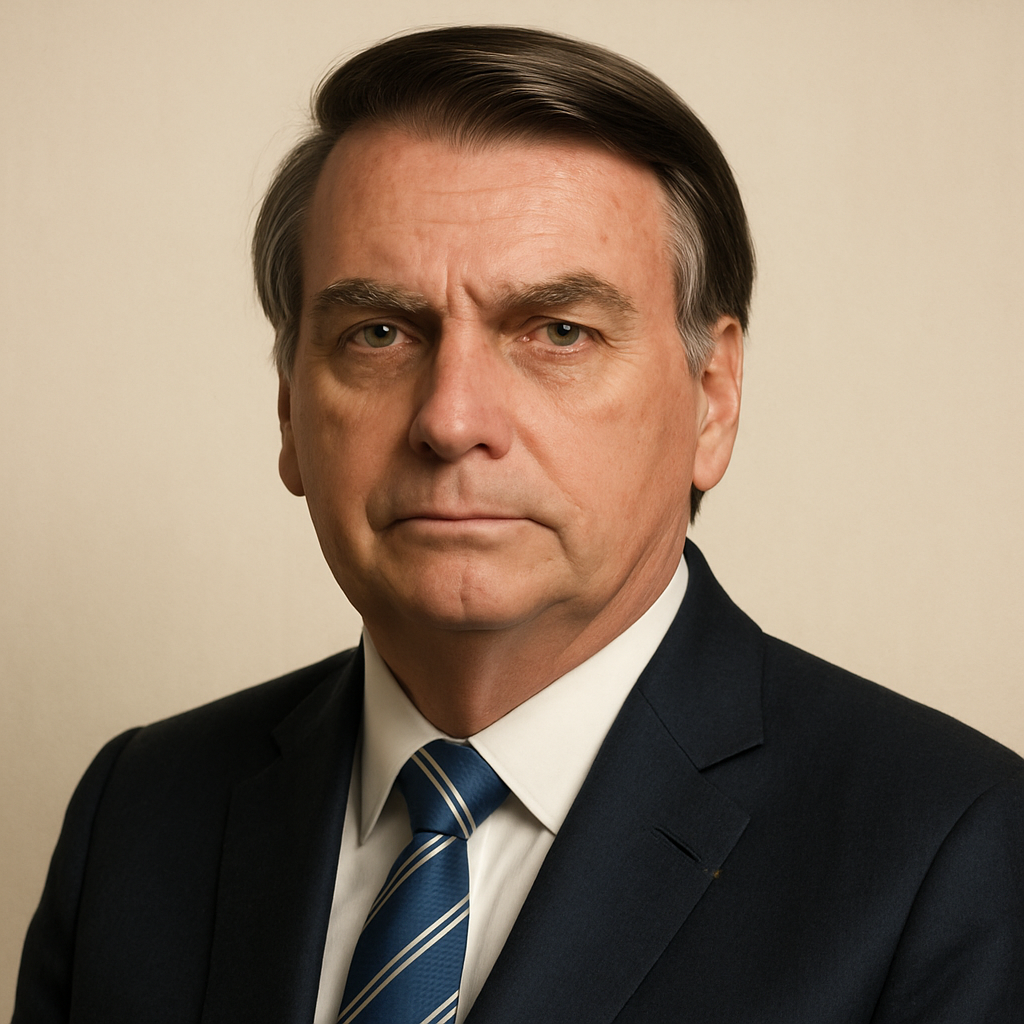
Speech by the President of the Republic, Jair Bolsonaro, at the Ceremony for the Hiring of the First Doctors of the Doctors for Brazil Program.
 Jair Bolsonaro · Former President of Brazil
- Context
- Bolsonaro spoke at the hiring ceremony for the Médicos pelo Brasil program on April 18, 2022, contrasting it with the PT-era Mais Médicos initiative.
- Main themes
- Médicos pelo Brasil program, criticism of Mais Médicos program, Cuban doctors and slavery allegations, PT government policies, Fidel Castro and Cuban regime, healthcare access for Brazilians, doctor qualifications and testing, Brazilian democracy, asylum for Cuban doctors, medical professionals' salaries
- Duration
- ~10 min
- Words
- 1,165
- Sentences
- 45
- Readability
- 58
- Grade
- 11.7
- Syntax
- 3.32
- Vocabulary
- 2.20
Translated from Portuguese
The broad sphere of national life a sentence belongs to. Every sentence has an Arena, so it is the denominator the other indices are read against.
Other45 sentences in 13 paragraphs
I will be quite brief because as a parliamentarian, Feliciano, we suffered a lot in the Chamber with the Mais Médicos Program.
I want to congratulate Queiroga on this Médicos pelo Brasil Program, where real doctors, well-paid, will be spread throughout Brazil to properly serve our population. This is not a continuation of the Mais Médicos Program from Mrs. Dilma Rousseff. I was a parliamentarian when this project arrived in the Chamber, Osmar Terra was there too, and it was little discussed, among other things, 80% of the salary went directly to Fidel Castro, and the people kept approximately 20% here.
We tried to amend the project so that they could receive their salary at Banco do Brasil or Caixa Econômica. The opposition, or rather, the situation at that time, the left, brushed this aside; it was not possible. We also tried, Maira, to do a minimum test on the person, not the revalida, just a simple test. To know, for example, if benzetacil is intravenous, if it is muscular, if it is oral, what it is. I am sure that most would not pass; they would not be able to answer.
Other things also happened, but one very serious thing, because when we talk about democracy it is impressive, today I can criticize because I was a parliamentarian, today I do not criticize the Parliament, but my Parliament from that time. We tried to ensure that the Cuban, once requesting asylum, could stay in Brazil. The then Minister of Health from the PT at that time said the following: The Cuban who requests asylum will be deported.
I regret that my Parliament from that time was weak on this issue, playing at democracy. I think these were the most important points. During my pre-campaign, I said that the Cuban who might stay here, I would grant asylum to them; I kept my word. But when I won the election, they immediately fled Brazil; there were Cuban agents, there were "Black Wasps," people from the Cuban Special Forces. There was everything that was not in the interest of medicine; they fled Brazil, we saw those huge lines at the airports. One thing that also happened, I have already spoken about this when I was a parliamentarian: the Cuban was there in some city, if there was a wedding party in front of his house, he could not go to the wedding party; he could not integrate with society. That is what happened to those, whom I do not want to criticize, who came here, whose families remained in Cuba, and if they did not comply with what was determined, their families there suffered because of it. And the support from the PT, and unfortunately from the government base, was practically unanimous for them to stay here as if they were slaves.
And at the moment we have information, we follow, many of these Cubans stayed in Brazil and then went to the United States, and they have lawsuits against Brazil: work analogous to slavery. For me, this is slavery, given that they did not even have the right to go and come, to go to a party, to receive their salary, nothing, not even to relate to another person, as if it were even possible to do that. So that was the program in the past, Mais Médicos from the PT, a service that enslaved our Cuban brothers and did not serve the population, who knew absolutely nothing about medicine, nothing. And we know that many times humble people meet, and doctors know this, just by treating the person well, they are already satisfied. Many times, good treatment is good service. I, as a politician, councilman, deputy, many here, when attending a voter who comes to seek something in our office, they are already happy to be well treated, and you do this work very well. And the Brazilian people, upon receiving those Cubans without knowing that a large part of them had no qualifications, but by treating them well, they were satisfied. In fact, they deceived the Brazilian people with people, humble as well, who were here fulfilling a mission of the Cuban regime.
Well, Fidel Castro did not see this end because he went to a very hot place in 2016, and we managed here, only God can really explain our victory in 2018, and we put an end to this program, so the population would stop being deceived. And I did the math here. At that time, Bia Kicis, we sent about 1 billion reais a year; if we were to correct that for today, approximately ten years later, it would be at least 50% above that amount.
So today Brazil gains with real doctors, valued by the Ministry of Health, and the professionals themselves are also rewarded in terms of salary, and the population, obviously, will receive treatment from these medical professionals that is quite healthy.
And I want to say one thing, since there are doctors here, I will not fail to mention something very important, Minister Henrique Mandetta, a project came to me for sanction, and Henrique Mandetta was in my office along with the people who were at the forefront of associations, the Federal Council of Medicine, the people who really work in this area, and I sensed from the expressions of some that something was wrong, and I asked what was wrong? They were a bit embarrassed until I managed to talk to one in a corner, and he replied: It is that in the project, the private institutions will be able to do the revalida; we have excellent private institutions in Brazil, but we know that there is one or another that is complicated. And Mandetta had worked in the Chamber, secretly, for the private institutions to do the revalida. Well, I vetoed it, and Mandetta obviously did not like it, and later he worked within the National Congress to have the veto overturned. Three vetoes were needed to overturn what I had vetoed. There was no need to say why he stayed with us for a short time; we did our part.
Now, by a hair's breadth, a democracy was almost made, so to speak, regarding the revalida in Brazil. Anyone from outside Brazil can practice here, but they have to pass the revalida, which is done with great seriousness by government bodies here. If that had passed back then as it almost did, it almost went unnoticed by me regarding the possible veto, just as it was not overturned by four votes due to Mandetta's work against his medical class.
So today I even vented a little here, but I congratulate Queiroga, I congratulate all the masters of Brazil. I want to especially congratulate the doctors of Santa Casa Juiz de Fora who saved my life in 2018 and later also from Albert Einstein who continued that treatment.
I owe my life to God and then to you.
Thank you very much to all.
The original Portuguese. The tags above are read on the English translation's sentences.
Serei bastante breve porque como parlamentar, Feliciano, nós sofremos muito na Câmara no Programa Mais Médicos.
Quero cumprimentar o Queiroga por esse Programa Médicos pelo Brasil, onde médicos de verdade, bem remunerados, vão ser espalhados pelo Brasil para bem atender a nossa população. Isso não é uma continuação do Programa Mais Médicos da senhora Dilma Rousseff. Eu era parlamentar quando esse projeto chegou na Câmara, o Osmar Terra estava lá também, e ele foi pouco discutido, entre outras coisas, 80% do salário ia diretamente para Fidel Castro, o pessoal ficava com aproximadamente 20% aqui.
Nós tentamos emendar o projeto de modo que eles pudessem receber seu salário no Banco do Brasil ou Caixa Econômica. A oposição, ou melhor, a situação naquela época, a esquerda, passou por cima disso, não foi possível. Tentamos também fazer, Maira, um mínimo de teste na pessoa, não é o revalida não, o mínimo, fazer um teste simples. Para saber por exemplo, se benzetacil é endovenosa, se é muscular, se é oral, o que é. Tenho certeza que a maioria não seria aprovado, não conseguiria responder.
Também outras coisas aconteceram, mas uma gravíssima, porque quando se fala em democracia é impressionante, hoje eu posso criticar porque eu era parlamentar, hoje eu não critico o Parlamento, mas o meu parlamento daquela época. Nós tentamos fazer com que o cubano, uma vez pedindo asilo, ficasse no Brasil. O próprio ministro da saúde do PT naquela época falou o seguinte: O cubano que pedir asilo será deportado.
Lamento o meu Parlamento daquela época ser fraco nessa questão, brincando de fazer democracia. Eu acho que esses foram os pontos mais importantes. Eu durante a minha pré-campanha falei que o cubano que porventura ficasse aqui, eu daria asilo para eles, cumpri minha palavra. Mas quando eu ganhei a eleição imediatamente eles fugiram do Brasil, ali tinha agente cubano, tinha “Vespas Negras'', o pessoal das Forças Especiais Cubanos. Tinha tudo o que não interessava para a medicina, tinha ali, eles fugiram do Brasil, a gente via aquelas filas enormes nos aeroportos. Uma coisa que acontecia também, já discursei sobre isso quando parlamentar: o cubano estava lá numa cidade qualquer, se tivesse na frente da casa dele uma festa de casamento ele não podia ir na festa de casamento, ele não podia se integrar com a sociedade. Era isso que acontecia com esses, que não quero criticá-los não, que vinham para cá, que seus familiares ficavam em Cuba e se eles não cumprissem aquilo determinado, os seus familiares lá sofriam disso daí. E o apoio do PT, e lamentavelmente da base do governo, foi praticamente unânime para que ficassem aqui como se escravos fossem.
E no momento temos informações, acompanhamos, muitos desses cubanos ficaram no Brasil e depois foram para os Estados Unidos, e têm ações contra o Brasil: trabalho análogo à escravidão. Para mim isso é escravidão, dado que não tinham sequer o direito de ir e vir, de ir numa festa, de receber seu salário, nada, nem de se relacionar com uma outra pessoa, como se fosse possível até fazer isso. Então esse era o programa no passado, mais médicos do PT, um serviço que escravizavam os nossos irmãos cubanos e não atendia a população, que não sabiam absolutamente nada de medicina, nada. E a gente sabe muitas vezes as pessoas humildes se encontram, e os médicos sabem disso, em só em você tratar bem a pessoa ela já fica satisfeita. Por muitas vezes um bom tratamento é um bom atendimento. Eu como político, vereador, deputado muitos aqui ao atender um eleitor que vai buscar alguma coisa no gabinete da gente já fica feliz em ser bem tratado, e vocês fazem esse trabalho muito bem. E o povo brasileiro ao receber aqueles cubanos sem saber que grande parte deles não tinha qualquer qualificação, mas ao tratar bem, ele ficava satisfeito. Na verdade, enganavam o povo brasileiro com pessoas, humildes também, que estavam aqui cumprindo uma missão do regime cubano.
Bem, Fidel Castro não viu acabar isso porque ele foi para um lugar bastante quente em 2016 e nós conseguimos aqui, só Deus realmente pode explicar a nossa vitória em 2018, e fizemos com que esse programa fosse colocado um ponto final, a população deixasse de ser enganada. E eu fiz as contas aqui. Naquela época, Bia Kicis, a gente mandava por ano em torno de 1 bilhão de reais, se for para corrigir para os dias de hoje, aproximadamente dez anos depois, seria no mínimo 50% acima daquele valor.
Então hoje ganha o Brasil com médicos de verdade, valorados pelo Ministério da Saúde e os próprios profissionais também são recompensados na questão salarial e a população, obviamente, vai ter um tratamento por esses médicos profissionais bastante salutar.
E eu quero falar uma coisa, já que tem médico aqui, eu não vou deixar de falar uma coisa muito importante, ministro Henrique Mandetta, chegou um projeto para que eu sancionasse, e esteve no meu gabinete Henrique Mandetta e mais as pessoas que estavam a frente de associações, Conselho Federal de Medicina, as pessoas realmente que trabalham nessa área, e eu senti no semblante de alguns que algo estava errado e eu perguntei o que que está errado? Eles ficaram meio constrangidos até que consegui conversar com um num canto e ele respondeu: É que no projeto, as particulares poderão fazer o revalida, temos excelente particulares pelo Brasil, mas a gente sabe que tem uma ou outra que é complicado. E o Mandetta havia trabalhado na Câmara, na surdina, para que as particulares fizessem o revalida. Bem, eu vetei e o Mandetta, obviamente, não gostou e depois ele trabalhou dentro do Congresso Nacional para que o veto fosse derrubado. Faltaram três vetos para derrubar aquilo que eu havia vetado. Não precisava falar o porque ele ficou pouco tempo com a gente, fizemos a nossa parte.
Agora, por pouco não se fez uma democracia, vamos assim dizer, da questão do revalida no Brasil. Qualquer um de fora do Brasil pode clinicar aqui, mas tem que passar pelo revalida, que é feita com muita seriedade por órgãos aqui do governo. Se aquilo tivesse lá atrás passado como quase passou, quase que passou despercebido por mim a questão do possível do veto, assim como por quatro votos não foi derrubado esse veto pelo trabalho do Mandetta contra a sua classe médica.
Então hoje eu até desabafei um pouquinho aqui, mas eu cumprimento o Queiroga, cumprimento todos os mestres do Brasil. Quero cumprimentar, em especial, os médicos da Santa Casa Juiz de Fora que em 2018 salvaram a minha vida e depois também do Albert Einstein que deram prosseguimento a esse tratamento.
Devo minha vida a Deus e depois a vocês.
Muito obrigado a todos.