




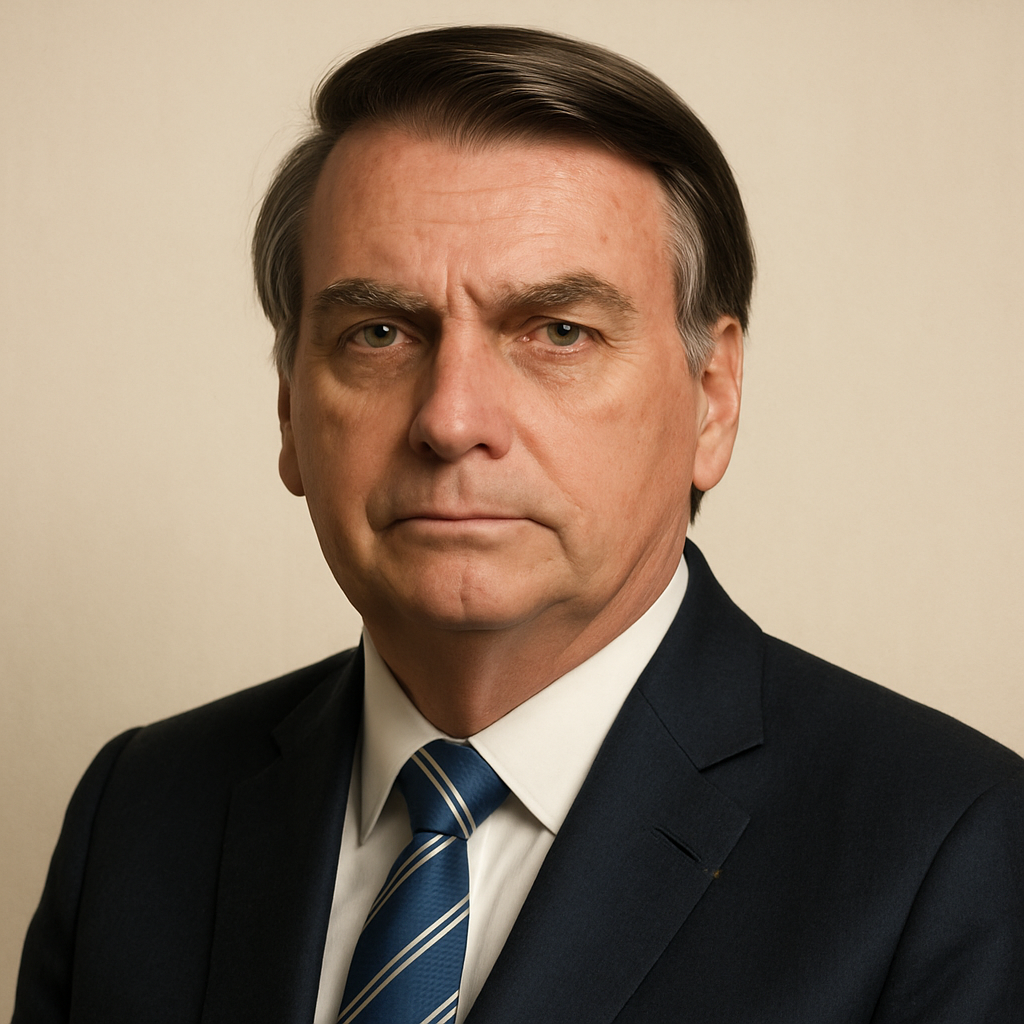
Speech by the President of the Republic, Jair Bolsonaro, at the Launch Ceremony of the Recycling Credit Certificate - Recicla+ and the National Solid Waste Plan - Palácio do Planalto.
 Jair Bolsonaro · Former President of Brazil
- Context
- Bolsonaro addressed ambassadors and ministers at the Palácio do Planalto on April 13, 2022, for the launch of the Recicla+ recycling certificate and National Solid Waste Plan.
- Main themes
- Recycling credit certificate launch, national solid waste plan, environmental policy, energy security, green hydrogen, food security, wheat production, inflation and economic resilience, foreign investment confidence, state-owned company profitability, pandemic and war impacts, Brazil's global standing
- Duration
- ~12 min
- Words
- 1,416
- Sentences
- 49
- Readability
- 44
- Grade
- 14.2
- Syntax
- 3.30
- Vocabulary
- 2.12
Translated from Portuguese
The broad sphere of national life a sentence belongs to. Every sentence has an Arena, so it is the denominator the other indices are read against.
Other49 sentences in 17 paragraphs
Good afternoon everyone, before I get directly to the point, a few observations. I want to greet here ten ambassadors and two chargé d'affaires: the ambassadors of South Africa, Saudi Arabia, Canada, India, Italy, Japan, Morocco, Switzerland, the European Union, and Uruguay, and the chargés d'affaires of the United States and Portugal.
This demonstrates, shows, the interest they have in Brazil and, obviously, largely the confidence in our policy, and they prefer, obviously in what I will talk about shortly, to do business with a free and democratic country, a country that respects its contracts and can offer legal guarantees, food security, and energy security. Brazil can guarantee this for itself, obviously, and for a considerable part of the world, which is why the interest of the ambassadors representing their countries here in Brazil, and it is not the first time that a considerable group of ambassadors has come to events here.
When we talk about energy security, almost concluding the planning, moving from the drawing board, our Northeast has the conditions to, in a few years, generate energy from wind towers equivalent to at least 50 Itaipus. This is fantastic, 50 Itaipus. Itaipu represents just under 10% of national consumption. Now from this energy generation, these 50 Itaipus, green hydrogen will emerge. It is the energy of the future.
Here I greet Minister Juca, Minister Bento Albuquerque, who will soon embark for India to address issues related to alcohol as well.
When we talk about food security, Brazil's potential is already known. Perhaps tomorrow or, at most, next week in my live stream, I am inviting the president of Embrapa to talk about wheat in Brazil. Today approximately 40% of the wheat consumed in Brazil comes from abroad, we follow the problems ten thousand kilometers away.
Ukraine is a major wheat-exporting country and this has a ripple effect, it will have a ripple effect on inflation worldwide, which, as has been demonstrated, the inflation in food matters will have to be dealt with for a long time still, and the world, increasingly, consumes more, taking into account, including, that more than 50 million inhabitants are added every year on planet Earth, we are approaching eight billion inhabitants.
So Brazil already has technology developed by Embrapa that was enhanced starting in 2019, where regions such as, for example, the west of Bahia, our Cerrado, Roraima as well, a huge area is already in a position to start producing wheat. Adding to the southern region, and part of the Midwest, we will then become, in a few years, self-sufficient in wheat and we will also be able to export the equivalent of twice the wheat consumption in Brazil. This is a country of the present, no longer referred to as a country of the future, and it is a country that began to change for real with our arrival in government. With the choice of technical ministers, without political pressures to occupy strategic positions, such as in banks and state-owned companies.
I will announce shortly, I don’t know if Paulo Guedes knows yet, that there is no news of the Mint being profitable and it has become profitable now, in our government, adding to the profitability of the Post Office among so many other state-owned companies. So it is a country that has been treating public affairs with the due respect, and we will all benefit from this.
We obviously lament what Brazil and the world are going through, the consequences of a pandemic, of a war, here in Brazil, of a drought, one of the largest in the last 91 years. We also had frost, among other problems, but even so, we resisted.
Brazil is a country that in the economy has stood out as one of those that suffered the least compared to the world. Here there is no news of food shortages, other countries, in addition to having a much higher inflation than that which occurred in Brazil, such as, for example, the United States at 8.5%, are already experiencing shortages of some products. And the issue of energy as well. Oil, gasoline, diesel, the ones that increased the least in price were in Brazil. Did it increase a lot? We acknowledge that yes, but it was one of the least increased, and this is obviously a team effort of ministers, civil servants, secretaries, and the private sector. So this is the Brazil that increasingly presents itself quite proudly to the world, which is why I thank the presence of the ten ambassadors and two chargé d'affaires.
Now moving on to the issue at hand, discussed here today, I commend Ricardo Salles and also Juca, now nicknamed by Paulo Guedes as Juca Verde, who has continued that policy in a very dynamic way. Just a few numbers, to prove how much Brazil preserves its environment. In practice, the world knows and for ideological or economic reasons does not recognize. Brazil is an example to the world in environmental matters, Brazil has an environmental legislation that no other country has, and it complies: two-thirds of our territory is preserved. Europe, as far as I know, if I am wrong please correct me Minister, it seems that there is no riparian forest, the times I have flown, I know I am quite high, we do not see riparian forests, we do not see forests and abroad they talk about reforesting Brazil, not their country. But we know that it is a commercial fight above all.
But now here, in the treaty today, only in aluminum cans, despite everything I say here being a record for Brazil, more than 98% was collected, also lubricating oils a new record: 566 million liters collected and packaging; agricultural pesticides, the same: 53 thousand tons recycled; with the co-processing of cement also, a new record. In electronic waste, we already have more than 3,400 collection points across Brazil, also collection points for expired medications, recycled automotive batteries, this has allowed us not to import around 141 tons of lead.
And speaking of this, dear ambassadors, I think Brazil is at the forefront, we have a Minister of Science and Technology, Marcos Pontes, who took a leave to run for an elective position, but we already have the prototype of the niobium and graphene battery. A battery that should worry oil exporters a lot, as it can be recharged in a few minutes and has potential, especially for countries in the equatorial region, this will be a revolution for the automotive industry. Logically, we will still be dependent on fossil fuels for some time, but this is a reality that is becoming increasingly present.
And I make it clear: Brazil is a country that has to date around 98% of the niobium reserves. We have areas to explore in the region of the six lakes, we are ready to talk about this with you, obviously, we do not want to explore from now on, we will honor the contracts in force, but we want to add value to this exploration and we have niobium for the whole world.
Graphene we know exists in almost the whole world, but Brazil has locations, graphite mines, a great potential for graphene, fantastic as well, and we have quite advanced technology for this, such as the provenance at the University of Caxias do Sul, we have and these batteries were made in the cyclotron, there in Campinas and we have laboratories opened by Marcos Pontes in several regions of Brazil. So an invitation to you to also participate in the research and evolution of this technology, because it is a way out for the world of the future, that is, Brazil is a fantastic country. If we are to talk about mineral wealth, we have everything that the periodic table contains and perhaps even more, why? Because graphene was discovered in 2004, nothing prevents something from being discovered in the future as well.
So Brazil is a country that is open-armed, it is a free country, it is a democratic country that does not want to return to what it was not long ago. A country focused on an ideology that has not worked anywhere in the world and the maintenance of all this is in the hands of our population, which we respect the popular will and I know that the vast majority of the population will increasingly opt for peace, tranquility, harmony, democracy, and above all for our freedom.
Thank you very much everyone.
The original Portuguese. The tags above are read on the English translation's sentences.
Boa tarde a todos, antes de entrar diretamente no assunto, algumas observações. Eu quero cumprimentar aqui dez embaixadores e dois encarregados de negócios: os embaixadores da África do Sul, Arábia Saudita, Canadá, Índia, Itália, Japão, Marrocos, Suíça, União Europeia e Uruguai, e os encarregados dos Estados Unidos e de Portugal.
Isso demonstra, mostra, o interesse que eles têm no Brasil e, obviamente, em grande parte a confiança em nossa política, e eles preferem, obviamente no que vou falar daqui a pouco, em fazer negócio com um país livre e democrático, um país que respeita os seus contratos e pode oferecer garantia jurídica, segurança alimentar e segurança energética. O Brasil pode garantir isso para si, obviamente, e para uma parte considerável do mundo, por isso o interesse dos embaixadores que representam os seus países aqui no Brasil, e não é a primeira vez que um grupo considerável de embaixadores vem a eventos aqui.
Quando se fala em segurança energética, já praticamente concluindo o planejamento, saindo da prancheta, o nosso nordeste tem condições de, e em poucos anos, gerar energia por torres eólicas o equivalente a no mínimo 50 Itaipus. Isso é fantástico, 50 Itaipus. Itaipu representa um pouco menos que 10% do consumo nacional. Agora dessa geração de energia, dessas 50 Itaipus, sairá o hidrogênio verde. É a energia do futuro.
Aqui eu cumprimento o ministro Juca, o ministro Bento Albuquerque, que nos próximos dias embarcará para a Índia, tratar de questões relacionadas com álcool também.
Quando se fala em segurança alimentar, o potencial do Brasil já é conhecido. Talvez amanhã ou, no máximo, na próxima semana na minha live, estou convidando o presidente da Embrapa para falar sobre trigo no Brasil. Hoje aproximadamente 40% do trigo consumido no Brasil vem de fora, a gente acompanha os problemas a dez mil km de distância.
A Ucrânia é um grande país exportador de trigo e isso tem um repique, terá o repique na inflação do mundo todo, que, pelo que se tem demonstrado a inflação na questão alimentar, terá que ser convivida por um longo tempo ainda e o mundo, cada vez mais, consome mais, levando-se em conta, inclusive, que se cresce um pouco mais de 50 milhões de habitantes todo ano no planeta terra, nos aproximamos de oito bilhões de habitantes.
Então o Brasil já tem tecnologia desenvolvida pela Embrapa que foi potencializada a partir de 2019, onde regiões como, por exemplo, o oeste da Bahia, o nosso Cerrado, Roraima também, uma área enorme já em condições de começar a produzir trigo. Soma-se a região sul, e parte aqui do centro-oeste, e nós então passaremos a ser, em poucos anos, autossuficientes em trigo e também poderemos exportar o equivalente a duas vezes o consumo de trigo no Brasil. Esse é um país do presente, não se fala mais em país do futuro e é um país que começou a mudar para valer com a nossa chegada ao governo. Com a escolha de ministros técnicos, sem pressões políticas para ocupar cargos estratégicos, como banco e como estatais.
Vou anunciar logo mais, não sei se Paulo Guedes sabe ainda, que não se tem notícia de a Casa da Moeda ser lucrativa e passou a ser lucrativa agora, em nosso governo, soma-se à lucratividade dos Correios entre tantas e tantas outras estatais. Então é um país que vem tratando a coisa pública com o devido respeito, todos nós passaremos a nos beneficiar disso.
A gente lamenta obviamente o que o Brasil e o mundo está passando, as consequências de uma pandemia, de uma guerra, aqui no Brasil, de uma estiagem, uma das maiores nos últimos 91 anos. Tivemos geada também, entre outros problemas, mas, mesmo assim, nós resistimos.
O Brasil é um país que na economia tem se despontado como um daqueles que menos sofreu perante o mundo. Aqui não se tem notícia de escassez de alimentos, países outros, além de uma inflação muito maior do que o ocorrido no Brasil, como, por exemplo, Estados Unidos 8,5%, já existe desabastecimento de alguns produtos. E a questão da energia também. O petróleo, gasolina, diesel os que menos aumentou de preço foi o Brasil. Aumentou bastante? Reconhecemos que sim, mas foi um dos que menos aumentou, e isso obviamente é um trabalho em equipe de ministros, de servidores, de secretários e da iniciativa privada. Então esse é o Brasil que cada vez mais se apresenta de forma bastante altiva para o mundo, por isso os meus agradecimentos pela presença dos dez embaixadores e dois encarregados de negócio.
Indo agora para a questão em si, tratado hoje aqui, eu elogio o Ricardo Salles e também o Juca, agora apelidado pelo Paulo Guedes de Juca verde, que deu prosseguimento aquela política de forma bastante dinâmica. Só alguns números, para provar o quanto o Brasil preserva seu meio ambiente. Na prática o mundo sabe e por questões ideológicas ou econômicas não reconhece. O Brasil é um exemplo para o mundo na questão ambiental, o Brasil tem uma legislação ambiental que nenhum país tem, e cumpre: dois terços do nosso território, são preservados. A Europa pelo que eu sei, se eu estiver errado me corrige por favor ministro, parece que lá não se vê mata ciliar, as vezes em que eu voei, eu sei que eu estou bastante alto, a gente não vê mata ciliar, não vê florestas e lá fora se fala em reflorestar o Brasil, não o seu país. Mas sabemos que é uma briga comercial acima de tudo.
Mas agora aqui, no tratado hoje, só em latinhas de alumínio, apesar de tudo que eu falar aqui ser recorde para o Brasil, mais de 98% foi recolhido, também óleos lubrificantes um novo recorde: 566 milhões de litros coletados e embalagens; de defensivos agrícolas, a mesma coisa: 53 mil toneladas recicladas; com o coprocessamento de cimento também, um novo recorde. O lixo eletroeletrônico nós já temos mais de 3.400 pontos de coleta pelo Brasil, também pontos de coleta de medicamentos vencidos, baterias automotivas recicladas, isso nos permitiu que não importássemos na ordem de 141 toneladas de chumbo.
E por falar nisso, prezados embaixadores, eu acho que o Brasil está lá na vanguarda, temos um ministro da Ciência e Tecnologia, o Marcos Pontes, que tirou uma licença para disputar um cargo eletivo, mas nós já temos o protótipo da bateria de nióbio e grafeno. Uma bateria que tem que preocupar muito aos exportadores de petróleo, que ela pode ser recarregada em poucos minutos e com potencial, em especial de países que estão na região da linha do Equador, isso será uma revolução para a indústria automotiva. Logicamente, ficaremos dependentes ainda nos combustíveis fósseis por algum tempo, mas isso é uma realidade que se faz cada vez mais presente.
E deixo claro: o Brasil é um país que tem até o momento na ordem de 98% das reservas de nióbio. Temos para explorar região dos seis lagos, estamos prontos a conversar sobre isso com os senhores, obviamente, não queremos explorar daqui para frente, honraremos os contratos em vigência, mas queremos agregar valor para essa exploração e temos nióbio para o mundo todo.
O grafeno nós sabemos que existe em quase o mundo todo, mas o Brasil tem locais, minas de grafite, um grande potencial para o grafeno, fantástico também e temos tecnologia bastante avançada para isso, como a proveniência numa Universidade de Caxias do Sul, temos e essas baterias foram feitos no cíclotron, lá em Campinas e temos laboratórios abertos pelo Marcos Pontes por várias regiões do Brasil. Então um convite aos senhores também a participar da pesquisa e evolução dessa tecnologia, porque é uma saída para o mundo do futuro, ou seja, o Brasil é um país fantástico. Se formos falar em riquezas minerais, nós temos tudo que a tabela periódica contém e talvez mais alguma coisa ainda, por que? Porque o grafeno foi descoberto em 2004, nada impede que algo seja descoberto no futuro também.
Então o Brasil é um país que está de braços abertos, é um país livre, é um país democrático que não quer retornar aquilo que era há pouco tempo. Um país voltado a uma ideologia que não deu certo em lugar nenhum no mundo e a manutenção de tudo isso está nas mãos da nossa população, que nós respeitamos a vontade popular e eu sei que a grande maioria da população vai optar cada vez mais pela paz, pela tranquilidade pela harmonia, pela democracia e acima de tudo para nossa liberdade.
Muito obrigado a todos.