




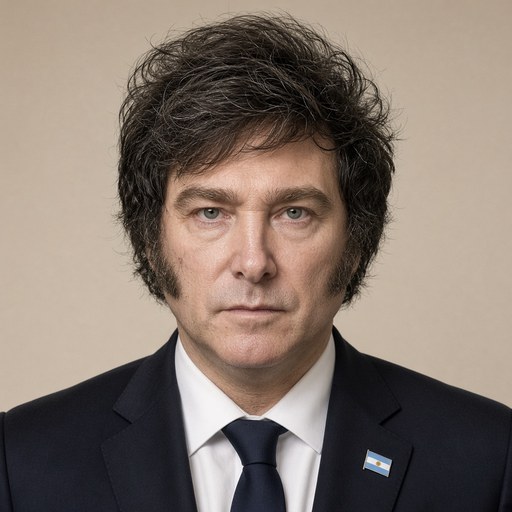
Balance of the Deregulation with Delegated Powers of President Milei and the National Cabinet
 Javier Milei · President of Argentina
- Context
- Milei addressed cabinet members on July 9, 2025—Argentina's Independence Day—to mark the expiration of delegated powers and review his administration's deregulation achievements.
- Main themes
- Deregulation and economic liberalization, delegated powers expiration, Argentine independence anniversary, freedom vs. statism, political caste opposition, historical parallels to independence struggles, Torah and Exodus allegory, Milton Friedman free lunch principle, long-term reform sacrifices, Federico Sturzenegger's role
- Duration
- ~40 min
- Words
- 4,805
- Sentences
- 237
- Readability
- 64
- Grade
- 9.3
- Syntax
- 3.04
- Vocabulary
- 2.01
Translated from Spanish
The broad sphere of national life a sentence belongs to. Every sentence has an Arena, so it is the denominator the other indices are read against.
Other237 sentences in 42 paragraphs
Hello everyone. Nothing, if it’s not me. Well, I want to thank each and every one of you. The work you have done is truly immense. It is so great that even today we cannot fully grasp the effects it will have in the medium and long term.
And I want to ask for a special round of applause for the naval captain who made all this possible, the colossus Federico Sturzenegger. Thank you very much, Fede.
It is an extraordinary historical coincidence that the expiration of the delegated powers coincided with such a significant date for our country. 209 years ago, through the Declaration of Independence, we freed ourselves from a political and economic system that restricted the political and economic freedoms of many for the benefit of a few.
Today we are experiencing a similar situation. Two years ago, we decided as a nation to put a stop to the infinite greed of an uncontrolled political caste that favored its partners and clients at the expense of the rest of the country. We decided to say enough to the tyranny of the State and the caste. But the processes of independence are never easy. Independence always involves some sort of struggle against those who previously had us subjugated, a rebellion against the status quo.
As you can see, we have suffered quite a bit. Believe me, I did not kill Kennedy. No, no, I wasn’t even born yet.
The war and independence were costly for our young nation. It put all the leadership of that time in front of the question of whether it would be better to simply return to subordination to the metropolis. There are always those who prefer a miserable but predictable slavery rather than being the architect of their own destiny, which carries several risks.
I am going to deviate a bit from the speech so that you have an idea and a sense of magnitude of what it means to embrace the ideas of freedom, so that you are aware of the enormity of what you are doing.
When you study the book of Shemot, from the Torah, let’s say, which would be the Pentateuch, that is, the first five books of the Old Testament. The interesting thing is that when Pharaoh allows Moses to leave, there is something very interesting because after more than 400 years of oppressive yoke, of slavery, and everyone was complaining, let’s say, about the situation of slavery, but it is interesting because when you go and read the Torah, one of the things it says is that one in five left. That is to say, only 20% decided to embrace the ideas of freedom and embark on the task of walking through the desert. This is not minor because it shows the size of the challenge one faces. Let’s say, many people preferred the free fish. In fact, let’s say, when one celebrates Shabbat, one of the things you will have is that when the Challah is given, it is not given in the hand because, precisely, that reminds you of what? It reminds you that it was the free fish, let’s say, it was, but it was not free. Hence the phrase by Milton Friedman, there is no such thing as a free lunch. It is precisely inspired by that. The cost of that was freedom. That is why, let’s say, you leave the Challah or the Sephardic custom throws it. I find the Sephardic custom more amusing, just so you know.
But in that context, what I want to make clear is the enormous task we are undertaking. That is to say, after 100 years of having our heads contaminated with the collectivist virus, people find it hard to embrace the ideas of freedom and sometimes they do not do it out of malice, but out of fear. And then, there are others who do not do it out of convenience, let’s say, but beyond the perverse, what must be clear is that it is a difficult task and that is why it is also important, for example, the enormous task that Federico carries out every time he goes on television and shows the advantages of embracing a world of more freedom, that is, making Argentina an increasingly free country; you know that my goal is for Argentina to be the freest country in the world. So, we have only taken a few steps, that is, we still have a lot to do.
But I wanted to make it clear to you, let’s say, the importance of the task you are undertaking, of the fight you are waging, and of how thankless that task can be, because remember, only one in five left Egypt.
And returning to the logic I was talking about, even those who initially doubted understood over time that assuming freedom was a necessary process. Its fruits might take time to arrive, but they are the most valuable that exist, which is why the present sacrifices were fully justified. For a reason our great hero, San Martín, always said: "Let us be free, for the rest does not matter." With that, he meant nothing less than that freedom is the indisputable condition of everything that is valuable in life and therefore it is at all times and places a non-negotiable issue.
In recent weeks, we have become accustomed to the word patriotism being distorted and used for anything. Everything was done in the name of the homeland, from sending boys in vests to control shelf prices, to naming a tax after the country. A tax from which we have already dispensed, that is, we have eliminated it.
I want to propose that for an act or measure to be patriotic, it must meet two criteria. It must be for the benefit of the general good, not for a particular interest. It must be for a future benefit, sustainable over time. It cannot be bread for today and hunger for tomorrow. Subjugating a group to benefit a few is not a patriotic act, nor is sacrificing the quality of life of future generations at the expense of improving present conditions through monetary alchemy.
There is the timeless general equilibrium we put everywhere. Federico and I have an almost pathological obsession with that.
That is why the model of the omnipresent State that meddles in every matter of people's lives is intrinsically unpatriotic, and there is no better proof than the results it offered once it was deployed to its last consequences. A state that tramples on a sector of its citizens to benefit another, composed of friends and clients, is not a State, but an illicit association, and that is what they have turned our Nation into after so many years of psychopathy and arrogance. For us, the State must protect the citizen from being trampled by third parties, because we know that the formula for sustained general benefit over time is nothing other than the freedom to associate among peers. That is why each of these people, each one of you, are the true patriots. Thank you very much for the work you are doing for the homeland.
You have acted selflessly in defense of your neighbors and the land that saw you born. You risked your reputation, which is the only thing we have in the private sector. You came to sit in the electric chair to which Argentine politics subjects you with operations, slanders, constant insults in all the media. You did it so that your children, your grandchildren, and your grandchildren's grandchildren can look back gratefully at the country they received, just as we look back and remember the milestones of all the brave who carried the destiny of this country on their shoulders during the 19th century. But it is important to keep in mind that our work will not have immediate fruits, but as people accustomed to thinking in generations, we are very clear about that. No truly valuable task has instant results. As that wise saying goes, he who plants trees whose shade he knows he will never enjoy has at least begun to understand the meaning of life. And each of you in these two years has planted trees like we have never seen before. You changed the rules of the game and the very spirit of the Argentine State with all the apparatus against you.
Here I also want to make an additional point, and Federico has brilliantly raised this in some interviews, and that is that when they ask him what it is like to be part of this government, he says: "The question has changed here." That is, before it was how we made what existed work well, that is, the chimera of the efficient State. I have mentioned to exhaustion that phrase by Milton Friedman, which is in the book he wrote with Rose Director, who was his wife, sister of Aaron Director, whom he met in Chicago, as they sat right next to each other. And he talks about the four ways to spend. He says, "One can spend one's money or that of others, and one can spend it on oneself or on others." Then he says, "What is the best way to spend? It is one's own money on oneself, because one knows what one wants and one knows what it cost to earn it. Another way to spend is one's own money on others. What one does in that case is minimize the cost.
Someone would say it is like when one gives a gift, one tries to look good with the least possible. Then the other, which is the most fun of all, is to spend one's own money on others, that is, and that leads to waste. Those of us who come from the corporate world have seen how when the wallet belongs to someone else, they spend enormously.
And then I ask, what is the worst way to spend? And it is to spend the money of others on others. It is the most irresponsible thing there is because they do not know, I mean, what they truly want to spend it on, because you do not know the preferences of the other agents. In fact, if they have that money, it is because they took it from the agents, so I doubt they would do it better than the agents themselves, because even if they did it where people want, it would also be a problem because there are leaks and other types of things. Moreover, it has to be operationalized, therefore, it is always inefficient. Therefore, the worst way to spend the money of others is on others, and that is nothing less than the present State. So, under this premise that the State is a criminal association, let’s say it is worse than the mafia, because it is the stationary thief. That is, it is worse than a common criminal, because basically the common criminal, I mean, count how many times you were robbed in the last year. The State is robbing you at this very moment.
So, in that sense, that led us to change the question. Does this have to be done by the State? And that is why one starts and applies the chainsaw to everything. And that has changed the way of approaching the work, and I believe that has been fundamental to carry out a reform of the size we have made so far. And slowly, thanks to the chainsaw, we are turning the great machine of impediment into a machine of permission. And this is also a concept that I raised continuously during the campaign: it was the issue that what existed in Argentina, let’s say, was an idea of the State where everything was prohibited, except what the politician allowed. That is to say, that is a machine for generating kiosks. That is, that is the proliferation of kiosks because everything is prohibited, and every time you want to do something, you need a permit. And we went to another concept, and that is that everything is permitted, except what is prohibited, and that, let’s say, gives a phenomenal change of focus, and in the end, these are the things that are behind all these reforms, it is the spirit of the reform, that is, both the question, the change of the question, and this concept about freedom.
Ultimately, today we are paving the way towards an Argentina in which personal will and creativity are the protagonists and where every Argentine can be the architect of their own destiny, leaving behind the countercurrent course in which the only protagonists were the friends of power.
However, the champions of the old model continue to try to impede our progress, clinging tooth and nail to their kiosks. That is why we now face the gigantic challenge of enforcing and making effective in reality the new freedoms we have embodied in the letter of the law. Because today there is something we are clear about: There are still, everywhere, remnants of the caste that want to operate as if the changes had not been made. They want to pretend that the will of the Argentine people did not cry out for a change that we have put into practice because they know that their survival and power depend on it. I mean, you will be seeing it in what is happening these days, and I warn you that from now until October, the machine of impediment is going to become even heavier, much more violent, but they will not be able to with us. They will not be able.
In many cases, to do this, they deceive the citizenry into believing that everything continues as before, while in others they directly threaten, in true mafia boss style, people by saying that they will soon undo everything that has been achieved.
In fact, after Federico published the list of things that had been done with the Delegated Powers, a human piece of shit, he said: "This is the guide of what we have to do and start breaking when we return." What you do not know is that they will not return anymore.
The officials who use regulations as excuses to demand bribes know what they are doing. Like petty thieves, they hide behind the State to terrorize the population and threaten it with future reprisals. To stop this, political work is necessary, which gives these reforms institutional solidity, but enforcement is also necessary, to make the reforms effective in the everyday experience of citizens.
I am still optimistic because there is a saying that once someone opens their eyes, they can never go back. I mean, I felt that awakening the day I read Rothbard, the day I read Murray Newton Rothbard and began to embrace the ideas of freedom, and I could not go back anymore. So I am also very optimistic. That is to say, as people internalize what it means to embrace the ideas of freedom, these scoundrels have less and less chance of holding on. But well, they defend themselves; they are the status quo, and we will have to keep fighting.
You were the authors of the most ambitious reform in Argentine history, much larger than that promoted by Carlos Menem during his presidency. Now comes perhaps the most important and complex part of all, defending them while we continue to expand them. Because the price of freedom is its eternal vigilance. Now it is our turn to take on the role of custodian of these new laws that we are forging and to keep pushing for an increase in the level of freedom in Argentina. That is why I want to thank you all for this year and a half of dedication and commitment, urging you not to take anything for granted.
I mean, do not take anything for granted. We have to go out and take the field every day. We go out to win at home and away. We do not recognize any field. We go out to win on every field.
They, just as at one point they tried to establish a revolution that no one asked for, today want to screw themselves to a chair from which they were expelled by the vote. They will not leave on their own. They will not heed the will of the people. That is why it falls on you, on us, and on all Argentines to defend every inch gained against the predatory caste and to keep pushing, keep pushing, and keep cornering them until we are completely free. We know that the tide is changing from the long march of the left over our societies and institutions to the gradual but forceful growth of the ideas of freedom. The damage caused is catastrophic, and the task ahead is titanic, but we have already begun.
In this sense, I also want to mention a task... I always say that the government has three fronts of attack, that is, three avenues of work: One is management, the other is politics, which we just gave another masterclass on, no, I don’t want to make a crude joke because it would look very bad, and the other is the cultural battle. And not only are we doing the best government in history, and that is already clear, it is forceful. The best government in history until now had been Menem's first government, and basically, there were two elements in Menem's government, so to speak, which were a successful stabilization plan, which was convertibility; and a set of structural reforms.
In terms of the stabilization plan, we managed to stabilize the economy much faster than during convertibility, but we did it without hyperinflation exploding beforehand; that is, convertibility came from two hyperinflations. We did it without expropriations, without a Bonex plan. That is to say, when we arrived, everyone was talking about how we were going to do a Bonex plan, and we did not do it. We also did it without defaulting. This is not a minor issue, because between what we had in remunerated liabilities for one day at the Central Bank and what we had in debt maturities in pesos, it was equivalent to 13 monetary bases. So imagine what it would have been to multiply by 14 the amount of money in a matter of months. Not only that, but we also did this without fixing the exchange rate because that would have made things easier. We also did it without price controls. And not only that, but in the meantime, we also restructured tariffs.
Many stabilization plans first restructured tariffs and then launched them. And inflation, which was running close to 1.5 daily; if we take wholesale inflation, it was 54%, which annualized would have given 17,000, which when one looks at all the potential to create money, and also the fact of the monetary surplus, explains the number quite easily. Last month in wholesale, we had deflation of 0.3%. I always talk about wholesale because it is the least contaminated.
And while they said we could not make an adjustment of the size we did, we ended up making an adjustment of 15 points of GDP, and these days the balance sheet of the Central Bank is being completely cleaned up. Not only that, but when we proposed this adjustment, everyone said it was impossible; and we did in one month what had not been done in 123 years of history, which was to achieve balance in the financial line. And then they told us we were going to generate a great depression, and GDP between peaks ended up rising 6%. Today Argentina grew 5.7% in the first quarter, in the second it is growing at 7.8%, we have reached a historic peak in activity, a historic peak in consumption; and today we have a per capita GDP in dollars higher than that of 2004. And as if all this were not enough, we lifted 11 million people out of poverty. That is to say, the damned liberals, disheartened, it turns out that we are the ones who have done the most for the most vulnerable.
Obviously, this is thanks to Toto Caputo and his enormous team, to the Central Bank led by Santiago Bausili, the guardian of public accounts, Guberman, or the enormous work of Pablo Quirno... I could be mentioning... or what is the giant José Luis Daza... truly extraordinary people; extraordinary professionals and even better human beings, like each of the team members. If there is something that characterizes this Cabinet that I have the honor and pride to lead, it is that they are not only extraordinary professionals, but they are also excellent people. That is not a minor issue. That is one part of the management. Obviously, not to mention what has been done in security, right? Going from 8,000 blockades per year to zero... We are going to do rock and roll, the two of us. I wanted to come like this, and they didn’t let me... But the first days of October we have a rematch. Get ready for the first days of October: I will present my new book, and we will also have a concert, so get ready...
And that obviously in each of the areas, like what was Human Capital, finishing with the managers of poverty, or the enormous tasks of Mariano Cúneo Libarona and Mario Lugones, whom I always forget because of how rude and ignorant I am. Or the work of Luis Petri, that today Argentina, after years of neglect of the Armed Forces, is the 23rd world power. Or the enormous task in the Foreign Ministry that Gerardo Werthein is carrying out. Look at what happened today with the case of Brazil, the tariffs they imposed; and how we are advancing in what has to do with a broader agreement and with much better advantages.
So that is not a minor point. And I also want to make a very, very special acknowledgment, which is to Dr. Guillermo Francos, for whom I ask for a round of applause. Fede, I didn’t make an explicit acknowledgment because the whole speech is an acknowledgment to you, so... And I mention Guillermo because it is very interesting, because I tell you that when we started, you see that there is always talk of hawks, doves, and so on. So, more or less in the Cabinet there were some doves... one left, let’s say, to betray, you know, but it was not the only little dove there. Well, I kicked out another little dove. Then there were the hawks, and then there were two Taliban. Can you imagine who they were...? Well, the interesting thing is that now we are making Guillermo's job very difficult because we are all Talibanized. So Guillermo has become the plastic man. But I want to point out something that is very interesting, because when we started, the structure under which the Cabinet operated, which Nicolás Posse had built, had created a sort of funnel; and that made a government with so much desire to do things... That created a situation where the government did not walk at the speed we wanted. And after Guillermo's prominent role in the Bases Law, along with Lisandro and Cochi, and all those who participated in that process... I name Lisandro and Cochi because they were in the meetings, basically... Guillermo moved to Chief of Cabinet and became a coordinating minister. And that was fabulous because it basically gave free rein to the ministers. And there are also control mechanisms, stages, in case there are things that are conflictive... But also, there is an interview that they do with Federico, which is very funny. There is a journalist, and he is poking him, "What is it like to work with Milei?" I mean, he was waiting for him to speak badly. And Federico grabs and starts telling him: "This is great, and this is great."
So at one point he says: "No, but it can't be, there has to be something bad." "Yes, if you make a mistake, he fires you." And, in that sense, there has been a phenomenal role in the leadership style that Guillermo has. I mean, he is not only a talented person, an excellent human being, but he also has to deal with everyone being Talibanized now; so his task is much more complex. But well, there he goes, he looks happy too. I mean, this is a government where the ministers are happy.
But that is what has to do with management. The other part has to do with politics. In record time, a political party was formed. In each of the elections we are participating in, if we consider or isolate the effect of local parties, the truth is that in strict rigor we have won in all. But it is very interesting because having gone from not participating in some places or getting very poor numbers, today in all elections we are achieving levels of 30%. And these are not even the general elections yet. So, no matter how much the caste tries to harm and everything, get ready because in October La Libertad will sweep.
And ultimately, what we also want to celebrate today is that we have laid the foundations for reconstruction. And even if we do not get to see the finished work, we will leave this land having honored the memory of the fathers of our independence, who also sacrificed for a more prosperous and freer future. That is to say, here already thinking about the long term, there is also a very important issue, which is the issue of the cultural battle. And I think it is important to be aware of how important the cultural battle is because you can do everything right, as Chile did, and not fight it. And the system fell. When you looked at the numbers from Chile, it seemed impossible for the system to fall. It was growing at 6%, inflation was below 2%, they had dramatically reduced poverty, it was the country with the highest upward social mobility... and yet, suddenly, it fell. And it fell because basically what they did was not fight the cultural battle.
On the other hand, on the other side, what do they have? They have collectivists, they have socialism of the 21st century, which the truth is that managing is deplorable, they are literally deplorable. The best example is Venezuela. However, they, from the cultural battle, after the fall of the wall in 1989, in 1990 created the São Paulo Forum and were profoundly successful. They came to power in Venezuela, first with Chávez, then with Maduro, and look at the disaster they have caused. In a place where there was an abundance of oil, today there is a shortage of oil. But it did not stop there. In Brazil, they had Lula, they had Dilma Rousseff. In Paraguay, they had Lugo. In Uruguay, they had Tabaré Vázquez and Pepe Mujica. Here we had four periods of Kirchnerism. In Chile, they had Lago, Bachelet, now Boric, in Peru Castillo, in Ecuador Rafael Correa, in Bolivia Evo Morales, in Mexico López Obrador. That is to say, they were very successful in the cultural battle and managed to fill people's heads with parasites, this concept developed by Axel Kaiser of mental parasites, which are those ideas that rot society and that ultimately make it sick and sink it and impoverish it.
And that is also a challenge that I propose to you. You are the architects of the largest reform in Argentine history. The reform is 25 times... today it is 25 times larger than the one Menem did. We are the best government in history, and take responsibility for it. Take responsibility. We are the best government in history, and we have to go out and defend this achievement everywhere. You have to dare to fight the cultural battle, to defend this enormous work that we have done, that we are doing, and that we will continue to do. Because perhaps we will only see some short-term results, which we are seeing, but it will surely be worth it when we look back.
So, again, my eternal gratitude. Because many of you are heroes who are not known, because that is the reality. And that is why I am so grateful to you, because you are making me the best President in Argentine history, but it would not be possible without you. So again, I want to thank you eternally. May God bless you all, may the forces of heaven accompany us. And long live freedom, damn it!
The original Spanish. The tags above are read on the English translation's sentences.
Hola a todos. Nada, si no soy yo. Bueno, quiero agradecerles a todos y a cada uno de ustedes. El trabajo que han hecho es verdaderamente inmenso. Es tan grande que incluso hoy no llegamos a dimensionar los efectos que va a tener en el mediano y en el largo plazo.
Y quiero pedir un aplauso especial para el capitán de navío que hizo todo esto posible, el coloso Federico Sturzenegger. Muchas gracias, Fede.
Es una casualidad histórica extraordinaria que el vencimiento de las facultades delegadas coincidiera con una fecha tan significativa para nuestro país. Hace 209 años, a través de la Declaración de la Independencia, nos liberamos de un sistema político y económico liberticida que restringía libertades políticas y económicas de muchos para el beneficio de unos pocos.
Hoy estamos viviendo una experiencia similar. Hace dos años decidimos como nación ponerle un freno al afán o afano infinito de una casta política descontrolada que favorecía a sus socios y clientes a costa de todo el resto del país. Decidimos decirle basta a la tiranía del Estado y de la casta. Pero los procesos de independencia nunca son fáciles. La independencia siempre implica alguna suerte de combate contra quienes antes no tenían subyugados una rebelión contra el statu quo.
Como verán, la padecemos bastante. Créanme que a Kennedy no lo maté. No, no, no había nacido todavía.
La guerra y la independencia fueron costosas para nuestra joven nación. Puso a toda la dirigencia de aquel momento frente a la pregunta de si no convenía, simplemente volver a subordinarse a la metrópoli. Siempre están los que prefieren una esclavitud miserable, pero previsible, antes que ser el arquitecto del propio destino que conlleva varios riesgos.
Voy a desviarme un poco del discurso para que tengan una idea y un orden de magnitudes de lo que significa abrazar las ideas de la libertad, para que tengan conciencia de lo enorme de lo que están haciendo.
Cuando ustedes estudian el libro de Shemot, de la Torá, digamos, que vendría a ser el Pentateuco, o sea, los cinco primeros libros del Antiguo Testamento. Lo interesante es que cuando el faraón le habilita a Moisés que puede irse, acá hay algo muy interesante porque después de más de 400 años de yugo opresor, de esclavitud y que todo el mundo se quejaba, digamos, de la situación de la esclavitud, pero es interesante porque cuando ustedes van y leen la Torá, una de las cosas que dice es uno de cada cinco salieron. Es decir, solamente el 20% decidió abrazar las ideas de la libertad y emprenderse en la tarea de caminar por el desierto. Esto no es menor porque muestra el tamaño del desafío que uno enfrenta. Digamos, mucha gente prefirió el pescado gratis. De hecho, digamos, cuando uno hace Shabbat, una de las cosas que van a tener es que cuando se entrega la Jalá, es no se le da en la mano porque, justamente, eso recuerda a ¿qué cosa? Recuerda a que era el pescado regalado, digamos, era pero el pero no era gratis. De ahí la frase de Milton Friedman, no hay tal cosa como un almuerzo gratis. Justamente está inspirado en eso. El costo de eso era la libertad. Por eso, digamos ustedes le dejan la Jalá o la costumbre sefardí se la tiran. A mí me divierte más la costumbre sefardí, aviso.
Pero en ese contexto, lo que quiero que quede claro, es la tarea enorme que estamos llevando a cabo. Es decir, después de 100 años de que nos estuvieron contaminando la cabeza con el virus colectivista, a la gente le cuesta abrazar las ideas de la libertad y a veces no lo hacen por maldad, sino que lo hacen por miedo. Y entonces, hay otros que no lo hacen por conveniencia, digamos, pero más allá de los perversos, lo que hay que tener en claro es que, es una tarea difícil y por eso también es importante, por ejemplo, la tarea enorme que lleva a cabo Federico cada vez que va a la televisión y muestra las ventajas de ir abrazando hacia un mundo de más libertad, o sea, hacer de Argentina un país cada vez más libre; que ustedes saben que mi objetivo es que Argentina sea el país más libre del mundo. Así es que, solamente dimos algunos pasos, o sea, todavía nos queda mucho por hacer.
Pero quería dejarles en claro, digamos, lo importante de la tarea que están dando, de la pelea que están dando y de lo ingrata que puede ser esa tarea, porque recuerden, solo uno de cada cinco salieron de Egipto.
Y volviendo a la lógica de la que estaba hablando, es, pero incluso quienes, en un comienzo, dudaban entendieron con el tiempo que asumir la libertad era un proceso necesario. Sus frutos podían tardar en llegar, pero son los más valiosos que existen, por lo que los sacrificios presentes estaban plenamente justificados. Por algo nuestro gran prócer, el héroe San Martín, dijo siempre: "Seamos libres, que lo demás no importa nada." Con eso quería decir ni más ni menos que la libertad es la condición indiscutible de todo lo que es valioso en la vida y por eso es en todo momento y lugar una cuestión innegociable.
Durante las últimas semanas nos acostumbramos a que se deformara la palabra patriotismo y se la usara para cualquier cosa. Se hizo de todo en nombre de la patria, desde mandar muchachos en pechera a controlar precios de góndola, hasta ponerle de nombre país a un impuesto. Impuesto del cual nosotros ya hemos prescindido, es decir, lo hemos eliminado.
Yo quiero proponer que para que un acto o medida sea patriótico tiene que cumplir con dos criterios. Tiene que ser en pos del beneficio general, no en pos de un interés particular. Tiene que ser en pos de un beneficio futuro, sostenible en el tiempo. No puede ser pan para hoy y hambre para mañana. Someter a un conjunto para beneficiar a unos pocos no es una gesta patriótica, como tampoco lo es sacrificar la calidad de vida de las generaciones futuras a costa de mejorar mediante alquimia monetaria las condiciones presentes.
Está el equilibrio general intemporal lo metemos por todos lados. Tenemos con Federico una obsesión ahí cuasi patológica.
Por eso, el modelo del Estado omnipresente que se inmiscuye en cada asunto de la vida de las personas es intrínsecamente antipatriótico y no hay mejor prueba que los resultados que ofreció una vez que se desplegó hasta sus últimas consecuencias. Un estado que avasalla a un sector de sus ciudadanos para beneficiar a otro, compuesto de amigos y clientes, no es un Estado, sino una asociación ilícita y en eso han convertido a nuestra Nación tras tantos años de psicopatía y prepotencia. Para nosotros el Estado tiene que proteger al ciudadano de ser avasallado por terceros, porque sabemos que la fórmula para el beneficio general sostenido en el tiempo, no es otra cosa más que la libertad para la asociación entre pares. Por eso cada una de estas personas, cada uno de ustedes son los verdaderos patriotas. Muchas gracias por la tarea que están haciendo por la patria.
Ustedes han obrado desinteresadamente en defensa de sus vecinos y la tierra que los vio nacer. Ustedes se jugaron su reputación, que es lo único que tenemos en el sector privado. Ustedes vinieron a sentarse en la silla eléctrica a la que los somete la política argentina con operaciones, calumnias, injurias constantes en todos los medios. Lo hicieron para que sus hijos, sus nietos y los nietos de sus nietos puedan mirar hacia atrás agradecidos por el país que recibieron, tal como nosotros miramos hacia atrás y recordamos los hitos de todos los valientes que cargaron el destino de este país sobre sus hombros durante el siglo XIX. Pero es importante tener presente que nuestro trabajo no va a tener frutos inmediatos, sino siendo personas acostumbradas a pensar en generaciones, lo tenemos muy claro. Ninguna tarea realmente valiosa tiene resultados instantáneos. Como dice aquel sabio refrán, el que planta árboles cuya sombra sabe que nunca disfrutará, al menos ha comenzado a entender el significado de la vida. Y cada uno de ustedes en estos dos años ha plantado árboles como nunca antes lo hemos visto. Cambiaron las reglas de juego y el espíritu mismo del Estado argentino con todo aparato en contra.
Acá también quiero hacer una cuestión adicional y eso en algunas entrevistas Federico lo ha planteado de manera brillante y es que le preguntan cómo es ser parte de este gobierno y dice: “Es que acá cambió la pregunta.” O sea, antes era cómo hacíamos para que lo que había funcionara bien, es decir, la quimera del Estado eficiente. He mencionado hasta el cansancio aquella frase de Milton Friedman, que está en el libro que escribió con Rose Director, quien era su esposa, hermana de Aarón Director, a quien conoció en Chicago, pues se sentaron justo al lado. Y habla de las cuatro formas de gastar. Dice, "Uno puede gastar su dinero o el de otros y lo puede gastar en uno o en otros." Entonces dice, "¿Cuál es la mejor forma de gastar? Es el dinero de uno en uno mismo, porque uno sabe lo que quiere y uno sabe lo que le costó ganarlo. Otra forma de gastar es el dinero de uno en otros. Lo que hace en ese caso es minimizar el costo.
Alguien diría que es como cuando uno hace un regalo, trata de quedar bien con lo menos posible. Después la otra la otra que es la más divertida de todas es gastar en uno el dinero de otros, o sea, y eso conduce al despilfarro. Aquellos que venimos de la vida corporativa hemos visto cómo cuando la billetera es otra, gastan descomunalmente.
Y entonces digo, ¿cuál es la peor forma de gastar? Y es gastar el dinero de otros en otros. Es lo más irresponsable que hay porque no saben, digo, qué es verdaderamente en lo que lo quieren gastar, porque ustedes no conocen las preferencias del resto de los agentes. De hecho, si ese dinero lo tienen es porque justamente se lo sacaron a los agentes, así que dudo que lo fueran a hacer mejor que los propios agentes, porque aún cuando lo hicieran donde la gente quiere, también sería un problema porque están las filtraciones y demás tipo de cosas. Además hay que operativizarlo, por lo tanto, o sea, siempre es ineficiente. Por lo tanto, la peor manera de gastar el dinero de otros es en otros y eso no es ni más ni menos que el Estado presente. Entonces, bajo esta premisa de que el Estado es una asociación criminal, digamos que es peor que la mafia, porque es el ladrón estacionario. O sea, es peor que un delincuente común, porque básicamente el delincuente común, digo, saquen la cuenta de cuántas veces le robaron en el último año. El Estado en este mismo momento le está robando.
Así es que, en ese sentido eso nos llevó a cambiar la pregunta. ¿Esto tiene que ser hecho por el Estado? Y ese es el motivo por el cual uno empieza y le aplica la motosierra a todo. Y eso ha cambiado la forma de encarar el trabajo y creo que eso ha sido fundamental para llevar una reforma del tamaño que hemos hecho hasta ahora. Y lentamente, gracias a la motosierra estamos convirtiendo la gran máquina en impedir en una máquina de permitir. Y esto también es un concepto que yo durante la campaña lo levanté permanentemente: y era el tema de que lo que había en Argentina, digamos, era una idea del Estado donde todo estaba prohibido, salvo lo que permitía el político. Es decir, eso es una máquina de generar kioscos. O sea, eso es la proliferación de los kioscos porque está todo prohibido y cada vez que ustedes quieren hacer algo necesitan un permiso. Y nosotros fuimos a otro concepto y es que todo está permitido, salvo que esté prohibido y eso, digamos, da un cambio de enfoque fenomenal y en el fondo, son estas cosas que están de detrás de todas estas reformas, es el espíritu de la reforma, o sea, tanto la pregunta, el cambio de la pregunta como este concepto acerca de la libertad.
En definitiva, hoy estamos pavimentando el rumbo hacia una Argentina en la cual la voluntad y la creatividad personal sean los protagonistas y donde cada argentino pueda ser arquitecto de su propio destino para así dejar atrás el corso a contramano en el que los únicos protagonistas eran los amigos del poder.
Sin embargo, los adalides del antiguo modelo siguen intentando impedir nuestro avance aferrados con uñas y dientes a sus kioscos. Por eso ahora nos enfrentamos al gigantesco desafío de hacer cumplir y volver efectivas en la realidad las nuevas libertades que hemos plasmado en la letra de la ley. Porque hoy hay algo que tenemos en claro: Todavía existen, en todos lados, resabios de la casta que quieren operar como si los cambios no se hubieran hecho. Quieren pretender que la voluntad del pueblo argentino no pidió a gritos un cambio que nosotros llevamos a la práctica, porque saben que su subsistencia y su poder dependen de ello. Digo, lo estarán viendo en lo que está ocurriendo en estos días y les aviso que de acá a octubre la máquina de impedir se va a poner todavía muchísimo más pesada, muchísimo más violenta, pero no van a poder con nosotros. No van a poder.
En muchos casos para esto engañan a la ciudadanía haciéndoles creer que todo sigue como antes, mientras que en otros directamente amenazan, al mejor estilo capo mafia, a la gente diciendo que en breve van a deshacer todo lo logrado.
De hecho, después de que Federico publicó el listado de las cosas que se habían hecho con las Facultades Delegadas, una mierda humana, dijo: "Esta es la guía de lo que tenemos que hacer y empezar a romper cuando volvamos.” Lo que no sabes es que no van a volver más.
Los funcionarios que usan las regulaciones como excusas para demandar coimas, saben lo que están haciendo. Como ladrones de poca monta, se escudan en el Estado para aterrorizar a la población y amenazarla con futuras represalias. Para frenar esto es necesario el trabajo en el frente político, que dota a estas reformas de solidez institucional, pero también es necesario el enforcement, hacer cumplir las reformas en la experiencia cotidiana de los ciudadanos.
Igual soy optimista porque hay una frase que dice que una vez que alguien abrió los ojos, nunca más va a poder volver atrás. Digo, ese despertar yo lo sentí el día que leí a Rothbard, el día que leí a Murray Newton Rothbard y empecé a abrazar las ideas de la libertad y no pude retroceder más. Así es que también soy muy optimista. Es decir, en la medida que la gente vaya internalizando lo que es abrazar las ideas de la libertad, cada vez tienen menos, pero menos chances estos facinerosos de poder sostenerse. Pero bueno, se defienden, son el statu quo y habrá que seguir peleando.
Ustedes fueron los autores de la reforma más ambiciosa de la historia argentina, mucho más grande que la impulsada por el propio Carlos Menen durante su presidencia. Ahora viene quizás la parte más importante y compleja de todas, defenderlas mientras que seguimos ampliándolas. Porque el precio de la libertad es su eterna vigilancia. Ahora es nuestro turno de asumir el rol de custodio de estas nuevas leyes que estamos forjando y seguir yendo al hueso con aumentar el nivel de libertad en la Argentina. Por eso quiero agradecerles a todos por este año y medio de dedicación y compromiso, exhortarlos a no dar nada por sentado.
O sea, no den nada por sentado. Tenemos que salir y comernos la cancha todos los días. Nosotros salimos a ganar de local y de visitante. Nosotros no reconocemos ninguna cancha. En todas las canchas salimos a ganar.
Ellos, así como en algún momento pretendieron instaurar una revolución que nadie les pidió, hoy quieren atornillarse a una silla de la que fueron expulsados mediante el voto. No se van a retirar solos. No van a hacer caso alguno a la voluntad popular. Por eso recae en ustedes, en nosotros y en todos los argentinos, defender cada centímetro ganado ante la casta depredadora y de vuelta seguir empujando, seguir empujando y seguir acorralándolos hasta que seamos totalmente libres. Sabemos que la marea está cambiando de la larga marcha de la izquierda sobre nuestras sociedades e instituciones, pasamos al crecimiento gradual, pero contundente de las ideas de la libertad. El daño causado es catastrófico y la tarea por delante es titánica, pero ya hemos comenzado.
En este sentido, también quiero mencionar una tarea…Siempre digo que el gobierno tiene tres frentes de ataque, o sea, tres vías de trabajo: Una es la gestión, la otra es la política que hoy acabamos de dar otra masterclass, no, no quiero decir un chiste grosero porque va a quedar muy mal y la otra es la batalla cultural. Y no solo que estamos haciendo el mejor gobierno de la historia y eso ya es claro, es contundente. El mejor gobierno de la historia hasta hoy había sido el primer gobierno de Menem, y básicamente eran dos elementos el gobierno de Menem, por decirlo de alguna manera, que eran un plan de estabilización exitoso, que fue la convertibilidad; y un conjunto de reformas estructurales.
En materia de plan de estabilización, nosotros logramos estabilizar la economía mucho más rápido que durante la convertibilidad, pero lo hicimos sin que estallara la hiperinflación previamente; es decir, la convertibilidad venía de dos hiperinflaciones. Lo hicimos sin expropiaciones, sin un plan Bonex. Es decir, cuando nosotros llegamos, todos hablaban que íbamos a hacer un plan Bonex y no lo hicimos. Lo hicimos también sin defaultear. Esto no es un tema menor, porque entre lo que teníamos de pasivos remunerados a un día en el Banco Central y lo que teníamos de vencimientos de deuda en pesos, era el equivalente a 13 bases monetarias. O sea que imagínense lo que hubiera sido multiplicar por 14 la cantidad de dinero en cuestión de meses. No solo eso, sino que también esto lo hicimos sin fijar el tipo de cambio porque eso facilitaba las cosas. También lo hicimos sin controles de precios. Y no solo eso, sino que en el medio además recompusimos tarifas.
Muchos planes de estabilización primero recomponían tarifas y después lo lanzaban. Y la inflación, que corría cerca del 1,5 diario; si tomamos la inflación mayorista era del 54%, que anualizado hubiera dado 17.000, lo cual cuando uno mira toda la potencialidad para crear dinero, y además el hecho del sobrante monetario, eso explica el número con bastante facilidad. El último mes en mayorista tuvimos una deflación del 0,3%. Hablo siempre de mayorista porque es la que está menos contaminada.
Y, mientras que decían que no podíamos hacer un ajuste del tamaño que hicimos, y terminamos haciendo un ajuste de 15 puntos del PBI, en estos días se está terminando de limpiar por completo la hoja de balance del Banco Central. No solo eso, sino que además cuando postulábamos este ajuste, todos decían que era imposible; y nosotros hicimos en un mes lo que no se hizo en 123 años de historia, que fue alcanzar el equilibrio en la línea financiera. Y después nos dijeron que íbamos a generar una gran depresión, y el PBI entre puntas terminó subiendo 6%. Hoy Argentina en el primer trimestre creció 5,7%, en el segundo lo está haciendo al 7,8%, hemos alcanzado el pico histórico en actividad, el pico histórico en consumo; y hoy tenemos un PBI per cápita en dólares más alto que el del 2004. Y como si todo esto fuera poco, sacamos 11 millones de personas en la pobreza. Es decir, los malditos liberales, descorazonados, sucede que somos los que más hicimos por los más vulnerables.
Obviamente que esto es gracias a Toto Caputo y a su enorme equipo de trabajo, al Banco Central que comanda Santiago Bausili, el guardián de las cuentas públicas, Guberman, o el trabajo enorme de Pablo Quirno... podría estar mencionando... o lo que es el gigante de José Luis Daza... la verdad que gente extraordinaria; extraordinarios profesionales y aún mejores todavía seres humanos, como cada uno de los miembros del equipo. Si hay algo que caracteriza a este Gabinete que tengo el honor, orgullo, de tener a cargo, es que no solo son profesionales extraordinarios, sino que además son excelentes personas. Eso es un tema no menor. Eso es una de las partes de la gestión. Obviamente ni que hablar de lo que se hizo en seguridad ¿no? Pasar de 8000 piquetes por año a cero... Vamos a hacer rock and roll nosotros dos. Yo quería venir así y no me dejaron... Pero los primeros días de octubre tenemos revancha. Váyanse preparando para los primeros días de octubre: presento mi nuevo libro y además vamos a hacer recital, así que prepárense...
Y eso obviamente en cada una de las áreas, como lo que fue Capital Humano, terminando con los gerentes de la pobreza, o las tareas enormes de Mariano Cúneo Libarona y de Mario Lugones, que siempre me los olvido de bruto e ignorante que soy nada más. O la tarea de Luis Petri, que hoy Argentina, después de años de abandono de las Fuerzas Armadas, somos la 23ava potencia mundial. O la enorme tarea en materia de Cancillería que está llevando a cabo Gerardo Werthein. Vean lo que pasó hoy con el caso de Brasil, los aranceles que le pusieron; y cómo estamos nosotros avanzando en lo que tiene que ver con un acuerdo más amplio y con muchísimas mejores ventajas.
Entonces eso no es un punto menor. Y también quiero hacer un agradecimiento muy, muy especial, que es al doctor Guillermo Francos, para quien pido un aplauso. Fede, no te hice un reconocimiento explícito porque todo el discurso es un reconocimiento a vos, así que... Y digo lo de Guillermo porque es muy interesante, porque les cuento que cuando empezamos, vieron que siempre se habla de halcones, palomas y demás. Entonces, más o menos en el Gabinete había algunas palomas... una partió, digamos, a traicionar, ya saben, pero no era la única palomita que había ahí. Bueno, a otra palomita le eché. Después estaban los halcones, y después había dos talibanes ¿Se imaginarán quiénes eran...? Bueno, lo interesante es que ahora le estamos haciendo muy difícil el trabajo a Guillermo, porque estamos todos talibanizados. Con lo cual Guillermo se convirtió en el hombre de plástico. Pero quiero señalar algo que es muy interesante, porque cuando nosotros arrancamos, la estructura bajo la cual operaba el Gabinete, que había construido Nicolás Posse, se había construido, se había generado una suerte de embudo; y eso hacía que un Gobierno con tantas ganas de hacer cosas... Eso generaba una situación donde el Gobierno no caminaba a la velocidad que queríamos. Y luego del rol destacado que tuvo Guillermo en la Ley Bases, junto a Lisandro y junto a Cochi, y todos los que participaron de ese proceso... los nombro a Lisandro y a Cochi porque estaban en las reuniones, básicamente... pasó Guillermo a Jefe de Gabinete y se convirtió en un ministro coordinador. Y eso fue fabuloso, porque básicamente les dio rienda libre a los ministros. Y además están los mecanismos de control, de etapas, en caso de haber cosas que son conflictivas... Pero además, hay una entrevista que le hacen a Federico, que es muy divertida. Está un periodista y lo está picaneando, ¿Cómo es trabajar con Milei? O sea, estaba esperando que hablara mal. Y Federico agarra y le empieza a contar: "Esto es buenísimo y esto es buenísimo".
Entonces en un momento dice: "No, pero no puede ser, algo malo tiene que haber". "Sí, si te equivocas, te echa". Y, en ese sentido, ha habido un rol fenomenal en el estilo de conducción que tiene Guillermo. O sea, que no solo es una persona talentosa, un excelente ser humano, además tiene que lidiar con todos talibanizados ahora; con lo cual su tarea está muchísimo más compleja. Pero bueno, ahí va, se lo ve feliz también. O sea, este es un gobierno donde los ministros son felices.
Pero eso es lo que tiene que ver con la gestión. La otra parte tiene que ver con la política. En tiempo récord, se logró armar un partido político. En cada una de las elecciones que estamos participando, si consideramos o aislamos el efecto de los partidos locales, la verdad que en estricto rigor hemos ganado en todos. Pero es muy interesante, porque de haber pasado en algunos lugares de no participar o conseguir números muy magros, hoy en todas las elecciones estamos consiguiendo niveles del 30%. Y todavía no son las generales. Con lo cual, por más que la casta trate de dañar y todo, prepárense, porque en octubre La Libertad arrasa.
Y en definitiva, lo que hoy también queremos celebrar es que hemos colocado los cimientos de la reconstrucción. Y aunque no lleguemos a ver la obra terminada, dejaremos esta tierra habiendo honrado la memoria de los padres de nuestra independencia, que también se sacrificaron por un futuro más próspero y más libre. Es decir, acá ya pensando en la cuestión del largo plazo, también hay un tema que es muy importante, que es el tema de la batalla cultural. Y a mí me parece que hay que tener conciencia de lo importante que es la batalla cultural, porque ustedes pueden hacer todo bien, como hizo Chile, y no darla. Y el sistema se cayó. Cuando ustedes miraban los números de Chile, parecía imposible que el sistema se cayera. Crecía el 6%, la inflación estaba debajo del 2%, habían bajado la pobreza de manera impresionante, era el país con mayor movilidad social ascendente... y sin embargo, de repente se cayó. Y se cayó porque básicamente lo que hicieron fue no dar la batalla cultural.
Por otro lado, del otro lado, ¿Qué tienen? Tienen a los colectivistas, tienen al socialismo el siglo XXI, que la verdad que gestionando son deplorables, literalmente son deplorables. El mejor ejemplo es Venezuela. Sin embargo, ellos desde la batalla cultural, después de la caída del muro en el año 89, en el año 90 crearon el Foro de San Pablo y fueron profundamente exitosos. Llegaron al poder en Venezuela, primero con Chávez, después con Maduro y miren el desastre que han causado. En un lugar donde sobraba el petróleo, hoy falta el petróleo. Pero no quedó solamente ahí. En Brasil lo tuvieron a Lula, la tuvieron a Dilma Rousseff. En Paraguay tuvieron a Lugo. En Uruguay tuvieron a Tabaré Vázquez y a Pepe Mujica. Acá tuvimos cuatro periodos de kirchnerismo. En Chile lo tuvieron a Lago, a Bachelet, ahora a Boric, en Perú a Castillo, en Ecuador a Rafael Correa, en Bolivia a Evo Morales, en México a López Obrador. Es decir, ellos sí fueron muy exitosos en la batalla cultural y lograron llenarle la cabeza de parásitos a la gente, este concepto que desarrolló Axel Kaiser de los parásitos mentales, que son esas ideas que pudren a la sociedad y que en el fondo las enferman y las hunden y las empobrecen.
Y eso también es un desafío que les propongo. Ustedes son los arquitectos de la reforma más grande de la historia argentina. La reforma es 25 veces... hoy es 25 veces más grande que la que hizo Menem. Nosotros somos el mejor gobierno de la historia, y háganse cargo. Háganse cargo. Somos el mejor gobierno de la historia y tenemos que salir a defender este logro a todos lados. Se tienen que animar a dar la batalla cultural, a defender este trabajo enorme que hemos hecho, que estamos haciendo y seguiremos haciendo. Porque quizás solamente veamos de corto algunos resultados, que los estamos viendo, pero vaya que va a valer la pena cuando miremos para atrás.
Así es que, nuevamente, mi eterno agradecimiento. Porque muchos de ustedes son héroes que no son conocidos, porque esa es la realidad. Y por eso es que yo les estoy tan agradecido, porque ustedes están haciendo que yo sea el mejor Presidente de la historia argentina, pero no sería posible sin ustedes. Así es que nuevamente quiero darles las gracias eternamente. Que Dios los bendiga a todos, que las fuerzas del cielo nos acompañen. Y ¡Viva la libertad, carajo!