





- Context
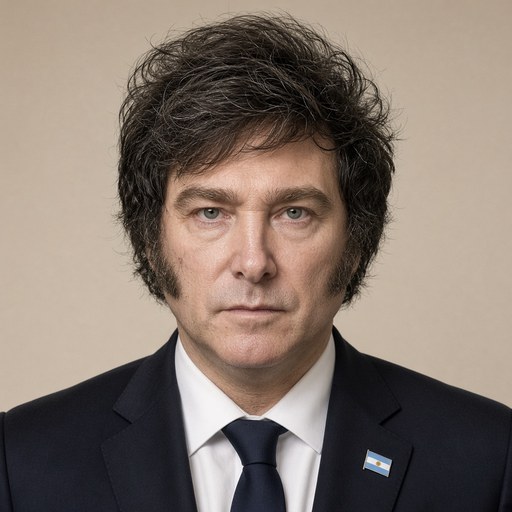
- Milei addressed the Argentine nation on April 23, 2024, announcing the first quarterly fiscal surplus in nearly 20 years alongside his economic team.
- Main themes
- Fiscal surplus achievement, economic stabilization, inflation reduction, deficit elimination, monetary emission, Argentina's economic crisis, shock stabilization program, Central Bank reform, IMF agreement, historical economic milestones, government economic plan, public sector finances
- Duration
- ~22 min
- Words
- 2,580
- Sentences
- 79
- Readability
- 42
- Grade
- 15.1
- Syntax
- 3.40
- Vocabulary
- 2.18
Translated from Spanish
The broad sphere of national life a sentence belongs to. Every sentence has an Arena, so it is the denominator the other indices are read against.
Other79 sentences in 12 paragraphs
Good evening. First of all, I want to tell all Argentinians that I understand that the situation we are living through is tough, but also that we have already traveled more than half the way. This is the final stretch of a heroic effort that we Argentinians are making, and for the first time in a long time, this effort is going to be worth it. Secondly, I am here today surrounded by our economic team, led by Minister Luis Caputo and the President of the Central Bank, Santiago Bausili, to announce something that just a few months ago seemed impossible in Argentina. Against the predictions of most political leaders, professional economists on television, sensationalist commentators, specialized journalists, and a good part of the Argentine establishment, I want to announce that the national public sector recorded a financial surplus of more than 275 billion pesos during the month of March, thus achieving, after almost 20 years, a financial surplus of 0.2% of GDP during the first quarter of the year.
This is the first quarter with a financial surplus since 2008, a milestone that should make us all proud as a country, particularly given the disastrous legacy we had to take on. This concept, that of fiscal surplus, which may seem simply a technical definition that does not affect the lives of Argentinians, is nothing more and nothing less than the only possible starting point to finally put an end to the inflationary hell that Argentina has been since the fall of convertibility, having become the world's largest serial defaulter and having the highest tax pressure in the world. The fiscal surplus is the cornerstone from which we build the new era of prosperity for Argentina. Achieving that surplus in Argentina, which has had deficits in 113 of the last 123 years, having received this government a consolidated deficit of more than 15 points of GDP, between the Treasury deficit and the Central Bank deficit, and having adjusted 13 points of that 15 in just three months of government, is simply a feat of historical proportions on a global level.
For this reason, I want to take a few minutes to explain to everyone what we were facing, how we managed to achieve such a feat, and why it is so important for the lives of all Argentinians to maintain this course. I have explained on several occasions that when we took on the enormous challenge of leading our nation, we found a country broken and on the brink of hyperinflation. We had a deficit of five points of GDP in the Treasury and a financial deficit of another 10 points in the Central Bank; we had an exchange rate gap of almost 200 percent between the official dollar and the free dollar and a monetary surplus similar to what we had before the Rodrigazo, one of the worst crises in our history. In addition to this, we had an unrecognized debt with importers of more than 50 billion dollars and a debt in pesos equivalent to 90 billion dollars. The agreement with the International Monetary Fund was collapsed, and during the first week of our government, inflation was running at 1.2% daily. That is to say, we took office with inflation running at 7600% annually, with a monetary surplus and a broken Central Bank that would have driven inflation to 15,000% annually. This means that we took office with a monetary surplus worse than that of the Rodrigazo, a destruction of the Central Bank's balance sheet worse than the hyperinflation of '89, and social indicators worse than those of the crises of 2001, which means we were facing the worst crisis in the history of our country.
Therefore, since we took office, we focused on two essential issues. First, we said that the cause of all evils in Argentina was the fiscal deficit, as a result of the obsession of Argentine politicians to spend what we do not have and exhausting sources of indebtedness and tax increases, they resorted to monetary emission, which is the only proven cause of inflation. We took the bull by the horns and announced from day one that with us, the deficit was over, and consequently, monetary emission and inflation were over. Secondly, we said that given the gravity of the situation we inherited, Argentinians did not have time for a new gradualist experiment, and we advanced in the most ambitious shock stabilization program in our history. This is how we managed to achieve a financial surplus in just one month of government, a milestone that has no parallel in the history of the Western world. Today we can affirm without a doubt that, despite the opposition of a good part of the economic and political establishment in Argentina, despite those who systematically question our ideas and those who directly advocate for our failure to return to power, the government was right, and our plan is working.
This economic miracle of achieving a quarterly financial surplus after almost 20 years, having received the legacy we received, responds, contrary to what those who want this government to fail usually claim, to a large extent to what we called “chainsaw” during the campaign and not, as some say, to the liquefaction of public spending, a method that has historically been used in our country. Of the five points of the Treasury deficit that we have adjusted, only 0.4% corresponds to the loss of purchasing power of pensions, a loss produced by the disastrous mobility formula of Alberto Fernández that we wanted to modify in the Basic Law and that we later had to modify by DNU, due to the lack of willingness of some political sectors. The remaining 4.6% of the adjustment we have achieved is entirely due to the cut in public spending that politics used indiscriminately to buy votes. An immoral practice that explains a good part of the economic failure of the last decades. Achieving the surplus in the way we did, that is, prioritizing the cut in spending and not its liquefaction, is extremely important because it gives sustainability to public accounts, and because for the first time in a long time, the cost of the adjustment is not passed on to the entire Argentine population, but only to those who benefited from the impoverishing model of the past.
To mention a few examples, we highlight the reduction of 76% in discretionary transfers to the provinces, a toxic system with which the central power distributed resources from all Argentinians to a few who submitted to the will of the national government. Also, a drastic reduction of 87% in public works, historically linked to the festival of corruption that Argentina has experienced over the last 20 years, where taxpayer money was spent on roads that led nowhere or on works that were inaugurated five times and never completed. In our model, infrastructure works will be financed by the private sector, so that we will effectively have the works that Argentinians need, avoiding that money ends up in the pockets of politicians or their contractor friends in the State. In addition to these measures, we have reduced the structure of the State, eliminating 50% of political positions, closing unnecessary agencies that were used to persecute those who thought differently. We also eliminated advertising guidelines, as you may have noticed from the reaction of the media, which, along with other measures, resulted in a 22% reduction in the operating expenses of the State. That is to say, contrary to what many claim, it has not only been possible to end the fiscal deficit, but we have done so in a way that is economically sustainable and morally desirable, since for the first time in Argentina, the just do not pay for the sinners. The fiscal surplus we have achieved does not forget those marginalized sectors that have been the main victims of the impoverishing model; that is why we have increased, among others, the Plan First Thousand Days by 500%, which benefits 70,000 pregnant women; we increased the School Assistance Allowance by 311%, bringing it to 70,000 pesos; we have doubled the Universal Child Allowance, including a 27% increase in March; we doubled the Food Card, which is assistance that directly reaches 3.8 million people; we increased assistance for dining rooms by 75%, accompanied by measures to ensure transparency, eliminate intermediaries, and put an end to the managers of poverty. And we launched an educational voucher system to assist families that send their children to state-subsidized establishments.
All this was achieved against countless ominous diagnoses that were made when we presented our program in December. They said that making an adjustment of more than one point of GDP was impossible, that having zero deficit in the first year was impossible. Well, we are making the impossible possible, even with most of the political world, unions, journalism, and a good part of the economic actors against us. And we are doing it, even, with limited maneuvering margins, due to the fact that Congress has not yet given this government the tools that all past administrations had. This fiscal result is not just a number in a table from the Ministry of Economy, but the guarantee of a sustainable and consistent path to end inflation forever in Argentina. It is no coincidence that inflation is plummeting and that every month the inflation number is lower than expected. Particularly in March, which in theory was going to be the most difficult month for public accounts.
The perhaps most conclusive data that shows the correctness of our course is that we took office with a wholesale inflation rate of 54% in December, which in annualized terms implied 17,000 percent annually, and that today it is around 5% monthly. We know that there is still a long way to go, but there is no secret: if the State spends more than it collects and finances this shortfall with monetary emission, then there will be inflation. This is the law of history. If the State does not spend more than it collects and does not resort to emission, there is no inflation. It is not magic. These are concepts that have been long demonstrated throughout the history of humanity and that in Argentina are rejected for a very simple reason: politicians want to spend a lot because they are the main beneficiaries of that spending. That has ended with us. For us, the only task of the State is to protect the life, liberty, and property of Argentinians, so that each one can be the architect of their own destiny.
The fundamental requirement to achieve that objective is to guarantee a healthy and stable economic order. These are the foundations upon which the rest of the building is constructed. A stable economic order so that Argentinians can associate, enter into contracts, buy, sell, work, and trade freely. In other words, so that they can fully exercise their freedom and carry out their life project. A stable economy so that Argentinians can save and project their lives because they know that no one will take away the fruits of their labor. A stable economy with a system of free prices, with clear signals so that those who undertake or carry out an economic activity can plan and invest, because they trust that they will do well. That is the task of the State: to generate the basic conditions for society and private activity to flourish. Therefore, I want to take this opportunity to tell all those who expect that the way out will come through public spending, to all those, both in the world of politics and the economic establishment, who believe that these successes are temporary and that eventually we will have to start increasing spending, I want to tell them that this will never happen in our government. Because for us, inflation is theft, and the fiscal deficit is the cause of inflation. Therefore, zero deficit is not just a marketing slogan for this government, but a commandment.
This means that every peso that the National State has left over, far from increasing spending, will be returned to Argentines through tax reductions. We will promote a dynamic of saving and tax reduction until Argentina has a level of public spending and tax pressure in line with that of a country that needs to grow. Because the only way to lift 60% of Argentines out of poverty is through economic growth; there is no other way. A growth process that is currently characterized by three stages: a first stage that will be determined by the combination of sectors that expand due to the correction of relative prices, such as mining, oil, gas, and agriculture, along with the recomposition of real wages that has begun to take place alongside lower inflation. On the other hand, the low capitalization of the economy, the result of 20 years of populism bent on destroying capital, creates very high-return investment opportunities. Finally, the retraction of the fiscal sector means returning 15 points of GDP to the private sector in the form of savings that will finance the investment that will generate genuine economic growth, which will be strongly multiplied as long as Congress supports us in the program of structural reforms, such as the Bases Law. Therefore, do not expect the way out to come from public spending. The era of the supposed present State has ended; it has been a resounding failure that has plunged 60% of the population into poverty, and we will never go back to that.
The way out will come through private sector investment and credit, genuinely financed by savings, because that is the only sustainable way to grow. There lies the secret of the success of all developed countries in the world. A State that safeguards the life, liberty, and property of individuals and a thriving private sector that takes risks, bets on the country, and generates wealth. I want to close these remarks by highlighting the enormous task that our economic team, led by Luis Caputo and Santiago Bausili, is carrying out, who, having everything against them, decided to step up to try to move this country forward, motivated solely by the patriotism of knowing that decisions are made by those who show up. These men who are by my side, these patriots who faced a country on fire, not only did not turn their backs, but ran towards the fire to try to help their fellow citizens. While others fled, they ran towards the fire. My gratitude and recognition go to them.
To conclude, I want to say that none of this would be possible without the heroic effort of the majority of Argentines who are suffering but know that this is the only possible path if we want a better future for our children. Not a day goes by that I and all those who accompany us are not amazed by the fortitude with which Argentines are facing this challenge. There is no alternative but to surrender at the feet of a people who have decided to abandon slavery and embark on the long journey through the desert to the promised land, with the commitment that those of us who are part of this government will give our lives to pull this country out of the hell we have received. Thank you very much, may God bless the Argentines, and may the forces of heaven accompany us.
The original Spanish. The tags above are read on the English translation's sentences.
Buenas noches. En primer lugar, quiero decirles a todos los argentinos que entiendo que la situación que estamos viviendo es dura, pero también que ya hemos recorrido más de la mitad del camino. Este es el último tramo de un esfuerzo heroico que los argentinos estamos haciendo y por primera vez en mucho tiempo esta vez el esfuerzo va a valer la pena. En segundo lugar, hoy estoy aquí rodeado de nuestro equipo económico, encabezado por el ministro Luis Caputo y el presidente del Banco Central, Santiago Bausili, para anunciar algo que hace tan solo unos pocos meses parecía imposible en la Argentina. En contra de los pronósticos de la mayoría de los dirigentes políticos, los economistas profesionales televisivos y petardistas tribuneros, los periodistas especializados y buena parte del establishment argentino quiero anunciar que el sector público nacional registró durante el mes de marzo un superávit financiero de más de 275.000 millones de pesos, logrando de esta manera y luego de más de casi 20 años, superávit financiero de 0,2% del PBI durante el primer trimestre del año.
Este es el primer trimestre con superávit financiero desde el año 2008, un hito que debe enorgullecernos a todos como país, en particular dada la estrepitosa herencia de la que tuvimos que hacernos cargo. Este concepto, el de superávit fiscal, que parece simplemente una definición técnica que no hace a la vida de los argentinos, no es ni más ni menos que el único punto de partida posible para terminar de una vez y para siempre con el infierno inflacionario que fue la Argentina desde la caída de la convertibilidad, con habernos convertido en el mayor de defaulteador serial del mundo y a tener la presión impositiva más alta del mundo. El superávit fiscal es la piedra angular desde la cual construimos la nueva era de prosperidad de la Argentina. Haber logrado ese superávit en Argentina, que ha tenido déficit 113 de los últimos 123 años, habiendo recibido este gobierno un déficit consolidado de más de 15 puntos del producto, entre déficit del Tesoro y déficit del Banco Central y haber ajustado 13 puntos de ese 15 en tan solo tres meses de gobierno, es lisa y llanamente una hazaña de proporciones históricas a nivel mundial.
Por esta razón, es que quiero tomarme unos minutos para explicarles a todos con qué nos enfrentábamos, cómo logramos cumplir tamaña hazaña y por qué es tan importante para la vida de todos los argentinos mantener este rumbo. He explicado en reiteradas ocasiones que cuando asumimos el enorme desafío de conducir nuestra nación encontramos un país quebrado y al borde de una hiperinflación. Teníamos un déficit de cinco puntos del producto en el Tesoro y un déficit financiero de otros 10 puntos en el Banco Central; teníamos una brecha cambiaria de casi 200 por ciento entre el dólar oficial y el dólar libre y un sobrante monetario similar al que teníamos en la previa del Rodrigazo, una de las peores crisis de nuestra historia. Sumado a esto, teníamos una deuda no reconocida con importadores por más de 50.000 millones de dólares y una deuda en pesos por el equivalente a 90.000 millones de dólares. El acuerdo con el Fondo Monetario Internacional estaba caído y, durante la primera semana de nuestro gobierno, la inflación venía corriendo al 1,2% diario. Es decir, asumimos el gobierno con la inflación 7600% corriendo anual, con un sobrante monetario y un Banco Central quebrado que hubiese llevado la inflación al 15,000% anual. Esto significa que asumimos el gobierno con un sobrante monetario peor al del Rodrigazo, una destrucción del balance del Banco Central peor que la hiperinflación del 89 e indicadores sociales peores a los de las crisis del año 2001, lo cual significa que nos enfrentábamos a la peor crisis de la historia de nuestro país.
Por eso, desde que asumimos nos enfocamos en dos cuestiones esenciales. En primer lugar, dijimos que la causa de todos los males en la Argentina era el déficit fiscal, ya que producto de la obsesión de los políticos argentinos por gastar lo que no tenemos y agotando las fuentes de endeudamiento y la suba de impuestos, recurrían a la emisión monetaria, que es la única y probada causa de la inflación. Tomamos el toro por las astas y anunciamos desde el primer día que con nosotros se acababa el déficit y, en consecuencia, se acababa la emisión monetaria y la inflación. En segundo lugar, dijimos que dada la gravedad de la situación que habíamos heredado los argentinos no teníamos tiempo para un nuevo experimento gradualista y avanzamos en el programa de estabilización de shock más ambicioso de nuestra historia. Así es como hemos logrado alcanzar el superávit financiero en tan solo un mes de gobierno, un hito que no tiene parangón en la historia del mundo occidental. Hoy podemos afirmar sin lugar a dudas que, pese a la oposición de buena parte del establishment económico y político de la Argentina, pese a quienes sistemáticamente ponen en cuestionamiento nuestras ideas y pese a quienes directamente pregonan por nuestro fracaso para volver al poder, el gobierno tenía razón y nuestro plan está funcionando.
Este milagro económico que ha sido lograr superávit y financiero trimestral luego de casi 20 años, habiendo recibido la herencia que recibimos, responde, a diferencia de lo que suelen afirmar los que quieren el fracaso de este gobierno, en enorme medida a lo que durante la campaña llamamos “motosierra” y no como dicen algunos a la licuación del gasto público, método que históricamente se ha utilizado en nuestro país. De los cinco puntos del déficit del Tesoro que hemos ajustado solo 0,4% responde a la pérdida del poder adquisitivo de las jubilaciones, pérdida producida por la nefasta fórmula de movilidad de Alberto Fernández que quisimos modificar en la Ley Bases y que luego tuvimos que modificar por DNU, frente a la falta de voluntad de algunos sectores políticos. El restante 4,6% de ajuste que hemos logrado se debe íntegramente al recorte del gasto público que la política utilizaba indiscriminadamente para comprar voluntades. Una práctica inmoral que explica buena parte del fracaso económico de las últimas décadas. Haber logrado el superávit de la manera que lo hicimos, es decir priorizando el recorte del gasto y no la licuación del mismo, es extremadamente importante porque le da sostenibilidad a las cuentas públicas, y porque por primera vez en mucho tiempo no se le traslada el costo del ajuste a toda la población argentina, sino solamente aquellos que fueron beneficiados por el modelo empobrecedor del pasado.
Para mencionar algunos ejemplos, destacamos la reducción del 76% de las transferencias discrecionales a las provincias, un sistema tóxico con el que el poder central repartía recursos de todos los argentinos a unos pocos que se sometían a la voluntad del gobierno nacional. También una reducción drástica del 87% en la obra pública, históricamente vinculada al festival de corrupción que ha sido la Argentina los últimos 20 años, donde se gastaba dinero de los contribuyentes en rutas que no conducían a ningún lado o en obras que se inauguraban cinco veces y nunca se terminaban. En nuestro modelo, las obras de infraestructura pasarán a ser financiadas por el sector privado, de manera tal que efectivamente tendremos las obras que los argentinos necesitamos, evitando que ese dinero termine en los bolsillos de los políticos o sus amigos contratistas del Estado. Además de estas medidas, hemos reducido la estructura del Estado, eliminando el 50% de los cargos políticos, cerrando organismos innecesarios que se usaban para perseguir a quienes pensaban distinto. También eliminamos la pauta publicitaria, como habrán notado por la reacción de los medios, que con otras medidas redundaron en una reducción del 22% de los gastos de funcionamiento del Estado. Es decir, a diferencia de lo que muchos afirman, no solo ha sido posible terminar con el déficit fiscal, sino que lo hemos hecho de una manera que es económicamente sustentable y moralmente deseable, ya que por primera vez en la Argentina no pagan justos por pecadores. El superávit fiscal que hemos logrado sin olvidarnos de aquellos sectores postergados que han sido las principales víctimas del modelo empobrecedor, por eso es que hemos aumentado, entre otros, un 500% del Plan Primeros Mil Días que beneficia 70.000 mujeres embarazadas; incrementamos en un 311% la Asignación de ayuda escolar llevándola a $70.000; hemos duplicado la Asignación Universal por Hijo, incluyendo el aumento del 27% en el mes de marzo; duplicamos la Tarjeta Alimentar, que es una asistencia que llega en forma directa a 3,8 millones de personas; aumentamos un 75% la ayuda para los comedores, acompañado de medidas para garantizar la transparencia, eliminar a los intermediarios y terminar con los gerentes de la pobreza. Y lanzamos un sistema de vouchers educativos para asistir a aquellas familias que envían a sus hijos a establecimientos que reciben subvención estatal.
Todo esto fue logrado contra infinitos diagnósticos ominosos que se dieron cuando presentábamos nuestro programa en diciembre. Decían que hacer un ajuste de más de un punto del PBI era imposible, que tener déficit cero en el primer año era imposible. Bueno, nosotros estamos haciendo posible lo imposible, incluso con la mayoría de la política, los sindicatos, el periodismo y buena parte de los actores económicos en contra. Y lo estamos haciendo, incluso, contando con márgenes de maniobras acotados, producto de que el Congreso no le ha dado todavía a este gobierno las herramientas con las que todas las administraciones pasadas contaron. Este resultado fiscal no es solo un número en una tabla del Ministerio de Economía, sino la garantía de un camino sostenible y consistente para terminar con la inflación para siempre en la Argentina. No es casualidad que la inflación se esté desplomando y todos los meses el número de inflación sea menor al esperado. Particularmente en el mes de marzo, que en teoría iba a ser el mes más difícil para las cuentas públicas.
El dato tal vez más acabado que muestra lo acertado de nuestro rumbo es que asumimos con una inflación mayorista mensual del 54% en diciembre, que en términos anualizados implicaba 17.000 por ciento anual y que hoy se encuentra en torno al 5% mensual. Sabemos que todavía queda mucho camino por andar, pero no hay ningún secreto: si el Estado gasta más de lo que recauda y financia este faltante con emisión monetaria, entonces habrá inflación. Esto es ley de la historia. Si el Estado no gasta más de lo que recauda y no recurre a la emisión no hay inflación. No es magia. Estos son conceptos que ya han sido largamente demostrados a lo largo de la historia de la humanidad y que en la Argentina se rechazan por una razón muy simple: los políticos quieren gastar mucho porque son los principales beneficiarios de ese gasto. Eso con nosotros se ha terminado. Para nosotros la única tarea del Estado es proteger la vida, la libertad y la propiedad de los argentinos, para que cada uno pueda ser arquitecto de su propio destino.
El requisito fundamental para lograr ese objetivo es garantizar un orden económico sano y estable. Esos son los cimientos sobre los que se construye el resto del edificio. Un orden económico estable para que los argentinos se asocien, entablen contratos, compren, vendan, trabajen y comercien libremente. O sea, para que puedan hacer un ejercicio pleno de su libertad y llevar adelante su proyecto de vida. Una economía estable para que los argentinos puedan ahorrar y proyectar sus vidas porque saben que nadie les quitará el fruto de su trabajo. Una economía estable con un sistema de precios libres, con señales claras para que quienes emprendan o lleven adelante una actividad económica puedan planificar e invertir, porque confían en que les va a ir bien. Esa es la tarea del Estado: generar las condiciones básicas para que la sociedad y la actividad privada florezca. Por eso, quiero aprovechar para decirles a todos aquellos que esperan que la salida venga de la mano del gasto público, a todos aquellos, tanto en el mundo de la política como del establishment económico, que creen que estos éxitos son coyunturales y que eventualmente tendremos que empezar a aumentar el gasto, quiero decirles que eso nunca va a ocurrir en nuestro gobierno. Porque para nosotros la inflación es un robo y el déficit fiscal es la causa de la inflación. Por lo tanto, el déficit cero no es solo una consigna de marketing para este gobierno, sino que es un mandamiento.
Esto quiere decir que cada peso que le sobre al Estado Nacional, lejos de aumentar el gasto, será devuelto a los argentinos a través de reducciones de impuestos. Vamos a promover una dinámica de ahorro y reducción de impuestos hasta que la Argentina tenga un nivel de gasto público y presión impositiva acorde al de un país que necesita crecer. Porque la única manera de sacar al 60% de los argentinos de la pobreza es con crecimiento económico, no hay otra manera. Un proceso de crecimiento que está caracterizado hoy por tres etapas: una primera que vendrá determinada por la combinación de sectores que se expanden por la corrección de precios relativos, como son la minería, el petróleo, el gas y el campo, junto a la recomposición de los salarios reales que hoy ha empezado a tomar lugar de la mano de una menor inflación. Por otra parte, la baja capitalización de la economía fruto de 20 años de un populismo empecinado en destruir al capital genera oportunidades de inversión de muy alto retorno. Finalmente, la retracción del fisco implica devolverle al sector privado 15 puntos del PBI en forma de ahorro que permitirá financiar la inversión que generará crecimiento económico genuino, el cual se verá fuertemente multiplicado en la medida que el Congreso nos acompañe en el programa de reformas estructurales, como ser el caso de la Ley Bases. Por lo tanto, no esperen la salida de la mano del gasto público. La era del supuesto Estado presente ha terminado, ha sido un fracaso estrepitoso que ha sumergido al 60% de la población en la pobreza y nunca más vamos a volver a eso.
La salida vendrá de la mano de la inversión del sector privado y del crédito, financiado genuinamente por el ahorro, porque esa es la única manera sostenible de crecer. Ahí radica el secreto del éxito de todos los países desarrollados del mundo. Un Estado que vela por la vida, la libertad y la propiedad de los individuos y un sector privado pujante que arriesga, apuesta por el país y genera riqueza. Quiero cerrar estas palabras destacando la enorme tarea que está llevando adelante nuestro equipo económico, liderado por Luis Caputo y Santiago Bausili, que teniendo todo en contra decidieron poner el pecho para intentar sacar este país adelante, motivados únicamente por el patriotismo de saber que las decisiones las toman los que dicen presente. Estos hombres que tengo a mi lado, estos patriotas que tenían un país prendido fuego por delante, no solo no le dieron la espalda, sino que corrieron hacia el fuego para intentar ayudar a sus compatriotas. Mientras otros huían, ellos corrían hacia el fuego. Mi gratitud y reconocimiento para ellos.
Para finalizar, quiero decir que nada de todo esto podría ser posible sin el esfuerzo heroico de la mayoría de los argentinos que están sufriendo, pero que saben que este es el único camino posible si queremos un futuro mejor para nuestros hijos. No hay día que pase que no me asombre a mí y a todos los que nos acompañan, la entereza con la que los argentinos están enfrentando este desafío. No hay alternativa más que rendirse a los pies de un pueblo que ha decidido abandonar la esclavitud y a emprender el largo camino por el desierto hacia la tierra prometida, con el compromiso de que quienes formamos parte de este gobierno vamos a dejar la vida para sacar este país del infierno que hemos recibido. Muchas gracias, que Dios bendiga a los argentinos y que las fuerzas del cielo nos acompañen.