




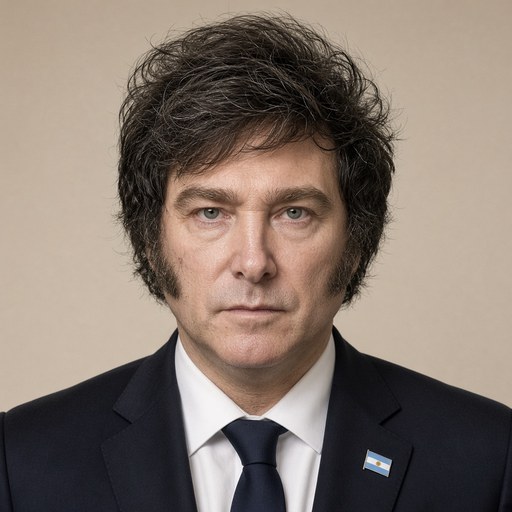
Speech by President Javier Milei at the 2026 Annual Dinner of the Libertad Foundation
 Javier Milei · President of Argentina
- Context
- Milei addressed the Libertad Foundation's 2026 Annual Dinner in Argentina, receiving an award and presenting evidence that free-market policies deliver real-world results.
- Main themes
- Ideas of freedom working in practice, fiscal adjustment and budget balance, cultural battle against Marxism, condemnation of political violence against Donald Trump, libertarian economic policy, moral case against debt and taxation, Argentina's economic reform achievements, role of liberal institutions in ideological struggle
- Duration
- ~64 min
- Words
- 7,643
- Sentences
- 434
- Readability
- 65
- Grade
- 8.5
- Syntax
- 2.90
- Vocabulary
- 2.17
Translated from Spanish
The broad sphere of national life a sentence belongs to. Every sentence has an Arena, so it is the denominator the other indices are read against.
Other434 sentences in 62 paragraphs
PRESIDENT: Good evening. Thank you to the Libertad Foundation for this invitation, for this award. For this privilege of being awaited by the founding father. And to begin, I want to express my strongest condemnation of the new assassination attempt suffered by President Donald Trump.
We are facing a new surge of political violence, particularly from the left around the free world, which must be stopped at its inception. Because there are many who do not accept losing in the battle of ideas and at the polls, and resort to violence to make their failed ideals a reality. Those people are incompatible with democracy and must be punished with the full weight of the law.
The reality is that we, the liberals, I believe made a great mistake after the fall of the Berlin Wall in thinking that mere evidence was enough, that the mere fall of the wall was sufficient. And reality proved that it was not, and in fact, what Marxism did was rebuild itself and wage the cultural battle in other aspects and shift the class struggle to other types of debates in society. And, in that way, they ended up taking the stage.
That is why institutions like this foundation are so important to wage the cultural battle, as it is not only about management, about politics, but there is a very important part that is the cultural battle. And the advances we have been making since we became aware of this have been so great that we not only started to win the debates; because we also had to learn to debate with them, but we also started to win at the polls. And that has made them deeply violent. That is why they have no problem resorting to violence.
For them, what matters is their idea of the collective and human beings are mere numbers, mere tokens or mere pieces on a chessboard. And the reality is that they have no problem killing us if necessary. That is why we cannot abandon the battle on any of the three fronts, but we must expose them.
Today's talk is basically to show that the ideas of freedom work; we have always been accused when we presented our proposals that this was a theoretical problem but that in practice it did not work, and there is a phrase that the founding father, Dr. Alberto Benegas Lynch Jr., often says, that there is nothing more practical than having a good theory, and what I am going to show today is that the ideas of freedom work and why in all the places in the world we go, we have so many recognitions and are so praised because basically what we are proving is that the ideas of freedom work.
That all those things, that all that they said could not be done, in reality, it is not that it could not be done, it was mere complacency of politics. Yes, it can be done and yes, it works. Therefore, what this talk will be about is showing that indeed the ideas of freedom work and that, if we indeed start to embrace them and freedom with greater strength, we will have a future of prosperity.
The first thing is to have touched the greatest sacred cow of politics, which is fiscal policy. There is a wonderful conference by the colossus Federico Sturzenegger, who says to dismantle all the myths of politics. So, for example, they call him, they consult him, and they say well, we need to adjust. And the most interesting thing is the issue of quantum and time. So, for example, I hear some who today criticize and fill their mouths saying all the things they find incorrect, and the truth is that at the moment they had to do things, they thought that more than one point per year was a lot, that with luck we could reach the end of our first term with fiscal balance.
And we not only made the adjustment of almost five points of GDP, which basically, remember that everything is there, the crisis that was being generated and that was gestating, with which there is also a lot of liquefaction, and in that context, we put the public sector accounts in order thanks to the enormous task of the giant I have as Minister of Economy, Toto Caputo, who adjusted five points of GDP in one month.
Therefore, we went from having a cumulative deficit of 20 points in the previous administration to achieving balance and being, let’s say, making a deep adjustment, and this will have very important consequences in the way the adjustment was made because recurrently politics always did, the first option was always to take on debt, for us taking on debt is not an option because it is immoral, it is passing the bill of the present party to our children, to our grandchildren, people who do not even have the possibility to defend themselves with their vote, therefore, let’s say it is profoundly immoral, imagine going to a party and passing the bill to your grandchild, it is an abominable thing.
The other is to raise taxes: we also find that abominable. It is theft. It is an attack on property. In fact, if there is something that has characterized liberals of different strands, whether for example Murray Rothbard or in the case of Milton Friedman, it was that the true nature of the State had to do with public spending. Therefore, at the national level, not only did we make the adjustment by lowering spending, not by raising taxes, by lowering spending, we also returned 2.5 points of GDP, lowering more than 20 taxes and eliminating others. What had never been done in Argentina, we returned money to Argentines. And today the size of the national public sector is about 15 points of GDP. And that, if we wanted to compare it with other times, we should correct for the act of savage populism of the imprisoned one when she started giving pensions without contributions. Which makes the weight of the public sector higher to respect that acquired right by retirees. Therefore, we are at levels that should be at least 13% or less of GDP in national spending, if we corrected for that effect and could compare with others.
But not only did we do that, but also that was part of the problem. If you look at the numbers for 2023, the light blue line is the treasury, but the Central Bank had double the deficit that the Treasury had. And that was a very complicated problem because we were facing a situation where we had four monetary bases maturing in one day, about nine monetary bases of debt in pesos maturing in one month. Therefore, we would have had an explosion of debt, of peso issuance and clearly generate hyperinflation. Added to the fact that we had a monetary surplus that was worse than what was there before the Rodrigazo, and as I am telling you, the balance of the Central Bank was worse than what was there in the time of Alfonsín and not to mention the situation of the debt in pesos. Therefore, that is where hyperinflation was clearly planted, with inflation running at 1.5 daily. Because sometimes it seems that we forget where we came from, the disaster we had.
However, unlike other stabilization programs, which sought to have the bomb explode on someone else; or to make aberrations that destroyed property rights, like the Bonex plan, it is also very easy, expropriating: it is a solution that is surely very simple for the politician, but it is very costly for good Argentines. We, thanks to the enormous task of Santiago Bausili, at the Central Bank, Vladimir who is here, the very Pablo Quirno, today Foreign Minister, began to reconstitute public finances and the balance sheet of the Central Bank and today basically the quasi-fiscal deficit no longer exists. That is to say, within all the aberrations they left us, we have cleaned the balance of the Central Bank. That is to say that we returned to Argentines 15 points of GDP. If we add to that what we lowered in taxes, we have returned to Argentines more than 100 billion dollars. Indeed, we are a liberal government.
The natural consequence of having eliminated the fiscal deficit is that the debt does not rise. That is to say, there is no new debt. That is to say the only thing we have to guarantee is the rollover. If you look at that chart… first look at the footnote, how much was the debt in 2001 and see what I am or what there was in 2023 which was 525 billion dollars. Debts rose by 381 billion dollars. With which now we are going to dismantle another narrative. We have just dismantled the narrative that there is no adjustment; now we are going to dismantle the narrative of the debt: who is the one who incurs debt. The debt rose by 381 billion dollars. During President Macri's government, the debt rose by 60 billion dollars. This means that the remaining 320 billion dollars are all from Kirchnerism. And that must be added to the debt write-off they made when they restructured. Therefore, if there is someone who has brutally indebted this country, compromising future generations, it is Kirchnerism.
Moreover, it is interesting because the graph presented this way shows a drop during our government, which goes from our government, of 10 billion dollars, however there is a part that as it is measured in dollars there is debt in Argentina that, as it is measured in dollars, there is debt in Argentina that is with CER, that is to say that it has inflation adjustment, it is an instrument that was created in 2002, 2003.
What is the point? The point is that if we net the effect of the exchange rate appreciation, and given that inflation runs more than the exchange rate, that situation makes the debt fall by another 35 billion dollars. What you are seeing, the almost constant debt, is due to the effect of the CER; that is to say, if not, the debt would have fallen by 45 billion dollars. Indeed, we are a serial payer and we honor our debts.
The flip side of this is that the debt-to-GDP ratio jumped… the first thing to do is to clarify the numbers. Because also another great lie of Kirchnerism is “no, because it was reached and devalued.” It was not devalued, there was a gap of more than 200%. There was a relationship between the market exchange rate and the official one, of 3 to 1. That was already there, it was a matter of things that were hidden under the rug and that they did not want to clarify. The market is when there is a market price; if there is not, that is not a market. Otherwise, put a number that you feel like but you will not have a market. That is not a market.
When that was clarified, the true debt-to-GDP ratio was around 157%. Today that number has fallen to 73%. That is to say that Argentina, based on its very strict fiscal policy, is basically showing to be solvent intertemporally. That is why the debt-to-GDP ratio falls. But there is another issue, that a large part of the debt we have is intra-public sector debt. So when we correct for intra-public sector debt, today Argentina's debt-to-GDP ratio went from around 100% to less than 40%. That is to say, Argentina is clearly on a path of intertemporal solvency. We are going to honor our debts. Sooner or later the country risk will be destroyed because we are going to honor our debts.
Another thing that is also important, we must put things in relative terms. Because one cannot be deceived by the Kirchnerist narrative. If there is something that characterizes them, it is narrating things and telling lies and deceiving people with their lies. Another great lie that they point out and often repeat is: “well, but now they celebrate an inflation that was the same as Cristina's.” It is interesting because it seems that they are unaware, the truth is that they are quite ignorant and quite foolish in economics.
In fact, Hayek said that if socialists knew about economics, they would not be socialists. And Ludwig von Mises himself said that knowledge in economics led to liberalism. Therefore, I am not surprised that they are generally people who cannot add 2 plus 2 even with an abacus. The best exponent is the Soviet who governs the province of Buenos Aires.
The dynamic that was leading to inflationary acceleration and in fact Néstor Kirchner left more inflation than he received, if one corrects for the jump that inflation had in 2002, Cristina left more inflation than Néstor Kirchner in his second term, had more inflation than the previous one in Mauricio Macri's government, it ended with more inflation than Cristina Kirchner had left, and in Alberto Fernández's government, much more, therefore, in addition, it was accelerating strongly, sometimes they say well where are the data. The data is very simple, wholesale prices tend to lead what retail inflation is, unless it responds to some very specific issue, that is why this graph is so important because it shows in terms of historical dimension what was faced, it faced something similar to what was in the hyperinflation of 1991.
But moreover, what is interesting is that the data was public at the speed it was running at 1.5. Wholesale inflation was 54%. And if you consider that the amount of money could multiply by 15 times; plus the monetary surplus that implied at least multiplying - the Rodrigazo I believe multiplied by 6, if I remember correctly - therefore we would have multiplied by 12. Imagine all that multiplication, when you do that calculation, it gives close to 15,000%. And that is without the demand for money collapsing. Therefore, we were facing a catastrophe that would have turned us into Venezuela. Imagine that the most capable of them during the pandemic published a note in “Pravda/12” that said that when you issued, inflation went down. So imagine, it seems they never realized the lags of monetary policy. That is why this graph is so important, because it puts it in historical dimension. What do you think, was that magic? No, that was pure and hard liberalism: control of fiscal policy and control of monetary policy.
And here you have it in a shorter temporal dimension to see more clearly what the acceleration was taking and how it fell sharply. Does that mean this is resolved? No, not at all. It remains a horrible number 33%. The issue is where we were going. And to understand why we have the numbers we have today. The first thing to understand is that by May of last year, prior to Manuel winning the election in the Autonomous City of Buenos Aires, inflation had reached 1.5%. That is, clearly inflation was collapsing, despite all the predictions... I do not forget “if you open the cepo, inflation cannot go below 8%.” The most beautiful thing about all this is that we have it all documented. The other day, in an act of mercy, we decided to publish some of the phrases and not the owners of the phrases. But the reality is that none of the consultants, except for two, can pass the track record test. They got everything wrong. Therefore, after having gotten everything wrong, and so much, and so badly. I don’t know how they have the face to say what is right or what is wrong. There was one who said that if we did everything right - and always described that everything was wrong - at least inflation would not go below 400% in the first year. So then with what face do they come to criticize? If we track all the consultants, except for two, they did everything wrong. With what moral authority do they come to speak, if they messed everything up? Almost we should do the opposite of what they say. If they said everything wrong. Besides omitting what was happening at the Central Bank. A mix of intellectual dishonesty and brutality. I do not forget that a consultant wanted to steal Toto's Central Bank cleanup program. The partner called Toto 4 times a day. Come on.
So we need to stop accepting liars and hypocrites. But I will not dodge talking about this 33%, because it has a meaning. The reality is that inflation had started to fall deeply but after the result in May, the policy decided to play. And boy did it play and played hard. It is interesting, because they are so intellectually dishonest that they do not even repeat my entire phrases. The full phrase is “inflation is always and everywhere a monetary phenomenon generated by an excess of money supply, either because the supply increases or because the demand falls or both things happen simultaneously, which causes money to lose purchasing power and that implies that all prices expressed in monetary units rise.”
And what happened after the election in May, there was a huge sabotage where business tycoons, media, politicians, and commentators coordinated, basically, to destroy the economic program. They threw 40 laws to try to destroy fiscal balance. As if it had not been a catastrophe to have a fiscal deficit. Of the 22 crises that Argentina has had from 1901 to 2023, of those 22, 20 have a fiscal origin. Which can be due to high fiscal deficit or a scandalous and obscene fiscal deficit. And that is what they went to do. They went to break fiscal balance. They generated so much panic in the population that we endured a run equivalent to 50% of M2. Never in life, nor in Argentine history, has there been a speculative attack of such magnitude. Basically, we were able to withstand that attack due to the solidity of the program. What do the intellectually dishonest say? The United States saved us. 2 billion dollars out of 41 billion dollars at less than 5%.
How do they dare to load the entire explanation onto something that represents 5%? You have to be very intellectually dishonest. And not only that, that fall in the demand for money, what did they expect to happen? It was going to cause the price level to jump and that in dynamics manifests as an inflationary acceleration. And that is what we were living, which later worsened with the seasonality of the first quarter and with the consequences of the impact of the war on fuel prices. Therefore, the price level jumped and as a consequence of that, an inflationary acceleration was noted. But the amount of money, the monetary base, remains the same. Consequently, sooner or later inflation will yield. And this happened because there was a fall in the demand for money.
And the way to see the fall in the demand for money, there is a way that is quite simple to infer, which is by looking at what happens with the exchange rate and the interest rate, if you raise the interest rate, the exchange rate falls or if you lower the interest rate, the exchange rate rises. However, when the interest rate is rising and the exchange rate means that the demand for money is collapsing, imagine the Soviet saying that he was going to default on everything, that they were going to break everything, that they were going to stage a coup, that they were going to take down the government and they took the country risk to 1,500.
If you add to that how inflation was, the rate in pesos was obviously going to scale. The interest rate, at times, reached almost 200%. And it was at 150%. That is not trivial, because not only did that destruction in the demand for money cause the price level to jump and that manifests itself, in that transition, as a higher inflation rate. But also, something incredible, during the previous government the monetary liabilities of the Central Bank oscillated between 35 billion and 45 billion dollars. That is, on average, 40 billion dollars. Basically, when the exchange rate jumped, they went to 35 billion dollars. They were put on rate, when they reached 45 billion dollars they were attacked, and that is how it was corrected.
That is to say that with 40 billion dollars of monetary liabilities we had to be calm. Because yes, basically, the previous government had more than 200% inflation, had accelerated the inflation rate, had huge problems and had that amount, the question was why was it so solid? That number was so solid because it was the counterpart of the working capital of the economy. So no one would have thought that companies would break working capital to attack speculatively. However, that also happened. The panic they generated was so great that the monetary liabilities fell to 20 billion dollars. Then they climbed to almost 30 billion, basically because we raised the reserves, which is a way to increase the demand for money.
But look at the level of barbarity that they destroyed the working capital of the economy. What do they expect, that after such a shock there would be no impact on activity? Obviously, the economy that had grown during the first quarter at 6 and was accelerating to 8, came to a screeching halt. And also, when you have already bought the inputs, what are you going to do? What are you going to tell the supplier? “No, I don’t want them, here, I’ll return them to you.” Or are you going to throw them away? No, they are put into the production system. So, what happens? They are going to produce, but when they want to sell, they will take longer to sell. And when they want to collect, they will take longer to collect. What that does is stretch their cash cycle. And consequently, they need more working capital. So, while the real sector demanded more working capital, the run against the peso contracted working capital. Because fundamentally the counterpart of the monetary liabilities of the Central Bank, those who know monetary theory and know how to compute stock and flow balances, and know how to calculate those balance sheets, know that the counterpart is the working capital of the economy.
Therefore, you had a contraction of supply and a strong increase in demand. And of course, the interest rate was going to skyrocket. Activity came to a screeching halt and the economy stopped growing and employment stopped growing and wages stopped growing. Obviously, if people have a sense of frustration in the last six months, it is not a coincidence; it is the effect of having destroyed working capital. Fortunately, the reconstitution of the financial and monetary situation means that today credit has started to grow again, that working capital is being reconstituted. And consequently, the economy in March seems to have shown the worst numbers, and starts to show signs of recovery in April. This can be seen by looking at the revenue.
Consequently, this number is horrible. But we will defeat it. Because our commitment is to continue doing what economic theory and empirical evidence say. And we will not deviate one iota from our orthodoxy.
Another thing they said is “No, well but if you make the adjustment, well you can stop inflation but it will destroy the level of activity.” Well, GDP is up 8%. GDP, measured by EMAE, is at its peak. It is at the maximum of the series. So, that which they said we were going to sink into a great depression is false. The economy is growing. That is, despite having made the largest adjustment in history, the economy is growing.
Moreover, if you take the effect of the statistical drag that Kirchnerism left us, which was a drop of three, the numbers would be around 10% or a little more. In fact, if you take from the floor that was touched in April, actually between March and April 2024, the economy has grown 11%. That is to say that when at that moment I said “the worst is over,” indeed the worst is over, despite the violent attack of politics against the economic program that they could not take down and that moreover the people supported the program in the elections with 41%, taking 17 points ahead of Kirchnerism.
Don’t you like EMAE? We can look at it with GDP on a quarterly basis. We will see similar numbers. So, again, they said that the fiscal adjustment was temporary, we demonstrated that it is permanent. Are we lowering inflation? Yes, of course. There are fluctuations. Moreover, if you go and look for videos of both Toto and mine, from the second half of 2025, we explain that it was not a uniform rectilinear movement, that it was not a perfect asymptote, precisely because we were seeing the barbarities they were doing, causing the demand for money to fall.
That is, the videos are there. We are here for you to track us. That is why, today, in honor of Milton Friedman, we could say “first the data.” And the data is showing that each of the indicators I am showing warrants us to boast that we are the best government in history. Whether the left likes it or not.
The other is “no, but jobs are being destroyed and employment is lost and the economy is being destroyed and everyone is unemployed.” When I look at the numbers, the reality is that the number of jobs since we have been in government has increased by 113,000 jobs. What is happening? What do the Kirchnerists do? They take the bad data and generalize it. So they say “no, well, but formal salaried employees fell by 241,000.” Well, but the informal, the independents increased by 346,000 and the unregistered by 33,000. I don’t talk about the last line because basically it was something we wanted to reduce, we wanted to end the “ñoquis.” In reality, there are 50,000 more that we removed. But it doesn’t matter. That said, yes, the economy created jobs; it created about 400,000 jobs. An economy that had not created a single job since 2011. Not only that but also can say “no well, but they are informal.” Yes, of course, they are informal. What do you think we sent the labor modernization law for? Precisely so that they can be absorbed by the formal sector. And many say “no, it’s a slight veneer.” Well, the first thing I could say is that since we have been in democracy we have wanted to pass a labor reform and it never came out. The only ones who modernized labor were us.
But not only did we pass a labor modernization law; we passed tax innocence. That is, for the first time in Argentina, we reversed the burden of proof. Always good Argentines were guilty until we proved otherwise before the tax authorities. And today we are innocent until the tax authorities prove otherwise. We also passed zero deficit, we also approved the agreement with the European Union Mercosur, we also passed the glaciers law, we lowered the age of criminal responsibility. Look at the number of things that have never been done in Argentina and this government did. Thank you, Doctor Bullrich. Thank you, Martín Menem. Thank you, Colo for this enormous work.
Thank goodness this government lacks politics, because we passed a bunch of laws in a month and a half that no one else managed to pass in 40 years. We put the fiscal accounts in order, something that no one has been able to do in 123 years. Thank goodness we lack politics; otherwise, we would be Gardel with an electric guitar.
Therefore, this demonstrates that it is also a lie that jobs are being destroyed. Don’t you like it? Well, look, it is what it is in light of the sinister legal framework we had in this economy.
And the other thing, that also… “no, salaries are collapsing.” The salaries that are really collapsing are those in the public sector. Do you know who has fared the worst in this economy in real terms? Me, because I am the only one whose salary has not changed since I took office. In fact, I am the President who earns the least in America. And if anyone has made the adjustment, it has fallen on the public sector. That is to say: the elite paid.
On the other hand, if you look at the registered private sector, it is practically even, depending on where you take the measurement. But if you take the unregistered, they are winning by a landslide. That is why they are growing so much in that part of the economy, because suddenly there are places… it doesn’t surprise you, for example, how the knowledge economy is flourishing and suddenly now it exports 10 billion dollars when before nothing happened. Well, the characteristics of the labor market pushed them all into the informal sector. There you have what happens. That is why it is quite intellectually dishonest to omit the data on the unregistered when they are almost half of the population of those who work. You have to be very intellectually dishonest, to put it politely. Let’s not let ourselves be psychologized by the kukas, let’s not give them space to come back. I will not let any of the barbarities of their lying discourse pass.
Because whether you like it or not, we lifted 14 million people out of poverty. We reduced poverty by more than 27, 28 points, because if you take it in the monthly sequence, we started with 57% when we were honest. Therefore, we will not let ourselves be psychologized. And thanks to the enormous management of Sandra Pettovello at the head of Human Capital and with the pincers movement that Dr. Bullrich made against the piqueteros, without spending a single extra peso, the amount that reached the most vulnerable sectors doubled. And we also put more money into social policy.
Consequently, whether it hurts the left, the progressives, and others, the ones who lifted the most people out of poverty were us heartless liberals.
Another lie: Consumption is at its worst moment. Historical peak. Guys, the way in which it is sold has changed. That is to say, obviously, I find it interesting that they grab and say “no, because the store of I don’t know what closed.” And how do you buy? Through MercadoLibre. Through Temu. Through the other. Come on. The way consumption works has changed. But it’s too much work to look at the balance of Mercado Libre. They boast that it is one of the best Argentine companies - which I strongly agree with and have a deep admiration for Galperín - why not look at the balance once and see what is happening with another form of consumption that is soaring. No. The idea is to show what is wrong. Isn’t it that the composition of consumption is changing? If GDP is rising, why are companies producing? To accumulate stocks? That would blow up their profitability, so it doesn’t seem like a reasonable hypothesis. There you have it, consumption at historical highs. Don’t let yourselves be psychologized by the lying kukas, because the worst of all is when the lie is repeated.
The other lie: “no, the exchange rate is very delayed, and then…” What? It is the craziest exchange rate delay in the world: we are going to reach 100 billion dollars in exports. It seems, as my friend Ramiro Castiñeira says: it is the economy of three times 100 billion dollars. 100 billion dollars that we returned to Argentina, from the treasury to the good Argentines, which is why poverty fell; 100 billion dollars in exports; and whether they like it or not, 100 billion dollars of RIGI. This economy does work.
Here is the result of the current account. This is very interesting to compare with other situations because many times they want to compare what is happening in the Argentine economy with what happened in 2017, to anticipate that a debacle is coming. False: that economy had a fiscal deficit of 6 points of GDP and a current account deficit of 7 points of GDP. This economy has fiscal balance and the current account is practically even. Moreover, I will tell you something: the current account has to do with the deficit between savings and investment. And if you have pushed the public sector out of the way, you free up resources for the private sector. And furthermore, I will tell you something: if you had a current account deficit without it being the fault of the public sector, it means that private sector investment is increasing. Therefore, we should not be scared either. But still, we do not have a current account deficit. And if it is generated by the private sector, it should not be a problem either. Let’s stop thinking like cavemen. It seems that, I no longer say that we do not reach Adam Smith; we didn’t even reach the physiocrats, we repeat the stupidities of the mercantilists. It cannot be that we are so precambrian.
But not only that, another barbarity they say: “no, this program has a problem, it doesn’t buy dollars.” Well, there you have the dollar purchases of Néstor Kirchner, from the two governments of Cristina, those bought during Mauricio Macri’s government, those bought during Alberto Fernández’s; and the Violeta is us. At this point, compared, we are the government that has bought the most dollars since the return to democracy.
See that for every indicator you find a lie. It cannot be that we let ourselves be psychologized by the kukas. It cannot be that we buy the lie from the corrupt, envelope-stuffing journalists.
But not only did this economy withstand a huge political shock last year, but this year it also faced a tremendous negative external shock. And, unlike other times, if something like this had happened, it would have taken us down, it would have generated a disaster in the exchange market, it would have generated a disaster in prices. In the face of this negative external shock, we found ourselves with public and external accounts in balance. And unlike other times when we lost reserves, the exchange rate shot up, so far this year we have bought 7 billion dollars. Come on. What part is not being understood? Don’t let yourselves be psychologized by the kukas. I understand that the kukas speak for the kukas with heads of thermos; but it cannot be that someone who has ever embraced the ideas of freedom buys all these narratives. I cannot believe they take you for fools. And that you buy it because some lying, corrupt, envelope-stuffing journalist repeats that lie. And the worst of all is that this lie is not only in Página 12, or in C5N. It is in those who supposedly once defended freedom and today are more leftist than Página 12.
Not only did we find ourselves well positioned for the external shock by having balanced public and external accounts. We also found ourselves well positioned in terms of oil. Look at Argentina’s position. There you have the relationship between the fiscal issue and the energy position. Argentina, as Kristalina Georgieva pointed out, is the best country in the world in the current situation of external shock. And we went from situations that at another time would have generated a mega crisis, to having to buy dollars like crazy. In fact, if you assumed a unitary demand elasticity, this level of dollar purchases would imply that if we hadn’t bought, today the exchange rate would be at 1100. Come talk to me about exchange rate delay.
Look, aside from the rudimentary, I will only make a reflection: the analysis of exchange rate delay, looking at the real exchange rate, you have to be very intellectually precarious to do that. First, because when you look at the Argentine experiments in the different stabilization programs, when confidence is generated, the currency appreciates. Now, if you want to be a country like the one left by Kirchnerism, then yes, the exchange rate will be through the roof, because clearly you are in a situation tending towards communism. So, what do you want? How do you want things to go for you? It will go badly. You will be destroying capital, people will try to escape by any means. If the universal flood comes, the ticket to the ark is called dollars.
So, first point, when confidence is generated in the currency, it appreciates. When you have unpresentable governments like Kirchnerism, the currency depreciates. First point. Second, you have to take the trend; if Argentina is an economy that has to converge, that greater relative growth that it should have, that is, if we start doing things right, will generate an increase in the relative demand for money with respect to the reference currency, called the dollar, which will also make the currency tend to appreciate for that reason. Not only that, but they also omit a small detail, which is that we made a correction of 15 points of GDP in terms of fiscal deficit. What do you think? That doesn’t have effects on the real exchange rate? Having reduced public spending in real terms by 30% will clearly generate a more appreciated currency. If you add to that the RIGI, and everything that is the export shock linked to mining, linked to freeing up resources from the field, linked to the oil and gas sector, it is obvious that dollars will come out of our ears and the currency will appreciate.
So, for those who are kicking against this, the question would be, well, what are you trying to do? Because we are liberals, we do not decide by finger which sector wins and which sector loses. “Don’t pick the winners,” that is, we do not choose winners. We focus on leveling the playing field, on pushing the mega parasite of the economy, which is the State, out of the way. We focus on deregulating, thanks to the enormous work of the colossus Federico Sturzenegger, we removed more than 15,000 regulations, we climbed more than 40 places in economic freedom, an improvement that has no historical record.
Therefore, that is what we do. Now the question is, if you are going to ask me to protect someone, the question is - I will put it brutally in terms of political utilitarianism -: why should I benefit three corrupt inefficient people against 48 million Argentines? Or is it fair to pay for tires four times more expensive? Or is it fair to pay for steel tubes three times more expensive? It seems to me that it is not. That is to say, let all the fools like us pay with more expensive gas, for example, because the tube is more expensive and the price of transportation is passed directly. It seems to me that if I do the math in terms of political utilitarianism, it doesn’t add up.
Is that enough? No, of course not. The question is: and in terms of the economy, is it efficient? Look, if relative prices change, you will have a change in resource allocation. So what you are proposing to me is that I twist the will of the market by modifying prices. Or that if someone won and someone lost, then I have to compensate the one who lost. That would be an aberration. Because that will imply that you want to omit the effect of the reassignment of relative price changes; therefore, the sector that has to expand does not expand and the sector that has to contract remains parasitic. Consequently, you do not progress. I will do it with a more violent example for it to be understood: many of you will remember the pandemic, an element that is… that is in a book of mine called Pandenomics, there are a lot of things explained but let’s see the case of the mask. In the face of the pandemic, there was a reassignment of demand. What did people want to buy? Masks. Consequently, what should have happened with the relative price of masks? It should have gone up. And what would that do? That resources would be reassigned from somewhere in the economy to masks. Now, if you have a central planner attack, which can be on different scales, but wanting to touch prices is, precisely, a trait of interventionism. In that context, you come up with populism and say “the price of masks will not go up because it is an emergency situation.” How expensive would populism be in that case, because there would be fewer masks and consequently more people would die. In fact, during the pandemic we did populism: we did populism with masks, we did populism with vaccines, with tests, and the consequence was that if Argentina had been like a mediocre country, 30,000 people would have died and forgive the term, but those sons of bitches made 130,000 Argentines die. That is, they took the lives of 100,000 Argentines for doing populism.
Therefore, in one way or another, it is paid for. In that case, it was paid for with human meals; in another case, it is paid for with more poor people or with a worse standard of living, at the expense of the inefficient. The other day I was listening to Salvador Di Stéfano, he said a phrase, it was brilliant, I loved it. He said: Did you see that now everyone eats eggs? Did you notice that, everyone eats eggs? So, what do they have for breakfast? Eggs, in different forms: in omelets, scrambled eggs, I don’t know, however it is. But they eat eggs. The question is: Hey, when they eat toast with the egg, do they put jam on top? Did anyone think of putting jam on the egg? Well, it’s an interesting fact: hey, they are driving jam producers to bankruptcy. Don’t they realize the absurdities that these people who are sick with socialism say? What do they expect to happen to jam producers? And why is it that if the jam producer goes through that, no one complains, and if it happens to, let’s say, Mr. Chatarrín, everyone raises a cry to the heavens? Why, because he has more power?
Not for nothing, Murray Newton Rothbard, in the third volume of “Man, Economy, and State,” is called “Power and Market.” And a similar title that was overlooked was used long ago by von Böhm-Bawerk, which I strongly recommend reading, because he was not only a significant theorist but had also been the Minister of Economy of the Austro-Hungarian Empire; so when he describes the things that are cooked in power, it is worth learning quite a bit to be much more measured when it comes to giving opinions. Because I can assure you that sitting in the electric chair is much more complicated than sitting behind a screen giving opinions.
But beyond that, the most important thing is whether Argentines are well or not, and whether the policies are just or not. So we saw that utilitarianly, in political terms it does not work, in terms of efficiency it does not work, but even if it were the case of those benefits, if that policy were unjust it would not be worth carrying out. So, I want someone to come and explain to me why stealing the fruit of another person's labor, curtailing freedom is okay. Because for me, stealing and curtailing freedoms is wrong. Both taxes and regulations are violations of property rights and that is wrong. And those policies are unjust and will inevitably end badly. And you know what? We have Argentine empirical evidence from the last 100 years that what we systematically did was violate property rights and that is what sunk us.
But beyond that, there is a very positive element to conclude the presentation. Because we have already seen that the product is at historical highs, we have seen that consumption is at historical highs, that exports are at historical highs, that the RIGI is functioning wonderfully, that credit is being restored, which makes us more optimistic moving forward.
So, the question is whether inflation will decrease and if the problem was that inflation was generated by a fall in the demand for money, then let’s see what is happening with the demand for money. And we saw that if the Central Bank had not bought more than 6 billion dollars, the exchange rate would be at 1100 and today the interest rate is around 20%. This means that the demand for money is rising and therefore inflation will fall.
And if you look at this graph and look at the exchange rate and the local interest rate, Argentina in this global context has performed the best in terms of exchange rate appreciation and in terms of falling interest rates. Therefore, the demand for money in Argentina is being restored. Consequently, sooner or later we will defeat inflation, therefore we will make Argentina the freest country in the world and do not doubt that liberalism will move forward. God bless you all, may the forces of heaven accompany us, and long live freedom, damn it. Thank you very much.
The original Spanish. The tags above are read on the English translation's sentences.
PRESIDENTE: Buenas noches. Gracias a la Fundación Libertad por esta invitación, por este premio. Por este privilegio de que me estuviera esperando el prócer. Y para empezar quiero expresarme más enérgico repudio al nuevo intento de asesinato sufrido por el Presidente Donald Trump.
Estamos ante un nuevo auge de la violencia política, muy en particular de parte de la izquierda de todo el mundo libre, que debe ser detenida en sus inicios. Porque hay muchos que no aceptan perder en la batalla por las ideas y en las urnas, y recurren a la violencia para hacer realidad sus ideales fallidos. Esas personas no son compatibles con la democracia y deben ser castigado con todo el peso de la ley.
La realidad es que nosotros, los liberales, creo que cometimos un gran error luego de la caída del muro de Berlín de creer que con la mera evidencia alcanzaba, con la sola caída del muro era suficiente. Y la realidad demostró que no y, de hecho, lo que hizo el marxismo fue reconstruirse y dar la batalla cultural en otros aspectos y trasladar la lucha de clases a otro tipo de debates en la sociedad. Y, de ese modo, terminaron tomando la escena.
Por eso es que es tan importante instituciones, como esta fundación, para dar la batalla cultural, ya que no solo se trata de gestión, de política, sino que hay una parte muy importante que es la batalla cultural. Y los avances que hemos estado haciendo desde que hemos tomado conciencia de esto, han sido tan grandes que no solo le empezamos a ganar los debates; porque también tuvimos que aprender a debatir con ellos, sino que además empezamos a ganar en las urnas. Y eso los tiene profundamente violentos. Por eso, ellos no tienen ningún problema de recurrir a la violencia.
Para ellos lo importante es su idea de colectivo y los seres humanos son meros números, son meras fichas o meras piezas en un tablero de ajedrez. Y la realidad es que no tienen ningún problema en matarnos si es necesario. Por eso no podemos abandonar la batalla en ninguno de los tres planos, pero tenemos que dejarlos en evidencia.
La charla de hoy básicamente es mostrar que las ideas de la libertad funcionan, siempre se nos acusó cuando planteábamos nuestras propuestas de que eso era un problema de la teoría pero que en la práctica no funcionaba y hay una frase que suele el prócer, el Dr. Alberto Benegas Lynch hijo, que dice que no hay nada más práctico que tener una buena teoría y lo que voy a mostrar hoy es que las ideas de la libertad funcionan y por qué a todos los lugares del mundo que vamos, tenemos tantos reconocimientos y somos tan ponderados porque básicamente lo que estamos probando es que las ideas de la libertad funcionan.
Que todas esas cosas, que todo eso que decían que no se podía, en realidad no es que no se podía, era mera complacencia de la política. Sí que se puede hacer y si que funciona. Por lo tanto, de lo que va a tratar esta charla es mostrar que efectivamente las ideas de la libertad funcionan y que, si efectivamente empezamos a abrazarlas y
de la libertad con mayor fuerza, vamos a tener un futuro de prosperidad.
Lo primero es haber tocado la mayor vaca sagrada de la política, que es la política fiscal. Hay una conferencia maravillosa del coloso Federico Sturzenegger, que dice derribar todos los mitos de la política. Entonces, por ejemplo, lo llaman, lo consultan, y dicen bueno, nosotros necesitamos ajustar. Y lo más interesante es la cuestión de quantum y el tiempo. Entonces, yo por ejemplo escucho algunos que hoy critican y que se llenan la boca diciendo de todas las cosas que no les parecen correctas, y que la verdad es que al momento que tenían que hacer las cosas, les parecía que más de un punto por año era un montón, que con suerte podíamos llegar al final de nuestro primer mandato con equilibrio fiscal.
Y nosotros no solo que hicimos el ajuste de casi cinco puntos del PBI que ahí digamos básicamente, recuerden que está todo, la crisis que se fue generando y que se estaba gestando con lo cual ahí también hay mucho de licuación y en ese contexto, nosotros pusimos en orden las cuentas del sector público gracias a la enorme tarea del gigante que tengo como Ministro de Economía, Toto Caputo, que ajustó cinco puntos del PBI en un mes.
Por lo tanto, pasamos de tener una acumulado de 20 puntos de déficit en la gestión anterior a pasar a tener equilibrio y a estar, digamos, haciendo un profundo ajuste y esto va a tener consecuencias muy importantes en la forma en la que se hizo el ajuste hizo porque recurrentemente la política siempre hizo, la primera opción siempre fue tomar deuda, para nosotros tomar deuda no es una opción porque es inmoral, es pasarle la cuenta de la fiesta presente a nuestros hijos, a nuestros nietos, gente que ni siquiera todavía tiene la posibilidad de defenderse con el voto, por lo tanto, digamos es profundamente inmoral imagínense que se vayan de fiesta y le pasen la cuenta a su nieto, es una cosa aberrante.
La otra es subir los impuestos: también nos parece aberrante. Es un robo. Es un ataque a la propiedad. De hecho, si hay algo que ha caracterizado a liberales de distintas vertientes, ya sea por ejemplo Murray Rothbard o por el caso de Milton Friedman, que señalaban que el verdadero del Estado tenía que ver con el gasto público. Por lo tanto, nosotros a nivel nacional, no solo que hicimos el ajuste bajando el gasto, no subiendo los impuestos, bajando el gasto, además devolvimos 2 puntos y medio del PBI, bajando más de 20 impuestos y eliminando otros. Lo que nunca se hizo en la Argentina, nosotros le devolvimos plata a los argentinos. Y hoy el tamaño del sector público nacional es de cerca de 15 puntos del PBI. Y eso, si quisiéramos compararlo con otras épocas, deberíamos corregir por el acto de populismo salvaje de la presidiaria cuando empezó a dar jubilaciones sin aportes. Lo cual hace que sea más alto el peso del sector público para respetar ese derecho adquirido por parte de los jubilados. Por lo tanto, estamos en niveles, por lo menos, que deben ser 13% o menos del PBI de gasto a nivel nacional, si corrigiéramos por ese efecto y poder comparar con los demás.
Pero no solo que hicimos eso, sino también esa era una parte del problema. Si ustedes se fijan los números de 2023, la línea celeste es el fisco, pero el Banco Central tenía el doble de déficit que lo que tenía el Tesoro. Y eso era un problema muy complicado, porque nos enfrentábamos a una situación que teníamos cuatro bases monetarias venciendo a un día, cerca de nueve bases monetarias de deuda en pesos venciendo en un mes. Por lo tanto hubiéramos tenido una explosión de la deuda, de emisión de pesos y generar claramente una hiperinflación. Sumado a que teníamos un sobrante monetario que era peor que el que había en la previa del Rodrigazo, y tal como estoy contando el balance del Banco Central era peor que el que había en la época de Alfonsín y ni que hablar de la situación de la deuda en peso. Por lo tanto, ahí es donde estaba claramente plantada la hiperinflación, con una inflación que corría al 1,5 diario. Porque a veces parece que nos olvidamos de donde veníamos, del desastre que teníamos.
Sin embargo, a diferencia de otros programas de estabilización, que buscaban que antes le explotara la bomba a otro; o hacer aberraciones donde destruían los derechos de propiedad, como por ejemplo el plan Bonex, así también es muy fácil, expropiando:
es una solución que seguramente es muy simple para el político, pero es muy costosa para los argentinos de bien. Nosotros, gracias a la enorme tarea de Santiago Bausili, en el Banco Central, Vladimir que está acá, el propio Pablo Quirno, hoy Canciller, empezamos a reconstituir las finanzas públicas y la hoja de balance del Banco Central y hoy básicamente no existe más el déficit cuasifiscal. Es decir, dentro de todas las aberraciones que nos han dejado, hemos limpiado el balance del Banco Central. Es decir que le devolvimos a los argentinos 15 puntos del PBI. Si a eso le sumamos lo que bajamos de impuestos, les hemos devuelto a los argentinos más de 100.000 millones de dólares. Vaya que sí somos un gobierno liberal.
La consecuencia natural de haber eliminado del déficit fiscal es que la deuda no suba. Es decir, no hay nueva deuda. Es decir lo único que tenemos que garantizar es el rollover. Si ustedes se fijan en ese cuadro… primero vean la nota al pie de página, cuánto era la deuda en el 2001 y vean la que soy o la que había en el 2023 que eran 525.000 millones de dólares. Las deudas subieron en 381.000 millones de dólares. Con lo cual ahora vamos a desmontar otro relato más. Acabamos de desmontar el relato de que no se ajustar; ahora vamos a desmontar el relato de la deuda: quién es el que endeuda. La deuda subió en $381.000 millones de dólares. Durante el gobierno del Presidente Macri, la deuda subió en 60.000 millones de dólares. Quiere decir que los 320.000 millones de dólares restantes son todos del kirchnerismo. Y a eso hay que sumarle la quita de deuda que hicieron cuando reestructuraron. Por lo tanto, si hay alguien que ha endeudado a este país brutalmente, comprometiendo las generaciones futuras, es el kirchnerismo.
Además, es interesante porque el gráfico puesto así muestra una caída durante nuestro gobierno, lo que va de nuestro gobierno, de 10.000 millones de dólares, sin embargo hay una parte que como está medida en dólares hay deuda en Argentina que, como está medida en dólares, hay deuda en Argentina que está con CER, es decir que tiene ajuste por inflación, es un instrumento que fue creado en 2002, 2003.
¿Cuál es el punto? El punto es que si neteamos el efecto de la apreciación cambiaria, y dado que la inflación corre más que lo que es el tipo de cambio, esa situación lo que hace es que la deuda cayera 35.000 millones de dólares más. Lo que ustedes están viendo, la deuda casi constante, es por el efecto del CER; es decir, si no la deuda hubiera caído 45.000 millones de dólares. Vaya que sí somos un pagador serial y que honramos las deudas.
La contracara de esto es que la relación deuda producto saltó… lo primero que hay que hacer es que hay que sincerar los números. Porque también otra gran mentira del kirchnerismo “no, porque se llegó y se devaluó”. No se devaluó, había una brecha de más del 200%. Había una relación entre el tipo de cambio de mercado y el oficial, de 3 a 1. Eso ya estaba, era una cuestión de cosas que estaban metidas abajo en la alfombra y que no la querían sincerar. Mercado es cuando al precio de mercado hay; si no hay, no es mercado eso. Sino pongan un número que se les dé la gana pero no van a tener mercado. Eso no es mercado.
Cuando eso se sinceró, la verdadera relación deuda producto era en torno al 157%. Hoy ese número cayó al 73%. Es decir que Argentina, en base a su política fiscal tan férrea, básicamente está mostrando ser solvente intertemporalmente. Por eso recae la relación deuda producto. Pero hay otro tema más, que gran parte de la deuda que tenemos es deuda intra sector público. Entonces cuando corregimos por la deuda intra sector público, hoy la relación deuda producto de Argentina pasó de cerca del 100% a menos del 40%. Es decir, Argentina claramente está en un sendero de solvencia intertemporal. Vamos a honrar las deudas. Tarde o temprano el riesgo país se va a destrozar porque nosotros vamos a honrar las deudas
Otra cosa que también es importante, hay que poner las cosas en relativo. Porque uno no puede dejarse engañar por el relato kirchnerista. Si hay algo que los caracteriza es relatar cosas y contar mentiras y engañar a la gente con sus mentiras. Otra gran mentira que señalan y suelen repetir los kirchneristas es: “bueno, pero ahora festejan una inflación que era la misma que tenía Cristina”. Es interesante porque pareciera que desconocen, la verdad es que son bastante ignorantes y bastante brutos en
economía.
De hecho, Hayek decía que si los socialistas supieran de economía no serían socialistas. Y el propio Ludwig von Mises decía que los conocimientos en economía llevaban al liberalismo. Por lo tanto, no me sorprende que en general sean personas que no pueden sumar 2 más 2 ni con un ábaco. El mejor exponente es el soviético que gobierna la provincia de Buenos Aires.
La dinámica que estaba llevando de aceleración inflacionaria y de hecho Néstor Kirchner dejó más inflación que la que recibió, si uno corrige por el salto que tuvo la inflación en el año 2002, Cristina dejó más inflación que Néstor Kirchner en su segundo mandato, tuvo más inflación que el anterior en el gobierno de Mauricio Macri se terminó con más inflación que la que había dejado Cristina Kirchner y en el gobierno de Alberto Fernández muchísimo más, por lo tanto, además, se venía acelerando fuertemente, a veces dicen bueno donde están los datos. Los datos son muy simples, los precios mayoristas suelen adelantarse a lo que es la inflación minorista, salvo que responda a alguna cuestión muy puntual, por eso es tan importante este gráfico porque muestra en términos de dimensión histórica lo que se enfrentó, se enfrentó algo parecido a lo que había en la hiperinflación del 91.
Pero además, lo interesante es que los datos eran públicos a la velocidad que corrían al 1,5. La inflación mayorista fue del 54%. Y si ustedes consideran que la cantidad de dinero podía multiplicarse por 15 veces; más el sobrante monetario que implicaba por lo menos multiplicar - el Rodrigazo creo que multiplicó por 6, si no me recuerdo mal -, por lo tanto hubiéramos multiplicado por 12. Imagínese toda esa multiplicación, cuando hacen esa cuenta, eso da cerca del 15.000%. Y eso sin que se haya desplomado la demanda de dinero. Por lo tanto, estábamos frente a una hecatombe que nos hubiera convertido en Venezuela. Imagínense que el más capacitado de ellos durante la pandemia, publicó una nota en “Pravda/12” que decía que cuando ustedes emitían, la inflación bajaba. Así es que imagínense, parece que nunca se enteraron de los rezagos de la política monetaria. Por eso es tan importante este gráfico, porque pone en dimensión histórica. ¿Qué creen, que eso fue magia?. No, eso fue liberalismo puro y duro: control de la política fiscal y de control de la política monetaria.
Y acá lo tienen en una dimensión temporal más corta para verlo con mayor claridad lo que fue la aceleración que venía tomando y como cayó fuertemente. Quiere decir que esto está resuelto? No, para nada. Sigue siendo un número horrible 33%. El tema es a dónde íbamos. Y entender por qué hoy tenemos los números que tenemos. Lo primero que hay que comprender es que para mayo del año pasado, previo a que Manuel ganara la elección en la Ciudad Autónoma de Buenos Aires la inflación había alcanzado el 1.5%. Es decir, claramente la inflación se venía desplomando, pese a todos los vaticinios… Yo no me olvido “no si abren el cepo la inflación no puede bajar del 8%”. Lo más lindo de todo esto es que lo tenemos todo documentado. El otro día, en un acto de piedad, decidimos publicar alguna de las frases y no los dueños de las frases. Pero la realidad es que ninguno de los consultores, salvo dos, pueden pasar la prueba del track record. Erraron todo. Por lo tanto, después de haber errado todo, y tanto, y tan mal. No se como les da la cara para decir que es lo que está bien o lo que está mal. Había uno que decía que si hacíamos todo bien - y siempre describía que estaba todo mal - por lo menos la inflación no baja del 400% el primer año. Entonces después con qué cara vienen a criticar. Si trackeamos a todos los consultores, salvo dos, hicieron todo mal. Con qué autoridad moral vienen a hablar, si pifiaron todo. Casi que habría que hacer lo inverso de lo que dicen. Si dijeron todo mal. Además de que omiten lo que pasaba en el Banco Central. Mezcla de deshonestidad intelectual y de brutalidad. Yo no me olvido que un consultor le quería robar a Toto el programa de saneamiento del Banco Central. Lo llamaba 4 veces por día el socio a Toto. Vamos.
Entonces hay que dejar de aceptar a los mentirosos y a los hipócritas. Pero no voy a esquivar hablar de este 33%, porque tiene un sentido. La realidad es que la inflación había empezado a caer y de manera profunda pero luego del resultado de mayo la política decidió jugar. Y vaya que jugó y jugó fuerte. Es interesante, porque además son tan deshonestos intelectualmente que ni siquiera repiten mis frases enteras. La frase entera es “la inflación es siempre y en todo lugar un fenómeno monetario
generado por un exceso de oferta de dinero, ya sea o porque sube la oferta o porque cae la demanda o pasan las dos cosas simultaneamente, que hace que pierda poder adquisitivo el dinero y eso implica que todos los precios expresados en unidades monetarias suben”.
Y lo que hubo a partir de la elección del mes de mayo, hubo un saboteo enorme donde se coordinaron empresaurios, medios de comunicación, políticos y opinadores, básicamente, para destruir el programa económico. Tiraron 40 leyes para tratar de destruir el equilibrio fiscal. Como si no hubiera sido una catástrofe tener déficit fiscal. De las 22 crisis que tuvo Argentina desde el año 1901 hasta el 2023, de esas 22, 20 tienen origen fiscal. Que puede ser por alto déficit fiscal o un escandaloso y obsceno déficit fiscal. Y eso es lo que fueron a hacer. Fueron a buscar romper el equilibrio fiscal. Generaron tanto pánico en la población, que soportamos una corrida por el equivalente al 50% de M2. Nunca en la vida, ni en la historia Argentina hubo un ataque especulativo de semejante magnitud. Básicamente pudimos resistir ese ataque por la solidez del programa. ¿Qué dicen los deshonestos intelectualmente? Los salvó Estados Unidos. 2 mil millones de dólares en 41.000 millones de dólares en menos del 5%.
¿Cómo se les ocurre cargar toda la explicación a algo que representa el 5%? Hay que ser muy deshonesto intelectualmente. Y no solo eso, esa caída en la demanda de dinero, ¿qué esperaban que ocurriera? Iba a hacer saltar el nivel de precios y eso en dinámica se manifiesta como una aceleración inflacionaria. Y es lo que estuvimos viviendo, que después se recrudeció con la estacionalidad del primer trimestre y con las consecuencias del impacto de la guerra sobre el precio de los combustibles. Por lo tanto les saltó el nivel de precios y como consecuencia de eso, se notó una aceleración inflacionaria. Pero la cantidad de dinero, la base monetaria, sigue siendo la misma. Consecuentemente, tarde o temprano la inflación va a ceder. Y esto ocurrió porque hubo una caída de la demanda de dinero.
Y la forma de ver la caída de la demanda de dinero, hay una forma que es bastante simple para poder inferirla, que es mirando lo que ocurre con el tipo de cambio y la tasa de interés, si ustedes suben la tasa interés, el tipo de cambio cae o si baja la tasa de interés, el tipo de cambio sube. Sin embargo, cuando a ustedes le está subiendo la tasa de interés y el tipo de cambio significa que se le está desplomando la demanda de dinero, imaginensé al sovietico diciendo que iba a defaultear todo, que iban a romper todo, que iban a hacer un golpe de Estado, que se iban a llevar puesto el Gobierno y lo llevaron el riesgo país a 1.500.
Si ustedes a eso, le suman como venía la inflación la tasa en pesos obviamente que se les iba a escalar. La tasa de interés, por momentos, llegó a tocar casi el 200%. Y se ubicaba en el 150%. Eso no es trivial, porque no solo que esa destrucción en la demanda de dinero les hizo saltar el nivel de precios y que se manifiesta, en esa transición, como una mayor tasa de inflación. Sino que, además, algo increíble, durante el gobierno anterior los pasivos monetarios del Banco Central oscilaban entre 35.000 y 45.000 millones de dólares. O sea, en promedio, 40.000 millones de dólares. Básicamente cuándo saltaba el tipo de cambio, se iban a 35.000 millones de dólares. Se ponían en tasa, cuando llegaban a 45.000 millones de dólares los atacaban, y así se iba corrigiendo.
Es decir que con 40.000 millones de dólares de pasivos monetarios teníamos que estar tranquilos. Porque si, básicamente, el gobierno anterior tenían más de 200% de inflación, había acelerado la tasa inflación, tenía unos problemas enormes y tenía ese monto, la pregunta era ¿por qué era tan sólido? Ese número era tan sólido porque era la contracara del capital del trabajo de la economía. Entonces a nadie se le hubiera ocurrido que las empresas iban a romper capital de trabajo para atacar especulativamente. Sin embargo, eso también ocurrió. El pánico que se ocuparon de generar fue tan grande que los pasivos monetarios cayeron hasta 20.000 millones de dólares. Después treparon hasta casi 30.000, básicamente porque subimos los encajes, que es una forma de hacer aumentar la demanda de dinero.
Pero fíjense el nivel de barbaridad que destruyeron el capital de trabajo de la
economía. ¿Qué pretenden, que después de semejante sacudón no hubiera impacto en la actividad? Obvio, la economía que había crecido durante el primer trimestre al 6 y estaba acelerando al 8, se frenó en seco. Y además, cuando ustedes ya compraron los insumos, ¿qué van a hacer? ¿Que le van a decir al proveedor? “No, no los quiero, tomá, te los devuelvo”. ¿O los van a tirar? No, los ponen en el sistema de producción. Entonces, ¿qué pasa? Van a producir, pero cuando quieran vender, van a tardar más en vender. Y cuando quieran cobrar van a tardar más en cobrar. Eso lo que hace es estirarles el ciclo de caja. Y consecuentemente necesitan más capital de trabajo. Entonces, mientras que el sector real demandaba más capital de trabajo, la corrida contra el peso contraía el capital de trabajo. Porque en el fondo la contracara de los pasivos monetarios del Banco Central, aquellos que saben de teoría monetaria y saben computar equilibrios de stocks y de flujo, y saben calcular esas hojas de balance, saben que la contraparte es el working capital de la economía, capital de trabajo.
Por lo tanto, ustedes tenían una contracción de la oferta y un fuerte aumento de la demanda. Y claro, la tasa de interés se iba a ir a las nubes. La actividad se frenó en seco y dejó de crecer la economía y dejó de crecer el empleo y dejó de crecer el salario. Obviamente, la gente, si tiene una sensación de frustración en los últimos seis meses, no es casualidad; es el efecto de haber destrozado el capital de trabajo. Afortunadamente la reconstitución de la situación financiera y monetaria hace que hoy el crédito haya empezado a crecer nuevamente, que se esté reconstituyendo el capital de trabajo. Y consecuentemente, la economía en marzo parece haber mostrado los peores números, y empiezan a abril a mostrar signos de recuperación. Se puede ver mirando la recaudación.
Consecuentemente, este número es horrible. Pero lo vamos a derrotar. Porque nuestro compromiso es seguir haciendo lo que dice la teoría económica y la evidencia empírica. Y no nos vamos a apartar un ápice de nuestra ortodoxia.
Otra cosa que decían es “No, bueno pero si hacen el ajuste, bueno pueden parar la inflación pero nos va a destrozar el nivel de actividad”. Bueno el PBI está 8% arriba. El PBI, medido por el EMAE, está en su pico máximo. Está en el máximo de la serie. O sea, con lo cual eso que decían que nos íbamos a hundir en una gran depresión es falso. La economía crece. Es decir, a pesar de haber hecho el ajuste más grande de la historia la economía crece.
Es más, si toman el efecto del arrastre estadístico que nos dejó el kirchnerismo, que era una caída de tres, los números estarían en torno del 10% o un poco más. De hecho, si toman desde el piso que se tocó en abril, en realidad entre marzo y abril del 2024, la economía ha crecido 11%. Es decir que cuando en ese momento dije “lo peor ya pasó”, efectivamente lo peor ya pasó, a pesar del ataque violento de la política contra el programa económico que no se lo pudieron llevar puesto y que además la gente las elecciones apoyó el programa con el 41%, sacándole 17 puntos de ventaja al kirchnerismo.
¿No les gusta el EMAE? Lo podemos mirar con el PBI en frecuencia trimestral. Vamos a ver números parecidos. Entonces, de vuelta, dijeron que el ajuste fiscal era transitorio demostramos que es permanente. ¿Estamos bajando la inflación? Sí, claro. Hay oscilaciones. Es más, si ustedes van y buscan videos tanto de Toto como míos, de la segunda parte del 2025, nosotros explicamos que no era un movimiento rectilíneo uniforme, que no era una asíntota perfecta, justamente porque estábamos viendo las barbaridades que estaban haciendo, haciendo caer la demanda de dinero.
Es decir, los videos están. Nosotros estamos aquí para que nos trackeen. Por eso, hoy, en honor a Milton Friedman, podríamos decir “primero los datos”. Y los datos están mostrando que cada uno de los indicadores que estoy mostrando, amerita de que nos jactemos de que somos el mejor gobierno en la historia. Le guste o no le guste a la izquierda.
Lo otro es “no, pero se destruyen empleos y se pierde empleo y el empleo la economía se está destrozando y todo el mundo está desempleado”. Cuando yo miro los
números, la realidad es que la cantidad de empleos desde que estamos en el gobierno subió en 113.000 puestos de trabajo. ¿Qué es lo que pasa? ¿Qué hacen los kirchneristas? Toman el dato que es malo y lo generalizan. Entonces dicen “no, bueno, pero los empleados asalariados formales cayeron 241.000”. Bueno pero los informales, los independiente subieron 346.000 y los no registrados 33.000. En la última línea no la hablo porque básicamente era algo que queríamos bajar, queríamos terminar con los ñoquis. En realidad son 50.000 más que sacamos. Pero no importa. Dicho esto, sí que la economía creó empleos; creó cerca de 400.000 puestos de trabajo. Una economía que no creaba un solo puesto de trabajo desde el año 2011. No solo eso sino que además puede decir “no bueno, pero son informales”. Sí, claro, son informales. ¿Para qué creen que mandamos la ley de modernización laboral? Justamente para que puedan ser absorbidos por el sector formal. Y muchos dicen “no, es una leve pátina”. Bueno, lo primero que podría decir es que desde que estamos en democracia hemos querido sacar una reforma laboral y nunca salió. Los únicos de modernización laboral fuimos nosotros.
Pero no solo que sacamos una ley de modernización laboral; sacamos inocencia fiscal. O sea, por primera vez en Argentina, revertimos la carga de la prueba. Siempre los argentinos de bien éramos culpables hasta que demostraremos lo contrario ante el fisco. Y hoy somos inocentes hasta que el fisco demuestre lo contrario. También sacamos déficit cero, también aprobamos el acuerdo con la Unión Europea Mercosur, también sacamos la ley de glaciares, bajamos la ley de imputabilidad. Miren la cantidad de cosas que nunca se hicieron en Argentina y las hizo este gobierno. Gracias, doctora Bullrich. Gracias Martín Menem. Gracias Colo por este laburo enorme.
Menos mal que a este gobierno le falta política, porque sacamos un montón de leyes en un mes y medio que no sacó nadie en 40. Pusimos las cuentas fiscales en orden, algo que no pudo hacer nadie en 123 años. Menos mal que nos falta política, sino seríamos Gardel con guitarra eléctrica.
Por lo tanto, esto demuestra que también es mentira que se destruyen puestos de trabajo. ¿No les gusta? Bueno, mire, es la es lo que hay a la luz del entramado legal siniestro que teníamos en esta economía.
Y lo otro, que también… “no, los salarios están desplomando”. Los salarios que realmente se están desplomando son a los del sector público. ¿Saben quién es al que peor le fue en esta economía en términos reales? A mí, que soy el único que no se modificó el sueldo desde que asumí. De hecho, soy el Presidente que menos gana en América. Y si alguien hizo el ajuste, el ajuste cayó en el sector público. Es decir: pagó la casta.
Por otra parte, si se fijan el sector privado registrado, está prácticamente empatado, según donde tomen la medición. Pero si ustedes toman los no registrados, vienen ganando por goleada. Por eso crecen tanto en ese lugar de la economía, porque de repente hay lugares… no les sorprende, por ejemplo, como florece la economía del conocimiento y que de repente ahora se exporta 10 mil millones de dólares cuando antes no pasaba nada. Bueno, las características del mercado laboral los tiraba todos al sector informal. Ahí tienen lo que pasa. Por eso es bastante deshonesto intelectualmente omitir el dato de los no registrados cuando son casi la mitad de la población de lo que es el universo de los que trabajan. Hay que ser muy deshonesto intelectualmente, por decirlo de manera educada. No nos dejemos psicopatear por los kukas, no les demos lugar para que vuelvan. No les voy a dejar pasar ninguna de las barbaridades del discurso mentiroso que tienen.
Porque les guste o no, nosotros sacamos a 14 millones de la pobreza. Bajamos la pobreza en más de 27, 28 puntos, porque si la toman en la secuencia mensual, arrancamos con el 57% cuando sinceramos. Por lo tanto, no nos vamos a dejar psicopatear. Y gracias a la gestión enorme de Sandra Pettovello al frente de Capital Humano y con el movimiento en tenazas que le hizo la doctora Bullrich a los piqueteros, sin gastar un peso más se duplicó la cantidad que le llegaba a los sector más vulnerables. Y además le pusimos más plata a la política social.
Consecuentemente, les duela o no a la izquierda, a los progres y demás, los que más gente sacaron de la pobreza fuimos lo desalmados liberales.
Otra mentira: El consumo está en su peor momento. Pico histórico. Muchachos, cambió la forma en la cual se vende. Es decir, obviamente, a mí me parece interesante eso que agarran y dicen “no, porque cerró el local de no sé qué cosa”. ¿Y vos cómo compras? Por MercadoLibre. Por Temu. Por el otro. Vamos. Cambió la forma en que se consume. Pero es demasiado trabajo mirar el balance de Mercado Libre. Se viven jactando que es una de las mejores empresas argentina - lo cual adhiero fuertemente y tengo una profunda admiración por Galperín - por qué no mirar una vez el balance y miran lo que está pasando con otra forma de consumo que están volando. No. La idea es mostrar lo que está mal. ¿No será que está cambiando la composición del consumo? Si está subiendo el PBI, ¿para qué producen las empresas? ¿Para acumular stocks? Eso les reventaría la rentabilidad con lo cual no parece una hipótesis razonable. Ahí tienen, el consumo en máximos históricos. No se dejen psicopatear por los kukas mentirosos, porque lo peor de todo es cuando se repite la mentira.
La otra mentira: “no, el tipo de cambio está muy atrasado, y entonces…” ¿Qué? Es el atraso cambiario más loco del mundo: vamos a llegar a 100 mil millones de dólares de exportaciones. Parece como dice mi amigo Ramiro Castiñeira: es la economía de las tres veces 100.000 millones de dólares. 100.000 millones de dólares que le devolvimos a la Argentina, desde el fisco hacia los argentinos de bien, motivo por el cual cayó la pobreza; 100.000 millones de dólares de exportaciones; y mal que les pese, 100.000 millones de dólares de RIGI. Vaya que esta economía sí funciona.
Acá está el resultado de la cuenta corriente. Esto es muy interesante compararlo con otras situaciones porque muchas veces quieren comparar a lo que pasa en la economía argentina con lo que pasó en el 2017, para anticipar que se viene una debacle. Falso: aquella economía tenía un déficit fiscal de 6 puntos del PBI y un déficit de cuenta corriente de 7 puntos del PBI. Esta economía tiene equilibrio fiscal y tiene la cuenta corriente prácticamente empatada. Es más, yo les digo algo: la cuenta corriente tiene que ver con el déficit entre ahorro e inversión. Y si ustedes corrieron al sector público del medio, liberan recursos para el sector privado. Y es más, les voy a decir algo: si ustedes tuvieran déficit de cuenta corriente sin que sea culpa del sector público, significa que está aumentando la inversión del sector privado. Por lo tanto, no nos debería tampoco asustar. Pero aún así, tampoco tenemos déficit de cuenta corriente. Y si está generado por el sector privado tampoco debería ser un problema. Dejemos de pensar como cavernícolas. Parece que, yo ya no digo que no llegamos a Adam Smith; ni siquiera llegamos a los fisiócratas, repetimos las estupideces de los mercantilistas. No puede ser que seamos tan precámbricos.
Pero no solo eso, otra barbaridad que dicen: “no, este programa tiene un problema, no compra dólares”. Bueno, ahí tienen las compras de dólares de Néstor Kirchner, de los dos gobiernos de Cristina, los que se compró en el gobierno de Mauricio Macri, los que se compró en los de Alberto Fernández; y el Violeta somos nosotros. A esta altura, comparada, somos el gobierno que más dólares compró desde el regreso a la democracia.
Vean que por cada indicador encuentran una mentira. No puede ser que nos dejemos psicopatear por los kukas. No puede ser que le compremos la mentira a los periodistas ensobrados y corruptos.
Pero no solo que esta economía se bancó un shock político enorme el año pasado, sino que este año enfrentó también un tremendo choque externo negativo. Y, a diferencia de otros momentos, que si hubiera pasado algo así nos hubiera llevado puesto, hubiera generado un desastre en el mercado cambiario, hubiera generado un desastre en los precios. Frente a este shock externo negativo nos encontró con las cuentas públicas y externas en equilibrio. Y a diferencia de otro momento donde perdíamos reservas, el tipo de cambio se nos iba a las nubes, en lo que va del año compramos 7 mil millones de dólares. Vamos. ¿Qué parte no se está entendiendo? No se dejen psicopatear por los kukas. Entiendo que los kukas hablan para los kukas cabeza de termo; pero no puede ser que alguno que haya abrazado alguna vez las
ideas de la libertad se coman todos estos relatos. No puedo creer que los tomen por tontos. Y que ustedes le compren porque tal o cual periodista mentiroso ensobrado corrupto repite esa mentira. Y lo peor de todo es que esa mentira no está en solo en Página 12, o en C5N. Está en los que supuestamente alguna vez defendieron la libertad y hoy son más zurdos que Página 12.
No solo que nos agarró bien parados el shock externo por tener equilibrada las cuentas públicas y externas. También nos agarró bien parados en términos de petróleo. Vean la posición de Argentina. Ahí tienen la relación entre la cuestión fiscal y la posición energética. Argentina, tal como señaló Kristalina Giorgieva, es el mejor país del mundo en la actual situación de shock externo. Y pasamos de situaciones que en otro momento nos hubieran generado una mega crisis, a tener que comprar dólares a lo loco. Que de hecho, si ustedes asumieran una elasticidad de la demanda unitaria este nivel de compra de dólares implicaría que si no hubiéramos comprado, hoy el tipo de cambio estaría en 1100. Vengan a hablarme de atraso cambiario.
Miren, al márgen de lo rudimentario, miren voy a hacer solamente una reflexión: el análisis del atraso cambiario, mirando el tipo de cambio real, hay que ser muy precario intelectualmente para hacer eso. Primero, porque cuando ustedes miran los experimentos argentinos en los distintos programas de estabilización, cuando se genera confianza la moneda se aprecia. Ahora, si quieren ser un país como el que dejó el kirchnerismo, y sí, el tipo de cambio va a estar en las nubes, porque claramente ustedes están en una situación tendiendo al comunismo. O sea, ¿qué quieren? ¿Cómo quieren que les vaya? Les va a ir mal. Van a estar destrozando el capital, la gente va a tratar de salir como sea. Si viene el diluvio universal, el ticket para el arca se llama dólares.
Entonces, primer punto, cuando se genera confianza en la moneda, se aprecia. Cuando tienen gobierno impresentables como el kirchnerismo, la moneda se deprecia. Primer punto. Segundo hay que tomar la tendencia; si Argentina es una economía que tiene que converger, ese mayor crecimiento relativo que tendría que tener, es decir si empezamos a hacer las cosas bien, va a generar un aumento de demanda de dinero relativo respecto a la moneda de referencia, llámese el dólar, que va a hacer que la moneda también tienda apreciarse por eso. No solo eso, sino que además omiten un pequeño dato, es que hicimos una corrección de 15 puntos del PBI en términos de déficit fiscal. ¿Ustedes qué creen? ¿Que eso no tiene efectos en el tipo de cambio real? Haber bajado el gasto público en términos reales un 30%, claramente va a generar una moneda más apreciada. Si a eso le suman el RIGI, y todo lo que es el shock exportador ligado a minería, ligado a liberar los recursos del campo, ligado al sector de petróleo y gas, es obvio que los dólares nos van a salir hasta por las orejas y la moneda se va a apreciar.
Entonces, para los que patalean con esto, la pregunta sería, bueno, ¿qué es lo que están pretendiendo hacer? Porque nosotros somos liberales, nosotros no decidimos a dedo qué sector gana y qué sector pierde. “Don’t pick the winners”, o sea, nosotros no elegimos ganador. Nosotros nos dedicamos a nivelar la cancha, a correr del medio al mega parásito de la economía que es el Estado. Nos dedicamos a desregular, gracias a la labor enorme del coloso Federico Sturzenegger quitamos más de 15.000 regulaciones, subimos más de 40 puestos en libertad económica, una mejora que no tiene registro histórico.
Por lo tanto, eso es lo que nosotros hacemos. Ahora la pregunta es, si me van a pedir que proteja a alguien, la pregunta es - lo voy a plantear brutalmente en términos de utilitarismo político -: ¿por qué yo debería beneficiar a tres corruptos ineficientes en contra de 48 millones de argentinos? ¿O acaso es justo pagar los neumáticos cuatro veces más caros? ¿O acaso es justo pagar los tubos de acero tres veces más caro? Me parece que no. Es decir, que lo paguen todos los nabos como nosotros con gas más caro, por ejemplo, porque el tubo es más caro y el precio del transporte se traslada directo. Me parece que si hago la cuenta en términos de utilitarismo político, no cierra.
¿Eso es suficiente? No, claro que no. La pregunta es: ¿y en términos de economía, es
eficiente? Mire, si cambian los precios relativos, usted va a tener un cambio de asignación de recursos. Entonces ustedes lo que me están proponiendo es que yo tuerza la voluntad del mercado, modificando los precios. O que si alguien ganó y alguien perdió, entonces tengo que compensar al que perdió. Eso sería una aberración. Porque eso va a implicar que ustedes quieren omitir el efecto de reasignación de cambio de precio relativos; por lo tanto el sector que se tiene que expandir, no se expande y el sector que se tiene que contraer, se queda parasitando. Consecuentemente ustedes no progresan. Lo voy a hacer con un ejemplo más violento para que se entienda: muchos de ustedes recordarán la pandemia, un elemento que era… eso está en un libro mío que se llama Pandenomics, están un montón de cosas explicadas pero veamos el caso del barbijo. Frente a la pandemia, hubo una reasignación de demanda. ¿La gente que quería comprar? Barbijos. Consecuentemente, ¿que tendría que haber pasado con el precio relativo en los barbijos? Tendría que subir. ¿Y eso qué haría? Que los recursos se reasignarian desde algún lado de la economía, hacia los barbijos. Ahora, si a ustedes les agarra el ataque de planificador central, que puede ser en distintas escalas, pero querer tocar los precios es, justamente, un rasgo de intervencionismo. En ese contexto, se les ocurre hacer populismo y dicen “el precio de los barbijos no va a subir porque es una situación de emergencia”. Que caro que sería el populismo en ese caso, porque habría menos barbijos y consecuentemente se moriría más gente. De hecho, nosotros durante la pandemia hicimos populismo: hicimos populismo con los barbijos, hicimos populismos con las vacunas, con los test, y la consecuencia fue que si Argentina hubiera sido como un país mediocre hubieran muerto 30.000 personas y perdon el término, pero esos hijos de puta nos hicieron que murieran 130 mil argentinos. O sea, se llevaron la vida de 100 mil argentinos por hacer populismo.
Por lo tanto, de alguna u otra manera, se paga. En ese caso se pagó comidas humanas; en otro caso se paga con más pobres o con un peor nivel de vida, a costa de los ineficientes. El otro día lo escuchaba a Salvador Di Stéfano, dijo una frase, era genial, me encantó. Dice: ¿vieron que ahora todo el mundo come huevos? ¿Se dieron cuenta de eso, todo el mundo come huevos?. Entonces, ¿qué desayunan? Huevos, en distinta forma: en omelette, huevos revueltos, no sé, como fuera. Pero come huevos. La pregunta es: Che, a los huevos, cuando comen la tostada con el huevo, ¿arriba le ponen mermelada? ¿A alguien se le ocurrió ponerle mermelada al huevo? Bueno, es un dato interesante: che, están mandando a la quiebra a los productores de mermelada. ¿No se dan cuenta de las aberraciones que dicen estos que están enfermos de socialismo? ¿Qué van a esperar que pase con los productores de mermelada? ¿Y por qué si eso le pasa el productor de mermelada nadie se queja y si le pasa digamos a Don Chatarrín todoss ponen el grito en el cielo? ¿Por qué, porque tiene más poder?
No por nada, Murray Newton Rothbard, en el tercer tomo de “El hombre y la economía y el Estado” se llama “Poder y mercado”. Y ya un título parecido obviado había usado mucho tiempo atrás von Böhm-Bawerk, que recomiendo fuertemente leerlo, porque no solo era un teórico de fuste, sino que había sido ministro de economía del imperio austrohúngaro; con lo cual cuando describe las cosas que se cocinan en el poder, vale la pena aprender bastante para ser bastante más mesurado al momento de opinar. Porque les puedo asegurar que estar sentado en la silla eléctrica es bastante más complicado que estar desde una pantalla opinando.
Pero más allá de eso, lo más importante es si los argentinos están bien o no, y es si las políticas son justas o no. Entonces vimos que utilitariamente, en términos políticos no sirve, en términos de eficiencia no sirve, pero aún cuando fuera el caso de esos beneficios, si esa política fuera injusta no merecería la pena ser llevada a cabo. Entonces, a mí me alguien que venga y me explique por qué robar el fruto del trabajo de otra persona, cercenar la libertad está bien. Porque para mí robar y cercenar las libertades está mal. Tanto los impuestos, tanto como la regulaciones son vulneraciones al derecho de propiedad y eso está mal. Y esas políticas son injustas e inexorablemente van a terminar mal. ¿Y sabe qué? Tenemos evidencia empírica argentina de los últimos 100 años que lo que hicimos sistemáticamente fue violentar el derecho de propiedad y eso fue lo que nos hundió.
Pero más allá de eso, hay un elemento muy positivo para terminar la presentación. Porque ya vimos que el producto está en máximos históricos, vimos que el consumo está en máximos históricos, que las exportaciones en máximos históricos, que el RIGI viene funcionando bárbaro, que se está recomponiendo el crédito, con lo cual todo nos hace más optimistas hacia adelante.
Entonces, la pregunta es si la inflación va a bajar y si el problema fue que la inflación se generó por caída en la demanda de dinero, entonces veamos que está pasando con la demanda de dinero. Y vimos que si el Banco Central no hubiera comprado más de 6.000 millones de dólares, el tipo de cambio estaría en 1100 y hoy la tasa de interés está en torno al 20%. Esto quiere decir que la demanda de dinero está subiendo y que por ende la inflación va a caer.
Y si ustedes miran este gráfico y miran el tipo de cambio y la tasa de interés local, Argentina en este contexto mundial fue el que mejor se desempeñó en términos de apreciación del tipo de cambio y en términos de caída en la tasa de interés. Por ende la demanda de dinero en Argentina se está recomponiendo. Consecuentemente tarde o temprano vamos a derrotar la inflación, por lo tanto vamos a hacer de Argentina el país más libre del mundo y no tengan dudas que el liberalismo va a salir adelante. Que Dios los bendiga a todos, que las fuerzas del cielo nos acompañen y viva la libertad carajo. Muchas gracias.