




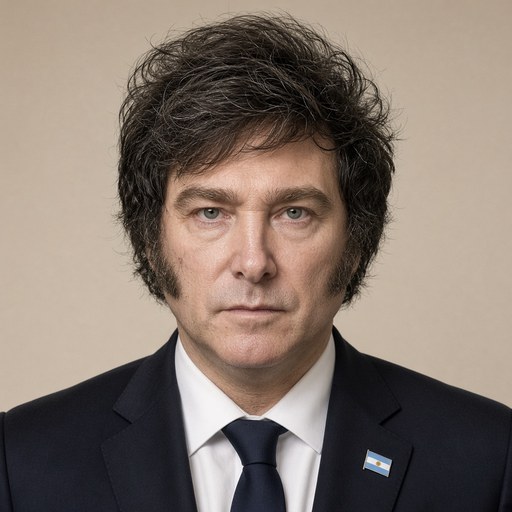
Speech by President Javier Milei at the Closing of the Expo EFI 2026 at the Convention Center of the City of Buenos Aires
 Javier Milei · President of Argentina
- Context
- Milei addressed the closing of Expo EFI 2026 in Buenos Aires on April 29, 2026, reflecting on Argentina's economic reforms and ideological foundations of liberalism.
- Main themes
- Economic stabilization and reform, liberalism and free-market ideas, Argentina's economic achievements, critique of Keynesian economics, historical perspective on economic policy, media versus economic data, totalitarianism and economic systems, growth and transition economics
- Duration
- ~89 min
- Words
- 10,692
- Sentences
- 458
- Readability
- 60
- Grade
- 10.6
- Syntax
- 2.98
- Vocabulary
- 2.00
Translated from Spanish
The broad sphere of national life a sentence belongs to. Every sentence has an Arena, so it is the denominator the other indices are read against.
Other458 sentences in 59 paragraphs
Javier Milei: Good afternoon. Well, first of all, I would like to thank the organizers of this event for inviting me again and for the honor of having the opportunity to close this magnificent event. I am clear about the beginnings, the phenomenal initial work of Esteban. So I congratulate you because this is a place where economists feel comfortable. So thank you for such a task and to all your team and all your people.
That is to say, I still remember my other life. Basically, when Esteban called me and told me what he wanted to address in this congress, the truth is that it seemed super attractive to me and I said: I can't miss it. And indeed, I found it very, very interesting to describe what the economy in transition is, stabilization, reforms, and growth.
In order not to make the talk tediously long, I will refer to two other talks that today this week, the three talks have a meaning and are part of a package, so to speak, and in the talk on Monday at the Libertad Foundation, the idea was to explain that liberalism works and basically what we did was put the results in a historical perspective, that is to say, this makes one aware of what is happening and there is a phrase that I like very much that the best Minister of Economy in history, Toto Caputo, usually uses, when they say to him well I have seen this before, no, you have never seen it, this has never happened in 123 years unless you are over 120 years old, you surely have not seen it.
So that talk was about putting the achievements of this management, but with a historical perspective. That is to say, the graphs were broader and that allows one to see the tremendous achievements we are having. And also to highlight that never in Argentine history has there been such a discrepancy between the real data and the nonsense that the media says. I have never seen it in my life. I understand that they may not like me, but I could almost share that if they don’t like me. But what I mean is, at least first the data, it would be healthier to be able to discuss with the data on the table and not have to endure lies, slanders, insults, and so on all the time.
The important thing about that presentation is that the achievements were made clear and put in historical perspective one realizes the size of the achievements, which is why we receive international recognition but as the saying goes “no one is a prophet in their own land” so we are not too concerned, what matters to us is the historical legacy. The talk yesterday at the Palacio Libertad had the characteristic that - although it had an academic format and we studied and discussed an academic topic - what we did was talk about probably one of the most important authors in economics, which is Keynes. But it is not that we only talked about Keynes, we actually talked about a particular work of Keynes, which is “The General Theory of Employment, Interest and Money.” This is not trivial, Keynes is a very complex author, his complete works have 30 volumes. I confess: I have not read all 30 volumes, I have read many of Keynes's books, but I have not read all 30 volumes. What I have studied intensely is the General Theory. The feeling I have is that many times Keynes is referred to in relation to the General Theory which from my point of view is a literally sinister book, so basically it is bad economic theory and not only that but the conclusion, chapter 24 of the General Theory basically proposes as a system the economic system of the Nazis and the economic system of the fascists and also that was framed within a debate that was the debate on socialism called the controversy over socialism and it is a complementary position to that of Oskar Lange who said that socialism had to have full control of the means of production and that basically consumers should determine their spending as they pleased and that avoided the problem of economic calculation and the complementary vision that Keynes proposed, which was basically what the Nazis did and what the fascists did, in reality controlled everything from the demand side and left the means of production to the private sector but they were mere managers because they told them what to produce, how to produce, and how much, therefore they were all variants of that debate and therefore those who come and talk and propose to return to Keynes about Keynes, let’s do Keynes and I don’t know what Keynes, let’s be clear that it is the macroeconomics or the economy of a totalitarian system.
Let’s be clear about that. But it is not that I say it; Keynes himself says it in the conclusion of the work. So one has to be quite careful, I take the issue quite seriously when I read a book, especially if it is a classic. So the reflection of the second talk was: Keynes no. That is to say, we adhere to other ideas, we adhere to the ideas of freedom.
It is also good to be clear about what we say when we talk about the ideas of freedom. We, in fact, I did it in the first cabinet meeting, and it is setting the framework: liberalism is the respect and restriction of the life project of others, based on the principle of non-aggression and in defense of the right to life, to liberty, and to property. So if one truly wants to see how this works, because I also love it because I find many people talking about liberalism and they are not liberal, so it is difficult for someone who understands what the ideas of freedom are to have other ideas. That is to say, this is like I don’t see people going from Miami to Cuba, I see people going from Cuba to Miami, risking their lives. This is the same. The reality is that when you start reading liberal authors it is a one-way street. That is why there are so many socialists who came to this side and none of ours went to that side. In fact, one of our greatest exponents, Hayek, was a socialist until he studied with Mises.
So when one takes an action, one says: well, how does it affect life, how does it affect freedom, and how does it affect property? And one must also be careful with what the principle of non-aggression is, because sometimes I find: “no, Milei told me such a thing.” And the question: “and what did you say to him before? I would say as a concept, because some get so sensitive. Besides, if I tell you anything, I do not affect either your life, or your freedom, or your property. And you can tell me exactly the same thing and I can also answer you, which is part of life, and it does not affect any of the natural rights. I say this, I will not accept the psychopathy, neither from the kukas, nor from the liars of the journalists.
Aside from that, this talk, I will finish on this last despicable group by 95% and it is that, they talk about my answers and do not mention the pile of lies, slanders, insults, and all kinds of nonsense that they have said about me, about my family, about my four-legged children, which by the way, happy Animal Day, there are many here who are two-legged, unless they believe they are part of the mineral kingdom or the plant kingdom, we are all animals too, so it is incredible because human beings are so arrogant that they believe they are in another category.
They have said all kinds of nonsense about me, they have accused me of being incestuous, zoophilic, pedophilic, all sorts of things, therefore, I believe I have the right to defend myself or the principle of non-aggression, what do you think it is, that is to say, you can answer, it is not that journalists can hit and say any lie and you have to endure it and that does not affect freedom of expression and if you think there is an issue of asymmetry, in what thing did I exercise violence, in none, I say for these crybabies who are crying all day and if that symmetry means that then they exercised direct asymmetry when I had no position, so it is quite interesting how we look at the ideas of freedom.
That said, today’s talk, which is the third element, has to do with growth. And that is why I liked the topic of what transition is so much, because transition also requires understanding what we mean by transition. Because if we do not give a sense to the word, it seems to me that we will not agree on what it means. And I clarify this because my feeling is that the vast majority of Argentine professionals, that is to say economists, tend to be quite blunt in dynamic terms. That is why I want to spend some time or invest some time, depending on how each one wants to define it, on what we define as transition.
If you are going to be talking about macroeconomics, that is to say short-term economies, like, I don’t know, any macro model you have seen conventionally, whether it is the aggregate supply and demand model, with its part of the goods and money market known as ISLM; if you want to talk about the Patinkin model, or whichever you want; or the Modigliani model, whichever you want: those models are static models and the concept of transition has to do with the concept of stability. That is to say, you have an equilibrium point and it is how you go towards that point. It is a concept of stability, it is a concept of if you take the economy out of that point, how it returns. Therefore, when one talks about transition and is with a macro model that is a short-term model, it has to do with this issue of the conjuncture and the search for that equilibrium. Now it is very different if what is discussed is a long-term issue, and in fact the title, that is why it seemed so attractive to me, has to do with growth. So we are discussing long-term, it is a long-term problem.
So, how is transition defined? Well, it depends on the type of model we have in mind. If I am going to do it very roughly, two families of models have models where the steady state is fixed, even if it is a growth model, the steady state is fixed, for example, the Solow model is a model that has the steady state fixed why? Because it tends to a per capita capital stock and that per capita capital stock determines the per capita product, that is to say, if you take the economy in aggregate it moves at the growth rate of the population but apart from that, the equilibrium defined in terms of per capita capital stock is a number that is fixed, so you have defined an initial condition and you have a steady state condition and the transition in this case would be what is called in growth theory convergence.
So, if the difference, for example, between the United States and Argentina were a matter of per capita capital stock, Argentina starts from a lower per capita capital stock and will converge towards that long-term per capita capital stock if the characteristics are given that per capita savings exceed the investment needs that sustain the per capita capital stock which is the sum of depreciation plus population growth multiplied by the per capita capital stock, then as long as savings exceed that investment need, the per capita capital stock grows and they converge, one should study the transition and in that movement I say what would be in that model, but then the reality of that model, type Solow family has a problem that does not accompany empirical evidence.
So there are models where there is no steady state, that is to say economies grow and grow indefinitely in principle. So basically there you have to look at the dynamic transition, there the transition has another format, it is how you look at the problem. So it is not trivial how you are thinking about the growth problem. I will take care to make it explicit, how we think about growth problems. But what must be clear is that if another economist has a different vision of how to build the steady state, or has a different vision of how to look at the macro, it may be that we are all talking about totally different things. So, the only thing I am doing is saying what I understand by transition, then you may like it, you may not like it, you may think it is nonsense. Whatever you want. It is how we look at the problem, which is another problem.
Now, it is interesting because we, it is true, are going to be defining the type of growth model, how we are thinking about these problems. But what we do need to agree on are the initial conditions. Because ultimately, what is a transition? It is the passage from an initial situation to another. That is a transition and it has certain collateral effects, which is what I understand we want to discuss. But this is very important: what are the initial conditions. And I also found Esteban's proposal brilliant. Because we had a problem with initial conditions and Argentina clearly required a stabilization program. That is why I thought it was very good that the first word was stabilization. Clearly, the Argentine economy had a big problem; the Argentine economy has not grown - did not grow - since 2011 onwards; GDP per capita in that period fell by 13%, or 15%, I do not remember the exact number. Furthermore, when we arrived, the inflation rate was traveling at 1.5 percent daily; we had four monetary bases maturing in one day; we had debt in pesos for 10 monetary bases maturing in 30 days; we had the Fund agreement fallen; we had negative net international reserves of 12 billion dollars; when we had price controls, capital controls, a gap of 200%; tariffs only represented 20% of the cost. Clearly, that economy had a huge imbalance. Additionally, the repercussions of having issued 28 points of GDP, 13 in the last year, were starting to come in; capital controls; a monetary surplus that was double what it was before the Rodrigazo. Clearly, it was an economy on the verge of exploding. When we actually acknowledged poverty, it jumped in the monthly frequency to 57%; additionally, 70% of children were poor. And not only that, but we had reached the total madness that 30% of formal workers were poor. And that, if that bomb exploded, would clearly lead us to be Cuba with an intermediate stage in Venezuela. That was the situation. Clearly, the first thing we had to do was stabilize the economy.
I am not going to recount everything, because I did that on Monday, but that inflation, for example, let’s say the one and a half daily plus all this explosion of monetary problems would have led us to inflations of 15,000 or 17,000 percent, when they do the monetary calculations, today it is either 31 or 33. They do not want to buy the counterfactual, do not buy it; the inflation rate delivered by the previous government was 211 and with the trajectory it was on, let’s say it was going to touch 300. So, the key was to cut monetary issuance, which was a fiscal adjustment of 5 points in the treasury and 10 in the Central Bank, and we did all this respecting contracts; for example, there was neither a default nor a Bonex Plan nor a reprofiling nor anything, debts were honored, property rights were strictly respected because that would have been much easier to destabilize; if you blow up the asset holders, it would have been much easier, we chose a longer path but respecting property rights.
Moreover, we did it without raising taxes; we did it by lowering taxes because we also lowered, we are the only government that lowered two and a half points of GDP in taxes, among taxes that we eliminated or that we lowered, we eliminated more and lowered 20 taxes; that is, they have never seen that either, but aside from that, what is important for growth, the first thing is having avoided hyperinflation, having, let’s say, started a sustained decline in inflation despite, let’s say, the speculative attack we suffered in the second half of last year, and why is that important? Because in reality, inflation is to the price system what noise is to communication; if I, at this moment when I am speaking, I don’t know, from there the scenario ends and over there a mountain of noise appears, a wall of noise, well, I can be very good at explaining and you are not going to understand me basically because there is noise in the middle; consequently, that is inflation, it distorts the functioning of the price system and does not allow for a good allocation of resources, so it is essential to lower inflation for the price system to function better and then there is an improvement in the allocation of resources. Now decisions are made that make more sense, but also with inflation, there is a moral issue, which is theft, and therefore it must be exterminated because it is wrong, because it is theft.
The second issue, not minor, is the issue of having reduced the fiscal deficit. In fact, we eliminated it in the first month; after 6 months, we ended the quasi-fiscal, and this is important in two ways because this means that savings in the economy increased from the public sector side. And the consequences are two: one is that all those funds that the state took and that were crowding out the private sector, that allows credit to the non-financial private sector to go from being 3, 4 points of GDP to today being 12. It is still a meager number, without a doubt, but before there was not even that. Again, no one here is saying that we are in Switzerland. I mean, we actually want to be better than Switzerland, but let’s keep in mind where we come from. So, that savings now that will finance the private sector can finance consumption or can finance investment.
That is one of the effects and that clearly, if it impacts investment, clearly that is what is going to generate growth. The other thing it can do and that it actually does, the truth is that when we won the election, the country risk was around 3000 basis points. Today it is at 550. That makes the opportunity cost of capital decrease; if the opportunity cost of capital decreases, the possibility of creating value increases because basically creating value depends essentially on the real return relative to the opportunity cost. So if I am lowering the opportunity cost because I am lowering the country risk, consequently the interest rate is lower, therefore the possibility of creating value is higher. Moreover, in an economy that has consumed capital for 20 years in a gross manner, what would be the value of the marginal product of capital, if you want to put it in financial terms, the ROIC; and if you want to go to older versions, the ROA (You know that ROA is not as precise as ROIC, which is a better measure). That is, when you look at EVA, in the end, the key value driver of EVA is the differential between ROIC and WACC. And that is what, multiplied by the assets or over the invested capital, will give you what you are creating in value. Therefore, having lowered the country risk means that the WACC of the economy is being lowered and consequently that opens the possibility of making investment projects. Obviously, those who enter first will capture higher returns, obviously, if it is an economy that has consumed capital.
But not only that, but also this situation made it so that if we look at GDP measured by the seasonally adjusted EMAE, since we arrived, it is 8% up, and when we correct what happened in February, which has to do with the loss of three working days, we will return to historical highs; consequently, since this government arrived making the largest adjustment in the history of humanity because we implemented a 15-point adjustment, that meant returning 100 billion dollars to Argentines; that is also true, let’s say that poverty fell by 28% and we took 14 million people out of poverty; the adjustment is not recessive nor does it generate poor people if the adjustment falls on who it should fall on, which is the public sector; today the size of the public sector in terms of GDP is one of the lowest, at least of this century because it is at 15%, and if they corrected the disastrous pension system caused by the imprisoned one, we would surely be competing with much lower levels than historical levels; that is, we returned 100 billion dollars to Argentines.
And obviously, that is also seen in jobs. I know that it must hurt journalists to have to admit that they have been lying all this time. The presentation on Monday should wake them up: either you eat narratives or you are directly corrupt. Employment also increased; it may be that you do not like the type of employment, registered jobs fell and independent jobs rose very strongly. Well, for that we sent the labor modernization law; which, by the way, during the return of Democracy, no one could pass a labor modernization and we did it.
Not only did we pass labor modernization, we also passed zero deficit, we also passed tax innocence. Argentina, you were guilty before the tax authorities until you proved otherwise; I do not know if you realize that today you are innocent until proven otherwise, you have returned to being free. It is an impressive shock of freedom. But not only that, we also passed the lowering of the age of criminal responsibility, we also passed the glaciers law, we signed the agreement with the European Union. Hey, come on! Thank goodness we lack management; if we had more management and had more legislators, I can assure you that I will undoubtedly turn Argentina into the freest country in the world.
So, there we have the associated effects, the positive effects of stabilization, lowering inflation that distorts the price system and better allocates the economy. An increase in savings that generates more consumption and more investment from the private sector, a decrease in country risk that makes investments more feasible; if those are the effects of stabilization, that is to say stabilization is a crucial element to be able to start growing, then we have just defined the initial conditions. Well, now we have to see where we want to go, so we also have to think about what family of models we are going to be looking at; remember that I told you there were two families of models, there was one family that had a stationary state in terms of GDP per capita and in terms of capital stock per capita and there were others that did not.
So I mentioned that the standard model, the standard growth model which is the Solow-Swan model, basically that model has some interesting things and has other things that do not. But the saddest and ugliest part of the Solow model, although it has something very nice which is the description of convergence, does not specify how the convergence issue is because basically… But you can fill in the history. How is it that suddenly, I don’t know, you had a very low capital stock per capita, and then you talk about returns, about opportunity cost and then you get there. It is a little more complex, believe me, it is a little more complex. But you can have an explanation. There is an explanation that I like a lot which is Hayek's hypothesis about the market, which is a process of discovery, and the difference between a country that is already developed and one that is on its way to doing so is that they have basically discovered many more products and have more products. In fact, the characteristic if you look at the American economy is that they have many more products than we do. This is a very interesting thing because they have already discovered them; all we have to do is know how to copy. So if we copy, we will surely be able to travel much faster and arrive faster than it took the United States to become the United States. Therefore, that could justify convergence.
The problem with the Solow model is that, just as it was developed in 1956, in parallel with Trevor Swan, the following year Solow tested it, in 1957. The problem is that when he tested the model, the model only explained 15% of growth. So all the discussion of growth was to explain the residual; but it turns out that the residual was larger than the explanation itself. So the model, to put it in some way, is very nice, it is very aesthetic, but it does not explain, I mean, if it only explains 15%.
The answer to that came from the University of Chicago. In that case, basically Stigler said: the problem is that you are not considering human capital. And from there two lines of research emerged: the micro research line, which is all the human capital theory of Gary Becker; and the other line of research which was the macro research line, which had to do with growth, with Hirofumi Uzawa, who by the way was the thesis advisor of what was probably one of the greatest economists in Argentine history, Miguel Sidrauski.
So, basically what Uzawa did was consider human capital and then now the work, you had capital and labor and the problem was that growth was limited basically by population growth. So when you introduce human capital, you bypass that problem of taking a population that grows at a constant rate n; and consequently, now the neoclassical production function, which has constant returns to scale, ceases to be a problem and can explain growth.
No one paid attention to that hypothesis; more work was done with technological progress. The reality is that it was arbitrary, which is why that literature gradually disappeared over time. And that literature reappeared with someone who is now a Nobel Prize winner in Economics, Paul Romer, who is mentored by Robert Lucas Jr., also a Nobel Prize winner in Economics, and created the theory of endogenous growth. A whole debate began in 1983; starting in 1985, it became known through the readings of Lionel Robbins, where basically Robert Lucas Jr. explains the models of endogenous growth and talks about human capital. And a whole discussion started that ended in 1989 with a paper by Mankiw, David Romer (not Paul Romer), and David Weil, where they conducted an empirical test of the model with human capital and explained 85%. That is to say, 70 percentage points of growth are explained by human capital, and they said: enough, the debate is over, it is human capital.
The reality is that it is a bit more complex because, let me put it this way: Argentina at the beginning of the 20th century was one of the societies with the highest education levels on the planet. So how do we explain this decline? Therefore, it is not just human capital; it has to do with institutions, it has to do with how to generate growth. And what I am going to do today is work on what technological progress is and the ideas of Schumpeter, which, by the way, relates to those who won the Nobel Prize this year, Philippe Aghion and Peter Howitt, who basically put an interesting mathematical technology into the whole debate of endogenous growth, deriving the models of creative destruction through dynamic optimization. It is very interesting to understand what creative destruction is because that is also important for understanding what transition is. We need to understand that if we want to progress, the transition is technological progress, and that generates creative destruction. Let’s understand this because otherwise, we are talking about anything.
Now, if we focus on explaining the problem of increasing returns, that is to say, what increasing returns are: when you put in an input and it grows more than proportionally. And I will put it bluntly: from 1800 to today, the world population multiplied by 10, and GDP per capita by 15. That is to say, the product increased 150 times, growing more than proportionally compared to the population, and therefore that is why per capita product rises. That is to say, increasing returns exist; in growth theory, this is called a hockey stick. So, if we want to understand what is happening, we need to see what is behind the hockey stick. Well, the first problem is that neoclassical theory, as it is designed, with constant returns to scale, does not work; it does not explain the problem; we have a methodological apparatus to explain growth that does not function. I dedicated a book to that called “Capitalism, Socialism, and the Neoclassical Trap.”
Now, what is interesting about all this is that Adam Smith had already discovered this when he published his research on the nature and causes of the wealth of nations; he had already discovered that it was the idea of the pin factory and how the division of labor basically led to a more than proportional increase in productivity. And not only that, he also described how this transition occurred: he explained that there was a learning by doing, that is to say, as people did more of that task, they learned to do it better; he had already introduced learning by doing. So you were at a certain point and began to have a growth in productivity because you learned to do it better until at one point a discrete jump appeared, that discrete jump is called technological progress, and it is that with the same work you can produce more or you can produce the same with less work. Consequently, you have a leap; the guy had seen it all, I mean, he was super clear. And this is not minor because for neoclassical theory, increasing returns are an indicator of concentrated structures, and what they want to do is regulate everything. The best example is Europe; it is so hyper-regulated that it does not grow. I am creating more problems for you, Pablo; yesterday was not enough, and today I continue.
The second point is that it is also very important that Adam Smith states that the limit of the division of labor is given by the size of the market; therefore, if I open the economy, the size of the market, and I am looking at 48 million human beings, I move to looking at 8.25 billion human beings. That is to say, what that does is enhance the division of labor, but what does division of labor mean? If we are going to divide the work among more people, it means that we are going to specialize in fewer things, is that clear? The one who explains it best is Professor De Pablo; he says: when a person graduates as a doctor and goes to live in a small town in the interior, he will be a generalist; he will not dedicate himself to a very particular specialization. Why? Because there is no market; therefore, I need a market; specialization is associated with a larger market. Specialization means that we are not going to do everything; we are going to do some things, and we are going to do the ones we are best at, and the ones we are bad at, we will not have a chance.
However, be careful about what we are bad at or not bad at. Because I will do it this way, directly putting a sector, the discussion in the textile sector: no, well, we cannot compete against China. However, Italy has higher wages than we do, and yet it has a textile industry. How is that? They compete on design. That is to say, again, Italian cars are quite a bit more expensive than American cars, for example. But what is the difference? The design; they focus on design. That is to say, design is something that people like. So basically, it is not that they cannot compete; they have to find a way. And if they are going to be calling on the state every time something does not please them, it will be difficult to compete.
Therefore, the issue of openness is also included. Without a doubt, after what I told you about the empirical evidence, there is a fundamental role for human capital and obviously for economic freedom. Those countries that are freer are 12 times richer than the repressed ones. In fact, they have 25 times fewer poor people in the standard format, 50 in the extreme format; that is to say, the lowest decile of the distribution in the free country is better off than 90% of the population in the repressed country. Therefore, embracing the ideas of freedom pays off. Then there is a moral discussion, which I think is the most important; but if you want to think about it in utilitarian terms, embrace the ideas of freedom because it will yield fruits.
Now, what are we doing then to be able to grow? Well, the first point is the issue of increasing returns: we have a ministry that has never existed in Argentina, which is my invention, that, with the colossus, with Federico Sturzenegger, we call internally the Ministry of Increasing Returns. But since we are clear that putting that name would have been very nerdy, we named it the Ministry of Deregulation. So the question is: well, what did they do? Well, we made more than 15,000 deregulations throughout the period we have been in government: we are the most reformist government, not only in Argentine history but in the history of humanity. No one has ever done so much in such a short time. We eliminated at a rate of 17 regulations per day; that is to say, I would almost tell you that if you sleep 7 hours, by the time we finish this talk, we might eliminate one or two regulations. Do you realize? So, where is it seen? It is very easy to see: Argentina, for example, in the last year jumped 40 places in terms of economic freedom; we were in a hyper-repressed situation, where we were with Venezuela and other almost unmentionable situations. Well, today we are much better; no country has made such a great advance in such a short time, except for those countries that suffered a catastrophe, like a war or something, and had to completely restructure, which allowed them to make a leap of those magnitudes. That is to say, if you look at the experience of reducing public spending by 30 points, there are five experiences in history, but four are related to post-war exits; that is to say, the only ones who did it without coming out of a war were us. Imagine if we also add the adjustment of the Central Bank, the monstrosity we did. And unlike everything they said would go wrong, that we would sink into a great depression, no, the economy grew almost 10%, when an economy that had been growing at 1% per year over the last century, we grew ten in two. We lifted millions of people out of poverty; I say this because it seems that the manual burned for some, and they do not want to see it; sometimes I understand that it is difficult to take the loss of capital.
Look, I will tell you a personal experience: in 2014, if I am not mistaken, I bought a book; no, I bought the book later; I was given it; I was focused on this issue of increasing returns; I was totally attacked because the question was how can it be that if the world, in the last 250 years, lifted 90% of the population out of poverty, if I take it with a dollar a day, then that measure was adjusted so that something else could be said, but how can it be that the flip side of the hockey stick is a monopoly, and monopolies or concentrated structures are bad for neoclassicals? I mean, something has to be wrong; it cannot be that this has generated so many millions of human beings improving their living conditions; how can it be that for economic theory that is bad?
And there I read an article by Murray Newton Rothbard called “Monopoly and Competition,” and the reality is that after three hours of reading that 140-page article, which is a beauty, I said: everything I have been teaching for 20-some years about market structure is wrong. I don’t know; I took the loss of capital; it didn’t bother me; my commitment is to the truth, not to what I studied and have to defend it for some reason. In fact, look, I will tell you from my point of view what the greatest virtue Toto has as Minister of Economy; I have talked to him about it. First, let’s keep in mind that the mess we had, two-thirds was financial, so you need someone who understands a lot about finance. But the most wonderful thing Toto has as Minister of Economy is his experience managing trading desks. He cannot fall in love with any stupid theory from any analyst because if he lost money, he would be blown to pieces. That is why he worked in the best institutions in the world; he worked at JP Morgan, he worked at Deutsche Bank, and he worked for Black Rock. I mean, the guy is a giant and knows how to make decisions and does not fall in love with any nonsense. If it works well, and if it doesn’t work, he pulls the trigger; he executes it. I mean, the guy does not make mistakes; that is brilliant. We do not have time or margin for mistakes; there are 48 million people on the other side. Here, I do not care about a problem of derivative 25; it works or it does not work; if it does not work, it is thrown away, and we go where it works. Good Argentines do not care about the sign of the derivative, so to speak, ex ante. What I want to say is that we are not going to fall in love with any model; we are in love with data and doing things right.
And that is a determining issue; therefore, we are working to free increasing returns; every time Federico removes a regulation, he frees increasing returns and generates growth. The second part, which is not minor, is what has to do with trade openness, not only the agreement with the European Union, but also the ones we are advancing with the United States, with EFTA, and all the things with which Pablo is going around the world trying to open markets. Look at our concept of embassy: the United States Embassy is run by a successful businessman, for example; the Spanish embassy is run by a successful businessman. That is the concept; that is to say, people generating business. We are always thinking about what business we can bring to Argentina. So it is not an opening to make stupid speeches at onanistic forums that do not fix anything. No, we were put here to solve problems; what do we do? We solve problems. Openness generates growth; we are going to open. Argentina is the country, given its income, the most closed country in the world. Argentina should have a trade openness of 93%, the openness coefficient. It is 30. Guys, what indiscriminate opening are we talking about? This is a fortress that no one can penetrate. Well, that cannot be because Argentines pay for that with a lower quality of life.
The other element is what we are doing in terms of fiscal policy; we lowered taxes. And if we continue doing things as we are doing, and the Argentines decided next year to renew our contract, well, in this government, we would be returning 500 billion dollars to good Argentines, the same amount we received as debt from the previous government.
But not only that. Another thing we did is the RIGI, because at its core, the RIGI is a system of tax incentives. What did they say? That it wouldn't work. We are already at 100 billion dollars of RIGI. That is to say, not only are we returning to good Argentines 100 billion dollars, but we are also bringing in 100 billion dollars in investments. If we also add that we are going to export this year 100 billion dollars, well, that's three times 100 billion dollars. This economy, I told you when April 24th came: it is going to rise like a diver's fart, and it is rising like a diver's fart, and this way we are going to become a power.
If we said it had so much empirical weight, let's say what we are doing in Human Capital, well, in principle, the other great invention of this government was the Ministry of Human Capital, that is to say, we stopped having Social Development and I don't know what other pathetic names they had before. It could also be called the Gary Becker Ministry, but it is called Human Capital; we thought it was a bit strong to name it the Gary Becker Ministry. Now, what is important is the change of concept: before, assistance to the most vulnerable sectors was about giving them fish, which in essence was slavery; don't forget Friedman’s phrase that said “there is no such thing as a free lunch,” that is to say, it is free fish. The free fish, for those who want to know the origin, has to do with the exit of the Hebrew people from Egypt; that is to say, the free fish was in Egypt, in exchange for the free fish, they were slaves. Sometimes I am surprised by the passion some have for being slaves. Well, we decided to change that; we do not want Argentines to be slaves, we want free Argentines. So, the logic of social containment policy changed; today what we give them are the tools to get out of that situation of vulnerability; we want them to learn to fish and, if possible, to have fishing boats, all they want, so to speak. So, that is what is relevant; we do not want Argentine slaves; I understand that politics loves to have slaves to have captive votes; well, I want free Argentines; I want Argentina to be the freest country in the world, and that also implies starting to break the shackles of those who were slaves to politics. That is why the Ministry of Human Capital focuses on childhood and family; why? Because it is the moment when brain formation occurs; that is why health is so important. Because basically, if people do not develop or do not have good health, they cannot perform in school. Not to mention all the improvements we are making at the education level, and that had to be complemented with the labor market, and that has two aspects: that the kids who leave school can find work. For that, it is essential that the labor market has a more flexible structure because if not, only with the structure we had, well, in fact, the symptom of failure was that almost 50% of Argentines were in the informal market; it is obvious that the previous model had failed.
That also means that those who need to enter do not enter; that is why unemployment was concentrated among the youngest, and that is where we are correcting. But not only that, there are people who have fallen out of the system, and we are working to reintegrate them. In fact, we recently inaugurated, with Sandra, everything that is a training center, and it is wonderful; do you know who finances it? The companies. Which is also in line with the theory of human capital, because when you are in a company, are you going to train workers in general or specific human capital? No, you are going to give them specific training so that they can appropriate it. And who is there? The companies are providing training to people; it is wonderful. And that model is replicable in all provinces. So clearly, we are also working on that. That is to say, all the machinery of growth we are putting into operation. We are committed to making Argentina great again, and we are going to do that hand in hand with the ideas of freedom.
I defined the initial situation and defined what we would like as a society, how we want or think the path to a prosperous country should be. But it all seems like I am avoiding the debate on the transition, but since I am Milei, I am not going to run away from the syringe, and I am going to answer now about the transition. So now we can define the transition in two ways or in two senses: one is a transition with the economy in a steady state, that is to say, an economy that does not change. So what would happen in an economy that does not change, and what would we call transition in that case? It would be a matter of resource reallocation; it is neither more nor less than that. Let's see, every time we deregulate, what happens? Relative prices are changing. If you have relative prices changing, what do you expect, that the allocation of resources remains the same? I understand that many have not studied general equilibrium, but it is counterintuitive that relative prices change and that the allocation of resources does not change. It seems to me that the normal thing would be to understand that if relative prices change, the allocation of resources changes.
What does it mean for the allocation of resources to change? That there are sectors that will do better and others that will do worse; that is what it means. That said, I am going to do it with a transitory shock. Transitory shock, the pandemic: people are hyper scared; one of the mechanisms to combat it was to wear masks. So, there are some products that stopped being sent, and others that were demanded a lot, which were the masks; that is to say, there was a change in the composition of demand; is that clear? There is no growth, nothing, because besides, the world was left frozen in that situation. Well, but there was a change in the composition of demand. So, if there was a change in the composition of demand that led to an increase in the demand for masks and a decrease in the demand for other things, it is logical that the price of masks goes up and that of other goods goes down, right? That generates a signal to the system that says to take resources from where people are not demanding that and move them to the other sector; it seems quite evident. Well, this is not a minor issue because there was no shortage of the idiot who wanted to say, “no, but the price of masks is rising at this difficult moment; let’s regulate the price of masks.” By doing that, what did he do? He killed a lot of people because if you had let the price rise, the economy would have directed resources there, and there would have been many more masks. If there were more masks, fewer people would have died. So that stupidity of wanting to control that price resulted in lost human lives. In that case, it is quite… turning your back on economic analysis; it is costly, almost immeasurable because it is not, not even if those sons of bitches end up in prison for a crime against humanity, because they will not return the loved ones they lost there.
That is one case; that is transitory. Another case could be that also… (Unintelligible), but that it is permanent. This can be said, for example, of a company linked to tobacco, linked to wine, because people’s habits are changing. That is why I liked an example that Salvador Distéfano made, which I found brilliant: he says, well, now we all started eating eggs, so we eat scrambled eggs, we eat eggs of I don’t know what, poached eggs, omelets, whatever, but we put eggs in everything. Well, except for one idiot who does journalism, because he must not be doing well as a psychologist, who said, “no, well, but Americans are very foolish in the way they eat.” It is not the one you think I am talking about; I am not talking about the one on television; I am talking about the one on the radio, one even more foolish, so to speak, and much more leftist. So, he does not understand the nature of the example; this is what Hayek, who was brilliant, said: if socialists knew about economics, they wouldn’t be socialists; or as Mises said, knowledge in economics leads to liberalism. That is why he is leftist, because he says… and also being leftist has to do with a whole series of horrible human issues, which implies being envious, resentful; that is a leftist, basically a resentful guy.
So, the central point here is what Salvador said: Well, now you put eggs in everything; the truth is that you do not see people combining eggs with jam. That is to say, that change when you are doing that sent jam producers to bankruptcy. Now no one is complaining about the jam producers. Or it is like that person who says, “no, well, how poor these men who have stores in such a place, who sell nothing.” And suddenly: Ah, look what I bought. Where did you buy it? On MercadoLibre, on Temu, on Shein. I say, that is the other side. That is to say, then explain why a person should be paying more for something. And it is false that jobs are lost. There is a beautiful book that I emphatically recommend to you called “Economics in One Lesson” by Henry Hazlitt; this is called the chapter The Salvation of Industry X. The reality is that if you are going to buy new, cheaper goods now, you generate a cash surplus that you can now dedicate to something else. So you are going to buy elsewhere, you are going to buy other things, and therefore what you are going to have is a reallocation of the labor factor.
That is to say, jobs are not lost; there may be relative intensity; well, there will be a change in relative prices. But if you, for that, then what do you need? A flexible, modern labor market. Well, if you are constantly with technological progress changing relative prices, you need flexible markets so that the factors of production can move faster. And that is what is needed: to give more flexibility to the economy; that is what will make the big difference. That is one point.
Another point that has to do with the issues of creative destruction. This is also a not minor issue. And it is that if you are a competitive company. We are thinking of a perfectly competitive case; could there be technological progress there? No, there cannot be technological progress because it means that you are taking resources from the company and putting them into research, development, and new technology developments. What is the problem? In terms of the existing product, you would be having waste; that is to say, you would be earning less; therefore, you would have to go bankrupt. You would only do all that investment process if in exchange for it you could obtain a quasi-rent. If you obtain a quasi-rent, then it means that you will have a monopoly. Therefore, if you kill monopolies with regulations, what will the result be? You will kill technological progress; you will kill everything that has to do with research and development because there would be no incentives. A clear example is Argentina. Argentina wrecked, filled with regulations, did not grow; obviously. Now the process of creative destruction or creator destruction says that when you made an invention and kept the market and displaced another, there is someone who is going bankrupt and has to reconfigure. You have to know that growth, technological progress is not an improvement… because one wins and another loses. The issue is that in the end, everyone wins. So don’t come to me with the stupidity that the psychopathic kukas and the idiots of the journalists say, that say “no, well, but the economy grows unevenly.” Yes, idiot, it grows unevenly. You have enormous technological progress, you have a huge change in relative prices, you have an enormous liberation, so there will be sectors that will expand and sectors that will contract. Now, when I look at the diffusion index, it is 75%. That is to say, of the 16 sectors, 12 are growing. So if they then come and take and do cherry-picking and take the four sectors that are doing poorly, from the one that is doing poorly, they take the one that is doing the worst, they commit the fallacy of the whole for the part, taking the worst of all and generalizing it, and well. The problem is no longer ignorance or how bad the one communicating it can be; it is a problem for the one who believes it.
So, these things one has to understand are going to happen. And we should be happy about what is happening in the Andes, about what is happening in mining, which has to do with lithium, which has to do with silver, which has to do with copper. The Chileans export 60 billion dollars; we export 5,000. Don’t you think something is wrong? If we did the same as the Chileans in the Andes, we would have a million jobs.
“Oh no, well, but I want to live…” Where are the highest salaries in Argentina paid? In Neuquén. I tell you, Neuquén is Argentina too. And so we also have everything that is gas, everything we can do in agribusiness, we have what has to do with the knowledge economy, the possibilities we have to become a hub of artificial intelligence. Relative prices are going to change; there will be a reallocation of resources. The question is whether you want us to do well or do poorly because if we start attacking the price system and punishing those who are doing well to subsidize those who are doing poorly, the economy will be worse, and we will all be worse off.
The question is, or if you prefer, the answer to this is what we call morality as state policy. We are now going to enter the cynical territory. Let’s suppose now that I am a son of a bitch, just like the entire political caste. Ex ante, they might believe it, and that’s fine; after so much bad experience with politicians, a starting hypothesis seems reasonable to me. What would a guy who is looking at the votes have to do? I open up, generate competition, why? Because they earn 48 million, they lose Don Chatarrín, Gomita Lumínica, they lose those, Gomita Lumínica charged four times more for the tires. Don Chatarrín for the expensive tubes charged three times more for the tubes. While they were fighting with the damned, they ended up paying three times more. An interesting thing. Now I look at how much they earn, how much they lose, I do political utilitarianism: no, I have to promote growth, I have to promote openness, I have to promote creative destruction, I have to do that because in terms of electoral calculation it suits me. But you can imagine that I cannot betray my heart as an economist; it is part of my old life that I carry with me, and I do not intend to get rid of it; I will continue to be an economist.
The question is, is that efficient? No, it is not efficient. Because if I have to sustain this higher price by punishing those who are doing well, I am affecting relative prices. So the resources that need to go to the winning sector do not flow. And the sector that is supposed to do poorly will continue to do poorly, but it will also have to be paid for with taxes. For what? To subsidize it. Or to generate a wall, Troy, it was a mess to enter Troy because it was impossible to get in. But Troy also fell.
So, in that concept, there is an enormous loss of efficiency. Because someone has to finance it. That is to say, when they say, “no, well, poor sector.” The question is, how the hell are you going to solve it? “No, well, let’s lower taxes.” We lowered taxes; did you think of asking a governor to lower taxes or to lower Gross Income, asking mayors to lower municipalities? We lowered. You also have to know who to ask for each thing. Look at how Valenzuela in Tres de Febrero lowered a lot of rates and they have a lot of investments; the model works. The provinces that have RIGI work. They can choose to be the Soviet Union; then don’t complain. It’s a problem of what we choose and holding accountable those who correspond.
Now, I am going to tell you something, even so, given political utilitarianism and given economic efficiency, there is something that is more important, and that is what, in our case, guides us. It is whether that policy is just. The question is: okay, I have to save sector X, and for that, I am going to smash sector Y with taxes. So I save sector X because I think it should be saved. Not only does it lose economic efficiency, not only are we worse off in terms of people’s well-being, which sooner or later will cost votes. The question is, is it right to do that? How many are in favor of theft? How many are in favor of unequal treatment before the law? That is the key. If a policy that you implement is unjust, you will have problems in society because they realize that it is unjust; it will negatively impact efficiency, and you will also go backward in terms of political utilitarianism. When your ethics and morals are aligned with efficiency and are aligned with political utilitarianism, society will progress. When you worry about collecting votes, that will end badly. Social justice ends poorly. Yes, social justice is magical in terms of votes. Because I have five guys, one has 500, the others have zero; I take 400 from the one who has 500, everyone ends up with 100. You know what? I go to an election, I win, I win with 80%. Now someone who is going to invest does not invest. Why? Because they say, “no, because if I make money, then they are going to punish me and take what I earned.” And the one who is going to work says, “no, I don’t work because basically, they are going to steal the fruit of my labor and give it to the one who doesn’t work.” So nobody works, nobody invests, nobody does anything; the economy collapses. But that policy falls above all things because it is unjust. And that is why we focus so much on morality as state policy.
The transition, you are experiencing technological change, you are having the release of increasing returns, you have changes in relative prices; there will be a reassignment of resources. There will be sectors that will do better, and there are sectors that will do worse. Those who do worse, if they do not adapt, will go bankrupt. Gomita Lumínica said, “no, if I don’t hunt in the zoo, I’m leaving.” Lumilagro said, “No, I’m going to fight,” and they are doing great. It will depend a lot on the entrepreneurs. What is the reality? It always depends on the entrepreneurs. You look at growth, yes, capital, labor, technological progress, but without entrepreneurs, there is nothing. The hero of this movie is the entrepreneur. And we, as policymakers, have to create policies that are just. I am fed up; I went to a meeting, and they say, “in which sectors should we invest?” I said, “Are you stupid or pretending?” You are the entrepreneur; you are the one who says where to invest. What we have to do is level the playing field; we have to remove all the parasites in the middle, all the fiscal burden, the regulatory burden, the monetary burden, the exchange burden, and level the playing field. Don’t pick the winner. We do not choose winners. You will have to bring out your entrepreneurial spirit, and this will be turned around by the entrepreneurs, those who create value, not the parasites who destroy value. That is why we remove the State from the middle and return freedom to the people.
Don’t expect us to tell you, “you have to do this, you shouldn’t do that.” Everything that is not prohibited is permitted. I am not like the other politicians where everything is prohibited except what I allow you; no. Everything is permitted as long as it is not prohibited. And it is clear what cannot be done: you cannot violate life, liberty, and property, and obviously, everything is based on the principle of non-aggression. That leads to economic efficiency; that leads to prosperity. So look at what questions you are asking because it may be that the question is silly, it doesn’t make sense. So what do we do? Do we protect? We already had the Infante industry for 70, 80 years, and how did it go? We have an 80-year-old Infante. We haven’t advanced at all.
All those policies failed; none worked. Therefore, let’s understand that we are in a situation of much technological progress, in changes in relative prices, in great deregulation, in which the State is being removed from the middle. Relative prices will change, and resources will be reassigned. What we need is the greatest possible flexibility so that the reassignment of resources is as quick as possible. If we accept this challenge, which is the challenge of change, we will be great again. If we do not have the guts to face change, we will become the shit that Kirchnerism brought us.
May God bless you all, may the forces of heaven accompany us, and long live freedom, damn it. Thank you very much.
The original Spanish. The tags above are read on the English translation's sentences.
Javier Milei: Buenas tardes. Bueno, en primer lugar, deseo dar las gracias a los organizadores de este evento por haberme invitado nuevamente y por el honor de tener la posibilidad de cerrar este magnífico evento. Tengo claro de los inicios, el trabajo inicial fenomenal de Esteban. Así es que felicitarlos porque es un lugar donde los economistas nos sentimos a gusto. Así es que gracias por semejante tarea y todo tu equipo y toda tu gente.
Es decir, todavía me acuerdo de mi otra vida. Básicamente, cuando me llamó Esteban y me contó lo que quería tratar en este congreso, la verdad es que me pareció súper atractivo y dije: no me lo pierdo. Y efectivamente me pareció muy muy interesante describir lo que es la economía en transición, la estabilización, reformas y crecimiento.
Yo para no hacer la charla tediosamente larga voy a hacer referencias a otras dos charlas que hoy día esta semana, las tres charlas tienen un sentido y son parte de un paquete por decirlo de alguna manera y es en la charla del día lunes en la Fundación Libertad la idea fue explicar que el liberalismo funciona y básicamente lo que hicimos fue poner los resultados en una perspectiva histórica, es decir, eso hace que uno tema y conciencia de lo que está ocurriendo y que hay una frase que a mí me gusta mucho que suele usar el mejor Ministro de Economía de la historia, Toto Caputo, cuando le dicen bueno esto yo ya lo vi, no, vos no lo viste nunca, esto no pasó nunca en 123 años salvo que tengas más de 120 y pico de años, seguramente no lo viste.
Entonces esa charla lo que hacía era poner los logros de esta gestión, pero con una perspectiva histórica. Es decir, los gráficos eran más amplios y eso permite ver los logros tremendos que estamos teniendo. Y también poner en evidencia que nunca en la historia argentina hubo tanta discrepancia entre los datos reales y las barbaridades que dicen los medios de comunicación. Yo no lo vi nunca en mi vida. Entiendo que no me quieran, pero lo cual, casi que hasta podría compartirlo si no me quieren. Pero a lo que voy es, por lo menos primero los datos, sería más sano poder discutir con los datos sobre la mesa y no tener que estar soportando todo el tiempo mentiras, calumnias, injurias y demás.
Lo importante de esa presentación es que quedaron en claro los logros y puestos en perspectiva histórica uno se da cuenta del tamaño de los logros, motivo por el cual recibimos reconocimiento internacionalmente pero como dicen la frase “nadie es profeta en su tierra” así es que tampoco nos preocupa mucho, lo que nos importa es el legado histórico La charla del día de ayer en el Palacio Libertad, la característica fue - si bien tenía un formato académico y estudiamos y discutimos sobre un tema de índole académico -, lo que hicimos fue hablar de probablemente uno de los autores más importantes en economía que es Keynes. Pero no es que solo hablamos de Keynes, en realidad hablamos de una obra particular de Keynes, que es “La teoría general de la ocupación, el interés y el dinero”. Esto no es trivial, Keynes es un autor muy complejo, sus obras completas tienen 30 tomos. Yo confieso: yo no leí los 30 tomos, leí muchos de los libros de Keynes, pero no leí los 30 tomos. Lo que sí estudié de manera intensa la teoría general. La sensación que tengo es que muchas veces se habla de Keynes haciendo referencia a la Teoría General que desde mi punto de vista es un libro literalmente siniestro, entonces básicamente es mala teoría económica y además no solo eso sino que el remate, el capítulo 24 de la Teoría General básicamente lo que está proponiendo como sistema es el sistema económico de los nazis y el sistema económico de los fascistas y además eso también se enmarcaba dentro de un debate que era el debate sobre el socialismo que se llama la controversia sobre el socialismo y es una posición complementaria la que de la que tenía Oskar Lange que decía que el socialismo tenía que tener todo el control de los medios de producción y que básicamente los consumidores determinaran sus gastos como le diera la gana y eso digamos les hacía evitar el problema del cálculo económico y la visión complementaria que es la que propone Keynes, que era básicamente lo que hacían los nazis y lo que hacían los fascistas, en realidad controlaban todo desde el lado de la demanda y los medios de producción se los dejaban al sector privado pero eran meros gerentes porque le decían que producir, cómo producir y cuánto, por lo tanto eran todas variantes de ese debate y que por lo tanto esos que vienen y hablan y proponen volver a Keynes sobre Keynes, hagamos Keynes y no sé qué Keynes, tengamos claro que es la macroeconomía o la economía de un sistema totalitario.
Tengamos bien claro eso. Pero no es que lo digo yo; lo dice el propio Keynes en el remate de la obra. Así es que uno tiene que tener bastante cuidado, yo me tomo bastante en serio el tema de cuando leo un libro, en especial si es un clásico. Entonces la reflexión de la segunda charla fue: Keynes no. Es decir, nosotros adherimos a otras ideas, nosotros adherimos a las ideas de la libertad.
Que también es bueno tener claro qué decimos cuando hablamos de las ideas de la libertad. Nosotros, de hecho, lo hice en la primer reunión de gabinete, y es poniendo el marco: el liberalismo es el respeto y restricto del proyecto de vida del prójimo, basado en el principio de no agresión y en defensa del derecho a la vida, a la libertad y a la propiedad. Entonces si uno quiere verdaderamente ver cómo funciona esto, porque también me encanta porque encuentro mucha gente hablando del liberalismo y no es liberal, con lo cual difícilmente alguien que entienda de qué van las ideas la libertad tenga otras ideas. Es decir, esto es como yo no veo gente yendo de Miami a Cuba, veo gente yendo de Cuba a Miami, arriesgando la vida. Esto es igual. La realidad es que cuando ustedes empiezan a leer los autores liberales es un camino de ida. Por eso hay tantos socialistas que se vinieron de este lado y ninguno de los nuestros se fue de aquel lado. De hecho, uno de nuestros máximos exponentes, Hayek, era socialista, hasta que estudió con Mises.
Entonces uno cuando toma una acción, dice: bueno, ¿en qué afecta a la vida, en qué afecta a la libertad y en qué afecta la propiedad? Y también hay que tener cuidado con lo que es el principio de no agresión, porque a veces me encuentro: “no, Milei me dijo tal cosa”. Y la pregunta: “¿y vos qué le dijiste antes? Diría como concepto, por lo sensible que se ponen algunos. Aparte si yo les digo cualquier cosa a ustedes, no afecto ni su vida, ni su libertad, ni su propiedad. Y ustedes me pueden decir exactamente lo mismo y también yo les puedo contestar, que es parte de la vida, y no se afecta a ninguno de los derechos naturales. Digo así, no voy a aceptar la psicopateada, ni de los kukas, ni de los mentirosos de los periodistas.
Al margen de eso, esta charla, voy a rematar sobre este último grupo despreciable en un 95% y es que, hablan de mis respuestas y no dicen del montón de mentiras, calumnias, injurias y todo tipo de barbaridades que dijeron de mí, de mi familia, de mis hijitos de cuatro patas, que dicho sea de paso, feliz día del animal, acá hay muchos que son de dos patas, salvo que se crean parte del reino mineral o del reino vegetal, somos todos animales también, así es que, es increíble porque el ser humano es tan arrogante que se cree que está en otra categoría.
Han dicho todo tipos de barbaridades sobre mí, me han acusado de incestuoso, de zoofílico, de pedófilo, de todas cosas, por lo tanto, creo que tengo derecho a defenderme o el principio de no agresión ustedes creen que qué cosa es, es decir, ustedes pueden contestar no es que los periodistas pueden pegar y decir cualquier mentira y ustedes se la tienen que aguantar y eso no afecta la libertad de expresión y si creen que hay una cuestión de asimetría, en qué cosa les ejercí violencia, en ninguna, digo por los llorones estos que están el día llorando y si esa simetría quiere decir que entonces ellos ejercían asimetría directa cuando yo no tenía cargo, así que es que bastante interesante como miramos las ideas de la libertad.
Dicho esto, la charla de hoy, que es el tercer elemento, tiene que ver sobre el crecimiento. Y por eso me gustó tanto el tema de lo que es transición, porque transición también requiere de entender qué entendemos por transición. Porque si no le damos un sentido a la palabra, me parece que no nos vamos a poner de acuerdo qué significa. Y esto también lo aclaro, porque mi sensación es que la gran mayoría de los profesionales argentinos, o sea economistas, suelen ser bastante brutos en términos dinámicos. Por eso quiero perder un tiempo o invertir un tiempo, según como quiera definirlo cada uno, en qué definimos transición.
Si ustedes van a estar hablando de macroeconomía, es decir economías de corto plazo, como puede ser, no sé, cualquier modelo de macro que ustedes hayan visto convencional, de los que se estudian regularmente, ya sea el modelo de oferta y demanda agregada, con su parte del mercado de bienes y dinero conocido como ISLM; si ustedes quieren hablar del modelo de Patinkin, o el que quieran; o el de modigliani, el que ustedes quieran: esos modelos son modelos estáticos y el concepto de la transición tiene que ver con el concepto de estabilidad. Es decir, ustedes tienen un punto de equilibrio y es cómo van hacia ese punto. Es un concepto de estabilidad, es un concepto de si ustedes sacan a la economía de ese punto, cómo vuelve. Por lo tanto, cuando uno habla de transición y está con un modelo macro que es un modelo de corto plazo, tiene que ver con esta cuestión de la coyuntura y la búsqueda de ese equilibrio. Ahora es muy distinto si lo que se discute es una cuestión de largo plazo, y de hecho el título, por eso me resultó tan atractivo, es que tiene que ver con el crecimiento. Entonces estamos discutiendo de largo plazo, es un problema de largo plazo.
Entonces, ¿cómo se define transición? Bueno, depende del tipo de modelo que tengamos en la cabeza. Si yo lo voy a hacer así muy grosero, dos familias de modelos tienen modelos donde el Estado estacionario está fijo, por más que sea un modelo de crecimiento, el Estado estacionario está fijo, ejemplo el modelo de Solow es un modelo que tiene el Estado estacionario fijo ¿por qué? Porque tiende a un stock de capital per cápita y ese stock de capital per cápita determina el producto per cápita, es decir, si toman la economía en el agregado se mueve a la tasa de crecimiento de la población pero al margen de eso, el equilibrio definido en términos de stock de capital per cápita es un número que está fijo, entonces ustedes tienen definida una condición inicial y tienen una condición de Estado estacionario y la transición en este caso vendría a ser lo que se denomina en la teoría del crecimiento convergencia.
Entonces, si la diferencia, por ejemplo, entre Estados Unidos y la Argentina fuera una cuestión del stock de capital per cápita, Argentina parte de un stock de capital per cápita menor y va a converger hacia ese stock de capital per cápita de largo plazo si se dan las características de que el ahorro Per cápita supera la necesidad de inversión que sostiene el stock de capital per cápita que es la suma de la amortización más el crecimiento de la población eso multiplicado por el stock de capital per cápita, entonces en la medida que el ahorro excede a esa necesidad de inversión, crece el stock de capital per cápita y convergen, uno debería estudiar la transición y en ese movimiento digo qué es lo que vendría a ser en ese modelo, pero después la realidad de ese modelo, tipo familia Solow tiene un problema que no lo acompaña a evidencia empírica.
Entonces hay modelos donde no tienen estado estacionario, es decir las economías crecen y crecen indefinidamente en principio. Entonces básicamente ahí ustedes lo que tienen que mirar es la transición dinámica, ahí la transición tiene otro formato, es cómo miran el problema. Entonces no es trivial cómo están pensando el problema del crecimiento. Yo me voy a ocupar de hacerlo explícitamente, cómo nosotros pensamos los problemas de crecimiento. Pero qué tiene que quedar claro es que, si otro economista tiene una visión distinta de cómo construir el estado estacionario, o tiene una visión distinta de mirar la macro, puede ser que todos estemos hablando de cosas totalmente distintas. Entonces, lo único que estoy haciendo es decir qué entiendo yo por transición, después les puede gustar, no les puede gustar, les puede parecer una pelotudez. lo que quieran. Es como nosotros miramos el problema, que es otro problema.
Ahora, es interesante porque nosotros, es cierto, vamos a estar definiendo el tipo de modelo de crecimiento, cómo estamos pensando estos problemas. Pero lo que sí nos tenemos que poner de acuerdo son en las condiciones iniciales. Porque en definitiva, ¿qué es una transición? Es el pasaje desde una situación inicial a otra. Eso es una transición y eso tiene determinados efectos colaterales, que es lo que entiendo que queremos discutir. Pero es muy importante esto: cuáles son las condiciones iniciales. Y eso también me pareció brillante el planteo que me hizo Esteban. Porque nosotros teníamos un problema de condiciones iniciales y Argentina requería claramente de un programa de estabilización. Por eso me pareció muy bien que la primer palabra fuera estabilización. Claramente la economía argentina tenía un problema grande, la economía argentina no crece - no crecía -, desde el año 2011 en adelante; el PBI per cápita en ese trayecto cayó 13%, o 15, no me recuerdo bien el número exacto. Además, nosotros cuando llegamos la tasa inflación viajaba al 1.5 por ciento diario; teníamos cuatro bases monetarias venciendo a un día; teníamos deuda en pesos por 10 bases monetarias venciendo en 30 días; teníamos el acuerdo del Fondo caído; teníamos reservas internacionales netas negativas por 12.000 millones de dólares; cuando teníamos controles de precios, controles de capitales, brecha del 200%; as tarifas solamente representaban el 20% del costo. Claramente esa economía tenía un desequilibrio enorme. Además, empezaban a entrar los rezagos de haber emitido 28 puntos del PBI, 13 en el último año; control de capitales; un Sobrante monetario que era el doble del que había previo al Rodrigazo. Claramente era una economía a punto de explotar. Cuando de hecho sinceramos la pobreza, saltó en la frecuencia mensual a 57%; además había 70% de los chicos eran pobres. Y no solo eso, sino que además habíamos llegado a la locura total que el 30% de los trabajadores formales eran pobres. Y que, si esa bomba explotaba, claramente eso nos llevaba a ser Cuba con una etapa intermedia en Venezuela. Eso era lo que había. Claramente nosotros lo primero que tuvimos que hacer es estabilizar la economía.
No voy a estar haciendo todo el racconto, porque eso lo hice el día lunes, pero esa inflación que por ejemplo digamos el uno y medio diario más toda esta explosión de problemas monetarios nos hubiera llevado inflaciones del 15 mil o 17 mil por ciento, cuando hacen los cómputos monetarios, hoy es o 31 o 33. No quieren comprar el contrafáctico, no lo compren, la tasa de inflación que entregó el gobierno anterior fue 211 y con la trayectoria que llevaba digamos se va a tocar 300. Entonces, la clave fue cortar con la emisión monetaria que fue un ajuste fiscal de 5 puntos en el tesoro y 10 en el Banco Central y además hicimos todo esto respetando los contratos, por ejemplo ni se defaulteo ni se hizo un Plan Bonex ni se hizo un reperfilamiento ni nada, se honraron las deudas, se respetó el derecho de propiedad a rajatabla porque eso hubiera sido mucho más fácil para desestabilizar, si ustedes revientan a los tenedores de activos hubiera sido mucho más fácil, nosotros decidimos un camino más largo pero respetando el derecho de propiedad.
Además, lo hicimos sin subir impuestos lo hicimos bajando impuesto porque además bajamos, somos el único gobierno que bajó dos puntos y medio del PBI en impuestos, entre impuestos que eliminamos o qué bajamos eliminamos más y bajamos 20 impuestos, es decir, eso no lo vieron nunca tampoco pero al margen de eso qué es lo importante para el crecimiento, lo primero es haber evitado la hiperinflación haber, digamos, haber comenzado un descenso sostenido de la inflación pese digamos al ataque especulativo que sufrimos en la segunda parte del año pasado y eso por qué es importante, porque en realidad la inflación es al sistema de precios lo mismo que el ruido de la comunicación si yo en este momento cuando estoy hablando, no sé, a partir de ahí se acaba del escenario para allá aparece una montaña de ruido, una pared de ruido, bueno, yo puedo ser muy bueno explicando y ustedes no me van a entender básicamente porque está el ruido en el medio, consecuentemente eso es la inflación, distorsiona al funcionamiento del sistema de precios y no permite hacer una buena asignación de recursos, con lo cual, es fundamental bajar la inflación para que funcione mejor el sistema de precios y entonces se produce una mejora en la asignación de recursos. Ahora se toman decisiones que tienen más sentido, pero también con la inflación hay una cuestión moral, que es un robo y por ende hay que exterminarla, porque está mal, porque es un robo.
La segunda cuestión no menor es el tema de haber achicado el déficit fiscal. De hecho, lo eliminamos en el primer mes, a los 6 meses terminamos con el cuasi fiscal, y esto es importante en dos líneas, porque esto significa que aumentó el ahorro de la economía desde el lado del sector público. Y las consecuencias son dos: una es que todos esos fondos que el estado tomaba y que estaba haciendo crowding out, respecto al sector privado, eso permite que el crédito al sector privado no financiero, de ser 3, 4 puntos del PBI hoy sea 12. Sigue siendo un número raquítico, sin lugar a duda, pero antes no había ni eso. De vuelta, nadie acá está diciendo que estamos en Suiza. O sea, nosotros en realidad queremos ser mejores que Suiza, pero tengamos en cuenta de dónde venimos. Con lo cual, ese ahorro ahora que va a financiar el sector privado, puede financiar consumo o puede financiar inversión.
Ese es uno de los efectos y eso claramente, si impacta en la inversión, claramente eso es lo que va a hacer es generar crecimiento. Lo otro que puede hacer y que efectivamente hace, la verdad es que cuando nosotros ganamos la elección el riesgo país estaba en torno a los 3000 puntos básicos. Hoy está en 550. Eso hace que el costo de oportunidad del capital baje; si el costo de oportunidad de capital baja, la posibilidad de crear valor aumenta, porque básicamente crear valor depende esencialmente del retorno real respecto del costo de oportunidad. Entonces si yo estoy bajando el costo de oportunidad, porque estoy bajando el riesgo país, consecuentemente la tasa de interés es más baja, por ende la posibilidad de crear valor es más alta. Es más, en una economía que se ha consumido el capital durante 20 años de manera grosera, lo que vendría a ser el valor del producto marginal de capital, si lo quieren poner en términos financieros, el ROIC; y si quieren ir a versiones más antiguas, el ROA (Saben que el ROA no es tan preciso como el ROIC, que es mejor medida). Es decir, cuando ustedes miran el EVA, en el fondo el key value driver del EVA, es el diferencial entre el ROIC y el WACC. Y eso es lo que, multiplicado por los activos o por sobre el capital invertido, le va a dar lo que están creando de valor. Por lo tanto, haber bajado el riesgo país, significa que se está bajando el WACC de la economía y consecuentemente eso abre la posibilidad de hacer proyectos de inversión. Obviamente que aquellos que entren primero van a capturar retornos más altos, obvio, si es una economía que se comió el capital.
Pero no solo, eso sino que además esta situación hizo que si miramos el pbi medido por el EMAE desestacionalizado, desde que nosotros llegamos está 8% arriba y cuando corrija lo que pasó en febrero que tiene que ver con que hubo una pérdida de días hábiles de tres días, vamos a volver a los máximos históricos, consecuentemente desde que este gobierno llegó haciendo el ajuste más grande de la historia de la humanidad porque metimos 15 puntos de ajuste eso implicó devolverle a los argentinos 100 mil millones de dólares por eso también es cierto digamos que la pobreza cayó el 28% y sacamos 14 millones de personas en la pobreza, el ajuste no es recesivo ni genera pobres si el ajuste recae en quién tiene que recaer que es en el sector público, hoy el tamaño del sector público en términos de PBI es uno de los más bajos, por lo menos de este siglo porque está en 15% y si corregían el desastre previsional que causó la presidiaria, seguramente estaríamos para competir con niveles mucho más bajos a niveles históricos, es decir, le devolvimos a los argentinos 100. 000 millones de dólares.
Y obviamente eso también se ve en empleos. Yo sé que a los periodistas le debe doler tener que admitir que estuvieron mintiendo todo este tiempo. La presentación del lunes debería despertarlos: o comen relatos o directamente son unos corruptos. El empleo también subió, puede ser que no les guste el tipo de empleo, cayeron digamos los registrados y subieron muy fuertemente los independientes. Bueno, para algo mandamos la ley de modernización laboral; que dicho sea de paso durante el regreso de la Democracia nadie pudo sacar una modernización laboral y lo hicimos nosotros.
No solo que sacamos modernización laboral, sacamos déficit cero, sacamos también inocencia fiscal. Argentina, ustedes eran culpables frente al fisco hasta que demostraron lo contrario; yo no sé si toman idea de que hoy son inocentes hasta que se pueda probar lo contrario, volvieron a ser libres. Es un shock de libertad impresionante. Pero no solo eso, sacamos también la baja de la edad de imputabilidad, sacamos también la ley de glaciares, firmamos el acuerdo con la Unión Europea. ¡Ey, vamos! Menos mal que nos falta gestión; si tuviéramos más gestión y tuviéramos más legisladores, les puedo asegurar que voy a convertir a la Argentina sin lugar a dudas en el país más libre del mundo.
Pero con lo cual, ahí tenemos los efectos asociados, los efectos positivos a la estabilización, bajar la inflación que le quita distorsiona el sistema de precios y asigna mejor la economía Un aumento del ahorro que genera más consumo y más inversión por parte del sector privado, una caída del riesgo país que hace más factible que haya inversiones si en esos son los efectos de la estabilización es decir la estabilización es un elemento crucial para poder empezar a crecer entonces acabamos de definir las condiciones iniciales. Bueno, ahora tenemos que ver a dónde queremos ir entonces también tenemos que pensar en qué familia de modelos vamos a estar mirando, recuerden que yo les dije que había dos familias de modelo había familias, una familia que tenía un Estado estacionario en términos de PBI per cápita y en términos de stock de capital per cápita y había otros que no.
Entonces les mencioné que el modelo estándar, el modelo de crecimiento estándar que es el modelo Solow--Swan, básicamente ese modelo tiene algunas cosas interesantes y tiene otras cosas que no. Pero la parte más triste y fea del modelo de Solow, si bien tiene algo muy lindo que es la descripción de la convergencia, aunque no especifica cómo es la cuestión de la convergencia, porque básicamente… Pero la historia ustedes la pueden llenar. Cómo es que de repente, no sé, tenían un stock de capital per cápita muy bajo, y ustedes entonces hablan de retornos, de costo de oportunidad y entonces llegan. Es un poquito más complejo, créanme que es un poquito más complejo. Pero pueden tener una explicación. Hay una explicación que a mí me gusta mucho que es la hipótesis de Hayek sobre el mercado, que es un proceso de descubrimiento, y la diferencia entre un país que ya está desarrollado frente a uno que está en camino a hacerlo, es que básicamente descubrieron muchísimos más productos y tienen más productos. De hecho, la característica si ustedes miran la economía americana tienen muchísimo más productos que nosotros. Esto es una cosa muy interesante, porque ya las descubrieron; lo único que nosotros tenemos que hacer es saber copiar. Entonces si copiamos seguramente vamos a poder viajar mucho más rápido y llegar más rápido que lo que tardó Estados Unidos en ser Estados Unidos. Por lo cual eso podría justificar la convergencia.
El problema con el modelo de Solow es que, así como lo desarrolló en el año 56, en paralelo con Trevor Swan, es que al año siguiente Solow lo testeó, en el año 57. El problema es que cuando testeó el modelo, el modelo solamente explicó el 15% del crecimiento. Entonces toda la discusión del crecimiento fue explicar el residuo; pero sucede que el residuo era más grande que la explicación en sí misma. Con lo cual el modelo, por decirlo de alguna manera, es muy lindo, es muy estético, pero no explica, o sea si explica solamente el 15%.
A eso la respuesta vino desde el lado de la Universidad de Chicago. Ahí en ese caso, básicamente Stigler le dijo: el problema es que vos no estás contemplando el capital humano. Y de ahí salieron dos líneas de investigación: la línea de investigación micro, que es toda la teoría del capital humano de Gary Becker; y la otra línea de investigación que era la línea de investigación macro, que tenía que ver con el crecimiento, con Hirofumi Uzawa, que dicho sea de paso Hirofumi Uzawa fue el tutor de tesis del que probablemente fue uno de los economistas más grandes de la historia argentina que fue Miguel Sidrauski.
Entonces, básicamente lo que hizo Uzawa fue considerar el capital humano y entonces ahora el trabajo, ustedes tenían capital y trabajo y el problema es que se les limitaba el crecimiento, básicamente por el crecimiento de la población. Entonces cuando ustedes meten el capital humano saltean ese problema del límite de tomar una población que crece una tasa constante n; y consecuentemente entonces ahora la función de producción neoclásica, que tiene rendimientos constantes a escala, deja de ser un problema y pueden explicar el crecimiento.
Igual nadie le dio pelota esa hipótesis, se trabajó más con el progreso tecnológico. La realidad es que era a dedo, con lo cual esa literatura con el correr del tiempo fue desapareciendo. Y reapareció esa literatura con alguien que hoy es Premio Nobel de Economía con Paul Romer, que es tutoreado por Robert Lucas Junior, también Premio Nobel de Economía, y creó la teoría del crecimiento endógeno. Empezó todo un debate a partir del año 83; a partir del año 85 se hizo conocido con las lecturas Leonel Robbins, donde básicamente Robert Lucas Junior explica los modelos de crecimiento endógeno y habla del capital humano. Y arranca toda una discusión que termina en el año 89 con un trabajo de Mankiw, David Romer (no Paul Romer) y David Weil, dónde hacen un testeo empírico del modelo con capital humano y explican el 85%. Es decir que 70 puntos porcentuales del crecimiento son explicados por el capital humano y dijeron: basta se terminó el debate, es capital humano.
La realidad es que es un poquito más complejo porque, se los hago al revés: Argentina a inicios del siglo XX era una de las sociedades con mayor formación del planeta. Entonces cómo explicamos esta decadencia. Con lo cual no es solamente capital humano, tiene que ver con las instituciones, tiene que ver cómo generar crecimiento. Y ahí lo que voy a hacer hoy es trabajar sobre lo que es el progreso tecnológico y las ideas de Schumpeter, que dicho sea de paso tiene que ver con los que ganaron el premio Nobel este año, con Philippe Aghion y Peter Howitt, que básicamente son los que en todo el debate de crecimiento endógeno pusieron en una tecnología matemática interesante, con optimización dinámica derivaron los modelos de destrucción creadora. Es muy interesante entender que es la destrucción creadora, porque eso también es importante para entender qué es la transición. Tenemos que entender que, si queremos progresar, la transición y es progreso tecnológico, eso genera destrucción creadora. Entendamos, porque si no estamos hablando de cualquier cosa.
Ahora, si nosotros nos focalizamos en explicar el problema en los rendimientos crecientes, es decir qué es el rendimiento creciente: cuando ustedes ponen un insumo y crece más que proporcionalmente. Y lo voy a poner brutalmente: desde el año 1800 hasta hoy la población en el mundo se multiplicó por 10 y el PBI per cápita por 15. Es decir, el producto subió 150 veces, creció más que proporcionalmente que la población, y por ende por eso sube el producto per cápita. Es decir que existen rendimientos crecientes, en la teoría del crecimiento eso se llama palo de hockey. Entonces, si queremos entender lo que sucede tenemos que ver qué hay detrás del palo de hockey. Bueno el primer problema es que la teoría neoclásica, tal como está diseñada, con los rendimientos constantes a escala, no sirve, no explica el problema, tenemos un aparato metodológico para explicar el crecimiento que no funciona. A eso le dediqué un libro que se llama “Capitalismo, socialismo y la trampa neoclásica”.
Ahora qué es lo interesante de todo esto es que esto ya lo había descubierto Adam Smith cuando publicó la investigación sobre la naturaleza y la causa de la riqueza de las Naciones, él ya lo había descubierto que era la idea de la fábrica de alfileres y cómo la división del trabajo llevaba básicamente a un aumento más que proporcional de la productividad. Y no solo eso, también había hecho la descripción de cómo era esta transición: explicaba que había un learning by doing, es decir en la medida que la gente hacía más esa tarea aprendía a hacerla mejor, ya había metido el learning by doing. Entonces ustedes estaban en determinado punto y empezaban a tener un crecimiento de la productividad porque lo aprendían a hacer mejor hasta que en un momento apareció un salto discreto, ese salto discreto que se llama progreso tecnológico y es que con el mismo trabajo pueden producir más o pueden producir lo mismo con menos trabajo. Consecuentemente tienen un salto, el tipo las había visto todas o sea la tenía súper clara. Y esto no es menor porque para la teoría neoclásica los rendimientos crecientes son un indicador de estructuras concentradas y lo que quieren hacer es salir y regular todo. El mejor ejemplo es Europa, está tan hiperregulada que no crece. Te estoy generando más problemas Pablo, no me alcanzó con la de ayer que hoy sigo.
El segundo es que también es muy importante que lo plantea Adam Smith dice el límite de la división de trabajo está dado por el tamaño del mercado, por lo tanto, si yo abro la economía el tamaño del mercado y estoy mirando 48 millones de seres humanos paso a mirar 8.250 millones de seres humanos. Es decir, eso lo que hace es potenciar la división del trabajo digamos, pero qué quiere decir división del trabajo, si vamos a dividir el trabajo entre más gente quiere decir que nos vamos a especializar en menos cosas ¿Está claro? El que mejor lo explica es el profe De Pablo, dice: cuando va una persona, se gradúa de médico y va a vivir en una ciudad chiquita del interior y va a ser un generalista, no se va a dedicar a una especialización muy particular ¿por qué? porque no tiene mercado, entonces necesito un mercado, la especialización está asociada con un mercado más grande. La especialización quiere decir que no vamos a hacer de todo, vamos a hacer algunas cosas y vamos a hacer en las que somos mejores y a la que somos malos no vamos a tener chance.
Igual después cuidado con en qué somos malos dos o no somos malos. Porque lo voy a hacer así, directamente poniendo un sector, la discusión en el sector textil: no, bueno, no podemos competir contra China. Sin embargo, Italia tiene salarios más altos que nosotros y sin embargo tiene industria textil. ¿Cómo es eso? Compiten por diseño. Es decir, de vuelta, los autos de Italia son bastante más caros que los autos de Estados Unidos, por ejemplo. Pero cuál es la diferencia: el diseño, ponen el eje en el diseño. Es decir, el diseño es algo que a la gente le gusta. Entonces básicamente no es que no pueden competir; tienen que buscarle la vuelta. Y si van a estar llamando a papá estado cada vez que algo no les gusta, se va a hacer difícil competir.
Por lo tanto, también está incluido el tema de la apertura. Sin lugar a dudas después de lo que conté de la evidencia empírica hay un rol fundamental para el capital humano y obviamente para la libertad económica. Aquellos países que son más libres son 12 veces más ricos que los reprimidos. De hecho, tienen 25 veces menos de pobres en el formato estándar, 50 en el formato extremo, es decir el decil más bajo de la distribución del país libre está mejor que el 90% de la población del país reprimido. Con lo cual digamos abrazar las ideas de la libertad es como que paga. Después hay una discusión moral, además, que me parece a mí la más importante; pero si lo quieren pensar en términos utilitaristas, abracen las ideas de la libertad, porque les va a rendir frutos.
Ahora, qué estamos haciendo entonces para poder crecer. Bueno, el primer punto es el tema de los rendimientos crecientes: nosotros tenemos un ministerio que nunca existió en la Argentina, que es una invención mía, que, con el coloso, con Federico Sturzenegger lo llamamos puertas adentro el Ministerio de los rendimientos crecientes. Pero como tenemos claro que ponerle ese nombre hubiera sido muy nerd, le pusimos Ministerio de Desregulación. Entonces la pregunta es: bueno, ¿qué hicieron? Bueno, hicimos más de 15.000 desregulaciones a lo largo del período que llevamos en el gobierno: somos el gobierno más reformista, no solo de la historia argentina, de la historia de la humanidad. Nunca nadie hizo tanto en tan poco tiempo. Sacamos a un ritmo de 17 regulaciones por día; es decir casi que les diría que, si duermen 7 horas, cuando terminemos esta charla, quizás sacamos una o dos regulaciones. ¿Se dan cuenta? Entonces, dónde se ve. Miren se ve muy fácil: Argentina por ejemplo en el último año saltó 40 puestos en término libertad económicas, estábamos en una situación hiper reprimida, que estábamos con Venezuela y demás situaciones casi innombrables. Bueno, hoy estamos muchísimo mejor, nunca un país hizo un avance tan grande en tan poco tiempo, salvo aquellos países que sufrieron una catástrofe, tipo una guerra o algo y tuvieron que reestructurarse totalmente y eso le permitió pegar un salto de esas magnitudes. Es decir, si ustedes miran la experiencia de bajar 30 puntos el gasto público, hay cinco experiencias en la historia, pero cuatro tienen que ver con salida de la guerra o sea los únicos que lo hicimos sin salir de una guerra fuimos nosotros. Imagínense si además le sumamos el ajuste del Banco Central, la monstruosidad que hicimos. Y a diferencia de todo lo que decían que iba a salir mal, que nos íbamos a hundir en la gran depresión, no, la economía creció casi 10%, cuando una economía que venía creciendo a lo largo del último siglo 1 por ciento por año, nosotros crecimos diez en dos. Sacamos a millones de personas de la pobreza, digo porque parece que el manual a unos cuantos se les quemó y no quieren ver, a veces entiendo que es difícil tomar la pérdida de capital.
Miren yo le voy a contar una experiencia personal: en el año 2014 si no me equivoco, me compré un libro, no, el libro me lo compré después, me dieron, yo estaba con este tema los rendimientos crecientes, estaba totalmente atacado porque la pregunta era cómo puede ser que si el mundo, en los últimos 250 años sacó 90% de la población de la pobreza, si lo tomo con un dólar diario, después esa medida se ajustó para que se pudiera decir otra cosa, pero cómo puede ser y si la contracara el palo de hockey es un monopolio y los monopolios o las estructuras concentrada para los neoclásicos son malos, digo, algo tiene que estar mal, no puede ser que esto que generó que tantas millones de seres humanos hayan mejorado su condición de vida, cómo puede ser que para la teoría económica eso sea malo.
Y ahí me leí un artículo de Murray Newton Rothbard que se llama “Monopolio y competencia”, y la realidad es que después de 3 horas de leer ese artículo de 140 hojas, que es una belleza, dije: todo lo que estuve enseñando durante 20 y pico de años de estructura de mercado está mal. Qué sé yo, tomé la pérdida de capital, a mí no me hizo problema, yo mi compromiso es con la verdad, no con que estudié y tengo que defenderlo, porque no sé qué cosa. De hecho, miren, yo les voy a decir desde mi punto de vista cuál es la máxima virtud que tiene Toto como Ministro de Economía, yo lo he hablado con él. Primero tengamos en cuenta que el quilombo que teníamos, dos tercios era financiero, con lo cual necesitás alguien que entendiera mucho de finanzas. Pero lo más maravilloso que tiene Toto como Ministro de Economía es su experiencia manejando mesas de trading. No se puede enamorar de ninguna teoría estúpida de ningún analista, porque si perdía plata lo volaban por los aires. Por eso trabajó en las mejores instituciones del mundo, trabajó en JP Morgan, trabajó el Deutsche Bank y trabajó para Black Rock. O sea, el tipo es un gigante y sabe tomar decisiones y no se enamora de ninguna pelotudez. Si funciona bien y si no funciona, tiro en la cabeza, lo ejecuta. O sea, el tipo no se equivoca, eso es brillante. Nosotros no tenemos tiempo ni margen para equivocarnos, hay 48 millones de personas del otro lado. Acá no me importa un problema de derivada 25; funciona o no funciona, si no funciona se tira y vamos por donde funciona. A los argentinos de bien no les importa el signo de la derivada, por decirlo de alguna manera ex ante. Con lo que quiero decir esto, que nosotros no nos vamos a enamorar de ningún modelo; nosotros estamos enamorados de los datos y de hacer las cosas bien.
Y eso es un tema determinante, por lo tanto, estamos trabajando en liberar rendimientos crecientes, cada vez que Federico saca una regulación libera rendimientos crecientes y genera crecimiento. La segunda parte que no es menor es lo que tiene que ver con la apertura comercial, no solo el acuerdo con la Unión Europea, los que estamos avanzando con Estados Unidos, con EFTA y todas las cosas con las cuales Pablo anda dando vuelta por todo el mundo, tratando de abrir mercados. Fíjense nuestro concepto de embajada que tenemos: la Embajada de Estados Unidos la maneja un empresario exitoso, por ejemplo; la embajada de España la maneja un empresario exitoso. Ese es el concepto, es decir tipos generando negocios. Estamos todo el tiempo pensando a ver qué negocio podemos traer a la Argentina. Entonces no es una apertura para para hacer discursos pelotudos en foros onanistas que no arreglan nada. No, nosotros nos pusieron acá para arreglar problema, ¿a qué nos dedicamos? A arreglar problemas. La apertura genera crecimiento, vamos a abrir. Argentina es el país, dado su ingreso, el país más cerrado del mundo. Argentina tendría que tener una apertura comercial de 93% el coeficiente de apertura. Es 30. Muchachos, ¿de qué apertura indiscriminada estamos hablando? Esto es una fortaleza, que no puede pasar nadie. Bueno, eso no puede ser, porque eso lo pagan los argentinos con una menor calidad de vida.
El otro elemento es lo que estamos haciendo en materia de política fiscal, nosotros bajamos impuestos. Y si nosotros seguimos haciendo las cosas como la estamos haciendo y los argentinos decidieran el año que viene renovarnos el contrato, bueno, en este gobierno estaríamos devolviéndole a los argentinos de bien 500 mil millones de dólares, lo mismo que recibimos como deuda del gobierno anterior.
Pero no solo eso. Otra de las cosas que hicimos es el RIGI, porque en el fondo es un sistema de incentivos fiscales el RIGI. ¿Qué dijeron? Que no iba a funcionar. Ya estamos en 100 mil millones de dólares de RIGI. Es decir, no solo que le devolvemos a los argentinos de bien 100.000 millones de dólares, sino que además estamos metiendo, conseguimos de inversiones 100.000 millones de dólares. Si además sumamos que vamos a exportar este año 100 mil millones de dólares, bueno el triple 100.000 millones de dólares. Esta economía, yo se los dije cuando pasó abril del 24: va a subir como pedo de buzo y está subiendo como pedo de buzo y así vos nos vamos a convertir en una potencia.
Si dijimos que tenía tanto peso empírico, digamos que estamos haciendo en Capital Humano, bueno en principio la otra gran invención de este gobierno fue el Ministerio de Capital Humano, es decir, dejamos de tener Desarrollo Social y no sé qué otros nombres patéticos tenían antes. Se podría llamar también el Ministerio Gary Becker, pero se llama Capital Humano, nos pareció que era un poquito fuerte ponerle ministerio Gary Becker. Ahora, qué es lo importante, es el cambio de concepto: antes la asistencia a los sectores más vulnerables era regalarle el pescado o sea que en el fondo era la esclavitud, no se olviden la frase de Friedman que decía “no existe tal cosa como un almuerzo gratis” es decir, es el pescado gratis. El pescado gratis, o sea, para que quienes quieran saber el origen tiene que ver con la salida del pueblo hebreo de Egipto o sea el pescado gratis era en Egipto, eran a cambio, del pescado gratis, eran esclavos. A mí a veces me sorprende la pasión que tienen algunos por ser esclavos. Bueno, nosotros decidimos cambiar eso, no queremos que los argentinos sean esclavos, queremos argentinos libres. Entonces, cambió la lógica de la política de contención social, hoy lo que les damos son las herramientas para que puedan salir de esa situación de vulnerabilidad, queremos que aprendan a pescar y que si es posible tengan barcos pesqueros, todos lo que quieran, por decirlo de alguna manera. Entonces, eso es lo relevante, no queremos argentinos esclavos, entiendo que a la política le encanta tener esclavos para tener votos cautivos, bueno, yo quiero argentinos libres, quiero que Argentina sea el país más libre del mundo y eso implica también empezar a romper los grilletes de los que eran esclavos de la política. Por eso el Ministerio de Capital Humano se focaliza en niñez y familia ¿por qué? Porque es el momento donde se genera la formación del cerebro, por eso es tan importante la salud. Porque básicamente si las personas o no se desarrollan o no tienen buena salud, no pueden rendir en el colegio. Ni que hablar de todas las mejoras que estamos haciendo a niveles de educación y eso se tenía que complementar con el mercado de trabajo y eso tiene dos aristas, que los chicos que salgan del colegio y puedan encontrar trabajo. Para eso es fundamental que el mercado laboral tenga una estructura más flexible porque si no solamente con la estructura que teníamos, bueno, de hecho, el síntoma del fracaso era que casi el 50% de los argentinos estaban en el mercado informal, es obvio que había fracasado el modelo anterior.
Eso también hace que los que tienen que entrar no entren, por eso el desempleo se concentraba en los más jóvenes y es ahí donde está corrigiendo. Pero no solo eso, hay personas que se han caído el sistema y trabajamos para reincorporarlos. De hecho, recientemente hicimos la inauguración con Sandra de todo lo que son un centro de capacitación y es maravilloso, ¿saben quién lo financian? Las empresas. Lo cual también está acorde a la teoría del capital humano, porque cuando ustedes en una empresa, ¿van a formar a los trabajadores en capital humano general o específico? No, le van a dar formación específica, para que ustedes se la puedan apropiar. ¿Y quiénes están ahí? Están las empresas dándole la formación a la gente, es maravilloso. Y ese modelo es replicable en todas las provincias. Entonces claramente estamos trabajando en eso también. Es decir que toda la que es la maquinaria del crecimiento nosotros la estamos poniendo a funcionar. Estamos comprometidos en hacer grande a la Argentina nuevamente y eso lo vamos a hacer de la mano de las ideas de la libertad.
Definí la situación inicial y definí lo que nos gustaría como sociedad, cómo queremos o pensamos de cómo debería ser el camino a un país próspero. Pero todo pareciera que le estoy escapando al debate de la transición, pero como soy Milei, no le corro el culo a la jeringa y que voy a contestar ahora, sobre transición. Entonces ahora la transición la podemos definir de dos maneras o en dos sentidos: una es una transición con la economía en estado estacionario, es decir una economía que no cambia. Entonces qué pasaría en una economía que no cambia y a qué llamaríamos transición en ese caso. Sería una cuestión de reasignación de recursos, no es ni más ni menos que eso. A ver, nosotros cada vez que estamos desregulando, ¿qué es lo que pasa? Están cambiando los precios relativos. Si ustedes tienen los precios relativos cambiando, ¿qué pretenden, que la asignación de recursos sea la misma? Yo entiendo que muchos no han estudiado equilibrio general, pero es como contraintuitivo de que cambien los precios relativos y que no cambia la asignación de recursos. Me parece que lo normal sería entender que si cambia los precios relativos la asignación de recursos cambie.
¿Qué quiere decir que cambie la asignación de recursos? Que hay sectores que le va a ir mejor y hay otros que les va a ir peor, eso quiere decir. Dicho esto, lo voy a hacer con un shock transitorio. Shock transitorio, la pandemia: la gente está hiper asustada, uno de los mecanismos para combatirla era tener barbijos. Entonces, hay algunos productos que se dejaron de mandar y otros que se pasaron a demandar muchos, que eran los barbijos, es decir que hubo un cambio en la composición de demanda, ¿eso está claro? Ahí no hay crecimiento, nada, porque aparte el mundo quedó como frizado en esa situación. Bueno, pero hubo un cambio en la composición de la demanda. Entonces, si hubo un cambio de la composición de la demanda que llevó a que aumentara la demanda de barbijos y cayó la demanda de otras cosas, lo lógico es que suba el precio de los barbijos y que el de los otros bienes caigan ¿no? Eso genera una señal al sistema que dice que hay que sacar los recursos de donde la gente no está demandando eso y llevarlos al otro sector parece bastante evidente. Bueno, esto no es un tema menor porque no faltó el imbécil que quiso poner “no, pero está subiendo el precio de los barbijos en este momento tan difícil, regulemos el precio de los barbijos”. Al hacer eso qué es lo que hizo, mató a muchísima gente, porque si ustedes dejaban que el precio subiera, la economía hubiera llevado los recursos hacia ahí y hubiera habido muchísimos más barbijos. Si había más barbijos, se moría menos gente. Con lo cual esa estupidez de querer controlar ese precio lo que generó es vidas humanas que se perdieron. En ese caso, es bastante… ponerse de espalda al análisis económico, es caro, casi que no es medible porque no lo es, ni aunque esos hijos de puta terminen presos por un delito de lesa humanidad, porque no le van a devolver el ser querido que perdieron ahí.
Ese es un caso, que eso es transitorio. Otro caso puede ser que también… (Inentendible), pero que sea permanente. Eso se lo puede decir por ejemplo una empresa vinculada al tabaco, vinculada al vino, porque están cambiando los hábitos de las personas. Por eso me gustó tanto un ejemplo que hizo Salvador Distéfano que me pareció brillante: dice bueno, ahora se nos dio a todos por comer huevos, entonces comemos huevos revueltos, comemos huevos de no sé qué cosa, huevos pochés, omelettes, lo que fuera, pero le ponemos huevo a todo. Bueno, salvo un imbécil que hace periodismo, porque no le debe ir bien como psicólogo, dijo “no, bueno, pero los americanos son muy tontos en la forma en que comen”. No es el que están creyendo que yo estoy hablando, no estoy hablando el de la televisión, estoy hablando el de la radio, uno más boludo todavía por decirlo de alguna manera, y mucho más zurdo. Entonces, pero no entiende la naturaleza del ejemplo, esto es lo que lo que Hayek que era genial, dice: si los socialistas supieran de economía no serían socialistas; o como decía Mises, el conocimiento en economía lleva el liberalismo. Por eso es zurdo, porque dice… y además ser zurdo tiene que ver con toda una serie de cuestiones humanas horribles, que implica ser envidioso, resentido, eso es un zurdo, o sea básicamente un tipo resentido.
Entonces, el punto central aquí es lo que decía Salvador: Bueno, ustedes ahora le ponen huevo a todo, la verdad es que no se ve gente que esté combinando huevo con mermelada. Es decir que ese cambio cuando ustedes están haciendo eso, mandaron a la quiebra a los productores de mermelada. Ahora nadie está quejándose por los productores de mermelada. O es como esa persona, dice: no, bueno, qué pobre estos hombres que tienen los locales en tal lado, que no venden nada. Y de repente: Ah, mirá lo que me compré. ¿Dónde lo compraste? Por MercadoLibre, por Temu, por Shein. Digo, esa es la contracara. Es decir, entonces expliquen por qué una persona tendría que estar pagando más caro por algo. Y es falso que se pierden puestos de trabajo. Hay un libro hermoso que se los recomiendo enfáticamente que se llama “La economía en una lección”, de Henry Hazlitt, esto se llama el capítulo La salvación de la industria X. La realidad es que si ustedes van a comprar ahora nuevos bienes más baratos, se les genera un excedente de caja, que ahora lo pueden dedicar a otra cosa. Entonces van a comprar en otro lugar, van a comprar otras cosas y por lo tanto lo que van a tener es una reasignación del factor trabajo.
Es decir, no se pierden puesto de trabajo; podrá haber intensidad relativa, bueno, habrá cambio en los precios relativos. Pero si ustedes, para eso entonces qué necesitan: un mercado laboral flexible, moderno. Bueno si ustedes están todo el tiempo con progreso tecnológico cambiando precios relativos, ustedes necesitan mercados flexibles para que los factores de producción se puedan mover más rápido. Y eso es lo que se necesita: darle más flexibilidad a la economía, eso es lo que va a hacer la gran diferencia. Ese es un punto.
Otro punto que tiene que ver es con los temas de la destrucción creativa. Esto también es un tema no menor. Y es que si ustedes son una empresa competitiva. Estamos pensando en un caso perfectamente competitivo ¿podría haber progreso tecnológico ahí? No, no puede haber progreso tecnológico porque significa que ustedes están sacando recursos de la empresa y lo están poniendo en investigación, desarrollo, desarrollos de nuevas tecnologías. ¿Cuál es el problema? En los términos del producto existente estarían teniendo desperdicio, es decir estarían ganando menos, por lo tanto, tendrían que ir a la quiebra. Solamente ustedes harían todo ese proceso de inversión si a cambio de ellos podrían conseguir una cuasi renta. Si ustedes consiguen una cuasi renta, entonces quiere decir que van a tener un monopolio. Por lo tanto, si ustedes matan los monopolios con las regulaciones, el resultado ¿cuál va a ser? que van a matar el progreso tecnológico, van a matar todo lo que tiene que ver con investigación y desarrollo porque ya no habría incentivos. Un ejemplo claro es Argentina. Argentina reventado, atestado de regulaciones no crecía, obvio. Ahora el proceso de destrucción creativa o destrucción creadora dice que cuando ustedes hicieron un invento y se quedaron con el mercado y desplazaron a otro, hay alguien que está quebrando y se tiene que reconfigurar. Ustedes tienen que saber que el crecimiento, el progreso tecnológico no es una mejora…porque gana uno y pierde otro. El tema es que al final ganan todos. Entonces no me vengan con la estupidez que hacen los kukas psicópatas y los imbéciles de los periodistas, que dicen “no, bueno, pero la economía crece desigual” Sí, boludo, crece desigual. Tenés un progreso tecnológico enorme, tenés un cambio de precio relativo enorme, tenés una liberación enorme, entonces va a haber sectores que se van a expandir y hay sectores que se van a contraer. Ahora, cuando yo miro el índice de difusión es de 75%, Es decir de los 16 sectores crecen 12. Entonces si después vienen y agarran y hacen cherry picking y agarran los cuatro sectores que le van mal, del que le va mal agarran al que le va peor, hacen la falacia del todo por la parte, de tomar el peor de todos y generalizarlo y bueno. El problema ya no es ni la ignorancia ni lo malo que puede ser el que lo comunica, es un problema el que se lo cree.
Entonces, estas cosas uno tiene que entender que van a pasar. Y deberíamos estar felices por lo que está pasando la cordillera, por lo que está pasando en la minería, que tiene que ver con el litio, que tiene que ver con la plata, que tiene que ver con el cobre. Los chilenos exportan 60 mil millones de dólares, nosotros 5000. ¿No les parece que hay algo mal? Si hiciéramos lo mismo que los chilenos en la Cordillera de los Andes, tendríamos un millón de puestos de trabajo.
“Ah no bueno, pero yo quiero vivir…” ¿Los sueldos más altos de la Argentina donde se pagan? En Neuquén. Les digo, Neuquén es Argentina también. Y así también tenemos todo lo que es el gas, todo lo que podemos hacer los agronegocios, tenemos lo que tiene que ver con la economía del conocimiento, las posibilidades que tenemos de convertirnos en un hub de Inteligencia artificial. Van a cambiar los precios relativos, va a haber reasignación de recursos. La pregunta es si ustedes quieren que nos vaya bien o que nos vaya mal, porque si nosotros empezamos a atacar al sistema de precios y castigar al que le va bien para subsidiar al que le va mal, la economía va a estar peor y vamos a estar todos peor.
La pregunta es, o si quieren, la respuesta a esto es lo que nosotros llamamos la moral como política de estado. Vamos a entrar ahora en el terreno cínico. Supongamos ahora que soy un hijo de remil puta, igual que toda la casta política. Ex ante lo podrían creer y está bien, después de tanta mala experiencia con los políticos, me parece razonable una hipótesis de inicio. ¿Qué tendría que hacer un tipo que está mirando los votos? Abro, genero competencia, ¿por qué? Porque ganan 48 millones, pierden Don Chatarrín, Gomita Lumínica, pierden esos, Gomita Lumínica cobraba cuatro veces más caro los neumáticos. Don Chatarrín de los tubitos caros cobraba el triple de los
tubitos. Mientras que se puteaban con la condenada, después pagaban tres veces más caro. Una cosa interesante. Ahora miro cuánto ganan, cuánto pierden, hago utilitarismo político es: no, yo tengo que promover el crecimiento, tengo que promover la apertura, tengo que promover la destrucción creativa, tengo que hacer eso porque en términos de cálculo electoral me conviene. Pero se imaginarán que no puedo traicionar mi corazón de economista, es parte de mi vieja vida que la llevo conmigo y no pienso sacármela de encima, voy a seguir siendo economista.
La pregunta es ¿es eficiente eso? No, no es eficiente. Porque si yo para sostener a este precio más alto tengo que castigar al que le va bien, estoy afectando los precios relativos. Entonces los recursos que tienen que ir hacia el sector ganador no fluyen. Y el sector que le tiene que ir mal, le va a seguir yendo mal, pero se va a tener que pagar además con impuestos. ¿Para qué? Para subsidiarlo. O generar una muralla, Troya, Era un quilombo entrar a Troya porque era imposible de entrar. Pero Troya también cayó.
Entonces, en ese en ese concepto hay una pérdida de eficiencia enorme. Porque además alguien lo tiene que financiar. Es decir, cuando dicen “no, bueno, pobre sector”. La pregunta es ¿cómo carajo lo vas a resolver? “No, bueno a bajar impuestos”. Nosotros bajamos los impuestos, ¿se te ocurrió pedirle a un gobernador que baje los impuestos o que baje Ingresos Brutos, pedirles a los intendentes que bajen los municipios? Nosotros bajamos. También hay que saber a quién le tienen que pedir cada cosa. Miren en Tres de Febrero cómo Valenzuela bajó un montón de tasas y tienen un montón de inversiones, el modelo funciona. Las provincias que tienen RIGI, funcionan. Pueden elegir ser la Unión Soviética, después no se quejen. Es un problema de qué elegimos y reclamarle al que le corresponde.
Ahora, yo les voy a decir algo, aun así dado el utilitarismo político y dada la eficiencia económica, hay algo que es más importante y es lo que, en nuestro caso, es lo que nos guía. Es si esa política es justa. La pregunta es: ok, tengo que salvar al sector X y para eso entonces voy a reventarle la cabeza a impuestos al sector Y. Entonces salvo el sector X porque me parece que hay que salvarlo. No solo que pierde eficiencia económica, no solo que en términos de bienestar de la gente estamos peor, con lo cual tarde o temprano va a costar
los votos. La pregunta es ¿está bien hacer eso? ¿Cuántos están a favor del robo? ¿Cuántos están a favor del trato desigual frente a la ley? Esa es la clave. Si una política que ustedes implementan es injusta, van a tener problemas en la sociedad, porque se dan cuenta que son injustas, van a pegar negativamente en la eficiencia y además van a ir para atrás en términos de utilitarismo político. Cuando ustedes la ética y moral está alineado con la eficiencia, y está alineado con el utilitarismo político, la sociedad va a progresar. Cuando ustedes se preocupen por recolectar votos, eso va a terminar para el culo. La justicia social termina mal. Sí, la justicia social es mágica en términos de voto. Porque yo tengo cinco tipos, uno tiene 500, los otros tienen cero, le saco 400 al que tiene 500, queda todos y los reparto igualitariamente y no hay filtraciones, entonces todos quedan con 100. ¿Saben qué? Voy a una elección gano, gano con el 80%. Ahora alguien que va a invertir no invierte. ¿Por qué? Porque dice “no, porque si yo gano plata entonces me van a castigar y me van a sacar lo que gané”. Y el que va a laburar dice “no, yo no laburo porque básicamente me van a robar el fruto de mi trabajo, y se lo van a dar al que no labura”. Entonces nadie labura, nadie invierte, nadie hace nada, la economía se derrumba. Pero esa política se cae por sobre todas las cosas porque es injusta. Y es por eso que nosotros hacemos tanto foco en la moral como política de estado.
La transición, ustedes están teniendo cambio tecnológico, están teniendo liberación de rendimientos crecientes, tienen cambio de precio relativo, va a haber reasignación de recursos. Va a haber sectores que les va a ir mejor y hay sectores que les va a ir peor. Los que se les va peor si no se adaptan, quiebran. Gomita lumínica dijo “no, si no cazo en el zoológico, me voy”. Lumilagro dijo “No, yo voy y la peleo” y le está yendo bárbaro. Va a depender mucho de los empresarios. Qué es la realidad, siempre depende de los empresarios. Ustedes miran el crecimiento, sí, capital, trabajo, progreso tecnológico, pero sin empresario no hay nada. El héroe de esta película es el empresario. Y nosotros, como hacedores de política, tenemos que hacer políticas que sean justas. Me tienen las pelotas por el piso, fui a una reunión y dicen “¿en qué sectores tenemos que invertir?”. Le dije “¿pero sos boludo o te hacés?” Vos sos el empresario, vos sos el que dice dónde tiene que invertir. Nosotros lo que tenemos que hacer es nivelar la cancha, tenemos que sacarle todos los parásitos del medio, todo el estorbo fiscal, el estorbo regulatorio, el estorbo monetario, el estorbo cambiario, y nivelar la cancha. Don’t pick the winner. No elegimos ganadores nosotros. Van a tener que sacar su espíritu empresarial y esto lo van a dar vuelta los empresarios, los que crean valor, no los parásitos que destruyen valor. Por eso nosotros sacamos al Estado del medio y le devolvemos libertad a la gente.
No esperen que nosotros les digamos “hay que hacer esto, no hay que hacer”. Todo lo que no está prohibido, está permitido. No soy como los otros políticos que está todo prohibido, salvo lo que yo te permito, no. Está todo permitido, mientras que no esté prohibido. Y está claro lo que no se puede: no se puede violar la vida, la libertad y la propiedad, y obviamente todo basado en el principio de no agresión. Eso lleva a la eficiencia económica, eso lleva a la prosperidad. Entonces fíjense qué preguntas están haciendo, porque puede ser que la pregunta sea tonta, no tenga sentido. Entonces qué hacemos ¿protegemos? Ya tuvimos industria Infante durante 70, 80 años ¿y cómo nos fue? Tenemos un Infante de 80 años. no avanzamos nada.
Todas esas políticas fracasaron todas, ninguna funcionó. Por lo tanto, entendamos que estamos en una situación de mucho progreso tecnológico, en cambio de precios relativos, en gran desregulación, en que se corre el Estado del medio. Los precios relativos van a cambiar y los recursos se van a reasignar. Lo que necesitamos es que haya la mayor flexibilidad posible, para que las reasignaciones de recursos sean lo más rápido posible. Si aceptamos este desafío, que es el desafío del cambio, volveremos a ser grandes nuevamente. Si no tenemos los cojones para enfrentar el cambio, nos vamos a convertir en la mierda que nos llevaba el kirchnerismo.
Que Dios los bendiga a todos, que las fuerzas del cielo nos acompañen y viva la libertad, carajo. Muchas gracias.