




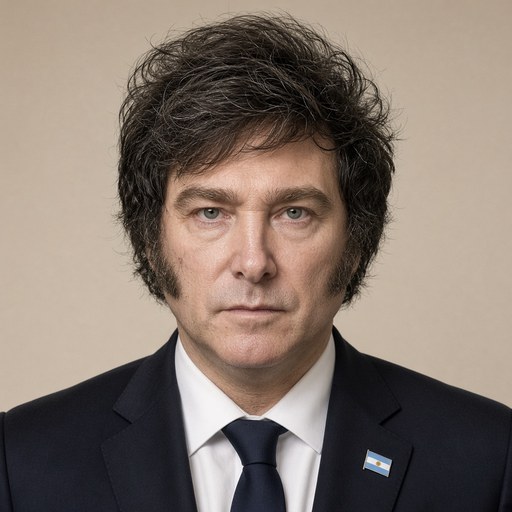
Speech by President Javier Milei at the Inter-American Development Bank (IDB) in Washington D.C.
 Javier Milei · President of Argentina
- Context
- Milei addressed the Inter-American Development Bank in Washington D.C. on February 21, 2025, presenting the foundations and results of Argentina's liberal economic model.
- Main themes
- Argentine economic model, liberalism and free markets, Argentina's economic decline, poverty and inflation, fiscal adjustment, GDP per capita history, private property rights, Austrian economics, socialist policies as failure, economic reform
- Duration
- ~62 min
- Words
- 7,394
- Sentences
- 370
- Readability
- 60
- Grade
- 9.7
- Syntax
- 3.02
- Vocabulary
- 2.06
Translated from Spanish
The broad sphere of national life a sentence belongs to. Every sentence has an Arena, so it is the denominator the other indices are read against.
Other370 sentences in 26 paragraphs
Good morning everyone. Or as I would say in other presentations of mine: "Hello everyone."
Basically - first of all - I want to thank you for inviting me to speak about the characteristics of what the Argentine model is, and basically, the presentation has four parts: there is a first part that relates to what we call the moral foundation of the model and which are the guidelines on which policy, in general, and economic policy, in particular, are guided.
Once we explore this in abstract definitions, we present as a counterexample what Argentina has done over the last 100 years. And what has sunk it; once one understands this relationship, we find ourselves with the starting data and with the policies we implemented. And from there, we provide explanations on how we believe we will generate economic growth.
In that sense, the foundation of our model is the idea of liberalism, according to the definition of our greatest exponent of the ideas of freedom throughout history, which is Professor Alberto Venegas Lynch (son), who points out that liberalism is the unrestricted respect for the life project of others, based on the principle of non-aggression and in defense of the right to life, liberty, and property, whose institutions are private property; free markets free from state intervention; competition, understood as a process of entry and exit, not in the neoclassical idea, but in the Austrian idea, of the division of labor and social cooperation, and this is a system, since success in economics derives from serving others with better quality goods and at a better price. This system, which seems abstract, actually applies different components from all areas of policy, and - today - we are going to focus on the economic issue. Specifically, what I am going to do now is describe how the Argentine decline has unfolded and in that - basically - I will show how Argentina has systematically destroyed these concepts and how systematically we have moved away from the liberal paradigm, which has turned Argentina into a catastrophe.
Yes, that phone is terrible. It's mine. Let me tell you what’s happening, as we announced that we were going to broadcast it on my Instagram channel, and there is always a born idiot, because the one doing this knows what he is doing and knows that he is interrupting the talk, so it’s not that he doesn’t know, but Argentina is like this: it has a lot of thick-headed people who do this kind of thing in some cases. We call them "head of an octopus," do you know why "head of an octopus"? Because the octopus has its digestive system in its head, so it is full of excrement; so having said this to those nice people who are trying to interfere and annoy the conference… they should know that in a debate I even had coughers, so let’s say, imagine what one can expect from Argentina, there goes the thick-headed person and they are not going to stop because they don’t want this to be broadcasted.
So, basically, what we see as the symptoms of what the Argentine decline was is, for example, seeing how Argentina lost places in terms of the ranking of GDP per capita. If you take Angus Maddison's estimates, at the end of the 19th century, Argentina was one of the three countries with the highest GDP per capita on the planet. It was the land of prosperity, the land of abundance. In fact, it competed - hand in hand - with the United States. However, after gradually embracing ideas of a socialist tint, Argentina became a true catastrophe.
When we came to power, Argentina was clearly below the average of the table. And, obviously, that also translated into a substantial increase in poverty. While official accounts show poverty levels - slightly - above 40%, the reality is that this is a semiannual average. And when a variable is on a rising trend… if you show in December the average of the last semester, you are underreporting poverty. Not because one is lying, but simply due to a methodological issue of averages. And also, another thing that statistics do not reflect is that Argentina, having had price controls, was suffering from shortages and that is not captured in the indicators. So, one of the situations that could happen is that to keep myself healthy, with the statistics, we could have done everything the same; not adjust anything and - in that context - people - statistically - would have been fine but would have starved because they could not have bought anything in the supermarket. So what we decided was to clarify the situation, because - basically in that way - products would return to the shelves, and that clarification implied finding ourselves with 57% of poor people, which is the recorded number, in January '24.
On the other hand, inflation - when we arrived - was running at more than 1% daily and then accelerated more during the second week of December. Wholesale inflation, which is the one that anticipates, was running at 54% monthly. I know there is a whole criticism when I annualize this year and say that this, annualized, gives 17,000, and basically when I do that calculation I make clear the different imbalances we had. We had a money overhang, which was double what we had before the Rodrigazo crisis, which was a situation that multiplied the inflation rate by six. So, at least, we had to multiply the inflation rate by 12 times. At the same time, they left us - at the Central Bank - 4 monetary bases, which matured in one day in interest-bearing liabilities; which means that - in one day - we could have quintupled the amount of money, so quintupled prices would not have been strange at the pace we were going. In addition, we had maturities - in debt, in pesos - equivalent to 90 billion dollars. Therefore, if one takes all those elements, Argentina reaching inflation levels of around 15,000 to 17,000 percent, with all that wave of money, would have been quite simple. And that if the demand for money had not fallen, which you know is not true. So, I cannot be making these explanations in public because, in general, people do not need to know about economic issues, so that is why I always simplify with the annualization of the number.
On the other hand, that situation would also have implied a generalized default because clearly we would not have been able to honor the debt in pesos, clearly we would not have been able to honor commercial debt and, therefore, we would not have been able to honor debt in general, which would have led to a commercial breakdown of the economy and that would have made the situation even more difficult. And also, Argentina was facing a situation of high tax pressure. So the question is how did they get to this disaster? Given that there had already been two hyperinflations before, and there the justification and to start seeing how the model intertwines is what - in the campaign - I called the model of the caste. The model of the caste has two elements. Obviously, it has an aberrant phrase from socialists that says: "where there is a need, a right is born." The problem is that needs are infinite and the right someone has to pay for it, and resources are finite. So we have a problem of infinite needs with finite resources. That is to say, this - for economists - does not represent a problem because we know that through free market economics this can be resolved efficiently. But that is not the solution that politicians like. Politicians prefer to use a much more brutal and violent method, called social justice.
Social justice is an aberration, from a moral point of view and, naturally, as was to be expected, it will generate bad results. That is to say, because justice… The question is, is anyone present here in favor of theft? I see that no one is, clearly, because in fact it is a sin, and stealing is a sin; we already know that since Moses came down from Mount Sinai and brought the tablets and one was "you shall not steal." And the other implies unequal treatment before the law. Is anyone in favor of people having privileges and that some are rewarded and others punished by the law? That is to say, is there anyone who is against equality before the law? Well, social justice is aberrant because it is theft and already implies unequal treatment before the law. That is to say, in front of two individuals: one is robbed of their income, part of their income, and it is given to another. Therefore, there is theft and there is unequal treatment before the law. And that, in addition, generates a serious problem of incentives, because if the one who generates wealth is being punished and the one who kicks and cries that this is unfair is given money, then the incentive is to kick and shout and complain and not work, which generates a system of incentives incompatible with progress.
At the same time, it also has consequences on the quality of life of society, but not only because of its economic damage, but because of the damage to the bond between people. Promoting and enhancing a society of envious people makes the climate - within society - extremely hostile. Society lives confronted, due to a supposed class struggle and, in that sense, the quality of the bond is very poor and there is a lot of distrust, and society becomes hyper-polarized and what reigns is hatred. Because, of course, there is one who produces wealth and it is stolen from them, and there is another who says they have the right to appropriate the wealth of the other. So, it is as if one lived in a permanent war and all for adhering to a bad economic theory. As Hayek said: “If socialists understood economics, they would not be socialists.” Moreover, I would tell you that - the truth - is that Marx was brutally refuted by Eugen Von Böhm-Bawerk, in a book called: “The Conclusion of the Marxian System,” where he proved all the inconsistencies of the system. Marx had already realized, when Menger presented the principles of political economy. And not only that, but also later it was battered by Mises, in the book: “Socialism,” explaining that socialism could not work due to the problem of economic calculation. Hayek demonstrated - in “The Road to Serfdom” - how interventions led to that sinister system. And the reality is that many believe that the empirical evidence that real socialism does not work was in 1989, when the Wall fell, and, in reality, the true evidence that those ideas do not work was in 1961, when they had to build it. So, the question is why do they continue to adhere to this garbage. If they were defeated in the Theory of Value; they were defeated in the design of the structure of the theory; they were destroyed in dynamics, in problems of economic calculation, and they were destroyed by empirical evidence. Why do they continue to uphold it? Because the Theory of Exploitation, by Rodbertus, that is, the theory preceding Marx's theory of exploitation, uses the labor value theory as a mechanism to explain exploitation. And that is the moral basis, from there is envy, hatred, and resentment.
So, now that this is said, what is the consequence of the social justice program? The consequence of the social justice program is that it has to be corrected with the claw of the State. That is to say, they do not believe in the invisible hand of the market. They believe in the claw of the State. They believe in stealing from one person to give to another. That is to say, as if there were some justification. I mean, on what grounds? I want to be charitable to this group... I will do it this way: I want to be charitable to this group, the one on the left, by robbing the group on the right. So, I come, put a gun to their head, and take their money to give it to them. It is an aberrant issue. How am I going to explain to this group that I am robbing them to be charitable? Charity is not done at gunpoint. Charity must arise naturally, not through violence. This can only be resolved by the market, but they do not believe in that. So, when social justice starts, how does it manifest? As a fiscal deficit, as an increase in public spending. And then, now comes the problem of how we finance it. Because it is a bit violent to put a gun to this poor group's head. So, what does a politician do, besides being populist? They try to make someone else pay the cost and make sure no one sees it. Therefore, the first tool a politician uses is what? Indebtedness. And why do they do that? Because indebtedness is future taxes. So, the party of today, which this group is going to enjoy - and do not doubt that everyone is going to vote for the politician who does that, who is also more than this group over here - means that it is profoundly immoral because they are passing the bill for today's party to future generations. That is to say, there are people who have not yet been born and have to pay for this party. That is to say, taking on debt is absolutely immoral. That is why zero deficit is non-negotiable in our economic policy. The zero deficit is not taken just like that. It is a moral definition, it goes beyond macroeconomics, it is a moral issue. You cannot be loading the cost of the current party onto future generations. And in fact, everyone knows, we are working on a program to obtain new financing, but that financing is to repay the debt that the Treasury has with its main creditor, which is the Central Bank. So that the creditors of the Central Bank, the holders of pesos, can escape the scam of the different governments that went and stole the reserves of the Central Bank, undermining the quality of the assets that backed that liability called pesos. This is not minor, because the more insolvent the Central Bank is, the higher the price level required to liquidate that monetary liability. Therefore, the more bankrupt the Central Bank is, the higher the long-term price level is. Therefore, if I take the price level of today and compare it against that price level, that line, that slope is the implicit inflation rate. Therefore, as we clean up the assets of the Central Bank, yes, (which we have been doing systematically), what will ensure is that the asset recomposition, the long-term price level, is lower and, therefore, the implicit inflation rate is much lower. And it is a way to end the problem of inflation forever. The other way to do it is by issuing money, and by issuing money, we generate inflation. For many years - in Argentina - a monstrous stupidity was said that inflation is multi-causal, and we seemed crazy those who defended the monetary hypothesis of inflation. And of course, saying that inflation is multi-causal is like talking about - I don’t know - the obese skeleton, the hot ice cream, the virgin prostitute, I don’t know, things like that. But well, we had to come to prove that inflation was a monetary phenomenon. But that inflation - in the end - ends up being a tax, and it is a tax on the most vulnerable sectors. In fact, one of the things we were absolutely convinced of is that by lowering the inflation rate, we would lower poverty, and indeed, the monthly frequency, poverty fell from 57% to 33%, that is, it dropped by 24 percentage points. That is to say, in just over a year, in 13 months, we lowered and lifted more than 10 million Argentines out of poverty. It was indeed important to defend the monetary nature of inflation. And in the end, when the politician can no longer resort to debt because, in fact, Argentina has been a serial defaulter, Argentina has committed aberrations with its currency, as we removed 13 zeros from the currency; we destroyed five monetary signs; we could remove three more, but there comes a time when it can no longer be done. So, the politician always opts to raise taxes, and that is why we have a country with one of the highest tax burdens on the planet. Basically, that is why Argentina has the problems it has of high indebtedness, high inflation, and high tax pressure. Or for example - and this is very important - without a doubt, the brilliant Minister of Economy we have, who is Luis “Toto” Caputo, who is here and who is undoubtedly the best Minister of Economy in all of Argentine history, in one of his first speeches explained something wonderful: the truth is that the central axis of Argentina, the central problem of Argentina, is the fiscal deficit.
Last year, we were the first government, in the last 124 years, to have a surplus in the financial line. There are others who say: “No, but there were other years when there was also a surplus.” Yes, but we were not paying the debt. I mean, it’s like we weren’t paying the interest. The first time that all commitments were honored was this past year. In fact, Argentina - from 1901 to 2024 - had 22 crises. Of those 22 crises: 20 had a fiscal origin, and the fiscal origin is divided between high fiscal imbalance and extravagant fiscal imbalance. But it is not only the impact that this has on the debt, on inflation, or what it has to do with tax pressure. One of the things that different governments in Argentina have recurrently done is apply price controls. And what happens when there are price controls? Scarcity is generated. So - for example - they encounter the Supply Law; the Shelving Law. The Shelving Law… did it measure the shelves? I mean, how does someone come up with a law like that? It’s like trying to avoid the law of gravity with a law and walking around with a centimeter checking the height at which stones fall. I don’t know, it’s truly, directly aberrant.
Or, for example: let’s suppose the typical populist situation that existed in Kirchnerism, where they created fiscal imbalance; since they were so unpresentable, they could not access the markets. So, they financed themselves with monetary issuance. That monetary issuance began to generate inflation. As it generated inflation - then - to try to prevent inflation from rising, they fixed the exchange rate. And by fixing the exchange rate, they began to lose international reserves. And then, as they wanted to prevent international reserves from being lost, they imposed the capital controls. What we received was a monstrosity, now much, much smaller. But this is interesting because, what is the capital controls? The capital controls is nothing more than a mechanism to artificially increase the demand for money. And see how aberrant this situation is, because, first of all, what it is violating is their consumption set, because - in the end - Argentines also bought dollars to transfer present consumption to the future. I mean, as a form of store of value. But not only that, but you, the rectors, were forced to hold pesos, and that artificially increased the demand for money and, therefore, artificially increased the taxable base of the inflation tax.
So, see how the web of regulations and controls also has to do with the fact that what is always underlying is the fiscal imbalance. And the fiscal imbalance has a moral basis. Therefore, in that sense, when we arrived, we found a consolidated fiscal deficit of 15 points of GDP, that is, 5 points in the Treasury; 10 points in the Central Bank, which generated endogenous issuance. That is to say, even if we had closed the fiscal imbalance - this was also brilliantly explained by Minister Caputo in one of his recent interviews - even if we had put the fiscal accounts in order on the first day, as we did, because - in the first month - we put the fiscal accounts in order and the most interesting thing is that, even so, we would not have avoided hyperinflation, because we had 4 monetary bases maturing in one day. In fact, if we had followed the recommendation to raise the rate - as they were suggesting to us - it would have basically turned into an unmanageable snowball, and hyperinflation would not have been a data point, aside from, as I said, we had debt maturities in pesos equivalent to 90 billion dollars, we had debts with the outside world of 25 billion dollars and the agreement with the Fund had fallen. In addition, we had negative net international reserves of around 12 billion dollars. Furthermore, the previous government not only issued 28 points of GDP of money during the 4 years, and 13 did so during the election year, but also created a monstrous mechanism - called SIRA - that was to obtain import permits. So, that allowed them to access dollars at the official exchange rate. What a coincidence, because the exchange rate was three times higher. There was a gap of 200%, that is, a true scam. And also, we had outstanding dividend debts of 10 billion dollars. And I had already told you how inflation was traveling. In that sense, we - from the first day - decided to implement a shock program. And there the idea was to achieve zero deficit by the year 2024. They told us it was impossible because you could not adjust more than one point of GDP, that politics did not allow that and I don’t know how many more things. And the reality is that, thanks to the excellent work of Minister Caputo's team, in the first month of management we achieved financial balance, despite the fact that in January we paid interest. The original adjustment was 7 points of GDP and 2 points of GDP we used to provide support in the social area. And after 6 months, we also cleaned up the balance of the Central Bank, completing a fiscal adjustment of 15 points of GDP. Here, the enormous task of the president of the Central Bank, Santiago Bausili, and the secretary of financing, Pablo Quirno, was also very important, as we maintained fiscal balance over the months, which allowed us to recover the debt markets and allowed us to remove that debt that was within the Central Bank and take it to the Treasury. Because, in reality, that debt had always belonged to the Treasury and what the previous government basically did was use tricks to place bonds with the Central Bank. And then, the Central Bank issued and then sterilized them elsewhere. And then those huge remunerated liabilities appeared that generated a quasi-fiscal deficit of 10 points of GDP. But, as we stabilized the economy and showed fiscal solidity, it allowed for a reconfiguration of a peso curve and to remove that debt from the Central Bank and take it where it truly belonged, which was in the Treasury. And in 6 months we managed to do that, which is how we made this adjustment. It is also interesting because we took the wholesale inflation of 54% down, and today we truly have all indicators walking towards 1%. That is to say, last month, this month was 1.5%, the wholesale for the previous month was 0.8%, the basic basket is at 0.9%, the basic food basket is also at 0.9%, construction is at 0.9%. That is to say, all the numbers are showing deflation in dollars, given that the crawling peg was at 2%. Moreover, if one takes goods also in the CPI, it is at 1.5%. Thus, all are clearly below the 2% of the crawling peg plus American inflation. Therefore, one of the things they told us is that when we lowered inflation in this way, it would destroy the level of economic activity and that this would cause the level of activity to explode, collapsing it and that the number of poor and indigent people would explode.
The reality is that - when one looks at other historical experiences - adjustments of the magnitude we made have generated GDP declines of 15%. We, in the quarterly frequency, had a GDP with a statistical drag of -2.8%, and, according to the latest data, it is likely that the quarterly frequency will end with a decline of less than 2%. This means that there was expansion during the program. And indeed, that is real, because if I take the GDP data in monthly frequency, which is the monthly estimator of economic activity, from December to December, Argentine GDP grew by 4%. That is to say, we made the largest adjustment in history, lowered inflation, and, in addition, it was expansive. I believe that economics textbooks on fiscal adjustment should have a reserved place for the work that this man, Luis “Toto” Caputo, has done. But as I mentioned, not only that, but also that unemployment did not increase; we are creating jobs, which is something that - in Argentina - had not happened since 2011, but also, wages, in dollars, basically tripled for formal jobs, and poverty has fallen from levels of 57%, in the monthly frequency, to 33%, lifting 10 million Argentines out of poverty. Furthermore, on this, I want to make a note, a footnote that seems very important to me while being in this institution. Recurrently - during my journey to the national deputy bank and my path to the presidency - I have quoted, to the point of exhaustion, a work from this institution on the inefficiency of public spending, which showed that the worst area in the world was Latin America and that the worst of all was Sor Juana Inés de la Cruz Argentina. I say, this must be a mistake. I do not usually quote literature; I usually quote operas. But well, today I made a mistake. But, in that sense, Argentina had technical inefficiency equivalent to 7 points of GDP. In the meeting - that I just had, with Ilan and other members of the institution, they just told me that we have reduced it by half. So you have three and a half points to go down. But I think there is something interesting about this experience that we can tell, and that is why having made such an adjustment was not recessionary. This seems very important to me. And the adjustment was not recessionary, basically, because the adjustment fell on the State. The adjustment fell entirely on the State, and that means that when you have a parasite in the body, you do not kill the body; you have to kill the parasite. Well, we are willing to fight the parasite as much as possible. In that sense, we do not stop believing that the State is a criminal organization that lives off a coercive source of income, which is taxes. In other words, no one pays taxes voluntarily. That is why one of the things we maintain is that, to the extent that we prove that growth is permanent, we will lower taxes. And, in fact, we have just eliminated the PAIS tax, which was a tax that collected a lot. We have lowered the withholdings, we have fully eliminated them for regional economies, we have temporarily lowered them for traditional crops, and, in addition, we have made progress in eliminating many tariffs and taxes. So we are also making progress in that sense. And so, now having said all this, the point is, well, okay, stabilization is on track, and what about growth? It is true that there is a part that is cyclical recovery. Today we are facing a cyclical recovery, where, basically, stocks are being rebuilt, and, with the recomposition of real wages and pensions in real terms, that was driving demand. But there are other elements that contribute to long-term growth. On the one hand, I would say the issue of having made the adjustment we made. Those 15 points that the economy had in fiscal deficit represented a lower level of savings and lower investment possibilities. Therefore, the fact of having made the fiscal adjustment and moving the State out of the way means that, basically, savings are recovered so that the private sector can invest. That is to say, it is false that we need to exit the capital controls to be able to grow. Because, basically, given the fiscal shock we committed, that means there is a lot of savings to finance the private sector. Today banks operate as banks, not as a lifeline for the public sector. Not only that, but we also made structural reforms. The structural reforms we made in DNU 70 and in the Bases Law are 800 structural reforms, that is, eight times larger than the reform that Menem made, which was the largest reform in Argentine history.
That is why, if the Menem government was the best government in Argentina, which was structural reforms and a successful stabilization program like convertibility, we have already carried out, in just one year, with 15% of the Chamber of Deputies and 10% of the Senate, a structural reform eight times larger and, in addition, we have built a successful stabilization program. More successful than convertibility because today we have better results in terms of inflation in dollars; we are in deflation, without having fallen into a prior hyperinflation, without having expropriated, without price controls, without controlling the exchange rate, and, in addition, reconstituting tariffs. That is why I always say that, in addition, this is the best government in history. Not by my merit, but by the merit of the enormous ministers I have, because I am proud of each one of them for the enormous task, where I only have to set the course, but they implement it, which is a pleasure.
That said, but it did not stop there, because - starting in the middle of the year - Dr. Federico Sturzenegger joined the team explicitly, and we created a Ministry of Deregulation. And well, Federico is having a process similar to the one “Toto” has with me. Let’s say we have a symbiotic relationship; the same is happening with Federico. So, in that first half year that Federico was with us, which is the second half of last year, he removed 900 regulations, that is, which are also like structural reforms. That is to say, we did, in truth, 1,700 structural reforms. But that is not all, because now I am going to tell you an internal anecdote. Federico is implementing what is called the Chainsaw Plan 2.0, which is to start addressing issues, to now make another reform of the State. Remember that when we took office there were 18 ministries, which were actually 24, and we brought it down to 9. Now we are at 8 and want to reduce more secretariats and more dependencies. So, in the first half of January, I gave my entire team vacation. They all returned in the second half of January, and in the first days of February, Minister Sturzenegger came to visit me at the Olivos residence. And then, he expressed to me that he was extremely concerned about the slowness with which we were acting. And then, for example, he suggested redefining some legal areas to give more dynamism and agility to the reforms. Federico's argument, being a minister who brings me joy every day with all the things he breaks in the State… So I said: "Oh, how distracted I was, that I did not realize that I was having few joys." So, what did I do? I went and counted how many deregulations he had done in two weeks. Two weeks, how many do you think he did? He was angry because things were stuck: 65. In 15 days he removed 65 regulations and said we were going slow. How can I not be happy with my ministers? They are all a machine for gaining economic freedom all the time. And I warn you that this will continue. There is something very nice, which is decree 25, which just came out a few days ago, where the different ministries are urged to create a digest. This is a work of art. Now, when you see it, you will see the shock. Argentina has 42,000 laws. Is that right, Manuel? Or 47,000? 42,000 laws, 70,000 decrees, and 220,000 resolutions and circulars. Obviously, resolutions and circulars can be eliminated by a ministry, I can eliminate decrees by decree, and some laws, due to the Bases Law and the DNU, I can remove by special powers. So, what we are proposing is that each ministry make a digest of what it uses. And guess what we are going to do when we have the digest, which has 30 days to be made. Everything that is not in the digest will be eliminated. Why? Because you will find that there are things that one does not even know exist. One only knows that there is a beneficiary. For example, it is very interesting what happened to us with scrap. Scrap could not be exported. It was prohibited to export scrap. Of course, then… But scrap has a price. So, that scrap remained in the domestic market, and the price of scrap fell. It was very cheap. Of course, that benefited one company and harmed all those who had scrap. I say, it seems that this is not something in favor of freedom. So, what did we do? We eliminated that regulation. Obviously, now scrap has a market price. But, well, the company that was harmed is a very large company; it is a very large economic group, and it sent its army of economists to demand devaluation and try to destabilize the economic program. Or, for example, I don’t know, the problem of a watermelon exporter, who wanted to export watermelons to Paraguay, and had an agreement with the Paraguayan businessman to export the watermelons. But it happens that Argentine regulations told him how he had to export the watermelons, and that was not useful to the Paraguayan businessman; it was useful in another way. So, what did this man have to do? He had to do it as Argentina authorized, load them onto the ship, and inside the ship, he changed everything to adapt to what the Paraguayan businessman needed. That was total inefficiency. We lifted that regulation, and, obviously, some little kiosks in the middle fell, and some got angry, but the watermelon producers are happy now. And the Paraguayans too. Because now, in addition, they receive them cheaper.
Not only that, we continue to advance in what has to do with tax reduction. And there are, then, two more issues I want to point out. One is how we have changed the paradigm of social assistance in Argentina. We do not have the Ministry… I don’t know what it was called before, but all those names are blocked in my brain.
We decided to create the Ministry of Human Capital. The Ministry of Human Capital has a whole connotation in economic and social terms. In social terms, it is: I am not going to give you the fish; I am going to teach you to fish. And if you have a company that catches fish, even better. And, basically, what it does is provide assistance and care for those less fortunate in the family. That is why there is an area for childhood and family, to provide support when they are born, and that is linked to health, linked to education, and linked to work. So that people regain the dignity of being able to earn their bread with the sweat of their own brow and not by stealing it from others. And this is being a revolution not only because the social policy that has provided support at the most complicated moment of the adjustment is working. In addition to having taken away the thefts from the piqueteros and the managers of poverty. But also because we are returning dignity to the most vulnerable sectors and providing the tools for them to escape this misery. That is to say, it is a Ministry that, when it is fully successful and at its maximum point, disappears.
And the other is the Ministry, which is led by Dr. Sturzenegger, and basically, the central axis is that if you look at the history of humanity, at least since the year zero of the Christian era, GDP per capita increased by approximately 50% between the year zero and 1800. But from 1800 onwards, while the population multiplied by 10, GDP per capita did so by 15 times. Up to the year 2023, which is the latest data from the Angus Maddison series. So, in that sense, the question is that the counterpart of that is increasing returns. Now, if we look at it in terms of microeconomic analysis, that means that if I want to put it strictly technically, I have a problem of non-convex structures. Or if we put it in more understandable terms for microeconomists or those who do general equilibrium, I have a problem of concentrated markets or the most polar case would be monopolies. And the problem lies in that when I regulate monopolies and want to make them resemble competitive companies according to the neoclassical paradigm, what that ends up doing is killing increasing returns and, consequently, by killing increasing returns, it causes the economy to stop growing.
So, to the extent that we pass the chainsaw to regulations, what we are doing is not only gaining economic freedom, but we are also gaining economic growth. And all of this stems from the fact that, from my point of view, neoclassical analysis is wrong. For those who want to see this, I suggest reading the article by Murray Newton Rothbard called "Monopoly and Competition." An article that was very revealing for me because when I read it, I had been teaching microeconomics and general equilibrium for 25 years and I discovered that monopolies are not bad, unless they are armed by the State. That article was so revealing that I not only became a libertarian liberal but also an anarcho-capitalist. Philosophically, I continue to do so. This means I will not relent in bringing the State to its minimum expression and returning freedom to all good Argentines to the maximum until the last day of my government. Thank you very much and long live freedom, damn it!
HOST.- We had a lot of fun, that's for sure, with the examples of the watermelon and the octopus. I thought the octopus was the one with many hands. And that you were going to use it for the State.
PRESIDENT.- I will give you more applications.
HOST.- But the important thing here is to think about how we can use this case here at the IDB for the conversations we have with our 26 countries: a fiscal consolidation, a fiscal adjustment that is expansive, an adjustment that simplifies and gives the conditions for the private sector to enter. And the last point is: how do we ensure that we truly have sustainable growth? Because when we talk to heads of state and tell them: "We are going to make an adjustment of five, six, or 15%," they then tell us: "I won't survive." And they specifically say: "How do I respond to the head of state so that we know that private sector growth is going to come?"
PRESIDENT.- Well, the first point is: the adjustment should not fall on the private sector; it should fall on the public sector. The magic is there. Second, we need to have conviction about this. I will tell you what happened in the first cabinet meeting. I had already agreed with Minister Caputo that we were going to mercilessly pass the chainsaw over the public sector. And, in that context, we also planned the mechanisms for social containment and others for the transition. So, when we went to the first cabinet meeting and I laid out the guidelines, at the back of the meeting were all the lawyers, and they told me: "That can't be done." Well, then I said to them... It was about 40 degrees; I don't know what the equivalent would be in Fahrenheit, but it was very hot. And then I said: "The question is, if I go to the corner and ask the ice cream vendor, what answer will he give me? 'It can't be done.'" So I told them: "The truth is that I don't care what you tell me, and the only answer I accept is for you to tell me how to do it." Because for you to tell me 'it can't be done,' I mean, anyone can respond 'it can't be done.' And I think that changed the way the ministers began to see the situation. And the other very important thing is to make clear the direction one wants to go, and then understand the fallacies contained in economic theory. Can I be rude? That public works generate growth and jobs is bullshit. That is a lie. Because the reality is that, to carry out a public work, I have to finance it. And if I finance it with debt, those are future taxes. I punish our children, our grandchildren, and so on. If I finance it with monetary emission, I punish the vulnerable with inflation. If I finance it with taxes, I punish the present generations. Moreover, not only that, but since I am taxing them, that work that is being done there and that is visible is actually destroying other works and jobs in other places. But also, people's preferences were not to have that road; they wanted to have other things they had chosen. So, I am robbing them. I am giving them goods they do not want. Therefore, I have a loss of welfare, in terms of lower utility. And let's not forget that there is also the problem of public spending leaks. Therefore, what needs to be taken into account is that the Government is part of the problem and not the solution. There is nothing worse than a politician coming and saying: "I am the Government; I come to help." It is horrifying. When you see a politician doing that, run away, because the only thing they will do is rob you. So, the central issue is to understand all these fallacies on which the lie called the State is built. Look, keep this in mind: the State is a criminal organization. That is, you cannot tell me that with more thieves in society you are better off than with fewer. That is, the State is worse than the mafia. Because I ask you: How many times have common thieves robbed you over the past year? None. Well, the State robs you every day when it collects taxes. So, how can it be that something so sinister...? If I take it out, will I be worse off? If I take it out, I will be much better off. Because, on top of that, the State is the stationary thief. That is, and moreover, it is on a larger scale. And it has fewer codes than the mafiosos. So, the day it is unmasked, the day people decide to take the red pill and get out of the Matrix, they will understand that the State is the problem and not the solution. And surely we will have many more anarcho-capitalists.
The original Spanish. The tags above are read on the English translation's sentences.
Buenos días a todos. O como diría en otras presentaciones mías: “Hola a todos”
Básicamente - en primer lugar - quiero dar las gracias por invitarme a disertar sobre las características de lo que es el modelo argentino y, básicamente, la presentación tiene 4 partes: hay una primera parte que tiene que ver con lo que nosotros llamamos la base moral del modelo y que son los lineamientos sobre los cuales se guía la política, en general, y la política económica, en particular.
Una vez que exploramos esto en definiciones abstractas planteamos como el contracaso lo que hizo Argentina, durante los últimos 100 años. Y qué fue lo que lo hundió; una vez, que uno comprende esta relación nos encontramos con los datos de inicio y con las políticas que implementamos Y a partir de ahí, damos las explicaciones sobre cómo consideramos que vamos a generar crecimiento económico.
En ese sentido, la base de nuestro modelo es la idea del liberalismo, acorde a la definición de nuestro máximo exponente de las ideas de la libertad de toda la historia, que es el profesor Alberto Venegas Lynchi (hijo), que señala que el liberalismo es el respeto irrestricto del proyecto de vida del prójimo, basado en el principio de no agresión y en defensa del derecho a la vida la libertad y a la propiedad, cuyas instituciones son la propiedad privada; los mercados libres de intervención estatal; la competencia, entendida como un proceso de entrada y salida, no en la idea neoclásica, sino en la idea austríaca, de la división del trabajo y la cooperación social y este es un sistema, pues el éxito en lo económico deriva de servir al prójimo con bienes de mejor calidad y a un mejor precio. Este este sistema, que parece abstracto, la realidad es que aplica distintos componentes, de todas las áreas de la política, y – hoy - nos vamos a focalizar sobre la cuestión económica. Concretamente lo que voy a hacer, ahora, es describir cómo ha transcurrido la decadencia argentina y en eso - básicamente – mostraré cómo Argentina, sistemáticamente, ha destrozado estos conceptos y cómo sistemáticamente nos hemos alejado del paradigma liberal, lo que ha convertido a Argentina en una catástrofe.
Sí, está tremendo ese teléfono. Es el mío. Les cuento qué pasa, pues hemos anunciado que lo íbamos a transmitir por mi canal, de Instagram, y siempre hay un imbécil malnacido, porque el que está haciendo esto sabe lo que está haciendo y sabe que está interrumpiendo la charla, o sea no es que no lo sabe, pero Argentina es así: tiene a un montón de cabeza de termos que hacen este tipo de cosas en algunos casos. Les decimos cabeza de pulpo ¿saben por qué cabeza de pulpo? Pues porque el pulpo tiene su aparato digestivo en la cabeza, con lo cual la tienen llena de excremento; así dicho esto a esos simpáticos que están tratando de interferir y molestar en la conferencia…sabran que en un debate tenia hasta tosedores, asi es que digamos, imagínense qué de Argentina puede esperar cualquier cosa, ahí sigue el cabezas de pulpo y no van a parar porque no quieren que se transmita esto.
Entonces, básicamente, lo que nosotros vemos como los síntomas de lo que fue la decadencia argentina es, por ejemplo, ver como Argentina perdió lugares en términos del ranking del PBI per cápita. Si ustedes toman las estimaciones de Angus Maddison, a fines del siglo XIX, Argentina era uno de los tres países con mayor PBI per cápita del planeta. Era la tierra de la prosperidad, la tierra de la abundancia. De hecho, competía - mano a mano - con los Estados Unidos. Sin embargo, después de ir abrazando paulatinamente ideas de tintes socialista, Argentina se convirtió en una verdadera catástrofe.
Cuando nosotros llegamos al poder, Argentina estaba claramente debajo del promedio de la tabla. Y, obviamente, eso también se tradujo en un aumento sustancial de la pobreza. Si bien las cuentas oficiales muestran niveles de pobreza – ligeramente - por encima del 40%, la realidad es que eso es un promedio semestral. Y que cuando una variable está en tendencia creciente… si ustedes muestranen diciembre el promedio del último semestre, están subdeclarando la pobreza. No porque se esté mintiendo, sino por una cuestión simplemente metodológica de los promedios. Y además, otra cosa que las estadísticas no reflejan, es que Argentina al haber tenido controles de precios, Argentina estaba sufriendo escasez y eso no queda capturado en los indicadores. Entonces, una de la situación que podría pasar es que para mantenerme saludable, con las estadísticas, podríamos haberlo todo igual; no ajustar nada y - en ese contexto - la gente – estadísticamente - hubiera estado bien pero se hubiera muerto de hambre porque no podría haber comprado nada en el supermercado. Así es que nosotros lo que decidimos fue sincerar la situación, porque - básicamente de esa manera - los productos volverían a aparecer en las góndolas, y ese sinceramiento implicó encontrarnos con 57% de pobres, que es el número registrado, en enero del ‘24.
Por otra parte, la inflación - cuando nosotros llegamos - venía corriendo a más del 1% diario y después se aceleró más, durante la segunda semana de diciembre. La inflación mayorista, que es la que se anticipa, corría al 54% mensual. Yo sé que hay toda una crítica de cuando anualizo este año y digo que eso, anualizado, da 17,000, y básicamente cuando hago esa cuenta dejo en claro los distintos desequilibrios que teníamos. Teníamos un money overhand, que era el doble del que teníamos, previo a la crisis del Rodrigazo, que fue una situación que multiplicó por seis la tasa de inflación. Así es que, por lo menos, teníamos para multiplicar por 12 veces la tasa de inflación. Al mismo tiempo, nos dejaron - en el Banco Central - 4 bases monetarias, que vencían en un día en pasivos remunerados; quiere decir que - en un día - podríamos haber quintuplicado la cantidad de dinero, o sea, con lo cual que quintuplicar los precios no hubiera sido nada extraño al ritmo que traíamos. Además, teníamos vencimientos - en deuda, en pesos - por el equivalente de 90,000 millones de dólares. Por lo tanto, si uno toma todos esos elementos, Argentina, llegar a niveles de inflación del orden del 15,000 al 17,000 por ciento, con toda esa oleada de dinero, hubiera sido bastante simple. Y eso si no hubiera caído la demanda de dinero, lo cual saben que no es cierto. Con lo cual, estas explicaciones no las puedo estar haciendo en público porque, en general, la gente no tiene por qué estar sabiendo de temas de economía, entonces por eso siempre simplifico con la anualización del número.
Por otra parte, esa situación hubiera también implicado un default generalizado porque claramente no hubiéramos podido honrar la deuda en pesos, claramente no hubiéramos podido honrar la deuda comercial y, por lo tanto, no hubiéramos podido honrar la deuda en general, con lo cual hubiéramos tenido un quiebre comercial de la economía y eso hubiera hecho, además todavía, mucho más difícil la situación. Y además, Argentina se enfrentaba a una situación de alta presión impositiva. Entonces la pregunta es ¿cómo llegaron a este desastre? Siendo que ya antes había habido dos hiperinflaciones, y ahí la justificación y para empezar a ver cómo se entrelaza el modelo es lo que - en campaña - yo denominaba el modelo de la casta. El modelo de la casta tiene dos elementos. Obviamente que tiene una frase aberrante de los socialistas que dice: "donde hay una necesidad nace un derecho". El problema es que las necesidades son infinitas y el derecho alguien lo tiene que pagar, y los recursos son finitos. Entonces tenemos un problema de necesidades infinitas con recursos finitos. Es decir, eso - para los economistas - no nos representa un problema porque sabemos que por medio de la economía de libre mercado eso se puede resolver eficientemente. Pero esa no es la solución que le gusta a los políticos. Los políticos prefieren utilizar un método mucho más brutal y violento, llamado justicia social.
La justicia social es una aberración, desde el punto de vista moral y, naturalmente, como era de esperar, va a generar malos resultados. Es decir, porque la justicia… La pregunta es, ¿alguno de los que están presentes acá están a favor del robo? Veo que nadie, claramente, porque de hecho es un pecado, y robar es un pecado; ya lo sabemos desde cuando Moisés bajó del Monte Sinaí y trajo las tablas y una era "no robarás". Y la otra implica un trato desigual frente a la ley. ¿Alguien está a favor de que la gente tenga privilegios y que algunos sean premiados y otros castigados por la ley? Es decir, ¿hay alguien que esté en contra de la igualdad ante la ley? Bueno, la justicia social es aberrante porque es un robo y ya implica un trato desigual frente a la ley. Es decir, frente a dos individuos: a uno le roba su ingreso, parte de su ingreso, y se lo da a otro. Por lo tanto, está el robo y está el trato desigual frente a la ley. Y eso, además, genera un grave problema de incentivos, porque si el que genera la riqueza está siendo castigado y el que patalea y clama porque esto es injusto le dan dinero, entonces el incentivo es a patalear y gritar y quejarse y no trabajar, con lo cual, genera un sistema de incentivos incompatibles con el progreso.
A su vez, también tiene consecuencias en la calidad de vida de la sociedad, pero no ya sólo por su daño en lo económico, sino por el daño en el vínculo entre las personas. Promover y potenciar una sociedad envidiosos hace que el clima - dentro de la sociedad - sea extremadamente hostil. La sociedad vive enfrentada, por una supuesta lucha de clases y, en ese sentido, la calidad del vínculo es muy mala y hay mucha desconfianza, y la sociedad queda hiperpolarizada y lo que reina es el odio. Porque claro hay uno que produce la riqueza y se la roban, y hay otro que dice que tiene derecho a apropiarse de la riqueza del otro. Entonces, es como si se viviera en una guerra permanente y todos por adherir a una mala teoría económica. Como decía Hayek: “Si los socialistas entendieran de economía, no serían socialistas” .Es más, yo les diría, que - la verdad - es que Marx fue desmentido brutalmente, por Eugen Von Böhm-Bawerk, en un libro que se llama: “La conclusión del sistema marxiano”, donde probó todas las inconsistencias del sistema. Marx ya se había dado cuenta, cuando Menger presentó los principios de economía política. Y no sólo eso, sino que además después eso fue vapuleado por Mises, en el libro: “Socialismo”, explicando que el socialismo no podía funcionar por el problema del cálculo económico. Hayek demostró - en “Camino de servidumbre” - cómo las intervenciones derivaban en ese sistema siniestro. Y la realidad es que muchos creen que la evidencia empírica de que el socialismo real no funciona fue, en 1989, cuando se cayó el Muro y, en realidad, la verdadera evidencia que esas ideas no funcionan fue, en 1961, que fue cuando lo tuvieron que construir. Entonces, la pregunta es por qué siguen adhiriendo a esta basura. Si fueron derrotados en la Teoría del valor; fueron derrotados en el diseño de la estructura de la teoría; fueron destruidos en dinámica, en problemas de del cálculo económico, y fueron destruidos por la evidencia empírica. ¿Por qué lo siguen sosteniendo? Porque la Teoría de la explotación, de Rodbertus, es decir la teoría precedente a la teoría de la explotación de Marx, utiliza la teoría del valor trabajo como mecanismo para explicar la explotación. Y esa es la base moral, de ahí es la envidia, el odio y el resentimiento.
Entonces, ahora dicho esto, ¿cuál es la consecuencia del programa de la justicia social? La consecuencia del programa de justicia social es que eso se tiene que corregir con la garra del Estado. Es decir, ellos no creen en la mano invisible del mercado. Ellos creen en la garra del Estado. Creen en robarle a alguien para darle a otro. Es decir, como si tuviera algún justificativo. Es decir, a título de qué. O sea yo quiero ser caridad con este grupo… Lo voy a hacer así: yo quiero hacer caridad con este grupo, el que está a la izquierda, robándole al grupo que está a la derecha. Entonces, yo vengo, les pongo una pistola en la cabeza y les quito el dinero para dárselo a ellos. Es una cuestión aberrante. ¿Cómo voy a hacer para explicarle a este grupo, que les estoy robando para ser beneficencia? La caridad no es a punta de pistola. La caridad tiene que surgir naturalmente, no por la violencia. Esto sólo lo puede resolver el mercado, pero ellos no creen en eso. Entonces, la justicia social, cuando arranca, ¿cómo se manifiesta? Como déficit fiscal, como aumento del gasto público. Y, entonces, ahora viene el problema de cómo lo financiamos. Porque es un poco violento estar poniéndole a este pobre grupo, la pistola en la cabeza. Entonces, ¿qué es lo que hace, además un político, cuando es populista? O sea trata de que el costo lo pague otro y que nadie lo vea. Por ende, lo primero que utiliza como herramienta un político, ¿qué es? El endeudamiento. ¿Y por qué hace eso? Porque el endeudamiento son impuestos futuros. Entonces, la fiesta de hoy, que va a disfrutar este grupo - que además no tengan dudas que todos van a votar al político que haga eso, que además son más que este grupo que está acá - significa que es profundamente inmoral porque le están pasando la cuenta de la fiesta, de hoy, a las generaciones futuras. Es decir, hay gente que todavía no nació y tiene que pagar esta fiesta. Es decir, tomar deuda es absolutamente inmoral. Por eso es innegociable en nuestra política económica el déficit cero. El déficit cero no se toma así porque sí. Es una definición moral, es más allá de la macroeconomía, es una cuestión moral. No se le puede estar cargando el costo de la fiesta actual, a las generaciones futuras. Y de hecho, todos saben, nosotros estamos trabajando en un programa para conseguir nuevos financiamiento, pero ese financiamiento es para repagar la deuda, que tiene el Tesoro, con su máximo acreedor, que es el Banco Central. De modo tal que los acreedores del Banco Central, los tenedores de pesos, salgan de la estafa de los distintos gobiernos que iban y se robaban las reservas del Banco Central, vulnerando la calidad de los activos que respaldaban ese pasivo llamado pesos. Esto no es menor, porque cuanto más insolvente - el Banco Central - se requiere de un mayor nivel de precios para que licúe ese pasivo monetario. Por lo tanto, a más quebrado, el Banco Central, el nivel de precios de largo plazo es más alto. Por lo tanto, si tomo el nivel de precios - de hoy - y lo tomo contra ese nivel de precios, esa línea, esa pendiente es la tasa de inflación implícita. Por lo tanto, en la medida que nosotros vamos saneando el patrimonio, del Banco Central, sí, (cosa que venimos haciendo sistemáticamente), lo que va a asegurar es que la recomposición patrimonial, el nivel de precios de largo plazo, es más bajo y, por lo tanto, la tasa de inflación implícita es mucho menor.Y es una forma de terminar para siempre con el problema de la inflación. La otra forma de hacerlo es emitiendo dinero y, emitiendo dinero, justamente generamos inflación. Durante muchos años - en Argentina - se hablaba una estupidez monstruosa que decía que la inflación es multicausal, y parecíamos locos aquellos que defendíamos la hipótesis monetaria de la inflación. Y claro, es como, decir que la inflación es multicausal es como hablar - no sé - del esqueleto obeso, del helado caliente, la meretriz virgen, qué sé yo, cosas por el estilo. Pero bueno, tuvimos que llegar nosotros para probar que la inflación era un fenómeno monetario. Pero esa inflación - en el fondo - termina siendo un impuesto, y es un impuesto sobre los sectores más vulnerables. De hecho, una de las cosas que nosotros estábamos convencidísimos es que bajando, la tasa de inflación, íbamos a bajar la pobreza, y efectivamente, la frecuencia mensual, la pobreza cayó del 57% al 33%, es decir, bajó 24 puntos porcentuales. Es decir, que en poquito más, de un año, en 13 meses, bajamos y sacamos de la pobreza a más de 10 millones de argentinos. Vaya que era importante defender la naturaleza monetaria de la inflación. Y al final, cuando el político ya no puede recurrir más a la deuda porque, de hecho, Argentina ha sido un defaulteador serial, Argentina ha hecho aberraciones con su moneda, pues le quitamos 13 ceros a la moneda; destrozamos cinco signos monetarios; podríamos quitarle tres más, pero llega un momento en que no se puede más. Entonces, siempre el político opta por subir impuestos, y por eso tenemos un país con una de las cargas fiscales más altas del planeta. Básicamente, por eso Argentina tiene los problemas que tiene de alto endeudamiento, de alta inflación, de alta presión impositiva. O por ejemplo - y esto es muy importante -, sin lugar a dudas, el brillante ministro de Economía que tenemos, que es Luis “Toto” Caputo, que está acá y que, sin duda, es el mejor ministro de Economía de toda la historia argentina, en uno de sus primeros discursos explicó algo maravilloso: nosotros la verdad es que el eje central de Argentina, el problema central de Argentina, es el déficit fiscal.
El año pasado, fuimos el primer gobierno, de los últimos 124 años, que tuvimos superávit en la línea financiera. Hay otros que dicen: “No, pero hubo otros años en los que también hubo superávit”. Sí, pero no estábamos pagando la deuda. O sea, es como que no estábamos pagando los intereses. La primera vez que se paga honrando todos los compromisos fue este año que pasó. De hecho, Argentina - desde el año 1901 hasta el 2024 - tuvo 22 crisis. De esas 22 crisis: 20 tuvieron origen fiscal, y el origen fiscal se separa entre alto desequilibrio fiscal y extravagante desequilibrio fiscal. Pero no es solamente el impacto que esto tiene sobre la deuda, sobre la inflación o lo que tiene que ver sobre la presión impositiva. Una de las cosas que han hecho recurrentemente distintos gobiernos en Argentina, es aplicar controles de precios. ¿Y qué pasa cuando hay controles de precios? Se genera escasez. Entonces - por ejemplo - se encuentran con la Ley de Abastecimiento; la Ley de Góndolas. La Ley de Góndolas… ¿medía las góndolas? O sea, ¿cómo se le ocurre a alguien una ley así? Es como querer evitar la ley de gravedad con una ley y andar con un centímetro chequeando la altura, a la cual caen las piedras. No sé, es una cosa verdaderamente, directamente aberrante.
O, por ejemplo: supongamos la situación típica populista, que había en el kirchnerismo, donde hacían desequilibrio fiscal; como eran tan impresentables, no podían acceder a los mercados. Entonces, los financiaban con emisión monetaria. Esa emisión monetaria comenzaba a generar inflación. Como generaba inflación – entonces - para tratar de evitar que la inflación subiera, fijaban el tipo de cambio. Y al fijar el tipo de cambio, se empezaban a perder reservas internacionales. Y entonces, como querían evitar que se perdieran reservas internacionales, se ponía el cepo. Lo que recibimos era una monstruosidad, ahora bastante, muchísimo más chico. Pero esto es interesante porque, ¿qué es el cepo? El cepo no es - ni más, ni menos - que un mecanismo para aumentar - artificialmente - la demanda de dinero. Y vean lo aberrante de esta situación, porque, en primer lugar, lo que está violentando es su conjunto de consumo, porque - en el fondo - también los argentinos compraban dólares para pasar el consumo del presente al futuro. O sea, como una forma de reserva de valor. Pero no solo eso, sino que a ustedes, los rectores, los obligaban a tener pesos, y eso le aumentaba artificialmente la demanda de dinero y, por ende, aumentaba artificialmente la base imponible del impuesto inflacionario.
Entonces, vean cómo el entramado de regulaciones y controles también tienen que ver con que lo que está siempre de fondo es el desequilibrio fiscal. Y el desequilibrio fiscal tiene una base moral. Por lo tanto, en ese sentido, nosotros - al momento de llegar - entonces, nos encontramos con un déficit fiscal consolidado de 15 puntos del PBI, o sea, 5 puntos en el Tesoro; 10 puntos en el Banco Central, que generaba emisión endógena. Es decir, aún cuando hubiéramos cerrado el desequilibrio fiscal - esto también lo explicó el ministro Caputo, en una de sus entrevistas recientes, de manera brillante -, aún cuando hubiéramos puesto las cuentas fiscales en orden el primer día, tal como lo hicimos, porque - en el primer mes - pusimos las cuentas fiscales en orden y lo más interesante es que, aun así, no hubiéramos evitado la hiperinflación, porque teníamos 4 bases monetarias venciendo, en un día. De hecho, si hubiéramos seguido la recomendación de subir la tasa - como nos estaban sugiriendo - básicamente, se hubiera convertido en una pelota inmanejable, en una bola de nieve, y la hiperinflación no hubiera sido un dato, al margen de, como decía, teníamos vencimientos de deuda en pesos por el equivalente a 90,000 millones de dólares, teníamos deudas con el exterior por 25,000 millones de dólares y caído el acuerdo con el Fondo. Además, teníamos reservas internacionales negativas netas, por el orden de 12,000 millones de dólares. Además, el gobierno anterior, no solo que durante los 4 años emitió 28 puntos del PBI de dinero, y 13 lo hizo durante el año electoral, sino que, además, creó un mecanismo monstruoso - llamado SIRA - que era para tener permisos de importación. Entonces, eso le permitía acceder a dólares al tipo de cambio oficial. Qué casualidad, porque el tipo de cambio era el triple. Había una brecha del 200%, es decir, una verdadera estafa. Y además, teníamos deudas pendientes de dividendos, por 10,000 millones de dólares. Y ya les había contado cómo venía viajando la inflación. En ese sentido, nosotros - desde el primer día - decidimos hacer un programa de shock. Y ahí la idea era alcanzar el déficit cero a lo largo del año 2024. Nos decían que era imposible, porque no se podía ajustar más que un punto del PBI, que la política no dejaba hacer eso y no sé cuántas más cosas. Y la realidad es que, gracias al excelente trabajo, del equipo del ministro Caputo, en el primer mes de gestión alcanzamos el equilibrio financiero, a pesar de que en el mes de enero nosotros pagamos intereses. El ajuste original fue de 7 puntos del PBI y 2 puntos del PBI los utilizamos para dar contención, en la parte social. Y después de 6 meses, limpiamos, también, el balance del Banco Central, o sea, completando un ajuste fiscal de 15 puntos del PBI. Aquí también fue muy importante la enorme tarea, del presidente del Banco Central, Santiago Bausili, y el secretario de financiamiento, Pablo Quirno, que - conforme íbamos sosteniendo el equilibrio fiscal con el correr de los meses - nos permitió ir recuperando los mercados de deuda y nos permitió ir sacando esa deuda que estaba dentro del Banco Central y llevarla para el Tesoro. Porque, en realidad, esa deuda siempre había sido del Tesoro y que, básicamente, lo que hacía el gobierno anterior era utilizar artilugios para colocarle bonos al Banco Central. Y entonces, el Banco Central, emitía y después los esterilizaba por otro lado. Y entonces aparecían esos pasivos remunerados enormes que generaban un déficit cuasifiscal de 10 puntos del PBI. Pero, conforme fuimos estabilizando la economía y mostrando solidez fiscal, permitió que se rearmara una curva de pesos y sacar esa deuda del Banco Central y llevarla, donde verdaderamente tenía que estar, que era en el Tesoro. Y en 6 meses logramos hacer eso, con lo cual hicimos este ajuste. Es interesante también porque nosotros la inflación mayorista del 54% la llevamos, y hoy tenemos la verdad que todos los indicadores caminando en término al 1%. Es decir, el mes anterior, este mes fue 1.5%, la mayorista para el anterior fue 0.8%, la canasta básica viene en 0.9%, la canasta básica alimentaria viene en 0.9% también, la construcción en 0.9%. Es decir, todos los números vienen mostrando deflación en dólares, dado que el crawling peg estaba al 2%. Es más, si uno toma bienes también en el IPC, está al 1.5%. Así, todos vienen claramente debajo del 2% del crawling peg más la inflación americana. Por lo tanto, una de las cosas que nos dijeron es que, cuando bajáramos la inflación de esta manera, se iba a destrozar el nivel de actividad económica y que eso iba a hacer explotar el nivel de actividad, haciéndolo derrumbar y que iban a explotar la cantidad de pobres e indigentes.
La realidad es que - cuando uno mira otras experiencias históricas - ajustes de la mitad del que hicimos nosotros han generado caídas del PBI del 15%. Nosotros, en la frecuencia trimestral, teníamos un PBI con un arrastre estadístico de -2.8%, y, acorde a los últimos datos, es probable que la frecuencia trimestral termine con una caída menor al 2%. Eso quiere decir que hubo expansión durante el programa. Y efectivamente, eso es real, porque si tomo los datos del PBI en frecuencia mensual, que es el estimador mensual de la actividad económica, entre diciembre y diciembre, el PBI argentino creció 4%. Es decir, hicimos el ajuste más grande de la historia, bajamos la inflación y, además, fue expansivo. Creo que los libros de economía sobre ajuste fiscal deben tener un lugar reservado para la tarea, que ha hecho este hombre, Luis “Toto” Caputo”. Pero como mencionaba, no solamente eso, sino que el desempleo no aumentó, estamos creando puestos de trabajo, que es algo que - en Argentina - no ocurría, desde 2011, sino que, además, los salarios, en dólares, básicamente, se triplicaron los formales y la pobreza ha caído de niveles del 57%, en la frecuencia mensual al 33%, sacando de la pobreza a 10 millones de argentinos. Además, sobre esto quiero hacer una nota, al pie de página que me parece muy importante al estar en esta institución. Recurrentemente - durante mi camino hacia la banca de diputado nacional y mi camino hacia la presidencia - he citado, hasta el cansancio un trabajo de esta institución sobre la ineficiencia del gasto público, que mostraba que la peor zona del mundo era América Latina y que el peor de todos era Sor Juana Inés de la Cruz Argentina. Digo, esto debe ser un error. No suelo citar literatura, suelo citar óperas. Pero bueno, hoy me equivoqué. Pero, en ese sentido, Argentina tenía ineficiencia técnica por el equivalente a 7 puntos del PBI. En la reunión - que acabo de tener, con Ilan y otros miembros de la institución, me acaban de decir que lo hemos bajado a la mitad. Así es que tenés tres puntos y medio para bajar. Pero me parece que hay algo interesante de esta experiencia que podemos contar, y es por qué haber hecho semejante ajuste no fue recesivo. Esto me parece muy importante. Y el ajuste no fue recesivo, básicamente, porque el ajuste cayó sobre el Estado. El ajuste cayó totalmente sobre el Estado y eso hace que cuando ustedes tienen un parásito en el cuerpo, no matan el cuerpo, tienen que matar el parásito. Bueno, nosotros estamos dispuestos a combatir el parásito todo lo que sea posible. En ese sentido, nosotros no dejamos de creer que el Estado es una organización criminal que vive de una fuente coactiva de ingresos que son impuestos. O sea, nadie paga los impuestos voluntariamente. Por eso, una de las cosas que nosotros sostenemos es que, en la medida en que probemos que el crecimiento es permanente, vamos a bajar impuestos. Y, de hecho, nosotros acabamos de eliminar el impuesto PAIS, que era un impuesto que recaudaba muchísimo. Hemos bajado las retenciones, las hemos eliminado plenamente para las economías regionales, las hemos bajado transitoriamente para cultivos tradicionales y, además, hemos avanzado en eliminar muchísimos aranceles e impuestos, tasas. Así es que, también estamos avanzando en ese sentido. Y entonces, ahora dicho todo esto, el punto es, bueno, okay, la estabilización está encaminada, ¿y qué acerca del crecimiento? Es cierto que hay una parte que es la recuperación cíclica. Hoy estamos frente a una recuperación cíclica, donde, básicamente, se están recomponiendo los stocks y, con la recomposición de los salarios reales y de las jubilaciones en términos reales, eso estaba impulsando la demanda. Pero hay otros elementos que hacen al crecimiento a largo plazo. Por un lado, le diría el tema de haber hecho el ajuste que hicimos. Esos 15 puntos que tenía la economía de déficit fiscal era un menor nivel de ahorro y eran menores posibilidades de inversión. Por lo tanto, el hecho de haber hecho el ajuste fiscal y correr al Estado del medio, eso lo que hace es que, básicamente, se recupere el ahorro para que el sector privado pueda invertir. Es decir, es falso que nosotros necesitamos salir del cepo para poder crecer. Porque, básicamente, dado el shock fiscal que cometimos, eso hace que haya muchísimo ahorro para financiar al sector privado. Hoy los bancos trabajan de banco, no de rueda de auxilio del sector público. No solo eso, sino que, además, hicimos reformas estructurales. Las reformas estructurales que hicimos en el DNU 70 y en la Ley Bases, son 800 reformas estructurales, es decir, ocho veces más grande que la reforma que hizo Menem, que fue la reforma más grande de la historia argentina.
Por eso, si siendo que el gobierno de Menem fue el mejor gobierno de Argentina, que fue reformas estructurales y un programa de estabilización exitoso como la convertibilidad, nosotros ya llevamos en solo un año, con 15% de la Cámara de Diputados y 10% de la Cámara de Senadores, hicimos una reforma estructural ocho veces más grande y, además, armamos un programa de estabilización exitoso. Más exitoso que el de la convertibilidad porque hoy tenemos mejores términos de resultados en términos de inflación en dólares, estamos en deflación, sin haber caído en una hiperinflación previa, sin haber expropiado, sin controles de precios, sin controlar el tipo de cambio y, además, reconstituyendo tarifas. Por eso es que siempre digo que, además, este es el mejor gobierno de la historia. No por mérito mío, sino por el mérito de los enormes ministros que tengo, porque estoy orgulloso de cada uno de ellos por la tarea enorme, donde yo lo único que tengo que hacer es fijar el rumbo, pero esos instrumentan, que son un placer.
Dicho esto, pero todo no quedó ahí, pues - a partir de mitad de año - se incorporó en el equipo de manera explícita el doctor Federico Sturzenegger y creamos un Ministerio de la Desregulación. Y bueno, Federico está teniendo un proceso parecido al que tiene “Toto” conmigo. Digamos que tenemos una relación simbiótica; con Federico está pasando lo mismo. Entonces, en ese primer medio año que estuvo Federico, que es la segunda parte del año pasado, quitó 900 regulaciones, es decir, que son también como reformas estructurales. Es decir, que hicimos, la verdad, 1.700 reformas estructurales. Pero eso no es todo, porque ahora les voy a contar una anécdota interna. Federico está implementando lo que se llama el Plan Motosierra 2.0, que es empezar a ir a cuestiones, ir a hacer ahora otra reforma del Estado. Recuerden que cuando asumimos había 18 ministerios, que en realidad eran 24, y lo llevamos a 9. Ahora somos 8 y queremos achicar más secretarías y más dependencias. Entonces, en la primera quincena de enero le di vacaciones a todo mi equipo. Regresaron todos en la segunda parte de enero y, en los primeros días de febrero, el ministro Sturzenegger me vino a visitar a la residencia de Olivos. Y entonces, él me manifestó que estaba sumamente preocupado por la lentitud con la que estábamos actuando. Y entonces, por ejemplo, él me sugirió redefinir algunas áreas de legales para darle más dinamismo y agilidad a las reformas. El argumento de Federico siendo un ministro que me da alegría todos los días con todas las cosas que le rompe al Estado… Entonces dije: "Uy, qué desconcentrado estuve, que no tomé conciencia de que estaba teniendo pocas alegrías". Entonces, ¿qué hice? Fui e hice la cuenta de cuántas desregulaciones hizo en dos semanas. Dos semanas ¿Cuántas creén que hizo?. Estaba enojado porque la cosa estaba empastada: 65. En 15 días quitó 65 regulaciones y decía que vamos lento. ¿Cómo no voy a estar feliz con mis ministros? Son todos una máquina de ganar libertad económica todo el tiempo. Y esto les aviso que va a continuar. Ahí hay algo muy lindo, que es el decreto 25, que acaba de salir hace unos días, donde se insta a los distintos ministerios a armar un digesto. Esto es una obra de arte. Ahora, cuando lo vean, van a ver el shock. Argentina tiene 42.000 leyes. ¿Es así, Manuel? ¿O 47.000? 42.000 leyes, 70.000 decretos y 220.000 resoluciones y circulares. Obviamente, resoluciones y circulares las puede eliminar un ministerio, los decretos los tengo a tiro de decreto, y algunas leyes, por la Ley Bases y por el DNU, las puedo sacar yo por facultades especiales. Entonces, nosotros lo que estamos proponiendo es que cada ministerio haga un digesto de lo que usa. Y adivinen qué vamos a hacer cuando tengamos el digesto, que tiene 30 días para hacerse. Todo lo que no está en el digesto se elimina. ¿Por qué? Porque ustedes se van a encontrar con que hay cosas que uno ni siquiera sabe que están. Solo sabe que está el beneficiario. Por ejemplo, es muy interesante lo que nos pasó con la chatarra. No se podía exportar chatarra. Estaba prohibido exportar chatarra. Claro, entonces… Pero la chatarra tiene un precio. Entonces, esa chatarra quedaba en el mercado doméstico y el precio de la chatarra caía. Estaba muy barata. Claro, eso beneficiaba a una empresa y perjudicaba a todos los que tenían chatarra. Digo, parece que eso no es algo en favor de la libertad. Entonces, ¿qué hicimos? Eliminamos esa regulación. Obviamente que – ahora - la chatarra tiene un precio de mercado. Pero, bueno, la empresa que se perjudicó es una empresa muy grande, es un grupo económico muy grande y sacó a su ejército de econochantas a pedir devaluación y tratar de desestabilizar al programa económico. O, por ejemplo, no sé, el problema de un exportador de sandía, quería exportar sandías, watermelon, o sea porque no sé cómo se le dicen en otros lugares. Sí, ya sé, ya me extendí más. Pido perdón, pero me resulta divertido. Me quedan tres o cuatro cosas y ya termino, pero quería dar ejemplos divertidos. Juro que este es el último ejemplo y hoy termino con lo que tengo que terminar.
Entonces, este señor quería exportar sandías a Paraguay, y tenía un acuerdo con el empresario de Paraguay para exportar las sandías. Pero sucede que las regulaciones argentinas le decían cómo tenía que exportar las sandías, y al empresario paraguayo no le servía de esa manera, le servía de otra. Entonces, ¿qué tenía que hacer este hombre? Tenía que hacerlas como le autorizaba Argentina, las subían al barco, adentro del barco le cambiaba todo el formato para que se adaptaran a lo que necesitaba el empresario paraguayo. Así llegaba. Una ineficiencia total. Levantamos esa regulación y, obviamente, algunos kiosquitos en el medio se cayeron y algunos se enojaron, pero los productores de sandía están felices ahora. Y los paraguayos también. Porque ahora, además, la reciben más barata.
No sólo eso, seguimos avanzando en lo que tiene que ver con la reducción de impuestos. Y hay, después, dos temas más que quiero señalar. Uno es el tema cómo nosotros hemos cambiado el paradigma de la asistencia social en Argentina. Nosotros no tenemos el Ministerio… no sé cómo se llamaba antes, pero todos esos nombres procurros… Sí, por eso, bienestar social, por eso. Por eso no me salía el nombre. Esas cosas están negadas en mi cerebro.
Nosotros decidimos crear el Ministerio de Capital Humano. El Ministerio de Capital Humano tiene toda una connotación en términos económicos y en términos sociales. En términos sociales es: no te voy a regalar el pescado, te voy a enseñar a pescar. Y si tenés una empresa que saca pescado, mejor todavía. Y, básicamente, lo que hace es dar asistencia y cuidar de aquellos menos favorecidos en la familia. Por eso hay un área de niñez y familia, para dar contención cuando nacen, y eso se liga a la salud, se liga con la educación y se liga con el trabajo. Para que las personas recuperen la dignidad de poder ganarse el pan con el sudor de su propia frente y no robándoselo a los otros. Y esto está siendo una revolución no solo porque está funcionando la política social que ha dado contención en el momento más complicado del ajuste. Además de que le hemos quitado los robos a los piqueteros y a los gerentes de la pobreza. Sino que además le estamos devolviendo la dignidad a los sectores más vulnerables y dando las herramientas para que puedan salir de esta miseria. Es decir que es un Ministerio que cuando sea plenamente exitoso y sea a su máximo punto, desaparece.
Y el otro es el Ministerio, que lleva adelante el Doctor Sturzenegger y básicamente, el eje central es que si ustedes miran la historia de la humanidad, al menos desde el año cero de la era cristiana el PBI per cápita subió aproximadamente 50% entre el año cero y el 1800. Pero desde el 1800 en adelante mientras que la población se multiplicó por 10, el PBI per cápita lo hizo por 15 veces. Hasta el año 2023 que es el último dato que hay de las series de Angus Madisson. Entonces, en ese sentido la pregunta es que la contracara de eso son rendimientos crecientes. Ahora, si nosotros lo miramos en términos de análisis microeconómicos eso significa que si lo quiero poner estrictamente técnico tengo un problema de estructuras no convexas. O si lo ponemos en términos más entendibles para los microeconomistas o los que hacen equilibrio general, tengo un problema de mercados concentrados o el caso más polar serían los monopolios. Y el problema radica es que cuando yo regulo los monopolios y los quiero hacer que se parezcan a empresas competitivas acorde al paradigma neoclásico, eso lo que termina haciendo es matar los rendimientos crecientes y, consecuentemente, al matar los rendimientos crecientes lo que hace es que la economía deje de crecer.
Entonces, en la medida que se le pase la motosierra a las regulaciones, lo que estamos haciendo es no solo ganar libertad económica, sino que además estamos ganando crecimiento económico. Y todo esto derivado de que, desde mi punto de vista, el análisis neoclásico está mal. Para aquellos que quieran ver esto, les sugiero leer el artículo de Murray Newton Rothbard que se llama “Monopolio y competencia”. Un artículo que fue muy revelador para mí porque cuando lo leí llevaba 25 años dando clases de microeconomía y equilibrio general y descubrí que los monopolios no son malos, salvo que sean armados por el Estado. Fue tan revelador ese artículo que no solo que me convertí en liberal libertario sino anarcocapitalista. Cosa que filosóficamente lo sigo haciendo. Esto quiere decir no voy a claudicar con llevar el Estado a la mínima expresión y devolverle la libertad a todos los argentinos de bien al máximo hasta el último día de mi gobierno. Muchísimas gracias y ¡Viva la libertad, carajo!
PRESENTADOR.- Nos divertimos mucho eso seguro con los ejemplos con la sandía con el pulpo. Yo pensaba que el pulpo es el que tenía muchas manos. Y que lo ibas a usar para el Estado
PRESIDENTE.- Le voy a dar más aplicaciones.
PRESENTADOR.- Pero lo importante acá es pensar cómo este caso lo podemos, nosotros acá en el BID utilizar para las conversaciones que tenemos con nuestros 26 países: una consolidación fiscal, un ajuste fiscal que sea expansivo, un ajuste que tenga que simplifique y que le dé las condiciones a que el sector privado pueda entrar. Y el último punto es: ¿cómo hacer para que de verdad tengamos un crecimiento sostenible? Porque, cuando hablamos con los jefes de Estado y les decimos: "Vamos a hacer un ajuste del cinco, seis o 15%", ellos nos dicen luego: “No sobrevivo”. Y justamente nos dicen: "¿Cómo yo le respondo al jefe de Estado para que sepamos que el crecimiento del sector privado va a venir?".
PRESIDENTE.- Bien, el primer punto es: el ajuste no tiene que caer sobre el sector privado, tiene que caer sobre el sector público. La magia está ahí. Segundo, de esto hay que tener convicción. Yo les voy a contar lo que pasó en la primera reunión de gabinete. Yo ya había acordado con el ministro Caputo que íbamos a pasar la motosierra impiadosamente sobre el sector público. Y, en ese contexto, teníamos planeados también los mecanismos de contención social y demás para la transición. Entonces, cuando fuimos a la primera reunión de gabinete y planteé los lineamientos, al fondo de la reunión estaban todos los abogados y me dijeron: "Eso no se puede hacer". Bueno, entonces yo les dije… Hacía como 40 grados, no sé cómo sería en Fahrenheit el equivalente, pero hacía mucho calor. Y entonces les dije: "La pregunta es, si voy a la esquina y se lo pido al heladero, ¿cuál es la respuesta que me va a dar? ‘No se puede’". Así que les dije: "La verdad es que no me interesa lo que me digan ustedes, y la única respuesta que acepto es que me digan cómo hacerlo”. Porque para que me digan ‘no se puede’, digo, cualquiera me contesta ‘no se puede’". Y eso creo que cambió la forma en la que los ministros empezaron a ver la situación. Y lo otro que es muy importante es dejar clara la línea de a dónde uno quiere ir, y después entender las falacias que contiene la teoría económica. ¿Puedo ser grosero? Que la obra pública genera crecimiento y trabajo es bullshit. Eso es mentira. Porque la realidad es que, para hacer una obra pública, yo la tengo que financiar. Y si la financio con deuda, son impuestos futuros. Castigo a nuestros hijos, a nuestros nietos y demás. Si la financio con emisión monetaria, castigo a los vulnerables con la inflación. Si la financio con impuestos, castigo a las generaciones presentes. Además, no solo eso, sino que como yo les estoy cobrando impuestos, esa obra que se está haciendo ahí y que se ve, en realidad, está destruyendo otras obras y trabajos en otros lugares. Pero además, las preferencias de la gente no eran tener esa ruta, sino que querían tener otras cosas que habían elegido. Entonces, los estoy robando. Les estoy dando bienes que no quieren. Por lo tanto, tengo una pérdida de bienestar, en términos de menor utilidad. Y además, no nos olvidemos de que también existe el problema de las filtraciones del gasto público. Por lo tanto, lo que hay que tener en cuenta es que el Gobierno es parte del problema y no de la solución. No hay nada peor que venga un político y diga: "Soy el Gobierno, vengo a ayudar". Es de horror. Cuando vean un político que hace eso, salgan corriendo, porque lo único que va a hacer es robarles. Entonces, la cuestión central es entender todas estas falacias sobre las que se construye la mentira llamada Estado. A ver, ténganlo en cuenta: es una organización criminal, el Estado. Es decir, ustedes no me pueden decir que con más ladrones en la sociedad están mejor que con menos. Es decir, el Estado es peor que la mafia. Porque yo les hago una pregunta: ¿Cuántas veces les robaron los ladrones vulgares a lo largo del último año? Ninguna. Bueno, el Estado les roba todos los días cuando les cobra impuestos. Entonces, ¿cómo puede ser que algo tan siniestro…? Si lo saco, ¿voy a estar peor? Si lo saco, voy a estar muchísimo mejor. Porque, encima, el Estado es el ladrón estacionario. O sea, y además, lo es en mayor escala. Y tiene menos códigos que los mafiosos. Así que, el día que se desenmascare, el día que la gente decida tomar la pastilla roja y salga de la Matrix, va a entender que el Estado es el problema y no la solución. Y seguramente tendremos muchos más anarcocapitalistas.