




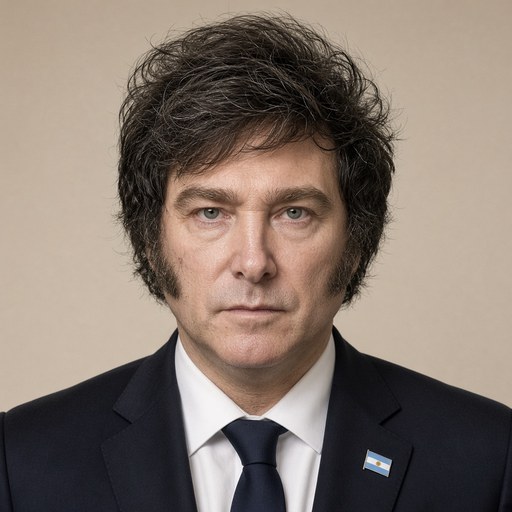
Speech by President Milei at the Opening of the 143rd Regular Session of the National Congress
 Javier Milei · President of Argentina
- Context
- Milei addressed the Argentine National Congress on March 1, 2025, delivering the state of the nation address to open the 143rd Regular Legislative Session.
- Main themes
- Fiscal surplus and economic stabilization, reduction of inflation, state reform and shrinking government, libertarian economic policy, Argentine poverty and political frustration, rule of law restoration, monetary discipline, critique of political caste, freedom and individual rights, historical economic decline of Argentina
- Duration
- ~69 min
- Words
- 8,237
- Sentences
- 325
- Readability
- 48
- Grade
- 12.8
- Syntax
- 3.20
- Vocabulary
- 2.22
Translated from Spanish
The broad sphere of national life a sentence belongs to. Every sentence has an Arena, so it is the denominator the other indices are read against.
Other325 sentences in 84 paragraphs
JAVIER MILEI: Members of the House of Representatives and the Senate of the National Congress, governors, ministers of the Supreme Court of Justice, ambassadors, esteemed members of the National Cabinet, and all Argentines listening to us from their homes. Good evening.
Today we are gathered here as established by the National Constitution in its article 99, to report on the state of the Nation and thus begin a new legislative period. I must say that looking back at our first state of the Nation speech, we can undoubtedly affirm that today the country is radically different from what it was just a year ago. But before making an assessment of what this first year of the new administration has been, I want to make a brief reflection.
Probably, Argentine society is one of the most familiar with political frustration in modern history. To summarize this idea in a tangible number, we are a country where poverty multiplied by 10 between 1974 and the end of 2023. To put it into perspective, from the 1970s until now, the world reduced poverty from 50% to 10%; and we increased it from 5 to 50, a true aberration resulting from the political caste.
This means that the only experience Argentines have had throughout most of their lives has been a path of deterioration of their purchasing power, a long agony with small intervals of growth, quickly frustrated by brutal blows of reality. It is natural that after so many decades traversing this spiral of impoverishment, for a large majority, the decline feels like a fatal and inescapable situation or a chronic ailment to which one bitterly becomes accustomed.
Due to unsustainable economic programs and countless unfulfilled promises, each new political experience has brought more frustration than the previous one. That is why we speak of Argentine political cyclothymia: we get excited about a change, we crash, we become disenchanted, and the cycle begins again, erasing with the elbow what was written with the hand. Rest assured that we will not repeat it. You will grow in freedom.
It is no coincidence that we constantly hear "don't get your hopes up, it's in vain" or "Argentina will always disappoint." It is also no coincidence that the last elections were won by the first liberal-libertarian President, a complete outsider of the system. This is something that would never have happened if traditional politicians had improved our lives. Argentina has spun like a carousel on a declining path for a hundred years, turning on its own axis, eroding its economy, its credibility, and the quality of life of its citizens with each turn.
And why did all our attempts to get out fail? The answer is simple: because we always started from a wrong diagnosis. No one ever questioned the axis on which the carousel turned: the omnipresent black hand of the State. All the false dichotomies of our history, countryside or industry, cheap or expensive dollar, Peronism or anti-Peronism, hid behind the same constant; and politics always defended the State tooth and nail, seeing public administration as a booty to be conquered. That is the true model of the caste.
So, how were we going to have different results if instead of changing the recipe we were only changing the cook? Our recipe is clear and concise: we come to break the carousel, take the handle away from the ringmaster, and chart a horizon of progress forward with profound changes that attack the root of our ills.
To this end, we took the bull by the horns, proposing to resolve the underlying problems. That is why we committed to recovering economic rationality, shrinking the State, restoring freedom to society, reestablishing the rule of law, and erasing the privileges that politics has accumulated over the years. In this way, we went from inheriting a consolidated fiscal deficit of fifteen points — between the Treasury and the Central Bank — to having a financial surplus during our first year, free of default. Something that had not happened in the last 123 years.
In parallel to fiscal discipline, we applied a tourniquet to monetary issuance, and thanks to these two anchors, we have reduced inflation in an unprecedented manner, even at a faster pace than the convertibility itself, which until today was the most successful stabilization program in our history.
Today, we can boast, without a doubt, that our economic program is the most successful to date. Just to exemplify with numbers: the wholesale inflation index when we took office, which annualized to 17,000%, while the same index annualized for the last record was 19% per year. And we achieved this without confiscation like the Bonex Plan, without price controls, without fixing the exchange rate, and with tariff recomposition. Something that has never been done in Argentina.
Thanks to taking away from politics the power to regulate prices at will, we managed to solve supply problems in key sectors, such as fuels, and we were able to correct the enormous problem of relative prices that they left us. When we took office, we had about 20 different exchange rates, with a gap between the official and the free that had reached levels of 200%. Today the gap is at values below 15%.
We went from an economy where installments had ceased to exist to an economy where there are thirty-year mortgage loans. That is, we went from talking about hyperinflation to talking about long-term stability. Along the way, we eliminated and reduced taxes and tariffs of various kinds, seigniorage, which is the issuance of money to finance the deficit that translated into inflation and robbed Argentines of fifteen points of GDP; the Country Tax, export withholdings definitively for regional economies and temporarily for traditional products that, sooner or later, we will finish eliminating.
We also eliminated the tax on real estate transfers, updated the amounts of Income Tax for self-employed individuals, updated the amounts of the simplified tax regime, reduced Personal Property Tax, and carried out the most successful capital amnesty in history, despite the doomsayers saying it would be a failure.
In addition, we reduced tariffs on a large number of imports, eliminated internal taxes for the purchase and sale of cars, and reduced import duties for electric and hybrid cars. As a result of all this, the economy in 2024, year-on-year, not only did not fall but grew by around 5% between the peaks. This happened against all the predictions of the doomsayers, who forecast a vertical drop in economic activity from which we would not recover. This is interesting because any other experience with half the adjustment would have resulted in declines between 10 and 15% of GDP.
So, when we started to make the adjustment, they said it was impossible; that we wouldn't even be able to achieve one point of adjustment in 2024 itself. And in the first month of management, thanks to that colossus we have as Minister of Economy, Luis 'Toto' Caputo, we achieved fiscal balance in the first month of management.
Then, they said it was temporary, that we wouldn't be able to sustain it, and when, as the months went by, they saw that fiscal balance continued, they started saying that we still wouldn't be able to lower inflation, that it would stabilize at thirty, and it went down; that it would stabilize at twenty, and it went down; that it would stabilize at eight, and it went down; that it would stabilize at four, and it went down. And we continue to make inflation decrease.
So, when it was already evident that inflation had entered a downward path, they started with accusations of shabby Keynesianism, saying that we were going to sink, and that economic activity was going to collapse, and that poverty was going to explode. What bad news for you, Keynesians here and around the world, because not only that; the activity, measured seasonally adjusted, December against December, ended up rising 4.8%; without seasonality 5.5%; since April the economy has not stopped growing and you Keynesians cannot stop crying.
When they talked about endless declines, about the L and the soft Nike pipette..., it was in V even if it hurts those from the Frente para la Victoria, I don't know what they call themselves now, the Unión por la Plata, I don't know. In short, our adjustment program was expansive. It was expansive because, as we said during the campaign, the vast majority of the adjustment fell on the public sector and not on the private sector, to which we returned about 15 points of GDP by eliminating the fiscal deficit; and we also returned five additional points due to economic growth between December 2023 and December 2024. As a result, we observe how poverty in the monthly frequency measured by the Torcuato Di Tella University, which methodologically is similar to that of CEDLAS, UCA, and the Human Capital Ministry or INDEC, in a semiannual frequency fell from 56% to 33%, which in terms of population translates to 10 million people who have come out of the poverty line.
In short, adjusting politics is not only not recessive, it is expansive. And it eliminates poverty. Do you want to end poverty? End the political racket. This drop in poverty was driven by the decrease in inflation, the sustained increase in real wages and pensions, and the increase in the Universal Child Allowance in real terms and the Food Plan, since for us the Argentine reconstruction must be done with everyone inside, seriously, not in speeches.
Because although needing social assistance is a tragedy, it is necessary to point out that those who have been relegated for decades are the victims of the system and not the perpetrators. That is why the adjustment fell and will continue to fall on the caste and never on the most vulnerable sectors. But none of all the successes in economic matters were a coincidence, but a consequence of Argentina going from being the worst student in the class to being the flag bearer. In fact, Argentina is today one of the five countries in the world that currently enjoys a financial surplus.
This also explains why the historical ups and downs of prime-time television do not result in economic shocks to the disappointment of petty politicians and monkeys. When the fundamentals of the program are maintained, the noise of the situation is nothing more than that: just noise. At the same time, we set out to shrink the State absolutely. This is how we closed more than 200 areas of the Executive Power with duplicated or obsolete functions, and laid off more than 40,000 public employees, whose salaries burdened the already battered shoulders of the private sector. To see the ridiculousness of the present State and the aberrations they made to defraud Argentines with the State, I took one of the many examples we have to tell, which is, for example, the travel agency. So, we had a Travel Agency Directorate. In addition, we had a Travel Agency Control Directorate, and in addition, we had a Travel Agency Registration Directorate. A scandal. All set up to defraud good Argentines in favor of the political caste.
We also eliminated dozens of trust funds that politics used at its discretion. We eliminated militant boxes like INCAA, INADI, the Ministry of Women, and Télam, and we returned to surplus emblematic companies of the deficit militancy, such as Aerolíneas Argentinas, AySA, Intercargo, and ENARSA, among others, while we began to take the first steps towards the privatization of all public companies, because we understand that the State is not there to replace the entrepreneur.
In addition, we eliminated public works — which was one of the biggest rackets of politics. And here I also want to make clear one of the great fallacies and lies of politics towards the people, when they say that lie that public works generate jobs. I tell good Argentines that this is false. It is false because public works have to be financed, and they are financed with taxes, whether from explicit taxes or with monetary issuance that later translates into the inflation tax or with debt, that immorality that punishes future generations. Therefore, when public works are financed, it takes away demand capacity in other sectors, and the jobs created by public works are jobs that were destroyed in other areas of the economy. Areas where people did want to spend, and not these things done by force by the State that only benefit those who execute them and nothing to good Argentines. Therefore, I hope that at least from the public debate, after this is made clear, we eradicate that lie that public works do not generate jobs; public works generate taxes.
We also completely eliminated official advertising, an instrument that the caste used to operate politically and spread its lies in the media. We were the only ones to eliminate official advertising; we do not need to bribe the media, we have achievements, we do not need lying journalists paid for by the public treasury.
We have removed ridiculous powers from the State that should never have been granted. During our first year in office, through Decree 70/23, the Framework Law, and the largest deregulation process in history, we have concentrated and implemented around 1,700 structural reforms, eliminating regulations that curtailed commercial and economic freedoms and put obstacles in the way of the great productive engine of our country, which is the private sector. Here, I also want to give an example of that wonderful and superlative Minister I have, who is the Minister of Deregulation, Dr. Federico Sturzenegger. Moreover, given the customs of a part of the political class, we decided to make an example in terms of how much the paper weighed. So, for example, in the case of deregulations for fruits, the regulations we had weighed 1,600 grams. Today, with the actions of Federico Sturzenegger, those regulations have fallen to 80 grams. That is, they fell by 95%. I think it is almost unnecessary to say, but that correlation between what the regulations weighed had another correlation in another type of papers. Let's say, sometimes green and sometimes European, because they fit more into the same weight.
Thanks to this, we managed to deregulate thirty markets that are now freer. For example, commercial air transport, which last month had a historic record with more than four and a half million passengers transported, greatly exceeding the previous record set in 2019. The revolution of airplanes, but recharged. Perhaps the most emblematic example of our model is the real estate market. Thanks to the elimination of the infamous and defunct Rental Law. The number of rental listings has multiplied exponentially, and the cost of rent has decreased by up to 30% in real terms.
In terms of Human Capital, we eliminated the scam of poverty managers, taking away the power of extortion from a group of shameless picketers who forced the most needy to march for their own causes, under the threat of stealing their social assistance. Thanks to this, we managed to reduce the number of blockades on the streets and roads from more than 8,200 to zero. Yes, you heard right: in 2023 we had more than 30 blockades per working day; and now it has been more than ten months without a single blockade on the streets of the entire country.
In terms of National Security, under the leadership of Dr. Bullrich, in 2024 we saw the lowest homicide rate in the last 25 years, having decreased by eleven points compared to 2023. This means we had the lowest homicide rate in South America. In Rosario, a city that was completely tormented by drug trafficking, thanks to the Bandera Plan led by the Minister, we saw the lowest crime rate since 2006, with fewer than one hundred crimes recorded. In short, thank you, Minister Bullrich, for restoring order, peace, and security to the good Argentines so that it is hell for criminals. We also approved the repeat offender and recidivism projects, along with the Anti-Mafia Law to strengthen a universal principle that has been forgotten in these lands for so long: those who do the crime, pay the time.
In the judicial field, we implemented the accusatory system in twelve provinces, half of the country, which allowed us to convict for drug trafficking in just one month, when it previously took more than three years. At the same time, we are promoting jury trials, one of the reforms we owed ourselves since the founding of the country so that the life, liberty, and property of Argentines ultimately depend on the decision of their fellow citizens, and not on a judge, thus eliminating the last vestige of monarchical power in Justice.
Regarding Defense, we are re-equipping and elevating our Armed Forces again, after decades of neglect and disdain towards them. Just this week, the first of the 24 F16s purchased by our administration arrived, the most important arms acquisition in the last forty years.
In Foreign Policy, we went from being a laughingstock on a global level, allied with the countries with the worst performance in the concert of nations, such as Cuba and Venezuela, to being an unexpected protagonist. Today, as a result of our ambitious economic policy and our firm positions in foreign policy, the eyes of the world are on Argentina after a long time; in some cases, they even take note of the work we have done to apply it in their own countries, as Elon Musk is doing at the head of the deregulation portfolio in the United States.
Elon with the chainsaw is not a minor detail. The chainsaw is now a symbol of a change of era and the beginning of a new golden age for humanity, but this time, instead of going against the grain of the world, Argentina is at the forefront of the world.
I believe that by making this brief review of the thousands of things that have changed in the last year, we can assert unambiguously that the state of the Nation is today much more promising than it was a year ago. During the presidential campaign, we invited all Argentines to judge us by our ideas. Today, having gone through just over our first year, we invite you to judge us again, but this time by our results.
This is extremely important because if Argentine resignation is the result of unfulfilled promises, its redemption will depend on us keeping our word, and we will do so rigorously. In a survey conducted by the Secretary of Communication, our spokesperson, the great Manuel Adorni, we concluded that in our first year of management, that is, 25% of our term, we have already fulfilled or are fulfilling more than 75% of our promises. Something unprecedented in Argentine history.
Moreover, I want to make a footnote about this statement because it is not that we are fulfilling our promises because our program was not ambitious. Throughout the campaign, we faced harassment and hostility, with claims that everything we proposed was impossible. It was super ambitious; no one believed we could achieve what we are achieving. And in that sense, we are not only doing things we promised in the campaign, but we are also doing many more things than we promised in the campaign. And when one makes this correction, we have fulfilled 97% of the campaign promises in just one year.
And that is why I want to pause in the speech because in life, one must be grateful and not stingy, and I want to thank each of my ministers for the enormous work that each of them has done during this year. I want to thank Dr. Guillermo Francos, ‘Toto’ Caputo, Santiago Bausili, Patricia Bullrich, Sandra Petovello, Federico Sturzenegger, Luis Petri, Mariano Cúneo Libarona, Mario Lugones, Gerardo Werthein, Manuel Adorni, and Karina Milei for allowing me to lead the best government in Argentine history.
Thus, before us, thanks to the impoverishing model of the political caste, Argentina was surrendered. It was a beggar asking for alms that no one wanted to give even 3 cents, and every Argentine lived in the permanent anguish that the value of their money would slip through their fingers. Today, we are clearly living a new reality, very different from the one we lived a year ago. The economic stability we are conquering does not mean we have reached the harbor, but it does mean we are getting a little better every day, as has been proven by the sustained salary recovery of the last nine months. It also does not mean there will not be volatility. Life does not work that way; it is not a uniform straight-line movement; there are always ups and downs, moments of tension and moments of tranquility. This has happened with the process of disinflation, and it will happen with the process of growth. But what matters is not a snapshot, but the trend. And the same informs that inflation will tend to zero, and per capita GDP will tend to grow steadily over time.
Here, I want to mention a work by a fellow economist named Juan Pablo Nicolini, who is from the Di Tella University and also works at the Federal Reserve, and in a paper he did on fiscal policy and economic growth, he shows that achieving balance in the financial line, as Argentina does, implies that Argentina has ahead of it a sustained growth rate of per capita GDP of 4.5%. And we must add some additional issues because the work does not differentiate between the drop in Country Risk—which we received at around 3,000 basis points and is now around 750—nor does it mention that the balance achieved was based on reducing taxes, lowering public spending, and not as adjustments were made before by increasing tax pressure. It also does not take into account the enormous number of structural reforms we have made. Just Decree 70/23 and the Framework Law represent a structural reform eight times larger than the reform Carlos Menem made when he was the best government in history, until now.
Imagine if we also add the 900 regulations that Federico Sturzenegger eliminated along the way, if we add the RIGI, and if we also assume that we are ending the distortion caused by inflation. But Rome was not built in a day, and the reality is that what has been done so far is just a small sample of what the country needs to heal definitively. To achieve that goal, we need to have a sustainable model over time, a legal framework that protects the fruits of each Argentine's effort, and an institutional model in line with a country with ambition for greatness. That is why we need to continue carrying out an innumerable number of fundamental reforms; the only way to rebuild Argentina is through permanent reformism. Last year, we dubbed it the Year of the Defense of Life, Property, and Freedom, because it was the year in which we said enough to the model of the political caste and took the first steps in the direction of the model of freedom. This year will be the Year of the Reconstruction of Argentina: having laid the foundations, we must begin to rebuild the foundations of our great Nation. But none of this will be possible if we do not advance in addressing the structural problems of the country.
Our teams are working on more than a dozen fundamental laws. That is, they lay the foundations on which this new building must be constructed. These projects address everything from economic issues to administrative issues of the State: financial, criminal, civil, issues related to national security, our intelligence system, issues related to trade, private property, and a series of structural topics that make up the institutional design of a country that must think big.
Today, I want to take the opportunity to mention some of the ones we are working on. Depending on the disposition of this Congress, the dynamics of the electoral campaign that begins shortly, and the necessary economic sequentiality, these reforms may be addressed either during this legislative period or we will address them starting December 11 of this year.
I imagine this area is going to get a little more violet. If we truly want to be a power, the first subject we must advance on is to eradicate inflation forever. It should no longer depend on someone coming with the conviction to do what is right but on turning into law an unquestionable truth of the Argentine economy: the fiscal deficit is the mother of all evils in the history of the country. Of the 22 crises recorded since the beginning of the 20th century, 20 have a fiscal origin, which has fluctuated between high and extravagantly high. This has ultimately translated into indebtedness with its subsequent default, financing with monetary issuance that led to inflation and hyperinflation, or tax increases that stifled growth while curtailing economic and individual freedom.
Consequently, we must make fiscal balance mandatory for any state budget, whether national or subnational, but fiscal balance is not enough; it must be accompanied by a severe reduction in public spending to return to society what the State currently confiscates via taxes.
That is why we must also establish a fiscal target so that by 2027, Argentina's consolidated public spending is a maximum of 25 points of GDP, as we all committed in the Pact of May, where both the National State and the provinces and municipalities will have to do their part. Because the smaller the size of the State, the greater the economic freedom, greater economic growth, greater per capita income, and therefore, fewer poor people in Argentina. That is, the real trade-off is whether we are willing to accept more public spending to have more poor people. I prefer to shrink the State and have fewer poor people in Argentina.
It is necessary to continue passing the deep chainsaw through the State to remove geological layers of unjustified spending and seriously shrink the State. The chainsaw is not just a government program; it is a state policy that will continue for years and will not stop until it finds the end of the State in the long term.
We need to review area by area of the State, and none is more important than privatizing public companies, because although today they are profitable for the first time in fifteen years, they remain a burden on the private sector. While the Bases Law and Decree 70/23 included fundamental elements to take the first steps in reforming the world of work, we need to deepen this path. The labor regime that has prevailed for 50 years has become completely obsolete, and today it only serves to protect with benefits the few people who remain in the formal sector, while expelling millions to informality each year. This is the main reason why formal private employment has not grown for almost fifteen years.
In this sense, only with a dynamic labor market that generates formal employment can we aspire to have a sustainable pension system that decades of mismanagement have ruined. It is also imperative to carry out a structural tax reform, in order to reduce the number of national taxes by 90% and to have only six taxes, ending the logistical hell that it means to pay taxes in Argentina.
In addition, the spirit of the reform we are working on is to grant fiscal autonomy to the provinces for the taxes that the National State currently collects in their name. In this way, the National State will establish a minimum floor for each tax, substantially lower than the current total, and then the provinces will be able to raise it at their discretion, which will undoubtedly generate fiscal competition among the provinces, thus energizing their economies.
Likewise, we need to restore to Argentines the freedom to trade with whomever they wish, so that goods and services can enter the local market and everyone can freely buy better quality products at better prices. For decades, under the premise of protecting a handful of jobs, the cost of living has been deliberately increased for millions of Argentines. In many cases, forcing them even to purchase goods of dubious quality at completely distorted prices. It is not fair that only those who can afford a trip abroad can buy what they want at international prices. It has to be for everyone. Opening markets will also open the doors of the world to Argentine companies so they can sell our products to 8 billion people, in an international context where what Argentina has to offer will be in high demand.
I also want to put an end to another fallacy, with which we have been lied to for almost a hundred years, and that is the issue of the infant industry, an infant that is at least 90 years old now. Or, let’s say, protecting industry X, because it generates jobs. That is another lie. Because if, in the process of opening the economy, a product of better quality or better price comes in and bankrupts a company, it is also true that consumers now have more money in their pockets and can spend it in other sectors of the economy. Therefore, employment will be reassigned and will go to sectors where it is more productive and where there are higher wages and, consequently, greater well-being for all. Therefore, enough of the protectionist lie, because at its core it is nothing more than a scam between politicians and privileged businessmen.
The first step on this path is the historic opportunity we have to establish a trade agreement with the United States. An opportunity that was presented to us twenty years ago and we let it pass, missing the last great growth boom that the planet saw. But to take advantage of this historic opportunity that is being presented to us again, it is necessary to be willing to flexibilize or, if necessary, to leave Mercosur, which has only succeeded since its creation in enriching large Brazilian industrialists at the expense of impoverishing Argentines.
But we need to go even deeper, restoring the inviolability of private property, for which we need to delve into the depths of the laws, the Civil and Commercial Codes, and the Civil and Commercial Procedural Code. It is urgent to restore the freedom of association to all Argentines, reducing the prerogatives of the State and increasing those of each citizen. It is unacceptable that individuals do not have the right to freely negotiate agreements among themselves without the interference of any petty judge, whose whim is often accompanied by political or economic ties. This is where the famous legal security that politics has been demanding for years comes into play, but for which it has never done anything. This is resolved with a clear and impermeable Civil and Commercial Code to the malicious interpretation of any court. Furthermore, public order and peaceful social life must return to being the rule and not the exception in Argentina.
Currently, we have a judicial system and a Penal Code full of cracks through which the virus of anti-punitivism has seeped, which, besides being morally wrong, has shown its resounding failure. We saw it this week in the tragic news of the murder of Kim Gómez, a seven-year-old girl who was brutally killed. I want to express my condolences to her family and assure them that they have this President's commitment to fight tirelessly against the scourge of insecurity.
In addition, I take this opportunity to tell Governor Kicillof that as long as he continues to maintain that criminals, murderers, and rapists are victims of the system, in line with Zaffaroni's legal wokism, we not only have nothing to discuss, but I also want to tell him that he will never solve the serious problem of insecurity in the Province, since being tolerant of criminals is punishing good people. If he wants to solve the problem, he has two alternatives: abandon that abolitionist vision and punish criminals, or step aside and let us solve the problem. Because if there is one thing that characterizes this National Government, it is that we do not hesitate, and we solve problems seriously.
For too long, politics has told Argentines that it would not punish crime, that criminals were victims of an unjust system and that, therefore, they were not responsible for their actions. All they achieved was that for many criminals, committing crimes no longer had costs. The people of Buenos Aires suffer this every day. Well, with the government's projects on recidivism and repeat offenders approved by this Congress, we will finally put an end to the revolving door in Argentina.
Moreover, the implementation of the new Criminal Procedure Code nationwide is irrefutably demonstrating its ability to accelerate the time of a trial from years to months, and we have the responsibility to extend the functioning of this system to all provinces in the country. But the effectiveness of the criminal process is only one aspect of the issue. We need to raise the costs for those who commit crimes. That is why we need to approve the Law to lower the age of criminal responsibility so that those who are aware enough to commit adult crimes pay the consequences of their actions as adults.
But, unfortunately, it will come too late. Because today one of Kim's murderers is fourteen years old and enjoys being unaccountable. He cannot be judged. And the other criminal committed crimes while under sixteen, which means that under our Law of Criminal Responsibility he would not have been free in the first place. We need to lower the age of criminal responsibility, and not only that. We also need to increase all the penalties in the Penal Code. Yes, all the penalties in the Penal Code. Thus embarking on the most important reform of the Penal Code in the last hundred years, something that must happen urgently. But the problem is not limited to ordinary crime. Drug trafficking and terrorism represent a clear and present danger to Argentines. From cities taken over by drug traffickers to the tragedy of the Bibas family, every day reminds us that Argentines need instruments to fight against those who want to threaten our lives. We will have no mercy on organized crime or terrorism. For this, the new Anti-Mafia Law will allow us to delve into the dens of drug trafficking without the mediation of local governments. In addition, we are working on a National Security Law that will provide the National State, our intelligence service, and our Forces with the tools to pursue those who want to threaten the lives of Argentines.
In conclusion, we will not be able to resolve the crime crisis in our country without an independent but effective Justice system. And Justice will not function properly until politics decides to stop politicizing the appointments of judges, prosecutors, and public defenders. In this line, we intend to move forward with the submission of the nominations for all vacant positions in the Federal Justice, including the Attorney General, the Public Defender, the Ombudsman, all federal courts, all prosecutors, and all public defenders that are currently missing designation, which are around 40% of the magistrates in the Federal Justice.
This should be obvious to everyone. It is impossible for Justice to fulfill its duty if it operates at 60% of its capacity. We hope that politics rises to the level of this national urgency and does not politicize the approval of the nominations, unlike what happened this year with the candidates to form the Supreme Court. If we want to be a serious country, we must also carry out a migration reform.
Read it, Manes, it will do you good; supposedly you understand how the brain works, and it seems you haven't learned anything. Read it well. Perhaps your version is with artificial intelligence and changes from libertarian to Kirchnerist, as you did, Manes.
Manes, you lack a lot of political theory. You cannot, you cannot confuse...
(Victoria Villarruel: I ask for silence, please, while the President of the Nation speaks. Thank you very much)
You lack a lot of reading, Manes.
Our Nation has been generous with immigrants, but another thing is to be taken for fools by our neighbors or to be a center of beneficiaries paid for by the pockets of Argentines. We want those foreigners who are temporarily or transiently in our country to pay for the services they use.
We must also allow universities to charge those who are not permanent residents; just as it is necessary to severely tighten the conditions for deportation for foreigners who commit crimes. This is what any country that values itself does. And if this needs any kind of justification, it is because over the last century it has become customary to disrespect the taxpayer.
On the other hand, we must recover the rule of equality before the law, ending this system of quotas of different types that imposes everything from whom to employ to whom to vote. We have reached the point where there are quotas even for employing people in media or for programming artists at a festival. With the supposed justification of protecting certain groups perceived as oppressed, we have unjustly harmed others, violating the equality before the law that our Constitution enshrines.
We need to recover a basic truth of liberal democracy, which is that the limit of one’s rights is the rights of others. These are just a few of the many fundamental reform projects we are working on, and in which we will advance as the political dynamics and economic sequentiality require.
Finally, but not least, to make these projects and the changes that the Argentine people demand a reality, we are advancing in an agreement with the International Monetary Fund to finally clean up the balance of the Central Bank and definitively exit the currency control this year.
We have been carrying the burden of fiscal deficit and debt for decades, which has worsened because throughout Argentine history, instead of facing the fiscal problem, various governments chose to go into debt; whether with the market, with multilateral credit organizations, or with the Central Bank itself in exchange for money issuance. That is why today, thanks to the solvency of our economic program, we are in a position to undertake this new agreement without increasing our gross debt. To understand the dimension of the monetary problem we have been dragging since the beginning of our management, and to also understand what we are seeking with this new agreement, it is important to briefly describe the problem.
The Central Bank, like any agent of the economy, has a balance sheet, whose accounting identity indicates that its net worth is given by the difference between its assets and liabilities. As for the assets of the Central Bank, they consist of international reserves and public securities issued by the National Government. Regarding the liabilities, it includes the monetary base, which is the money issued that is in the hands of citizens and banks in the form of reserves, and the remunerated debt, which was previously called LEBACS, then Leliqs, and later Pases. In this sense, when the liabilities of the Central Bank increase, either due to the issuance of pesos against public securities that have no market, that is, spurious issuance, or due to the accrual of interest on the passes, the net worth of the Central Bank deteriorates. Thus, as the net worth becomes increasingly negative, a higher price level is needed to liquidate the debts of the Central Bank, so that it adjusts to the real size of its assets. In this regard, as the Treasury finances itself by placing worthless securities in the Central Bank, the long-term price level is higher, and thus the inflation rate in the present is greater.
From this perspective, then, it is very simple to explain why since the end of Convertibility the price of the dollar has multiplied by 1,200 times. First of all, due to the colossal scam of asymmetric pesification, which meant that the government stole 14 billion dollars that backed the monetary base in 2001; and that in today's money adjusted for American inflation amounts to 30 billion dollars. That is to say, with asymmetric pesification, that joke so cheerfully promoted and backed by Clarín, which later had its Media Law so that it wouldn’t go bankrupt, there they stole 30 billion dollars from the Argentines.
The second scam was the Bicentennial Fund, when due to the electoral whim of Cristina Fernández de Kirchner, 10 billion dollars were withdrawn from the Central Bank, which in today’s money would be 15 billion dollars. In other words, they stole 15 billion dollars from the Central Bank, which in essence was stolen from all Argentines through inflationary taxation. However, the looting by politicians through the Central Bank does not end with these two monumental scams, but must also include the 25 billion dollars in future contracts in 2015 and the 40 billion from the SIRAs in 2023. This means that in the last 25 years, politics via the Central Bank has stolen 110 billion dollars from the Argentines. Come now to talk about pyramid schemes. Go ahead.
Therefore, in light of such destruction of the Central Bank's assets, it should not be surprising the inflationary disaster we have experienced in the last twenty years. And since the dollar is just another price in the economy, it is almost natural that it has multiplied by 1,200 times as I said before. Based on this, we have cut the fiscal and quasi-fiscal deficit so that the BCRA has not defrauded Argentines again with money issuance, neither for the Treasury nor for the interests of the remunerated liabilities. In fact, the broad monetary base has remained constant since mid-last year. Just as you hear: the broad monetary base has not grown since mid-last year. Nor has a solution been sought through borrowing in the market, as the consolidated debt of the Nation has decreased by 30 billion dollars. We do not proclaim debt reduction in words; we do it in deeds.
Therefore, the current agreement with the IMF seeks to restore the assets of the Central Bank, and with that its net worth, so that inflation becomes just a bad memory of the past. Thus, the money that comes in from the IMF, the Treasury will use to pay off part of its debt with the Central Bank. At the same time, it could be argued that while the gross debt remains constant, there is a change in the creditor. However, this argument would imply accepting that the government is willing to continue defrauding Argentines with inflation. That is, someone could point out that we are exchanging explicit taxes for an unlegislated implicit tax. However, what is interesting here is that we are going to honor our commitments; and the funds to face this debt will arise from a greater fiscal adjustment through a reduction in public spending, so that the resulting operation is a transfer of wealth from the State to all good Argentines, and especially to the most vulnerable segments of the population, as they are the most affected by the inflationary tax.
At the same time, given the strategic importance of this agreement for Argentina, I want to announce that in the coming days I will ask Congress to support the Government in this new agreement with the International Monetary Fund. This new agreement will provide us with the tools to heal the path towards a more free and efficient exchange rate scheme for all our citizens and to attract greater investments that translate into lower inflation, greater growth, and higher employment levels, with the consequences… better salaries that imply fewer poor and indigent people. I want to be clear about one thing: we are going to solve the problem that all previous governments caused with the fiscal deficit and its financing. Consequently, we expect this Congress to adopt the same stance it has taken with all the others, which is to support the Government in this new agreement from their seats.
In short, as you will see, while we have laid the foundations for change, we still have to lay brick upon brick to rebuild this battered building that is our Nation. And given the winds of change that are blowing, we are facing a historic opportunity. Many have called it, perhaps, our last opportunity. As I stated right here exactly a year ago, when I invited you to sign the May Pact: my preference would be that we address this historic opportunity for reconstruction in unity, with all sectors of politics and society pushing in the same direction. I still dream that this change of course can be the opportunity to begin a cycle of national unity that transcends us as a generation, as happened in the first part of the 19th century, and that in a hundred years, when they write about this time, they can refer to us as the generation of 2020, which changed Argentina.
We are not motivated by power. We are the first case in modern democracy that enters the election year without economic policy tinted by the political cycle. Because we have no ambition for power. The only thing we have is a reformist ambition, and we want to give this Congress the opportunity to accompany us in the ambitious process we have undertaken. Thus, perhaps, they could restore their relationship with the society that today seems irreparably broken. I hope you take this invitation for what it is: a chance to participate in the tabula rasa that we have always preached and believe is necessary for national reconstruction. But if you were to decline it, frankly, we would not be surprised. This Congress has already demonstrated, time and again, that between you and the Argentines, some have no problem always choosing themselves. Especially those who did not come. That is: some have made Congress an instrument to defend the conquests of the State over the individual, instead of an instrument to carry out the profound changes that the country needs. And not to mention that sector of politics that is so rancid to change and hostile to reason that it does not even deign to come down to the chamber to listen to an opening of legislative sessions.
But if you still doubt our vocation for change, remember what happened last year. For each and every one of the reforms implemented, they told us it was impossible. But soon they learned, begrudgingly, that what we set out to do, we accomplish. No matter how steep the path is and how many obstacles there are in the way, because for us, politics is the challenge of making possible what politicians have always said was impossible. I repeat: for us, politics is the challenge of making possible what politicians have always said was impossible. Just look at what we did with fiscal balance.
That is why, if this Congress chose not to overwhelmingly support the National Government in this proposal that I extend to you, know that this will not stop the process of change that the Argentine people entrusted to us. We will do it alone, we will do it our way, but sooner or later we will do it, fighting the battle that needs to be fought on all fronts to achieve it. We will fight in the National Congress, we will fight in the provinces and municipalities, in the legislature and deliberative councils, we will battle as visitors in the analog media and we will do it locally on social networks, we will do it in the streets if history demands it. And we will never, but never give up. We will never surrender. And although it is hard for you to understand and you resist, we will make Argentina great again.
If you accept my proposal, I will see that you are willing to get involved in what the country needs. Otherwise, you will have demonstrated that the only way to change the country is to change this Congress. For all the reasons stated, it is clear that we are at a crossroads: do we want to continue applying the same failed recipes that brought us to the brink of the precipice, or do we want to move forward? There is only one way to do it, to do once and for all what is right. I refuse to believe that the best of this country has already passed; on the contrary, I am convinced that the best is yet to come. Now the choice is in your hands, and the eyes of the Argentine people are upon all of you.
Thus, the one hundred and forty-third ordinary sessions of our National Congress are hereby inaugurated. Finally…
Victoria Villarruel: The objective of this solemn Assembly having been fulfilled, it is hereby adjourned.
Javier Milei: I haven't finished. I mean, don't rush. In short, may God bless the Argentines, may the forces of Heaven accompany us, and long live freedom, damn it! Long live freedom, damn it! Long live freedom, damn it!
The original Spanish. The tags above are read on the English translation's sentences.
JAVIER MILEI: Diputados y Senadores del Congreso de la Nación, gobernadores, ministros de la Corte Suprema de Justicia, embajadores, estimados miembros del Gabinete Nacional, y a todos los argentinos que nos están escuchando desde sus hogares. Buenas noches.
Hoy estamos aquí reunidos como establece la Constitución Nacional en su artículo 99, para dar cuenta del estado de la Nación y así dar inicio a un nuevo periodo legislativo. Debo decir que miro hacia atrás, a lo que fue nuestro primer discurso del estado de la Nación, indudablemente podemos afirmar que hoy el país es radicalmente distinto a lo que era hace tan solo un año. Pero antes de hacer un balance acerca de lo que ha sido este primer año de gestión de la nueva administración, quiero hacer una breve reflexión.
Probablemente, la sociedad argentina sea una de las más familiarizadas con la frustración política de la historia moderna. Para sintetizar esta idea en un número palpable, somos un país en donde la pobreza se multiplicó por 10 entre 1974 y finales de 2023. Para tener una idea, desde la década del 70 hasta acá el mundo bajó la pobreza del 50% al 10%; y nosotros del 5 la llevamos al 50, una verdadera aberración fruto de la casta política.
Eso quiere decir que la única experiencia que tuvieron los argentinos a lo largo de la mayoría de sus vidas fue una senda deterioro de su poder adquisitivo, una larga agonía con pequeños intervalos de crecimiento, rápidamente frustrado por brutos mazazos de realidad. Es natural que después de tantas décadas transitando este espiral de empobrecimiento para una gran mayoría la decadencia se sienta como una fatal e inescapable situación o una dolencia crónica a la que uno amargamente se acostumbra.
Por programas económicos insostenibles y por infinitas promesas incumplidas, cada nueva experiencia política ha traído más frustración que el anterior. Por eso se habla de la ciclotimia política argentina: nos ilusionamos con un cambio, chocamos, nos desencantamos y el ciclo comienza nuevamente, borrando con el codo lo escrito con la mano. Que se quede tranquila que no lo vamos a repetir. Vas a crecer en libertad.
No es casualidad que escuchemos constantemente «no te ilusiones, es en vano» o «Argentina siempre va a defraudar». Tampoco es casualidad que las últimas elecciones las haya ganado el primer Presidente liberal-libertario, un completo outsider del sistema. Es algo que jamás hubiese ocurrido si los políticos tradicionales hubiesen mejorado nuestras vidas. La Argentina durante cien años giró como una calesita en un sendero decreciente, dando vueltas sobre su propio eje, erosionando en cada vuelta su economía, su credibilidad y la calidad de vida de sus ciudadanos.
Y por qué fallaron todos nuestros intentos de salir. La respuesta es simple: porque siempre se partió desde un diagnóstico equivocado. Nadie nunca cuestionó el eje sobre el que giraba la calesita: la mano negra del Estado omnipresente. Todas las falsas dicotomías de nuestra historia, campo o industria, dólar barato o caro, peronismo o antiperonismo, escondieron atrás la misma constante; y la política siempre defendió al Estado con uñas y dientes, viendo la administración pública como un botín a ser conquistado. Eso es el verdadero modelo de la casta.
Entonces, ¿cómo íbamos a tener distintos resultados si en lugar de cambiar la receta estábamos solamente cambiando el cocinero? Nuestra receta es clara y concisa: venimos a romper la calesita, quitarle la manija al sortijero y trazar un horizonte de progreso hacia adelante con cambios profundos que atacan la raíz de nuestros males.
Para ello, tomamos el toro por las astas, proponiéndonos resolver los problemas de fondo. Por eso, nos encomendamos recuperar la racionalidad económica, achicar el Estado, devolverle la libertad a la sociedad, restablecer el imperio de la ley y borrar los privilegios que la política acumuló a lo largo de los años. De esta manera, pasamos de heredar quince puntos de déficit fiscal consolidado —entre el Tesoro y el Banco Central— a tener durante nuestro primer año superávit financiero, libre de default. Algo que no había ocurrido en los últimos 123 años.
En paralelo a la disciplina fiscal, le aplicamos un torniquete a la emisión monetaria y gracias a estas dos anclas hemos reducido la inflación de una manera sin precedentes, incluso a una velocidad más rápida que la propia convertibilidad, que hasta el día de hoy era el programa de estabilización más exitoso de nuestra historia.
Hoy, nosotros podemos hacer alarde, sin lugar a dudas, de que nuestro programa económico es el más exitoso hasta la fecha. Solo para ejemplificar con números: el índice de inflación mayorista cuando asumimos, que anualizado daba 17.000%, mientras que el mismo índice anualizado para el último registro fue de 19% anual. Y esto lo logramos sin confiscación tipo Plan Bonex, sin controles de precios, sin fijar el tipo de cambio y con recomposición tarifaria. Algo que nunca se hizo en Argentina.
Gracias a quitarle a la política el poder de regular los precios a su antojo, logramos solucionar problemas de desabastecimiento de sectores claves, como el de los combustibles y pudimos corregir el enorme problema de precios relativos que nos dejaron. Al asumir teníamos cerca de 20 tipos de cambio diferentes, con una brecha entre el oficial y el libre que había llegado a niveles del 200%. Hoy la brecha se encuentra en valores inferiores al 15%.
Pasamos de una economía donde las cuotas habían dejado de existir a una economía donde existen créditos hipotecarios a treinta años. Es decir, pasamos de hablar de hiperinflación a hablar de estabilidad a largo plazo. En el camino eliminamos y redujimos impuestos y aranceles de distinto tipo, el señoreaje, esto es la emisión de dinero para financiar el déficit que se traducía en inflación y que le robaba a los argentinos quince puntos del PBI; el Impuesto País, las retenciones a las exportaciones de manera definitiva para las economías regionales y de manera transitoria para los productos tradicionales que, tarde o temprano, las vamos a terminar de eliminar.
También eliminamos el impuesto a las transferencias inmuebles, actualizamos los montos de Ganancias para autónomos, actualizamos los montos del monotributo, redujimos Bienes Personales, y realizamos el blanqueo de capitales más exitoso de la historia, pese a que los agoreros decían que iba a ser un fracaso.
Además, redujimos aranceles a una gran cantidad de importaciones, eliminamos impuestos internos para la compra y venta de autos y redujimos derechos de importación para autos eléctricos e híbridos. Como consecuencia de todo esto, la economía en el año 2024 punta a punta en términos interanuales, no solo no cayó, sino que creció entre las puntas alrededor de 5%. Esto ocurrió contra todos los augurios de los agoreros del fracaso, que pronosticaban una caída vertical de la actividad económica de la que no íbamos a recuperar. Esto es interesante porque cualquier otra experiencia con la mitad de ajuste, sí hubiera derivado en caídas entre el 10 y el 15% del PBI.
Entonces, cuando empezamos a hacer el ajuste, dijeron que era imposible; que ni siquiera íbamos a poder lograr un punto de ajuste en el propio 2024. Y en el primer mes de gestión, gracias a ese coloso que tenemos como Ministro de Economía, que es Luis ‘Toto’ Caputo, alcanzamos el equilibrio fiscal en el primer mes de gestión.
Después, dijeron que era transitorio, que no lo íbamos a poder sostener, y cuando, con el correr de los meses, veían que el equilibrio fiscal seguía, empezaron que igual no íbamos a poder bajar la inflación, que se iba a estacionar en el treinta, y bajó; que se iba a estacionar en el veinte, y bajó; que se iba a estacionar en el ocho, y bajó; que se iba a estacionalizar en el cuatro, y bajó. Y seguimos haciendo que la inflación baje.
Entonces, cuando ya era evidente que la inflación había entrado en un sendero decreciente, empezaron con las acusaciones del keynesianismo berreta, diciendo que nos íbamos a hundir, y que la actividad económica se iba a desmoronar, y que iba a explotar la pobreza. Qué malas noticias para ustedes, keynesianos de acá y de todo el mundo, porque no solo eso; la actividad, medida desestacionalizado, diciembre contra diciembre, terminó subiendo 4,8%; sin estacionalidad 5,5%; desde abril que la economía no para de crecer y que ustedes que keynesianos no pueden parar de llorar.
Cuando hablaban de caídas sin final, de la L y de la pipita de Nike suave…, fue en V aunque les duela a los del Frente para la Victoria, no sé cómo se llamen ahora, la Unión por la Plata, no sé. En definitiva, nuestro programa de ajuste fue expansivo. Fue expansivo porque, tal como dijimos durante la campaña, la gran mayoría del ajuste recayó sobre el sector público y no sobre el sector privado, al que le devolvimos cerca de 15 puntos del PBI al eliminar el déficit fiscal; y además le devolvimos cinco puntos adicionales dado el crecimiento económico entre diciembre 23 y diciembre 24. Fruto de ello es que observamos como la pobreza en la frecuencia mensual medida por la Universidad Torcuato Di Tella, que metodológicamente es similar a la de CEDLAS, de la UCA y el propio ministerio Capital Humano o el INDEC, en una frecuencia semestral bajó del 56% al 33%, que en cantidad de habitantes se traduce en 10 millones de personas que salieron de la línea de la pobreza.
En definitiva, ajustar a la política no solo no es recesivo, es expansivo. Y elimina la pobreza. ¿Quieren terminar con la pobreza? Terminen con el curro de la política. Esta caída de la pobreza se vio impulsada por la baja de la inflación, el aumento sostenido de los salarios reales y las jubilaciones, y el aumento de la AUH en términos reales y del Plan Alimentar, dado que para nosotros la reconstrucción argentina debe hacerse con todos adentro, en serio, no en discursos.
Porque aunque necesitar de la asistencia social sea una tragedia, es necesario señalar que los que fueron relegados durante décadas son las víctimas del sistema y no los victimarios. Por eso el ajuste cayó y seguirá cayendo sobre la casta y nunca sobre los sectores más vulnerables. Pero ninguno de todos los éxitos en materia económica fueron casualidad, sino consecuencia de que Argentina pasó de ser el peor alumno de la clase a ser el abanderado. De hecho Argentina es hoy uno de los cinco países del mundo que actualmente goza de superávit financiero.
Eso explica también que los vaivenes históricos del prime time televisivo no redunden en cimbronazos económicos para decepción de políticos mezquinos y mandriles. Cuando los fundamentos del programa se mantienen, el ruido de la coyuntura no es otra cosa que eso: solo ruido. Al mismo tiempo, nos propusimos achicar el Estado de manera absoluta. Así fue como cerramos más de 200 áreas del Poder Ejecutivo con funciones duplicadas u obsoletas, y echamos a más de 40.000 empleados públicos, cuyos sueldos cargaban sobre las ya castigadas espaldas del sector privado. Para ver la ridiculez del Estado presente y las aberraciones que hicieron para estafar a los argentinos con el Estado, tomé uno de los tantos ejemplos que tenemos para contar, que es, por ejemplo, el de la agencia de viajes. Entonces, teníamos Dirección de Agencia de Viajes. Además, teníamos Dirección de Control de Agencia de Viajes y, además, teníamos Dirección de Registro de Agencia de Viajes. Un escándalo. Todo armado para estafar a los argentinos de bien en favor de la casta política.
También eliminamos decenas de fondos fiduciarios que la política usaba discrecionalmente a su antojo. Eliminamos cajas de militancia como el INCAA, el INADI, el Ministerio de la Mujer y Télam y volvimos superavitarias empresas emblemáticas de la militancia deficitaria, como Aerolíneas Argentinas, AySA, Intercargo y ENARSA, entre otras, mientras empezamos a dar los primeros pasos para la privatización de todas las empresas públicas, porque entendemos que el Estado no está para reemplazar al empresario.
Además, eliminamos la obra pública —que era uno de los curros más grandes de la política—. Y aquí también quiero dejar en claro una de las grandes falacias y mentiras de la política para con la gente, cuando dicen esa mentira de que la obra pública genera trabajo. Le digo a los argentinos de bien que eso es falso. Es falso porque las obras públicas hay que financiarlas y se financian con impuestos, ya sea de impuestos explícitos o con emisión monetaria que deriva después en el impuesto inflacionario o con deuda, esa inmoralidad que castiga a las generaciones futuras. Por lo tanto, cuando se financia la obra pública, se quita capacidad de demanda en otros sectores y el empleo que se crea con la obra pública es empleo que se destruyó en otras áreas de la economía. Áreas donde sí la gente quería gastar, y no estas cosas de prepo hechas por el Estado que solo benefician a aquellos que la ejecutan y nada a los argentinos de bien. Por lo tanto, espero que por lo menos del debate público después de quedar claro esto, erradiquemos esa mentira de que la obra pública no genera puestos de trabajo, la obra pública genera impuestos.
También eliminamos por completo la publicidad oficial, instrumento del que se valía la casta para operar políticamente y difundir sus mentiras en los medios. Fuimos los únicos en eliminar la pauta oficial; nosotros no necesitamos sobornar a los medios, nosotros tenemos logros, no necesitamos periodistas mentirosos pagados por el erario público.
Le quitamos potestades ridículas al Estado, que nunca se le debieron haber concedido. Durante nuestro primer año de gestión, entre el DNU 70/23, la Ley Bases y el proceso de desregulación más grande la historia, hemos concentrado alrededor y concretado 1700 reformas estructurales, eliminando regulaciones que cercenaban libertades comerciales y económicas y le ponían palos en la rueda al gran motor productivo de nuestro país, que es el sector privado. Acá también quiero hacer un ejemplo que ese maravilloso y superlativo Ministro que tengo, que es el Ministro de Desregulación, el doctor Federico Sturzenegger. Es más, dadas las costumbres de una parte de la clase política, hemos decidido hacer el ejemplo en términos de cuánto pesaba el papel. Entonces, por ejemplo, en el caso de las desregulaciones para las frutas, las regulaciones que teníamos pesaban 1600 gramos. Hoy, con el accionar de Federico Sturzenegger, esas regulaciones han caído a 80 gramos. Es decir, cayeron en un 95%. Creo que casi no hace falta que lo diga, pero ese correlato entre lo que pesaban las regulaciones tenía otro correlato en otro tipo de papeles. Digamos, a veces verdes y a veces europeos, porque entran más en el mismo peso.
Gracias a ello, logramos desregular treinta mercados que hoy son más libres. Como por ejemplo, el transporte aerocomercial, que el mes pasado tuvo un récord histórico con más de cuatro millones y medio de pasajeros transportados, superando en demasía el anterior registro que fue en el año 2019. La revolución de los aviones, pero recargada. Quizás, el ejemplo más emblemático de nuestro modelo sea el mercado inmobiliario. Gracias a que eliminamos la ley infame y difunta Ley de Alquileres. Se multiplicaron exponencialmente los alquileres publicados y el costo del alquiler bajó hasta un 30% en términos reales.
En materia de Capital Humano, eliminamos el curro de los gerentes de la pobreza, quitándole el poder de extorsión a un grupo de piqueteros sinvergüenzas que obligaban a los más necesitados a marchar por sus propias causas, bajo amenaza de robarles la asistencia social. Gracias a esto, logramos bajar la cantidad de piquetes en la calle y rutas de más de 8.200 a cero. Sí, escucharon bien: en 2023 tuvimos más de 30 piquetes por día hábil; y ahora hace más de diez meses que no hay un solo piquete en las calles de todo el país.
En materia de Seguridad Nacional, bajo el liderazgo de la doctora Bullrich, durante 2024 vimos el índice de homicidio más bajo de los últimos 25 años, habiéndolo bajado once puntos en comparación a 2023. Es decir que tuvimos el índice de homicidios más bajo de Sudamérica. En Rosario, una ciudad que estaba completamente atormentada por el narcotráfico, gracias al Plan Bandera encabezado por la Ministra vimos el índice de criminalidad más bajo desde 2006, con menos de cien crímenes registrados. En definitiva, gracias Ministra Bullrich por devolvernos el orden y la paz y la seguridad a los argentinos de bien para que sea un infierno para los delincuentes. También aprobamos los proyectos de reiterancia y reincidencia, junto a la Ley Antimafias para fortalecer un principio universal que durante tanto tiempo estuvo olvidado en estas tierras: el que las hace, las paga.
En materia judicial, implementamos el sistema acusatorio en doce provincias, la mitad del país, que permitió lograr condenar por narcotráfico en tan solo un mes, cuando antes tardaban más de tres años. A su vez, estamos impulsando el juicio por jurados, una de las reformas que nos debíamos desde la fundación del país para que la vida, la libertad y la propiedad de los argentinos dependan en última instancia de la decisión de sus conciudadanos, y no de un juez, eliminando así el último vestigio de poder monárquico en la Justicia.
En lo que refiere a Defensa, estamos reequipando y jerarquizando nuestras Fuerzas Armadas nuevamente, después de décadas de olvido y de desprecio hacia ellos. Tan solo esta semana llegó el primero de los 24 F16 que compró nuestra administración, la adquisición de armamentos más importante de los últimos cuarenta años.
En Política Exterior, pasamos de ser un hazmerreír a nivel global, aliado de los países con peor performance en el concierto de las Naciones, como Cuba y Venezuela, a ser un protagonista inesperado. Hoy, producto de nuestra ambiciosa política económica y de nuestras posiciones férreas en política exterior, los ojos del mundo se posan sobre la Argentina después de mucho tiempo; en algunos casos incluso toman nota del trabajo que hemos hecho para aplicarlo en sus propios países, como está haciendo Elon Musk al frente de la cartera de desregulación de los Estados Unidos.
No es menor lo de Elon con la motosierra. La motosierra, hoy, es un símbolo de cambio de época y el inicio de una nueva era dorada para la humanidad, pero esta vez, en vez de ir a contramano del mundo, Argentina está a la vanguardia del mundo.
Creo que haciendo este breve repaso de las miles de cosas que han cambiado en el último año, podemos afirmar de manera inapelable que el estado de la Nación es hoy mucho más prometedor que el que teníamos hace un año. Durante la campaña presidencial invitamos a todos los argentinos a juzgarnos por nuestras ideas. Hoy, habiendo transitado poco más de nuestro primer año, los invitamos a juzgarnos nuevamente, pero esta vez por nuestros resultados.
Esto es sumamente importante, porque si la resignación argentina es producto de las promesas incumplidas, su redención dependerá de que cumplamos nuestra palabra, y lo vamos a hacer a rajatabla. En un relevamiento realizado por el Secretario de Comunicación, nuestro vocero, el gran Manuel Adorni, hemos concluido que nuestro primer año de gestión, es decir 25% del tiempo de nuestro mandato, ya hemos cumplido o estamos cumpliendo más del 75% de nuestras promesas. Algo inédito en la historia argentina.
Es más, quiero hacer una nota al pie de página sobre esta afirmación, porque no es que estamos cumpliendo porque nuestro programa fuera un programa poco ambicioso. Durante toda la campaña tuvimos el acoso y el hostigamiento, que decían que todo lo que proponíamos era imposible. Era súper ambicioso, nadie creía que podíamos lograr lo que estamos logrando. Y en ese sentido, no solo estamos haciendo cosas que prometimos en campaña, sino que además estamos haciendo muchísimas más cosas que las que prometimos en campaña. Y cuando uno hace esta corrección, llevamos cumplido el 97% de las promesas de campaña en solo un año.
Y es por eso que quiero hacer un alto en el discurso, porque en la vida hay que ser agradecido y no hay que ser mezquino, y quiero agradecer a cada uno de mis ministros por la enorme labor que ha hecho cada uno de ellos durante este año. Quiero dar las gracias al doctor Guillermo Francos, a ‘Toto’ Caputo, a Santiago Bausili, a Patricia Bullrich, a Sandra Petovello, a Federico Sturzenegger, a Luis Petri, a Mariano Cúneo Libarona, a Mario Lugones, a Gerardo Werthein, a Manuel Adorni y a Karina Milei por permitirme liderar el mejor gobierno de la historia argentina.
Así, antes de nosotros, gracias al modelo empobrecedor de la casta, la Argentina estaba rendida. Era un pordiosero pidiendo limosna al que nadie quería darle ni 3 centavos, y cada argentino vivía en la angustia permanente de que el valor de su dinero se le esfumara de la mano. Hoy a todas luces estamos viviendo una nueva realidad, bien distinta a la que vivíamos hace un año. La estabilidad económica que estamos conquistando no significa que hemos llegado a puerto, pero sí que estamos cada día un poco mejor, como ya se viene comprobando con la sostenida recuperación salarial de los últimos nueve meses. Tampoco significa que no vaya a haber volatilidad. La vida no funciona de esa manera; no es un movimiento rectilíneo uniforme, siempre hay altos y bajos, momentos de tensión y momentos de tranquilidad. Así ha ocurrido con el proceso de desinflación y así ocurrirá con el proceso de crecimiento. Pero lo que importa no es una foto, sino la tendencia. Y de la misma informa que la inflación tenderá a cero, el PBI per cápita tenderá a crecer de modo sostenido en el tiempo.
Aquí, quiero mencionar un trabajo de un colega economista que se llama Juan Pablo Nicolini, que es de la Universidad Di Tella y que, además, trabaja en la Reserva Federal, y en un trabajo que hizo sobre política fiscal y crecimiento económico, te muestra que alcanzar el equilibrio en la línea financiera, como lo hace Argentina, implica que Argentina tiene por delante una tasa de crecimiento sostenido del PBI per cápita del 4,5%. Y a eso hay que agregarle algunas cuestiones adicionales, porque el trabajo no hace diferenciación entre lo que es la caída del Riesgo País —que lo recibimos cerca de 3000 puntos básicos y hoy está rondando los 750—, tampoco habla que el equilibrio alcanzado fue hecho en base a reducir impuestos, bajar el gasto público y no como se hacían antes los ajustes aumentando la presión impositiva. Tampoco contempla la enorme cantidad de reformas estructurales que hemos hecho. Solo, solo el DNU 70/23 y la Ley Bases representan una reforma estructural ocho veces más grande que la reforma que hizo Carlos Menem cuando fue el mejor gobierno de la historia, hasta ahora.
Imagínense si además sumamos las 900 regulaciones que Federico Sturzenegger eliminó en el camino, si sumamos el RIGI y si asumimos también que estamos terminando con la distorsión que genera la inflación. Pero Roma no se construyó en un día, y la realidad es que lo hecho hasta ahora es apenas una pequeña muestra de lo que el país necesita para curarse de forma definitiva. Para lograr ese objetivo necesitamos tener un modelo sustentable en el tiempo, un ordenamiento jurídico que proteja el fruto del esfuerzo de cada argentino, y un modelo institucional acorde al país con ambición de grandeza. Por eso necesitamos seguir llevando a cabo innumerable cantidad de reformas de fondo; el único camino para reconstruir la Argentina es el del reformismo permanente. Al año pasado lo bautizamos el Año de la Defensa de la Vida, la Propiedad y la Libertad, porque fue el año en el cual le dijimos basta al modelo de la casta política y dimos los primeros pasos en la dirección del modelo de la libertad. Este año será el Año de la Reconstrucción de la Argentina: ya sentadas las bases, debemos empezar a reconstruir los cimientos de nuestra gran Nación. Pero nada de todo eso será posible si no avanzamos en atacar los problemas estructurales del país.
Nuestros equipos están trabajando en más de una docena de leyes de fondo. Es decir que ponen los cimientos sobre los que debe construirse este nuevo edificio. Estos proyectos atacan desde cuestiones económicas hasta cuestiones administrativas del Estado: financiera, penales, civiles, cuestiones vinculadas a la seguridad nacional, nuestro sistema de inteligencia, cuestiones vinculadas al comercio, a la propiedad privada y una serie de temas estructurales que hacen del diseño institucional de un país que debe pensar en grande.
Hoy quiero aprovechar para mencionar algunas sobre las estamos trabajando. En función de la predisposición de este Congreso, de la dinámica de la campaña electoral que comienza en breve y de la secuencialidad económica necesaria, estas reformas podrán ser abordadas o bien durante este periodo legislativo, o las abordaremos a partir del 11 de diciembre de este mismo año.
Imagino que esta zona se va a poner un poquito más violeta. Si queremos verdaderamente ser una potencia, la primera asignatura sobre la que debemos avanzar es en desterrar la inflación para siempre. Que ya no dependa de que venga una persona con la convicción de hacer lo correcto sino en convertir en ley una verdad incuestionable de la economía argentina: el déficit fiscal es la madre de todos los males de la historia del país. De las 22 crisis que se registraron desde el inicio del siglo XX, 20 tienen origen fiscal, el cual ha oscilado entre alto y extravagantemente alto. Lo cual a la postre, se ha traducido en endeudamiento con su posterior default, en financiamiento con emisión monetaria que derivó en inflación e hiperinflación, o aumentos de impuestos que ahogaron el crecimiento mientras cercenaban la libertad económica e individual.
En consecuencia, debemos transformar en obligatorio el equilibrio fiscal para cualquier presupuesto estatal, sea nacional o subnacional, pero no alcanza con el equilibrio fiscal; es necesario acompañarlo con una reducción severa del gasto público para devolverle a la sociedad lo que hoy el Estado le confisca vía impuestos.
Por eso, debemos establecer también una meta fiscal para que en el 2027 el gasto público consolidado de Argentina sea de 25 puntos del PBI como máximo, tal como nos comprometimos todos en el Pacto de Mayo, donde tanto el Estado Nacional como las provincias y los municipios tendrán que cumplir su parte. Porque cuanto menor sea el tamaño del Estado, habrá mayor libertad económica, mayor crecimiento económico, mayor ingreso per cápita y, por ende, menos pobres en la Argentina. Es decir, el verdadero tradeoff es entre si estamos dispuestos a aceptar más gasto público para tener más pobres. Yo prefiero achicar el Estado y que haya menos pobres en la Argentina.
Es necesario seguir pasando la motosierra profunda por el Estado para remover capas geológicas de gasto injustificado y achicar el Estado en serio. La motosierra no es solo un programa de gobierno, es una política de estado que seguirá durante años y no parará hasta que no encuentre el final del Estado en el largo plazo.
Hay que revisar área por área del Estado y ninguna es más importante que privatizar las empresas públicas, porque aunque hoy sean superavitarias por primera vez después de quince años, no dejan de ser una carga para el sector privado. Si bien la Ley Bases y el DNU 70/23 incluyeron elementos fundamentales para dar los primeros pasos en reformar el mundo del trabajo, necesitamos profundizar este camino. El régimen laboral que impera desde hace 50 años quedó completamente obsoleto y hoy lo único que hace es proteger con beneficios a las pocas personas que van quedando en el sector formal, mientras expulsa cada año a millones a la informalidad. Este es el principal motivo por el que el empleo privado formal no crece desde hace casi quince años.
En este sentido, solo con un mercado laboral dinámico, que genere empleo formal, podremos aspirar a tener el sistema previsional sustentable que décadas de desmanejo arruinaron. También es imperativo llevar a cabo una reforma impositiva estructural, para así reducir en un 90% la cantidad de impuestos nacionales y pasar a tener únicamente seis impuestos, terminando con el infierno logístico que implica tributar en Argentina.
Sumado a eso, el espíritu de la reforma en la que estamos trabajando es brindarle autonomía fiscal a las provincias en los impuestos que hoy recauda el Estado Nacional en su nombre. De este modo, el Estado Nacional establecerá un piso mínimo para cada impuesto, sustancialmente inferior al total actual, y luego las provincias podrán elevarlo a su criterio, lo que indudablemente generará una competencia fiscal entre las provincias que dinamizará así sus economías.
Del mismo modo, necesitamos devolverles a los argentinos la libertad de comerciar con quienes deseen, para que bienes y servicios ingresen al mercado local y así cada uno pueda comprar libremente productos de mejor calidad a mejor precio. Durante décadas, bajo la premisa de proteger un puñado de puestos de trabajo, se le encareció deliberadamente el costo de vida a millones de argentinos. En muchos casos, forzándolos incluso a adquirir bienes de dudosa calidad a precios completamente distorsionados. No es justo que solo quienes pueden pagarse un viaje al exterior puedan comprar lo que deseen a precio internacional. Tiene que ser para todos. Abrir los mercados también le abrirá las puertas del mundo a las empresas argentinas para que puedan salir a vender nuestros productos a 8000 millones de personas, en un contexto internacional donde lo que la Argentina tiene para ofrecer será muy requerido.
También quiero acá terminar con otra falacia, con la que nos han estado mintiendo por casi cien años, y que es el tema de la industria infante, un infante que por lo menos tiene 90 años ya. O, digamos, de proteger la industria X, porque genera puestos de trabajo. Esa también es otra mentira. Porque si en el proceso de apertura de la economía ingresa un producto de mejor calidad o mejor precio y quiebra una empresa, también es cierto que los consumidores ahora tienen más dinero en su bolsillo y los pueden gastar en otros sectores de la economía. Por lo tanto, se reasignará el empleo e irá a sectores donde es más productivo y donde hay mayores salarios y, por ende, hay mayor bienestar para todos. Por lo tanto, basta de la mentira proteccionista, porque en el fondo no es ni más ni menos que un curro entre los políticos y los empresarios prebendarios.
El primer paso en este sendero es la oportunidad histórica que tenemos para entablar un acuerdo comercial con Estados Unidos. Una oportunidad que ya se nos presentó hace veinte años y dejamos pasar, desaprovechando el último gran boom de crecimiento que vio el planeta. Pero para aprovechar esta oportunidad histórica que se nos vuelve a presentar, es necesario estar dispuesto a flexibilizar o, incluso, llegado el caso, a salir del Mercosur, que lo único que logró desde su creación es enriquecer a los grandes industriales brasileros a costa de empobrecer a los argentinos.
Pero hace falta ir aún más profundo, restableciendo la inviolabilidad de la propiedad privada, para lo cual hace falta descender al subsuelo de las leyes, los códigos Civil y Comercial, y Procesal Civil y Comercial. Urge devolverle la libertad de asociación a todos los argentinos, reduciendo las prerrogativas del Estado y aumentando las de cada ciudadano. Es inadmisible que los individuos no tengan derecho a pactar acuerdos libremente entre sí sin la intromisión de cualquier juez de poca monta, cuyo capricho a menudo está aparejado de ataduras políticas o económicas. Aquí es donde se juega la famosa seguridad jurídica por la cual la política reclama hace años, pero por la que nunca hizo nada. Esto se resuelve con un Código Civil y Comercial claro e impermeable a la interpretación maliciosa de cualquier juzgado. Además el orden público y la vida social en paz deben volver a ser la regla y no la excepción en la Argentina.
Actualmente, tenemos un sistema judicial y un Código Penal repleto de grietas por los que se coló el virus del antipunitivismo, que además de estar moralmente mal, demostró su estrepitoso fracaso. Lo vimos esta semana en la trágica noticia del asesinato de Kim Gómez, una nena de tan solo siete años que fue brutalmente asesinada. Quiero expresar mis condolencias para con su familia y asegurarles que tienen el compromiso de este Presidente para luchar incansablemente contra el flagelo de la inseguridad.
Además, aprovecho para decirle al gobernador Kicillof que mientras siga sosteniendo que los delincuentes, los asesinos y los violadores son víctimas del sistema, en línea con el wokismo jurídico de Zaffaroni, no solo no tenemos nada para conversar, sino que además quiero decirle que jamás resolverá el gravísimo problema de inseguridad de la Provincia, ya que ser tolerante con los delincuentes es castigar a las personas de bien. Si quiere resolver el problema tiene dos alternativas: abandonar esa visión abolicionista y castigar a los criminales, o correrse del camino y dejarnos resolver el problema a nosotros. Porque si hay algo que caracteriza este Gobierno Nacional es que no nos tiembla el pulso, y los problemas los arreglamos en serio.
Durante demasiado tiempo, la política le dijo a los argentinos que no iba a castigar el delito, que los delincuentes eran víctimas de un sistema injusto y que, por lo tanto, no eran responsables de sus acciones. Lo único que lograron fue que para muchos delincuentes delinquir ya no tuviera costos. Lo sufren los bonaerenses todos los días. Pues bien, con los proyectos de reiterancia y reincidencia del Gobierno aprobados por este Congreso, terminaremos finalmente con la puerta giratoria en la Argentina.
Además, la implementación del nuevo Código Procesal Penal en todo el país está demostrando de forma inapelable su capacidad de acelerar los tiempos de un juicio de años a meses, y tenemos la responsabilidad de extender el funcionamiento de este sistema a todas las provincias del país. Pero la eficacia del proceso penal es solo una arista de la cuestión. Necesitamos elevar los costos para quienes delinquen. Por eso necesitamos aprobar la Ley de baja de la edad de imputabilidad para que quienes son lo suficientemente conscientes para cometer crímenes de adultos, paguen las consecuencias de sus actos como adultos.
Pero, lamentablemente, llegará tarde. Porque hoy uno de los asesinos de Kim tiene catorce años y goza de ser inimputable. No se lo puede juzgar. Y el otro criminal cometió delitos siendo menor de dieciséis años, lo cual significa que con nuestra Ley de Imputabilidad no hubiera estado libre en un principio. Necesitamos bajar la edad de imputabilidad, y no solo eso. Necesitamos también agravar todas las penas del Código Penal. Sí, todas las penas del Código Penal. Emprendiendo así la reforma del Código Penal más importante de los últimos cien años, algo que tiene que ocurrir en carácter de urgente. Pero el problema no se limita al crimen ordinario. El narcotráfico y el terrorismo representan un peligro claro y presente para los argentinos. Desde las ciudades tomadas por el narco, hasta la tragedia de la familia Bibas, todos los días nos recuerdan que los argentinos necesitamos instrumentos para luchar contra quienes quieren atentar contra nuestras vidas. No tendremos piedad con el crimen organizado ni con el terrorismo. Para ello la flamante Ley Antimafia nos permitirá meternos sin la intermediación de gobiernos locales en las madrigueras del narcotráfico. Además, estamos trabajando en una Ley de seguridad nacional que le provea herramientas al Estado Nacional, a nuestro servicio de inteligencia y a nuestras Fuerzas para perseguir a quienes quieren atentar contra la vida de los argentinos.
Para concluir, no podremos resolver la crisis de delincuencia en nuestro país sin una Justicia independiente, pero efectiva. Y la Justicia no va a funcionar correctamente hasta que la política se decida a dejar de politizar los nombramientos de los jueces, fiscales y defensores públicos. En esa línea, nosotros tenemos la intención de avanzar en el envío de los pliegos de todos los cargos vacantes de la Justicia Federal, incluidos el procurador general, el defensor general, el defensor del pueblo, todos los juzgados federales, todas las fiscalías y todos los defensores públicos que hoy faltan designar, que son alrededor del 40% de los magistrados de la Justicia Federal.
Esto tiene que ser obvio para todos. Es imposible que la Justicia cumpla su deber si funciona al 60% de su capacidad. Esperamos que la política esté a la altura de esta urgencia nacional y no politice la aprobación de los pliegos, a diferencia de lo que ocurrió este año con los candidatos a conformar la Corte Suprema. Si queremos ser un país serio, también debemos llevar a cabo una una reforma migratoria.
Leela, Manes, te va a hacer bien, supuestamente vos entendés cómo funciona el cerebro y parece que no aprendiste nada. Leela bien. Quizás, tu versión es con inteligencia artificial y cambia de libertaria a kirchnerista, como hiciste vos, Manes.
Manes, te falta mucha teoría política. No podés, no podés confundir…
(Victoria Villarruel: Les pido silencio por favor mientras habla el Presidente de la Nación. Muchas gracias)
Te falta mucha lectura Manes.
Nuestra Nación ha sido generosa con los inmigrantes, pero otra cosa distinta es ser tomado de tontos por nuestros vecinos o ser un centro de beneficiario pagado por el bolsillo de los argentinos. Queremos que aquellos extranjeros que estén de forma transitoria o temporaria en nuestro país tengan que pagar los servicios que utilizan.
También debemos permitir a las universidades cobrarles a quienes no son residentes permanentes; así como es necesario endurecer severamente las condiciones de deportación para los extranjeros que delinquen. Es lo que hace cualquier país que se hace valer. Y si esto necesita algún tipo de justificación, es porque a lo largo del último siglo se ha vuelto costumbre la falta de respeto al pagador de impuestos.
Por otra parte, tenemos que recuperar el imperio de la igualdad ante la ley, terminando con este sistema de cupos de distinto tipo que impone desde a quién emplear hasta a quién votar. Hemos llegado al punto en el que hay cupos hasta para emplear gente en medios de comunicación o para la programación de artistas en un festival. Con la supuesta justificación de proteger a ciertos grupos percibidos como oprimidos, hemos perjudicado injustamente a los demás, vulnerando la igualdad ante la ley que consagra nuestra Constitución.
Tenemos que recuperar una verdad básica de la democracia liberal, que es que el límite de los derechos de uno son los derechos del prójimo. Estos son unos pocos de los tantos proyectos de reformas de fondo en lo que estamos trabajando, y en los que avanzaremos en la medida que la dinámica política y la secuencialidad económica lo requieran.
Finalmente, pero no por eso menos importante, para hacer realidad estos proyectos y los cambios que el pueblo argentino demanda, estamos avanzando en un acuerdo con el Fondo Monetario Internacional para poder terminar de sanear el balance del Banco Central y salir del cepo cambiario definitivamente durante este año.
Llevamos décadas con la mochila del déficit fiscal y endeudamiento, que se agravó porque durante toda la historia argentina, en lugar de enfrentar el problema fiscal, los distintos gobiernos eligieron endeudarse; ya sea con el mercado, con organismos multilaterales de crédito o con el propio Banco Central a cambio de emisión de dinero. Por eso hoy, gracias a la solvencia de nuestro programa económico, estamos en condiciones de emprender este nuevo acuerdo sin aumentar nuestra deuda bruta. Para que se entienda la dimensión del problema monetario que arrastramos desde el inicio de nuestra gestión, y para que se entienda también qué estamos buscando con este nuevo acuerdo, es importante describir brevemente el problema.
El Banco Central, como todo agente de la economía tiene un balance patrimonial, cuya identidad contable señala que el patrimonio neto del mismo viene dado por la diferencia entre sus activos y pasivos. En cuanto a los activos del Banco Central, los mismos se componen de reservas internacionales y títulos públicos emitidos por el Gobierno Nacional. En cuanto al pasivo, en el mismo se encuentra la base monetaria, esto es el dinero emitido que está en manos de los ciudadanos y los bancos en formato de encaje, y la deuda remunerada porque antes se llamaba LEBACS, luego el Leliqs, después Pases. En este sentido, cuando suben los pasivos del Banco Central, ya sea por emisión de pesos contra títulos públicos que no tienen mercado, es decir, emisión espuria o por el devengamiento de intereses de los pases, el patrimonio del Banco Central se deteriora. De este modo, en la medida que el patrimonio neto se hace cada vez más negativo, se necesita mayor nivel de precios para licuar las deudas del Banco Central, tal que se ajuste al tamaño real de los activos del mismo. En este sentido, en la medida que el Tesoro se financia colocando títulos sin valor en el Banco Central, el nivel de precios de largo plazo es más alto, y con ello mayor la tasa de inflación en el presente.
Desde esta perspectiva, entonces, es muy simple explicar por qué desde la salida de la Convertibilidad el precio del dólar se multiplicó por 1200 veces. En primer lugar, por la estafa descomunal de la pesificación asimétrica, lo cual implicó que la política se robó 14.000 millones de dólares que respaldaban la base en el 2001; y que a dinero de hoy ajustado por la inflación americana son 30.000 millones de dólares. Es decir, con la pesificación asimétrica, ese chiste tan impulsado alegremente y bancado por Clarín, que después bueno, tuvo su Ley de Medios para que no quiebre, ahí le robaron a los argentinos 30.000 millones de dólares.
La segunda estafa fue el Fondo del Bicentenario, cuando por el capricho electoral de Cristina Fernández de Kirchner se extrajeron del Banco Central 10 mil millones de dólares, que a dinero de hoy serían 15.000 millones de dólares. O sea, ahí le robaron al Banco Central 15.000 millones de dólares, que en el fondo se lo robaron a todos los argentinos vía impuesto inflacionario. Sin embargo, el saqueo de los políticos por medio del Banco Central no se acaba con esas dos estafas monumentales, sino que a eso hay que sumar los 25.000 millones de dólar futuro en el 2015 y los 40.000 millones de las SIRAs en el 2023. Esto significa que en los últimos 25 años, la política vía al Banco Central le robó a los argentinos 110.000 millones de dólares. Vengan ahora a hablar de estafa piramidal. Dale.
Por lo tanto, ante semejante destrucción del activo del Banco Central, no debería sorprender el desastre inflacionario que hemos vivido en los últimos veinte años. Y dado que el dólar es un precio más de la economía, es casi natural que se haya multiplicado por 1200 veces como dije antes. En función de ello, nosotros hemos cortado con el déficit fiscal y el cuasifiscal por lo que el BCRA ya no volvió a estafar a los argentinos con emisión de dinero, ni para el Tesoro ni para los intereses de los pasivos remunerados. Ya que de hecho la base monetaria amplia permanece constante desde mediados del año pasado. Así como lo escuchan: la base monetaria amplia no crece desde mediados del año pasado. Tampoco se buscó la solución mediante la toma de deuda en el mercado, ya que la deuda consolidada de la Nación bajó en 30.000 millones de dólares. Nosotros no proclamamos el desendeudamiento en palabra, lo hacemos en los hechos.
Por lo tanto, el presente acuerdo con el FMI lo que busca es restaurar el activo del Banco Central, y con eso su patrimonio, para que de este modo la inflación sea solo un mal recuerdo del pasado. Así, el dinero que ingrese del FMI, el Tesoro lo utilizará para cancelar parte de su deuda con el Banco Central. Al mismo tiempo, se podría objetar que si bien la deuda bruta permanece constante, hay un cambio en el acreedor. Sin embargo, este argumento implicaría aceptar que la política está dispuesta a seguir estafando a los argentinos con la inflación. Esto es, alguien podría señalar que estamos cambiando impuestos explícitos por un impuesto implícito no legislado. Sin embargo, lo interesante aquí es que nosotros vamos a honrar nuestros compromisos; y los fondos para enfrentar esta deuda surgirán de un mayor ajuste fiscal vía reducción del gasto público, de modo tal que la operación resultante sea una transferencia de riqueza desde el Estado a todos los argentinos de bien, y en especial a los segmentos más vulnerables de la población, ya que ellos son los más castigados por el impuesto inflacionario.
A su vez, dada la importancia estratégica que tiene este acuerdo para la Argentina, quiero anunciarles que en los próximos días le pediré al Congreso que apoye al Gobierno en este nuevo acuerdo con el Fondo Monetario Internacional. Este nuevo acuerdo nos brindará las herramientas para sanar el camino hacia un esquema cambiario más libre y eficiente para todos nuestros ciudadanos y para poder atraer mayores inversiones que se traduzcan en menor inflación, mayor crecimiento y nivel de empleo, con las consecuencias… mejores salarios que implican menor cantidad de pobres e indigentes. Quiero ser claro con una cosa: nosotros vamos a resolver el problema que todos los gobiernos anteriores causaron con el déficit fiscal y su financiamiento. En consecuencia, esperamos que este Congreso adopte la misma postura que tuvieron con todos los demás, que es acompañar desde sus bancas, apoyando al Gobierno en este nuevo acuerdo.
En definitiva, como verán, si bien hemos colocado los cimientos del cambio, aún tenemos que poner ladrillo sobre ladrillo para reconstruir este edificio abatido que es nuestra Nación. Y dados los vientos de cambio que soplan, estamos ante una oportunidad histórica. Muchos la han calificado, tal vez, como nuestra última oportunidad. Como expuse aquí mismo hace exactamente un año, cuando los invité a firmar el Pacto de Mayo: mi preferencia sería que abordemos esta oportunidad histórica de reconstrucción en unidad, con todos los sectores de la política y la sociedad empujando en la misma dirección. Todavía sueño con que este cambio de rumbo puede ser la oportunidad para comenzar un ciclo de unidad nacional que nos exceda como generación, como ocurrió en la primer parte del siglo XIX, y que dentro de cien años, cuando escriban de esta época, puedan referirse a nosotros como la generación del 20, que cambió a la Argentina.
A nosotros no nos motiva el poder. Somos el primer caso en la democracia moderna que entra al año electoral sin hacer política económica teñida por el ciclo político. Porque no tenemos una ambición de poder. Lo único que tenemos es una ambición reformista y queremos darle la oportunidad a este Congreso para acompañarnos en el ambicioso proceso que hemos emprendido. Así podrían, quizás, recomponer su relación con la sociedad que hoy parece irremediablemente rota. Espero que tomen esta invitación por lo que es: una chance para participar de la tabula rasa que siempre hemos predicado y creemos necesaria para la reconstrucción nacional. Pero si fueran a declinarla, francamente, no nos sorprendería. Este Congreso ya demostró, una y otra vez, que entre ustedes y los argentinos algunos no tienen problema de elegirse siempre a ustedes. En especial los que no vinieron. Esto es: algunos han hecho del Congreso un instrumento para defender las conquistas del Estado sobre el individuo, en vez de un instrumento para realizar los cambios profundos que el país necesita. Y ni que hablar de aquel sector de la política que está tan rancio al cambio y enemistado con la razón que ni siquiera se digna a bajar al recinto para escuchar una apertura de sesiones legislativas.
Pero si dudan aún acerca de nuestra vocación de cambio, recuerden lo que pasó el último año. Para todas y cada una de las reformas puestas en práctica, nos dijeron que era imposible. Pero pronto aprendieron, a regañadientes, que lo que nosotros nos proponemos lo cumplimos. No importa cuán empinado sea el camino y cuántos obstáculos haya en el medio, porque para nosotros la política es el desafío de hacer posible lo que los políticos siempre dijeron que era imposible. Repito: para nosotros la política es el desafío de hacer posible lo que los políticos siempre dijeron que era imposible. Sino miren lo que hicimos con el equilibrio fiscal.
Por eso, si este Congreso eligiera no acompañar de forma mayoritaria al Gobierno Nacional en esta propuesta que les extiendo, sepan que eso no detendrá el proceso de cambio que el pueblo argentino nos encomendó. Lo vamos a hacer solos, lo vamos a hacer a nuestra manera, pero tarde o temprano lo vamos a hacer, librando la batalla que haya que librar en todos los frentes para lograrlo. Pelearemos en el Congreso de la Nación, pelearemos en las provincias y en los municipios, en la legislatura y consejos deliberantes, daremos la batalla de visitante en los medios analógicos y lo haremos de local en las redes sociales, lo haremos en la calle si así lo demanda la historia. Y nunca, pero nunca nos rendiremos. Jamás nos vamos a rendir. Y aunque les cuesta entenderlo y se resistan, vamos a hacer a la Argentina grande nuevamente.
Si aceptan mi propuesta, veré que están dispuestos a involucrarse en lo que el país necesita. Caso contrario, habrán demostrado que el único camino para cambiar el país es cambiar este Congreso. Por todo lo expuesto, queda claro que estamos ante una disyuntiva: queremos seguir aplicando las mismas recetas fallidas que nos llevaron al borde del precipicio o queremos salir adelante. Solo hay una forma de hacerlo, hacer de una vez por todas lo que corresponde. Yo me niego a creer que lo mejor de este país ya pasó; al contrario, estoy convencido de que lo mejor está por venir. Ahora la elección está en sus manos y los ojos del pueblo argentino están sobre todos ustedes.
De esta manera, quedan inauguradas las centésimas cuadragésimas terceras sesiones ordinarias de nuestro Congreso de la Nación. Finalmente…
Victoria Villarruel: Habiéndose cumplido el objetivo de esta solemne Asamblea, queda levantada la misma.
Javier Milei: No terminé. Digo, no te apures. En definitiva, que Dios bendiga a los argentinos, que las fuerzas del Cielo nos acompañen y ¡Viva la libertad, carajo! ¡Viva la libertad, carajo! ¡Viva la libertad, carajo!