




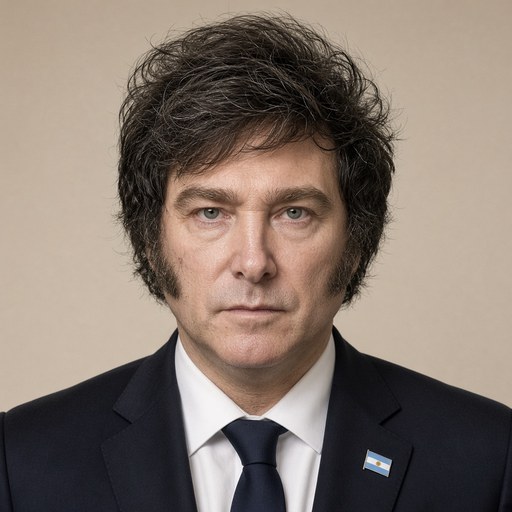
Speech by the President of the Nation, Javier Milei, at the Madrid Economic Forum, Spain.
 Javier Milei · President of Argentina
- Context
- Milei addressed the Madrid Economic Forum in Spain on June 8, 2025, presenting Argentina's libertarian economic reforms and debunking myths about fiscal adjustment.
- Main themes
- Libertarian liberal ideology, fiscal adjustment and economic reform, myth-busting in economic policy, GDP growth and economic expansion, public sector spending cuts, Argentina's economic recovery, cultural battle for freedom, anti-socialism, political popularity during austerity, future vision for Argentina
- Duration
- ~53 min
- Words
- 6,343
- Sentences
- 246
- Readability
- 53
- Grade
- 12.2
- Syntax
- 3.40
- Vocabulary
- 2.09
Translated from Spanish
The broad sphere of national life a sentence belongs to. Every sentence has an Arena, so it is the denominator the other indices are read against.
Other246 sentences in 60 paragraphs
Long live freedom, damn it! Long live freedom, damn it! Long live freedom, damn it! Death to socialism! Long live freedom, damn it!
Hello everyone. Thank you very much.
It does me good because it allows me to catch my breath, so if you want to give a beating to the local bandit, I have no problem with that.
First of all, I want to thank you for this welcome. It fills me with joy, with pride, but especially, I know it implies an enormous responsibility of being the first libertarian liberal President in history. So thank you.
I also want to thank the organizers for allowing me the privilege not only of being here but of being able to close this event, in which true giants have participated, people I deeply admire and who do so much for the cultural battle, so that this libertarian liberal reality becomes a reality in Argentina and is now advancing all over the world, because freedom is advancing.
Regarding today’s talk, it will basically have three parts, where, after a brief introduction about the myths in politics that we are breaking down, I will make a brief description of the initial conditions we encountered. I will explain how we made what is now seen as a reality, and then I will tell you what the Argentina I see in the future looks like.
As an introduction, about a month or two ago, at most, one of my brilliant ministers, Dr. Federico Sturzenegger, said: "In Argentina, we are breaking three myths about economic policy." He comments that many presidents or ministers of Economy from different parts of the world, in the face of problems of indebtedness and the problem of the fiscal deficit — which is the flip side of indebtedness — suggest that they need to make a fiscal adjustment. And he says: "Well, you made a fiscal adjustment." And then, Federico replies: "Well, how much do you have to adjust?" "Well, four, five points of GDP." And then he asks: "And how much do you think you can adjust per year?" "Well, one point." And then Federico replies: "And how would you see making an adjustment of five points of GDP in a month?" They say: "No, no, but that is impossible." "Well, that is what we did in Argentina."
In other words, the first thing we broke in this is what has to do with the relationship between the quantum and time. That is to say, we, in strict rigor, upon arriving at the government made an adjustment of seven points of GDP. Basically, we arrived in a very critical situation, and if we hadn’t adjusted, today I would not be standing here as the Argentine president. And, let’s say, we overreacted the adjustment because in that situation it was pure chainsaw moment. But it worked.
The second myth has to do with the idea that if you make an adjustment of this nature, the economy will sink into a recession, unemployment will be through the stratosphere, and the number of poor and indigent people will rise to socially unbearable levels. In fact, we, between the adjustment of the Treasury and the adjustment of the Central Bank, made an adjustment of 15 points of GDP, where adjustments half the size of this one had generated GDP declines of at least 11% to 15%. Therefore, they predicted that we would enter a great depression. However, we changed the type of adjustment. We decided that the adjustment should not be made by raising taxes, that it should not be done through inflation, that it was not through indebtedness, that the adjustment had to fall on the parasite, the adjustment had to fall on the public sector. In this way, we reduced public spending by 30% in real terms. We made an adjustment of 15 points of GDP, and that meant returning income to the private sector. And the consequence was that, when we take December 24 against December 23, not only was there no decline in GDP, but it rose by 6%. We adjusted with economic expansion.
And not only that, but throughout the first quarter of this year, the economy has expanded at a rate of 6%, and now, in the second quarter, we are doing it at 8%. So, to the damn politicians, no credit that the adjustment is recessionary: if it is paid by politics, the private sector expands.
And the third myth is that when one makes the adjustment, while it is something that the economy needs because it needs to recover, it implies a drop in popularity, a drop in image. And in that sense, in the Iron Triangle — which consists of my sister Karina, the Chief, who is here... stand up, Chief, come on, Chief, come on — here is the architect of the liberal triumph, that brilliant consultant who also accompanies us, Santiago Caputo, in the face of this situation, we said: we came to fulfill a task. If there is an image and it has to be consumed for the good cause, it must be consumed. We must do what we have to do. We must stop looking at votes and do what the economy requires.
And, contrary to what everyone believed, which was that the image, the support, and popularity would extinguish during the adjustment, today the levels of popularity we have are higher than those we had when we took office. And, if you take it from international consulting firms, they are even much higher. That is to say, the adjustment does not generate a loss of image if the adjustment falls on the political caste, the image rises because it is giving resources to the people.
And now, getting to the heart of the discussion, I believe that one of the reasons we have been able to do what we are doing, and that the support continues — and not only in terms of image but also in terms of electoral results — is that during the campaign we said we preferred to tell an uncomfortable truth rather than a comfortable lie. That is to say, we have never lied to the people. We always said what we were going to do, and in that sense, our policy has always been clear. Our economic policy was clear, where we said we were going to take the chainsaw to the State. Our position regarding the Central Bank was clear: although it was called dollarization, and people carried dollar bills with my face, with my image, we always talked about endogenous dollarization, something that is now underway. And we also talked, in the institutional realm, about advancing towards the ideas of freedom, making structural reforms that would make Argentina the freest country in the world. And all of that, in economic matters, we are not only fulfilling: we had very ambitious goals, which were said to be impossible, and yet, today, after a year and a half, we have exceeded all the campaign goals.
On the other hand, in terms of internal security, we pointed out that abolitionism was over and that, basically, those who commit crimes pay for them. Today, Argentina shows the lowest crime rates in its history because those who commit crimes pay for them.
Not only that, but we also decided to give prestige to our Armed Forces. We initiated a re-equipment process, and today, Argentina ranks among the top 20 military powers, having made the largest arms purchases in the last 50 years. We have certainly done something for national security and internal security!
And finally, we have also been clear in our foreign policy. Systematically, we have expressed ourselves in favor of peace, in favor of free trade, understanding — as Bastiat said — that where trade enters, bullets do not. And, in that sense, we are working to achieve an agreement between Mercosur and the European Union, we are working on a free trade agreement with the United States, we are working to make Argentina an open and great country again.
But we have not only stopped at pointing that out; we have also said that in Argentina we are embracing the values of the West again. And the values of the West are nothing more than embracing the Judeo-Christian culture, recognizing the God of Israel and, politically speaking, the Roman Republic and Greek democracy. That constitutes the liberal democracy that we come to defend in the values of the West. And that is manifested in my alliance with the United States and with Israel. Therefore, no one should be surprised by what we are doing in international matters.
Therefore, we have said what we were going to do because, if there is something that has characterized me throughout my life, it is not only saying what I think but also doing what I say. And, after so many years from the podium saying what needed to be done, I decided to get into the field to defend the ideas of freedom and to ensure that the model of freedom triumphs all over the world.
Naturally, you can imagine that a libertarian liberal reaches the presidency of a country; that does not happen under normal conditions of pressure and temperature. The reality is that, at the time of coming to power, Argentina was experiencing the worst of its three worst crises in history, which clearly, if it had occurred, would have been a true catastrophe. Basically, we had a monetary imbalance double that of what we had in 1975, when a crisis called the Rodrigazo erupted and basically doubled the inflation rate. Think that, if Argentina was coming with inflation levels around 300%, this would have taken inflation to at least levels of 2000%. At the same time, we had a bankruptcy situation in the Central Bank, even worse than what we had in 1989, when Alfonsín's hyperinflation erupted, where they had basically left us with liabilities in the Central Bank equivalent to four monetary bases, maturing in one day. This means: we could have quintupled the amount of money in one day, that is, everything was set for a hyperinflationary explosion. But not only that. The social indicators we had were indicators that were worse than those we had in 2001. In fact, when we clarified the macroeconomic variables, because basically, among other things, in the exchange market there was a gap between the official dollar and the parallel of 200%, there were also price controls, and clearly that does not manifest the scarcity in the statistics. So, when the variables were clarified, obviously the recorded poverty jumped to 57%. And, a year later, poverty fell to 35%. That is to say, the heartless liberals, those of us who have no heart, those of us who have no empathy, those of us who do not care about the poor, reduced poverty by 22 percentage points. That is to say, we lifted 10 million people out of poverty. Indeed, the ideas of freedom work for everyone, and especially for those who have the least.
In that macroeconomic disaster they left us, we also had the equivalent of 90 billion dollars of debt in pesos, maturing in less than three months, which would have also implied only 15 points of additional monetary base GDP, when the monetary base at that time in Argentina was at 2.5 points. That is to say, we would have multiplied just for that, by seven and a half times, the amount of money, the increase.
Not only that: the previous government also, with the exchange control, granted friends rights to import at the official exchange rate. And that had left a debt in the Central Bank of 45 billion dollars. In addition, the systematic non-compliance with the targets with the International Monetary Fund meant that the agreement was also collapsed. That is to say, we found ourselves in a situation that, if we did not act quickly, we would end up in default with multilateral organizations, in commercial default and in default in the local financial system, which would have been a true macroeconomic disaster and would have taken poverty to levels of at least 95%.
At the same time, we had a fiscal deficit in the Treasury of five percent of GDP and we had debt generating interest in the Central Bank, which brought it to 15 points of GDP. In that sense, the first stage of the stabilization plan was to apply the chainsaw. The chainsaw, basically, originally implied an adjustment in the Treasury of seven points of GDP, which over time was recomposed and ended up being an adjustment of five points of GDP. But in the face of the emergency, we had to resolve, and that is why the adjustment was seven and then ended up being five in the Treasury. In that context, we reduced the number of ministries by a third, we laid off more than 50,000 public employees, and the vast majority of the contracts that were expiring, we did not renew, making a truly strong adjustment. We ended up eliminating public works, which is an infinite source of corruption, and we also ended the official advertising in the media, which is why they speak ill of us every day.
And it is incredible because days ago they questioned us and talked about a loss of freedom of expression, when the only thing that has decreased in Argentina in terms of expression was that money was no longer given to the corrupt media.
It seems they are very good at accusing when the subsidies are for others, but not when it touches the most sensitive organ of the human being, which is the pocket. So I already tell you: if they say I killed Kennedy, I inform you that I was born in 1970, so I already tell you, I couldn’t have done it.
Starting from having closed the fiscal deficit, that is, from the understanding of the monetary nature of inflation, we knew that we had to stop the issuance and closing the fiscal deficit was this first stage, and we did it. Argentina, in the previous 123 years, had always had a fiscal deficit, and if there were some periods when it did not have one, it was because it was in default. We went for a zero-deficit policy and decided that in Argentina there would be no more fiscal deficit. Argentina is one of the five countries in the world that does not have a fiscal deficit in the financial line, and we did it after 123 years of history where no one succeeded, and we achieved it in the first month of government.
But, as that colossus I have as Minister of Economy, Luis “Toto” Caputo, says, even though we had put the fiscal accounts in order, the Treasury was not enough, because the problem we had at the Central Bank was double the size of the Treasury's problem. And if we did not fix the issue of the Central Bank, we would have had hyperinflation anyway, with the aggravating factor that we did it while making the fiscal adjustment, which would have been tremendously lethal for the ideas of freedom. In that sense, in a monumental Herculean task, between “Toto” Caputo, the President of the Central Bank, Santiago Bausili, and the Secretary of Finance, they began a work to clean up the balance sheet of the Central Bank. And as we showed that fiscal solvency had come to stay, it became possible to start cleaning up the debt of the Central Bank. Thus, by mid-last year, the second stage of the program was concluded, which was when monetary issuance ended, Argentina ended the quasi-fiscal deficit, the accounts of the Central Bank were cleaned up, and the amount of money since that moment has remained fixed.
That is to say, at that moment, we moved to what was zero issuance and where the broad monetary base in Argentina is fixed. Moreover, in the midst of a speculative attack, the parallel exchange rate had skyrocketed, and we said: the exchange rates will converge, but they will converge with a drop in the parallel rate, and indeed that is what happened.
However, we realized that the Argentine economy was recovering very strongly. The economy, after the month of April, began to show very important signs of recovery; in fact, between December and April it expanded by 10%. In that sense, moreover, the monetization of Argentina was very low, therefore, in the face of that situation in which we saw an increase in the demand for money ahead, keeping the amount of money fixed was going to generate a problem that, once the monetary surplus was cleaned up, the Argentine economy could enter a context of deflation.
In that context, we launched endogenous dollarization, that is, we allowed agents to make all transactions in the economy, except for tax payments; all transactions could be made in foreign currency. And, in that sense, another campaign promise that was said to be impossible was fulfilled. However, people were not making transactions in foreign currency, that is, it did not represent a problem because there was still a surplus of money, but I say: sooner or later the problem was going to appear. At the same time, we still continued with restrictions in the foreign exchange market. In that sense, for us, the capital controls were a tool of torture and, moreover, it was a tool with which we were criticized not only by those who had imposed the controls, but also by what I call the liberals; not libertarian liberals, but liberals, the libertarados.
Without a doubt, the maximum trophy of the stupid imbecile libertarian liberal has been taken by the ignorant imbecile in monetary matters, Hans-Hermann Hoppe, who, flaunting infinite ignorance, but driven by Argentine garbage that maligned him — you can imagine who they are if you know me — the same ones who asked that the Juan de Mariana not be given to me, said that this reform was the easiest, that by closing the Central Bank the problem would be solved. It seems that the imbecile does not know that the remunerated debt and the debt of the Central Bank, which is future issuance, and the monetary base are debt, and if we had closed the Central Bank in that way, that debt would have been worthless and, therefore, would have generated hyperinflation, and thanks to that stupidity the Peronist populists would have returned with their heads held high and today we would be looking at a chavista Argentina.
So given the aberration that the capital controls implied, basically because that restricts the freedom of me being able to do with my money what I want, basically because then it conditions my set of choices, and that is an unbearable affront for a libertarian liberal. But, moreover, the fact that they force them to demand more domestic currency than they want expands the taxable base of the inflation tax, which is also an unlegislated tax, that is, inadmissible even for a classical liberal. Therefore, the capital controls had to be removed in any case, and in that sense, we began to work on a program with the International Monetary Fund to clean up the Central Bank's balance sheet. And the idea was that, just as the National State placed non-transferable public securities in the Central Bank and thus took the dollars, we considered it was time to recapitalize the Central Bank. Therefore, we made an agreement with the International Monetary Fund to rescue that debt of the Central Bank, so that the total debt would not increase, but that the pesos that Argentines now have in their pockets would be worth something. That is to say, we made the adjustment to the caste to return the money to the good people.
In that context, we estimated that to be able to exit the capital controls we needed about 12 billion dollars, and since both “Toto” and I are very risk-averse people, which I understand you understand that I am risk-averse, but I think of it as a situation where I am without any garment, all wet in an electric chair. So, they are going to take great care of which cables to cut or not. And so we said that if we managed to get 15 billion dollars, we would open the capital controls so that we would have 3 billion dollars for a speculative attack. And in that context, they gave us 20 billion dollars cash. So they said no, that I would not dare to open the capital controls in an election year because that would make the exchange rate skyrocket and the inflation rate would be at 5 or 7%, where the media garbage, the corrupt journalists, dedicated themselves to spreading those filthy news, even though no one had made those forecasts.
That is why, as my friend Wall Street Wolverine says, we do not hate journalists enough.
And, despite being in an election year, despite them saying that the exchange rate was going to the ceiling of the band, contrary to what everyone thought, we opened the capital controls and completed the third stage of the program. We opened the capital controls and, far from going to the ceiling of the band, today the exchange rate is trading much closer to the floor of the band, which again, point for the government, point against, again, for the econochantas and the bribed journalists.
In fact, today, after they anticipated those inflation rates of 5 to 7% monthly, it is true, the inflation rate jumped to 3.7, but they said it would remain at levels of 5 and 7. The following month it fell to 2.8, this month it is expected to break 2%, and I assure you from here that for next year inflation in Argentina will be a thing of the past.
But it does not end there. Moreover, for a long time the Treasury was chasing Argentines who wanted to protect themselves from that scam that was inflation. In fact, Argentina removed three zeros from the currency and today we could remove three more zeros if it were up to that. That is to say, that monetary policy in Argentina has been a recurring scam. Moreover, for not wanting to correct the origin of the problem, which was the fiscal deficit, they pursued Argentines with Soviet laws for wanting to escape the scam. So, for example, instead of stopping monetary issuance — because that implied stopping the fiscal deficit — they resorted to price controls; when price controls did not work, they resorted to the supply law, that is, another Edict of Diocletian. Or, for example, when you, to cover your savings from the inflation of the peso, went to cover yourself in the dollar, then they imposed a penal exchange law and capital controls. They pursued Argentines as if they were criminals. In fact, we reached the madness that for the Argentine Treasury all Argentines were guilty, unless we proved otherwise. I have no doubt, having a socialist at the head, that they have this same problem.
However, a few days ago we sent a new deregulation that has to do with the day of liberation and historical reparation to savers, where we allowed good Argentines to use their undeclared dollars to make transactions. That belief that people are guilty until proven otherwise has ended. Now, Argentines are innocent until proven otherwise.
Above all else, know that against the damn socialists I will always be on your side.
At the same time, I also want to highlight the achievements we have had in social matters and in security in that difficult context we had to assume: the social policy that the Kirchnerism left, which is the reloaded version of the worst of Peronism. In that context, they had made social policy a policy to harm the most vulnerable. That is to say, as everywhere, socialism takes a noble cause and prostitutes it in favor of the corruption of those in power.
And in that adverse and hostile context, that minister I have in Human Capital, Sandra Pettovello, in an act of enormous courage decided to confront the managers of poverty and decided that no more account should be given for a benefit because that is where they stole money from the vulnerable. That is to say, half of the money that went to the vulnerable was co-opted by the thieves of the managers of poverty. But of course, when we announced this, they threatened us with a march, and Argentina, which had between 8,000 and 9,000 blockades per year, in that context, they threatened us that they were going to make a march and said that there would be 50,000 people, when in reality they were expecting 100,000 people. And, in that context, thanks to another giant minister I have, Dr. Patricia Bullrich, she presented me with the anti-blockade protocol. In that sense, in a joint action between Minister Pettovello, Minister Bullrich, and, may he rest in peace, who was the Minister of Transport, Dr. Guillermo Ferraro, they carried out a whole operation. Not only did we take away the funds from the managers of poverty, we went out with the Security Forces, to whom we gave total support. And whoever blocked, did not get paid, whoever blocked went to jail. We used the transport network to inform it and also to make complaints. That first day we received 18,000 complaints, many of which are already in court and are being resolved against these scammers. But, above all things, from the first day we put order on the streets, because of the 100,000 they expected, only 3,000 showed up, and from that day on, chaos in Argentina ended and order was restored.
Moreover, as part of this policy of “those who do it, pay for it,” let’s say we stopped having that doctrine that is in favor of criminals. Here we defend the victims, not the perpetrator. And, in that context, among the policies we eliminated were all gender policies, because they are policies that undermine women, because they treat them as inferior beings. And what we liberals propose is that we are all equal before the law. So they predicted that we were in favor of femicides and, however, homicides against women have fallen by 14%, and today Argentina has the lowest crime rate in its history because those who do it, pay for it.
Therefore, after so many achievements, the moment of growth has begun. Today Argentina has entered the path that, if it continues to embrace the ideas of freedom, in 40 years Argentina will be the first world power, without a doubt.
In this sense, what I am going to do now is convey to you each of the elements that are the pillar of economic growth. First of all, the fiscal adjustment of 15 points of GDP returned income to Argentines. This allowed for a recovery of economic activity, a recovery of wages, a recovery of pensions, and the recovery of the stock cycle. This allowed, at first, for the economy to begin to recover very strongly starting in April of last year.
But not only that: a zero deficit means that the debt does not vary. Likewise, we managed to reduce it by 45 billion dollars, the first time in Argentine democracy that the debt has fallen — democracy, I mean, since 1983 until now. But the important thing is that the zero deficit policy implies that the debt-to-GDP ratio is not increasing. This means that Argentina is solvent intertemporally, that Argentina can honor its debt. And, in that sense, not only that, it also meant that the country risk of 3,000 basis points that was present when we won the election is now at 600 basis points. And make no mistake, if in October the country turns violet, we will crush the country risk and we are on our way to becoming an "investment grade."
Therefore, as the country risk rate falls and the interest rate falls, the per capita capital stock of the economy will increase and, consequently, productivity will rise, wages will increase, and we will have a higher standard of living. In that sense, a study by a very prestigious Argentine economist named Juan Pablo Nicolini, who works at the Federal Reserve, estimated that having made the adjustment we did, bringing the deficit to zero, this could mean that Argentina could grow in per capita terms at 4% annually, sustainably for a large number of years, which could range between 10 and 20 years.
However, as Nicolini points out, that method does not take into account the type of adjustment. If we consider that the adjustment was not made by raising taxes, but by reducing public spending, and if we also consider that we have already made more than 2,500 structural reforms, Argentina is going to grow very strongly and the numbers are showing that Argentina is on its way to becoming great again.
Moreover, the fact of ending inflation has two very positive impacts. First, because it eliminates the distortion of relative prices, it broadens the time horizon, and in this way, resources can be allocated better. At the same time, being a highly regressive tax, it distorted the relationship between savings, investment, and therefore also the interest rate and capital accumulation, leading to incorrect investments because relative prices were basically distorted. This will mean that, with the elimination of inflation, this distortion will disappear. And that will have, although it is a one-time effect, a jump in per capita GDP that, over the entire horizon, will also manifest as growth.
On the other hand, we consider that the State is a criminal organization, and in that sense, we consider that taxes are theft. And in that sense, last year, even in this stabilization process, not only did we stop defrauding Argentines with seigniorage, but we also reduced explicit taxes by two percentage points of GDP, something that had never been done in Argentine history. But you can imagine that, if I consider taxes to be theft, I am not going to stop here. In that sense, we are working on a tax reform and, according to our estimates, if the Argentine economy from now until 2031 — in case I were to be re-elected — we could be reducing more than one and a half percentage points of GDP per year in taxes, and that would mean returning to good Argentines no less than 500 billion dollars. Now that is what it means to be libertarian!
On the other hand, we are also doing strong work from the Ministry of Human Capital. We have a Ministry of Human Capital that integrates first-generation human capital, which has to do with, basically, health and nutrition. Because, if you do not eat or do not have good health, you cannot be educated. This, therefore, also integrates second-generation human capital, which not only has to do with the possibility of studying but also with the possibility of reinserting those who have been left behind. That is to say, remember that we are starting from an unbalanced economy. And the third part it integrates is with the labor market, in that sense, we are working on first-generation human capital, second-generation human capital, and so that it can be inserted into the labor market, where today nearly half of the employment in the economy is informal. Therefore, this will not only imply an improvement in working conditions, but also, as the gap between formal employees and total employment narrows — that is, as informal jobs shrink — this will also allow us to reform the pension system, and in that way also have an additional round of growth from here into the future.
Obviously, now it is also time for one of the star ministries. There are two ministries of which I am very proud — I mean, aside from the Ministry of Economy, with whom I have a symbiotic relationship, aside from the fact that I adore the work of Minister Bullrich, Minister Petri — but there are two entities that I created, that did not exist in the world. One is the Ministry of Human Capital and the other ministry is that of Federico Sturzenegger: the Ministry of Deregulation. The essential concept of the Ministry of Deregulation is a frontal and direct attack on neoclassical tools. Never more present in my mind than that wonderful paper that made me a libertarian. I remember — and here the dear Philipp Bagus often mentions — I remember that one day I was given the work of Murray Newton Rothbard, Monopoly and Competition, which is in the second volume of "Man, Economy, and State." And after 3 hours of reading that 140-page article, and after 25 years of teaching Microeconomics, I finished reading the article and said: everything I taught in the last 25 years about market structure is wrong. And that day I became an anarcho-capitalist.
When you look at the statistics of per capita economic growth and per capita GDP since the Christian era, you will discover that it takes the shape of a hockey stick. And if you look, per capita GDP has risen very strongly in the last 250 years, in a context where the population multiplied by 10 times and extreme poverty, which was at levels of 95%, today has to be measured differently all the time, because otherwise it would be zero. So, the question was: how can it be that the increasing returns that neoclassical economics associates with monopolies — and they say that, according to the damned Pareto optimality, it is bad — had lifted so many people out of poverty? Something had to be wrong. And there, let’s say, the one who opened my eyes was Murray Newton Rothbard. And, basically, what you have is that the structure of neoclassical economics is set up to prove the existence of uniqueness and stability in equilibrium. And that made us focus on mathematics and not on what it meant what we were saying in economic terms by using that mathematics. That is to say, in neoclassical economics, this problem is called a non-convexity problem. That is to say, it is like having a dilemma between Adam Smith's pin factory and the invisible hand. And so, to stay in the Pareto view of the invisible hand, we sacrificed the pin factory. And the worst part is that we were left unable to explain economic growth, because constant returns to scale, or diminishing marginal returns, make economic growth disappear.
And in that sense, that is why Rothbard's paper is so inspiring, because it shows that monopolies are only bad if they are generated by the State — for example, the one of monetary issuance. And in that sense, when a company that has increasing returns to scale is regulated and they want to equate it to a competitive one, in the neoclassical paradigm, they kill the increasing returns. And, by killing the increasing returns, they kill economic growth. If you want an applied example of regulating, killing increasing returns, and ending economic growth, you do not have to look far: just look around you. Europe is the best example, where regulations are killing economic growth.
And, in that sense, we began to deregulate the economy and make structural reforms, like in Menem's government, which — according to a study by Gerardo Della Paolera, Bózzoli, and Irigoin — had been the best government in Argentine history: it had made 100 structural reforms. Today, we have made 25 times more structural reforms and have reduced inflation much faster than convertibility, and without committing expropriations, adjusting relative prices, respecting property rights. Therefore, do not doubt that this libertarian liberal government is the best government in all of Argentine history.
At the same time, we also aim to make Argentina the freest country in the world, since those countries that are freer are 12 times richer than the repressed, grow twice as fast, have 25 times fewer poor people in the standard format and 50 times fewer in the extreme format.
And, as part of this agenda, we work on what has to do with economic openness. At the same time, we are also working on a tax reform that allows competition among different provincial states, so that the provinces also start to lower taxes. In fact, in some municipalities, this is being done. In fact, someone who was a classmate of mine in college and whom life brought us back together in politics, the Mayor of Tres de Febrero, Diego Valenzuela, is lowering rates, and companies are moving from the suffocating Peronist areas to Tres de Febrero to invest, because, basically, taxes are being lowered.
Finally, we have the incentive regime for large investments, better known as RIGI, where, for example, just days ago we signed with the company ENI for an investment of 20 billion dollars, which will leave a flow of foreign exchange for Argentina, in the next 20 years, close to 200 billion dollars. Now that is a model that is working!
Therefore, what I want to leave you is the testimony that the ideas of freedom work. Therefore, we know what needs to be done, we know how to do it. Therefore, let us not lack the courage to do it, because we are what can lift everyone up.
And that is why I ask you to take courage, to get involved and fight, and to take on the political battle, because change does not happen from the sidelines, it happens by fighting hand to hand against corrupt politicians.
Let us raise the ideas of freedom, let us make the West great again. Long live freedom, damn it! Long live freedom, damn it! Long live Spain! Long live Argentina! Long live freedom, damn it!
Thank you very much.
The original Spanish. The tags above are read on the English translation's sentences.
¡Viva la libertad, carajo! ¡Viva la libertad, carajo! ¡Viva la libertad, carajo! ¡Muerte al socialismo! ¡Viva la libertad, carajo!
Hola a todos. Muchas gracias.
Igual me hace bien porque me permite recuperar el aire, así que, si quieren darle zurra al bandido local, no tengo problema.
En primer lugar, quiero dar las gracias por este recibimiento. Me llena de alegría, de orgullo, pero en especial, sé que implica una enorme responsabilidad de ser el primer Presidente liberal libertario de la historia. Así que gracias.
Además, quiero agradecer a los organizadores por permitirme tener el privilegio no solo de estar aquí, sino de poder estar cerrando este evento, en el cual han participado verdaderos gigantes, personas a las que admiro profundamente y que tanto hacen por la batalla cultural, para que esta realidad liberal libertaria sea una realidad en Argentina y que hoy está avanzando en todo el mundo, porque la libertad avanza.
Respecto a la charla de hoy, básicamente va a tener tres partes, donde, luego de una pequeña introducción sobre los mitos en política que estamos derrumbando, voy a hacer una breve descripción de las condiciones iniciales con las que nos encontramos. Voy a contar cómo hicimos lo que hoy se está viendo como una realidad, y después les voy a contar cómo es la Argentina que yo veo a futuro.
A modo introductorio, hace aproximadamente un mes o dos meses, como mucho, uno de los brillantes ministros que tengo, el doctor Federico Sturzenegger decía: "En Argentina estamos rompiendo tres mitos acerca de la política económica". Él comenta que muchos presidentes o ministros de Economía de distintas partes del mundo, frente a los problemas de endeudamiento y al problema del déficit fiscal —que es la contracara del endeudamiento—, le plantean que necesitan hacer un ajuste fiscal. Y dice: "Bueno, ustedes hicieron un ajuste fiscal". Y, entonces, Federico les contesta: "Bueno, ¿cuánto tenés que ajustar?". "Bueno, cuatro, cinco puntos del PBI". Y, entonces, le dice: "¿Y cuánto creés que podés ajustar por año?". "Bueno, un punto". Y entonces Federico les contesta y dice: "¿Y cómo la verías de hacer un ajuste de cinco puntos del PBI en un mes?". Dice: "No, no, pero eso es imposible". "Bueno, es lo que hicimos nosotros en la Argentina".
Es decir, que lo primero que hemos roto en esto, es lo que tiene que ver la relación entre el quantum y el tiempo. Es decir, nosotros, en estricto rigor, al llegar al gobierno hicimos un ajuste de siete puntos del PBI. Básicamente, llegamos en una situación muy crítica, y si no ajustábamos, hoy yo no estaría aquí parado como presidente argentino. Y, digamos, sobre reaccionamos el ajuste, porque frente a esa situación era puro momento de motosierra. Pero funcionó.
El segundo mito tiene que ver con que, si ustedes hacen un ajuste de estas características, la economía se va a hundir en una recesión, el desempleo va a estar por la estratósfera, y la cantidad de pobres e indigentes va a subir a niveles insoportables socialmente. De hecho, nosotros, entre el ajuste del Tesoro y el ajuste del Banco Central, hicimos un ajuste de 15 puntos del PBI, donde ajustes de la mitad del tamaño de este ajuste habían generado caídas del PBI de por lo menos 11% a 15%. Por lo tanto, nos auguraban que íbamos a entrar en una gran depresión. Sin embargo, nosotros cambiamos el tipo de ajuste. Decidimos que el ajuste no había que hacerlo subiendo impuestos, que no había que hacerlo por la vía inflacionaria, que no era con endeudamiento, que el ajuste tenía que ser hecho por el parásito, el ajuste tenía que caer sobre el sector público. De esa forma, nosotros bajamos 30% en términos reales el gasto público. Hicimos un ajuste del PBI de 15 puntos del PBI, y eso significó devolverle ingresos al sector privado. Y la consecuencia fue que, cuando tomamos diciembre del 24 contra diciembre del 23, no solo que no hubo caída del PBI, sino que subió 6%. Ajustamos con expansión económica.
Y no solo eso, sino que, a lo largo del primer trimestre de este año, la economía se ha expandido a un ritmo del 6%, y ahora, en el segundo trimestre, lo estamos haciendo al 8%. Así es que, a los políticos de mierda, nada de crédito con que el ajuste es recesivo: si lo paga la política, el sector privado se expande.
Y, el tercer mito es que, cuando uno hace el ajuste, si bien es algo que la economía necesita porque necesita recomponerse, eso implica una caída de la popularidad, una caída de la imagen. Y en ese sentido, en el Triángulo de Hierro —que lo constituye mi hermana Karina, el Jefe, que está acá... ponete de pie, Jefe, dale, dale, Jefe, dale—, aquí está el arquitecto del triunfo liberal, ese brillante consultor que también nos acompaña, que es Santiago Caputo, frente a esta situación, nosotros dijimos: nosotros vinimos a cumplir una tarea. Si hay imagen y se tiene que consumir por la buena causa, hay que consumirla. Hay que hacer lo que hay que hacer. Hay que dejar de estar mirando los votos y hay que hacer lo que la economía requiere.
Y, a diferencia de lo que todos creían y era que la imagen, el acompañamiento y la popularidad se iban a extinguir en el ajuste, hoy los niveles de popularidad que tenemos son más altos que los que teníamos cuando asumimos. Y, si lo toman de consultoras internacionales, están todavía muchísimo más alto. Es decir, que el ajuste no genera pérdida de imagen si el ajuste cae sobre la casta política, la imagen sube porque es darle recursos a la gente.
Y, ahora, ya entrando al hueso de la discusión, creo que una de las cosas por las cuales nosotros hemos podido hacer lo que estamos haciendo, y que el acompañamiento continúa —y que no solo en términos de imagen, sino también en términos de resultados electorales—, es que durante la campaña nosotros dijimos que preferíamos decir una verdad incómoda antes que una mentira confortable. Es decir, nunca le hemos mentido a la gente. Siempre dijimos lo que íbamos a hacer, y en ese sentido, nuestra política siempre fue clara. Fue clara nuestra política económica, donde dijimos que le íbamos a pasar la motosierra al Estado. Fue clara nuestra posición respecto al Banco Central: si bien se le puso el nombre de dolarización, y la gente llevaba billetes de dólar con mi cara, con mi rostro, siempre hablamos de dolarización endógena, algo que hoy está en marcha. Y, también hablamos, en el plano institucional, de avanzar hacia las ideas de la libertad, hacer reformas estructurales que hagan que Argentina se convierta en el país más libre del mundo. Y todo eso, en materia económica, no solo que lo estamos cumpliendo: nosotros teníamos metas muy ambiciosas, que decían que eran imposibles, y, sin embargo, hoy, pasado un año y medio, hemos sobrecumplido todas las metas de campaña.
Por otra parte, en materia de seguridad interior, señalamos que se había terminado con el abolicionismo y que, básicamente, el que las hace, las paga. Hoy, Argentina muestra los índices de delincuencia más bajos de su historia, porque el que las hace, las paga.
No solo eso, sino que además decidimos prestigiar a nuestras Fuerzas Armadas. Iniciamos un proceso de reequipamiento y, hoy, Argentina rankea entre las 20 primeras potencias militares, habiendo hecho las compras de armamento más grandes de los últimos 50 años. ¡Vaya que hemos hecho algo por la seguridad nacional y la seguridad interior!
Y, finalmente, también hemos sido claros en nuestra política exterior. Sistemáticamente, nos hemos manifestado en favor de la paz, en favor del libre comercio, entendiendo —como decía Bastiat— que donde entra el comercio, no entran las balas. Y, en ese sentido, estamos trabajando en lograr un acuerdo entre el Mercosur y la Unión Europea, estamos trabajando en un acuerdo de libre comercio con Estados Unidos, estamos trabajando para que Argentina vuelva a ser un país abierto y grande nuevamente.
Pero no solo nos hemos quedado en señalar eso, también hemos dicho que en Argentina volvíamos a abrazar los valores de Occidente. Y los valores de Occidente no son ni más ni menos que abrazar la cultura judeocristiana, reconocer el Dios de Israel y, en lo político, digamos, la República romana y la democracia griega. Eso constituye la democracia liberal que venimos a defender en los valores de Occidente. Y eso está manifestado en mi alianza con los Estados Unidos y con Israel. Por lo tanto, nadie debe sorprenderse de lo que estamos haciendo en materia internacional.
Por lo tanto, hemos dicho lo que íbamos a hacer porque, si hay algo que me ha caracterizado en toda mi vida, es no solo decir lo que pienso, sino también hacer lo que digo. Y, después de tantos años desde la tribuna diciendo lo que había que hacer, decidí meterme en la cancha para defender las ideas de la libertad y para que el modelo de la libertad triunfe en todo el mundo.
Naturalmente, se imaginarán que un liberal libertario llega a la presidencia de un país; eso no ocurre en condiciones normales de presión y temperatura. La realidad es que, al momento de llegar al poder, Argentina conjugaba lo peor de sus tres peores crisis de la historia, lo cual claramente, si hubiera ocurrido, hubiera sido una verdadera hecatombe. Básicamente, teníamos un desequilibrio monetario del doble del que teníamos en el año 1975, cuando estalló una crisis que se llamó el Rodrigazo y que básicamente duplicó la tasa de inflación. Piensen que, si Argentina venía con niveles de inflación del orden del 300%, esto hubiera llevado la inflación a, por lo menos, niveles del 2000%. Al mismo tiempo, teníamos una situación de bancarrota en el Banco Central, aún peor que la que teníamos en el año 1989, cuando estalló la hiperinflación de Alfonsín, donde básicamente nos habían dejado en el pasivo del Banco Central el equivalente a cuatro bases monetarias, venciendo a un día. Esto es: podríamos haber quintuplicado la cantidad de dinero en un día, es decir, todo dado para que haya un estallido hiperinflacionario. Pero no solo eso. Los indicadores sociales que teníamos eran indicadores que eran peores que los que teníamos en el año 2001. De hecho, cuando nosotros sinceramos las variables macroeconómicas, porque básicamente, entre otras cosas, en el mercado de cambio había una brecha entre el dólar oficial y el paralelo de 200%, había también controles de precios, y claramente eso en las estadísticas no queda manifestado la escasez no queda manifestada. Entonces, cuando se sinceraron las variables, obviamente la pobreza registrada saltó al 57%. Y, un año después, la pobreza cayó al 35%. Es decir, que los desalmados liberales, los que no tenemos corazón, los que no tenemos empatía, los que no nos ocupamos de los pobres, bajamos 22 puntos porcentuales la pobreza. Es decir, sacamos a 10 millones de personas de la pobreza. Vaya que las ideas de la libertad funcionan para todos, y en especial para los que menos tienen.
En ese desastre macroeconómico que nos habían dejado, también teníamos el equivalente a 90.000 millones de dólares de deuda en pesos, venciendo en menos de tres meses, con lo cual eso también hubiera implicado solamente 15 puntos del PBI de base monetaria adicional, cuando la base monetaria en ese momento en Argentina estaba en 2,5 puntos. Es decir, hubiéramos multiplicado solo por eso, en siete veces y media, la cantidad de dinero, el incremento.
No solo eso: el gobierno anterior también, con el control de cambios, les liberaba a los amigos derechos para poder importar al tipo de cambio oficial. Y eso había dejado una deuda en el Banco Central de 45.000 millones de dólares. Además, los sistemáticos incumplimientos de las metas con el Fondo Monetario Internacional hacían que el acuerdo también estuviera caído. Es decir, nos encontrábamos en una situación que, si no actuábamos rápidamente, terminábamos en default con los organismos multilaterales, en default comercial y en default en el sistema financiero local, lo cual hubiera sido un verdadero desastre macroeconómico y hubiera llevado la pobreza a niveles del 95% por lo menos.
A su vez, teníamos un déficit fiscal en el Tesoro de cinco por ciento del PBI y teníamos deuda que generaba intereses en el Banco Central, y eso lo llevaba a 15 puntos del PBI. En ese sentido, la primera etapa del plan de estabilización fue aplicar la motosierra. La motosierra, básicamente, de origen implicó un ajuste en el Tesoro de siete puntos del PBI, y que con el tiempo se fue recomponiendo y terminó siendo un ajuste de cinco puntos del PBI. Pero frente a la emergencia, teníamos que resolver, y por eso el ajuste fue de siete y después terminó siendo de cinco en el Tesoro. En ese contexto, llevamos a un tercio la cantidad de ministerios, echamos más de 50.000 empleados públicos y la gran mayoría de los contratos que iban venciendo, no los renovamos, haciendo un ajuste verdaderamente fuertísimo. Terminamos eliminando la obra pública, que es una fuente de corrupción infinita, y además terminamos con la pauta oficial en los medios de comunicación, motivo por el cual hablan pestes de nosotros todos los días.
Y es increíble, porque días atrás nos cuestionaron y hablaron de pérdida de la libertad de expresión, cuando lo único que bajó en Argentina en términos de expresión fue que se le dejó de dar dinero a los corruptos de los medios de comunicación.
Parece que son muy buenos para acusar cuando los subsidios los tienen otros, pero no cuando les toca el órgano más sensible del ser humano que es el bolsillo. Así que ya les digo: si llegan a decir que maté a Kennedy, les aviso que nací en 1970, por lo cual ya les digo, no pude hacerlo.
A partir de haber cerrado el déficit fiscal, o sea, desde la concepción de la naturaleza monetaria de la inflación, sabíamos que había que cortar con la emisión y cerrar el déficit fiscal era esta primera etapa, y lo hicimos. Argentina, en los 123 años anteriores, siempre había tenido déficit fiscal, y si hay algunos periodos en que no lo tenía, era porque estaba en default. Nosotros fuimos a una política de déficit cero y decidimos que en Argentina no hay más déficit fiscal. Argentina es uno de los cinco países del mundo que no tiene déficit fiscal en la línea financiera, y lo hicimos después de 123 años de historia donde nadie lo logró, y nosotros lo logramos en el primer mes de gobierno.
Pero, como dice ese coloso que tengo de Ministro de Economía, Luis “Toto” Caputo, aun cuando habíamos puesto las cuentas fiscales en orden, en el Tesoro no alcanzaba, porque el problema que teníamos en el Banco Central era del doble del tamaño del problema del Tesoro. Y si nosotros no arreglábamos la cuestión del Banco Central, la hiperinflación la hubiéramos tenido igual, con el agravante de que lo hicimos haciendo el ajuste fiscal, con lo cual hubiera sido tremendamente letal para las ideas de la libertad. En ese sentido, en una tarea ciclópea monumental, entre “Toto” Caputo, el Presidente del Banco Central, Santiago Bausili, y el Secretario de Finanzas, comenzaron un trabajo de limpiar el balance del Banco Central. Y en la medida en que mostrábamos que la solvencia fiscal había venido para quedarse, fue posible empezar a limpiar la deuda del Banco Central. Así, a mediados del año pasado fue cuando se concluyó la etapa 2 del programa, que fue cuando se terminó con la emisión monetaria, se terminó la Argentina el déficit cuasi fiscal, se sanearon las cuentas del Banco Central y la cantidad de dinero desde aquel momento ha quedado fija.
Es decir que, en ese momento, pasamos a lo que era emisión cero y donde la base monetaria amplia en Argentina está fija. Es más, en medio de un ataque especulativo, el tipo de cambio paralelo se había disparado y nosotros decíamos: van a converger los tipos de cambio, pero van a converger con una caída del paralelo, y efectivamente eso fue lo que pasó.
Sin embargo, nos dimos cuenta de que la economía argentina estaba recuperándose muy fuertemente. La economía, después del mes de abril, empezó a mostrar signos muy importantes de recuperación; de hecho, entre diciembre y abril se expandió al 10%. En ese sentido, además, la monetización de Argentina era muy baja, por lo tanto, frente a esa situación en la cual nosotros veíamos hacia adelante un aumento en la demanda de dinero, dejar la cantidad de dinero fija iba a generar un problema de que, una vez que se terminara de limpiar el sobrante monetario, la economía argentina pudiera entrar en un contexto de deflación.
En ese contexto es que lanzamos la dolarización endógena, es decir, permitimos que los agentes pudieran hacer todas las transacciones de la economía, salvo el pago de impuestos; todas las transacciones pudieran ser hechas en moneda extranjera. Y, en ese sentido, también se había cumplido con otra promesa de campaña que decían que era imposible. Sin embargo, la gente no hacía las transacciones en moneda extranjera, es decir, no representaba un problema porque todavía había sobrante de dinero, pero digo: tarde o temprano el problema iba a aparecer. Al mismo tiempo, todavía continuábamos con restricciones en el mercado de cambios. En ese sentido, para nosotros el cepo era una herramienta de tortura y, además, era una herramienta con la cual nos criticaban no solo los que habían puesto el cepo, sino que además nos criticaban lo que yo llamo los liberales; no liberales libertarios, sino liberales, el libertarados.
Sin lugar a dudas, el máximo trofeo de liberal libertarado imbécil estúpido se lo ha llevado el imbécil ignorante en temas monetarios, Hans-Hermann Hoppe, donde haciendo gala de una ignorancia infinita, pero motorizado por basuras argentinas que lo maldatearon —se imaginarán los que me conocen quiénes son— los mismos que pidieron que el Juan de Mariana no me lo den, dijo que esa reforma era la más fácil, con cerrar el Banco Central se terminaba el problema. Parece que el imbécil no sabe que la deuda remunerada y la deuda del Banco Central, que es emisión futura, y la base monetaria son deuda, y si hubiéramos cerrado el Banco Central de esa manera, esa deuda no valía nada y, por lo tanto, hubiera generado una hiperinflación, y gracias a esa estupidez hubieran vuelto los populistas peronistas con la cabeza de más adelante y hoy estarían viendo una Argentina chavista.
Entonces dada la aberración que implicaba el cepo, básicamente porque eso restringe la libertad de que yo pueda hacer con mi dinero lo que yo quiero, básicamente porque entonces condiciona mi conjunto de elección, y eso es una afrenta insoportable para un liberal libertario. Pero, además, el hecho de que los obligan a demandar más de moneda doméstica que las que quieren, amplía la base imponible del impuesto inflacionario, que además es un impuesto no legislado, es decir, inadmisible hasta para un liberal clásico. Por lo tanto, el cepo había que sacarlo de todas maneras, y en ese sentido, empezamos a trabajar en un programa con el Fondo Monetario Internacional para limpiar la hoja del Banco Central. Y la idea era que, así como el Estado Nacional le colocaba títulos públicos no transferibles al Banco Central y así se llevaba los dólares, consideramos que era el momento de recapitalizar el Banco Central. Por lo tanto, hicimos un acuerdo con el Fondo Monetario Internacional para ir rescatando esa deuda del Banco Central, de modo tal que la deuda total no aumentara, pero que los pesos que ahora tienen los argentinos en el bolsillo valieran algo. Es decir, le hicimos el ajuste a la casta para devolverle el dinero a la gente de bien.
En ese contexto, estimábamos que para poder salir del cepo necesitábamos cerca de 12.000 millones de dólares, y como tanto “Toto” como yo somos personas muy adversas al riesgo, que entiendo que entiendan que soy adverso al riesgo, pero pienso en que es como una situación donde estoy sin prenda alguna, todo mojado en una silla eléctrica. Entonces, van a tomar bastante cuidado qué cables cortar o no. Y como entonces dijimos que, si conseguíamos 15.000 millones de dólares, íbamos a abrir el cepo de modo tal que, tuviéramos para un ataque especulativo, contar con 3.000 millones de dólares. Y en ese contexto nos dieron 20.000 millones de dólares cash. Entonces decían que no, que yo no me iba a animar a abrir el cepo en un año electoral porque eso iba a hacer saltar el tipo de cambio y la tasa de inflación iba a estar en el 5 o 7%, donde la basura mediática, los corruptos de los periodistas, se dedicaban a expandir esas noticias inmundas, aun cuando nadie había hecho esos pronósticos.
Por eso, como dice el amigo Wall Street Wolverine, no odiamos lo suficiente a los periodistas.
Y, pese a que estábamos en un año electoral, pese a que decían que el tipo de cambio se iba a ir al techo de la banda, al contrario de lo que opinaba todo el mundo, abrimos el cepo y completamos la etapa tres del programa. Abrimos el cepo y, lejos de irse al techo de la banda, hoy el tipo de cambio cotiza mucho más cerca del piso de la banda, con lo cual, de nuevo, punto para el gobierno, punto en contra, de nuevo, para los econochantas y los periodistas ensobrados.
De hecho, hoy, después de que anticiparon esas tasas de inflación del 5 al 7% mensual, es cierto, la tasa de inflación saltó al 3,7, pero dijeron que sí va a quedar en niveles del 5 y del 7. Al mes siguiente cayó a 2,8, este mes se espera que rompa el 2%, y yo se los afirmo desde acá que para el año que viene la inflación en la Argentina habrá sido historia del pasado.
Pero no todo queda ahí. Además, durante mucho tiempo el fisco se la pasó persiguiendo a los argentinos que querían protegerse de esa estafa que era la inflación. De hecho, Argentina le quitó tres ceros a la moneda y hoy podríamos quitarles tres ceros más si fuera por eso. Es decir, que la política monetaria en la Argentina ha sido una estafa recurrente. Es más, por no querer corregir el origen del problema, que era el déficit fiscal, se perseguía a los argentinos con leyes soviéticas por querer escapar de la estafa. Entonces, por ejemplo, en lugar de agarrar y frenar la emisión monetaria —porque eso implicaba frenar el déficit fiscal— recurrían a controles de precios; cuando los controles de precios no funcionaban, recurrieran a la ley de abastecimiento, es decir, otra Edicto de Diocleciano. O, por ejemplo, cuando ustedes, para cubrir sus ahorros de la inflación del peso, iban a cubrirse en el dólar, entonces les ponían ley penal cambiaria y control de capitales. Se perseguía a los argentinos como si fueran delincuentes. De hecho, llegamos a la locura de que para el fisco argentino todos los argentinos éramos culpables, salvo que demostráramos lo contrario. No tengo dudas, teniendo un socialista en la cabeza, que tienen este mismo problema.
Sin embargo, hace pocos días enviamos una nueva desregulación que tiene que ver con el día de la liberación y la reparación histórica a los ahorristas, donde les permitimos a los argentinos de bien que puedan utilizar sus dólares no declarados para poder hacer transacciones. Se terminó eso de creer que la gente es culpable antes que demuestre lo contrario. Ahora, los argentinos somos inocentes hasta que se demuestre lo contrario.
Más allá de cualquier cosa, sepan que contra los socialistas de mierda yo siempre voy a estar de su lado.
Al mismo tiempo, también quiero destacar los logros que hemos tenido en materia social y en materia de seguridad en ese contexto difícil que nos tocó asumir: la política social que había dejado el kirchnerismo, que es la versión reloaded de lo peor del peronismo. En ese contexto, habían hecho de la política social una política para perjudicar a los más vulnerables. Es decir, como en todo lugar, el socialismo toma una causa noble y la prostituye en favor de la corrupción de los que están en el poder.
Y en ese contexto tan adverso y tan hostil, esa ministra que tengo en Capital Humano, Sandra Pettovello, en un acto de coraje enorme decidió enfrentar a los gerentes de la pobreza y decidió que no había que dar más cuenta de una prestación porque ahí es donde les robaban el dinero a los vulnerables. Es decir, la mitad del dinero que iba hacia los vulnerables era cooptado por los ladrones de los gerentes de la pobreza. Pero claro, cuando anunciamos esto nos amenazaron con una marcha, y Argentina, que tenía entre 8.000 y 9.000 piquetes por año, en ese contexto, nos amenazaron con que nos iban a hacer una marcha y decían que iban a ser 50.000 personas, cuando en realidad estaban esperando 100.000 personas. Y, en ese contexto, gracias a otra ministra que tengo gigante, la doctora Patricia Bullrich, me presentó el protocolo anti piquetes. En ese sentido, en una acción conjunta entre la Ministra Pettovello, la Ministra Bullrich y, que en paz descanse, quien era el Ministro de Transporte, el doctor Guillermo Ferraro, hicieron todo un operativo. No solo les sacamos la caja a los gerentes de la pobreza, salimos con las Fuerzas de Seguridad, a las cuales les dimos el total respaldo. Y aquel que cortaba, no cobraba, aquel que cortaba iba a la cárcel. Usamos la red de transporte para informarlo y además para que se hicieran denuncias. Ese primer día recibimos 18.000 denuncias, donde muchos ya están en la justicia y se están resolviendo en contra de estos estafadores. Pero, sobre todas las cosas, desde el primer día pusimos orden en las calles, porque de los 100.000 que esperaban fueron 3.000, y a partir de ese día se terminó el caos en la Argentina y volvió a reinar el orden.
Es más, como parte de esta política del “que las hace, las paga”, digamos que dejamos de tener esa doctrina que está a favor de los delincuentes. Acá se defiende a las víctimas, no al victimario. Y, en ese contexto, dentro de las políticas que eliminamos fueron todas las políticas de género, porque son políticas que menoscaban a la mujer, porque las tratan como un ser inferior. Y lo que los liberales proponemos es que somos todos iguales frente a la ley. Entonces nos vaticinaron que nosotros estábamos a favor de los femicidios y, sin embargo, los homicidios contra mujeres han caído 14%, y hoy Argentina tiene una tasa de delincuencia más baja de su historia porque el que las hace, las paga.
Por lo tanto, luego de tantos logros, ha comenzado el momento del crecimiento. Hoy Argentina ha entrado en el sendero que, si sigue abrazando las ideas de la libertad, en 40 años Argentina va a ser la primera potencia mundial, sin lugar a dudas.
En este sentido, lo que voy a hacer ahora es transmitirles cada uno de los elementos que son el pilar del crecimiento económico. En primer lugar, el ajuste fiscal de 15 puntos del PBI les devolvió los ingresos a los argentinos. Eso permitió una recuperación de la actividad económica, una recuperación de los salarios, una recuperación de las jubilaciones y la recuperación del ciclo de stock. Eso permitió, en primer momento, que la economía empezara a recuperarse muy fuertemente a partir de abril del año pasado.
Pero no solo eso: el déficit cero implica que la deuda no varía. Igual, la hicimos bajar 45.000 millones de dólares, la primera vez en la democracia argentina que la deuda cayó—la democracia, digo, desde el año 83 hasta acá. Pero lo importante es que la política del déficit cero implica que la relación deuda-producto es no creciente. Eso implica que Argentina es solvente intertemporalmente, que Argentina puede honrar su deuda. Y, en ese sentido, no solo eso, implicó que además el riesgo país de 3.000 puntos básicos que estaba cuando ganamos la elección, hoy esté en 600 puntos básicos. Y no tengan duda que, si en octubre se tiñe el país de violeta, vamos a pulverizar el riesgo país y vamos camino a convertirnos en un “investment grade”.
Por eso, en la medida que caiga la tasa del riesgo país y que caiga la tasa de interés, el stock de capital per cápita de la economía va a aumentar y, por ende, la productividad subirá, subirán los salarios y tendremos un mayor nivel de vida. En ese sentido, un trabajo de un muy prestigioso economista argentino que se llama Juan Pablo Nicolini, que trabaja en la Reserva Federal, estimó que habiendo hecho el ajuste que hicimos, llevando el déficit a cero, eso podría implicar que Argentina pueda crecer en términos per cápita al 4% anual, de manera sostenida por una gran cantidad de años, que podría oscilar entre 10 y 20 años.
Sin embargo, tal como señala Nicolini, ese método no contempla el tipo de ajuste. Si nosotros consideramos que el ajuste no fue subiendo impuestos, sino que fue bajando el gasto público, y si además consideramos que ya hemos hecho más de 2.500 reformas estructurales, Argentina va a crecer muy fuertemente y los números están dando cuenta de que Argentina está camino a volver ser grande nuevamente.
Además, el hecho de terminar con la inflación tiene dos impactos muy positivos. En primer lugar, porque elimina la distorsión de precios relativos, amplía el horizonte temporal y, de ese modo, se pueden asignar los recursos de mejor manera. Al mismo tiempo, al ser un impuesto altamente regresivo, distorsionaba la relación entre ahorro, inversión y, por ende, también la tasa de interés y la acumulación de capital, llevando a que se hicieran inversiones incorrectas porque básicamente estaban distorsionados los precios relativos. Esto va a implicar que, al eliminarse la inflación, esta distorsión va a desaparecer. Y eso va a tener, si bien es un efecto de una vez para siempre, un salto en el PBI per cápita que, en todo el horizonte, se va a manifestar también como crecimiento.
Por otra parte, consideramos que el Estado es una organización criminal, y en ese sentido, consideramos que los impuestos son un robo. Y en ese sentido, el año pasado, aun en este proceso de estabilización, no solo que dejamos de estafar a los argentinos con el señoreaje, sino que además hemos bajado los impuestos explícitos en dos puntos del PBI, algo que no se había hecho nunca en la historia argentina. Pero se imaginarán que, si yo considero que los impuestos son un robo, no me voy a quedar acá. En ese sentido, estamos trabajando en una reforma tributaria y, acorde a las estimaciones que tenemos, si la economía argentina de acá al 2031 —en caso de que me tocara ser reelecto—, podríamos estar bajando más de un punto y medio del PBI por año de impuestos, y eso significaría devolverle a los argentinos de bien ni más ni menos que 500.000 millones de dólares. ¡Vaya que eso sí es ser libertario!
Por otra parte, también estamos haciendo un fuerte trabajo desde el Ministerio de Capital Humano. Tenemos un Ministerio de Capital Humano que integra el capital humano de primera generación, que tiene que ver con, básicamente, la salud y la alimentación. Porque, si ustedes no se alimentan o no tienen buena salud, no se pueden educar. Esto, por lo tanto, también integra el capital humano de segunda generación, que no solo tiene que ver con la posibilidad de estudiar, sino también con la posibilidad de reinsertarse aquellos que fueron quedando en el camino. Es decir, recuerden que nosotros estamos partiendo de una economía en desequilibrio. Y, la tercera parte con la que integra es con el mercado laboral, en ese sentido, nosotros estamos trabajando en el capital humano de primera generación, el de segunda generación, y para que pueda insertarse en el mercado laboral, donde hoy cerca de la mitad del empleo de la economía es informal. Por lo tanto, esto no solo va a implicar una mejora en las condiciones de trabajo, sino que, además, en la medida en que se vaya cerrando el diferencial entre empleados formales y el total del empleo —es decir, que se vayan achicando los puestos informales—, eso también nos va a permitir reformar el sistema previsional, y de esa manera también tener una segunda vuelta adicional de crecimiento de acá al futuro.
Obviamente, ahora le toca a uno también otro de los ministerios estrella. Hay dos ministerios de los cuales estoy muy orgulloso —digo, al margen del Ministerio de Economía, con quien tengo una relación simbiótica, al margen de que adoro el trabajo de la Ministra Bullrich, del Ministro Petri—, pero hay dos criaturas que creé yo, que no existían en el mundo. Una es el Ministerio de Capital Humano y el otro ministerio es el de Federico Sturzenegger: el Ministerio de la Desregulación. El concepto esencial del Ministerio de Desregulación es un ataque frontal y directo al herramental neoclásico. Nunca más presente en mi mente ese paper maravilloso que me convirtió en libertario. Recuerdo —y acá el querido Philipp Bagus lo suele mencionar—, recuerdo que un día me acercaron el trabajo de Murray Newton Rothbard, Monopolio y Competencia, el cual está en el segundo tomo de “El hombre, la economía y el Estado”. Y después de 3 horas de leer ese artículo de 140 hojas, y de 25 años de profesor de Microeconomía, terminé de leer el artículo y dije: todo lo que enseñé en los últimos 25 años de estructura de mercado está mal. Y ese día me volví anarco-capitalista.
Cuando ustedes miran las estadísticas del crecimiento económico per cápita y del PBI per cápita desde la era cristiana, van a descubrir que ahí lleva la forma de un palo de hockey. Y si ustedes se fijan, el PBI per cápita subió fuertísimamente los últimos 250 años, en un contexto donde la población se multiplicó por 10 veces y la pobreza extrema, que estaba en niveles del 95%, hoy hay que cambiarle la medida todo el tiempo, porque si no sería cero. Entonces, la pregunta era: ¿cómo puede ser que los rendimientos crecientes que la economía neoclásica asocia con los monopolios —y dicen que, de acuerdo al maldito óptimo de Pareto, es malo— habían sacado a tanta gente de la pobreza? Algo tenía que estar mal. Y ahí, digamos, el que me abrió los ojos fue Murray Newton Rothbard. Y, básicamente, ustedes lo que tienen es que la estructura de la economía neoclásica está armada para poder probar la existencia de unicidad y estabilidad en el equilibrio. Y eso hizo que nos focalizáramos en las matemáticas y no en lo que significaba lo que estábamos diciendo en términos económicos al utilizar esa matemática. Es decir, en la economía neoclásica, este problema se lo llama un problema de no convexidad. Es decir, es como tener un dilema entre la fábrica de alfileres de Adam Smith y la mano invisible. Y entonces, para quedarnos en la visión Pareto de la mano invisible, sacrificamos la fábrica de alfileres. Y lo peor de todo es que nos quedamos sin poder explicar el crecimiento económico, porque los rendimientos constantes a escala, o los rendimientos marginales decrecientes, lo que hacen es que el crecimiento económico desaparezca.
Y en ese sentido, por eso es tan inspirador el paper de Rothbard, porque demuestra que los monopolios solo son malos si están generados desde el Estado —por ejemplo, el de emisión monetaria—. Y en ese sentido, cuando se regula una empresa que tiene rendimientos crecientes a escala y la quieren asimilar a una competitiva, en el paradigma neoclásico, les mata los rendimientos crecientes. Y, al matarle los rendimientos crecientes, matan el crecimiento económico. Si quieren un ejemplo aplicado de regular, matar los rendimientos crecientes y terminar el crecimiento económico, no tienen que ir muy lejos: solo miren a su alrededor. Europa es el mejor ejemplo, donde las regulaciones están matando el crecimiento económico.
Y, en ese sentido, empezamos a desregular la economía y a hacer reformas estructurales, como en el gobierno de Menem, que —acorde a un trabajo de Gerardo Della Paolera, Bózzoli y Irigoin— que había sido el mejor gobierno de la historia argentina: había hecho 100 reformas estructurales. Hoy, nosotros hemos hecho 25 veces más de reformas estructurales y hemos bajado la inflación mucho más rápido que la convertibilidad, y sin cometer expropiaciones, ajustando precios relativos, respetando los derechos de propiedad. Por lo tanto, no tengan duda de que este gobierno liberal libertario es el mejor gobierno de toda la historia argentina.
Al mismo tiempo, también tenemos como objetivo hacer que Argentina sea el país más libre del mundo, ya que aquellos países que son más libres son 12 veces más ricos que los reprimidos, crecen al doble, tienen 25 veces menos pobres en el formato estándar y 50 veces menos en el formato extremo.
Y, como parte también de esta agenda, es que nosotros trabajamos en lo que tiene que ver con la apertura económica. Al mismo tiempo, también estamos trabajando en una reforma tributaria que permita la competencia entre distintos Estados provinciales, para que también las provincias empiecen a bajar los impuestos. De hecho, en algunos municipios eso se está haciendo. De hecho, alguien que había sido compañero mío en la facultad y que la vida nos reencontró en la política, el Intendente de Tres de Febrero, Diego Valenzuela, está bajando las tasas, y las empresas se están yendo de los lugares de los peronistas asfixiantes a Tres de Febrero a invertir, porque, básicamente, se están bajando los impuestos.
Finalmente, tenemos el régimen de incentivos para las grandes inversiones, más conocido como RIGI, donde, por ejemplo, días atrás hemos firmado con la empresa ENI por una inversión de 20.000 millones de dólares, y que va a dejar un flujo de ingreso de divisas para la Argentina, en los próximos 20 años, cercano a los 200.000 millones de dólares. ¡Vaya que el modelo está funcionando!
Por lo tanto, lo que quiero dejarles es el testimonio de que las ideas de la libertad funcionan. Por lo tanto, sabemos lo que hay que hacer, sabemos cómo hay que hacerlo. Por lo tanto, que no nos falte el coraje para hacerlo, porque somos lo que podemos poner de pie a todo el mundo.
Y, es por ello, que les pido que tomen valor, que se metan y jueguen, y que den la pelea de la política, porque no se cambia desde las gradas, se cambia peleándose cuerpo a cuerpo contra los políticos corruptos.
Levantemos las ideas de la libertad, hagamos grande a Occidente nuevamente. ¡Viva la libertad, carajo! ¡Viva la libertad, carajo! ¡Viva España! ¡Viva Argentina! ¡Viva la libertad, carajo!
Muchas gracias.