




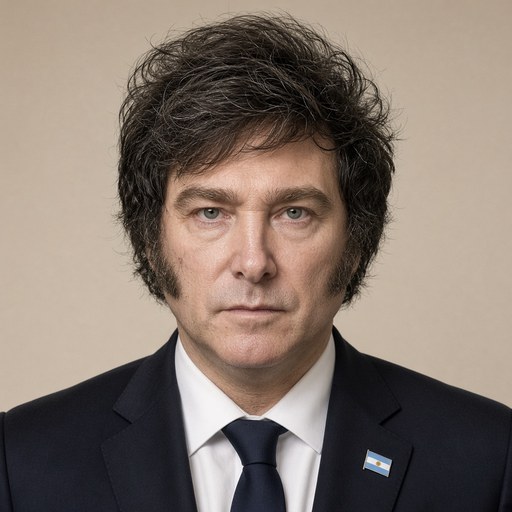
Words of President Javier Milei at the end-of-year dinner of the Faro Foundation.
 Javier Milei · President of Argentina
- Context
- Milei addressed the Faro Foundation's end-of-year dinner in Argentina in December 2025, praising conservative intellectual efforts and commenting on recent global events.
- Main themes
- Cultural battle against leftism, defense of freedom, antisemitism and Islamic terrorism, socialism vs. liberty, Faro Foundation and conservative think tanks, South American political shift, woke ideology critique, communication of ideas, José Antonio Kast election victory, Thomas Sowell and economic liberalism
- Duration
- ~57 min
- Words
- 6,797
- Sentences
- 280
- Readability
- 58
- Grade
- 11.1
- Syntax
- 2.98
- Vocabulary
- 2.02
Translated from Spanish
The broad sphere of national life a sentence belongs to. Every sentence has an Arena, so it is the denominator the other indices are read against.
Other280 sentences in 37 paragraphs
Javier Milei: Well, good evening everyone. And before I begin, I would like to say a few words about the Islamic terrorist attack that took place this weekend in Australia and paralyzed the entire world. First, I want to express my solidarity with the Jewish community in Argentina and around the world, in a global context in which antisemitism finds increasingly aberrant expressions, but I also want to alert that this threat transcends the Jewish people as it is an affront against freedom itself. Because that is undoubtedly the most sacred value of our Western culture, that every citizen can lead a free, peaceful life, associating, connecting with whomever they wish and professing the faith they want within the framework of the law.
This is what is at stake and what the inhumane terrorist barbarism wants us to call into question: it is acts like this by staunch enemies of freedom who are willing to kill in cold blood to impose their beliefs that remind us of the importance of the cultural battle we are fighting, because injustice and evil triumph when the good remain indifferent. The woke virus that has infected Europe and much of the free world often demands looking the other way or defending the indefensible in order not to offend the perpetrators; that is why it is our duty to continue alerting that what is wrong is wrong and that is enough, whether in irrefutable cases like what happened yesterday or in everyday cases that at first glance seem innocuous.
On the other hand, and in a happier piece of news, I would say almost much happier, I want to take this opportunity to congratulate José Antonio Kast, the newly elected president of Chile, for his resounding victory at the polls, and with that, I also extend a fraternal hug to the Chilean people who today begin to live in a new era, this is another sign that South America has awakened and has begun to turn inexorably towards the ideas of freedom, far from the calamity of 21st-century socialism. In that sense, and formally starting today’s speech, this Foundation has become a true bastion of the cultural battle we have been waging for years against leftist obscurantism; it is a great joy to be here again among friends at the end-of-year dinner of the Faro Foundation.
In this regard, I want to thank its President Agustín Laje, a leader and pioneer of the cultural battle, not only in our country but throughout Hispanic America, for the honorable invitation and for the work of all these years; I am sure that Agustín is one of the great architects of the cultural paradigm shift we are going through, for which I want to ask for a big round of applause, thank you Agustín. I also want to thank the great Axel Kaiser and Adrián Ravier, who is now a National Deputy for La Pampa.
This Foundation, and others like it, have a crucial role in the spiritual war that is being waged for the future of our country and the region. In this struggle, our weapons are nothing less than our ideas, and the trench is every sphere of our daily life. It is a conflict without bullets and without violence, but where the lives of millions of people are equally at stake, both in the present and in future generations. A war where every well-placed word, every debate won, every inch taken from the left in the realm of public opinion is a conquest of every human being who aspires to live in freedom again. Unfortunately, we start at a disadvantage and we are well aware of it. For years we have neglected the cultural battle, ignoring that behind every human action there is an idea, and an idea does not need to be true to go far, but it needs to be attractive. Quoting Axel Kaiser, the fatal ignorance, which is what led to the nightmare that ended yesterday in Chile.
The left knows this very well and has managed to present its lies as appealing. Giving hatred and resentment a veneer of justice, equality, and solidarity. They did not take into account the consequences of their ideas, nor whether those ideas could be realizable in the first place. History has demonstrated countless times the fatal results of their lies; yet, even so, they continue to enjoy alarming popularity. Here I want to quote that fabulous economist Thomas Sowell, he says: the best thing about socialism is that it sounds nice, the worst is that it never works and in fact, it has always been a failure economically, socially, culturally, and let us never forget that they murdered 150 million human beings.
That is why we have focused not only on telling the truth but also on learning to communicate it; it is in this sense that the Faro Foundation reaches its true purpose as a beam of light that illuminates men and shows them the path of truth and good, but not from the ivory tower in which liberalism has locked itself in the face of the advance of statism, but in the language of the common man, getting into the mud to challenge the left on its own turf, in a world of darkness obscured by layers upon layers of deception and distortions; what better thing than to have a lighthouse to get back on our path. I speak of a world in darkness because this is not an exclusively Argentine evil, but a good part of the free world has lost its way, possessed by ideologies of death and walking like a sleepwalker towards collective suicide.
In fact, the left is voted for. They win elections. That is to say, they have managed to change the way they seize power. Before they did it through violence, now through the polls with lies and with different strategies that are not the subject of discussion today, but fortunately, the continent is awakening and is roaring, shouting, long live freedom damn it.
Everywhere, unrestrained statism is pouncing on individual liberties, condemning free nations to economic stagnation, to progressive spiritual erosion, and to eventual disappearance. If this course persists, the West will become King Ozymandias, whose great works once amazed the world, as the famous poem recounts, but ended up forgotten, swallowed by the sands of the desert. It happens that the West had believed it found, seduced by the siren song of Keynesian statism, the philosopher's stone of the economy. They thought themselves so intelligent and so creative that they believed they could outsmart reality itself, blinded by their fatal arrogance. They believed that unrestrained public spending, financed by monetary issuance and debt, aimed at stimulating consumption, was a way to hack the system, creating a kind of machinery of infinite wealth, as if life were a game of Sims. This is a clear example that an idea does not have to be true to become popular; in fact, I suspect it is quite the opposite. Sometimes, we human beings like to be lied to and promised prosperity at zero cost. I will tell a very funny anecdote about Hayek, funny or sad, I don’t know. There are people who could do it better, it could be Professor Krause or Professor Ravier, but thank you Professor Krause for being here, it is a privilege.
If I am wrong in the anecdote, correct me and I have no problem. Hayek had been strongly debating with Keynes the treatise on money, which at least was still within the Wicksellian logic and within a respectable analytical framework, and when they were in the epistolary exchange of that debate, where Hayek took it very seriously and was working hard to refute it, in one of the epistolary exchanges Keynes says something like, I don’t know what I see myself doing discussing this, since I no longer believe in it. He had already changed his mind and then that nefarious, sinister book of 1936 appears, The General Theory of Employment, Interest, and Money. I am holding back, believe me I am trying hard, and Hayek found that book so bad that he said: it is not even worth discussing. Besides, so much time had passed debating the previous book and he had changed his mind. But it is such a bad book, with so many errors that it is not worth discussing. Well, then it became almost the go-to book for every populist politician and the damage it has caused has been enormous.
But that is why it is not a coincidence that the West is the most prolific culture in history in terms of utopian thought; in the 20th century, they wanted to sell us the earthly paradise of the welfare state that, in response to Soviet socialism, offered a diluted version of it. I propose you read the general theory, it has some aspects, for example from the preface of the German edition where Mr. Keynes makes an ode to Nazism or in the chapters where he discusses investment where he directly supports centralized planning; there are some very interesting chapters, that is why later when they want to sell it, it is very interesting because some even treat Keynes as if he were liberal, to give you an idea of how far the spectrum has shifted or for example, they want a detector for recalcitrant leftists, poor José Antonio Kast is called the ultra-rightist.
Well, that means how far to the left it is, you will have seen several journalists making that reference here, so it should not surprise you. But in the case of Keynesian thought, which has quite a bit of the utopian, it holds that the free market by itself is insufficient to ensure growth and the proper use of resources, and that, beyond the fact that one could have a world with individuals deeply averse to risk, incomplete or shallow insurance markets.
Even so, these people want to, let’s say, overreach. Therefore, society should evolve, clearly in many quotes, towards a system of central planning where expert bureaucrats, now with many more quotes, should actively try to intervene in the economy, actively incentivizing this, disincentivizing that, taking resources from here, putting them there, obeying their whims and their economic alchemy. I will give you today’s translated version, what would this be for example: no, well, the macro is fine, but the problem is the micro. I’m going to have some fun with this, sorry, but first of all: the macro is the sum of the micro. That is, unless you are a fourth-rate economist who has been stuck in time beyond 1968, when we began to recover the micro foundations with Friedman’s work, the role of monetary policy where it destroys the Phillips curve. Beyond that, serious economists today do general intertemporal equilibrium. In fact, the one who best captures this is Henry Hazlitt, in a wonderful and very, very basic book called Economics in One Lesson, and he says what is the difference between the good economist and the bad economist? The bad economist looks at only one market in one period, the good economist not only looks at the market in this market but also the interaction with other markets and not only today but also the future consequences.
So, first point: there is no difference as such between micro and macro for those who do general equilibrium, unless they are terrible economists. Now, and it is also in this book called The Salvation of Industry X, fundamentally those who say “no, no, well, but this government does not take care of the micro,” thank you, thank you for telling me that, because in reality only the corrupt would take care of the micro. Because if there is something that has been learned in the world, it is something called don’t pick the winners, that is, do not choose the winners. So, if you are talking about saving a sector, you have to put money into that sector, and the question is: if you are choosing for one sector to win because you are putting money into it, where does the money come from? Does it come from trees? I don’t know, where does it appear from? Because you will have to pay for it somehow. That is, if it is with protection, we will be ruining the lives of 47 million human beings, which will be in lower quality goods at a higher price. The other alternative is that, what do I do? Do I charge explicit taxes? I ruin growth, implicit? What do I do? Do I issue money? That is, I generate inflation, that is, I do it against the most vulnerable whom they say they want to save. What do you want me to do with debt? Punishing future generations. The reality is that what they are doing is, at heart, lobbying, it is pure corruption. That is to say, what does a liberal government do? It levels the playing field. It is responsible for respecting natural rights: the right to life, liberty, and private property, respecting the principle of non-aggression. Then, once they have leveled the playing field, let individuals act. When you have those who talk about the micro, the micro, they are people who are lobbying, they are corrupt. So, when they say that they do not take care of the micro, thank you, because it shows that this is an honest government.
Ultimately, in these schemes that produce, that generate, that pose things, private property and the natural rights of man are subordinated to state criteria and could be trampled at will under the pretext of the common good or some exceptional circumstance. As Albert Jay Nock said in "Our Enemy, the State" — I recommend the book, it is a family of books that I love, "Our Enemy, the State" is one that I hold particular affection for — the State has known how to take advantage of every contingency to gain power at the expense of society; this worldview, however, far from ensuring sustained economic growth, only secured the perpetual expansion of the State over the life, liberty, and property of the individuals residing within it.
The State promised people security in exchange for their freedom, and those who accepted that exchange ended up losing both. There is a phrase by Milton Friedman regarding this that says that those societies that place freedom above equality achieve much of both; when they do the opposite, placing equality above freedom, they achieve neither. And the Leviathan, emboldened by the priests of statism, believed it could pounce on the entire private sector, and this happened because it stopped believing that there was a legal limit to its insatiable fiscal appetite. Instead of better managing resources, as the members of the State party promised, it ended up managing them poorly.
I am not saying something that should catch our attention, right? Because in the book "Free to Choose" by Friedman and Rose, later Rose Friedman, there is a chapter on public spending that talks about the four ways to spend. So you can spend your money or someone else's, and you can spend it on yourself or on others. For example, when you spend your own money on yourself, you maximize benefits because you know what you want, right? Because you know your own preferences and you also know what it cost you to earn it, so you weigh costs and benefits well, and if you don't, you pay in terms of personal well-being, which means you learn quickly.
The other way is to spend your own money on others. I mean, what is that? Those are gifts. One tries to make a good impression with as little as possible. What does one do? Minimization of cost. The other alternative is to spend someone else's money on oneself; that is wastefulness, right? I mean, after all, if someone else is paying the bill. How many times have you seen people… at one point I traveled a lot, and then I met a person, when they called to board the plane, not even in business class, I was in first class, and he gave me a whole explanation of why he was traveling in first class. I said, "That's great." Of course, the thing is I traveled a lot. And then one day I ran into him at the airport during vacation time, and when the call for first class came… I said, "Oh, he wasn't going." Of course, he was traveling in the cheap seats because he was traveling with the whole family, and since he wasn't paying with the corporate card and was paying with his own, he was careful with the money. So, given this, what is then the worst way to spend? It is to spend someone else's money on others. That is called the welfare state. Can it work? No, no. Because the politician does not experience the cost that the private sector suffers, how painful it is to pay taxes, and he also does not know what we want better than we do. Therefore, he will always do it wrong. That is why, what is the best policy a government can pursue? Shrink the State. We reduced the consolidated fiscal deficit from 15 points of GDP to zero, and not only that, but we also reduced taxes by two and a half points of GDP. And we will continue on the same path, reducing spending and lowering taxes.
And at this moment, someone enters with the award for "Social Benefactor of the Year," and we are going to give it to Toto Caputo. Thank you for being the best Minister of Economy in history.
Moreover, a common mistake of the left is to conceive of the State as a god that is above men, ignoring that those who manage it are indeed men, and the State then becomes a booty of money and power to be conquered. And the bigger the State, the bigger the booty. In all countries where the State advanced in this way over the private sector, waste and poor investment were the rule. Here is a case that is not real; it is a metaphor, I clarify, because there will always be someone, you know that sometimes there are some who are excessive in literalness, which is the example I usually make of the Ministry of the Bridge. So, you have two communities separated by a river, and then they discover that if they trade, the standard of living of both societies will improve. A warning for those who are not trained in this: it is not only the absolute advantage of Smith, where one is better at one thing, the other is better at another, and then they trade. One can be better at everything than the other, and there is also room for trade, which is Ricardo's comparative advantage or, in Austrian terminology, Ricardo's principle of association. Because it is not only valid for trade; it is valid for all things. This is for those who say that if one deregulates the market, there will be no work for everyone. No, that is a lie; that is false. But well, that is another of the things we have to deal with that is not relevant now. So, what do the two societies discover? That if they trade, they will live better. So they agree to build a bridge. So what happens? If you have the State, what does it do? The Ministry of the Bridge. It builds that bridge and looks for where to build bridges. And there comes a time when it can no longer build more bridges because there are no cities to connect. So what does it do? It invents the Ministry of Water and creates seas to build more bridges. So that is the State.
So now you have the Ministry of Water, the Ministry of the Bridge, and everything is about hiring people, and it is all about accumulating power by creating offices and other dependencies. Well, we arrived and halved the number of Ministries. I mean, that is what it is about.
So, this led all the societies where this policy was practiced to stagnation and decay. And what was the solution that was always used in the face of stagnation? More State, more spending, more taxes, more monetary falsification, creating an infinite loop of statism until reaching the situation we live in Argentina at the end of 2023. Basically, what does the State do? It breaks your legs; I mean, it taxes you to then tell you that it gives you crutches, which it buys at an inflated price, and also demands that you thank them. It is absurd. Well, it is a small sample of what we received.
And while we are tired of presenting historical statistical data on the superiority of free enterprise capitalism over statism, this has not been enough to win the battle of ideas. Because the difference between them and us is spiritual; we need to respond to the moral arguments put forth by statists with arguments of the same kind. This is fundamental. If we do not understand this, we are doomed. We can have great management like the one we have, we can have a political bulldozer like the one we have shown in the recent elections, but we cannot stop fighting the cultural battle. Because if we do not fight the cultural battle, what will we have? 4 years of liberalism, 8 years, 12, 16, 20, but these people never give up because they live by sucking the blood of others. They are professional vampires.
So, they will never want to work; they are permanent slackers, so what is the incentive? Always to suck the blood of another, because remember Marx, he preferred that his children die rather than go to work. These people are experts at finding justifications to pick someone else's pocket; it is not enough to wave statistics if they control the definition of good and evil, of what is just and unjust. We have to enter that terrain and beat them because economic growth alone, if it is unjust and unequal, as they say, will always be lost in the moral sand. There is a book that fascinates me; I find it dazzling; it is a book that impacted me strongly, a book by Israel Kirzner, with a "z," please.
The book is called "Creativity, Capitalism, and Distributive Justice." The book is wonderful for how Israel Kirzner presents the argument from the outset; he says: there is no doubt that the capitalist system of free enterprise is more productive, it is more efficient, there is no doubt, there is no doubt, but the left labels it as unjust. They say it is unjust, and the most interesting thing that Israel Kirzner says is that if the system is indeed unjust, no matter how productive it is, it does not deserve to be defended. And I have the privilege that many of my ministers are here, to whom I thank for being present, to the ministers of the best government in history, whether the left likes it or not, of different stripes. And what is interesting about Israel Kirzner's book is that he says: if the system is unjust, it is not worth defending. That is to say, both in the first Cabinet meeting and in the one we had recently given the changes after the enormous elections they held, both Minister Bullrich in the Federal Capital and Luis Petri in Mendoza.
We had to make changes; I had to renew the enormous election of Colo Santilli, no. So, I had to repeat the talk because the audience keeps changing. As Mirtha Legrand says, one repeats oneself because the audience keeps changing. Our goal is to become the freest country in the world, and for that, we have a set of objectives, but the most important thing is that not all instruments are valid. We do not solve problems for utilitarian reasons; we solve them based on moral criteria. There are things that are wrong. We were told at the beginning of the year that we were not going to lift the currency controls because it was an election year, and yet, when we had the money to lift the controls, despite what all the political utilitarianism said, the moral solution was to open up, to return the freedom of the Argentines, and we did it.
Not only that. During this year, we were under 8 months of constant attack on the economic program. We had to endure a dollarization of M2 never seen in Argentine history, of 42% of M2. The speculative attack was 41 billion dollars. And yet, look how strong the program is that is now standing, and Argentina is growing again.
Therefore, this is as Huerta de Soto says in the Theory of Dynamic Efficiency. Efficiency and justice are two sides of the same coin. You cannot sacrifice justice on the altar of efficiency. You cannot do that. Nothing can be efficient if you are sacrificing justice. That is to say, all that part of the literature where economists, in the name of Pareto optimality, make interventions, omit the damage they are causing to resolve the supposed market failure. The problem is this: it is like if someone were talking to a blind person about colors.
They are literally blind to reality. We are not to blame for their not understanding how human action works. That is to say, that they do not understand what the market is. The market is a process of social cooperation where property rights are exchanged voluntarily. But well… I mean, they prefer intervention; that is the reality. They like power. Do not be fooled. Because, in addition, linked to power, there is money. So, the interesting thing about Israel Kirzner's argument is that, leveraging the principle of appropriation of Locke and Hayek's idea of the market as a discovery process, he demonstrates that the capitalist system of free enterprise is not only more efficient but is the only system that is just. Therefore, let us defend the ideas of freedom. We are not only defending efficiency; we are defending a system that is just.
What is the argument they have? The argument they hold is that capitalism is, in reality, at best, a necessary evil, and they can concede that it generates growth, but they say that this growth is unjust and unequal, so the State is enabled to intervene and solve it. This is a non-trivial issue that we need to put on the discussion table; this is key. We, in these two years, have dedicated ourselves to putting the economy in order, to stabilizing; it is the most successful stabilization process in history, not only of Argentina but of the world because when we said we were going to put the public sector in order in a year, they said that was impossible, that at most it could be adjusted by one point per year, that we would not be able to finish the term in fiscal balance, and we did it in the treasury in the first month. Moreover, six months later, we closed the quasi-fiscal deficit that no one included in the campaign, and when we made that adjustment, which involved, for example, a 30% reduction in public spending, they said we were going to sink into a recession and that unemployment was going to explode. However, around April 2024, the economy hit bottom and began to expand strongly, and the seasonally adjusted EMAE indicator for December ended more than 6% above 2023, with real wages growing, and despite their displeasure, we lifted 12 million people out of poverty. Well, in the meantime, we also eliminated the poverty managers, right? What a job, Sandra.
And the reality is that what we have demonstrated is that adjustment can be made and that it can be expansive. So how is this? We end up breaking all the textbooks, due to the depth of the adjustment, due to the speed of the adjustment, and above all things, due to the results. Because clearly, when you adjust the public sector, you are returning resources to the private sector, and since the private sector is more productive than the public sector, the economy expands and flourishes. And so we need to be very clear about this because the economy was expanding strongly in the first quarter at almost 6%, it had accelerated in the second to levels of 8%, until in May we had a very strong electoral victory in the City thanks to Manuel who went and fought that battle. Moreover, at that moment inflation touched 1.5% and that’s when politics started to do its thing. We were sanctioned with nearly 40 laws trying to destroy the balance we had achieved with so much effort and obviously, that shot up the country risk, raised interest rates, and that generated a drop in the demand for money and that is what caused the inflation rate to accelerate in the following months, but of course, telling that story like this and admitting the kuka risk, many economists would have to accept that they are failures and that they got everything wrong, they deny the kuka risk. The country risk was at 1500 and the day after the election, by magic, it fell to half. And based on that, also the flip side of that, to check that the demand for money had been destroyed is that basically you recently, Vladimir, the vice of the Central Bank published what was the whole exit, from the speculative attack, of how the system exited the peso, but exited the peso at levels such that the levels of monetization of the Argentine economy fell well below the level they had during the previous government, with inflation traveling at the peak at 300% and with a possibility of accelerating to levels of 17,000 annually. That is to say, the levels of monetization fell, the monetary liabilities of the Central Bank fell to outrageous levels. In other words, not only did individuals go and buy dollars, but companies even destroyed working capital and we were able to withstand all that. Just look at how solid the economic program is that was able to withstand all that and now begins the path of reconstruction and growth.
So, this is important, because to the extent that we are successful in terms of economic growth, moreover, we base economic growth on three pillars. Already with, let’s say, security in order, because remember that we had 9,000 blockades per year, today it is zero thanks to the management of Minister Bullrich and now our Minister Alejandra Monteoliva. We put inflation in order thanks to the Ministry of Economy and the Central Bank, Santi is around there. And now the stage of economic growth begins and the stage of economic growth has three engines. One is deregulation, but deregulation is to free up increasing returns, it is to accelerate economic growth. Federico is there, the man of increasing returns, 13,000 reforms, thank you. The other leg is Human Capital, thank you Sandra. And the other leg is openness, thank you Pablo Quirno. Not only was he key in dismantling the bomb with Santi Bausilli that was in the Central Bank, but now, in addition, he is an example as Chancellor. Now, when we do all that, and the economy starts to grow strongly, what will the left do? They will come and say “It generates inequality,” and they will come to attack with that. So, in that context, what we have to do is be prepared to have that discussion. And that discussion is a moral discussion. We have to tell them to their face that social justice is a thing of thieves, because it implies unequal treatment before the law, preceded by theft. So we have to go and we have to go for the moral battle. And that is why what we do here from the Faro Foundation is so important. Because this system is the one that allows man to flourish and relate to his peers in the best possible way, because it is the fairest system of all since it guarantees that the fruits of effort remain in the hands of those who first exerted themselves. In fact, the creator, when he expelled Adam and Eve, told him “you will earn your bread by the sweat of your brow.” Not with the sweat of someone else’s brow. Right? In fact, theft is prohibited in the Ten Commandments. Moreover, you should not covet your neighbor’s goods either, and another thing, I say that has the last of the commandments, and, moreover, I say as Thomas Sowell said, “What is social justice? Envy plus rhetoric.” It is also said by Thomas Sowell himself, he says, “Since when did envy stop being a capital sin to become a virtue?” which is social justice, right? So, unlike the so-called social justice, which is tremendously unjust since it implies stealing from one through the exercise of state force, to distribute it among friends and clients. In other words, or in the case of Kirchnerism, it did it by bribing people, because in the end it is no more than a policy to go and buy votes, in an elegant way but it is still that.
So, to understand this, we have to understand that we liberals believe that God gave men the earth as a whole and that they divided it to manage. A man has a natural right, given by God, to decide what to do with his body and with his work, because without that right he has nothing. This also implies that he has the right to keep the fruits of the sweat of his brow. That is to say, we liberals believe that private property is a natural right, it is a contract prior to the State that orders the lives of individuals and that marks a very clear difference between good and evil, it is being the owner of nothing more and nothing less than our time. And the State only arises from the consent among men and exists to manage the conflicts that arise between them, but we liberals are very clear that the State only takes its right and its authority from the natural right of individuals. In fact, the existence of the State is justified because we have failed as a society to manage our conflicts. You, Martín, must have a lot of conflicted people there, right? You have to deal with all that.
Statists, on the other hand, believe that God is the State, they believe that the State precedes all other rights and can trample on the individual at will, they believe that the will and rights of individuals are always subordinated to the reason of the State and that is why they believe that private property is little more than a contingency over which the State has prerogative, do you remember the unpresentable who said that during the pandemic there are no rights and then those people come to accuse or say I don’t know what, these things happened here, they believe that the State can do whatever it wants with the life, freedoms, and property of people, dispose of their time at will, that is why they believe that there is no immorality in trampling those rights unilaterally as long as it is in pursuit of a supposed common good that they determine, they are so fatally arrogant that they believe they are the representatives, they are the owners of the utility function of people, it is incredible, technically it would be like that, moreover, the State cannot err, as long as, obviously, they manage it because when someone who truly believes in the natural rights of individuals manages it, suddenly, everything is a violation of acquired rights, you see that they spend their time saying, when they do not govern, they are not democratic, they are not fascists, they are Nazis, as it was, the “ad hitlerum fallacy,” they put a label and disqualify everyone.
That is why here lies the moral and spiritual difference that underlies all the economic differences that abound on the surface and the key to dismantling their fallacies. We liberals believe that men are truly owners of what they have. They are owners of their bodies and the fruits of their labor. In contrast, the statist priests believe that we are all mere tenants of our goods, but whose real owner is the State that benevolently allows us temporary usufruct with the right to revoke it whenever it pleases. That is why when they stop controlling the State, they immediately start crying about fascism and authoritarianism, because they truly think they are the only ones who possess the revealed truth and the utility to govern as the rest wants and obviously the management of the funds, no. They see the rest of us not as citizens, but as slaves at their service. And being far from common power is for them like losing freedom and for that reason, the different socialist approaches to the economy fail, whether openly communist, or trendy communists, no, chic. That are the social democrats. All statist models end up taking away from man true property and therefore true responsibility for his future. When everything belongs to everyone, nothing belongs to anyone, except for the regimes of the State and that is why they seek to entrench themselves in power. The State then turns the citizen into its slave, which returns him to economies vulnerable to the problems of slave economies, indolence, laziness, and lack of ambition. In contrast, when men know they are owners of themselves and know they are owners of the fruits of their labor, all their actions are ordered towards leading the best possible life within the framework of the law. Because freedom and responsibility are two sides of the same coin. There is no existence of one without the other. Thus, men become aware that they are responsible for all their actions, they are responsible for their virtues and their weaknesses, for their successes and their mistakes. They also recognize that they are truly free and it is this responsible freedom that makes them capable of creating. For that reason, spreading liberal ideas at this global moment is a new liberating endeavor from the slavery to which the perverted State has subjected us. Because economic growth depends almost entirely on individuals being able to realize themselves freely in the world, to create and innovate under the protection of a law that protects them and that they know they will be owners of the fruits of all their effort and sacrifice. And economic growth must be a desire of any State that prides itself on being one, since it implies a constant improvement in the quality of life of each and every one of its citizens.
But for this process to consolidate, the State must also fulfill a necessary role. It has to do its part by protecting the borders, protecting citizens from encroachment by their neighbors, and protecting macroeconomic stability. It is interesting because one of the laws we are sending to Congress makes it so that those politicians who sanction or promote and vote for laws that imply public spending without a counterpart of income, that is, that violate fiscal balance or that violate monetary balance will go to prison because they will have a sentence of 1 to 6 years. The populist massacre is over.
In short, the State must protect this divine light, this beacon that illuminates the soul of free men and gives them a natural right to own their work, it must protect it as something sacred and safeguard it from tyranny, both from their neighbors and from itself, because if the role of the State, as the left so proclaims, is to protect minorities, there is no smaller minority than the individual, who must be constantly protected from the theory of the majorities. This beacon is the moral key to prosperity and long-term growth, a light that for a long time the West has forgotten and it is necessary to rediscover. That is why I want to thank you all for being here today and for your constant support in spreading the ideas of freedom. May you have very happy holidays, may God bless you all, and may the forces of heaven accompany us. And long live freedom, damn it! Thank you very much.
The original Spanish. The tags above are read on the English translation's sentences.
Javier Milei: Bueno, buenas noches a todos. Y antes de comenzar quisiera decir unas palabras sobre el atentado terrorista islámico que se llevó adelante este fin de semana en Australia y paralizó al mundo entero. Primero, quiero expresar mi solidaridad con la comunidad judía en la Argentina y en el mundo, en un contexto global en el cual el antisemitismo encuentra expresiones cada vez más aberrantes, pero también quiero alertar que esta amenaza trascienda del pueblo judío en tanto se trata de una afrenta contra la libertad misma. Porque ese es sin duda el valor más sagrado de nuestra cultura occidental, que cada ciudadano pueda llevar adelante una vida libre, pacífica, asociándose, vinculándose con quien quiera y profesando la fe que quiera dentro del marco de la ley.
Esto es lo que está en juego y lo que la barbarie terrorista inhumana quiere que pongamos en entredicho: son actos como este por parte de enemigos acérrimos de la libertad que están dispuestos a asesinar a sangre fría para imponer sus creencias, los que nos recuerdan la importancia de la batalla cultural que estamos dando, porque la injusticia y el mal triunfan cuando el bueno se mantiene indiferente. El virus woke que infectó a Europa y gran parte del mundo libre muchas veces se exige mirar para otro lado o defender lo indefendible con tal de no ofender a los victimarios; por eso es nuestro deber seguir alertando que lo que está mal está mal y basta, sea en casos inapelables como lo que pasó ayer o en casos cotidianos que a simple vista parecen inocuos.
Por otro lado y en una noticia más feliz, diría casi mucho más feliz, quiero aprovechar para dar mis felicitaciones a José Antonio Kast flamante presidente electo de Chile por su contundente victoria en las urnas y con ello extiendo también un fraternal abrazo al pueblo chileno que hoy comienza a vivir en una nueva era, esto es una señal más de que Sudamérica ha despertado y ha comenzado a girar indefectiblemente hacia las ideas de la libertad, lejos de la calamidad del socialismo del siglo XXI. En ese sentido y dando inicio formal al discurso de hoy, esta Fundación se ha convertido en un verdadero baluarte de la batalla cultural que venimos dando desde hace años frente al oscurantismo izquierdista, es una gran alegría estar nuevamente aquí entre amigos en la cena de fin de año de la Fundación Faro.
En este sentido, quiero agradecer a su Presidente Agustín Laje, referente y pionero de la batalla cultural, no solo nuestro país sino en todo hispanoamérica, por honrosa invitación y por el trabajo de todos estos años, estoy seguro de que Agustín es uno de los grandes artífices del cambio de paradigma cultural que estamos atravesando, por lo cual quiero pedir un fuerte aplauso, gracias Agustín. También quiero agradecer al gran Axel Kaiser y Adrián Ravier que ahora es Diputado Nacional por La Pampa.
Esta Fundación, y otras como ella, tienen un rol crucial en la guerra espiritual que se está librando por el futuro de nuestro país y la región. En esta lucha, nuestras armas son ni más ni menos que nuestras ideas, y la trinchera es cada ámbito de nuestra vida diaria. Se trata de un conflicto sin balas y sin violencias, pero donde se dirimen igualmente las vidas de millones de personas, tanto en el presente como en las generaciones futuras. Una guerra donde cada palabra bien puesta, cada debate ganado, cada centímetro arrebatado a la izquierda en el terreno de la opinión pública es una conquista de cada ser humano que aspira a volver a vivir en libertad. Lamentablemente, partimos en desventaja y lo tenemos bien claro. Durante años hemos descuidado la batalla cultural, ignorando que detrás de cada acción humana hay una idea, y una idea no necesita ser verdadera para llegar lejos, sino que necesita ser atractiva. Citando a Axel Kaiser, la fatal ignorancia, que eso fue lo que llevó a la pesadilla que terminó el día de ayer en Chile.
La izquierda esto lo sabe muy bien y han sabido presentar sus mentiras como apetecibles. Dándole al odio y al resentimiento un barniz de justicia, igualdad y solidaridad. No tuvieron en cuenta las consecuencias de sus ideas, ni tampoco si dichas ideas podrían ser realizables en primera instancia. La historia ha demostrado incontables veces los fatales resultados de sus mentiras; pero, así y todo, siguen gozando de una alarmante popularidad. Acá quiero hacer una cita de ese economista fabuloso que es Thomas Sowell, él dice: lo mejor del socialismo es que suena lindo, lo peor es que nunca funciona y de hecho siempre fueron un fracaso en lo económico, en lo social, en lo cultural y nunca nos olvidemos que asesinaron a 150 millones de seres humanos.
Por eso nos hemos concentrado no solo en decir la verdad, sino también en aprender a comunicarla; es en este sentido que la Fundación Faro alcanza su verdadero propósito como un haz de luz que ilumina a los hombres y les muestra el camino de la verdad y del bien, pero no desde la torre de marfil en la que el liberalismo supo encerrarse ante el avance del estatismo, sino en el idioma del hombre común, metiéndose en el barro a disputarle a la izquierda en su propio juego, en un mundo de tinieblas oscurecido por capas sobre capa de engaños y tergiversaciones; qué es mejor cosa que contar con un faro para retomar a nuestro camino. Hablo de un mundo en tinieblas porque esto no es un mal exclusivamente argentino, sino que buena parte del mundo libre ha perdido el rumbo, poseído por ideologías de muerte y caminando como sonámbulo hacia el suicidio colectivo.
De hecho, a la izquierda la votan. Ganan votaciones. Es decir, lograron cambiar la forma en la cual se hacían del poder. Antes lo hacían por la violencia, ahora por las urnas con mentiras y con distintas estrategias que no vienen al caso a discutir hoy, pero por suerte el continente está despertando y está rugiendo, gritando, viva la libertad carajo.
En todas partes, el estatismo desenfrenado se abalanza sobre las libertades individuales, condenando a las naciones libres al estancamiento económico, a la progresiva erosión espiritual y a una eventual desaparición. De persistir en este rumbo, Occidente se convertirá en el rey Ozymandias, cuyas grandes obras supieron maravillar al mundo, según relata el famoso poema, pero terminaron en el olvido, tragadas por la arena del desierto. Sucede que Occidente había creído encontrar, seducido por el canto de sirenas del estatismo keynesiano, la piedra filosofal de la economía. Se creían tan inteligentes y tan creativos que pensaban que podían ganarle a la realidad misma cegados por su fatal arrogancia. Creyeron que el gasto público desenfrenado, financiado con emisión monetaria y con deuda, puesto al servicio de estimular el consumo, era una forma de hackear el sistema, creando una especie de maquinaria de riqueza infinita, como si la vida fuese una partida de sims. Este es un claro ejemplo de que una idea no tiene por qué ser verdadera para volverse popular; de hecho, sospecho que es todo lo contrario. A veces, a los seres humanos nos gusta que nos mientan y nos prometan prosperidad a costo cero. Voy a contar una anécdota de Hayek muy divertida, divertida o triste, no sé. Hay gente que lo podría hacer mejor, podría ser el profesor Krause o el profesor Ravier, pero gracias profesor Krause por estar acá, es un privilegio.
Si me equivoco en la anécdota, me rectifican y no tengo problema. Hayek había pasado discutiendo fuertemente con Keynes el tratado sobre el dinero, que al menos estaba todavía en la lógica wickseliana y dentro de un marco analítico respetable y cuando estaban en el intercambio epistolar de ese debate, donde Hayek se lo había tomado bien en serio y estaba trabajando fuertemente en rebatirlo, en uno de los intercambios epistolares Keynes algo así le dice, como, no sé qué me veo haciendo discutiendo esto, si yo ya no creo más en esto. Él ya había cambiado de idea y después aparece ese libro nefasto, siniestro de 1936, La Teoría General de la Ocupación, el Interés y el Dinero. Me estoy conteniendo, crean que me estoy esforzando y a Hayek le pareció tan malo ese libro que dijo: no vale ni siquiera la pena discutirlo. Aparte había pasado tanto tiempo discutiendo el anterior libro y había cambiado de idea. Pero es un libro tan malo, con tantos errores que no vale la pena discutirlo. Bueno, después se convirtió en casi el libro que es de cabecera de todo político populista y el daño que ha causado ha sido enorme.
Pero, por eso no es casualidad que occidente sea la cultura más prolífica de la historia en materia de pensamiento utópico, en el siglo XX quisieron vendernos el paraíso terrenal del estado de bienestar que como respuesta al socialismo soviético ofrecía una versión diluida del mismo, propongo que lean la teoría general, tiene algunos aspectos, por ejemplo del prólogo de la edición en alemán donde el señor Keynes hace una oda al nazismo o en los capítulos donde trata la inversión de donde directamente se pone a favor de la planificación centralizada, hay algunos capítulos muy interesantes, por eso después cuando lo quieren vender, es muy interesante porque algunos hasta lo tratan a Keynes como si fuera liberal, para que se den una idea de lo corrido que está el arco o por ejemplo, quieren un detector de zurdos recalcitrantes, al pobre José Antonio Kast le dicen el ultraderechista.
Bueno, eso significa lo corrido a la izquierda que está, habrán visto varios periodistas haciendo esa referencia acá, así que no les debería sorprender. Pero en el caso del pensamiento que keynesiano, que tiene bastante de utópico, se sostiene que el libre mercado por sí solo es insuficiente para asegurar el crecimiento y el correcto aprovechamiento de los recursos y eso, más allá de que uno pudiera contar con un mundo con individuos profundamente aversos al riesgo, mercado de seguros incompletos o líquidos, es decir poco profundos.
Aún así, esta gente quiere digamos excederse. Por lo tanto, la sociedad debería evolucionar, claramente entre muchas comillas, hacia un sistema de planificación central donde burócratas expertos, ahora con muchísimas más comillas, debía intentar activamente en la economía, intervenir activamente incentivando esto, descentivando lo otro, quitando recursos de acá, poniéndolos allá, obedeciendo a sus caprichos y a su alquimia económica. Les paso la versión traducida de hoy, cuál sería esto por ejemplo: no, bueno, la macro está bien, pero el problema es la micro. Me voy a divertir un rato con esto, perdón, pero primer lugar: la macro es la suma de la micro. Es decir, salvo que sean un economista de hiperrecontra de cuarta y que ha quedado colgado en el tiempo más allá de 1968, cuando empezamos a recuperar los micro fundamentos con el trabajo de Friedman, el rol de la política monetaria donde destruye la curva de Philips. Más allá de eso, los economistas serios hoy hacen equilibrio general intertemporal. De hecho quien mejor lo plasma esto es Henry Hazlitt, en un libro maravilloso y bien, bien básico que se llama La Economía en una Lección y dice ¿cuál es la diferencia entre el buen economista y el mal economista? el mal economista mira solo un mercado un solo periodo, el buen economista, no solo mira el mercado en este mercado, sino la interacción con los demás mercados y no solamente hoy sino también las consecuencias futuras.
Entonces, primer punto: no hay diferencia como tal cosa entre micro y macro para aquel que hace equilibrio general, salvo que sean pésimos economistas. Ahora, y también está en este libro que se llama La salvación de la industria X, en el fondo aquellos que dicen “no, no, bueno, pero este gobierno no se ocupa de la micro”, gracias, gracias que me dicen eso, porque en realidad solamente se ocuparían de la micro los corruptos. Porque si hay algo que se ha aprendido en el mundo es algo que se llama don’t pick the winners, o sea, no elegir a los ganadores. Entonces, si ustedes están hablando de salvar un sector, le tienen que poner plata a ese sector, y la pregunta es: si ustedes están eligiendo que un sector gane porque le están poniendo plata, ¿de dónde sale la plata?, ¿sale de los árboles?, no sé, ¿de dónde aparece?, porque con algo lo van a tener que pagar. O sea, si es con una protección, vamos a estar arruinándole la vida a 47 millones de seres humanos, que va a ser en bienes de menor calidad a un mayor precio. La otra alternativa es que, ¿qué hago?, ¿cobro impuestos explícitos?, reviento el crecimiento, ¿implícitos?, ¿qué hago?, ¿emito dinero?, o sea, genero inflación, o sea, lo hago contra los más vulnerables que dicen que quieren salvar. ¿Qué quieren que lo haga con deuda?, castigando a las generaciones futuras. La realidad es que eso, en el fondo, lo que están haciendo es lobby, es corrupción pura. Es decir, un gobierno liberal, ¿a qué se dedica?, a nivelar la cancha. Se encarga de respetar los derechos naturales: el derecho a la vida, la libertad y a la propiedad privada, respetando el principio de no agresión. Después, una vez que nivelaron la cancha, que obren los individuos. Cuando ustedes tienen esos que hablan de la micro, la micro, son tipos que están haciendo lobby, son corruptos. Entonces, cuando dicen que no me ocupo de la micro, gracias, porque muestra que este es un gobierno honesto.
En definitiva, en estos esquemas que producen, que generan, que plantea las cosas, la propiedad privada y los derechos naturales del hombre están subordinados al criterio estatal y podrían ser pisoteados a gusto bajo la excusa del bien común o alguna circunstancia excepcional. Como dijo Albert Knock en “Nuestro enemigo el Estado” recomiendo el libro, es una familia de libros que amo, “Nuestro enemigo el Estado” es uno que le tengo particular cariño, el Estado ha sabido aprovechar cada contingencia para ganar poder a expensas de la sociedad, esta visión del mundo sin embargo, lejos de asegurar un crecimiento económico sostenido sólo aseguró la perpetua expansión del Estado sobre la vida, la libertad y la propiedad de los individuos que residían en su seno.
El Estado le prometió a la gente seguridad a cambio de su libertad y quienes aceptaron ese intercambio terminaron por perder la una y la otra, hay una frase de Milton Friedman al respecto que dice que, aquellas sociedades que ponen la libertad por sobre la igualdad consiguen mucho de ambas, cuando hacen al revés, ponen la igualdad por encima de la libertad, no consiguen ninguna de las dos o sea y el Leviatán envalentonado por los sacerdotes del estatismo creyó que podía abalanzarse sobre todo el sector privado y esto ocurrió porque dejó de creer que existía un límite jurídico a su apetito fiscal Insaciable en lugar de administrar mejor recursos, como prometían los miembros del partido del Estado terminó administrando pésimamente.
Tampoco digo algo que debería llamarnos la atención ¿no? Porque en el libro “Libre para elegir” de Friedman y Rose, después Rose Friedman, hay un capítulo que está sobre el gasto público y habla de las cuatro formas de gastar, entonces ustedes pueden gastar su dinero o el de otros y los pueden gastar en ustedes o en otros, entonces, por ejemplo, cuando ustedes gastan su propio dinero en ustedes mismos maximizan beneficios porque saben lo que quieren ¿si? Porque conocen sus propias preferencias y además saben efectivamente lo que le costó ganarlo, entonces, calibran bien costos beneficios y si no lo hacen, lo pagan en términos de bienestar personal, con lo cual aprenden rápido.
La otra forma es gastar el dinero propio en otros. Digo, qué son esos, son los regalos. Uno trata de quedar bien con lo menos posible. ¿Qué es lo que hace? Minimización del costo. La otra alternativa es gastar el dinero de otros en uno mismo, es el despilfarro, ¿no? Es decir, total, si la cuenta la paga otro. Cuántas veces habrán visto gente… en una época yo viajaba mucho y, entonces, me encontré con una persona, cuando llaman para subir al avión, ni siquiera en ejecutiva, iba en primera y me hace todo una explicación de por qué viajaba en primera. Yo dije, “que bueno”. Claro, lo que pasa es que yo viajaba mucho. Y, entonces un día me lo encuentro en el aeropuerto, en época de vacaciones, entonces cuando llega el llamado para primera… dije ah, no se iba. Claro, viajaban en el gallinero, como viajaba con toda la familia y como no pagaba con la tarjeta corporativa y pagaba con la propia, ahí sí la cuidaba la plata. Entonces, dado esto, ¿cuál es entonces la peor forma de gastar? Es gastar el dinero de otros en otros. Eso se llama Estado del bienestar. ¿Puede funcionar? No, no. Porque el político no experimenta el costo que sufre el sector privado, de lo doloroso que es pagar impuestos y tampoco sabe qué es lo que queremos nosotros mejor que nosotros. Por ende siempre lo va a hacer mal. Por eso, ¿cuál es la mejor política que puede hacer un gobierno? Achicar el Estado. Nosotros bajamos el déficit fiscal consolidado de 15 puntos del PBI a cero y, no solo eso, sino que además bajamos dos puntos y medio del PBI de impuestos. Y vamos a seguir por el mismo camino, bajando el gasto y bajando impuestos.
Y en este momento ingresa alguien con el premio “el benefactor social del año” y se lo vamos a dar a Toto Caputo. Gracias por ser el mejor Ministro de Economía de la historia.
Es más, un error común de la izquierda es concebir al Estado como un dios que está por encima de los hombres, ignorando que quienes lo gestionan son efectivamente hombres y el Estado se convierte entonces en un botín de dinero y poder a ser conquistado. Y cuanto más grande el Estado, más grande es el botín. En todos los países en donde el Estado avanzó de esta forma sobre el sector privado, el despilfarro y la mala inversión fueron la regla. Acá hay un caso que no es real, es un es una metáfora aclaro, porque no va a faltar el tipo, vieron que a veces hay algunos que están excedidos en literalidad, que es el ejemplo que suelo hacer del ministerio del puente. O sea, ustedes tienen dos comunidades separadas por un río, entonces descubren que si comercializan el nivel de vida de las dos sociedades va a mejorar. Aviso para aquellos que no están entrenados en esto, no es solamente la ventaja absoluta a la Smith, que uno es mejor en una cosa, el otro es mejor en otra y entonces ahí comercializan. Uno puede ser mejor en todo que el otro y también hay lugar para el comercio que es la ventaja comparativa de Ricardo o en terminología de los austriacos, principio de asociación de Ricardo. Porque no vale sólo para el comercio, vale para todas las cosas. Eso para los que dicen que si uno desregula el mercado no hay trabajo para todos. No, eso es mentira, eso es falso. Pero bueno, esa es otra de las cosas con las que tenemos que lidiar que no viene ahora al caso. Entonces, qué descubren las dos sociedades, que si comercializan van a vivir mejor. Entonces se ponen de acuerdo para hacer un puente. Entonces, qué es lo que pasa, si ustedes tienen el Estado ¿qué hace entonces? El Ministerio del Puente. Hace ese puente y busca dónde hacer puentes. Y llega un momento donde no puede hacer más puentes porque no hay ciudades que unir. Entonces ¿qué hace? Inventa el Ministerio del Agua y crea mares para hacer más puentes. Entonces ese es el Estado.
Entonces ustedes tienen ahora el Ministerio del Agua, el Ministerio del Puente, y todo es contratar gente y todo se trata de acumular poder creando oficinas y demás dependencias. Bueno, nosotros llegamos, bajamos la cantidad de Ministerios a la mitad. Digo, de eso se trata.
Entonces, ésto llevó a todas las sociedades en las que se practicó esta política al estancamiento y la decadencia. Y ¿cuál fue la solución que siempre se usó frente al estancamiento? Más Estado, más gasto, más impuestos, más falsificación monetaria, creando un loop asi de estatismo infinito hasta llegar a la situación que vivimos en Argentina a fines del 2023. Digamos, básicamente ¿qué es lo que hace el Estado? Te rompe las piernas, digo, te cobra impuestos para después decirte que te regala las muletas, las cuales las compra con sobreprecio y, además, exige que les des las gracias. Es un disparate. Bueno es una pequeña muestra de lo que recibimos nosotros.
Y si bien nos cansamos de presentar datos estadísticos históricos sobre la superioridad del capitalismo de libre empresa respecto al estatismo, esto no fue suficiente para ganar la batalla por las ideas. Porque la diferencia de ellos y nosotros es espiritual, necesitamos responder los argumentos morales que esgrimen los estatistas con argumentos de la misma índole. Esto es fundamental. Si no entendemos esto, estamos fritos. Podemos tener una gran gestión como la que tenemos, podemos tener una aplanadora política como la que hemos mostrado en las recientes elecciones, pero no podemos dejar de dar la batalla cultural. Porque si no damos la batalla cultural ¿qué tendremos? 4 años de liberalismo, 8 años, 12, 16, 20, pero esta gente nunca se rinde, porque viven de chuparle la sangre al otro. Son vampiros profesionales.
Entonces, nunca van a querer laburar, son vagos permanentes, entonces, el incentivo cuál es, siempre chupar sangre de otro, porque antes que, recuerden Marx, prefirió que sus hijos se mueran antes de ir a laburar, los tipos son expertos en buscar justificaciones para comerle el bolsillo a otra persona, no alcanza con agitar estadísticas si ellos controlan la definición del bien y del mal, de lo justo y de lo injusto, tenemos que entrar en ese terreno y ganarles porque el crecimiento económico por sí solo si es injusto y desigual, como dicen ellos, siempre se va a perder en la arena moral, hay un libro que a mí me fascina me fascina, me parece deslumbrante, es un libro que a mí me impactó fuertemente, un libro de Israel Kirzner, con z, por favor.
El libro se llama Creatividad, Capitalismo y Justicia Distributiva. El libro es maravilloso por cómo hace el planteo Israel Kirzner desde el vamos, dice: no hay dudas que el sistema capitalista de libre empresa es más productivo, es más eficiente, no hay duda, no hay duda, pero la izquierda lo tacha de injusto. Dice que es injusto y lo más interesante de lo que dice Israel Kirzner es, si efectivamente el sistema es injusto por más que sea más productivo no amerita ser defendido y eso tengo el privilegio de que están muchos de mis ministros aquí, a los cuales les doy las gracias que estén presentes, a los ministros del mejor gobierno de la historia les guste o no a la izquierda de distinto pelaje y qué es lo interesante del libro de Israel Kirzner, él dice: si el sistema es injusto no vale la pena ser defendido. Es decir, tanto en la primera reunión de Gabinete, como la que tuvimos recientemente dado los recambios tras las enormes elecciones que hicieron, tanto la Ministra Bullrich en Capital Federal, como Luis Petri en Mendoza.
Tuvimos que hacer recambio, tuve que renovar el o la elección enorme del Colo Santilli, no. Entonces, tuve que repetir la charla porque el público va cambiando. Como dice Mirtha Legrand, uno se repite porque el público va cambiando. Nuestro objetivo es convertirnos en el país más libre del mundo y para eso tenemos un conjunto de objetivos, pero lo más importante, no todos los instrumentos son válidos. Nosotros no recibimos, no resolvemos los problemas por cuestiones utilitaristas, nosotros resolvemos por criterio moral. Hay cosas que están mal. A nosotros nos dijeron a principio de año que no íbamos a abrir el cepo porque era un año electoral y sin embargo, cuando tuvimos la plata para abrir el cepo, a pesar de lo que decía todo el utilitarismo político, la solución moral era abrir, era devolverle la libertad de los argentinos y lo hicimos.
No solo eso. Durante este año estuvimos bajo 8 meses de ataque permanente sobre el programa económico. Debimos soportar una dolarización de M2 nunca vista en la historia argentina, del 42% de M2. El ataque especulativo fue de 41 mil millones de dólares. Y, sin embargo, miren lo fuerte que es el programa que hoy está de pie y Argentina vuelve a crecer nuevamente.
Por lo tanto, esto es como dice Huerta de Soto en la Teoría de la eficiencia dinámica. Eficiencia y justicia son dos caras de la misma moneda. Ustedes no pueden sacrificar la justicia en el altar de la eficiencia. No pueden hacer eso. Nada puede ser eficiente si ustedes están sacrificando la justicia. Es decir, toda aquella parte de la literatura donde los economistas, en nombre del óptimo de Pareto hacen intervenciones, omiten el daño que están causando para resolver la supuesta falla de mercado. El problema es este, es cuando a usted le estuvieran hablando de colores a alguien no vidente.
Ellos están literalmente ciegos y frente a la realidad. Nosotros no tenemos la culpa de que no entiendan cómo funciona la acción humana. Es decir, que no entiendan que es el mercado. El mercado es un proceso de cooperación social donde se intercambian derechos de propiedad voluntariamente. Pero bueno… digo les gusta más la intervención, esa es la realidad. Les gusta el poder. No se dejen engañar. Porque además, ligado al poder hay dinero. Entonces, lo interesante del argumento de Israel Kirzner, es que apalancado sobre el principio de apropiación de Locke y la idea de Hayek del mercado como proceso de descubrimiento, demuestra que el sistema capitalista de libre empresa no solo es más eficiente, sino que es el único sistema que es justo. Por lo tanto, vamos, defendamos las ideas de la libertad. No solo estamos defendiendo la eficiencia, estamos defendiendo un sistema que es justo.
Cuál es el argumento que tienen, el argumento que sostiene eso, sostienen que el capitalismo en realidad, en el mejor de los casos, es un mal necesario y ellos pueden conceder que genera crecimiento pero dicen que este crecimiento es injusto y desigual, entonces el Estado está habilitado para intervenir y para solucionarlo, esto es un tema no trivial que tenemos que ponerlo en la mesa de discusión, esto es clave. Nosotros, estos dos años, nos hemos dedicado a poner en caja la economía, a estabilizar, es el proceso de estabilización más exitoso en la historia no solo de Argentina sino del mundo porque cuando nosotros decíamos que íbamos a poner en caja al sector público en un año, decían que eso era imposible, que como mucho se podía ajustar un punto por año, que no íbamos a poder terminar el mandato en equilibrio fiscal y lo hicimos en el tesoro en el primer mes, es más a los seis meses cerramos el déficit cuasifiscal que nadie lo metía dentro de la campaña y cuando hicimos ese ajuste, que implicó por ejemplo, que bajara 30% el gasto público, dijeron que nos íbamos a hundir en una recesión y que iba a explotar el desempleo, sin embargo, allá por abril del 24 la economía tocó piso y empezó a expandirse fuertemente y el indicador del Emae desestacionalizado de diciembre terminó más de 6% arriba del 23, con los salarios reales creciendo y mal que les pese, sacamos a 12 millones de personas de la pobreza. Bueno, en el medio también eliminamos a los gerentes de la pobreza ¿no? Qué laburito, Sandra.
Y la realidad es que, lo que nosotros demostramos es que el ajuste se puede hacer y que sea expansivo. Entonces ¿cómo es esto? terminamos rompiendo todos los libros de texto, por la profundidad del ajuste, por la velocidad del ajuste y sobre todas las cosas por los resultados. Porque claramente, cuando ustedes ajustan al sector público, le están devolviendo recursos al sector privado y como el sector privado es más productivo que el sector público, la economía se expande y florece. Y entonces tenemos que tener bien claro esto porque la economía se venía expandiendo fuertemente en el primer trimestre a casi el 6%, se había acelerado en el segundo hacia niveles del 8%, hasta que en el mes de mayo tuvimos un triunfo electoral muy fuerte en la Ciudad gracias a Manuel que fue y dio esa batalla. Es más, en ese momento la inflación tocó el 1,5% y ahí la política empezó a hacer de las suyas. Nos sancionaron cerca de 40 leyes tratando de destruir el equilibrio que habíamos logrado con tanto esfuerzo y obviamente, eso disparó el riesgo país, hizo subir las tasas de interés y eso generó una caída en la demanda de dinero y eso es lo que hizo que en lo sucesivos meses se fuera acelerando la tasa de inflación, pero claro, contar esa historia así y admitir el riesgo kuka, muchos economistas deberían aceptar que son unos fracasados y que erraron todo, niegan el riesgo kuka. El riesgo país estaba en 1500 y al otro día de la elección, por arte de magia, cayó a la mitad. Y en función de eso, también la contracara de eso, de chequear que se había destruido la demanda de dinero es que básicamente ustedes hace poco, Vladimir, el vice del Central publicó lo que fue toda la salida, del ataque especulativo, de cómo el sistema salió del peso, pero salió del peso a niveles tales que los niveles de monetización de la economía argentina cayeron muy por debajo del nivel que tenían en la época del gobierno anterior, con la inflación viajando en la punta al 300% y con una posibilidad de acelerar a niveles del 17 mil anual. Es decir, los niveles de monetización cayeron, de los pasivos monetarios del Central, cayeron a niveles insólitos. Es decir, no solo que los individuos fueron y compraron dólares, sino que las empresas hasta destruyeron working capital y pudimos soportar todo eso. Miren si será sólido el programa económico que pudo soportar todo eso y ahora inicia el camino de la reconstrucción y el crecimiento.
Entonces, esto es importante, porque en la medida que nosotros seamos exitosos en materia de crecimiento económico, es más, nosotros basamos el crecimiento económico en tres pilares. Ya con, digamos, puesto la seguridad en orden, porque recuerden que teníamos 9000 piquetes por año, hoy es cero gracias a la gestión de la Ministra Bullrich y ahora nuestra Ministra Alejandra Monteoliva. Pusimos la inflación en orden gracias al Ministerio de Economía y el Banco Central, está por ahí Santi. Y ahora empieza la etapa del crecimiento económico y la etapa de crecimiento económico tiene tres motores. Uno es la desregulación, pero la desregulación es liberar rendimientos crecientes, es acelerar el crecimiento económico. Federico ahí está, el hombre de los rendimientos crecientes, 13.000 reformas, gracias. La otra pata es Capital Humano, gracias Sandra. Y la otra pata es la apertura, gracias Pablo Quirno. No solo fue clave en desmontar la bomba con Santi Bausilli que había en el Banco Central, sino que ahora, además, es un ejemplo de Canciller. Ahora, cuando nosotros hagamos todo eso, y la economía empieza a crecer fuertemente, ¿qué va a hacer el zurderío? Va a venir y va a decir “Se genera desigualdad”, y van a venir a atacar con eso. Así es que, en ese contexto, lo que tenemos que hacer es estar preparados para dar esa discusión. Y esa discusión es una discusión moral. Hay que decírselos en la cara, que la justicia social es una cosa de ladrones, porque implica un trato desigual frente a la ley, precedido por un robo. Entonces hay que ir y hay que ir por la batalla moral. Y por eso es tan importante lo que hagamos acá desde la Fundación Faro. Porque este sistema es el que permite que el hombre florezca y se relacione con sus semejantes de la mejor manera posible, porque es el sistema más justo de todos dado que garantiza que los frutos del esfuerzo quedan en manos de quienes se esforzaron en primer lugar. De hecho, el creador, cuando lo expulsó a Adán y Eva, le dijo “te ganarás el pan con el sudor de tu frente”. No con el sudor de la frente ajena. ¿No? De hecho, el robo está prohibido en los diez mandamientos. Es más, no deberías codiciar los bienes ajenos tampoco, y otra cosa, digo que tiene el último los mandamientos, y, es más, digo como decía Thomas Sowell, “¿Qué es la justicia social? Envidia más retórica”. Es que también dice el propio Thomas Sowell, él dice, “¿desde cuándo la envidia dejó de convertirse en un pecado capital para convertirse en una virtud?”, que es la justicia social, ¿no? Entonces, a diferencia de la mal llamada justicia social, que es tremendamente injusta dado que implica el robo a uno mediante el ejercicio de la fuerza estatal, para repartirlo entre amigos y clientes. O sea, o en el caso del kirchnerismo, lo hacía sobornando gente, porque en el fondo no es una política más que para ir y comprar votos, de una manera elegante pero no deja de ser eso.
Entonces, para entender esto, tenemos que entender que nosotros los liberales creemos que Dios le dio a los hombres la tierra en su conjunto y que ellos la dividieron para administrar. Un hombre tiene un derecho natural, dado por Dios, a decidir qué hace con su cuerpo y con su trabajo, porque sin ese derecho no tiene nada. Esto también implica que tiene derecho a quedarse con los frutos del sudor de su frente. Es decir, los liberales creemos que la propiedad privada es un derecho natural, es un contrato anterior al Estado que ordena la vida de los individuos y que marca una diferencia muy clara entre el bien y el mal, es el ser dueño de nada más y nada menos que de nuestro tiempo. Y el Estado sólo surge del consentimiento entre los hombres y existe para administrar los conflictos que aparecen entre ellos, pero los liberales tenemos bien en claro que el Estado solo toma su derecho y su autoridad del derecho natural de los individuos. De hecho, la existencia del Estado se justifica porque hemos fracasado como sociedad para administrar nuestros conflictos. Vos, Martín, debes tener un montón de conflictuados ahí, ¿no? Vaya que tenés que lidiar con todo eso.
Los estatistas, por otro lado, creen que Dios es el Estado, creen que el Estado antecede a todo otro derecho y puede pisotear al individuo a su antojo, creen que la voluntad y el derecho de los individuos siempre se subordina a la razón del Estado y por eso creen que la propiedad privada es poco más que una contingencia sobre la cual el Estado tiene prerrogativa, se acuerdan del impresentable que decía que en pandemia no hay derechos y después esa gente viene a acusar a decir o no sé qué cosa, estas cosas pasaron acá, esos creen que el Estado puede hacer lo que quiera con la vida, las libertades y la propiedad de la gente, disponer de su tiempo a su antojo, por eso creen que no hay inmoralidad alguna en pisotear esos derechos uniliteralmente siempre y cuando sea en pos de un supuesto bien común que lo determinan ellos, son tan fatalmente arrogantes que se creen que ellos son los representantes, ellos son los dueños de la función de utilidad de la gente, es increíble, técnicamente vendría a ser así, es más, el Estado no puede errar, siempre y cuando, obvio, ellos lo manejen porque cuando lo maneja alguien que creen verdaderamente en los derechos naturales de los individuos, de repente, todo es una violación de derechos adquiridos, vieron que se la pasan diciendo, cuando ellos no gobiernan, no son democráticos, no son fascistas, son nazis, como era, la “falacia ad hitlerum”, ponen una etiqueta y descalifican a todo el mundo.
Por eso aquí está la diferencia moral y espiritual que subyace a todas las diferencias económicas que pululan por la superficie y la clave para poder desarmar sus falacias. Los liberales creemos que los hombres son verdaderamente dueños de aquello que tienen. Son dueños de sus cuerpos y del fruto de su trabajo. Por el contrario, los sacerdotes estatistas creen que todos somos meros inquilinos de nuestros bienes, pero cuyo propietario real es el Estado que benevolentemente nos permite usufructo temporario con derecho a revocarlo cuando le plazca. Por eso cuando dejan de controlar el Estado, inmediatamente empiezan a llorar por el fascismo y el autoritarismo, porque en verdad piensan que son los únicos que poseen la verdad revelada y la utilidad para gobernar como quiere el resto y obviamente del manejo de las cajas, no. Nos ven al resto no como ciudadanos, sino como esclavos a su servicio. Y estar lejos del poder común, es para ellos como perder la libertad y por eso mismo, los distintos enfoques socialistas de la economía fallan, sean abiertamente o comunistas, o comunistas con onda, no, chic. Que son lo socialdemócratas. Todos los modelos estatista terminan quitándole al hombre verdadera propiedad y por tanto verdadera responsabilidad por su futuro. Cuando todo es de todos, nada es de nadie, salvo de los regímenes del Estado y por eso buscan enquistarse en el poder. El Estado entonces, convierte al ciudadano en su esclavo, lo cual lo devuelve a las economías, vulnerables a los problemas de la economías esclavistas, la indolencia, la pereza y la falta de ambición. En cambio, cuando los hombres se saben dueños de sí mismos y se saben dueños del fruto de su trabajo, todas sus acciones se ordenan hacia llevar la mejor vida posible dentro del marco de la ley. Porque la libertad y la responsabilidad son dos caras de la misma moneda. No existe una sin la otra. Así, los hombres se vuelven conscientes de que son responsables de todos sus actos, son responsables de sus virtudes y su flaquezas, de sus aciertos y sus errores. Así también reconoce que son verdaderamente libres y es esta libertad responsable lo que les vuelve capaces de crear. Por ese motivo, difundir las ideas liberales en este momento global, es una nueva gesta liberadora de la esclavitud a la que nos sometió el Estado pervertido. Porque el crecimiento económico depende casi completamente de que los individuos sean capaces de realizarse con libertad en el mundo, de crear e innovar bajo el amparo de una ley que los proteja y de que sepan que serán dueños del fruto de todo su esfuerzo y sacrificio. Y el crecimiento económico debe ser un anhelo de cualquier Estado que se precie de serlo, dado que implica una mejora constante de la calidad de vida de todos y cada uno de sus ciudadanos.
Pero para que este proceso se consolide el Estado también debe cumplir un rol necesario. Tiene que hacer su parte protegiendo las fronteras, protegiendo a los ciudadanos de avasallamiento por parte de sus vecinos y protegiendo la estabilidad macroeconómica. Es interesante porque una de las leyes que estamos enviando al Congreso hace que aquellos políticos que sancionen o impulsen y voten leyes que implican gasto público sin contrapartida de ingresos, es decir, que violente en el equilibrio fiscal o que violenten el equilibrio monetario van a ir presos porque tendrán una condena de 1 a 6 años. Se terminó la masacre populista.
En definitiva, el Estado debe proteger esta luz divina, este faro que ilumina el alma de los hombres libres y les da un derecho natural a ser dueño de su trabajo, debe protegerla como algo sagrado y resguardarla de la tiranía, tanto de sus vecinos como de sí mismo, porque si el rol del Estado, como tanto pregona la izquierda, es el cuidarla a las minorías no hay minoría más pequeña que el individuo, quien debe ser constantemente protegido de la teoría de las mayorías. Este faro es la clave moral de la prosperidad y el crecimiento a largo plazo, una luz que por mucho tiempo occidente ha olvidado y es necesario reencontrar. Por eso, quiero darles las gracias a todos por estar hoy aquí y por su constante apoyo a la divulgación de las ideas de la libertad. Que tengan muy felices fiestas, que Dios los bendiga a todos y que las fuerzas del cielo nos acompañen. Y ¡viva la libertad carajo! Muchas gracias.