




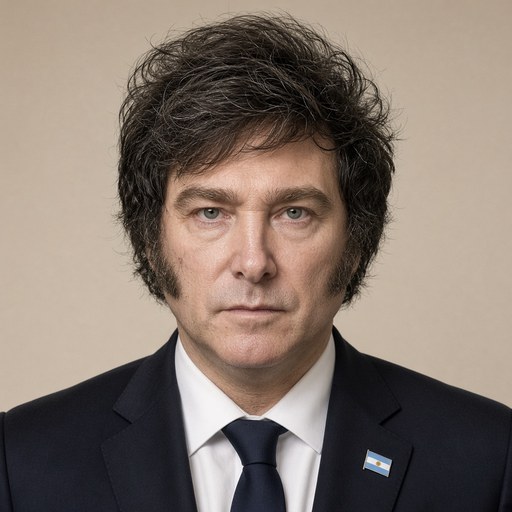
Words of the President of the Nation, Javier Milei, at the Córdoba Stock Exchange.
 Javier Milei · President of Argentina
- Context
- Milei addressed the Córdoba Stock Exchange in March 2026 to outline Argentina's economic opportunity, reform progress, and his government's freedom-based policy framework.
- Main themes
- Economic freedom, Argentina's growth opportunity, decision-making framework, morality as state policy, investment and productivity, poverty reduction, criticism of socialism, liberal individualism, economic reforms, Córdoba business climate
- Duration
- ~83 min
- Words
- 9,993
- Sentences
- 461
- Readability
- 60
- Grade
- 10.1
- Syntax
- 3.08
- Vocabulary
- 2.08
Translated from Spanish
The broad sphere of national life a sentence belongs to. Every sentence has an Arena, so it is the denominator the other indices are read against.
Other461 sentences in 66 paragraphs
Good afternoon everyone. Thank you very much to the authorities of the Córdoba Stock Exchange for inviting me; it is always a pleasure and a huge honor to be here, in this province, and basically what I am going to do - today - is explain why Argentina is facing a great opportunity to grow again and to make Argentina great once more.
The presentation has two parts; it is quite similar to the presentation we made recently in New York, but I thought it was worth insisting on why we are going to grow. So, there are two blocks: in the first block, I explain how our decision-making process works, because the mechanism by which one focuses and addresses policy, and on which instruments one chooses, is not trivial. My proposal to the ministers is that we are going to work to make Argentina the freest country in the world. Things are not going too badly for us, since - since we came to power - we have advanced 40 places in economic freedom, excluding a few cases, which are two or three, of countries that were practically destroyed and had to be rebuilt. Excluding those extreme cases, no one has achieved what we have achieved in a system like ours in such a short time, improving 40 places. And that is measured, as of mid-last year, so just imagine when all the reforms we passed during the Extraordinary Sessions start to be counted.
So, the first issue, which relates to the decision-making process, is not minor, because - in addition to this path towards freedom - it implies that those countries that are freer grow twice as fast, have a per capita GDP 12 times larger; they have 25 times fewer poor people in standard format and 50 times fewer in extreme poverty. Basically, there is a goal, but not all the instruments available in economic policy can be used, and that is not minor because those are the rules. It is also the title of my next book, which is called: “Morality as State Policy,” and that serves to explain how the decision-making process works, which instruments we will use and which instruments we will not use under any circumstances. That, now, when we later look at the topic, there is a section on inflation and I will make some reflections.
And the second part of the presentation relates to looking at Argentina as if it were a business model. So, if the conditions of the country generate the opportunity for there to be businesses, there will evidently be investment; if there is investment, there will be growth; that will bring more productivity, higher wages, fewer poor people, fewer indigents, and improve the quality of life for all Argentines. So, if Argentina is in a position to create value, consequently Argentina will be able to grow.
So what relates to the framework under which we make decisions, and this is what we call morality as State policy. We say that there is a merit order of three elements under which policy decisions are usually analyzed or made.
In general, the most frequent ones, and I believe part of why the debate has degraded, and why socialists - despite having terrible ideas - despite having tried in about 45 countries and always failing, and besides, I mean, they have failed economically, socially, culturally, they have murdered 150 million human beings; despite that, they continue to fight.
So, the question is: what did they do? Well, they claim to be altruistic. Obviously, first of all, all the things they promise are always false. But they are very seductive to the human ear. And, on the other hand, since we have not fully engaged in the cultural battle, they have co-opted ideas based on saying that we say things that we do not say. For example, you may have heard them criticize liberals for being individualists, and individualism in liberalism is not a matter of ego, but a matter of recognizing that we are individuals, that we are different and that we think in terms of each of us being independent, that is, each individual is recognized.
Well, but they are very skilled in, let’s see, not to go any further, a person whose only talent is having been the child of… made a comment about the note I did with Majul where I basically said that I had lost 20 kilos and that my studies showed indicators typical of a 30-year-old. He came out to say that I have a distortion of reality, that I think I am 30 years old, which is a stupidity the size of a house.
Someone I have always admired, both Milton Friedman and first the data, when I look in the mirror the first data is that, that I clearly do not have 30 years. But that does not mean that I do not take care of myself and have the indicators as such. But that is how they lie.
Also, another person very intellectually precarious, but with a camera, then at one point said: “No, well, how crazy he is because he goes to the provinces with the gratitude tour so that people thank him.” No, no, no, please, one cannot be so foolish, so stupid. I go to the provinces to thank those who have decided to support the best government in history.
So, not only do we have to govern, but we have to govern against the rhetoric of this horde of lazy people, who only know how to make good arguments to touch the sensitivity of human beings and continue living as the parasites they are. I honestly do not know if they hate bathing or working more, I do not know, it is a dilemma that I still cannot find… But I think they are more bothered by working, because every now and then, when they go to cause trouble near Congress, they have some nice fights. But well, that is an element of another kind.
In that sense, what we are proposing is that there are three lines under which one makes decisions and this is our merit order: the first is the issue of ethics and morality, that is, values, what we call the values of the West; there is a second line, which is economic efficiency; and there is a third line, which is the most despicable of all, which is political utilitarianism, that is, making decisions because they yield in political terms. And - in general - the debate has always been centered on discussing political utilitarianism and economic efficiency and that basically had some problems and it was that, in general, politicians do not know about economics, moreover, there is a beautiful phrase from Thomas Sowell that says that “the first law of economics is scarcity, there is not enough for everyone and the first law of politics is to ignore the first law of economics.” So, that always put the Minister of Economy at a disadvantage compared to the ribbon-cutters, for example. Well, that does not happen today, that is to say, and I believe we have documented the facts and our passion for taking care of public accounts.
But, aside from that, that debate is still incomplete and that is why the left has been able to arrogate the banner of morality and be the altruists. Despite their enormous failures, they have done it. Well, my proposal is that banner, they took it illegitimately, so we are here to take that banner back and bring it back to where it belongs, which is to liberalism or free enterprise capitalism.
In that sense, when we talk about ethical and moral values, the values of the West is a higher category and things are done based on whether they are right or wrong, whether it is just or unjust. So the pillars of this decision-making mechanism are clearly Greek philosophy, Roman law, the rectitude of the Stoics. For example, King Solomon, when he asks the Creator to give him desires, he says what he wanted, and he asked for wisdom, to know how to distinguish good from evil; courage, to choose good; temperance, to hold on and be just, that is, to act justly. And the element that will determine what we consider to be right or not are our Judeo-Christian values. There, also, that is why the role of what is natural law is so important. What are natural rights? And there are clearly two: the right to life and the right to liberty.
In that sense, that is why we also focus a lot on what Ulpian said, which is not only the right to give each one what is theirs, but that theirs is what is earned through hard work. That is to say, when the Creator expels Adam and Eve from Paradise, he tells them: “you will earn your bread by the sweat of your brow.” We - the liberals - understand that, but the leftists must have some translation problem and believe that it is with the sweat of someone else's brow. No, it is with your own, it is without violating others, respecting others, it is the basis of the principle of non-aggression and living off what one produces, not being a parasite or stealing from others.
In that sense, we work with the idea of Locke's principle of appropriation. Locke's principle of appropriation is that if you find something and it belongs to no one, then it is yours. And that added to the fact that you will own the fruit of your labor and that when you find something you can incorporate it, work on it and turn it into another good. In fact, Hayek pointed out the market as a process of discovery. If the market is a process of discovery, there is no such thing - for example - in income distribution as a pie, because that pie does not exist, but that pie is a pie that is being generated. Therefore, if you generate that pie, you are the owner of what you generate.
So this kind of thing makes that, for example, a law, what is positive law, when it coincides with natural law that law is just. And when that does not coincide, you have tension and it is unjust. To be simpler, if one makes a law that says: “Okay, now since I do not like this group I am going to exterminate them”; that may be legal, but it is not legitimate and there are a lot of issues related to how one designs policies - that there are things that may be legal, but are profoundly illegitimate and therefore profoundly unjust.
The second part of the analysis has, or the second category, relates to what economic efficiency is. Yes, clearly, economic efficiency is above political utilitarianism, but the way in which economists present economic efficiency has analytical construction problems that sometimes lead economists to recommend things where the remedy is worse than the disease.
So, while there are things that good economic analysis would not endorse regarding utilitarian policies, that is to say, you can hardly find any semi-reasonable economist who would endorse that, during an election year, 13 points of GDP are issued, or that four monetary bases are allowed to expire in one day, or that there is the equivalent of 9 or 10 monetary bases in debt in pesos, expiring in 30 days, or leaving debt for imports of 50 billion dollars, or emptying the Central Bank and leaving it with negative net reserves. But - when politics wins over economic analysis - that kind of thing happens.
However, that analysis is insufficient, that is to say, it still lacks a little more. And that is why one of the things I propose - in this way of debating is the way in which efficiency is defined. The issue of efficiency is not a new invention, I mean, you go, read Xenophon and you will find that 384 years before Christ, these things were already being discussed. But, aside from that, the important thing is that already, in Adam Smith, the idea of the invisible hand was clear: that each one, guided by our own interests, leads to the maximum general well-being. And - probably - the metaphor of the invisible hand is very nice, but many people do not understand it. That is why, sometimes, it is better to work with Bastiat's metaphor, which is what is seen and what is not seen. But the concept is quite clear, and that, the way in which the problem of efficiency is approached is not trivial.
So it is as I say in the different presentations, where I present the duality between looking at this problem in the logic that a neoclassical economist looks at, which is the Pareto optimum, and the logic, for example, as Hans-Hermann Hoppe presents it. The problem with the strictly neoclassical approach is that it is a byproduct of the demonstration of existence, that is, of equilibrium analysis. An economist - when looking at a general equilibrium problem - asks three questions: he asks if the equilibrium exists, he asks if the equilibrium is unique and then he asks if it is stable. That is one dimension, so if you, the excess demand functions derive from sets that are convex; being convex means that if you take any two points and connect them, what is inside that line exists within the set. For example, I make a line from here to there, and if the one I connect is within the set. It is a convex set, a circle is a convex set, a square is a convex set. If I have a donut it is not a convex set, because if I take two points, I want to connect them and it can pass - through the middle of the donut - and there it does not exist. So, you need an instrument called Fixed Point Theorems to demonstrate existence, which is nothing more than a generalization of the Mean Value Theorem.
The Mean Value Theorem, if you remember, states that if a function is continuous and goes from negative to positive, there will be a point in between where it is zero, not necessarily in the middle, but there will be a point between those two points that is zero. Well, that would be the excess demand. When the excess demand is zero, it means that the price is at equilibrium. Therefore, if you have a set that is convex, the functions are continuous, and if they are correspondences, they are semicontinuous, which allows for equilibrium to exist.
If you also only deal with point-to-point applications, meaning that a price only corresponds to a single quantity, then that equilibrium will also be unique. And, if the direct effects are stronger than the indirect ones, it is clear that it is stable, meaning that the price of tea impacts the tea market more strongly than it does the coffee market, which is quite evident. So - in that sense - you solve the equilibrium program that exists, which is unique and stable.
The problem arises when economists also want to impose a normative dose; now we want to demonstrate that it is efficient. Now, to be efficient and to try to map with Adam Smith's idea, all the parties that constitute the excess demand must be optimizing. So consumers will be there, and those demands derive from a maximization of utility, subject to the budget constraint, and from there you will derive the demand for goods and the supply of factors. When you look at firms, they will maximize profits; from there they will derive the supply of goods and the demand for factors.
So if you have demand functions that arise from optimization; supply functions that arise from optimization, when you find equilibrium, that equilibrium is also maximizing, therefore, the first Welfare Theorem holds, which states that every competitive equilibrium is Pareto optimal. I believe I am gaining my intuition for explaining complex topics as if they were easy; I am improving my quality as a communicator.
But aside from that, the problem with that definition, with that way of working, is that to derive a maximum I have to give it a very particular mathematical structure for me to have a maximum. One thing is to find an extreme: an extreme can be a maximum, a minimum, or it can be a corner solution. But I have to find a maximum. For example, a strictly concave function will allow me to find a maximum. A strictly convex function does not allow me to find a maximum. This has some significant consequences that I will address in the growth section when I say that Federico's ministry - in reality the true name - is the Ministry of Increasing Returns, not the Ministry of Deregulation, and it derives from this. Because if I have a strictly convex production function, then what I find is not a maximum, it is a minimum.
In general equilibrium - at least - no one is deceived and calls it non-convex functions. The serious issue is when associated with this there are concentrated market structures and someone decides to regulate it. When you regulate it and assimilate it to a competitive firm, you take away the increasing returns, and when you do that, you kill the source of economic growth. So, that is where it comes from.
So, notice that the most popular of Adam Smith's books, which is: "An Inquiry into the Nature and Causes of the Wealth of Nations," what he wanted to study was growth. On Wednesday, I will be giving an explanation of what I believe Adam Smith did; it is my opinion, and I work with that intensively. So basically, the idea is to grow. And if you..., and that was in Adam Smith, it was the idea of the "pin factory." And that is consistent with what, in growth theory, is called "the hockey stick." That is, the level of GDP per capita - throughout the history of humanity - was practically constant until the Industrial Revolution appeared, and it has the shape of a hockey stick.
So, killing the increasing returns; for example, what it does is kill economic growth. Now, this is done in the name of what? Of regulation. Why then is it regulated? Because, supposedly, it is not efficient. So, you violate the first axiom of welfare economics and, therefore, regulate. Well, but that is not a real-life problem; it is a problem of economic theory that decided to use that mathematical structure.
For this reason, I find the derivation of optimality much more interesting, made by a German philosopher named Hans-Hermann Hoppe, who particularly hates me and speaks ill of me all the time, but it is a derivation in a book called "Economics and Ethics of Private Property," which is brilliant. He derives optimality from logic, applying Locke's principle of appropriation and the principle of non-aggression. And that demonstration allows you to derive an optimum without being tied to this mathematical structure. When you do that, the idea of market failure disappears, because what is defined as market failure is what I am observing regarding what I define as the optimum, and I call that market failure. So if you validate that view of the neoclassicals, you validate intervention, and by validating intervention, you open the doors to socialism. In contrast, Hans-Hermann Hoppe's definition states that if exchanges are voluntary, there is no room for market failure; consequently, there is no room for intervention. So this is not a minor issue.
And the other issue is, but this is in static terms, it is in dynamic terms: what is it that maximizes economic growth? And what Huerta de Soto and other authors point out is that institutions are very important, that they are institutions that allow the entrepreneurial function to be liberated, that is, the creation of value. And there you have two dimensions: you have a Schumpeterian dimension, which is the idea of creative destruction. The day Edison invented the light bulb, well, candle manufacturers - if they did not adjust - were going to have problems; they were going to end up bankrupt. Now we are all lighting up with electric light. Or someone might cry for the postal workers' jobs because email appeared.
One should not be swayed by the Luddite fallacy. There is a very beautiful book called "Economics in One Lesson," by a journalist named Henry Hazlitt, who studied with Mises. For example, in one of the chapters of "Economics in One Lesson," there is one called: The Hatred of the Machine. You can, if you do not like Smith, do not like Hazlitt, do not like Bastiat, do not like Hayek, Milei annoys you, that is not a problem; I have no issues with those things, especially in the last sentence. But what I am getting at is that if it were true that technological progress destroys jobs, this is very interesting because today the unemployment rate would have to be 90%. And you say: "Oh, where do you get that number?" Well, if technological progress destroyed jobs, it means that - starting from the Industrial Revolution - if we date it as the moment when expansion begins, then it means that the jobs are what we had at that time and no more. And if at that time, on the planet, there were 800 million human beings and today there are 8 billion, it means that the population multiplied by 10 and there are still the same number of jobs. If technical progress destroyed jobs, we would have 90% unemployment, which - and I am going to step out of protocol, sorry - but it is a nonsense the size of a house.
However, one sees Luddites everywhere. The other day I said Luddites have reading comprehension problems, "they will have to thank the places." So, given the rudimentary nature of some people, the term Luddite comes from Ludd, who is the guy who, when the steam engine and the loom appeared, went and broke it to stop technological progress. So, it is funny because they are Luddites, but then they use the latest cell phone they buy in a store in New York.
So, the reality is that if you allow creative destruction to flow - in a Schumpeterian way - and you also have institutions - in a Northian way - that allow the system to adapt, well, what you are doing is having an institutional framework that allows for value creation. Moral relativism is false. That is to say, not all things are right, and I do not mean that if we are willing to eat cows and in India they are not, because that is understandable. But there is a set of values that you cannot violate, and if you violated them, it is wrong, and that is unjust.
So, if I go and seek, and when I say the values of the West, I mean Judeo-Christian values, it is, for example: killing is wrong, and I believe we could all agree that killing is wrong. Well, for socialists, that is relative; for them, it is relative if it is in order to achieve the objective they say, they are willing to kill people, and they have admitted throughout history that it is a cost that had to be faced. No, well, for us, killing is wrong. For us, stealing is wrong. What is social justice if not this? It is as if I come - at gunpoint - robbing all of you and distributing to them. Clearly, you will be angry, and they will be happy.
Moreover, I can do something profoundly immoral: I have five people, one earns 500, the others earn zero, I take 400 from the one who has 500 and give 100 to the other four, and it is a marvel. I go to the elections, I win with 80%. But what is the problem with that? If utilitarianly, in political terms, it is brilliant, but in moral terms, it is sinister because I am stealing, and stealing is wrong.
Not only that, it is more: the first commandment, if you read it from the Torah and not from how it was adapted later, the first thing it proclaims is freedom, because when you read it, in the book of Shemot, and the Creator gives Moses the tablets, the first term is that He is the Creator, the one who took you out of Egypt. That is to say, the first commandment declares freedom. So notice: there is freedom, there is the right to property, there is the right to life, there are the foundations for leading an orderly life, and the capital sins are defined. That is to say, one of the main problems that socialism has is that it is based on envy, and envy not only can lead to a problem of negative externality in consumption that generates a circular relationship that does not allow for equilibrium to be resolved. That is bullshit; it is a problem in the heads of economists who want to solve a general equilibrium system. But that is not a real-life problem because there comes a moment when, if you do not decide because the other did not decide, and the other did not decide because you did not decide, well, there comes a moment when if they do not do it, it will not go well for them, therefore, they will resolve the issue.
And suppose you think of it in terms of food. So that is not a real problem; it is a mathematical problem, not a real-life problem. A problem closer to real life is how Mises treated it: the problem of envy, from the perspective of social justice, where you blow up, it is unjust, it is unequal treatment before the law, but you are also appropriating and blowing up savings. So not only is it unjust, it is inefficient, but it also dynamites the incentives for what? To grow, because you are violating private property. So I say, why are you going to produce if someone else is going to steal it?
And then there is an even deeper dimension, which is one that I have been developing; I have not published it yet, but I will give you a preview: it is the role of envy destroying demand functions. When you construct demand functions and an entire axiomatics of choice theory, there is an axiom... Today I woke up with all the topology in my head; I swear it is not what it says here, but I woke up like this today. One of the problems - when you have an axiom called the axiom of non-satiation - can be the axiom of extreme non-satiation, is that you can have two baskets: you have the same amount of all goods, but except for one good, you have a little more. The latter is preferable to the former. And the other is the axiom of weak non-satiation: you can be satiated with all goods, but not with one, so there is always the possibility that you choose that basket that has more; it is preferring more to less.
Well, this may seem like an aesthetic question, whether the indifference curves resemble an L shape or a horseshoe, but it is not trivial in real life. Because when you have sinister, nefarious, envious individuals, which is the basis of socialists, they are envious, resentful, basically they are people who prefer to be worse off just to see you worse off. And when that happens, those people are capable of destroying the system just to see you worse off. When you go through that, the system has no excess demand functions, we are left without general equilibrium analysis. It is no joke to have - on the other side - people who are willing to break everything just to see you suffer. That is Kirchnerism; they are willing to break everything and do any kind of barbarity just to see you suffer because they are not in power.
And the third dimension is political utilitarianism, that is, whether this yields votes or not, which we find sinister. That is to say, one of the wonders of liberalism is recognizing the individual; that is, you cannot make decisions… for example, social justice, again, in terms of votes is tremendously favorable, but it is profoundly immoral, it is profoundly immoral, it is wrong. And when you adopt policies that are at odds and in tension with political utilitarianism, with efficiency or with morality, that ends badly. Do you want an applied case? Argentina: 100 years of socialism. From being one of the richest countries in the world, we were on the verge of exploding, we were heading towards Cuba, with a stop in Venezuela. Fortunately, the people decided to support a liberal program, which some call a liberal radicalism, a radical liberal, I don’t know, extreme. They know all about the most extreme that could be. And we, the Argentines, have decided to turn this story of decline around and we are beginning the reconstruction of Argentina.
Is inflation high? Yes, of course it is high, but when we came it was one and a half daily. When we arrived, the wholesale rate was 54. Given the dynamics, we were going with the amount of monetary liabilities - in the Central Bank - that would have quintupled the amount of money, with the amount of debt in pesos that would have contributed between 9 and 10 more monetary bases. Between the problem of SIRA, the problem of negative net reserves, we were heading towards hyperinflation around 15,000% annually. Is the inflation we have high? Yes, of course, but we come from the worst place in hell. Regarding poverty, yes, it is... after 8 years we have the lowest poverty levels of the last 8 years. Now, yes, having close to 30% of the population in poverty is horrifying. But the reality is that - when we arrived - the INDEC indicator showed 41. But that, in reality, in a series that is growing, showing an average of six months is underestimating what was happening at the extremes. And, moreover, let’s remember that there were price controls, that you went to the supermarket and the goods were not there, therefore, that number was false. Obviously, when one clarifies that, what happens? Yes, poverty increased. Poverty rose to 57% when we clarified what was happening. If we lowered it from 57% to 30%, there are about 15 million Argentines who have come out of poverty. Am I saying we are well? No. But I am saying we have lifted 15 million people out of poverty.
Someone might say: no, but there is no growth. Look, when we arrived the statistical drag that the GDP had was for a decline of 3.5%, just the statistical drag. So, if the year ended 1.7% down, it means that we made the economy grow. In fact, if you take the Monthly Economic Activity Estimator, from the end of '23 versus that of '24, the GDP - in that measure - grew 6.6%. When you take that same measure for '25 it grew 3.5%. This means that, after years of no growth, for two consecutive years, we have shown two consecutive years of growth, where the economy improved by 10.5%, and if we continue like this we will register - after a long time - three consecutive years of growth.
So now I will explain why I am optimistic about Argentina and I will present the Argentine case as if it were a business analysis. When you analyze a company, basically what do you look at: the discounted cash flow. Now, for the cash flow you have to derive, there has to be flow. For there to be flow there has to be a business, it has to be profitable, taxes have to be deducted, but the value also depends on growth and also on the interest rate. So, the first thing I would like to see is if there are businesses to be made in Argentina, from which to derive income. And clearly Argentina has a lot of sectors that are going to generate a lot of growth and are already generating it. This is also great because it is so evident how the economy is growing: “No, well, but the growth is uneven.” I am not saying you should read the literature I like because that would be confirmation bias, but if you go and read Hirschman and look at the strategy of growth and development, it is not something balanced. I mean, there will be sectors that will expand and there will be sectors that will contract. The day the email appeared, well, mail carriers were going to have problems, they would have to work in something else, but they are more productive sectors, so they will also have higher wages.
Candles, whatever example you want, you surely have a cell phone or are using… there are young people here, but there are people who have known the old public phones where we put coins to talk, no one uses that now. So it is clear that there have been substantial improvements. So there is no need to be afraid. If the Luddites are afraid of something, well, they need to be told they are wrong, that empirical evidence contradicts them. So what do they say: “No, well, but one part grows, the other part stagnates or falls.” Look, in the EMAE there are 15 sectors, 11 are growing. Hey, come on! The diffusion index is around 70%. That is to say, what needs to be understood is that we, if we pride ourselves on being the most reformist Government in history, when you make structural reforms do you think there will not be changes in the allocation of resources? Don’t you think there will be changes in relative prices? It is foolish to believe that one can grow in a balanced way, especially when you bring an unbalanced structure due to regulations and interventions of a hundred years. One cannot be so precarious, to put it elegantly.
So we have sectors: yes, we have mining. In mining, we can do a lot of things, we have copper, we have lithium, we have gold, we have rare minerals, fabulous rare earths. Chile - with the same mountain range - generates 30 times more than we do with the same mountain range. Why? Because we are embraced by extreme idiotic environmentalists. Almost - if you listened to the environmentalists - you wouldn’t be able to touch anything in the land, because it would surely cause damage. If you take that hypothesis to the extreme, do you know what happens? You die. Because if you need the authorization of the generation that comes after, the one that follows, the one that follows, the one that follows to consume something that is in the land. Because it is not just the one that follows, because the one that follows has to receive the authorization of the one that follows that, and so on. So you have to go to the last generation in history. Well, I will tell you something: if you continue with that foolish pattern, what will happen is that when you see something you will not be able to appropriate it, because you will need the authorization of the one that comes after. With that idea, you will not be able to eat. You know what? You will die and there will be no future generation, not two, not three, not four. Please, let’s think in dynamic terms, because if we do not think in dynamic terms and let ourselves be carried away by the idiots of the socialists, we will self-destruct as a civilization. So let’s try to think with our heads.
The other sector is oil and gas. Argentina is in a position to become an energy powerhouse. Why do you think they are thinking about and going to invest in data centers? Because it requires a lot of energy and they need it to be cheap and cold, what better than our south. So let’s stop thinking in a pre-Cambrian way. Because we are not proposing to deny environmental impacts, what we are saying is: let’s do things that make sense, because we should not destroy the human being because it breaks the planet. And what is it for? Why did the Creator give us the planet? To contemplate it? Not to mention what we can contribute in nuclear energy, or what is clearly uranium, what is the Argentine agricultural sector. I mean, if we didn’t have idiotic regulations on seeds, we could produce at least double what we produce. “No, but here this seed cannot be used, this…”, it’s all the same. All cave-like regulations.
Not to mention what we have in terms of knowledge economy and, not to mention, what we have in the financial system. Any reasonable country, but I don’t mean developed, I mean reasonable, has credit, in terms of GDP of 60% to 70%. We arrived and credit to the non-financial private sector was 4% of GDP, it is cave-like. Here the part we are proposing, and which I think adds a lot, is the issue of the Fiscal Innocence Law. That is, you in Argentina - until we arrived - were fiscally guilty until proven otherwise. Well, today we have realigned with our Constitution and everyone is innocent until the tax authority proves otherwise. This means that if you have dollars in your mattress, you can take them out and use them as you wish, because you actually protected yourself, yes?, from 90 years of fraud by the Central Bank.
So, it’s not that you are criminals, no: the criminal was the one who was at Reconquista 266, you protected yourselves. So now, for example, you can take the dollars out of the mattress, pour them into the financial system and that can start generating investment opportunities in the real sector. This is also very interesting. Why is the Central Bank - now - advancing so that those dollars can enter institutions and can go to finance different activities? Do you know why? Because Argentines save in dollars, therefore, they need investment vehicles that can pay it, they have to be in dollars. So, that is why there is a sort of split in banking and institutions, so that you can pour those dollars into the productive system.
You cannot be angry with reality, you have to act according to the restrictions that reality imposes. After all that Argentines have suffered with the peso, if you want to work in dollars, work in dollars, I mean, you are given the possibility to have those dollars, to put them into the system and to finance productive activities and for everyone to grow. That is to say, fundamentally, what we are doing is deepening and strongly establishing the capital market. And that has enormous potential: we can multiply the financial system by 6, by 7, by 8 times. Look at what we have to do business. Not only that, but another important part of this is: you generate cash flow, but of course, when you generate results, the State comes and appropriates, takes resources from you, via taxes. Well, I will proudly say that we are the first Government in history that eliminated 20 taxes and lowered the tax burden, in terms of GDP by 2.5 points. And if we can validate in practice the baseline scenario that “Toto’s” team developed - from now until the end, if we were re-elected - by 2031, we would be returning 500 billion dollars to Argentines. Yes, we are lowering taxes and returning freedom to the people.
The other part has to do with the interest rate, and in the interest rate, the Country Risk plays a fundamental role. We, in the 123 years of history - before we came to Government - Argentina only had a surplus in 10 cases, but it was always under conditions where we were coming out of situations where we were in default, therefore, we did not pay the interest. So when we arrived, there was a deficit in the Treasury of five points of GDP and in the Central Bank of 10. We said we were going to go to zero deficit. No one even debated the monetary issue, which I imagine they don’t discuss because they have no idea, but it seemed impossible to them that we could achieve fiscal balance in the first four years of management. And I maintained that we would do it in the first year. Not only did we do it in the first year, but we did it in the first month. From there they started saying that it was all fabricated, that this, that, and the other, that we could not sustain it. We have been in management for more than two years, and the fiscal surplus remains in place and it will be so until I am in the Rivadavia chair.
On the other hand, we had the issue of the quasi-fiscal deficit. No one talks about how to end that; we ended the quasi-fiscal deficit six months into our administration. From that moment on, the broad monetary base did not grow anymore. Therefore, from that moment, 26 months later, inflation should disappear; thus, we remain convinced that for what is - the month of August - inflation could start at zero. Obviously, things happened in between, which I will now describe, or perhaps I can get ahead of myself. If you look at the inflation rate, the year-on-year rate will touch peaks of 300, both in wholesale and retail; today, the wholesale rate is around 24; the retail rate is around 32, 33%. In fact, the wholesale rate showed deflation in some months. I have always emphasized the wholesale inflation because it is the one that leads, it does not have to be looking at the problem of tariff adjustments and so on.
But the problem, basically, is that the previous government issued 28% of GDP: 13% was issued in the election year; sooner or later, that would have to be paid in inflation. And that is in a study done by a student at the University of Córdoba, which spans 26 months. That said, we also had capital controls, price controls; what that does is generate monetary surplus that had to be cleaned up. So we have the problem of lags, we have the problem of monetary surplus, and, obviously, if you want, you have short-term disturbances that can generate alterations in the price dynamics and will not modify the long-term situation, but they can modify or cause short-term price jumps that manifest as inflation.
But the problem more than, someone could say, "No, but inflation was falling and started to rebound." That also has an explanation. The explanation for why that happens is that we were coming with a declining inflation rate; in March 2025, when we were planning the exit from the currency controls, we received a speculative attack that generated a drop in the demand for money, inflation jumped to 3.7%; however, it was a very specific attack in a very concrete period of time, it passed, inflation in April was 2.2% and in May it was 1.5%. The economy had started the year growing at 6% and was accelerating to 8%. When that was happening, evidently, Kirchnerism knew that if they did not do something, they would lose the elections, and so they had to go out and break everything. So they went out, and Congress voted 40 laws against the economic program, brazenly going out to break everything.
If you think that is free, no, it is not free. That situation, by constantly putting macroeconomic balance in check, caused the demand for Argentine assets in the external market to fall. The drop in bond prices caused rates to rise and, consequently, increased country risk. The drop in demand for domestic assets, especially the demand for money, leads to a loss of purchasing power of money, so the inflation rate began to accelerate. Why? Because as the purchasing power of money falls, the price level will be higher and, therefore, it will manifest as inflationary acceleration. To give you an idea of the madness we faced last year, we faced the largest run in Argentine history. We had a run equivalent to 50% of M2, running for 41 billion dollars.
Moreover, when you looked at the Central Bank's balance sheet in dollars during the last stage of Kirchnerism — which I hope was the last stage in history and we are working hard to remove them from history once and for all — Thank you, I think you want to keep gaining popularity. He is the head of protocol; do you know what it is to deal with me with protocol? Cyclops seems small. So, in that context, what we see is that this attack was enormous, but there is something that is even more complicated, because when you take the liabilities of the Central Bank during Kirchnerism, they oscillated between 45 billion and 35 billion dollars. It reached 45 billion dollars, there was a speculative attack, a devaluation came, it brought it down to 35 billion dollars. You would set a rate to do carry trade until it went to 45 and the dollar would jump again, and that’s how it moved. That is to say, on average, the Argentine economy had monetary liabilities equivalent to 40 billion dollars. With the inflationary disaster that existed, with all the problems that there were, it seems to me a fairly solid number. So I asked myself: why was that so? Well, because on the other side is the private sector, which has to finance working capital, which is the demand for domestic assets; with that, you make the economy work. It’s not that you buy a factory one day, put in the machinery, and it works; no. You need working capital. Moreover, that working capital, which is the asset of the private sector — the financial asset of the private sector — is the counterpart of the monetary liabilities of the Central Bank.
This means that there was a fairly solid number of 40 billion dollars. That means it is the working capital of the economy, it is the working capital of the economy. So it seemed like a difficult number to break. When you look at how the balance ended, how the balance of the Central Bank was, the monetary liabilities the day before the elections — or if you want the day after — were 28 billion dollars. In other words, that line of 40 billion had been broken. But we had also lifted the reserves, which implied an increase in the base demand of 8 billion. This means that the drop was 50%. Of course, that’s why the economy was growing at 8% and came to a screeching halt, and what happened happened. All that speculative attack implied an inflationary acceleration and implied a drop in economic activity. That is to say, it cost us more than 25 billion dollars, at least, in terms of activity. The economy could have grown at 7% and ended up growing, when you take GDP on a quarterly basis, at 4.5%. This means that enormous damage was done. Not only did activity fall, but the inflation rate also jumped. Okay. The question is: now I find myself in this situation, am I going to change the way I do economic policy because the inflation rate jumped - temporarily? Are we going to apply price controls? That is, are we going to violate property rights, are we going to violate freedom? No, don’t count on me for that. I will continue to do things right and - sooner or later - we will defeat inflation.
In fact, I challenge anyone to find in Argentine history that has entered an election year, tightening monetary policy, intensifying fiscal balance, and lifting currency controls; you will not find it. That is to be stoic, because it would have been much easier for me to maintain currency controls; it would have been much easier for me throughout 2025 if I literally disregarded your freedom; however, we said: “that is unfair, that is immoral,” and we lifted the controls.
Another part I want to talk about is Country Risk. The fact that we work with zero deficit, one of the things it implies is that debt will not grow, it only grows due to the effects of what is indexed, but there is no new debt, literally. In fact, we assumed with 500 billion dollars of consolidated debt, which Kirchnerism omits from the Central Bank, as if it did not exist. To you, who have that colleague there, that moron, coup plotter, who comes from a fiefdom. He pretends to be democratic when he comes from a fiefdom; teach him to do the math. We reduced the debt by 50 billion dollars. We paid the debt. It seems strange; in Argentina, before we arrived, it had been a serial defaulter.
And when you basically have fiscal balance, the debt does not vary and, therefore, the debt-to-GDP ratio falls, hence it does not rise. Therefore, you become solvent, which means that, inexorably, Country Risk, which is related to insolvency, Country Risk has two elements: insolvency and willingness to pay. I believe we have shown strong signs of we like to pay. But, in addition, with fiscal balance, that is, with zero deficit in the financial line, we are also solvent and have the capacity to pay. Therefore, inexorably, at some point, Country Risk will collapse. When we won in the primaries, the risk was at 3,000; today the risk is around 500, between 500 and 550. That level of risk implies that the economy is in a position to grow 4 or 5%. Now, is that the real risk of this administration? No, we have issued debt, by the year 2027, that is, during our government. The Country Risk is 200; with that rate, Argentina could grow 7 or 8%. Therefore, we are not going to change the way we do things because - sooner or later - growth will accelerate, inflation will fall, and we will continue to lift Argentines out of poverty. We will continue on this path, which will make Argentina great again.
Finally, I want to go to the drivers of economic growth. When we think about economic growth, we see it in three lines. One is deregulation, which is the Ministry of Dr. Sturzenegger, which we internally call the Ministry of Growing Returns. As we eliminate regulations, we free up growing returns and thus generate economic growth. Now the question is why, and I pose it to you another way: if I take away measures that return property rights to you and you can appropriate the fruits of your labor, will you be better off or worse off? You will be better off because I am restoring your property rights. Not only do you have your property rights curtailed when taxes are levied, which is a direct theft, but you also have property rights taken away when you are regulated. I will do it with a simple example. Suppose I have a building and I rent apartments, and an idiot comes along and creates the Rental Law and regulates them. Well, that law is doing to you — which is a kind of proxy, a price control — is violating your property rights. You can no longer dispose of your property as you wanted to do. Consequently, it destroys value, and consequently, there is less growth.
In fact, look: supposedly that measure was made in favor of the most vulnerable. What is the consequence? There has been less investment in houses, in housing, which has retracted supply. Moreover, those who had homes, if they could put them up, did not make them available, which contracted even more. Therefore, the price skyrocketed. Who ended up suffering? Those who could pay less. That measure was not only unjust because it violated property rights, but it also crushed the poor tenant and ended up costing more. And by paying more, who was harmed? Those who have the least. That is to say, there were fewer quantities, higher prices, an enormous loss of welfare, and yet that idiot continues to defend his nefarious law. It’s incredible, and only in Argentina does this happen. Someone who did so much damage recycles himself. That is why the Kirchnerists keep turning up.
So when you deregulate, you are restoring property rights. And when you allow people to dispose of their own property, what do they do? They expand. That is the logic. How much did we do? Well, we did 15,000 deregulations, which are equivalent to structural reforms. Look at how the logic of a market can change when you had prohibited exporting scrap metal and now it can be done, or what can be deregulated in rentals, or what can be, for example, the case that Federico always tells, of the watermelons. That is to say, look at how you touch a little article and see what you generate, you create something enormous. That is the basis of the Ministry of Deregulation, which, as I mentioned before, was inspired by the idea of the neoclassical market failure, that if there are increasing returns, they are concentrated structures and, therefore, it is bad, no. If in a market there are 10 companies and one appears and produces a better quality good or better price, do you know what will happen to the remaining 9? They will go bankrupt. And are you going to tell me that after that they will be worse off? That is truly a matter. So the neoclassicals, when they see that, call it market failure, regulate, and kill growth. Do you want a great example of regulatory cover-up, zero growth? Europe. I warn you, I say, so that when the discussions about artificial intelligence and others come, we do not let ourselves be dragged by the Luddites. That is the first.
The second is human capital. You, when you look at the entire debate about economic growth, the greatest element that explains economic growth is human capital. When Solow tests his model, he can only explain 15%. When Mankiw, Romer, and Weil include human capital in the empirical test, it jumps to 85; there are 70 points of growth explained by human capital. And we, when we arrived, understanding the ethics, the emergency, comes Ayn Rand..., OK, we have 57% of poor people, and these individuals are victims of the policies of the last 80 or 100 years. So, how do we fix it? We said: “No, no, this is fixed dynamically, and we need to change the concept of social policy.” The social policy in Argentina, prior to our arrival in government, was: I give you the fish, that is, I turn you into a slave. We started by changing the name: we called it the Ministry of Human Capital, and the concept is: we are going to teach you to fish, we assist you, but in the meantime, you learn to fish. Thus, the original Ministry of Human Capital had the idea of childhood and family; that continues, because the core is when children come into life and providing them with enough support so they can develop their brains. There is Health: you need people who not only manage to develop their brains but are also healthy. When you guarantee those two elements, those people can enter the educational system and perform well, and that prepares them for their future working life. But since there were also people who were left behind and fell out of the system, they were also given support so they could retrain and reintegrate into the labor market. Therefore, the most important thing: we stopped thinking of social containment policy as giving them fish and teaching them to fish, and that, if possible, they have a factory, a business dedicated to fishing. In other words, a total change in how to focus the problem; we do not want slaves, we want free citizens.
And the other issue that is also a driver of growth is openness. What we see is that Argentina, when we take the openness coefficient —which is exports plus imports in terms of GDP— is the most closed country in the world. According to our income, we should have an openness coefficient of 93%, we have an openness coefficient of 28%. Enough, the debate is over. In the index developed by the World Bank regarding economic openness, it surveys 179 countries: we are 178. Enough of the nonsense about protection, because we have an infant of more than 80 years and it has not served to generate wealth or to make Argentines better off. With that model, we were doing worse and worse, because when you open the economy, you create competition and have to focus on serving others with better quality or better price. An openness policy not only benefits the largest proportion of the population —because everyone wins and only the inefficient sectors lose—, so in utilitarian terms, the economy should be opened. In terms of economic efficiency, if I have a good and I am going to pay four times more, if I open it, I pay a quarter and I have three quarters left to spend on the rest of the goods. Thus, I allocate to more productive sectors, therefore, I will have more employment, higher wages, and lower prices, which gives me a huge gain in well-being. And, moreover, since those barriers are built with the complicity of thieving politicians, when I open the economy, I also automatically reduce corruption.
Notice that now, as I pointed out at the beginning, you have aligned political utilitarianism, you have aligned efficiency. But even if you had that aligned, if it were unjust, it should not be done. However, when I open the economy, what I am doing is giving freedom of choice, it is that you can dispose of your income, you can dispose of the fruit of your labor. That is just. But not only that: if I have a barrier that does not allow me to buy at what I should buy it and I have to pay more, the problem is that I am also robbing them, I am expropriating them. So this openness policy is not only more rewarding in terms of political utilitarianism —because more people win and much more those who win than those who lose—, it is also much more efficient because I have higher wages, more employment, and lower prices, and I also have less corruption. But above all, this policy is just because it returns freedom and private property. Therefore, when you have tension between ethical and moral values, what is efficiency and what is political utilitarianism, that economic policy —or state policy— must be discarded as unjust. However, when you have aligned ethical and moral values, efficiency, and utilitarianism, it means that this policy is just. That is a policy worth pursuing because it is just. And that is what will bring prosperity, that is what we are doing, and that is what will make Argentina great again. Thank you very much.
The original Spanish. The tags above are read on the English translation's sentences.
Buenas tardes a todos. Muchas gracias a las autoridades de la Bolsa de Comercio de Córdoba por invitarme; siempre es un placer y un honor enorme estar aquí, en esta provincia, y básicamente lo que voy a hacer -en el día de hoy - es explicar por qué Argentina está frente a una gran oportunidad para volver a crecer y para hacer grande a la Argentina nuevamente.
La presentación tiene dos partes; es bastante similar a la presentación que hicimos, recientemente, en New York, pero me pareció que vale la pena seguir reinsistiendo en por qué vamos a crecer. Entonces, son dos bloques: en el primer bloque, explico cómo es nuestro proceso decisorio, porque no es trivial el mecanismo por el cual uno enfoca y trata la política, y sobre qué instrumentos elige. Mi planteo a los ministros es que vamos a trabajar para hacer Argentina el país más libre del mundo. Tan mal no nos está yendo, pues -desde que llegamos al gobierno - avanzamos 40 puestos en libertad económica, sacando algunos casos, que son dos o tres, de países que prácticamente estaban destruidos y tuvieron que ser reconstruidos. Sacando esos casos extremos, nadie logró lo que nosotros logramos en un sistema, como el que tenemos, en tan poco tiempo, mejorando 40 puestos. Y eso está medido, a mitad del año pasado, así es que imagínense cuando se empiecen a contabilizar todas las reformas, por ejemplo, que pasamos a lo largo de lo que fueron las Sesiones Extraordinarias.
Entonces, la primera cuestión, que tiene que ver con el proceso decisorio, no es menor, porque - además este camino hacia la libertad - que implica que aquellos países que son más libres crecen en el doble, tienen un PBI per cápita 12 veces más grande; tiene 25 veces menos de pobres en formato estándar y 50 veces menos en el extremo. Básicamente, hay un objetivo, pero no todos los instrumentos que dispone la política económica se pueden utilizar, y eso no es menor porque son las reglas. Es lo que además es el título de mi próximo libro, que se llama: “La moral como política de Estado”, y eso lo que sirve es para explicar cómo es el proceso decisorio, qué instrumentos sí y qué instrumentos no, y qué instrumentos -de ninguna manera- vamos a usar tampoco. Eso, ahora, cuando después veamos el tema, hay un apartado sobre inflación y voy a hacer algunas reflexiones.
Y la segunda parte de la presentación tiene que ver en mirar a Argentina como si fuera un modelo de negocio. Entonces, si a ustedes las condiciones del país les genera la oportunidad de que haya negocios, evidentemente habrá inversión; si habrá inversión habrá crecimiento; eso traerá más productividad, mayores salarios, menos pobres, menos indigentes y mejoran la calidad de vida de todos los argentinos. Entonces, si Argentina está en condiciones de crear valor, consecuentemente Argentina podrá crecer.
Entonces lo que tiene que ver con el marco, bajo el cual nosotros tomamos decisiones, y es esto que nosotros llamamos la moral como política de Estado. Nosotros decimos que existen un orden de mérito de tres elementos bajo los cuales se suele analizar o tomar decisiones de política.
En general, las más frecuentes, y yo creo que parte de por qué el debate se ha degradado, y por qué los socialistas -pese a que tienen ideas espantosas-, pese a que lo han intentado en cerca de 45 países y siempre han fracasado, y además, o sea, fueron fracaso en lo económico, en lo social, en lo cultural, asesinaron a 150 millones de seres humanos; a pesar de eso, ellos siguen dando la batalla.
Entonces, la pregunta es: ¿qué es lo que hicieron? Bueno, ellos se arrogan ser altruistas. Obviamente que primero que todas las cosas que prometen son siempre falsas. Pero son muy seductoras para el oído humano. Y, por otra parte, además, como nosotros no hemos dado la batalla cultural de lleno, nos han cooptado las ideas en base a decir que nosotros decimos cosas que no decimos. Por ejemplo, ustedes habrán escuchado que critican a los liberales por ser individualistas y el individualismo en el liberalismo no es una cuestión de ego, sino es una cuestión de reconocer que somos individuos, que somos distintos y que nosotros pensamos en términos de que cada uno de nosotros es independiente, o sea se reconoce a cada individuo.
Bueno, pero ellos son muy hábiles en, a ver, sin ir más lejos a una persona cuyo único talento es haber sido hijo de… hizo un comentario sobre la nota que yo hice con Majul donde básicamente yo decía que había bajado 20 kilos y que mis estudios daban indicadores propios de una persona de 30 años. Salió a decir que yo tengo una distorsión de la realidad, que creo que tengo 30 años, lo cual es una estupidez del tamaño de una casa.
Alguien que ha admirado siempre, tanto a Milton Friedman y primero los datos, cuando miro el espejo el primer dato es ese, que claramente no tengo 30 años. Pero eso no quiere decir que me cuide y tenga los indicadores como tal. Pero es así como mienten.
También otra persona muy precaria intelectualmente, pero con cámara, entonces en un momento dijo: “No, bueno, pero qué loco que está pues va a las provincias con el tour de la gratitud para que la gente le dé las gracias”. No, no, no, por favor, no se puede ser tan imbécil, tan estúpido. Voy a las provincias a dar yo las gracias a quienes han decidido acompañar al mejor gobierno de la historia.
Así es que, no sólo que tenemos que gobernar, sino que tenemos que gobernar contra la retórica de esta horda de vagos, que lo único que saben hacer es hacer buenos argumentos para tocar la sensibilidad de los seres humanos y poder seguir viviéndolo como parásitos que son. Yo, la verdad, es que no sé si odian más bañarse o trabajar, no sé, es un dilema que todavía no encuentro… Pero creo que más les molesta trabajar, porque cada dos por tres, cuando van a hacer lío a las inmediaciones del Congreso, se llevan unas lindas luchas. Pero bueno, es un elemento de otra índole.
En ese sentido, lo que nosotros estamos planteando es que hay tres líneas bajo las cuales uno toma las decisiones y este es el orden de mérito nuestro: la primera es la cuestión de la ética y moral, o sea, los valores, lo que nosotros llamamos los valores de Occidente; hay una segunda línea, que es la eficiencia económica; y hay una tercera línea, que es la más despreciable de todas, que es el utilitarismo político, es decir, tomar decisiones porque rinde en términos políticos. Y -en general- siempre el debate estuvo centrado entre discutir el utilitarismo político y la eficiencia económica y eso básicamente tenía algunos problemas y era que, en general, los políticos no saben de economía, es más, hay una frase hermosa de Thomas Sowell que dice que “la primera ley de la economía es la escasez, no hay de todo para todos y la primera ley de la política es ignorar la primera ley de la economía”. Entonces, eso siempre el Ministro de Economía estaba en desventaja frente a los cortadores de cinta, por ejemplo. Bueno eso hoy no pasa, es decir y creo que hemos documentado los hechos y nuestra pasión por cuidar las cuentas públicas.
Pero, al margen de eso, ese debate aun así sigue siendo incompleto y por eso la izquierda se pudo arrogar la bandera de la moral y ser ellos los altruistas. A pesar de sus enormes fracasos, lo han hecho. Bueno, mi propuesta es esa bandera, ellos se la llevaron ilegítimamente, así que nosotros estamos acá para robarles esa bandera y volver a traer las banderas a quien corresponde, que es al liberalismo o al capitalismo de libre empresa.
En ese sentido, cuando nosotros hablamos de los valores éticos y morales, los valores de Occidente es una categoría arriba y las cosas se hacen en función de si están bien o están mal, si es justo o si es injusto. Entonces los pilares de este mecanismo decisorio es claramente la filosofía griega, el derecho romano, la rectitud de los estoicos. Por ejemplo, el Rey Salomón, cuando le pide al Creador que le dé los deseos, le dice qué era lo que quería, y le decía sabiduría, para saber distinguir el bien del mal; coraje, para elegir el bien; templanza, para sostenerse y ser justo, o sea obrar con justicia. Y el elemento que va a determinar lo que consideramos que está bien o no son nuestros valores judeocristianos. Ahí, también, por eso es tan importante el rol de lo que es la ley natural. ¿Cuáles son los derechos naturales? Y ahí aparecen con claridad dos: el derecho a la vida y el derecho a la libertad.
En ese sentido, por eso nosotros también enfocamos mucho en lo que es Ulpiano, que no es sólo el derecho de darle a cada uno lo que es suyo, sino que suyo es lo que se gana laburando. Es decir, cuando el Creador expulsa a Adán y Eva del Paraíso, le dice: “ganarás el pan con el sudor de tu frente”. Nosotros - los liberales - eso lo entendemos, pero los zurdos deben tener algún problema de traducción y creen que es con el sudor de la frente ajena. No, es con la propia, es sin violentar a otros, respetando a otros, es la base del principio de no agresión y vivir de lo que produce uno, no estar parasitando ni robando a otros.
En ese sentido, nosotros trabajamos con la idea del principio de apropiación de Locke. El principio de apropiación de Locke es que, si ustedes se encuentran algo y no es de nadie, entonces es de ustedes. Y eso sumado a que ustedes van a ser dueños del fruto de su trabajo y que cuando encuentran algo ustedes lo pueden incorporar, trabajar y convertirlo en otro bien. De hecho, Hayek señalaba el mercado como un proceso de descubrimiento. Si el mercado es un proceso de descubrimiento no existe tal cosa -por ejemplo- en la distribución del ingreso como una torta, porque esa torta no existe, sino que esa torta es una torta que se va generando. Por lo tanto, si ustedes generan esa torta, ustedes son dueños de lo que generan.
Entonces este tipo de cosas hace que, por ejemplo, una ley, lo que es el derecho positivo, cuando coincide con el derecho natural esa ley es justa. Y cuando eso no coincide, ustedes tienen tensión y es injusto. Para ser más simple, si uno hace una ley que dice: “Ok, ahora como este grupo no me gusta lo voy a exterminar”; eso puede ser legal, pero no es legítimo y así hay un montón de cuestiones vinculadas a cómo uno diseña políticas - que hay cosas que pueden ser legales, pero son profundamente ilegítimas y por ende son profundamente injustas.
La segunda parte del análisis tiene, o la segunda categoría, tiene que ver con lo que es la eficiencia económica. Sí, claramente, la eficiencia económica está por encima del utilitarismo político, pero la forma en la cual los economistas plantean la eficiencia económica tiene problemas de construcción analítica que hace que, a veces, los economistas terminen recomendando cosas, donde el remedio es peor que la enfermedad.
Entonces, si bien hay cosas que el buen análisis económico no avalaría de lo que son las políticas utilitaristas, es decir, difícilmente ustedes pueden encontrar algún economista semi razonable que avale que, durante un año electoral, se emitan 13 puntos del PBI, o que deje cuatro bases monetarias venciendo en un día, o que tenga el equivalente a 9 ó 10 base monetaria en deuda en pesos, venciendo a 30 días, o dejar deuda por importaciones por 50.000 millones de dólares, o vaciar el Banco Central y dejarlo con reservas netas negativas. Pero -cuando la política le gana al análisis económico- pasan ese tipo de cosas.
Sin embargo, ese análisis es insuficiente, o sea, le falta todavía un poco más. Y por eso una de las cosas que yo propongo - en esta forma en la que se debate es la forma en la cual se define eficiencia. El tema de la eficiencia no es un invento nuevo, o sea, van, leen Jenofonte y van a encontrar 384 años antes de Cristo, y ya estas cosas se discutían. Pero, al margen de eso, lo importante es que ya, en Adam Smith, estaba bien claro la idea de la mano invisible: que cada uno, guiado por nuestros propios intereses, conducen al máximo bienestar general. Y –probablemente- la metáfora de la mano invisible, es muy linda, pero mucha gente no la entiende. Por eso, a veces, es mejor trabajar con la de Bastiat, que es lo que se ve y lo que no se ve. Pero el concepto es bastante claro, y eso, la forma en la cual se aborda el problema de la eficiencia no es trivial.
Entonces es como yo digo en las distintas presentaciones, donde planteo la dualidad entre mirar este problema en la lógica que lo mira un economista neoclásico, que es el óptimo de Pareto, y la lógica por ejemplo cómo lo plantea Hans-Hermann Hoppe. El problema del planteo - estrictamente neoclásico - es que es un subproducto de la demostración de existencia, o sea del análisis del equilibrio. Un economista - cuando mira un problema de equilibrio general - se hace tres preguntas: se pregunta si el equilibrio existe, se pregunta si el equilibrio es único y después se pregunta si es estable. Esa es una dimensión, entonces si ustedes, las funciones de exceso de demanda derivan de conjuntos, que son convexos; que sea convexo quiere decir que, si ustedes toman dos puntos cualesquiera y los unen, lo que está dentro de esa línea existe dentro del conjunto. Ejemplo, yo hago una línea de acá hasta acá, y si la uno está dentro del conjunto. Es un conjunto convexo, un círculo es un conjunto convexo, un cuadrado es un conjunto convexo. Si yo tengo una dona no es un conjunto convexo, porque yo tomo dos puntos, los quiero unir y puede pasar - por el medio de la dona - y ahí no existe. Entonces, ustedes para demostrar la existencia, necesitan un instrumento que se llaman Teoremas de Punto Fijo, que no es - ni más ni menos - que una generalización del Teorema del Valor Medio.
El Teorema del Valor Medio, si recuerdan, dice que, si una función es continua y pasa de negativo a positivo, en el medio va a haber un punto donde es cero, no necesariamente en el medio, sino va a haber un punto, entre esos dos puntos, que es cero. Bueno, eso vendría a ser el exceso de demanda. Cuando el exceso de demanda es cero quiere decir que el precio es el de equilibrio. Por lo tanto, si ustedes tienen un conjunto que es convexo, las funciones son continuas, si son correspondencias son semicontinuas y eso permite que el equilibrio exista.
Si además ustedes solamente tratan con aplicaciones punto a punto, es decir que un precio solamente contesta una sola cantidad, entonces además ese equilibrio va a ser único. Y, si, además, los efectos directos son más fuertes que los indirectos, está claro que es estable, es decir impacta más fuerte el precio del té en el mercado del té que en el mercado del café, lo cual es bastante evidente. Entonces - en ese sentido - ustedes resuelven el programa del equilibrio que existe, que es único y que es estable.
El problema es cuando los economistas además le queremos cargar o poner una dosis normativa; ahora queremos demostrar que es eficiente. Ahora, para ser eficiente y para tratar de mapear con la idea de Adam Smith, entonces todas las partes que constituyen el exceso de demanda tienen que estar optimizando. Entonces los consumidores van a estar y esas demandas se derivan de una maximización de la utilidad, sujeta a la restricción presupuestaria y de ahí ustedes van a derivar la demanda de bienes y la oferta de factores. Cuando miren las empresas van a maximizar beneficios; de ahí van a derivar la oferta de bienes y la demanda de factores.
Entonces si ustedes tienen funciones de demanda, que surgen de optimización; funciones de oferta que surgen de optimización, cuando ustedes llegan a encontrar el equilibrio, ese equilibrio además está maximizando, por lo tanto, se cumple el primer Teorema del Bienestar, que todo equilibrio competitivo es óptimo de Pareto. Creo que estoy ganando mi intuición de explicar temas complejos como fáciles, estoy mejorando mi calidad de divulgador.
Pero al margen de eso, el problema con esa definición, con esa forma de trabajar, es que para yo derivar un máximo tengo que darle una estructura matemática muy particular para que yo tenga un máximo. Una cosa es encontrar un extremo: un extremo puede ser un máximo, un mínimo o puede ser una solución de esquina. Pero yo tengo que encontrar un máximo. Por ejemplo, una función - estrictamente cóncava - me va a permitir encontrar un máximo. Una función - estrictamente convexa - no me permite encontrar un máximo. Esto tiene algunas consecuencias no menores que yo las voy a tratar, en la parte de crecimiento, cuando yo digo que el ministerio de Federico - en realidad el verdadero nombre - es el Ministerio de los Rendimientos Crecientes, no el Ministerio de la Desregulación, y deriva de esto. Porque si yo tengo una función de producción estrictamente convexa, entonces lo que encuentro no es un máximo, es un mínimo.
En equilibrio general - por lo menos - nadie se engaña y lo llama funciones no convexas. Lo grave es cuando asociado a ello hay estructuras de mercado concentradas y a alguien se le ocurre regularlo. Cuando ustedes lo regulan y lo asimilan a una empresa competitiva le quitan los rendimientos crecientes, y cuando ustedes hacen eso matan la fuente del crecimiento económico. Entonces, de ahí deviene.
Entonces, fíjense que el más popular de los libros de Adam Smith, que es: “La investigación sobre la naturaleza y las causas de la riqueza de las naciones”, él lo que quería estudiar era el crecimiento. El miércoles voy a estar dando una explicación de qué creo que es lo que hizo Adam Smith, es mi opinión, trabajo con esa intensamente. Así es que, básicamente, la idea es crecer. Y si ustedes…, y eso estaba en Adam Smith, era la idea de la “fábrica de alfileres”. Y eso es consistente con lo que, en la teoría de crecimiento, se llama “el palo de hockey”. O sea, el nivel del PBI per cápita - a lo largo de la historia de la humanidad - estuvo prácticamente constante hasta que apareció la Revolución Industrial, y tiene la forma de un palo de hockey.
Entonces, matar los rendimientos crecientes; por ejemplo, lo que hace es matar el crecimiento económico. Ahora, esto se hace en nombre ¿de qué? De la regulación. ¿Por qué entonces se regulan? Porque, supuestamente, no es eficiente. Entonces, ustedes violan el primer axioma de la economía del bienestar y, por ende, regulan. Bueno, pero eso no es un problema de la vida real, es un problema de la teoría económica que decidió utilizar esa estructura matemática.
Por eso, a mí me parece mucho más interesante la derivación de optimalidad, que hace un filósofo alemán que se llama Hans-Hermann Hoppe, quien, particularmente, a mí me odia y habla pestes de mí todo el tiempo, pero es una derivación en un libro que es “Economía y ética de la propiedad privada”, que es brillante. Él deriva la optimalidad desde la lógica, aplicando el principio de apropiación de Locke y el principio de no agresión. Y esa demostración lo que hace es que ustedes pueden derivar un óptimo sin tener que estar atado a esta estructura matemática. Cuando ustedes hacen eso, la idea del fallo de mercado desaparece, porque qué es lo que se define como fallo de mercado: es lo que yo estoy observando respecto a lo que yo defino como el óptimo, y a eso lo llamo fallo de mercado. Entonces si ustedes validan esa visión de los neoclásicos validan la intervención, y al validar la intervención le abren las puertas al socialismo. En cambio, la definición de Hans-Hermann Hoppe, si los intercambios son voluntarios, no hay lugar al fallo de mercado, consecuentemente no hay lugar para la intervención. Entonces no es un tema menor.
Y la otra cuestión es, pero esto es en términos estáticos, es en términos dinámicos: qué es lo que hace, qué es lo que lleva a maximizar el crecimiento económico. Y lo que señala Huerta de Soto, y otros autores, es que son muy importantes las instituciones, que sean instituciones que permitan liberar la función empresarial, es decir la creación de valor. Y ahí ustedes tienen dos dimensiones: tienen una dimensión a lo Schumpeter, que es la idea de la destrucción creativa. El día que Edison inventó la lamparita, bueno, los fabricantes de velas - si no se ajustaban - iban a tener problemas, iban a terminar quebrados. Ahora acá nos estamos iluminando todos con luz eléctrica. O a alguien se le ocurre ir a llorar por los puestos de los carteros porque apareció el email.
No hay que dejarse llevar por la falacia ludita. Hay un libro muy hermoso, que se llama: “La economía en una lección”, de un periodista que se llamaba Henry Hazlitt, que había estudiado con Mises. Por ejemplo, en uno de los capítulos de “La economía en una lección” tiene uno que se llama: El odio a la máquina. Ustedes pueden si no les gusta Smith, no les gusta Hazlitt, no les gusta Bastiat, no les gusta Hayek, Milei les cae desagradablemente mal, no hay problema, yo no tengo ningún tipo de problemas con esas cosas, en especial en la última sentencia. Pero a lo que voy es que, si fuera cierto que el progreso tecnológico destruye puestos de trabajo, esto es muy interesante porque hoy la tasa de desempleo tendría que ser del 90%. Y ustedes dicen: “Ah, ¿y de dónde sacás ese número?”. Bueno, si el progreso tecnológico destruyera puestos de trabajo quiere decir que - a partir de la Revolución Industrial - si lo fechamos como el momento donde empieza la expansión, entonces quiere decir que los puestos de trabajo son los que teníamos en ese momento y no más. Y si en ese momento, en el planeta, vivían 800 millones de seres humanos y hoy viven 8000, quiere decir que la población se multiplicó por 10 y sigue habiendo la misma cantidad de empleos. Si el progreso técnico destruyera puestos de trabajo tendríamos un desempleo del 90%, lo cual – y me voy a salir del protocolo, perdón - pero es una pelotudez del tamaño de una casa.
Sin embargo, uno ve los luditas por todos lados. Yo el otro día dije los luditas tienen problemas de comprensión de texto, “va a hacerse a dar las gracias a los lugares”. Entonces, dado la rudimentalidad de algunas personas, el término ludita viene de Ludd, que es el tipo que cuando apareció la máquina de vapor y el telar fue y lo rompió para frenar el progreso tecnológico. Entonces, es divertido porque son luditas, pero después usan el último celular que compran, en una tienda en Nueva York.
Entonces, la realidad es que si ustedes permiten que fluya la destrucción creativa - a la Schumpeter - y además ustedes tienen instituciones - a la North- que permiten que el sistema se pueda ir adaptando, bueno ustedes lo que están haciendo es tener un marco institucional que permite que haya creación de valor. Es falso el relativismo moral. Es decir, no todas las cosas están bien, y no me refiero a que, si nosotros estamos dispuestos a comer vacas y en la India no, porque eso es entendible. Pero hay un conjunto de valores que ustedes no pueden violentar y que si los violentaran está mal, y eso es injusto.
Entonces, si yo voy y busco, y cuando digo los valores de Occidente digo los valores judeocristianos, es, por ejemplo: matar está mal y creo que todos podríamos estar de acuerdo en que matar está mal. Bueno, a los socialistas eso es relativo, para ellos es relativo si es en función de conseguir el objetivo que ellos dicen, están dispuestos a matar gente y lo han admitido a lo largo de la historia como un costo que había que enfrentar. No, bueno, para nosotros matar está mal. Para nosotros robar está mal. ¿Qué es si no la justicia social? Es como que vengo yo - a punta de pistola - les robo a todos ustedes y les reparto a ellos. Claramente ustedes van a estar enojados y ustedes van a estar felices.
Es más, puedo hacer algo profundamente inmoral: tengo cinco personas, uno gana 500, los otros ganan cero, le saco 400 al que tiene 500 y le doy 100 a los otros cuatro y es una maravilla. Voy a las elecciones, gano con el 80%. Pero ¿cuál es el problema de eso? Si utilitaristamente, en términos políticos, es brillante, pero, en términos morales, es siniestro, porque estoy robando y robar está mal.
No sólo eso, es más: el primer mandamiento, si lo leen desde la Torá y no desde cómo fue adaptado después, lo primero que proclama es la libertad, porque cuando ustedes lo leen, en el libro de Shemot y el Creador le entrega a Moisés las tablas, el primer término es que Él es el Creador, el que te sacó de Egipto. Es decir, el primer mandamiento lo que declara es la libertad. Entonces fíjense: está la libertad, está el derecho de propiedad, está el derecho a la vida, están las bases para llevar una vida ordenada, se definen cuáles son los pecados capitales. Es decir, uno de los principales problemas, que tiene el socialismo, es que está basado en la envidia, y la envidia no es sólo que puede llevar a un problema de externalidad negativa en consumo que genere una relación circular que no permite resolver el equilibrio. Eso es bullshit, es un problema en la cabeza de los economistas que queremos resolver un sistema de equilibrio general. Pero ese no es un problema de la vida real, porque llega un momento, en que, si usted no decide porque el otro no decidió, y el otro no decidió porque usted no decide, bueno, llega un momento que si no lo hacen no les va a ir bien, por lo tanto, van a resolver el tema.
Y supongan que lo pensaran en términos de alimentación. Entonces ese no es un problema real, es un problema matemático, no es un problema de la vida real. Un problema más cercano a la vida real es cómo lo trataba Mises: el problema de la envidia, desde la perspectiva de la justicia social, donde ustedes ahí revientan, es injusto, es un trato desigual frente a la ley, pero ustedes además le están apropiando y están reventando el ahorro. Entonces no sólo que es injusto, es ineficiente, sino que además dinamita los incentivos ¿para qué? Para crecer, porque están violentando la propiedad privada. Entonces digo, ¿para qué van a producir si se los va a robar otro?
Y después hay una dimensión todavía mucho más, que es una que yo estuve desarrollando, todavía no la publiqué, pero ya se las adelanto, se las adelanto para ustedes: que es el rol de la envidia destruyendo las funciones de demanda. Cuando ustedes construyen las funciones de demanda y toda una axiomática de la teoría de la elección, hay un axioma… Hoy me levanté con toda la topología en la cabeza, les juro que no es lo que dice acá, pero me levanté así hoy. Uno de los problemas - cuando ustedes tienen un axioma que se llama axioma de no saciedad - puede ser el axioma de no saciedad extrema, es que ustedes pueden tener dos canastas: tienen lo mismo de todos los bienes, pero salvo de un bien tienen un poquito más. Esta última es preferible a la primera. Y la otra es el axioma de no saciedad débil: ustedes pueden estar saciados de todos los bienes, pero no de uno, entonces siempre existe la posibilidad de que elijan esa canasta que tiene más, es preferir más a menos.
Bueno, esto que parece una cuestión estética, ver si las curvas de indiferencia tienen forma parecida a una L o son una herradura, no es trivial en la vida real. Porque cuando ustedes tienen individuos siniestros, nefastos, envidiosos, que es la base de los socialistas, son envidiosos, resentidos, básicamente son personas que prefieren estar mal, con tal de verlos a ustedes peor. Y cuando pasa eso, esos tipos son capaces de destruir el sistema con tal de verlos peor a ustedes. Cuando ustedes pasan eso, el sistema no tiene funciones de exceso de demanda, nos quedamos sin análisis de equilibrio general. No es un chiste tener - del otro lado - a personas que están dispuestos a romper todo con tal de verlos mal. Eso es el kirchnerismo, están dispuestos a romper todo y hacer cualquier tipo de barbaridad con tal de verlos mal a ustedes porque ellos no están en el poder.
Y la tercera dimensión es el utilitarismo político, es decir, si esto les rinde o no en votos, que a nosotros nos parece que es siniestro eso. Es decir, justamente una de las maravillas del liberalismo es al reconocer el individuo; es decir, usted no puede tomar decisiones…, ejemplo, la justicia social, de vuelta, en términos de votos es tremendamente favorable, pero es profundamente inmoral, es profundamente inmoral, está mal. Y cuando ustedes toman políticas que están reñidas y tensionadas con el utilitarismo político con la eficiencia o con la moral, eso termina mal. ¿Quieren un caso aplicado? Argentina: 100 años de socialismo. De ser de los países más ricos del mundo, estábamos a punto de explotar, íbamos camino a Cuba, con escala en Venezuela. Afortunadamente, la gente decidió apoyar un programa liberal, que algunos llaman un radicalismo liberal, un liberal radical, no sé, extremo. Vaya que saben todo lo más extremo que podría estar. Y hemos decidido los argentinos torcer esta historia de decadencia y estamos comenzando la reconstrucción, de Argentina.
La inflación, ¿es alta? Sí, claro que es alta, pero cuando vinimos era del uno y medio diario. Cuando llegamos, la mayorista era de 54. Como venía la dinámica, íbamos con la cantidad de pasivos monetarios - en el Central - que hubiera quintuplicado la cantidad de dinero, con la cantidad de deuda en pesos que hubiera aportado entre 9 y 10 bases monetarias más. Entre el problema de la SIRA, el problema de las reservas netas negativas, íbamos a ir a una hiperinflación en torno al 15.000% anual. ¿Es alta la que tenemos? Sí, claro, pero venimos del peor lugar del infierno. Lo que tiene que ver con la pobreza, sí, está... después de 8 años tenemos los niveles de pobreza más bajos de los últimos 8 años. Ahora, sí, tener cerca de 30% de pobres es un espanto. Pero la realidad es que - cuando nosotros llegamos - el indicador del INDEC mostraba 41. Pero eso, en realidad, en una serie que está creciendo, mostrar un promedio de seis meses está subestimando lo que pasaba en las puntas. Y, además, recordemos que había controles de precios, que ustedes iban al supermercado y las mercaderías no estaban, por lo tanto, era falso ese número. Obviamente que cuando uno sincera eso, ¿qué es lo que pasa? Y sí, subió la pobreza. La pobreza subió al 57% cuando sinceramos lo que pasaba. Si de 57% la bajamos a 30%, hay cerca de 15 millones de argentinos que salieron de la pobreza. ¿Estoy diciendo que estamos bien? No. Pero estoy diciendo que sacamos 15 millones de personas de la pobreza.
Alguien puede decir: no, pero no hay crecimiento. Miren, cuando nosotros llegamos el arrastre estadístico que traía el PBI era para una caída del 3,5%, sólo el arrastre estadístico. Con lo cual, si el año terminó 1,7% abajo, quiere decir que entonces nosotros hicimos crecer la economía. De hecho, si ustedes toman el Estimador Mensual de la Actividad Económica, de fines del ‘23 versus el del ‘24, el PBI - en esa medida - creció 6,6%. Cuando toman esa misma medida para el ‘25 creció 3,5%. Quiere decir que, después de años de no crecer, por dos años seguidos, hemos mostrado dos años seguidos de crecimiento, donde la economía mejoró 10,5%, y que si seguimos así vamos a registrar - después de muchísimo tiempo - tres años seguidos de crecimiento.
Entonces, ahora voy a contar por qué soy optimista con Argentina y voy a plantear el caso argentino como si fuera el análisis de un negocio. Cuando ustedes analizan una empresa, básicamente ustedes qué miran: el flujo de fondos descontados. Ahora, para el flujo de fondos de contados ustedes tienen que derivar, tiene que haber flujo. Para que haya flujo tiene que haber un negocio, tiene que tener rentabilidad, le tienen que detraer los impuestos, pero el valor también depende del crecimiento y también depende de la tasa de interés. Entonces, lo primero que me gustaría ver es si hay negocios para hacer, en la Argentina, de dónde derivar ingresos. Y claramente que Argentina tiene un montón de sectores, que van a generar muchísimo crecimiento y que ya lo están generando. Esto también es buenísimo, porque es tan evidente cómo le rompe los ojos el tema de que la economía crece: “No, bueno, pero el crecimiento es dispar”. Yo no estoy diciendo que lean la literatura que me gusta a mí porque, sino sería como sesgo de confirmación, pero si van y leen a Hirschman y miran la estrategia del crecimiento y el desarrollo, no es algo equilibrado. O sea, va a haber sectores que se van a expandir y hay sectores que se van a contraer. El día que aparece el email, bueno, los carteros van a tener problemas, van a tener que trabajar de otra cosa, pero son sectores más productivos, con lo cual además van a tener mayores salarios.
Las velas, el ejemplo que quieran, ustedes seguro que tienen celular o andan usando… hay gente joven acá, pero hay gente que ha conocido los viejos teléfonos públicos que le poníamos fichitas para hablar, nadie anda usando eso ahora. Con lo cual está claro que ha habido unas mejoras sustanciales. Entonces no hay que tenerle miedo. Si los luditas tienen miedo por algún tipo de lo que fuera, bueno, hay que explicarles que están equivocados, que la evidencia empírica los contradice. Entonces qué dicen: “No, bueno, pero crece una parte, la otra parte se estanca o cae”. A ver, en el EMAE entran 15 sectores, 11 crecen. ¡Ey, vamos! El índice de difusión está en torno al 70%. Es decir, lo que hay que entender es que nosotros, si nos jactamos de ser el Gobierno más reformista de la historia, cuando ustedes hacen reformas estructurales ¿creen que no va a haber cambios en la asignación de recursos? ¿No creen que va a haber cambios en los precios relativos? Es una idiotez creer que uno puede crecer todo balanceado, en especial cuando ustedes traen una estructura desequilibrada por regulaciones e intervenciones de cien años. No se puede ser tan precario, por decirlo de manera elegante.
Entonces tenemos sectores: sí, tenemos a la minería. En la minería podemos hacer un montón de cosas, tenemos cobre, tenemos litio, tenemos oro, tenemos minerales raros, tierras raras, cosas fabulosas. Chile - con la misma cordillera - genera 30 veces más que lo que generamos nosotros con la misma cordillera. ¿Todo por qué? Porque estamos abrazados a los ambientalistas idiotas extremos. Por poco - si ustedes les hicieran caso a los ambientalistas - no podrían tocar nada en la tierra, porque seguramente causaría daño. Si ustedes llevan esa hipótesis al extremo ¿saben qué pasa? Se mueren. Porque si ustedes para consumir algo que está en la tierra necesitan la autorización de la generación que viene atrás, la que le sigue, la que le sigue, la que le sigue. Porque no es solo la que sigue, porque la que sigue tiene que recibir la autorización de la que le sigue a esa, y así sucesivamente. Con lo cual tienen que ir hasta la última generación de la historia. Bueno, les voy a decir algo: si siguen con ese patrón pelotudo lo que va a pasar es que cuando ustedes vean algo no se lo van a poder apropiar, porque van a necesitar la autorización del que viene atrás. Con esa idea ustedes no van a poder comer. ¿Saben qué? Se van a morir ustedes y no va a haber generación futura, ni dos, ni tres, ni cuatro. Por favor, pensemos en términos dinámicos, porque si no pensamos en términos dinámicos y nos dejamos llevar por los imbéciles de los socialistas nos vamos a autodestruir como civilización. Entonces, tratemos de pensar con la cabeza.
El otro sector es petróleo y gas. Argentina está en condiciones de convertirse en una potencia energética. ¿Por qué creen que están pensando y van a hacer inversiones en Datacenters? Porque requiere mucha energía y requieren que sea barata y haga frío, qué mejor que el sur nuestro. Entonces dejemos de pensar de modo precámbrico. Porque no estamos proponiendo negar los impactos ambientales, lo que estamos diciendo es: pero hagamos cosas que tengan sentido, porque no sea cosa que, con esto de cuidar, a la Tierra, con el ambientalismo idiota, entonces no hay que destruir el ser humano porque rompe el planeta. ¿Y para qué está? ¿Para qué nos dio el Creador el planeta?, ¿para qué, para contemplarlo? Ni que hablar lo que podemos aportar en energía nuclear, o lo que es claramente el uranio, lo que es el sector agropecuario argentino. O sea, si no tuviéramos regulaciones idiotas sobre las semillas, podríamos producir por lo menos el doble de lo que producimos. “No, pero acá esta semilla no se puede usar, esto…”, todo es igual. Todas regulaciones cavernícolas.
Ni que hablar lo que tenemos en temas, de economía del conocimiento y, sin ir más lejos, lo que tenemos en el sistema financiero. Cualquier país razonable, pero no digo desarrollado, digo razonable, tiene un crédito, en término del PBI de 60% a 70%. Nosotros llegábamos y el crédito al sector privado no financiero era 4%, el PBI, es de cavernícolas. Acá la parte que estamos proponiendo, y que creo que suma un montón, es el tema de la Ley de Inocencia Fiscal. Es decir, ustedes en Argentina - hasta que llegamos nosotros - ustedes fiscalmente eran culpables hasta que demostrara lo contrario. Bueno, hoy volvimos a alinearnos con nuestra Constitución y todos son inocentes hasta que el fisco les demuestre lo contrario. Eso significa que, si ustedes tienen dólares en el colchón, lo pueden sacar y usarlo como se le dé la gana, porque ustedes en realidad se protegieron, ¿sí?, de 90 años de estafa del Banco Central.
Entonces, no es que ustedes son delincuentes, no: el delincuente era el que estaba, en Reconquista 266, ustedes se protegieron. Entonces, ustedes ahora, por ejemplo, pueden sacar los dólares del colchón, volcarlos al sistema financiero y que eso empiece a generar posibilidades de inversión en el sector real. Esto es también muy interesante. ¿Por qué el Banco Central – ahora - está avanzando en que esos dólares puedan ingresar en instituciones y que puedan ir a financiar distintas actividades? ¿Saben por qué? Porque el argentino ahorra en dólares, por lo tanto, necesita vehículos de inversión que puedan pagarlo, tienen que ser en dólares. Entonces, por eso hay como una suerte de split de la banca y de las instituciones, tal que ustedes puedan esos dólares volcarlos al sistema productivo.
Ustedes no se pueden enojar con la realidad, tienen que actuar acorde a las restricciones que pone la realidad. Después de todo lo que sufrieron los argentinos con el peso, si quieren trabajar en dólares trabajen en dólares, o sea se les da la posibilidad de que tengan esos dólares, que los puedan meter en el sistema y que puedan financiar actividades productivas y además todos crezcan. Es decir, en el fondo, lo que estamos haciendo es profundizar y que exista fuertemente el mercado de capitales. Y eso tiene una potencialidad enorme: podemos multiplicar por 6, por 7, por 8 veces el sistema financiero. Mire si tenemos para hacer negocios. No sólo eso, sino que otra parte importante de esto es: ustedes generan flujo de fondos, pero claro, cuando generan resultados viene el Estado y les apropia, les saca recursos, vía impuestos. Bueno, yo voy a decir orgullosamente que somos el primer Gobierno de la historia que sacó 20 impuestos y bajó la presión fiscal, en términos del PBI en 2,5 puntos. Y si nosotros podemos validar en los hechos el escenario base, que desarrolló el equipo de “Toto” - de acá a que termine, si fuéramos reelectos – en el año 2031, estaríamos devolviéndole a los argentinos 500.000 millones de dólares. Vaya que sí que le estamos bajando los impuestos y devolviéndole la libertad a la gente.
La otra parte tiene que ver con la tasa de interés, y en la tasa de interés tiene un rol fundamental el Riesgo País. Nosotros, en los 123 años de historia - antes de que nosotros llegáramos al Gobierno - Argentina tuvo solamente superávit en 10 casos, pero siempre era en condiciones donde salíamos de situaciones en las que estábamos en default, por lo tanto, no pagábamos los intereses. Entonces nosotros, cuando llegamos, había un déficit en el Tesoro de cinco puntos del PBI y en el Banco Central de 10. Nosotros dijimos que íbamos a ir a déficit cero. Nadie ni siquiera debatía la cuestión monetaria, que imagino que no la discuten porque no tienen la menor idea, pero les parecía imposible que pudiéramos lograr el equilibrio fiscal a lo largo de los primeros cuatro años de gestión. Y yo sostenía que lo íbamos a hacer en el primer año. No solo que lo hicimos en el primer año, sino que lo hicimos en el primer mes. A partir de ahí empezaron a decir que estaban dibujados, que esto, que lo otro, que no lo podíamos sostener. Ya llevamos más de dos años de gestión, y el superávit fiscal sigue en pie y así va a ser hasta que yo esté, en el sillón de Rivadavia.
Por otra parte, teníamos el tema del déficit cuasi fiscal. Nadie habla de cómo terminar con eso, nosotros terminamos con el déficit cuasi fiscal, a los 6 meses de gestión. Desde ese momento la base monetaria amplia no creció más. Por lo tanto, desde ese momento, 26 meses después, la inflación debería desaparecer, por lo tanto, seguimos convencidos que para lo que es - el mes de agosto - la inflación podría empezar con cero. Obviamente que en el medio pasaron cosas, que ahora las voy a describir o quizás las puedo me puedo adelantar. Si ustedes miran la tasa de inflación, la tasa interanual se va a tocar picos de 300, tanto en mayoristas como en minoristas, hoy la mayorista está en torno al 24; la minorista está en torno al 32, 33%. De hecho, la mayorista hubo meses, que mostró deflación. Yo siempre hice mucho hincapié sobre la inflación mayorista porque es la que se adelanta, es la que no tiene que estar mirando el problema de los ajustes de tarifa y demás.
Pero el problema, básicamente, es que el Gobierno anterior emitió 28% del PBI: 13% emitió en el año electoral, tarde o temprano eso iba a haber que pagarlo en inflación. Y eso está en un trabajo que ha hecho un alumno, en la Universidad de Córdoba, que son de 26 meses. Dicho esto, además teníamos controles de capitales, controles de precio, eso lo que hace es generar sobrante monetario que había que limpiarlo. Entonces tenemos el problema de los rezagos, tenemos el problema del sobrante monetario y, obviamente, si ustedes quieren, tienen perturbaciones de corto que pueden generar alteraciones en la dinámica de los precios y no van a modificar la situación de largo, pero sí le modifica o le puedes hacer saltar los precios de corto y que se manifiesten como inflación.
Pero el problema más que, alguien podría decir “No, pero la inflación venía cayendo y empezó a rebotar”. Eso también tiene una explicación. La explicación de por qué pasa eso nosotros veníamos con la tasa de inflación en descenso, nosotros en el mes de marzo del 2025, cuando estábamos planeando la salida del cepo, hemos recibido un ataque especulativo que generó una caída en la demanda de dinero, saltó la tasa inflación al 3,7%, sin embargo, fue un ataque muy puntual en un periodo de tiempo muy concreto, pasó, la inflación después en abril fue el 2,2% y en mayo fue el 1,5%. La economía había arrancado, el año, creciendo al 6% y estaba acelerando al 8%. Cuando pasaba eso, evidentemente el kirchnerismo sabía que si no hacía algo iban a perder las elecciones y entonces tenían que salir a romper todo. Con lo cual salieron y, el Congreso, nos votó 40 leyes en contra del programa económico, alevosamente salió a romper todo.
Si creen que eso es gratis, no, no es gratis. Esa situación lo que hizo, al poner en jaque todo el tiempo el equilibrio macroeconómico, hizo que cayera la demanda de activos argentinos en el mercado externo. La caída del precio de los bonos hizo que subieran las tasas y, consecuentemente, aumentar el riesgo país. La caída de la demanda de los activos domésticos, en especial la demanda de dinero, lleva a una pérdida de poder adquisitivo del dinero, entonces la tasa de inflación se empezó a acelerar. ¿Por qué? Porque al caer después el poder adquisitivo del dinero, el nivel de precios va a ser más alto y, por ende, se va a manifestar como una aceleración inflacionaria. Para que tengan una idea de la locura que enfrentamos nosotros el año pasado, enfrentamos la corrida más grande de la historia argentina. Tuvimos una corrida equivalente al 50% de M2, corrieron por 41,000 millones de dólares.
Es más, cuando ustedes miraban el balance del Banco Central en dólares durante la última etapa del kirchnerismo —que espero que haya sido la última etapa de la historia y estamos trabajando fuertemente para sacarlos de la historia de una vez por todas— Gracias, creo que usted quiere seguir ganando popularidad. Es el jefe de protocolo, ¿saben lo que es lidiar conmigo con el protocolo? Cíclope le quedó chiquito. Entonces, en ese contexto, nosotros lo que vemos es que ese ataque fue enorme, pero hay algo que todavía es más complicado, porque cuando ustedes toman el pasivo del Banco Central durante el kirchnerismo, oscilaba entre 45.000 millones y 35.000 millones de dólares. Llegaba a 45.000 millones de dólares, había un ataque especulativo, venía una devaluación, lo llevaba a 35.000 millones de dólares. Ustedes se ponían en tasa a hacer carry trade hasta que iba a 45 y volvía a saltar el dólar, y así se movía. Es decir que en promedio la economía argentina tenía unos pasivos monetarios por el equivalente a 40.000 millones de dólares. Con el desastre inflacionario que había, con todos los problemas que había, me parece un número bastante sólido. Entonces me pregunté: ¿por qué eso era así? Bueno, porque del otro lado está el sector privado, que tiene que financiar el working capital, que es la demanda de los activos domésticos, ustedes con eso hacen funcionar la economía. No es que ustedes se compran una fábrica un día, ponen los fierros y ya funciona, no. Necesitan working capital. Además, ese working capital, que es el activo del sector privado —el activo financiero del sector privado—, es la contracara de los pasivos monetarios del Banco Central.
Quiere decir que había como un número bastante granítico de 40.000 millones de dólares. Eso significa que es el working capital de la economía, es el capital de trabajo de la economía. Entonces parecía un número difícil de romper. Cuando ustedes miran cómo terminó el balance, cómo estaba el balance del Banco Central, los pasivos monetarios el día previo a las elecciones —o si quieren el día posterior— eran de 28.000 millones de dólares. O sea, se había roto esa línea de los 40.000 millones. Pero además nosotros habíamos levantado los encajes, con lo cual eso implicó un aumento en la demanda de base de 8.000 millones. Quiere decir que la caída fue del 50%. Claro, por eso la economía venía creciendo al 8% y se frenó en seco, y pasó lo que pasó. Todo ese ataque especulativo implicó una aceleración inflacionaria e implicó una caída en la actividad económica. Es decir, nos costó más de 25.000 millones de dólares, por lo menos, en términos de actividad. La economía podría haber crecido al 7% y terminó creciendo, cuando toman el PBI en la frecuencia trimestral, 4,5%. Quiere decir que se produjo un daño enorme. No sólo cayó la actividad, sino que además saltó la tasa de inflación. Ok. La pregunta es: ahora me encuentro con esta situación, ¿voy a modificar la forma de hacer política económica porque nos saltó – transitoriamente - la tasa de inflación? ¿Vamos a aplicar controles de precios? Es decir, ¿vamos a violentar el derecho de propiedad, vamos a violentar la libertad? No, no cuenten conmigo con eso. Yo voy a seguir haciendo las cosas bien y -tarde o temprano - la vamos a derrotar a la inflación.
De hecho, desafío que alguien busque en la historia argentina que haya entrado en un año electoral, apretando la política monetaria, recrudeciendo el equilibrio fiscal y levantando el cepo; no lo van a encontrar. Es decir, eso es ser estoico, porque me hubiera resultado mucho más fácil mantener el cepo cambiario; me hubiera sido mucho más fácil todo el tránsito del 2025 si me cagaba, literalmente, en la libertad de ustedes; sin embargo, dijimos: “eso es injusto, eso es inmoral”, y abrimos el cepo.
Otra parte más que quiero hablar es sobre el Riesgo País. El hecho de que nosotros trabajemos con déficit cero, una de las cosas que implica es que la deuda no va a crecer, crece solamente por los efectos de la que es indexada, pero no hay nueva deuda, literalmente. De hecho, nosotros asumimos con 500.000 millones de dólares de deuda consolidada, que el kirchnerismo omite la del Banco Central, es como que no estaba. A ustedes, que tienen ahí a ese colega, la morsa esa, golpista, que viene de un feudo. Se hace el democrático cuando viene de un feudo, enseñarle a hacer las cuentas. Bajamos la deuda en 50.000 millones de dólares. Nosotros pagamos la deuda. Parece raro, en la Argentina, ha sido antes de que llegáramos nosotros un defaulteador serial.
Y cuando ustedes básicamente tienen equilibrio fiscal, la deuda no varía y, por ende, la relación deuda-producto cae, por ende, no sube. Por ende, pasan a ser solventes, con lo cual, inexorablemente, el Riesgo País, que tiene que ver con la insolvencia, el Riesgo País tiene dos elementos: la insolvencia y la voluntad de pago. Creo que, dado muestras del we like to pay, fuertes. Pero, además, con equilibrio fiscal, o sea con déficit cero en la línea financiera, además somos solventes y tenemos capacidad de pago. Por lo tanto, inexorablemente, en algún momento el Riesgo País se va a desplomar. Nosotros, cuando ganamos en las PASO, el Riesgo estaba en 3,000; hoy el riesgo está en torno a los 500, entre 500 y 550. Ese nivel de Riesgo implica que la economía está en condiciones de crecer 4 o 5%. Ahora, ¿ese es el verdadero riesgo de esta administración? No, hemos colocado deuda, al año 2027, es decir durante nuestro Gobierno. El Riesgo País es 200, con esa tasa argentina podría crecer 7 u 8%. Por lo tanto, no vamos a cambiar la forma de hacer las cosas, porque - tarde o temprano - se va a acelerar el crecimiento, va a caer la inflación y vamos a seguir sacando argentinos de la pobreza. Vamos a seguir en este sendero, que va a hacer que la Argentina sea grande nuevamente.
Finalmente quiero ir a los drivers del crecimiento económico. Nosotros cuando pensamos el crecimiento económico lo vemos en tres líneas. Una es la desregulación, que es el Ministerio del doctor Sturzenegger, que puertas adentro lo llamamos el Ministerio de los Rendimientos Crecientes. En la medida que nosotros eliminamos regulaciones liberamos rendimientos crecientes y por ende genera crecimiento económico. Ahora la pregunta es por qué, y yo se lo planteo de otra manera: si yo les quito medidas que les devuelven el derecho de propiedad y ustedes se pueden apropiar del fruto de su trabajo, ¿van a estar mejor o peor? Van a estar mejor, porque les estoy recomponiendo el derecho de propiedad. No solamente a ustedes les cercenan el derecho de propiedad cuando les cobran impuestos, que es un robo directo, sino que también les quitan derechos de propiedad cuando los regulan. Lo voy a hacer con un ejemplo simple. Supongan que yo tengo un edificio y que me dedico a alquilar departamentos, y viene un imbécil y crea la Ley de Alquileres y me los regula. Bueno, esa ley a ustedes lo que les está haciendo —que es una suerte de proxy, un control de precios— es violentar el derecho de propiedad. Ustedes ahora no pueden disponer de su propiedad como querían hacerlo. Consecuentemente destruyen valor, consecuentemente hay menos crecimiento.
De hecho, fíjense: supuestamente esa medida se había hecho en favor de los más vulnerables. ¿Cuál es la consecuencia? Se ha invertido menos en casas, en viviendas, con lo cual se retrajo la oferta. Además, los que tenían viviendas, si las podían poner, no las ponían a disposición, con lo cual se contraía mucho más. Por ende, el precio se disparaba. ¿A quién terminaba jodiendo? A los que podían pagar menos. Esa medida no solo que era injusta porque violentaba el derecho de propiedad, sino que además al pobre inquilino lo hacía pelota y se terminaba pagando más caro. Y al pagarse más caro ¿a quién perjudicaba? A los que menos tienen. Es decir, hubo menos cantidades, mayores precios, una pérdida de bienestar enorme, y, sin embargo, ese imbécil sigue defendiendo su nefasta ley. Es increíble y sólo en Argentina pasa. Alguien que hizo tanto daño se recicla. Por eso los kirchneristas siguen dando vuelta.
Entonces cuando ustedes desregulan, están devolviendo derechos de propiedad. Y cuando ustedes le permiten disponer de su propia propiedad, ¿qué hacen? se expanden. Esa es la lógica. ¿Cuánto hicimos? Y bueno, hicimos 15.000 desregulaciones, que son equivalentes a reformas estructurales. Fíjense cómo puede cambiar la lógica de un mercado cuando ustedes tenían prohibido exportar chatarra y ahora se puede hacer o lo que puede ser desregular alquileres o lo que puede ser, por ejemplo, el caso que siempre cuenta Federico, de las sandías. Es decir, fíjese ustedes tocan un articulito y miren lo que hacen, generan una cosa enorme. Esa es la base del Ministerio de Desregulación, que, como comenté antes, estaba inspirado en la idea del fallo de mercado neoclásica, de que si hay rendimientos crecientes son estructuras concentradas y, por ende, es malo, no. Si en un mercado hay 10 empresas y una aparece y produce un bien de mejor calidad o mejor precio ¿sabe que va a pasar con las 9 restantes? Van a quebrar ¿Y ustedes me van a decir que después de eso van a estar peor? Es verdaderamente un tema ese. Entonces los neoclásicos cuando ven eso lo llaman fallo de mercado, regulan y matan el crecimiento. ¿Quieren un ejemplo bárbaro de tapado de regulación, crecimiento cero? Europa. Lo aviso, digo, para que cuando venga las discusiones de la Inteligencia artificial y demás no nos dejemos arrastrar por los luditas. Ese es el primero.
El segundo es el capital humano. Ustedes, cuando miran todo el debate sobre crecimiento económico, el mayor elemento que explica el crecimiento económico es el capital humano. Cuando Solow testea su modelo, solamente puede explicar el 15%. Cuando Mankiw, Romer y Weil meten en la prueba empírica el capital humano, salta a 85; hay 70 puntos de crecimiento que son explicados por el capital humano. Y nosotros, cuando llegamos, entendiendo la ética, la emergencia, viene Ayn Rand…, OK, tenemos 57% de pobres, y estas personas son víctimas de las políticas de los últimos 80 o 100 años. Entonces, ¿cómo lo arreglamos? Dijimos: “No, no, esto se arregla en dinámica, y hay que cambiar el concepto de la política social”. La política social en la Argentina, previo a que nosotros llegáramos al Gobierno, era: yo te doy el pescado, o sea, te convierto en un esclavo. Nosotros arrancamos cambiando el nombre: le pusimos Ministerio de Capital Humano, y el concepto es: nosotros te vamos a enseñar a pescar, te asistimos, pero mientras tanto aprendes a pescar. Así el Ministerio de Capital Humano original tenía la idea de niñez y familia; eso sigue, porque el núcleo central está en cuando llegan los niños a la vida y darles la contención suficiente para que puedan desarrollar su cerebro. Está Salud: usted necesita personas que no solo logren desarrollar su cerebro, sino que además estén sanas. Cuando ustedes se garantizan esos dos elementos, esas personas pueden ingresar al sistema educativo y tener un buen rendimiento, y eso los prepara para su vida laboral posterior. Pero como en el medio también había personas que quedaron y se cayeron del sistema, también se les dio contención para que se puedan reconvertir y que puedan reintegrarse al mercado laboral. Por lo tanto, lo más importante: dejamos de pensar la política de contención social como estar regalándoles el pescado y enseñarles a pescar, y que, si es posible, tengan una fábrica, una empresa que se dedica a la pesca. O sea, un cambio total en cuanto a enfocar el problema; nosotros no queremos esclavos, queremos ciudadanos libres.
Y el otro tema que también es impulsor de crecimiento es la apertura. Nosotros lo que vemos es que Argentina, cuando tomamos el coeficiente de apertura —que es las exportaciones más las importaciones en términos del PBI—, es el país más cerrado del mundo. Acorde al ingreso que tenemos tendríamos que tener un coeficiente de apertura del 93%, tenemos un coeficiente de apertura de 28%. Basta, se terminó el debate. En el índice que desarrolla el Banco Mundial en cuanto a apertura económica, releva 179 países: estamos 178. Basta del verso de la protección, porque tenemos un infante de más de 80 años y no sirvió para generar riqueza ni para que los argentinos estén mejor. Con ese modelo cada vez nos iba peor, porque además cuando ustedes abren la economía, generan competencia y tienen que ocuparse por servir al prójimo con mejor calidad o mejor precio. Una política de apertura no solo beneficia a la mayor proporción de la población —porque ganan todos y pierden solamente los sectores ineficientes—, con lo cual en términos utilitaristas habría que abrir la economía. En términos de eficiencia económica, si yo tengo un bien y lo voy a pagar cuatro veces más caro, si abro lo pago un cuarto y me quedan tres cuartas partes para gastar en el resto de los bienes. Con lo cual asigno a sectores más productivos, por ende, voy a tener mayor empleo, mayores salarios y menores precios, con lo cual tengo una brutal ganancia de bienestar. Y, además, como esas barreras se construyen con la complicidad de políticos ladrones, cuando abro la economía automáticamente también bajo la corrupción.
Fíjense que ahora, como señalé al inicio, ustedes tienen alineado el utilitarismo político, tienen alineada la eficiencia. Pero aun cuando tuvieran alineado eso, si fuera injusto no debería hacerse. Sin embargo, cuando yo abro la economía lo que estoy haciendo es darle libertad de elegir, es que ustedes puedan disponer de su ingreso, puedan disponer del fruto de su trabajo. Eso es justo. Pero no solo eso: si yo tengo una barrera que no me permite comprar a lo que debería comprarlo y lo tengo que pagar más caro, el problema es que además los estoy robando, los estoy expropiando. Entonces esta política de apertura no solo es más rendidora en términos de utilitarismo político —porque son más los que ganan y muchísimo más lo que ganan que los que pierden—, no solo es muchísimo más eficiente porque tengo mayores salarios, mayor empleo y menores precios, además tengo menos corrupción. Pero sobre todas las cosas, esta política es justa porque les devuelve libertad y les devuelve propiedad privada. Por lo tanto, cuando ustedes tienen tensión entre los valores éticos y morales, lo que es la eficiencia y lo que es el utilitarismo político, esa política económica —o política de Estado— tiene que ser descartada por injusta. Sin embargo, cuando ustedes tienen alineados los valores éticos y morales, la eficiencia y el utilitarismo, significa entonces que esa política es justa. Esa sí es una política que vale la pena ser llevada a cabo porque es justa. Y eso es lo que va a traer prosperidad, eso es lo que estamos haciendo y eso es lo que hará a la Argentina grande nuevamente. Muchísimas gracias.