




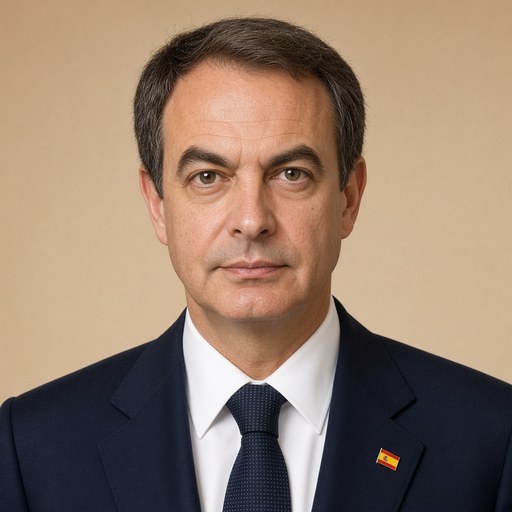
Press conference of the President of the Government after the extraordinary meeting of the European Council.
 José Luis Rodríguez Zapatero · Prime Minister of Spain
- Context
- Zapatero addressed press after an extraordinary European Council summit on 26 October 2011, outlining eurozone crisis measures including Greek debt restructuring and bank recapitalization.
- Main themes
- Eurozone crisis response, Greek debt restructuring, private sector haircut on Greek bonds, European Financial Stability Facility expansion, bank recapitalization, sovereign debt sustainability, financial market confidence, European governance improvements, Spain's banking sector, troika program disbursement
- Duration
- ~21 min
- Words
- 2,522
- Sentences
- 79
- Readability
- 36
- Grade
- 16.1
- Syntax
- 3.59
- Vocabulary
- 2.12
Translated from Spanish
This is an interview, press conference or exchange with other speakers. It is split into sentences and counted in the corpus, but its sentences are not tagged on the twelve indices.
79 sentences in 44 paragraphs
President.- Good evening. I will inform you, as quickly as possible, of the results of this European Council meeting and the meeting of the eurozone leaders.
As you know, we were faced with two meetings of great significance whose fundamental objective was to address the situation of instability and tension in the eurozone, and to provide a comprehensive response that addressed the fundamental aspects that are causing concern and anxiety in the financial markets.
This comprehensive program includes three basic points: the first, by importance, because it is undoubtedly the origin of all the tension we have been experiencing since April 2010, is Greece; secondly, the measures to make the European Facility more flexible, what we can call the financial safety net that Europe has adopted and which was confirmed at the last Council on July 21, and improvements in European governance.
To this end, we have had, as I mentioned, two sessions of great significance. In these two sessions, the plan for the recapitalization of the banking sector has also been approved, a complementary and necessary plan to generate confidence in our banking systems.
These are essential, fundamental elements in that comprehensive package to combat the crisis, which has a systemic nature, in the eurozone.
I want to make an initial statement. The decisions made today must lead to generating sufficient confidence, because the foundations have been laid for overcoming the essential problems of sovereign debt.
First of all, regarding Greece, the disbursement of the sixth tranche of the first aid program will proceed, once a favorable report from the "troika" has been obtained. In addition, progress has been made in defining and specifying the second program, a second program that was necessary to address the economic and financial situation of Greece, and which has come to be a new program in relation to the one approved on July 21, where the participation of the private sector was specified.
As you know, on that date, July 21, the participation of the private sector to address the sustainability of Greek debt was set at 21 percent. Today we have taken a qualitative step, as an agreement has been reached with representatives of the financial sector for them to voluntarily accept a discount of 50 percent on Greek bonds from their nominal value, with the aim of bringing the debt to 120 percent of nominal GDP by 2020. To this end, the official sector also commits to providing thirty billion euros as guarantees in this exchange. In short, the private sector goes from contributing 20 percent to 50 percent, and the official sector will contribute thirty billion for this operation.
I must say that at this moment, between the disbursement that has already occurred from the support program for Greece and what is planned, the amount will rise to 177 billion euros for that basic objective of ensuring the sustainability of Greek debt and bringing it to 120 percent of its GDP by 2020.
I must emphasize that today an essential principle has been reaffirmed, which is that the participation of the private sector is exceptional and only for one country, Greece; exceptional due to the exceptional circumstances surrounding Greek debt, exceptional due to its volume, which exceeds any hypotheses we could apply to any other country.
As I mentioned, we have also studied and decided on the resources of the Facility, and to multiply its potential beyond the resources committed so far. Without going into technical details, and less so at this hour of the night, I want to tell you that the solution reached includes the combination of two possibilities: guarantees for issuances and raising public and private resources through a special vehicle, which constitutes a good solution to support countries facing pressures in their markets and to ensure their financial stability.
From our point of view, from Spain's perspective, this solution is satisfactory. We will have an agile and more flexible stabilization mechanism and, therefore, more effective, and it was essential to support the economic credibility of the eurozone.
I will also tell you that the Facility will allow us to multiply its capacity by four or five and have a minimum of one trillion euros; an amount, we understand, powerful enough to serve as a firewall, a bulwark, against the problems that different countries in the eurozone may face.
In addition, as you know, we have addressed and approved a plan for the recapitalization of European banks; an extraordinary and temporary recapitalization plan aimed at large banking entities to avoid systemic risks. The Spanish entities subject to this revaluation, which are five, will have a capital need of twenty-six billion euros which, taking into account their convertible obligations in the period established, which exceed nine billion euros, means that the estimated amount necessary for the recapitalization process of the five major Spanish banks is approximately seventeen billion euros net.
I must remind you that, proportionally, our banking system in Europe is larger than what our economy weighs since we have two banks among the top five in the eurozone, which makes the volume of recapitalization higher.
Each of the affected Spanish financial institutions will soon inform about how they will meet these recapitalization needs and, from our perspective, from the Government's perspective, they will not need to resort to public aid.
These commitments require the participation of all member states but, in addition, each of them has its own individual commitments to reinforce the sustainability of public finances and growth; principles on which we have been working intensively since May 2010: the principle of fiscal consolidation for the sustainability of public finances and the commitment to growth through reforms.
This has also been the subject of analysis in the Council and you can verify it in the Conclusions. There is expressly a paragraph dedicated to Spain in which the progress we have made is highlighted, both in reducing the public deficit and in the process of modernizing the Spanish economy, and it undoubtedly emphasizes our main problem related to the labor market and our very high unemployment rate.
In addition, although I will not go into details, we have adopted a series of concrete decisions that reinforce the coordination of our economic policies. In short, we have made further progress in European economic governance and, in particular, in the governance of the eurozone which, without a doubt, has specific needs.
These are the main agreements we have adopted. I insist, a strong solution for Greece, with a commitment of up to 50 percent participation from the private sector, which we could place around one hundred billion euros, which will be the participation of the private sector, and an increase in the participation of the official sector, which will make a total amount of 177 billion euros to ensure that Greece is sustainable and that this sustainability threshold is set for 2020 for it to have 120 percent of debt to GDP.
Secondly, the expansion, strengthening, of the Financial Facility, of the capacity of the entire eurozone to defend the stability of the sovereign debts of the eurozone.
And, thirdly, the process of recapitalization of European banks also to strengthen confidence. When the two "stress test" examinations were conducted, as you will remember, there was always a question among analysts and the question was the valuation that existed regarding sovereign debt. Well, this plan includes, exceptionally, for one time, the date of September 2011 for large European entities to strengthen their capital to reach that 9 percent of maximum quality capital that conveys, that generates, confidence in the entire financial system of each of the countries and, of course, in the entire European Union.
Up to here is what I had to tell you and, from now on, any questions, but do not overdo it, because tomorrow I am going to Paraguay.
Q.- Regarding the issue of banks, have all the demands that Spain wanted regarding the criteria been accepted? I say this because, whether we take the figure of twenty-six billion or the figure of seventeen billion, the bill is hefty, especially compared to other large countries where some holes were supposed. I wanted to know if Spain's claims have been taken into account.
And you say that they will not have to ask for help from the public sector, from the State. Where are they going to get so much money?
President.- Each of the financial entities will explain this, and it is up to them. We are talking about the five large ones and they certainly have the capacity to meet the seventeen billion euros that will allow them to reach that 9 percent.
Spain understood, and it was important for us, that convertible debt be counted in the period established, until June 2012, and therefore, I believe that this has been appropriately accepted.
From there, I will tell you that all efforts we make to strengthen the confidence of the financial system, which, as you know, is at the origin of this hard crisis we have been fighting for three years, are necessary. I have just explained to you that there was always uncertainty or doubt about the situation and the commitments that banks have regarding sovereign debt in the valuation of the "stress tests" on the eurozone. A valuation is made taking into account the market figure; this affects, as I believe you know, around something more than 2 percent of that valuation to our entities and that explains part of the need to capitalize the amount we require to reach the 9 percent, which is a very, very considerable figure.
Therefore, we understand that the recapitalization agreement is balanced and will allow our main entities to strengthen their solvency. By the way, they have quite a solid track record, as they have passed the "stress test" and have been able to face recapitalization processes, and that will help, along with the entire restructuring process we are carrying out in the Savings Banks, in which deadlines and objectives are being met.
Q.- To continue with the topic of recapitalization, apart from the adjustment of Spanish debt, will the credits given to the Public Administrations also be taken into account? Does this not imply putting the Public Administrations a bit in the spotlight, considering that they will also suffer a devaluation, an adjustment, similar to that of Spanish debt?
And a second question, if I may, about Italy. It was the big question before this Summit and I would like to know if Prime Minister Berlusconi has come with a sufficient message of confidence or if the reform of the fund is large enough to cover a country that has a debt of 1.9 trillion.
President.- Regarding the first, yes, it includes not only what is sovereign debt in that valuation, but also loans to the public sector. But, as I said, we are facing an exceptional exercise that should not affect the lending capacity of financial entities to all our Public Administrations. We certainly have that full confidence.
Regarding Italy, I will tell you that Prime Minister Berlusconi presented an extensive letter that represents a plan of commitments in various areas, especially in deficit reduction, seeking budgetary balance to reduce the debt which, indeed, is high in Italy; other measures related to structural reforms in the services sector, also in the labor market sector and also in pensions. The conclusions include a summary of the most important measures that Italy has underway and that it must comply with and implement.
Yes, Prime Minister Berlusconi has informed about all this and, of course, it has been accepted, and the Commission, as is always customary, will logically carry out an intense follow-up of all the measures that Italy has committed to.
Q.- Excuse me, because of the hour I am not sure if I understood correctly, but you said that Spanish banks will not need to go to the new mechanism.
Then, I would like to know if you have closed the agreement with China and I do not know with which other countries, because they have set the amount, but we are not clear that they are willing and under what conditions to commit to this effort.
President.- No, China was not at the meeting. It was not there and I think no one spoke of China. Therefore, when we talk about the official sector, we are logically thinking of the eurozone countries and, in any case, in the possible participation of the IMF, which has participated, as you know, in the first program regarding Greece.
Regarding the banks, yes, I just said, and I reiterate, that the affected entities --it is up to them, logically, to specify their recapitalization plans in the time that the European banking authority has established-- will not need to resort to public support for that recapitalization. That is our full conviction.
President.- Continuing with the rescue fund, you have said that it could reach a potential of four or five times, but at a minimum one trillion euros. How are you going to ensure that private investors collaborate? Are you not afraid that this figure will remain in the air and that starting tomorrow the market will not believe it and will continue to think it has only 440 billion?
In relation to the other function, that of guaranteeing the debt of countries in difficulty, do you think Spain should request that guarantee in order to place the debt without having to depend on the ECB continuing to buy bonds in the secondary market?
President.- The one trillion euros is a prudent estimate, because I emphasize that it is a minimum. And, of course, I have no doubt that the whole of the euro area and the instrument it has created for this, the Facility, has the capacity to generate a volume of resources of that magnitude that serves as support for the stability of the financial system of the countries in the euro area.
Secondly, Spain is issuing its debt normally; it is true that there are fluctuations in interest rates, which depend on the situation of our risk premium; but with very broad coverage. We also hope that this agreement today will strengthen confidence, and that will allow us to issue, even, at more reasonable interest rates, which is very beneficial for all of us, as we wish, because that logically contributes to committing fewer public resources for the payment of our debt today and, above all, of the future.
Therefore, I believe that Spain has and maintains, as we have reiterated time and again, the conditions to continue fulfilling its debt issuances and its financing needs. This does not contradict the fact that it is essential to continue maintaining fiscal discipline and to continue committing to reducing the deficit for this year, of course, but also for the following budgetary periods, because that is the guarantee that, in the medium term, we have as a country to avoid being affected by tensions, or to be affected as little as possible, if circumstances in the euro area were to return to a bad situation.
Thank you very much.
The original Spanish. The tags above are read on the English translation's sentences.
Presidente .- Buenas noches. Voy a informarles, lo más rápidamente posible, de los resultados de esta reunión del Consejo Europeo y de la reunión de los líderes de la zona euro.
Como saben, estábamos ante dos reuniones de gran transcendencia cuyo objetivo fundamental era abordar la situación de inestabilidad y de tensión en la zona euro, y dar una respuesta global que abordara los aspectos fundamentales que están en la preocupación y en la inquietud en los mercados financieros.
Ese programa global incluye tres puntos básicos: el primero de ellos, por importancia, porque es, sin duda alguna, el origen de toda la situación de tensión que llevamos viviendo desde abril de 2010, es Grecia; en segundo lugar, las medidas para flexibilizar la Facilidad Europea, lo que podemos denominar la red de seguridad financiera que Europa ha adoptado y que fue confirmada en el pasado Consejo del 21 de julio, y las mejoras en la gobernanza europea.
Para ello hemos tenido, como les decía, dos sesiones de gran trascendencia. En esas dos sesiones también se ha aprobado el plan de recapitalización del sector bancario, un plan complementario y necesario para generar confianza en nuestros sistemas bancarios.
Éstos son elementos imprescindibles, fundamentales, en ese paquete global para combatir la crisis, que tiene carácter sistémico, en la zona euro.
Quiero hacerles un pronunciamiento inicial. Las decisiones adoptadas hoy deben conducir a generar la confianza suficiente, porque se han sentado las bases para la superación de los problemas esenciales de la deuda soberana.
En primer lugar, respecto de Grecia, se va a proceder al desembolso del sexto tramo del primer programa de ayuda, una vez que se ha obtenido el informe favorable de la "troika". Además, se ha avanzado en la definición y concreción del segundo programa, segundo programa que era necesario para abordar la situación económica y financiera de Grecia, y que ha venido a ser un programa nuevo en relación con el aprobado el 21 de julio, donde se concretó la participación del sector privado.
Como saben, en esa fecha, el 21 de julio, la participación del sector privado para abordar la sostenibilidad de la deuda griega se cifró en el 21 por 100. Hoy hemos dado un paso cualitativo, ya que se ha alcanzado un acuerdo con los representantes del sector financiero para que éste acepte, voluntariamente, un descuento de los bonos griegos del 50 por 100 sobre su valor nominal, con el objetivo de que la deuda alcance el 120 por 100 del PIB nominal en 2020. Para ello, además, el sector oficial se compromete a aportar treinta mil millones de euros como garantías en este intercambio. En definitiva, el sector privado pasa de aportar un 20 por 100 a un 50 por 100 y el sector oficial va a aportar treinta mil millones para esta operación.
Debo decir que en estos momentos, entre el desembolso que se ha producido ya del programa de apoyo a Grecia y lo previsto, ascenderá la cantidad a 177.000 millones de euros para ese objetivo básico de sostenibilidad de la deuda griega y que se sitúe en el 120 por 100 de su PIB en 2020.
Debo subrayar que hoy se ha vuelto a ratificar un principio esencial, que es que la participación del sector privado es excepcional y sólo para un país, Grecia; excepcional por las excepcionales circunstancias que tiene la deuda griega, excepcionales por su volumen, que sobrepasa cualquiera de las hipótesis que pudiéramos aplicar a cualquier otro país.
Como les decía, además hemos estudiado y decidido sobre los recursos de la Facilidad, y multiplicar su potencial más allá de los recursos comprometidos hasta ahora. Sin entrar en detalles técnicos, y menos a estas horas de la noche, quiero decirles que la solución alcanzada incluye la combinación de dos posibilidades: garantías de emisiones y captación de recursos públicos y privados a través de un vehículo especial, que constituye una buena solución para apoyar a los países que se enfrenten a presiones en sus mercados y garantizar su estabilidad financiera.
Desde nuestro punto de vista, desde el punto de vista de España, esta solución es satisfactoria. Tendremos un mecanismo de estabilización ágil y más flexible y, por tanto, más eficaz, y era imprescindible para respaldar la credibilidad económica de la zona euro.
Les diré, además, que la Facilidad va a permitir multiplicar por cuatro o cinco su capacidad y contar con un mínimo de un billón de euros; cantidad, entendemos, poderosa para servir de cortafuegos, de muro de contención, a los problemas que puedan tener los distintos países de la zona euro.
Además, como saben, hemos abordado y aprobado un plan de recapitalización de la banca europea; un plan de recapitalización extraordinaria y temporal destinado a las grandes entidades bancarias para evitar riesgos sistémicos. Las entidades españolas sujetas a esta revalorización, que son cinco, tendrán unas necesidades brotas de veintiséis mil millones de euros que, teniendo en cuenta sus obligaciones convertibles en el período que se ha establecido, y que superan los nueve mil millones de euros, hace que la cifra que se estima necesaria para ese proceso de recapitalización de los cinco grandes bancos españoles sea de, aproximadamente, diecisiete mil millones de euros netos.
Debo recordar que, proporcionalmente, nuestro sistema bancario en Europa es mayor que lo que pesa nuestra economía dado que tenemos dos bancos entre los cinco primeros de la zona euro, lo que hace que el volumen de recapitalización sea más elevado.
Cada una de las instituciones financieras españolas afectadas informará próximamente sobre cómo hará frente a esas necesidades de recapitalización y, desde nuestra perspectiva, desde la perspectiva del Gobierno, no tendrán necesidad de acudir a la ayuda pública.
Estos compromisos requieren del concurso del conjunto de los Estados miembros pero, además, cada uno de ellos cuenta con sus propios compromisos individuales para reforzar la sostenibilidad de las finanzas públicas y el crecimiento; principios sobre los que venimos trabajando de manera intensa desde mayo de 2010: el principio de la consolidación fiscal para la sostenibilidad de las finanzas públicas y la apuesta por el crecimiento a través de las reformas.
Esto ha sido también objeto de análisis en el Consejo y lo pueden ustedes comprobar en las Conclusiones. Hay expresamente un párrafo dedicado a España en el que se destacan los avances que hemos conseguido, tanto en la reducción del déficit público, como en el proceso de reformas modernizadoras de la economía española, y se pone el acento, sin duda, en nuestro principal problema que tiene que ver con el mercado laboral y con nuestra tasa tan elevada de paro.
Además, aunque no voy a entrar en detalles, hemos adoptado una serie de decisiones concretas que refuerzan la coordinación de nuestras políticas económicas. En definitiva, hemos dado un avance más en la gobernanza económica europea y, de manera particular, en la gobernanza de la zona euro que, sin duda alguna, tiene necesidades específicas.
Éstos son los principales acuerdos que hemos adoptado. Insisto, solución fuerte para Grecia, con un compromiso de hasta el 50 por 100 de participación del sector privado, lo que podríamos situar en torno a cien mil millones de euros, que va a ser la participación del sector privado, e incremento de la participación del sector oficial, lo que hará una cantidad global de 177.000 millones de euros para lograr que Grecia sea sostenible y ese umbral de sostenibilidad está cifrado en 2020 para que tenga el 120 por 100 de deuda del PIB.
En segundo lugar, ampliación, fortalecimiento, de la Facilidad Financiera, de la capacidad del conjunto de la zona euro para defender la estabilidad de las deudas soberanas de la zona euro.
Y, en tercer lugar, el proceso de recapitalización de la banca europea también para fortalecer la confianza. Cuando se produjeron los dos exámenes de "stress test", como ustedes recordarán, siempre había entre los analistas una interrogante y la interrogante era la valoración que existía entorno a la deuda soberana. Pues bien, este plan incluye, de manera excepcional, por una sola vez, la fecha de septiembre de 2011 para que las entidades grandes europeas fortalezcan su capital para llegar a ese 9 por 100 de capital de máxima calidad que transmite, que genera, confianza en el conjunto del sistema financiero de cada uno de los países y, por supuesto, en el conjunto de la Unión Europea.
Hasta aquí lo que yo les debía de contar y, a partir de ahora, alguna pregunta, pero no abusen, porque mañana me voy a Paraguay.
P.- Sobre el asunto de los bancos, ¿se han aceptado todas las demandas que quería España en cuanto a los criterios? Lo digo porque, tanto si se toma la cifra de veintiséis mil millones, como si se toma la de diecisiete mil millones, la factura es abultada, sobe todo, con respecto a otros grandes países donde se suponían algunos agujeros. Quería saber si se han tenido en cuenta las reivindicaciones de España.
Y dice usted que no tendrán que pedir ayuda al sector público, al Estado. ¿De dónde van a sacar tanto dinero?
Presidente .- Lo va a explicar cada una de las entidades financieras y a ellas le corresponde. Estamos habando de las cinco grandes y tienen, sin duda, capacidad para afrontar los diecisiete mil millones de euros que les permitirán llegar a ese 9 por 100.
España entendía, y para nosotros era importante, que se computara la deuda convertible en el período que está establecido, hasta junio de 2012, y, por tanto, yo creo que eso ha sido convenientemente aceptado.
A partir de ahí, le diré que todos los esfuerzos que hagamos para fortalecer la confianza del sistema financiero, que, como saben, está en el origen de esta dura crisis que combatimos desde hace tres años, son necesarios. Les acabo de explicar que siempre en la valoración de los "stress test" sobre la zona euro existía la incógnita o la duda sobre la situación y los compromisos que tienen adquiridos los bancos en deuda soberana. Se hace una valoración teniendo en cuenta la cifra de mercado; eso afecta, como creo que saben, en torno a algo más de un 2 por 100 de esa valoración a nuestras entidades y eso explica una parte de la necesidad de capitalizar el importe que requerimos para llegar al 9 por 100, que es una cifra muy, muy, considerable.
Por tanto, entendemos que el acuerdo de recapitalización es equilibrado y que permitirá a nuestras entidades principales fortalecer su solvencia. Por cierto, la tienen bastante contrastada, porque han superado las pruebas de los "stress test", han sido capaces de afrontar procesos también de recapitalización y eso va a ayudar, junto a todo el proceso de reestructuración que estamos realizando en las Cajas de Ahorro, en el que se están cumpliendo los plazos y los objetivos.
P.- Por continuar con el tema de la recapitalización, aparte del ajuste de la deuda española también se van a tener en cuenta los créditos que se han dado a las Administraciones Públicas. ¿No implica esto poner un poco en la picota a las Administraciones Públicas, teniendo en cuenta que también van a sufrir una devaluación, un ajuste, similar de la deuda española?
Y una segunda pregunta, si me permite, sobre Italia. Era el gran interrogante antes de esta Cumbre y me gustaría saber si el Primer Ministro Berlusconi ha llegado con el mensaje suficiente de confianza o la reforma del fondo es lo suficientemente grande para cubrir a un país que tiene una deuda de 1,9 billones.
Presidente .- En relación con la primera, sí incluye, no sólo lo que es la deuda soberana en esa valoración, sino también los préstamos al sector público. Pero, como he dicho, estamos ante un ejercicio excepcional que no debe afectar a lo que es la relación de capacidad de préstamo de las entidades financieras al conjunto de nuestras Administraciones Públicas. Desde luego, tenemos esa plena confianza.
En relación con Italia, le diré que el primer ministro Berlusconi presentó una carta extensa que supone un plan de compromisos en distintos órdenes, especialmente en reducción de déficit, buscando el equilibrio presupuestario para reducir la deuda que, en efecto, es elevada en Italia; de otras medidas relacionadas con reformas estructurales en el sector servicios, también en el sector del mercado laboral y también en materia de pensiones. Aparece en las conclusiones el resumen de lo más importante de las medidas que Italia tiene en marcha y que tiene que cumplir y llevar a la práctica.
Sí, el primer ministro Berlusconi ha informado de todo eso y, desde luego, se ha dado por bueno y la Comisión, como es siempre habitual, va a hacer, lógicamente, un seguimiento intenso de todas las medidas que Italia ha comprometido.
P.- Perdone, porque por la hora no estoy segura si he entendido bien, pero ha dicho usted que la banca española no necesitará ir al nuevo mecanismo.
Después, me gustaría saber si con China y no sé con qué otros países tienen cerrado el acuerdo, porque le han puesto la cantidad, pero no tenemos claro que ellos estén dispuestos y bajo qué condiciones a comprometerse a este esfuerzo.
Presidente .- No, China no ha estado en la reunión. No ha estado y yo creo que nadie ha hablado de China. Por tanto, cuando se habla del sector oficial, se está pensando, lógicamente, en los países de la zona euro y, en todo caso, en la participación posible del FMI, que ha participado, como saben, en el primer programa en relación con Grecia.
Sobre la banca, sí, acabo de decir, y reitero, que las entidades afectadas --corresponde a ellas, lógicamente, explicitar sus planes de recapitalización en el tiempo que la autoridad bancaria europea ha establecido-- no necesitarán recurrir al apoyo público para esa recapitalización. Ése es nuestro convencimiento pleno.
P.- Presidente, siguiendo con el fondo de rescate, usted ha dicho que podrían alcanzar un potencial de cuatro o cinco veces, pero como mínimo un billón de euros. ¿Cómo van a garantizar que los inversores privados colaboran? ¿No temen que esa cifra se quede en el aire y que a partir de mañana el mercado no se lo crea y siga pensando que tiene 440.000 millones nada más?
En relación con la otra función, la de garantizar la deuda de los países en dificultades, ¿cree que España debería pedir ese aval para poder colocar la deuda sin tener que depender de que el BCE siga comprando los bonos en el mercado secundario?
Presidente .- El billón de euros es una estimación prudente, porque subrayo que es como mínimo. Y, desde luego, no tengo ninguna duda que el conjunto de la zona euro y el instrumento que ha creado para ello, la Facilidad, tiene capacidad para generar un volumen de recursos de esa envergadura que sirva como apoyo a la estabilidad del sistema financiero de los países de la zona euro.
En segundo lugar, España está emitiendo su deuda con toda normalidad, es verdad que con vaivenes en cuanto a los tipos de interés, que van en función de la situación de nuestra prima de riesgo; pero con una cobertura muy amplia. Esperemos, además, que este acuerdo de hoy fortalezca la confianza y eso permitirá que podamos emitir, incluso, a tipos de interés más razonables, lo que a todos nos viene muy bien, que deseamos, porque eso contribuye, lógicamente, a comprometer menos recursos públicos para el pago de nuestra deuda de hoy y, sobre todo, del futuro.
Por tanto, creo que España tiene y mantiene, como hemos reiterado una y otra vez, las condiciones para seguir cumpliendo sus emisiones de deuda y sus necesidades de financiación. Eso no contradice con que sea imprescindible seguir manteniendo el rigor fiscal y seguir comprometiendo la reducción del déficit para este año, por supuesto, pero también para los ejercicios presupuestarios siguientes, porque ésa es la garantía que, a medio plazo, tenemos como país de no vernos afectados por la tensiones, o vernos afectados lo menos posible, si las circunstancias en la zona euro se volvieran a producir en una mala situación.
Muchas gracias.