




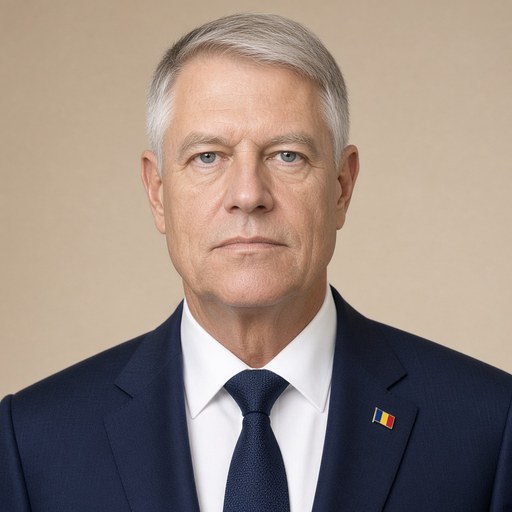
The speech of the President of Romania, Mr. Klaus Iohannis, delivered during the ceremony for the decoration of certain entities and survivors of the Roma Holocaust.
 Klaus Iohannis · President of Romania
- Context
- Iohannis addressed a ceremony on January 27, 2020, International Holocaust Remembrance Day, decorating Romanian Holocaust survivors and institutions dedicated to preserving Holocaust memory.
- Main themes
- Holocaust remembrance, antisemitism and racism, Roma Holocaust and Transnistria deportations, Jewish community in Romania, memory preservation and education, decoration of survivors and institutions, Romanian state responsibility, combating extremism and intolerance, International Holocaust Remembrance Day, Auschwitz liberation anniversary
- Duration
- ~9 min
- Words
- 1,091
- Sentences
- 44
- Readability
- 31
- Grade
- 14.9
- Syntax
- 2.94
- Vocabulary
- 2.44
Translated from Romanian
The broad sphere of national life a sentence belongs to. Every sentence has an Arena, so it is the denominator the other indices are read against.
Other44 sentences in 26 paragraphs
Dear Holocaust Survivors,
Mr. President of the Federation of Jewish Communities in Romania,
Mr. General Director of the National Institute for the Study of the Holocaust in Romania "Elie Wiesel",
Mr. Director of the Holocaust Memorial Museum in Northern Transylvania,
A day of remembrance for the victims, in which our pious thoughts turn to their tragic fate. This is the significance of today’s day and event. On January 27, 1945, the Auschwitz-Birkenau camp complex, the expression of absolute evil, was liberated, thus rescuing from hell the few survivors that remained. This date has forever been etched in the consciousness of humanity as International Holocaust Remembrance Day.
Seventy-five years after the liberation of Auschwitz, the whole world condemns this unparalleled tragedy, honoring the memory of those who became victims of the Holocaust.
This enormous genocidal project was not only about Jews and Roma, but about all of us. As Yehuda Bauer aptly described it, it was "a total rebellion" against Western civilization and the concept of the human being.
On such a day of great significance, I have chosen to honor, on behalf of the Romanian state, entities that played a decisive role in preserving the memory of the Holocaust, as well as survivors of the most terrible episode in human history.
Only by cultivating memory do we keep alive the drama of the Jews and Roma, and we take on a history marked with bold lines, a painful past that we do not ignore or conceal, but we acknowledge with full responsibility.
I bow before the sufferings endured and, by honoring you, I pay tribute to the memory of all Holocaust victims, assuring you at the same time that I will advocate, with the same determination as before, for the preservation of the memory of the Holocaust and the fight against antisemitism.
Romania has understood the dimension of the horrors, has taken on this dark page, and has made concrete efforts regarding the recovery of the memory of the Holocaust, strengthening education and research about the Holocaust, combating extremism, antisemitism, and intolerance, and reinforcing legislation in this area. A decisive role in achieving these defining progress for the Romanian state has been played by the entities honored today.
In nearly 15 years of activity, the National Institute for the Study of the Holocaust in Romania "Elie Wiesel," the reference institution regarding education and research about the Holocaust, has promoted knowledge of this genocide, defended the memory of the victims, and contributed to discouraging antisemitic and racist incidents.
The Federation of Jewish Communities in Romania has fully dedicated itself to promoting and defending the interests, culture, and traditions of the Jewish community in Romania, encouraging respect for diversity and interreligious dialogue. The Holocaust Memorial Museum in Northern Transylvania represents a true space of commemoration and remembrance. Thanks to the invaluable efforts of this organization, the drama of Romanian Jews under Horthy's occupation is, today, better known to the general public.
I want to thank you all for the sustained activity you have had over all these years, and I urge you to continue to defend the memory of the Holocaust, while also contributing to combating antisemitism in our society.
The terrible sufferings endured by the Roma community in our country in the camps in Transnistria are still insufficiently known and evoked. It is time to bring to public attention the Holocaust of the Roma and to honor those who survived and who each represent a voice of humanity raised against racism and xenophobia.
Your decoration, Mr. Constantin Brăilă, Mrs. Crăciun Florica, Mr. Crăciun Traian, I wish to represent a strong gesture of condemnation by the Romanian state of the tragedy that you and the Roma community in Romania experienced during World War II.
In 1942, approximately 25,000 Roma were deported to Transnistria, among them a large number of women and children. 11,000 of those deported died, most of them from hunger, cold, and due to inadequate medical assistance. We bow our heads in sadness in memory of the victims and with respect for the survivors.
The progress made by Romania in recent years is remarkable.
We successfully fulfilled the Presidency of the International Alliance for Holocaust Remembrance, legislation regarding the fight against antisemitism has been improved, the National Museum of Jewish History and the Holocaust in Romania has been established, and education about the Holocaust is a national priority.
However, we must not stop here, because the danger of the return of xenophobic and antisemitic attitudes is always present. Jewish cemeteries are vandalized, public figures assert the supremacy of certain races, the atrocities of the Holocaust are relativized by the public, and some odious criminals from our history are hailed, while fellow citizens of Roma ethnicity are often humiliated or discriminated against.
These developments represent a frontal attack on the rule of law and democratic principles, which is why the counter-offensive must be firm and in accordance with European values. We therefore need even more education, for it is the only firm commitment that we will defend in the future, with all our strength, democracy, individual rights, and freedoms.
Seventy-five years after the discovery of the disturbing horrors with the liberation of Auschwitz, Europe is still not healed from the scourge of antisemitism and the plague of extremism.
What are the obsessions of some political leaders who claim that Europe is besieged by immigrants, that walls are a solution to defend our continent, that Roma should be isolated in ghettos, that Jews would be better off moving all to Israel – if not dangerous attempts to find justifications for their own failures?
Building a "the other" and defining it as absolute evil is not difficult. The lesson of the Holocaust is not so far away. In the same way, antisemitism, racism, and hatred were transformed into state policy in the last century. That is when the destruction of humanity actually began, since, as Elie Wiesel rightly said, "when a people is sent to its death, all others are threatened. All of humanity is threatened."
Building today’s society on healthy foundations can only be done with constant attention directed towards the past, like in a rearview mirror. Evil must be cut out at the root, and the poisonous seeds of hatred and intolerance, which can sprout at any time, must be eradicated by promoting tolerance, respect for others, and for diversity.
In conclusion, I ask you to join me in a moment of silence for all those who perished during the Holocaust. May the memory of the victims remain eternal in our hearts!
The original Romanian. The tags above are read on the English translation's sentences.
Stimați Supraviețuitori ai Holocaustului,
Domnule Președinte al Federației Comunităților Evreiești din România,
Domnule Director General al Institutului Național pentru Studierea Holocaustului din România „Elie Wiesel”,
Domnule Director al Muzeului Memorial al Holocaustului din Transilvania de Nord,
O zi de amintire a victimelor, în care gândurile noastre pioase se îndreaptă către destinul lor tragic. Aceasta este semnificația zilei și a evenimentului de astăzi. La 27 ianuarie 1945, complexul de lagăre de la Auschwitz-Birkenau, expresia răului absolut, era eliberat, izbăvind astfel din infern puținii supraviețuitori rămași. Această dată a rămas întipărită pentru totdeauna în conștiința umanității ca Ziua Internațională de Comemorare a Victimelor Holocaustului.
La 75 de ani de la eliberarea Auschwitz-ului, lumea întreagă condamnă această tragedie fără egal, onorând memoria celor care au devenit victimele Holocaustului.
Acest proiect genocidal uriaș nu a fost doar despre evrei și romi, ci despre noi toți. Așa cum bine l-a descris Yehuda Bauer, el a fost „o răzvrătire totală” împotriva civilizației occidentale și a conceptului de ființă umană.
Într-o astfel de zi de mare însemnătate, am ales să decorez, în numele statului român, entități care au avut un rol determinant în ceea ce privește prezervarea memoriei Holocaustului, precum și supraviețuitori ai celui mai cumplit episod din istoria umanității.
Doar prin cultivarea memoriei păstrăm vie drama evreilor și romilor și ne asumăm o istorie trasată cu linii îngroșate, un trecut dureros pe care nu îl ignorăm și nici nu îl ocultăm, ci îl conștientizăm cu toată responsabilitatea.
Mă înclin în fața suferințelor îndurate și, prin decorarea dumneavoastră, onorez memoria tuturor victimelor Holocaustului, asigurându-vă, în același timp, că voi milita, cu aceeași hotărâre ca și până acum, pentru prezervarea memoriei Holocaustului și combaterea antisemitismului.
România a înțeles dimensiunea ororilor, și-a asumat această pagină întunecată și a făcut demersuri concrete în ceea ce privește recuperarea memoriei Holocaustului, consolidarea educației și cercetării despre Holocaust, combaterea extremismului, antisemitismului și intoleranței, întărirea legislației în domeniu. Un rol determinant în procesul de realizare a acestor progrese definitorii pentru statul român l-au avut entitățile decorate astăzi.
În cei aproape 15 ani de activitate, Institutul Național pentru Studierea Holocaustului din România „Elie Wiesel”, instituția de referință în ceea ce privește educația și cercetarea despre Holocaust, a promovat cunoașterea acestui genocid, a apărat memoria victimelor și a contribuit la descurajarea incidentelor antisemite și rasiste.
Federația Comunităților Evreiești din România s-a dedicat, în totalitate, promovării și apărării intereselor, culturii și tradițiilor comunității evreiești din România, încurajând respectul față de diversitate și dialogul interreligios. Muzeul Memorial al Holocaustului din Transilvania de Nord reprezintă un veritabil spațiu de comemorare și aducere-aminte. Datorită eforturilor neprețuite ale acestei organizații, drama evreilor români de sub ocupația horthistă este, astăzi, mai bine-cunoscută publicului larg.
Vreau să vă mulțumesc tuturor pentru activitatea susținută pe care ați avut-o, în toți acești ani, și vă îndemn să apărați, în continuare, memoria Holocaustului, contribuind, totodată, la combaterea antisemitismului din societatea noastră.
Suferințele cumplite îndurate de comunitatea romilor din țara noastră în lagărele din Transnistria sunt încă insuficient cunoscute şi evocate. Este timpul să aducem în atenția publică Holocaustul romilor şi să-i onorăm pe cei care au supraviețuit şi care reprezintă, fiecare, o voce a umanității ridicată împotriva rasismului şi xenofobiei.
Decorarea dumneavoastră, domnule Constantin Brăilă, doamnă Crăciun Florica, domnule Crăciun Traian, îmi doresc să reprezinte un puternic gest al condamnării de către statul român a tragediei pe care ați trăit-o dumneavoastră şi comunitatea romilor din România în timpul celui de-al Doilea Război Mondial.
În 1942, aproximativ 25.000 de romi au fost deportați în Transnistria, între aceștia un număr mare de femei şi copii. 11.000 dintre cei deportați au murit, cei mai mulți de foame, frig şi din cauza asistenței medicale precare. Ne plecăm frunțile cu tristețe în amintirea victimelor şi cu respect față de supraviețuitori.
Progresele înregistrate de România în ultimii ani sunt remarcabile.
Am îndeplinit, cu succes, Președinția Alianței Internaționale pentru Memoria Holocaustului, legislația în ceea ce privește combaterea antisemitismului a fost îmbunătățită, a fost înființat Muzeul Național de Istorie a Evreilor și al Holocaustului din România, iar educația despre Holocaust reprezintă o prioritate la nivel național.
Nu trebuie să ne oprim însă aici, pentru că pericolul revenirii atitudinilor xenofobe și antisemite este mereu prezent. Cimitire evreiești sunt vandalizate, actori publici afirmă supremația unor rase, monstruozitățile Holocaustului sunt public relativizate, unor criminali odioși din istoria noastră li se ridică osanale, concetățeni de etnie romă sunt nu de puține ori umiliți ori discriminați.
Aceste evoluții reprezintă un atac frontal la adresa statului de drept și a principiilor democratice, tocmai de aceea contraofensiva trebuie să fie fermă și în acord cu valorile europene. Avem, așadar, nevoie de și mai multă educație, pentru că este singurul angajament ferm că vom apăra în viitor, cu toată forța, democrația, drepturile și libertățile individuale.
La 75 de ani distanță de la descoperirea ororilor tulburătoare odată cu eliberarea Auschwitz-ului, Europa nu este încă vindecată de flagelul antisemitismului și de morbul extremismului.
Ce sunt oare obsesiile unor lideri politici care afirmă că Europa este asediată de imigranți, că zidurile sunt o soluție pentru a ne apăra continentul, că romii ar trebui izolați în ghetouri, că evreii ar face mai bine să se mute cu toții în Israel – dacă nu încercări periculoase de găsi justificări pentru propriile eșecuri?
A construi un „celălalt” și a-l defini drept răul absolut nu e greu. Lecția Holocaustului nu e atât de departe. În același mod, antisemitismul, rasismul și ura au fost transformate în secolul trecut în politică de stat. Atunci a început, în fapt, distrugerea umanității, întrucât, cum bine spunea Elie Wiesel, „când un popor este trimis la moartea sa, toate celelalte sunt amenințate. Întreaga omenire este amenințată”.
Construcția societății de astăzi pe fundamente sănătoase nu se poate face decât cu atenția îndreptată constant către trecut, ca într-o oglindă retrovizoare. Răul trebuie tăiat din rădăcină, iar semințele otrăvitoare ale urii și intoleranței, care pot răsări oricând, trebuie nimicite prin promovarea toleranței, a respectului față de celălalt și față de diversitate.
În final, vă rog să păstrăm împreună un moment de reculegere pentru toți cei care au pierit în timpul Holocaustului. Fie ca amintirea victimelor să rămână veșnică în inimile noastre!