




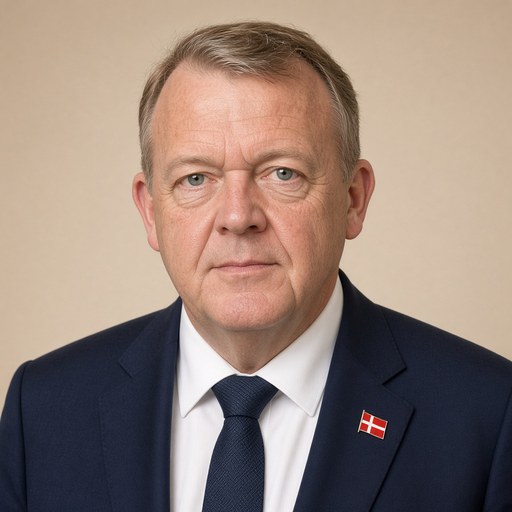
Prime Minister Lars Løkke Rasmussen's address at the Volkstrauertag on 13 November 2016
 Lars Løkke Rasmussen · Prime Minister of Denmark
- Context
- Rasmussen addressed the German Volkstrauertag commemoration on 13 November 2016, speaking at the Bundestag to honor victims of war and tyranny.
- Main themes
- Reconciliation, remembrance of war victims, European unity and cooperation, German leadership in Europe, dangers of populism and nationalism, peace and stability, Danish-German relations, Schleswig-Holstein border region, European values and democracy, lessons of history, contemporary conflicts and terrorism
- Duration
- ~9 min
- Words
- 1,108
- Sentences
- 112
- Readability
- 57
- Grade
- 7.3
- Syntax
- 2.31
- Vocabulary
- 2.56
The broad sphere of national life a sentence belongs to. Every sentence has an Arena, so it is the denominator the other indices are read against.
Other112 sentences in 87 paragraphs
sehr geehrter Herr amtierender Präsident des Volksbundes,
sehr geehrte Damen und Herren Präsidenten und Vizepräsidenten des
Bundestages, des Bundesrates und des Bundesverfassungsgerichtes,
sehr geehrte Frau Bundesministerin,
sehr geehrte Abgeordnete sehr geehrte Damen und Herren
Ich fühle mich sehr geehrt heute hier zu sein – an diesem Tag, an dem wir den Opfern von Krieg und Gewaltherrschaft gedenken.
Den gefallenen Soldaten. Den getöteten Zivilisten. Den Opfern von
Terror.
Wir trauern um sie alle.
We are reminded that every single victim of war and conflict is also some one’s brother or sister – son or daughter – parent, husband or wife.
And we are reminded that one of the most important human abilities is: Reconciliation.
Personal reconciliation with the tragic loss of relatives and friends.
National reconciliation with the past and with former enemies.
The history of mankind is a history of both acrimony and revenge.
But Germany and the rest of post-war Europe have managed to look beyond those dark instincts. We have learned from the past in order not to repeat it.
We have sought for peace, respect and mutual understanding – and we have been awarded stability, security and prosperity in return.
We have chosen the path of reconciliation.
And Germany has led the way.
You have fought historic ignorance. You have shed light on the dark past.
And you have worked to overcome the demons that haunted our continent for centuries.
That is an impressive achievement of immense importance to us all.
You have not only reunited Germany – your self-insight and responsible politics have helped Europe reunite.
Thank you.
***
Yet - we must not believe that history is over.
Genocide, war and ethnic persecution are not only realities of the past.
They are very present.
We saw it in the Balkans in the nineties. We see it in Syria today. In many parts of the world conflicts lead to poverty, persecution and a future without hope for millions of fellow human beings.
We Europeans must stand by victims of conflict and oppression all over the world. Europe has formidable powers at its disposal as a force for good.
Strong core values.
Liberty. Democracy. Equality. Respect for human rights and human dignity. This is what Europe is built upon.
On this basis, we must continue to promote peace and stability abroad.
And on this basis, we must continue to ensure the safety and security of our citizens at home. Here in Europe. Take their concerns seriously.
Show that we are worthy of their trust.
And while doing so, we must remind ourselves of what history has taught us.
We must never again be blinded by simplistic solutions and populism.
But always look to our European legacy of enlightenment, rationalism and humanism, conceived through centuries.
We must not let the ghosts of the past slip through our back door.
Nie wieder.
***
If we want to learn from history, we must keep it in mind.
My mother did that.
She was born in 1936 in Bornholm – the small Danish island in the
Baltic Sea - North of Germany.
By the end of World War II the Soviet Union bombarded the small town she lived in. Twice.
The town was devastated. Nearly erased. My mother was a little girl at the time.
To her Europe at war was a personal memory – as it is to many of you present here today.
But to most of us – Europe at war is history. Told by our parents or written in letters.
To my children – and to the youth present here today – it is a history long gone.
This is a good thing.
But our common history of division must not be forgotten. We must carry it with us as we plan a better future without divisions.
Europe is facing a defining moment in time.
A 100 years after the Battle of the Somme in the First World War – a tragedy of senseless killing – we are united in a union of peace.
But also a union under pressure.
We face cowardly terrorist attacks – attempting to break down our free and democratic societies.
We face slow economic growth with millions of European citizens out of jobs. Nationalism and protectionism are becoming false symbols of hope.
This must not lead to further division. Instead, we must stand together.
Safeguard the immense achievements of European cooperation.
And Europe needs Germany to keep on leading the way.
***
For the past 70 years, peace and stability have characterized the relation between Denmark and Germany.
We do not only share a common history – we also share a common border in Schleswig-Holstein.
For centuries this border region was a victim to war and power politics.
Today it is a remarkable example of reconciliation.
This is no historic coincidence. It is a result of hard work, visionary politicians and responsible citizens.
They have made the intentions of the Copenhagen-Bonn declarations of 1955 come true.
Declarations stating, that every man and woman living in the border region is free to choose his or her national and cultural belonging.
The Danish-German border region has become a remarkable example that peace, trust and reconciliation can come true if we are guided by the lessons of history.
***
Let us find solace in this lesson. Let us be inspired by this lesson.
My grandfather witnessed the First World War from a distance.
My mother witnessed devastation during the Second World War up close.
I myself witnessed the cold war.
For generations, families have been torn apart by war and conflict.
But we have also learned that it doesn’t have to be like that.
I learned that 26 years ago.
On the 2nd of October 1990, my wife and I fastened the seatbelts in our wrecked Volvo and headed for Berlin.
We took the ferry to Rostock – and reached the Brandenburger Tor at midnight. Just in time to witness the official reunification of Germany.
In my passport there are two stamps from that trip. One from the 2nd of October saying: Rostock, DDR. The other from the 3rd of October saying: Rostock, Bundesrepublik Deutschland.
To me these stamps prove that reconciliation is possible.
That the European legacy of enlightenment will prevail.
And this leaves me with hope.
Hope that the memory of the many victims we mourn today will help us build a better world.
Sehr geehrte Damen und Herren, liebe Freunde,
lassen Sie uns die Bemühungen für Frieden, Freiheit und Freundschaft fortsetzen – sowohl zwischen unseren beiden Ländern, als auch zwischen den Völkern Europas und der gesamten Menschheit.
Wie eine altjüdische Weisheit sagt: "Das Geheimnis der Versöhnung heißt Erinnerung”.
Vielen Dank.