




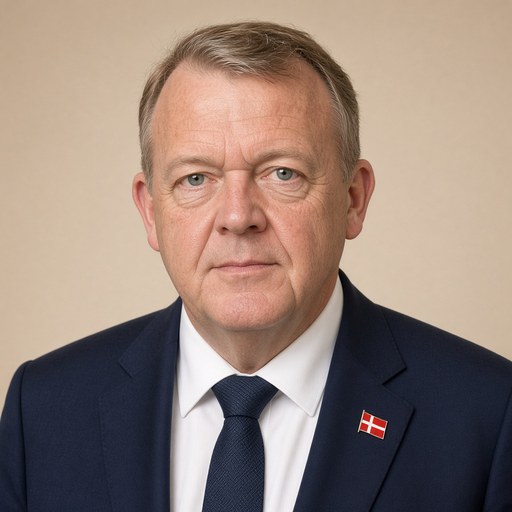
Prime Minister Lars Løkke Rasmussen's speech at Greenland's National Day, June 21, 2016.
 Lars Løkke Rasmussen · Prime Minister of Denmark
- Context
- Rasmussen addressed Greenlandic residents at the Greenlandic House in Copenhagen on June 21, 2016, celebrating Greenland's National Day as guest speaker.
- Main themes
- Greenland-Denmark relationship, Greenlandic National Day celebration, Kingdom of Denmark unity, climate change and Arctic environment, Greenlandic culture and identity, international attention to Greenland, Greenlandic flag recognition, long-distance partnership and mutual respect
- Duration
- ~7 min
- Words
- 869
- Sentences
- 81
- Readability
- 70
- Grade
- 6.0
- Syntax
- 2.40
- Vocabulary
- 2.07
Translated from Danish
The broad sphere of national life a sentence belongs to. Every sentence has an Arena, so it is the denominator the other indices are read against.
Other81 sentences in 35 paragraphs
Thank you for the invitation as this year's guest speaker. It is an honor.
I am happy to see so many here in the Greenlandic House in Copenhagen.
It is now over 30 years since Greenland got its own national day. A day that celebrates Greenland's ancient culture, history, and language.
There is a tradition for the day to be celebrated with morning songs, dancing, and kaffemik. That is still the case. June 21 is a special day. Also for me.
It is a day full of vitality. The same vitality shines from the many Greenlanders who are graduating from high schools and higher education institutions in Greenland these days.
They shape the street scene with their joyful noise, zest for life, and fine, new caps. It gives courage and hope for the future.
I have experienced the same vitality during the two times I have been to Greenland this year. First at the Kingdom meeting, where we visited Greenland's first ruby mine at Fiskernæsset. And a few weeks ago with the President of the European Council, Donald Tusk, where we visited Ilulissat and Ilimanaq.
Each time I am captivated by the unique Greenlandic nature. And warmed by the Greenlandic hospitality.
Everywhere. And I mean everywhere. We were received with big smiles and open arms. Thank you for that.
I actually feel that with each visit to Greenland, I fall even more in love with this fantastic land.
However, the same positive development does not apply to my Greenlandic language skills. I try to learn a little each time. Last time I learned the word immaqa.
That was at the airport in Kangerlussuaq with Tusk. Safe travels home, you will be home at 9 PM – immaqa. We got home the next day at 6 in the morning due to technical problems with the plane.
Fortunately, it is hard to get enough of Greenland, so it was just about enjoying every hour.
I am not the only one who feels this way. In fact, Greenland is currently attracting one foreign statesman after another.
A few weeks ago it was, as mentioned, Donald Tusk. And recently it was the American Secretary of State, John Kerry.
I understand them well. Greenland is indeed a lovely country. But it is almost as if the Prime Minister's Office has become a transit hall for statesmen who would rather be in Greenland.
Fortunately, I can now tell them how long the trip to Greenland takes:.... about four hours - immaqa.
Joking aside. I am really glad that so many international top politicians want to visit Greenland. Then they can see for themselves the effects of climate change. Glaciers retreating. Ice cover diminishing.
This is serious for all of us – not least for the Greenlanders who live in close interaction with nature. And have done so for generations. Hopefully, the visits can spur a strengthened effort against climate change.
This is in every way in the interest of the entire Kingdom community.
***
I have also learned another word: Erfalasorput – Our flag. It is a good word to know today.
Today it flies high on government buildings throughout the realm and abroad. It is historic.
For it is the first time in history that Dannebrog – the world's oldest national flag and symbol of one of the world's oldest kingdoms – makes way for another flag on Denmark's government buildings.
We raise the Greenlandic flag because we recognize Greenland. And because we want to mark our union in the Kingdom community.
A community that rests on respect and warmth. We wish each other the best. And we make each other better. We have a special place in each other's hearts.
So what could be more fitting than to quote a person who I know also holds Greenland particularly dear: Her Majesty the Queen.
She has said on several occasions that in a good marriage, there are three: You, me, and us. Those are wise words. And I think they also apply to the relationship between Denmark and Greenland.
In many other places, differences are a source of conflict. That is not the case between us. We do not always agree. But we resolve our disagreements in a proper manner.
We do not take each other for granted. No – we take our relationship seriously. And we adjust it all the time to fit the present. So there is room for everyone. So we can see ourselves in it.
And that is quite a task. Especially when one – like us – lives in what must be described as a long-distance relationship.
But it is a strong relationship, where there may be a distance between our countries, but there is no distance between the people. It is a relationship that rests on a shared past and a meaningful future.
And it is precisely in that spirit that Greenland's flag has today risen to the top across Denmark:
As a tribute to the Greenlandic people. As a gesture to the Greenlandic self-government. And not least – as a celebration of the bonds of the past, present, and future between Greenland and Denmark.
With those words, I would like to congratulate Greenland on its national day.
The original Danish. The tags above are read on the English translation's sentences.
Tak for invitationen som årets gæstetaler. Det er en ære.
Jeg er glad for at se så mange her i det Grønlandske Hus i København.
Det er nu over 30 år siden, at Grønland fik sin egen nationaldag. En dag, der fejrer Grønlands ældgamle kultur, historie og sprog.
Der er tradition for, at dagen fejres med morgensang, dans og kaffemik. Sådan er det stadig. Den 21. juni er en særlig dag. Også for mig.
Det er en dag fuld af livskraft. Samme livskraft lyser ud af de mange grønlændere, som i disse dage springer ud fra gymnasierne og de videregående uddannelser i Grønland.
De præger gadebilledet med deres glade larm, livsglæde og fine, nye huer. Det giver mod og håb for fremtiden.
Samme livskraft har jeg oplevet, de to gange jeg har været i Grønland i år. Først til rigsmøde, hvor vi blandt andet besøgte Grønlands første rubinmine ved Fiskernæsset. Og for nogle uger siden med formanden for Det Europæiske Råd Donald Tusk, hvor vi besøgte Ilulissat og Ilimanaq.
Hver gang bliver jeg bjergtaget af den enestående grønlandske natur. Og varm om hjertet af den grønlandske gæstfrihed.
Overalt. Og jeg mener overalt. Blev vi modtaget med store smil og åbne arme. Tak for det.
Jeg har det faktisk sådan, at for hver gang jeg besøger Grønland, bliver jeg endnu mere forelsket i det fantastiske land.
Samme positive udvikling gælder dog ikke for mine grønlandske sprogfærdigheder. Jeg forsøger at lære lidt hver gang. Sidst lærte jeg ordet immaqa.
Det var i lufthavnen i Kangerlussuaq sammen med Tusk. God tur hjem, I vil være hjemme kl. 21 – immaqa. Vi var hjemme næste dag kl. 6 om morgen pga. tekniske problemer med flyet.
Heldigvis er det svært at få nok af Grønland, så det var bare med at nyde hver en time.
Sådan er jeg ikke den eneste, der har det. Faktisk tiltrækker Grønland den ene udenlandske statsmand efter den anden for tiden.
For nogle uger siden var det som sagt Donald Tusk. Og forleden var det så den amerikanske udenrigsminister John Kerry.
Jeg forstår dem godt. Grønland er jo et dejligt land. Men altså... det er næsten som om, Statsministeriet et blevet en hel transithal for statsmænd, der egentlig helst vil til Grønland.
Heldigvis kan jeg nu svare dem på, hvor lang tid turen til Grønland tager:....godt fire timer - immaqa.
Spøg til side. Jeg er rigtig glad for, at så mange internationale toppolitikere ønsker at besøge Grønland. Så kan de ved selvsyn se virkningerne af klimaforandringerne. Gletsjere, der trækker sig tilbage. Isdækket, der bliver mindre.
Det er alvorligt for os alle sammen – ikke mindst for de grønlændere, der lever i tæt samspil med naturen. Og har gjort det i generationer. Forhåbentlig kan besøgene anspore til forstærket indsats over for klimaforandringerne.
Det er på alle måder i hele rigsfællesskabets interesse.
***
Jeg har også lært et andet ord: Erfalasorput – Vort flag. Det er et godt ord at kunne i dag.
I dag stryger det til tops på statslige bygninger i hele riget og i udlandet. Det er historisk.
For det er første gang i historien, at Dannebrog – verdens ældste nationalflag og symbol på et af verdens ældste kongeriger – viger pladsen for et andet flag på Danmarks statslige bygninger.
Vi hejser det grønlandske flag, fordi vi anerkender Grønland. Og fordi vi ønsker at markere vores forening i rigsfællesskabet.
Et fællesskab, der hviler på respekt og hjertevarme. Vi vil hinanden det bedste. Og vi gør hinanden bedre. Vi har en særlig plads i hinandens hjerter.
Så hvad kunne være mere passende end at citere en person, som jeg ved også holder særligt meget af Grønland: Hendes Majestæt Dronningen.
Hun har ved flere lejligheder sagt, at i et godt ægteskab er man tre: Dig, mig og os. Det er kloge ord. Og jeg synes også det gælder for Danmarks og Grønlands forhold.
Mange andre steder er forskelligheder en kilde til konflikt. Sådan er det ikke mellem os. Vi er ikke altid enige. Men vi løser vores uenigheder på en ordentlig måde.
Vi tager ikke hinanden for givet. Nej – vi tager vores forhold alvorligt. Og vi justerer det hele tiden, så det passer til nutiden. Så der er plads til alle. Så vi kan se os selv i det.
Og det er noget af en opgave. Særligt når man – som os – lever i det, der må betegnes som et langdistanceforhold.
Men det er et stærkt forhold, hvor der godt nok langt mellem vores lande, men ikke er distance mellem menneskene. Det er et forhold, der hviler på en fælles fortid og en meningsfuld fremtid.
Og det er lige præcis i den ånd, at Grønlands flag i dag er gået til tops i hele Danmark:
Som en hyldest til det grønlandske folk. Som en gestus til det grønlandske selvstyre. Og ikke mindst – som en fejring af både fortidens, nutidens og fremtidens bånd mellem Grønland og Danmark.
Med de ord vil jeg ønske Grønland tillykke med nationaldagen.