




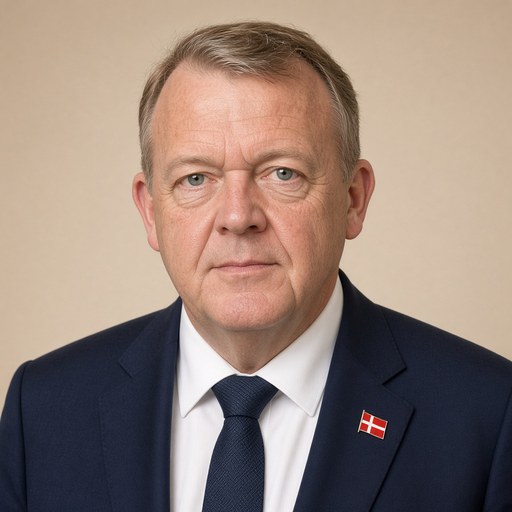
Prime Minister Lars Løkke Rasmussen's speech at the DI Summit on September 26, 2017.
 Lars Løkke Rasmussen · Prime Minister of Denmark
- Context
- Rasmussen addressed the DI (Confederation of Danish Industry) Summit on September 26, 2017, outlining his government's economic strategy and vision for Denmark's future.
- Main themes
- Danish economic progress, growth and welfare balance, private sector investment, labor market reform, infrastructure investment, tax policy, business competitiveness, digitalization, false political dichotomies, future generations vs. short-term thinking
- Duration
- ~15 min
- Words
- 1,797
- Sentences
- 164
- Readability
- 66
- Grade
- 6.8
- Syntax
- 2.49
- Vocabulary
- 2.07
Translated from Danish
The broad sphere of national life a sentence belongs to. Every sentence has an Arena, so it is the denominator the other indices are read against.
Other164 sentences in 103 paragraphs
"What now, Denmark?"
That's what you are asking today, Karsten. And you are not the only one.
For we live in a time where the 'now' occupies a lot of space. The changes come so quickly that we are constantly at a turning point.
At least, that is how it can feel.
That is precisely why it is important not to become blinded by speed. We must hold on to Denmark's red thread.
The fundamental direction that has made our country – not perfect, but one of the best that exists. I dare say the best in the world.
I was reminded of this before the summer holidays.
Here, I had the privilege of meeting my four predecessors at Marienborg. For some conversations about being Prime Minister in Denmark.
Four great personalities. And then myself. From three different parties. Who certainly do not agree on everything. But who have had the same fundamental ambition: To create constant progress for Denmark.
Poul Schlüter, who pulled the Danish economy away from the brink and restored the world's trust in the krone.
Poul Nyrup Rasmussen, who took the lead in reforming labor market policy, strengthened competitiveness, and reduced unemployment.
Anders Fogh Rasmussen. Who introduced the tax freeze. Reduced the tax on work three times. Was behind a historic welfare agreement. And put people before the system.
And Helle Thorning-Schmidt. Who – despite significant opposition from her own ranks – actually continued the reform policy, spurred on by and in cooperation with the Liberal Party.
Progress for Denmark. That is the red thread.
Progress, so we can also afford welfare.
So we continue to dare to open ourselves to the world.
So everyone has the opportunity to have a good life.
The crucial point is, how have we done it – and how do we do it going forward?
I have no doubt that since the last election alone, more than 100,000 private jobs have been created.
When today we have the lowest number of people on public assistance in 10 years.
When we have the lowest unemployment in 40 years, except for two years during the overheating in the 2000s.
When we have a foreign wealth – instead of foreign debt.
When there are more than 10,000 fewer people in the cash assistance system than just one year ago.
When we today have progress in all parts of Denmark.
...it is not least because we have thrown the false dichotomies of history onto the junk heap.
We have shown that growth and welfare are not opposites. For us, they are prerequisites for each other.
We have shown that there is no contradiction between strong companies. The private sector. And a good public sector. On the contrary, the interplay makes both stronger.
We have shown that there is no contradiction between a flexible labor market and security for employees.
In fact, a survey from the EU Commission shows that Denmark is the country in the EU where the most people have a positive assessment of their own job situation.
The false dichotomies belong on the junk heap. On that point, I do not advocate recycling.
But there are others who do. Who every time they are in opposition, recycle the same slogans. Who try to make Denmark's future a choice between, on the one hand, tax cuts that increase employment. And on the other hand, welfare.
That is a false dichotomy that I must warn against.
I must warn against the "here and now mentality," which unfortunately has taken root at Christiansborg and in the political debate.
Where far too many parties think about spending money here and now. But far too little about the fact that it must be earned first.
Now that progress has gained altitude – we must also give it length. That requires that we also invest in growth and jobs.
Therefore, it would be harmful if one simply spends every last penny to increase public consumption. That would be to miss the chance to lay a solid foundation for future growth.
We need to think more about the next generation than about the next election.
That is why I and the government want to invest in future growth and prosperity.
First, by using less than a quarter of the available space to lower taxes. So that it pays better to work. Save for one's own pension. Make an extra effort. And thereby contribute to Denmark's prosperity.
Second, by investing in you – Denmark's companies. For it is you who create the jobs and finance the welfare.
That is why we have presented 22 concrete initiatives. That will contribute to more small ideas being able to grow big in Denmark.
That more Danes invest their spare funds in Danish jobs.
That entrepreneurs get more capital to work with.
That we strengthen digitalization and the development of new business models.
That you have lower costs.
And that Danish companies are strengthened in a globalized world.
Third, we will invest in better infrastructure. New highways – but also digital infrastructure. Because it connects Denmark and creates better conditions for growth and development.
It provides progress instead of stagnation.
And it simultaneously leaves a large pot of money for all the things we also need.
They should, among other things, be used to strengthen the police. The defense. And not least for better core welfare.
For more investments in better health. Where last year we lifted cancer treatment and elderly care with a large billion amount. Not least in the area of dementia.
It is a healthy balance – that continues the red thread in Danish politics.
Just as the agreement on car taxes does. This is now the third time since the parliamentary election that we have agreed with the Danish People's Party to make cars cheaper. The new agreement means that more can afford a safer and family-friendly car.
At the same time, we are expanding the highway in West Funen. Lowering the tolls over the Great Belt, which is a barrier. It provides more mobility. More opportunities. Progress instead of stagnation.
The same goes for the collaboration between the government, employers, and the labor movement.
Last year, we entered into two tripartite agreements.
One that aims to provide more qualified labor and more internships.
One that aims to strengthen integration.
And now we have begun to address the area of adult and continuing education.
That will – hopefully – become the third in the series of tripartite agreements.
Together, we have revived the old tradition that others buried.
Thanks to both the labor movement and the employers for the good cooperation.
You have shown in action that you put the false dichotomies on the shelf. Creating progress instead of stagnation.
And that is what we need.
For we are a small country that must manage in a large world.
With a terror threat that we have unfortunately almost become accustomed to.
An American president who questions free trade and leaves the common climate agreement.
With wars and conflicts that create large flows of refugees.
An EU that must find itself after Brexit.
Also in these waters, Denmark must navigate balanced and sensibly. But also seek influence.
Our best platform for international influence is the EU.
An EU that can negotiate ambitious free trade agreements that break down market barriers and shape globalization in our direction.
And that stands with new opportunities because of the signals from the White House.
Based on the Single Market, Danish companies have access to a nearby market of 500 million consumers. That creates growth and jobs.
500,000 Danish jobs are directly tied to access to the Single Market. For an ordinary LO family, membership of the Single Market corresponds to an annual additional income of 65,000 DKK.
Gains that we have brought home, but which are often invisible in everyday life and debate. But which become clear when one – like the United Kingdom – chooses to leave the community.
I would have very much liked the United Kingdom to have remained in the EU – or at least in the Single Market. But that is their choice.
But when one no longer wants to contribute to the community or be subject to common rules and standards, one cannot enjoy the benefits either.
For then we give British companies an entirely unreasonable competitive advantage that harms Danish companies and jobs. We cannot accept that.
For me, the solution to the EU's challenges is not to question cooperation at a time when we need to stand together.
The solution is to make the EU better. And make it fairer.
The EU must first and foremost address the problems that concern citizens and deliver concrete results on the challenges where cooperation is crucial.
This particularly applies to economic growth, security – and not least migration.
Here, the EU's contribution is crucial. For example, when it comes to pushing for better return options or strengthening the EU's external borders.
It is the combination of a strict Danish immigration policy and a European effort that means we have to go back eight years to find a half-year where so few have sought asylum in Denmark. That is good.
But we must not close off to skilled people who want to contribute. We have always needed them. We still do.
That is why I am sorry that a majority outside the government has raised the so-called salary threshold. And thereby made it harder for Danish businesses to attract qualified labor from abroad. Labor that you desperately need.
Instead of raising the salary threshold, we should rather lift the perspective.
When we completely close off Denmark – we lock ourselves in. I was confirmed in this just over a month ago when I attended the large UNLEASH conference in Aarhus.
Here, talents from all over the world gathered to find concrete solutions to the challenges of the future.
I know that three of the participants are also with us today.
Karlijn from the Netherlands
Mohammed from Iraq.
Marion from Kenya.
I must just say: If we push the talents away from us, we are creating problems for ourselves in the long term.
Denmark's wealth and opportunities depend on us building broad and sustainable bridges to the rest of the world.
Dear everyone.
Regardless of who has held the keys to the Prime Minister's Office for the last 35 years. The red thread has been progress instead of stagnation.
That is how it should also be in the future.
I hope that the large opposition party will also return to that course.
We must set our ambitions high. Not only use what others have created – but also invest in growth and prosperity for our children and grandchildren.
Let us seize the future together.
Thank you for your attention.
The original Danish. The tags above are read on the English translation's sentences.
”Hvad nu Danmark?”
Sådan spørger du i dag, Karsten. Og du er ikke den eneste.
For vi lever i en tid, hvor ’nuet’ fylder meget. Forandringerne kommer så hurtigt, at vi hele tiden står ved et vendepunkt.
Sådan kan det i hvert fald føles.
Netop derfor er det vigtigt ikke at blive fartblind. Vi skal holde fast i Danmarks røde tråd.
Den grundlæggende retning, som har gjort vores land – ikke perfekt, et af de bedste, som findes. Jeg tør godt sige verdens bedste.
Det blev jeg mindet om op til sommerferien.
Her havde jeg det privilegium at møde mine fire forgængere på Marienborg. Til nogle samtaler om at være statsminister i Danmark.
Fire store personligheder. Og så mig selv. Fra tre forskellige partier. Som bestemt ikke er enige om alt. Men som har haft samme grundlæggende ambition: At skabe konstant fremgang for Danmark.
Poul Schlüter, som trak dansk økonomi væk fra afgrunden og genoprettede udlandets tillid til kronen.
Poul Nyrup Rasmussen, som satte sig i spidsen for at reformere arbejdsmarkedspolitikken, styrkede konkurrenceevnen og nedbragte arbejdsløsheden.
Anders Fogh Rasmussen. Som indførte skattestoppet. Sænkede skatten på arbejde tre gange. Stod bag en historisk velfærdsaftale. Og satte mennesket før systemet.
Og Helle Thorning-Schmidt. Som – på trods af stor modstand fra egne rækker – faktisk førte reformpolitikken videre, ansporet af og i samarbejde med Venstre.
Fremgang for Danmark. Det er den røde tråd.
Fremgang, så vi også har råd til velfærd.
Så vi fortsat tør åbne os mod verden.
Så alle har mulighed for at få et godt liv.
Det springende punkt er, hvordan har vi gjort det – og hvordan gør vi fremover?
Jeg er ikke i tvivl om, at når der alene siden sidste valg er skabt mere end 100.000 private arbejdspladser.
Når vi i dag har det laveste antal mennesker på offentlig forsørgelse i 10 år.
Når vi har den laveste ledighed i 40 år, på nær to år under overophedningen i 00’erne.
Når vi har en udlandsformue – i stedet for en udlandsgæld.
Når der er mere end 10.000 færre personer i kontanthjælpssystemet end for bare ét år siden.
Når vi i dag har fremgang i alle dele af Danmark.
...så skyldes det ikke mindst, at vi har smidt historiens falske modsætninger på lossepladsen.
Vi har vist, at vækst og velfærd ikke er hinandens modsætninger. For os er de hinandens forudsætninger.
Vi har vist, at der ikke er en modsætning mellem stærke virksomheder. Den private sektor. Og en god offentlig sektor. Tværtimod at samspillet gør begge stærkere.
Vi har vist, at der ikke er en modsætning mellem et fleksibelt arbejdsmarked og tryghed for medarbejderne.
Faktisk viser en måling fra EU-kommissionen, at Danmark er det land i EU, hvor flest har en positiv vurdering af deres egen jobsituation.
De falske modsætninger hører til på lossepladsen. På det punkt går jeg ikke ind for genbrug.
Men det er der andre, som gør. Som hver gang de er i opposition, genbruger de samme slogans. Som forsøger at gøre Danmarks fremtid til et valg mellem på den ene side skattelettelser, som øger beskæftigelsen. Og på den anden side velfærd.
Det er en falsk modsætning, som jeg må advare imod.
Jeg må advare mod den ”her og nu-tankegang”, som desværre har slået rod på Christiansborg og i den politiske debat.
Hvor alt for mange partier tænker på at bruge pengene her og nu. Men alt for lidt på, at de skal tjenes først.
Nu hvor fremgangen har fået flyvehøjde – skal vi også give den flyvelængde. Det kræver at vi også investerer i vækst og arbejdspladser.
Derfor vil det være skadeligt, hvis man bare bruger rub og stub på at øge det offentlige forbrug. Det vil være at forpasse chancen for at lægge et solidt fundament til fremtidens vækst.
Vi er nødt til at tænke mere på næste generation end på næste valg.
Derfor ønsker jeg og regeringen at investere i fremtidig vækst og velstand.
For det første, ved at bruge under en fjerdedel af råderummet på at sænke skatten. Så det bedre kan betale sig at arbejde. Spare op til egen pension. Yde en ekstra indsats. Og dermed bidrage til Danmarks velstand.
For det andet, ved at investere i jer – Danmarks virksomheder. For det er jer, som skaber arbejdspladserne og finansierer velfærden.
Derfor har vi fremlagt 22 konkrete initiativer. Som skal bidrage til, at flere små ideer kan vokse sig store i Danmark.
At flere danskere investerer deres frie midler i danske arbejdspladser.
At iværksætterne får mere kapital at arbejde med.
At vi styrker digitaliseringen og udviklingen af nye forretningsmodeller.
At I får lavere omkostninger.
Og at danske virksomheder styrkes i en globaliseret verden.
For det tredje, vil vi investere i bedre infrastruktur. Nye motorveje – men også digital infrastruktur. Fordi det binder Danmark sammen og skaber bedre forudsætninger for vækst og udvikling.
Det giver fremgang i stedet for stilstand.
Og det efterlader samtidig en stor pose penge til alt det, vi også har brug for.
De skal blandt andet bruges på at styrke politiet. Forsvaret. Og ikke mindst på bedre kernevelfærd.
Til flere investeringer i bedre sundhed. Hvor vi sidste år løftede kræftbehandlingen og ældreplejen med et stort milliardbeløb. Ikke mindst demensområdet.
Det er en sund balance – som fortsætter den røde tråd i dansk politik.
Ligesom aftalen om bilafgifter i øvrigt gør. Det er nu tredje gang siden folketingsvalget at vi enes med Dansk Folkeparti om at gøre biler billigere. Den nye aftale betyder, at flere får råd til en mere sikker og familievenlig bil.
Samtidig udvider vi motorvejen på Vestfyn. Sænker taksterne over Storebælt, som er en barriere. Det giver mere mobilitet. Flere muligheder. Fremgang fremfor stilstand.
Det samme gør samarbejdet mellem regeringen, arbejdsgiverne og fagbevægelsen.
Sidste år indgik vi to trepartsaftaler.
En som skal give mere kvalificeret arbejdskraft og flere praktikpladser.
En som skal styrke integrationen.
Og nu har vi taget fat på voksen- og efteruddannelsesområdet.
Det vil – forhåbentlig – blive den tredje i rækken af trepartsaftaler.
Sammen har vi genoplivet den gamle tradition, som andre lagde i graven.
Tak til både fagbevægelsen og arbejdsgiverne for det gode samarbejde.
I har vist i handling, at I lægger de falske modsætninger på hylden. Skaber fremgang fremfor stilstand.
Og det har vi behov for.
For vi er et lille land, som skal klare sig i en stor verden.
Med en terrortrussel, som vi desværre næsten har vænnet os til.
En amerikansk præsident, som sætter spørgsmålstegn ved frihandel og forlader den fælles klimaaftale.
Med krige og konflikter, som skaber store flygtningestrømme.
Et EU, som skal finde sig selv efter Brexit.
Også i det farvand skal Danmark navigere balanceret og fornuftigt. Men også søge indflydelse.
Vores bedste platform for international indflydelse er EU.
Et EU, som kan forhandle ambitiøse frihandelsaftaler, der nedbryder markedsbarrierer og præger globaliseringen i vores retning.
Og som står med nye chancer på grund af signalerne fra Det Hvide Hus.
Med udgangspunkt i Det Indre Marked har danske virksomheder adgang til et nærmarked på 500 millioner forbrugere. Det giver vækst og arbejdspladser.
500.000 danske arbejdspladser er bundet direkte op på adgangen til Det Indre Marked. For en almindelig LO-familie svarer medlemskabet af Det Indre Marked til en årlig merindtægt på 65.000 kr.
Gevinster, som vi har taget hjem, men som ofte er usynlige i hverdagen og debatten. Men som bliver tydelige, når man – som Storbritannien – vælger at forlade fællesskabet.
Jeg så meget gerne, at Storbritannien var blevet i EU – eller i det mindste i Det Indre Marked. Men det er deres valg.
Men når man ikke længere vil bidrage til fællesskabet eller være underlagt fælles regler og standarder, kan man heller ikke nyde goderne.
For så giver vi britiske virksomheder en helt urimelig konkurrencefordel, som går ud over danske virksomheder og arbejdspladser. Det kan vi ikke acceptere.
For mig er løsningen på EU's udfordringer ikke at sætte spørgsmålstegn ved samarbejdet i en tid, hvor vi har brug for at stå sammen.
Løsningen er at gøre EU bedre. Og gøre det mere rimeligt.
EU skal først og fremmest tage sig af de problemer, der optager borgerne, og levere konkrete resultater på de udfordringer, hvor samarbejde er afgørende.
Det gælder særligt økonomisk vækst, sikkerhed – og ikke mindst migration.
Her er EU’s bidrag afgørende. Fx når det kommer til at presse på for at opnå bedre tilbagesendelsesmuligheder eller styrke EU’s ydre grænser.
Det er kombinationen af en stram dansk udlændingepolitik og en europæisk indsats, som gør, at vi skal otte år tilbage for at finde et halvår, hvor så få har søgt asyl i Danmark. Det er godt.
Men vi skal ikke lukke for dygtige mennesker, som ønsker at bidrage. Dem har vi altid haft brug for. Det har vi stadig.
Derfor er jeg ked af, at et flertal uden om regeringen har hævet den såkaldte beløbsgrænse. Og dermed gjort det sværere for dansk erhvervsliv at tiltrække kvalificeret arbejdskraft udefra. En arbejdskraft, I har hårdt brug for.
I stedet for at hæve beløbsgrænsen, skulle vi hellere løfte perspektivet.
Når vi lukker Danmark helt af – lukker vi os selv inde. Det blev jeg bekræftet i for godt en måned siden, hvor jeg deltog den store UNLEASH-konference i Aarhus.
Her mødtes talenter fra hele verden for at finde konkrete løsninger på fremtidens udfordringer.
Jeg ved, at tre af deltagerne også er med os i dag.
Karlijn fra Holland
Mohammed fra Irak.
Marion fra Kenya.
Jeg må bare sige: Hvis vi skubber talenterne fra os, så giver vi os selv problemer på lang sigt.
Danmarks rigdom og muligheder er afhængig af, at vi bygger brede og bæredygtige broer til resten af verden.
Kære alle sammen.
Uanset hvem der har haft nøglerne til statsministeriet i de sidste 35 år. Så har den røde tråd været fremgang fremfor stilstand.
Sådan skal det også være i fremtiden.
Jeg håber, at også det store oppositionsparti vil vende tilbage til den kurs.
Vi skal sætte ambitionerne højt. Ikke kun bruge af det andre har skabt – men også investere i vækst og velstand for vores børn og børnebørn.
Lad os gribe fremtiden sammen.
Tak for ordet.