




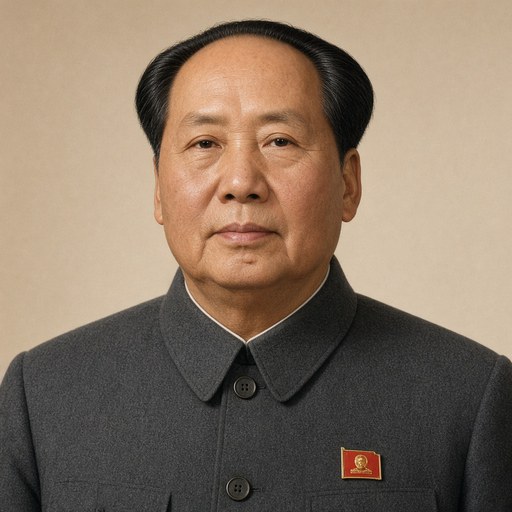
New-Democratic Constitutional Government
 Mao Zedong · Chairman of the Central Committee of the Communist Party of China
- Context
- Mao addressed the inaugural meeting of the Association for Promoting Constitutional Government in Yan'an on February 20, 1940, defining New Democratic constitutional government and urging a struggle against Kuomintang die-hards.
- Main themes
- New Democratic constitutional government, independence and democracy as China's two lacks, imperialist and feudal oppression, democratic resistance to Japan, die-hards and their sham constitutionalism, Sun Yat-sen's call to promote the National Assembly, dictatorship of several revolutionary classes, rejection of bourgeois and socialist democracy for present China, Kuomintang anti-communist campaigns against the Border Region, Chamberlain and Wang Jingwei as examples of die-hards' failure, struggle for democracy not yet won
- Duration
- ~30 min
- Words
- 3,571
- Sentences
- 209
- Readability
- 58
- Grade
- 9.3
- Syntax
- 2.93
- Vocabulary
- 2.04
Translated from Chinese Source: GitHub qinglee/maoxuan (毛泽东选集) ↗
The broad sphere of national life a sentence belongs to. Every sentence has an Arena, so it is the denominator the other indices are read against.
Other209 sentences in 17 paragraphs
Today, representatives of the people of all circles in Yan'an are gathered here for the inaugural meeting of the Association for Promoting Constitutional Government. Everyone is concerned about constitutional government, and that is highly significant. What is the purpose of this meeting of ours? It is to give expression to the will of the people, to defeat Japan and to build a new China.
Resisting Japan is something everyone approves of. That has already been undertaken, and the only question is persevering in it. But there is another thing, called democracy, and that has not yet been done. These two things are the most important matters in China today. China lacks many things, to be sure, but chiefly it lacks two: one is independence, the other is democracy. If either of these two is lacking, China's affairs cannot be run well. On the one hand there are two things too few; on the other there are two things too many. What are the two things too many? One is imperialist oppression, the other is feudal oppression. Because of these two extra things, China has become a colonial, semi-colonial and semi-feudal country. What the people of our whole country want now is chiefly independence and democracy, and therefore we must destroy imperialism and destroy feudalism. We must destroy these things resolutely and thoroughly, and show them not the slightest mercy. Some people say that we should only build, not destroy. Then let me ask: Should Wang Jingwei be destroyed or not? Should Japanese imperialism be destroyed or not? Should the feudal system be destroyed or not? If you do not destroy these bad things, you need not dream of building anything. Only when these things are destroyed can China be saved, and only then can China set about building; otherwise it is nothing but talk in one's sleep. Only by destroying what is old and rotten can we build what is new and sound. Put independence and democracy together and you have democratic resistance to Japan, or, call it, anti-Japanese democracy. Without democracy, resistance to Japan will fail. Without democracy, the resistance cannot be kept up. With democracy, we will certainly win, even if we have to fight them for eight or ten years.
What is constitutional government? It is democratic government. I agree with what Comrade Wu, our elder, said just now. But what kind of democratic government is it that we want now? It is New Democratic government, New Democratic constitutional government. It is not the old, outdated, European-and-American-style so-called democratic government of bourgeois dictatorship; nor, at the same time, is it yet Soviet-style democratic government of proletarian dictatorship.
That old type of democracy has been practised abroad, and it is now in decline and has turned into something reactionary. We must on no account accept such a reactionary thing. The constitutional government that China's die-hards talk about is the old bourgeois democratic government of foreign countries. When they say they want this kind of constitutional government, they do not really want it; they are using it to deceive the people. What they actually want is a fascist one-party dictatorship. China's national bourgeoisie does indeed want this kind of constitutional government; it wants to establish a bourgeois dictatorship in China, but it will not get one. For the Chinese people as a whole do not want such a thing; the Chinese people do not welcome a dictatorship of the bourgeoisie as a single class. China's affairs must be decided by the majority of the Chinese people, and it absolutely cannot be permitted that the bourgeoisie, a single class, should monopolize political power. What about socialist democracy? That is of course very good, and the whole world will eventually practise socialist democracy. But this kind of democracy is not yet workable in present-day China, so for the time being we have to do without it. Only in the future, when certain conditions are present, can socialist democracy be put into practice. What China needs now is a democratic government that is neither the old type of democracy nor yet socialist democracy, but New Democracy suited to China's present conditions. The constitutional government now being prepared for should be New Democratic constitutional government.
What is New Democratic constitutional government? It is the dictatorship of several revolutionary classes united together over the traitors and reactionaries. Someone once said, "If there is food, let everybody share it." I think this can serve as an analogy for New Democracy. Since everybody is to share the food, there cannot be a dictatorship by one party, one clique or one class. It was put best by Dr. Sun Yat-sen in the Manifesto of the First National Congress of the Kuomintang of China. That manifesto said: "The so-called democratic system in modern states is usually monopolized by the bourgeoisie and has become simply an instrument for oppressing the common people. On the other hand, the Kuomintang's Principle of Democracy means a democratic system shared by all the common people and not privately owned by the few." Comrades, in studying constitutional government we should read all kinds of books, but above all we should read this manifesto, and the passage I have just quoted from it should be read until we know it thoroughly and remember it firmly. "Shared by all the common people and not privately owned by the few" is the concrete content of what we call New Democratic constitutional government; it is the democratic dictatorship of several revolutionary classes united together over the traitors and reactionaries; it is the constitutional government we want today. Such constitutional government is also the constitutional government of the Anti-Japanese United Front.
The meeting we are holding today is called the Association for Promoting Constitutional Government. Why must it be "promoted"? If everyone were moving forward, there would be no need to promote anything. Why have we taken all this trouble to hold a meeting? Precisely because there are some people who do not move forward, who lie there motionless and refuse to make progress. Not only do they not move forward, they want to move backward. Tell them to go forward and they would rather die than do it. These people are called die-hards. They are so stubborn that nothing can be done with them, so we must hold a big meeting and give them a "prod." Where does this word "promote" come from? Who invented it? We did not invent it; it was invented by a great man, by that venerable gentleman who said, "For forty years I have devoted myself to the cause of the national revolution." It was invented by Dr. Sun Yat-sen. Look, is it not written in his Testament: "Recently I proposed the convening of a National Assembly... in particular, its realization must be 'promoted' within the shortest possible time. This is my most earnest charge"? Comrades, this "charge" is no ordinary charge; it is a "most earnest charge." A "most earnest charge" is an extraordinary charge. How can it be treated casually and ignored! What it says is "the shortest possible time"—first, not the longest; second, not rather long; third, not even ordinarily short, but the "shortest." To bring about the National Assembly in the shortest possible time, there must be "promotion." Dr. Sun has been dead fifteen years, and the National Assembly he proposed has still not been convened. Day in and day out they make a fuss about "political tutelage," and the time has been frittered away in a muddle; the shortest possible time has been turned into the longest possible time, and still they keep invoking Dr. Sun's name. How Dr. Sun's spirit in heaven must reproach these unworthy descendants! The situation today is very clear: without promotion there will certainly be no progress. Many people are moving backward, and many people have not yet woken up, and that is why there must be "promotion."
Because there is no progress, there must be promotion. Because progress is slow, there must be promotion. And so we are holding promotion meetings on a grand scale. Youth associations for promoting constitutional government, women's associations for promoting constitutional government, workers' associations for promoting constitutional government, associations for promoting constitutional government in every school, every organization, every army unit—they are flourishing and being run very well. Today we are holding yet another, a general promotion meeting, so that everyone may rise together and promote, in order to have constitutional government put into practice sooner, in order to carry out Dr. Sun's behests sooner.
Some people say: They are in various places, you are in Yan'an; you want to promote, but they won't listen, so what is the use? There is a use. Because events are developing, they will have to listen. If we hold more meetings, write more articles, make more speeches and send more telegrams, they will not be able to refuse to listen. In my view the many promotion associations in Yan'an have two purposes. One is study, the other is pushing things forward. Why study? If they do not move forward, you prod them, and if they ask you, "Why are you prodding me?" then we have to answer the question. To answer the question, we have to make a good study of the principles of constitutional government. Comrade Wu has just said a great deal; those are the principles. Every school, every organization, every army unit, the people of all circles, must study the present question of constitutional government.
Once we have studied, we will be in a good position to push others. Pushing is "promoting": give a push in every direction, and every quarter will gradually start to move. Then many small streams will merge into a great river, which will wash away everything rotten and dark, and New Democratic constitutional government will emerge. This pushing will have a very great effect. What is done in Yan'an cannot fail to influence the whole country.
Comrades, do you think that as soon as the meeting is held and the telegrams are sent, the die-hards will be at their wits' end? That they will then make progress? That they will then obey our orders? No, they will not be so easily persuaded. Many of the die-hards are graduates of the School of Die-Hardism. They are die-hards today, die-hards tomorrow, and still die-hards the day after. What is a die-hard? Hard means unyielding, and die means making no progress today, tomorrow or the day after. People like that are called die-hards. Getting such die-hards to listen to us is no easy matter.
Constitutional government throughout the world, whether in Britain, France, the United States or the Soviet Union, has always come about in this way: after a revolution had succeeded and democracy had become a fact, a fundamental law was promulgated to recognize it, and that is a constitution. China is different. In China the revolution has not yet succeeded, and apart from our Border Region and similar places, democratic government does not yet exist as a fact anywhere in the country. The fact in China today is semi-colonial and semi-feudal politics, and even if a good constitution were promulgated, it would inevitably be obstructed by the feudal forces and blocked by the die-hards, and it would be impossible to put it into practice smoothly. Therefore the present constitutional movement is a fight for democracy not yet won, not a recognition of democracy as an accomplished fact. This is a great struggle, and by no means an easy or simple matter.
Now some people who have always opposed constitutional government are also talking about it. Why are they talking about constitutional government? Because they have been pressed so hard by the people resisting Japan that they have no choice but to make some show of it. What is more, they are shouting at the tops of their voices, "We have always stood for constitutional government!" Beating the drums and blowing the horns—what a commotion! Many years ago we heard the term constitutional government, but to this day we have not seen even a shadow of it. They say one thing with their mouths and do another with their hands; this is called being double-dealers on constitutional government. Such double-dealing is the true face of their "always standing for" it. The die-hards of today are precisely such double-dealers. Their constitutional government is a fraud. You will see that before long there may be a constitution, and a president as well. But democracy and freedom? Heaven knows when they will be granted to you. China has had constitutions before—did not Cao Kun promulgate a constitution? But where were democracy and freedom? As for presidents, there have been even more of those. The first was Sun Yat-sen, and he was good, but he was ousted by Yuan Shikai. The second was Yuan Shikai, the third Li Yuanhong, the fourth Feng Guozhang, the fifth Xu Shichang—quite a few, one might say, but how did they differ from autocratic emperors? Their constitutions and their presidents alike were all sham. In countries like Britain, France and the United States today, the so-called constitutional government, the so-called democratic government, is in reality government that devours people. We can see the same thing in Central and South America, where many countries have hung out the signboard of a republic but in reality have no democracy whatsoever. China's present die-hards are exactly like this. The constitutional government they talk about is nothing but "hanging out a sheep's head and selling dog meat." They are hanging out the sheep's head of constitutional government and selling the dog meat of one-party dictatorship. I am not cursing them at random; what I say has grounds, and the grounds are that while they talk about constitutional government, they do not give the people the slightest freedom.
Comrades, genuine constitutional government will never be easily obtained; it can only be won through hard struggle. Therefore you must on no account believe that as soon as our meeting is held, the telegrams dispatched and the articles written, we will have constitutional government. Nor must you on any account believe that once the People's Political Council has passed a resolution, the National Government has issued an order, the National Assembly has been convened on November 12, a constitution has been promulgated and even a president elected, all will be well and there will be peace under heaven. That is not how it is; do not let your heads be muddled. This situation must also be explained clearly to the common people, so that they are not confused. Things are by no means so easy.
Talking like this, are we not saying "Alas, all is lost"? That things are so difficult that there is no hope for constitutional government? Not so. There is still hope for constitutional government, great hope, and China is bound to become a New Democratic country. Why? The difficulties of constitutional government arise because the die-hards are making trouble; but the die-hards cannot go on being die-hards forever, and so there is still great hope. The die-hards of this world may be die-hards today, die-hards tomorrow and die-hards the day after, but they cannot go on being die-hards forever; in the end they will change. Take Wang Jingwei: he was a die-hard for a long time, until he could no longer play the die-hard on anti-Japanese territory and had to run off into Japan's arms. Take Zhang Guotao: he too was a die-hard for a long time; we held several struggle meetings, struggled against him this way and that, and he too slipped away. Die-hards are in fact stubborn but not hard; after being stubborn for a while, they change, and they turn into dung heaps despised by humankind. Some change for the better, and that too is because of struggle: struggled against this way and that, they admit their mistakes and change for the better. In short, die-hards are bound to change. Die-hards always have a plan of some kind, a plan for how to harm others to benefit themselves, how to play the double-dealer, and the like. But the results die-hards have obtained have always been the opposite of what they wished. They always begin by harming others and end by ruining themselves. We once said that Chamberlain would "lift a rock only to drop it on his own feet," and that has now come true. In the past Chamberlain was single-mindedly bent on picking up the rock of Hitler to drop on the feet of the Soviet people, but from the day last September when war broke out between Germany on one side and Britain and France on the other, the rock in Chamberlain's hands has been dropping on Chamberlain's own feet. And right up to now, that rock is still hitting Chamberlain. There are plenty of such stories in China too. Yuan Shikai wanted to drop the rock on the common people's feet, but it landed on his own; he was emperor for a few months and then died. Duan Qirui, Xu Shichang, Cao Kun, Wu Peifu and others all tried to suppress the people, but in the end they were all overthrown by the people. Anyone who has a mind to harm others to benefit himself comes to a bad end.
As for the anti-Communist die-hards of today, if they do not make progress, I do not think they can escape this general rule either. Under the fine-sounding name of unification, they want to abolish the progressive Shaanxi-Gansu-Ningxia Border Region, abolish the progressive Eighth Route Army and New Fourth Army, abolish the progressive Communist Party, and abolish the progressive people's organizations. This whole set of plans exists. But as I see it, the outcome will by no means be die-hardism abolishing progress; on the contrary, progress will abolish die-hardism. If the die-hards do not want to be abolished, the only way is for them to make progress themselves. That is why we keep advising the die-hards not to attack the Eighth Route Army and not to oppose the Communists and the Border Region. If they insist on doing so, they had better draw up a resolution, and in its first article write: "With the determination to destroy ourselves, the die-hards, and to give the Communist Party the opportunity for extensive development, we have the task of opposing the Communists and the Border Region." The die-hards have a good deal of experience in "suppressing the Communists," and if they now want to "suppress the Communists" again, that is their freedom. Since they eat their own food and have had their fill of sleep, if they want to "suppress," we can only let them do as they please. But they had better be prepared to carry out such a resolution; that is unalterable. In the past ten years of "suppressing the Communists," they acted according to just such a resolution. If they want to "suppress" again from now on, they will have to repeat that resolution. So I advise them that it would be better not to "suppress." For what the people of the whole country want is resistance to Japan, unity and progress, not "suppression of the Communists." Therefore whoever "suppresses the Communists" is bound to fail.
In short, the results of all retrograde actions are the opposite of what their authors originally wished. In ancient times and modern, in China and abroad, there has been no exception.
It is the same with constitutional government now. If the die-hards go on opposing constitutional government, the result will certainly be the opposite of what they wish. This constitutional movement will certainly not follow the line laid down by the die-hards; it will run counter to their wishes and will inevitably follow the line laid down by the people. That is certain, because the people of the whole country want it so, the course of Chinese history demands it, and the trend of the whole world requires us to do so. Who can go against this direction? The great wheel of history cannot be dragged back. But to accomplish this well takes time; it cannot be achieved overnight. It takes effort; it cannot be done casually. It requires mobilizing the masses of the people; the strength of a few hands and feet will not do it. It is very good that we are holding this meeting today, and after the meeting we must also write articles and send out circular telegrams, and hold meetings like this everywhere—on Mount Wutai, in the Taihang Mountains, in North China, in Central China, in every part of the country. If we keep at it like this for a few years, we will be nearly there. We must get the job done, we must win democracy and freedom, we must put New Democratic constitutional government into practice. If we do not do it this way and follow the die-hards' way instead, the country will be lost. To keep the country from being lost, we must do it this way. For this purpose, everyone must exert themselves. As long as we exert ourselves, there is great hope for our cause. We must also understand that the die-hards are, after all, a minority; the great majority are not die-hards, and they can make progress. With the many against the few, plus our efforts, the hope is greater still. That is why I say that though things are difficult, there is great hope.
The original Chinese. The tags above are read on the English translation's sentences.
今天延安各界人民的代表人物在这里开宪政促进会的成立大会,大家关心宪政,这是很有意义的。我们的这个会为了什么呢?是为了发扬民意,战胜日本,建立新中国。
抗日,大家赞成,这件事已经做了,问题只在于坚持。但是,还有一件事,叫做民主,这件事现在还没有做。这两件事,是目前中国的头等大事。中国缺少的东西固然很多,但是主要的就是少了两件东西:一件是独立,一件是民主。这两件东西少了一件,中国的事情就办不好。一面少了两件,另一面却多了两件。多了两件什么东西呢?一件是帝国主义的压迫,一件是封建主义的压迫。由于多了这两件东西,所以中国就变成了殖民地半殖民地半封建的国家。现在我们全国人民所要的东西,主要的是独立和民主,因此,我们要破坏帝国主义,要破坏封建主义。要坚决地彻底地破坏这些东西,而决不能丝毫留情。有人说,只要建设,不要破坏。那末,请问:汪精卫要不要破坏?日本帝国主义要不要破坏?封建制度要不要破坏?不去破坏这些坏东西,你就休想建设。只有把这些东西破坏了,中国才有救,中国才能着手建设,否则不过是讲梦话而已。只有破坏旧的腐朽的东西,才能建设新的健全的东西。把独立和民主合起来,就是民主的抗日,或叫抗日的民主。没有民主,抗日是要失败的。没有民主,抗日就抗不下去。有了民主,则抗他十年八年,我们也一定会胜利。
宪政是什么呢?就是民主的政治。刚才吴老同志的话,我是赞成的。但是我们现在要的民主政治,是什么民主政治呢?是新民主主义的政治,是新民主主义的宪政。它不是旧的、过了时的、欧美式的、资产阶级专政的所谓民主政治;同时,也还不是苏联式的、无产阶级专政的民主政治。
那种旧式的民主,在外国行过,现在已经没落,变成反动的东西了。这种反动的东西,我们万万不能要。中国的顽固派所说的宪政,就是外国的旧式的资产阶级的民主政治。他们口里说要这种宪政,并不是真正要这种宪政,而是借此欺骗人民。他们实际上要的是法西斯主义的一党专政。中国的民族资产阶级则确实想要这种宪政,想要在中国实行资产阶级的专政,但是他们是要不来的。因为中国人民大家不要这种东西,中国人民不欢迎资产阶级一个阶级来专政。中国的事情是一定要由中国的大多数人作主,资产阶级一个阶级来包办政治,是断乎不许可的。社会主义的民主怎么样呢?这自然是很好的,全世界将来都要实行社会主义的民主。但是这种民主,在现在的中国,还行不通,因此我们也只得暂时不要它。到了将来,有了一定的条件之后,才能实行社会主义的民主。现在,我们中国需要的民主政治,既非旧式的民主,又还非社会主义的民主,而是合乎现在中国国情的新民主主义。目前准备实行的宪政,应该是新民主主义的宪政。
什么是新民主主义的宪政呢?就是几个革命阶级联合起来对于汉奸反动派的专政。从前有人说过一句话,说是“有饭大家吃”。我想这可以比喻新民主主义。既然有饭大家吃,就不能由一党一派一阶级来专政。讲得最好的是孙中山先生在《中国国民党第一次全国代表大会宣言》里的话。那个宣言说:“近世各国所谓民权制度,往往为资产阶级所专有,适成为压迫平民之工具。若国民党之民权主义,则为一般平民所共有,非少数人所得而私也。”同志们,我们研究宪政,各种书都要看,但尤其要看的,是这篇宣言,这篇宣言中的上述几句话,应该熟读而牢记之。“为一般平民所共有,非少数人所得而私”,就是我们所说的新民主主义宪政的具体内容,就是几个革命阶级联合起来对于汉奸反动派的民主专政,就是今天我们所要的宪政。这样的宪政也就是抗日统一战线的宪政。
我们今天开的这个会,叫做宪政促进会。为什么要“促进”呢?如果大家都在进,就用不着促了。我们辛辛苦苦地来开会,是为了什么呢?就是因为有些人,他们不进,躺着不动,不肯进步。他们不但不进,而且要向后倒退。你叫他进,他就死也不肯进,这些人叫做顽固分子。顽固到没有办法,所以我们就要开大会,“促”他一番。这个“促”字是哪里来的呢?是谁发明的呢?这不是我们发明的,是一个伟大人物发明的,就是那位讲“余致力国民革命凡四十年”的老先生发明的,是孙中山先生发明的。你们看,在他的那个遗嘱上面,不是写着“最近主张开国民会议……,尤须于最短期间‘促’其实现,是所至嘱”吗?同志们,这个“嘱”不是普通的“嘱”,而是“至嘱”。“至嘱”者,非常之嘱也,岂容随随便便,置之不顾!说的是“最短期间”,一不是最长,二不是较长,三也不是普通的短,而是“最短”。要使国民会议在最短期间实现,就要“促”。孙先生死了十五年了,他主张的国民会议至今没有开。天天闹训政,把时间糊里糊涂地闹掉了,把一个最短期间,变成了最长期间,还口口声声假托孙先生。孙先生在天之灵,真不知怎样责备这些不肖子孙呢!现在的事情很明白,不促是一定不会进的,很多的人在倒退,很多的人还不觉悟,所以要“促”。
因为不进,就要促。因为进得慢,就要促。于是乎我们就大开促进会。青年宪政促进会呀,妇女宪政促进会呀,工人宪政促进会呀,各学校各机关各部队的宪政促进会呀,蓬蓬勃勃,办得很好。今天我们再开一个总促进会,群起而促之,为的是要使宪政快些实行,为的是要快些实行孙先生的遗教。
有人说,他们在各地,你们在延安,你们要促,他们不听,有什么作用呢?有作用的。因为事情在发展,他们不得不听。我们多开会,多写文章,多做演说,多打电报,人家不听也不行。我以为我们延安的许多促进会,有两个意义。一是研究,二是推动。为什么要研究呢?他们不进,你就促他,他若问你:为什么促我呀?这样,我们就得答复问题。为了答复问题,就得好好研究一下宪政的道理。刚才吴老同志讲了许多,这些就是道理。各学校,各机关,各部队,各界人民,都要研究当前的宪政问题。
我们有了研究,就好推动人家。推动就是“促进”,向各方面都推他一下,各方面就会逐渐地动起来。然后汇合很多小流,成一条大河,把一切腐朽黑暗的东西都冲洗干净,新民主主义的宪政就出来了。这种推动作用,将是很大的。延安的举动,不能不影响全国。
同志们,你们以为会一开,电报一打,顽固分子就不得了了吗?他们就向前进步了吗?他们就服从我们的命令了吗?不,他们不会那么容易听话的。有很多的顽固分子,他们是顽固专门学校毕业的。他们今天顽固,明天顽固,后天还是顽固。什么叫顽固?固者硬也,顽者,今天、明天、后天都不进步之谓也。这样的人,就叫做顽固分子。要使这样的顽固分子听我们的话,不是一件容易的事情。
世界上历来的宪政,不论是英国、法国、美国,或者是苏联,都是在革命成功有了民主事实之后,颁布一个根本大法,去承认它,这就是宪法。中国则不然。中国是革命尚未成功,国内除我们边区等地而外,尚无民主政治的事实。中国现在的事实是半殖民地半封建的政治,即使颁布一种好宪法,也必然被封建势力所阻挠,被顽固分子所障碍,要想顺畅实行,是不可能的。所以现在的宪政运动是争取尚未取得的民主,不是承认已经民主化的事实。这是一个大斗争,决不是一件轻松容易的事。
现在有些历来反对宪政的人,也在口谈宪政了。他们为什么谈宪政呢?因为被抗日的人民逼得没有办法,只好应付一下。而且他们还提高嗓子在叫:“我们是一贯主张宪政的呀!”吹吹打打,好不热闹。多年以前,我们就听到过宪政的名词,但是至今不见宪政的影子。他们是嘴里一套,手里又是一套,这个叫做宪政的两面派。这种两面派,就是所谓“一贯主张”的真面目。现在的顽固分子,就是这种两面派。他们的宪政,是骗人的东西。你们可以看得见,在不久的将来,也许会来一个宪法,再来一个大总统。但是民主自由呢?那就不知何年何月才给你。宪法,中国已有过了,曹锟不是颁布过宪法吗?但是民主自由在何处呢?大总统,那就更多,第一个是孙中山,他是好的,但被袁世凯取消了。第二个是袁世凯,第三个是黎元洪,第四个是冯国璋,第五个是徐世昌,可谓多矣,但是他们和专制皇帝有什么分别呢?他们的宪法也好,总统也好,都是假东西。像现在的英、法、美等国,所谓宪政,所谓民主政治,实际上都是吃人政治。这样的情形,在中美洲、南美洲,我们也可以看到,许多国家都挂起了共和国的招牌,实际上却是一点民主也没有。中国现在的顽固派,正是这样。他们口里的宪政,不过是“挂羊头卖狗肉”。他们是在挂宪政的羊头,卖一党专政的狗肉。我并不是随便骂他们,我的话是有根据的,这根据就在于他们一面谈宪政,一面却不给人民以丝毫的自由。
同志们,真正的宪政决不是容易到手的,是要经过艰苦斗争才能取得的。因此,你们决不可相信,我们的会一开,电报一拍,文章一写,宪政就有了。你们也决不可相信,国民参政会做了决议案,国民政府发了命令,十一月十二日召集了国民大会,颁布了宪法,甚至选举了大总统,就是百事大吉,天下太平了。这是没有的事,不要把你们的脑筋闹昏了。这种情形,还要对老百姓讲清楚,不要把他们弄糊涂了。事情决不是这么容易的。
这样讲来,岂不是“呜呼哀哉”了吗?事情是这样的困难,宪政是没有希望的了。那也不然。宪政仍然是有希望的,而且大有希望,中国一定要变为新民主主义的国家。为什么?宪政的困难,就是因为顽固分子作怪;但是顽固分子是不能永远地顽固下去的,所以我们还是大有希望。天下的顽固分子,他们虽然今天顽固,明天顽固,后天也顽固,但是不能永远地顽固下去,到了后来,他们就要变了。比方汪精卫,他顽固了许多时候,就不能再在抗日地盘上逞顽固,只好跑到日本怀里去了。比方张国焘,他也顽固了许多时候,我们就开了几次斗争会,七斗八斗,他也溜了。顽固分子,实际上是顽而不固,顽到后来,就要变,变为不齿于人类的狗屎堆。也有变好了的,也是由于斗,七斗八斗,他认错了,就变好了。总之顽固派是要起变化的。顽固派,他们总有一套计划,其计划是如何损人利己以及如何装两面派之类。但是从来的顽固派,所得的结果,总是和他们的愿望相反。他们总是以损人开始,以害己告终。我们曾说张伯伦“搬起石头打自己的脚”,现在已经应验了。张伯伦过去一心一意想的是搬起希特勒这块石头,去打苏联人民的脚,但是,从去年九月德国和英法的战争爆发的一天起,张伯伦手上的石头却打到张伯伦自己的脚上了。一直到现在,这块石头,还是继续在打张伯伦哩。中国的故事也很多。袁世凯想打老百姓的脚,结果打了他自己,做了几个月的皇帝就死了。段祺瑞、徐世昌、曹锟、吴佩孚等等,他们都想镇压人民,但是结果都被人民推翻。凡有损人利己之心的人,其结果都不妙。
现在的反共顽固派,如果他们不进步,我看也不能逃此公例。他们想借统一的美名,取消进步的陕甘宁边区,取消进步的八路军新四军,取消进步的共产党,取消进步的人民团体。这一大套计划,都是有的。但是我看将来的结果,决不是顽固取消进步,倒是进步要取消顽固。顽固分子要不被取消,除非他们自己进步才行。所以我们常劝那些顽固分子,不要进攻八路军,不要反共反边区。如果他们一定要的话,那他们就应该做好一个决议案,在这个决议案的第一条上写道:“为了决心消灭我们顽固分子自己和使共产党获得广大发展的机会起见,我们有反共反边区的任务。”顽固分子的“剿共”经验是相当丰富的,如果他们现在又想“剿共”,那也有他们的自由。因为他们吃了自己的饭,又睡足了觉,他们要“剿”,那也只好随他们的便。不过,他们就得准备实行这样的决议,这是不可移易的。过去的十年“剿共”,都是照此决议行事的。今后如再要“剿”,又得重复这个决议。因此,我劝他们还是不“剿”为妙。因为全国人民所要的是抗日,是团结,是进步,不是“剿共”。因此,凡“剿共”的,就一定失败。
总之,凡属倒退行为,结果都和主持者的原来的愿望相反。古今中外,没有例外。
现在的宪政,也是这样。要是顽固派仍然反对宪政,那结果一定和他们的愿望相反。这个宪政运动的方向,决不会依照顽固派所规定的路线走去,一定和他们的愿望背道而驰,它必然是依照人民所规定的路线走去的。这是一定的,因为全国人民要这样做,中国的历史发展要这样做,整个世界的趋势要我们这样做,谁能违拗这个方向呢?历史的巨轮是拖不回来的。但是,这件事要办好,却需要时间,不是一朝一夕所能成就;需要努力,不是随随便便所能办到;需要动员人民大众,不是一手一足的力量所能收效。我们今天开这个会,很好,会后还要写文章,发通电,并且要在五台山、太行山、华北、华中、全国各地,到处去开这样的会。这样地做下去,做他几年,也就差不多了。我们一定要把事情办好,一定要争取民主和自由,一定要实行新民主主义的宪政。如果不是这样做,照顽固派的做法,那就会亡国。为了避免亡国,就一定要这样做。为了这个目的,就要大家努力。只要努力,我们的事业是大有希望的。还要懂得,顽固派到底是少数,大多数人都不是顽固派,他们是可以进步的。以多数对少数,再加上努力,这种希望就更大了。所以我说,事情虽然困难,却是大有希望。