




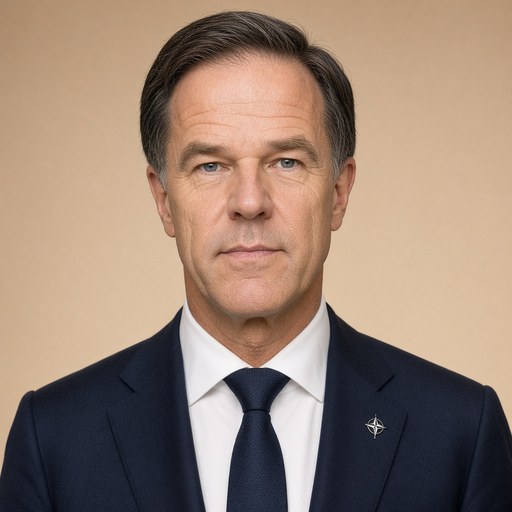
Is a good life a perfect life? Protestant Lecture by Prime Minister Mark Rutte
 Mark Rutte · Prime Minister of the Netherlands
- Context
- Rutte delivered the annual Protestant Lecture at the Kloosterkerk in The Hague on Reformation Day 2020, reflecting on faith, community, and the good life during the COVID-19 pandemic.
- Main themes
- Community and togetherness, faith and Christianity, COVID-19 pandemic, the good life vs. perfect life, Protestant tradition, volunteer spirit and mutual aid, loneliness and mental health, hope and comfort in crisis, role of churches in society, Dutch society and values
- Duration
- ~17 min
- Words
- 2,033
- Sentences
- 126
- Readability
- 65
- Grade
- 8.2
- Syntax
- 2.84
- Vocabulary
- 1.91
Translated from Dutch
The broad sphere of national life a sentence belongs to. Every sentence has an Arena, so it is the denominator the other indices are read against.
Other126 sentences in 32 paragraphs
Ladies and gentlemen,
If I were given the impossible task of describing what the church means to me personally in one word, I would probably say: 'Community'. Because in the church, people come together, as a congregation. In person, with each other.
And how alienating it is to have to address you from this beautiful, yet almost empty Kloosterkerk in The Hague via the camera. We know why this is necessary. We know what we are doing it for. But we also feel how much we need that sense of community, especially now.
That is immediately the main reason why I gladly said yes to the request to deliver the annual Protestant Lecture on this Reformation Day. Adjusted in form and scope due to the circumstances, but hopefully not in meaning and reception. Because today I want to emphasize that necessity of community and thereby also the important role that faith, the churches, and especially the people who together form the church, play in it.
We cannot ignore it: the coronavirus is taking an incredibly heavy toll on our society. On everyone who has to miss a loved one due to corona. On people who are very ill from it now, or who are struggling with the physical and mental aftermath of the virus. On young and old alike who, due to all the social restrictions, are facing tensions behind closed doors, with loneliness and depressive feelings. Or on all those entrepreneurs whose businesses are on the brink and on the people who are at risk of losing their jobs.
In short, corona is more than a virus, more than just an illness. It is also mourning, it is loss, it is disruption.
But I am convinced that the tradition in which we stand helps us get through this difficult period. Each of us individually and our country as a whole. That tradition is certainly not exclusively Christian, but it is largely so. And it works very directly and personally, because those who believe in God may have hope, and that brings enormous comfort. That is how it works for me, at least.
And it also works collectively, because of that well-known Bible verse: love your neighbor as yourself. For me, that means: look out for each other, help each other, comfort each other. Exactly what we immediately saw happening during that first wave of corona. And just recently, dozens of churches and Christian organizations from various denominations sent a letter to the cabinet offering to help during the second wave of corona, for example in combating loneliness. So faith also makes us stronger together, in a societal sense.
And of course, we see the tension among people increasing in this second wave, but underlying it all, the Netherlands remains a country of volunteers and mutual aid. A country of doing groceries for each other and a pot of soup for the sick neighbor. Even during this second wave, there are still more people with patience and compassion than with a short fuse. We read little about that goodness and patience in society in the newspapers and we also do not hear much about it at the various talk show tables, but that does not make it any less of a reality.
In this time, we are being confronted with the facts, whether we like it or not. Achievements that we always took for granted suddenly turned out to be less self-evident than we thought this spring. Suddenly, we are living under restrictions that were hardly imaginable until recently.
That raises the question: what really matters in a person's life? Or to put it in the form of the question I was asked to reflect on today: is a good life a perfect life?
The short answer is, of course: no, thankfully not. Because perfection is a standard that very few people can meet.
Moreover, what is perfect? That differs from person to person, it seems to me. For one, it is a brilliant career with much prestige and wealth. For another, it is an attractive appearance or a sporting achievement. And for yet another, it is a harmonious family life or the satisfaction of volunteer work.
So a definitive answer cannot be given. For me personally, perfect is also another word for boring. Just imagine: a perfect life and nothing more to wish for? I honestly don't want to think about it!
The question remains: what is a good life then? There is, of course, no right or wrong answer to that either. But what the corona crisis teaches us anyway is that life, when it comes down to it, is not about more, more, more, and certainly not about more me, me, me, but about togetherness, about responsibility, and about attention for the people around you. We all know that saying that no one on their deathbed says they should have spent more time at work or gathered more possessions. In 2020, we might also have to add the number of followers on Instagram or Facebook to that. But life is not about cash or consumption; it is about contact. About real human contact. That is ultimately all that matters, not wealth or appearances, but what you have done with and for another.
I myself am the product of a not too heavy Reformed upbringing, so I always have to be a bit careful with references to or interpretations of the Bible. But is what I just said not also a common thread in that beautiful book? For example, in that parable of the rich man for whom it is harder to enter the Kingdom of God than for a camel to go through the eye of a needle? It seems to me a clear message: possessions are ballast that you leave behind in the end.
Or for example where Jesus says: 'So always treat others as you would want them to treat you.' That is a nice positive reversal of: 'What you do not want done to you…' And in this, there is also a crystal-clear message: think of others in everything you want and do.
The answer to the question of what a good life is is perhaps nowhere more clearly formulated in the Bible than in Romans 12, in one of Paul's letters of instruction. He writes there unequivocally that a good life is a life in service of the will of God. In the New Bible Translation, it literally says: 'Do not conform to the pattern of this world, but be transformed by the renewing of your mind, so that you may test and approve what God’s will is—his good, pleasing and perfect will.'
I hear in that the echo of one of the core values that I received from my parents: always think for yourself, take responsibility for your own actions, and do not blindly follow the herd. Just as Luther did on that very first Reformation Day in Wittenberg, 503 years ago, when he, like Paul, also addressed Rome with his theses. Think, choose, and accept the consequences.
And so, in that text from Romans 12, there is much of the faith of my youth, of the church in which I grew up—the Nieuwe Badkapel in Scheveningen. A church that attracted people from all walks of life, from ministers and top civil servants to fishermen from Scheveningen. As a child, I felt at home there.
Paul strongly emphasizes in his letter to the Romans that people have different gifts and that there is no hierarchy in that. 'We have different gifts, according to the grace given to us,' it says. And he then compares that to a body, of which each part has its own function.
That appeals to me enormously. It means that everyone can do good in their life, thus leading a good and meaningful life, and that the sum of everyone’s contribution is more than the sum of the parts.
I like to call that, following Frits Bolkestein, the inspiring connection in society, the strength and energy that resides in people, which keeps us together and makes us stronger as a whole. Everyone's contribution counts. No one is more important than another. Or as I learned from my parents: you do not look up to the professor and you do not look down on the garbage collector. Everyone contributes according to their ability.
In that context, I learned early on that it is better to keep your own role in perspective, that you should not always take yourself too seriously. Just keep walking on the small stones, that was what we called it at home. And Paul also calls us to this in Romans 12. He writes: '(…) do not think of yourself more highly than you ought, but rather think of yourself with sober judgment.' And, another quote: '(…) honor one another above yourselves.' And for those who still do not understand, there is also this very literal call: '(…) do not be proud, but be willing to associate with people of low position.'
In short, Paul's answer to the question of what a good life is contains a kind of Droste effect. A good life is a life that has meaning in the lives of others. We do not exist without another. And what I find most appealing about that conclusion is that Paul also implicitly answers the question of what a failed life is. Or better: the question of whether there is such a thing as a failed life. I tell you honestly: everything in me resists that. As a believing person and as a liberal. Because it would mean that we write people off, and that does not fit into the society we have.
Of course, there are people who have bad luck in life, who are affected by illness, an accident, or other misfortune. People who find it difficult to keep up in the digital information society that demands more and more from us. People who, for whatever reason, need help, and who fortunately receive that help in our country. But that says nothing about what they mean in the lives of their parents, children, friends, neighbors, colleagues. With few exceptions, everyone is something to someone. Everyone is someone who is loved. So everyone’s life matters. I am deeply convinced of that.
And what I also want to say today is this. Now that the coronavirus confronts us with our own smallness and vulnerability, the important role of the churches becomes even clearer.
And then I return to that word community that I spoke about at the beginning. This period reminds me of the plaque that John F. Kennedy had on his desk in the Oval Office. It bore this line from an old Breton fishermen's prayer: 'O God, thy sea is so great and my boat is so small.' The original can still be admired in the Kennedy Presidential Library in Boston. That vague feeling of that great sea will be recognizable to many during the corona crisis. Because where does this end? Churches can provide clarity on that. In the church, we feel: we are not alone in that small boat; we are in it together, and we have faced hotter fires in history. So we will also overcome this period. And I believe we cannot hear that message often enough in this time.
Ladies and gentlemen,
I fear that I will remain indebted to you for the definitive answer to the question of what a good life is. But hopefully, you did not expect to receive that answer. From what I have said, it should be clear that for me it revolves around equality and community. Around the inspiring connection in society, which resides in us people, all of whom contribute in a way that makes the whole more than the sum of the parts.
A good life is therefore not necessarily a believing life. That would be enormously presumptuous and also far too simplistic. But speaking for myself, I dare to say that faith makes my own painting larger and deeper. It simply helps me to see a little further and—hopefully—to do as much good as possible in my own life.
Thank you.
The original Dutch. The tags above are read on the English translation's sentences.
Dames en heren,
Als ik de onmogelijke opdracht zou krijgen met 1 woord te omschrijven wat de kerk voor mij persoonlijk betekent, zou ik waarschijnlijk zeggen: ‘Gezamenlijkheid’. Want in de kerk komen mensen samen, als gemeente. In persoon, met elkaar.
En wat is het dan vervreemdend u vanuit deze mooie, maar bijna lege Haagse Kloosterkerk via de camera toe te moeten spreken. We weten waarom dit nodig is. We weten waar we het voor doen. Maar we voelen ook hoezeer we die gezamenlijkheid juist nu extra hard nodig hebben.
Dat is meteen de belangrijkste reden waarom ik graag ja heb gezegd tegen het verzoek op deze Hervormingsdag de jaarlijkse Protestantse Lezing te verzorgen. Vanwege de omstandigheden enigszins aangepast in vorm en omvang, maar hopelijk niet in betekenis en ontvangst. Want ik wil vandaag graag die noodzaak van gezamenlijkheid onderstrepen en daarmee ook de belangrijke rol die het geloof, de kerken, en vooral de mensen die samen de kerk vormen, daarin vervullen.
We kunnen er niet omheen: het coronavirus trekt een ongelooflijk zware wissel op onze samenleving. Op iedereen die door corona een geliefde moet missen. Op mensen die er nu heel ziek van zijn, of die worstelen met de lichamelijke en mentale nasleep van het virus. Op jongeren én ouderen die vanwege alle sociale beperkingen te maken krijgen met spanningen achter de voordeur, met eenzaamheid en depressieve gevoelens. Of op al die ondernemers van wie het bedrijf op omvallen staat en op de mensen die dreigen hun baan te verliezen.
Corona is, kortom, meer dan een virus, meer dan een ziekte alleen. Het is ook rouw, het is verlies, het is ontwrichting.
Maar ik ben er van overtuigd dat de traditie waarin we staan, ons helpt deze moeilijke periode door te komen. Ieder van ons afzonderlijk en ons land als geheel. Die traditie is uiteraard niet exclusief christelijk, maar wel voor een belangrijk deel. En dat werkt heel direct en persoonlijk door, want wie in God gelooft, mag hoop hebben en daar gaat een enorme troost van uit. Zo werkt dat in ieder geval voor mij.
En het werkt ook collectief door, vanwege dat overbekende Bijbelwoord: heb uw naaste lief als uzelf. Voor mij betekent dat: zie naar elkaar om, help elkaar, troost elkaar. Precies wat we meteen hebben zien gebeuren tijdens die 1e coronagolf. En nog onlangs stuurden tientallen kerken en christelijke organisaties van verschillende gezindten een brief aan het kabinet met het aanbod mee te helpen in de 2e coronagolf, bijvoorbeeld bij de bestrijding van eenzaamheid. Dus het geloof maakt ons ook samen sterker, in maatschappelijk opzicht.
En natuurlijk, we zien in deze 2e golf de spanning bij mensen toenemen, maar onderliggend is en blijft Nederland een land van vrijwilligers en onderling hulpbetoon. Een land van boodschappen doen voor elkaar en een pannetje soep voor de zieke buurvrouw. Ook tijdens deze 2e golf zijn er nog altijd meer mensen met geduld en compassie, dan met een kort lontje. Over dat goede en het geduld in de samenleving lezen we weinig in de krant en horen we ook niet veel terug aan de verschillende talkshowtafels, maar daarom is het niet minder een realiteit
We worden in deze tijd hoe dan ook met onze neus op de feiten gedrukt. Verworvenheden die we altijd voor lief namen, bleken dit voorjaar ineens minder vanzelfsprekend dan we dachten. Plotseling leven we noodgedwongen met beperkingen die tot voor kort nauwelijks voorstelbaar waren.
Dat roept de vraag op: wat telt er echt in een mensenleven? Of om het met de vraag te formuleren waarop ik verzocht werd vandaag te reflecteren: is een goed leven een perfect leven?
Het korte antwoord is natuurlijk: nee, gelukkig niet zeg. Want perfectie is een norm waaraan maar heel weinig mensen kunnen voldoen.
Bovendien, wat is perfect? Dat verschilt van mens tot mens, lijkt mij. Voor de een is dat een glansrijke carrière met veel aanzien en rijkdom. Voor de ander is het een aantrekkelijk uiterlijk of een sportieve prestatie. En voor weer een ander is het een harmonieus gezinsleven of de bevrediging van vrijwilligerswerk.
Een sluitend antwoord is dus niet te geven. Voor mij persoonlijk geldt dat perfect ook een ander woord is voor saai. Stel je eens voor: een perfect leven en niks meer te wensen over? Ik moet er eerlijk gezegd niet aan denken!
Blijft de vraag: wat is dan een goed leven? Ook daarop is natuurlijk geen goed of fout antwoord te geven. Maar wat de coronacrisis ons sowieso leert, is dat het leven, als het erop aankomt, niet draait om meer, meer, meer, en al helemaal niet om meer ik, ik, ik, maar om samen, om verantwoordelijkheid en om aandacht voor de mensen om je heen. We kennen allemaal die uitspraak dat niemand op zijn sterfbed zegt dat hij meer tijd op zijn werk had moeten doorbrengen of nog meer bezit had moeten verzamelen. In 2020 moeten we daar misschien ook nog het aantal volgers op Instagram of Facebook aan toevoegen. Maar het leven draait niet om contanten of consumptie, het draait om contact. Om echt menselijk contact. Dat is uiteindelijk het enige dat telt, niet rijkdom of uiterlijkheden, maar wat je met en voor een ander hebt gedaan.
Ik ben zelf het product van een niet al te zware Hervormde opvoeding, dus ik moet altijd een beetje oppassen met verwijzingen naar of interpretaties van de Bijbel. Maar is wat ik net zeg niet ook een rode draad in dat prachtige boek? Bijvoorbeeld in die gelijkenis van de rijke man voor wie het moeilijker is het Koninkrijk Gods binnen te treden dan voor een kameel om door het oog van de naald te gaan? Me dunkt, een heldere boodschap: bezit is ballast, die je aan het einde achterlaat.
Of bijvoorbeeld daar waar Jezus zegt: ‘Behandel anderen dus steeds zoals je zou willen dat ze jullie behandelen.’ Dat is een mooie positieve omkering van: ‘Wat gij niet wilt dat u geschiedt…’ En ook hierin schuilt een glasheldere boodschap: denk bij alles wat je wilt en doet ook aan een ander.
Het antwoord op de vraag wat een goed leven is wordt in de Bijbel misschien wel nergens duidelijker geformuleerd dan in Romeinen 12, in een van de instructiebrieven van Paulus. Hij schrijft daar onomwonden dat een goed leven een leven is in dienst van de wil van God. In de Nieuwe Bijbelvertaling staat letterlijk: ‘U moet uzelf niet aanpassen aan deze wereld, maar veranderen door uw gezindheid te vernieuwen, om zo te ontdekken wat God van u wil en wat goed, volmaakt en hem welgevallig is.’
Ik hoor daarin de echo van 1 van de kernwaarden die ik van mijn ouders heb meegekregen: altijd zelf blijven nadenken, verantwoordelijkheid nemen voor je eigen daden en niet blindelings met de kudde meelopen. Precies zoals Luther deed op die allereerste Hervormingsdag in Wittenberg, 503 jaar geleden, toen hij zich met zijn stellingen – net als Paulus – ook tot Rome richtte. Nadenken, kiezen en de consequenties daarvan aanvaarden.
En zo zit er in die tekst van Romeinen 12 veel van het geloof van mijn jeugd, van de kerk waarin ik ben opgegroeid – de Nieuwe Badkapel in Scheveningen. Een kerk die mensen trok van alle rangen en standen, van ministers en topambtenaren tot Scheveningse vissers. Als kind voelde ik me daar thuis.
Paulus legt in zijn brief aan de Romeinen sterk de nadruk op het feit dat mensen verschillende gaven hebben en dat daar geen hiërarchie in bestaat. ‘We hebben verschillende gaven, onderscheiden naar de genade die ons geschonken is’ staat er. En hij vergelijkt dat vervolgens met een lichaam, waarvan elk onderdeel een eigen functie heeft.
Dat spreekt mij enorm aan. Het betekent namelijk dat iedereen in zijn of haar leven goed kan doen, dus een goed en betekenisvol leven kan leiden, en dat de optelsom van ieders bijdrage meer is dan de som der delen.
Ik noem dat, in navolging van Frits Bolkestein, graag het bezielend verband in de samenleving, de kracht en energie die in mensen zit, die ons bij elkaar houdt en die ons als geheel sterker maakt. Ieders bijdrage telt. Niemand is belangrijker dan een ander. Of zoals ik het van mijn ouders heb geleerd: je kijkt niet op naar de professor en je kijkt niet neer op de vuilnisman. Ieder levert zijn bijdrage naar vermogen.
In het verlengde daarvan leerde ik al vroeg dat je maar beter je eigen rol kunt blijven relativeren, dat je jezelf niet altijd heel serieus moet nemen. Gewoon op de kleine steentjes blijven lopen, heette dat bij mij thuis. En ook daar roept Paulus ons in Romeinen 12 toe op. Zo schrijft hij ‘(…) dat u zichzelf niet hoger moet aanslaan dan u kunt verantwoorden, maar verstandig over uzelf moet denken.’ En, nog een citaat: ‘(…) acht de ander hoger dan uzelf.’ En voor wie het dan nog niet heeft begrepen, is er ook nog deze wel heel letterlijke oproep: ‘(…) wees niet hoogmoedig, maar zet uzelf aan tot bescheidenheid.’
Kortom, Paulus’ antwoord op de vraag wat een goed leven is, bevat een soort Droste-effect. Een goed leven is een leven dat betekenis heeft in het leven van anderen. We bestaan niet zonder een ander. En wat ik aan die conclusie het meest aantrekkelijk vind, is dat Paulus hiermee ook impliciet antwoord geeft op de vraag wat een mislukt leven is. Of beter: op de vraag of er zoiets bestaat als een mislukt leven. Ik zeg u eerlijk: alles in mij verzet zich daartegen. Als gelovig mens én als liberaal. Want het zou betekenen dat we mensen afschrijven, en dat past niet in de samenleving die we hebben.
Natuurlijk zijn er mensen die pech hebben in het leven, die bijvoorbeeld getroffen worden door ziekte, een ongeluk of ander onheil. Mensen die het niet goed lukt mee te komen in de digitale informatiesamenleving die steeds meer van ons vraagt. Mensen die om wat voor reden dan ook hulp nodig hebben, en die hulp in ons land gelukkig ook krijgen. Maar dat zegt helemaal niets over wat zij betekenen in het leven van hun ouders, kinderen, vrienden, buren, collega’s. Uitzonderingen daargelaten, iedereen is iets voor iemand. Iedereen is iemand van wie wordt gehouden. Dus ieders leven doet ertoe. Daar ben ik diep van overtuigd.
En wat ik vandaag tot slot ook gezegd wil hebben, is dit. Nu het coronavirus ons confronteert met onze eigen kleinheid en kwetsbaarheid, wordt de belangrijke rol van de kerken nog eens extra duidelijk.
En dan kom ik terug bij dat woord gezamenlijkheid waar ik in het begin over sprak. Deze periode doet me denken aan de plaquette die John F. Kennedy in the oval office op zijn bureau had staan. Daarop stond deze zin uit een oud Bretons vissersgebed: ‘
O God, thy sea is so great and my boat is so small
.’ Het origineel is nog altijd te bewonderen in de
Kennedy Presidential Library
in Boston. Dat onbestemde gevoel van die grote zee zal tijdens de coronacrisis voor veel mensen herkenbaar zijn. Want waar eindigt dit? Kerken kunnen daar duiding aan geven. In de kerk voelen we: we zitten niet alleen in dat kleine bootje, we zitten er samen in, en we hebben in de geschiedenis voor hetere vuren gestaan. Dus ook deze periode komen we te boven. En die boodschap kunnen we volgens mij in deze tijd niet vaak genoeg horen.
Dames en heren,
Ik vrees dat ik u het definitieve antwoord op de vraag wat een goed leven is, schuldig blijf. Maar dat antwoord had u hopelijk ook niet verwacht te krijgen. Uit wat ik heb gezegd, mag wel blijken dat het voor mij draait om gelijkwaardigheid en gezamenlijkheid. Om het bezielend verband in de samenleving, dat in ons mensen zit, die allemaal een bijdrage leveren waardoor het geheel meer wordt dan de som der delen.
Een goed leven is dus niet per se een gelovig leven. Dat zou enorm aanmatigend zijn en ook veel te kort door de bocht geformuleerd. Maar voor mezelf sprekend, durf ik wel te zeggen dat het geloof mijn eigen schilderij groter en dieper maakt. Het helpt me simpelweg iets verder te zien en – hopelijk – zoveel mogelijk ook in mijn eigen leven het goede te doen.
Dank u wel.